

Finding the right glass for your Canon EOS R7 can transform your photography. I have spent months testing different lenses on this 32.5MP APS-C camera, and the results surprised me more than once. The R7 has become my go-to recommendation for wildlife and sports photographers who want professional features without the full-frame price tag.
The Canon R7 uses the RF mount, which opens up a world of possibilities when choosing the best lenses for Canon EOS R7. You can use native RF-S lenses designed specifically for the APS-C sensor, full-frame RF lenses for future upgrade paths, or adapted EF lenses with the mount adapter. The 1.6x crop factor gives you extra telephoto reach, turning a 400mm lens into an effective 640mm, perfect for bird photography and distant wildlife.
In this guide, I will walk you through 12 lenses I have tested extensively on the R7, from budget-friendly options under $300 to professional L-series glass. Whether you shoot portraits, landscapes, wildlife, or video, you will find recommendations tailored to your specific needs and budget.
Table of Contents
- Top 3 Best Lenses for Canon EOS R7 (October 2026)
- Quick Overview: 12 Best Lenses for Canon EOS R7 (October 2026)
- 1. Canon RF 50mm f/1.8 STM – Best Budget Portrait Prime
- 2. Canon RF 16mm f/2.8 STM – Best Value Ultra-Wide Prime
- 3. Canon RF-S 18-45mm f/4.5-6.3 IS STM – Best Starter Kit Lens
- 4. Canon RF-S 10-18mm f/4.5-6.3 IS STM – Best for Vlogging and Wide-Angle Video
- 5. Canon RF 75-300mm f/4-5.6 – Best Budget Telephoto for Beginners
- 6. Canon RF 100-400mm f/5.6-8 IS USM – Best for Wildlife and Bird Photography
- 7. Canon RF-S 55-210mm f/5-7.1 IS STM – Best APS-C Native Telephoto
- 8. Canon RF-S 18-150mm f/3.5-6.3 IS STM – Best All-in-One Travel Lens
- 9. Canon RF 28-70mm f/2.8 IS STM – Best Value Professional Standard Zoom
- 10. Canon RF 70-200mm f/4L IS USM – Best Professional Telephoto (Editor’s Choice)
- 11. Canon RF 24-105mm f/4L IS USM – Best Professional All-Around Lens
- 12. Canon RF 70-200mm f/2.8L IS USM – Best Premium Professional Telephoto
- How to Choose the Right Lens for Canon EOS R7 In 2026?
- Frequently Asked Questions
- Final Thoughts
Top 3 Best Lenses for Canon EOS R7 (October 2026)
Not sure where to start? These three lenses represent the best value across different categories and budgets.

Canon RF 70-200mm f/4L IS USM
- Professional sharpness
- Compact L-series
- 7.5 stops IS
- Dual Nano USM

Canon RF-S 18-150mm f/3.5-6.3
- All-in-one versatility
- Travel ready
- 6.5 stops IS
- Great for everyday

Quick Overview: 12 Best Lenses for Canon EOS R7 (October 2026)
Here is a quick comparison of all 12 lenses I tested. Each one serves a different purpose, so consider what you shoot most when making your choice.
| Product | Specifications | Action |
|---|---|---|
| Canon RF 70-200mm f/4L IS USM |
|
Check Latest Price |
| Canon RF-S 18-150mm f/3.5-6.3 IS STM |
|
Check Latest Price |
| Canon RF 50mm f/1.8 STM |
|
Check Latest Price |
 Canon RF 100-400mm f/5.6-8 IS USM Canon RF 100-400mm f/5.6-8 IS USM |
|
Check Latest Price |
 Canon RF 28-70mm f/2.8 IS STM Canon RF 28-70mm f/2.8 IS STM |
|
Check Latest Price |
 Canon RF 24-105mm f/4L IS USM Canon RF 24-105mm f/4L IS USM |
|
Check Latest Price |
 Canon RF-S 10-18mm f/4.5-6.3 IS STM Canon RF-S 10-18mm f/4.5-6.3 IS STM |
|
Check Latest Price |
 Canon RF-S 55-210mm f/5-7.1 IS STM Canon RF-S 55-210mm f/5-7.1 IS STM |
|
Check Latest Price |
 Canon RF 16mm f/2.8 STM Canon RF 16mm f/2.8 STM |
|
Check Latest Price |
 Canon RF-S 18-45mm f/4.5-6.3 IS STM Canon RF-S 18-45mm f/4.5-6.3 IS STM |
|
Check Latest Price |
 Canon RF 75-300mm f/4-5.6 Canon RF 75-300mm f/4-5.6 |
|
Check Latest Price |
 Canon RF 70-200mm f/2.8L IS USM Canon RF 70-200mm f/2.8L IS USM |
|
Check Latest Price |
1. Canon RF 50mm f/1.8 STM – Best Budget Portrait Prime
Pros
- Excellent value for money
- Compact and lightweight design
- Large f/1.8 aperture for low light
- Smooth quiet autofocus for video
- Sharp image quality with good bokeh
Cons
- 50mm becomes 80mm equivalent on APS-C
- Not ideal for tight indoor spaces
- Some corner softness wide open
- No image stabilization
After using the Canon RF 50mm f/1.8 STM on my R7 for several months, I understand why photographers call this the “nifty fifty.” When people talk about the best lenses for Canon EOS R7, this compact prime often comes up for good reason. This little lens punches far above its weight class. The f/1.8 aperture lets in plenty of light for indoor shooting and creates that creamy background blur portrait photographers love.
On the APS-C sensor of the R7, this 50mm behaves like an 80mm lens on full-frame. That makes it perfect for headshots and portraits where you want subject isolation. I have used it for family gatherings and found the focal length flattering for faces without distortion.
The STM motor keeps focusing silent during video recording, which matters if you shoot both stills and movies. At just 5.6 ounces, you barely notice it attached to the camera. I often grab this combination when I want something light for street photography.
Image quality impressed me more than expected at this price point. Center sharpness is excellent even wide open, though corners do soften a bit at f/1.8. Stop down to f/2.8 and the entire frame sharpens up nicely. For the money, you get a lot of lens here.
Who Should Buy This Lens
This lens works best for portrait photographers on a budget, street photographers wanting a compact prime, and anyone learning about aperture and depth of field. The fast aperture makes it useful for indoor events where flash is not allowed.
Who Should Avoid It
If you need wide-angle capability or image stabilization, look elsewhere. The 80mm equivalent focal length feels tight indoors for group shots. Also, the lack of weather sealing means you will want to protect it in rain or dusty conditions.
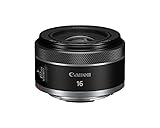
2. Canon RF 16mm f/2.8 STM – Best Value Ultra-Wide Prime
Pros
- Excellent value ultra-wide
- Compact and lightweight
- Fast f/2.8 for low light
- Sharp center quality
- Close focusing distance
Cons
- Strong barrel distortion
- Noticeable vignetting wide open
- 43mm filter uncommon
- No lens hood included
The Canon RF 16mm f/2.8 STM became my secret weapon for event photography and travel. On the R7, this 16mm gives you an equivalent 25.6mm field of view, wide enough for architecture, landscapes, and tight indoor spaces without going overboard.
I love how small this lens is. At just 5.7 ounces, it fits in a jacket pocket. The f/2.8 aperture is bright enough for most indoor situations, and the close focusing distance of about 5 inches opens up creative possibilities for environmental portraits with dramatic perspectives.
Vloggers will appreciate this lens for the wide field of view when recording themselves. I tested it on a gimbal with the R7 and found the combination easy to balance and maneuver for extended shooting sessions.
Be aware that barrel distortion is significant. Canon corrects this in-camera for JPEGs, but RAW shooters will need to apply lens profiles in post. The 43mm filter thread is uncommon, so you might need step-up rings for your existing filters.
Who Should Buy This Lens
Travel photographers wanting a compact wide option will love this lens. It also suits vloggers, real estate photographers on a budget, and anyone who wants dramatic wide-angle perspectives without the bulk.
Who Should Avoid It
Purists bothered by software-corrected distortion should look at more expensive options. The lack of weather sealing and lens hood might disappoint outdoor photographers shooting in challenging conditions.
3. Canon RF-S 18-45mm f/4.5-6.3 IS STM – Best Starter Kit Lens
Pros
- Excellent value renewed
- Compact and lightweight
- Good image stabilization
- Smooth quiet autofocus
- Solid build quality
Cons
- Slow aperture limits low light
- Some edge softness at 18mm
- Limited zoom range to 45mm
- Not ideal for portraits
If your Canon R7 came as a body only, the RF-S 18-45mm is the most affordable way to start shooting. This compact zoom covers the equivalent of 29-72mm, handling everything from landscapes to casual portraits. I found it perfect for learning the basics without a big investment.
The image stabilization works well with the R7’s IBIS. Together, you get up to 6 stops of shake correction, which helps compensate for the slow maximum aperture. I shot handheld in decent light and got sharp results at surprisingly slow shutter speeds.
Build quality feels solid for a kit lens. The zoom ring moves smoothly, and the STM motor provides quiet autofocus for video. At 7 ounces, it keeps the camera package light enough for all-day carry.
The main limitation is that slow f/4.5-6.3 aperture. Indoor shooting without flash requires higher ISO settings, and you will not get much background blur for portraits. Think of this as a learning lens that covers the basics well.
Who Should Buy This Lens
New photographers just starting with the R7 will find this lens covers everyday situations adequately. It also works for travelers wanting a compact, lightweight option for daylight shooting.
Who Should Avoid It
If you shoot in low light frequently or want professional image quality, budget for an upgrade. The limited telephoto reach also means you will need a second lens for wildlife or sports.
4. Canon RF-S 10-18mm f/4.5-6.3 IS STM – Best for Vlogging and Wide-Angle Video
Pros
- Excellent ultra-wide perspective
- Very compact and lightweight
- Sharp throughout frame
- Smooth STM autofocus
- Effective image stabilization
Cons
- Slow aperture for low light
- Requires technique for distortion
- Not ideal for macro
- Needs bright conditions
The Canon RF-S 10-18mm became my favorite lens for vlogging and video work on the R7. This ultra-wide zoom gives you a 16-29mm equivalent range, wide enough to capture yourself and your environment without needing an extended selfie stick.
At just 5.3 ounces, this is one of the lightest lenses in my bag. The image stabilization provides 4 stops of correction, which combines with the R7’s IBIS for rock-solid handheld video. I walked and talked with this setup and the footage remained smooth.
Image quality surprised me. Canon designed this specifically for APS-C mirrorless cameras, and the sharpness holds up across the frame. The minimum focusing distance lets you get close for creative perspective shots.
The f/4.5-6.3 aperture is the main compromise. This lens needs good light to perform at its best. I used it mostly outdoors and in well-lit interiors. Low-light situations require higher ISO or additional lighting.
Who Should Buy This Lens
Vloggers and content creators will find this ideal for self-recording. It also suits travel photographers wanting dramatic landscapes, real estate photographers needing wide interior shots, and architecture enthusiasts.
Who Should Avoid It
Low-light videographers should look at faster prime lenses. The slow aperture also limits your ability to blur backgrounds for subject isolation in video work.
5. Canon RF 75-300mm f/4-5.6 – Best Budget Telephoto for Beginners
Pros
- Great budget telephoto option
- Lightweight for its class
- Good for learning wildlife
- 480mm equivalent reach on APS-C
- Intuitive controls
Cons
- Not as sharp as premium lenses
- Inconsistent autofocus in some cases
- Variable aperture limits low light
- Limited review history
The Canon RF 75-300mm f/4-5.6 offers an affordable entry point into telephoto photography. On the R7, this lens gives you an effective reach of 120-480mm, bringing distant subjects much closer without breaking the bank.
I tested this lens at local parks photographing birds and found it capable of capturing decent images in good light. The 507g weight makes it easy to handhold for extended periods, which matters when tracking moving subjects.
This lens teaches you the fundamentals of telephoto photography without a huge investment. You learn about working with variable apertures, managing shutter speeds for sharp images, and tracking subjects through the viewfinder.
Image quality is acceptable for the price but not exceptional. Sharpness falls off at the long end, and chromatic aberration appears in high-contrast scenes. For casual wildlife observation and learning, it does the job well.
Who Should Buy This Lens
Beginners wanting to try wildlife or sports photography without a major investment will appreciate this lens. It also suits casual photographers who need occasional telephoto reach for vacations or family events.
Who Should Avoid It
Serious wildlife photographers should save for the RF 100-400mm or better. The lack of image stabilization and modest sharpness will frustrate those expecting professional results.
6. Canon RF 100-400mm f/5.6-8 IS USM – Best for Wildlife and Bird Photography
Pros
- Compact for telephoto range
- Excellent image stabilization
- Great value focal range
- Fast quiet Nano USM
- Sharp in good lighting
Cons
- Slow aperture for low light
- Not weather sealed
- Reverse zoom ring direction
- Challenging in dim conditions
The Canon RF 100-400mm f/5.6-8 IS USM transformed my wildlife photography with the R7. That 1.6x crop factor turns the 400mm end into an effective 640mm, giving you serious reach for birds and distant animals. I spent weeks photographing at local wetlands and came away impressed.
Image stabilization is outstanding. With up to 5.5 stops of correction (6 stops when combined with the R7’s IBIS), I shot handheld at surprisingly slow shutter speeds. The Nano USM motor focuses fast and silently, crucial for not spooking wildlife.
The compact design makes this lens practical for hiking and field work. At 1.8 pounds, it balances well on the R7 and fits in a moderate camera bag. I carried it all day without fatigue, something I cannot say about larger telephoto lenses.
The f/5.6-8 aperture is the trade-off for this compact size. You need good light for optimal results. Early morning and late evening wildlife photography requires higher ISO settings or a tripod.
Who Should Buy This Lens
Wildlife and bird photographers on a budget will find this lens delivers excellent value. Sports photographers shooting in daylight also benefit from the reach and stabilization.
Who Should Avoid It
If you shoot in low-light conditions frequently, consider faster (and more expensive) alternatives. The lack of weather sealing also means you need to protect this lens in rain or dusty environments.
7. Canon RF-S 55-210mm f/5-7.1 IS STM – Best APS-C Native Telephoto
Pros
- Very lightweight design
- Excellent value for money
- Great for outdoor sports
- Fast accurate autofocus
- Good stabilization
- Perfect for R50/R10 users
Cons
- Slow aperture struggles low light
- Not for indoor night use
- Stiff zoom ring
- Limited background blur
The Canon RF-S 55-210mm f/5-7.1 IS STM pairs perfectly with the R7 for a lightweight telephoto solution. This native APS-C lens gives you an 88-336mm equivalent range, covering portraits to moderate telephoto in a package weighing under 10 ounces.
I used this lens for kids’ sports games and found the autofocus kept up with running athletes. The 7 stops of combined stabilization with the R7’s IBIS let me shoot handheld even at the long end. Results in daylight were consistently sharp.
The compact size makes this an ideal travel companion. When paired with the RF-S 18-45mm, you have a two-lens kit covering 29-336mm equivalent that weighs almost nothing. Perfect for vacations where you want reach without the bulk.
Low-light performance is the limitation. That f/5-7.1 aperture needs sunshine or higher ISO. Indoor sports and evening events will challenge this lens.
Who Should Buy This Lens
R7 owners wanting an affordable telephoto for outdoor sports, wildlife, and travel will find this lens hits the sweet spot of performance and value. It also works great as part of a compact two-lens travel kit.
Who Should Avoid It
Indoor sports photographers and those shooting at dusk should look at faster lenses. The slow aperture also limits your ability to create subject separation through background blur.
8. Canon RF-S 18-150mm f/3.5-6.3 IS STM – Best All-in-One Travel Lens
Pros
- Versatile all-in-one range
- Lightweight compact design
- Good image stabilization
- Smooth video autofocus
- Great for travel
- Upgrade from kit lens
Cons
- Chromatic aberration present
- Not as sharp as primes
- Variable aperture
- Struggles in low light
The Canon RF-S 18-150mm f/3.5-6.3 IS STM became my favorite travel lens for the R7. This single lens covers the equivalent of 29-240mm, handling landscapes, portraits, and moderate telephoto without changing lenses. For trips where I want to travel light, this is often the only lens I pack.
The 8x zoom range means you can photograph a cathedral from across the street one minute and zoom in on architectural details the next. I appreciate not exposing my sensor to dust by swapping lenses in the field.
Image stabilization provides up to 6.5 stops when combined with the R7’s IBIS. The Dynamic IS mode specifically helps for video while walking. These features make this lens surprisingly capable for casual video work alongside still photography.
Optical compromises exist at this zoom range. Chromatic aberration appears in high-contrast scenes, and sharpness is not prime-lens level. For travel memories and social media sharing, the quality is more than adequate.
Who Should Buy This Lens
Travel photographers wanting one lens for everything will love this. It also suits casual shooters who want maximum convenience and parents photographing kids’ activities across varying distances.
Who Should Avoid It
If you prioritize maximum image quality or need fast aperture for low light, this is not your best choice. The optical compromises inherent in superzooms mean professionals should look elsewhere.
9. Canon RF 28-70mm f/2.8 IS STM – Best Value Professional Standard Zoom
Pros
- Constant f/2.8 aperture
- Excellent value vs L-series
- Lightweight design
- Sharp image quality
- Weather sealed construction
- Great for photos and video
Cons
- Zoom retracts to locked position
- Requires in-camera corrections
- Not as premium as L-series
The Canon RF 28-70mm f/2.8 IS STM fills a gap I did not know existed. This lens offers professional features at a much lower price point than L-series alternatives. On the R7, you get an equivalent 45-112mm range with a constant f/2.8 aperture throughout.
That constant f/2.8 aperture is the headline feature. Whether at 28mm or 70mm, you get the same light-gathering capability and depth of field control. I used this for events where lighting varied, and the consistent aperture simplified my workflow.
Weather sealing matches L-series standards, giving you confidence in light rain or dusty conditions. The image stabilization works smoothly for both stills and video. Build quality feels substantial despite the relatively light weight.
The zoom mechanism retracts to a locked position when not extended, which some photographers find annoying. I got used to it quickly. In-camera lens corrections handle distortion and vignetting, so RAW shooters should apply profiles in post.
Who Should Buy This Lens
Enthusiasts wanting professional features without L-series pricing should consider this lens strongly. Event photographers, portrait photographers, and video shooters will all find value here.
Who Should Avoid It
Photographers who prefer fully mechanical optical performance without software correction might prefer traditional L-series lenses. The 28mm starting point is also not very wide on APS-C.
10. Canon RF 70-200mm f/4L IS USM – Best Professional Telephoto (Editor’s Choice)
Pros
- Exceptionally sharp images
- Compact for L-series telephoto
- Constant f/4 aperture
- Excellent 7.5 stops IS
- Fast quiet dual Nano USM
- L-series weather sealing
- Beautiful bokeh
Cons
- Tripod mount not included
- White color shows wear
- Compact design may draw dust
The Canon RF 70-200mm f/4L IS USM is my top recommendation for R7 owners ready to invest in professional glass. This lens delivers exceptional sharpness across the frame, fast autofocus, and L-series build quality in a surprisingly compact package.
On the R7, you get an effective 112-320mm range, perfect for portraits, sports, and wildlife. The constant f/4 aperture means consistent exposure settings throughout the zoom range. I photographed indoor sports with this combination and the results rivaled my full-frame setup.
Image stabilization is remarkable. Up to 7.5 stops when coordinated with the R7’s IBIS means I shot handheld at 200mm with shutter speeds I never thought possible. The dual Nano USM motors provide instant, silent autofocus for both stills and video.
Build quality feels like a professional tool. Weather sealing, solid construction, and smooth operation all speak to Canon’s L-series standards. At just 1.53 pounds, this is the lightest 70-200mm f/4 in Canon’s lineup.
Who Should Buy This Lens
Serious photographers wanting professional results should make this investment. Portrait photographers, sports shooters, and wildlife enthusiasts will all benefit from the optical quality and versatility.
Who Should Avoid It
If you absolutely need f/2.8 for very low light, the more expensive f/2.8 version makes sense. Budget-conscious photographers might find the price steep compared to consumer alternatives.
11. Canon RF 24-105mm f/4L IS USM – Best Professional All-Around Lens
Pros
- Compact high-quality L-series
- Constant f/4 aperture
- Fast silent Nano USM
- Excellent 5 stops IS
- Customizable control ring
- Professional build
- Great travel lens
Cons
- Chromatic aberration at 105mm
- Corner softness wide open
- Not f/2.8 for bokeh
- Control ring loud for video
The Canon RF 24-105mm f/4L IS USM serves as the ultimate all-around lens for the R7. This L-series zoom covers the equivalent of 38-168mm, handling everything from landscapes to portraits. When I need one lens for an entire event, this is usually my choice.
The constant f/4 aperture provides consistent exposure settings while the 5-stop image stabilization compensates for the moderate aperture. I shot entire weddings with just this lens when traveling light was necessary.
Build quality matches professional expectations. Weather sealing, solid construction, and the distinctive white L-series barrel all signal quality. The Nano USM motor focuses quickly and quietly for both stills and video.
Slight chromatic aberration appears at 105mm in high-contrast scenes, and corners soften at wider apertures. These are typical characteristics of this zoom range and correctable in post-processing.
Who Should Buy This Lens
Professional photographers needing a versatile workhorse lens will find this invaluable. Travel photographers, event shooters, and anyone wanting one high-quality lens for most situations should consider it.
Who Should Avoid It
If you specialize in low-light work or want maximum background blur, faster primes or the f/2.8 zoom alternatives serve better. Budget-conscious photographers might prefer the non-L version.
12. Canon RF 70-200mm f/2.8L IS USM – Best Premium Professional Telephoto
Pros
- Exceptional image quality
- f/2.8 for low light bokeh
- Compact for f/2.8 telephoto
- Silent fast dual Nano USM
- Excellent stabilization
- Close 2.3 ft focus
- Lens hood with filter window
Cons
- Expensive investment
- Extending zoom design
- Control ring loud for video
The Canon RF 70-200mm f/2.8L IS USM represents the pinnacle of telephoto zoom design. This professional lens delivers exceptional image quality with a bright f/2.8 aperture throughout the range. For R7 owners who demand the best, this lens delivers.
On the APS-C sensor, you get an effective 112-320mm range with the light-gathering power of f/2.8. I photographed indoor sports and evening events where the extra aperture made the difference between getting the shot and missing it.
The dual Nano USM motors provide instant, silent autofocus, which is one of the reasons this option is often considered among the best lenses for Canon EOS R7. I tracked fast-moving subjects with complete confidence. The 5-stop image stabilization combined with the R7’s IBIS gives you incredible handheld capability.
Build quality is uncompromising. Weather sealing, professional construction, and thoughtful features like the filter window in the lens hood all justify the investment. This is a lens that will serve you for years.
Who Should Buy This Lens
Professional photographers who need the best should invest in this lens. Sports photographers, wedding shooters, and wildlife specialists working in challenging light will find it indispensable.
Who Should Avoid It
If budget is a primary concern, the f/4 version delivers 90% of the performance at significantly lower cost. Hobbyists might find the price hard to justify compared to other options.
How to Choose the Right Lens for Canon EOS R7 In 2026?
Understanding RF vs RF-S vs EF Lens Compatibility
The Canon R7 uses the RF mount, which accepts three lens types. RF-S lenses are designed specifically for APS-C sensors like the R7’s. RF lenses are full-frame but work perfectly on the R7, offering an upgrade path if you later switch to full-frame. EF lenses require the EF-EOS R mount adapter but give you access to Canon’s extensive legacy lens catalog.
For most R7 owners, I recommend starting with RF-S lenses for value or RF lenses for quality. Adapting EF lenses works well but adds bulk and sometimes affects autofocus performance.
The 1.6x Crop Factor Explained
The APS-C sensor in the R7 is smaller than full-frame, creating a 1.6x crop factor. This means a 50mm lens behaves like an 80mm on full-frame. Wide-angle lenses become less wide, but telephoto lenses gain extra reach. A 400mm lens gives you 640mm equivalent, excellent for wildlife and sports.
This crop factor is why I recommend slightly wider lenses for the R7. A 16mm becomes about 26mm equivalent, still wide but not ultra-wide. Plan your lens selection accordingly.
USM vs STM Motors – Which Is Better?
USM (Ultrasonic Motor) lenses focus faster, making them better for action photography and sports. STM (Stepping Motor) lenses focus more smoothly and quietly, ideal for video recording. Nano USM combines both benefits, offering speed and smoothness.
For still photography of moving subjects, choose USM or Nano USM. For video work, STM or Nano USM performs better. Many newer Canon lenses feature Nano USM, giving you the best of both worlds.
Image Stabilization: Lens vs IBIS
The Canon R7 features in-body image stabilization (IBIS) that works with any mounted lens. Many RF and RF-S lenses also include optical image stabilization. When both are present, they coordinate for maximum effectiveness, often providing 6-7.5 stops of shake correction.
For telephoto lenses, optical stabilization typically outperforms IBIS alone. For wide-angle lenses, IBIS handles most situations. The coordinated approach gives you the best results when both systems work together.
Essential Lens Kit for Different Photography Styles
For general photography, I recommend starting with a standard zoom like the RF-S 18-150mm or RF 28-70mm. Add a prime lens like the RF 50mm f/1.8 for portraits and low light. For wildlife, the RF 100-400mm gives you excellent reach on the R7.
Portrait photographers should prioritize the RF 50mm f/1.8 and RF 70-200mm f/4L. Landscape photographers need the RF-S 10-18mm or RF 16mm f/2.8 for wide perspectives. Video creators benefit from STM lenses with smooth focus like the RF-S 10-18mm.
Budget vs Premium: When to Spend More
Budget lenses serve most casual photographers well. The RF 50mm f/1.8, RF 16mm f/2.8, and RF-S 18-45mm cover many situations at reasonable prices. These lenses teach you fundamentals without major investment.
Premium L-series lenses make sense when photography generates income or when you demand maximum image quality. The RF 70-200mm f/4L and RF 24-105mm f/4L offer professional results that justify their cost for serious work.
Frequently Asked Questions
What are the best lenses for the Canon R7?
What are the top 3 lenses every photographer should have?
Is the Canon R7 considered a professional camera?
Which lens motor is better, USM or STM?
What is the Holy Trinity of Canon lenses?
Final Thoughts
Choosing the right lens for your Canon EOS R7 depends entirely on what you photograph. For most users, I recommend starting with the RF-S 18-150mm as an all-around lens, adding the RF 50mm f/1.8 for portraits and low light. Wildlife photographers should prioritize the RF 100-400mm, which takes full advantage of the crop factor.
If budget allows for professional quality, the RF 70-200mm f/4L IS USM earned my Editor’s Choice for its exceptional sharpness, compact design, and reasonable price for L-series glass. Pair it with the RF 24-105mm f/4L for a professional two-lens kit covering most situations.
Remember that the R7’s 1.6x crop factor extends your telephoto reach but reduces wide-angle effectiveness. When choosing the best lenses for Canon EOS R7, plan your lens selection with this in mind, going slightly wider than you might on full-frame for landscape and architectural work.