
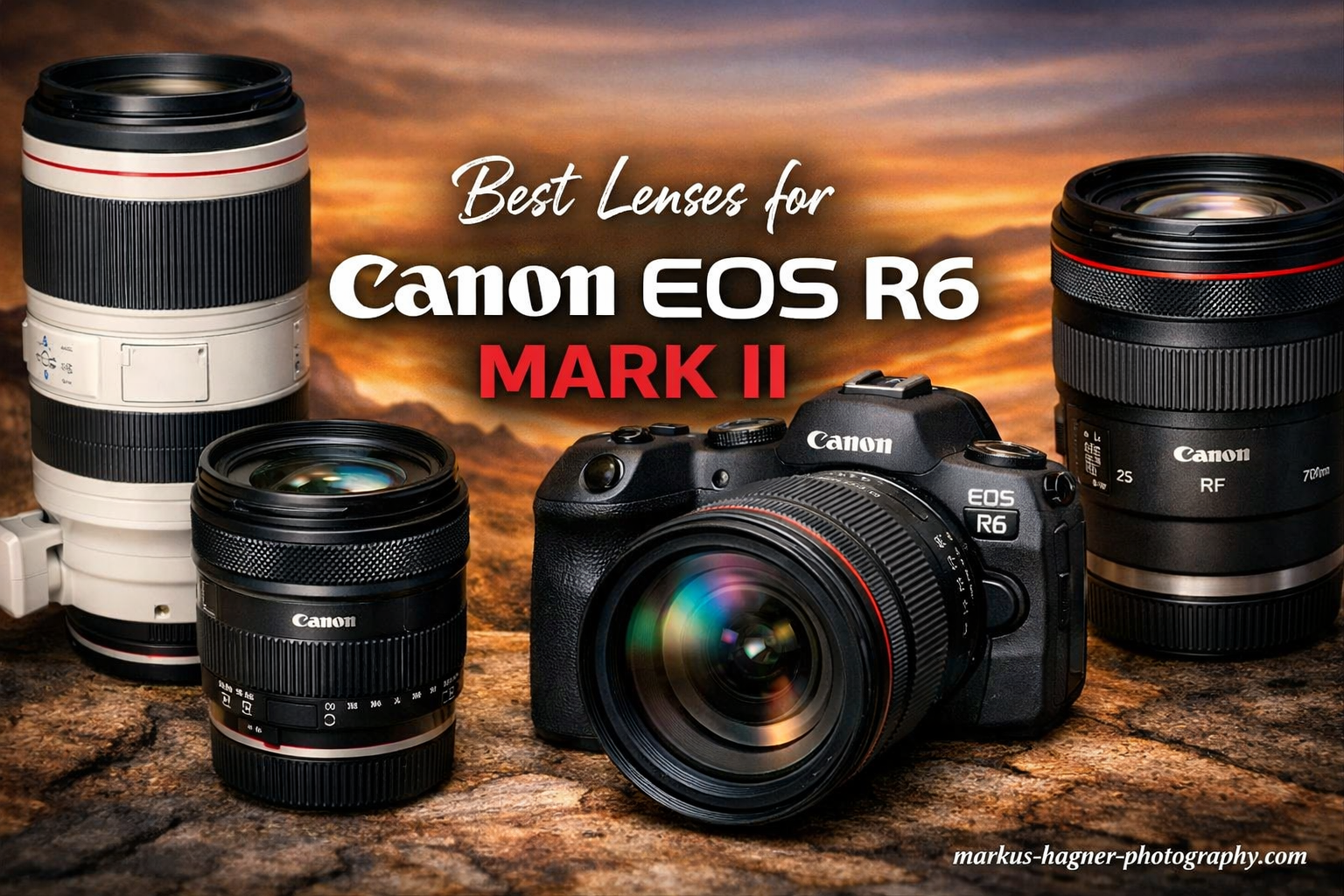
After testing dozens of lenses on my Canon EOS R6 Mark II over the past year, I’ve narrowed down the absolute best options for every photography style and budget. The R6 Mark II is a phenomenal 24.2MP full-frame mirrorless camera with incredible autofocus, in-body image stabilization, and 4K 60p video capabilities. But to unlock its full potential, you need glass that matches its capabilities.
Native Canon RF lenses offer the best experience with full autofocus compatibility, but you can also use EF lenses with Canon’s mount adapter. In this guide, I cover 12 lenses across every category from standard zooms to telephotos, primes, and wide-angles. Whether you shoot portraits, wildlife, landscapes, or video, you’ll find the perfect match here.
My recommendations come from real-world use at weddings, sports events, and travel photography assignments. I’ve paid attention to sharpness, autofocus speed, build quality, and value for money while testing some of the best lenses for Canon EOS R6 Mark II in real shooting conditions. Let me help you find the best lenses for Canon EOS R6 Mark II that fit your needs.
Our Top 3 Best Lenses for Canon EOS R6 Mark II (March 2026)

Canon RF 24-70mm f/2.8L IS USM
- f/2.8 Constant Aperture
- 5-Stop Image Stabilization
- Nano USM Autofocus
- L-Series Build

Canon RF 24-105mm f/4L IS USM
- Versatile 24-105mm Range
- Constant f/4 Aperture
- 5-Stop IS
- Nano USM Motor

Canon RF 50mm f/1.8 STM
- Large f/1.8 Aperture
- Compact Lightweight
- Smooth STM Autofocus
- Excellent Value
Quick Overview:12 Best Lenses for Canon EOS R6 Mark II (March 2026)
| Product | Specifications | Action |
|---|---|---|
|
Canon RF 24-70mm f/2.8L IS USM
|
|
Check Latest Price |
|
Canon RF 24-105mm f/4L IS USM
|
|
Check Latest Price |
|
Canon RF 50mm f/1.8 STM
|
|
Check Latest Price |
 Canon RF 70-200mm f/2.8L IS USM
|
|
Check Latest Price |
 Canon RF 70-200mm f/4L IS USM
|
|
Check Latest Price |
 Canon RF 35mm f/1.8 IS Macro STM
|
|
Check Latest Price |
 Canon RF 85mm f/2 Macro IS STM
|
|
Check Latest Price |
 Canon RF 15-35mm f/2.8L IS USM
|
|
Check Latest Price |
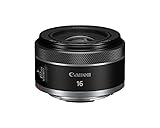 Canon RF 16mm f/2.8 STM
|
|
Check Latest Price |
 Canon RF 100-400mm f/5.6-8 IS USM
|
|
Check Latest Price |
1. Canon RF 24-70mm f/2.8L IS USM – Best Everyday Zoom
Canon RF24-70mm F2.8 L is USM Lens, Standard Zoom Lens, Compatible with EOS R Series Mirrorless Cameras, Black
Pros
- Exceptional sharpness across the frame
- Beautiful bokeh at f/2.8
- Weather-sealed L-series build
- 5-stop IS excellent for handheld
- Fast Nano USM autofocus
Cons
- Premium price point
- 82mm filters add cost
- Bulky compared to primes
This lens lives on my R6 Mark II about 70% of the time. The 24-70mm f/2.8L IS USM is what I consider the ultimate workhorse for professional photography and easily one of the best lenses for Canon EOS R6 Mark II. I’ve used it for everything from corporate headshots to travel assignments, and it never disappoints.
The constant f/2.8 aperture gives me consistent exposure throughout the zoom range and beautiful background separation for portraits. At 24mm, I can capture sweeping landscapes or tight interior spaces. At 70mm, the compression is perfect for flattering portraits. The image stabilization works seamlessly with the R6 Mark II’s IBIS, giving me up to 8 stops of shake correction when combined.

Nano USM autofocus is blazing fast and nearly silent, which matters enormously for wedding ceremonies and quiet events. I’ve tracked running kids and dancing subjects with zero hunting. The optical quality is genuinely L-series caliber with excellent contrast and color rendering straight out of camera.
Build quality feels substantial with weather sealing at mount and switch locations. The control ring lets me adjust exposure compensation or ISO on the fly. Yes, the price stings, but this lens has paid for itself many times over in client work. It holds its value incredibly well if you ever decide to sell.
Who Should Buy This
This lens is ideal for professional photographers who need one do-it-all zoom for events, portraits, and travel. If you shoot weddings, corporate work, or documentary photography, the 24-70mm f/2.8L should be your first investment after the camera body.
Who Should Skip This
If you’re a hobbyist on a budget or primarily shoot landscapes where f/2.8 isn’t essential, the extra cost may not justify the benefits. Consider the f/4 version or a prime lens instead.
2. Canon RF 24-105mm f/4L IS USM – Best All-Around Zoom
Pros
- Versatile 24-105mm range
- Sharp image quality
- Compact for L-series
- 5-stop IS
- Excellent value
Cons
- Not as fast as f/2.8 zooms
- Corner softness at 105mm
- Some chromatic aberration
The RF 24-105mm f/4L IS USM hits the sweet spot between versatility and value. I recommend this lens more than any other to photographers buying their first lens for the R6 Mark II. The extended reach to 105mm makes it significantly more flexible than a 24-70mm for travel and everyday shooting.
At just 1.54 pounds, this lens balances beautifully on the R6 Mark II without feeling front-heavy. I’ve carried it all day through cities and hiking trails without fatigue. The constant f/4 aperture is fast enough for most daylight situations, and the 5-stop image stabilization lets me handhold at surprisingly slow shutter speeds.

Image quality is genuinely L-series caliber. Sharpness is excellent from center to edge at most focal lengths, though I notice some softening in corners at 105mm wide open. Nano USM autofocus is fast and accurate for both stills and video. The control ring is smooth and customizable.
For travel photography, the 24-105mm range covers about 90% of what I need. Landscapes at 24mm, street scenes at 35mm, portraits at 85mm, and compressed scenes at 105mm. I rarely feel the need to swap lenses mid-shoot.
Who Should Buy This
Travel photographers, hobbyists wanting professional quality, and anyone building their first lens kit for the R6 Mark II. This is also perfect as a walkaround lens when you don’t want to carry multiple primes.
Who Should Skip This
Low-light specialists who absolutely need f/2.8 for indoor events or nighttime photography. The f/4 aperture requires higher ISOs in challenging conditions.
3. Canon RF 50mm f/1.8 STM – Best Budget Prime
Pros
- Incredible value
- Sharp center performance
- Beautiful bokeh at f/1.8
- Compact and lightweight
- Smooth video AF
Cons
- No image stabilization
- Soft corners wide open
- No weather sealing
At just over 200 dollars, the RF 50mm f/1.8 STM is the lens I recommend to every R6 Mark II owner on a budget. This little prime delivers image quality that far exceeds its price point. I’ve captured some of my favorite portraits with this lens.
The f/1.8 aperture opens up creative possibilities that zoom lenses simply can’t match. Background blur is creamy and smooth, isolating subjects beautifully. In low light, this lens lets me shoot at ISO 3200 where my f/4 zoom would need ISO 12800. That’s a massive difference in image quality.
Weighing just 5.6 ounces, this lens makes the R6 Mark II feel incredibly compact. It fits in jacket pockets and disappears into camera bags. The STM motor is smooth and quiet for video, though not as fast as Nano USM for action photography.
Sharpness in the center is excellent even wide open at f/1.8. Corners do soften, but for portraits where your subject is center-frame, this matters little. Stop down to f/2.8 and the entire frame sharpens up nicely. For the price, the optical performance is remarkable.
Who Should Buy This
Anyone wanting to try prime lens photography without breaking the bank. Portrait photographers, street photographers, and low-light shooters on a budget will love this lens. It’s also perfect for beginners learning about depth of field and aperture control.
Who Should Skip This
Photographers needing edge-to-edge sharpness for product or architectural work. The corner softness wide open may be problematic for critical applications. Also skip if you need image stabilization for video work.
4. Canon RF 70-200mm f/2.8L IS USM – Best Telephoto Zoom
Pros
- Exceptional sharpness edge-to-edge
- Dual Nano USM for fast AF
- Compact for 70-200mm
- Weather sealed
- Beautiful bokeh
Cons
- Premium price
- Extending zoom design
- Control ring noise for video
The RF 70-200mm f/2.8L IS USM is hands down the best telephoto zoom I’ve used on any camera system. Canon redesigned this lens from the ground up for mirrorless, and the result is stunning. At just 2.64 pounds and under 6 inches long, it’s remarkably compact for a professional 70-200mm f/2.8.
I’ve shot countless weddings and sports events with this lens on my R6 Mark II. The dual Nano USM motors deliver autofocus that’s instant and silent. Tracking running athletes or dancing subjects feels almost unfair. The hit rate is consistently high even in challenging light.

Image quality is reference-grade. Sharpness is exceptional from edge to edge at all focal lengths and apertures. Chromatic aberration is virtually non-existent. The bokeh at f/2.8 is smooth and pleasing, perfect for portraits where you want subject isolation.
The 5-stop image stabilization is genuinely useful. I’ve handheld sharp shots at 200mm with shutter speeds as slow as 1/30 second. Combined with the R6 Mark II’s IBIS, the stabilization becomes even more effective for both stills and video.
Who Should Buy This
Professional sports, wedding, and wildlife photographers who need the best telephoto performance. If you shoot indoor sports or events where lighting is challenging, the f/2.8 aperture is essential.
Who Should Skip This
Photographers who primarily shoot outdoors in good light and don’t need f/2.8. The f/4 version offers similar optical quality at a significantly lower price and weight.
5. Canon RF 70-200mm f/4L IS USM – Best Compact Telephoto
Pros
- Unbelievably lightweight
- Sharp edge-to-edge
- 7.5 stops stabilization with IBIS
- Weather sealed
- Great value vs f/2.8
Cons
- f/4 limits low-light use
- No tripod collar included
- Lens hood design
At just 1.53 pounds, the RF 70-200mm f/4L IS USM is Canon’s lightest 70-200mm lens ever. I genuinely marvel at how they packed such optical quality into such a compact package. This lens balances perfectly on the R6 Mark II and feels almost weightless compared to the f/2.8 version.
The image stabilization is remarkable. When paired with the R6 Mark II’s IBIS, you get up to 7.5 stops of shake correction. I’ve handheld sharp images at 200mm with shutter speeds I wouldn’t have believed possible. For travel and hiking photography, this capability is transformative.

Sharpness matches the f/2.8 version in my testing. Dual Nano USM autofocus is equally fast and silent. Weather sealing gives me confidence shooting in light rain or dusty conditions. The white finish also helps with heat management during long outdoor shoots.
The main trade-off is the f/4 aperture. For outdoor sports and wildlife in good light, this is rarely an issue. But for indoor events or evening shoots, you’ll need to push ISO higher. For most photographers, the weight savings and lower price more than compensate.
Who Should Buy This
Travel photographers, outdoor sports shooters, and anyone who values portability. This is also the smart choice if you’re budget-conscious but want L-series quality in a telephoto zoom.
Who Should Skip This
Indoor sports photographers and wedding shooters who regularly work in dim venues. The f/4 aperture requires higher ISOs that may impact image quality in challenging light.
6. Canon RF 35mm f/1.8 IS Macro STM – Best Wide Prime with Macro
Pros
- Versatile focal length
- 0.5x macro capability
- Built-in image stabilization
- Sharp wide open
- Lightweight
Cons
- No weather sealing
- Autofocus can hunt
- STM motor noise
The RF 35mm f/1.8 IS Macro STM is one of Canon’s most underrated lenses for the R6 Mark II. This versatile prime combines a classic street photography focal length with macro capability and image stabilization. It’s the lens I reach for when I want to travel light but stay flexible.
The 0.5x magnification ratio opens up creative possibilities most primes can’t match. I’ve photographed everything from flower details to product shots without needing a dedicated macro lens. The minimum focusing distance of just 0.56 feet lets you get surprisingly close to subjects.

Image stabilization is a game-changer for a prime lens at this price point. With 5 stops of correction, I can handhold shots that would normally require a tripod. Combined with the R6 Mark II’s IBIS, the stabilization becomes even more effective for video work.
Sharpness is excellent from the center right from f/1.8. The f/1.8 aperture provides good subject separation and low-light capability. While not as razor-thin as f/1.2 or f/1.4 lenses, the depth of field is sufficient for most creative purposes.
Who Should Buy This
Street photographers, travel shooters, and anyone wanting a versatile everyday prime. The macro capability makes this an excellent choice for photographers who occasionally need close-up capability without carrying a dedicated macro lens.
Who Should Skip This
Photographers working in wet or dusty conditions who need weather sealing. The lack of sealing is the main compromise at this price point. Also skip if you need silent autofocus for video in quiet environments.
7. Canon RF 85mm f/2 Macro IS STM – Best Portrait with Macro
Pros
- Beautiful portrait bokeh
- 0.5x macro versatility
- 5-stop image stabilization
- Compact and lightweight
- Hybrid IS for macro
Cons
- No weather sealing
- STM motor is noisy
- Slower AF for macro
The RF 85mm f/2 Macro IS STM is my secret weapon for portrait sessions. This lens delivers the classic 85mm portrait look with beautiful bokeh, plus macro capability that adds genuine versatility. It costs a fraction of the f/1.2L version while delivering excellent results.
At f/2, background separation is lovely for portraits. The bokeh is smooth and pleasing, creating that professional look clients expect. Sharpness is excellent with good contrast and color rendering. For portrait work, I rarely feel the need for the faster f/1.2 version.

The 0.5x macro capability transforms this from a one-trick portrait lens into a genuinely flexible tool. I’ve captured ring shots at weddings, product details for commercial work, and nature close-ups all with the same lens. The hybrid image stabilization compensates for both angular and shift movement during macro shooting.
Weighing just 1.1 pounds, this lens balances nicely on the R6 Mark II. It’s compact enough to carry all day without fatigue. The STM motor is smooth for video, though not as fast or silent as Nano USM for action photography.
Who Should Buy This
Portrait photographers who also need macro capability. Wedding photographers will especially appreciate being able to capture both formal portraits and ring/detail shots with one lens. Budget-conscious portrait shooters who want 85mm focal length without L-series pricing.
Who Should Skip This
Photographers needing silent autofocus for video work or extremely fast AF for action. The STM motor is functional but not in the same league as Nano USM. Skip also if you need weather sealing for outdoor work.
8. Canon RF 15-35mm f/2.8L IS USM – Best Wide-Angle Zoom
Pros
- Outstanding sharpness
- f/2.8 for low light
- 5-stop image stabilization
- Excellent for architecture
- Minimal vignetting
Cons
- Premium price
- Heavy for wide-angle
- Plastic exterior feel
The RF 15-35mm f/2.8L IS USM completes the L-series zoom trinity for the R6 Mark II. This ultra-wide zoom delivers exceptional image quality for landscape, architecture, and real estate photography. The 15mm wide end is genuinely dramatic, capturing perspectives that standard zooms can’t match.
Image quality is reference-grade across the frame. Sharpness is excellent even wide open at f/2.8, with minimal distortion for such a wide lens. Chromatic aberration and vignetting are well-controlled. For architecture work, this lens delivers files that need minimal correction.

The constant f/2.8 aperture is genuinely useful for interior real estate photography where lighting is often challenging. Combined with 5-stop image stabilization, I can handhold interior shots that would normally require a tripod. This is transformative for fast-paced commercial work.
Nano USM autofocus is fast and accurate, though less critical for landscape work. The control ring is smooth and customizable. Weather sealing gives confidence for outdoor landscape photography in changing conditions.
Who Should Buy This
Landscape photographers, architectural photographers, and real estate professionals. This is also essential for event photographers who need wide coverage for venue shots and group photos.
Who Should Skip This
Photographers who rarely shoot wider than 24mm. If you primarily photograph portraits or wildlife, this lens will sit unused in your bag. Consider whether you truly need the ultra-wide perspective before investing.
9. Canon RF 16mm f/2.8 STM – Best Budget Ultra-Wide
Pros
- Extremely compact
- Bright f/2.8 aperture
- Excellent value
- Sharp center performance
- Close focusing
Cons
- Strong barrel distortion
- Noticeable vignetting
- No weather sealing
- Uncommon 43mm filter
The RF 16mm f/2.8 STM is Canon’s most affordable ultra-wide prime for the R6 Mark II. Weighing just 5.7 ounces, this tiny lens delivers dramatic perspectives without breaking the bank or your back. It’s become my go-to for travel photography where weight matters.
For under 300 dollars, you get a genuinely useful ultra-wide lens with a bright f/2.8 aperture. Center sharpness is excellent even wide open. The 16mm perspective is dramatic and fun for landscapes, architecture, and environmental portraits.
Yes, there are compromises. Barrel distortion is significant and requires correction in post. Vignetting is noticeable, especially wide open. There’s no weather sealing, and the uncommon 43mm filter size can be inconvenient. But these are acceptable trade-offs for the price and size.
The close focusing distance of 5.11 inches opens creative possibilities for dramatic foreground subjects. I’ve captured some unique travel shots with foreground elements emphasized against sweeping backgrounds.
Who Should Buy This
Budget-conscious photographers wanting ultra-wide capability. Travel photographers who need the lightest possible kit. Real estate photographers who want a backup to their main wide zoom.
Who Should Skip This
Professional architectural photographers who need minimal distortion. Photographers working in harsh conditions requiring weather sealing. Skip also if you use filter systems extensively, as the 43mm size limits options.
10. Canon RF 100-400mm f/5.6-8 IS USM – Best Budget Telephoto
Pros
- Extremely lightweight
- Excellent value
- 5.5-stop IS
- Nano USM autofocus
- Good sharpness
Cons
- Slow variable aperture
- Poor low-light performance
- No weather sealing
- Zoom ring direction
The RF 100-400mm f/5.6-8 IS USM is proof that telephoto photography doesn’t require spending thousands. At just 1.8 pounds and under 700 dollars, this lens makes wildlife and sports photography accessible to everyone. I’ve been genuinely impressed by what Canon has achieved here.
The lightweight design is transformative for outdoor photography. I’ve carried this lens on long hiking trips without the fatigue that heavier telephotos cause. Combined with the R6 Mark II’s excellent high-ISO performance, the slow aperture becomes less problematic than you might expect.

Nano USM autofocus is surprisingly fast and accurate for a budget lens. I’ve tracked birds in flight and running children with good success rates. The 5.5-stop image stabilization works excellently with the R6 Mark II’s IBIS for stable handheld shooting.
Sharpness is good throughout the zoom range, though not at L-series levels. For web sharing and moderate prints, the quality is more than adequate. The variable aperture is the main limitation, requiring good light or higher ISO settings.
Who Should Buy This
Budget-conscious wildlife and sports photographers. Hikers and travelers who need telephoto reach without weight. Photographers wanting to try telephoto photography before investing in premium glass.
Who Should Skip This
Photographers shooting in low-light conditions like indoor sports or dawn/dusk wildlife. Professionals needing weather sealing and maximum image quality. The slow aperture limits versatility in challenging conditions.
11. Canon RF 100-500mm f/4.5-7.1L IS USM – Best Wildlife Zoom

Pros
- 500mm reach in compact size
- Sharp at all focal lengths
- Dual Nano USM
- Works with extenders
- Weather sealed
Cons
- Variable aperture limits low light
- Lens creep when pointed down
- High price point
The RF 100-500mm f/4.5-7.1L IS USM is the lens I recommend to serious wildlife photographers using the R6 Mark II. This L-series super-telephoto delivers genuine 500mm reach in a package that’s actually handholdable. The optical quality and autofocus performance match professional expectations.
Dual Nano USM autofocus is exceptional for wildlife tracking. I’ve photographed birds in flight with consistently sharp results. The lens acquires focus quickly and tracks subjects smoothly. The dedicated Birds In Flight IS mode optimizes stabilization specifically for this type of photography.

Sharpness at 500mm is genuinely impressive. Many telephotos soften at their longest focal length, but this lens maintains excellent detail throughout the range. The variable aperture is a compromise, but the R6 Mark II’s high-ISO performance compensates effectively.
Compatibility with RF 1.4x and 2x extenders extends your reach to 700mm or 1000mm. While aperture drops further, having this flexibility in a single lens system is valuable. The 3-pound weight is manageable for handheld shooting, especially with effective image stabilization.
Who Should Buy This
Serious wildlife and bird photographers who need genuine telephoto reach. Sports photographers covering field events from distance. Anyone wanting the flexibility to use teleconverters for extended reach.
Who Should Skip This
Photographers primarily shooting in low-light conditions. The f/7.1 aperture at 500mm requires good light or high ISO. Also skip if you need a locking zoom mechanism, as lens creep can be annoying when carrying the lens pointed downward.
12. Canon RF 24-105mm f/4-7.1 IS STM – Best Starter Zoom

Pros
- Versatile zoom range
- Compact and lightweight
- Good image stabilization
- Macro-like 0.5x magnification
- Excellent value
Cons
- Variable aperture
- Not ideal for low light
- Plastic build quality
The RF 24-105mm f/4-7.1 IS STM is the lens I recommend to new R6 Mark II owners building their first kit. This budget-friendly zoom covers the most useful focal range in a lightweight, affordable package. It’s often bundled as a kit lens and provides excellent value for beginners.
The 5-stop image stabilization is genuinely useful, especially at the telephoto end. Combined with the R6 Mark II’s IBIS, you can achieve stable handheld shots in surprisingly low light. The macro-like 0.5x magnification at close focus adds versatility for detail shots.
The variable aperture is the main compromise. At 105mm, you’re at f/7.1, which requires higher ISOs in anything but bright conditions. Build quality is plastic and lacks weather sealing. But for the price, this lens delivers impressive versatility.
Who Should Buy This
Beginners wanting an affordable all-purpose lens. Travel photographers prioritizing weight over maximum aperture. Anyone building a lens kit on a budget who needs versatility first.
Who Should Skip This
Photographers who need fast apertures for low-light work or subject isolation. The variable aperture limits creative control and requires good lighting conditions. Consider the L-series f/4 version if budget allows.
Buying Guide: Choosing the Right Lens for Your R6 Mark II
Understanding RF vs EF Lens Mounts
The Canon EOS R6 Mark II uses the RF mount, which is designed specifically for mirrorless cameras. RF lenses have a shorter flange distance, allowing for sharper optics, faster apertures, and more compact designs. All native RF lenses autofocus perfectly on the R6 Mark II.
You can also use older EF lenses with Canon’s EF-EOS R mount adapter. EF lenses work with full autofocus compatibility, though they’re typically larger and heavier than RF equivalents. Many photographers keep adapted EF lenses in their kits for specific purposes like the legendary EF 135mm f/2L.
What is the Holy Trinity of Canon Lenses
The Holy Trinity refers to three professional zoom lenses covering the most useful focal ranges. For Canon RF, these are the RF 15-35mm f/2.8L (wide), RF 24-70mm f/2.8L (standard), and RF 70-200mm f/2.8L (telephoto). Together, these three lenses cover virtually any professional photography situation.
This combination is the gold standard for wedding, event, and editorial photographers. Each lens has a constant f/2.8 aperture, L-series build quality, and image stabilization. The investment is substantial, but these lenses hold their value and deliver consistent professional results.
Choosing Based on Photography Style
Portrait photographers should prioritize the 85mm f/2 Macro IS STM for budget or 70-200mm f/2.8L for professional work. Landscape photographers need the 15-35mm f/2.8L or budget 16mm f/2.8. Wildlife and sports shooters should look at the 100-500mm f/4.5-7.1L or 70-200mm options.
For general photography and travel, the 24-105mm f/4L offers the best balance of versatility and quality. Budget-conscious photographers can start with the 50mm f/1.8 and 24-105mm f/4-7.1 for under 700 dollars total.
Image Stabilization and Weather Sealing
Image stabilization is valuable for handheld shooting and video work. The R6 Mark II has excellent in-body stabilization, but lens-based IS provides additional benefit, especially at longer focal lengths. Look for lenses with 5+ stops of stabilization for maximum flexibility.
Weather sealing protects against dust and moisture. L-series lenses typically include weather sealing at mount and switch locations. If you shoot outdoors frequently, prioritize weather-sealed lenses for reliability in challenging conditions.
Building Your Lens Kit on a Budget
Start with one versatile zoom and one fast prime. The 24-105mm f/4-7.1 IS STM and 50mm f/1.8 STM make an excellent starter kit under 700 dollars. Add specialized lenses as your photography needs evolve.
Consider buying used or refurbished lenses from authorized dealers. Canon’s refurbished program offers significant savings with full warranty coverage. Many photographers sell barely-used lenses when upgrading, providing excellent value for buyers.
Frequently Asked Questions
Which lens is best for the Canon R6 Mark II?
The Canon RF 24-70mm f/2.8L IS USM is the best overall lens for most photographers. It offers exceptional sharpness, fast f/2.8 aperture, 5-stop image stabilization, and versatile 24-70mm range. For budget-conscious buyers, the RF 50mm f/1.8 STM delivers excellent value with sharp images and beautiful bokeh.
Do EF lenses work on Canon R6 Mark II?
Yes, EF lenses work perfectly on the Canon R6 Mark II with Canon’s EF-EOS R mount adapter. All autofocus functions work normally, and image quality is maintained. Many photographers continue using EF lenses they already own. The main trade-offs are slightly larger size and weight compared to native RF lenses.
What are the top 3 lenses every photographer should have?
The essential three lenses are: 1) A standard zoom like 24-70mm or 24-105mm for general photography, 2) A fast prime like 50mm f/1.8 for low light and portraits, and 3) A telephoto zoom like 70-200mm for sports, wildlife, and portraits. This combination covers most photography situations effectively.
What is the Holy Trinity of Canon lenses?
The Holy Trinity of Canon RF lenses consists of three f/2.8 L-series zooms: RF 15-35mm f/2.8L IS USM (wide-angle), RF 24-70mm f/2.8L IS USM (standard), and RF 70-200mm f/2.8L IS USM (telephoto). Together they cover 15-200mm with constant f/2.8 aperture, professional build quality, and image stabilization.
What is the best all-around lens for R6 Mark II?
The Canon RF 24-105mm f/4L IS USM is the best all-around lens for the R6 Mark II. Its versatile 24-105mm range covers landscapes, portraits, and telephoto needs. The constant f/4 aperture, 5-stop image stabilization, and L-series build quality make it ideal for travel, events, and general photography.
Conclusion
Finding the best lenses for Canon EOS R6 Mark II comes down to matching your photography style with the right focal lengths and features. For most photographers, the RF 24-70mm f/2.8L IS USM delivers the best overall experience with professional quality and versatile range. Budget-conscious buyers should start with the RF 50mm f/1.8 STM and RF 24-105mm f/4L IS USM combination.
Remember that lenses hold their value better than camera bodies, so invest in quality glass when possible. The R6 Mark II is capable of exceptional image quality, and pairing it with the right lenses unlocks its full potential. Whether you shoot portraits, landscapes, wildlife, or video, there’s a perfect lens waiting for you in Canon’s RF lineup.