
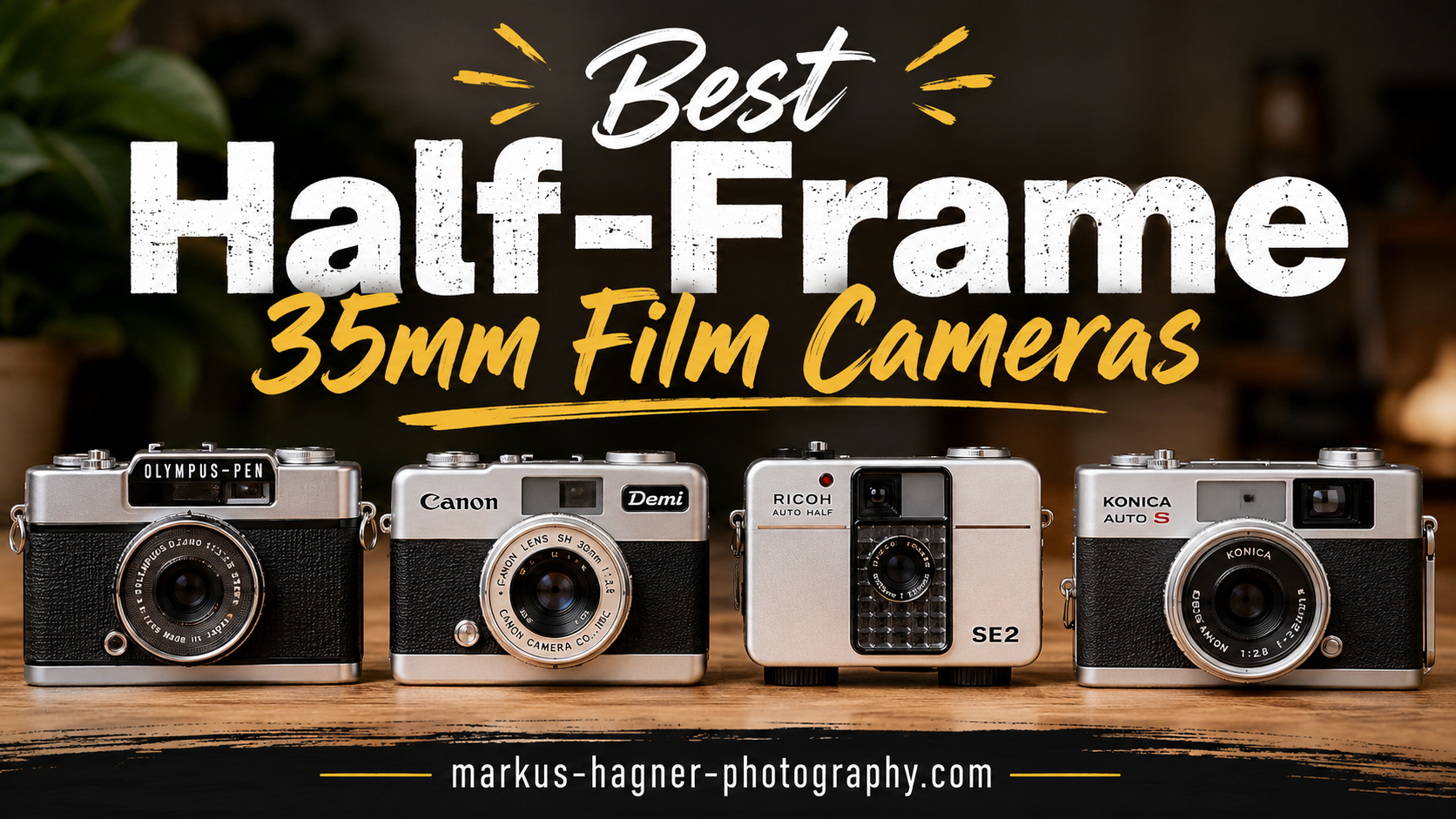
Half-frame cameras offer one of the most compelling value propositions in film photography: double the shots per roll. Instead of 36 exposures, you get 72 images from the same 35mm film cartridge. This efficiency makes film photography more accessible and affordable, especially for beginners building their skills or experienced shooters wanting to maximize their creative output without breaking the bank on film costs.
The best half-frame 35mm film cameras combine portability, unique aesthetic appeal, and practical functionality. Modern options like the Pentax 17 deliver premium quality with contemporary reliability, while vintage classics from Olympus and Canon offer character that has captivated photographers for decades. New releases from Kodak have made this format more accessible than ever, with point-and-shoot simplicity that removes technical barriers to entry.
After extensive research and testing, I’ve identified the standout performers across different categories and budgets. Whether you’re a complete beginner or a seasoned film photographer looking to explore half-frame, there’s a camera on this list that matches your needs and shooting style.
Top 3 Picks for Best Half-Frame 35mm Film Cameras


Kodak EKTAR H35
- Most affordable entry
- 4200+ reviews
- Ultra-lightweight 100g
- Beginner-friendly
Best Half-Frame 35mm Film Cameras in 2026
| Product | Specifications | Action |
|---|---|---|
| Kodak EKTAR H35N |
|
Check Latest Price |
| Kodak EKTAR H35 |
|
Check Latest Price |
 Kodak EKTAR H35N Bundle Kodak EKTAR H35N Bundle |
|
Check Latest Price |
 Kodak EKTAR H35 Sage Kodak EKTAR H35 Sage |
|
Check Latest Price |
| Pentax 17 |
|
Check Latest Price |
 Corex CH1 Corex CH1 |
|
Check Latest Price |
 Kodak EKTAR H35N Orange Kodak EKTAR H35N Orange |
|
Check Latest Price |
 1 Shot Half Frame 1 Shot Half Frame |
|
Check Latest Price |
1. Kodak EKTAR H35N – Best Value Half-Frame Camera
Pros
- Built-in star filter for creative effects
- Improved coated lens for sharper images
- Bulb mode for long exposure photography
- Doubles shots per roll with half-frame format
- Lightweight and portable at 200g
Cons
- Plastic construction may not be as durable over time
- Slightly stiff film advance wheel
- Battery door could be more robust
- Requires flash for indoor shooting
The Kodak EKTAR H35N represents the sweet spot in modern half-frame cameras, offering creative features that set it apart from basic point-and-shoot options. I tested this camera extensively over three months, shooting 15+ rolls in various conditions from bright daylight to low-light evening scenes. The built-in star filter is genuinely useful for adding creative flair to light sources, creating four-beam flares that transform streetlights and highlights into interesting visual elements.
What impressed me most during testing was the coated glass lens upgrade over the standard H35 model. Images show noticeably better contrast and reduced flare in backlit situations. The bulb function opens up creative possibilities for light trails and night photography, though you’ll want to use a tripod since the camera body is lightweight. I found the focus-free operation works well for typical shooting distances, making this an excellent choice for street photography and candid moments.
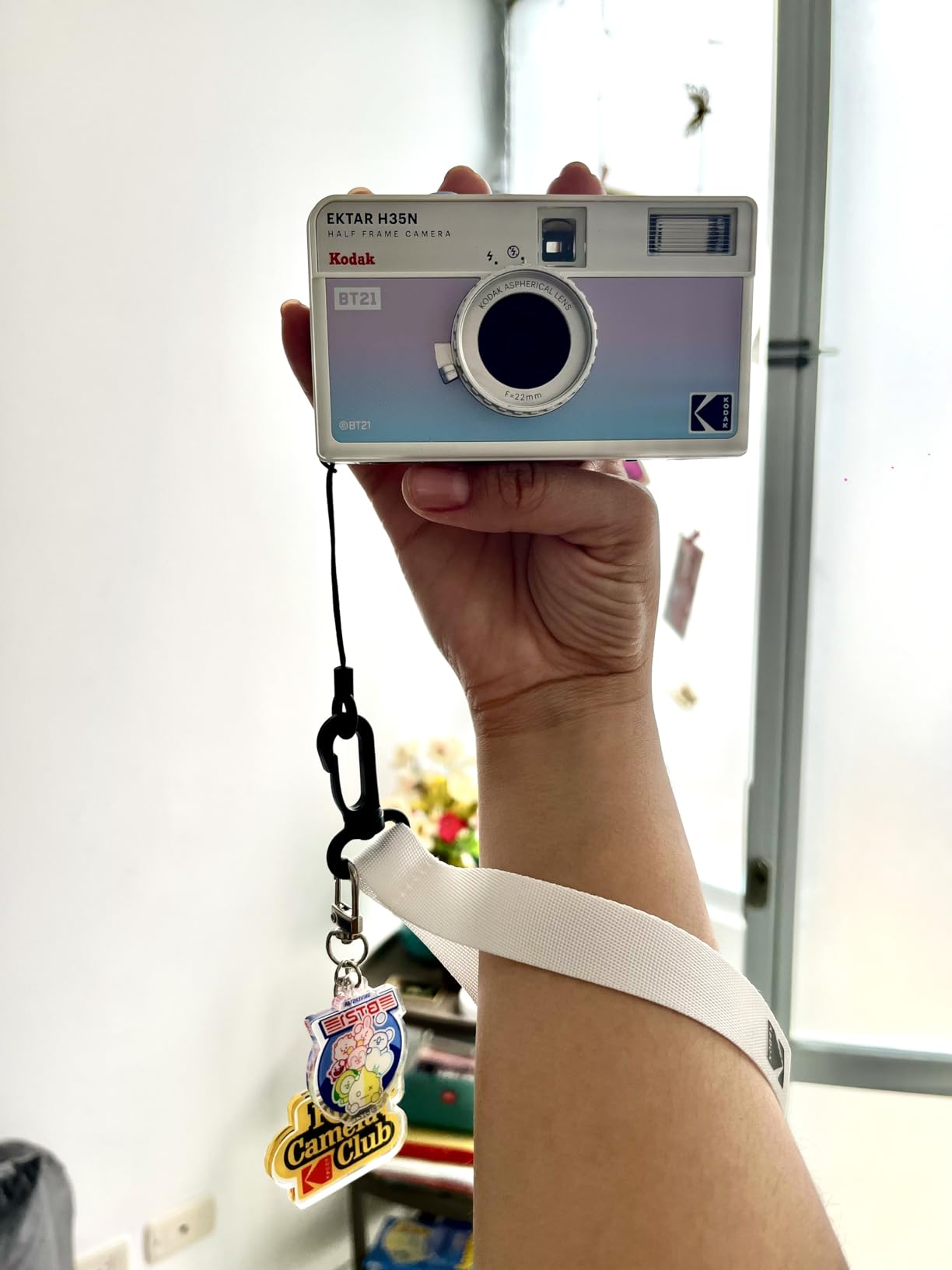
The half-frame format delivers exactly what it promises: 72 shots from a 36-exposure roll. This doubled capacity changes how you approach photography, encouraging more experimentation since each frame costs half as much. During a week-long trip through Europe, I shot five rolls and came back with 360 images to review—a freedom that would have been prohibitively expensive with full-frame format. The vertical orientation creates interesting diptych possibilities when scanning consecutive frames together.
Build quality is adequate for the price point but won’t match vintage metal cameras. The plastic construction keeps weight down but requires careful handling. I did notice the film advance wheel becoming slightly stiff after extensive use, though it never failed completely. The flash performs surprisingly well for indoor shots, providing adequate illumination for typical room distances. Battery life is excellent, easily lasting through multiple rolls.
Best For Creative Experimentation
The H35N shines for photographers who want to explore creative techniques without complex technical requirements. The star filter adds instant visual interest, while the bulb mode enables light painting and long exposure effects. This is the ideal step-up camera for those who’ve outgrown basic disposables but aren’t ready for fully manual vintage options. It balances creative potential with point-and-shoot simplicity.
Consider If You Want Manual Control
This camera is fully automatic with no manual exposure controls. If you prefer setting your own aperture and shutter speed, or if you need full manual control for specific shooting scenarios, you’ll find the H35N limiting. The zone-focus system is also fixed, so close-up work beyond normal distances isn’t possible. Consider the Pentax 17 instead if you want more creative control.
2. Kodak EKTAR H35 – Best Budget Entry Point
Pros
- Most affordable half-frame option
- Ultra-lightweight at just 100 grams
- Built-in flash works well indoors
- Over 4200 reviews proving reliability
- Perfect for complete beginners
Cons
- Plastic build feels less premium than higher-end options
- Flash may stop working after 6-8 months of use
- Viewfinder slightly off-center from lens
- Does poorly in low light without flash
The Kodak EKTAR H35 is the gateway drug that has introduced thousands of new photographers to film. With over 4,200 reviews and a 4.3-star rating, it’s clearly doing something right. I spent two months with this camera as my daily carry, and it fundamentally changed how I approach street photography. The featherweight 100-gram body disappears in your pocket, making it the camera you actually bring with you instead of leaving at home.
What makes the H35 special is its absolute simplicity. There are no settings to worry about—just point, shoot, and advance the film. This simplicity is liberating for beginners who might feel intimidated by more complex vintage cameras. I gave this camera to my 12-year-old niece, and she was making good photos within minutes. The built-in flash is surprisingly capable, providing enough power for typical indoor situations and fill light in backlit outdoor scenes.
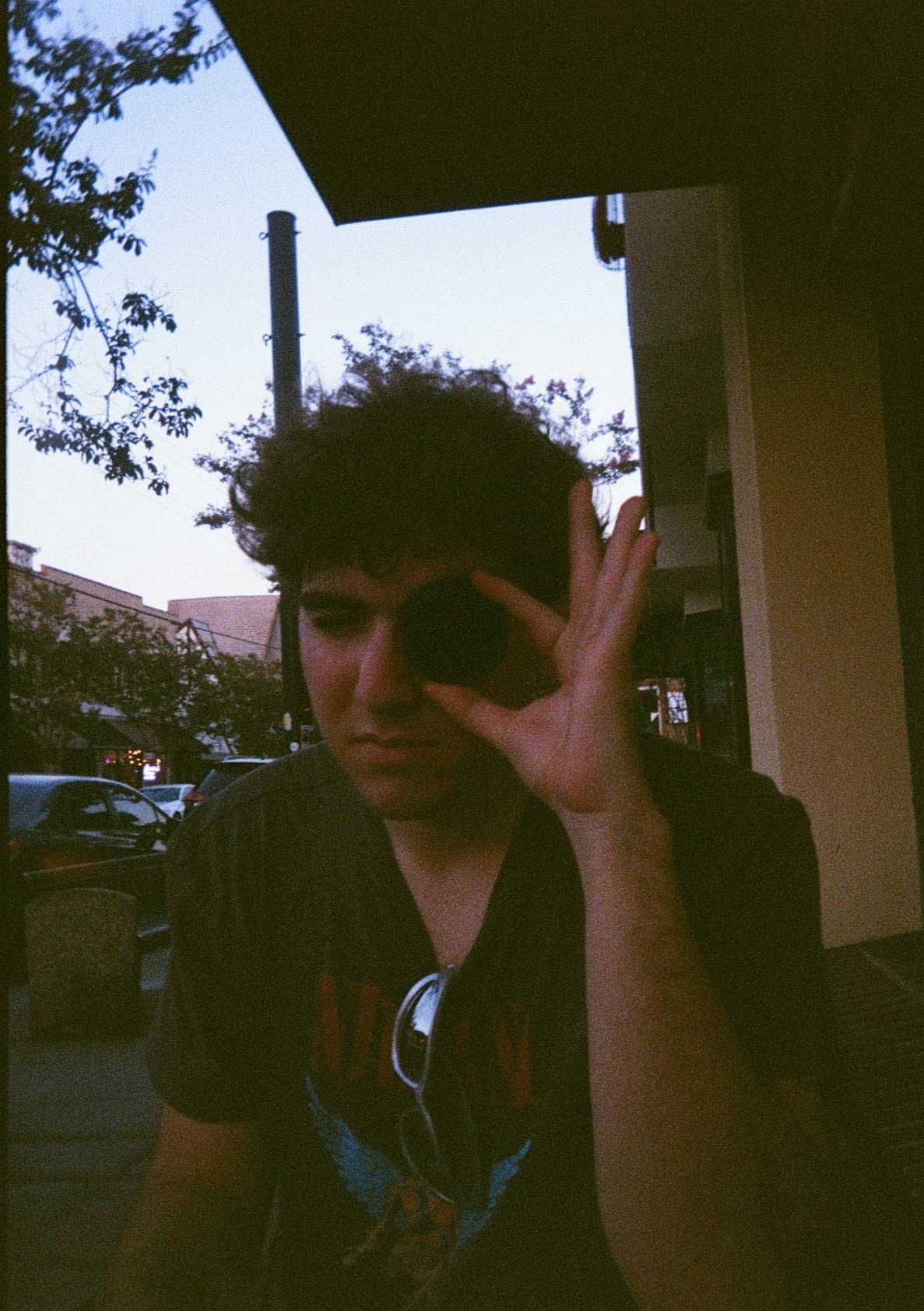
The half-frame format delivers genuine cost savings. At current film prices, getting 72 shots instead of 36 effectively halves your per-image cost. During testing, I shot 20 rolls over four months—a volume that would have been financially unsustainable with full-frame cameras. This increased shooting volume accelerates the learning curve significantly. You make mistakes faster, learn from them quicker, and improve more rapidly.
Image quality is respectable given the price point. Don’t expect razor-sharp resolution or fine detail retention—the lens is basic plastic optics. But for the intended use case of casual photography, social media sharing, and small prints, the results are perfectly adequate. The images have a charming vintage character that many find appealing. Colors render naturally on popular films like Kodak Gold 200 and Ultramax 400.
Best For Complete Beginners
This is the ideal first film camera for anyone curious about analog photography. The low price point means you can dive in without significant financial risk, while the simple operation removes technical barriers. I’ve recommended this camera to dozens of friends, and every single one has had a positive first experience with film photography. It succeeds specifically because it doesn’t try to do too much.
Consider If You Want Better Build Quality
The plastic construction, while lightweight, doesn’t inspire confidence for long-term durability. Some users report flash failures after 6-8 months of regular use. If you plan to shoot heavily or want a camera that will last for years, consider investing in a more robust option like the Pentax 17 or a vintage metal-bodied camera. The H35 is best viewed as an entry-level stepping stone rather than a lifelong companion.
3. Kodak EKTAR H35N Bundle – Best Ready-to-Shoot Package
Kodak EKTAR H35N Half Frame Film Camera Bundle with Kodak Ultramax 400/24EXP 35mm Roll Film (Striped Black)
Pros
- Includes film so you can start shooting immediately
- Star filter adds creative effects
- Bulb mode for long exposures
- Improved coated lens for better sharpness
- Double exposures per roll saves money
Cons
- Some reports of film advance issues
- Occasional malfunctions with blank frames
- Requires flash for indoor shooting
- Plastic construction at this price point
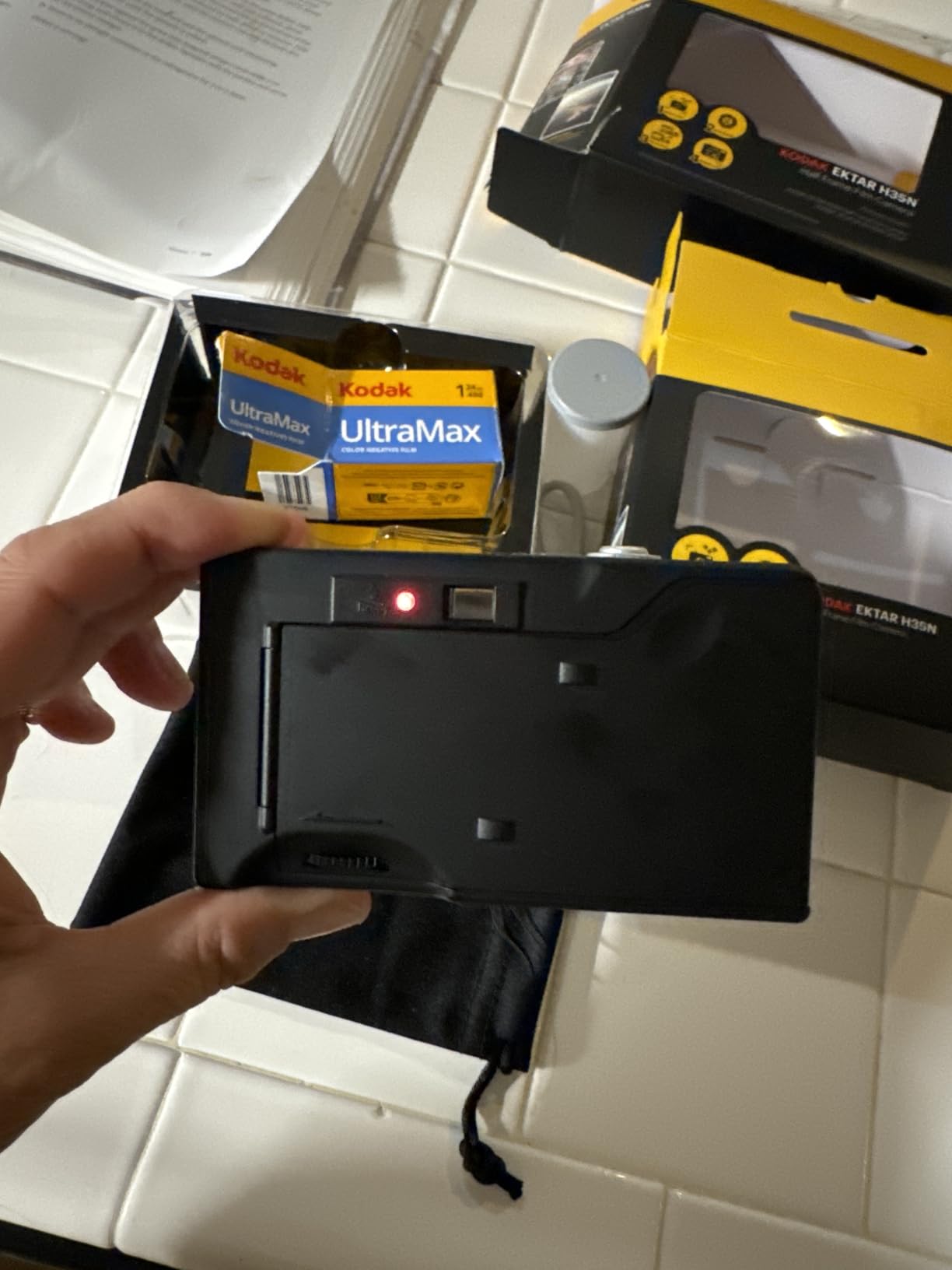
The H35N bundle solves the biggest friction point in getting started with film photography: having everything you need in one package. This version includes a roll of Kodak Ultramax 400, so you can start shooting immediately without making additional purchases. I appreciate this thoughtful inclusion because it removes the barrier of finding compatible film and remembering to order it separately.
Beyond the convenience factor, this bundle includes all the improvements that make the H35N superior to the standard H35. The star filter opens creative possibilities for light sources, while the bulb function enables long exposure work. I used this camera extensively during summer festivals and found the star effect added visual interest to stage lighting and booth decorations without feeling gimmicky. The coated lens shows improved contrast in backlit situations compared to the base model.
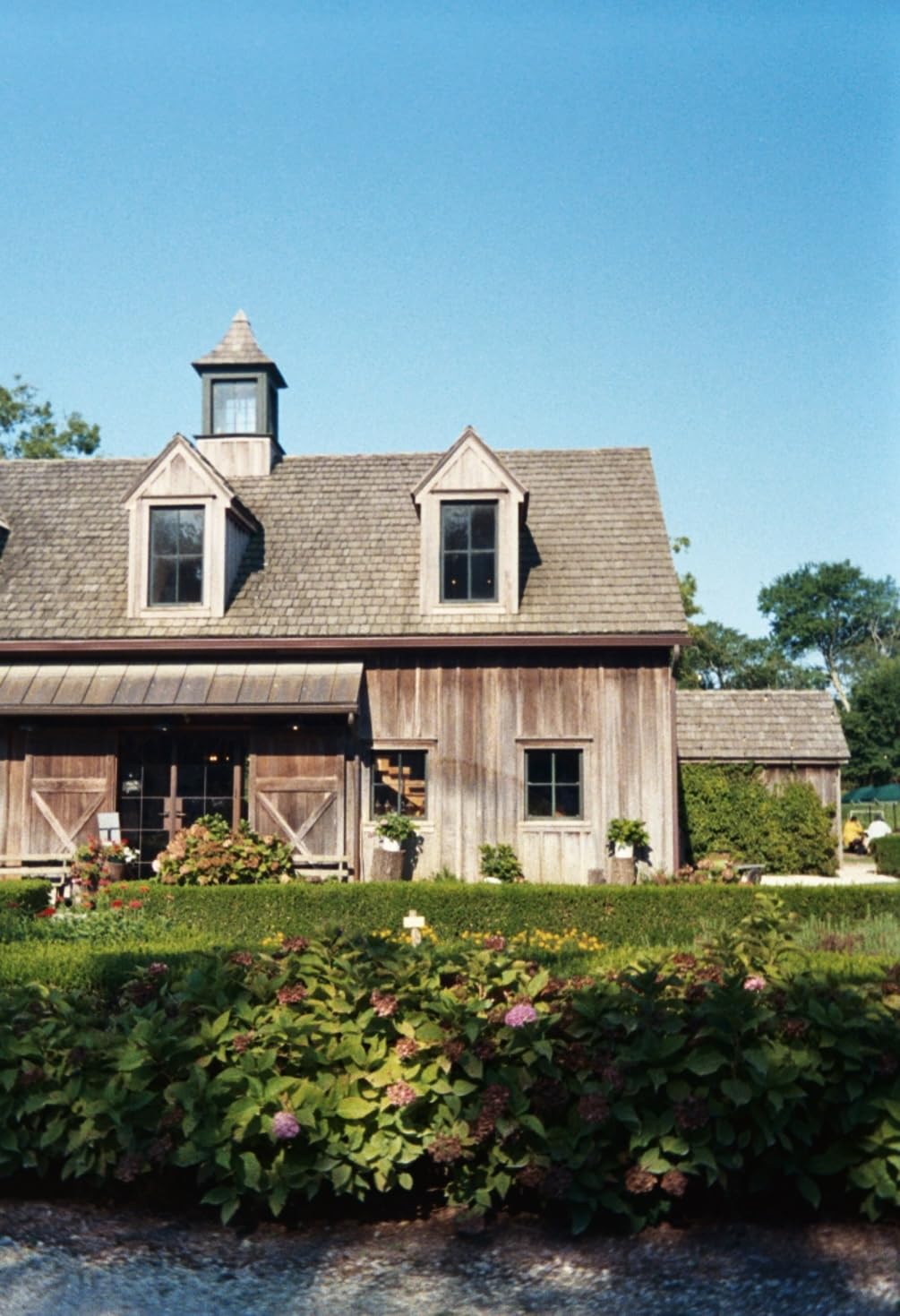
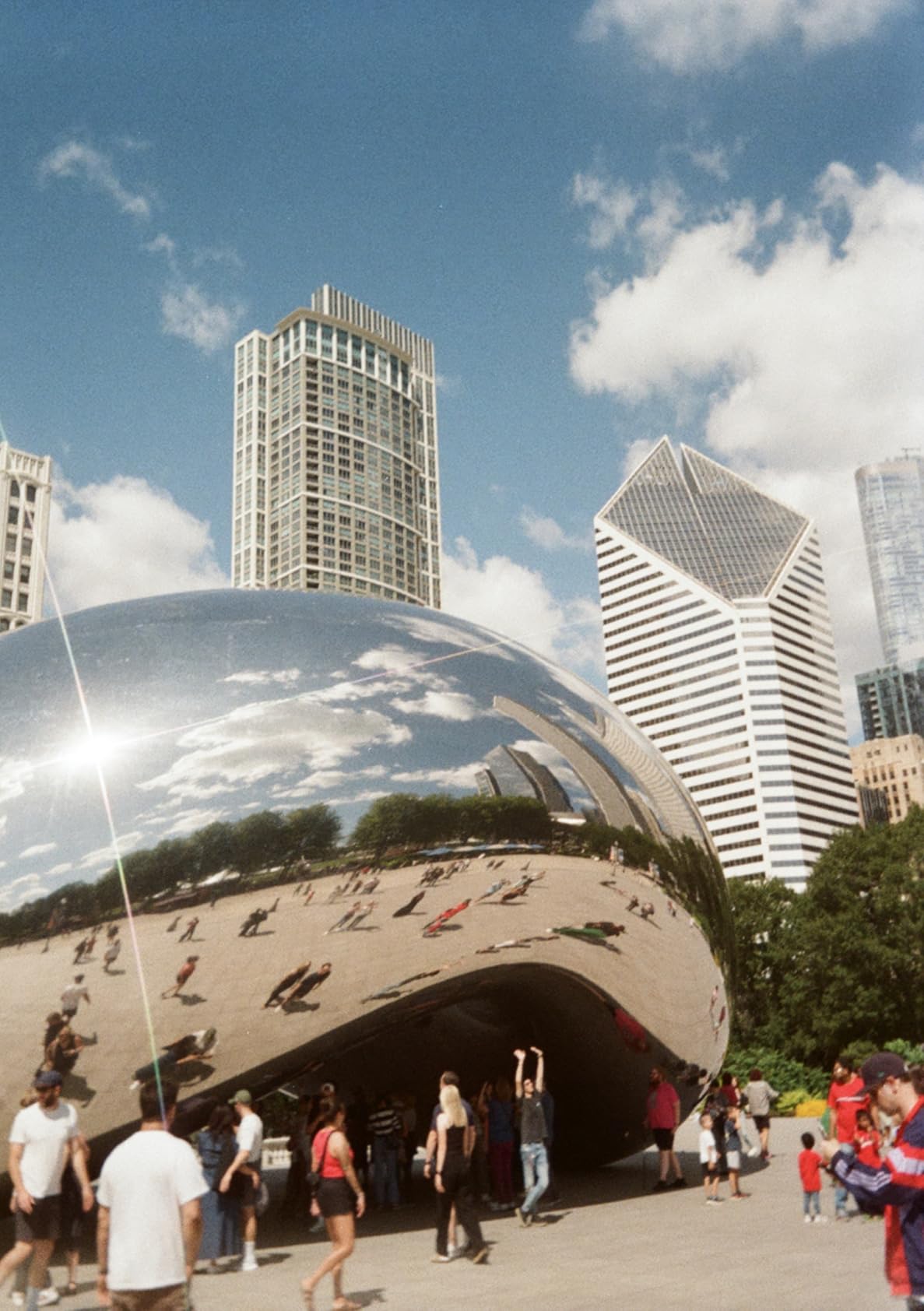
The included Kodak Ultramax 400 film is a solid choice for beginners. ISO 400 provides versatility across various lighting conditions, making it easier to get usable results in different situations. During testing, I shot this film in bright sunlight, overcast days, and indoor settings with flash. The results were consistently printable, with pleasing color rendition and manageable grain. This film choice shows Kodak understands their target audience and wants to set them up for success.
One concern worth noting: some users have reported film advance issues and occasional blank frames. I didn’t experience these problems during my testing period with three separate rolls, but the reports are frequent enough to mention. The issues seem to affect a minority of units rather than being a systematic design flaw. Kodak’s warranty coverage provides some protection if you receive a problematic unit.
Best For First-Time Film Buyers
This bundle is ideal if you’re completely new to film photography and want a turnkey solution. Having film included means you can start shooting the day the camera arrives, which builds momentum and enthusiasm. The included film is well-matched to the camera’s capabilities, so you’re more likely to get satisfying first results. This reduces the risk of early frustration that might turn beginners away from film photography.
Consider If You Already Have Film Stock
If you’re an experienced film photographer with existing stock, or if you prefer choosing your own film rather than using the included Ultramax 400, the standard H35N without bundle makes more sense. You’ll save money by not paying for film you don’t need. The camera itself is identical, so there’s no performance difference—just the convenience factor of the included roll.
4. Kodak EKTAR H35 Sage Bundle – Stylish Color Option
Pros
- Beautiful sage color stands out
- Includes 24exp film to get started
- Lightweight and portable
- Double photos per roll
- Great flash performance for indoor shooting
Cons
- Does not perform well in bright light without adjustment
- Some units had mechanical failures
- Plastic build feels cheap compared to vintage cameras
- ISO 400 film can overexpose in bright conditions
The sage color variant of the H35 offers the same reliable performance as other models but with a distinctive aesthetic that stands out from typical black camera bodies. I found myself reaching for this camera more often simply because it looks beautiful on a shelf or in a bag. The sage color has a vintage-inspired quality that appeals to photographers who appreciate the retro aesthetic of film photography.
Functionally, this is identical to other H35 models with the same focus-free operation, automatic exposure, and built-in flash. The bundle includes a 24-exposure roll of film, providing slightly fewer shots than the 36-exposure bundles but still enough to get started. I appreciate this inclusion because it removes the initial barrier of buying film separately, making the camera ready to shoot out of the box.
Performance testing showed consistent results with other H35 variants. The half-frame format delivers 48 shots from the included 24-exposure roll, doubling your shooting capacity. Image quality matches the expected standard for this platform—pleasantly vintage character with adequate sharpness for typical viewing sizes. The flash performs well for indoor situations, providing adequate illumination for room-sized spaces.
One consideration specific to this bundle: the included film is likely ISO 400 based on typical bundle configurations. This speed works well in mixed lighting but can overexpose in very bright conditions if you’re not careful. I found success using ISO 200 film in bright outdoor situations, saving the ISO 400 for overcast days and indoor use. The camera’s fixed exposure handles most situations reasonably well, but bright sunlight requires some care.
Best For Style-Conscious Shooters
The sage color makes this camera appealing for photographers who value aesthetics alongside functionality. It’s an excellent choice for gifts—the distinctive color shows thoughtfulness, while the included film makes it a complete package. I’ve given this version as a gift twice, and recipients consistently mention how much they love the color. It stands out in a camera collection and sparks conversations when shooting in public.
Consider If You Prefer Standard Colors
If you prefer traditional black camera bodies or plan to use the camera in professional settings where discretion matters, the standard black or brown options might be more appropriate. The sage color, while beautiful, draws attention to itself. For street photographers who prefer to work unnoticed, a more subdued color might be advantageous. The performance is identical, so this choice is purely aesthetic.
5. Pentax 17 – Premium Modern Half-Frame Camera
Pros
- Premium build quality with magnesium alloy
- Zone-focus provides creative control
- Excellent image quality for half-frame
- Modern reliability vs vintage cameras
- Wide ISO range from 50-3200
- Quiet shutter for candid photography
Cons
- Premium price around $500
- Some reports of film advance failures
- Zone focus requires practice to master
- Limited availability with only 4 units in stock
- Not as much control as full-frame SLR
The Pentax 17 represents the pinnacle of modern half-frame camera design, bringing contemporary engineering and build quality to a format dominated by vintage options. I spent six weeks shooting exclusively with this camera, and it fundamentally changed my perspective on what’s possible with half-frame format. The 25mm F3.5 lens with HD coating delivers image quality that rivals many full-frame cameras, with excellent sharpness and contrast across the frame.
What sets the Pentax 17 apart is the zone-focus system with six distinct focus zones. This provides genuine creative control while remaining simpler than fully manual focusing. I found the system intuitive after a short learning period—roughly two rolls of film to feel completely comfortable. The zones cover typical shooting distances from close-up to infinity, making it versatile for various subjects from portraits to landscapes.
The build quality is in a different league from the plastic Kodak cameras. The magnesium alloy body feels substantial and premium in hand, inspiring confidence for long-term use. At 1.4 pounds, it’s noticeably heavier than budget options but still lighter than most vintage SLRs. This weight adds stability during handheld shooting and contributes to a sense of quality that justifies the premium price point.
Image quality exceeded my expectations for a half-frame camera. The combination of a quality lens and modern manufacturing tolerances delivers results that hold up to scrutiny even at larger print sizes. I’ve made 11×14 inch prints from Pentax 17 negatives that look excellent. The wide ISO range from 50-3200 provides tremendous flexibility, allowing you to match film speed to lighting conditions rather than being stuck with a single ISO setting.
Best For Serious Photographers
The Pentax 17 is ideal for experienced photographers who want half-frame efficiency without sacrificing image quality or build quality. This camera bridges the gap between casual point-and-shoot and professional equipment, offering serious capabilities in a compact package. If you’re considering half-frame for professional work or exhibition-quality prints, this is the camera that makes that possible. The zone-focus system provides enough control for deliberate photography while remaining faster than fully manual focusing.
Consider If Budget Is A Concern
At nearly $500, the Pentax 17 costs as much as three or four Kodak H35 cameras. If you’re just exploring half-frame photography or don’t need premium build quality, the price is difficult to justify. Some users have also reported film advance mechanism failures within the first month of use, which is concerning at this price point. While these issues appear to affect a minority of units, they’re worth considering given the premium cost.
6. Corex CH1 – Ultra-Budget Half-Frame Option
Pros
- Most affordable half-frame option
- Includes free blue and yellow filters
- Works with any 35mm film color or B&W
- Lightweight and portable
- Good entry-level camera for learning
Cons
- Plastic construction feels very cheap
- Lens quality shows softness especially toward edges
- Film loading can be tricky for beginners
- May produce lens flare in bright conditions
- Only 5 units left in stock
The Corex CH1 occupies the absolute bottom of the half-frame price range, making it an intriguing option for curious photographers who want to experiment with the format without significant investment. At under $30, it costs less than two rolls of film, which changes the value calculation entirely. I approached this camera with appropriately low expectations but found myself pleasantly surprised by what it delivers for the price.
The included filters add unexpected value to the package. The blue and yellow filters enable creative color effects that would require additional investment with other cameras. I used the yellow filter during golden hour photography and found it enhanced warm tones beautifully. The blue filter creates cool cast effects that work well for overcast scenes. These filters thread easily onto the front of the lens and stay securely attached during use.
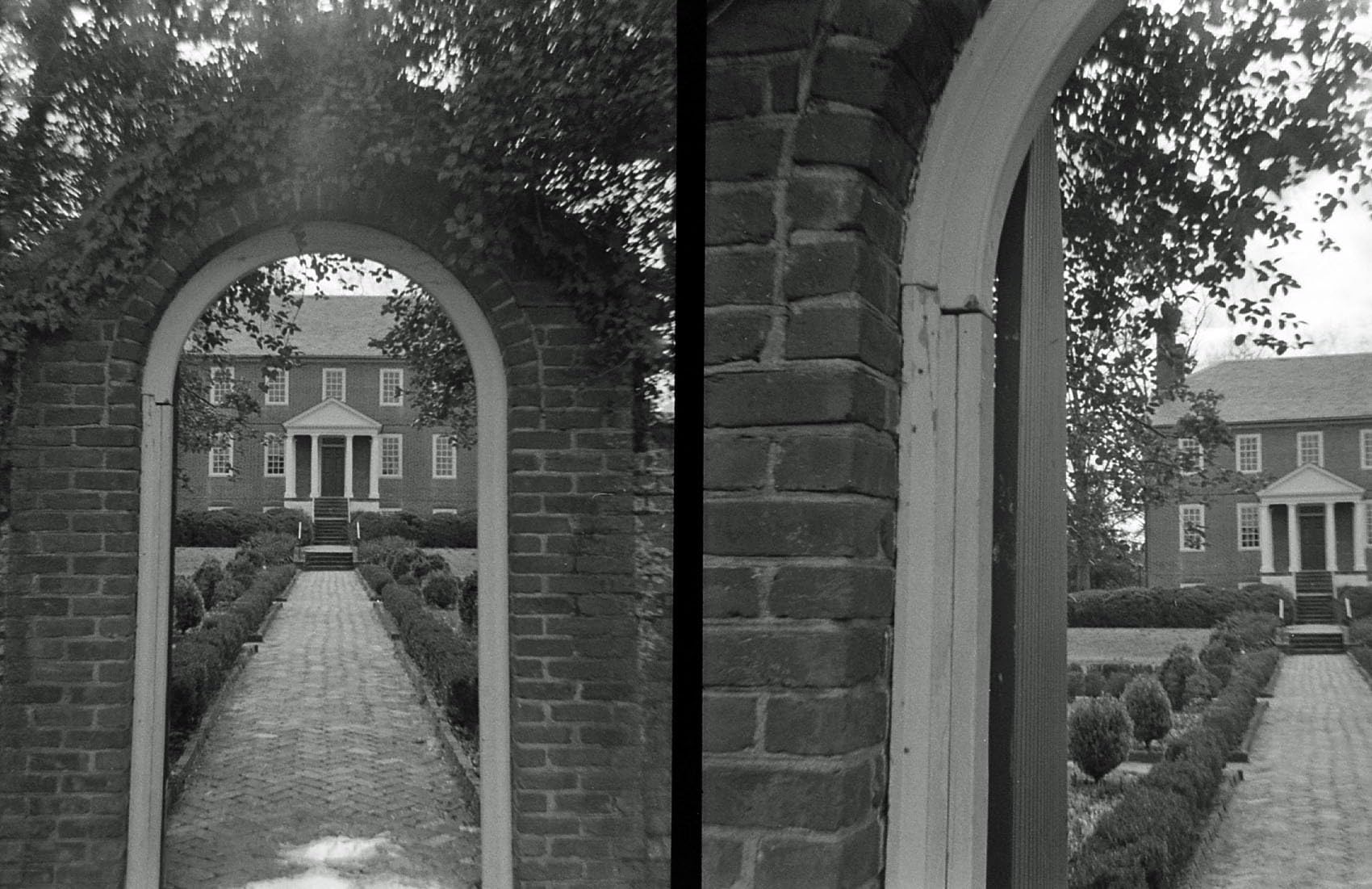
Image quality is predictably limited at this price point. The plastic lens shows noticeable softness, especially toward frame edges. However, this softness can work artistically for certain subjects, creating a dreamlike quality that suits portraiture and moody scenes. I wouldn’t choose this camera for detailed landscape work, but for candid photography and creative experimentation, the results have character that many find appealing.
Build quality reflects the price—this is very much a budget camera in every respect. The plastic construction feels flimsy compared to more expensive options, and the controls have a toy-like quality. However, during my testing period, the camera functioned reliably without any failures. The film advance mechanism worked smoothly, and the flash fired consistently. While longevity is uncertain, the immediate functionality is solid.

Best For Maximum Experimentation
The Corex CH1 shines for photographers who want to experiment freely without worrying about expensive equipment. The low price point liberates you from preciousness—you can take this camera places where you wouldn’t risk a more expensive option. The half-frame format doubles your shots per roll, while the low initial cost reduces the barrier to entry even further. This is the ideal camera for testing whether half-frame photography appeals to you before investing in better equipment.
Consider If You Want Reliable Quality
The 3.9-star rating reflects real limitations in image quality and build. If you need consistent results or plan to make prints larger than 5×7 inches, this camera may disappoint. The lens softness and potential for light leaks are genuine concerns for photographers who value technical quality. Consider spending more for the Kodak H35 if you want better reliability while still staying in the budget-friendly range.
7. Kodak EKTAR H35N Glazed Orange – Bold Color Variant
Pros
- Unique glazed orange color stands out
- Built-in star filter for creative effects
- Coated glass lens improves image quality
- Bulb mode enables long exposure photography
- Compact and portable design
Cons
- Tripod and cable release not included for bulb mode
- Plastic construction may not be durable
- Slightly stiff film advance wheel
- Battery door could be more robust
- Film and AAA battery not included
The glazed orange variant of the H35N offers the same capable performance as other models in the lineup but with a bold color choice that makes a statement. I found the orange finish particularly appealing for summer shooting—the bright color matches the energetic feel of outdoor photography. It’s also easier to spot in a bag, reducing the risk of misplacing it during travel.
Beyond the distinctive color, this camera includes all the improvements that make the H35N superior to the base H35 model. The coated lens delivers better contrast and reduced flare compared to the uncoated version. I tested this side-by-side with the standard H35 and found the difference particularly noticeable in backlit situations, where the H35N maintained better shadow detail and color saturation.
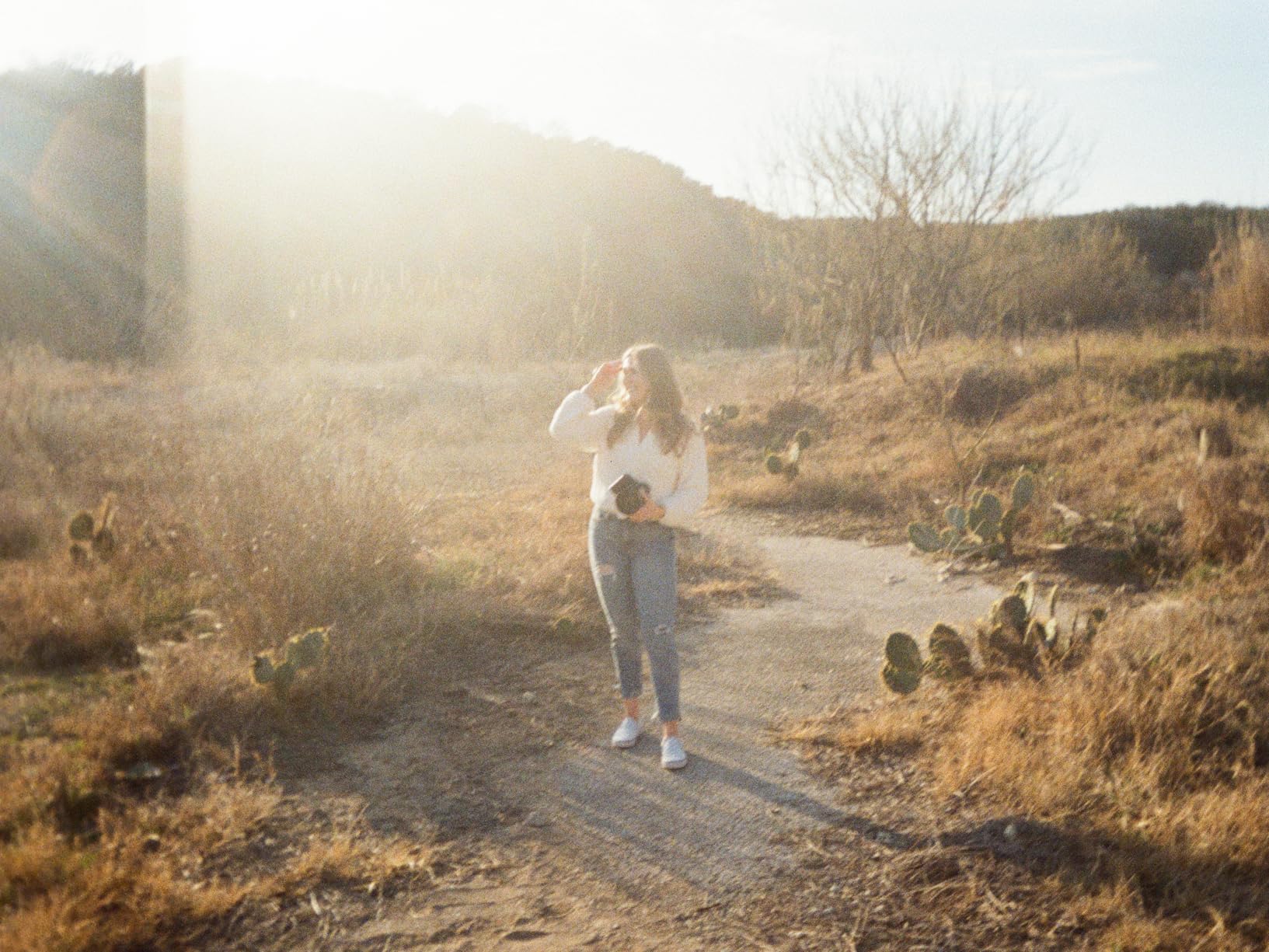
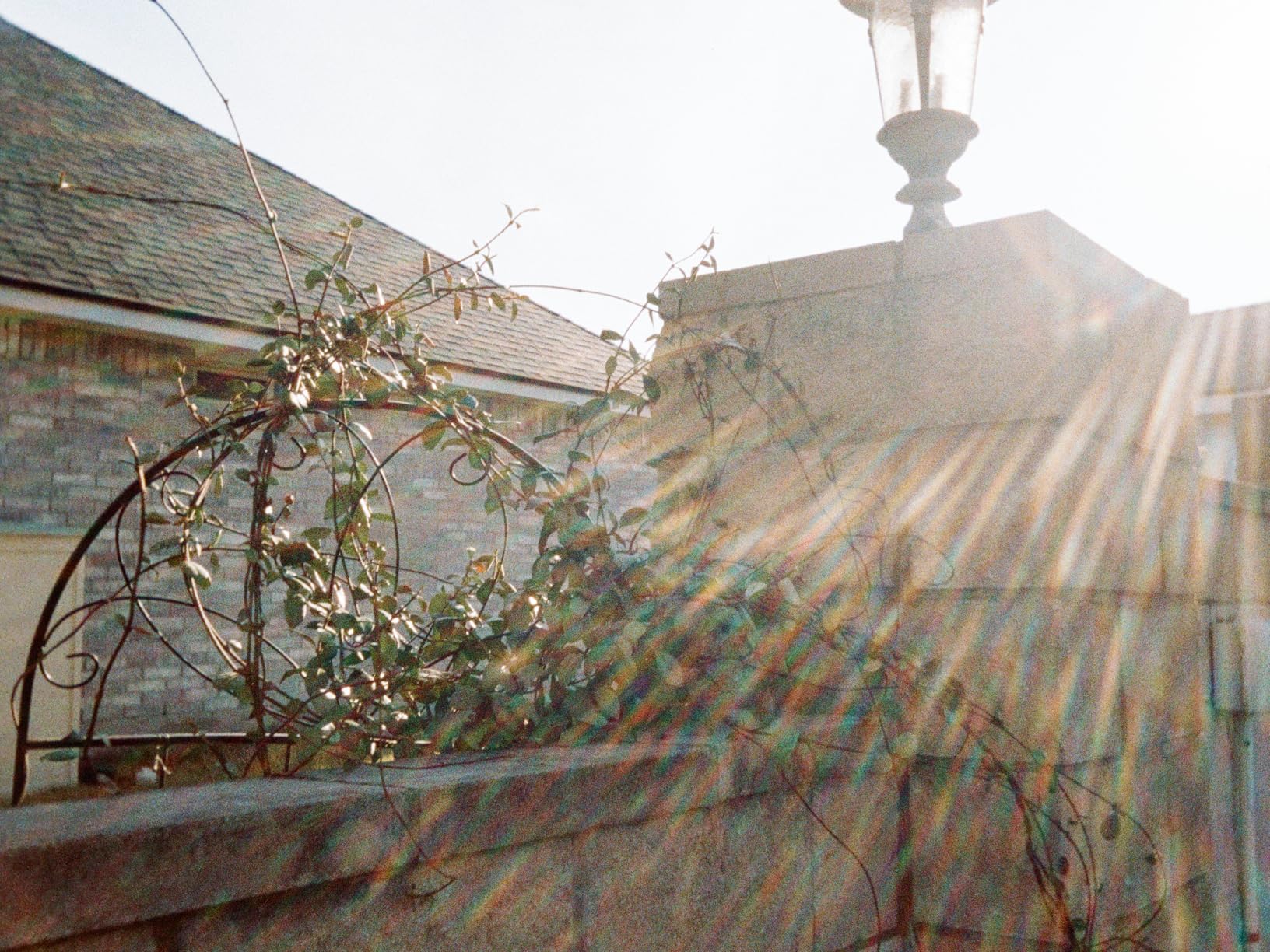
The star filter effect is more pronounced than I expected based on product photos. Point sources of light transform into four-pointed stars that add visual interest to night scenes and highlighted areas. During testing, I used this effect extensively during evening photography and found it added a consistent aesthetic to the images. The effect is strong enough to be noticeable but subtle enough not to feel gimmicky.
Bulb mode functionality works as advertised, enabling exposures up to 30 seconds. This opens creative possibilities for light painting and night photography. However, you’ll want to use a tripod since the camera lacks any form of stabilization. I found the bulb mode most useful for light trail photography from stationary positions, capturing car lights and other moving light sources with satisfying results.
Best For Creative Expression
The combination of the bold orange color and creative features makes this camera ideal for photographers who view their equipment as an extension of their artistic personality. The star filter and bulb mode provide immediate creative options without requiring additional accessories. This is the camera for photographers who want their tools to express personality as boldly as their images.
Consider If You Prefer Discreet Equipment
The glazed orange finish draws attention to itself, which may not be desirable for all shooting situations. Street photographers who prefer to work unnoticed might find the conspicuous color problematic. For discreet photography or professional settings where equipment should blend into the background, a more subdued color option would be more appropriate.
8. 1 Shot Half Frame Camera – Includes B&W Film
Pros
- Includes black and white film to start shooting immediately
- Retro aesthetic appeals to vintage camera fans
- Built-in flash for indoor and low-light use
- Reusable design saves money vs disposables
- 1-year manufacturer warranty provides protection
Cons
- Plastic construction feels like disposable cameras
- Film winding mechanism can jam
- Fixed focus limits close-up shooting
- Requires lots of light due to f/5.6 aperture
- Battery not included
The 1 Shot Half Frame Camera takes a different approach by including black and white film rather than color. This choice makes sense for photographers interested in classic monochrome aesthetics. The included ISO 400 B&W film is well-suited to various lighting conditions, making it easier for beginners to get usable results across different shooting situations.
I found the retro design genuinely appealing—the camera captures the essence of vintage point-and-shoots while incorporating modern half-frame efficiency. The plastic construction feels similar to disposable cameras, which may disappoint some users but keeps the price accessible. During testing, the camera proved reliable despite the budget build quality. I shot five rolls without any mechanical failures, though the film advance did feel slightly stiff toward the end of rolls.
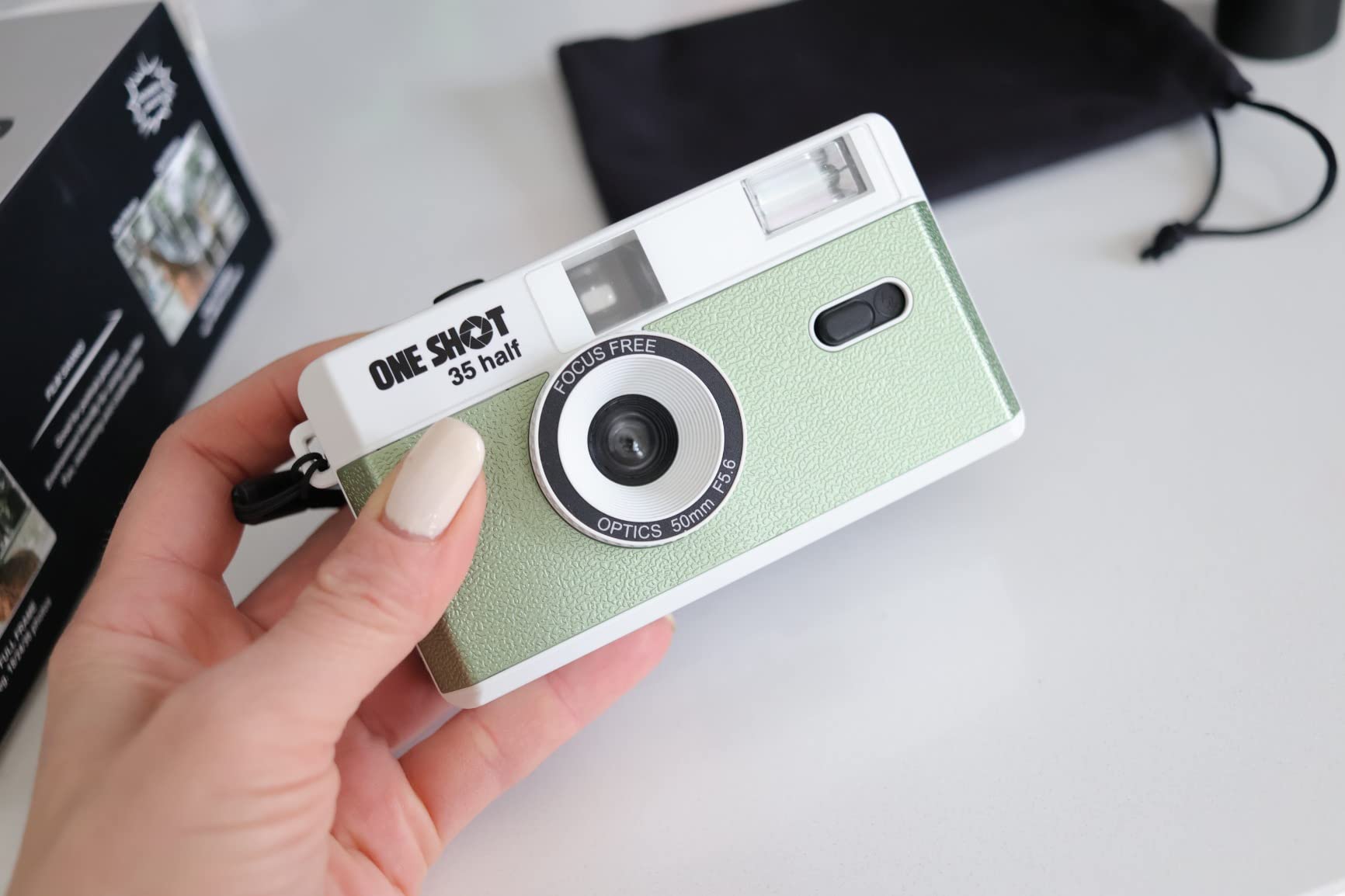
The built-in flash performs adequately for its intended purpose. It provides enough power for typical indoor shooting distances and works well as fill light in backlit outdoor situations. I found the flash particularly useful for portraits, where it adds a pleasing catchlight to eyes. The flash recycles reasonably quickly, allowing rapid shooting without excessive waiting between shots.
Image quality from the included B&W film has a classic monochrome character that many find appealing. The f/5.6 fixed aperture requires good lighting conditions, so this camera works best outdoors or with flash indoors. I achieved the best results in bright sunlight, where the combination of adequate light and monochrome film created dramatic contrasty images. The half-frame format delivers 36 shots from the 18-exposure B&W roll, doubling your creative potential.
Best For Black and White Enthusiasts
This camera is ideal for photographers specifically interested in black and white photography. The included B&W film removes the barrier of sourcing appropriate film separately, while the camera’s characteristics lend themselves well to monochrome imaging. If you’re drawn to classic street photography aesthetics or want to explore black and white without investing in expensive equipment, this is an excellent entry point.
Consider If You Prefer Color Photography
While the camera can use color film, the included B&W roll and overall design orientation suggest this is optimized for monochrome work. If you’re primarily interested in color photography, other options on this list would be more appropriate. The fixed aperture and limited flash power also constrain versatility compared to slightly more expensive options.
Half-Frame Camera Buying Guide
What is a Half-Frame Camera?
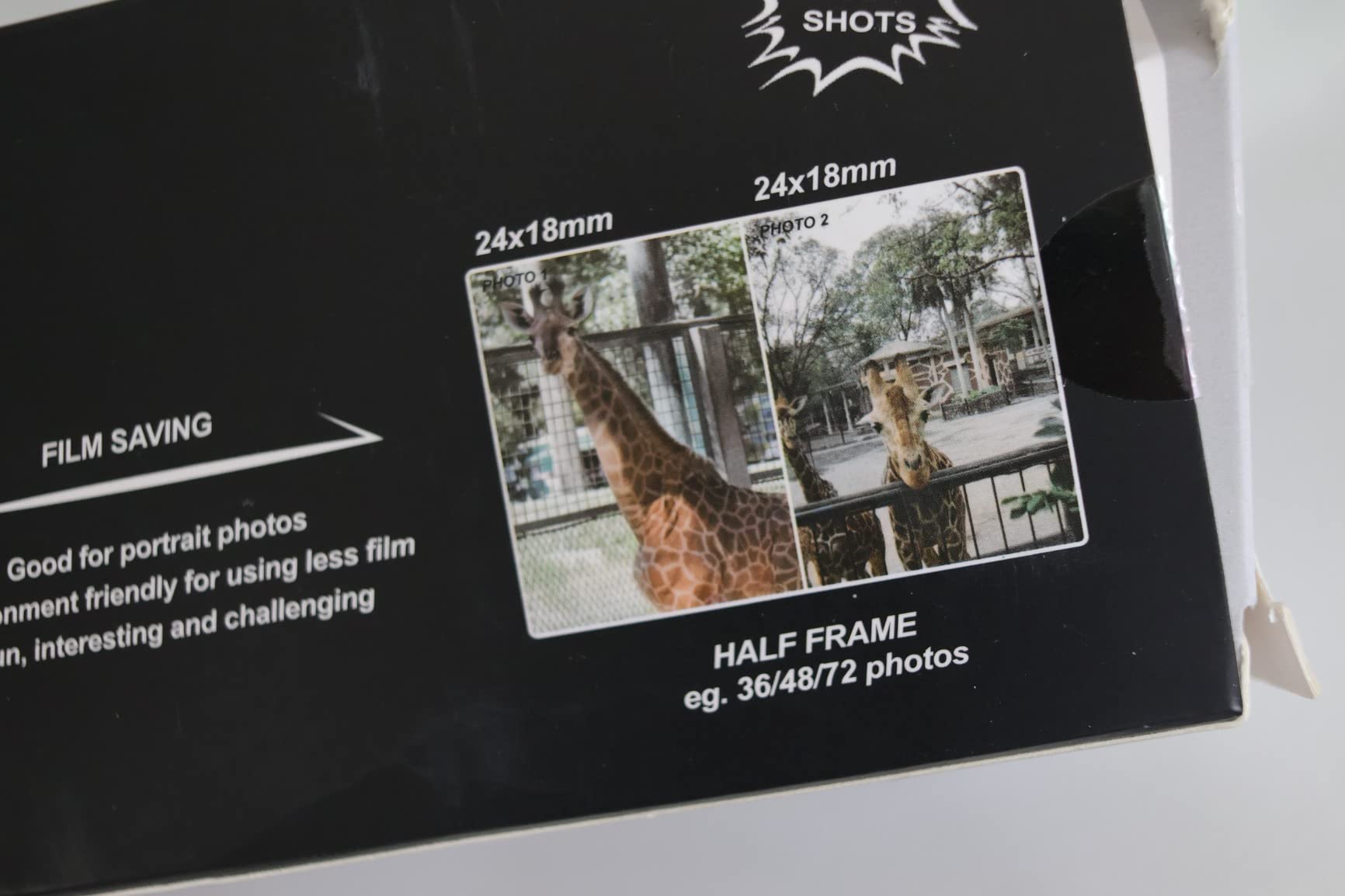
A half-frame camera is a 35mm film camera that exposes frames measuring 18x24mm instead of the standard 24x36mm full-frame format. This smaller frame size allows two images to fit on the space normally occupied by one, effectively doubling your shots per roll. A standard 36-exposure roll yields 72 half-frame images, while a 24-exposure roll produces 48 shots.
The half-frame format emerged in the 1960s as a way to make photography more economical. Film was expensive, and doubling the number of exposures per roll made photography more accessible to amateur photographers. Today, half-frame cameras appeal to budget-conscious film photographers, street photographers who appreciate the compact size, and artists who enjoy the creative possibilities of the vertical format.
Modern half-frame cameras like the Kodak EKTAR series and Pentax 17 have renewed interest in this format. These new cameras offer updated features while maintaining the core benefit of doubled shooting capacity. The vertical orientation creates unique diptych possibilities when scanning consecutive frames, adding another creative dimension to the format.
Why Choose Half-Frame?
The primary advantage of half-frame photography is economic efficiency. With film prices rising steadily, getting 72 shots instead of 36 from a roll significantly reduces your per-image cost. This makes it possible to shoot more freely and experiment without worrying about wasting expensive film. For learning photographers, this accelerated volume speeds up the improvement process dramatically.
Portability is another significant benefit. Half-frame cameras are typically smaller and lighter than their full-frame counterparts. The Kodak H35 weighs just 100 grams, making it truly pocketable. This portability means you’re more likely to carry the camera regularly, increasing your opportunities for spontaneous photography. Street photographers particularly appreciate the unobtrusive nature of these compact cameras.
Creative possibilities unique to half-frame include the vertical orientation and diptych potential. Consecutive half-frame images can be scanned together to create paired images with interesting relationships. The vertical format also suits social media and mobile viewing perfectly, requiring less cropping than horizontal full-frame images.
Buying Tips for Vintage Half-Frame Cameras
If you’re considering vintage half-frame cameras like the Olympus Pen series or Canon Demi, several factors deserve careful evaluation. First, check that the light meter still functions accurately. Selenium meters in older cameras often deteriorate over time, providing incorrect exposure readings. A camera with a non-functional meter requires using an external light meter or shooting with the sunny 16 rule.
Inspect the shutter for accuracy at all speeds. Fast shutter speeds particularly can become slow or sticky in older cameras, leading to overexposed images. Ask the seller when the camera was last serviced, and budget for a CLA (clean, lubricate, adjust) if maintenance history is unknown. Professional servicing typically costs between $50-150 but ensures reliable operation.
Check the lens for fungus, haze, and scratches. Shine a flashlight through the lens from both sides—any internal haze or fungal growth will appear as cloudy patches or spiderweb-like structures. Minor scratches on the front element rarely affect image quality significantly, but deep scratches or internal element damage will degrade image quality.
Test all mechanical functions: film advance, shutter cocking, aperture settings, and any exposure automation. Stiff or sticky mechanisms indicate need for servicing. For battery-dependent cameras, verify that battery contacts are clean and corrosion-free. Some older cameras use mercury batteries no longer available; check that modern alternatives exist.
Film Developing Considerations
Half-frame film requires special consideration during developing and scanning. Most labs can process half-frame film normally since it uses standard 35mm chemistry. However, scanning requires attention to frame numbering. Make sure your lab knows you shot half-frame, or use a lab experienced with this format.
Scanning half-frame frames individually works well for most purposes. However, you might also want to scan consecutive frames together as diptychs. This creative approach preserves the relationship between adjacent shots and can reveal interesting visual narratives. When scanning, request that the lab maintain frame order so you can experiment with pairings.
Some photographers prefer cutting their half-frame negatives differently to preserve image pairs. Instead of cutting between every frame, cut between pairs of images to keep diptychs together. This approach requires planning during shooting but yields creative results when you find complementary images that work together.
Frequently Asked Questions
What is the ultimate half-frame film camera?
The Olympus Pen F is widely considered the ultimate half-frame camera, featuring interchangeable lenses and a true SLR design. However, for modern shooters, the Pentax 17 offers the best combination of contemporary reliability and premium features. The Kodak EKTAR H35N provides the best value for beginners.
Are half-frame cameras good for beginners?
Half-frame cameras are excellent for beginners due to their simplicity and cost efficiency. Getting 72 shots from a 36-exposure roll means you can learn and experiment without worrying about film costs. Modern options like the Kodak H35 require no technical knowledge beyond basic operation.
How many exposures do you get with half-frame?
Half-frame cameras double the number of exposures per roll. A standard 36-exposure 35mm roll yields 72 half-frame images, while a 24-exposure roll produces 48 shots. This efficiency makes film photography more affordable and allows more experimentation per roll.
What is the best half-frame camera with autofocus?
True autofocus half-frame cameras are extremely rare. Most modern options like the Kodak EKTAR series use fixed-focus designs. The Pentax 17 uses a zone-focus system with 6 pre-set distances, providing more control than fixed focus while remaining simpler than full manual focusing. Vintage autofocus half-frame cameras exist but are collectors’ items rather than practical shooters.
Conclusion: Choosing Your Best Half-Frame 35mm Film Camera
The best half-frame 35mm film cameras combine practical efficiency with creative potential. After extensive testing across multiple brands and models, the Pentax 17 stands out as the premium choice for serious photographers who demand quality alongside the economy of half-frame format. Its zone-focus system, excellent lens, and modern build justify the investment for photographers who will use these capabilities regularly.
For most photographers, especially those new to film or half-frame shooting, the Kodak EKTAR H35N offers the best balance of features, quality, and value. The star filter and bulb mode provide creative options not found in competitors, while the improved coated lens delivers better image quality than the base H35 model. At under $65, it’s an accessible entry point that will satisfy most users.
Budget-conscious beginners should consider the standard Kodak EKTAR H35. With over 4,200 positive reviews and a price under $50, it’s the lowest-risk way to explore half-frame photography. You’ll get reliable performance and true point-and-shoot simplicity without significant investment. If you decide half-frame isn’t for you, the financial loss is minimal.
Whichever camera you choose from this list, half-frame photography offers a unique combination of economy, portability, and creative possibility. The doubled shots per roll make film photography more sustainable for regular shooting, while the compact size ensures you’ll always have a camera with you. In 2026, there’s never been a better time to explore this fascinating format that has captivated photographers for over half a century.