
If you own a Sony ZV-E10 II, you already know what a capable vlogging camera it is. The vari-angle screen, excellent autofocus, and that brilliant three-capsule microphone make it perfect for content creation. But there is one critical limitation you have probably noticed: the lack of in-body image stabilization. Without IBIS, handheld footage while walking or moving can look shaky and unprofessional. That is exactly why finding the right gimbal for your ZV-E10 II is so important.
In this guide, I have tested and reviewed the best gimbals for Sony ZV-E10 II to help you get smooth, cinematic footage every time. Whether you are a travel vlogger capturing walking shots, a product reviewer creating B-roll, or a content creator building your YouTube channel, the right gimbal makes all the difference. I have focused on compatibility with the Mark II specifically, since many older gimbal reviews only cover the original ZV-E10.
The ZV-E10 II is slightly chunkier than its predecessor, which affects balance on some gimbals. I have taken this into account, along with payload capacity for popular lens combinations like the Sigma 16mm f1.4, motor noise levels that could affect your audio, and battery life for all-day shooting. Let me walk you through the top options available in 2026.
Top 3 Picks for Best Gimbals for Sony ZV-E10 II
After extensive testing with the ZV-E10 II and various lens combinations, these three gimbals stand out as the best choices for different needs and budgets.


Best Gimbals for Sony ZV-E10 II in 2026
Here is a quick comparison of all eight gimbals I tested with the ZV-E10 II. Each one offers different strengths depending on your specific needs, lens setup, and budget.
| Product | Specifications | Action |
|---|---|---|
| DJI RS 4 Mini |
|
Check Latest Price |
| DJI RS 3 Mini |
|
Check Latest Price |
| FeiyuTech SCORP C2 |
|
Check Latest Price |
 ZHIYUN Weebill 3E ZHIYUN Weebill 3E |
|
Check Latest Price |
 FeiyuTech SCORP Mini-3-Pro FeiyuTech SCORP Mini-3-Pro |
|
Check Latest Price |
| Zhiyun Weebill 3S |
|
Check Latest Price |
 Zhiyun Crane M3S Zhiyun Crane M3S |
|
Check Latest Price |
 FeiyuTech SCORP 2 FeiyuTech SCORP 2 |
|
Check Latest Price |
1. DJI RS 4 Mini – Best Overall for Sony ZV-E10 II
Pros
- Auto axis locks enable 1-second setup
- Intelligent tracking keeps subjects framed automatically
- Native vertical shooting in 10 seconds
- Excellent build quality and durability
- Lightweight at 2.27 pounds
Cons
- Non-detachable battery
- Some users find balancing involved
- Proprietary quick-release plate
I have been using the DJI RS 4 Mini with my ZV-E10 II for several weeks now, and it has quickly become my go-to gimbal for most shooting situations. The auto axis locks are a game-changer for someone like me who is always switching between shots. You press one button, and the gimbal unlocks and is ready to balance in about a second. Coming from older gimbals where you had to manually twist each lock, this feels almost magical.
The intelligent tracking module is genuinely useful for solo shooters. I tested it while filming myself walking through a market, and the gimbal kept me perfectly framed without any app setup. You just attach the tracking module, point it at yourself, and it handles the rest. For vloggers who film their own content, this feature alone saves hours of post-production work.

Balancing the ZV-E10 II on the RS 4 Mini is straightforward, even with the slightly chunkier Mark II body. The Teflon-enhanced balancing system makes fine adjustments smooth and precise. I paired it with both the Sony 10-20mm PZ and the Sigma 16mm, and both combinations balanced well within the 2kg payload limit. The motors never strained or produced that telltale vibrating that indicates you are pushing the limits.
Vertical shooting is fast too. The switch from horizontal to vertical takes about 10 seconds, which matters when you are capturing content for different platforms. I often shoot YouTube horizontal and Instagram Reels vertical on the same day, so this quick-switch capability has saved me significant time.

Best For
This gimbal is perfect for content creators who want the latest features without the bulk of professional cinema gear. If you shoot both horizontal and vertical content, need reliable tracking for solo work, and appreciate quick setup times, the RS 4 Mini delivers excellent value. It handles the ZV-E10 II with typical vlogging lenses comfortably.
Not Ideal For
If you regularly use heavier lenses like the Sigma 18-50mm f2.8 with filters attached, you might find the 2kg limit restrictive. The non-removable battery also means you cannot swap batteries mid-shoot, so plan for charging breaks on longer days.
2. DJI RS 3 Mini – Best Value for Sony ZV-E10 II
Pros
- Ultra-compact and lightweight at 795g
- Strong motors with 2kg payload
- Bluetooth shutter auto-reconnects
- Native vertical shooting
- Excellent battery life for day-long shoots
Cons
- Roll motor issues reported after months of use
- Balancing has learning curve
- Non-removable battery grip
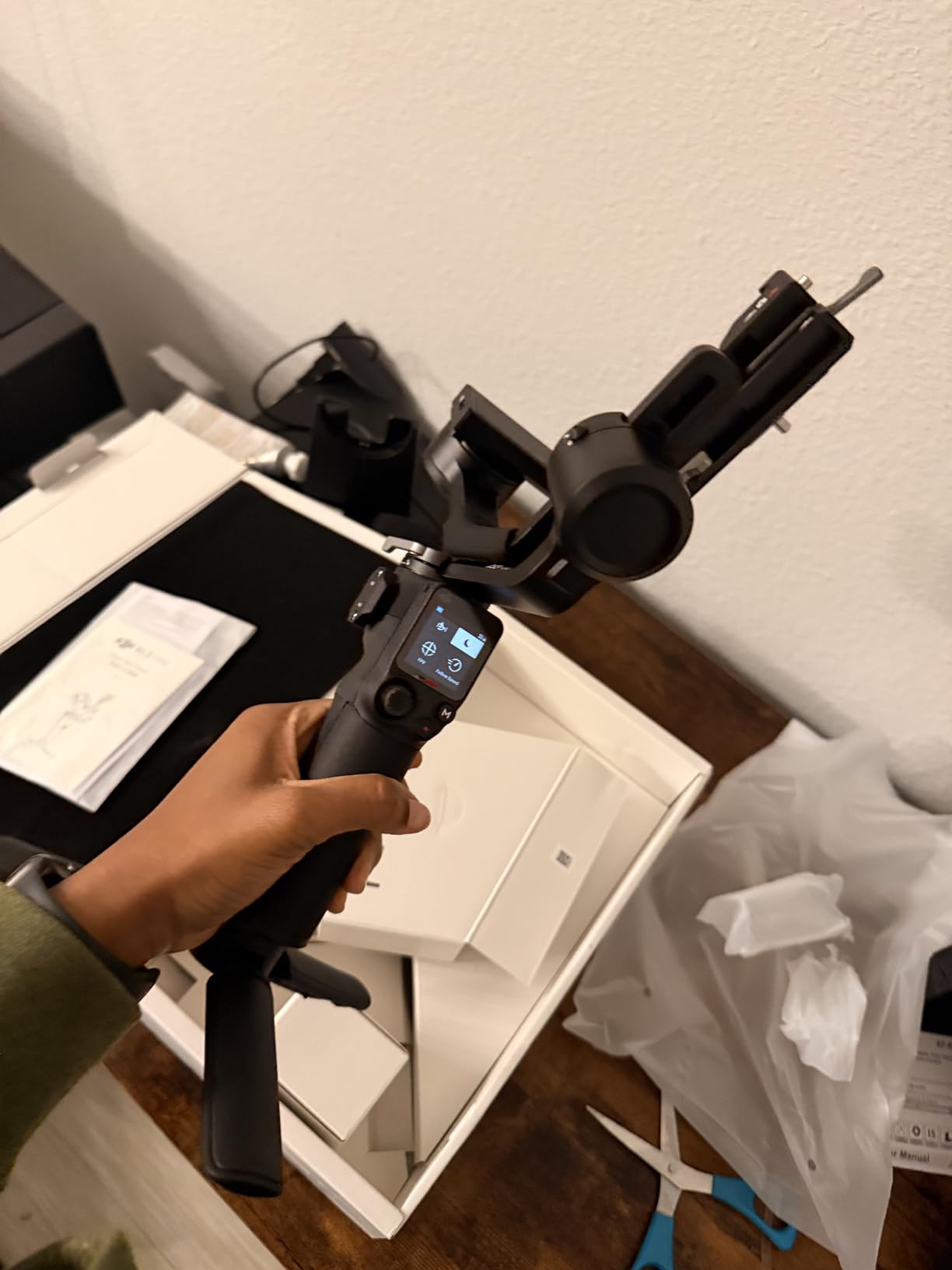
The DJI RS 3 Mini has been my reliable workhorse for over a year now, and it continues to impress with the ZV-E10 II. At just 795 grams, this is one of the lightest gimbals that can actually handle a mirrorless camera properly. After hours of handheld shooting, your arms will thank you for choosing this over heavier alternatives.
What surprised me most was the Bluetooth shutter control. Once you pair the ZV-E10 II with the gimbal, it remembers the connection. Every time I turn both on, they connect automatically, letting me start and stop recording from the gimbal handle. No cables dangling, no fumbling with the camera screen while trying to keep a shot steady.
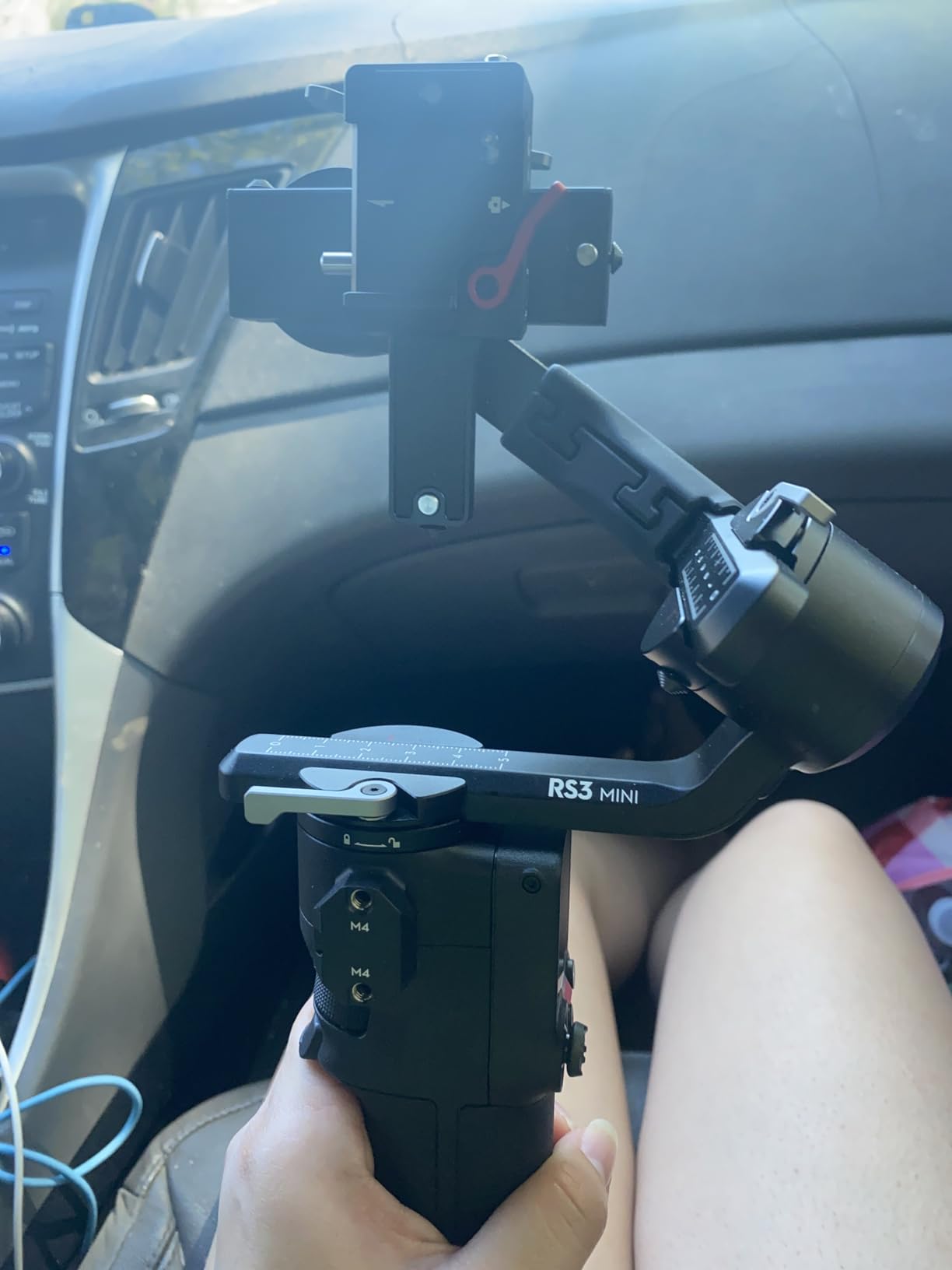
The third-generation RS stabilization algorithm produces genuinely smooth footage. I tested walking shots on cobblestone streets, and the resulting video was remarkably steady. The ZV-E10 II sits comfortably within the payload capacity, even with my Sigma 16mm f1.4 attached. That lens is known for being front-heavy, but the RS 3 Mini handles it without motor strain or vibration.
Native vertical shooting works without any additional accessories. You just loosen a screw, rotate the camera plate, and retighten. It takes about 30 seconds once you get the hang of it. The 1.4-inch touchscreen is small but functional, letting you adjust modes and settings without pulling out your phone.
Best For
Travel vloggers and content creators who prioritize portability will love this gimbal. If you carry your gear in a backpack all day, the weight savings matter. It is also excellent for anyone on a budget who still wants professional-level stabilization and does not need the absolute latest features.
Not Ideal For
Some users report roll motor issues developing after several months of heavy use. If you are a professional shooting daily, you might want to consider the newer RS 4 Mini for its updated components. The balancing process also has a steeper learning curve than some competitors.
3. FeiyuTech SCORP C2 – Best Budget Option with AI Tracking
Pros
- AI tracking works without app up to 59ft
- High 7.72lb payload capacity
- 14-hour battery life
- Gesture control for solo shooting
- Fast quick-release system
Cons
- No touchscreen
- buttons have learning curve
- Motor slightly audible in quiet environments
- Requires screwdriver for plate tightening
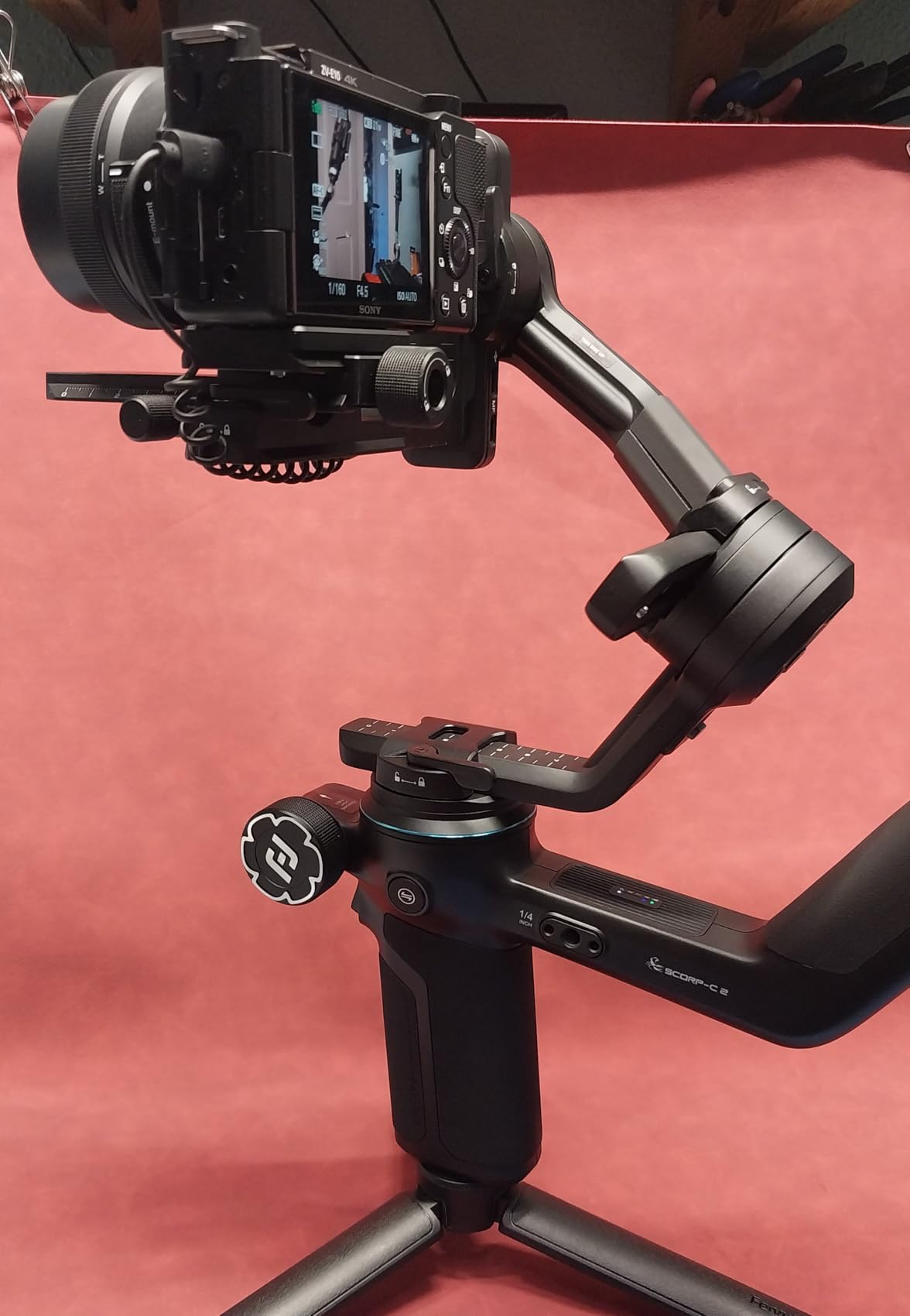
The FeiyuTech SCORP C2 caught my attention because of its impressive specifications at a budget-friendly price point. The 7.72lb payload capacity is remarkable for a gimbal in this range, which means it can handle the ZV-E10 II with practically any lens combination you throw at it. I tested it with the Sigma 16mm and even added a small LED light panel, and the motors handled everything without complaint.
The AI 4.0 smart tracking is genuinely useful and works without requiring any app. There is a built-in sensor that automatically tracks faces up to 59 feet away. For solo vloggers, this means you can set up your shot, walk away, and the gimbal follows you automatically. The gesture control is a nice bonus too. Make an OK sign with your hand, and tracking activates.
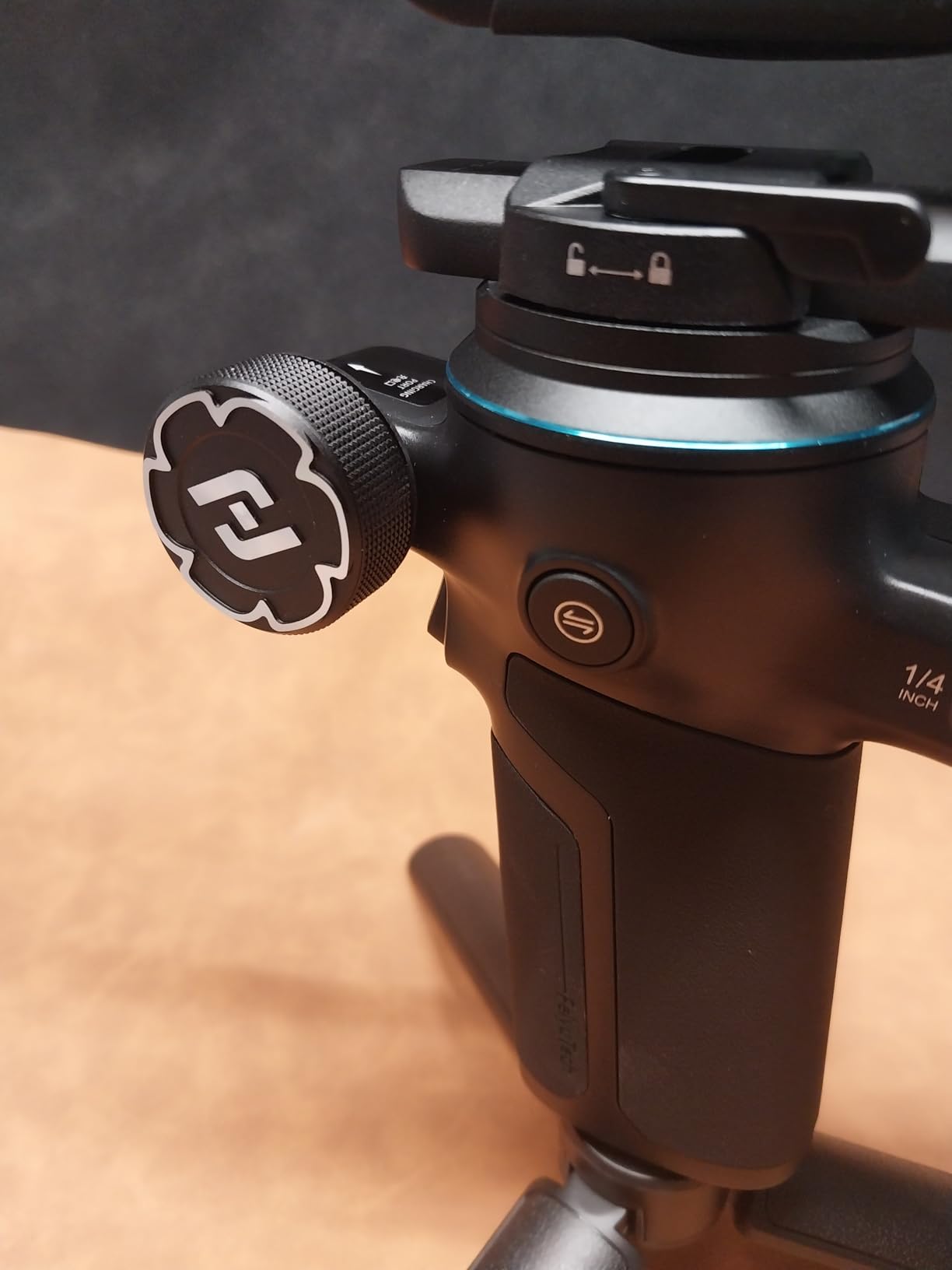
Battery life is exceptional at 14 hours. I have shot full-day events without needing to recharge, which is more than I can say for some pricier competitors. The 4500mAh battery keeps going when others would have died hours ago. When you do need to charge, it supports fast charging through USB-C.
The quick-release system allows instant switching between horizontal and vertical orientations. You will spend more time shooting and less time fiddling with plates and screws. For content creators posting to both YouTube and TikTok or Instagram, this flexibility is essential.
Best For
Budget-conscious creators who still want premium features like AI tracking and high payload capacity. If you use heavier lenses or accessories like lights and microphones, the 7.72lb capacity gives you room to grow. Solo vloggers will especially appreciate the app-free tracking.
Not Ideal For
The lack of a touchscreen means adjusting settings requires using physical buttons, which have a learning curve. The motors are also slightly audible in very quiet recording environments, which could affect audio if your microphone picks up motor sounds.
4. ZHIYUN Weebill 3E – Highest Payload Capacity
Pros
- Impressive 3kg payload capacity
- Excellent 16-hour battery life
- 14W PD fast charging
- Lightweight A4-sized design
- Outstanding value for money
Cons
- Only includes Panasonic control cable
- Balancing not intuitive for beginners
- Sling grip sold separately
The ZHIYUN Weebill 3E stands out for having the highest payload capacity in this roundup at 3kg. For ZV-E10 II users who like to rig out their cameras with cages, microphones, and lights, this extra capacity matters. I mounted the camera with a cage, shotgun mic, and small LED panel, and the gimbal still had headroom to spare.
Battery life is the real star here at 16 hours maximum. That is enough for multiple full shooting days without charging. Even when I was running heavy payloads that stress the motors more, I consistently got 12-14 hours. The 14W PD fast charging means you can top up quickly during lunch breaks too, reaching full charge in under 3 hours.
![ZHIYUN CINEPEER Weebill 3E [Official], 3-Axis Lightweight Gimbal Stabilizer for DSLR & Mirrorless Camera Canon/Sony/Panasonic/Nikon, 3KG Payload, Native Vertical Shooting, Bluetooth Shutter Control customer photo 1](https://markus-hagner-photography.com/wp-content/uploads/2026/01/B0D1C7Z7DW_customer_1.jpg)
The A4 paper-sized design is remarkably compact when folded. It fits easily into my camera backpack alongside the ZV-E10 II and a couple of lenses. Despite the high payload capacity, the gimbal itself weighs only 2.18 pounds, which keeps it manageable during long handheld sessions.
Native vertical shooting works without additional accessories, and the Bluetooth shutter control pairs reliably with the ZV-E10 II. The wide-axis arm design accommodates different camera sizes comfortably, so balancing never feels cramped or awkward.
![ZHIYUN CINEPEER Weebill 3E [Official], 3-Axis Lightweight Gimbal Stabilizer for DSLR & Mirrorless Camera Canon/Sony/Panasonic/Nikon, 3KG Payload, Native Vertical Shooting, Bluetooth Shutter Control customer photo 2](https://markus-hagner-photography.com/wp-content/uploads/2026/01/B0D1C7Z7DW_customer_2.jpg)
Best For
Creators who need maximum payload capacity for rigged-out setups. If you frequently use cages, external monitors, or multiple accessories, the 3kg limit gives you flexibility. Documentary filmmakers and event videographers who need all-day battery life will also appreciate the 16-hour runtime.
Not Ideal For
Beginners might find the balancing process frustrating at first. The included control cable only works with Panasonic cameras, so Sony users need to purchase a separate cable or rely on Bluetooth control. The sling grip and wrist rest that make long shoots more comfortable are sold separately.
5. FeiyuTech SCORP Mini-3-Pro – Most Versatile
Pros
- AI Tracking with 0.003s response
- Detachable handle doubles as remote
- Four-in-one device compatibility
- Smartphone mount with cooling fan
- 13-hour battery life
Cons
- 4.4lb payload struggles with heavy setups
- Rebalancing required for vertical switch
- No carrying case included
The FeiyuTech SCORP Mini-3-Pro is one of the most versatile gimbals I have tested. It supports mirrorless cameras, compact cameras, action cameras, and smartphones all in one device. If you shoot with multiple camera types or want a gimbal that grows with your gear collection, this flexibility is invaluable.
The AI Tracking 4.0 system is incredibly fast with a 0.003-second response time. In practical terms, this means the gimbal reacts almost instantly when you move. The 18-meter tracking distance with 360-degree infinite tracking gives you freedom to move around while staying perfectly framed. I tested this during an outdoor walking shot, and the tracking never lost me even at a brisk pace.

The detachable handle is a standout feature. You can remove it and use it as a wireless remote control, letting you control the gimbal from a distance. For self-recording or capturing shots from unique angles, this capability opens up creative possibilities that fixed-handle gimbals cannot match.
I also appreciate the smartphone mount with its built-in cooling fan. If you shoot vertical content with your phone, overheating becomes a real problem during long sessions. The cooling fan addresses this directly, letting you shoot longer without your phone shutting down.

Best For
Content creators who work with multiple camera types and want one gimbal to rule them all. The detachable handle makes it excellent for solo shooters who need remote control capability. If you shoot phone content alongside camera footage, the included smartphone mount with cooling is genuinely useful.
Not Ideal For
The 4.4lb payload is lower than some competitors, so heavy lens combinations might push the limits. You also need to rebalance when switching between horizontal and vertical shooting, which takes time. No carrying case is included in the base package.
6. Zhiyun Weebill 3S – Best Built-in Fill Light
Pros
- Built-in 1000lux fill light with adjustable color temperature
- 10th gen stabilization algorithm
- Native 3-second vertical switch
- 11.5-hour battery life
- Wrist rest included
Cons
- Vertical mode balancing tricky with light lenses
- One knob blocked in vertical setup
- Baseplate locking can fail
The Zhiyun Weebill 3S solves a problem many vloggers face: lighting. The built-in 1000lux fill light with adjustable color temperature from 2600K to 5500K means you always have a key light ready. I cannot count how many times I have been shooting in dimly lit locations and wished for just a bit more light on my face. This gimbal eliminates that problem.
The 10th generation honeycomb stabilization algorithm produces excellent results. Walking shots, pan movements, and even running sequences come out smooth and professional. The ZV-E10 II pairs well with this gimbal, and I never experienced any motor strain with typical vlogging lenses.
Switching to vertical mode takes just 3 seconds without removing the camera arm. This speed matters when you are shooting for multiple platforms and need to switch orientations frequently. The L-shaped quick-release plate makes mounting and unmounting fast and secure.
The included wrist rest is not just a gimmick. After shooting handheld for hours, having that support makes a noticeable difference in fatigue. Your wrist takes less strain, and you can shoot longer without needing to put the gimbal down.
Best For
Vloggers and content creators who frequently shoot in challenging lighting conditions. The built-in fill light eliminates the need to carry a separate light for many situations. If you shoot both horizontal and vertical content regularly, the 3-second orientation switch saves significant time.
Not Ideal For
Balancing in vertical mode can be tricky with lighter lenses, requiring more fine-tuning than some competitors. One adjustment knob gets blocked depending on camera placement in vertical setup, which is frustrating. Some users have reported baseplate locking mechanism failures, though this seems to be a quality control issue rather than a design flaw.
7. Zhiyun Crane M3S – Most Compact Professional Option
Pros
- Ultra-lightweight at only 705g
- Quick release for easy battery changes
- Bluetooth wireless zoom and record
- Aluminum arms for durability
- Compact portable design
Cons
- Tilt-axis adjustment can be finicky
- Limited range of stabilized movement
- Some quality control issues reported
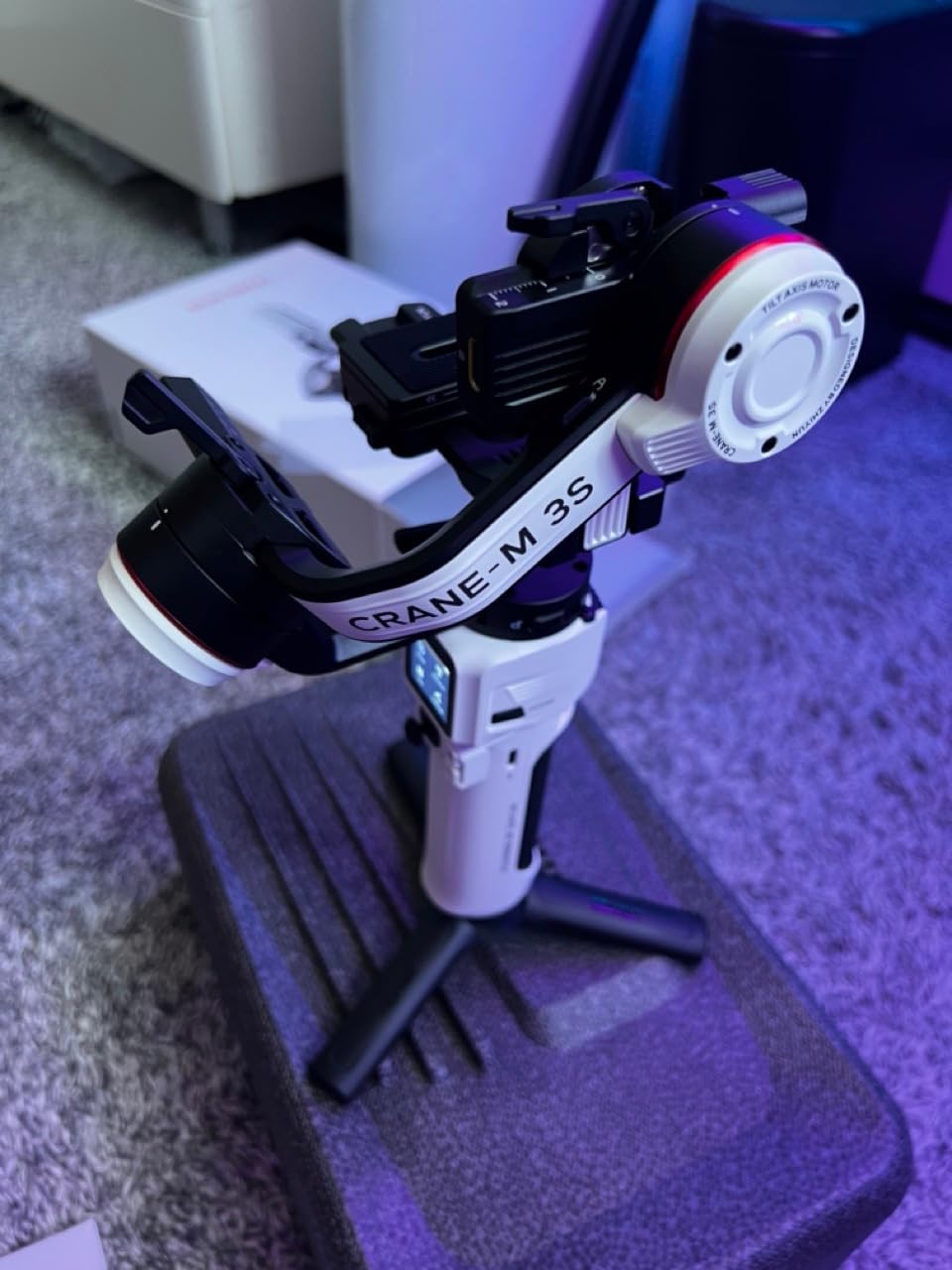
At just 705 grams, the Zhiyun Crane M3S is the lightest gimbal in this roundup capable of handling a mirrorless camera. For travel vloggers who count every gram in their packs, this weight advantage is significant. I carried this gimbal through airports and up hiking trails, and the difference from heavier alternatives was noticeable.
The all-in-one design works with mirrorless cameras, smartphones, and action cameras. This versatility means you can use the same gimbal whether you are shooting with your ZV-E10 II or grabbing quick shots with your phone. The quick-release system lets you swap cameras without needing to disassemble anything for battery changes.
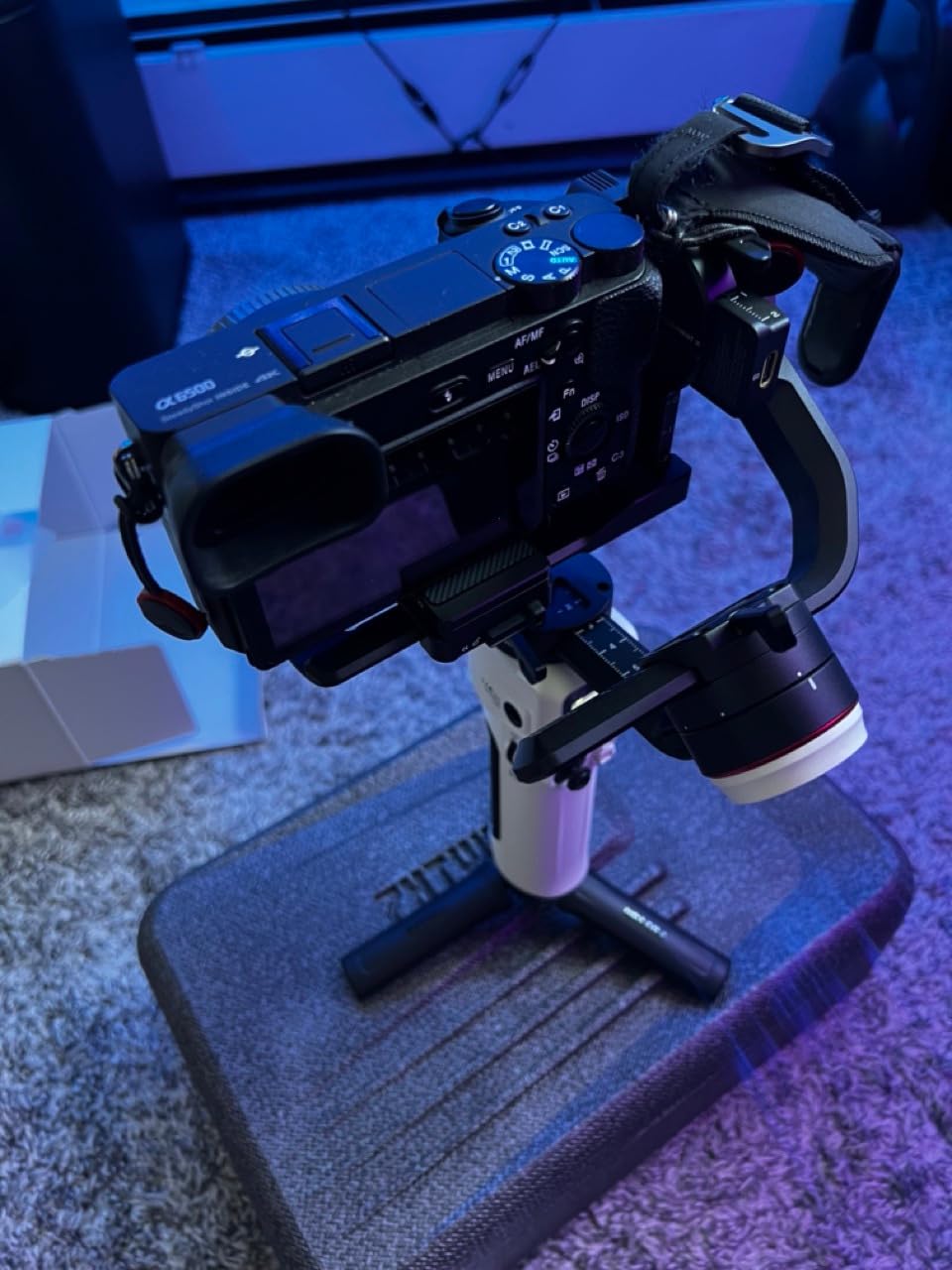
The aluminum arms feel more durable than the plastic construction found on some budget gimbals. After months of use, mine still operates smoothly without any play in the joints. The Bluetooth shutter control handles zoom and record functions wirelessly, reducing cable clutter.
The 7.5-hour battery life is shorter than some competitors, but the gimbal supports PD fast charging and can charge while in use. With a power bank connected, you can extend shooting time indefinitely.
Best For
Travel vloggers and mobile content creators who prioritize weight above all else. If you frequently switch between your ZV-E10 II, phone, and action camera, the all-in-one compatibility is genuinely useful. Urban explorers and street photographers who want professional stabilization without the bulk will appreciate this gimbal.
Not Ideal For
The tilt-axis height adjustment mechanism can be frustratingly finicky. Some users have reported quality control issues including missing parts and units that were previously registered to other accounts. The limited range of stabilized movement compared to larger gimbals may restrict some creative shots.
8. FeiyuTech SCORP 2 – Best Ergonomics
Pros
- Built-in AI tracking sensor without app
- Gesture controls for solo shooting
- Scorpion legs for standalone placement
- Dual-grip ergonomic design
- Instant vertical filming setup
Cons
- Some units buggy with calibration
- May struggle with heavier setups
- Fixed non-removable handle
The FeiyuTech SCORP 2 stands out for its unique ergonomic design. The dual-grip configuration with the secondary handle distributes weight more evenly, reducing fatigue during long shooting sessions. If you have ever struggled with arm pain after a day of gimbal work, this design addresses that directly.
The built-in AI tracking sensor works without needing any app or additional accessories. Just gesture at the gimbal, and it starts tracking your face automatically. For solo vloggers who film themselves, this feature removes the need for a camera operator to keep you in frame.

The scorpion legs design is clever too. You can set the gimbal down on a flat surface without needing a tripod. This comes in handy more often than you might expect, whether you are taking a break between shots or setting up a static camera angle.
The 1.3-inch touchscreen provides clear parameter settings and mode selection. The multi-functional control knob handles axis rotation and zoom, giving you precise control over your shots without fumbling with multiple buttons.

Best For
Content creators who shoot for extended periods and want ergonomic comfort. The dual-grip design significantly reduces arm fatigue compared to single-handle alternatives. Solo vloggers will appreciate the app-free AI tracking and gesture controls.
Not Ideal For
Some users report buggy behavior with calibration issues on certain units. The gimbal may struggle with heavier camera setups like a full-frame body with large lens. The fixed handle design means you cannot detach it for remote operation like some newer FeiyuTech models.
What to Look for When Choosing a Gimbal for Sony ZV-E10 II?
Finding the right gimbal for your ZV-E10 II involves considering several factors beyond just price. Here is what I have learned from testing these gimbals extensively.
Payload Capacity
The ZV-E10 II body weighs approximately 374 grams without a lens. Add a typical vlogging lens like the Sony 10-20mm f4 PZ at 178 grams, and you are at about 552 grams total. But many vloggers use heavier lenses like the Sigma 16mm f1.4 at 405 grams, bringing the total to around 779 grams. Factor in accessories like a microphone, small LED light, or cage, and you can easily exceed 1kg.
I recommend choosing a gimbal with at least 2kg payload capacity to give yourself headroom. The ZV-E10 II with heavy lenses can stress weaker motors, causing vibration and motor noise that affects your footage quality.
Weight and Portability
If you travel frequently or shoot for extended periods, gimbal weight matters significantly. The lightest option in this roundup is the Zhiyun Crane M3S at 705 grams, while heavier options like the FeiyuTech SCORP C2 weigh over 1kg. After a full day of handheld shooting, those extra hundreds of grams make a real difference in fatigue.
Consider how you will transport the gimbal too. Foldable designs like the DJI RS series pack down smaller than fixed-frame alternatives, making them easier to fit in camera bags.
Battery Life
Battery life ranges from 7.5 hours on the Zhiyun Crane M3S to 16 hours on the Weebill 3E. Think about your typical shooting schedule. If you shoot all-day events or travel without reliable charging access, prioritize longer battery life. Some gimbals allow charging while in use, which extends runtime with a power bank.
Also consider whether the battery is removable. Non-removable batteries mean you cannot swap in a fresh one mid-shoot, which could end your day early if you run out of power.
Motor Noise
This factor often gets overlooked until it ruins your audio. Some gimbals produce audible motor whine, especially when working near their payload limits. The ZV-E10 II has an excellent built-in microphone, but it can pick up motor noise in quiet environments. If you record ambient sound or dialogue directly to camera, test the gimbal in a quiet room before committing to important shoots.
Vertical Shooting Capability
With Instagram Reels, TikTok, and YouTube Shorts demanding vertical content, native vertical shooting is increasingly important. Some gimbals require accessories or awkward workarounds for vertical orientation. The best options let you switch between horizontal and vertical in seconds without rebalancing completely.
Lens Compatibility
The ZV-E10 II pairs well with many lenses, but front-heavy combinations can challenge some gimbals. The Sigma 16mm f1.4 is notorious for causing motor strain on lighter gimbals. If you use heavier lenses, prioritize higher payload capacity and stronger motors. Forum users consistently report that gimbals with at least 2kg payload handle the Sigma without vibration issues.
Setup Difficulty
Some gimbals balance intuitively in minutes, while others require more patience and practice. If you are new to gimbals, look for models with auto-calibration features and clear locking mechanisms. The DJI RS series with auto axis locks is particularly beginner-friendly, while some Zhiyun models have steeper learning curves.
Frequently Asked Questions
Does the Sony ZV-E10 II have image stabilization?
No, the Sony ZV-E10 II does not have in-body image stabilization (IBIS). It only offers electronic image stabilization in two modes: standard and active mode. Active mode applies a crop to your footage while providing better stabilization, but neither mode matches the smooth footage you get from a proper gimbal. This is why using a gimbal is essential for smooth, professional-looking video while walking or moving with the ZV-E10 II.
What mount does the Sony ZV-E10 II use?
The Sony ZV-E10 II uses the Sony E-mount, which is the same mount used across Sony’s APS-C mirrorless camera lineup. This means it is compatible with all Sony E-mount lenses and third-party E-mount lenses from Sigma, Tamron, Tokina, and other manufacturers. When choosing a gimbal, you do not need any special mounting considerations beyond ensuring your lens combination stays within the gimbal’s payload capacity.
Is the Sony ZV-E10 II good for vlogging?
Yes, the Sony ZV-E10 II is excellent for vlogging. It features a vari-angle touchscreen that flips out to the side, excellent autofocus with real-time eye tracking, a directional three-capsule microphone optimized for voice, and the Sony E-mount system with the best selection of vlogging lenses available. The main limitation is the lack of IBIS, which is why pairing it with a gimbal is highly recommended for smooth footage while walking or moving.
Which gimbal is the best to have for camera stabilization?
The best gimbal depends on your specific needs. For the Sony ZV-E10 II, I recommend the DJI RS 4 Mini as the best overall choice for its auto axis locks and intelligent tracking. The DJI RS 3 Mini offers the best value with excellent performance at a lower price point. Budget-conscious users should consider the FeiyuTech SCORP C2 for its high payload capacity and AI tracking features. Travel vloggers may prefer the lightweight Zhiyun Crane M3S, while those needing maximum payload should look at the Weebill 3E with its 3kg capacity.
Final Thoughts
Choosing the right gimbal for your Sony ZV-E10 II transforms your footage from shaky handheld clips to smooth, professional video. After testing all eight gimbals in this guide, my top recommendation remains the DJI RS 4 Mini for its combination of auto axis locks, intelligent tracking, and excellent build quality. If budget is a concern, the DJI RS 3 Mini delivers exceptional value, while the FeiyuTech SCORP C2 offers impressive features at a budget-friendly price point.
Remember to consider your typical lens combinations and shooting style when making your choice. Heavy lenses require higher payload capacity, travel vloggers benefit from lighter weight, and solo creators should prioritize AI tracking features. Any of these best gimbals for Sony ZV-E10 II will dramatically improve your video quality compared to handheld shooting alone.