
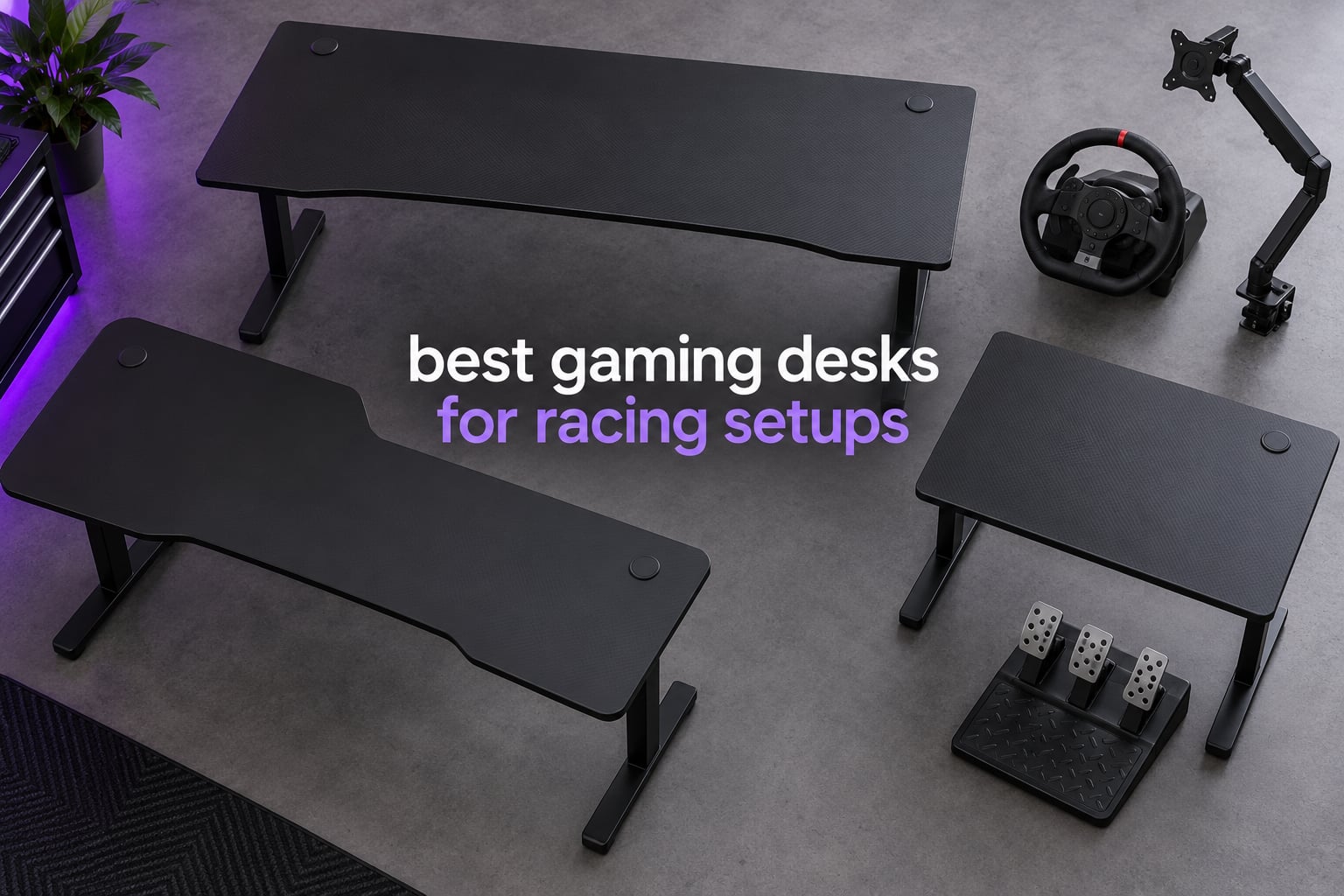
The hardest part of building a sim racing station is not the wheel. It is the surface the wheel bolts to. A desk that looks fine for a keyboard and a monitor can feel vague under a direct drive wheelbase, because the frame flexes and the steering input washes out. Pick the wrong depth and your pedals end up under the frame instead of under your feet. Pick the wrong screen distance and your field of view sits somewhere between a windscreen and a wall.
That is why the best gaming desks for racing setups are a narrower category than the best gaming desks. We went through twelve desks with an eye on three numbers that matter here: load capacity, desktop depth, and how much under-desk clearance is left once the legs are in place. We also looked at top thickness, because that decides whether a wheelbase clamp will bite or slide.
If you want the broader picture first, our picks for the best gaming desks overall and our guide to the best gaming monitors for racing sims cover the wider setups. This guide is the intersection: desks that behave when a torque curve hits them.
Top 3 Picks for Racing Setups in 2026


Best Gaming Desks for Racing Setups (October 2026)
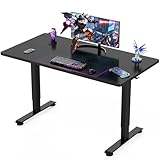


1. Huuger 63 Inch Modern Simple Office Desk – Best Overall for a First Racing Setup

Huuger Modern Simple Office Desk, 63 Inch, Gaming & Writing Desk with Storage, Large Legroom, Metal Frame, Black
Pros
- Large legroom for pedals and a sim seat
- Reinforcement struts stiffen the top
- Quick one-person assembly
- Five colour options
- Compact flat-pack packaging
Cons
- Top arrives in three sections with visible seams
- Some examples arrive with rust or scuffed panels
- Sharp 90 degree front edge without a mat
This is the desk I keep coming back to for a first racing station. The 63 inch width gives you a triple-monitor layout on top and a wheel clamped to the near edge without squeezing anything. The 23.6 inch depth is modest, but the open underside is the reason it works: there is no crossbar low enough to catch a pedal set or a footplate.
The frame is thick steel tube with reinforcement struts running beneath the top, and that combination is what stops the vague-wheel feeling. At 8 Nm with a light direct drive wheel, it stays planted. The 2.54 cm top is thick enough that most clamp mounts bite without a riser.
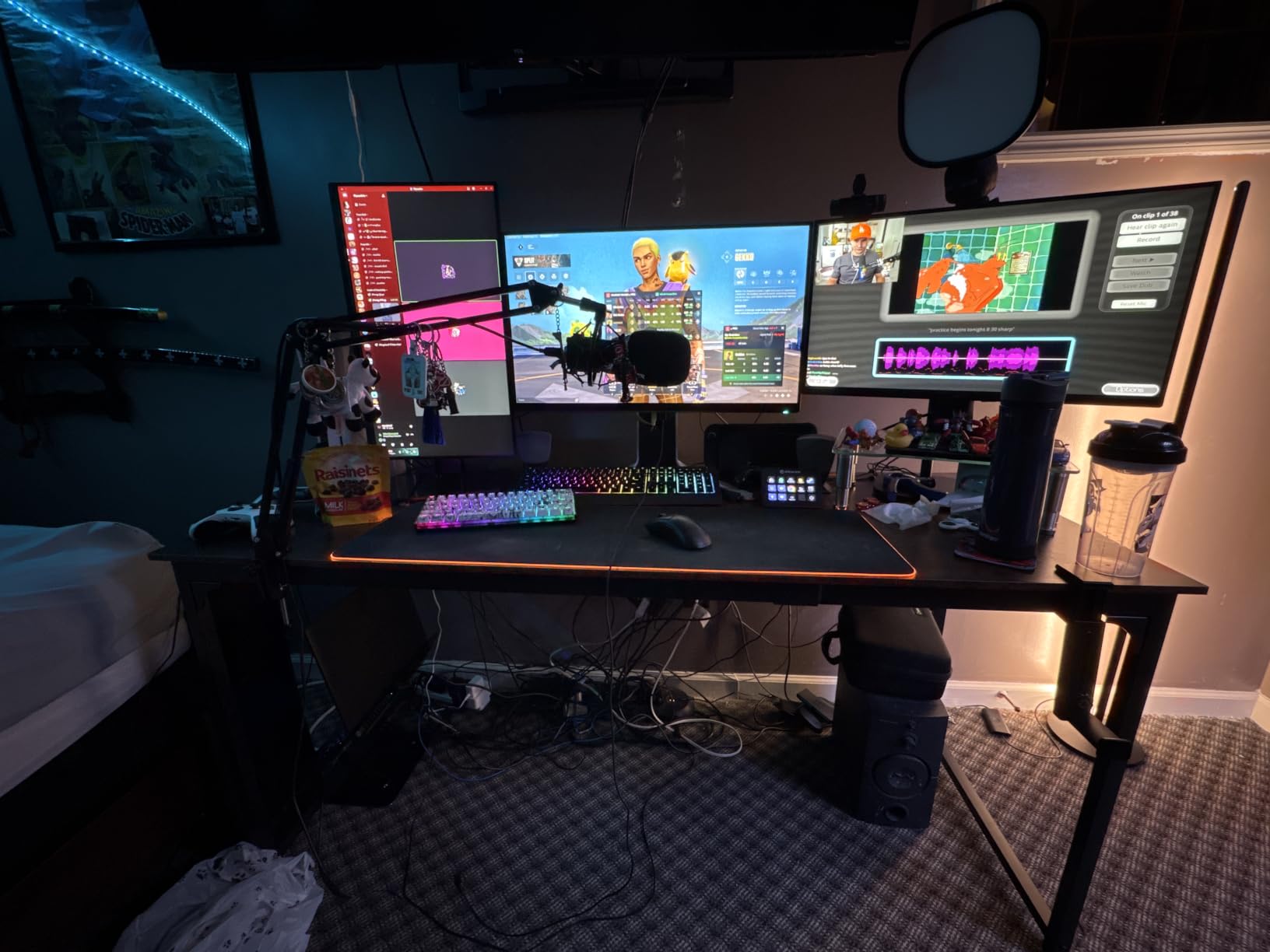
What gives me pause is the three-piece top. The seams run across the surface and reviewers report catching a pen or feeling a ridge under the mouse. For a racing desk that is cosmetic, since your hands are on the rim, but it does mean adding a desk mat.
Assembly is genuinely fast. The frame arrives in three sections with adjustable feet for uneven floors, and most owners report putting it together in well under an hour alone. A few examples arrive with rust or scuffed panels, so check the steel before you build.
Why it works for a racing setup
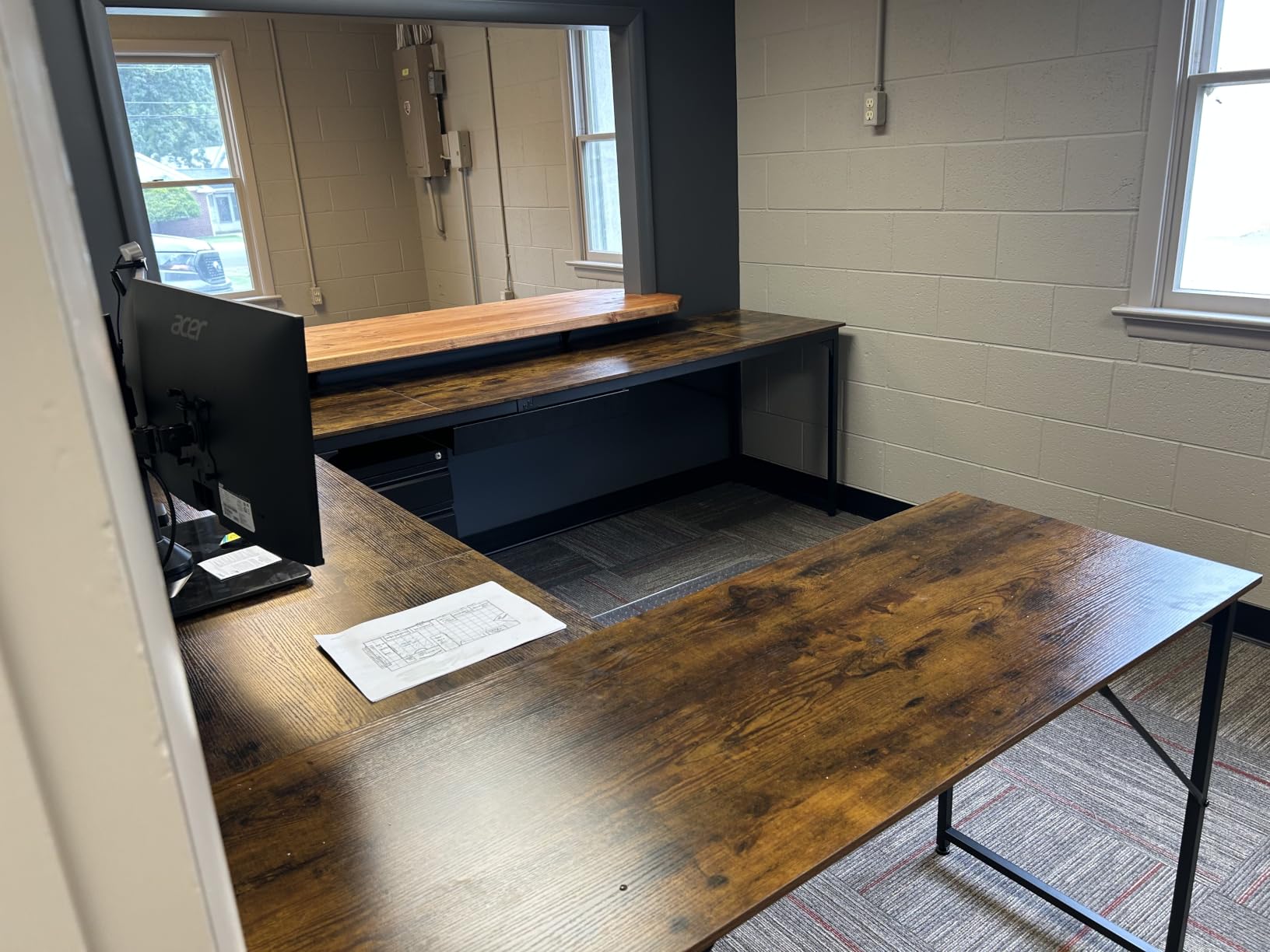
The combination of 63 inch width, open legroom, and struts under the top covers most of the fit checklist in one frame. A wheelbase on the front edge plus a floor pedal set plus two monitors leaves you room to spare, which is not something you can say about every 63 inch desk.
Where it falls short
Fixed height at 29.5 inches, so your seat height and posture do all the work. If you are taller than about six feet, a fixed desk plus a fixed racing seat can leave your knees high, and you end up bolting a steering column to the wheel instead of using a riser.
2. Veken 55 Inch Electric Standing Desk – Best Sit-to-Stand Option
Pros
- Quiet motor under 52 dB with memory presets
- Carbon steel frame stays stable at full extension
- Built-in cable management
- Two-person build in 10 to 30 minutes
Cons
- Two-board desktop creates a seam under the mouse
- 23.6 inch depth is shallow for a wide wheelbase
The pitch here is alternating between seated and standing. A 50 minute race does not need a standing desk, but a 12 hour practice block does, and the 28.3 to 46.5 inch range lets you move the wheel and everything else together when you want to stand.
The motor is the story. It runs under 52 dB with memory presets, so there is no grunt during a corner. The carbon steel frame holds 154 lb and reviewers say it stays stable at full extension, which is exactly the condition a wheelbase imposes.
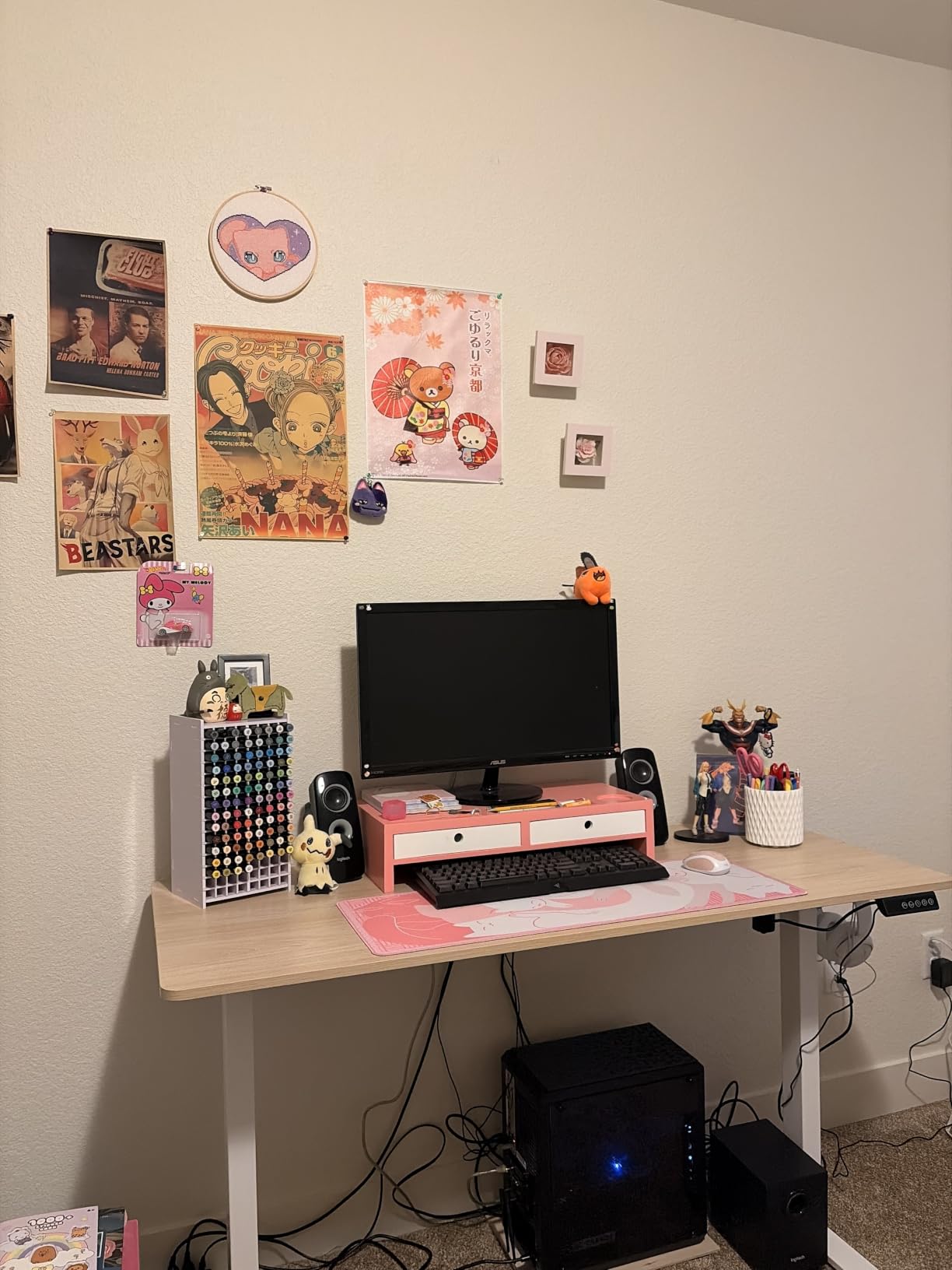
The 23.6 inch depth is the catch. It is fine for a monitor arm plus a keyboard, and tight for a direct drive wheelbase with a clutch lever or an H-pattern shifter. If your wheel has a wide face plate, plan on a wheel stand in front of this desk rather than a clamp.
The desktop is two boards joined down the middle, so the seam sits directly where a mouse would travel. It is a small irritation for gaming and nothing at all for racing, since the wheel takes over that part of the desk.
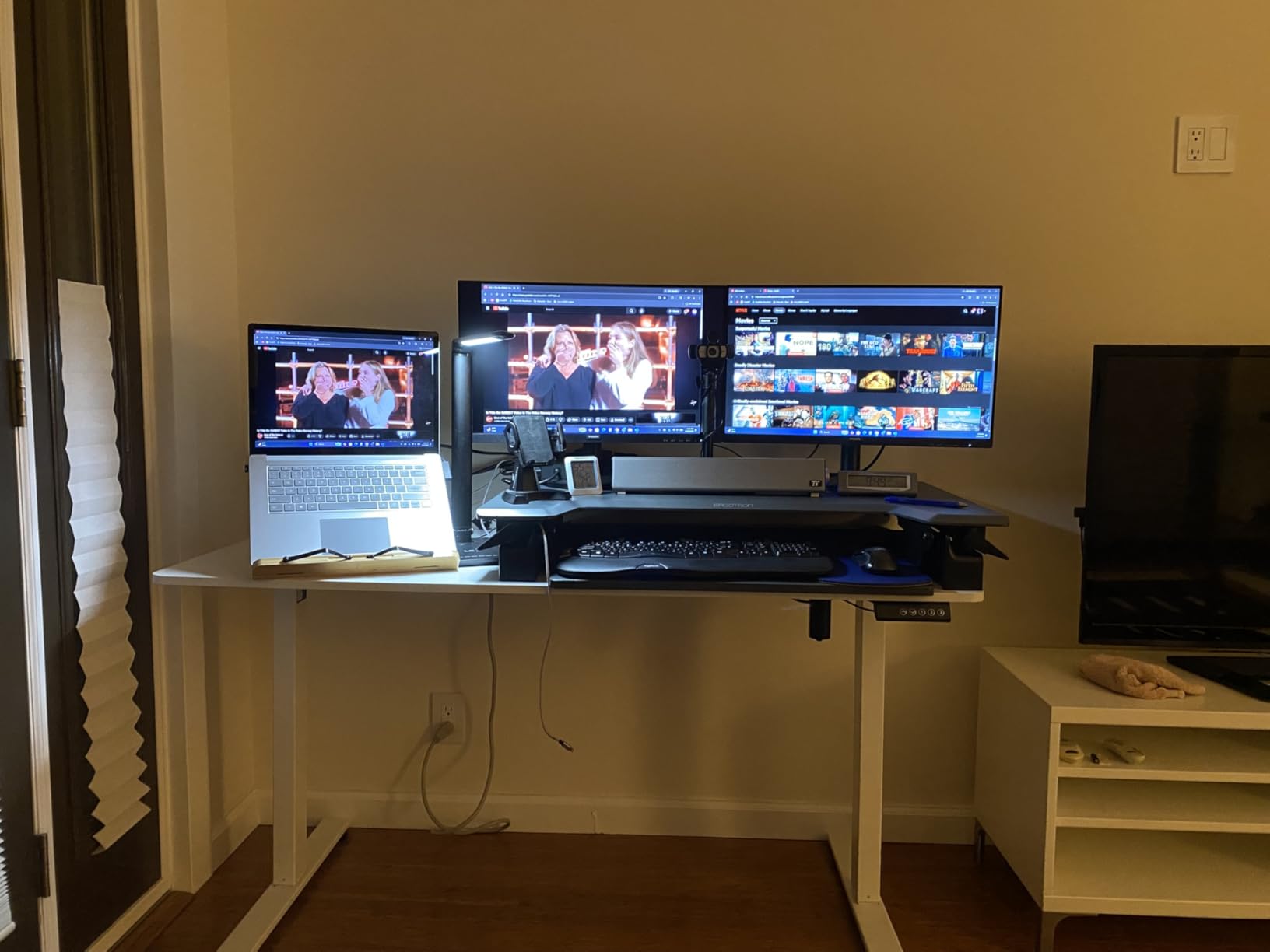
Why it works for a racing setup
Standing changes are the practical reason to buy a motorized desk for racing. Standing up mid-session resets your posture without unplugging anything, and the memory presets mean your race position and your work position are two button presses apart.
Where it falls short
Standing while a direct drive wheel is clamped to a moving surface is its own problem. If you plan to drive hard while raised, test the clamp under load at full height first. Below about 15 Nm it is fine. Above that, park the wheel on a stand.
3. GTPLAYER 55 x 24 Inch Electric Standing Desk – Best for Built-In Power and Storage

GTPLAYER Electric Standing Desk with Drawers, 55 x 24 Inch Height Adjustable Gaming Desk with Monitor Stand, Power Outlets & LED Lights, Home Office Sit Stand Up Desk with Memory Preset (Black)
Pros
- T-shaped steel frame rated to 220 lbs
- Built-in AC outlets and USB charging ports
- Drawer plus shelves add real storage
- RGB LED with 12 scene modes
- About 30 minutes to assemble alone
Cons
- Some units arrive with chipped desktops or missing screws
- Drawer can bind if not pulled from dead center
- Built-in power strip is not rated for a monitor or PC
This is the pick for a shared desk and racing station in one room. The 220 lb T-shaped frame is among the highest ratings on a motorized desk in this group, and the T geometry is the part that resists the lateral push a wheel applies when you catch a slide.
The 24 inch depth is better than the usual 23.6, and the top lifts from 28.3 to 48 inches. That extra top end means a standing position that actually suits a 6 foot driver rather than a token raise.
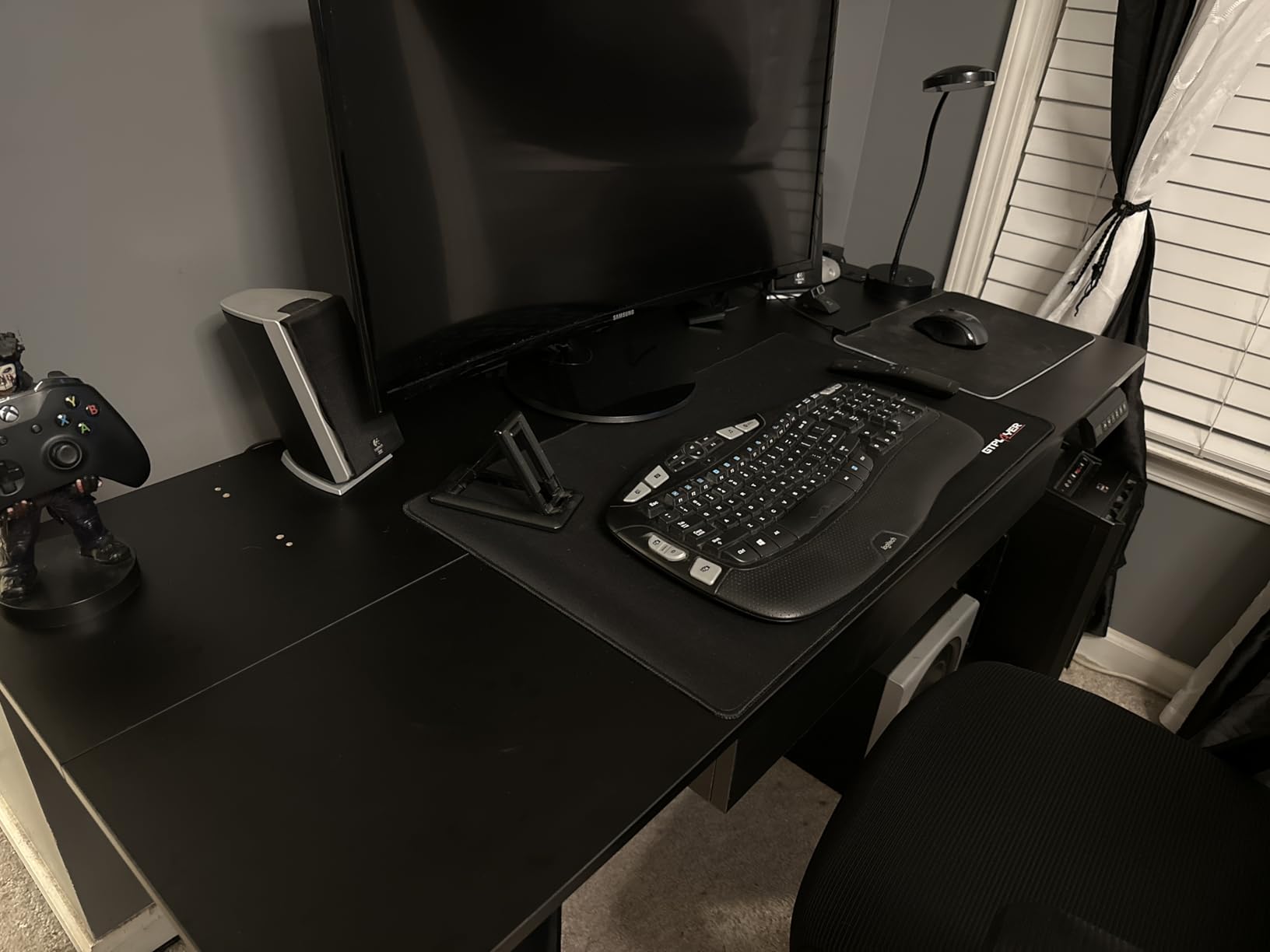
Owners repeatedly praise the feature density: two AC outlets, two USB charging ports, a pull-out utility drawer, shelves, and RGB lighting with 12 scene modes. That is a lot of reasons to pick one desk that has to serve work, racing, and streaming.
Watch the caveat list. Reviewers report chipped or split desktops and missing screws on delivery, and note the built-in power strip is not rated for a monitor or a PC. You still want a separate surge protector for the heavy gear.
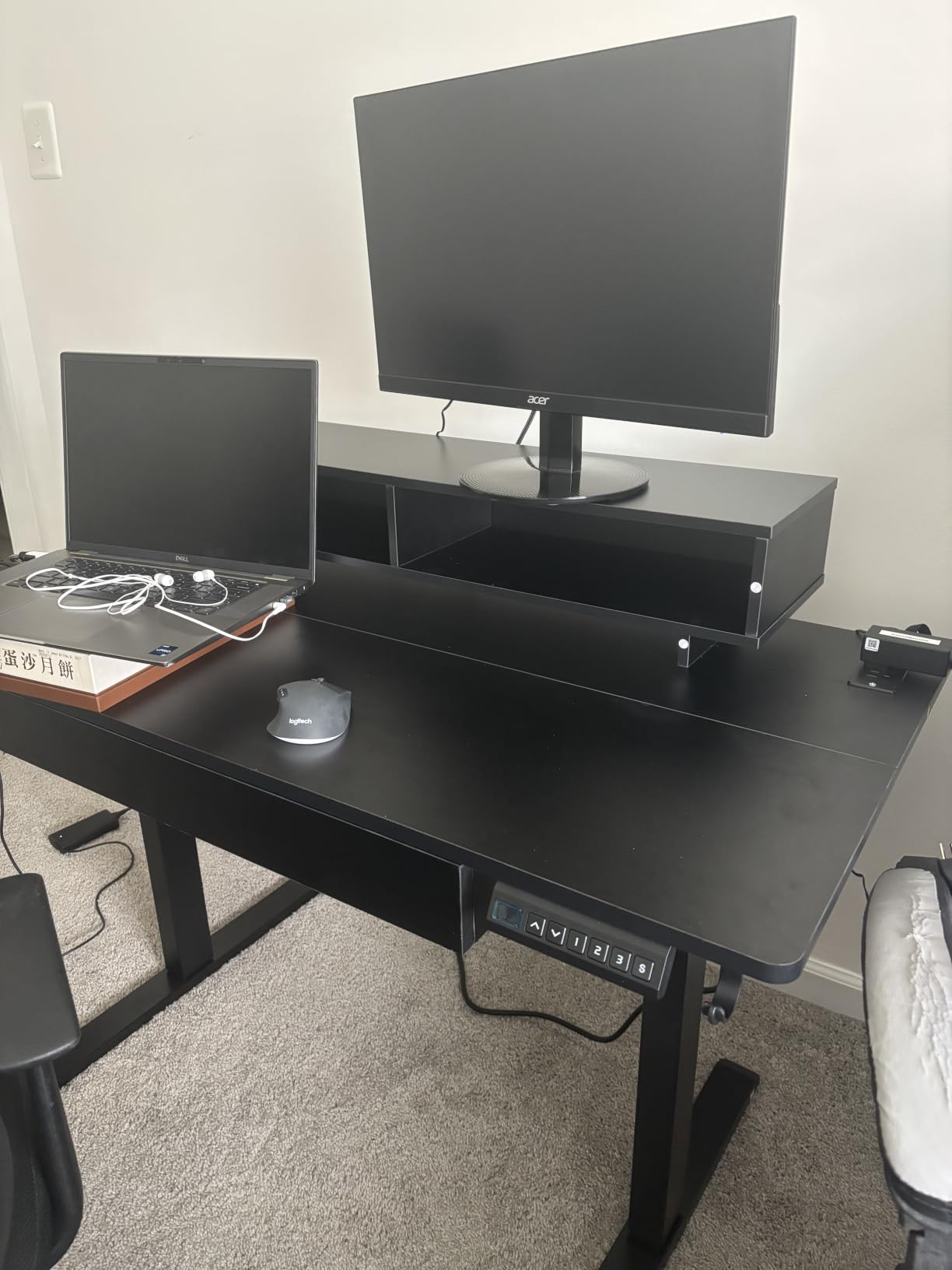
Why it works for a racing setup
A 220 lb rating on a moving frame is the number that matters when a 15 Nm wheel is bolted to the edge. The T-frame plus crossbar keeps the top from panning when you apply lock-to-lock steering input.
Where it falls short
At 55 inch wide it is narrow for triple screens. Two monitors plus a wheel plus a pedal set fits, but you will be running the outer display close to the edge. Check your desk width against your monitor count before committing.
4. SEDETA 63 Inch L Shaped Gaming Desk – Best for Corner Rooms

SEDETA L Shaped Gaming Desk, 63” Reversible Computer Desk with Power Outlet and Storage Shelves, Corner Gaming Desk with LED Lights, Bookshelf for Home Office, Black
Pros
- L-shape keeps a cockpit footprint compact
- Five-tier shelf adds real vertical storage
- Reversible shelf for either-handed layout
- 2 AC outlets and 2 USB ports
- CPU stand included
Cons
- Fixed 55 inch height with no adjustment
- 18.9 inch depth is very shallow for a direct drive wheel
- Large top and a slow assembly
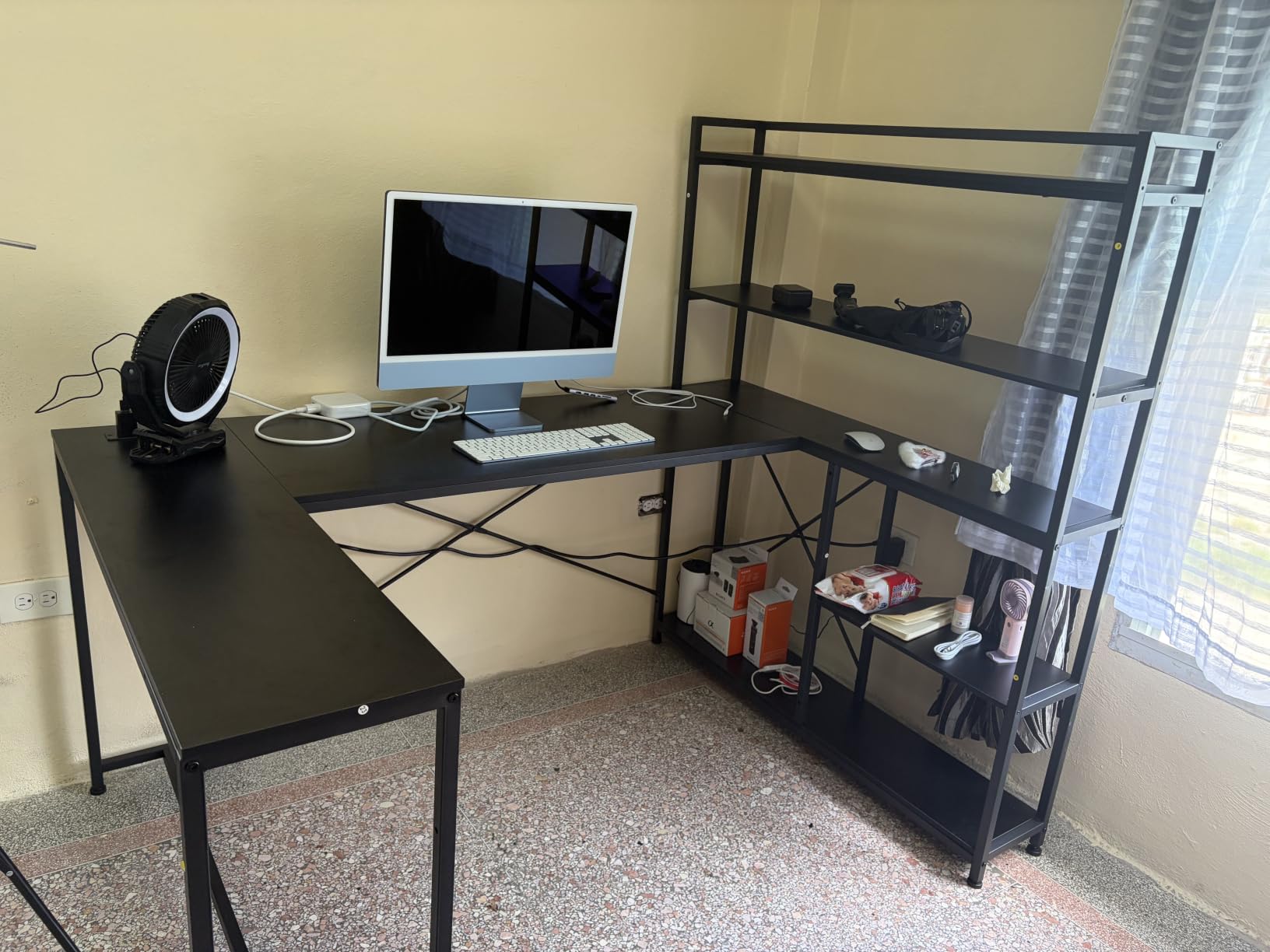
This is the small-room answer. An L-shape wraps into a corner, so the wheel sits on the main run and the pedal set tucks under the return without pushing the desk out into the middle of the room. That footprint argument is why L-desks keep showing up in racing builds.
The 1.5 inch top is the second selling point and the one racers care about. That is a thick enough slab for a clamp mount to grip without a riser, and thicker tops also damp the resonance a wheelbase sends through the frame.
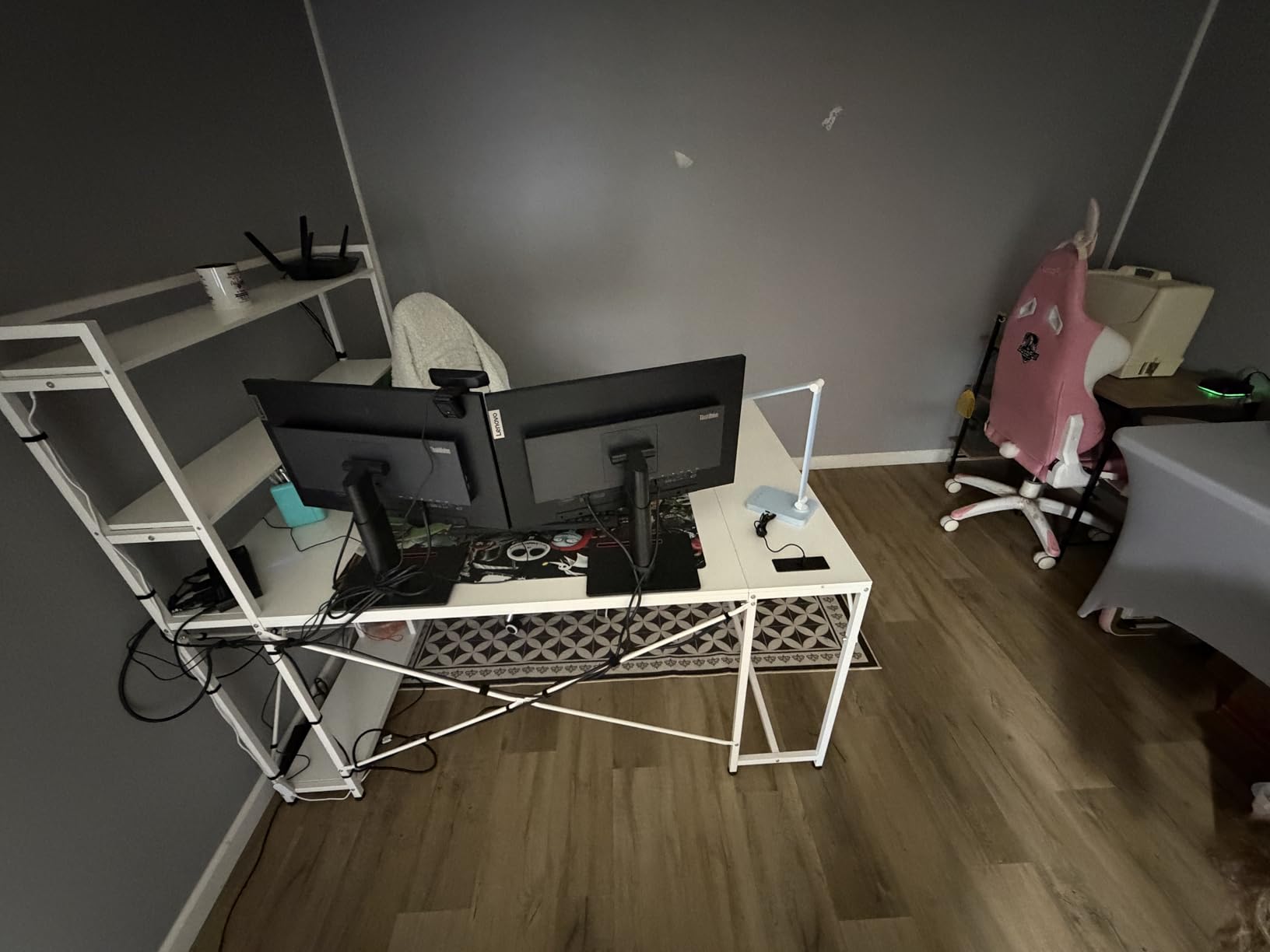
The RGB strip runs 60,000+ colours with 29 flashing modes and music sync, and the charging station handles two AC outlets and two USB ports. The shelf holds two desktops plus a laptop, and the CPU stand is included.
The honest limitation is the 18.9 inch depth. That is shallow enough that a direct drive wheelbase overhangs the front edge, which is a flex risk under load. Plan on a wheel stand here rather than a clamp.
Why it works for a racing setup
Corner placement is the whole argument. If your room cannot hold a straight desk plus a rig plus monitors, the L-shape recovers floor space that a separate return would not, and the thick top takes a clamp cleanly.
Where it falls short
Fixed 55 inch height with no adjustment. That suits a taller driver at a proper racing seat, and it is wrong for a shorter person. It also means the desk cannot double as a standing work surface, so a hybrid build needs a separate solution for that.
5. HLDIRECT 63 Inch Carbon Fiber Gaming Desk – Best for Lighting on a Budget
Pros
- Carbon fiber look top at an entry price
- Steel frame rated to 220 lbs
- Remote RGB with colour and speed control
- Mouse pad and cup holder and headphone hook included
- About 30 minutes to assemble
Cons
- Two-piece desktop causes a seam and visible wobble
- Some units arrive with mismatched or rusted parts
- Fixed 29 inch height
This is the entry point most people land on, and it is a fair one. The 220 lb alloy steel rating is higher than several more expensive desks in this group, and the 24 inch depth clears a small direct drive wheel without overhanging.
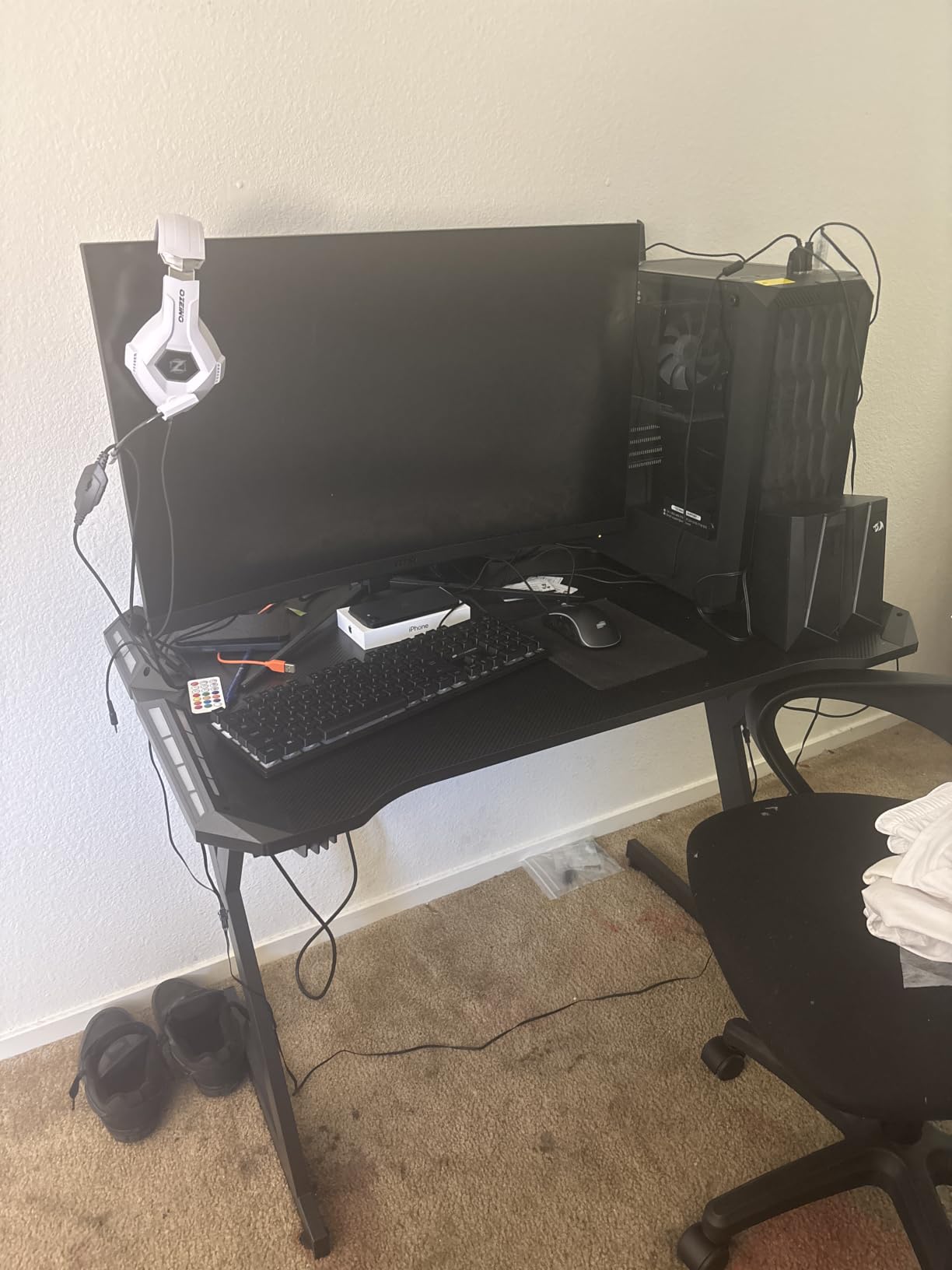
The carbon fiber finish is a laminate rather than real carbon, but it wipes clean and resists the scuffs a pedal boot leaves on a desk edge. The remote-controlled RGB strip lets you dial back the glow before a race.
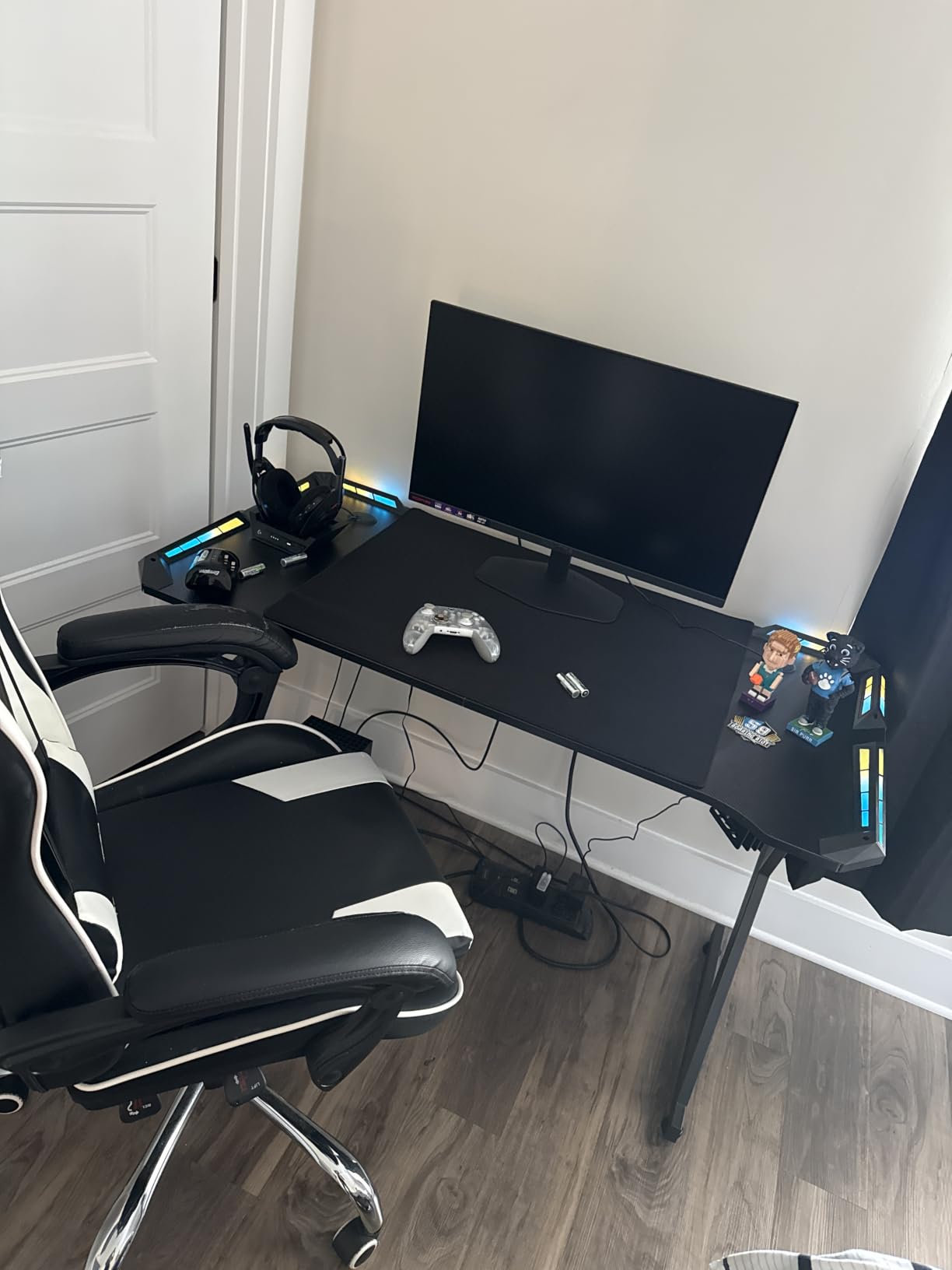
The deal-breaker here is the two-piece top. Reviewers report the seam transmits vibration up into the monitor, and that wobble is precisely the feeling people buy a better desk to escape. With a monitor arm clamping the rear edge it improves, but it does not disappear.
Fixed 29 inch height, so posture is entirely a seat problem. A few units arrive with mismatched or rusted hardware, so inspect the frame before you start.
Why it works for a racing setup
A 220 lb rating at this price is genuinely useful, and the 24 inch depth gives a clamp wheel somewhere to sit. Cable holes in the top keep the wheelbase cable from becoming the first thing you snag.
Where it falls short
That centre seam is a real problem for racing specifically. If you can feel vibration through your mouse, you will feel it through a wheel. Save this one for a console wheel or a stand-mounted setup rather than a clamped direct drive.
6. Arozzi Arena Curved Gaming Desk – Best for Deep Cockpit Layouts
Pros
- Steel frame that stops moving once assembled
- Desk-wide washable microfiber mat
- 32 inch depth gives real wheel and pedal room
- Three grommets and an under-desk cable basket
- Curved front edge pulls you to centre stage
Cons
- Needs the correct tightening sequence or legs feel wobbly
- Cable net sags and drops a surge protector
- Sharp front edge where the mat stops
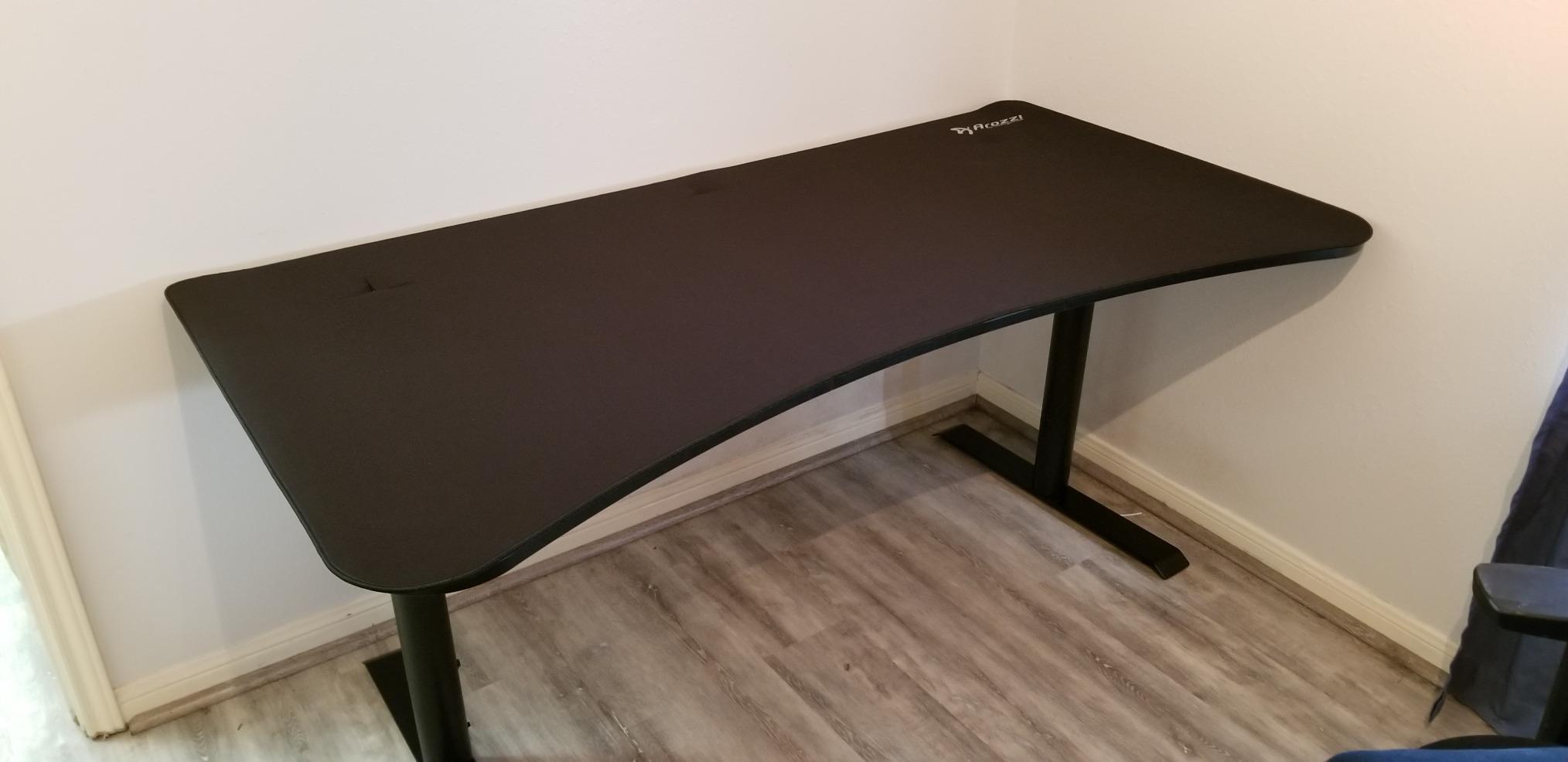
This is the desk we would put in front of a triple-screen rig. The 32 inch depth is the reason. It is wide enough front to back that a wheelbase sits fully on the top with its face plate overhanging nothing, and your pedals land under the desk with clearance to spare.
The steel frame is the other reason. At 176 lb and 85 lb of desk weight, this is a genuinely heavy piece of furniture, and reviewers describe it as not moving once the bolts are properly torqued.
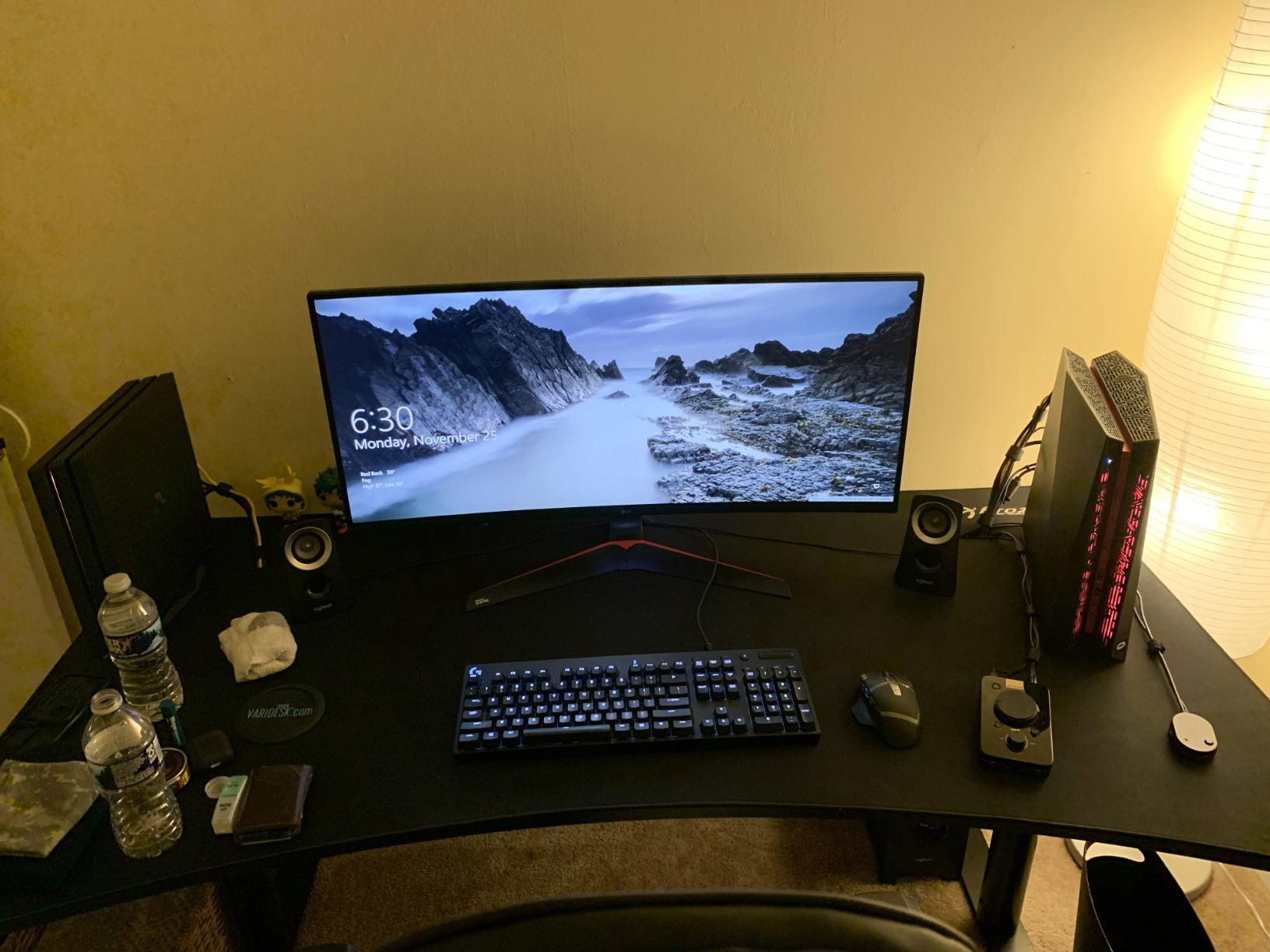
Three cutouts in the top take monitor arms or cable pass-throughs, and the basket underneath is where the wheelbase power brick and hub live. The desk-wide microfiber mat means no separate mousepad, which matters when the whole surface is your racing control area.
The wobble complaints almost all trace back to tightening order. If you tighten the leg bolts before the frame bolts, the legs sit proud and the desk rocks. Owners who followed the sequence describe a rock-solid result, so read the manual rather than guessing.
Why it works for a racing setup
Depth and mass together. Most 63 inch desks are 24 inches deep because that is what fits a monitor arm and a keyboard. At 32 inches you gain roughly a foot of front-to-back room, and that is the room a wheelbase and its mount need.
Where it falls short
It is fixed height, adjustable only 10 cm between 29 and 31.9 inches, so there is no standing option. The cable net is also the weak point, and a surge protector that drops out when you brush it is a bad day in a long race.
7. SEDETA 63 Inch Desk with Lockable Drawers – Best for Work and Racing in One Room
SEDETA 63″ Computer Desk, Office Desk with Lockable Drawers for Legal/Letter File, Gaming Desk with LED Lights & Power Outlet, Home Office Desks with Storage, Black
Pros
- Huge built-in storage
- Monitor stand sized for three displays
- Keyboard tray frees desk depth
- 4 AC outlets and 2 USB ports with switch
- RGB strip with 29 modes
Cons
- 19.7 inch depth leaves little knee room behind the tray
- 77 pound build means a long two-person assembly
- Combined monitor stand raises the surface height
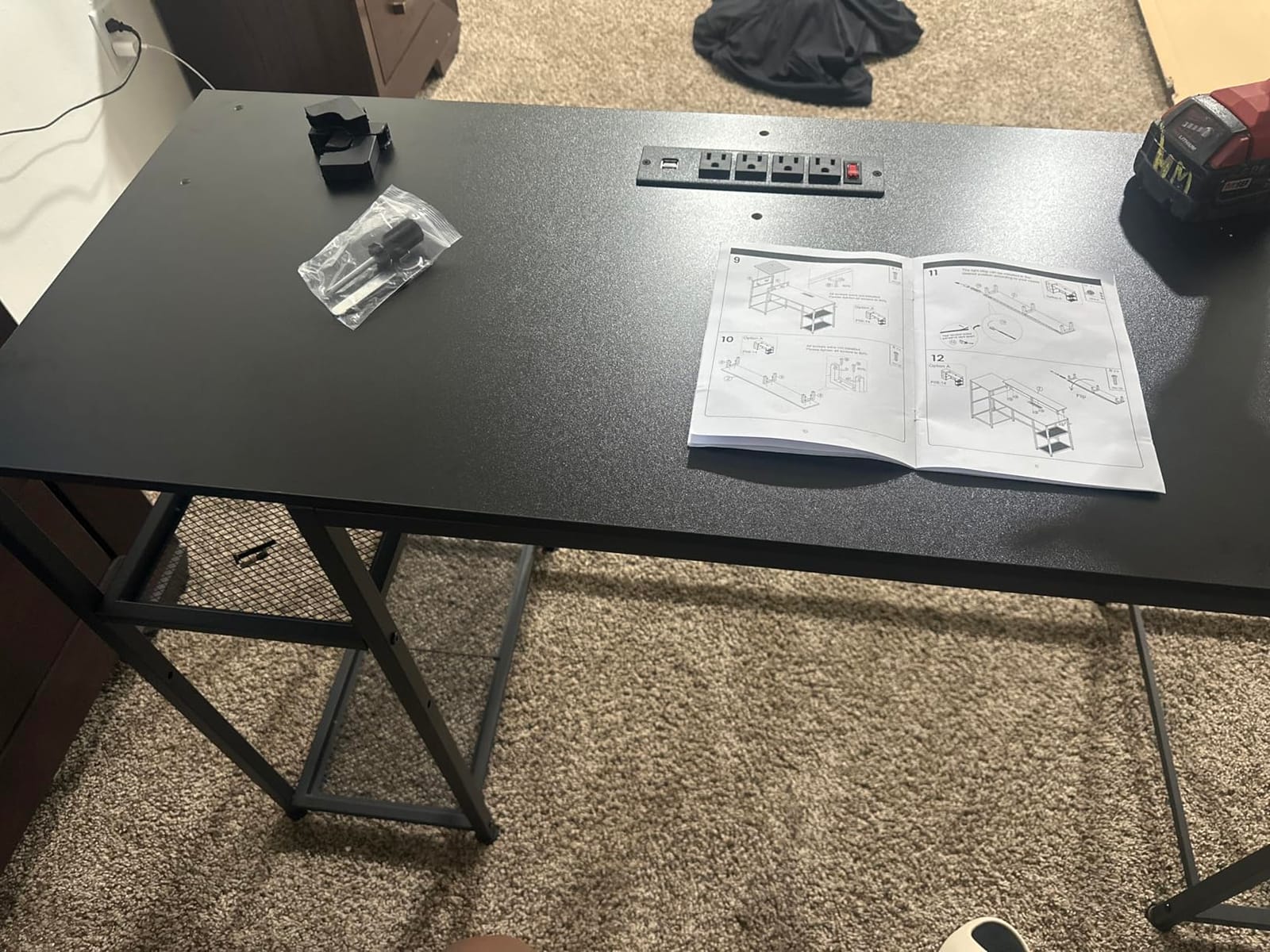
Storage is the argument here. A file drawer, a lockable drawer, a printer bay, two shelves, and a CPU stand in one 63 inch frame is the answer for someone whose desk has to be a real desk for part of the day and a racing station for the rest.
The slide-out keyboard tray is genuinely useful for racing. It recovers desk depth in front, which on a 19.7 inch top is the scarce resource, and it takes a full-size 108-key board or an 87-key board plus mouse.
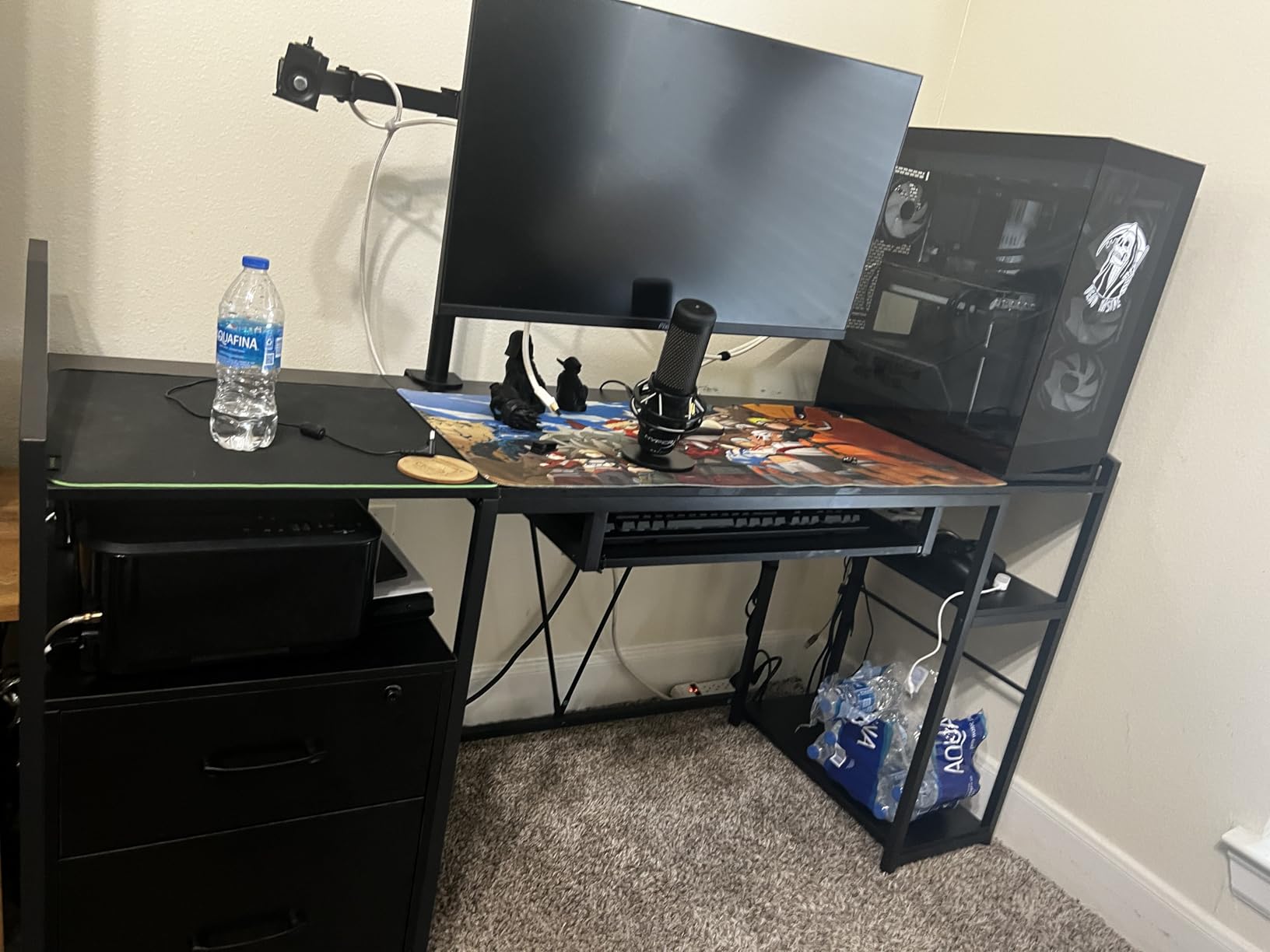
The extra long monitor stand is sized for three displays, and the built-in power runs four AC outlets plus two USB charging ports behind a switch. That is one cable bundle from the wall instead of four.
Be honest about the trade-offs. The 19.7 inch depth is the shallowest on the list with a real storage unit, and behind the keyboard tray there is not much knee clearance. A floor-mounted pedal set may not fit underneath.
Why it works for a racing setup
The keyboard tray plus the monitor stand together stack your controls vertically instead of front to back, which frees up the shallow top for a wheel. That is a clever answer to a small desk, and it is why this desk suits a work-and-race hybrid.
Where it falls short
At 77 lb with a full feature set, assembly is long and genuinely two-person. Reviewers also note the monitor stand and desk together raise the surface, which is awkward if you are shorter than average.
8. PRAISUN 63 x 29.5 Inch Deep Computer Desk – Best for Pedal Clearance
Pros
- Unusually deep 29.5 inch desktop
- Thick steel tubes and support bars keep it steady
- 1.5 inch top resists scratching
- Open bottom design for legroom
- Fast solo assembly with labelled parts
Cons
- Fixed 29.7 inch height with no sit-stand range
- No integrated power or cable management
Depth is the single feature here, and 29.5 inches of it is the second deepest fixed desktop in this group. For a racing setup that translates directly into pedal clearance: your floor-mounted pedal set sits forward of your knees with room to angle it the way a real seat would.
The 1.5 inch top is also thick. That gives a clamp mount plenty to bite into, and it is one of the few entry-level desks where clamping a wheelbase does not require a riser block.
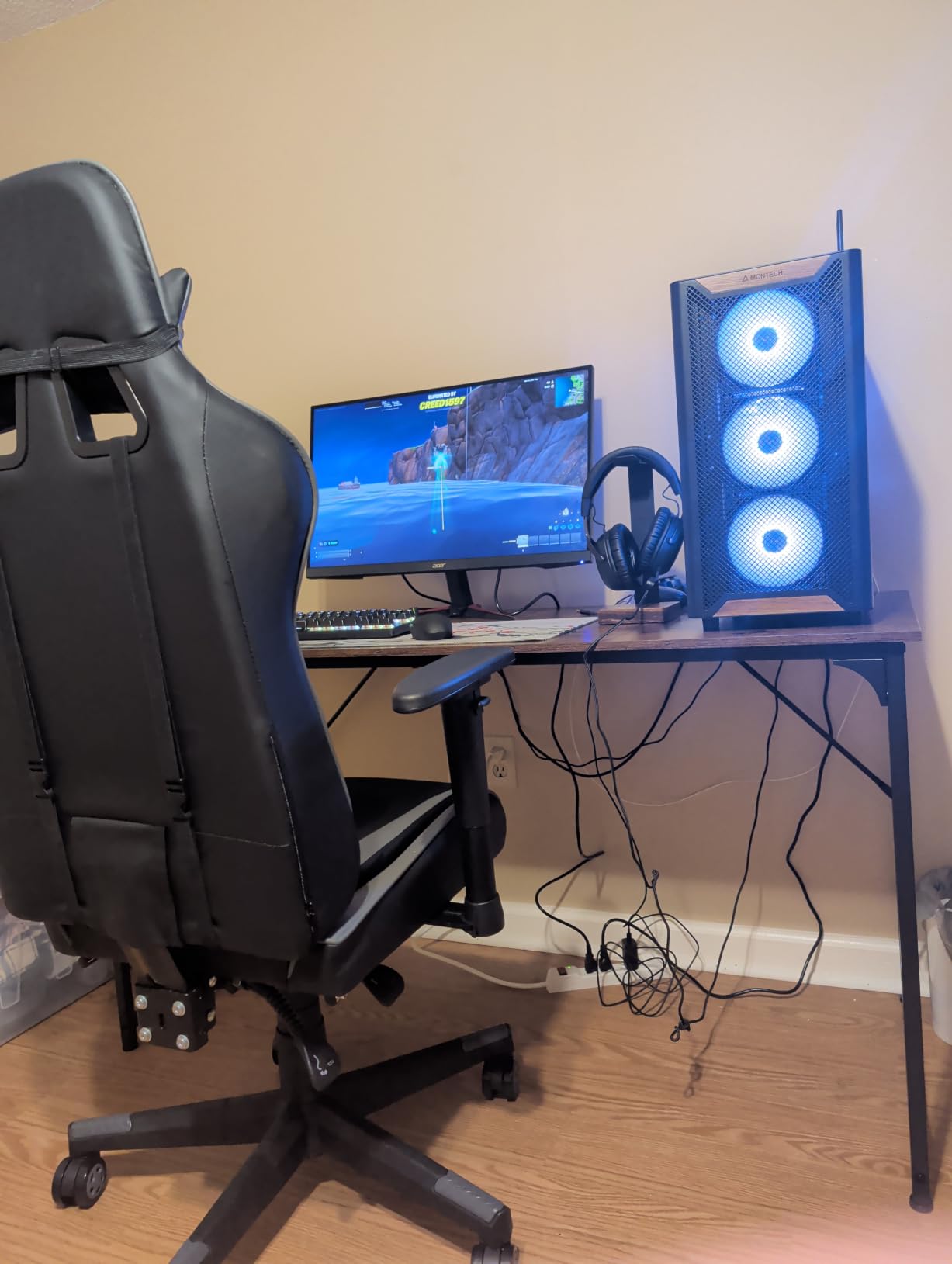
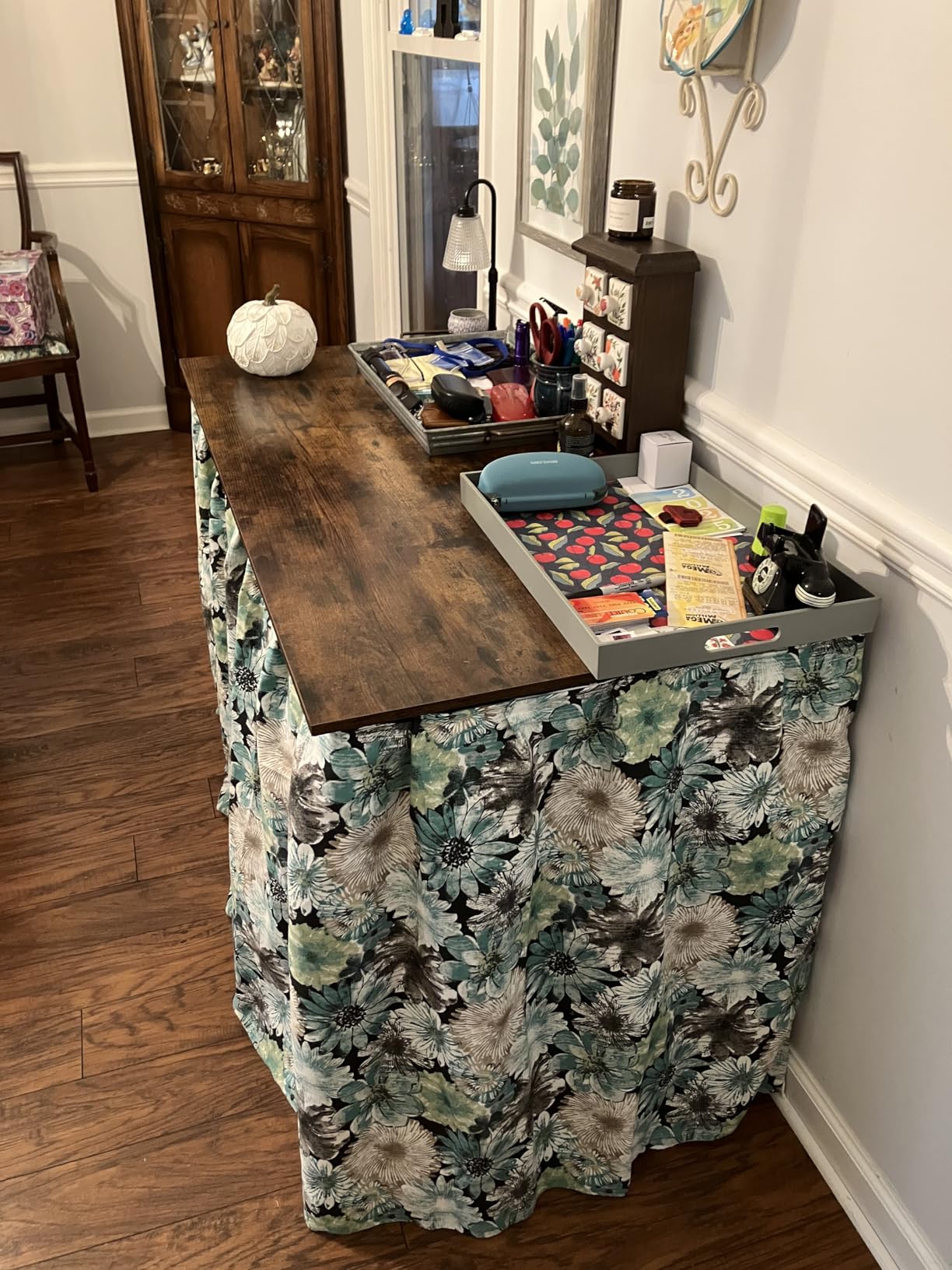
The open-bottom design is the quiet win. There is no lower shelf and no cabinet, so tall drivers and anyone using an under-desk storage bin both fit, and the adjustable feet keep the frame level on uneven flooring.
What you do not get is power management. There are no outlets, no grommets, and no tray, so budget for a surge protector and a cable route of your own. Reviewers also note the fixed 29.7 inch height.
Why it works for a racing setup
Deep plus thick plus open underneath. That is the exact combination the pedal clearance problem needs, and it costs less than most of the sit-stand options here while giving up nothing that a racer uses.
Where it falls short
Fixed height and no storage at all. If the desk also has to run a home office, you are adding a separate unit for everything this one leaves out, which erodes its value advantage.
9. Bestier 71.5 Inch L-Shaped Gaming Desk – Best for the Widest Racing Footprint
Pros
- Widest surface in this group at 71.5 inches wide
- 4 AC outlets and 2 USB ports for six devices
- Adjustable tiltable metal grid shelf
- Carbon fiber textured top wipes clean
- Foldable cup holder and headphone hook in three positions
Cons
- Bottom shelf clearance is tight under a large tower
- Monitor shelf is shallow so bases hang over
- Surface sits higher than expected
- Long build and some units miss the LED remote
This is one of the widest desks here, and width is what a triple-screen racing layout actually needs. At 71.5 inches you can place three monitors on arms at the correct spacing and still have a wheel and a clutch lever on the same surface.
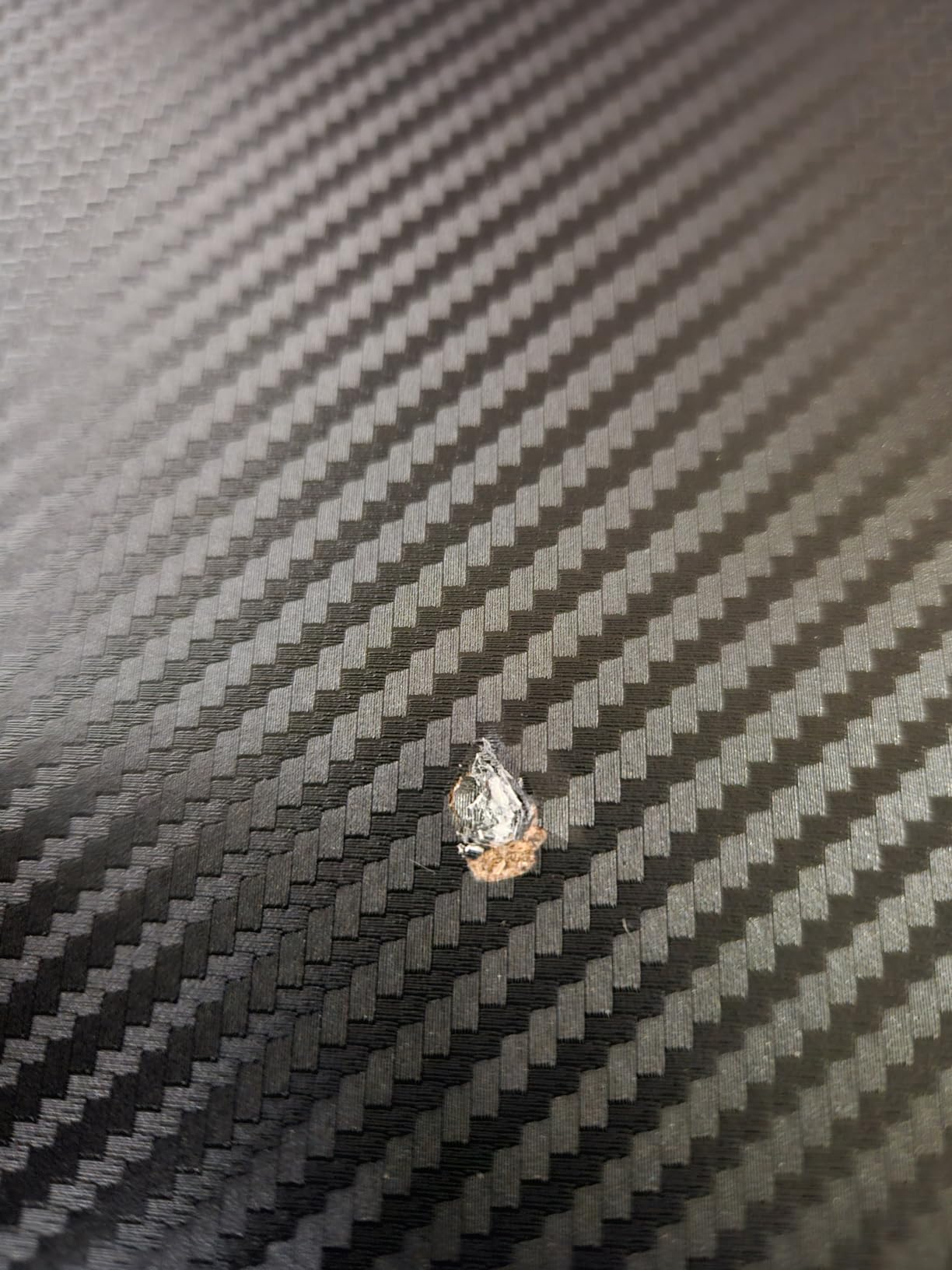
The carbon fiber textured top is a 3D P2 particleboard finish rather than real composite, but it resists scratches and wipes clean, which is what you want with a pedal boot on the same surface. The stainless and alloy steel frame underneath weighs 52.6 lb.
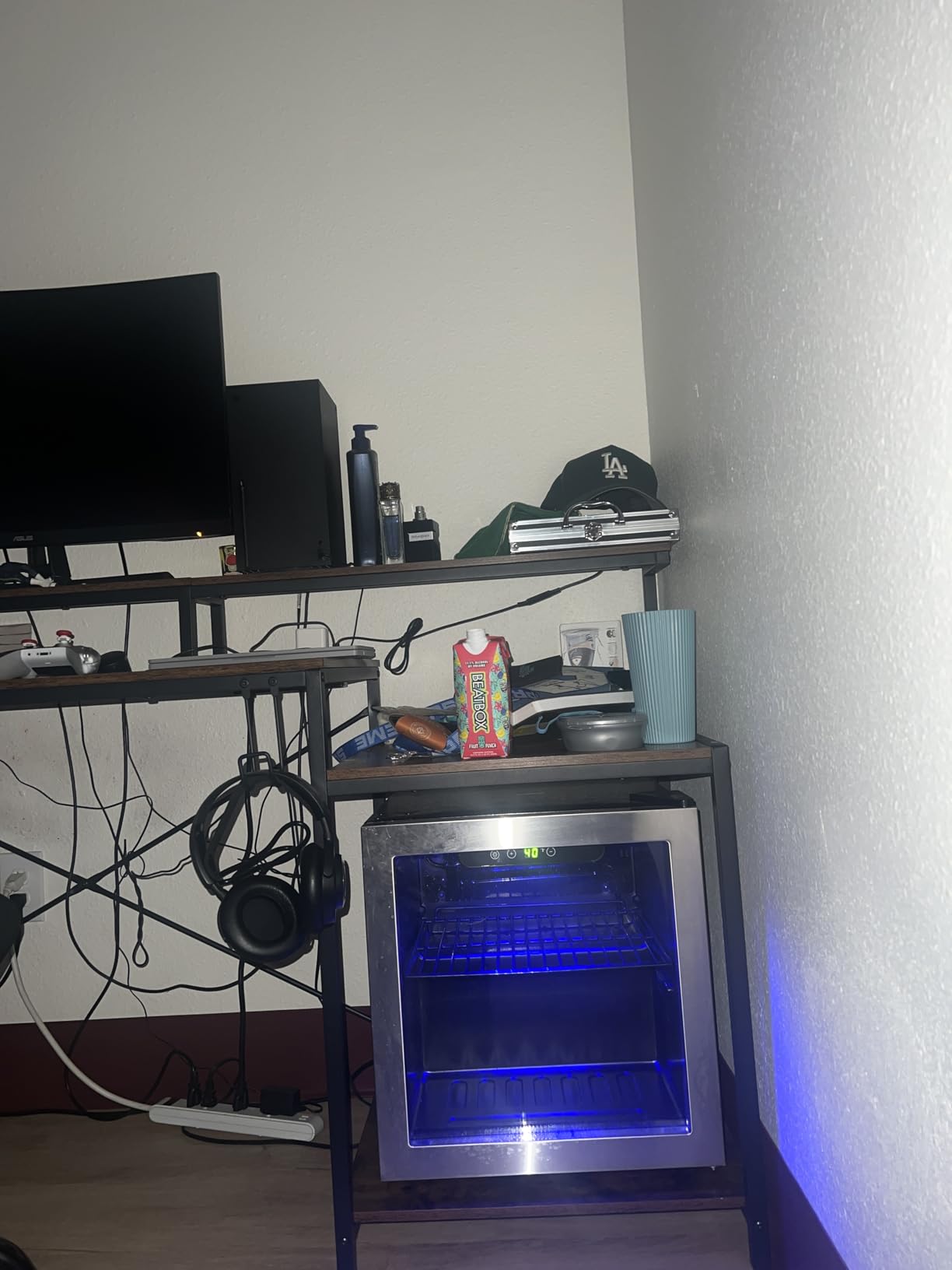
Power is the standout feature. Four AC outlets rated at 1500W plus two USB charging ports means your PC, monitor, wheelbase, and pedals can all live on the desk without a floor strip, which is a real win for cable routing.
The adjustable metal grid shelf is a CPU stand or PS5 bay, and it tilts. The cup holder and headphone hook each fold and install in three positions, which is the sort of detail that shows the desk was designed around a real setup.
Why it works for a racing setup
Width for a proper triple screen, plus a top thick enough to clamp a wheelbase, plus power at the desk. The 19.7 inch depth is shallow, so this suits a clamped wheel with a small face plate, or any wheel on a stand placed in front.
Where it falls short
Dimensional limits show up quickly at this size. The bottom shelf clearance is about half an inch under a large tower, and the monitor shelf is shallow enough that monitor bases hang over the edge. Assembly also runs nearer three hours than the stated hour.
10. Huuger 63 Inch L Shaped Desk with Power Outlets – Best for a Thick Clamp Surface
Pros
- Thick 0.95 inch top rated to 220 lbs with no visible flex
- 4 AC outlets plus USB and USB-C
- Reinforced frame with crossbars stays rigid
- Includes keyboard tray and cable tray and monitor arm
- Clear instructions with spare hardware
Cons
- No storage at all
- 20 inch depth is tight for a wide wheelbase
- Assembly is easier with two people
Every clamping question comes down to top thickness, and this desk answers it better than anything else at the entry end. A 0.95 inch high-density slab rated to 220 lb gives a wheelbase clamp real material to grip, and owners report no visible flex under load.
The reinforced steel frame with thickened legs, crossbars, and adjustable feet is what backs that up. A wheel pulls in two directions at once, and crossbars are what stop the top panning under a clutch pull.
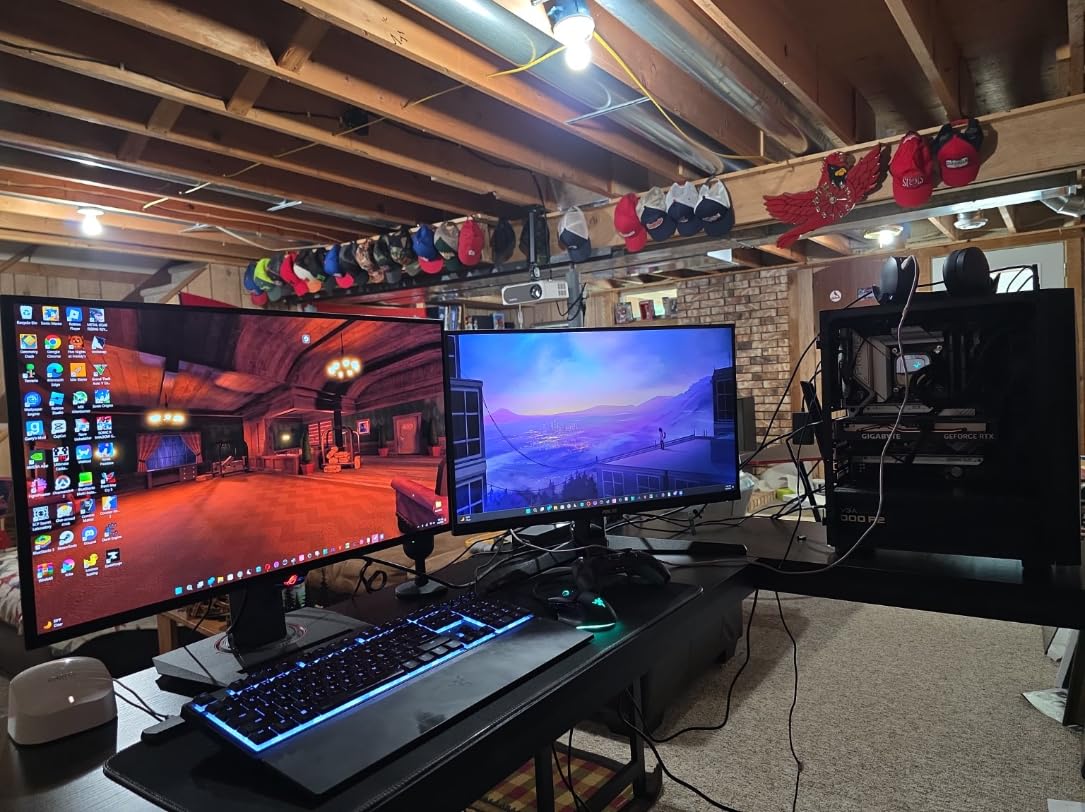
The power is unusually generous for a desk at this level: four AC outlets plus one USB and one USB-C port, all in the top. That removes the floor surge protector from the equation, which is one of the least enjoyable parts of building a racing station.
Two of them can also be combined into a two-person workstation, which is a bonus if the desk has to share a room. The L-shape is reversible, so you pick which side the return runs.
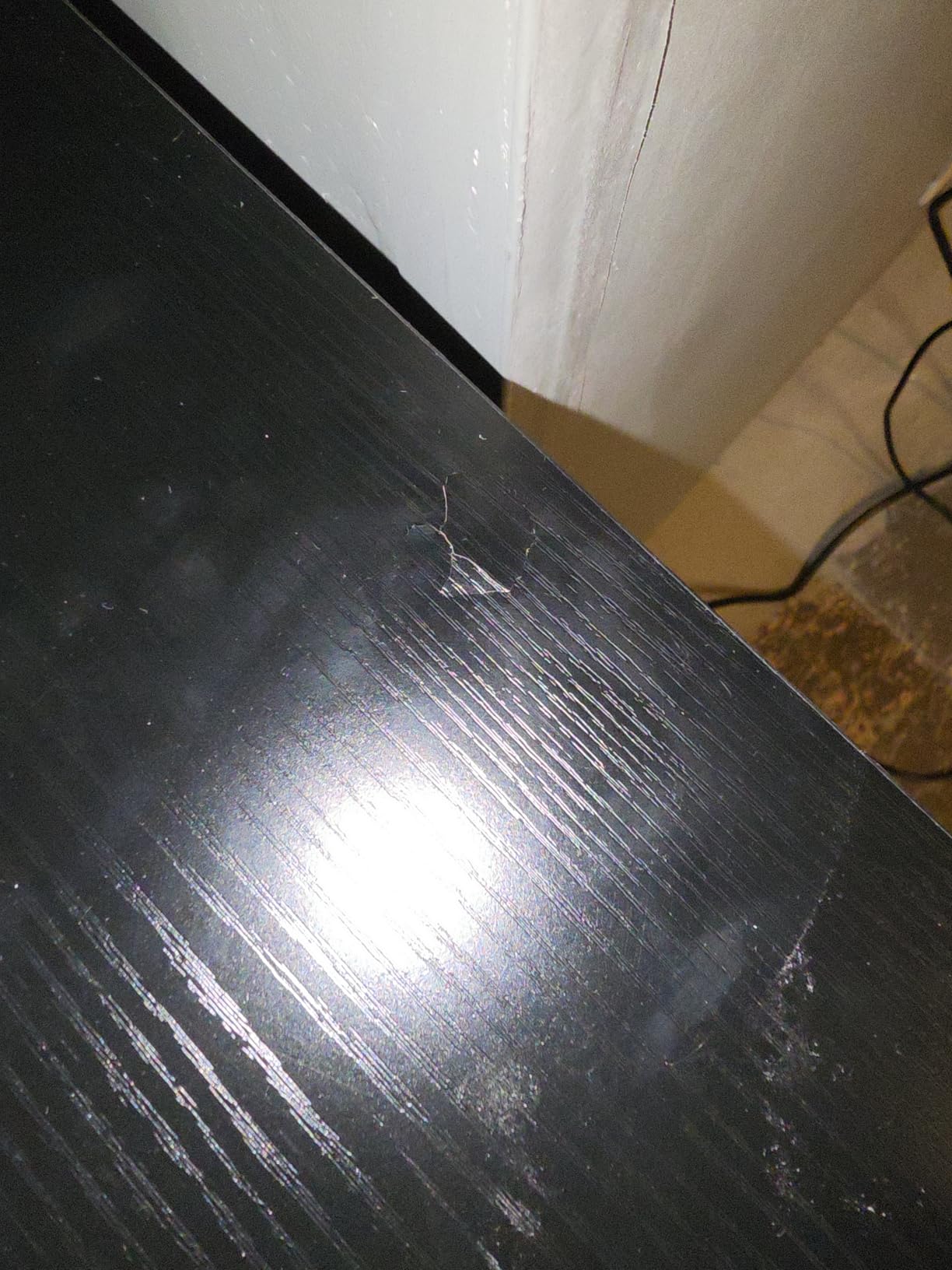
Why it works for a racing setup
Thick top, crossbarred frame, integrated power, and a footprint that fits a corner. For a clamped direct drive wheel this is the most complete entry-level package in the group, and it is why it takes the value slot.
Where it falls short
There is no storage of any kind, and 20 inches of depth is tight for a wheelbase with a clutch or an H-shifter. Budget for a separate storage unit, and expect two people for assembly.
11. SANODESK 63 x 32 Inch Electric Standing Desk – Best Wide Standing Surface

SANODESK 63×32” Large Height Adjustable Ergonomic Electric Standing Desk
Pros
- Largest desktop area on a standing desk here
- Smooth quiet electric lift
- Four memory keys for different drivers
- Cup holder and dual hooks and cable tray included
- 50000 cycle tested lift
Cons
- Arrives as two packages that may not come together
- Splice desktop implies a seam across the middle
- Only 104 reviews so long-term data is thin
The deepest standing top in this group is 32 inches, and that is what this desk offers on a motorized frame. It means a standing racing station where the wheel, the pedals, and a triple-screen layout all fit without anything spilling off the back edge.
The four programmable memory keys are more useful for racing than they first appear. You can store a seated race position, a standing race position, a standing work position, and a seated work position, then switch between them without measuring anything.
The lift runs from 28.9 to 46.5 inches and is tested for 50,000 cycles, which is a reasonable durability claim for a desk that sees daily use. Owners describe it as smooth and quiet.
Two caveats. It arrives as two packages, so plan for one arriving before the other. And the splice desktop means a seam across the working area, which is the same issue as any two-piece top on this list.
Why it works for a racing setup
Surface area is the scarce resource in a cockpit. At 63 by 32 inches you get monitors, wheel, and clutch on one raised top, and the 32 inch depth is deeper than any other motorized desk here offers.
Where it falls short
The review base is small, so you have less long-term feedback than the other picks. No load rating is published, and with a 32 inch deep top on a moving frame that number matters more than usual. Check it before committing to a heavy wheelbase.
12. HUANUO 71 x 30 Inch Electric Standing Desk – Best for Heavy Loads on a Moving Frame
Pros
- 220 lb carbon steel frame with upgraded geometry
- Quiet brushless motor under 55 dB
- Four presets across a wide height range
- Very large desktop for monitors and a laptop
- Aligned pre-drilled holes ease assembly
- Cable tray and dual hooks included
Cons
- Arrives as two packages
- increasing transit damage risk
- Multi-piece desktop can sit uneven under the mouse
- Hand tools only
- a power driver strips the screws
- Some slight wobble reported while typing
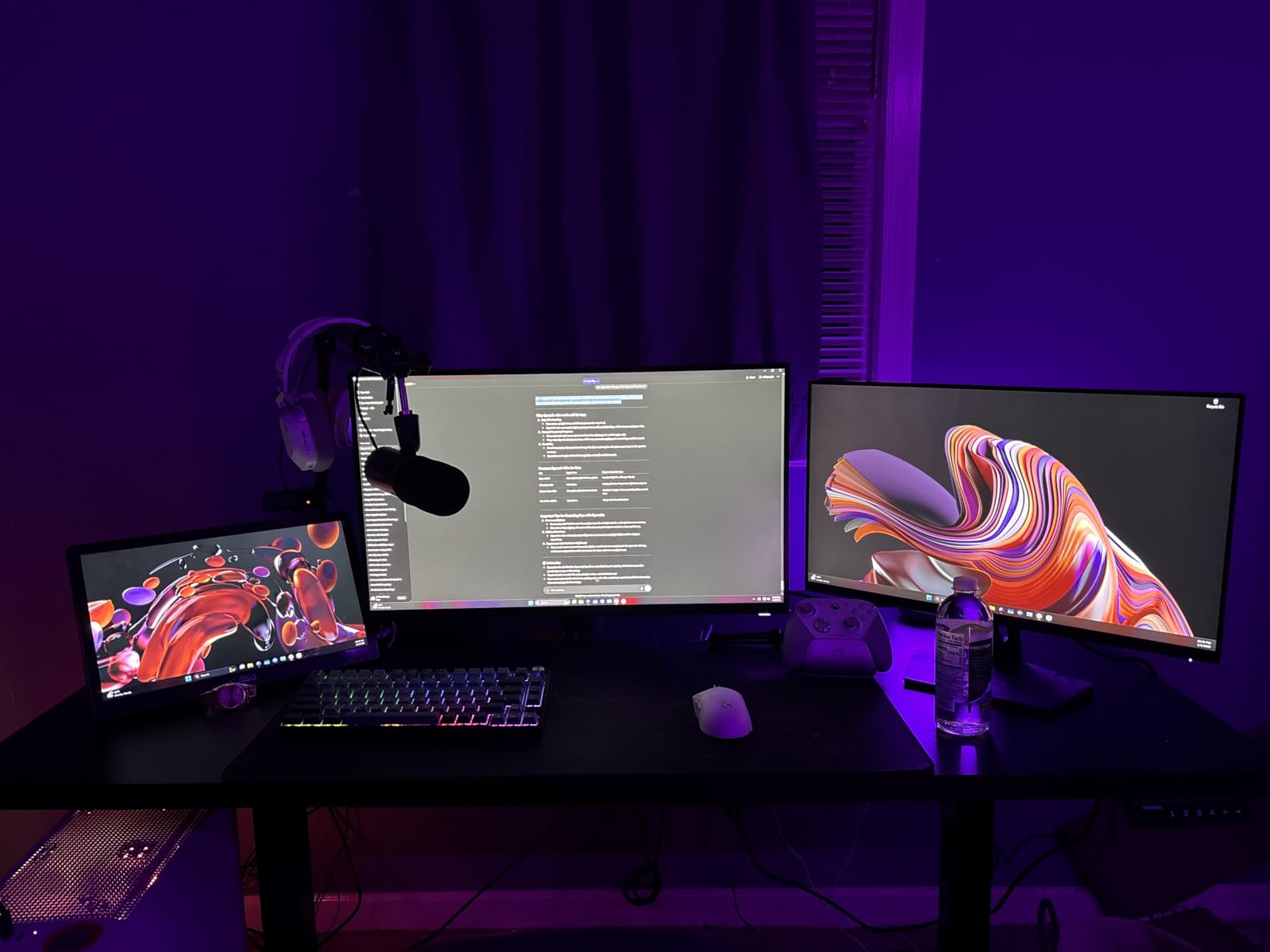
The widest motorized desk in the group at 71 by 30 inches, and it carries a 220 lb rating on a carbon steel frame with longer frame plates, thicker columns, and wider feet than a standard lifting desk. That is the geometry you want when a wheelbase is pushing back at you.
The brushless motor runs under 55 dB and is tested for more than 100,000 lift cycles, with four memory presets across a 27.9 to 46.5 inch range. It is a quiet desk to work next to during a streamed session.
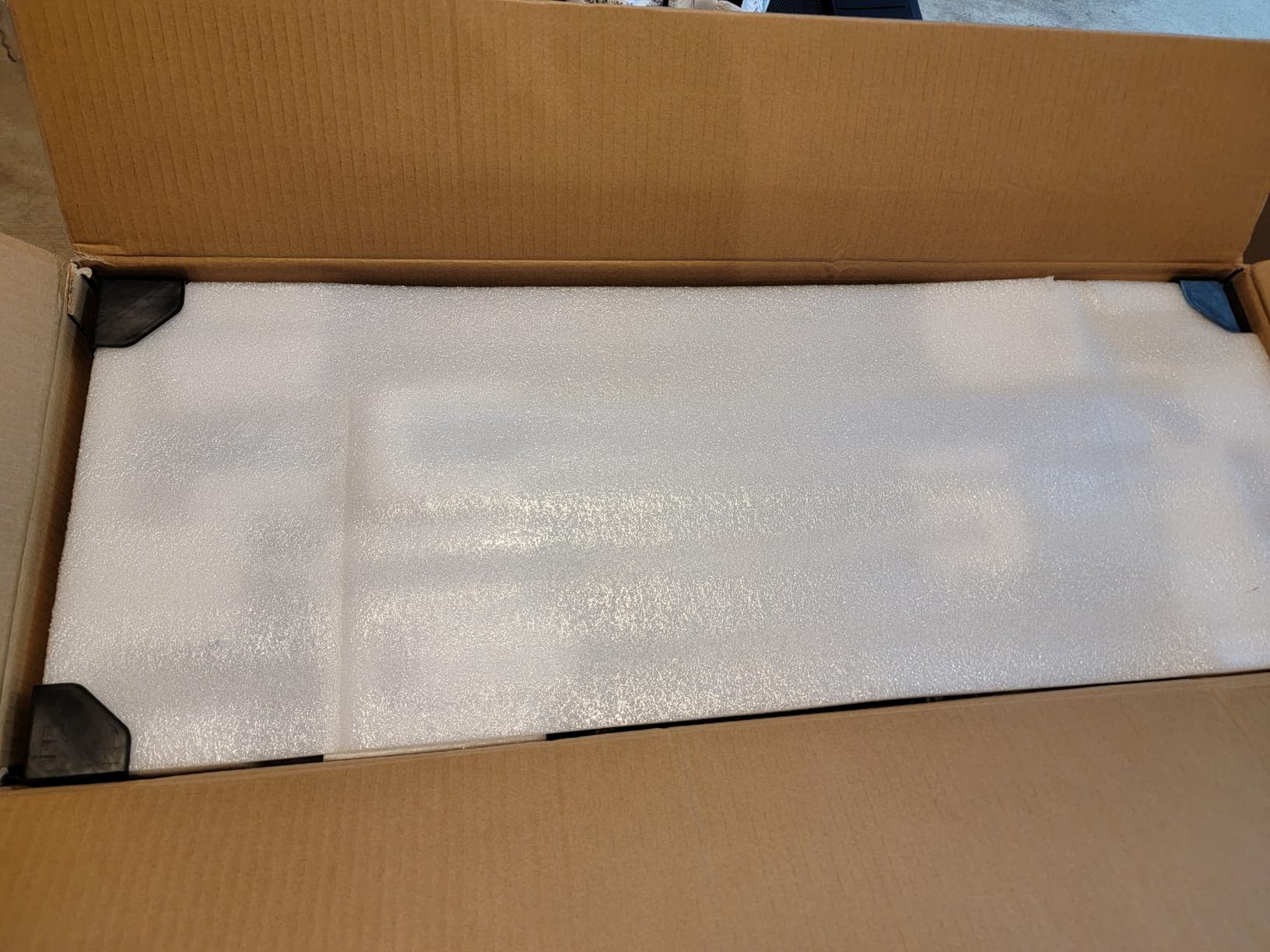
Ball-bearing frame joints keep the columns aligned under lateral load, which is the failure mode a wheel exposes. The included cable tray and two hooks handle the wheelbase cable and the hub without a floor strip.
Assemble it with hand tools. Reviewers specifically warn that a power driver strips the desktop locking screws, and the multi-piece top can sit uneven enough to leave a step under the mouse. The two-package delivery also raises the chance of transit damage.
Why it works for a racing setup
Big and rated. A 220 lb capacity on a 71 by 30 inch top gives you a full cockpit footprint with the stiffness to hold a mid-tier direct drive wheel, and the wide columns resist the side load of aggressive steering.
Where it falls short
Some owners report slight wobble while typing, and the top seam can feel uneven. Two-package delivery and hand-tool assembly are both friction points, though neither affects how the desk performs in a race.
Wheelbase Clamping and Desk Thickness: What Actually Works
Wheelbase clamp compatibility comes down to how much material the jaw can close on. Clamps generally cope with a top between about 2.5 cm and 3.8 cm. Below that the jaw can crush the board or slip, and above that many clamps simply will not close far enough. This is why a thread on r/simracing is literally titled around fitting a wheel to a 6 to 7 cm table.
The desks here cluster at three thicknesses. The PRAISUN and SEDETA L-shape use 1.5 inch tops and clamp without drama. The Huuger L-shape at 0.95 inch is the cleanest entry-level option. The Huuger 63 inch at 2.54 cm is also fine. Where a clamp struggles is the thinner tops, including the 0.75 inch SEDETA storage desk, where a riser block is the sensible addition.
Thick tops have a second benefit. They act as a mass damper, absorbing some of the high-frequency resonance a direct drive wheelbase sends through the mount before it reaches the frame and the screens.
Pedal Clearance and Under-Desk Knee Room
Most racing pain points trace back to depth. You need the wheel high enough that your knees clear, and you need the pedal set far enough forward that your legs are not bent at 90 degrees. The fixed desktop depths on this list run from 18.9 inches to 32 inches, and that spread is the whole game.
Below about 24 inches, plan on a wheel stand in front rather than a clamped wheel. The Arozzi at 32 inches and the PRAISUN at 29.5 inches are the two that comfortably take a clamped wheelbase plus a floor pedal set. Below that, a desk is a work-and-play surface that also happens to take a small wheel.
Also check for crossbars and lower shelves before you buy. An open-bottom design like the PRAISUN gives a pedal set somewhere to go. A desk with a drawer unit in the middle, such as the GTPLAYER, can catch a heel.
Monitor Distance and Field of View for Racing
Field of view in a racing sim is set mostly by how far the screen sits from your eyes, not by the software setting. A monitor pushed a foot too far back narrows what you can see into a mirror, and drivers start clipping apexes they should see.
The rule of thumb most sim racers use is arm’s length from your eyes to the outer edge of the outer display, with the top third of the screen near eye level. For a triple-screen layout on a 71.5 inch desk, that spacing works without pushing the side monitors into your shoulders. On a 55 inch desk, two monitors is the honest maximum.
This is where desk depth quietly matters again. A deeper top lets a monitor arm pull the screens back to the correct distance while leaving the wheel and pedals forward of them, instead of bunching everything into the same 24 inches.
Once the desk is right, the screens are the next decision, and our guide to the best gaming monitors for racing sims covers that in detail.
Desk Flex, Load Capacity, and Force Feedback Stability
Load capacity is the simplest number and the one most vendors understate for racing use. A wheelbase plus a face plate plus a clutch adds up quickly, and a desktop rated under about 150 lb is already using most of its ceiling once you add a stand or a shifter.
Flex is what actually reaches your hands. A frame that racks sideways under lock-to-lock input makes the rim feel vague at the exact moment you need precision. The structural tells are simple: crossbars under the top, thick steel tubes rather than hollow profiles, and a T-shaped base on sit-stand frames.
As a rough threshold, community consensus puts the desk limit near 20 Nm of peak torque. Past that, move to a wheel stand or an aluminium profile rig. Below it, a rigid desk with a 220 lb rating and crossbars will not let you down.
How to Choose a Sim Racing Desk Step by Step
Work through these in order, because each answer removes options from the list.
Measure your wheelbase and pedal set. Note the face plate width and the total depth the wheel plus mount needs. Anything under 24 inches of desk depth pushes you toward a stand.
Check the top thickness. Between 2.5 cm and 3.8 cm is the clamp sweet spot. Measure before you order, not after.
Confirm under-desk clearance. Look for crossbars, drawers, and shelves in the leg space, not just the spec sheet.
Verify load capacity against your rig. Aim for a rating at least double the combined weight of wheelbase and pedals.
Plan monitor distance. Count your displays, check the desk width, and confirm a monitor arm will reach.
Set the cable route. Desks with built-in outlets and grommets save an evening; those without need a tray and a floor strip.
One more decision worth making early: whether the room also needs to work as an office. Our picks for computer desks for working from home cover that side, and if your PC has to serve both roles, a compact gaming PC frees up the space under and behind the desk for the pedal set.
Frequently Asked Questions
Do I need a sim racing rig for iRacing, or can I use a gaming desk?
For entry and mid-tier wheelbases up to about 15 Nm, a rigid desk works well. Clamp the wheel to a thick top or park a wheel stand in front of the desk. Past roughly 20 Nm of peak torque, or with a motion platform, move to an aluminium profile cockpit.
What is the best standing desk for sim racing?
The best standing desk for sim racing needs a wide, deep top, a high load rating, and a frame that stays rigid when the wheel pushes back. Among these picks the GTPLAYER 55 x 24 inch tops the load ratings at 220 lb, while the SANODESK 63 x 32 inch offers the largest standing surface. Keep heavy wheelbases below 15 Nm on any moving frame.
What is the best size for a gaming desk?
For a racing setup, aim for 63 inches wide by 28 inches deep or more. Width fits a triple-screen layout, and depth is what decides whether a wheelbase and a floor-mounted pedal set both fit underneath. Anything under 24 inches deep works better with a wheel stand in front.
What desk thickness is needed for a wheelbase clamp?
Most wheelbase clamp mounts grip a top between about 2.5 cm and 3.8 cm. Thinner boards need a riser block or a clamp that opens wider, and thicker tops can stop some clamp jaws from closing far enough. A 1.5 inch top is comfortably inside the range for most mounts.
Are standing desks good for gaming and racing?
Standing desks are good for racing between sessions, because the memory presets let you switch positions without re-measuring anything. They are less good for applying heavy steering torque at full standing height, where a moving frame can amplify wobble. Keep a heavy wheel on a stand if you race while raised.
Is an L-shaped desk good for sim racing?
An L-shaped desk is good for small rooms, because the return holds the pedal set and the tower without pushing the main surface into the room. Watch the depth of the main run, since many L-desks are only 18.9 to 20 inches deep, which is shallow for a clamped direct drive wheelbase.
What are the best features of a racing desk?
The features that matter most are a high load rating with crossbars under the top, a thick top for clamp mounting, at least 28 inches of depth, an open leg space with no low crossbar, monitor arm mounting, and cable grommets with built-in power. RGB and cup holders are nice but do nothing for lap time.
Conclusion: The Racing Desks Worth Building Around
The Huuger 63 inch Modern Simple Office Desk is our pick for the best gaming desks for racing setups overall, because the open legroom, reinforced struts, and 2.54 cm top cover more of the fit checklist than anything else at this end of the market. If your layout is depth-starved, the Arozzi Arena at 32 inches deep is the answer, and if you want to stand mid-session, the GTPLAYER at 220 lb is the most capable moving frame here.
Check the three numbers before you order: desktop depth, top thickness, and load capacity. Get those right and the wheel clamps, the pedals fit, and your monitors sit at the right distance. Get them wrong and no amount of money on the wheelbase will fix it. Our wider desk picks for large workstations are worth a look if the racing setup has to share the room with an editing rig.