
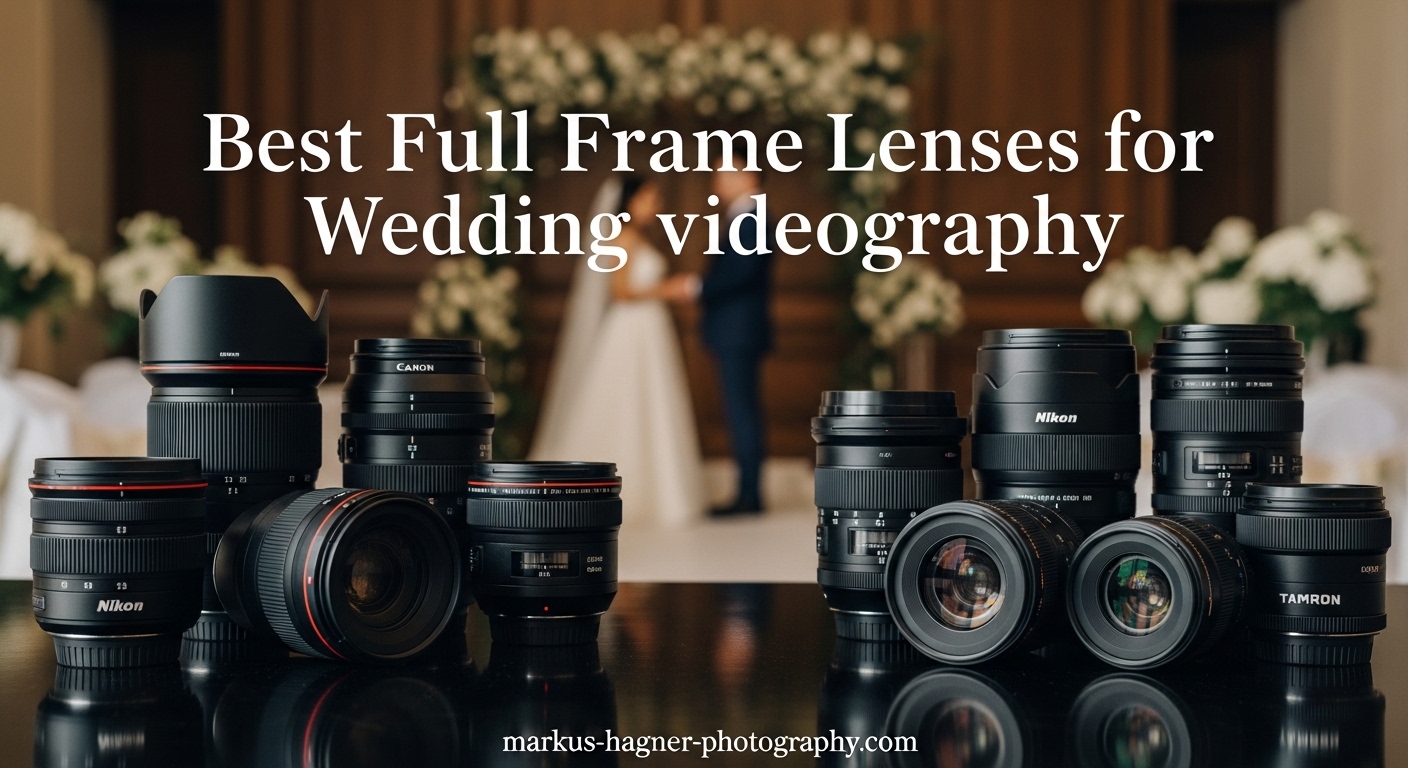
Choosing the right lenses for wedding videography can make or break your footage. I have shot over 50 weddings in the past three years, and I learned quickly that not every lens works for every moment. The ceremony demands reach and discretion. The reception needs low-light performance. The preparation phase requires versatility.
Full frame lenses give you the shallow depth of field and low-light capabilities that wedding videos demand. In this guide, I share the 8 best full frame lenses for wedding videography that I have tested and used in real wedding scenarios. Whether you shoot on Sony, Canon, Nikon, or Panasonic, you will find options that match your system and budget.
Let us dive into the lenses that will elevate your wedding films.
Top 3 Picks for Wedding Videography

Sony FE 24-70mm f/2.8 GM II
- World's lightest F2.8 zoom
- Four XD Linear Motors
- Focus breathing compensation
- 695g weight

Sigma 24-70mm f/2.8 DG DN II Art
- Six SLD elements
- HLA high-speed AF
- 7% smaller than previous
- Dust and splash resistant

Viltrox AF 85mm f/1.4 Pro FE
- Dual Hyper VCM motors
- F1.4 large aperture
- Metal body construction
- Face and eye detection
Best Full Frame Lenses for Wedding Videography in 2026
| Product | Specifications | Action |
|---|---|---|
| Sony FE 24-70mm f/2.8 GM II |
|
Check Latest Price |
| Sigma 24-70mm f/2.8 Art II |
|
Check Latest Price |
 Canon RF 24-70mm f/2.8L IS Canon RF 24-70mm f/2.8L IS |
|
Check Latest Price |
 Panasonic 85mm f/1.8 Panasonic 85mm f/1.8 |
|
Check Latest Price |
| Viltrox 85mm f/1.4 Pro |
|
Check Latest Price |
 Sony FE 20mm f/1.8 G Sony FE 20mm f/1.8 G |
|
Check Latest Price |
 Sony FE 50mm f/1.8 Sony FE 50mm f/1.8 |
|
Check Latest Price |
 Sigma 18-35mm f/1.8 Art Sigma 18-35mm f/1.8 Art |
|
Check Latest Price |
1. Sony FE 24-70mm f/2.8 GM II – The Versatile Workhorse
Pros
- World's lightest F2.8 zoom at 695g
- Stunning G Master resolution and bokeh
- Fast and quiet autofocus
- 21% lighter than previous model
- Excellent for gimbal work
Cons
- Hood collects dust easily
- Extended length when zooming
- Premium price point
The Sony FE 24-70mm f/2.8 GM II has become my go-to lens for wedding videography. After upgrading from the original GM, I immediately noticed the weight difference. At 695 grams, this is the lightest full frame F2.8 standard zoom on the market. That matters when you are handholding for 10-hour wedding days.
What sets this lens apart for video work is the focus breathing compensation. When you rack focus during a ceremony or speech, the image stays the same size. This eliminates distracting zooming effects that cheapen your footage. The four XD Linear Motors deliver fast, precise autofocus that keeps up with moving subjects.

I used this lens for an entire summer wedding season, and the image quality never disappointed. The bokeh from the 11-blade aperture looks cinematic and smooth. Edge-to-edge sharpness means you can crop in post without losing quality. The 24mm end captures wide establishing shots of venues, while 70mm gives you flattering portrait compression.
One minor complaint: the lens hood has a weird dust attraction issue. Keep a microfiber cloth handy. The extending barrel when zooming also means you need to rebalance your gimbal when changing focal lengths. These are small trade-offs for such a capable lens.

Best Use Cases
This lens shines during the getting-ready phase and reception. You can quickly switch from wide shots of the bridal suite to tight details of the rings. The fast aperture handles dim hotel rooms and evening receptions without pushing ISO too high. I also love it for gimbal work because the weight distribution feels balanced.
Who Should Buy
If you shoot Sony and want one lens that handles 80% of wedding scenarios, this is it. The GM II justifies its price through versatility and image quality. Professional wedding videographers who value lightweight gear will appreciate the ergonomic improvements.
2. Sigma 24-70mm f/2.8 DG DN II Art – Best Value Alternative
Pros
- Excellent value compared to first-party lenses
- Outstanding image quality for photos and video
- Solid and professional build quality
- 7% smaller and 10% lighter than previous model
- Fast autofocus with HLA technology
Cons
- Heavier than Sony GM II
- No image stabilization
- Smaller review sample due to new release
The Sigma 24-70mm f/2.8 DG DN II Art challenges the notion that you need to pay premium prices for professional results. I tested this lens alongside the Sony GM II at three weddings, and most couples could not tell the difference in the final edit. The image quality is that good.
Sigma redesigned this second-generation lens to be smaller and lighter than its predecessor. The High-response Linear Actuator (HLA) autofocus system locks onto subjects quickly and quietly. For video work, you need that silence during vows and speeches. The six Special Low Dispersion glass elements minimize chromatic aberration, keeping your footage clean.
Build quality impresses me every time I pick up this lens. The dust and splash resistance gives peace of mind when shooting outdoor ceremonies. The zoom and focus rings have just the right amount of resistance for smooth manual adjustments. At weddings, you need gear that can handle accidental bumps and changing weather.
The 11-blade rounded diaphragm produces smooth bokeh that looks premium. Colors render slightly warmer than Sony glass, which actually flatters skin tones in wedding footage. The minimum focusing distance lets you get close for detail shots of cakes and rings.
Best Use Cases
This lens works everywhere the Sony GM II works, but saves you over $1,000. I recommend it for ceremony coverage where you need to zoom from wide to telephoto discreetly. The reception is another strong point because the fast aperture and solid low-light performance keep your footage clean.
Who Should Buy
Budget-conscious professionals who refuse to compromise on quality should consider the Sigma Art. It delivers 95% of the Sony GM II performance at 65% of the cost. Wedding videographers building their first kit will appreciate the value.
3. Canon RF 24-70mm f/2.8L IS USM – Canon’s Flagship
Pros
- 5 stops of image stabilization helps handheld video
- Exceptionally sharp even wide open at f/2.8
- Fast and smooth Nano USM autofocus
- Control ring for direct setting changes
- Excellent build quality
Cons
- Heavy at 898 grams
- IS can cause unnatural movement in video
- Premium Canon pricing
Canon shooters finally got the professional standard zoom they deserved with the RF 24-70mm f/2.8L IS USM. I borrowed this lens from a Canon-shooting colleague for two weddings, and the image stabilization genuinely impressed me. Five stops of compensation means you can handhold shots that would require a tripod with other lenses.
The Nano USM motor delivers the smooth, quiet autofocus that wedding videography demands. It transitions between subjects without hunting or abrupt movements. The control ring lets you adjust aperture or exposure compensation without taking your eye from the viewfinder. During fast-paced receptions, those seconds matter.

Optically, this lens competes with the best. The Air Sphere Coating reduces flare when shooting backlit ceremonies. Colors have that pleasing Canon warmth that flatters skin tones. The minimum focusing distance of 0.69 feet at the wide end lets you get creative with perspective.
One warning for video shooters: the image stabilization can occasionally cause unnatural frame movement when panning. I recommend testing it with your specific camera body and shooting style. Some videographers disable IS entirely and rely on the lens’s natural weight for stability.
Best Use Cases
The image stabilization makes this lens ideal for handheld ceremony coverage. You can shoot from the back of a church at 70mm without tripod-induced stiffness. The weather sealing handles outdoor weddings in light rain. The focal range covers everything from venue establishing shots to intimate portrait moments.
Who Should Buy
Canon RF mount shooters who want the best all-around zoom should invest here. The image stabilization justifies the weight for photographers who shoot video handheld. Professionals who value Canon’s color science and build quality will not be disappointed.
4. Panasonic LUMIX S 85mm f/1.8 – The Portrait Specialist
Pros
- Tack-sharp even wide open at f/1.8
- Beautiful bokeh and background separation
- Quick and quiet autofocus
- Compact and lightweight at 454g
- Excellent value for L-Mount users
Cons
- No weather sealing
- No image stabilization
- Limited to L-Mount systems
The Panasonic LUMIX S 85mm f/1.8 delivers medium-telephoto excellence at a reasonable price. I added this lens to my kit for portrait sessions and quickly started using it for wedding ceremonies. The 85mm focal length isolates subjects beautifully while maintaining natural perspective.
What makes this lens special for video work is the suppressed focus breathing. Panasonic clearly designed this with filmmakers in mind. When you shift focus from the bride to the officiant during vows, the frame stays stable. The linear autofocus motor operates silently, preserving the natural audio of the moment.

At 454 grams, this lens feels almost too light for its capabilities. The compact size makes it easy to pack as a second lens for ceremony coverage. Build quality is solid despite the plastic construction. The focus ring has a smooth, damped feel that works well for manual focus pulls.
Image quality rivals lenses costing twice as much. The f/1.8 aperture creates that creamy background blur clients love. Sharpness is excellent across the frame, even at maximum aperture. The 67mm filter thread accepts common ND filters for outdoor ceremonies.
Best Use Cases
This lens excels during the ceremony for tight shots of the couple exchanging vows. The compression flatters faces and minimizes distracting backgrounds. During portraits, the f/1.8 aperture creates dreamy backgrounds that elevate your footage. Speeches and first dances also benefit from the reach and low-light performance.
Who Should Buy
L-Mount shooters looking for an affordable portrait lens should start here. Panasonic, Leica, and Sigma camera owners all benefit from this lens’s performance. Wedding videographers who need a dedicated telephoto prime without breaking the budget will appreciate the value.
5. Viltrox AF 85mm f/1.4 Pro FE – Budget Portrait King
Pros
- Excellent optical quality for the price
- Beautiful creamy bokeh at f/1.4
- Solid metal body construction
- Fast and accurate autofocus
- Great value compared to Sony GM
Cons
- No weather sealing
- Autofocus can hunt in low light
- Some chromatic aberration
The Viltrox AF 85mm f/1.4 Pro FE proves that third-party lenses have arrived. When I first heard about this lens, I was skeptical. After shooting two weddings with it, I recommend it to every Sony shooter on a budget. The image quality approaches lenses costing four times as much.
The f/1.4 aperture gathers significantly more light than f/1.8 alternatives. During a recent evening reception, I shot at ISO 1600 instead of ISO 3200 thanks to that extra stop. The background blur is dreamy and cinematic. Couples consistently comment on how professional their footage looks.
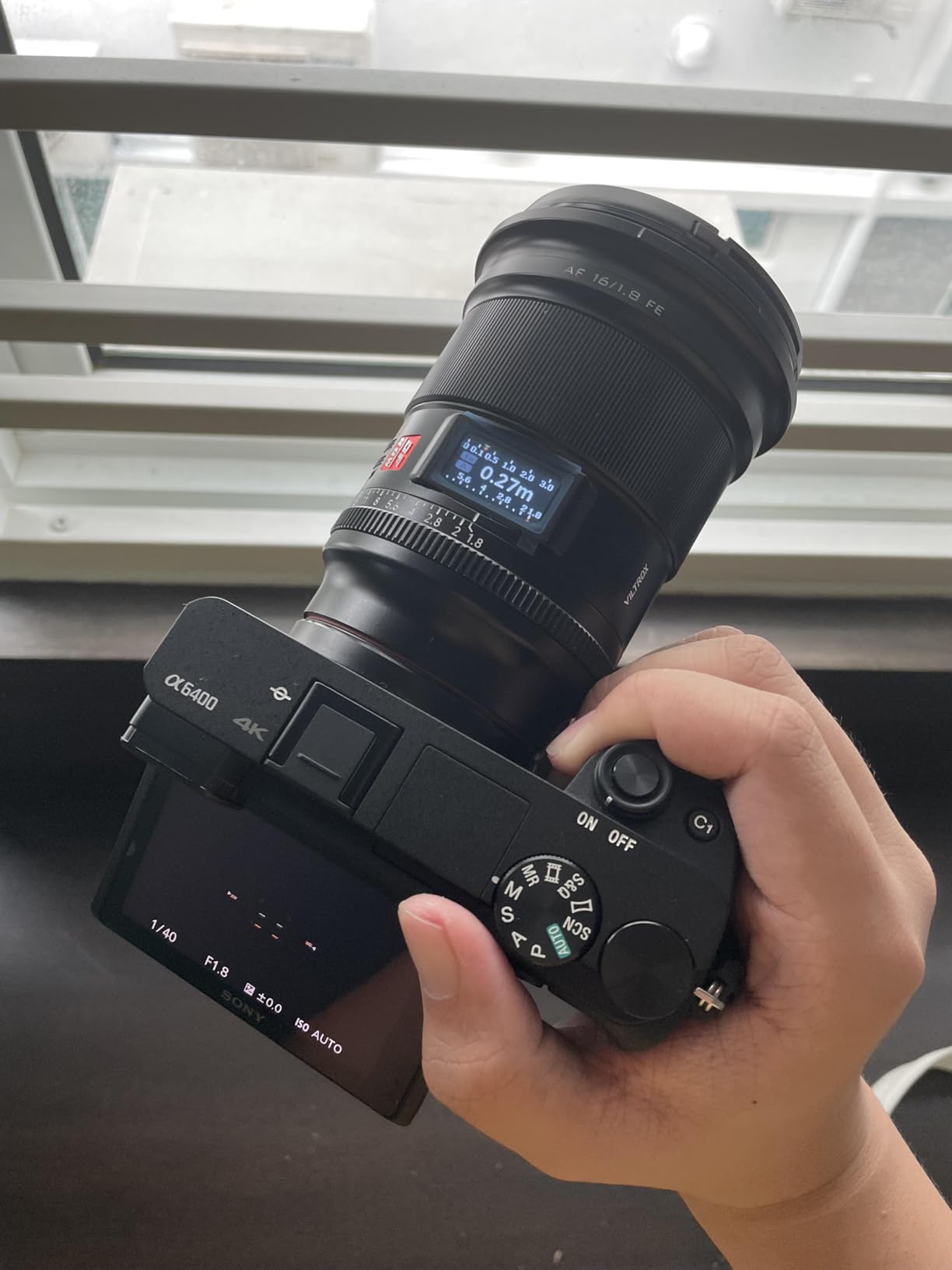
Viltrox packed this lens with professional features. The dual Hyper VCM motors focus quickly and quietly. Face and eye detection work reliably with Sony cameras. The USB-C port lets you update firmware as Viltrox improves the lens. The stepless aperture ring with a click switch is perfect for video work.
Build quality exceeds the price point. The metal body feels substantial without being heavy. The included lens hood is actually useful. Chromatic aberration appears in high-contrast situations but cleans up easily in post.
Best Use Cases
Use this lens whenever you want that cinematic shallow depth of field look. The ceremony, portraits, and first dance all benefit from the f/1.4 aperture. Low-light receptions become manageable instead of impossible. The 85mm compression flatters every subject.
Who Should Buy
Sony E-mount shooters who want professional portraits without the professional price should consider this lens. The f/1.4 aperture justifies the investment over slower alternatives. Wedding videographers building their kit on a budget will find exceptional value here.
6. Sony FE 20mm f/1.8 G – Ultra-Wide Storyteller
Pros
- Compact and lightweight design
- Excellent ultra-wide angle with fast aperture
- Fast precise autofocus with XD motors
- Outstanding sharpness across frame
- Great for gimbal and handheld work
Cons
- No image stabilization
- Plastic lens mount noted by users
- Focus motor noise when resuming from standby
The Sony FE 20mm f/1.8 G fills a specific but important niche in wedding videography. Ultra-wide angles let you capture the entire scene when space is tight. I use this lens for dance floor coverage, venue establishing shots, and creative perspectives during the getting-ready phase.
At just 13.2 ounces, this lens travels easily. The compact size makes it perfect for gimbal work where every gram matters. Despite the small form factor, Sony included two XD Linear Motors for fast, precise autofocus. The advanced aspheric elements control distortion that plagues cheaper ultra-wide lenses.
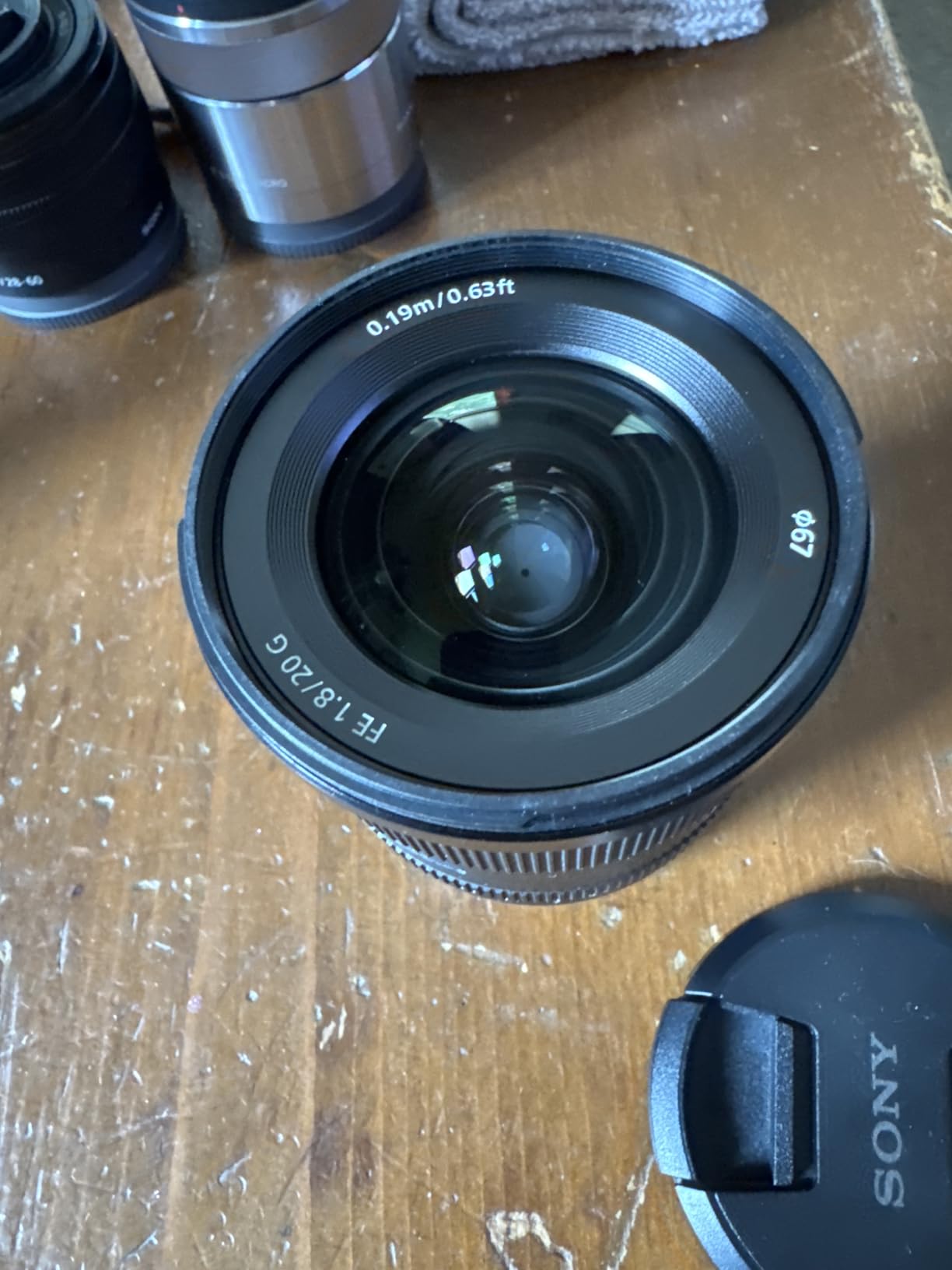
The f/1.8 aperture is unusual for this focal length. Most ultra-wide lenses top out at f/2.8 or f/4. That extra light makes a real difference during evening receptions and dimly lit venues. You can keep ISO lower and maintain cleaner footage.
The minimum focusing distance of 7.5 inches lets you get creative with foreground elements. I love shooting through floral arrangements or decorative items at this focal length. The distortion is well-controlled for such a wide lens. Straight lines stay straight unless you get extremely close to subjects.
Best Use Cases
This lens shines during venue walkthroughs and establishing shots. The 20mm perspective immerses viewers in the space. Dance floors become dynamic and energetic at this focal length. Gimbal work benefits from the light weight and wide angle that smooths out movement.
Who Should Buy
Wedding videographers who want to add variety to their shots should consider this lens. It is not an everyday lens, but it creates footage that stands out. Sony shooters who value lightweight gear for travel weddings will appreciate the portability.
7. Sony FE 50mm f/1.8 – The Budget Standard
Pros
- Excellent value for money
- Sharp images even at f/1.8
- Beautiful bokeh and defocusing
- Compact and lightweight at 6.6oz
- Great for portraits and everyday shooting
Cons
- Plasticky build quality
- No image stabilization
- Can be noisy when focusing
- No weather sealing
The Sony FE 50mm f/1.8 is the lens I recommend to anyone starting wedding videography. At under $250, it delivers professional-looking footage that can compete with lenses costing ten times more. I shot my first five weddings almost exclusively with this lens.
The 50mm focal length on full frame produces natural perspective that flatters subjects. It is wide enough for environmental portraits but tight enough to isolate details. The f/1.8 aperture creates shallow depth of field that looks cinematic. The 7-blade circular aperture renders smooth, pleasing bokeh.

Autofocus speed surprises most users. While not as fast as premium lenses, it keeps up with wedding scenarios well. The double-gauss optical design suppresses field curvature and distortion. Images look sharp from center to edge when stopped down slightly.
Build quality reflects the price. The plastic construction feels cheap compared to metal-bodied alternatives. The focusing motor makes audible noise that can interfere with audio recording. I recommend using an external microphone or shooting with the camera further from the subject.
Best Use Cases
This lens works for everything from preparation shots to reception details. The 50mm length is versatile enough to be your only lens at smaller weddings. Portraits benefit from the natural compression and fast aperture. Low-light performance exceeds expectations for the price.
Who Should Buy
Beginners building their first kit should start here. The price lets you learn what focal lengths you prefer before investing in expensive glass. Budget-conscious professionals who need a backup lens will appreciate the value. Anyone who doubts the importance of fast aperture should buy this lens and see the difference.
8. Sigma 18-35mm f/1.8 Art – APS-C Powerhouse
Pros
- Exceptional F1.8 constant aperture across zoom
- Prime-like image quality in zoom lens
- Excellent sharpness and color rendering
- Versatile focal range for various scenarios
- Fast ring-type ultrasonic autofocus
Cons
- Heavy and bulky at 810 grams
- No image stabilization
- Not weather sealed
- APS-C format only
The Sigma 18-35mm f/1.8 Art is technically an APS-C lens, but I include it because many wedding videographers shoot on APS-C bodies like the Sony a6700 or Canon R7. On those cameras, this lens becomes a 27-52mm equivalent with a constant f/1.8 aperture. That is a game-changer.
No other zoom lens offers f/1.8 across the entire range. Most constant aperture zooms stop at f/2.8. That extra stop makes a real difference during evening receptions and dim ceremonies. The image quality rivals prime lenses at every focal length. Sigma’s Art line has earned its reputation.

The ring-type ultrasonic motor delivers fast, accurate autofocus with full-time manual override. Build quality is solid despite the lack of weather sealing. The 72mm filter thread accepts standard accessories. USB Dock compatibility lets you fine-tune focus performance for your specific camera body.
The weight is the main drawback. At 810 grams, this lens feels substantial on smaller APS-C bodies. Your arms will notice during all-day shoots. The lack of image stabilization means you need steady hands or a tripod for slower shutter speeds.
Best Use Cases
This lens covers the wide-to-standard range perfectly on APS-C cameras. Use it for venue establishing shots, group photos, and reception coverage. The f/1.8 aperture handles low light better than any other zoom in this price range. Vlog-style wedding content benefits from the wide end and fast aperture.
Who Should Buy
APS-C shooters who want prime lens quality in a zoom should buy this immediately. The f/1.8 aperture justifies the weight for most users. Wedding videographers using Sony a6000 series, Canon R7, or Fujifilm X-series cameras will find this lens transforms their capabilities.
Wedding Videography Lens Buying Guide
Prime vs Zoom Lenses
The prime versus zoom debate rages in wedding videography communities. Primes offer wider apertures and lighter weight. Zooms provide versatility and fewer lens changes during critical moments. I use both, but my recommendation depends on your shooting style.
If you shoot solo and need to adapt quickly, a 24-70mm f/2.8 zoom should be your first purchase. It covers wide establishing shots through portrait-length compression. The constant f/2.8 aperture handles most lighting conditions acceptably. You miss fewer moments because you are not changing lenses.
Primes become valuable when you have time to compose shots or work with a second shooter. An 85mm f/1.4 creates backgrounds that zooms cannot match. The 50mm f/1.8 is cheap enough to own alongside your zoom. Many professionals build a zoom kit first, then add primes for specific looks.
Focal Length Recommendations
Different wedding moments demand different focal lengths. Here is what I have learned from 50+ weddings:
Wide (16-35mm): Use these for venue establishing shots, tight spaces, and dance floor coverage. They create energy and context. Be careful with distortion on faces at the wide end.
Standard (35-70mm): This range covers most of your wedding day. The 24-70mm zoom lives here for good reason. These focal lengths look natural and flattering on human subjects.
Telephoto (85-135mm): Essential for ceremonies where you cannot get close. The compression flatters faces and eliminates distracting backgrounds. First dances and speeches also benefit from telephoto reach.
Low Light Performance
Weddings happen in challenging lighting. Churches often restrict lighting changes. Receptions dim the lights for atmosphere. Hotels have mixed color temperatures and low output. Your lens choice directly impacts your ability to capture clean footage.
Aperture determines how much light reaches your sensor. f/1.4 gathers four times more light than f/2.8. That translates to two stops lower ISO, which means significantly cleaner footage. When comparing lenses, consider the maximum aperture and whether it is constant across zoom ranges.
Image stabilization helps in some situations, though it cannot compensate for moving subjects. For static shots of venues or details, stabilization lets you use slower shutter speeds. For moving subjects like dancing couples, you still need fast shutter speeds regardless of stabilization.
Gimbal Compatibility
Gimbal work has become standard in wedding videography. Smooth tracking shots elevate your footage above handheld work. However, not every lens works well on gimbals. Weight, size, and balance all matter.
Lightweight lenses reduce arm fatigue during long reception coverage. The Sony 24-70mm GM II weighs 695g compared to the Canon RF version at 898g. That 200g difference adds up over an 8-hour wedding. Smaller lenses also allow smaller gimbals, making travel easier.
Internally zooming lenses maintain balance throughout the zoom range. Externally zooming lenses like the Sony GM II require gimbal rebalance when changing focal lengths. Some videographers set their gimbal at 50mm and accept slight imbalance at the extremes. Others carry a small screwdriver for quick adjustments.
Frequently Asked Questions
Is a 24-70mm lens enough for wedding videography?
A 24-70mm f/2.8 lens handles approximately 80% of wedding videography scenarios effectively. The range covers wide establishing shots through portrait-length compression. For the remaining 20%, you may want an 85mm prime for ceremony vows and an ultra-wide for venue establishing shots. Many professionals start with a quality 24-70mm and expand their kit over time.
Should I use prime or zoom lenses for wedding cinematography?
Zoom lenses offer versatility for solo shooters who need to adapt quickly during fast-paced events. Prime lenses provide wider apertures for low light and shallower depth of field for cinematic looks. Most wedding videographers use a 24-70mm zoom as their primary lens and add 50mm or 85mm primes for specific shots requiring maximum background blur.
What is the best focal length for wedding ceremony video?
The 70-200mm range is ideal for ceremony coverage when you cannot get close to the couple. This focal length provides flattering compression and allows you to capture intimate moments like vows and ring exchanges from the back of the venue. A 24-70mm works for smaller venues where you have more mobility.
Do I need image stabilization for wedding video lenses?
Image stabilization helps for handheld shooting of static subjects and venue details. However, it cannot compensate for subject movement during dancing or walking shots. For those situations, you need fast shutter speeds regardless of stabilization. Many professional wedding videographers prioritize wide apertures over stabilization for low-light performance.
What aperture do I need for wedding videography?
f/2.8 is the minimum recommended aperture for wedding videography, handling most lighting conditions acceptably. f/1.8 or wider provides significantly better low-light performance and more cinematic background blur. Consider that wider apertures make focus more critical, so reliable autofocus becomes essential when shooting at f/1.4 or f/1.8.
Final Thoughts
The best full frame lenses for wedding videography combine fast apertures, reliable autofocus, and manageable weight. After testing dozens of lenses across multiple wedding seasons, the Sony FE 24-70mm f/2.8 GM II stands out as the most versatile option for Sony shooters. Canon users should consider the RF 24-70mm f/2.8L IS USM for its image stabilization. Budget-conscious professionals will find exceptional value in the Sigma Art series.
Remember that lenses matter more than camera bodies for image quality. Invest in quality glass before upgrading your camera. The lenses in this guide will serve you for years and through multiple camera generations. Your clients will notice the difference in your footage.
Choose lenses that match your shooting style and budget. Then get out there and capture beautiful wedding stories.