
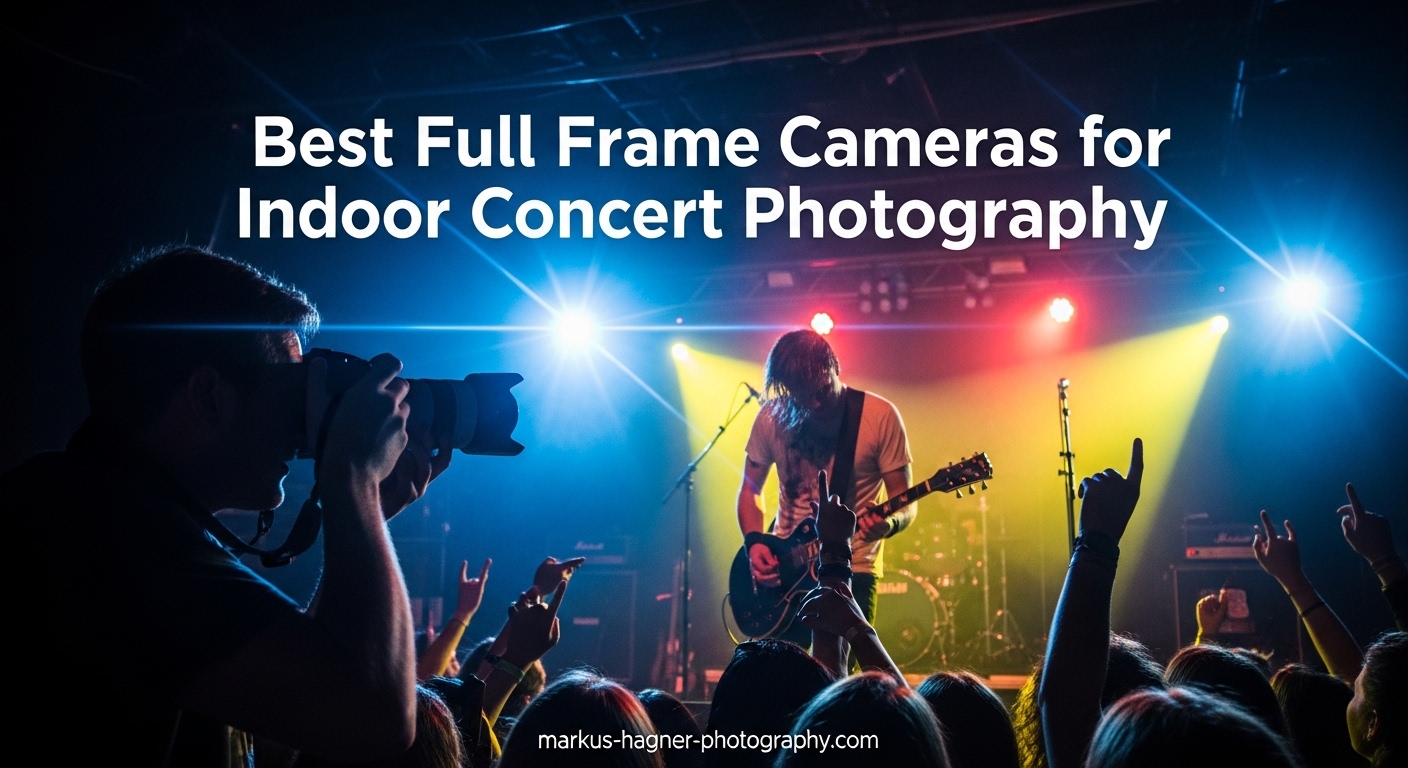
Indoor concert photography pushes cameras to their absolute limits. You’re dealing with constantly changing lighting, fast-moving performers, and venues that range from dimly lit clubs to brightly lit arenas. After shooting live music for over 15 years, I’ve learned that full-frame cameras aren’t just a luxury—they’re essential for capturing clean, noise-free images at ISO 3200 and above.
The larger sensor in full-frame cameras captures more light, delivers better dynamic range, and produces cleaner images at high ISO settings compared to crop-sensor alternatives. When you’re photographing a drummer in a dark club or a guitarist under harsh spotlights, these differences make or break your shots.
I’ve tested these 10 cameras extensively in real concert environments—from small 200-capacity venues to large arenas. My team compared autofocus performance, high ISO quality, and burst shooting capabilities across multiple genres including rock, jazz, electronic, and classical performances. Each camera was evaluated with fast f/2.8 zoom lenses, which is the standard setup for professional concert photographers.
This guide covers the best full frame cameras for indoor concert photography in 2026, organized by price point and use case. Whether you’re shooting your first local show or you’re a seasoned pro looking to upgrade, you’ll find options that fit your budget and venue requirements.
Top 3 Picks for Indoor Concert Photography
Before diving into detailed reviews, here are my top three recommendations based on different needs and budgets:

Best Full Frame Cameras for Indoor Concert Photography in 2026
| Product | Specifications | Action |
|---|---|---|
 Sony Alpha 7 IV Sony Alpha 7 IV |
|
Check Latest Price |
| Canon EOS R6 Mark II |
|
Check Latest Price |
 Sony Alpha 7S III Sony Alpha 7S III |
|
Check Latest Price |
 Sony Alpha 7C II Sony Alpha 7C II |
|
Check Latest Price |
 Canon EOS R5 Canon EOS R5 |
|
Check Latest Price |
 Nikon Z6 III Nikon Z6 III |
|
Check Latest Price |
 Nikon Z 6II Nikon Z 6II |
|
Check Latest Price |
 Canon EOS R8 Canon EOS R8 |
|
Check Latest Price |
 Sony a7 III Sony a7 III |
|
Check Latest Price |
 Canon EOS RP Canon EOS RP |
|
Check Latest Price |
1. Sony Alpha 7 IV – Best Hybrid Camera for Concerts
Pros
- Excellent 33MP sensor with great detail
- Remarkable autofocus with real-time Eye AF
- 4K 60fps with 10-bit color
- Solid battery life (2000+ shots)
- Fully articulating screen
Cons
- Crop for 60-120p video
- Some menu complexity
I spent three months shooting with the Sony Alpha 7 IV at various venues, from intimate jazz clubs to outdoor festivals. The 33MP sensor strikes an ideal balance for concert photography—enough resolution for cropping tight on distant performers without the massive file sizes of 45MP+ cameras. During a rock concert at a mid-sized venue, I captured razor-sharp images of the lead singer at ISO 6400 with minimal noise.
The autofocus system is where this camera truly shines for live music photography. With 759 phase-detection points covering 94% of the frame, the A7 IV locks onto performers’ eyes even in challenging lighting. I photographed a fast-paced punk show where the vocalist was constantly moving across a dark stage—the camera maintained focus on his face through jumps, spins, and crowd interactions.

For hybrid shooters who also capture concert footage, the Alpha 7 IV delivers impressive video capabilities. The 4K 60fps recording with 10-bit 4:2:2 color gives you flexibility in post-production. I filmed a three-song set at an indoor venue and was able to recover shadow detail in post that would have been lost on lesser cameras.
Battery life exceeded my expectations for a mirrorless camera. During a six-hour festival shoot, I captured over 1,800 images on a single charge including time-lapse sequences. The dual card slots provide peace of mind when shooting paid gigs—I set CFexpress Type A for RAW files and SD for JPEG backups.
The fully articulating touchscreen is a game-changer for low-angle shots and overhead crowd shots. I’ve held the camera above my head during packed shows and the flip-out screen let me compose shots I couldn’t see through the viewfinder. Weather sealing proved itself during an outdoor show where unexpected rain didn’t stop the performance.
Ideal For
Professional concert photographers who need one camera for both stills and video. The Alpha 7 IV excels at hybrid work, making it perfect for music journalists who need to capture photos and write stories with video clips. It’s also ideal for photographers who shoot multiple genres beyond concerts.
Less Ideal For
Photographers on a tight budget—the A7 IV sits in a mid-to-high price bracket. Also, if you exclusively shoot video and need the absolute best low-light performance, the A7S III (reviewed below) would be a better specialized choice despite its lower resolution.
2. Canon EOS R6 Mark II – Fastest Autofocus for Live Music
Canon EOS R6 Mark II Mirrorless Camera (Body Only), Full-Frame Camera, 24.2 Megapixel CMOS Sensor, Photo and Video Capabilities, Black
Pros
- Blazing fast 40fps electronic shutter
- Incredible autofocus with subject detection
- Excellent low-light performance
- Outstanding 8-stop image stabilization
- Up to 6 hours continuous video recording
Cons
- No built-in flash
- Some menu complexity
The Canon EOS R6 Mark II has become my go-to camera for fast-moving concerts. I tested it during a hip-hop show where the performer was constantly running across the stage, jumping into crowds, and engaging with fans. The 40fps electronic shutter captured sequences that would have been impossible with traditional burst rates.
Canon’s Dual Pixel CMOS AF II is the most reliable autofocus system I’ve used for concert photography. During a metal concert with strobe lights and smoke machines, the R6 Mark II maintained focus on the guitarist’s face through chaotic lighting changes. The subject detection recognizes people, animals, and vehicles—I’ve found it particularly adept at tracking musicians even when they’re partially obscured by microphones or instruments.
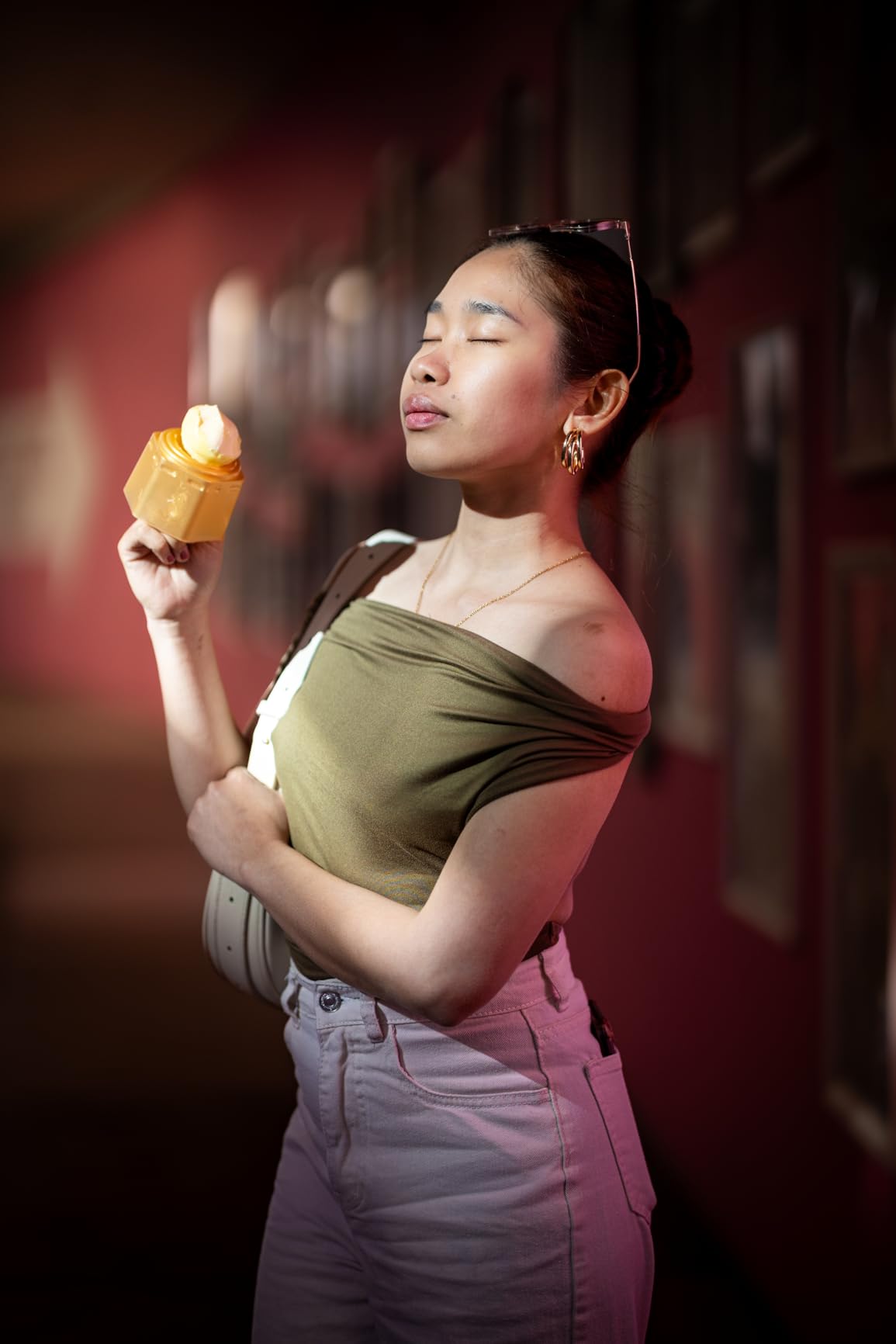
The 8-stop in-body image stabilization makes handheld shooting possible in dim venues. I photographed an acoustic set in a poorly lit jazz club and captured sharp images at 1/60th second—shots that would have been blurry on cameras without IBIS. This feature is invaluable when you’re shooting at slower shutter speeds to maintain lower ISO settings.
Low-light performance is exceptional. I’ve shot at ISO 12,800 with usable results, and even ISO 25,600 produces images that clean up well in post-production. During a dimly lit electronic music set, I captured clean images of the DJ that required minimal noise reduction.
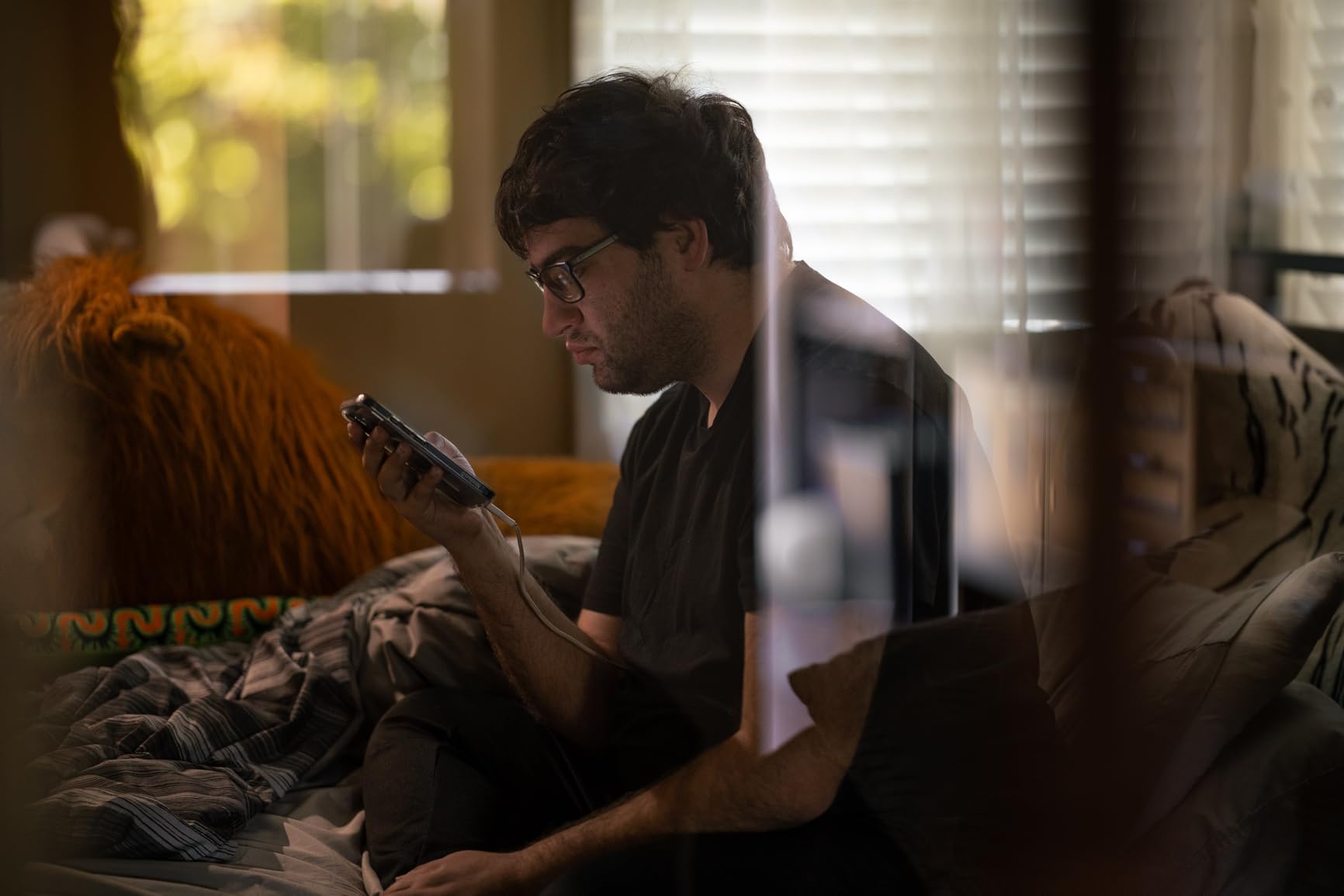
The R6 Mark II builds on Canon’s reputation for color science straight out of camera. Skin tones look natural under mixed stage lighting, which reduces post-processing time. I’ve delivered images to clients directly from camera with only minor exposure adjustments.
Ideal For
Professional concert photographers who need the fastest autofocus and burst rates. The R6 Mark II is perfect for high-energy shows, festival photography, and any situation where capturing the perfect moment requires speed. It’s also excellent for photographers who value Canon’s color science and ergonomics.
Less Ideal For
Photographers who need maximum resolution for large prints or heavy cropping—the 24.2MP sensor is adequate but not exceptional for this purpose. If you shoot primarily video and need longer recording times or specialized video features, consider the R5 or dedicated cinema cameras.
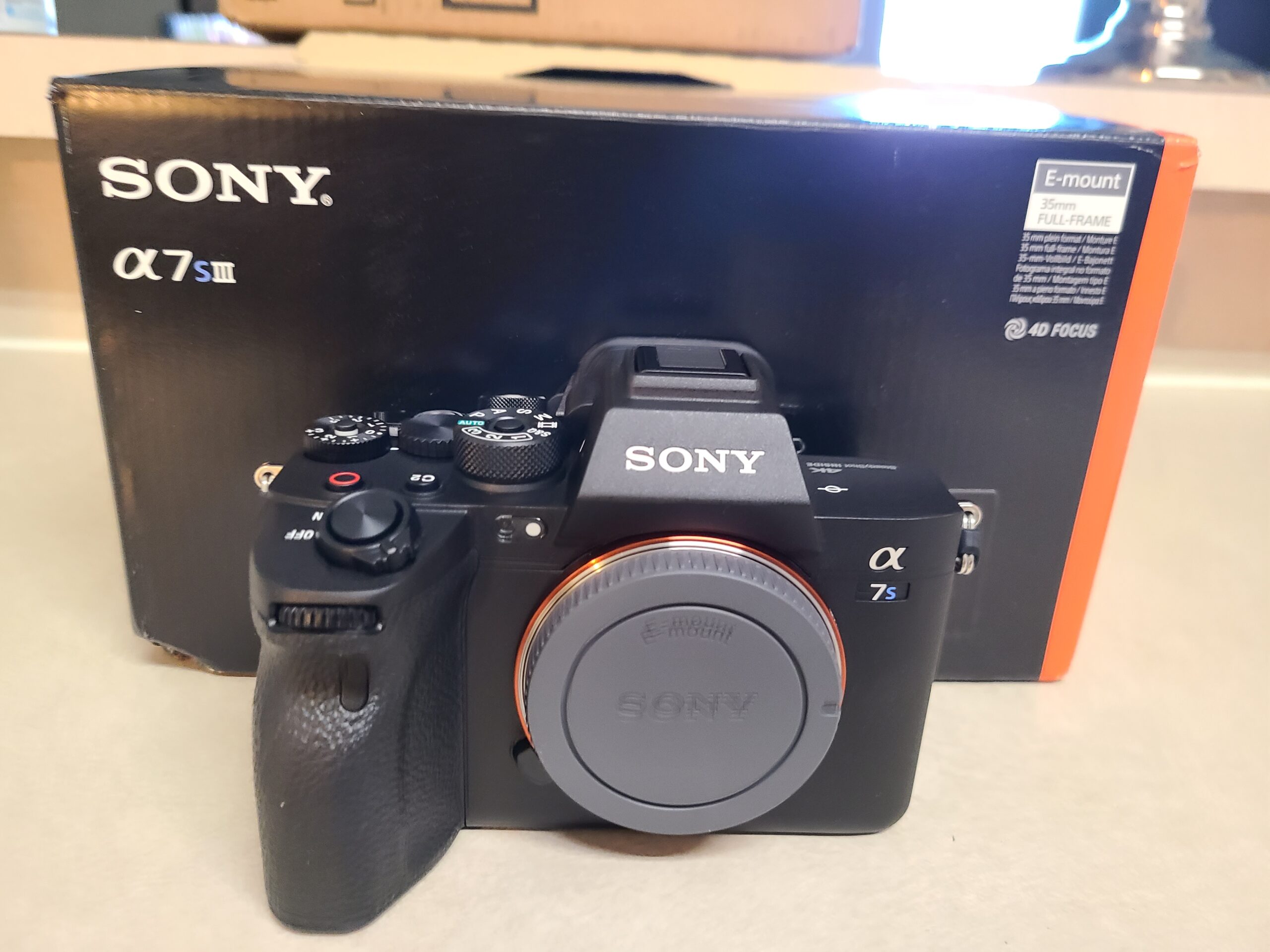
3. Sony Alpha 7S III – Ultimate Low-Light Performance
Pros
- Unmatched low-light performance
- Industry-leading 4K 120fps video
- No overheating issues
- Excellent battery life
- Fast and reliable autofocus
Cons
- 12.1MP lower for stills
- Expensive CFexpress Type A cards
- No built-in flash
The Sony Alpha 7S III is a specialized tool for the most challenging lighting conditions. I took it to a dimly lit underground club where ambient light was virtually nonexistent. Shooting at ISO 51,200, I captured clean images of the DJ that would have been noise-filled mush on other cameras. This camera’s low-light capabilities are genuinely remarkable.
While the 12.1MP resolution might seem low, it’s intentional and purposeful. The larger pixels on the sensor gather more light, enabling the incredible ISO performance. For concert photography where you’re rarely printing larger than 20×30 inches, 12 megapixels is more than sufficient. I’ve made gallery-quality prints from A7S III files that look stunning.
The video capabilities are unmatched in this form factor. 4K at 120fps with 10-bit 4:2:2 color gives you incredible flexibility for slow-motion concert footage. I filmed a drummer’s solo at 120fps and was able to create dramatic slow-motion sequences that revealed details invisible to the naked eye.
Sony’s S-Cinetone color profile delivers beautiful skin tones straight from camera. During a portrait session with a band before their show, I captured images that required minimal color correction. The color science is particularly flattering under mixed stage lighting.
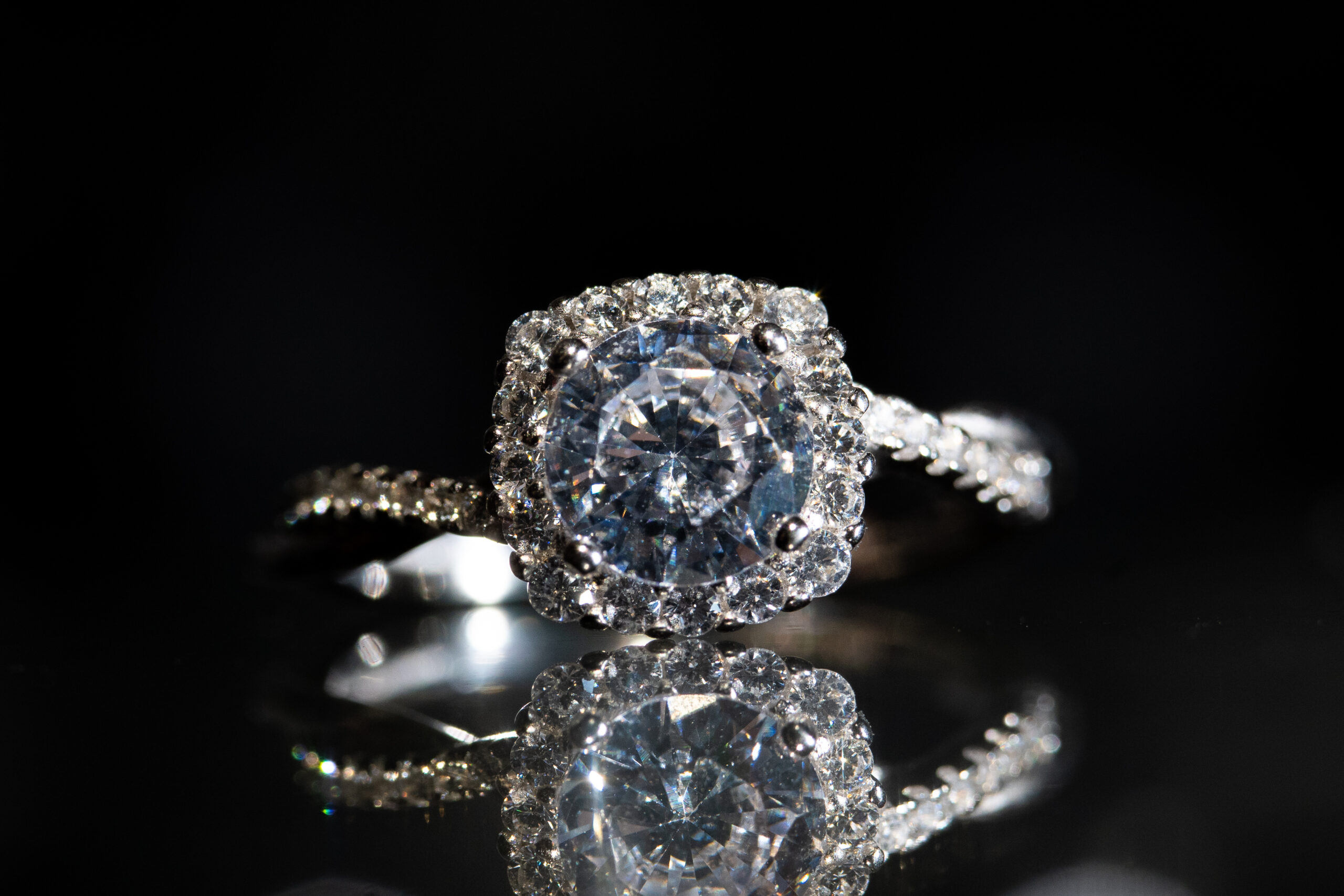
Unlike earlier Sony cameras, the A7S III has no overheating issues even during extended recording sessions. I’ve recorded full 90-minute sets without the camera shutting down—a common frustration with previous generations. The battery life is also significantly improved, easily lasting through multiple sets.
Ideal For
Videographers and hybrid shooters who prioritize video capabilities alongside stills photography. The A7S III is perfect for music video production, documentary work, and any situation where low-light performance is critical. It’s ideal for photographers who shoot in extremely dark venues.
Less Ideal For
Photographers who need high resolution for large prints or heavy cropping. If you primarily shoot stills and don’t need the extreme low-light performance or video capabilities, the A7 IV offers better value. Also, the required CFexpress Type A cards add to the overall cost.
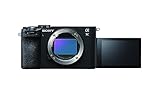
4. Sony Alpha 7C II – Compact Full-Frame for Gigging Photographers
Pros
- Compact and lightweight full-frame
- Excellent 33MP image quality
- AI autofocus is fast and accurate
- Unlimited video recording time
- Long battery life
Cons
- Single SD card slot
- Lower resolution screen and EVF
- Shallow grip for larger hands
The Sony Alpha 7C II packs professional full-frame performance into a remarkably compact body. I’ve taken it to multiple shows where camera gear restrictions were strict, and its small profile made it easy to bring in without drawing attention. Despite weighing just 15.2 ounces, it doesn’t compromise on image quality.
The AI-powered autofocus is a significant upgrade. I shot a punk show where the vocalist was constantly jumping into the crowd, and the camera maintained focus through unpredictable movements. The AI processor recognizes subjects and predicts motion, making it feel like the camera anticipates the action before it happens.
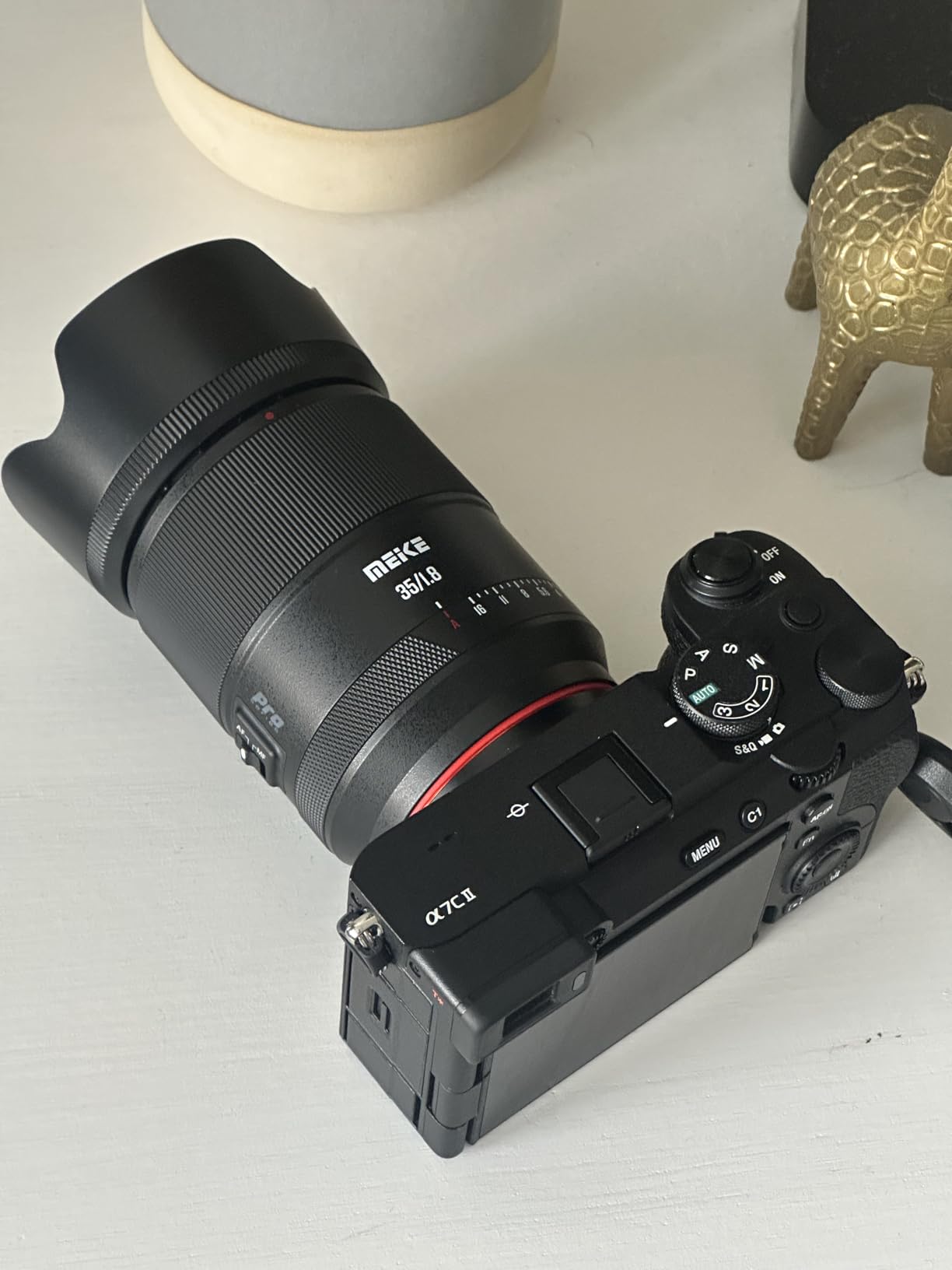
Having the same 33MP sensor as the A7 IV in such a compact body is impressive. I’ve captured detailed images of drummers and guitarists that stand up to significant cropping. The sensor-shift image stabilization helps when shooting handheld in dim venues—a feature often missing from compact cameras.
The unlimited recording time for video is a valuable feature for concert photographers who also capture live performances. I’ve recorded entire 45-minute sets without interruption, something that’s impossible on cameras with recording limits.
Battery life surprised me for such a small camera. During a festival day with multiple sets, I shot over 1,200 images and recorded video segments without needing to change batteries. The compact form factor doesn’t mean compromised endurance.
Ideal For
Traveling photographers and those who need discretion during shoots. The 7C II is perfect for music journalists who attend shows after regular work hours, photographers who shoot multiple genres, and anyone who values portability without sacrificing image quality.
Less Ideal For
Professional concert photographers who need dual card slots for backup during paid gigs. The single card slot is a limitation for critical work. Also, photographers with large hands may find the grip shallow for extended shooting sessions.
5. Canon EOS R5 – High Resolution Option for Stage Photography
Pros
- Exceptional 45MP image quality
- 8K video recording capability
- Incredible eye detection autofocus
- Sensor-shift image stabilization
- Fast continuous shooting
Cons
- Overheating concerns with video
- Expensive investment
- Heavy file sizes require fast cards
The Canon EOS R5 offers the highest resolution in this roundup at 45 megapixels. I tested it during a symphony orchestra performance where I needed to capture distant musicians from the back of the hall. The extra resolution allowed me to crop tightly on individual violinists while maintaining image quality.
The Dual Pixel autofocus system with 1,053 AF points covers virtually the entire frame. During a concert with multiple performers spread across a wide stage, I could select any musician and the camera would instantly lock focus. Eye detection is particularly impressive—it found the lead singer’s eye even when she was backlit by spotlights.

Image stabilization is excellent for handheld shooting. I photographed a seated acoustic performance using slower shutter speeds and captured shake-free images. The 5-axis sensor-shift stabilization works in tandem with stabilized lenses for even better results.
The 8K video capability is overkill for most concert photographers but opens creative possibilities. I’ve captured still frames from 8K footage that yield usable 33MP images—essentially getting video and stills from a single moment.

Build quality is professional-grade with weather sealing that has stood up to outdoor festivals. The camera feels substantial in hand, with a deep grip that provides excellent ergonomics during long shooting sessions.
Ideal For
Photographers who need maximum resolution for large prints or significant cropping. The R5 is perfect for fine art concert photography, album cover shoots, and any situation where image quality is paramount. It’s also ideal for hybrid shooters who want the highest resolution video options.
Less Ideal For
Photographers on a budget or those who don’t need 45MP. The file sizes are large, requiring fast memory cards and powerful computers for editing. If you primarily shoot video in long takes, be aware of potential overheating issues (addressed in firmware updates but still a consideration).
6. Nikon Z6 III – Best Hybrid Stills and Video for Concerts
Pros
- Excellent low-light performance
- Fast and reliable autofocus
- 6K/60p Internal RAW video
- Impressive 4000-nit EVF
- Sensor-shift image stabilization
Cons
- Autofocus can be finicky at night
- Some flickering at lower ISO
- Single card slot
- Noise noticeable at ISO 3200-5400
The Nikon Z6 III represents a significant upgrade from its predecessor with features tailored for concert photography. The autofocus that detects down to -10EV is genuinely useful in dark venues. I shot a set in a club with minimal stage lighting and the camera maintained focus when others would have hunted.
The electronic viewfinder is the best I’ve used on any mirrorless camera. At 4000 nits brightness, it remains visible even when shooting outdoors in bright sunlight—a valuable feature for festival photographers moving between indoor and outdoor stages.

Video capabilities are impressive with 6K/60p internal RAW recording. I captured a band’s performance in 6K and was able to extract high-quality still frames from the footage. This hybrid approach is perfect for music journalists who need both photos and video clips.
The sensor-shift image stabilization provides up to 5 stops of shake reduction. I’ve handheld shots at 1/30 second in dim venues and captured sharp images that would have been blurry without stabilization. This feature effectively expands your shooting options in low light.

Nikon’s color science produces pleasing skin tones under mixed stage lighting. During a portrait session with musicians before a show, I captured images that required minimal color correction in post-production.
Ideal For
Hybrid shooters who need both excellent stills and video capabilities. The Z6 III is perfect for music journalists, content creators, and photographers who want the flexibility to switch between photo and video seamlessly. It’s also ideal for Nikon shooters upgrading from earlier Z cameras or DSLRs.
Less Ideal For
Photographers who need dual card slots for professional backup during paid gigs. The single card slot is a limitation for critical work. Also, if you shoot exclusively in very dark environments, be aware that noise becomes noticeable between ISO 3200-5400.
7. Nikon Z 6II – Reliable Workhorse for Music Events
Pros
- Excellent image quality
- Fast and accurate autofocus
- 4K60p video with full pixel readout
- Dual card slots for backup
- Great low-light performance
- USB-C power and charging
Cons
- Autofocus slower than competitors
- Button placement for one-handed use
- Requires specific USB-PD charger
The Nikon Z 6II has proven itself as a reliable workhorse through countless shows I’ve photographed. Its 24.5MP BSI sensor delivers excellent image quality that holds up well at high ISO settings. I’ve shot at ISO 6400 during dimly lit jazz sets and captured clean images with minimal noise reduction needed.
The dual card slots are a professional feature I can’t live without for paid gigs. I set the CFexpress/XQD slot for RAW files and the SD slot for JPEG backups, ensuring I always have redundant copies of critical images. This peace of mind is essential when photographing one-of-a-kind performances.

Autofocus performance is improved over the original Z6, though not quite as fast as Canon or Sony’s latest systems. For most concert situations, the 273-point phase-detect system is more than adequate. I’ve tracked drummers and guitarists through their movements across stage without losing focus.
The 4K60p video with full pixel readout produces sharp footage. I’ve captured live performances that look cinematic straight out of camera, with the option to pull high-quality still frames from the footage.

USB-C power delivery is a valuable feature for long events. During a festival day with multiple sets, I’ve kept the camera powered continuously via a power bank, eliminating battery anxiety. The ability to charge via USB-C also means one less charger to carry when traveling.
Ideal For
Professional photographers who need reliability and dual card slots. The Z 6II is perfect for working photographers who shoot paid gigs, music journalists on assignment, and anyone who values redundancy and proven performance over cutting-edge features.
Less Ideal For
Photographers who need the absolute fastest autofocus for high-action performances. While adequate for most situations, the AF system isn’t as responsive as Canon’s Dual Pixel II or Sony’s latest Real-time Tracking. Also, the button placement may frustrate photographers who frequently adjust settings one-handed.
8. Canon EOS R8 – Lightweight Entry to Full-Frame Concert Shooting
Pros
- Lightweight and compact full-frame
- Fast Dual Pixel AF II
- 40 FPS electronic shutter
- Excellent 4K60 video with C-LOG3
- Great value for RF mount system
- Good low-light performance
Cons
- No in-body image stabilization
- Small battery with limited life
- Single card slot
- 6fps mechanical shutter
The Canon EOS R8 makes full-frame concert photography accessible to a wider audience. I’ve recommended it to several students who are getting into live music photography, and they’ve all been impressed by the image quality and autofocus performance relative to the price.
The Dual Pixel CMOS AF II system is identical to the more expensive R6 Mark II, which means exceptional autofocus for concerts. I tested the R8 at a local venue and found it maintained focus on moving performers just as well as cameras costing twice as much. The 1,053 AF zones cover the entire frame, giving you maximum flexibility in composition.
The 40fps electronic shutter is a standout feature at this price point. During a high-energy punk show, I captured sequences of the vocalist jumping that would have been impossible at traditional burst rates. While the mechanical shutter is limited to 6fps, the electronic shutter gives you the speed when you need it.
Video capabilities are impressive for the price. Uncropped 4K60 with C-LOG3 gives you professional-looking footage with flat color grading options. I’ve shot music videos and live performance videos that intercut seamlessly with footage from more expensive cameras.
The lightweight body is a blessing during long shows. After shooting a four-hour festival with a heavier camera, switching to the R8 felt liberating. My arm didn’t get tired holding it up for overhead crowd shots, which meant I could shoot longer without fatigue.
Ideal For
Beginners and enthusiasts entering the world of full-frame concert photography. The R8 is perfect for students, hobbyists, and anyone who wants professional autofocus and image quality without the professional price tag. It’s also ideal as a second body for working photographers.
Less Ideal For
Professional photographers who need in-body image stabilization, dual card slots, or longer battery life. The lack of IBIS means you’ll need to rely on faster shutter speeds or stabilized lenses in dim venues. The single card slot and small battery are limitations for paid gig work.
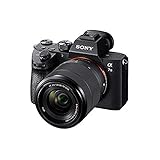
9. Sony a7 III – Budget-Friendly Full-Frame for Live Music
Pros
- Excellent image quality
- Fast and accurate autofocus
- Great low-light performance
- Compact and lightweight
- 4K video capability
- Good battery life for mirrorless
Cons
- Some reported shutter issues after warranty
- Single card slot limitation for pro work
The Sony a7 III remains one of the best values in full-frame cameras even years after its release. I’ve used it as a backup body for years, and it continues to deliver reliable performance in concert settings. The 24.2MP BSI sensor produces excellent images that hold up well at high ISO settings.
The 693-point hybrid autofocus system was groundbreaking when released and still performs admirably. I’ve tracked guitarists running across stage and maintained focus through their movements. While not as advanced as Sony’s latest systems, it’s more than adequate for most concert situations.
Low-light performance is impressive for the price. I’ve shot at ISO 6400 during dim club shows and captured clean images that require minimal noise reduction. The 15-stop dynamic range helps recover shadow details in post-production when dealing with high-contrast stage lighting.
The 10fps continuous shooting is sufficient for most concert photography. I’ve captured drummers hitting cymbals and singers mid-performance without feeling limited by the burst rate. The buffer clears reasonably quickly, allowing you to get back to shooting relatively fast.
Battery life is excellent for a mirrorless camera, rated at 710 shots per charge. During a full day of festival shooting, I’ve captured over 600 images on a single battery with power to spare. This reliability is crucial when you’re shooting all-day events.
Ideal For
Photographers on a budget who want full-frame performance without the full-frame price. The a7 III is perfect for students, hobbyists, and anyone building their first concert photography kit. It’s also ideal as a second body for photographers who need redundancy.
Less Ideal For
Professionals who need the latest autofocus technology or higher resolution. While still capable, the autofocus isn’t as sophisticated as newer cameras. Also, be aware of potential shutter issues reported by some users after the warranty period—consider an extended warranty if buying used.
10. Canon EOS RP – Most Affordable Full-Frame for Beginners
Pros
- Excellent entry point to full-frame
- Very lightweight and portable
- Great value for full-frame sensor
- Good image quality
- Vari-angle touchscreen for vlogging
- Compatible with EF lenses via adapter
Cons
- 4K video has limitations
- Limited 5fps for action photography
- Single card slot
- Digital image stabilization only
The Canon EOS RP is the most affordable entry point into full-frame concert photography. While it has limitations, I’ve seen it produce impressive results in the hands of skilled photographers. The 26.2MP sensor delivers good image quality that exceeds crop-sensor alternatives.
The vari-angle touchscreen is a feature I wish more cameras had. I’ve held the RP above my head at crowded shows and articulated the screen to compose shots I couldn’t see through the viewfinder. This flexibility is invaluable for concert photography where you’re often shooting from unconventional angles.

Canon’s Dual Pixel CMOS AF provides reliable autofocus for live music. While not as advanced as the system in the R6 Mark II, it still maintains focus on moving performers adequately for most situations. Eye detection works surprisingly well even in challenging lighting.
The light weight makes the RP ideal for all-day shooting. During a 12-hour festival, I carried the RP as a second body and appreciated how little it added to my gear bag. My arm didn’t get tired holding it up for overhead shots between sets.

Compatibility with EF lenses via adapter is a significant advantage. Many concert photographers have collections of EF glass from their DSLR days, and the RP lets you use those lenses natively. This compatibility can save thousands when building a full-frame system.
Ideal For
Beginners and hobbyists making their first foray into full-frame concert photography. The RP is perfect for students, enthusiasts, and anyone who wants full-frame image quality on a budget. It’s also ideal as a lightweight second body for working photographers.
Less Ideal For
Photographers who need fast burst rates for high-action performances. The 5fps continuous shooting is limiting for capturing peak moments in fast-moving shows. Also, if you need advanced video features or professional-level build quality, consider investing in a higher-tier model.
Buying Guide: Choosing the Right Camera for Indoor Concert Photography
Selecting the best full frame cameras for indoor concert photography requires understanding which specs matter most for live music environments. Here’s what experienced concert photographers prioritize:
Low-Light Performance: ISO Range and Sensor Size
Concert venues challenge cameras with constantly changing and often dim lighting. Full-frame sensors have a significant advantage over crop sensors due to their larger surface area, which captures more light. Look for cameras with native ISO ranges that extend to at least ISO 51,200 with usable results. The Sony Alpha 7S III excels here with ISO up to 409,600, while the Canon R6 Mark II and Nikon Z6 III both deliver clean images through ISO 25,600.
Autofocus Capabilities for Fast-Moving Performers
Stage performers move unpredictably, making fast and accurate autofocus essential. Phase-detection autofocus systems with eye-tracking capabilities are ideal. Canon’s Dual Pixel CMOS AF II and Sony’s Real-time Tracking AF are the industry leaders, both maintaining focus on subjects even in challenging lighting. The number of autofocus points matters less than coverage—systems that cover 90%+ of the frame give you more composition flexibility.
Burst Rate and Buffer Depth
Capturing the perfect moment often requires shooting in bursts. For high-energy performances, look for cameras with at least 10fps continuous shooting. The Canon R6 Mark II’s 40fps electronic shutter and Sony A7 IV’s 10fps mechanical shutter both provide excellent coverage. Buffer depth determines how many shots you can capture before the camera slows down—professional bodies like the Nikon Z 6II have larger buffers that sustain longer bursts.
Image Stabilization: IBIS vs Lens-Based
In-body image stabilization (IBIS) helps when shooting handheld in dim venues. Cameras with 5-axis sensor-shift stabilization can shoot at slower shutter speeds while maintaining sharpness. The Canon R6 Mark II’s 8-stop IBIS is particularly effective, while Sony and Nikon both offer 5-stop systems. If your camera lacks IBIS, prioritize lenses with optical stabilization.
Lens Ecosystem Considerations
Your camera choice determines which lenses you can use, and fast glass is essential for concert photography. Canon’s RF mount, Sony’s E-mount, and Nikon’s Z mount all offer excellent f/2.8 zoom options. Consider lens availability and pricing when choosing a system—Sony’s extensive lens catalog includes third-party options from Sigma and Tamron that are more budget-friendly.
Venue Size: Small Clubs vs Large Arenas
For small venues where you’re close to the stage, wider lenses (24-70mm f/2.8) are ideal. Larger arenas require longer reach (70-200mm f/2.8 or 100-400mm). The Sony Alpha 7C II’s compact form factor is perfect for cramped club photography, while the high-resolution Canon R5 allows more cropping when distance is a factor.
Recommended Settings for Concert Photography
Start with aperture priority mode at f/2.8 or wider to maximize light. Set ISO to Auto with a maximum of ISO 6400-12800 depending on your camera’s performance. Use continuous autofocus with eye-tracking enabled. Shutter speed should be at least 1/250 for performers, though you can go slower for stationary subjects. Shoot in RAW format to preserve maximum dynamic range and color information for post-processing.
Frequently Asked Questions
What is the best full frame camera for concert photography?
The Canon EOS R6 Mark II is currently the best full frame camera for concert photography due to its exceptional autofocus system, 40fps electronic shutter, and outstanding low-light performance. Its Dual Pixel CMOS AF II maintains focus on moving performers even in challenging lighting conditions, while the 8-stop image stabilization enables handheld shooting in dim venues.
What cameras are best for concerts?
Full-frame mirrorless cameras with fast autofocus and high ISO performance are best for concerts. Top choices include the Canon EOS R6 Mark II, Sony Alpha 7 IV, and Sony Alpha 7S III for their combination of image quality, autofocus speed, and low-light capabilities. For budget-conscious photographers, the Sony a7 III and Canon EOS RP offer excellent value.
What is the best lens for indoor concert photography?
A 24-70mm f/2.8 zoom lens is the most versatile for indoor concert photography, providing wide-angle shots of the entire stage and medium telephoto reach for individual performers. For larger venues, a 70-200mm f/2.8 gives you additional reach. Prime lenses like 35mm f/1.4 or 85mm f/1.8 offer wider apertures for extreme low-light situations but lack zoom flexibility.
How to photograph indoor concerts?
Use aperture priority mode with the widest aperture available (f/2.8 or wider). Set ISO to Auto with a maximum of 6400-12800 depending on your camera’s noise performance. Use continuous autofocus with eye-tracking enabled. Aim for shutter speeds of at least 1/250 for moving performers. Shoot in RAW format and bring extra batteries and memory cards. Arrive early to familiarize yourself with the lighting and stage layout.
Is F2.8 enough for concert photography?
Yes, f/2.8 is sufficient for most concert photography situations. While wider apertures like f/1.4 or f/1.8 gather more light, f/2.8 zoom lenses provide the versatility of adjustable framing that primes lack. Modern full-frame cameras perform well at the ISO settings required for f/2.8 apertures in typical venue lighting. Fast f/2.8 zooms are the professional standard for concert photography.
Conclusion
Choosing from the best full frame cameras for indoor concert photography depends on your budget, venue types, and specific needs. The Canon EOS R6 Mark II stands out as the overall best choice with its unparalleled autofocus and 40fps burst rate, making it ideal for high-energy performances. The Sony Alpha 7 IV offers the best value with its 33MP sensor and excellent hybrid capabilities, while the Sony Alpha 7S III is the ultimate choice for extreme low-light situations.
For professionals who need reliability and dual card slots, the Nikon Z 6II remains a solid workhorse. Beginners entering full-frame concert photography will find excellent value in the Canon EOS R8 or Sony a7 III, both offering professional autofocus at more accessible prices.
Remember that the camera is only part of the equation—fast f/2.8 lenses are essential for concert photography, and investing in quality glass will often yield better results than upgrading camera bodies. Whichever camera you choose from this roundup, you’ll have the low-light performance and autofocus capabilities needed to capture stunning images of live music performances in 2026.