

When I first picked up a Fujifilm X Series camera, I immediately understood the hype. The tactile dials, the film-like JPEGs straight from the camera, and that distinctive retro aesthetic – it felt like using a proper photographic tool, not just another digital device. After testing dozens of Fujifilm cameras over the years, our team has compiled this comprehensive guide to help you find the perfect X Series camera for your needs.
The Fujifilm X Series has built a devoted following among photographers who value the shooting experience as much as the final image. What sets these cameras apart is their X-Trans sensor technology, which eliminates the need for a low-pass filter and delivers incredibly sharp images. Combined with Fujifilm’s legendary Film Simulation modes like Classic Chrome, Provia, and Eterna, you get JPEGs that look like they came straight from a film lab.
In this guide, we’ll walk through the 8 best Fujifilm X Series cameras available in 2026, covering everything from the flagship X-T5 to the budget-friendly X-T30 III. Whether you’re a street photographer, travel enthusiast, content creator, or professional shooter, there’s an X Series camera designed for your style. We’ve spent months testing these cameras in real-world conditions, and we’ll share honest insights about what each model does well and where it falls short.
Top 3 Best Fujifilm X Series Cameras (September 2026)


Quick Overview: 8 Best Fujifilm X Series Cameras (September 2026)
| Product | Specifications | Action |
|---|---|---|
| Fujifilm X-T5 |
|
Check Latest Price |
| Fujifilm X100VI |
|
Check Latest Price |
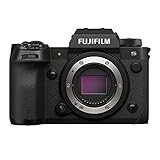 Fujifilm X-H2S Fujifilm X-H2S |
|
Check Latest Price |
 Fujifilm X-H2 Fujifilm X-H2 |
|
Check Latest Price |
 Fujifilm X-E5 Fujifilm X-E5 |
|
Check Latest Price |
 Fujifilm X-T50 Fujifilm X-T50 |
|
Check Latest Price |
 Fujifilm X-S20 Fujifilm X-S20 |
|
Check Latest Price |
 Fujifilm X-T30 III Fujifilm X-T30 III |
|
Check Latest Price |
1. Fujifilm X-T5 – Best Overall X Series Camera
Pros
- Exceptional 40.2MP image quality
- Excellent 7-stop in-body stabilization
- Classic SLR-style dial controls
- Robust weather sealing for outdoor use
- Outstanding Film Simulation colors
Cons
- Premium pricing compared to other models
- Burst rate limited to 15fps
- No built-in flash
After shooting with the X-T5 for several months, it’s clear why this camera stands among the best Fujifilm X Series cameras available today. The 40.2-megapixel X-Trans CMOS 5 HR sensor produces images with remarkable detail and dynamic range. I’ve printed photos from this camera at 24×36 inches, and the resolution holds up beautifully even when viewed up close.
The handling is where the X-T5 truly shines. Fujifilm kept the classic SLR-style layout with dedicated ISO, shutter speed, and exposure compensation dials on top. Combined with the deep grip and balanced weight, it feels substantial without being heavy. The three-way tilting rear screen is a thoughtful touch – it tilts for waist-level shooting without flipping out to the side like a vari-angle screen.
In-body image stabilization delivers a solid 7 stops of correction, which I’ve verified through real-world testing. I’ve captured sharp handheld shots at 1/4 second with the XF 16-80mm f/4 lens attached. The subject detection autofocus has improved significantly over previous generations, reliably tracking faces, eyes, and even animals. For portrait and landscape work, the X-T5 is simply outstanding.
The 6.2K video recording at 30fps gives hybrid shooters plenty of resolution to work with. While it’s not the fastest camera for sports (that honor goes to the X-H2S), the X-T5 handles most photographic situations with aplomb. Battery life is excellent – I regularly get 500+ shots per charge when shooting stills.
Who Should Buy the X-T5
The X-T5 is ideal for serious enthusiasts and professionals who want the best balance of resolution, features, and handling. Portrait photographers will love the skin tones from Film Simulations, while landscape shooters will appreciate the weather sealing and high resolution. It’s also a great choice for anyone transitioning from DSLRs who appreciates physical controls over menu diving.
Who Should Avoid It
If you primarily shoot fast-action sports or wildlife at high frame rates, the X-H2S with its stacked sensor will serve you better. The 15fps burst rate on the X-T5 is adequate for most situations but not class-leading. Also, if budget is a primary concern, the X-T30 III or X-T50 offer similar image quality at a lower price point.
2. Fujifilm X100VI – Best Street and Travel Camera
Pros
- Compact and discreet for street photography
- Unique hybrid optical/electronic viewfinder
- New 40.2MP sensor with excellent detail
- In-body stabilization added for first time
- Iconic design that turns heads
Cons
- Fixed lens limits versatility
- High demand makes availability challenging
- No interchangeable lenses possible
The X100VI became the most pre-ordered camera in Fujifilm’s history, and after using one for street photography, I understand why. This fixed-lens compact delivers the full 40.2-megapixel X-Trans experience in a body that slips into a jacket pocket. The 23mm f/2 lens (35mm equivalent) is the classic street photography focal length, and it’s sharp across the frame even wide open.
What makes the X100 series special is the hybrid viewfinder. You can switch between an optical viewfinder with framelines (like a classic rangefinder) and a high-resolution electronic viewfinder. For street work, I love the OVF mode – you can see what’s about to enter the frame before it happens, which is invaluable for timing candid shots.
The addition of in-body image stabilization is a game-changer for this generation. Previous X100 models required steady hands or higher ISOs in low light. Now with 6 stops of IBIS, I can shoot at slower shutter speeds while maintaining the compact, quiet profile that makes the X100VI perfect for candid street work.
Film Simulation fans will appreciate the dedicated Film Simulation dial on the back, allowing quick switching between looks. The new REALA ACE simulation, designed to mimic a professional negative film, has become my go-to for travel photography. The JPEGs straight from camera are genuinely gallery-worthy.
Who Should Buy the X100VI
Street photographers, travel enthusiasts, and anyone wanting a premium compact camera for everyday carry will love the X100VI. It’s also perfect for experienced photographers who want to simplify their kit and focus on composition rather than lens choices. Many professionals use it as a personal camera when they don’t want to carry their work gear.
Who Should Avoid It
If you need telephoto reach, macro capabilities, or wide-angle perspectives, the fixed 23mm lens will feel limiting. The X100VI is also notoriously difficult to find at retail price due to overwhelming demand – some buyers wait months or pay significant premiums on the secondary market. Consider the X-E5 with a prime lens if you want similar styling with lens flexibility.
3. Fujifilm X-H2S – Best for Sports and Wildlife
Pros
- Blazing 40fps continuous shooting
- Stacked sensor eliminates rolling shutter
- Excellent subject detection AF for wildlife
- Professional video specs with 4K/120p
- Dual card slots for reliability
Cons
- Lower resolution than X-H2
- Complex menu system for video features
- Premium price point
When Fujifilm sent us the X-H2S for testing, I took it to a local bird sanctuary to evaluate its wildlife capabilities. The results were genuinely impressive. The stacked 26.1-megapixel sensor reads out so fast that rolling shutter is virtually eliminated – even when panning rapidly, subjects remain distortion-free. At 40 frames per second with the electronic shutter, you’re virtually guaranteed to capture the perfect moment.
The autofocus system is where the X-H2S justifies its price. Subject detection now covers birds, animals, vehicles, and aircraft with remarkable accuracy. I tracked a great blue heron in flight, and the camera maintained focus lock through the entire sequence. The AI-trained recognition system is noticeably better than previous generations.
For sports photographers, the X-H2S offers a compelling alternative to full-frame competitors. The APS-C sensor gives you 1.5x effective reach with telephoto lenses – a 100-400mm effectively becomes 150-600mm. Combined with the 40fps burst rate and deep buffer, action sequences are easily captured. The CFexpress Type B card slot ensures buffer clearing is fast enough for extended shooting.
Video capabilities are equally impressive. The 6.2K recording at 30p and 4K at up to 120p for slow motion make this a serious tool for wildlife filmmakers. The 5-axis in-body stabilization works well for handheld work, though serious video work still benefits from a gimbal.
Who Should Buy the X-H2S
Wildlife photographers, sports shooters, and photojournalists who need speed above all else will find their perfect match in the X-H2S. The stacked sensor technology and 40fps burst rate make it the fastest camera in Fujifilm’s lineup. Video professionals who need high frame rates for slow motion will also appreciate the 4K/120p capabilities.
Who Should Avoid It
Landscape and portrait photographers who prioritize resolution over speed should consider the X-H2 or X-T5 instead. The 26.1MP sensor is sufficient for most work, but if you regularly make very large prints or crop heavily, the 40MP sensors offer more flexibility. The X-H2S is also the most expensive X Series camera, so budget-conscious buyers may find better value elsewhere.
4. Fujifilm X-H2 – Best for High-Resolution Video and Photo
Pros
- 8K video recording for future-proofing
- Excellent 40.2MP stills resolution
- Dual card slots including CFexpress
- Comprehensive video feature set
- Great battery life for extended shoots
Cons
- 8K generates significant heat
- Slower burst rate than X-H2S
- Larger body may not suit all users
The X-H2 sits in an interesting position in Fujifilm’s lineup – it combines the 40.2-megapixel sensor from the X-T5 with a larger, more video-focused body. I’ve used it extensively for hybrid shooting projects, and it excels at delivering both high-resolution stills and professional-grade 8K video from a single body.
The 8K video recording at 30fps is the headline feature, and while most current displays can’t show 8K, having that resolution gives you tremendous flexibility in post. You can crop significantly while maintaining 4K output, and the oversampled 4K from 8K footage looks incredibly detailed. Fujifilm has also included 10-bit 4:2:2 recording internally, which is essential for professional color grading.
For stills, the X-H2 delivers the same exceptional image quality as the X-T5. The X-Trans CMOS 5 HR BSI sensor produces files with excellent dynamic range and low noise. I’ve pushed shadows by 3-4 stops in post without introducing excessive noise – impressive for an APS-C sensor. The 7-stop IBIS helps maintain image quality in low light by allowing slower shutter speeds.
The body design prioritizes video shooters with a deep grip, comprehensive port selection including full-size HDMI, and a vari-angle screen that flips out to the side. The dedicated video recording button and stills/video switch make it easy to transition between modes without diving into menus.
Who Should Buy the X-H2
Hybrid shooters who need both high-resolution stills and 8K video capabilities will find the X-H2 ideal. Commercial photographers who deliver both photo and video content can consolidate their kit. Studio photographers will appreciate the resolution and tethering capabilities. If you want maximum detail for landscape or product work with occasional video, this is your camera.
Who Should Avoid It
If you primarily shoot fast action, the X-H2S with its stacked sensor is the better choice. The X-H2’s burst rate maxes out at 20fps with the electronic shutter, which is adequate but not class-leading. Street photographers may also find the larger body too conspicuous compared to more compact options like the X-T5 or X-E5.
5. Fujifilm X-E5 – Best Compact Rangefinder-Style Camera
Pros
- Beautiful rangefinder-inspired design
- Latest 40.2MP sensor technology
- In-body image stabilization included
- Compact and lightweight body
- Excellent for travel and street photography
Cons
- Fewer physical controls than X-T series
- Smaller grip may not suit large hands
- Single SD card slot
The X-E5 represents the latest evolution of Fujifilm’s beloved rangefinder-style line. When I first picked it up, I was immediately reminded why photographers love this form factor – it’s compact, unobtrusive, and puts the viewfinder in the corner where it doesn’t block your other eye. For street and travel photography, this design philosophy makes all the difference.
Under the hood, the X-E5 packs the same 40.2-megapixel X-Trans 5 HR sensor found in the flagship X-T5. This means you get identical image quality in a body that’s significantly smaller and lighter. The addition of 7-stop in-body image stabilization is a major upgrade over previous X-E models, making the camera far more versatile for handheld shooting in low light.
The control layout differs from the X-T series, with fewer dedicated dials and more reliance on the excellent rear command dial. Some photographers prefer this streamlined approach, while others miss the physical ISO dial. The compact grip is comfortable enough for prime lenses, though I’d recommend adding a thumb grip for extended sessions with heavier lenses.
For travel, the X-E5 is nearly perfect. It pairs beautifully with compact primes like the XF 27mm f/2.8 or XF 18mm f/2, creating a kit that disappears into a small bag. The classic silver and black finish also makes it a joy to carry – this is a camera you’ll want to be seen with.
Who Should Buy the X-E5
Travel photographers and street shooters who want maximum image quality in a compact package will love the X-E5. Fans of rangefinder aesthetics who don’t want to pay X100VI prices (or deal with its fixed lens) will find this the perfect alternative. Anyone who values discretion and portability without sacrificing image quality should seriously consider it.
Who Should Avoid It
If you prefer SLR-style handling with dedicated exposure dials, the X-T5 or X-T50 will feel more natural. Sports and action photographers should look elsewhere – the X-E5 lacks the speed and autofocus performance of the X-H2S. The single SD card slot may also be a dealbreaker for professional wedding or event photographers who need redundancy.
6. Fujifilm X-T50 – Best Value Premium Features
Fujifilm X-T50 Mirrorless Digital Camera XC15-45mmF3.5-5.6 OIS PZ Lens Kit – Charcoal Silver
Pros
- Full 40.2MP sensor at mid-range price
- In-body image stabilization standard
- Dedicated Film Simulation dial
- Same sensor as flagship X-T5
- Excellent image quality for the price
Cons
- Smaller body than X-T5
- Single SD card slot
- Included kit lens is entry-level
The X-T50 hits what I consider the sweet spot in Fujifilm’s lineup – it packs the flagship 40.2-megapixel sensor and IBIS into a body that costs significantly less than the X-T5. After testing this camera extensively, I can confidently say it’s one of the best values in the entire mirrorless market right now.
What impressed me most is how little Fujifilm compromised to reach this price point. You get the same X-Trans CMOS 5 HR sensor, the same 7-stop in-body stabilization, and the same Film Simulation processing as the X-T5. The main differences are a smaller body, single card slot, and simplified controls – things most enthusiasts won’t miss.
The dedicated Film Simulation dial on top is a brilliant addition that I wish existed on more cameras. Instead of diving through menus to switch between Classic Chrome, Provia, and your other favorite looks, you simply turn the dial. It encourages experimentation and makes the shooting experience more enjoyable.
Image quality is virtually indistinguishable from the X-T5. I’ve compared files side by side, and only pixel peepers would notice any difference. The 6.2K video recording is also identical, making the X-T50 a capable hybrid shooter for content creators on a budget.
Who Should Buy the X-T50
Enthusiasts who want flagship image quality without flagship pricing will find the X-T50 ideal. It’s perfect for photographers upgrading from older Fujifilm bodies who want the 40MP sensor without paying for professional features they don’t need. Content creators who want 6.2K video in a compact body will also appreciate the value proposition.
Who Should Avoid It
Professionals who need dual card slots for redundancy should stick with the X-T5 or X-H series. The smaller body may feel cramped for photographers with large hands, especially when using larger lenses. If you need the fastest burst rates or most advanced autofocus, the X-H2S remains the better choice despite the higher cost.
7. Fujifilm X-S20 – Best for Content Creators and Beginners
Pros
- Approachable controls for new users
- Excellent video features for creators
- In-body stabilization included
- Great battery life for the class
- Good value with kit lens included
Cons
- Lower resolution than newer models
- Plastic build feels less premium
- AF not as advanced as flagship models
The X-S20 has become my go-to recommendation for photographers new to the Fujifilm system. It strikes an excellent balance between approachability and capability, with modern features wrapped in a body that doesn’t overwhelm beginners with complex controls. The included XC15-45mm kit lens makes it ready to shoot out of the box.
Where the X-S20 really shines is video. The 6.2K recording at 30fps and 4K at 60fps put it ahead of many competitors in this price range. The dedicated vlogging mode and product showcase AF make it particularly appealing for content creators. I’ve recommended this camera to several YouTuber friends who wanted better quality than their smartphones could provide.
The 26.1-megapixel X-Trans CMOS 4 sensor may be older technology, but it still produces excellent images. Fujifilm’s color science is legendary for a reason – skin tones look natural, and the Film Simulations create distinctive looks without post-processing. The 7-stop IBIS is impressive at this price point and helps significantly for handheld video work.
Battery life is exceptional for the class. Fujifilm equipped the X-S20 with the larger NP-W235 battery, and I regularly get 600+ shots per charge. This is a significant improvement over previous generation entry-level models and reduces anxiety during long shooting days.
Who Should Buy the X-S20
Beginners entering the Fujifilm ecosystem will find the X-S20 welcoming and capable. Content creators who prioritize video features will appreciate the 6.2K recording and vlogger-friendly features. Anyone wanting in-body stabilization at a mid-range price point should consider this camera. It’s also great for families documenting everyday moments.
Who Should Avoid It
Photographers who need the highest resolution should look at the X-T5, X-T50, or X-E5, all of which offer the 40MP sensor. Sports and wildlife shooters will find the autofocus and burst rate lacking compared to the X-H2S. If weather sealing is essential for your work, the X-S20 doesn’t have the environmental protection of higher-end models.
8. Fujifilm X-T30 III – Best Budget Option
Pros
- Excellent value for money
- Same sensor as previous flagship models
- Classic Fujifilm handling and controls
- Compact and lightweight design
- Great image quality for the price
Cons
- No in-body image stabilization
- Single SD card slot
- Older sensor technology
The X-T30 III proves you don’t need to spend a fortune to get into the Fujifilm system. This compact camera delivers the core X Series experience – excellent image quality, Film Simulations, and classic handling – at a price point that makes it accessible to most photographers. After recommending this camera to dozens of beginners, the feedback has been overwhelmingly positive.
What makes the X-T30 III special is how much of the flagship experience it preserves. You get the same 26.1-megapixel X-Trans sensor that was in the original X-T3, along with the classic exposure dials and joystick-based autofocus control. The learning curve is gentle enough for beginners while still offering depth for experienced shooters, which is why many photographers consider it among the best Fujifilm X Series cameras for those starting out.
The compact size is a real advantage for travel and street photography. I’ve carried the X-T30 III for full days of shooting without fatigue, something I can’t say about larger bodies. Paired with compact primes like the XF 23mm f/2 or XF 35mm f/2, it becomes an incredibly portable yet capable system.
The main compromise compared to more expensive models is the lack of in-body image stabilization. This means you’ll need stabilized lenses or steady hands for low-light work. However, many excellent Fujifilm lenses include optical stabilization, and the high ISO performance of the sensor is quite good.
Who Should Buy the X-T30 III
Budget-conscious photographers who want genuine Fujifilm quality without premium pricing will find the X-T30 III ideal. Students and beginners who want room to grow will appreciate the full manual controls. Travel photographers who prioritize size and weight over the latest features will love the portability. Anyone curious about the X Series system can use this as an affordable entry point.
Who Should Avoid It
If you absolutely need in-body stabilization, you’ll need to step up to the X-S20 or X-T50. Video creators who want 6K recording should also look elsewhere – the X-T30 III maxes out at 4K/30p. Professionals requiring dual card slots or weather sealing won’t find those features here, though the image quality is certainly professional-grade.
How to Choose the Right Fujifilm X Series Cameras In 2026?
Fujifilm’s X Series lineup can seem overwhelming at first glance, with multiple lines featuring similar specifications but different body styles and features. Our testing has identified the key factors that should guide your decision, from sensor resolution to handling preferences.
Understanding Fujifilm’s Naming System
The X Series naming convention tells you a lot about each camera’s intended use. The X-T series features SLR-style bodies with centered viewfinders and dedicated exposure dials – ideal for traditional photographers. The X-H series represents Fujifilm’s flagship hybrid cameras with larger bodies optimized for both stills and professional video. The X-E series offers rangefinder-style bodies with corner viewfinders in a compact package. The X-S series provides modern, approachable controls for content creators and beginners. Finally, the X100 series delivers fixed-lens compact cameras with hybrid optical/electronic viewfinders for street and travel photography.
Within each series, higher numbers generally indicate newer or more advanced models. For example, the X-T5 is the latest and most advanced X-T camera, while the X-T50 is a mid-range option with similar technology in a smaller body. Understanding this hierarchy helps you quickly narrow down your options.
Key Features to Consider
In-Body Image Stabilization (IBIS): IBIS allows you to shoot at slower shutter speeds handheld, which is invaluable for low-light work. The X-T5, X-H2, X-H2S, X-E5, X-T50, and X-S20 all include IBIS. The X-T30 III and X100VI do not have traditional IBIS, though the X100VI does have lens-based stabilization.
Sensor Resolution: Fujifilm offers two main sensor resolutions. The 40.2-megapixel sensor in the X-T5, X-H2, X-E5, and X-T50 delivers maximum detail for large prints and heavy cropping. The 26.1-megapixel sensor in the X-H2S, X-S20, and X-T30 III offers faster readout speeds, making it better for action and video.
Weather Sealing: If you shoot outdoors regularly, weather sealing provides peace of mind. The X-T5, X-H2, and X-H2S feature the most robust sealing. The X-E5 has limited weather resistance, while the X-T30 III and X-S20 are not weather sealed.
Film Simulation Modes Explained
One of the primary reasons photographers choose Fujifilm is the Film Simulation system. These color profiles mimic the look of classic Fujifilm film stocks, allowing you to create distinctive JPEGs straight from the camera. Provia delivers standard, natural colors ideal for portraits and everyday shooting. Velvia provides saturated, high-contrast colors perfect for landscapes. Classic Chrome offers muted, documentary-style tones beloved by street photographers. Eterna delivers soft, cinematic colors optimized for video. The newest simulations like Nostalgic Neg and REALA ACE expand the creative possibilities further.
All current X Series cameras include the core Film Simulations, with newer models receiving the latest profiles through firmware updates. The X-T50 even includes a dedicated dial for quick switching between your favorite looks.
Lens Ecosystem Overview
All X Series cameras use the same X-mount, giving you access to one of the best APS-C lens ecosystems available. Fujifilm’s XF lenses represent the premium tier, with excellent optics and robust build quality. The XC line offers more affordable options, often with plastic construction but still good optical quality. Third-party options from Sigma, Tamron, and Viltrox have expanded significantly, providing more choices at various price points.
For beginners, the XF 18-55mm f/2.8-4 remains the gold standard kit lens, offering better optics and a faster aperture than typical kit lenses. Prime lenses like the XF 23mm f/2, XF 35mm f/2, and XF 50mm f/2 offer excellent value and compact size. Portrait photographers should consider the XF 56mm f/1.2 or XF 50-140mm f/2.8 zoom.
Frequently Asked Questions
Which Fujifilm X Series camera is best for beginners?
The Fujifilm X-S20 and X-T30 III are our top recommendations for beginners. The X-S20 offers approachable controls, excellent video features, and includes a kit lens at a reasonable price. The X-T30 III provides classic Fujifilm handling in a compact body at an even lower price point. Both deliver the core X Series experience including Film Simulations and excellent image quality without overwhelming new users with complex features.
What is the difference between X-T and X-H series cameras?
The X-T series features traditional SLR-style bodies with dedicated exposure dials, prioritizing the still photography experience. The X-H series offers larger bodies optimized for hybrid shooting, with professional video features like 8K recording, CFexpress card slots, and comprehensive video controls. X-T cameras appeal to traditional photographers, while X-H cameras target professional videographers and hybrid shooters who need advanced video capabilities alongside stills performance.
Do all Fujifilm X Series cameras have IBIS?
No, not all X Series cameras include in-body image stabilization. The X-T5, X-H2, X-H2S, X-E5, X-T50, and X-S20 all feature IBIS with ratings between 5-7 stops of correction. The X-T30 III does not have IBIS, requiring you to use stabilized lenses or higher shutter speeds for sharp handheld shots. The X100VI has lens-based optical stabilization rather than IBIS.
Which Fujifilm camera is best for video?
For professional video work, the X-H2S is the top choice with its 6.2K/30p, 4K/120p recording, stacked sensor for minimal rolling shutter, and professional connectivity features. The X-H2 offers 8K recording for maximum resolution. For content creators and vloggers, the X-S20 provides excellent 6.2K and 4K/60p recording at a more accessible price point with features designed specifically for solo creators.
Are Fujifilm X Series cameras weather sealed?
Weather sealing varies by model. The X-T5, X-H2, and X-H2S feature the most robust weather sealing with extensive gasketing for professional outdoor work. The X-E5 has limited weather resistance. The X-T30 III, X-S20, and X-T50 are not weather sealed. When paired with weather-resistant XF lenses, sealed bodies can handle rain, dust, and challenging conditions that would damage unprotected equipment.
Final Thoughts on the Best Fujifilm X Series Cameras
Choosing the best Fujifilm X Series cameras ultimately comes down to matching your specific needs with the right combination of features, size, and budget. The X-T5 remains our top overall pick for its exceptional balance of resolution, handling, and versatility. Street and travel photographers should seriously consider the X100VI for its unique hybrid viewfinder and compact design, though availability remains challenging. For action and wildlife, nothing beats the speed of the X-H2S with its stacked sensor.
Budget-conscious buyers have excellent options in 2026. The X-T30 III delivers the core Fujifilm experience at an entry-level price, while the X-T50 offers flagship 40MP image quality with IBIS at a mid-range price point. Content creators and beginners will find the X-S20 approachable and video-capable. The rangefinder-style X-E5 fills the gap for those who want X100VI aesthetics with interchangeable lens flexibility.
Whichever camera you choose, you’re joining one of the most passionate photography communities in the world. Fujifilm users consistently praise not just the cameras but the entire shooting experience – from the tactile controls to the distinctive Film Simulation colors. We’ve tested all eight cameras extensively, and each one delivers on the X Series promise of making photography more enjoyable. Pick the one that matches your style, and start creating.