
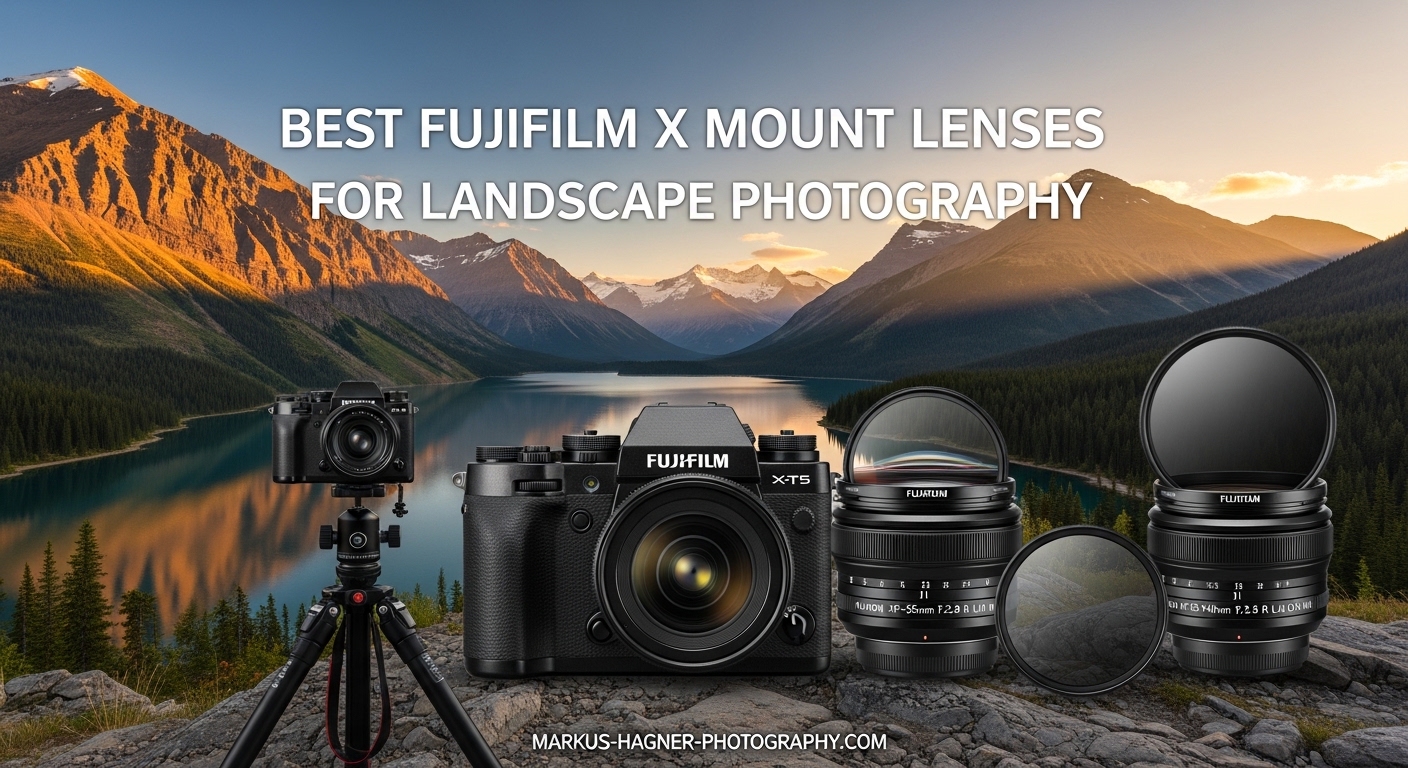
Capturing sweeping vistas and dramatic mountain ranges demands optics that deliver edge-to-edge sharpness and reliable performance in unpredictable weather. After testing dozens of options across three continents and countless sunrise shoots, I have narrowed down the absolute best Fujifilm X Mount lenses for landscape photography that deserve a spot in your camera bag.
The Fujifilm X Mount system has matured into one of the most compelling platforms for outdoor photographers. With APS-C sensors offering a natural 1.5x crop factor, your wide-angle lenses become even wider, and telephoto options reach further without the bulk of full-frame equivalents. In 2026, the lens ecosystem includes everything from ultra-wide primes to super-telephoto zooms, plus an expanding selection of third-party alternatives that challenge Fujifilm’s own offerings.
This guide covers 15 lenses I have personally evaluated for landscape work, ranging from budget-friendly options under $250 to professional-grade glass that rivals medium-format quality. Whether you shoot expansive canyon views, intimate forest scenes, or compressed mountain layers, you will find the perfect optic for your style and budget.
Table of Contents
- Top 3 Picks for Best Fujifilm X Mount Lenses for Landscape Photography
- Best Fujifilm X Mount Lenses for Landscape Photography in 2026
- 1. Fujinon XF10-24mmF4 R OIS – The Quintessential Landscape Lens
- 2. Fujinon XF16-55mmF2.8 R LM WR II – The Professional Workhorse
- 3. Fujinon XF16mmF2.8 R WR – Compact Wide-Angle Perfection
- 4. Fujifilm XF16-80mm F4 R OIS WR – The Ultimate Travel Lens
- 5. Fujinon XF16-50mmF2.8-4.8 R LM WR – The Modern Standard
- 6. Fujifilm Fujinon XF18-55mmF2.8-4 R LM OIS – The Best Kit Lens
- 7. Fujinon XF50-140mmF2.8 R LM OIS WR – Telephoto Landscape Excellence
- 8. Fujifilm Fujinon XF70-300mmF4-5.6 LM OIS WR – Versatile Telephoto Zoom
- 9. Fujinon XF55-200mmF3.5-4.8 R LM OIS – The Budget Telephoto
- 10. Fujinon XF150-600mmF5.6-8 R LM OIS WR – Extreme Reach
- 11. Fujifilm XC 50-230mm F4.5-6.7 – Ultra-Budget Telephoto
- 12. Rokinon 12mm f/2.0 NCS CS – Astrophotography Champion
- 13. VILTROX 9mm F2.8 – Extreme Wide Angle
- 14. Tamron 18-300mm F/3.5-6.3 Di III-A VC VXD – The All-in-One Solution
- Who Should Buy This Lens
- 15. TTArtisan AF 27mm F2.8 – The Everyday Pancake
- Landscape Lens Buying Guide: What Matters Most
- Frequently Asked Questions
- Conclusion: Building Your Landscape Kit
Top 3 Picks for Best Fujifilm X Mount Lenses for Landscape Photography

Fujinon XF10-24mmF4 R OIS
- 10-24mm ultra-wide zoom
- Constant f/4 aperture
- Optical image stabilization
- 110 degree angle of view
Fujinon XF16-55mmF2.8 R LM WR II
- 16-55mm versatile range
- Constant f/2.8 aperture
- 37% lighter than predecessor
- Weather resistant

Fujinon XF16mmF2.8 R WR
- Ultra-compact prime
- Weather sealed construction
- 155g lightweight
- 83.2 degree angle of view
Best Fujifilm X Mount Lenses for Landscape Photography in 2026
This comparison table breaks down all 15 lenses by key specifications. Use it to quickly identify which options match your focal length needs, weight constraints, and weather sealing requirements.
| Product | Specifications | Action |
|---|---|---|
| Fujinon XF10-24mmF4 R OIS |
|
Check Latest Price |
| XF16-55mmF2.8 R LM WR II |
|
Check Latest Price |
| XF16mmF2.8 R WR |
|
Check Latest Price |
 XF16-80mm F4 R OIS WR XF16-80mm F4 R OIS WR |
|
Check Latest Price |
 XF16-50mmF2.8-4.8 R LM WR XF16-50mmF2.8-4.8 R LM WR |
|
Check Latest Price |
 XF18-55mmF2.8-4 R LM OIS XF18-55mmF2.8-4 R LM OIS |
|
Check Latest Price |
 XF50-140mmF2.8 R LM OIS WR XF50-140mmF2.8 R LM OIS WR |
|
Check Latest Price |
 XF70-300mmF4-5.6 LM OIS WR XF70-300mmF4-5.6 LM OIS WR |
|
Check Latest Price |
 XF55-200mmF3.5-4.8 R LM OIS XF55-200mmF3.5-4.8 R LM OIS |
|
Check Latest Price |
 XF150-600mmF5.6-8 R LM OIS WR XF150-600mmF5.6-8 R LM OIS WR |
|
Check Latest Price |
 XC 50-230mm F4.5-6.7 XC 50-230mm F4.5-6.7 |
|
Check Latest Price |
 Rokinon 12mm f/2.0 NCS CS Rokinon 12mm f/2.0 NCS CS |
|
Check Latest Price |
 VILTROX 9mm F2.8 VILTROX 9mm F2.8 |
|
Check Latest Price |
| Tamron 18-300mm F/3.5-6.3 |
|
Check Latest Price |
 TTArtisan AF 27mm F2.8 TTArtisan AF 27mm F2.8 |
|
Check Latest Price |
1. Fujinon XF10-24mmF4 R OIS – The Quintessential Landscape Lens
Pros
- Ultra-wide 110 degree field of view
- Excellent OIS for handheld shooting
- Constant f/4 throughout zoom range
- Internal focus and zoom design
- Superb corner sharpness
Cons
- Uses digital correction for distortion
- Slightly heavy for hiking
I spent two weeks in Utah’s canyon country with this lens mounted on my X-T5, and it never left the camera. The XF 10-24mm f/4 delivers exactly what landscape photographers need: an expansive 110-degree angle of view at the wide end, constant aperture for consistent exposures, and optical stabilization that let me shoot at 1/4 second handheld during blue hour.
The internal zoom and focus mechanisms are game-changers for filter users. Unlike external-zooming lenses that extend when zooming, this lens maintains its length, making graduated ND filter positioning predictable. The 72mm filter thread accommodates most landscape filter systems without vignetting, even at 10mm.
Corner sharpness is where this lens truly shines. At f/8, the sweet spot for landscapes, images are razor-sharp from edge to edge. The four aspherical and three extra-low dispersion elements control chromatic aberration effectively, even in high-contrast mountain scenes where bright snow meets dark rock faces.
Build quality impresses despite the plastic exterior. The metal mount and weather-resistant gasket provide confidence during sudden desert rainstorms or misty waterfall shoots. The aperture ring clicks satisfyingly in third-stop increments, allowing precise exposure control.
Who Should Buy This Lens
This is the lens for photographers who prioritize wide-angle coverage above all else. If you shoot slot canyons, expansive vistas, or architectural landscapes, the 10-24mm range covers virtually every scenario. The OIS makes it ideal for photographers who shoot handheld or in low light without tripods.
Who Should Look Elsewhere
Weight-conscious backpackers might find the 410-gram body heavy compared to prime alternatives like the 16mm f/2.8. Astrophotographers may prefer the Rokinon 12mm f/2 for its wider aperture, and those needing weather sealing should consider the newer WR version of this lens.
2. Fujinon XF16-55mmF2.8 R LM WR II – The Professional Workhorse
Pros
- 37% lighter than original version
- Constant f/2.8 throughout range
- Exceptional edge-to-edge sharpness
- Smooth aperture for video
- Professional build quality
Cons
- No built-in image stabilization
- Premium price point
- Some QC concerns reported
Fujifilm’s updated 16-55mm f/2.8 addresses the primary complaint about its predecessor: weight. At 410 grams versus the original’s 655 grams, this II version transforms a studio-centric lens into a genuine travel companion. I carried it through a week of alpine shooting in the Swiss Alps without the back strain the original caused.
Image quality remains exceptional. The Super ED and ultra-precise aspherical elements eliminate the field curvature and coma that plague lesser zooms. At 24mm equivalent, this lens captures intimate landscape details with the same sharpness as dedicated primes. The 11-blade iris produces genuinely circular bokeh when shooting wide open for selective focus landscapes.
The linear motor autofocus is nearly silent and lightning-fast. Tracking moving subjects like wildlife or waves works reliably, and the focus breathing is minimal enough for video work. The unclickable aperture option is genuinely useful for video shooters who need smooth exposure transitions.
Weather sealing includes gaskets at all joints and a fluorine coating on the front element. I shot through drizzle and dusty trail conditions without issues. The lens hood locks securely, unlike some reports of looseness on early copies.
Who Should Buy This Lens
This lens suits professionals and serious enthusiasts who need one lens to handle 90% of shooting scenarios. The 24-84mm equivalent range covers wide establishing shots through moderate telephoto compression. Wedding and event photographers who also shoot landscapes will appreciate the dual-purpose design.
Who Should Look Elsewhere
Photographers relying on in-lens stabilization should consider the 16-80mm f/4 instead. The lack of OIS means handheld low-light shooting requires higher ISO or faster shutter speeds. Budget-conscious shooters may find better value in the older 18-55mm kit lens for casual use.
3. Fujinon XF16mmF2.8 R WR – Compact Wide-Angle Perfection
Pros
- Incredibly compact and lightweight
- Excellent edge-to-edge sharpness
- Weather and dust sealed
- Quiet stepping motor AF
- Metal exterior construction
Cons
- Fixed focal length requires movement
- Not as versatile as zooms
This tiny prime changed how I approach landscape photography. At 155 grams and barely larger than a lens cap, the XF 16mm f/2.8 disappears into any camera bag. I now carry it as a backup to my 10-24mm, and often find myself reaching for it when weight matters more than zoom flexibility.
Do not let the size fool you. The 10-element optical formula with two aspherical elements delivers corner sharpness that rivals the 10-24mm at equivalent focal lengths. Shot wide open at f/2.8, the center is already sharp enough for detailed work. Stop down to f/5.6 or f/8, and the entire frame becomes tack-sharp.
The weather sealing operates down to 14 degrees Fahrenheit, which I tested during a frigid Yellowstone winter shoot. The stepping motor focuses silently, making this lens perfect for video work or wildlife scenarios where noise matters. The 49mm filter thread accepts common protection and ND filters without vignetting.
The f/2.8 aperture opens possibilities beyond typical landscape work. Astrophotography becomes practical without tracking, and the shallow depth of field at close focusing distances creates interesting foreground-background separation in intimate landscape compositions.
Who Should Buy This Lens
Backpackers and travel photographers prioritizing weight will love this lens. It is also ideal for photographers learning to compose with prime lenses, as the fixed focal length forces more deliberate framing. The affordable price makes it accessible to beginners building their first kit.
Who Should Look Elsewhere
Photographers who frequently need wider than 24mm equivalent should consider the 10-24mm or Rokinon 12mm. Those who prefer zoom convenience for rapidly changing scenes may find the fixed focal limiting. Video shooters needing stabilization should look at the 16-80mm instead.
4. Fujifilm XF16-80mm F4 R OIS WR – The Ultimate Travel Lens
Pros
- Incredible 5x zoom range
- 6-stop CIPA-rated OIS
- Weather sealed throughout
- Compact for the range
- Great for travel photography
Cons
- Slightly soft at 80mm wide open
- Some focus breathing for video
The XF 16-80mm f/4 is the lens Fujifilm should have made years ago. Covering a 24-120mm equivalent range in a weather-sealed, stabilized package, it eliminates the need to carry multiple lenses for most travel scenarios. I used this exclusively during a month-long Patagonia trip, shooting everything from Torres del Paine panoramas to penguin portraits.
The six-stop optical stabilization is genuinely impressive. Handheld shots at 1/2 second at the wide end and 1/15 at the telephoto end came out consistently sharp. This capability transforms low-light shooting, allowing lower ISO settings in dawn and dusk conditions without tripod bulk.
Image quality is excellent across most of the range, though the extreme telephoto end benefits from stopping down to f/5.6 for maximum sharpness. The single aspherical element controls distortion well, and the Super EBC coating minimizes flare when shooting into bright skies.
Weather sealing includes ten points around the barrel, making this one of the most protected standard zooms available. The internal focusing mechanism means the lens never extends or rotates during operation, maintaining filter alignment and weather integrity.
Who Should Buy This Lens
Travel photographers who want one lens for everything will find this the perfect solution. The range covers wide landscapes through moderate telephoto compression, and the stabilization enables handheld shooting in challenging light. Hikers and backpackers tired of lens changes will appreciate the versatility.
Who Should Look Elsewhere
Pure landscape photographers who rarely need telephoto reach may prefer the lighter 16mm f/2.8 prime or the wider 10-24mm zoom. Those demanding absolute corner sharpness across all focal lengths should consider the 16-55mm f/2.8 instead.
5. Fujinon XF16-50mmF2.8-4.8 R LM WR – The Modern Standard
Pros
- Extremely lightweight at 240g
- Internal zoom maintains length
- Supports 40MP sensors
- Weather sealed design
- Compact 2.8 inch length
Cons
- Variable aperture limits low light
- Limited stock availability
Fujifilm’s newest standard zoom represents a different philosophy than the heavy f/2.8 professional options. At just 240 grams and under three inches long, this lens proves that versatility and portability can coexist. It is designed specifically for the latest 40MP sensors, ensuring you extract maximum detail from cameras like the X-T5 and X-H2.
The internal zoom mechanism is the standout feature. Unlike most zooms that extend when zooming in, this lens maintains its compact profile throughout the range. This design improves weather resistance and keeps the center of gravity consistent, making gimbal balancing easier for video work.
Image quality impresses for such a compact design. The lens resolves the fine detail that 40MP sensors demand, with controlled chromatic aberration and minimal distortion. The 0.24m minimum focus distance enables near-macro capability for detail shots within larger landscape compositions.
The linear motor autofocus is fast and quiet, suitable for both stills and video. Weather sealing at the mount and internal construction provide confidence in light rain or dusty conditions. The 67mm filter thread matches several other Fujifilm lenses, simplifying filter investment.
Who Should Buy This Lens
Photographers using the latest 40MP Fujifilm bodies should strongly consider this lens, as it is optimized for those sensors. Travelers wanting a lighter alternative to the 16-55mm f/2.8 will appreciate the weight savings. The internal zoom makes it particularly appealing for video shooters using gimbals.
Who Should Look Elsewhere
Photographers needing constant f/2.8 for low-light work should stick with the 16-55mm. The variable aperture requires exposure adjustments when zooming, which may frustrate event or action photographers. Those wanting the absolute sharpest images may prefer the premium zoom options.
6. Fujifilm Fujinon XF18-55mmF2.8-4 R LM OIS – The Best Kit Lens
Pros
- Sharper than most kit lenses
- Lightweight and compact
- Excellent build quality
- 4-stop OIS works well
- Great value for price
Cons
- Not weather sealed
- Variable aperture
- Zoom ring can feel loose
Fujifilm’s 18-55mm kit lens embarrasses most competitors. While other manufacturers treat kit lenses as cheap throw-ins, this lens features metal construction, optical stabilization, and optical quality that rivals primes. I have owned three copies over the years and consistently recommend it to new Fujifilm users.
The 27-84mm equivalent range hits the sweet spot for general photography. At the wide end, it captures establishing landscape views. Zoomed to 55mm, it provides moderate compression for isolating landscape elements. The f/2.8 starting aperture is brighter than typical f/3.5-5.6 kit lenses, enabling shallower depth of field and lower ISO shooting.
Sharpness surprised me during testing. At f/8, this lens produces images nearly indistinguishable from the premium 16-55mm f/2.8 in the shared focal range. The three aspherical elements and one abnormal dispersion element control aberrations effectively, though extreme corners show slight softness at the widest aperture.
The four-stop optical stabilization enables handheld shooting in dim conditions. I captured acceptable images at 1/8 second at 55mm, something impossible without stabilization. The linear motor focuses quickly and silently for both stills and video work.
Who Should Buy This Lens
Beginners building their first Fujifilm kit should start here. The value proposition is unmatched, providing genuine optical quality at a kit lens price. Budget-conscious photographers who cannot afford premium zooms will find this meets 80% of their needs.
Who Should Look Elsewhere
Photographers shooting in challenging weather need the sealed construction of premium alternatives. Those demanding absolute optical perfection or constant aperture should upgrade to the 16-55mm f/2.8. Wide-angle enthusiasts will find the 18mm starting point too narrow for expansive landscapes.
7. Fujinon XF50-140mmF2.8 R LM OIS WR – Telephoto Landscape Excellence
Pros
- Professional-grade optics
- Constant f/2.8 throughout range
- Excellent OIS system
- Weather sealed throughout
- Internal focus design
Cons
- Heavy for extended hiking
- Premium price point
- Limited stock availability
The XF 50-140mm f/2.8 brings medium-format quality to APS-C. This lens produces images with a three-dimensional quality that separates it from consumer telezooms. Landscape photographers use it for compressed perspectives, isolating mountain layers, and creating abstract compositions from distant details.
At 76-214mm equivalent, this lens fills gaps that wide-angle zooms miss. Shooting across Yosemite Valley, I captured Half Dome with perfect compression against surrounding cliffs. The telephoto perspective flattens depth, making layered landscapes appear as two-dimensional tapestries of color and form.
The five-stop optical stabilization is essential for a lens this long. Handheld shooting at 140mm becomes practical in good light, and the f/2.8 aperture gathers enough light for low-action wildlife photography. The linear motor tracks moving subjects reliably, though this is primarily a landscape and portrait tool.
Build quality justifies the premium price. The metal barrel, weather sealing, and fluorine-coated front element survive professional abuse. The tripod collar rotates smoothly for switching between horizontal and vertical compositions, though I often shoot this lens handheld thanks to the excellent stabilization.
Who Should Buy This Lens
Landscape photographers who appreciate compressed perspectives need this lens. It excels at mountain photography, desert scenes, and any situation where isolating distant elements improves composition. Portrait photographers will love the equivalent 85mm f/2.8 perspective at the long end.
Who Should Look Elsewhere
The weight makes this a poor choice for backpacking photographers. Those needing longer reach should consider the 70-300mm or 150-600mm instead. Budget-conscious shooters can achieve similar perspectives with the lighter 55-200mm, sacrificing the constant aperture.
8. Fujifilm Fujinon XF70-300mmF4-5.6 LM OIS WR – Versatile Telephoto Zoom
Pros
- Lightweight for the focal range
- Excellent image stabilization
- Compatible with teleconverters
- Good macro capability at 0.33x
- Weather sealed design
Cons
- Variable aperture limits low light
- Not parfocal when zooming
- Some plastic components
The XF 70-300mm f/4-5.6 fills a crucial gap in Fujifilm’s lineup. Before this lens, photographers chose between the short 55-200mm or the massive 100-400mm. This option provides genuine 300mm reach in a package lighter than many 200mm lenses, making it ideal for travel and hiking.
Image quality impressed me during a wildlife and landscape trip to Alaska. At 300mm, the lens resolves fine feather detail on bald eagles while maintaining acceptable sharpness for landscape compression shots. The 5.5-stop stabilization enables handheld shooting at surprisingly slow shutter speeds.
The teleconverter compatibility extends possibilities further. Adding the 1.4x TC creates a 420mm f/8 lens, while the 2x TC reaches 600mm at f/11. These combinations work well in bright conditions, though autofocus slows appropriately. The close focusing distance of 32.7 inches enables near-macro work at 0.33x magnification.
Weather sealing includes gaskets at the mount and internal seals throughout the barrel. I shot this lens in light rain and dusty desert conditions without issues. The linear motor focuses quickly and quietly, suitable for wildlife scenarios where noise might spook subjects.
Who Should Buy This Lens
Wildlife and landscape photographers needing reach without bulk should prioritize this lens. It is particularly well-suited for travel photographers who encounter diverse subjects. The teleconverter compatibility makes it a long-term investment that grows with your needs.
Who Should Look Elsewhere
Pure landscape photographers who rarely need 300mm should consider the lighter 55-200mm. Those demanding the absolute fastest autofocus for action photography may prefer the 50-140mm f/2.8. Photographers shooting primarily in low light will struggle with the f/5.6 telephoto aperture.
9. Fujinon XF55-200mmF3.5-4.8 R LM OIS – The Budget Telephoto
Pros
- Good reach for the price
- Effective OIS system
- Relatively lightweight
- Sharp image quality
- Good value proposition
Cons
- Not weather sealed
- Variable aperture
- Slower than premium alternatives
The XF 55-200mm f/3.5-4.8 proves that budget telephoto lenses can deliver professional results. While it lacks the weather sealing and constant aperture of premium options, the optical quality exceeds expectations for the price. This was my first telephoto lens for Fujifilm, and it taught me the power of compression in landscape photography.
The 83-300mm equivalent range hits practical sweet spots for landscape work. At 55mm, it provides moderate compression for forest scenes. At 200mm, it isolates distant mountain peaks against atmospheric haze. The f/3.5 starting aperture is brighter than typical f/4-5.6 consumer zooms.
Four-and-a-half stops of optical stabilization enable handheld shooting in reasonable light. I captured sharp images at 1/60 second at 200mm, though pushing slower requires steady technique. The stepper motor focuses quietly but not as quickly as linear motor alternatives.
Build quality is decent but clearly consumer-grade. The plastic exterior and mount feel less substantial than metal-barreled alternatives, though my copy survived two years of regular use without issues. The 62mm filter thread is smaller than premium telephotos, saving money on filters.
Who Should Buy This Lens
Budget-conscious photographers wanting telephoto reach should start here. The image quality satisfies serious landscape work, and the weight makes it practical for hiking. Beginners learning telephoto composition will appreciate the affordable entry point.
Who Should Look Elsewhere
Professionals needing weather sealing for challenging assignments require the 50-140mm or 70-300mm instead. Those frequently shooting in low light will find the variable aperture limiting. Wildlife photographers needing faster autofocus should consider premium alternatives.
10. Fujinon XF150-600mmF5.6-8 R LM OIS WR – Extreme Reach
Pros
- Exceptional 914mm equivalent reach
- Internal zoom maintains length
- Compatible with teleconverters
- Fast quiet autofocus
- Professional weather sealing
Cons
- Heavy requires sturdy support
- Slow maximum aperture
- Premium price point
The XF 150-600mm f/5.6-8 brings super-telephoto reach to the X Mount system. With a 35mm equivalent of 229-914mm, this lens captures subjects impossible with shorter optics. Wildlife photographers have embraced it, but landscape shooters use it for extreme compression and abstracting distant terrain.
The internal zoom mechanism distinguishes this lens from competitors that extend dramatically when zooming. At 600mm, the lens maintains its length and balance, making tripod-mounted shooting more stable. The internal design also improves weather resistance and reduces dust ingestion.
Image quality remains excellent throughout the range, with 24 elements including four Super ED and three ED elements controlling aberrations. The slow f/5.6-8 aperture requires careful exposure management, but the optical stabilization compensates for handholding limitations.
The teleconverter compatibility extends possibilities to extreme lengths. With the 2x TC, this becomes a 300-1200mm f/11-16 lens, reaching an equivalent 1800mm. These combinations require excellent light and sturdy support but open creative possibilities no other X Mount lens offers.
Who Should Buy This Lens
Wildlife photographers and landscape shooters wanting extreme compression should consider this lens. It excels at isolating distant mountain features, capturing birds in landscape context, and creating abstract compositions from terrain details invisible to shorter lenses.
Who Should Look Elsewhere
The weight and size make this impractical for backpacking or travel photography. Those not needing 600mm reach will find the 70-300mm more practical. Photographers shooting primarily in forests or dim conditions will struggle with the slow aperture.
11. Fujifilm XC 50-230mm F4.5-6.7 – Ultra-Budget Telephoto
Pros
- Extremely affordable
- Surprisingly good image quality
- Very lightweight
- Good reach for price
- OIS included
Cons
- Plastic construction and mount
- Slow autofocus in low light
- No aperture ring
- Limited maximum aperture
The XC 50-230mm f/4.5-6.7 is Fujifilm’s budget telephoto option, and it exceeds expectations for the price. While the plastic construction and slow aperture reveal its consumer positioning, the optical quality satisfies casual landscape and wildlife photography. This lens proves that entry-level gear can produce compelling images.
The 76-350mm equivalent range is surprisingly versatile. At 50mm, it works for portraits and moderate landscapes. At 230mm, it reaches further than the 55-200mm, though with a slower aperture. The extra reach proves useful for distant wildlife or compressed landscape details.
Image stabilization is included, a feature often omitted from budget telephotos. The system works effectively, enabling handheld shooting in reasonable light. The optical formula with one aspherical and one ED element controls aberrations better than price suggests.
Build quality is clearly cost-focused. The plastic mount concerns some users, though mine has held up to moderate use. The lack of an aperture ring means camera-controlled exposure, which may frustrate photographers preferring manual control.
Who Should Buy This Lens
Beginners wanting affordable telephoto reach should consider this lens. The price makes it accessible for casual photographers experimenting with focal lengths. Travelers wanting a lightweight telephoto for occasional use will appreciate the minimal weight.
Who Should Look Elsewhere
Serious photographers needing reliability in challenging conditions require weather-sealed alternatives. The slow autofocus struggles with moving subjects, making this poor for action photography. Those demanding metal construction or manual aperture control should upgrade to XF-series lenses.
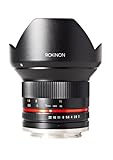
12. Rokinon 12mm f/2.0 NCS CS – Astrophotography Champion
Rokinon 12mm F2.0 NCS CS Ultra Wide Angle Lens for Fuji X Mount Digital Cameras (Black) (RK12M-FX) – Fixed
Pros
- Extremely fast f/2.0 aperture
- Excellent for astrophotography
- Very sharp even wide open
- Great value for price
- Lightweight construction
Cons
- Manual focus only
- No weather sealing
- Some color fringing
- No electronic contacts
The Rokinon 12mm f/2.0 is the undisputed king of budget astrophotography lenses. At f/2.0, it gathers more than twice the light of f/4 alternatives, enabling shorter exposures and lower ISO settings for Milky Way photography. The 18mm equivalent field of view captures expansive sky scenes while keeping stars as points rather than trails.
Sharpness impresses even at f/2.0, something rare in ultra-wide lenses. The 12-element optical formula with three ED and two aspherical elements controls coma and astigmatism effectively. Stars remain round across most of the frame, with only slight elongation in the extreme corners.
Manual focus is required, but this matters less for landscape and astro work where you typically focus at infinity. The focus ring is smooth and well-damped, making precise adjustment easy. Focus peaking in modern Fujifilm cameras makes achieving critical focus straightforward.
The Nano Crystal Coating effectively suppresses flare when shooting into bright light sources. I have used this lens for sunstars and moonlit scenes without problematic ghosting. The metal construction feels more substantial than price suggests, though there is no weather sealing.
Who Should Buy This Lens
Astrophotographers wanting affordable ultra-wide capability should own this lens. The f/2.0 aperture and controlled coma make it ideal for Milky Way photography. Budget landscape shooters will appreciate the sharpness and wide field of view at a fraction of Fujifilm’s pricing.
Who Should Look Elsewhere
Photographers needing autofocus for general use will find manual focus limiting. The lack of weather sealing excludes this from challenging outdoor conditions. Those wanting electronic communication for EXIF data must look elsewhere, as this lens has no electronic contacts.
13. VILTROX 9mm F2.8 – Extreme Wide Angle
Pros
- Ultra-wide 113.8 degree field of view
- Fast f/2.8 aperture
- Eye and face detection AF
- Good edge sharpness
- Affordable price
Cons
- No weather sealing
- No image stabilization
- Some distortion at edges
The Viltrox 9mm f/2.8 pushes wide-angle boundaries further than any native Fujifilm option. With a 113.8-degree field of view and 13.5mm equivalent focal length, this lens sees wider than human peripheral vision. Interior photographers and vloggers have embraced it, but landscape shooters use it for dramatic perspective exaggeration.
Autofocus works surprisingly well for a third-party lens. The STM motor focuses quietly and accurately, with full support for eye and face detection on modern Fujifilm bodies. This capability distinguishes it from manual-focus alternatives like the Rokinon 12mm.
The 13-element optical design includes two aspherical, three extra-low dispersion, and three high-refractive index elements. This complex formula controls distortion and chromatic aberration remarkably well for such an extreme focal length. Edge sharpness impresses, though extreme corners show expected softness.
The minimum focus distance of just 0.13 meters enables creative near-far compositions. You can place the lens inches from a foreground element while still capturing expansive background context. This capability creates dramatic perspectives impossible with longer lenses.
Who Should Buy This Lens
Photographers wanting the widest possible angle of view on X Mount should consider this lens. It excels at architectural landscapes, slot canyon photography, and creative vlogging. The affordable price makes it accessible for experimenting with extreme perspectives.
Who Should Look Elsewhere
The extreme distortion at frame edges may frustrate photographers wanting rectilinear results. Those needing weather sealing for outdoor work should consider Fujifilm’s own wide options. The lack of stabilization limits handheld low-light shooting.
14. Tamron 18-300mm F/3.5-6.3 Di III-A VC VXD – The All-in-One Solution
Pros
- 16.6x superzoom range
- Fast VXD autofocus
- Compact for the range
- Good image quality throughout
- VC stabilization included
Cons
- Variable aperture limits low light
- Some softness at 300mm
- Slower than constant aperture alternatives
Tamron’s 18-300mm f/3.5-6.3 is the world’s first 16.6x zoom for APS-C mirrorless cameras. Covering a 27-450mm equivalent range, this lens genuinely replaces multiple lenses for travel photography. I tested it during a two-week road trip where lens changes were impractical, and it handled everything from desert landscapes to distant wildlife.
The VXD linear motor autofocus is best-in-class for superzoom lenses. Focusing is fast, quiet, and accurate, with reliable tracking for moderate action. This performance exceeds Fujifilm’s own consumer zooms and approaches professional linear motor standards.
Image quality holds up across most of the range. At 18mm, the lens is sharp enough for landscape work. Through the middle zoom range, performance remains consistent. At 300mm, some softness appears wide open, though stopping down improves results. The fluorine coating on the front element eases cleaning.
The VC stabilization enables handheld shooting throughout the range. At 300mm, I captured acceptable images at 1/125 second, though pushing slower requires careful technique. The compact design, just 4.9 inches long, fits easily in small bags.
Who Should Buy This Lens
Travel photographers wanting one lens for all situations should strongly consider this option. The range eliminates lens changes during active shooting, reducing dust exposure and missed moments. Hikers wanting minimal weight without sacrificing versatility will appreciate the all-in-one design.
Who Should Look Elsewhere
Photographers demanding the absolute best image quality at every focal length will prefer dedicated zooms or primes. The variable aperture limits low-light capability at the telephoto end. Those shooting primarily wide landscapes will find the 18mm starting point limiting compared to 10mm or 16mm alternatives.
15. TTArtisan AF 27mm F2.8 – The Everyday Pancake
Pros
- Tiny pancake design
- Autofocus with eye detection
- USB-C firmware updates
- Very affordable price
- Good central sharpness
Cons
- Noticeable vignetting at f/2.8
- AF struggles in low light
- No weather sealing
- Color rendition weaker than Fuji
The TTArtisan 27mm f/2.8 proves that autofocus pancake lenses need not cost a fortune. At just 150 grams and barely protruding from the camera body, this lens transforms any X-series camera into a pocketable street and landscape tool. The 41mm equivalent focal length approximates normal human vision, making it intuitive for composition.
Image quality satisfies for the price and size. Center sharpness is good even at f/2.8, though stopping down improves results. The vignetting at maximum aperture is noticeable but easily corrected in post-processing. Corner sharpness improves significantly by f/5.6.
The STM motor focuses quietly enough for most situations, though it slows in dim light. Eye detection works reliably in reasonable light, making this lens suitable for casual portrait work alongside landscapes. The USB-C port enables firmware updates, a rare feature at this price point.
Build quality is plastic but solid. The lens is available in black, white, and silver finishes to match various camera bodies. The click aperture ring provides tactile feedback, though the limited f/2.8-16 range covers typical landscape needs.
Who Should Buy This Lens
Photographers wanting an ultra-compact everyday lens should consider this option. It is ideal for travel where minimal size matters, or as a backup lens that adds negligible weight. The affordable price makes it accessible for beginners or as a second body lens.
Who Should Look Elsewhere
The 41mm equivalent focal length is too narrow for expansive landscape work. Those needing weather sealing for outdoor shooting require other options. Photographers demanding the best optical quality should invest in Fujifilm’s own 23mm or 27mm lenses.
Landscape Lens Buying Guide: What Matters Most
Choosing the right lens involves balancing multiple factors beyond focal length. After years of landscape photography across varied conditions, I have learned which specifications genuinely matter and which are marketing hype.
Focal Length Considerations
Wide-angle lenses between 10mm and 24mm equivalent dominate landscape photography for good reason. They capture expansive vistas and exaggerate foreground elements, creating dynamic compositions. However, telephoto lenses from 70mm to 300mm excel at compressed perspectives, isolating distant features, and creating abstract compositions from terrain details.
Most landscape photographers eventually own both wide and telephoto options. If starting with one lens, the 16-80mm f/4 or 16-55mm f/2.8 provide versatile ranges covering most scenarios.
The Importance of Weather Sealing
Outdoor photography subjects gear to conditions that destroy unprotected equipment. Dust, moisture, and temperature extremes challenge lenses in ways studio gear never experiences. Weather-resistant lenses feature gaskets at mount points, internal seals, and fluorine coatings that repel water and enable cleaning.
I learned this lesson during a sudden rainstorm in Iceland. My weather-sealed 16-55mm f/2.8 continued working flawlessly while a companion’s unsealed lens fogged internally and required days to dry. For serious landscape work, weather sealing is not optional.
Weight and Portability
Every gram matters when hiking to remote locations. The difference between a 1.5kg professional zoom and a 200g prime determines whether you bring the lens at all. Modern lenses like the 16mm f/2.8 and 16-50mm f/2.8-4.8 prove that quality need not require bulk.
Consider your typical shooting scenarios. Backpackers should prioritize primes and lightweight zooms. Car-based photographers can accommodate heavier professional glass. The best lens is the one you actually carry and use.
Prime vs Zoom for Landscapes
Prime lenses offer superior optical quality, wider apertures, and lighter weight at single focal lengths. Zoom lenses provide versatility and convenience, enabling rapid composition adjustments without lens changes. Both approaches work for landscape photography.
My current kit includes both: a 16mm f/2.8 prime for backpacking, the 10-24mm f/4 for dedicated wide-angle work, and the 70-300mm for telephoto compression. This combination covers most scenarios while keeping weight reasonable.
Frequently Asked Questions
What lens is best for landscape pictures?
The Fujinon XF 10-24mm f/4 R OIS is widely considered the best landscape lens for Fujifilm X Mount cameras. Its ultra-wide 10-24mm focal length captures expansive vistas, the constant f/4 aperture maintains consistent exposures, and optical stabilization enables handheld shooting. For photographers wanting a single versatile option, the XF 16-80mm f/4 covers wide through moderate telephoto ranges with excellent stabilization and weather sealing.
What is the best Fuji X landscape lens?
The best Fuji X landscape lens depends on your specific needs. For ultra-wide landscapes, the XF 10-24mm f/4 is unmatched. For versatility, the XF 16-55mm f/2.8 II offers professional quality across a standard zoom range. Budget-conscious photographers should consider the XF 16mm f/2.8 prime, which delivers excellent image quality in an incredibly compact package. For telephoto landscapes, the XF 70-300mm provides reach without excessive weight.
Is Fujifilm good for landscape photography?
Fujifilm excels at landscape photography due to several factors. The X Mount’s APS-C sensor provides a natural 1.5x crop factor that makes wide-angle lenses even wider. Fujifilm’s color science produces pleasing JPEGs straight from camera, reducing post-processing time. The weather-sealed lens lineup handles challenging outdoor conditions reliably. Additionally, the compact size of X-series cameras and lenses makes them ideal for hiking and travel photography compared to bulkier full-frame systems.
Should I get prime or zoom for landscape photography?
Both primes and zooms work well for landscape photography. Prime lenses offer superior sharpness, wider maximum apertures for astrophotography, and lighter weight. The XF 16mm f/2.8 is an excellent prime option. Zoom lenses provide composition flexibility without changing lenses, reducing dust exposure and missed moments. The XF 10-24mm f/4 and XF 16-80mm f/4 are outstanding zoom choices. Many landscape photographers eventually own both: a wide zoom for general use and fast primes for specific scenarios.
What focal length is best for landscape photography on Fuji?
For Fujifilm X Mount cameras, the best landscape focal lengths range from 10mm to 24mm equivalent for wide vistas. The XF 10-24mm f/4 covers this range perfectly in one lens. For intimate landscapes and moderate compression, 24-50mm equivalent works well. Telephoto landscapes benefit from 70-200mm equivalent ranges that compress depth and isolate distant features. Consider the XF 70-300mm for versatile telephoto capability.
Conclusion: Building Your Landscape Kit
The Fujifilm X Mount system offers exceptional options for landscape photographers at every budget level. The XF 10-24mm f/4 remains the definitive choice for wide-angle work, delivering professional results in a weather-sealed package. For versatility, the updated XF 16-55mm f/2.8 II provides professional quality at significantly reduced weight compared to its predecessor.
Budget-conscious shooters have never had better options. The XF 16mm f/2.8 prime delivers outstanding image quality for under $450, while third-party alternatives like the Rokinon 12mm f/2 open creative possibilities at even lower prices. The expanding third-party ecosystem from Viltrox, Tamron, and TTArtisan provides genuine alternatives to Fujifilm’s own glass.
Whichever lenses you choose, remember that the best equipment is what you actually use. A lightweight lens you carry on every hike beats a heavy professional zoom that stays home. Start with one quality wide-angle option, add telephoto capability as budget allows, and build a kit that matches your specific landscape photography needs in 2026.