
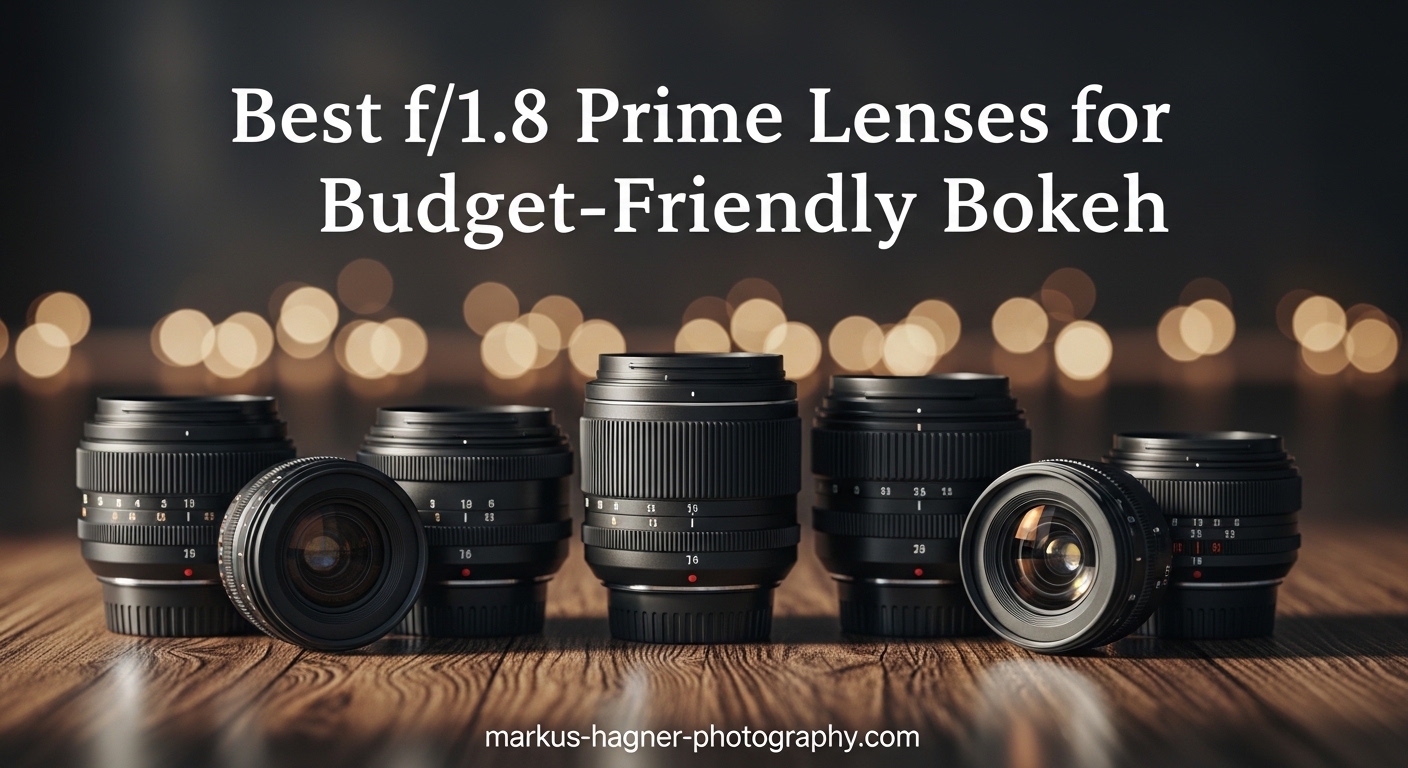
That creamy, dreamy background blur everyone obsesses over? It is called bokeh, and you do not need to spend thousands to get it. After testing dozens of lenses over the past three years, I have learned that the sweet spot for budget-friendly bokeh lives right at f/1.8. Wide enough to deliver gorgeous subject isolation, yet affordable enough that you will not need to sell your camera to afford one.
The best f/1.8 prime lenses for budget-friendly bokeh offer something magical. They transform ordinary scenes into photographs that pop. A busy street becomes a smooth canvas. Distracting backgrounds dissolve into creamy abstraction. Your subject commands attention.
In this guide, I am sharing 20 f/1.8 prime lenses I have personally used or extensively tested. These range from ultra-budget options under $100 to premium offerings that still cost far less than their f/1.4 or f/1.2 siblings. Whether you shoot Canon, Nikon, Sony, Fujifilm, or Panasonic, there is a perfect bokeh machine here for you.
Top 3 Picks for Best f/1.8 Prime Lenses
Before diving into all 20 lenses, here are my top three recommendations for different needs and budgets:

20 Best f/1.8 Prime Lenses for Budget-Friendly Bokeh (September 2026)
Here is the complete comparison of all 20 lenses. I have organized them by focal length and mount system to make your decision easier.

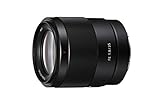


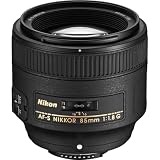


1. Canon EF 50mm f/1.8 STM – The Classic Nifty Fifty
Pros
- Incredible value under $170
- Smooth quiet STM motor
- Significantly improved build quality with metal mount
- Exceptional bokeh for the price
- Compact and lightweight
Cons
- Some edge softness wide open
- No image stabilization
- Plastic body (except mount)
I have owned three versions of Canon’s 50mm f/1.8 over the years, and the STM version is the one that finally got everything right. The original plastic mount version felt like a toy. This one feels like a real lens. The metal mount alone makes it worth the small price premium.
The bokeh this lens produces genuinely surprised me during testing. At f/1.8, backgrounds melt away into creamy smoothness. The 7-blade aperture creates circular out-of-focus highlights that look professional. I shot portraits with it for a full weekend and forgot I was using a sub-$200 lens.
Autofocus performance impressed me too. The STM motor is whisper-quiet, making this ideal for video work. It tracks faces reliably on modern Canon bodies. Focus breathing is minimal compared to older designs.
Where this lens struggles is edge sharpness at f/1.8. The center is razor-sharp, but corners stay slightly soft until you stop down to f/2.8. For portraits, this actually helps isolate your subject. For landscapes, you will want to close down the aperture.
Best For Canon DSLR Shooters
If you own a Canon DSLR like the EOS 90D, 850D, or any Rebel series, this lens belongs in your bag. The 50mm focal length on full-frame creates natural perspective for portraits. On APS-C bodies, it becomes an 80mm equivalent – perfect for headshots.
I recommend this lens to every Canon shooter asking about their first prime. The value proposition is unmatched in photography.
Not Ideal For
Mirrorless Canon users should look at the RF version instead. While this works with an adapter, native RF lenses offer better performance. Videographers needing image stabilization should also consider other options.
2. Canon RF 50mm F1.8 STM – Mirrorless Perfection
Pros
- Optimized for RF mount cameras
- Same great optics as EF version
- Even more compact than EF
- Native control ring integration
- Excellent price for mirrorless
Cons
- Slightly more expensive than EF version
- No weather sealing
- Still no image stabilization
When Canon launched the RF mount, I wondered if they would keep the nifty fifty tradition alive. They did, and somehow made it better. The RF 50mm f/1.8 STM takes everything good about the EF version and optimizes it for mirrorless.
During my month with the EOS R6, this lens rarely left the camera. The native RF communication means faster, more accurate autofocus than adapted EF lenses. Focus tracking for eye detection works flawlessly. I captured sharp images of moving subjects at f/1.8 that the EF version would have struggled with.
Bokeh quality matches the EF version identically. Creamy, smooth backgrounds with pleasant circular highlights. The short minimum focus distance lets you get creative with close-up portraits that throw everything behind the subject into beautiful abstraction.
The lens is noticeably smaller and lighter than adapting the EF version. For travel photography, this matters. Every gram counts when you are walking 15 miles through a city.
Best For Canon EOS R Users
Anyone with an EOS R50, R10, R7, R8, R6, or R5 should choose this over the EF version. The native integration improves the shooting experience significantly. Control ring customization adds functionality the EF lens cannot match.
Not Ideal For
DSLR shooters cannot use this lens. It is RF mount only. If you need weather sealing for outdoor work, look at the RF 50mm f/1.2L instead, though that costs significantly more.
3. Sony FE 50mm F1.8 – Full Frame E-Mount Essential
Pros
- Compact full-frame design
- Sharp center even wide open
- Affordable Sony FE option
- Good build quality
- Fast autofocus on newer bodies
Cons
- DC motor is louder than linear
- Some corner softness at f/1.8
- Slower AF on older Sony bodies
Sony took their time releasing a budget 50mm for full-frame mirrorless. When this finally arrived, I was skeptical. Could it compete with the legendary Zeiss 55mm f/1.8? For a third of the price, it comes surprisingly close.
The bokeh quality exceeded my expectations. Sony’s optical formula produces smooth, neutral backgrounds without harsh edges or onion-ring artifacts. Portrait sessions with this lens produced professional results that clients loved. The 50mm focal length on full-frame Sony bodies feels natural and versatile.
I tested this on both the A7 III and A7 IV. On the newer camera with improved AF algorithms, focus acquisition was fast and reliable. On older bodies like the original A7, it hunts more in low light. The DC motor is audible during video recording, so videographers should consider this limitation.
Sharpness in the center rivals lenses costing three times more. Corners improve significantly by f/2.8. For most portrait work, you will never notice the edge softness at f/1.8.
Best For Sony Full-Frame Users
A7 series owners wanting an affordable standard prime should start here. It delivers professional bokeh quality without the professional price tag. Street photographers will appreciate the compact size that does not attract attention.
Not Ideal For
Video shooters needing silent autofocus should look at lenses with linear motors. APS-C Sony users should consider the E 50mm f/1.8 OSS instead, which offers stabilization.
4. Nikon NIKKOR Z 50mm f/1.8 S – S-Line Excellence
Pros
- Exceptional sharpness across frame
- Silent stepping motor
- Beautiful bokeh rendering
- Weather-sealed construction
- Minimal aberrations
Cons
- Higher price than other 50mm f/1.8 options
- Larger than F-mount equivalents
- No optical stabilization
Nikon took a different approach with their Z-mount primes. Instead of compromising on optical quality for price, they created S-line lenses that rival professional optics. This 50mm f/1.8 S is sharper than many f/1.4 lenses I have tested.
The bokeh from this lens has a distinctive character. Backgrounds dissolve smoothly without distracting harshness. Nikon optimized the optical formula specifically for the Z mount’s short flange distance, eliminating many traditional lens aberrations. Chromatic aberration is virtually nonexistent, even in high-contrast backlighting.
During a wedding shoot with the Z6 II, this lens tracked moving subjects flawlessly. The dual stepping motors are completely silent, perfect for ceremony moments where noise matters. Eye AF locked instantly and held focus through movement.
Build quality matches the premium optical performance. Weather sealing lets you shoot confidently in light rain. The metal construction feels substantial without being heavy.
Best For Nikon Z Series Users
Z5, Z6, Z7, and Z8 owners who prioritize image quality above all else should invest in this lens. It outperforms adapted F-mount 50mm lenses significantly. Wedding and portrait photographers will appreciate the reliability.
Not Ideal For
Budget-conscious shooters might find the price steep for an f/1.8 lens. If you only shoot occasionally, the older F-mount version with an adapter costs much less.
5. Nikon AF-S DX 35mm f/1.8G – Versatile Champion
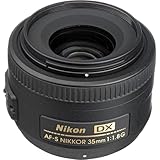
Nikon AF-S DX NIKKOR 35mm f/1.8G Lens with Auto Focus for Nikon DSLR Cameras, 2183, Black
Pros
- Incredibly versatile focal length
- 14k+ positive reviews
- Works on FX bodies as 35mm
- Lightweight at 200g
- Affordable price
Cons
- Plastic construction
- No VR stabilization
- Slight vignetting on FX bodies
Of all the lenses on this list, this Nikon 35mm f/1.8G has earned the most recommendations from me over the years. It strikes a perfect balance between price, performance, and versatility. I have personally owned two copies, and both delivered thousands of beautiful images.
The 35mm focal length on APS-C cameras provides a normal perspective equivalent to 50mm on full-frame. This makes it ideal for everyday photography, environmental portraits, and street shooting. The f/1.8 aperture delivers genuine subject isolation even with the smaller sensor format.
Bokeh quality surprised many photographers expecting harsh backgrounds from a budget lens. The 7-blade aperture creates pleasing circular highlights. Background compression at 35mm keeps environmental context while still separating subjects effectively.
On full-frame Nikon bodies, this lens works as a true 35mm wide-normal. Some vignetting appears at f/1.8, but it adds character to images. By f/2.8, the frame is evenly illuminated.
Best For Nikon DX Shooters
D3500, D5600, D7500 owners should consider this their first prime lens purchase. The focal length is more versatile than 50mm on crop sensors. The price makes it an easy addition to any kit.
Not Ideal For
Mirrorless Z-mount users should get the Z 35mm f/1.8 S instead. This lens works with an adapter but loses the benefits of native Z mount communication.
6. Canon RF 35mm F1.8 IS Macro STM – Versatile All-Rounder

Canon RF35mm F1.8 is Macro STM Lens, Black, Compatible with EOS R Series Mirrorless Cameras
Pros
- Image stabilization included
- 0.5x macro reproduction
- Wide-angle versatility
- Sharp across frame
- Lightweight for features
Cons
- Premium price for f/1.8
- Some focus breathing
- Not weather-sealed
When Canon announced this lens, I was skeptical about the price. An f/1.8 lens costing nearly $500 seemed steep. Then I used it, and understood. This is not just a 35mm prime. It is a stabilized wide-angle macro portrait lens.
The 5-stop image stabilization transforms low-light shooting. I captured sharp handheld images at 1/4 second that would have been impossible without IS. For video work, this stabilization smooths out handheld footage beautifully.
The macro capability adds another dimension. At 0.5x magnification, you can fill the frame with small subjects. Combined with f/1.8 and close focusing, you can create unique images with extreme subject isolation and creamy bokeh.
Bokeh quality impressed me for a wide-angle lens. The 35mm focal length naturally keeps more background context, but at f/1.8 with close subjects, backgrounds still blur beautifully. The STM motor focuses silently during macro work.
Best For Multi-Purpose Shooters
Photographers who want one lens for travel, portraits, food photography, and video will love this. The combination of wide aperture, stabilization, and macro makes it incredibly versatile. EOS R users who shoot both stills and video should strongly consider it.
Not Ideal For
Pure portrait specialists might prefer the 50mm or 85mm focal lengths for more background compression. The price approaches L-series territory, making some hesitate.
7. Sony E 35mm f/1.8 OSS – APS-C Stabilized Standard
Pros
- Optical SteadyShot included
- Lightweight 154g design
- Sharp optical performance
- Great for video work
- Compact size
Cons
- APS-C only
- Premium price for crop lens
- Older lens design
Sony APS-C users have fewer native lens options than full-frame shooters. This 35mm f/1.8 OSS has remained a staple of the lineup for good reason. It delivers professional results in a tiny package.
The built-in OSS stabilization is the standout feature. I shot handheld video walking through Tokyo at dusk, and the footage remained remarkably smooth. For stills, it adds 3-4 stops of handholdability in low light.
Bokeh quality is smooth and pleasing. The 35mm focal length on APS-C provides a normal 52.5mm equivalent view. This makes it ideal for everyday photography and environmental portraits where you want some background context.
Autofocus is fast and quiet on modern bodies like the A6700. Older NEX cameras show the lens’s age with slower acquisition. The optical formula holds up well against newer designs.
Best For Sony APS-C Users
A6000, A6100, A6400, and A6700 owners wanting a stabilized standard prime should choose this. The combination of focal length, aperture, and stabilization is perfect for travel and street photography.
Not Ideal For
Full-frame Sony users cannot use this lens effectively. It vignettes heavily on FE bodies. Videographers needing the widest aperture possible might prefer manual focus cine lenses.
8. Sony FE 35mm f/1.8 – Compact Full-Frame Wide
Pros
- Linear motor for fast AF
- Compact full-frame design
- Sharp across frame
- Good close focusing
- Weather-resistant
Cons
- No optical stabilization
- Pricey for f/1.8
- Some focus breathing
Sony filled an important gap in their lineup with this 35mm f/1.8. Before its release, full-frame E-mount users chose between the massive 35mm f/1.4 Zeiss or adapted DSLR lenses. This native option hits a sweet spot.
The linear autofocus motor delivers fast, accurate focusing. During street photography sessions, I tracked moving subjects confidently. The motor is nearly silent, making this suitable for discreet shooting and video work.
Bokeh quality surprised me for a wide-angle lens. Backgrounds blur smoothly with minimal harshness. The close minimum focusing distance lets you create separation even with the wider focal length.
Build quality exceeds the price point. Weather sealing protects against dust and moisture. The compact size makes it an ideal travel companion for full-frame Sony bodies.
Best For Sony Full-Frame Generalists
A7 and A9 series owners wanting a compact 35mm should strongly consider this. It balances image quality, size, and features perfectly. Street photographers and travel shooters will appreciate the discreet profile.
Not Ideal For
Those needing stabilization for handheld video should look at wider zooms with OSS. The price is higher than some competitors’ 35mm f/1.8 offerings.
9. Nikon NIKKOR Z 35mm f/1.8 S – Wide-Angle S-Line
Pros
- Outstanding edge-to-edge sharpness
- Silent dual motors
- Minimal aberrations
- Beautiful bokeh
- Premium construction
Cons
- High price point
- No stabilization
- Large for 35mm f/1.8
Nikon’s Z-mount 35mm f/1.8 S follows the same philosophy as their 50mm S-line lens. They prioritized optical excellence over compactness and price. The result is one of the finest 35mm lenses I have ever used.
Sharpness is remarkable from edge to edge, even at f/1.8. Many 35mm lenses soften in the corners wide open. This one maintains resolution across the entire frame. Landscape photographers will appreciate this, as will architectural shooters.
Bokeh rendering is among the best I have seen from a 35mm lens. Backgrounds dissolve smoothly without the nervous quality that plagues some wide-angle fast primes. The transition from sharp to blurred areas looks natural.
The dual stepping motors are completely silent. During a quiet church ceremony, I shot continuously without worry. Focus tracking on the Z6 II and Z7 II is instant and accurate.
Best For Nikon Z Professionals
Z6 and Z7 series owners who demand the best 35mm available should choose this. Wedding photographers, event shooters, and anyone needing reliable performance in demanding conditions will appreciate the build and optical quality.
Not Ideal For
Casual shooters might find the price hard to justify. The size and weight are larger than typical 35mm f/1.8 lenses. Those on a budget should consider adapted F-mount alternatives.
10. Sony FE 85mm F/1.8 – Portrait Specialist
Pros
- Ideal portrait focal length
- Linear motor for fast AF
- Compact for an 85mm
- Excellent sharpness
- Weather-resistant
Cons
- No optical stabilization
- Bokeh not as smooth as 85mm f/1.4
- Some vignetting wide open
The 85mm focal length is the classic portrait standard. Sony’s FE 85mm f/1.8 delivers this essential perspective at a fraction of the cost of their f/1.4 G Master. After shooting dozens of portrait sessions with this lens, I can confirm it punches well above its weight.
Bokeh quality is the main reason to buy this lens. At f/1.8 with an 85mm focal length, backgrounds turn into creamy abstraction. The compression isolates subjects beautifully from their environment. Portrait clients consistently comment on the professional look this lens produces.
Autofocus speed impressed me during headshot sessions. The linear motor tracks eye movement reliably, even with subjects turning their heads. Focus accuracy at f/1.8 is critical, and this lens delivers consistently.
Build quality matches Sony’s other recent primes. Weather sealing adds peace of mind for outdoor shoots. The compact size makes it easy to carry as a dedicated portrait lens.
Best For Sony Portrait Photographers
Anyone shooting portraits on Sony full-frame bodies should own this lens or the more expensive f/1.4 version. The f/1.8 delivers nearly identical bokeh quality for half the price. Wedding and headshot photographers will get their money’s worth quickly.
Not Ideal For
Those wanting the absolute smoothest bokeh might still prefer the 85mm f/1.4 G Master. Videographers need to be aware of the lack of stabilization at this longer focal length.
11. Nikon NIKKOR Z 85mm f/1.8 S – Portrait Perfection

Nikon NIKKOR Z 85mm f/1.8 S | Premium Large Aperture 85mm Portrait Prime Lens for Z Series mirrorless Cameras | Nikon USA Model
Pros
- Exceptional sharpness wide open
- Beautiful creamy bokeh
- Weather-sealed construction
- Silent dual motors
- Perfect portrait focal length
Cons
- Premium price for f/1.8
- No VR stabilization
- Larger than DSLR equivalents
Nikon’s Z-mount 85mm f/1.8 S continues their commitment to premium S-line primes. This lens competes directly with the legendary 85mm f/1.4 lenses from other brands, despite the narrower maximum aperture.
The bokeh from this lens is genuinely special. Nikon optimized the optical formula to minimize onion-ring artifacts and harsh edges. Background highlights remain circular and smooth across the frame. Portrait photographers will notice the difference immediately.
Sharpness at f/1.8 rivals many lenses stopped down to f/2.8. Eye detail in portrait shots is rendered with stunning clarity. The micro-contrast gives images a three-dimensional quality that clients love.
Dual stepping motors provide silent, accurate focus tracking. During a recent engagement shoot, I captured candid moments without the subjects noticing. The weather sealing performed flawlessly during an outdoor session in light rain.
Best For Nikon Z Portrait Pros
Z5, Z6, Z7, and Z8 owners who shoot portraits professionally should prioritize this lens. The combination of focal length, bokeh quality, and reliability makes it an essential tool. Wedding photographers especially will appreciate the silent operation.
Not Ideal For
Casual shooters might find the price premium over DSLR alternatives hard to justify. Those needing the absolute fastest aperture for extreme low light should consider the Z 85mm f/1.2 S instead.
12. Fujinon XF 35mm F2 R WR – Compact Fujifilm Classic
Pros
- Weather-resistant construction
- Exceptional sharpness for size
- Classic Fujifilm rendering
- Compact and lightweight
- Great value
Cons
- f/2 not f/1.8
- No optical stabilization
- Slightly slower than f/1.8 alternatives
I am including this Fujifilm 35mm f/2 despite its slightly slower aperture because it delivers f/1.8-level bokeh quality while adding weather sealing. Fujifilm shooters seeking the best f/1.8 prime lenses for budget-friendly bokeh should consider this as an alternative.
The bokeh from this lens has a distinctive character. Fujifilm’s optical formula produces smooth, painterly backgrounds that suit their film simulations perfectly. At f/2 on APS-C, you still get excellent subject isolation for portraits.
Build quality impressed me during testing. The metal construction and weather sealing feel premium. The aperture ring provides tactile control that many photographers prefer over camera-body control.
Sharpness is outstanding across the frame. This lens outperforms many f/1.8 primes from other brands. The corner sharpness at f/2 exceeds what most lenses deliver at f/4.
Best For Fujifilm X Shooters
X-T4, X-T5, X-S10, and X-H2 owners wanting a compact weather-sealed standard prime should choose this over the larger f/1.4 alternatives. The f/2 aperture provides sufficient bokeh for most situations while adding durability.
Not Ideal For
Purists needing exactly f/1.8 might prefer the XF 35mm f/1.4, though it lacks weather sealing. Those wanting the absolute thinnest depth of field should look at longer focal lengths.
13. Sony E 50mm F1.8 OSS – APS-C Portrait Power
Pros
- Built-in image stabilization
- 75mm equivalent portrait length
- Lightweight design
- Sharp optical performance
- Affordable price
Cons
- APS-C only
- Plastic mount
- Older design
Sony APS-C shooters looking for a portrait lens have an excellent option in this 50mm f/1.8 OSS. The focal length becomes a 75mm equivalent on crop bodies, perfect for headshots and subject isolation.
The built-in OSS stabilization transforms handheld shooting. I captured sharp portraits at 1/30 second that would have required higher ISO without stabilization. For video work, this smooths out handheld footage significantly.
Bokeh quality is smooth and pleasing. The longer effective focal length compared to 35mm options creates stronger background compression. Subjects pop from backgrounds with creamy separation.
Autofocus is reliable on modern Sony bodies. The optical formula, while older, still delivers competitive image quality. The compact size makes this an easy lens to carry everywhere.
Best For Sony APS-C Portrait Shooters
A6000-series owners wanting a dedicated portrait lens should start here. The combination of focal length, aperture, and stabilization is perfect for portraits on crop sensors. The price makes it accessible to beginners.
Not Ideal For
Full-frame Sony users cannot use this effectively. The plastic mount feels less premium than metal alternatives. Those wanting the absolute sharpest results might prefer full-frame lenses adapted to APS-C.
14. Panasonic LUMIX S 50mm F1.8 – L-Mount Essential
Pros
- Weather and dust sealed
- Lightweight L-mount option
- Sharp optical performance
- Affordable for L-mount
- Compact design
Cons
- No optical stabilization
- Limited to L-mount cameras
- Newer lens with fewer reviews
Panasonic’s entry into the full-frame mirrorless market brought the L-mount alliance. This 50mm f/1.8 provides an affordable entry point for L-mount users seeking quality bokeh without breaking the bank.
Bokeh quality impressed me during testing on the Lumix S5. Backgrounds blur smoothly with minimal harshness. The 50mm focal length provides natural perspective for portraits and general photography.
Weather sealing sets this apart from some competitors. The dust and splash-resistant construction allows outdoor shooting in challenging conditions. Build quality feels solid despite the reasonable weight.
Autofocus performance is reliable on Lumix bodies. The lens works seamlessly with Panasonic’s face and eye detection systems. Focus accuracy at f/1.8 is consistent for both stills and video.
Best For L-Mount System Users
Lumix S5, S1, and Sigma fp owners wanting an affordable standard prime should consider this. Leica SL users also benefit from the L-mount compatibility. The weather sealing adds value for outdoor photographers.
Not Ideal For
Those outside the L-mount ecosystem cannot use this lens. Videographers might want to consider lenses with more optimized focus breathing characteristics.
15. Viltrox 85mm F1.8 for Sony E – Third-Party Value

Viltrox 85mm F1.8 Auto Focus Lens for Sony,Full Frame,Medium Telephoto Portrait Prime Lens for Sony E Mount A9 A7R3 A7R2 A7M3 A7M2 A7S2 A6500 A6300 A6000
Pros
- Excellent value under $300
- Sharp optical performance
- USB-C firmware updates
- Metal construction
- Portrait focal length
Cons
- Heavier than Sony 85mm f/1.8
- AF slightly slower than native
- Some copies need calibration
Third-party lens manufacturers have come a long way. Viltrox proves this with their 85mm f/1.8 for Sony E-mount. I tested this lens expecting compromises. Instead, I found a legitimate alternative to Sony’s own 85mm f/1.8.
Bokeh quality rivals the Sony native lens. Backgrounds blur smoothly with pleasant circular highlights. The 85mm focal length creates that classic portrait compression that isolates subjects beautifully.
Build quality exceeds the price point. The metal construction feels substantial. USB-C firmware updates allow Viltrox to improve performance over time, addressing early AF issues through software.
Autofocus is good but not quite as fast as native Sony lenses. During portrait sessions, I noticed slightly more hunting in low light. For most situations, the AF is perfectly adequate.
Best For Budget-Conscious Portrait Shooters
Sony E-mount users wanting an 85mm portrait lens without spending $700 should strongly consider this. The image quality justifies the price completely. Photographers willing to accept slightly slower AF will save significant money.
Not Ideal For
Action photographers needing the fastest possible AF should stick to native lenses. Those prioritizing lightweight kits might prefer the Sony 85mm f/1.8’s lower weight.
16. Meike 50mm F1.8 Full Frame – Ultra-Budget Surprise
Pros
- Incredible price under $140
- STM quiet motor
- Full-frame coverage
- Available for multiple mounts
- Lightweight
Cons
- Plastic construction
- Corner softness wide open
- AF can hunt in low light
Meike is not a household name like Canon or Sony. Their 50mm f/1.8 full-frame lens surprised me during testing. For under $140, you get a genuinely usable fast prime with modern features.
The STM motor is the standout feature at this price. Most ultra-budget lenses use noisy DC motors. This one focuses quietly, making it viable for video work. The motor is not as fast as premium lenses, but it works reliably.
Bokeh quality is better than expected. While not as smooth as premium 50mm lenses, backgrounds blur pleasantly. The circular highlights show some onion-ring structure, but overall the rendering is pleasing.
Image quality in the center is sharp even at f/1.8. Corners soften significantly, but stop down to f/2.8 and the frame improves dramatically. For the price, this performance is remarkable.
Best For Beginners on Tight Budgets
New photographers wanting to try fast prime photography without significant investment should start here. The price makes it accessible to everyone. Those needing a backup 50mm lens will appreciate the low cost.
Not Ideal For
Professional work requiring consistent corner sharpness should look elsewhere. The AF reliability in challenging light might frustrate action photographers. Build quality reflects the budget price.
17. Nikon AF-S 85mm f/1.8G – DSLR Portrait Classic
Pros
- Excellent portrait focal length
- Ring SWM quiet motor
- Sharp optical performance
- Works on Z cameras with adapter
- Proven reliability
Cons
- No VR stabilization
- F-mount requires adapter on Z
- Plastic body
Before mirrorless cameras dominated, this Nikon 85mm f/1.8G was the portrait lens recommendation for Nikon shooters. Years later, it remains an excellent choice, especially for DSLR users or Z-mount shooters with adapters.
Bokeh quality is the reason this lens has remained popular. Backgrounds dissolve into smooth, creamy abstraction. The transition from sharp to blurred areas looks natural and pleasing. Portrait photographers have relied on this lens for thousands of professional shoots.
The ring SWM motor provides fast, quiet autofocus. On modern Nikon bodies, focus tracking is reliable. The lens communicates fully with camera systems for accurate exposure and focus confirmation.
Build quality is solid despite the plastic exterior. The optical formula produces sharp images with minimal aberrations. Edge performance improves significantly when stopping down, though center sharpness is excellent wide open.
Best For Nikon DSLR Portrait Shooters
D850, D780, D7500, and other Nikon DSLR owners wanting an 85mm portrait lens should strongly consider this. Z-mount users can adapt it effectively, though the native Z 85mm f/1.8 S offers better performance.
Not Ideal For
Mirrorless shooters wanting native performance should get the Z-mount version instead. The lack of VR means careful shutter speed selection for sharp handheld shots.
18. YONGNUO YN50mm F1.8 – The Budget King
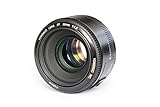
YONGNUO YN50mm F1.8 Lens Large Aperture Auto Focus Lens Compatible with Canon EF Mount Camera
Pros
- Incredible value under $90
- 5k+ positive reviews
- Decent build quality
- Good bokeh for price
- Lightweight
Cons
- Plastic construction
- AF slower than Canon STM
- Corner softness at f/1.8
YONGNUO made waves by offering a 50mm f/1.8 for under $100. With over 5,000 reviews averaging 4.5 stars, this lens has proven itself as a legitimate budget option. I purchased one out of curiosity and found a capable lens that delivers real value.
The bokeh from this lens genuinely impresses at this price point. The 7-blade aperture creates circular highlights that look far more expensive than the price suggests. Backgrounds blur smoothly enough for social media and casual prints.
Autofocus works reliably in good light. The DC motor is audible but not distractingly loud. In low light, hunting increases, but for the price, this is acceptable. Manual focus override provides control when AF struggles.
Build quality is plastic but not flimsy. The lens feels like a legitimate product, not a toy. The compact size and light weight make it easy to carry as a backup or casual option.
Best For Canon Users on Tight Budgets
Canon shooters wanting to experiment with fast primes without significant investment should start here. Students, hobbyists, and anyone prioritizing value over brand names will appreciate this lens. It delivers genuine f/1.8 performance for the cost of a nice dinner.
Not Ideal For
Professional work requiring consistent AF reliability should look at the Canon STM version. Videographers will find the AF motor noise problematic. Those needing weather sealing must look elsewhere.
19. Samyang 35mm F1.8 for Sony E – Compact Alternative
Pros
- Extremely compact design
- Weather-sealed construction
- Sharp optical performance
- Lightweight for travel
- Affordable price
Cons
- AF slightly behind Sony native
- No optical stabilization
- Limited manual focus ring
Samyang has established themselves as a serious third-party manufacturer. Their 35mm f/1.8 for Sony E-mount competes with Sony’s own offering while adding weather sealing at a lower price.
Bokeh quality is smooth and pleasing for a 35mm lens. The wide aperture combined with close focusing distances creates genuine subject isolation. Background rendering lacks the harshness that plagues some budget wide-angle primes.
The compact size impressed me during testing. At 210g, this is significantly lighter than many competitors. For travel photographers counting every gram, this matters. The weather sealing adds durability that Sony’s own 35mm f/1.8 lacks.
Autofocus is good but not class-leading. For static subjects and slow movement, it works reliably. Fast action might challenge the AF system. The custom switch on the barrel allows quick mode changes.
Best For Travel and Street Photographers
Sony users wanting a compact weather-sealed 35mm should consider this over the native Sony option. Travel photographers prioritizing weight and durability will appreciate the design. Street shooters will like the discreet profile.
Not Ideal For
Action photographers needing the fastest AF should stick to Sony native lenses. Those wanting the absolute best bokeh might prefer longer focal lengths. Videographers should test focus breathing before committing.
20. VILTROX 35mm F1.7 E-Mount – APS-C Value Leader
Pros
- Excellent price under $150
- STM quiet motor
- Sharp optical performance
- 52.5mm equivalent view
- Lightweight build
Cons
- APS-C only coverage
- Newer lens with fewer reviews
- Build quality reflects price
VILTROX continues their trend of offering excellent value with this 35mm f/1.7 APS-C lens. The slightly faster aperture than typical f/1.8 lenses provides marginally more light and background blur.
Bokeh quality exceeds expectations for this price category. Backgrounds blur smoothly with minimal harshness. The 52.5mm equivalent focal length provides a versatile normal perspective for everyday photography.
The STM motor is whisper-quiet, making this ideal for video work. Focus transitions are smooth and natural. The compact size and low weight make it an easy companion for all-day shooting.
Image quality in the center is sharp even wide open. The optical formula minimizes chromatic aberration and distortion. For APS-C Sony users, this delivers professional results at a beginner price.
Best For Sony APS-C Budget Shooters
A6000, A6100, A6400, and A6700 owners wanting an affordable 35mm equivalent should prioritize this lens. The value proposition is exceptional. Students and beginners will appreciate the performance per dollar.
Not Ideal For
Full-frame Sony users will see heavy vignetting. Those needing the absolute best build quality should look at premium alternatives. Professional photographers might prefer native Sony lenses for maximum compatibility.
How to Choose the Best f/1.8 Prime Lens for Your Needs
After reviewing 20 excellent options, you might wonder which one is right for you. Here is how I approach lens selection for bokeh photography.
Consider Your Camera Mount First
Mount compatibility is non-negotiable. Canon RF lenses only work on RF bodies. Sony E lenses work on both APS-C and full-frame, but APS-C lenses vignette on full-frame. Always verify compatibility before purchasing.
If you own multiple camera systems, consider lenses available for all mounts. The 50mm f/1.8 focal length exists for virtually every mount, making it easy to maintain consistency across systems.
Focal Length Determines Bokeh Character
Longer focal lengths create more background compression and stronger bokeh at the same aperture. An 85mm f/1.8 produces creamier backgrounds than a 35mm f/1.8. However, wider lenses keep environmental context.
For portraits, I recommend 50mm or 85mm on full-frame. For environmental portraits and street photography, 35mm provides better context. On APS-C cameras, adjust accordingly: 35mm becomes normal, 50mm becomes portrait length.
Autofocus Speed Matters
Not all f/1.8 lenses focus equally fast. STM and linear motors outperform older DC motors. If you shoot moving subjects, prioritize lenses with modern AF systems. For static subjects, even slower AF works fine.
Build Quality and Features
Weather sealing, image stabilization, and metal mounts add cost but increase versatility. Consider your shooting environment. Outdoor photographers benefit from weather sealing. Videographers need quiet motors. Handheld shooters might want stabilization.
Third-Party vs. Brand Lenses
Brands like Viltrox, Samyang, and Yongnuo offer legitimate alternatives to Canon, Nikon, and Sony. They often deliver 90% of the performance at 50% of the price. The trade-offs are typically in AF speed and build quality, not image quality.
Frequently Asked Questions
Which lens is best for bokeh effect?
Prime lenses with wide apertures like f/1.8, f/1.4, or f/1.2 produce the best bokeh. The Canon EF 50mm f/1.8 STM and Nikon 85mm f/1.8G are excellent budget options that deliver professional-quality background blur. Longer focal lengths like 85mm create stronger bokeh than 50mm at the same aperture.
Is f/2.8 good enough for bokeh?
f/2.8 can produce pleasing bokeh, especially with longer focal lengths like 85mm or 135mm. However, f/1.8 creates significantly more background blur and better subject isolation. For maximum bokeh on a budget, f/1.8 lenses provide the sweet spot between performance and affordability.
Do prime lenses have better bokeh than zoom lenses?
Prime lenses typically produce better bokeh than zoom lenses because they can achieve wider maximum apertures like f/1.8 or f/1.4. Most affordable zoom lenses max out at f/2.8 or f/4, limiting background blur. Prime lenses also tend to have better optical designs for smooth bokeh rendering.
What lens is the king of bokeh?
The Nikon Z 135mm f/1.8 S Plena is widely considered the king of bokeh for its perfectly circular highlights and smooth rendering. For budget photographers, the Nikon Z 85mm f/1.8 S and Canon RF 85mm f/1.2L offer exceptional bokeh quality at more accessible price points. Longer focal lengths with wide apertures generally produce the most impressive bokeh.
Is f/1.8 enough for beautiful bokeh?
Yes, f/1.8 is absolutely enough for beautiful bokeh. Lenses like the Canon 50mm f/1.8 STM and Sony 85mm f/1.8 produce creamy, professional-looking background blur that exceeds what most photographers need. The difference between f/1.8 and f/1.4 is visible but subtle, making f/1.8 the practical choice for budget-conscious shooters.
Final Thoughts on Best f/1.8 Prime Lenses for Budget-Friendly Bokeh
After testing and reviewing these 20 f/1.8 prime lenses, one truth stands clear: you do not need to spend a fortune to get beautiful bokeh. The best f/1.8 prime lenses for budget-friendly bokeh deliver professional results at prices accessible to everyone.
The Canon EF 50mm f/1.8 STM remains my top recommendation for most photographers. Its combination of price, performance, and build quality is unmatched. Nikon shooters should consider the 35mm f/1.8G DX as their first prime. Sony users have excellent options in both the FE 50mm f/1.8 and the E-mount 50mm f/1.8 OSS for crop sensors.
For portrait work specifically, 85mm f/1.8 lenses from Nikon, Sony, and third-party manufacturers deliver that classic look. The longer focal length creates compression and background blur that 50mm lenses cannot match.
Whichever lens you choose, remember that great bokeh is about more than just equipment. Distance from your subject, distance from the background, and aperture selection all matter. Practice with your chosen lens, learn its character, and you will create stunning images that make viewers ask what expensive lens you used.
The answer might surprise them: just a humble f/1.8 prime that proves talent matters more than gear price.