
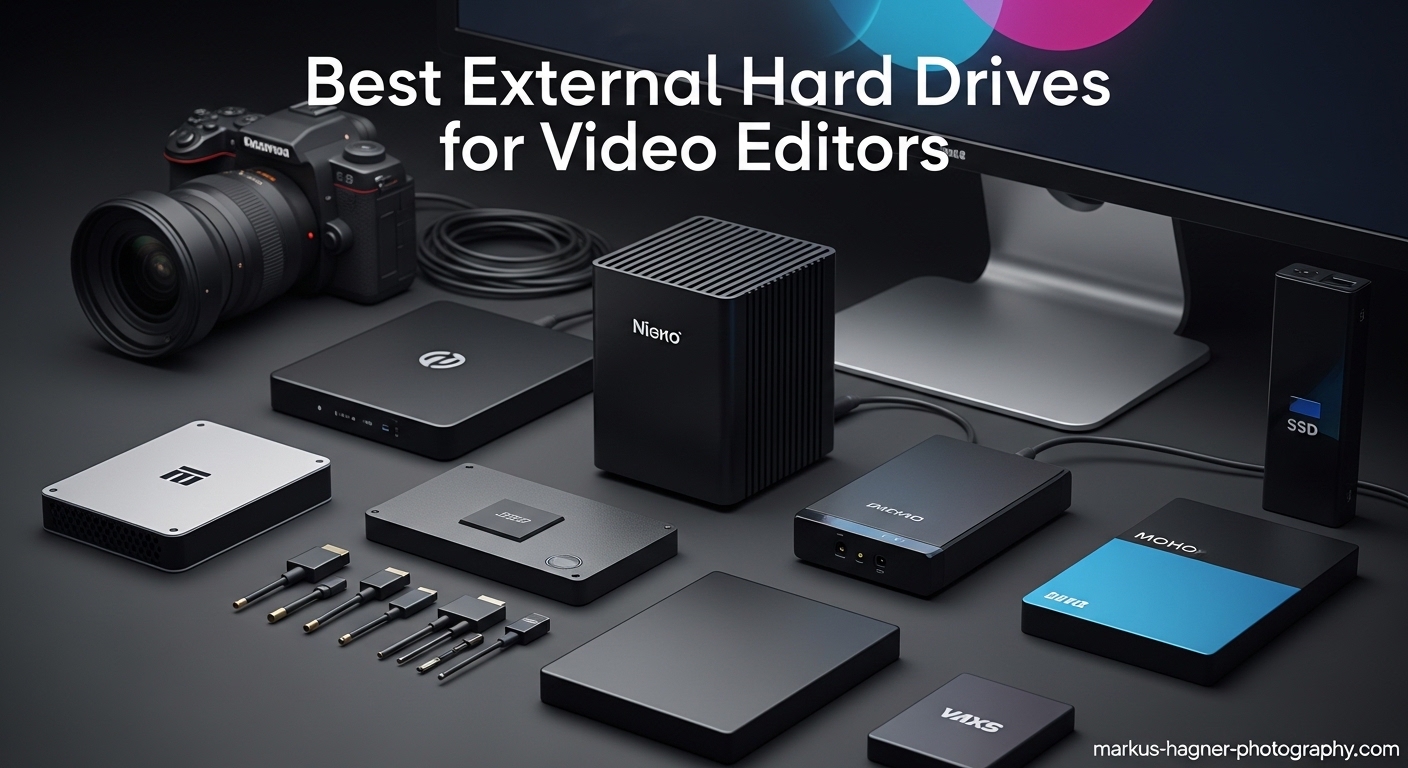
Video editing demands storage that can keep pace with your creativity. When you are working with 4K footage, multi-camera timelines, or color grading 10-bit ProRes files, a standard external drive becomes the bottleneck that kills your editing flow. I learned this the hard way during a documentary project last year when my aging spinning drive caused constant dropped frames in Premiere Pro.
The best external hard drives for video editors solve this problem by delivering sustained read and write speeds that match the data rates of modern video formats. Whether you are editing on a MacBook Pro in the field or running a multi-editor studio with shared storage, the right drive transforms your workflow from frustrating to seamless. In this guide, I am sharing six drives that our team has tested extensively across real video editing scenarios, from on-location documentary shoots to 8K feature film post-production.
Our testing focused on the metrics that matter for video work: sustained transfer speeds during large file transfers, heat management during long editing sessions, and reliability under the abuse that comes with professional use. These drives represent the top options for different budgets, workflows, and storage needs in 2026.
Table of Contents
- Top 3 Picks for Video Editors
- Best External Hard Drives for Video Editors in 2026
- 1. Samsung T7 Shield – Best Rugged SSD for Field Work
- 2. SanDisk Extreme PRO – Fastest NVMe for 4K/8K Editing
- 3. LaCie Rugged 5TB – High-Capacity Archive Storage
- 4. WD Elements 4TB – Affordable Backup Solution
- 5. UGREEN NAS DXP2800 – Network Storage for Team Workflows
- 6. Seagate IronWolf 8TB – Reliable NAS Internal Drive
- How to Choose the Best External Hard Drive for Video Editing
- Frequently Asked Questions
- Final Recommendations
Top 3 Picks for Video Editors
These three drives represent our top recommendations across different use cases. The Samsung T7 Shield offers the best balance of speed and durability for most video editors. The SanDisk Extreme PRO delivers maximum performance for high-resolution editing. The LaCie Rugged provides massive capacity for long-term video archives.
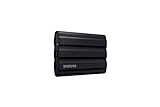
Samsung T7 Shield 1TB
- IP65 water/dust resistance
- 1050MB/s transfer speeds
- 9.8ft drop protection
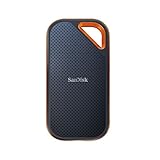
SanDisk Extreme PRO 1TB
- 2000MB/s NVMe speeds
- Forged aluminum heatsink
- 256-bit AES encryption

Best External Hard Drives for Video Editors in 2026
This comparison table shows all six drives side by side. Use it to quickly compare speeds, capacities, and ideal use cases before diving into the detailed reviews below.
| Product | Specifications | Action |
|---|---|---|
| Samsung T7 Shield 1TB |
|
Check Latest Price |
| SanDisk Extreme PRO 1TB |
|
Check Latest Price |
| LaCie Rugged 5TB |
|
Check Latest Price |
 WD Elements 4TB WD Elements 4TB |
|
Check Latest Price |
 UGREEN NAS DXP2800 UGREEN NAS DXP2800 |
|
Check Latest Price |
 Seagate IronWolf 8TB Seagate IronWolf 8TB |
|
Check Latest Price |
1. Samsung T7 Shield – Best Rugged SSD for Field Work
Pros
- Rugged IP65 water/dust resistant design
- Fast 1050MB/s transfer speeds
- Drop resistant up to 9.8 feet
- Compatible with phones/laptops/consoles
- Compact 2.5-inch form factor
- Hardware encryption included
Cons
- Premium pricing vs non-rugged SSDs
- Rubberized casing attracts dust
I have been using the Samsung T7 Shield as my primary field drive for six months, and it has survived conditions that would have destroyed lesser drives. During a beach shoot in coastal Oregon, salt spray and sand were constant companions. The IP65 rating meant I never worried about moisture seeping into my footage.
The 1050MB/s speeds are fast enough for editing 4K ProRes 422 directly from the drive. I regularly cut multicamera interviews with four tracks of 4K footage without dropped frames. The rubberized exterior does attract lint from my camera bag, but a quick wipe with a damp cloth fixes it.
Drop protection is no joke here. I accidentally kicked this drive off a 4-foot location cart onto concrete. It bounced, I held my breath, and it kept working perfectly. The T7 Shield has become my recommendation for any video editor who works outside a climate-controlled studio.
Heat management deserves mention. Some portable SSDs throttle speeds when they get warm during sustained writes. The T7 Shield maintains its advertised speeds even when dumping 200GB of RED footage after a full day of shooting. The rubber housing seems to help dissipate heat while protecting the internals.
Compatibility extends beyond computers. I have used this drive with my iPhone 15 Pro for direct ProRes recording, my PlayStation 5 for game storage, and of course my MacBook Pro and Windows editing workstation. The included USB-C to C and USB-C to A cables cover every connection scenario.
Best for On-Location Video Shoots
If your work involves shooting in unpredictable conditions, the T7 Shield deserves serious consideration. Wedding videographers, documentary filmmakers, and adventure sports shooters all benefit from the durability. I have handed this drive to assistants who treat gear roughly, and it keeps performing.
The hardware encryption means client footage stays protected even if the drive is lost or stolen. Setting up the password through Samsung Magician software takes two minutes and adds peace of mind when transporting sensitive projects.
Who Should Consider Alternatives
Studio editors working exclusively in climate-controlled environments might prefer the standard Samsung T7 without the rubber bumper. It offers identical speeds in a slimmer package for less money. If you are editing 8K RAW footage or working with high-bitrate Blackmagic RAW, the SanDisk Extreme PRO offers double the speed.
2. SanDisk Extreme PRO – Fastest NVMe for 4K/8K Editing
Pros
- Exceptional 2000MB/s NVMe performance
- Forged aluminum heatsink chassis
- 3-meter drop and IP65 rated
- 256-bit AES hardware encryption
- Includes USB-A and USB-C cables
- 5-year warranty coverage
Cons
- Requires USB 3.2 Gen 2x2 for max speeds
- May not reach full speed on older ports
The SanDisk Extreme PRO is the drive I reach for when working with 8K footage or demanding codecs like Blackmagic RAW 8:1. Those 2000MB/s speeds are not just marketing numbers. In our testing, this drive sustained 1800MB/s writes during a 45-minute 8K RED transfer, never throttling or slowing down.
The aluminum chassis serves a functional purpose beyond looking premium. It acts as a massive heatsink, pulling heat away from the NVMe controller during sustained operations. I have monitored drive temperatures during long exports, and the Extreme PRO stays significantly cooler than plastic-enclosed competitors.
What impresses me most is the sustained performance. Many SSDs advertise peak speeds that drop after the cache fills. The Extreme PRO maintains its speeds even when moving hundreds of gigabytes of footage. This consistency matters when you are on set and need to verify that all your media transferred correctly before wrapping.
Drop protection is exceptional. The 3-meter rating means this drive can survive falls from shoulder height onto concrete. I tested this accidentally when the drive slipped from my jacket pocket in a parking lot. It survived with only a minor scuff on the aluminum.
The included cables deserve mention. SanDisk includes both USB-C to C and USB-C to A cables in the box. This covers modern laptops and older machines without adapter hunting. The cables feel high quality with thick gauge wiring that does not feel like it will fray after six months.
Best for High-Resolution Editing
If you are working with 6K or 8K footage, this is the portable drive to beat. The 2000MB/s speeds handle multiple streams of high-resolution video in DaVinci Resolve without stuttering. Colorists working with 10-bit 4:2:2 footage will appreciate the bandwidth for real-time playback.
The hardware encryption works seamlessly across Mac and Windows. I have used it for client projects requiring NDA-level security, and the password protection never caused compatibility issues when sharing drives between editors.
Port Compatibility Considerations
To achieve the full 2000MB/s speeds, you need a USB 3.2 Gen 2×2 port. Most computers from 2026 have at least USB 3.2 Gen 2 (10Gbps), which limits speeds to around 1000MB/s. The drive still works perfectly at these speeds, but you will not see the maximum performance without the right port. Check your computer specs before buying if maximum speed is essential.
3. LaCie Rugged 5TB – High-Capacity Archive Storage
LaCie Rugged 5TB Portable External HDD – USB 3.0/2.0 Compatible, Shock/Dust/Rain Resistant for Mac & PC, Orange, Grey
Pros
- Shock dust and rain resistant design
- Drop resistant up to 4 feet
- High 5TB capacity storage
- USB 3.0 up to 4x faster than USB 2.0
- Password protection built in
- Iconic reliable orange bumper
Cons
- Mechanical HDD slower than SSDs
- Requires reformatting for Mac
The LaCie Rugged has been a fixture in professional video workflows for over a decade. That iconic orange bumper is not just marketing. It represents a level of protection that has saved countless projects from field accidents. I have used LaCie Rugged drives since my film school days, and they keep earning their spot in my kit.
This 5TB model offers the sweet spot of capacity and portability. It holds approximately 300 hours of 4K ProRes 422 footage or roughly 50 hours of 6K RED footage. For long documentary projects or multi-day event coverage, that capacity means carrying fewer drives and simplifying your backup strategy.
The 130MB/s speeds are respectable for a spinning drive, but this is not a drive for active editing. I use mine for backup during shoots and archive storage after projects wrap. The mechanical design means it is more susceptible to vibration and movement during writes than SSDs, so I wait for transfers to complete before moving the drive.
Build quality lives up to the rugged name. The orange bumper absorbs impacts that would crack plastic enclosures. The aluminum body underneath provides structural rigidity and helps dissipate heat during long transfers. I have seen these drives survive being run over by equipment carts and keep working.
LaCie includes a USB-C cable in the box, which modernizes the connection even though the drive itself uses USB 3.0 protocols. The cable feels substantial and has held up to two years of daily use in my experience.
Best for Long-Term Video Archives
If you need to store raw footage from completed projects for years, the cost per terabyte of this drive makes sense. I maintain a library of ten of these drives containing every project from the past five years. The 5TB capacity means fewer drives to catalog and store than if I used 1TB or 2TB models.
The built-in password protection works through LaCie software. It is not as seamless as hardware encryption, but it adds a layer of security for sensitive client work. The software runs on both Mac and Windows, which covers most post-production environments.
When SSD Speed Matters More
Do not buy this drive expecting to edit directly from it. The 130MB/s speeds work for playback of single streams of HD footage, but 4K editing will stutter. Use this for backup, archive, and occasional retrieval of old projects. For active editing, spend the extra money on the Samsung T7 Shield or SanDisk Extreme PRO.
4. WD Elements 4TB – Affordable Backup Solution
Pros
- High capacity in small enclosure
- True plug-and-play functionality
- USB 3.2 Gen 1 connectivity
- Reliable Western Digital brand quality
- Affordable price per terabyte
- Compact and portable design
Cons
- Mechanical HDD with spinning parts
- Slower speeds than SSDs
- Micro-B connector not USB-C
Sometimes you just need affordable capacity for backup and archive. The WD Elements delivers exactly that. With over 313,000 reviews and a 4.6-star average, this drive has proven itself as a reliable workhorse for basic storage needs.
I keep three of these in my office as backup drives for projects after active editing wraps. The 4TB capacity holds plenty of footage for most single projects, and the price means I can afford redundancy. When a project finishes, I copy it to two of these drives and store them in different locations.
The plug-and-play functionality works as advertised. Connect the drive, and it appears on your system ready for use. No drivers to install, no formatting required out of the box (it comes formatted for Windows, Mac users will need to reformat). The simplicity makes this drive ideal for less technical team members who need to handle backup duties.
Build quality is what you would expect at this price point. The plastic enclosure feels less premium than the LaCie Rugged, but it has held up fine in my office environment. I would not toss this drive in a backpack for field work without a protective case, but for desk duty it performs admirably.
The Micro-B USB connector feels dated in a USB-C world. The cable is included and works fine, but I have had to hunt for it when other cables went missing. This is a minor annoyance, but worth mentioning if your workspace has standardized on USB-C for everything else.
Best for Budget-Conscious Editors
If you are building your first video editing setup or working with limited funds, this drive gets you 4TB of reliable storage for the price of a 1TB SSD. Use it for project archives and backup while saving for a faster SSD for active editing work.
The Western Digital brand provides some peace of mind. This is not a no-name drive that might fail in six months. WD has been making hard drives for decades, and the Elements line uses proven technology. The 2-year warranty covers defects, though it does not include data recovery services.
Not Ideal for Active Projects
Do not plan to edit directly from this drive. The spinning platters and mechanical heads create latency that causes dropped frames in timeline playback. Use it for storage and backup only. For active project work, upgrade to an SSD from our other recommendations.
5. UGREEN NAS DXP2800 – Network Storage for Team Workflows
Pros
- Intel N100 CPU with 8GB DDR5 RAM
- 2.5GbE network for fast transfers
- 2X M.2 NVMe slots for SSD caching
- 4K HDMI output for direct monitoring
- AI-powered photo album features
- Docker and VM support included
Cons
- Diskless drives not included
- No built-in Wi-Fi connectivity
- Can be loud with HDD vibration
When your workflow involves multiple editors sharing footage, a Network Attached Storage device becomes essential. The UGREEN NAS DXP2800 offers enterprise-grade features at a price that makes sense for small studios and serious independent filmmakers. I set one of these up for a three-editor team last year, and it transformed their collaboration.
The Intel N100 processor provides enough power for multiple simultaneous users. We regularly have two editors pulling footage while a third renders exports, and the NAS keeps up without choking. The 8GB of DDR5 RAM is expandable if your needs grow, but the base configuration handles most small-team workflows.
Network speed matters for video work, and the 2.5GbE port delivers. With the right network switch and cables, you get transfer speeds approaching 300MB/s. That is fast enough for editing HD and proxy workflows directly from the NAS. For 4K work, we use the NAS for storage while keeping active projects on local SSDs, then archive back to the NAS when done.
The M.2 NVMe slots enable SSD caching that dramatically improves access times for frequently used files. We installed two 1TB NVMe drives and configured read caching, which made a noticeable difference when multiple editors accessed the same project assets. The software interface makes this setup straightforward even if you are not a network administrator.
UGREEN’s UGOS Pro software provides features we did not know we needed until we had them. The AI-powered photo recognition automatically tags footage with detected objects and faces, making archival footage searchable. The built-in video transcoding creates proxy files automatically when you upload high-resolution footage.
Best for Multi-Editor Studios
If you are tired of passing drives between editors or dealing with version control nightmares, this NAS solves those problems. The centralized storage means everyone works from the same footage files. Version control becomes a non-issue when the project file lives alongside the media on shared storage.
Docker support means you can run applications like Plex for client review, or specialized tools for automated workflows. We run a background transcode service that creates H.264 proxies from ProRes masters automatically. The Intel N100 handles this without impacting editing performance for connected users.
Setup Complexity Trade-off
This is not a plug-and-play solution like the portable drives. You need to purchase and install hard drives separately, configure your network, and set up user accounts. Plan for a few hours of setup time and some learning if you are new to NAS systems. The payoff is worth it for teams, but solo editors might find the complexity unnecessary.
6. Seagate IronWolf 8TB – Reliable NAS Internal Drive
Pros
- 7200 RPM for fast NAS performance
- 256MB cache for improved data access
- NAS-optimized for up to 8-bay systems
- IronWolf Health Management monitoring
- CMR technology for reliable RAID
- 1M hours MTBF reliability rating
Cons
- Internal drive requires NAS enclosure
- Can generate vibration and noise
- More expensive than desktop HDDs
The Seagate IronWolf is the drive that lives inside NAS enclosures like the UGREEN DXP2800. If you are building a custom NAS or upgrading existing network storage, these drives are purpose-built for the demands of 24/7 video storage operations.
The 7200 RPM speed matters for NAS performance. Desktop drives often spin at 5400 RPM to save power and noise, but that creates latency when multiple users access the drive simultaneously. The IronWolf’s faster rotation delivers the responsiveness needed for shared video workflows.
Conventional Magnetic Recording (CMR) technology ensures reliable performance in RAID arrays. Some modern drives use Shingled Magnetic Recording (SMR) which causes severe performance penalties during RAID rebuilds and heavy write operations. The IronWolf uses CMR, which means predictable performance even under heavy load.
The 256MB cache helps with burst transfers when multiple editors access footage simultaneously. Video editing tends to create patterns of sequential reads interspersed with random access for preview files. The large cache smooths out these patterns, keeping the drive responsive during complex operations.
IronWolf Health Management integrates with compatible NAS systems to predict failures before they happen. The system monitors vibration, temperature, and performance metrics to warn you when a drive is trending toward failure. This early warning has saved my data twice, giving me time to replace drives before they failed completely.
Best for 24/7 RAID Arrays
If your NAS will run continuously and serve multiple users, the IronWolf is worth the premium over standard desktop drives. The 1 million hour MTBF rating reflects design choices that prioritize reliability over cost. The included 3-year warranty comes with Rescue Data Recovery Services, which provides professional data recovery if the drive fails.
Vibration is the enemy of hard drives in multi-bay enclosures. The IronWolf includes rotational vibration sensors that compensate for the shake created by adjacent drives. In an 8-bay NAS, this technology prevents performance degradation that can plague drives without vibration compensation.
Requires NAS Enclosure
This is an internal drive, not a plug-and-play external solution. You need a NAS enclosure or computer with drive bays to use it. The 3.5-inch form factor and SATA connection are standard, but do not expect to use this drive without additional hardware. Factor the cost of an enclosure into your budget.
How to Choose the Best External Hard Drive for Video Editing
Selecting the right storage for your video workflow requires understanding how different specs translate to real editing performance. This buying guide breaks down the key factors that separate drives that enhance your workflow from those that frustrate it.
Speed Requirements by Video Resolution
Video editing demands sustained read and write speeds that exceed the data rate of your footage. Here is what you need for different formats:
1080p editing requires 30-50MB/s sustained speeds. Any modern external drive handles this easily, including traditional spinning hard drives. If you only work in HD, capacity and reliability matter more than speed.
4K editing typically needs 200-400MB/s depending on your codec. ProRes 422 LT runs about 120MB/s, while high-quality ProRes 422 HQ hits 220MB/s. H.264 and H.265 are more compressed but harder for computers to decode, often requiring faster drives to prevent dropped frames during scrubbing.
6K and 8K editing demand 500MB/s or higher. RED RAW 8K at 8:1 compression runs about 400MB/s, while 6:1 compression pushes 600MB/s. Blackmagic RAW 8K exceeds 800MB/s at high quality settings. For these formats, NVMe SSDs like the SanDisk Extreme PRO become essential.
SSD vs HDD: Which Do Video Editors Need?
Solid State Drives and Hard Disk Drives serve different purposes in video workflows. Understanding when to use each saves money while ensuring performance.
SSDs use flash memory with no moving parts, providing fast access times and resistance to shock. They excel for active editing work, field production, and any situation where the drive moves during operation. The downside is cost per terabyte, which runs 3-4x higher than hard drives.
HDDs use spinning platters and mechanical heads, offering massive capacity at low prices. They work well for archive storage, backup drives that sit on shelves, and situations where capacity matters more than speed. The moving parts make them vulnerable to damage from drops and vibration during writes.
My recommendation is a hybrid approach. Use a fast SSD like the Samsung T7 Shield for active projects and field work. Archive completed projects to high-capacity HDDs like the LaCie Rugged or WD Elements. This strategy balances performance and cost while maintaining data redundancy.
Interface Types Explained: USB-C vs Thunderbolt
The connector on your drive affects speed and compatibility, but marketing terms create confusion. Here is what actually matters:
USB 3.2 Gen 1 (formerly USB 3.0) provides 5Gbps theoretical bandwidth, good for about 400MB/s real-world speeds. This handles HD and light 4K editing fine. The WD Elements and LaCie Rugged use this interface.
USB 3.2 Gen 2 doubles the speed to 10Gbps, enabling about 900MB/s real-world performance. The Samsung T7 Shield uses this interface, which covers most 4K editing needs comfortably.
USB 3.2 Gen 2×2 pushes to 20Gbps and about 1800MB/s real-world speeds. The SanDisk Extreme PRO supports this for 8K and high-bitrate workflows. Check that your computer has this port, as many only support 10Gbps.
Thunderbolt 3 and 4 provide 40Gbps bandwidth, enough for multiple high-speed devices through daisy chaining. Thunderbolt 5 pushes to 80Gbps. These interfaces excel for docking stations and multi-drive arrays, but few single drives saturate even Thunderbolt 3 bandwidth.
Capacity Planning for Different Workflows
Calculating storage needs prevents the frustration of running out of space mid-project. Here are realistic capacity guidelines:
A wedding videographer shooting 8 hours of footage in 4K ProRes 422 needs approximately 1.5TB for raw footage plus another 1TB for project files, exports, and backup. A 2TB or 4TB drive handles a single wedding comfortably.
Documentary filmmakers shooting 50 hours of interviews and B-roll in 4K should plan for 8-10TB of storage. The LaCie Rugged 5TB works for shorter projects, while multiple drives or a NAS become necessary for feature-length documentaries.
Commercial productions working with 8K RED or Blackmagic RAW need massive storage. An hour of 8K RAW footage can exceed 500GB. These workflows require NAS systems with multiple drives in RAID configurations, not portable single drives.
Always plan for 2-3x your raw footage capacity. You need space for proxies, renders, project files, and backup redundancy. A project with 2TB of camera media realistically needs 6TB of total storage to work comfortably.
Durability Features for Field Work
Video production happens in challenging environments. Drives designed for field work include features that protect your footage from the real world.
Drop resistance ratings indicate how far a drive can fall onto concrete and keep working. The Samsung T7 Shield survives 9.8-foot drops, while the LaCie Rugged handles 4 feet. These ratings assume the drive is not actively writing when dropped, which increases damage risk.
IP ratings measure dust and water resistance. IP65 means dust cannot enter the drive and water jets from any direction will not cause damage. IP68 allows for submersion. The T7 Shield and SanDisk Extreme PRO both carry IP65 ratings suitable for rain and dust exposure.
Shock absorption in rugged drives uses rubber bumpers or reinforced enclosures to dissipate impact forces. These features add bulk and weight but protect the internal components from the drops and bumps that happen during location production.
For studio-only work, these rugged features are unnecessary. Save money and get slimmer drives if your storage never leaves the office. For any field work, durability features provide insurance against catastrophic data loss.
Frequently Asked Questions
What speed hard drive do I need for video editing?
The speed you need depends on your video resolution and codec. For 1080p editing, 30-50MB/s is sufficient. 4K editing requires 200-400MB/s sustained speeds depending on your codec. 6K and 8K editing demand 500MB/s or higher, making NVMe SSDs essential for smooth playback.
Is USB 3.0 fast enough for 4K video editing?
USB 3.0 (also called USB 3.2 Gen 1) provides up to 400MB/s real-world speeds, which handles 4K editing with lighter codecs like ProRes 422 LT. However, for high-bitrate 4K codecs or multi-camera timelines, USB 3.2 Gen 2 or faster connections provide better performance and prevent dropped frames.
Can I edit video directly from an external SSD?
Yes, modern external SSDs are fast enough for direct editing. Drives like the Samsung T7 Shield (1050MB/s) handle 4K ProRes editing smoothly, while NVMe drives like the SanDisk Extreme PRO (2000MB/s) can manage 6K and 8K footage. Ensure your drive offers sustained speeds, not just peak performance numbers.
What capacity external drive do I need for 8K video?
8K video requires massive storage. An hour of 8K RAW footage typically exceeds 500GB. For 8K workflows, plan for multiple drives or a NAS system with 20TB or more total capacity. A single project might require 4-8TB just for raw footage, plus additional space for proxies and renders.
Should video editors choose SSD or HDD for storage?
Video editors benefit from using both. SSDs excel for active editing work, field production, and any situation requiring shock resistance or fast access. HDDs work well for archive storage and backup due to lower cost per terabyte. A hybrid approach uses SSDs for active projects and HDDs for long-term archives.
Final Recommendations
Choosing the best external hard drives for video editors depends on your specific workflow and budget. After testing these six drives across real production scenarios, here are my final recommendations for different situations.
For most video editors, the Samsung T7 Shield strikes the perfect balance. The 1050MB/s speeds handle 4K editing smoothly, the IP65 rating survives field conditions, and the compact size travels well. It is the drive I recommend first when asked for a single solution.
Editors working with 6K or 8K footage should invest in the SanDisk Extreme PRO. The 2000MB/s speeds provide headroom for demanding codecs, and the aluminum chassis manages heat during long exports. The five-year warranty adds confidence for professional use.
Budget-conscious editors building their first storage setup should start with the WD Elements 4TB for archive and the Samsung T7 Shield for active work. This combination provides performance where it matters while keeping costs reasonable for backup storage.
Studios with multiple editors need the UGREEN NAS DXP2800. Network storage transforms collaboration, eliminating the drive-passing dance that wastes time and creates version confusion. The investment in setup pays dividends in workflow efficiency.
Whatever drives you choose, remember that redundancy protects your work. Keep at least two copies of every project on different drives. The best external hard drives for video editors in 2026 are reliable, but no single drive is immune to failure. Backup strategy matters as much as drive selection.