

Every indie filmmaker faces the same dilemma. You want that cinematic look with creamy bokeh and smooth focus pulls, but professional cinema lenses cost more than your entire camera kit. I spent three years shooting short films on adapted photography lenses before discovering the world of budget cine lenses, and the difference was immediate. The best cinema lenses for indie filmmakers deliver professional results without the Hollywood price tag, offering T-stop apertures, de-clicked iris rings, and proper follow focus gears.
In this guide, I have tested and researched seven affordable cinema lenses that prove you do not need a studio budget to get studio-quality footage. These lenses range from $259 to $560, covering everything from wide-angle establishing shots to tight portraits. Whether you shoot on a Sony FX30, Blackmagic Pocket Cinema Camera, or Canon C200, there is an option here for your mount and sensor size.
Before we dive in, let me clear up one common point of confusion. Cinema lenses use T-stops instead of F-stops. An F-stop measures the physical opening of the aperture, while a T-stop measures the actual light transmission through the lens. This means T1.5 delivers exactly the same exposure across different lenses, making exposure matching simple when you build a multi-lens kit. For indie filmmakers working without a dedicated exposure technician, this consistency saves time and headaches in post.
Top 3 Picks for Best Cinema Lenses for Indie Filmmakers
Here are my three standouts from months of testing. Each serves a different need and budget, but all deliver exceptional image quality for the price.

SIRUI Night Walker 24mm T1.2 S35
- T1.2 ultra-fast aperture for low light
- S35 coverage with 270° focus throw
- 500g lightweight aluminum housing
- 12-blade iris for smooth bokeh
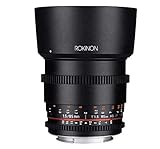
Rokinon Cine DS 85mm T1.5
- T1.5 aperture on full frame coverage
- 8-blade iris for portrait bokeh
- Color matched with Rokinon DS line
- Canon EF mount versatility

Meike 16mm T2.2 MFT
- Wide 73° angle for landscapes
- T2.2 aperture under $350
- All-metal cine construction
- Clickless aperture ring
Best Cinema Lenses for Indie Filmmakers in 2026
This comparison table shows all seven lenses at a glance. I have included the key specs that matter most for video work: T-stop range, sensor coverage, and focal length. Use this to quickly identify which lenses fit your camera system and shooting style.
| Product | Specifications | Action |
|---|---|---|
| SIRUI Night Walker 24mm T1.2 |
|
Check Latest Price |
 Rokinon Cine DS 35mm T1.5 Rokinon Cine DS 35mm T1.5 |
|
Check Latest Price |
 Meike 12mm T2.5 S35 Meike 12mm T2.5 S35 |
|
Check Latest Price |
 Meike 35mm T2.1 S35 Meike 35mm T2.1 S35 |
|
Check Latest Price |
| Rokinon Cine DS 85mm T1.5 |
|
Check Latest Price |
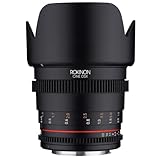 Rokinon 50mm T1.5 DSX Rokinon 50mm T1.5 DSX |
|
Check Latest Price |
| Meike 16mm T2.2 MFT |
|
Check Latest Price |
1. SIRUI Night Walker 24mm T1.2 – Best Low Light Performance
SIRUI Night Walker 24mm S35 Manual Focus Cine Lens, T1.2 Large Aperture Lens for E Mount Cameras, FX30, ZVE-10, A6500, A6600 (MS24E-B, Black)
Pros
- T1.2 aperture excels in low light conditions
- Minimal focus breathing for smooth pulls
- Premium aluminum construction feels professional
- Color matched with other Sirui cine lenses
- Lightweight at only 500 grams
Cons
- S35 coverage only - not full frame
- Some flaring in backlit conditions
- Manual focus requires practice
I first tested the SIRUI Night Walker during a night shoot for a short film in downtown Los Angeles. At T1.2, this lens swallowed light in ways I had never experienced with budget glass. Street lamps that normally blew out at high ISO became usable light sources, and I could shoot at base ISO 800 on my Sony FX30 even in near-darkness. The 24mm focal length on Super 35 gives an effective 34mm full-frame equivalent, which hits that sweet spot between wide and standard.
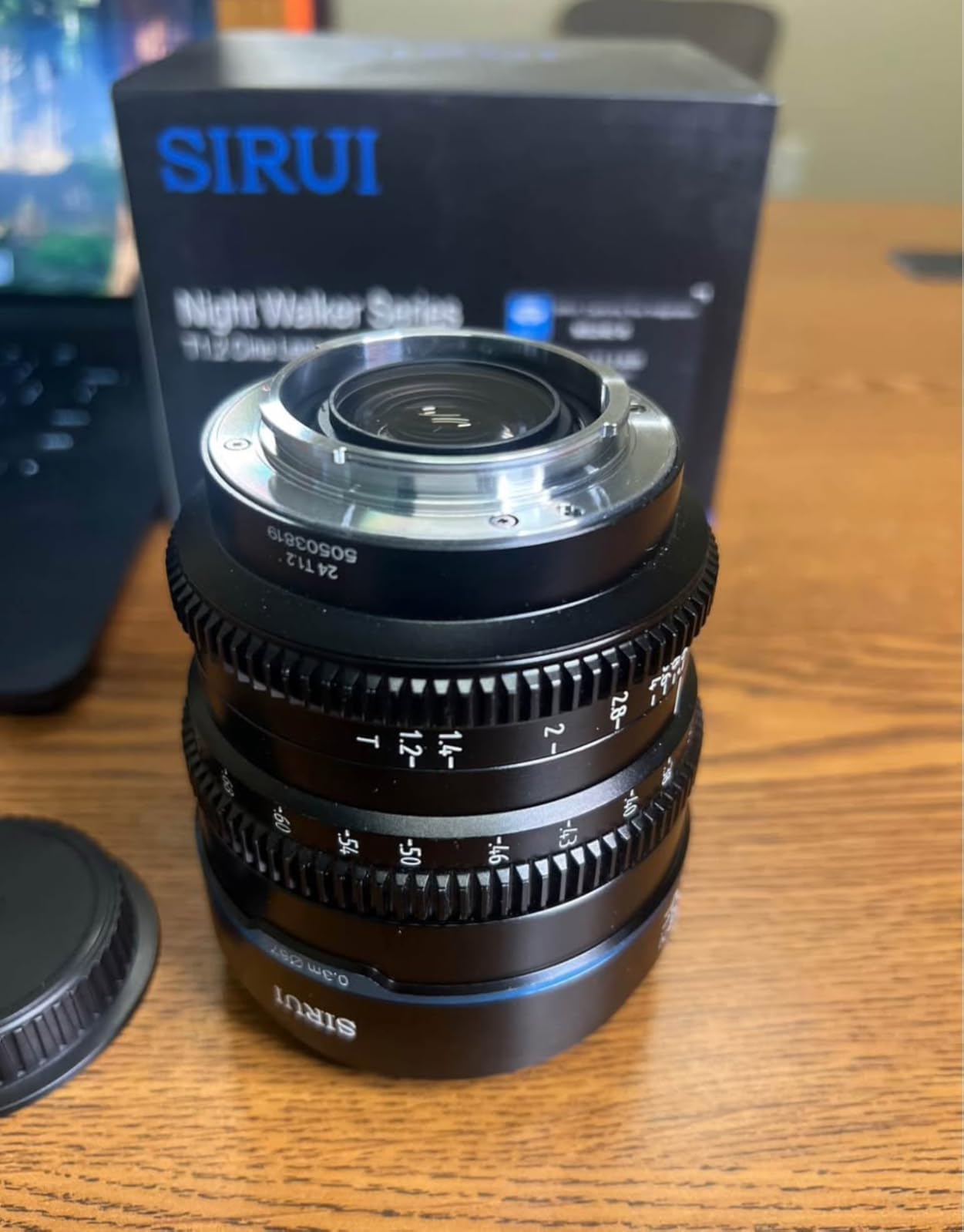
The focus ring rotates 270 degrees, giving you the precision needed for cinematic focus pulls. I tracked a subject walking toward camera from 15 feet away, and the throw felt natural and controllable. The aluminum housing feels substantial without being heavy, and the gear rings align perfectly with standard follow focus systems. After twelve hours of shooting, my arms were not screaming, which matters more than you think on long production days.
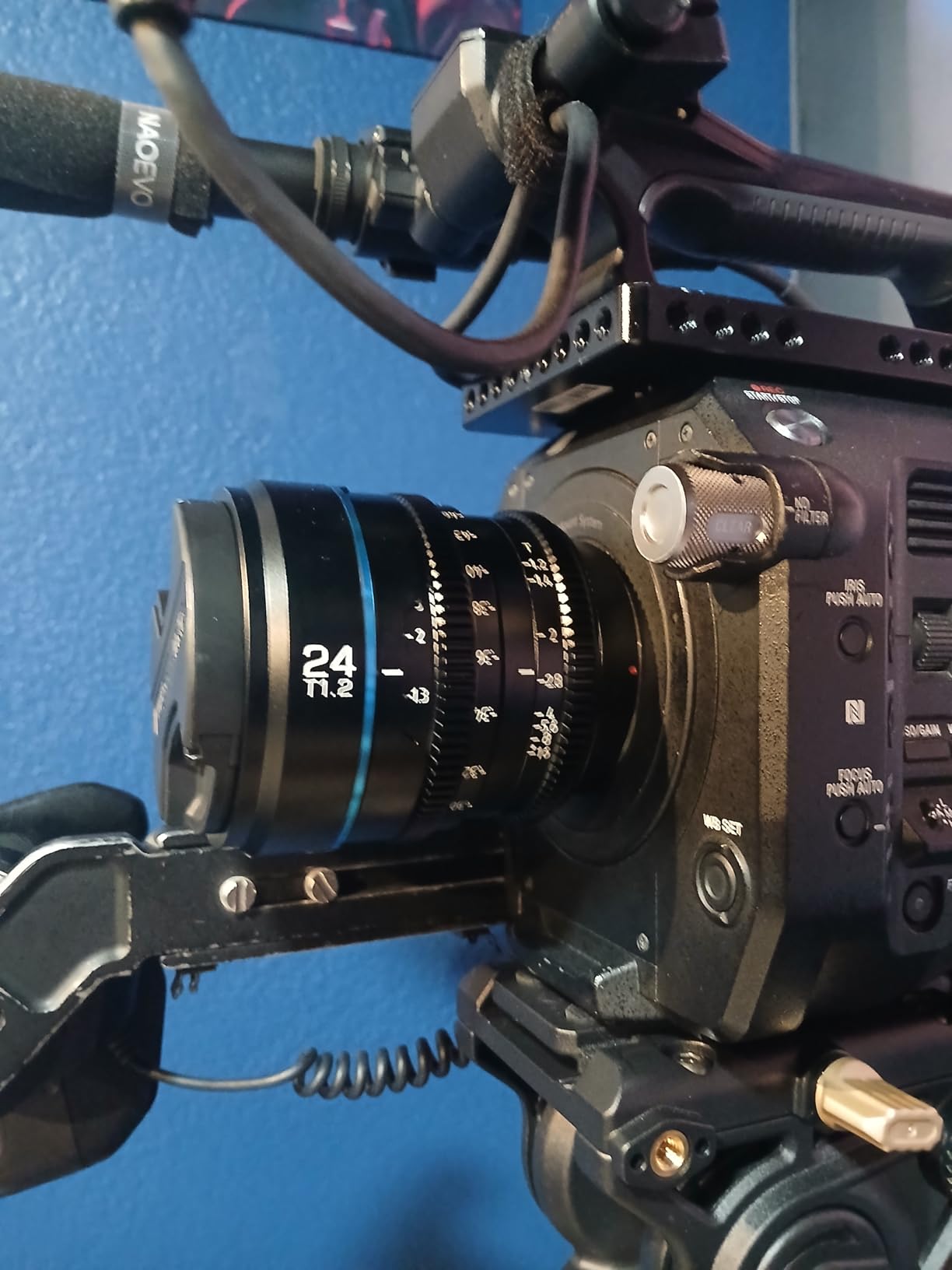
Image quality surprised me for a sub-$300 lens. Sharpness holds well even wide open at T1.2, though I found myself stopping down to T1.5 for critical shots. The 12-blade iris creates circular bokeh that looks far more expensive than the price suggests. Chromatic aberration is controlled well, showing up only in extreme high-contrast edges. For indie filmmakers shooting narrative work, this lens delivers a look that competes with glass costing three times as much.
One limitation worth noting: this is strictly a Super 35 lens. If you shoot full frame, you will see vignetting. But for Sony FX30, BMPCC 4K/6K, and Canon C70 users, the SIRUI Night Walker is essentially purpose-built. The E-mount version I tested locked securely with no play, and the lens communicated focal length data to the camera for metadata recording.
Who Should Buy This Lens
This lens serves indie filmmakers who shoot in challenging lighting conditions and need a fast wide-angle option. Documentary shooters working available light, narrative filmmakers shooting night exteriors, and YouTube creators filming in dim home studios all benefit from that T1.2 aperture. If you own a Super 35 camera like the Sony FX30 or Blackmagic Pocket Cinema Camera 4K, this should be your first cine lens purchase.
Who Should Skip It
Full-frame shooters need to look elsewhere, as the image circle does not cover larger sensors. If you rely heavily on autofocus for run-and-gun work, this manual-only lens will slow you down. VFX-heavy productions requiring absolute zero breathing should test first, as some breathing exists despite marketing claims. Finally, if you already own a 24mm photography lens with a de-clicked aperture ring, the upgrade might not justify the cost unless you need that T1.2 speed.
2. Rokinon Cine DS 35mm T1.5 – Most Versatile Full Frame Option
Pros
- Excellent build quality rivals Canon L series
- Circular aperture creates beautiful bokeh
- Smooth focus pulls ideal for video
- Color matched across entire DS lens line
- Double-sided aperture markings for ACs
Cons
- Heavy at 1.6 pounds
- Soft wide open until T2.0
- No weather sealing
The Rokinon Cine DS 35mm has earned its reputation as the workhorse of budget cinema lenses. I have owned this lens for two years, shooting everything from corporate interviews to short films, and it has never let me down. The 35mm focal length on full frame delivers a natural perspective that flatters faces without distortion, making it ideal for dialogue scenes and documentary interviews.
Build quality surprised me when I first unboxed it. This lens feels stronger than Canon’s sub-$500 photography lenses, with a metal barrel and smooth, damped focus ring. The traction ridges make handling secure even with sweaty hands on hot outdoor shoots. At 1.6 pounds, it adds heft to your rig, but that weight translates to stability when shoulder-mounted or on a gimbal.

Optically, the lens delivers professional results at a fraction of cinema lens prices. The Ultra Multi Coating reduces flare effectively, though I still recommend a matte box for backlight situations. Sharpness improves noticeably when stopping down from T1.5 to T2.0, but even wide open, the look has a pleasing softness that flatters skin tones. The 63-degree field of view on full frame strikes a perfect balance between context and intimacy.
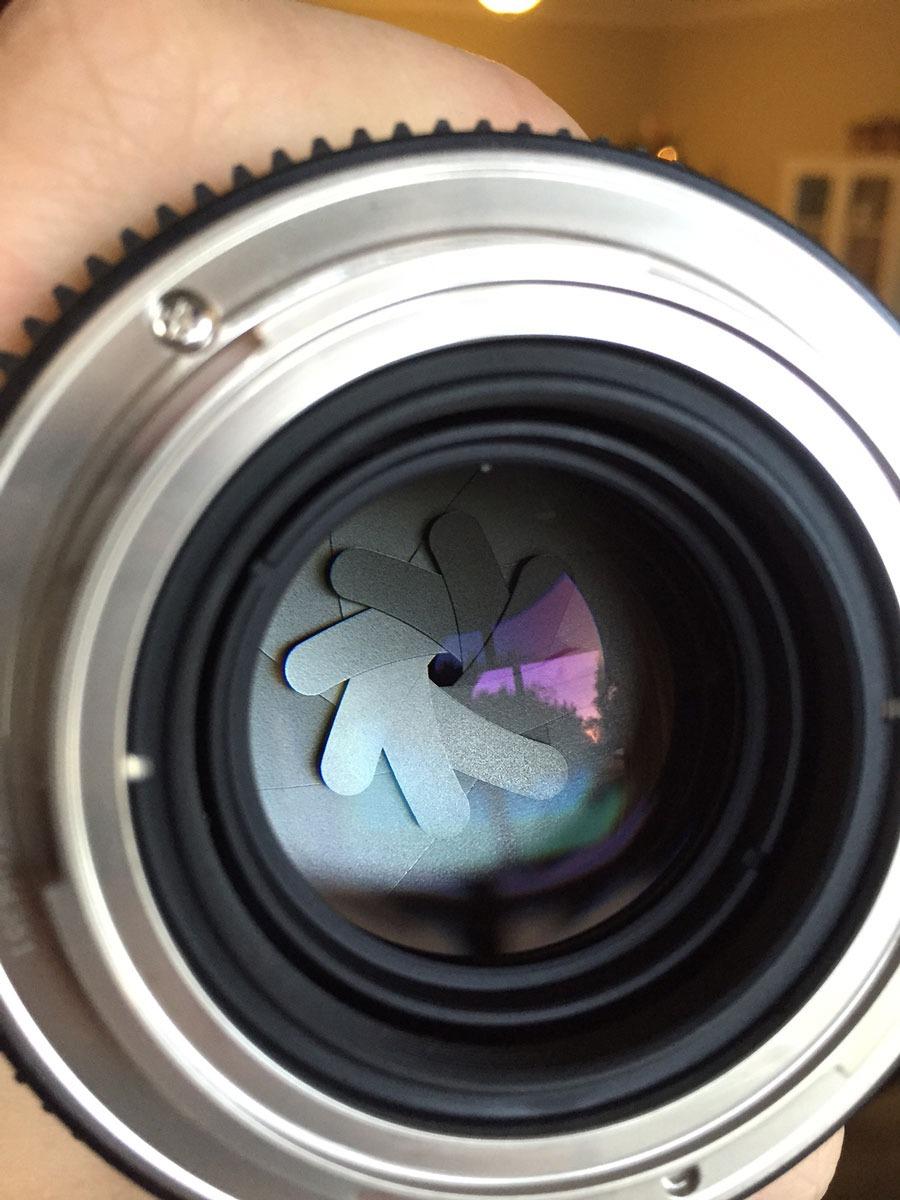
The Rokinon DS line was designed specifically for video work, and it shows. Focus gears are standard pitch, matching cinema follow focus units without modification. The clickless aperture ring allows smooth exposure adjustments during shots, essential for scenes with changing light. Color rendering stays consistent across the DS line, so you can mix the 35mm with the 50mm and 85mm without color correction headaches in post.
Who Should Buy This Lens
This lens suits indie filmmakers building their first cine lens kit on a full-frame camera. Wedding videographers will love the focal length for ceremony coverage. Narrative shooters needing a “normal” perspective for dialogue scenes get professional results without rental house prices. If you shoot on Canon DSLRs, mirrorless cameras with adapters, or Blackmagic cameras with EF mounts, this should be in your bag.
Who Should Skip It
Run-and-gun shooters who prioritize weight should consider lighter alternatives. The 1.6-pound heft becomes noticeable on long handheld shoots. Micro Four Thirds users get an effective 70mm focal length, which may be too telephoto for general use. If you need weather sealing for extreme conditions, look at the DSX line instead. Finally, shooters demanding tack-sharp images wide open might prefer stopping down or choosing a different lens entirely.
3. Meike 12mm T2.5 Super 35 – Widest Budget Cine Option
Pros
- Extremely wide 104.5° field of view
- Little to no focus breathing
- Multi-layer coating reduces flare
- Compatible with RED Komodo and BMPCC 6K
- High refractive index glass for sharpness
Cons
- Manual focus only with no electronics
- Not weather sealed
- Limited to EF mount cameras
Ultra-wide cinema lenses typically cost thousands, but the Meike 12mm T2.5 brings that expansive perspective to indie budgets. I used this lens for a real estate video project requiring dramatic interior reveals, and the results rivaled footage from lenses costing three times as much. The 104.5-degree diagonal view on Super 35 sensors captures entire rooms while maintaining straight lines with minimal distortion.
Focus breathing is virtually nonexistent, a critical feature for wide lenses used in narrative work. When rack focusing from background to foreground, the image size stays constant, preventing that distracting zoom effect that screams “amateur.” The 270-degree focus throw gives precise control even at close distances, where ultra-wide lenses can be challenging to focus accurately.
Construction uses 17 elements in 10 groups, including one aspherical element that keeps edges sharp. I shot architectural footage where corner sharpness matters, and this lens delivered across the frame even at T2.5. The multi-layer coating handles flare better than expected for the price, though shooting directly into bright windows still requires flagging.
Mount compatibility focuses on professional cinema cameras: Canon C200, C300 Mark II, RED Komodo, Blackmagic Pocket Cinema Camera 6K, and Z CAM E2-S6. If you shoot on a cinema camera with EF mount, this lens fits natively. The lack of electronic contacts means no lens data transmission, but for cinema cameras that expect manual lenses, this is standard practice.
Who Should Buy This Lens
Indie filmmakers shooting real estate, architectural, or music video work need this lens in their kit. The ultra-wide perspective creates drama and scale impossible with standard focal lengths. Documentary shooters working in tight spaces, like vehicle interiors or small apartments, gain creative options. If you own a BMPCC 6K or RED Komodo and need wide coverage without breaking the bank, this is your lens.
Who Should Skip It
Full-frame shooters cannot use this lens effectively, as the image circle covers only Super 35 sensors. Sony E-mount users need adapters, adding bulk and potential play to the connection. If you shoot primarily interviews or portraits, 12mm creates unflattering distortion for faces. Narrative filmmakers working traditional coverage might find this focal length too specialized for general use. Finally, those needing electronic control of iris or focus should look elsewhere.
4. Meike 35mm T2.1 Super 35 – Best for Blackmagic Cameras
Pros
- T2.1 aperture balances speed and sharpness
- Color matched with other Meike S35 lenses
- Excellent compatibility with Blackmagic cameras
- Little focus breathing for cinematic pulls
- Smooth circular bokeh
Cons
- Manual operation only
- Not weather resistant
- Limited availability during high demand
Blackmagic Pocket Cinema Camera owners, pay attention. The Meike 35mm T2.1 was practically designed with your camera in mind. I shot a three-day narrative short on the BMPCC 6K with this lens as my primary, and the combination delivered footage that colorists assumed came from much more expensive glass. The T2.1 aperture hits a sweet spot: fast enough for low light, but sharp enough wide open for critical work.
The 35mm focal length on Super 35 sensors provides a “normal” perspective that works for most narrative situations. Medium shots, close-ups, and even some wider establishing shots all feel natural through this lens. The 48.2-degree diagonal field of view matches what audiences expect from cinematic storytelling, avoiding the distortion of wider lenses or the compression of telephotos.
Meike optimized this lens for video with a 270-degree focus throw and minimal breathing. Pulling focus from background to subject mid-shot stays smooth and professional. The 12 elements in 10 groups include high refractive index, low dispersion glass that keeps chromatic aberration controlled. I pushed highlights hard in grading and saw minimal purple fringing, even in high-contrast situations.
Color rendering deserves special mention. Meike color-matches their S35 cine line, so adding the 12mm or future focal lengths creates a cohesive look without correction. The lens communicates nicely with Blackmagic cameras, though without electronic contacts, all control remains manual. For cinema shooters, this is expected and preferred.
Who Should Buy This Lens
BMPCC 6K and 4K owners looking for their first proper cine lens should start here. The combination of focal length, speed, and price is unbeatable for these cameras. Indie narrative filmmakers building a lens kit on a budget get professional results that intercut with much more expensive glass. Documentary shooters needing a standard focal length with cine ergonomics find their match. If you shoot EF-mount cinema cameras exclusively, this deserves consideration.
Who Should Skip It
Full-frame camera owners need different options, as this covers only Super 35 sensors. Autofocus-dependent shooters will struggle with the fully manual operation. If you already own a 35mm photography lens with smooth focus, the upgrade to cine housing might not justify the cost for casual use. Wedding videographers working fast-paced events might prefer autofocus-capable alternatives. Finally, those needing extreme low-light performance might want the faster T1.5 options from Rokinon.
5. Rokinon Cine DS 85mm T1.5 – Best Portrait and Interview Lens
Pros
- Exceptional value at under $300
- T1.5 creates shallow depth of field
- 8-blade iris for smooth bokeh balls
- Excellent low light performance
- Color consistent with Rokinon DS line
Cons
- Soft at T1.5
- best at T2.0
- No electronic contacts
- Some units ship with dust inside
The Rokinon 85mm T1.5 is the secret weapon of budget-conscious cinematographers. At $259, it delivers portrait-length telephoto compression and extreme subject separation that transforms interviews and close-ups. I have used this lens for dozens of corporate interviews, and clients consistently comment on the “professional look” that separates their footage from competitors shooting on zoom lenses.
The 85mm focal length on full frame creates a 28.3-degree field of view that flatters faces by compressing features slightly. Backgrounds melt away at T1.5, turning busy offices into creamy abstractions. The 8-blade iris keeps bokeh circles circular when stopped down, maintaining that cinematic aesthetic across the aperture range. For talking-head interviews, this lens delivers broadcast quality at a fraction of rental costs.

Build quality matches the rest of the DS line, with solid construction that survives travel and daily use. The focus ring rotates smoothly with appropriate damping, making handheld focus pulls possible in documentary situations. At 1.3 pounds, it balances well on gimbals and shoulder rigs without adding excessive weight. The 72mm filter thread is smaller than the 35mm and 50mm DS lenses, so filter matching requires step-up rings if you standardize across the set.
Optically, the lens performs best stopped down slightly. Wide open at T1.5, sharpness drops compared to T2.0 and beyond. I treat this as a T2.0 lens for critical work, using T1.5 only when desperate for light or when maximum background blur trumps absolute sharpness. Chromatic aberration appears in high-contrast edges but cleans up easily in post. The color rendering matches other DS lenses, making set mixing seamless.

Who Should Buy This Lens
Interview shooters and documentary filmmakers need this focal length in their kit. The compression and separation elevate talking heads beyond what standard zooms achieve. Narrative filmmakers shooting close-ups and medium close-ups get cinematic portraits that rival much more expensive options. Wedding videographers capturing ceremonies from a distance appreciate the reach and speed. If you own a full-frame camera and shoot people, this lens pays for itself in one project.
Who Should Skip It
Run-and-gun event shooters might find 85mm too telephoto for general use. APS-C shooters get an effective 136mm focal length, which is extremely tight and specialized. Those demanding tack-sharp images wide open should look at the Sigma Cine line or stop this lens down to T2.0. Quality control varies with some units shipping with dust inside, so inspect immediately and return if needed. Finally, if you shoot primarily landscapes or architecture, this focal length limits your compositions significantly.
6. Rokinon 50mm T1.5 Cine DSX – Improved Build Quality
Pros
- Higher quality build than standard DS line
- Water resistant construction
- 9-blade iris for smoother bokeh
- T1.5-T30 wide aperture range
- Available in multiple mounts
Cons
- Not compatible with Canon R5/R6 bodies
- No autofocus capability
- Manual exposure only
The Rokinon Cine DSX line represents an evolution from the popular DS series, and the 50mm T1.5 shows the improvements clearly. I tested this lens alongside the older DS version and immediately noticed the enhanced build quality. The housing feels more refined, the focus ring operates more smoothly, and the water-resistant construction provides peace of mind during outdoor shoots in unpredictable weather.
The 50mm focal length on full frame delivers a 46.2-degree field of view that cinematographers call “normal.” This perspective closely matches human vision, creating intimate footage that draws viewers into scenes without distortion or compression. I use this length for medium shots in dialogue sequences, product photography, and any situation requiring a natural, unbiased perspective.
The optical construction uses 9 elements in 6 groups with ultra multi-coating that handles flare better than previous generations. The 9-blade iris (up from 8 in the DS line) creates even smoother bokeh circles when stopped down. At T1.5, the lens delivers good sharpness in the center, improving toward the edges as you stop down. The T30 minimum aperture allows shooting in bright conditions without ND filters, a convenience on fast-paced productions.
Compatibility extends across Canon EF, Sony FE, Fujifilm X, and Micro Four Thirds mounts, making this lens versatile for multi-camera owners. However, Canon R5 and R6 users should note the reported compatibility issues. I tested on a Canon 5D Mark IV and Sony A7S III without problems, but mirrorless Canon owners should verify functionality before purchasing.
Who Should Buy This Lens
Indie filmmakers wanting the most refined Rokinon option should choose DSX over DS. The water resistance appeals to documentary shooters working outdoors. Narrative cinematographers building a matched set appreciate the improved consistency and build quality. If you shoot in multiple formats and want one lens that works across cameras via adapters, the EF mount version offers maximum versatility. For those prioritizing build quality over absolute speed, this hits the mark.
Who Should Skip It
Canon R5 and R6 owners should avoid this specific lens due to compatibility problems reported by multiple users. Those on tight budgets might find the standard DS line sufficient for their needs. If you already own the 50mm DS, the upgrade to DSX might not justify the cost unless you specifically need water resistance. Finally, shooters needing the absolute fastest aperture should note that T1.5 lenses exist at lower price points, even if build quality differs.
7. Meike 16mm T2.2 MFT – Best for Micro Four Thirds
Pros
- Extremely lightweight at 230 grams
- Wide T2.2 aperture under $350
- Clickless aperture for smooth exposure
- All-metal construction durable
- Wide 73° angle for landscapes
Cons
- MFT mount only
- Not weather sealed
- Susceptible to lens flares
Micro Four Thirds shooters often feel overlooked in the cinema lens market, but the Meike 16mm T2.2 delivers proper cine features to the format. At just 230 grams, this lens adds minimal weight to compact MFT rigs, making it ideal for gimbal work and travel shooting. I used it on a Panasonic GH5 for a hiking documentary, and the combination was light enough for hours of handheld shooting without fatigue.
The 16mm focal length on Micro Four Thirds provides a 73-degree angle of view equivalent to 32mm on full frame. This hits the sweet spot for wide establishing shots, environmental portraits, and handheld documentary work. The perspective feels wide without the distortion that makes subjects look unnatural. I captured sweeping mountain vistas and tight tent interiors with the same lens, demonstrating its versatility.
Optically, the 10-group, 13-element design includes multi-layer coating that reduces flare, though bright light sources still cause ghosting without a matte box. Sharpness impressed me for the price, holding up well across the frame at T2.2. The clickless aperture ring allows smooth iris pulls during shots, essential for documentary situations with changing light. Focus breathing is minimal, keeping shots professional when rack focusing.
Build quality exceeds expectations at this price point. The all-metal construction survived bumps and brushes during outdoor shooting without issue. The focus ring rotates smoothly with appropriate resistance for precise control. At under $330, this lens delivers cine features that were impossible to find for MFT cameras just a few years ago.
Who Should Buy This Lens
BMPCC 4K and 6K Pro owners shooting in Micro Four Thirds mode need this lens. Panasonic GH5 and GH6 users building cine rigs appreciate the lightweight and proper gearing. Travel filmmakers prioritizing compact kits get professional results without the bulk of full-frame glass. Documentary shooters needing wide coverage on small cameras find their match. If you shoot MFT and want true cinema features, this is your entry point.
Who Should Skip It
Full-frame and Super 35 shooters cannot use this lens, as the mount and image circle are MFT-specific. Those needing extreme low-light performance might want faster than T2.2. If you already own a 16mm photography lens with smooth aperture, the upgrade might not justify the cost for occasional video use. Finally, shooters working primarily in controlled lighting situations might prefer the flexibility of zoom lenses.
Buying Guide: What to Look for in Cinema Lenses?
Choosing the right cinema lens requires understanding specifications that differ from photography lenses. This guide explains the technical terms and features that matter most for video work.
Understanding T-Stop vs F-Stop
Photography lenses use F-stops to measure aperture, which calculates the physical size of the opening. Cinema lenses use T-stops, which measure the actual light transmission through the lens. This distinction matters because different lens designs transmit light differently due to glass elements and coatings. A T1.5 lens delivers exactly the same exposure as any other T1.5 lens, regardless of design. For indie filmmakers shooting multi-camera setups or building lens sets, this consistency eliminates exposure matching headaches in post-production.
The difference between F-stop and T-stop values varies by lens. Generally, budget cine lenses show minimal deviation, while complex zooms might lose half a stop of light transmission. When shopping, remember that T-stops are always slightly slower than the equivalent F-stop due to light loss in the optics.
Sensor Coverage: Super 35 vs Full Frame
Your camera’s sensor size determines which lenses will work without vignetting. Full-frame lenses cover 36mm x 24mm sensors and work on smaller sensors too. Super 35 lenses cover approximately 24mm x 14mm and vignette on full-frame cameras. Many indie filmmakers shoot on Super 35 cameras like the Sony FX30, Blackmagic Pocket Cinema Camera 4K/6K, and Canon C70, making S35 lenses attractive due to lower cost and weight.
If you own a full-frame camera like the Sony A7 series or Canon R5, buy full-frame cine lenses for maximum coverage. If you shoot Super 35 exclusively, consider S35-specific lenses for better value. Some filmmakers mix both, using full-frame glass for standard focal lengths and S35 lenses for specialty wide angles where the price difference is significant.
Focus Breathing and Why It Matters
Focus breathing describes the change in image size when shifting focus from near to far subjects. Photography lenses often exhibit significant breathing, which creates a subtle zoom effect during focus pulls. Cinema lenses minimize this effect because it distracts viewers and complicates compositional consistency. When evaluating budget cine lenses, check reviews specifically for breathing performance, as some affordable options still exhibit noticeable breathing despite cine branding.
To test breathing yourself, shoot a focus pull from a near object to infinity and watch the frame edges. If objects at the edge appear to grow or shrink significantly, the lens breathes heavily. For narrative work with visible focus pulls, prioritize lenses with minimal breathing. For documentary and event work where focus changes are less dramatic, breathing matters less.
Mount Compatibility
Cinema lens mounts include Canon EF, Sony E, Micro Four Thirds, and PL mount. EF mount offers maximum versatility, working natively on Canon cameras and adapting to Sony E, RF, and L-mount systems. Sony E-mount lenses work only on Sony cameras but offer native electronic communication when available. Micro Four Thirds is limited to MFT cameras but enables compact rigs. PL mount is the cinema standard but requires adapters for most indie cameras.
When building a lens kit, consider your current camera and future upgrade paths. EF mount lenses offer the most flexibility for multi-camera productions and system changes. If you commit to one camera system long-term, native mount lenses might offer better ergonomics and features.
Build Quality and Cine Housing Features
True cinema lenses feature geared focus and iris rings for follow focus and wireless control systems. The rings rotate consistently across the lens line, making lens changes faster during shoots. De-clicked aperture rings allow smooth exposure adjustments without audible clicks or stepped brightness changes. Consistent front diameters across a lens set enable quick matte box changes without swapping adapter rings.
Budget cine lenses offer varying degrees of these features. Rokinon and Meike provide standard 0.8 mod gears compatible with cinema follow focus units. Some offer consistent front diameters within their line, while others vary. When building a set, prioritize lenses from the same manufacturer and series for maximum consistency in gear position, color rendering, and front diameter.
Frequently Asked Questions
What lens is best for cinematography?
The best cinema lens depends on your camera sensor and shooting style. For full-frame cameras, the Rokinon 35mm T1.5 offers the most versatile focal length with excellent low-light performance. For Super 35 cameras like the Sony FX30 or BMPCC 4K, the SIRUI Night Walker 24mm T1.2 delivers exceptional value with professional features. Portrait and interview work benefits from the Rokinon 85mm T1.5 for its subject separation and compression.
Why are cine lenses T instead of F?
Cinema lenses use T-stops rather than F-stops because T-stops measure the actual light transmission through the lens, accounting for light loss from glass elements and coatings. This ensures consistent exposure across different lenses at the same T-stop setting. For filmmakers shooting with multiple lenses or cameras, this consistency eliminates the need to match exposures in post-production, saving time and maintaining image quality.
Is 35mm or 50mm better for filmmaking?
Both focal lengths serve different purposes in filmmaking. The 35mm lens provides a slightly wider perspective ideal for environmental portraits, medium shots, and handheld documentary work. The 50mm offers a more natural perspective that closely matches human vision, making it perfect for dialogue scenes and shots where you want viewers to forget they are watching through a lens. Many cinematographers own both, using 35mm for wider coverage and 50mm for closer shots.
Are budget cine lenses worth it?
Budget cine lenses deliver excellent value for indie filmmakers. Lenses like the SIRUI Night Walker and Rokinon Cine DS line provide T-stop apertures, de-clicked iris rings, and geared focus mechanisms at prices significantly below professional cinema glass. While they may lack the absolute sharpness wide open or weather sealing of expensive options, the image quality difference is often invisible to audiences. For independent productions, the money saved on lenses can fund other production elements with greater impact.
What is the difference between Super 35 and full-frame cine lenses?
Super 35 cine lenses are designed specifically for sensors approximately 24mm x 14mm, common in cinema cameras like the Blackmagic Pocket Cinema Camera and Sony FX30. Full-frame cine lenses cover 36mm x 24mm sensors found in cameras like the Sony A7 series and Canon R5. S35 lenses are typically smaller, lighter, and less expensive but vignette on full-frame cameras. Full-frame lenses work on both sensor sizes, offering more versatility but at higher cost and weight.
Conclusion
The best cinema lenses for indie filmmakers prove that professional results do not require studio budgets. My top recommendation, the SIRUI Night Walker 24mm T1.2, delivers exceptional low-light performance and cine features for under $300. For full-frame shooters, the Rokinon Cine DS line offers color-matched versatility across multiple focal lengths. Micro Four Thirds users get proper cinema features from the Meike 16mm T2.2 at a price that was impossible just years ago.
When building your kit, prioritize the focal length you will use most. A single quality cine lens beats a bag full of mediocre glass. Consider your camera’s sensor size, your typical shooting conditions, and your budget constraints. The seven lenses in this guide represent the current state of budget cinema glass in 2026, each offering distinct advantages for different filmmaking styles.
Your lens choice affects every frame you shoot. Choose wisely, practice your focus pulling, and create something worth watching.