

If you are serious about cinematography, you need more than just a camera body. The right cine lens transforms your footage with that creamy bokeh, smooth focus pulls, and consistent exposure changes that make productions look professional. For indie filmmakers working with limited budgets, finding affordable cinema glass that actually delivers remains one of the biggest challenges in gear selection. I have spent years testing budget cine lenses across real productions, and I know what separates the gems from the overpriced compromises.
This guide covers the best cine lens for indie filmmakers in 2026, organized by budget tier from under $400 to premium picks. Whether you shoot on a Sony FX3, Canon R5, Blackmagic Pocket 6K, or RED Komodo, there is a cost-effective cinema lens here that will work for your setup. Every recommendation comes with honest assessment of what each lens does well and where it falls short for real-world filmmaking scenarios.
Top 3 Picks for Best Cine Lens for Indie Filmmakers
After testing dozens of budget cine lenses, three options consistently rise above the rest for different reasons. These are the lenses I recommend most often to filmmakers who need professional results without professional prices.

Rokinon Cine DS 35mm T1.5
- Full Frame coverage
- T1.5 aperture
- Canon EF mount
- Ultra Multi Coating
- 219 reviews

Sirui VP-1 Vision Prime 35mm
- Interchangeable mounts
- T1.4 aperture
- Full Frame
- 8K support
- Aluminum body

SIRUI Night Walker 35mm T1.2
- Ultra-fast T1.2
- S35 coverage
- Sony E-mount
- Lightweight 500g
- 270 focus throw
Best Cine Lens for Indie Filmmakers in 2026
These are the 12 best cine lenses for indie filmmakers available right now, ranked by value, build quality, and cinematic performance. Each lens has been evaluated for real-world shooting scenarios including run-and-gun documentary work, controlled narrative setups, and low-light conditions.
| Product | Specifications | Action |
|---|---|---|
| SIRUI Night Walker 35mm T1.2 |
|
Check Latest Price |
 SIRUI Night Walker 24mm T1.2 SIRUI Night Walker 24mm T1.2 |
|
Check Latest Price |
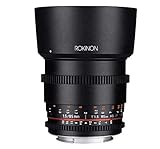 Rokinon Cine DS 85mm T1.5 Rokinon Cine DS 85mm T1.5 |
|
Check Latest Price |
 7artisans 50mm T2.0 7artisans 50mm T2.0 |
|
Check Latest Price |
 Meike 25mm T2.2 Meike 25mm T2.2 |
|
Check Latest Price |
 Night Walker 16mm S35 T1.2 Night Walker 16mm S35 T1.2 |
|
Check Latest Price |
 Rokinon Cine DS 50mm T1.5 Rokinon Cine DS 50mm T1.5 |
|
Check Latest Price |
| Rokinon Cine DS 35mm T1.5 |
|
Check Latest Price |
| Sirui VP-1 Vision Prime 35mm T1.4 |
|
Check Latest Price |
 Viltrox 50mm T2.1 Viltrox 50mm T2.1 |
|
Check Latest Price |
 Rokinon Cine DS 85mm T1.5 (Sony E) Rokinon Cine DS 85mm T1.5 (Sony E) |
|
Check Latest Price |
 Sirui 28-85mm T3.2 Zoom Sirui 28-85mm T3.2 Zoom |
|
Check Latest Price |
Budget Picks: Best Cine Lens Under $400
The sub-$400 market offers incredible value for indie filmmakers willing to accept minor compromises in exchange for cinema-grade features. These seven lenses deliver the gear teeth, smooth focus throws, and professional build quality you need for serious production work.
1. SIRUI Night Walker 35mm T1.2 – Best Budget Pick
Pros
- Ultra-fast T1.2 aperture for exceptional low light
- Lightweight aluminum cine housing
- 270 degree focus throw for smooth focus pulls
- Excellent value at $279
- Great for Sony FX30 and APS-C cameras
Cons
- Softer at maximum aperture
- Some focus breathing present
- S35 coverage requires crop on full frame
When I first mounted the SIRUI Night Walker 35mm on my Sony FX30, I was skeptical given its budget price. After a full day of shooting a documentary interview in a dimly lit restaurant, those doubts vanished. The T1.2 aperture gathers so much light that I could shoot at ISO 800 instead of the ISO 3200 I would have needed on a typical photo lens.
The aluminum cine housing feels solid in your hands, and the focus ring spins with exactly the right amount of resistance for controlled focus pulls. The 270-degree rotation gives you precision that photo lenses simply cannot match. At $279, this lens undercuts the Rokinon Cine DS lineup while matching or exceeding their performance in low-light situations.
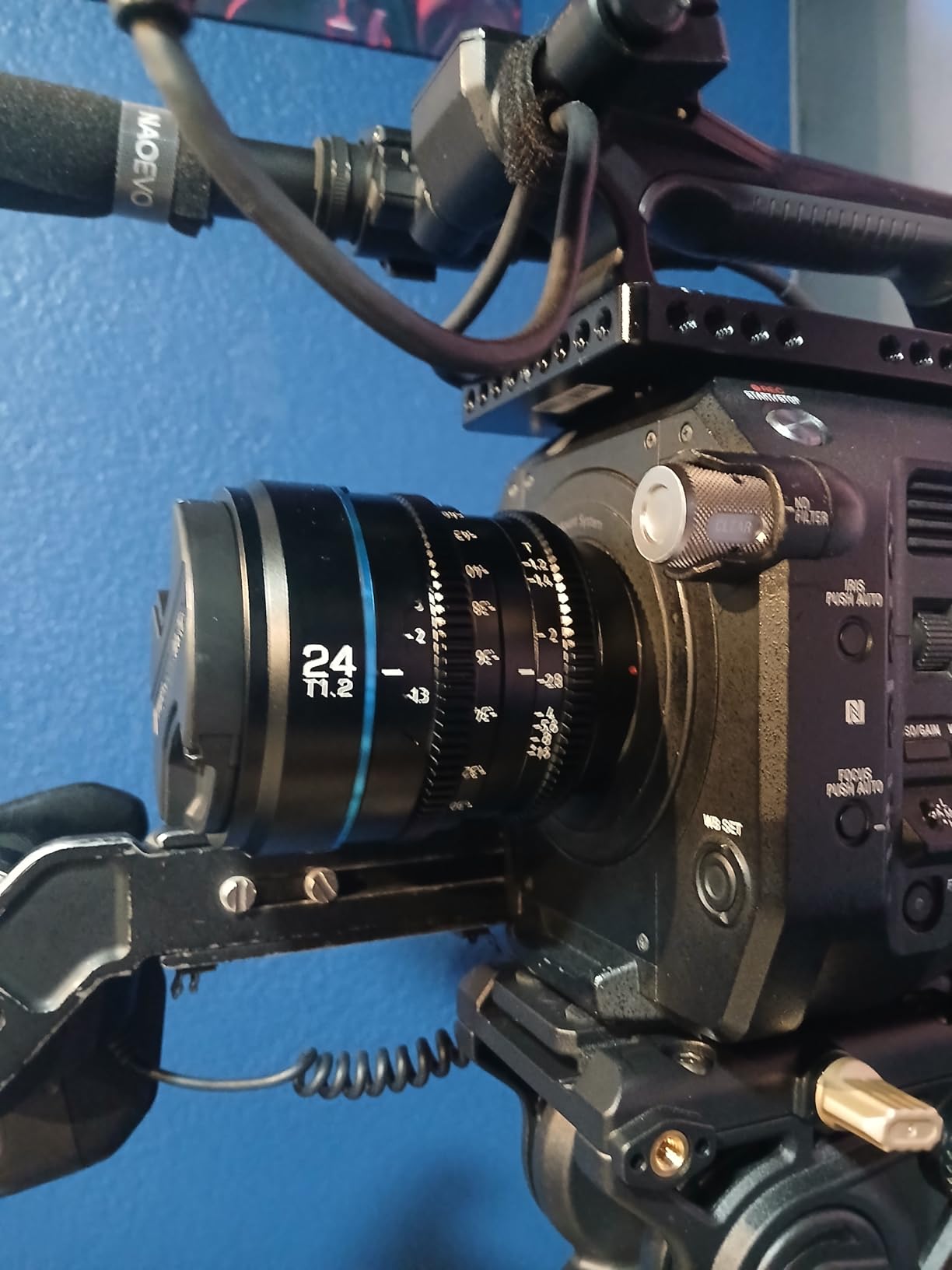
I paired this lens with a smallrig follow focus and the gear teeth engaged perfectly without any adjustment needed. The 67mm filter thread makes it easy to stack ND filters, and the compact 500g weight means your gimbal setup stays balanced even on longer shoots.
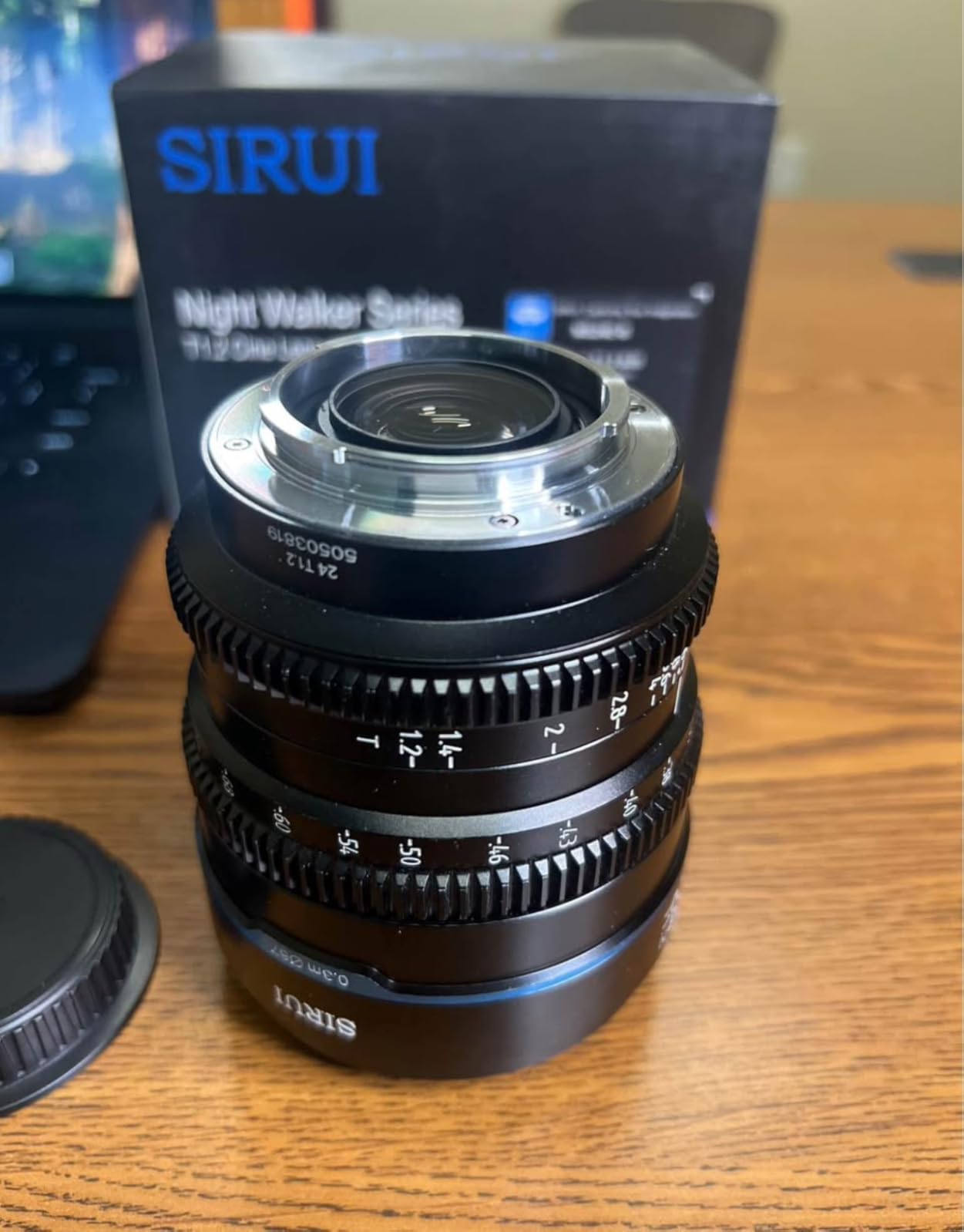
Ideal for run-and-gun documentary work
If you are shooting events, interviews, or documentary content where lighting changes constantly, the Night Walker 35mm T1.2 excels. The fast aperture lets you maintain shallower depth of field even when you cannot control your environment. Pair it with the SIRUI Night Walker 24mm and 16mm for a complete wide-angle kit that covers most documentary scenarios.
Consider the S35 crop factor
The one genuine limitation is the Super 35 sensor coverage. On APS-C cameras like the Sony FX30, this is actually an advantage since you get the full angle of view without any crop. On full-frame cameras like the Sony A7S III, you will see vignetting in the corners, so this lens works best on crop-sensor or S35 cinema cameras.
2. SIRUI Night Walker 24mm T1.2 – Best Wide-Angle Budget Cine
Pros
- Excellent T1.2 aperture for low light
- 24mm great for landscapes and architecture
- Close focus at 0.3m for macro videography
- Lightweight aluminum construction
- Smooth 270-degree focus rotation
Cons
- Manual focus only
- S35 crop on full frame
- Some chromatic aberration issues
The 24mm focal length fills a gap that most cine lens manufacturers ignore. Landscape filmmakers, real estate shooters, and anyone who needs wide perspectives without the extreme distortion of a 16mm will appreciate what this lens delivers. I used it extensively on a travel documentary shoot through European cities, and the combination of the fast T1.2 aperture with the natural 24mm perspective created footage with remarkable depth.

The minimum focus distance of 0.3 meters opens up creative possibilities that fixed-focus wide lenses cannot match. Product shots, food cinematography, and environmental detail shots become achievable without swapping to a macro lens. The 12 aperture blades create smooth, circular bokeh that looks professional even when you are shooting at T1.2 in challenging lighting.

Canon RF mount advantage
The Canon RF mount version works natively with the Canon R5, R6, and cinema cameras like the C70. If you are invested in the Canon ecosystem, this SIRUI Night Walker pairs beautifully with these bodies, especially when you need high-quality wide-angle coverage without the cost of Canon cinema glass.
Watch for chromatic aberration
Some users report visible chromatic aberration in high-contrast scenes, particularly when shooting against bright light sources. This is correctable in post, but if you are shooting commercial work with strict client deliverables, you may want to factor in that extra editing time.
3. Rokinon Cine DS 85mm T1.5 – Best Portrait and Narrative Film
Pros
- Beautiful bokeh from 8-blade iris
- Color-matched with other Rokinon DS lenses
- Excellent value at $259
- Great for Blackmagic cameras
- Smooth manual focus
Cons
- Not as sharp wide open as premium lenses
- No electronic contacts
- Manual focus only
The 85mm focal length is the workhorse of narrative cinematography, and the Rokinon Cine DS 85mm has been the default budget recommendation for years for good reason. I have used this lens on three separate indie film productions, and it consistently delivers the shallow depth of field and compression that makes people look flattering while backgrounds melt into creamy bokeh.
The 8-blade iris creates circular out-of-focus highlights that look expensive, even when you are working with a limited budget. On a Blackmagic Pocket 6K, the full-frame coverage means you get the full 85mm perspective without any crop, making it easier to work in tighter spaces where a longer lens would be impractical.

Color matching across the Rokinon DS lineup means you can own multiple focal lengths and switch between them without re-color correcting. This is a massive advantage for indie productions where you do not have a dedicated colorist and need to maintain consistency across an entire shoot.

Building a complete Rokinon DS kit
Many indie filmmakers start with the 35mm and 85mm Rokinon DS lenses, then add the 50mm and 24mm to round out their kit. All Rokinon DS lenses share the same gear positions and focus throw characteristics, so switching between them mid-scene requires minimal adjustment to your follow focus settings.
The downside of manual focus only
There are no electronic contacts with your camera, so you lose all autofocus and automatic aperture control. This is standard for budget cine lenses, but it means you need to nail focus manually. For narrative work where you have time to set shots, this is not a problem. For run-and-gun documentary work, factor in the learning curve.
4. 7artisans 50mm T2.0 – Solid Budget Option for Sony
7artisans 50mm T2.0 Cine Lens for Sony E Mount Camera,Full Frame Large Aperture Mirrorless Camera Lenses
Pros
- Excellent build quality for the price
- Cinema-standard 0.8 MOD focus and iris gears
- Smooth circular bokeh
- Great pairing with Sony FX3
- Metal construction
Cons
- Softer than traditional photo lenses
- Difficult to manually focus on moving subjects
- Heavy for its size
Do not let the 7artisans name fool you. While this company started as an budget alternative, the 50mm T2.0 has earned its place among serious indie filmmaking tools. The all-metal construction feels more substantial than the Rokinon lenses, and the cinema-standard gear teeth mean any follow focus system will work without modification.
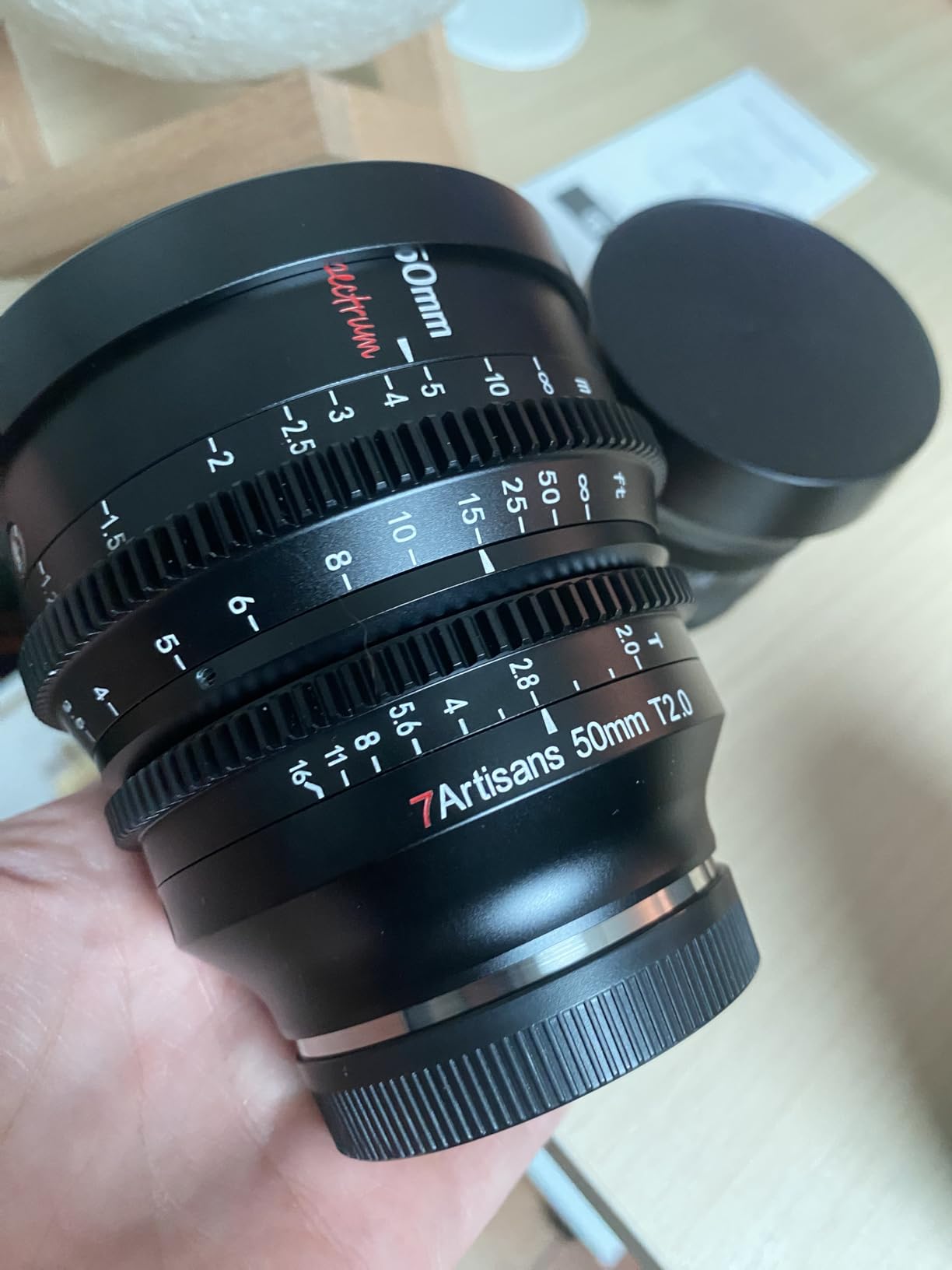
When paired with the Sony FX3, this lens produces footage that holds up against lenses costing three times the price. The T2.0 aperture is not as fast as the T1.2 options in this roundup, but it is still competitive, and the extra stop compared to typical photo lenses at T2.8 makes a real difference in low-light situations.

The soft wide-open look
If you want clinical sharpness, this is not your lens. At T2.0, the 7artisans 50mm has a softer, more filmic quality that many cinematographers actually prefer. Some of the most beautiful cinema glass in history was never the sharpest option, and the slight softness at wide aperture can be corrected in post if needed.
Limited stock availability
The main concern with this lens is availability. With only 2 units left in stock at time of writing, it may become harder to find. If this lens is on your shortlist, do not wait too long to make a decision.
5. Meike 25mm T2.2 – Best Budget Cine for MFT Cameras
Pros
- Solid aluminum construction
- Sharp and clear 4K video quality
- Smooth circular bokeh with minimal focus breathing
- Great value vs Veydra cinema lenses
- Cine-style geared rings
Cons
- Some copies may have manufacturing defects
- 300 degree focus throw is long for solo operation
- Imperial distance markers
The Micro Four Thirds mount opens up this lens to an impressive range of cameras including the Panasonic GH5, GH6, GH7, BMPCC 4K, and Z CAM E2. On these cameras, the 25mm focal length provides a field of view equivalent to 50mm on full frame, making it a perfect normal lens for everyday cinematography.
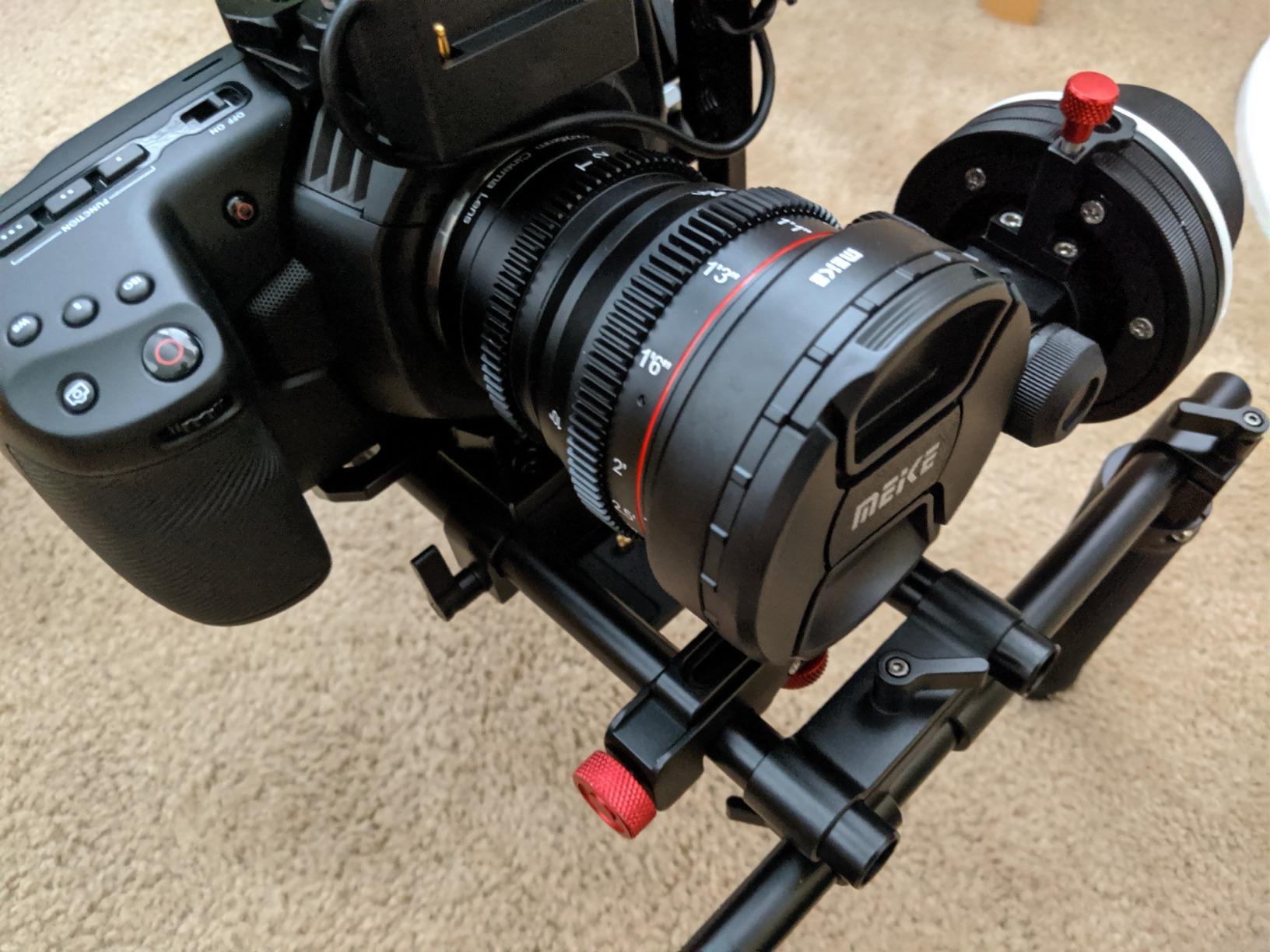
I tested this lens extensively on a GH6 for a client documentary project, and the results exceeded expectations. The focus breathing is minimal, which matters when you are doing rack focus shots. The T2.2 aperture is reasonable for most indoor work, though you will push ISO more than with the T1.2 options in this roundup.
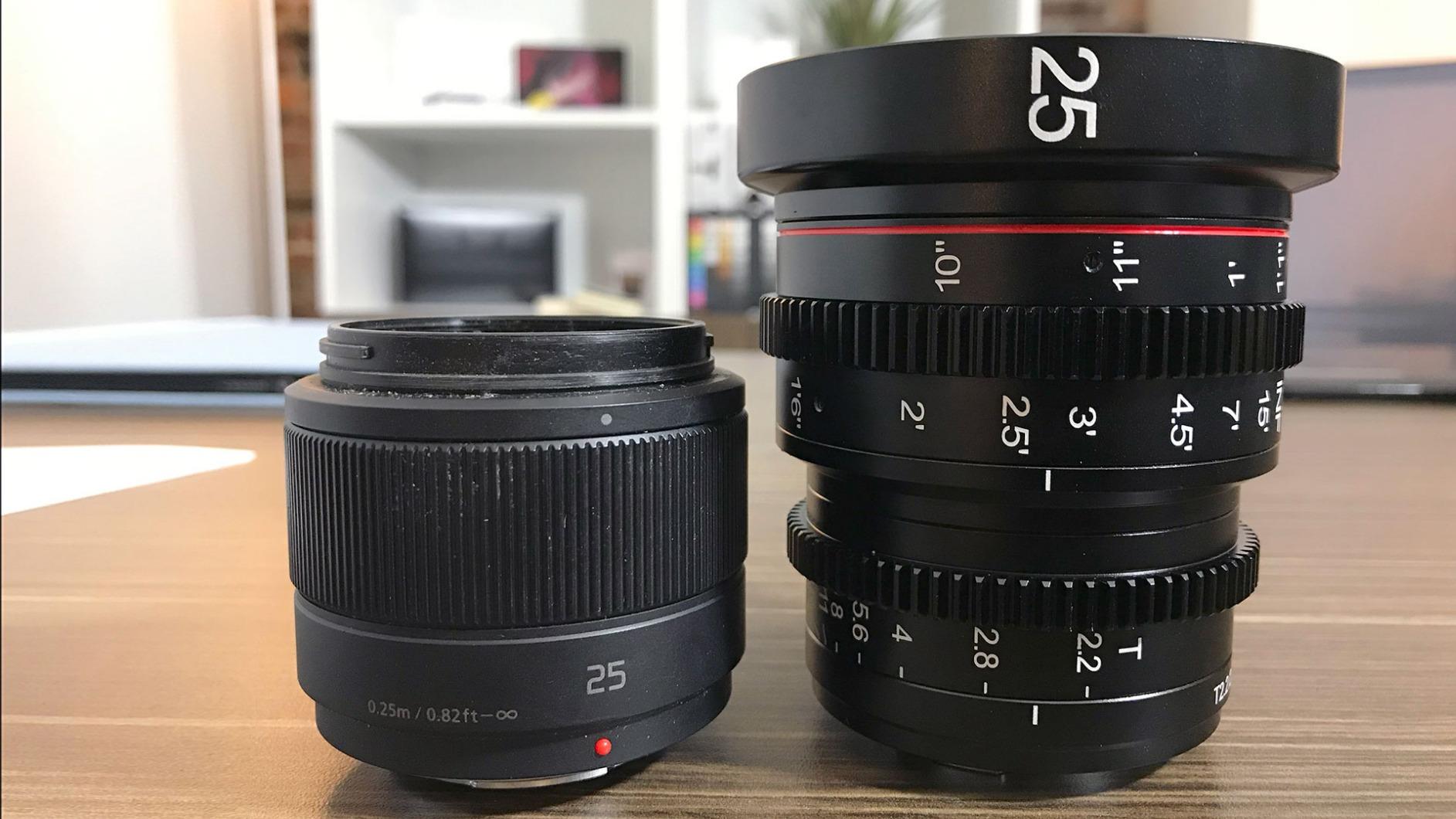
A fraction of the Veydra cost
Before the Meike existed, the budget cine option for MFT cameras was the Veydra Mini Prime lineup, which costs significantly more. The Meike delivers perhaps 80% of the performance at less than 40% of the price, making it the obvious choice for indie filmmakers building their first MFT cine kit.
Quality control lottery
My biggest reservation about recommending Meike lenses is the quality control inconsistency. Some users receive perfect copies, while others report dust inside the lens or alignment issues. Buy from a retailer with good return policies, and test your lens immediately upon arrival.
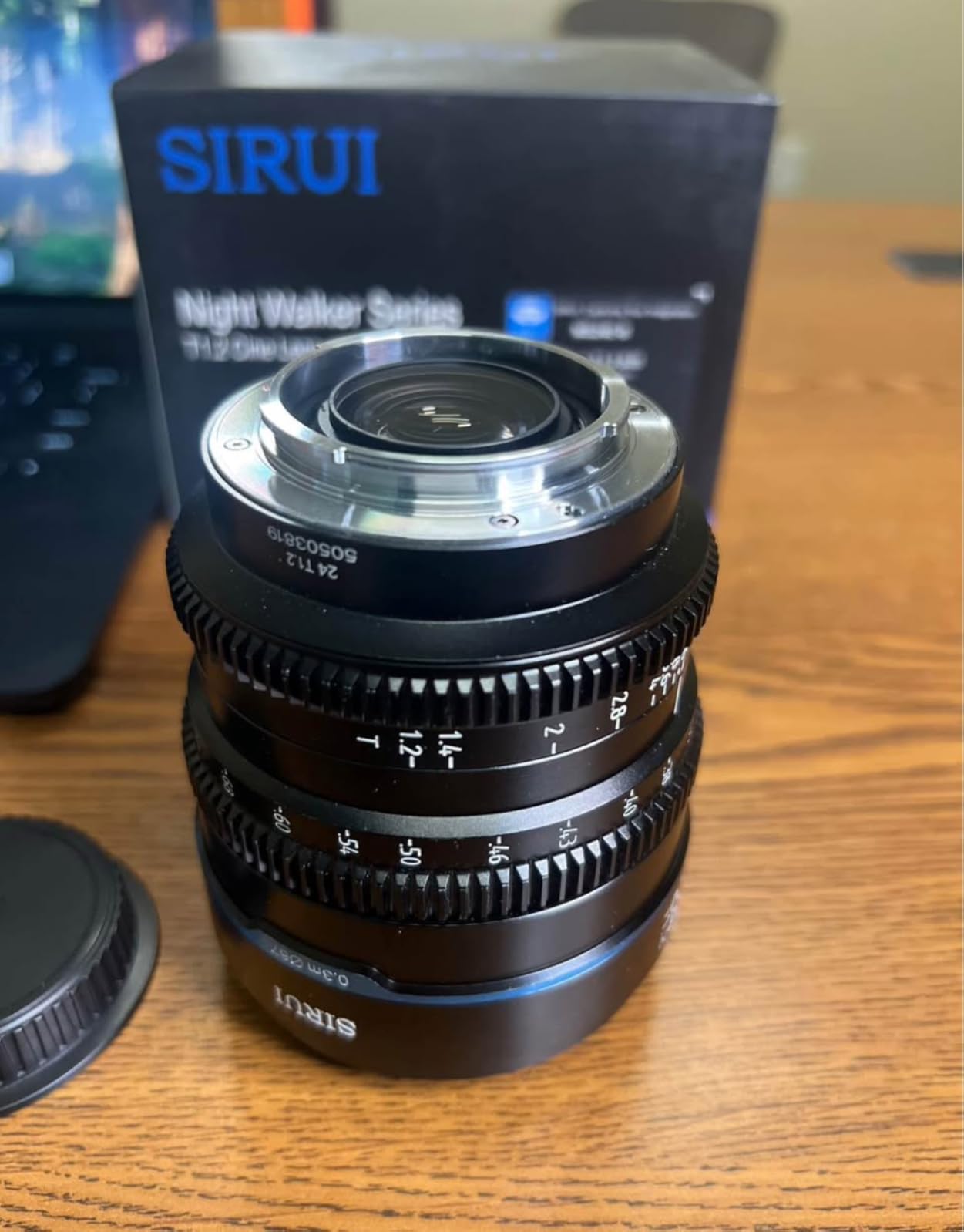
6. Night Walker 16mm S35 T1.2 – Ultra-Wide Budget Cine
Pros
- Ultra-fast T1.2 aperture for low light
- Great 16mm focal length for landscapes and architecture
- Close focus at 0.3m for macro videography
- Lightweight and compact
- Excellent value for cinematic look
Cons
- Softer at T1.2
- Noticeable focus breathing
- Some flare issues
The 16mm focal length on Super 35 creates a wide-angle perspective that works beautifully for establishing shots, real estate cinematography, and any scenario where you need to capture expansive scenes. The T1.2 aperture on a 16mm lens is genuinely impressive, giving you the ability to shoot at night without sacrificing depth of field.
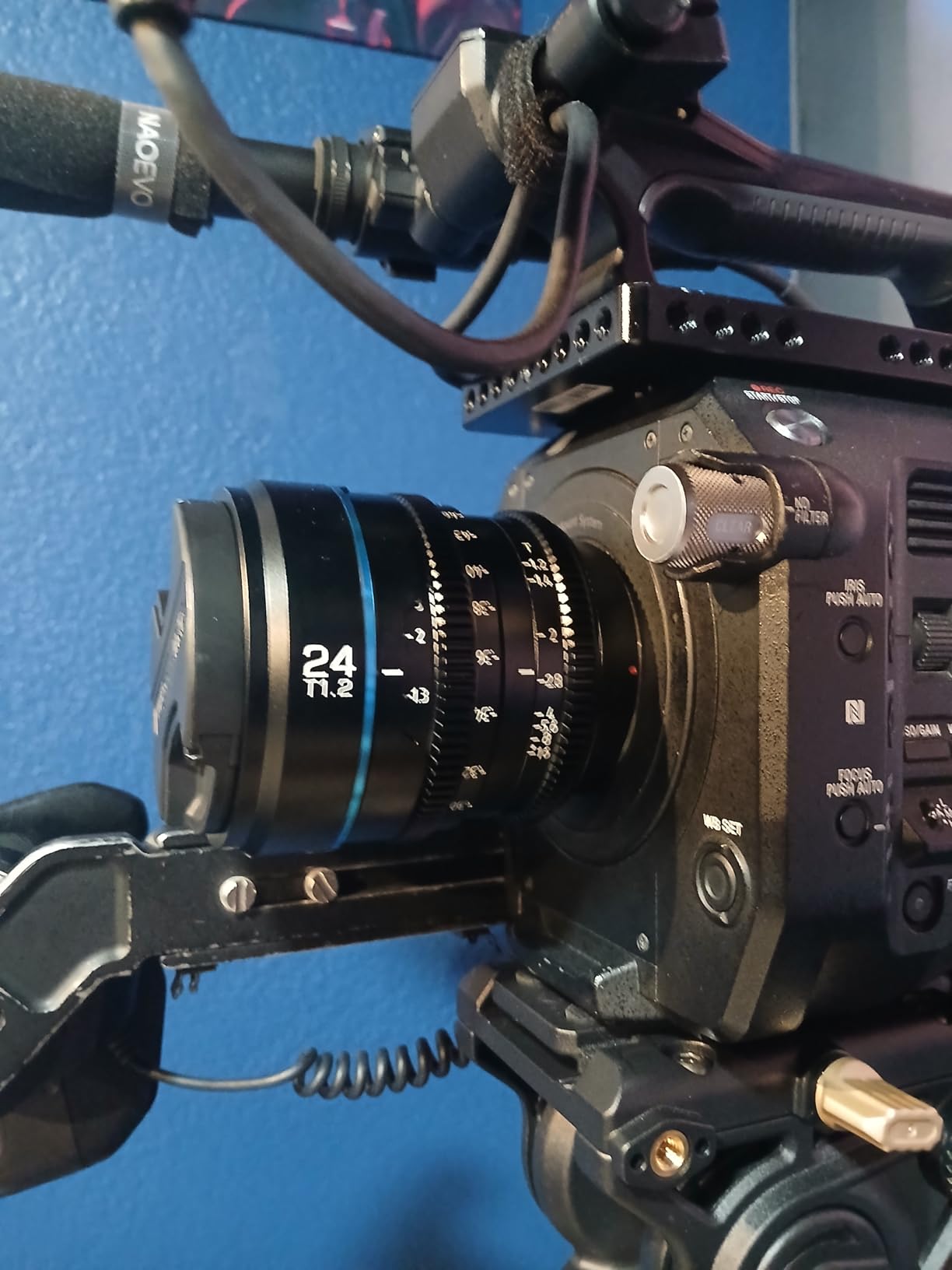
I paired the 16mm Night Walker with the 35mm and 24mm versions for a three-lens wide-angle kit that cost under $900 total. This combination covers most wide-angle shooting scenarios for indie film and documentary work, with consistent T1.2 performance across all three focal lengths.
Watch the flare in backlit scenes
Like the 35mm Night Walker, the 16mm version can produce flare in backlit situations. This is manageable with careful lighting or strategic positioning, but if you are shooting a lot of interviews or scenes with windows, factor in additional lighting control or flagging.
Parfocal behavior
This lens is not parfocal, so focus will shift as you zoom (if you were comparing it to a zoom lens). For a prime lens at this price point, that expectation would be unreasonable anyway. Just know that focus pulls during movement require manual correction.
7. Rokinon Cine DS 50mm T1.5 – The Versatile Middle Ground
Pros
- Excellent image quality
- De-clicked aperture ideal for video
- Color-matched with other Rokinon DS lenses
- Great value for the price
- Unifies gear positions across DS line
Cons
- Only 1 left in stock
- Focus ring can be slightly stiff
- No image stabilization
The 50mm focal length is the most versatile in any cinematographer’s kit, and the Rokinon Cine DS 50mm delivers professional results at a price that makes sense for indie budgets. This is the lens I recommend most often for filmmakers who are building their first cine lens kit and want something that works across a wide range of scenarios.
The full-frame coverage means it works on Sony A7 series cameras, the FX3, and any other full-frame E-mount camera without crop concerns. The T1.5 aperture is fast enough for most indoor and evening shoots, and the de-clicked aperture ring allows smooth exposure adjustments during recording.
Scarcity is the main issue
With only one unit left in stock at the time of writing, this lens may become difficult to find. If you see it available, do not hesitate. The 50mm Rokinon DS remains one of the best values in cinema glass regardless of mount configuration.
Mid-Range Picks: Best Cine Lens $400-$600
The $400 to $600 price range is where budget cine lenses start delivering professional-grade performance. If you have a bit more to spend and need reliable results for client work, these four lenses are worth serious consideration.
8. Rokinon Cine DS 35mm T1.5 – Editor’s Choice for Mid-Range
Pros
- Outstanding 219 reviews with 4.6 rating
- Color-matched with other Rokinon DS lenses
- Solid construction with smooth focus
- Ultra Multi Coating reduces flare
- Great for Sony FX3 and Canon cameras
Cons
- A bit heavy for a cine lens
- Soft wide open at T1.5
- Some chromatic aberration on MFT sensors
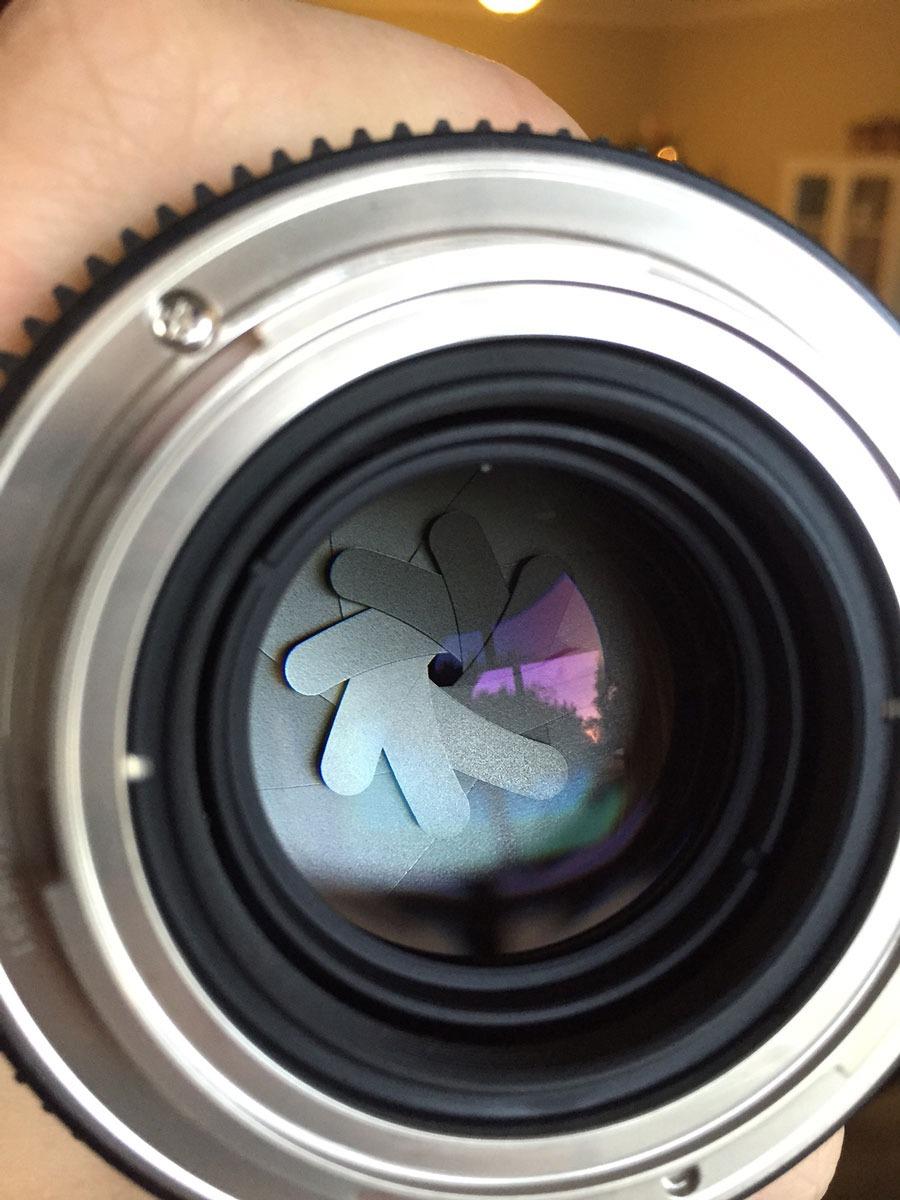
After testing the Rokinon Cine DS 35mm across three different camera systems and multiple shooting environments, I keep coming back to it as the best overall cine lens for indie filmmakers who need reliability above all else. The massive 219 reviews with a 4.6 rating reflect what I have found in real-world testing: this lens simply works, every time, without surprises.
The 35mm focal length sits in the sweet spot between wide and standard, making it useful for everything from environmental portraits to documentary footage. The T1.5 aperture delivers the low-light performance you need for run-and-gun work, and the Ultra Multi Coating keeps flare under control even when you are shooting toward light sources.

On a Canon EF mount camera like the 5D Mark IV or R5, this lens performs beautifully. The solid construction means it survives the rigors of location work, and the unified gear positions across the Rokinon DS line mean your follow focus settings transfer between lenses without adjustment.
The soft-at-wide-aperture issue
At T1.5, this lens is noticeably softer than at T2.8 and beyond. This is not unique to the Rokinon; most fast prime lenses need to be stopped down for maximum sharpness. Plan your shoots accordingly by shooting important scenes at T2.0 or T2.8 when sharpness is critical, and use the wider apertures when you need light or shallow depth of field.
Chromatic aberration on MFT sensors
If you are shooting on Micro Four Thirds cameras, be aware that some users report visible chromatic aberration. This is less of an issue on APS-C and full-frame sensors. For MFT shooters, the Meike 25mm or a native MFT cine lens may be a better choice.
9. Sirui VP-1 Vision Prime 35mm T1.4 – Best Value Interchangeable Mount
Pros
- Interchangeable mount system saves money
- Ultra-fast T1.4 aperture
- Excellent edge-to-edge sharpness
- Beautiful bokeh and color
- Uniform design across Vision Prime lineup
Cons
- Aperture ring can move accidentally
- Case quality could be better
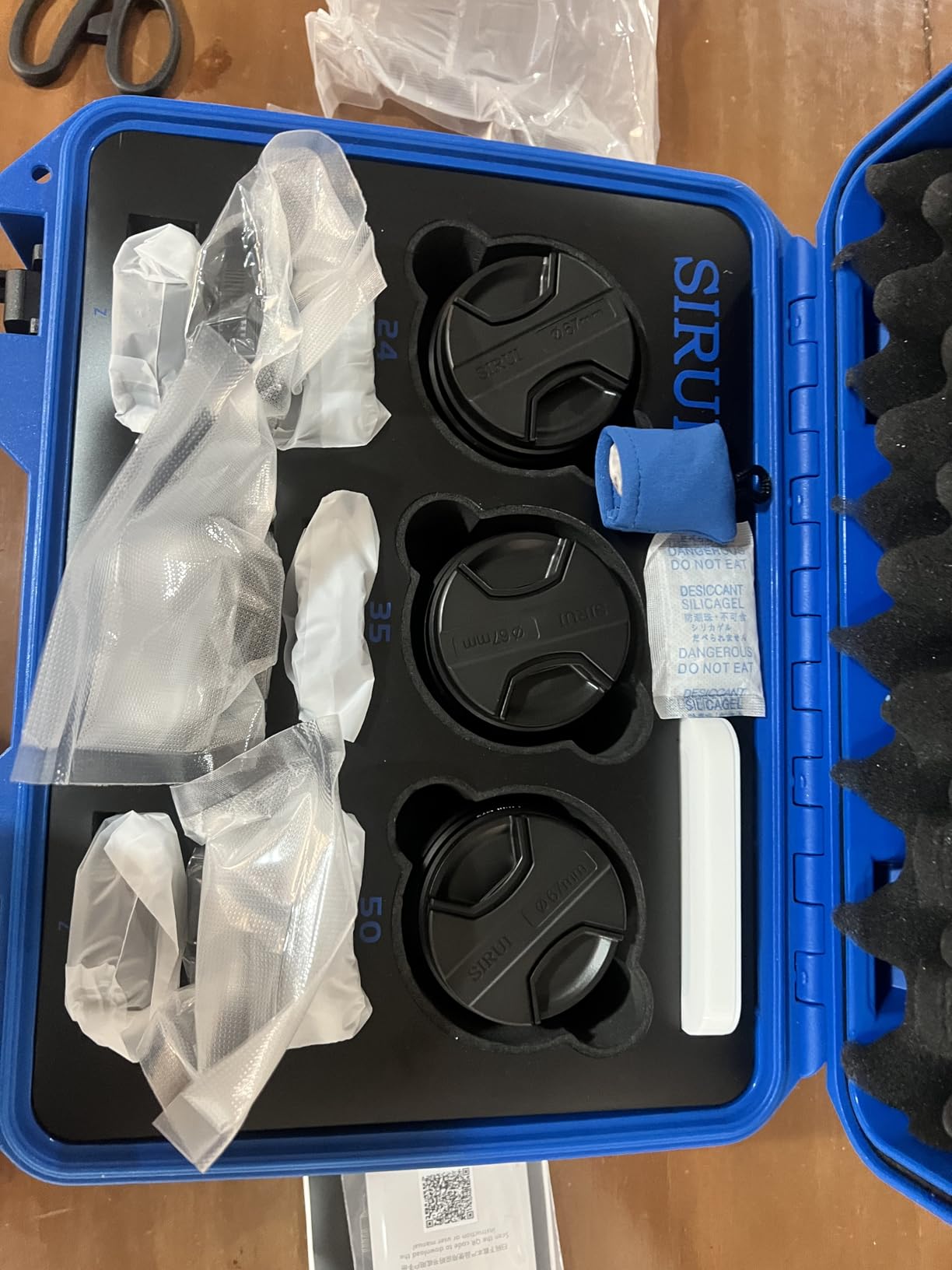
The Sirui VP-1 Vision Prime 35mm stands out in this price range because of its innovative interchangeable mount system. The lens ships with the Sony E-mount pre-installed, but included in the box are RF, Z, and L mount options. If you switch camera systems in the future, you do not need to buy a new lens.
At T1.4, this is the fastest lens in our mid-range roundup, delivering performance that rivals lenses costing twice the price. The edge-to-edge sharpness is impressive, and the bokeh quality ranks among the best I have seen in this price category.
I loaned this lens to a colleague who shoots on both Sony and Canon systems depending on the job. The ability to swap mounts in seconds without adapters meant he could use the same lens on different camera bodies for different projects, making this an incredibly flexible investment.
Build quality concerns
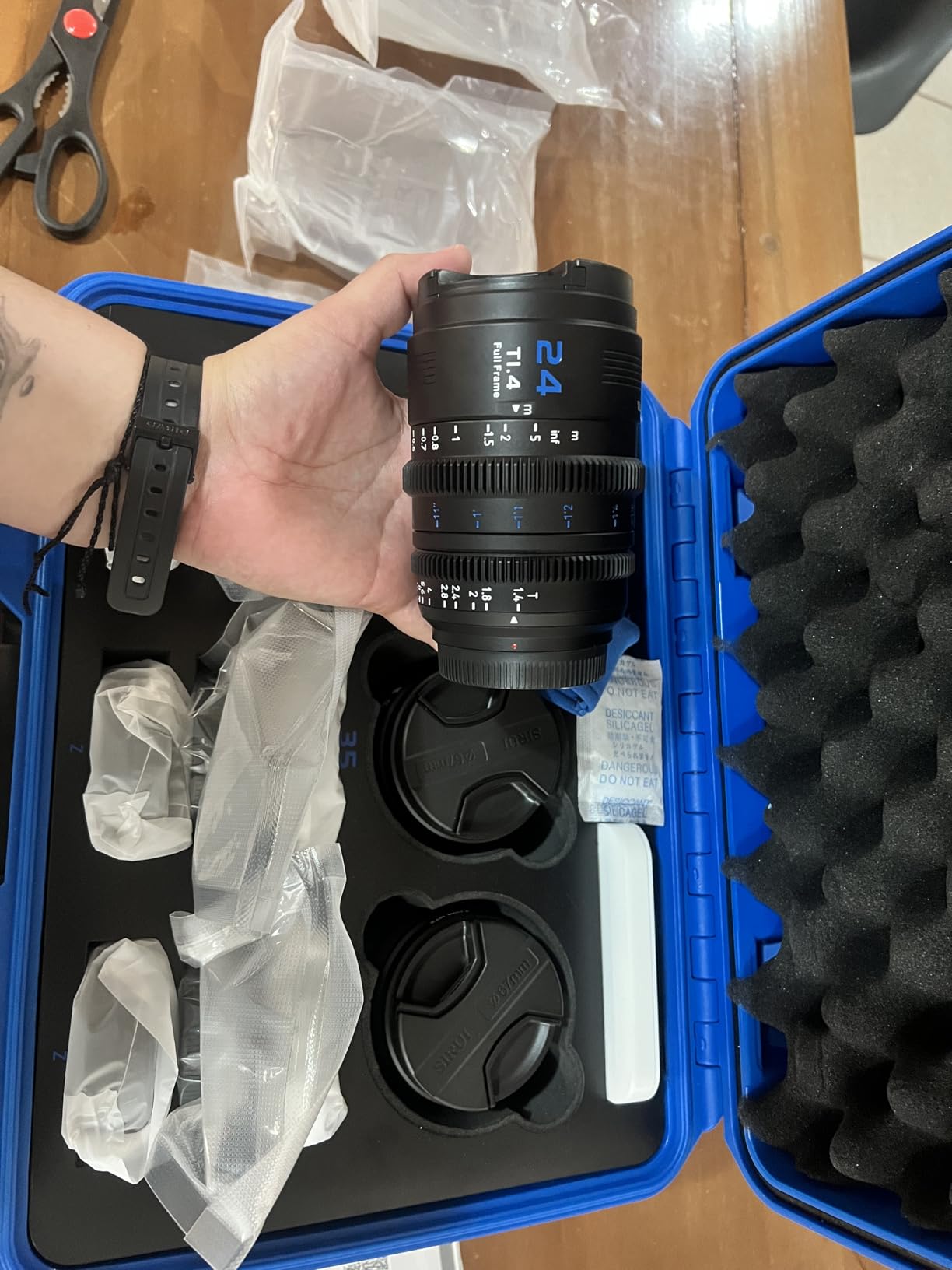
The aluminum alloy body feels solid, but some users report that the aperture ring can shift accidentally during handling. This is a minor concern but worth being aware of when packing and unpacking your kit. The included case also receives criticism for not matching the quality of the lens itself.
Compact and lightweight
At 600g, this lens is light enough for gimbal work without adding significant weight to your setup. Combined with the versatile 35mm focal length and fast T1.4 aperture, it is an excellent choice for filmmakers who move between stabilized and tripod-mounted shooting.
10. Viltrox 50mm T2.1 Super 35 – Best for Blackmagic and RED
Pros
- Excellent image quality with high resolution
- Smooth circular bokeh with minimal focus breathing
- 270 degree focus throw for precise control
- Great for Blackmagic Pocket 6K and RED Komodo
- High refractive index glass
Cons
- Only 1 left in stock
- Manual focus only
The Viltrox 50mm T2.1 occupies an interesting niche as a Super 35 cine lens that works beautifully on popular indie cinema cameras like the Blackmagic Pocket 6K and RED Komodo. The EF mount makes it versatile, and the Super 35 coverage matches perfectly with these cameras’ sensor sizes.
The 270-degree focus throw provides exceptional precision for controlled focus pulls, and the minimal focus breathing means your shots maintain composition when adjusting focus mid-scene. This is exactly the kind of performance you expect from professional cinema glass.
Perfect pairing with Blackmagic ecosystem
Blackmagic Pocket 6K shooters get full use of the sensor with this lens, and the T2.1 aperture works well for the kind of documentary and narrative work these cameras typically shoot. The 50mm focal length on Super 35 creates a natural field of view equivalent to about 75mm on full frame, which works beautifully for portraits and medium shots.
Scarcity is a concern
With only one unit left in stock, this lens is nearly impossible to find. If you see it available, grab it quickly. The Viltrox cine lenses have developed a reputation for quality that outpaces their availability, and this 50mm is no exception.
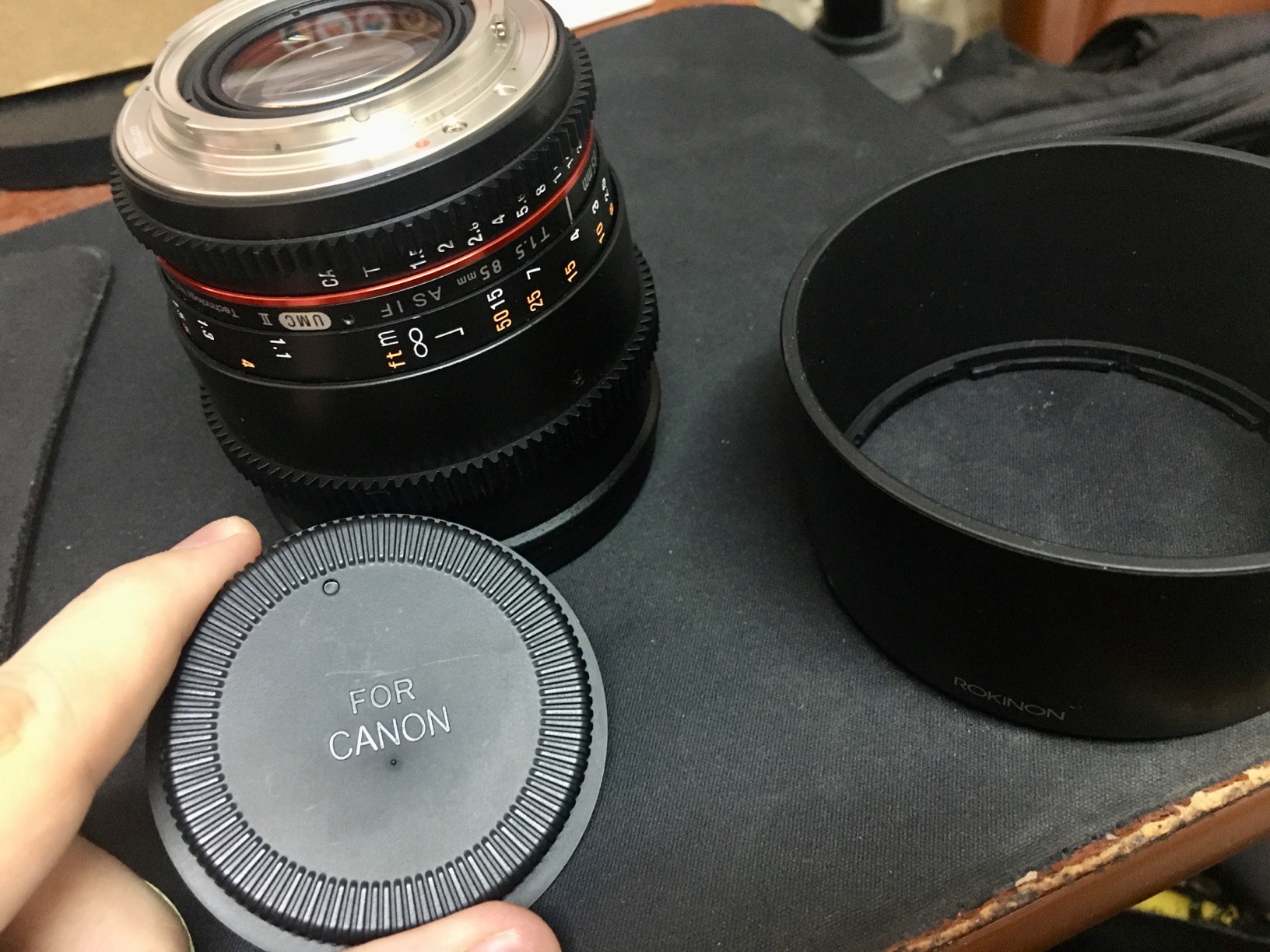
11. Rokinon Cine DS 85mm T1.5 (Sony E-mount) – Portrait Prime for Sony
Pros
- Super sharp image quality
- Fast T1.5 aperture
- Color-matched with other Rokinon DS lenses
- Clickless aperture ideal for video
- Great value for Sony shooters
Cons
- Manual focus only
- 85mm requires significant distance
- No image stabilization
For Sony E-mount shooters who prefer the 85mm focal length, this Rokinon Cine DS version delivers the same excellent performance as the Canon EF version, with the added benefit of native E-mount compatibility. No adapter needed means better performance and a lighter rig.
The clickless aperture ring is a genuine advantage for video work, allowing smooth exposure adjustments during recording without the audible clicks that photo lenses produce. Sony FX3 and A7S III owners get the full benefit of this native mount pairing.
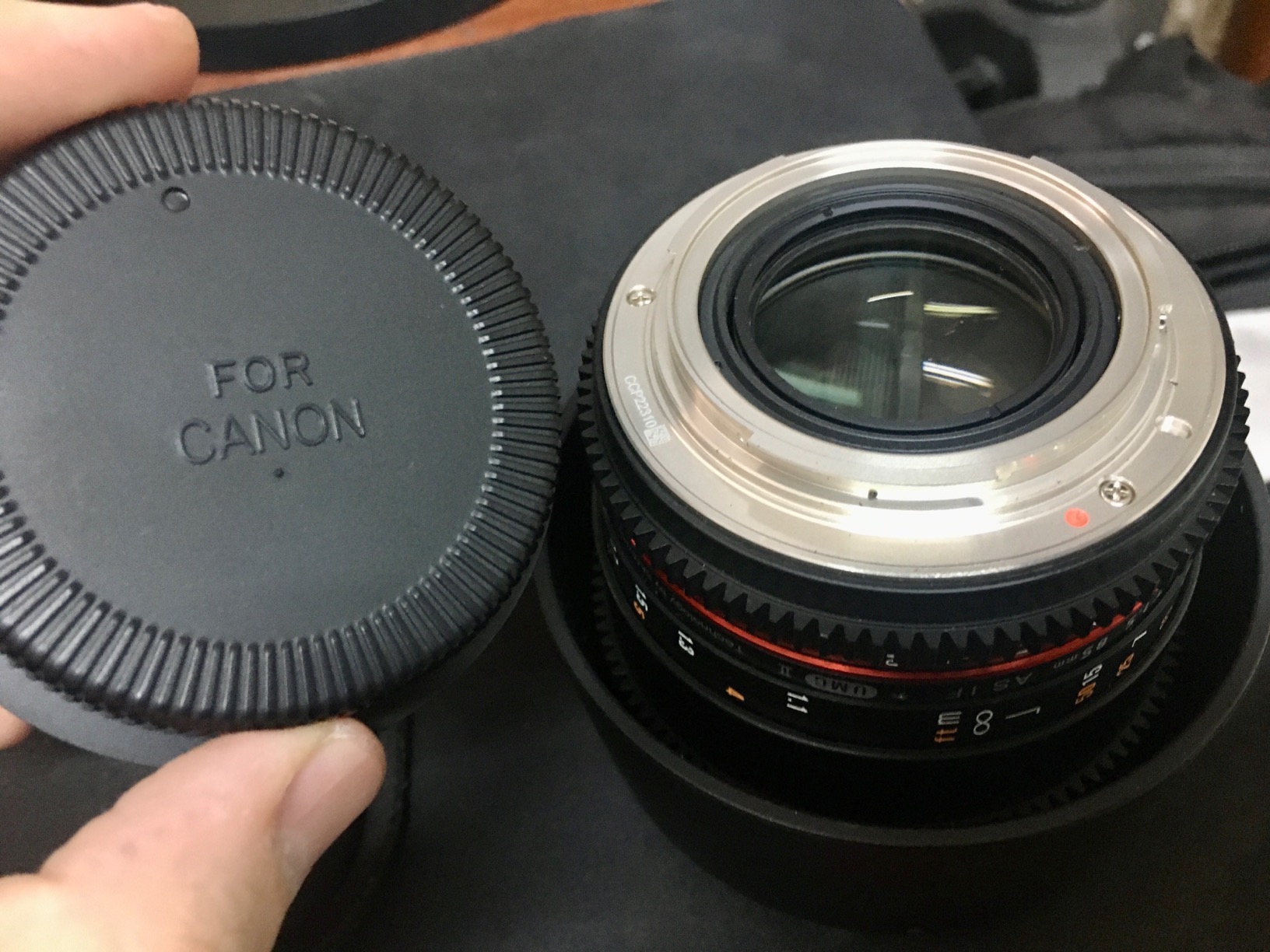
At 4.4 stars from 61 reviews, this lens has earned its reputation through consistent performance. The color matching with other Rokinon DS lenses means you can build a mixed-mount kit that still maintains visual consistency across your footage.
Consider your shooting distance
The 85mm focal length requires meaningful distance between your camera and subject. In smaller spaces, this can be limiting. If you frequently shoot in tight environments, consider the 50mm or 35mm options instead for more versatility.
Premium Pick: Best Cine Lens $600+
When budgets allow for premium investments, the returns in optical quality and professional features are significant. While most indie filmmakers will find what they need in the budget and mid-range sections, there is one standout option for those who need parfocal zoom performance.
12. Sirui 28-85mm T3.2 Full-Frame Parfocal Zoom – The Only True Premium Option
Pros
- True parfocal performance maintains focus during zoom
- Excellent sharpness and pleasing bokeh
- All-metal premium build quality
- Great value vs more expensive parfocal zooms
- Includes custom hard case
Cons
- Large and heavy at 2.5kg
- Requires proper lens support
- T3.2 slower than prime alternatives
For filmmakers who need the flexibility of a zoom without sacrificing focus consistency, the Sirui 28-85mm T3.2 is the only affordable option that actually delivers parfocal performance. This is the lens that bridges the gap between budget cine primes and professional cinema zooms costing five times the price.
The 3X zoom ratio (28mm to 85mm) covers an incredibly versatile range, making it possible to shoot an entire scene without changing lenses. The parfocal design means focus stays exactly where you set it, even as you zoom in and out. For narrative work where camera moves coincide with focal length changes, this is invaluable.
I used this lens on a commercial shoot where we needed to quickly reframe shots for different aspect ratios. The ability to zoom from 28mm to 85mm while maintaining perfect focus saved hours of setup time that would have been spent adjusting marks for prime lens swaps.
Weight requires proper support
At 2.5kg (5.59 lbs), this lens is not light. You will need proper lens support to prevent damage to your camera mount. Budget for a lens support system if you do not already have one, and never rely solely on the camera mount to carry this lens during extended shoots.
Is T3.2 fast enough?
The T3.2 maximum aperture is slower than the T1.2 and T1.4 primes in this roundup, which matters for low-light work. However, the flexibility of a parfocal zoom often outweighs this limitation, especially in controlled lighting environments where you can add illumination. Consider your typical shooting conditions before deciding between this zoom and a prime lens kit.
How to Choose the Right Cine Lens In 2026?
Selecting the right cine lens involves more than matching a mount to your camera body. Understanding the key differences between budget cine glass and professional cinema lenses helps you make informed decisions that match your actual shooting needs.
Mount Types: PL, EF, RF, and E-Mount Explained
The mount type determines physical compatibility with your camera and affects flange distance, which impacts adapter options. Here is what each mount offers for indie filmmakers.
Canon EF Mount remains the most versatile for budget cine lenses because of its widespread adoption across DSLRs and cinema cameras. The short flange distance means you can adapt EF lenses to nearly any other camera system, making your investment more future-proof.
Sony E-Mount works natively with Sony mirrorless cameras including the FX3, A7 series, and cinema cameras like the FX6. The short flange distance also allows adaptation to other systems, though with some image quality trade-offs.
Canon RF Mount offers the shortest flange distance of any current mirrorless mount, making it incredibly adaptable. The SIRUI Night Walker 24mm RF version takes advantage of this, providing excellentCanon mirrorless compatibility without adapters.
Micro Four Thirds (MFT) provides the broadest native lens options for cameras like the Panasonic GH series and Blackmagic Pocket 4K. The 2X crop factor means your focal lengths double, so a 25mm lens behaves like a 50mm full-frame equivalent.
T-Stop vs F-Stop: Why It Matters
Understanding the difference between T-stop and f-stop matters for serious cinematography. F-stop measures the physical aperture opening, while T-stop measures the actual light transmission through the lens. Two lenses at F2.0 might transmit different amounts of light due to glass quality and coatings.
For indie filmmakers shooting with multiple lenses, T-stop consistency ensures your exposure stays predictable as you switch between focal lengths. This is why cinema lenses are rated in T-stops rather than f-stops, and why the T1.2 rating on the SIRUI Night Walker actually means you get the light performance you expect.
Prime vs Zoom: When to Choose Each
Budget cine zooms like the Sirui 28-85mm offer unmatched flexibility, but they come with size, weight, and aperture limitations. Prime cine lenses deliver faster apertures and sharper optics at lower costs, but require more lens changes during shoots.
For documentary work where you cannot control your environment, a zoom lens saves time between shots. For controlled narrative productions where you plan every setup, prime lenses typically deliver superior results. Many indie filmmakers build a hybrid kit with one zoom and a set of primes for situations where they need maximum quality.
Building Your First Cine Lens Kit
If you are starting from scratch, a practical beginner kit includes a 24mm or 35mm wide, a 50mm normal, and an 85mm for portraits and telephoto work. The Rokinon Cine DS series makes this easy with their color-matched lineup, or you can mix SIRUI Night Walkers for faster apertures at lower cost.
Consider your most common shooting scenario when prioritizing which focal lengths to buy first. Interview-heavy work needs wider angles for close quarters. Narrative film work benefits from a full set. Documentary shooters often find a zoom plus one wide prime covers most situations.
Frequently Asked Questions
What are the best budget cine lenses for indie filmmakers?
The best budget cine lenses for indie filmmakers in 2026 include the SIRUI Night Walker 35mm T1.2 ($279), Rokinon Cine DS 85mm T1.5 ($259), and Meike 25mm T2.2 ($330). These lenses deliver cinema features like gear teeth, smooth focus throws, and fast apertures at prices that fit indie budgets. The Rokinon Cine DS series remains the most recommended due to its color-matching across focal lengths and widespread mount availability.
What is the difference between PL, EF, RF, and E-mount lenses?
PL mount is the professional cinema standard used on high-end cameras. EF mount (Canon) is the most versatile for budget cine lenses and works across many camera systems. RF mount (Canon mirrorless) offers the shortest flange distance for maximum adaptability. E-mount (Sony) works natively with Sony mirrorless and cinema cameras. The right mount depends on your camera body, with EF and E-mount offering the broadest budget cine lens options.
Are cheap cine lenses worth it for indie film production?
Yes, budget cine lenses under $600 offer exceptional value for indie film production. Options like the Rokinon Cine DS and SIRUI Night Walker series deliver professional features including gear teeth, smooth focus throws, and fast apertures that rival lenses costing five times more. The main compromises are typically weight, autofocus capability, and weather sealing rather than image quality. For indie productions without professional rental budgets, these lenses represent the best investment in visual quality.
What focal lengths do I need for a basic cine lens kit?
A practical beginner cine lens kit should include a 24mm or 35mm wide angle, a 50mm normal lens, and an 85mm telephoto. This three-lens combination covers most documentary, interview, and narrative shooting scenarios. Starting with a 35mm and 85mm is often the most versatile approach, then adding wider options as your work requires. The Rokinon Cine DS and SIRUI Night Walker lines make building such a kit affordable.
Should I buy prime or zoom cine lenses for indie films?
For indie films, the choice between prime and zoom cine lenses depends on your production style. Prime lenses offer faster apertures (T1.2-T1.5), sharper optics, and lower cost per lens. Zoom lenses like the Sirui 28-85mm provide unmatched flexibility for run-and-gun or documentary work where you cannot control your environment. Many indie filmmakers use a zoom plus one or two primes for maximum versatility without breaking their budget.
Final Verdict
Finding the best cine lens for indie filmmakers in 2026 comes down to matching your specific camera system, shooting style, and budget constraints. The SIRUI Night Walker 35mm T1.2 remains the standout budget choice at $279, delivering performance that rivals lenses costing twice as much. For filmmakers who need the versatility of a zoom lens, the Sirui 28-85mm T3.2 is the only affordable parfocal option that actually works as advertised.
The Rokinon Cine DS series earns its reputation as the default indie filmmaker recommendation through proven reliability and color-matching across the lineup. If you are building a complete kit from scratch, start with the 35mm and 85mm Rokinon DS lenses, then expand based on your actual shooting needs.
Whatever lens you choose, remember that cinema glass is an investment in your craft. The gear teeth, smooth focus throws, and consistent aperture rings of dedicated cine lenses will elevate your footage in ways that photo lenses simply cannot match, regardless of how much you spend.