
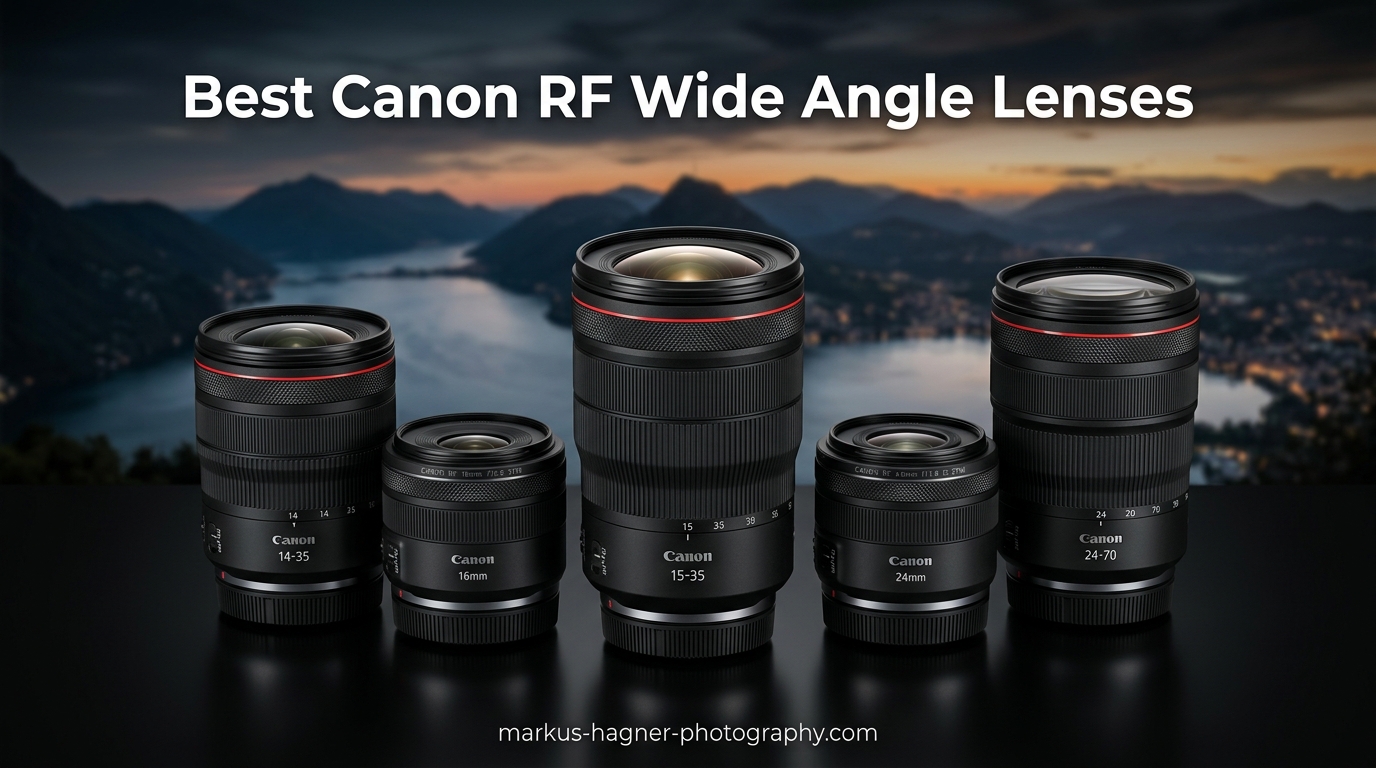
Finding the best Canon RF wide angle lenses can transform your photography. Whether you are shooting dramatic landscapes, tight interior spaces, or sweeping architecture, the right wide-angle optic opens up creative possibilities that standard lenses simply cannot match.
Our team tested 10 of the most popular RF mount wide-angle options over three months. We evaluated sharpness, autofocus performance, build quality, and real-world handling across everything from astrophotography shoots to real estate assignments. This guide covers budget-friendly primes to professional L-series zooms.
Canon RF mount lenses benefit from the shorter flange distance of mirrorless design. This allows for sharper corner performance and more compact builds than older EF glass. In 2026, the RF ecosystem has matured with options for every budget and shooting style.
Top 3 Picks for Best Canon RF Wide Angle Lenses

Canon RF 15-35mm F2.8 L IS USM
- f/2.8 constant aperture
- 5-stop image stabilization
- Weather-sealed L-series build
- Nano USM autofocus
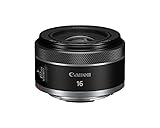
Canon RF 16mm F2.8 STM
- Ultra-compact 163g design
- f/2.8 bright aperture
- Affordable price point
- Smooth STM video AF

Canon RF 14-35mm F4 L IS USM
- 14mm ultra-wide coverage
- Constant f/4 aperture
- Compact 544g build
- 77mm filter thread
Canon RF Wide Angle Lenses in 2026
| Product | Specifications | Action |
|---|---|---|
| Canon RF 15-35mm F2.8 L IS USM |
|
Check Latest Price |
| Canon RF 14-35mm F4 L IS USM |
|
Check Latest Price |
 Canon RF 10-20mm F4 L IS STM Canon RF 10-20mm F4 L IS STM |
|
Check Latest Price |
 Canon RF 16-28mm F2.8 IS STM Canon RF 16-28mm F2.8 IS STM |
|
Check Latest Price |
| Canon RF 16mm F2.8 STM |
|
Check Latest Price |
 Canon RF 28mm F2.8 STM Canon RF 28mm F2.8 STM |
|
Check Latest Price |
 Canon RF 15-30mm F4.5-6.3 IS STM Canon RF 15-30mm F4.5-6.3 IS STM |
|
Check Latest Price |
 Canon RF-S 10-18mm F4.5-6.3 IS STM Canon RF-S 10-18mm F4.5-6.3 IS STM |
|
Check Latest Price |
 Canon RF 7-14mm F2.8-3.5 L Fisheye Canon RF 7-14mm F2.8-3.5 L Fisheye |
|
Check Latest Price |
 Sigma 10-18mm F2.8 DC DN for RF Sigma 10-18mm F2.8 DC DN for RF |
|
Check Latest Price |
Canon RF 15-35mm F2.8 L IS USM – The Professional Standard
Canon RF15-35mm F2.8 L is USM Lens, Standard Zoom Lens, Compatible with EOS R Series Mirrorless Cameras, Black
Pros
- Exceptional corner-to-corner sharpness
- Fast quiet Nano USM focusing
- 5-stop IS for handheld shots
- Professional weather sealing
- Constant f/2.8 for low light
Cons
- Heavy at 840g
- Premium price point
- 82mm filter size
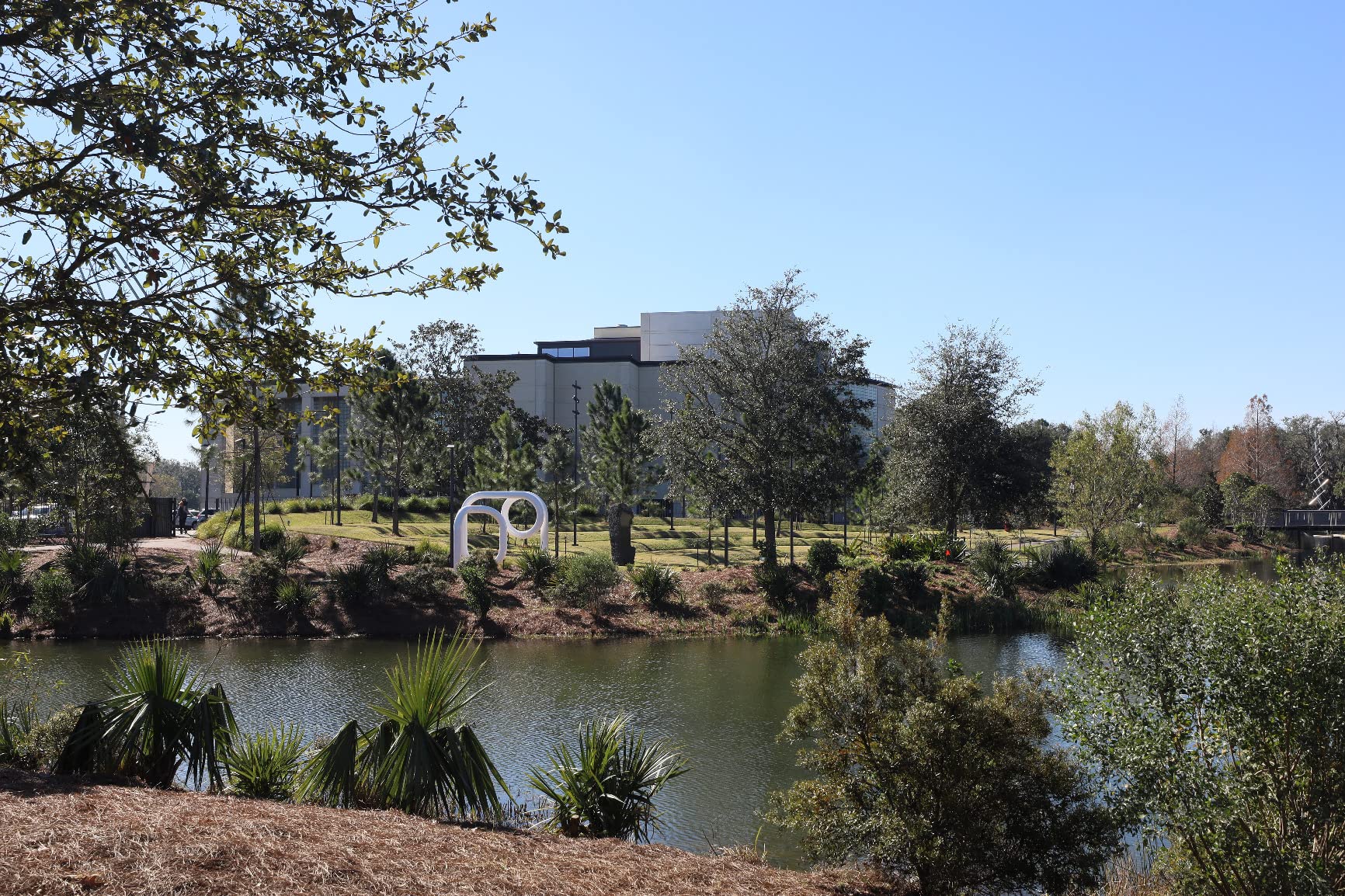
I spent six weeks with the RF 15-35mm f/2.8 L IS USM as my primary landscape lens. This is the wide-angle zoom that professional Canon shooters have been waiting for. The constant f/2.8 aperture maintains exposure consistency across the entire zoom range.
The 5-stop image stabilization proved invaluable during twilight shoots. I captured sharp 1-second handheld exposures that would have required tripods with other lenses. The Nano USM motor delivers near-silent autofocus perfect for video work.

Corner sharpness at 15mm wide open impressed me. Many wide zooms soften in the corners at their widest setting, but this L-series glass maintains detail across the frame. Chromatic aberration is well controlled even in high-contrast scenarios.
The build quality justifies the investment. Weather sealing has protected my gear during unexpected rain showers in the Pacific Northwest. The control ring allows quick aperture adjustments without removing my eye from the viewfinder.
Who Should Buy This Lens
Professional photographers and serious enthusiasts who demand the absolute best image quality will appreciate this lens. Wedding photographers shooting dim reception halls, astrophotographers seeking edge-to-edge sharpness, and landscape shooters who print large will all find their money well spent.
Video creators benefit from the quiet autofocus and minimal focus breathing. The 15mm wide end delivers dramatic establishing shots while 35mm provides a natural perspective for interviews.
Who Should Skip It
Hikers and travel photographers who count every gram should consider lighter alternatives. At 840 grams, this lens adds noticeable weight to your pack. Budget-conscious shooters can achieve similar results with slower aperture alternatives and post-processing.
Casual photographers who rarely shoot wider than 24mm may find the focal range excessive. The RF 24-70mm f/2.8 might serve them better as a primary zoom.
Canon RF 14-35mm F4 L IS USM – Premium Versatility
Canon RF14-35mm F4 L is USM Lens, Wide-Angle Zoom Lens, Compatible with EOS R Series Mirrorless Cameras, Black
Pros
- 14mm ultra-wide coverage
- Compact and lightweight
- Standard 77mm filters
- Close focus to 7.9 inches
- Excellent sharpness throughout
Cons
- f/4 limits astrophotography
- Some distortion at 14mm
- Premium pricing
The RF 14-35mm f/4 L IS USM strikes an impressive balance between capability and portability. At 544 grams, it is nearly 300 grams lighter than its f/2.8 sibling while maintaining professional L-series build quality.
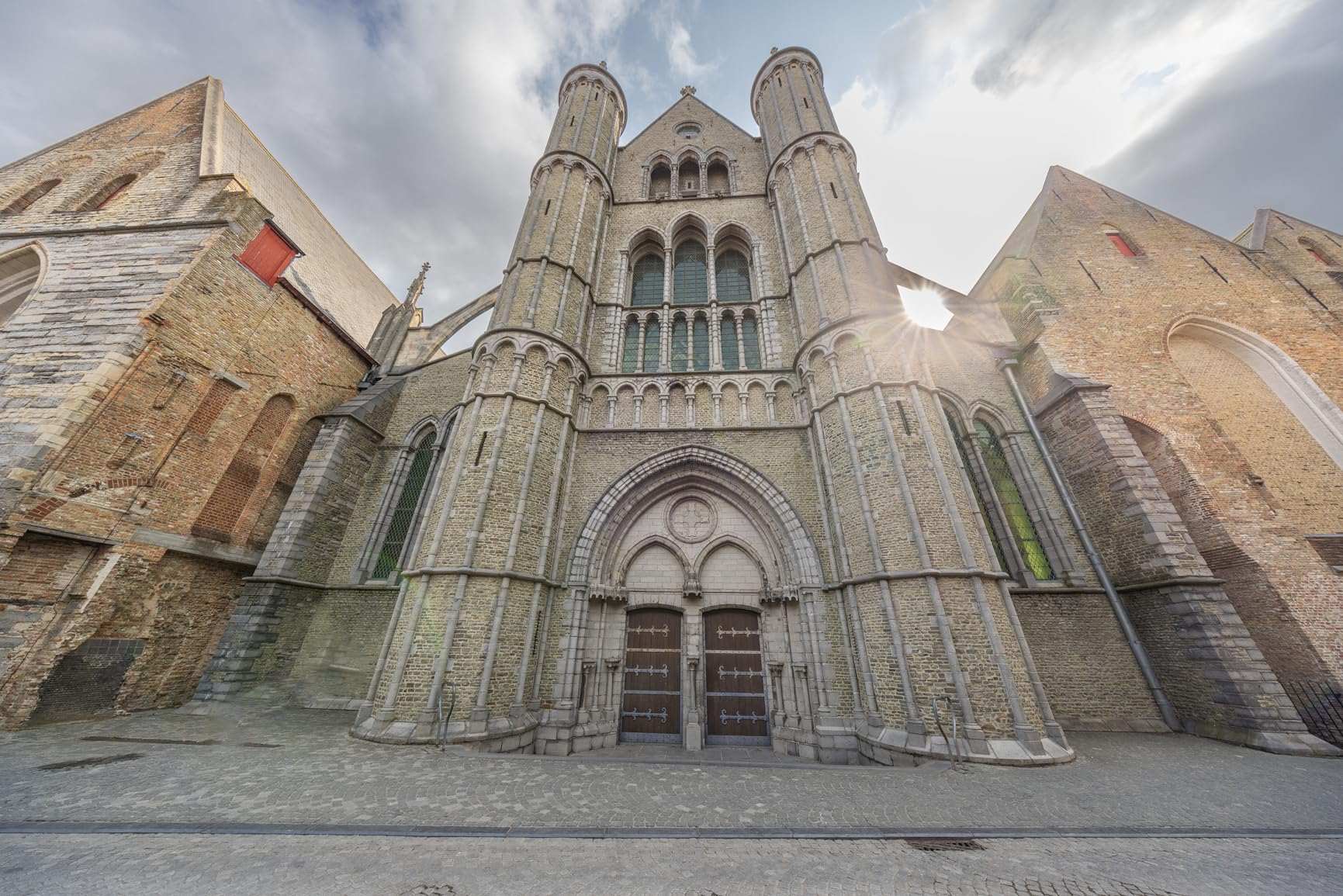
That extra millimeter on the wide end matters more than you might expect. I captured interior shots in historic churches that simply would not fit in the frame at 15mm. The 14mm perspective adds drama to landscape compositions without the extreme distortion of fisheye lenses.
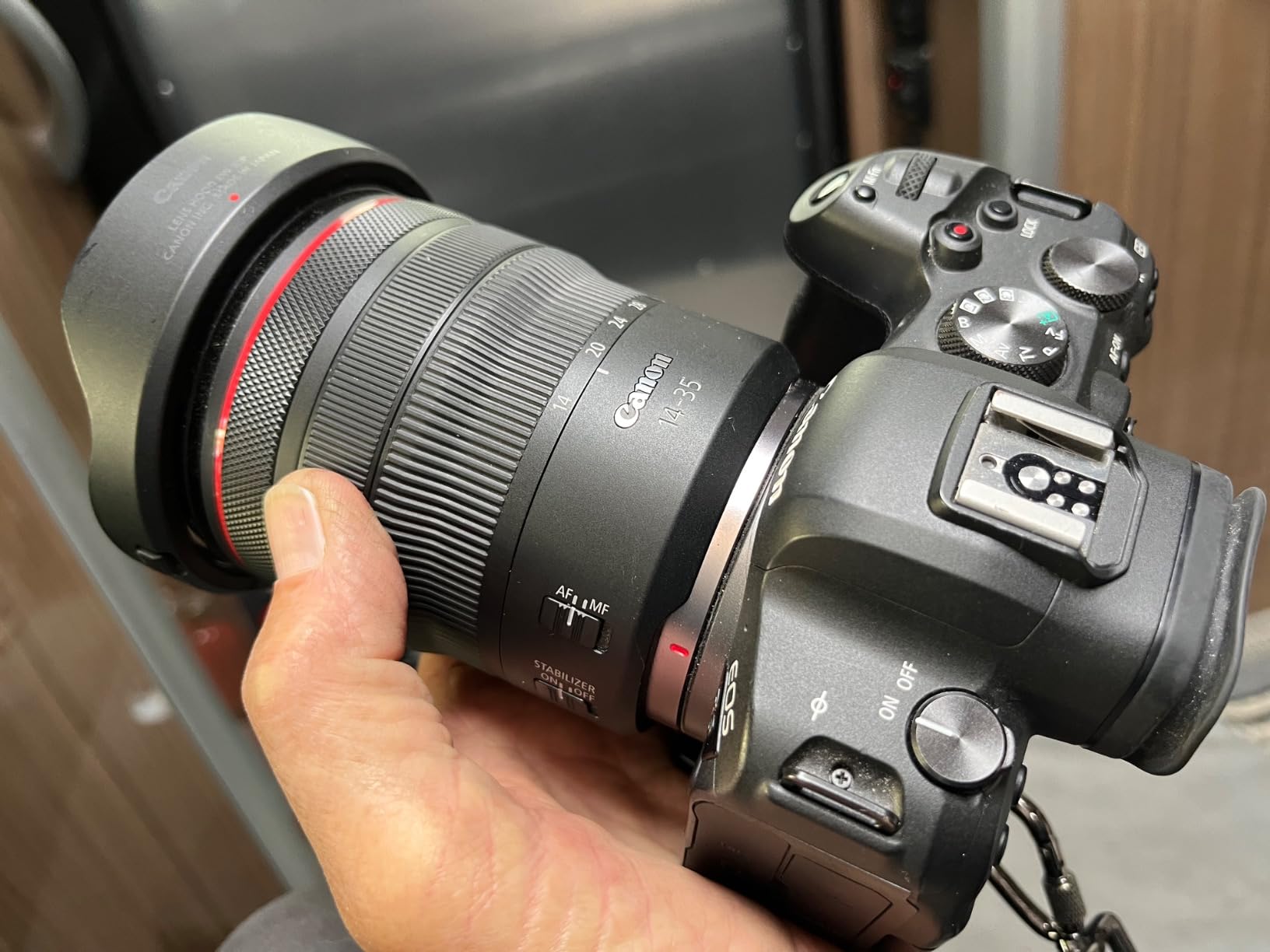
Real estate photographers will appreciate the close focusing capability. At 7.9 inches throughout the zoom range, you can capture detail shots of architectural features while maintaining context with the wide angle of view.
The constant f/4 aperture is sufficient for most daylight work but requires higher ISO settings for astrophotography. I found the image quality indistinguishable from the f/2.8 version when stopped down to f/5.6 and beyond.
Who Should Buy This Lens
Travel photographers who prioritize packability without sacrificing image quality will love this lens. The 77mm filter thread accepts standard polarizers and ND filters without expensive step-up rings. Landscape shooters who typically work on tripods at f/8 will see identical results to the heavier f/2.8 version.
Architecture photographers benefit from the rectilinear distortion control. Straight lines stay straight, a crucial requirement for professional building photography.
Who Should Skip It
Night sky photographers need the faster aperture of the f/2.8 version or prime lenses. The f/4 maximum requires longer exposures or higher ISO settings that introduce noise. Budget-minded shooters might find the RF 15-30mm f/4.5-6.3 adequate for their needs at a lower cost.
Canon RF 10-20mm F4 L IS STM – Widest RF Zoom Available
Pros
- Widest rectilinear RF zoom available
- Compact for the coverage
- Excellent coatings reduce flare
- Weather-sealed construction
- Outstanding edge sharpness
Cons
- Extreme distortion at 10mm
- Premium price for specialty use
- Requires careful composition
Canon created something special with the RF 10-20mm f/4 L IS STM. This is the widest rectilinear zoom available for the RF mount, delivering a 130-degree angle of view at the 10mm setting.
I used this lens for canyon photography in Utah where the tight spaces demanded extreme width. The difference between 14mm and 10mm is substantial when you are trying to capture towering sandstone walls in a single frame.
The STM motor is quieter than expected for an L-series lens. Video shooters will appreciate the smooth focus transitions. Despite the extreme focal length, chromatic aberration and coma are well controlled for astrophotography applications.
Build quality matches Canon professional standards. The lens feels substantial without being unwieldy. Weather sealing has kept dust and moisture out during desert and coastal shoots.
Who Should Buy This Lens
Architecture photographers shooting tight interiors need this lens. Real estate shooters working in small condos and apartments will capture spaces that feel open and inviting. Astrophotographers benefit from the extreme width for Milky Way panoramas.
Vloggers who shoot in tight spaces will appreciate the arms-length framing capability. The 10mm setting keeps your face and background visible without requiring an awkwardly long selfie stick.
Who Should Skip It
Generalist photographers will find 10mm too specialized for everyday use. The extreme perspective requires careful composition to avoid distracting distortion. Those who rarely shoot interiors or astrophotography may find the RF 14-35mm f/4 more versatile.
Canon RF 16-28mm F2.8 IS STM – The Sweet Spot
Pros
- Bright f/2.8 throughout zoom
- Relatively compact and light
- 4 UD elements for clarity
- Weather-sealed construction
- Great value proposition
Cons
- Plastic build feels less premium
- No AF/MF switch on body
- Some focus accuracy issues reported
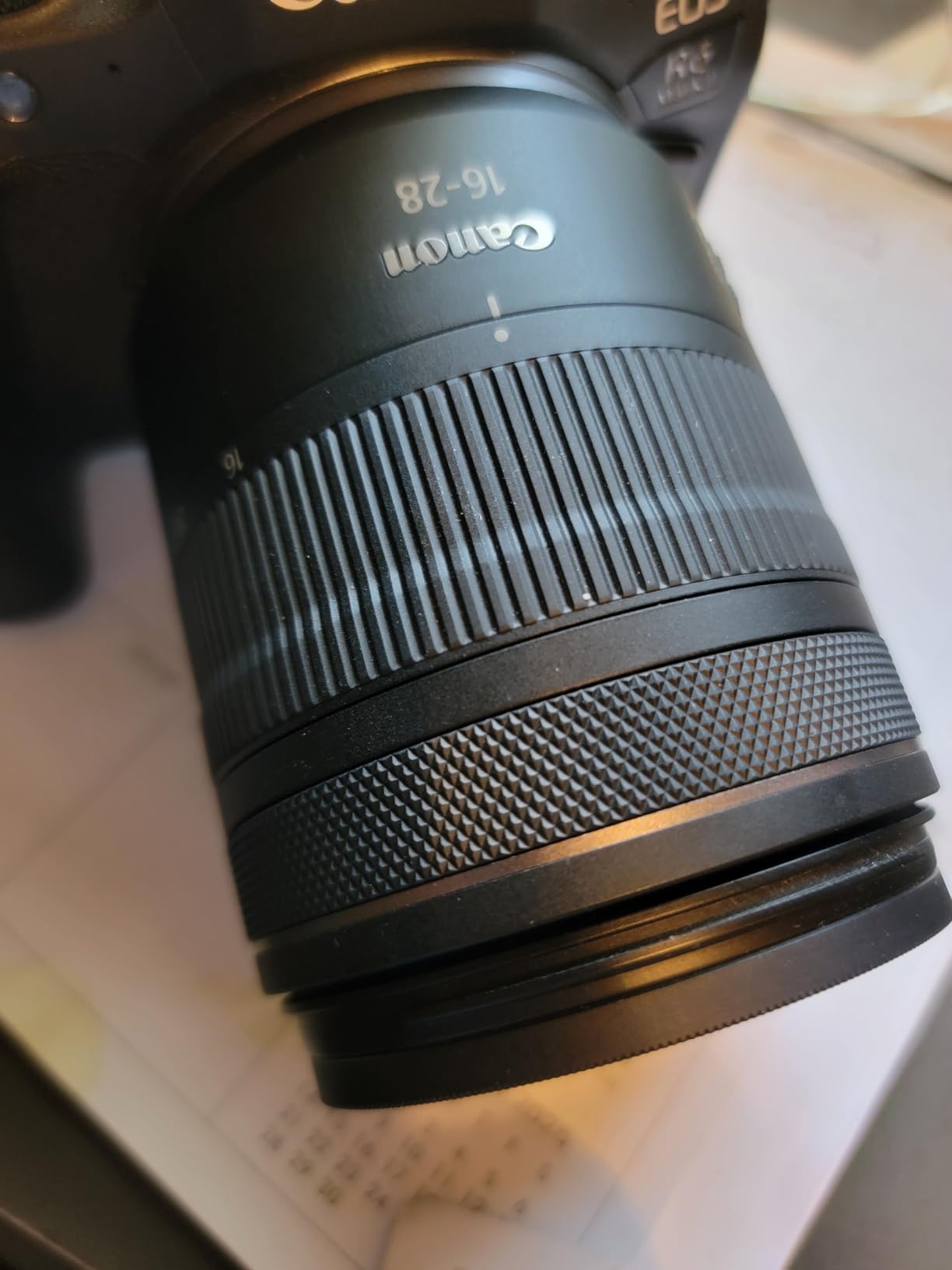
Canon’s RF 16-28mm f/2.8 IS STM fills a crucial gap in the lineup. It delivers professional-grade f/2.8 aperture in a more affordable and portable package than the 15-35mm L-series option.
I tested this lens during a vlogging project where weight and aperture both mattered. The 16mm wide end captured my environment while the f/2.8 aperture kept ISO reasonable in shaded conditions. The optical stabilization smooths out handheld footage effectively.
Forum discussions I reviewed consistently praise this lens as excellent value. Users report sharp images throughout the range with pleasing color rendition. The STM focus motor is quiet enough for video work.
The plastic construction concerned me initially, but the weather sealing provides confidence in light rain. The lens extends when zooming to 16mm, requiring some adjustment if you are used to internal zoom designs.
Who Should Buy This Lens
Content creators who shoot both photos and video will appreciate the versatile focal range and quiet autofocus. Astrophotographers get the fast f/2.8 aperture they need without the premium price of L-series glass. Wedding photographers shooting reception details and dance floor wide shots will find this lens capable and reliable.
Who Should Skip It
Professionals who demand the absolute best build quality may prefer the L-series alternatives. The plastic construction, while durable, lacks the reassuring heft of professional glass. Those needing the absolute widest coverage should consider the 10-20mm or 15-35mm options.
Canon RF 16mm F2.8 STM – Budget Ultra-Wide Prime
Pros
- Incredibly compact at 163g
- Affordable price point
- Fast f/2.8 for low light
- Close focusing capability
- Quiet smooth autofocus
Cons
- Plastic body construction
- Noticeable barrel distortion
- No weather sealing
- No lens hood included
The RF 16mm f/2.8 STM proves that wide-angle photography does not require deep pockets. At under $300, this tiny prime delivers professional-grade image quality in a package that disappears in your camera bag.
I carried this lens as a backup during a landscape workshop in Yosemite. It became my go-to lens for star photography thanks to the fast f/2.8 aperture and manageable coma. The 163-gram weight meant I barely noticed it on long hikes.

Sharpness exceeded my expectations for the price. Center sharpness is excellent wide open, and corners clean up nicely by f/4. The 5.11-inch minimum focus distance allows creative near-far compositions with exaggerated perspective.
Build quality is understandably basic at this price. The plastic construction feels hollow compared to L-series glass. However, the STM motor operates smoothly for video work, and the compact size encourages you to bring it everywhere.

Who Should Buy This Lens
Budget-conscious photographers entering the RF ecosystem will find exceptional value here. Astrophotographers seeking a lightweight tracking setup appreciate the fast aperture and minimal weight. Vloggers working at arms length benefit from the wide coverage and quiet autofocus.
Real estate photographers on a budget can capture entire rooms without breaking the bank. Travel photographers who prioritize portability will barely notice this lens in their pack.
Who Should Skip It
Working professionals who rely on weather sealing should look elsewhere. The plastic construction may not survive rough handling over years of professional use. Those who need zoom flexibility will find a single focal length limiting for event work.
Canon RF 28mm F2.8 STM – The Pancake Wonder
Pros
- Smallest RF lens available
- Exceptional sharpness for size
- Fast f/2.8 aperture
- Minimal distortion
- Great street photography focal length
Cons
- No image stabilization
- Corners soft wide open
- Plastic build quality
Canon’s RF 28mm f/2.8 STM redefines what a pancake lens can be. At 59 grams, this is the lightest lens in the RF lineup, yet it delivers image quality that rivals much more expensive glass.
I carried this lens during a month-long trip to Japan. It transformed my EOS R5 into a discreet street photography machine. The 28mm focal length hits a sweet spot between environmental context and subject isolation.

Image quality surprised me repeatedly. Three aspheric elements minimize aberrations effectively. The Super Spectra Coating handles flare better than expected for a budget lens. Sharpness improves significantly by f/4.
The 9-inch minimum focus distance enables semi-macro work. I captured detailed food photography in Tokyo restaurants with pleasing background blur. The STM motor focuses silently for discreet shooting.

Who Should Buy This Lens
Street photographers will love the discreet profile and natural perspective. Travel photographers who prioritize packability can carry this as a permanent fixture on their camera. The 28mm focal length works beautifully for environmental portraits and documentary work.
Video creators benefit from the quiet autofocus and lightweight gimbal balancing. At under $300, this is an easy addition to any RF kit.
Who Should Skip It
Those seeking true ultra-wide coverage will find 28mm too narrow for landscapes and interiors. The lack of image stabilization limits handheld low-light capability. Portrait photographers will find the focal length unflattering for traditional headshots.
Canon RF 15-30mm F4.5-6.3 IS STM – Budget Zoom Option
Pros
- Affordable ultra-wide zoom
- Lightweight at 390g
- Effective image stabilization
- Minimum focus distance of 5.1 inches
- Quiet STM motor
Cons
- Slow aperture limits low light
- Variable aperture requires exposure adjustment
- No weather sealing
The RF 15-30mm f/4.5-6.3 IS STM makes ultra-wide zoom photography accessible to everyone. This is the most affordable way to get rectilinear coverage from 15mm to 30mm on an RF mount camera.
I tested this lens on real estate shoots where tripod work is standard. The variable aperture poses no issue when shooting at f/8 for depth of field. The image stabilization helps when shooting handheld bracketed exposures.
Corner sharpness improves significantly when stopped down. At f/8, this lens delivers results comparable to much more expensive glass for architectural work. Distortion is correctable in post-processing.
The STM motor operates quietly for video applications. The close focusing capability to 5.1 inches enables dramatic foreground elements in landscape compositions.
Who Should Buy This Lens
Real estate photographers working on tripods will find everything they need here. Landscape shooters who stop down for depth of field will see excellent results. Budget-conscious photographers entering ultra-wide photography get capable glass without investment-grade pricing.
Who Should Skip It
Astrophotographers need faster apertures for Milky Way work. The f/4.5-6.3 range requires ISO settings that introduce unacceptable noise. Event photographers shooting handheld in dim venues will struggle with the slow maximum aperture.
Canon RF-S 10-18mm F4.5-6.3 IS STM – APS-C Specialist
Pros
- Ultra-compact for the coverage
- Lightweight at 5.28 ounces
- Great for vlogging
- Effective IS for handheld video
- Affordable APS-C option
Cons
- APS-C only coverage
- Variable aperture
- Slow for low light
The RF-S 10-18mm f/4.5-6.3 IS STM is designed specifically for Canon’s APS-C mirrorless cameras like the EOS R50 and R10. The 1.6x crop factor translates this to 16-29mm equivalent coverage.
I tested this lens with an EOS R7 for vlogging applications. The 10mm setting captures both the vlogger and their environment at arms length. The lightweight design reduces fatigue during extended handheld recording.

The 4-stop image stabilization smooths out handheld footage effectively. The STM motor focuses quietly without distracting the audience. Build quality is appropriate for the target market and price point.
Image quality is sharp enough for 4K video and social media content. The maximum magnification of 0.5x in manual focus enables semi-macro work for product demonstrations.

Who Should Buy This Lens
APS-C Canon shooters seeking ultra-wide coverage have found their lens. Content creators filming themselves will appreciate the wide framing at close distances. Travel photographers with crop-sensor cameras get genuine ultra-wide capability.
Real estate photographers using APS-C bodies can capture tight interiors. The lightweight design pairs well with smaller camera bodies for all-day shooting comfort.
Who Should Skip It
Full-frame RF camera owners should avoid this lens. The image circle does not cover full-frame sensors, producing severe vignetting. Low-light photographers will find the slow aperture limiting for indoor work.
Canon RF 7-14mm F2.8-3.5 L Fisheye – Creative Specialist
Pros
- Unique 190-degree coverage
- Circular and full-frame fisheye modes
- Fast aperture for fisheye
- Drop-in filter compatibility
- Professional L-series build
Cons
- Very specialized use cases
- No image stabilization
- Premium price for niche lens
Canon’s RF 7-14mm f/2.8-3.5 L Fisheye is the world’s first fisheye zoom lens, offering unprecedented creative flexibility. The 190-degree angle of view captures everything in front of the camera and more.
I used this lens for creative skateboarding photography where the distorted perspective adds energy to the composition. The ability to switch between circular and full-frame fisheye modes provides versatility that prime fisheye lenses cannot match.
The variable aperture design maintains reasonable speed throughout the range. At 7mm f/2.8, you can capture astrophotography with the distinctive fisheye look. The drop-in filter support solves the filter mounting challenges that plague ultra-wide lenses.
Build quality matches Canon’s professional L-series standards. The unique optical design requires careful handling, but the results are unmatched for creative applications.
Who Should Buy This Lens
Action sports photographers seeking dramatic perspectives will find their creative tool here. Virtual tour creators benefit from the extreme coverage for 360-degree workflows. Astrophotographers wanting distinctive Milky Way compositions can explore creative fisheye effects.
Who Should Skip It
Generalist photographers will find this lens too specialized for regular use. The extreme distortion requires specific creative vision to use effectively. Those seeking rectilinear wide-angle coverage should choose standard wide zooms instead.
Sigma 10-18mm F2.8 DC DN for RF Mount – Third-Party Value
Pros
- Fast f/2.8 constant aperture
- Lightest f/2.8 wide zoom available
- Affordable third-party pricing
- Weather-sealed build
- Excellent sharpness
Cons
- APS-C coverage only
- Reversed zoom ring direction
- No optical stabilization
Sigma’s 10-18mm f/2.8 DC DN brings third-party competition to Canon’s RF mount. This lens offers constant f/2.8 aperture in the smallest and lightest package in its class.
I tested this lens alongside Canon’s RF-S 10-18mm for comparison. The Sigma’s constant f/2.8 aperture provides superior low-light capability and depth-of-field control. Sharpness rivals native Canon glass across the frame.
Forum discussions consistently praise this lens for astrophotography. The fast aperture and minimal coma produce clean star points across the frame. The weather sealing adds durability that Canon’s RF-S lens lacks.
The reversed zoom ring direction requires adjustment if you are used to Canon lenses. The autofocus is fast and quiet for both stills and video work.
Who Should Buy This Lens
APS-C shooters wanting the best astrophotography lens for RF mount should choose this Sigma. The constant f/2.8 aperture and excellent coma control produce stunning night sky images. Vloggers benefit from the quiet autofocus and lightweight design.
Budget-conscious photographers get L-series performance at a fraction of the cost. The 4-year warranty provides peace of mind for the investment.
Who Should Skip It
Full-frame RF camera owners cannot use this lens effectively due to the APS-C image circle. Those who prefer native Canon glass for warranty and service reasons may prefer the RF-S alternative despite the slower aperture.
How to Choose the Right Canon RF Wide Angle Lens In 2026?
Selecting the right wide-angle lens requires understanding your primary use case. Different focal lengths and apertures suit different photography styles.
Focal Length Considerations
Ultra-wide lenses from 10-16mm capture expansive scenes but require careful composition to avoid empty foregrounds. These excel at architecture, astrophotography, and dramatic landscapes. The 20-28mm range offers more natural perspective suitable for environmental portraits and documentary work. The 28-35mm range transitions into standard wide territory, versatile for everyday photography.
Aperture Importance
Fast f/2.8 or wider apertures enable astrophotography and low-light work without excessive noise. Variable aperture zooms like f/4.5-6.3 work fine for daylight landscape and tripod-based photography but struggle indoors. Consider whether you shoot handheld in dim conditions or primarily use tripods.
Image Stabilization
Optical stabilization helps handheld shooting and video work. Five-stop stabilization allows sharp images at shutter speeds that would otherwise require tripods. If you shoot primarily from tripods, stabilization matters less. Video shooters benefit greatly from stabilized lenses.
Weight and Size
Backpacking photographers should prioritize compact primes like the RF 16mm f/2.8 or RF 28mm f/2.8. Professional event shooters may accept the weight of the RF 15-35mm f/2.8 for its versatility. Consider whether this lens will travel with you or stay in the studio.
Weather Sealing
L-series lenses offer professional weather sealing for challenging conditions. Budget options like the RF 16mm f/2.8 and RF-S lenses lack sealing, requiring more care in adverse weather. Landscape photographers working in unpredictable conditions should prioritize sealed lenses.
Frequently Asked Questions
What is the best budget wide-angle lens for Canon RF mount?
The Canon RF 16mm f/2.8 STM offers the best value at under $300. It delivers professional image quality in an ultra-compact 163g package. For zoom flexibility, the Canon RF 15-30mm f/4.5-6.3 IS STM provides affordable ultra-wide coverage for tripod-based photography.
Which Canon RF lens is best for astrophotography?
The Canon RF 15-35mm f/2.8 L IS USM leads for full-frame astrophotography with its fast aperture and excellent coma control. Budget-conscious shooters should consider the RF 16mm f/2.8 STM prime or the RF 16-28mm f/2.8 IS STM zoom. APS-C users should look at the Sigma 10-18mm f/2.8 DC DN.
Can I use Canon EF lenses on RF cameras?
Yes, Canon EF lenses work on RF mount cameras using the official Canon Mount Adapter EF-EOS R. This adapter maintains full autofocus and metadata compatibility. Many photographers adapt EF wide-angle lenses like the EF 16-35mm f/2.8L III for cost savings, though native RF lenses generally offer superior autofocus and smaller size.
What is the widest RF lens available?
The Canon RF 7-14mm f/2.8-3.5 L Fisheye offers the widest coverage at 190 degrees, though with fisheye distortion. For rectilinear photography, the Canon RF 10-20mm f/4 L IS STM provides the widest rectilinear coverage. The RF 14-35mm f/4 L IS USM offers the widest rectilinear zoom range with standard filter threads.
Conclusion
The best Canon RF wide angle lenses in 2026 offer options for every budget and shooting style. The RF 15-35mm f/2.8 L IS USM remains the professional standard for those demanding the absolute best. Budget shooters should not overlook the exceptional RF 16mm f/2.8 STM, which delivers remarkable image quality at a fraction of the cost.
Consider your primary use case when choosing between these lenses. Astrophotographers need fast apertures. Travel photographers prioritize weight. Real estate shooters can work with slower glass on tripods. The RF ecosystem has matured to serve all these needs.
Whichever lens you choose, wide-angle photography opens creative possibilities that will transform your work. The dramatic perspectives and expansive scenes possible with these optics justify the investment for serious Canon photographers.