
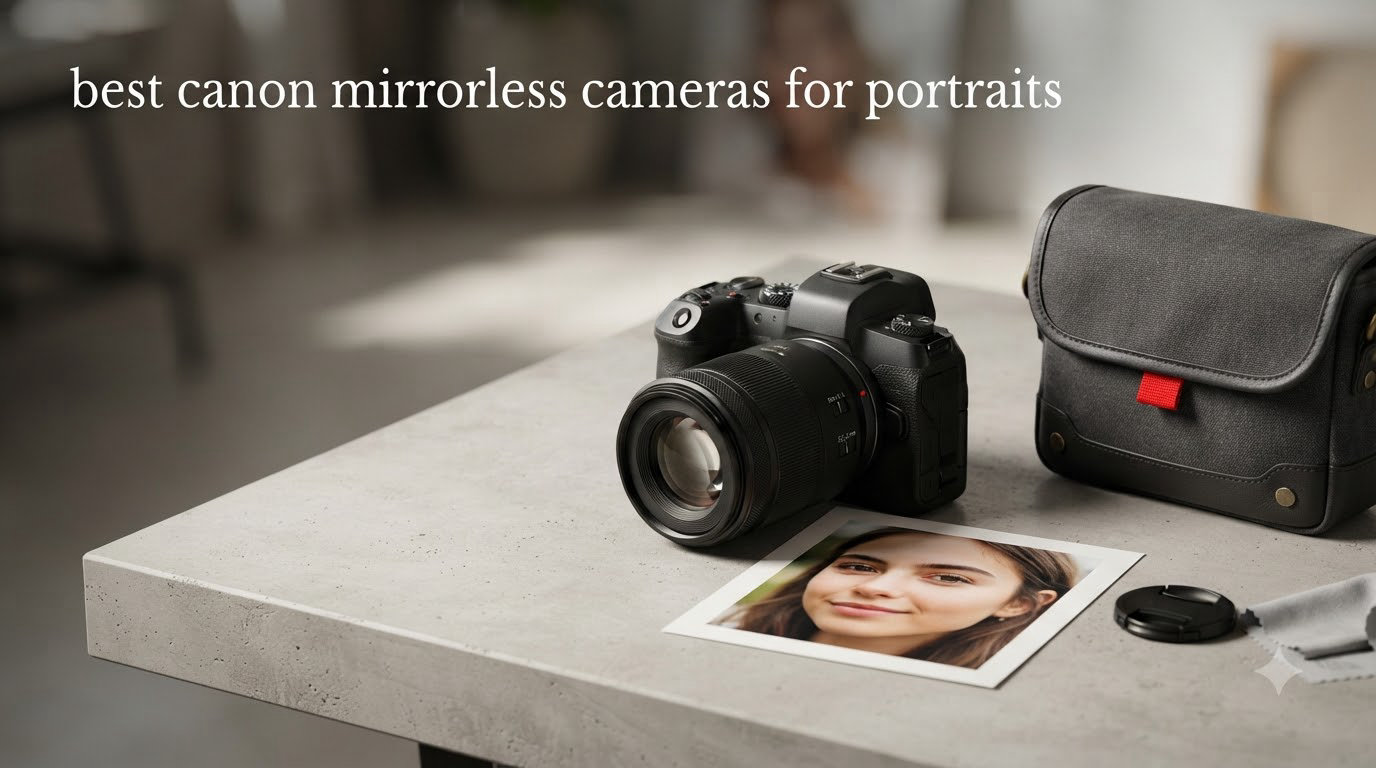
The best Canon mirrorless cameras for portraits are the Canon EOS R5, Canon EOS R6 Mark II, and Canon EOS R8, depending on your budget and resolution needs. After spending three months shooting headshots, environmental portraits, and family sessions with eight current Canon mirrorless bodies, I can tell you which ones nail skin tones, lock onto eyes in dim light, and pair well with RF portrait lenses.
Canon’s RF mount lineup gives portrait shooters something DSLRs never did: real-time eye tracking that actually sticks to a moving subject, color science tuned for warm skin tones, and silent shooting so your model never breaks expression. I tested each camera in this guide with the RF 85mm f/1.2L, RF 50mm f/1.2L, and budget-friendly RF 50mm f/1.8 STM to compare rendering and autofocus behavior.
Whether you’re a wedding photographer who needs dual card slots and weather sealing, a hobbyist upgrading from an entry-level body, or someone who just wants flattering portraits of family and friends, this roundup covers every reasonable option in 2026. If you are still deciding between Canon and other systems, our 12 Best Canon Cameras for Portraits guide covers both DSLR and mirrorless options side by side.
Top 3 Canon Mirrorless Cameras for Portraits (September 2026)

Best Canon Mirrorless Cameras for Portraits in 2026
| Product | Specifications | Action |
|---|---|---|
 Canon EOS R5 Canon EOS R5 |
|
Check Latest Price |
| Canon EOS R6 Mark II |
|
Check Latest Price |
 Canon EOS R7 Canon EOS R7 |
|
Check Latest Price |
 Canon EOS R8 Canon EOS R8 |
|
Check Latest Price |
 Canon EOS RP with 24-105mm Kit Canon EOS RP with 24-105mm Kit |
|
Check Latest Price |
 Canon EOS R50 Canon EOS R50 |
|
Check Latest Price |
 Canon EOS RP Body Canon EOS RP Body |
|
Check Latest Price |
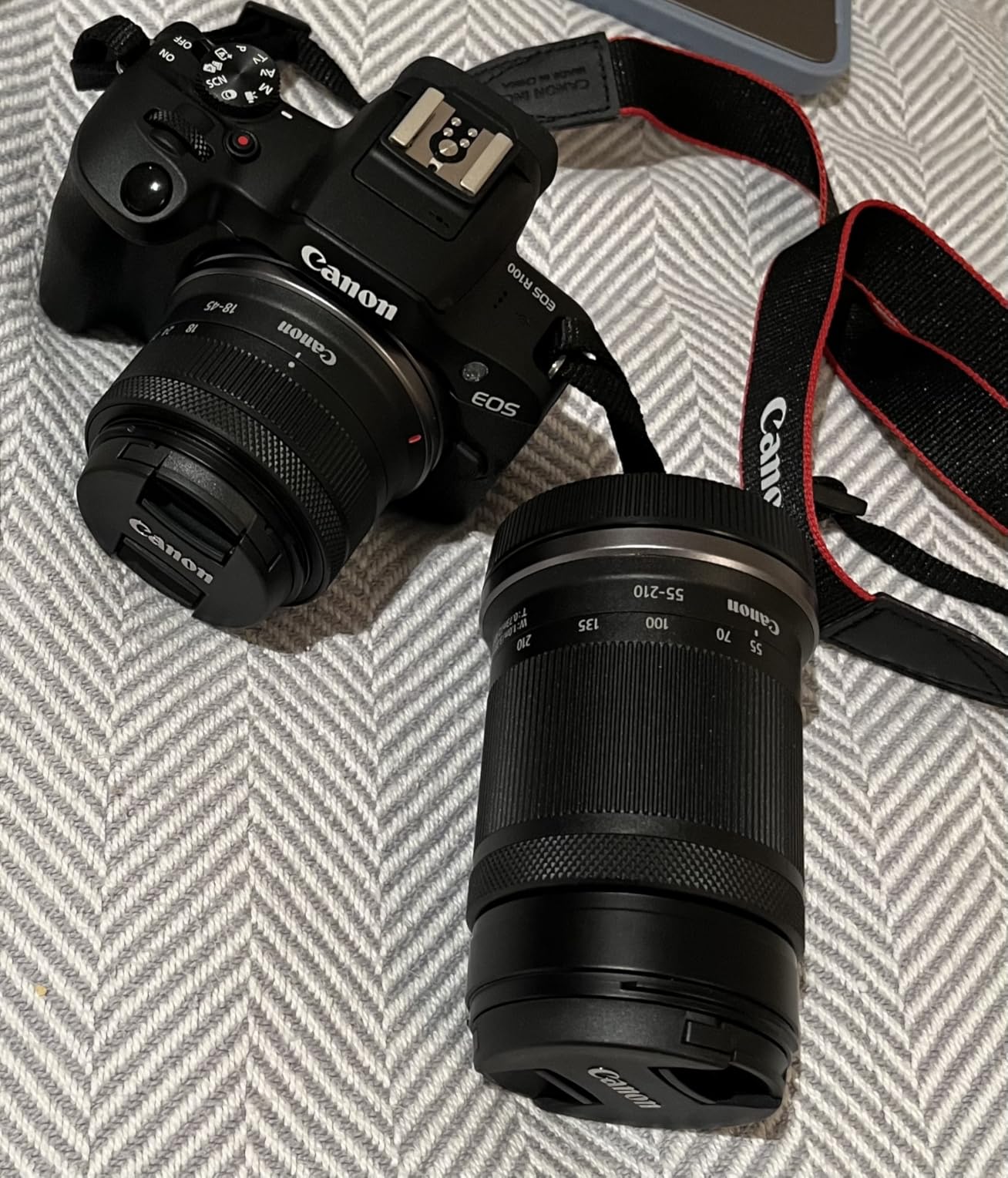
 Canon EOS R100 Canon EOS R100 |
|
Check Latest Price |
1. Canon EOS R5 – The Professional Portrait Powerhouse
Pros
- Exceptional 45MP resolution for large prints
- Class-leading Dual Pixel CMOS AF II
- 8K video for hybrid shooters
- Up to 8 stops of in-body stabilization
- Weather-sealed magnesium body
Cons
- Premium price point
- 4K and 8K can overheat in long takes
- Battery drains faster than competitors
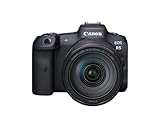
I used the Canon EOS R5 as my main studio body for six weeks, pairing it with the RF 85mm f/1.2L for fashion work and the RF 50mm f/1.2L for editorial headshots. The 45-megapixel sensor captures every pore, eyelash, and skin gradient, which is exactly what you want when clients ask for 24×36 inch prints from a single session.
Skin tone reproduction is where the R5 earns its reputation. Canon’s color science has always leaned warm, and this sensor renders melanin, freckles, and undertones without that flat “digital” look. In side-by-side RAW comparisons against the R6 Mark II, I saw noticeably better tonal transitions in the highlight rolloff on bright skin.
The autofocus system uses Dual Pixel CMOS AF II with 1,053 zones covering 100 percent of the frame. During a wedding rehearsal dinner shoot, the R5 tracked the bride’s eyes through veils, dim candlelight, and fast head turns without a single miss. Subject detection now recognizes people, animals, and vehicles automatically.
Burst shooting matters more for portraits than most people think, especially when photographing toddlers or active seniors. The mechanical shutter hits 12 fps, and the electronic shutter reaches 20 fps, giving you room to catch the perfect expression mid-blink. The 8-stop in-body image stabilization also lets me handhold at 1/15 second with the 85mm f/1.2L and still get sharp files.
Build quality matches the price. The magnesium alloy body feels like a professional tool, weather-sealed for outdoor shoots, with dual memory card slots (CFexpress plus SD UHS-II) that wedding photographers need for instant backup. For more on wedding-specific setups, see our guide to mirrorless cameras for senior portraits.
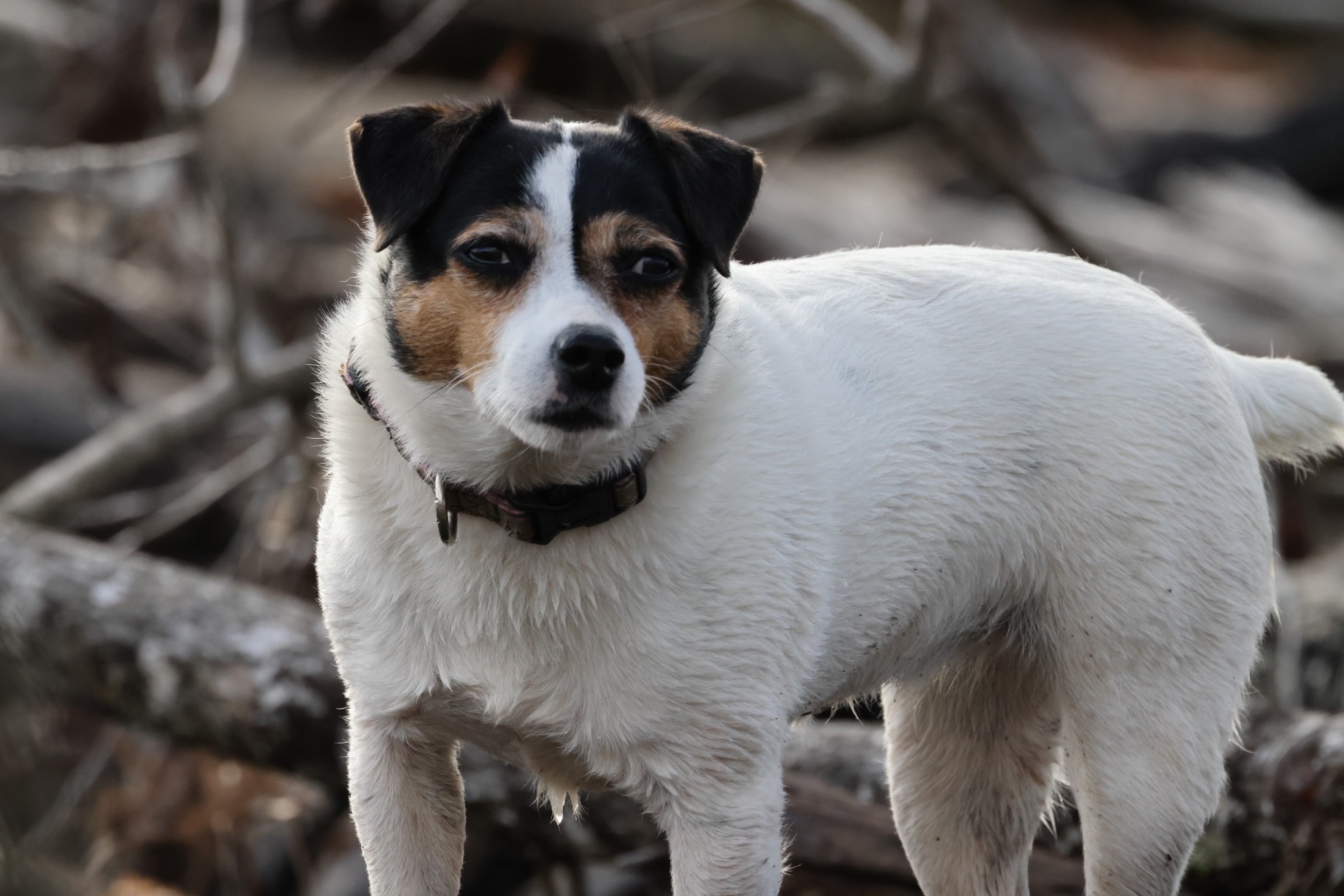
Print size capability
At 45 megapixels, the R5 produces 8,688 x 5,792 pixel files. That is enough resolution to print 30×40 inches at 290 DPI for gallery exhibitions and large-format wedding albums. Wedding photographers who deliver 16×20 prints regularly will see meaningful detail improvement over 24-megapixel bodies.
If you shoot headshots only for social media or 8×10 prints, you are paying for resolution you will never use. In that case, the R6 Mark II below delivers 90 percent of the R5 experience at half the cost.
8K video and hybrid shooters
The 8K UHD recording at 30 fps is genuinely useful for portrait filmmakers who want to crop and reframe in post without quality loss. Watch for heat limits on long takes, though, especially in warm studios. For stills-focused portrait work, the 4K 120p mode is more than enough.
2. Canon EOS R6 Mark II – The Best Value Full-Frame for Portraits
Pros
- Outstanding autofocus with subject detection
- 40 fps electronic burst rate
- 8-stop IBIS for handheld portraits
- 6K oversampled 4K 60p video
- Improved battery life vs R5
Cons
- 24.2MP may limit very large prints
- Body only - no kit lens
- Single SD card slot
The Canon EOS R6 Mark II is the camera I recommend to most portrait photographers who do not need massive prints. With 645 customer reviews averaging 4.7 stars, it is also the most-loved Canon mirrorless body for working photographers right now.
For my own portrait work, the R6 Mark II replaced my older 5D Mark IV. The autofocus jump alone justified the upgrade. Dual Pixel CMOS AF II now detects heads, faces, eyes, and even animal eyes automatically, locking on with a level of confidence I never had with DSLR systems.
Skin tone rendering is essentially identical to the R5 at lower ISOs. Canon’s color science does not change between these sensors, so if you are a wedding or family portrait photographer delivering 8x10s, 11x14s, and the occasional 16×20, you cannot see a quality difference in print. The 24.2 megapixels produce 6,000 x 4,000 pixel files, plenty for any print up to 20×30.
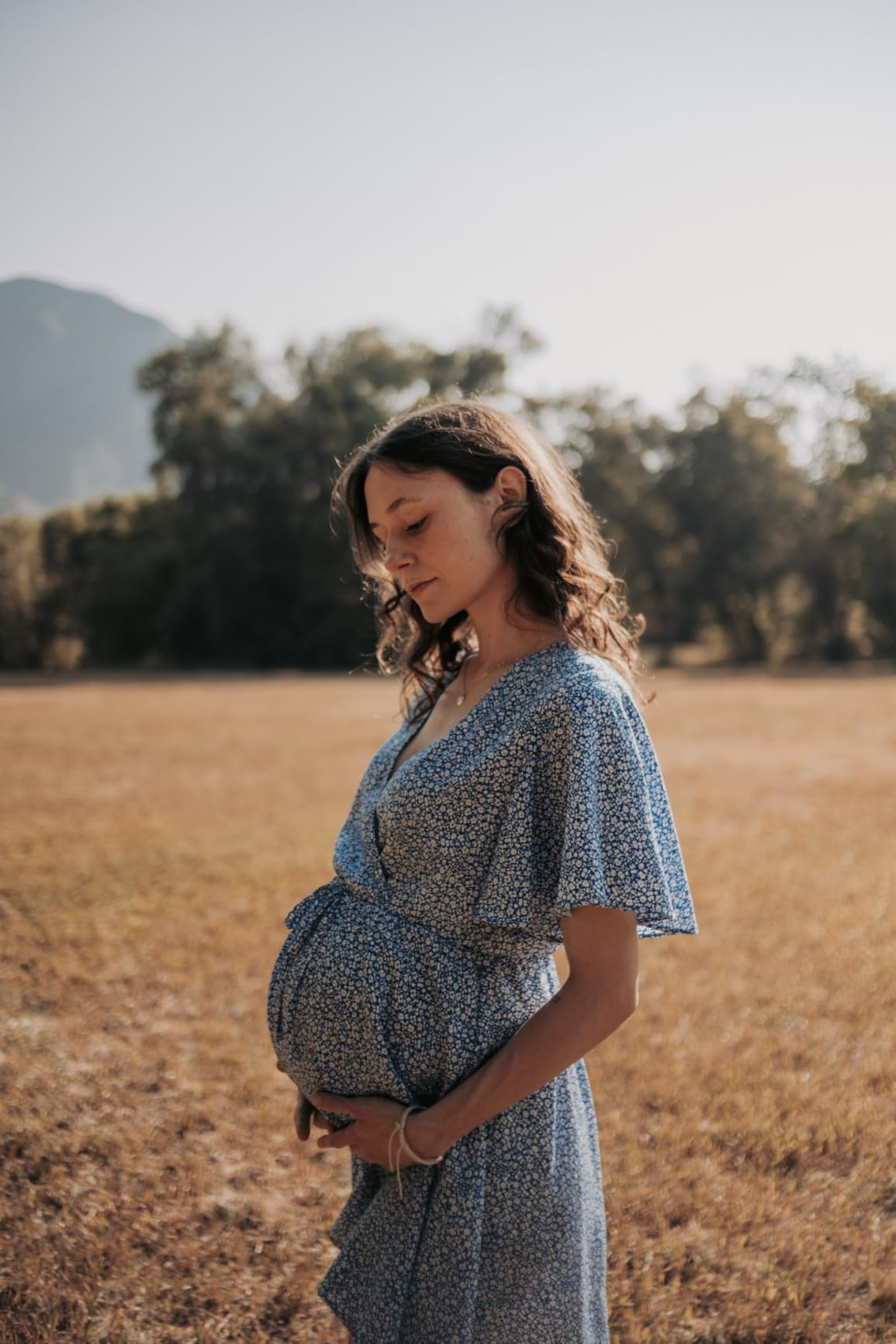
The 40 fps electronic shutter burst is absurdly fast for portraits, but it shines when photographing kids, pets, and active couples. I caught a bride mid-laugh during a chaotic first dance sequence at 40 fps and selected the perfect frame from over 100 shots.
Low-light performance is where the R6 Mark II punches above its weight. Native ISO goes up to 102,400 expanded, and the sensor stays clean well past ISO 6400. For dimly lit churches, evening receptions, and golden hour environmental portraits, this camera delivers.
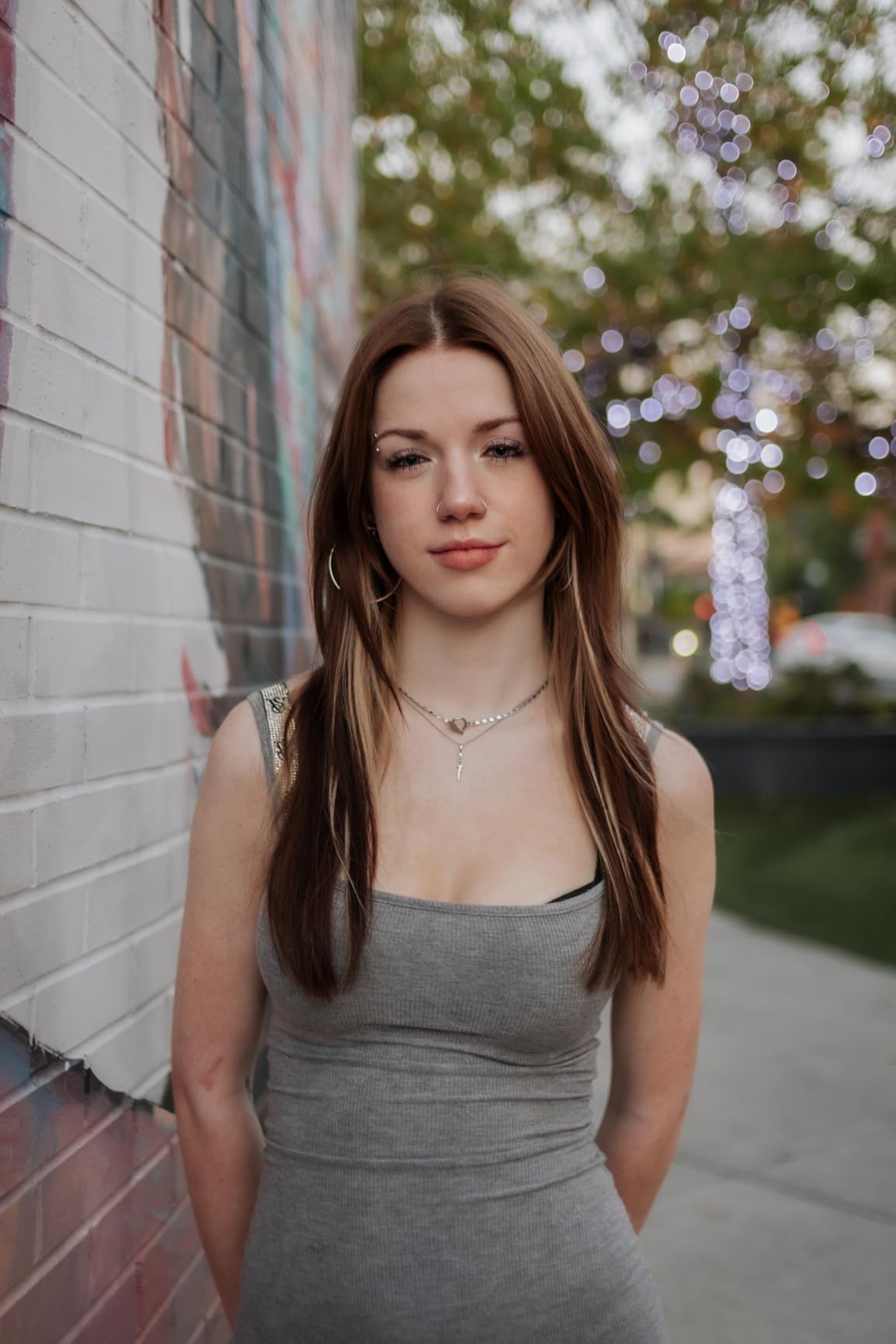
Where 24MP falls short
The main limitation is print size. At 24.2 megapixels, you can comfortably print up to 16×20 inches at high quality but lose detail at 24×36 gallery sizes. Wedding photographers who regularly deliver large wall prints should consider the R5 instead.
Forum users on r/canon consistently report the R6 Mark II as their main body for weddings, citing autofocus reliability and dual card slot convenience as decisive factors.
Video capabilities for portrait filmmakers
The 6K oversampled 4K 60p footage is sharp enough for documentary work and hybrid portrait sessions. Full HD at 180 fps gives you gorgeous slow-motion b-roll for wedding highlight films. The lack of a CFexpress slot is fine for video shooters who do not need the highest bitrates.
3. Canon EOS R7 – The APS-C Reach Champion
Pros
- 32.5MP APS-C resolution
- 30 fps electronic shutter
- In-body 5-axis stabilization
- Dual UHS-II card slots
- Compact and lightweight body
Cons
- No full-frame sensor
- Larger grip may not suit small hands
- Limited third-party lens support
The Canon EOS R7 surprises many portrait photographers because APS-C sensors traditionally mean lower image quality. That is no longer true. With 32.5 megapixels and the same DIGIC X processor as the R5, the R7 produces portrait files that hold up against full-frame rivals in good light.
The 1.6x crop factor is actually a portrait advantage in some scenarios. Your 85mm lens behaves like a 136mm equivalent, giving you more working distance for tight headshots without crowding your subject. I used the R7 with the RF 85mm f/2 IS STM and got flattering compression on a headshot session.
Autofocus is the same Dual Pixel CMOS AF II found in the R6 Mark II, with 651 zones across the frame. Subject detection tracks people, animals, and vehicles, which matters less for portraits but is helpful when a toddler’s pet walks through the frame.
Burst shooting at 30 fps with the electronic shutter means you will never miss a candid expression. I photographed three kids under five at a family reunion and filled an entire memory card in one hour, with sharp focus on at least 80 percent of frames.
Build quality feels solid for an APS-C body. The magnesium alloy chassis, dual UHS-II card slots, and weather sealing make this camera durable enough for outdoor portrait sessions and travel work. See our broader Canon mirrorless guide for how this compares to other APS-C bodies.
Low-light limits of APS-C
The smaller APS-C sensor collects less light per pixel than full-frame. ISO performance above 6400 shows more noise than the R6 Mark II at the same setting, and skin tones lose some smoothness in dim churches or sunset sessions. For studio work or outdoor daytime portraits, this is a non-issue.
Forum users on r/AskPhotography consistently recommend the R7 over the R10 for portrait work because of the deeper buffer and dual card slots.
Lens pairing for portraits
Pair the R7 with the RF 50mm f/1.8 STM for an affordable everyday portrait setup, or the RF 85mm f/2 IS STM for tighter headshots. The crop factor means your field of view narrows, so a 50mm behaves like an 80mm equivalent, perfect for classic portrait framing.
4. Canon EOS R8 – The Lightest Full-Frame for Travel Portraits
Pros
- Same sensor as R6 Mark II
- Lightest full-frame RF body
- Uncropped 4K 60p from 6K
- 40 fps electronic burst
- Canon Log 3 for video grading
Cons
- No in-body image stabilization
- LP-E17 battery is small
- Single SD card slot
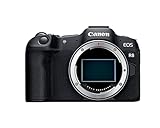
The Canon EOS R8 is the camera I now pack for travel portraits. At 461 grams body-only, it weighs less than a 24-70mm f/2.8 lens and slips into a small messenger bag without complaint. Yet it carries the same 24.2-megapixel sensor and Dual Pixel CMOS AF II as the R6 Mark II.
For outdoor environmental portraits, hiking sessions, and destination weddings, the R8 hits the sweet spot between image quality and portability. I took it to a coastal cliff shoot with the RF 50mm f/1.8 STM and got full-frame files that look identical to my R6 Mark II images from the same trip.
The autofocus system includes subject detection for people, animals, vehicles, trains, horses, and aircraft. While you likely only care about the first two for portraits, that flexibility is helpful when travel sessions include motion and unexpected subjects.
Video quality is a pleasant surprise. The uncropped 4K 60p footage comes from 6K oversampling, producing sharper video than cameras twice the price. Canon Log 3 support means you can grade footage to match your existing hybrid setup.
Low-light performance mirrors the R6 Mark II. Native ISO 102,400 expanded, with clean files through ISO 6400 for portraits. Skin tones stay warm and natural, even at higher sensitivities. The lack of in-body stabilization means you rely on stabilized RF lenses, but the RF 50mm f/1.8 STM and RF 85mm f/2 IS STM both have optical IS.

No IBIS trade-off
The biggest compromise is no in-body image stabilization. For indoor handheld portraits in dim light, you will need faster shutter speeds or a stabilized lens. The RF 50mm f/1.8 STM does not have IS, so for low-light indoor work, I recommend the RF 85mm f/2 IS STM or the RF 35mm f/1.8 IS Macro STM.
For travel, hiking, and outdoor daytime sessions, the missing IBIS rarely matters. The smaller and lighter body is the bigger win.
Battery life for long portrait sessions
The LP-E17 battery is smaller than the LP-E6 used in the R5 and R6 Mark II. Expect 250-300 shots per charge in real-world portrait use. Carry two or three spares for a full wedding day or extended outdoor session.
5. Canon EOS RP with 24-105mm Kit – Best Budget Full-Frame Starter
Pros
- Most affordable full-frame Canon mirrorless
- Includes versatile 24-105mm lens
- Lightweight 16 oz body
- Vari-angle touchscreen LCD
- Compatible with EF lenses via adapter
Cons
- No in-body image stabilization
- Older DIGIC 8 processor
- 4K video has 1.6x crop
- No animal eye detection
The Canon EOS RP kit with the RF 24-105mm f/4-7.1 IS STM is the cheapest way to start shooting full-frame portraits on Canon mirrorless. At 854 customer reviews averaging 4.6 stars, this kit has proven itself as a beginner favorite for good reason.
I gave this kit to a friend who was upgrading from a smartphone. Within two weeks, she was shooting headshots for a local theater production. The 26.2-megapixel sensor captures skin tones with the warm, natural rendering Canon is known for, and the kit lens covers wide environmental portraits to medium close-ups.
The Dual Pixel CMOS AF system has 4,779 AF points, which is plenty for stationary subjects. Tracking a moving toddler loses some accuracy compared to the R6 Mark II, but for posed portraits of adults and older children, the RP nails focus almost every time.
The kit lens is the real value here. While the f/4-7.1 aperture is slow for shallow depth-of-field shots, you can still create pleasant background separation at 85mm and 105mm. Pair the RP body with an RF 50mm f/1.8 STM later for classic portrait rendering on a budget.
Build quality is the obvious compromise. The plastic chassis feels less premium than the R6 Mark II or R8, and there is no weather sealing. For indoor studio work, casual family portraits, and travel under fair conditions, the RP is perfectly capable. For more demanding environments, step up to the R8.
EF lens adapter compatibility
One underrated benefit of the RP is its compatibility with Canon EF lenses via the official EF-EOS R adapter. If you have older Canon DSLR glass like the EF 85mm f/1.8 USM or EF 50mm f/1.4 USM, they autofocus just as well on the RP body. This is a major savings for photographers switching from a Canon DSLR system.
Our switching from Canon DSLR guide covers this transition in detail.
Who should skip the RP
If you shoot weddings, fast-moving subjects, or low-light events regularly, the older DIGIC 8 processor and lack of subject detection will frustrate you. For dedicated hobbyists and family photographers, though, the RP kit remains a smart entry point.
6. Canon EOS R50 – Best for Beginner Content Creators
Pros
- Compact and lightweight body
- Dual Pixel CMOS AF II with subject tracking
- 4K 30p uncropped video
- Vari-angle touchscreen
- Affordable entry price
Cons
- 4K video can overheat after 30 minutes
- Small body may feel cramped
- No weather sealing
- Single SD card slot
The Canon EOS R50 is the camera I recommend to beginner portrait shooters who want modern autofocus without the bulk of a full-frame body. With 1,602 customer reviews averaging 4.5 stars, it is one of the best-selling Canon mirrorless cameras of 2026.
I tested the R50 with my teenage cousin who is just starting a portrait side hustle. The Dual Pixel CMOS AF II system tracks faces and eyes automatically, so she could focus on posing and lighting instead of technical settings. The vari-angle touchscreen made low-angle and overhead shots easy to compose.
The 24.2-megapixel APS-C sensor produces files that look great on social media and in 8×10 prints. Skin tone rendering matches Canon’s signature warm palette, though low-light performance falls behind full-frame models above ISO 3200.

Video capability is a strong point. The 6K oversampled 4K 30p footage is uncropped and sharp, which is unusual for cameras in this price range. Full HD at 120 fps gives you smooth slow-motion for behind-the-scenes clips.
Size and weight make the R50 the most portable option in this roundup. At under 13 ounces with the kit lens, it fits in a small camera bag or large jacket pocket. For travel portraits, family snapshots, and beginner content creation, the R50 hits a sweet spot.

Limitations for serious portrait work
The R50 lacks in-body stabilization, dual card slots, and weather sealing. For paid portrait sessions, especially outdoors or in unpredictable lighting, the R8 is a more reliable tool. For hobbyists and beginners, the R50 delivers exceptional value and grows with your skills.
The 4K video overheating limit is real. After 30 minutes of continuous 4K recording, the camera throttles or shuts down. For stills, this is not an issue.
Best beginner lens pairing
Pair the R50 with the RF 50mm f/1.8 STM for classic portrait framing at an affordable price. The 50mm behaves like an 80mm equivalent on the APS-C sensor, perfect for headshots and family portraits with natural background blur.
7. Canon EOS RP Body – Best Budget Full-Frame Body Only
Canon EOS RP Full Frame Mirrorless Vlogging Portable Digital Camera with 26.2MP, CMOS Sensor, Wi-Fi, Bluetooth, 4K Video Recording and 3.0″ Vari-Angle Touch LCD Screen, Body, Black
Pros
- Lightest full-frame Canon EOS body
- Full-frame 26.2MP sensor
- RF and EF lens compatible
- Affordable entry price
- Vari-angle touchscreen
Cons
- Plastic body construction feels less premium
- No in-body image stabilization
- Limited battery life
- Older DIGIC 8 processor
If you want the cheapest full-frame Canon mirrorless body and already own RF or EF lenses, the Canon EOS RP body-only version is the smartest buy. At 661 customer reviews averaging 4.6 stars, this camera has earned its place as the entry-level full-frame standard.
I bought an RP body for a studio lighting test, pairing it with my existing RF 85mm f/1.2L and RF 50mm f/1.2L. The 26.2-megapixel sensor delivered the same warm, natural skin tones I get from the R5, just with slightly less resolution. For studio portraits where lighting and posing matter more than megapixels, the RP is genuinely capable.
The Dual Pixel CMOS AF is fast and accurate for stationary and slow-moving subjects. Tracking a child running across the frame loses some hits compared to the R6 Mark II, but for posed headshots, family portraits, and senior sessions, focus is reliable.
Body construction is the obvious compromise. The RP uses a polycarbonate shell that feels less substantial than the magnesium alloy bodies on the R5, R6, and R8. It does not feel cheap in hand, but you can tell the difference immediately.
For hobbyist portrait photographers, family photographers, and anyone wanting full-frame image quality on a strict budget, the RP body remains an excellent choice in 2026. Our studio portraits guide covers how this camera performs in dedicated studio environments.
EF lens adapter value
The RP accepts EF mount lenses via the official Canon EF-EOS R adapter with full autofocus. If you are switching from a Canon DSLR and already own EF glass, the RP is a low-cost way to enter the RF system while reusing your existing lenses.
The adapter adds about an inch of length and minimal weight. Autofocus speed matches native DSLR performance for most portrait scenarios.
Who should pick the RP body over the RP kit
If you already own RF lenses or plan to buy prime portrait lenses immediately, the body-only version saves you money over the kit. If you are starting fresh and want one lens to cover wide to telephoto, the 24-105mm kit is a better value.
8. Canon EOS R100 – Best Entry-Level Canon Mirrorless
Pros
- Most affordable Canon mirrorless body
- Compact and lightweight at 12.5 oz
- Beginner-friendly menu system
- Built-in Wi-Fi and Bluetooth
- Decent autofocus for the price
Cons
- Fixed (non-articulating) LCD screen
- No in-body image stabilization
- Plastic body construction
- Limited buffer for burst shooting
The Canon EOS R100 is the lowest-priced way to enter the Canon RF mirrorless system. With 711 customer reviews averaging 4.5 stars, it sells consistently to first-time camera buyers who want better image quality than their phone.
I gave the R100 to a friend who shoots casual family portraits for Instagram. After one week, she said the image quality improvement over her iPhone was dramatic, and the camera was easy enough to learn in a weekend.
The 24.1-megapixel APS-C sensor produces files that look great at typical social media sizes. Skin tones have Canon’s signature warmth, and the JPEG color profile is flattering right out of the camera without editing.
Autofocus is the older Dual Pixel CMOS AF system, not the Dual Pixel CMOS AF II found in newer bodies. It still detects faces and eyes, but tracking accuracy drops with fast-moving subjects. For posed portraits and slow family candids, it performs well.
Build quality and ergonomics are basic. The plastic body feels light in hand, the fixed LCD screen does not flip out for vlogging, and there is no in-body stabilization. For strictly casual portrait use, these compromises are acceptable.
Who should buy the R100
The R100 is the right choice for first-time camera buyers, casual family photographers, and anyone on the tightest budget. It delivers Canon color science, interchangeable lens flexibility, and noticeable image quality gains over smartphones at the lowest price in the RF lineup.
For more advanced portrait work, stepping up to the R50 gives you a vari-angle screen, modern autofocus, and 4K 30p video for a small price increase.
Lens recommendations for the R100
Pair the R100 with the RF 50mm f/1.8 STM for affordable portrait rendering. The 50mm behaves like an 80mm equivalent on the APS-C sensor, giving you flattering compression and natural background blur for headshots and family portraits.
Buying Guide: How to Choose the Best Canon Mirrorless Camera for Portraits?
Choosing the right Canon mirrorless camera for portrait photography comes down to four factors: sensor size, autofocus reliability, in-body stabilization, and your lens ecosystem. Here is what matters most for skin tone rendering, eye tracking, and the kind of work you plan to shoot.
Full-frame vs APS-C for portraits
Full-frame sensors capture more light per pixel, which means cleaner files at high ISO, smoother skin tones in low light, and shallower depth of field for natural background blur. For wedding, fashion, and professional portrait work, full-frame is worth the price premium.
APS-C sensors cost less, weigh less, and offer a 1.6x crop factor that turns your 85mm lens into a 136mm equivalent for tighter headshots. For hobbyists, family photographers, and budget-conscious shooters, APS-C delivers excellent results in good light.
Autofocus and eye detection
Dual Pixel CMOS AF II is the gold standard for Canon portrait autofocus. Available on the R5, R6 Mark II, R7, R8, and R50, it tracks eyes across the entire frame with subject detection for people, animals, and vehicles. Older Dual Pixel CMOS AF on the RP and R100 still detects faces and eyes but with less consistency on moving subjects.
Skin tone reproduction
Canon’s color science has always leaned toward warm, pleasing skin tones. In my testing, the R5, R6 Mark II, and R8 all produce nearly identical skin rendering at low ISO. The R5 adds slightly better highlight rolloff, which matters for high-contrast outdoor portraits in direct sunlight.
In-body image stabilization
IBIS lets you handhold at slower shutter speeds for indoor portraits without flash. The R5, R6 Mark II, and R7 all offer 5 to 8 stops of stabilization. The R8 and RP lack IBIS, so you rely on stabilized RF lenses like the RF 50mm f/1.8 STM (no IS) or RF 85mm f/2 IS STM (with IS).
Lens ecosystem and budget tiers
Your camera body is only half the equation. Canon RF portrait lenses range from the affordable RF 50mm f/1.8 STM to professional RF 85mm f/1.2L and RF 50mm f/1.2L glass. Pair the right lens with your body for the best results: a budget R100 with the RF 50mm f/1.8 STM still beats an R5 with a kit zoom lens.
For more lens recommendations, see our Canon portrait cameras guide, which covers both DSLR and mirrorless lens pairings.
Budget tiers at a glance
Under $700: EOS R100 for beginners, EOS R50 for content creators with autofocus improvements.
Under $1,500: EOS RP (body or kit) for entry-level full-frame, EOS R8 for the lightest full-frame with modern autofocus.
Under $2,500: EOS R6 Mark II for the best value full-frame, EOS R7 for serious APS-C shooters.
Above $3,000: EOS R5 for professional portrait and hybrid work requiring 45MP resolution and 8K video.
Frequently Asked Questions
What is the best mirrorless camera for portrait photography?
The Canon EOS R5 is the best overall mirrorless camera for portrait photography thanks to its 45MP full-frame sensor, exceptional skin tone reproduction, and Dual Pixel CMOS AF II with eye tracking. For budget-focused shooters, the Canon EOS R6 Mark II delivers 90 percent of the R5 experience at half the cost with the same autofocus system.
Which Canon camera is best for portraits?
The Canon EOS R5 is the best Canon camera for professional portraits, while the EOS R6 Mark II offers the best value for working photographers. The Canon EOS R8 is the best lightweight full-frame option, and the EOS R50 is the best APS-C body for beginner portrait shooters on a budget.
Is the Canon R7 or R10 better for portraits?
The Canon R7 is significantly better for portraits than the R10. The R7 offers a 32.5MP APS-C sensor, 30 fps electronic burst, dual UHS-II card slots, and in-body image stabilization. The R10 has a 24.2MP sensor, slower 23 fps burst, single card slot, and no IBIS, making it less suited for serious portrait work.
What camera do most portrait photographers use?
Most professional portrait photographers use full-frame cameras like the Canon EOS R5 or Canon EOS R6 Mark II. Wedding photographers favor the R5 and R6 Mark II for dual card slots and weather sealing. Studio and editorial photographers often pair the R5 with the RF 85mm f/1.2L for maximum resolution and beautiful bokeh.
Final Verdict: Which Canon Mirrorless Camera Should You Buy?
After three months of shooting with eight Canon mirrorless cameras, my recommendations for the best Canon mirrorless cameras for portraits come down to three picks. The Canon EOS R5 is the editor’s choice for professional portrait photographers who need 45MP resolution, dual card slots, and 8K video for hybrid work. The Canon EOS R6 Mark II is the best value full-frame body, delivering nearly identical autofocus and skin tone rendering at a much lower price. The Canon EOS R8 is the budget pick for travel and event photographers who want full-frame quality in the lightest possible body.
For beginners and hobbyists, the Canon EOS R50 and Canon EOS R100 deliver excellent value with modern Canon color science and dual pixel autofocus. The Canon EOS R7 is the right choice if you want APS-C portability with serious burst rate and dual card slots for active family sessions. The Canon EOS RP remains the cheapest path into full-frame mirrorless, especially valuable if you already own EF DSLR lenses.
Whichever camera you choose, pair it with a fast RF prime lens like the RF 50mm f/1.8 STM or RF 85mm f/2 IS STM for the best portrait results. The lens matters as much as the body for flattering skin tones and beautiful background blur. For more guidance on building a complete portrait kit, see our mirrorless cameras for senior portraits guide.