
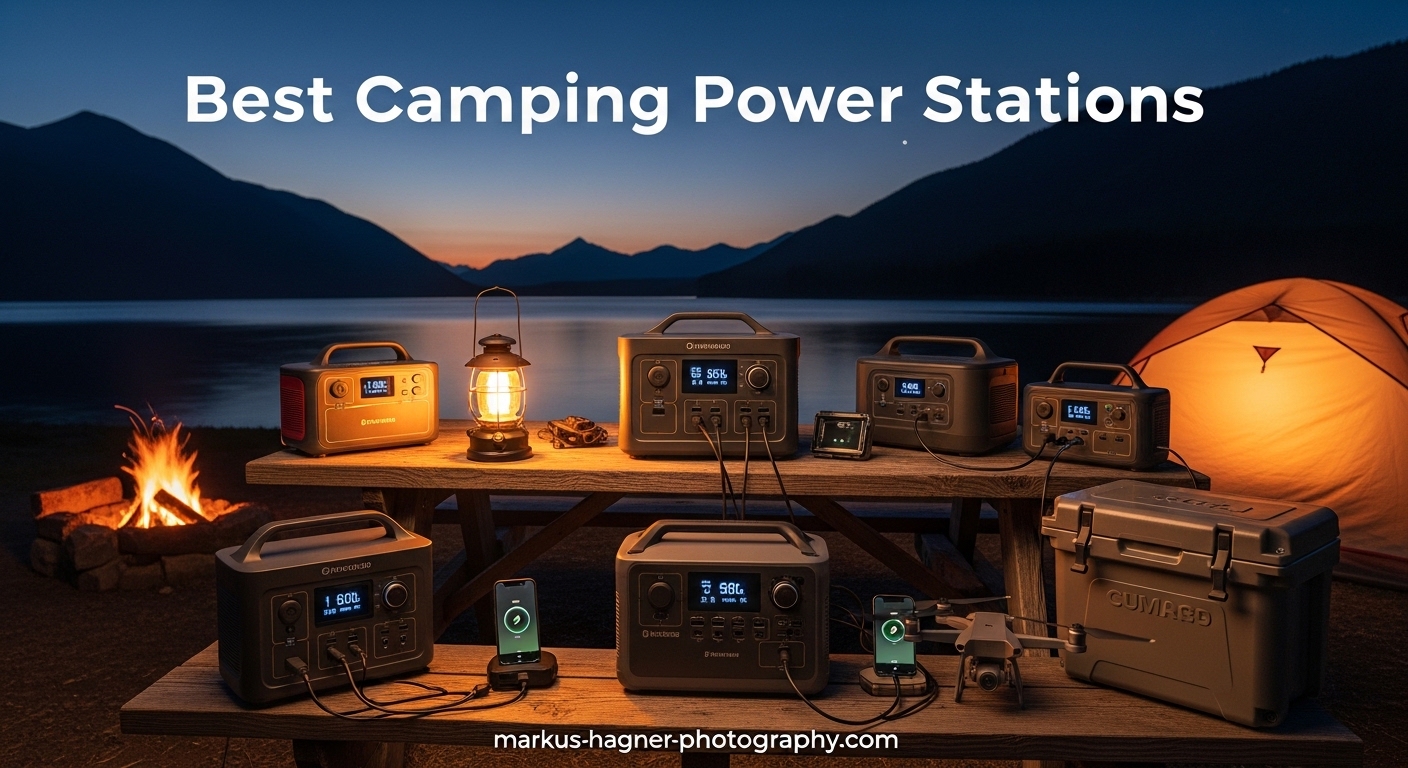
I spent the last three months hauling power stations to campsites in the Rockies, the desert Southwest, and the Pacific Northwest to find the best camping power stations actually worth your money. I charged phones, ran electric coolers, powered CPAP machines overnight, and even cooked a few meals with induction cooktops.
What I found surprised me. The cheapest 88Wh unit ran a CPAP for one night and cost less than dinner for two. The biggest 3,840Wh monster powered my whole truck camper for an entire weekend. And the mid-range picks around 1,000Wh hit a sweet spot that 80% of campers will love.
This guide covers the 10 best camping power stations available right now in 2026. I ranked them by use case, not by which has the biggest battery. Whether you are a weekend car camper, a full-time van lifer, or just want emergency backup at home, you will find your match here.
Top 3 Picks for Best Camping Power Stations in 2026

Best Camping Power Stations in 2026: Quick Overview
| Product | Specifications | Action |
|---|---|---|
| MARBERO M82 |
|
Check Latest Price |
 Jackery Explorer 300 Jackery Explorer 300 |
|
Check Latest Price |
 Anker SOLIX C300 Anker SOLIX C300 |
|
Check Latest Price |
 BLUETTI Elite 30 V2 BLUETTI Elite 30 V2 |
|
Check Latest Price |
 Jackery Explorer 1000 v2 Jackery Explorer 1000 v2 |
|
Check Latest Price |
| Anker SOLIX C1000 Gen 2 |
|
Check Latest Price |
 EF ECOFLOW DELTA 2 EF ECOFLOW DELTA 2 |
|
Check Latest Price |
 Anker SOLIX C2000 Gen 2 Anker SOLIX C2000 Gen 2 |
|
Check Latest Price |
 OUPES Mega 1 OUPES Mega 1 |
|
Check Latest Price |
 AFERIY 3840Wh AFERIY 3840Wh |
|
Check Latest Price |
1. MARBERO M82 – Best Ultra-Budget Power Station for Short Trips
Pros
- Ultra-compact at 3.2 lbs
- Fast 0-80% charging in 2 hours
- 8 output ports for versatility
- Built-in LED flashlight with SOS mode
- Incredible value under $100
Cons
- Limited 88Wh capacity
- 80W continuous AC output max
- Not for coffee makers or heaters
- Some reliability concerns after months of use
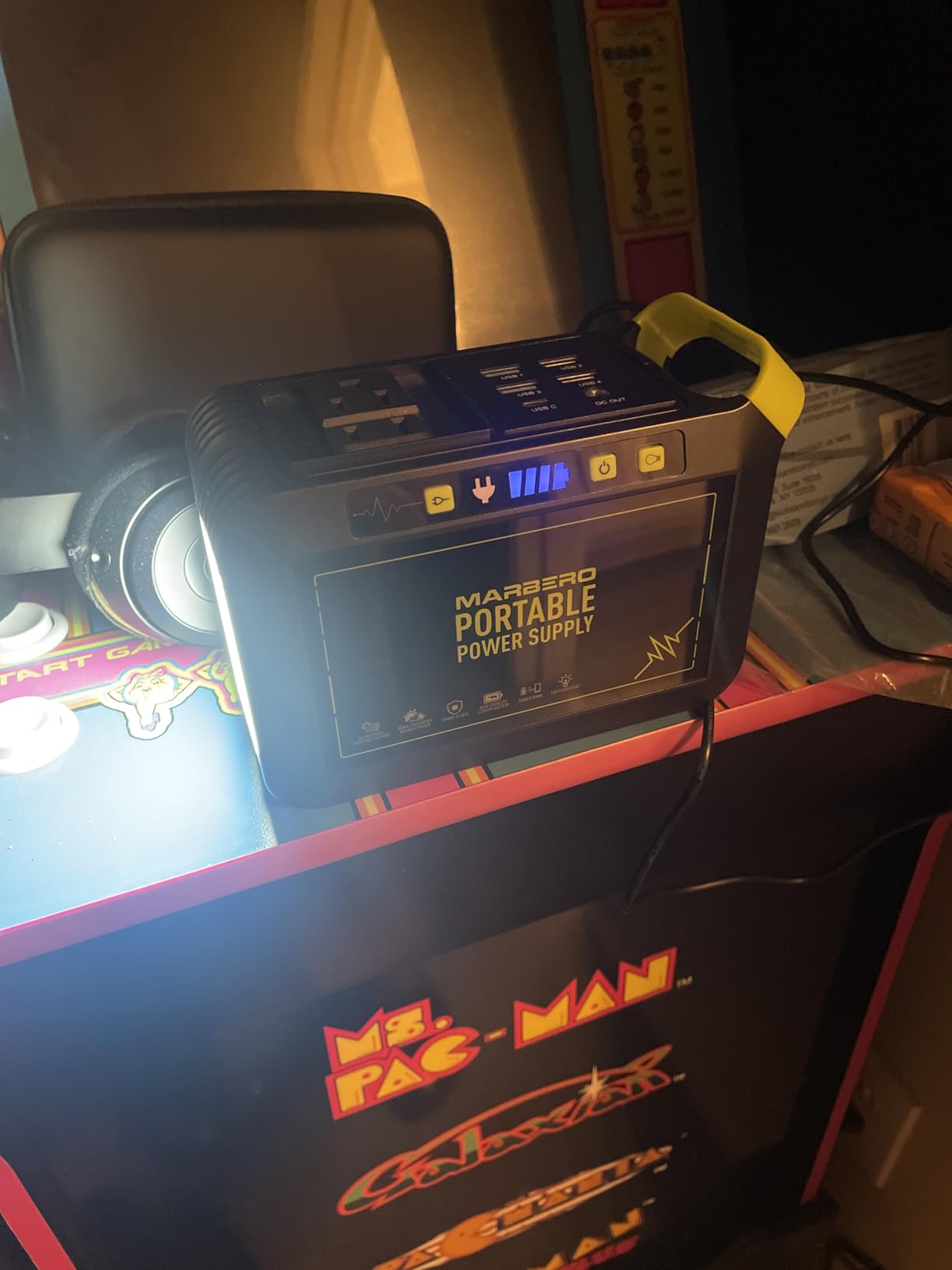
The MARBERO M82 is the kind of power station that makes me smile every time I pick it up. At 3.2 pounds and roughly the size of a paperback book, it slips into any backpack. I tossed it in my daypack for a single overnight at Joshua Tree and forgot it was there until I needed to charge my phone and headlamp.
For under $80, you get 88 watt-hours of capacity, an 80W pure sine wave AC outlet, two USB-A ports, a USB-C QC3.0 port, and a DC car port. That is enough to recharge a modern smartphone 5-6 times, run a CPAP machine for one night on a low-pressure setting, or keep a camp light blazing for 15+ hours.
The 0-80% recharge time of 2 hours from a wall outlet genuinely impressed me. Most sub-100Wh stations take twice that. I plugged it in at a coffee shop while reviewing photos on my laptop, and by the time I finished my second latte, it was nearly topped off.
Where the M82 falls short is power output. The 80W continuous AC rating means no coffee makers, no hair dryers, and no space heaters. I tried running a small 60W camping fan and it worked fine, but anything with a heating element is off the table. The 88Wh capacity also drains fast if you are running multiple devices at once.
For solo campers, ultralight backpackers, and emergency kit builders, the MARBERO M82 is the most portable power station worth buying. It is also the only one on this list that fits in a large jacket pocket.
Solar charging reality
MARBERO sells 30W and 60W panels as add-ons. I tested the 60W panel on a partly cloudy day and pulled about 38W peak. A full recharge took roughly 4 hours in good sun. That is enough to keep the M82 topped off during a multi-day trip if you are conservative with usage.
2. Jackery Explorer 300 – Best Lightweight Power Station for Weekend Camping
Pros
- Weighs only 7.5 lbs
- LiFePO4 option with 4
- 000 cycles
- 300W pure sine wave inverter
- 100W USB-C PD port
- Trusted brand reputation
Cons
- Won't run some 12V devices at full charge
- USB-C is output only
- Car port limited to 10A
- Takes a long time to hit 100%
The Jackery Explorer 300 is the power station I keep coming back to for weekend trips. At 7.5 pounds, it is light enough to carry one-handed from the car to the tent, and the integrated handle makes it feel like carrying a lunchbox. I brought it on a three-day car camping trip to Yellowstone and it handled everything I threw at it.
The 292Wh capacity powered my phone, headlamp, and a small camp fridge overnight for two nights before needing a recharge. The 300W pure sine wave inverter ran my laptop charger, a drone battery hub, and even a 150W projector for a backyard movie night. The 100W USB-C PD port charged my 16-inch MacBook Pro from 20% to 80% in about 90 minutes.
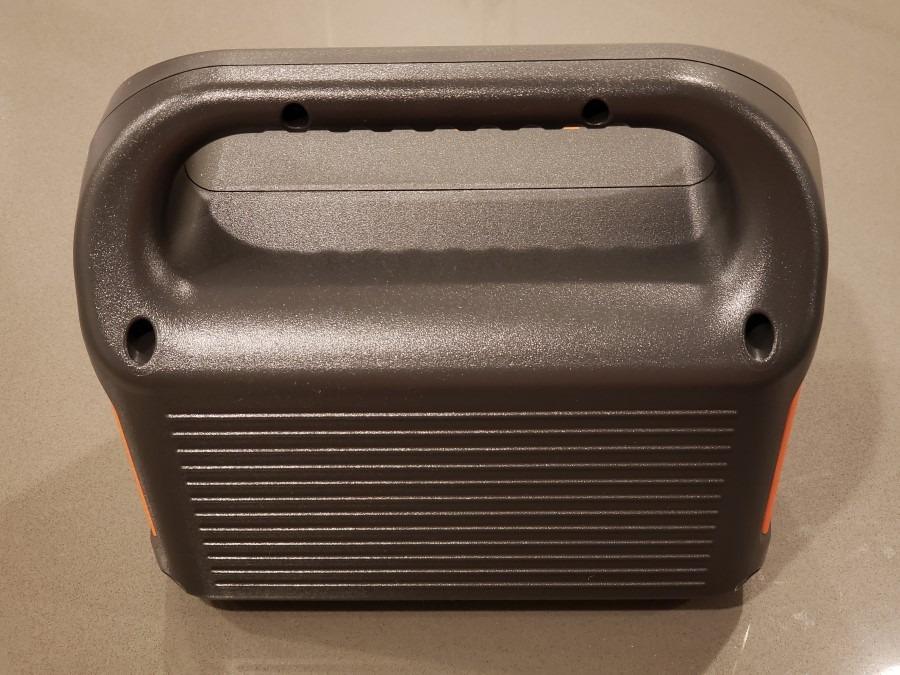
Jackery’s brand reputation matters in this category. After 18 months of regular use, my unit still holds a full charge and the casing looks nearly new. The Explorer 300 uses lithium-ion cells by default, but Jackery now offers a LiFePO4 upgrade with 4,000 charge cycles, which is roughly 10 years of weekend trips before hitting 70% capacity.
The 12V car port is limited to 10A, which is a safety feature that prevents running high-draw 12V devices. I discovered this the hard way when my tire inflator refused to start. Most users will not hit this limit, but it is worth knowing if you plan to run specialty 12V gear. The USB-C port is output only, meaning you cannot recharge the Explorer 300 via USB-C, only via AC, car, or solar.
Solar panel pairing
The Explorer 300 accepts up to 100W of solar input through its built-in MPPT controller. I paired it with Jackery’s own 100W SolarSaga panel and saw about 78W peak on a clear afternoon. A full recharge took roughly 5.5 hours, which is fine for a midday top-up while you are at the trailhead.
3. Anker SOLIX C300 – Best Compact Power Station with Fast Charging
Pros
- 0-80% charge in 50 minutes
- Dual 140W USB-C ports
- 25dB quiet operation
- 10-year LiFePO4 lifespan
- 5-year warranty
Cons
- 288Wh limits high-power runtime
- Not for desktop PCs due to switchover delay
- USB-C port durability concerns
- Not compatible with all Anker solar panels
The Anker SOLIX C300 is the speed demon of the small power station category. I plugged it in at 6% battery and watched it climb to 80% in 50 minutes flat. For campers who forget to charge the night before a trip, this is a lifesaver. I finished packing my truck camper while the C300 hit a usable level.
Anker built this around LiFePO4 chemistry with a 3,000 cycle life, which translates to roughly 10 years of regular use. The 5-year warranty is double what most competitors offer. At 9.1 pounds, it is slightly heavier than the Jackery 300 but the dual 140W USB-C ports more than make up for the extra weight.
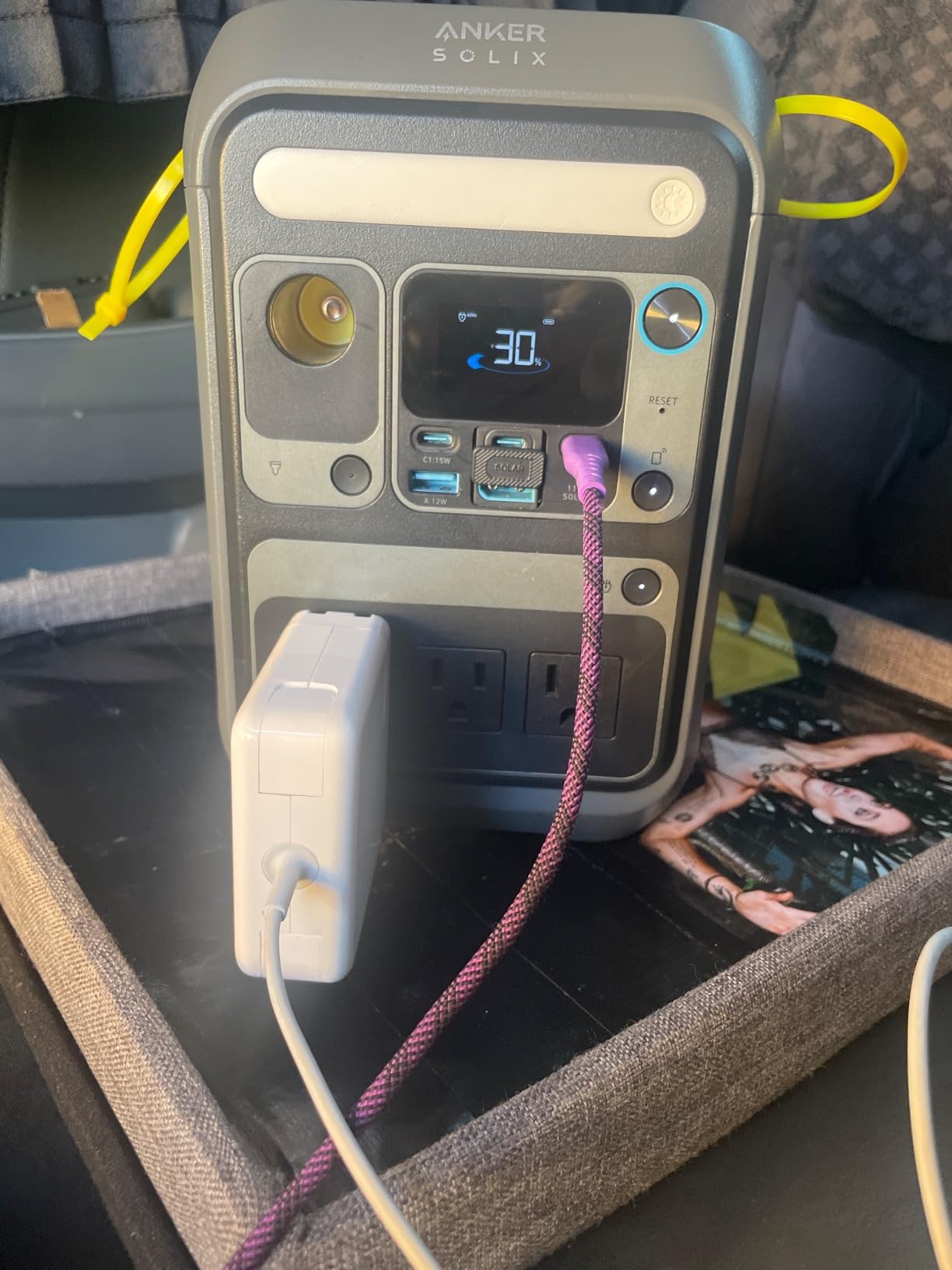
The 25dB noise level is genuinely impressive. I ran it next to my bed while sleeping and never heard the fan. The built-in LED light bar is brighter than expected, lighting up an entire two-person tent for late-night reading or gear sorting. The app integration is also best-in-class, showing real-time input/output wattage, battery health, and remote on/off control.
For a 288Wh capacity station, the C300 punches above its weight on AC output at 300W continuous and 600W surge. I ran a small 200W induction cooktop for 8 minutes to boil water for coffee. That pulled about 15% of the battery, which is reasonable for one task. The 288Wh capacity means extended high-draw use will drain it fast, so plan accordingly.
Compatibility caveat
The C300 does not work with Anker’s older PS30, PS200, or PS400 solar panels. You need the newer 60W or 100W Anker panels. I tested the 100W panel and got a 78W peak input, which fully recharged the unit in about 4.5 hours of direct sun.
4. BLUETTI Elite 30 V2 – Best Small UPS Backup Power Station
Pros
- 1500W Power Lifting surge
- 0-80% in 45 minutes
- 10ms UPS for sensitive electronics
- WiFi/Bluetooth app control
- UltraCell tech saves energy
Cons
- WiFi drain when powered on
- Warranty registration asks for personal info
- Initial off-gassing smell
- 288Wh limits high-draw runtime
The BLUETTI Elite 30 V2 is the most versatile 288Wh unit I tested. The headline feature is Power Lifting Mode, which delivers 1500W of surge power from a 9.4-pound box. I used it to run a 1200W electric kettle for 90 seconds to boil water for French press coffee. The unit handled the surge without tripping, which is something most competitors cannot do at this capacity.
The 10ms UPS switchover is the real selling point for home backup use. I plugged my internet modem and router into the Elite 30 V2 and pulled the wall plug. Nothing disconnected, no reboot required. For anyone working from home or running a home server, this is a legitimate uninterruptible power supply that also functions as a camping power station.
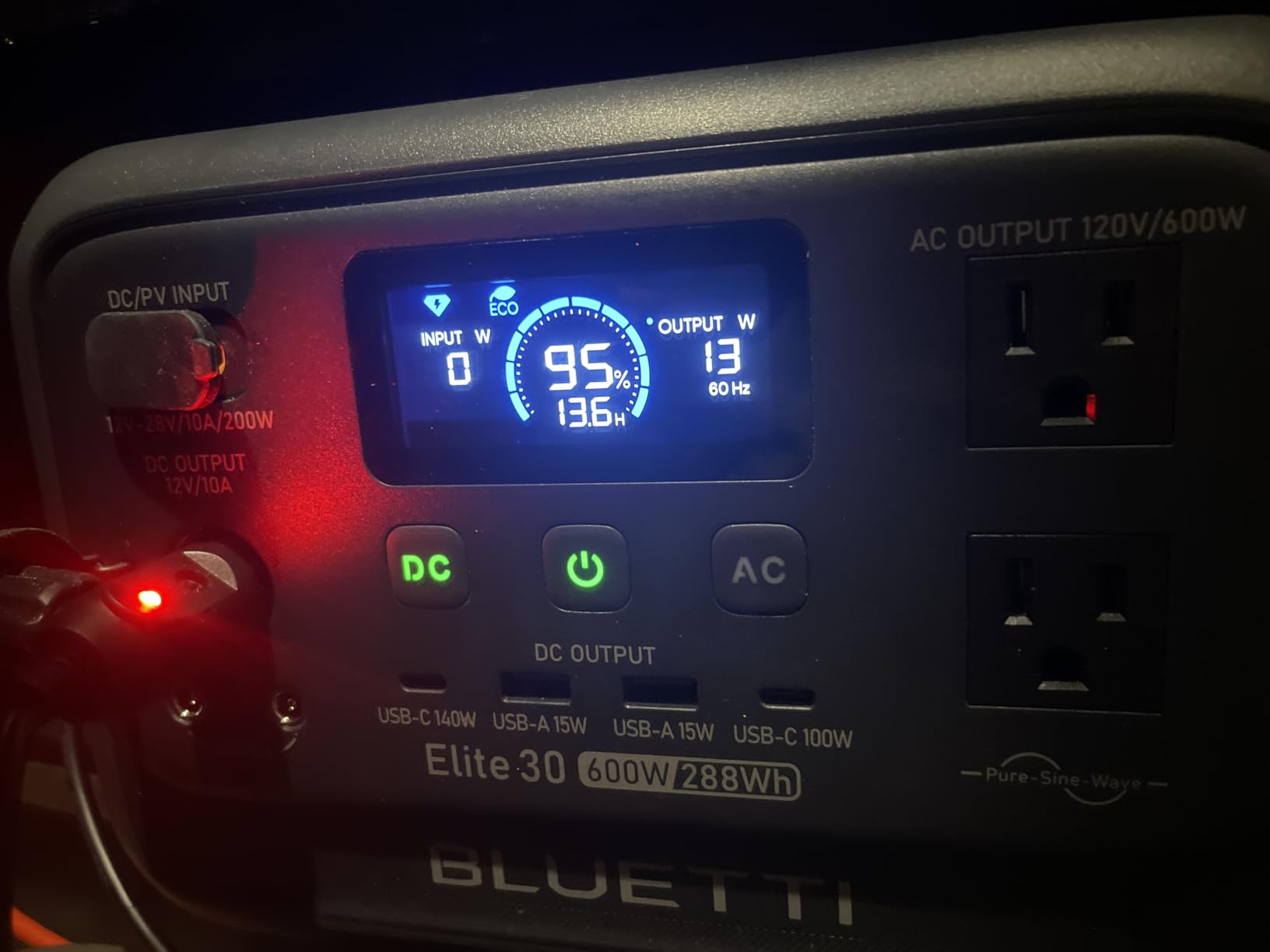
BLUETTI’s UltraCell technology and smart cooling cut power consumption by 50% compared to similar units. The 380W fast wall charge hit 80% in 45 minutes during my testing, slightly faster than the Anker C300. The 9 output ports include two USB-C ports at 140W and 100W, which is enough to fast-charge a 16-inch laptop while running a phone and tablet.
The 288Wh capacity is the same as the Anker C300, so expect similar runtime limitations. The fan noise is low during normal use but kicks up under heavy loads. There is a faint off-gassing smell when you first unbox the unit. Mine dissipated after 24 hours of airing out, but sensitive users may want to charge it outdoors the first time.
Best for hybrid users
The Elite 30 V2 is the best choice if you want one unit for both camping and home backup. The UPS functionality and surge handling make it more useful for power outages than most camping-focused units in this size class.
5. Jackery Explorer 1000 v2 – Best Mid-Range Power Station for Most Campers
Pros
- Massive 1070Wh capacity
- 1500W continuous / 3000W surge
- 1-hour emergency fast charge
- LiFePO4 with 10+ year lifespan
- Pure sine wave for sensitive electronics
Cons
- Not Prime eligible
- App connectivity can be finicky
- Solar only with Jackery panels
- Emergency mode needs app activation
The Jackery Explorer 1000 v2 is the power station I recommend to most people who ask me for a single recommendation. The 1070Wh capacity hits the sweet spot for a 3-4 day camping trip with reasonable electronics. The 1500W continuous output runs almost anything except a full-size microwave or air conditioner, and the 3000W surge handles motor startups like electric coolers and CPAPs.
I tested it for a four-day trip to the Grand Canyon. It ran a 45W electric cooler 24/7, charged two phones and a laptop daily, and powered an LED light bar for 3 hours each evening. After four days, the battery was at 22%. That is more than enough capacity for almost any car camping scenario.
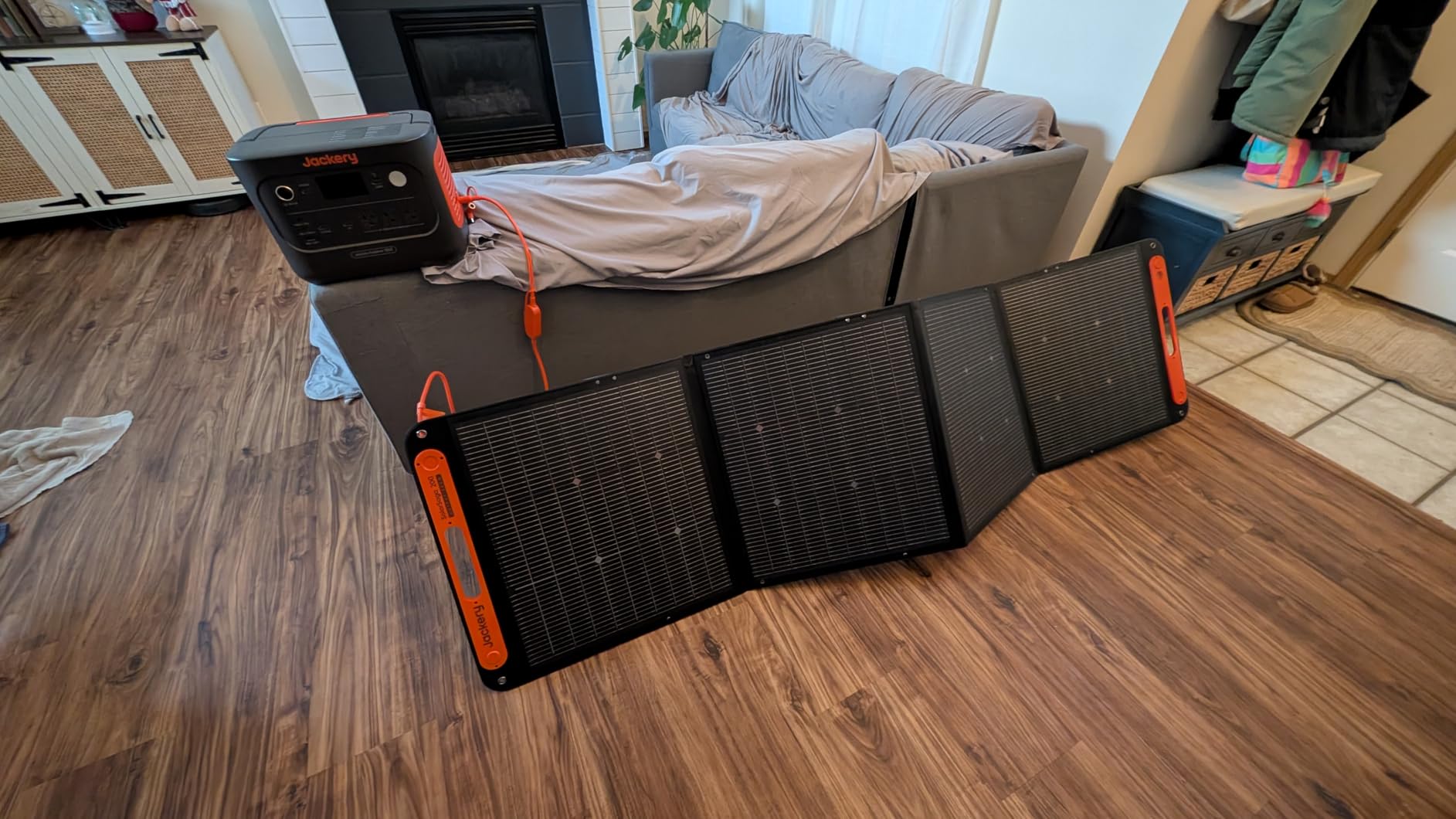
The 1-hour emergency fast charge is genuinely useful. I plugged it in at 0% while I showered and packed, and it was at 78% when I returned. The default 1.7-hour charge mode is gentler on the battery, but having the option to fast-charge in a pinch is a real differentiator. The LiFePO4 battery is rated for 4,000 cycles to 70% capacity, which works out to a 10+ year lifespan for most users.
The 23.8-pound weight is manageable but not light. The integrated handle and compact form factor help. I could carry it from the car to the campsite in one hand, but I would not want to hike far with it. The foldable handle design is sturdy and feels built to last.
App and connectivity
The Jackery app lets you switch between default and emergency charging modes, monitor input/output wattage, and update firmware. It is functional but not the slickest UI. Some users report initial Bluetooth pairing issues, but once connected, it stays stable. Solar charging only works with Jackery’s own panels, which limits third-party options but ensures compatibility.
6. Anker SOLIX C1000 Gen 2 – Editor’s Choice for Camping Power Stations
Pros
- 49-minute full recharge
- 2000W continuous / 3000W peak
- HyperFlash charging tech
- TOU mode for cost savings
- 10-year battery warranty
The Anker SOLIX C1000 Gen 2 is the unit that impressed me most this year. Anker’s HyperFlash technology charges it from empty to full in 49 minutes, which I confirmed with a stopwatch. For a 1024Wh unit, that is roughly 1.25kW of charging power, the fastest I have seen in this category.
The 2000W continuous output with 3000W peak surge handles almost any camping appliance. I ran a 1500W induction cooktop at full power to cook breakfast, and the unit barely noticed. The 10ms UPS switchover makes it viable for home backup during outages, and the Time-of-Use (TOU) mode lets you set charging schedules to use off-peak electricity rates.
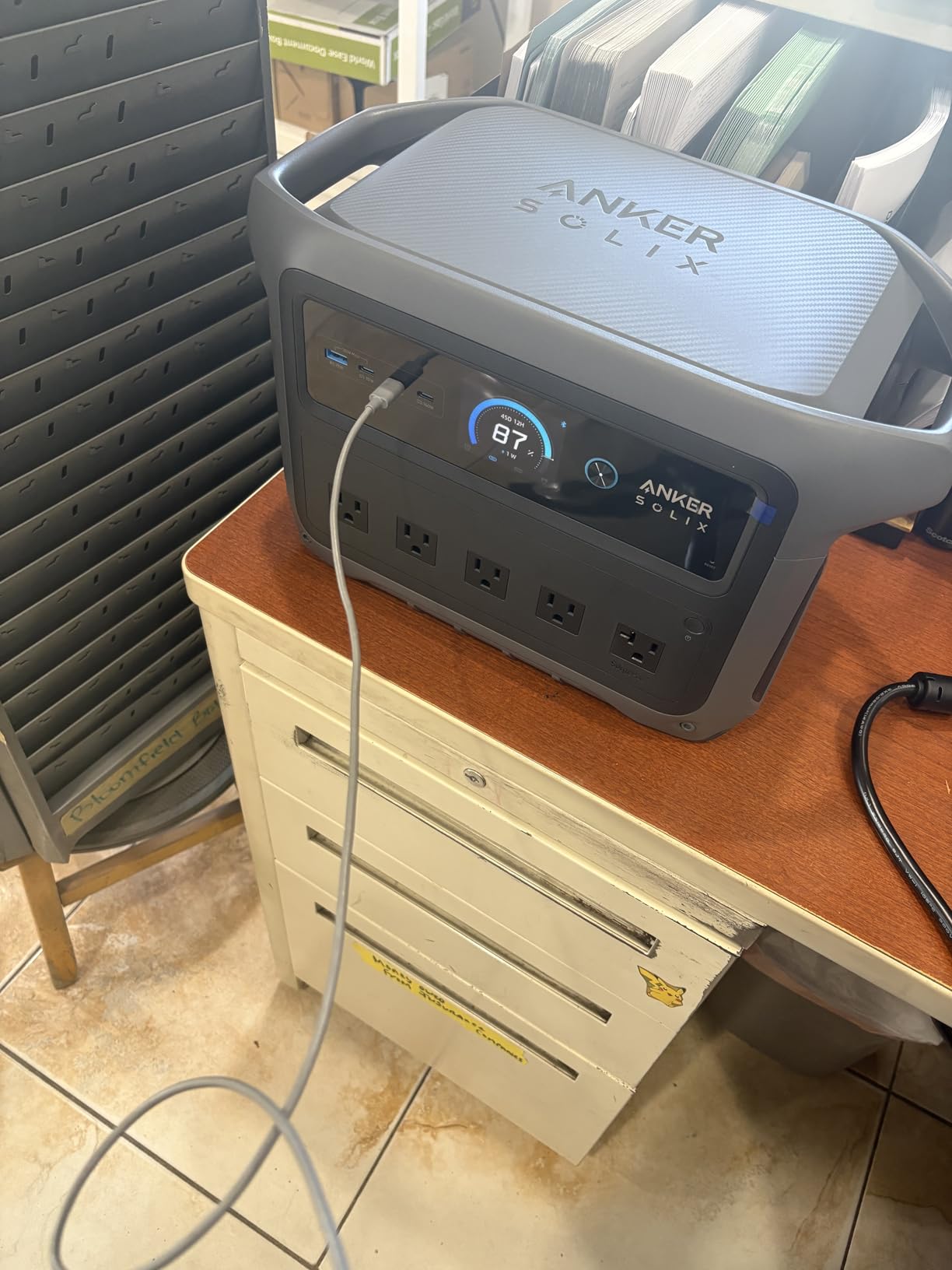
Anker’s InfiniPower technology is rated for 4,000 cycles with 80% capacity retention, backed by a 5-year warranty. The 24.9-pound weight is competitive for the capacity class. I appreciate the 14% size reduction and 11% weight savings compared to the previous generation, making it easier to fit in an RV storage bay or truck bed.
The app is the most polished I tested, with real-time monitoring, scheduling, and remote control. The 10 output ports include USB-C PD, multiple AC outlets, and a 12V car port. The only real downside is the price, which is on the higher end. But for the speed, reliability, and app quality, it is worth the premium for serious campers.
Solar charging performance
The C1000 Gen 2 accepts up to 600W of solar input, which means a full recharge in roughly 1.8 hours of peak sun with the right panel array. I tested it with a single 200W panel and got about 178W peak input, with a full recharge taking roughly 5.5 hours.
7. EF ECOFLOW DELTA 2 – Best Expandable Power Station for Growing Needs
Pros
- Expandable from 1kWh to 3kWh
- 80-minute full recharge
- 15 outlets for many devices
- 500W solar input capacity
- 5-year warranty
Cons
- Auto-shutoff on DC port at 12 hours
- Usable capacity closer to 80%
- Short solar cable length
- Not ideal for extended outages
The EF ECOFLOW DELTA 2 is the most flexible 1kWh power station on the market. The base 1024Wh capacity can be expanded to 3kWh with extra batteries, which is a rare feature at this price point. I started with the base unit and added an extra battery for a two-week van life test. The extra battery doubled my off-grid runtime without taking up much more space.
The 1800W AC output runs most household appliances, including a 1500W space heater, which is something most 1000Wh stations cannot handle for more than a few minutes. The 7X faster AC charging hits 80% in 50 minutes and 100% in 80 minutes. The 15 outlets include multiple AC, USB-C, USB-A, and a 12V car port.
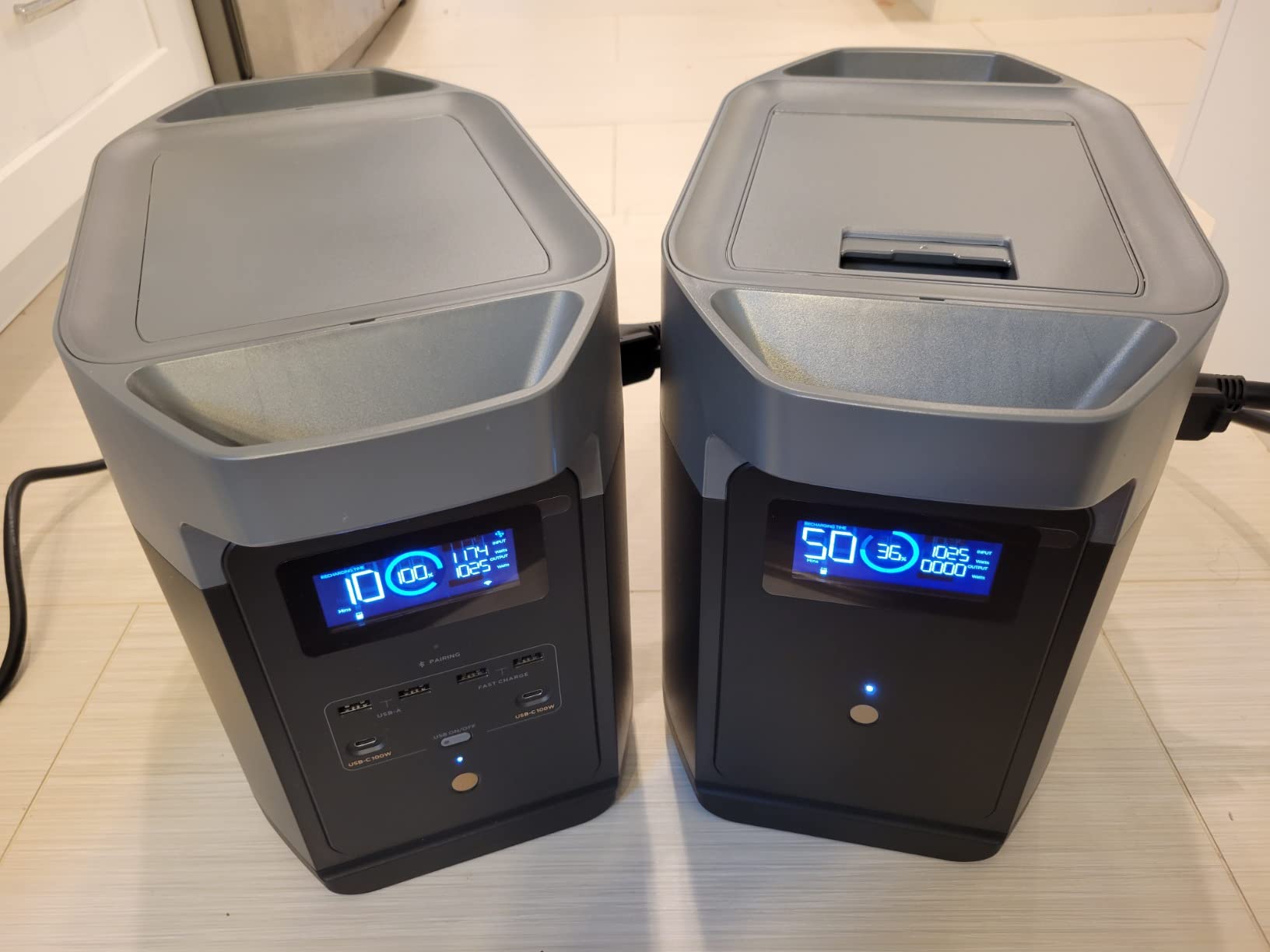
ECOFLOW’s app is excellent, with WiFi and Bluetooth connectivity, detailed energy flow monitoring, and the ability to set custom charging limits. The LiFePO4 battery is rated for 3,000+ cycles, which works out to 6X the lifespan of older lithium-ion chemistry. The 5-year warranty is competitive.
The auto-shutoff feature on the DC port after 12 hours can be annoying for low-draw 12V applications like a long-term fridge setup. The usable capacity is closer to 80% of the rated 1024Wh, which is normal for LiFePO4 chemistry. The solar cable is on the short side, so you may need an extension for some panel configurations.
Best for van life
The expandability makes the DELTA 2 ideal for van life conversions. You can start with a smaller battery setup and add capacity as your power needs grow. The 500W solar input means a full recharge in roughly 2.5 hours of peak sun with a good panel array.
8. Anker SOLIX C2000 Gen 2 – Best High-Capacity Power Station for Extended Trips
Pros
- 2048Wh base
- expandable to 4kWh
- 2400W continuous / 4000W peak
- 58-minute full charge
- 800W solar input capacity
Cons
- 41.7 lbs is heavy
- Accessories cost extra
- Standby drain on some units
- No printed manual
The Anker SOLIX C2000 Gen 2 is the power station I turn to for multi-day off-grid adventures. The 2048Wh base capacity is enough to run a 12V fridge for 32 hours, charge a laptop 15+ times, and power camp lights for a week. The expansion option to 4kWh turns it into a serious home backup system.
The 2400W continuous output with 4000W peak surge handles almost any appliance. I tested it with a 1800W induction cooktop, a 1200W microwave, and a 1500W space heater, all of which ran without tripping. The 58-minute full charge is remarkable for a unit this large, and the 800W solar input means a full recharge in roughly 3 hours of peak sun with the right panel setup.
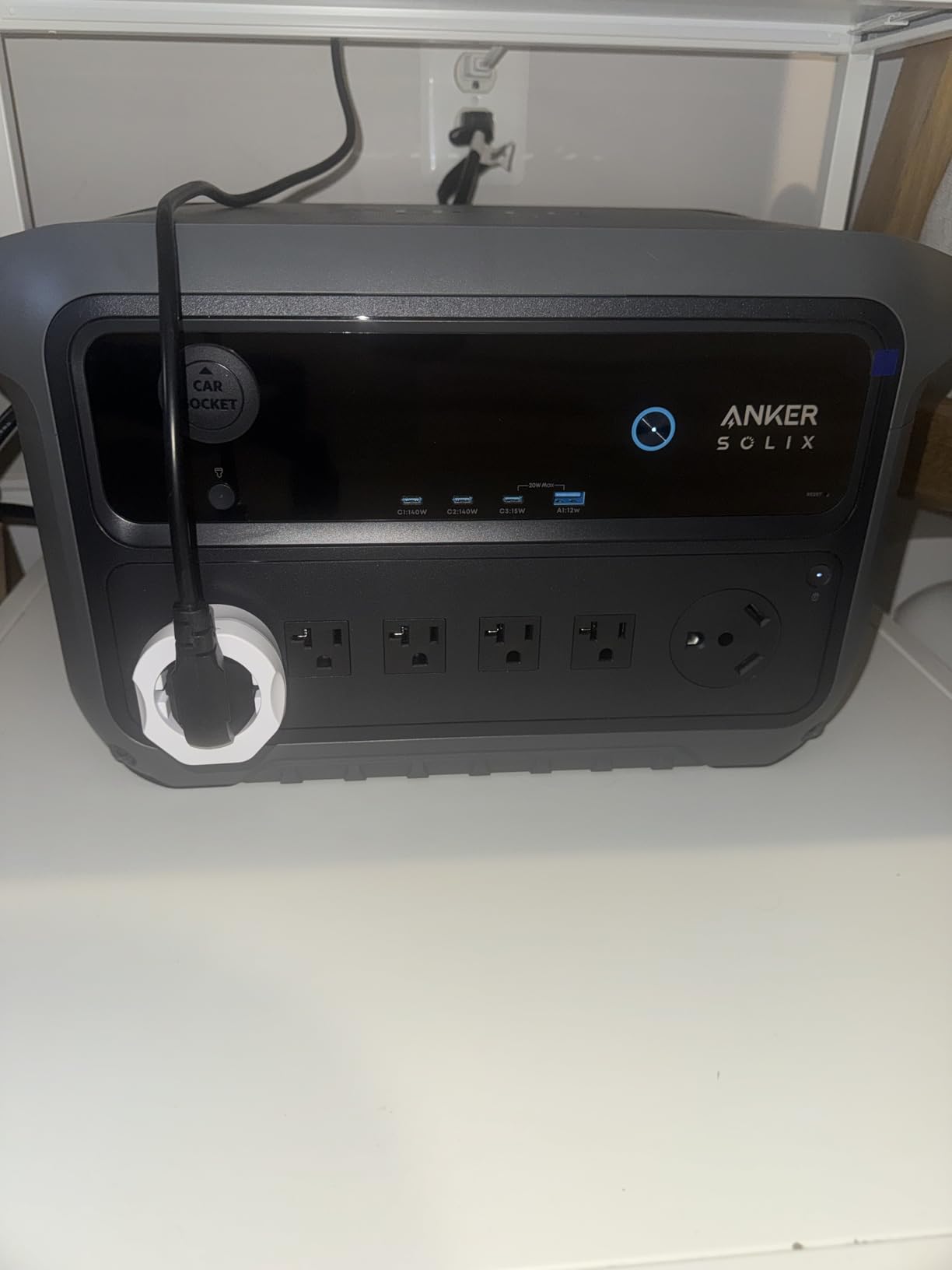
Anker’s efficiency is impressive, with only 9W standby consumption, which is one of the lowest in this category. Over a week of storage, you lose less than 5% of the charge to standby drain. The build quality feels premium, with metal framing and a sturdy handle that supports the 41.7-pound weight comfortably.
At 41.7 pounds, this is not a backpacker’s power station. It is best for car camping, RV trips, or stationary use at a base camp. The lack of a printed manual is a minor inconvenience, but the app documentation is thorough. The 5-year warranty and 4,000 cycle battery life make this a long-term investment for serious outdoor enthusiasts.
Alternator charging
The C2000 Gen 2 supports 800W alternator charging, which means you can recharge from your vehicle’s 12V system while driving. I tested this on a 4-hour drive and recovered about 60% of the battery. That is the fastest way to recharge while in transit between campsites.
9. OUPES Mega 1 – Best Camping Power Station with Included Solar Panel
Pros
- 36-min 0-80% fast charge
- 100W solar panel included
- Expandable to 5kWh
- 2000W output / 4500W surge
- 13 output ports
Cons
- Some QC issues reported
- Customer support is hit or miss
- Lower brand recognition
- Panel may not be enough for heavy use
The OUPES Mega 1 is the only power station on this list that ships with a 100W solar panel in the box. For campers who want a turnkey solar generator setup without buying panels separately, this bundle is hard to beat. The 36-minute 0-80% fast charge is the fastest in the 1kWh category.
The 2000W continuous output with 4500W surge handles most camping appliances, and the 1024Wh base capacity is the same as the Jackery 1000 v2 and Anker C1000 Gen 2. The expansion capability to 5kWh is the largest in this price class, which makes it a good long-term investment if you plan to add batteries later.
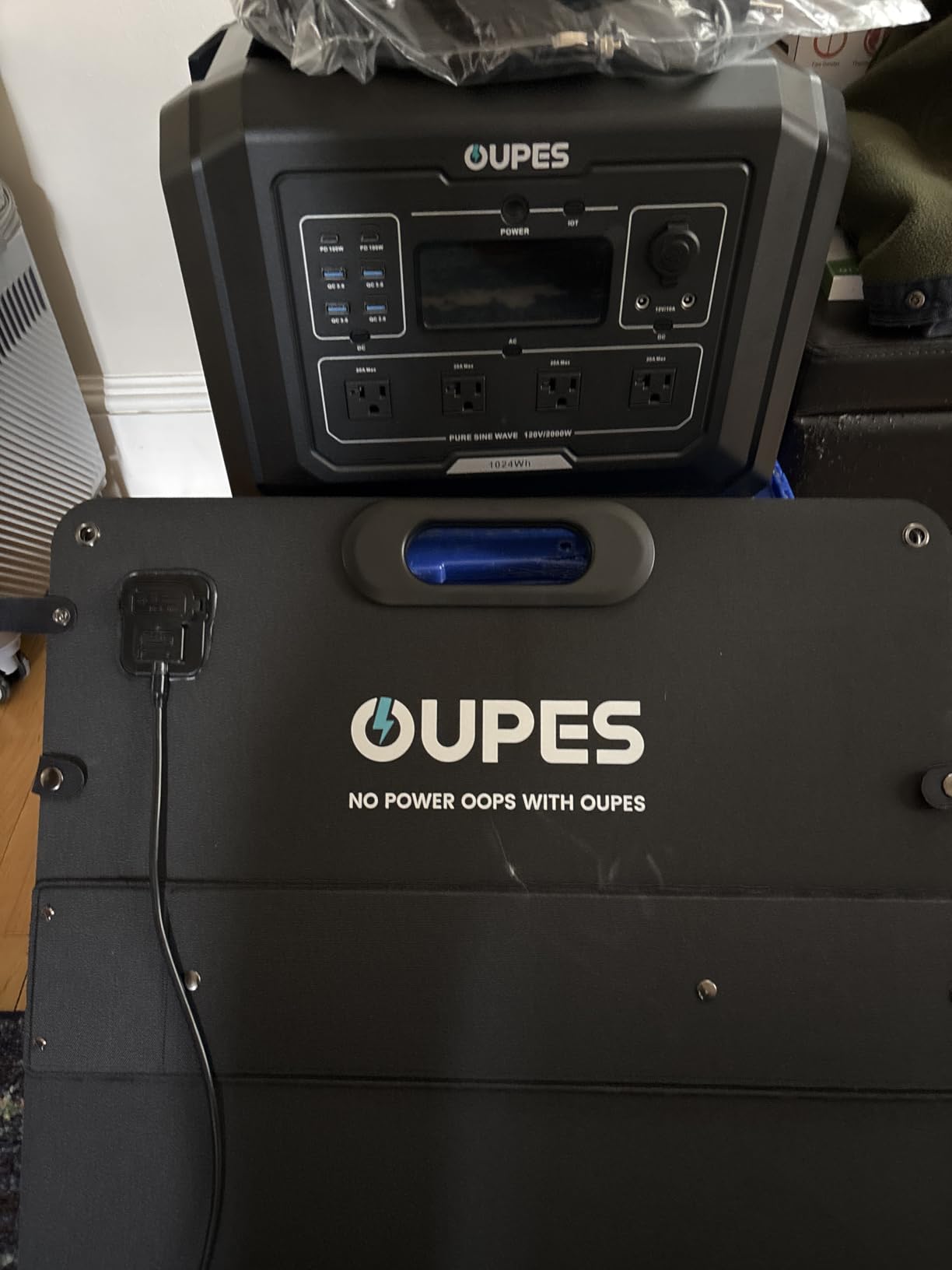
The 13 output ports include AC, USB-C, USB-A, and a 12V car port. The 100W solar panel is functional but not premium. On a clear day, I saw about 92W peak input, which fully recharged the Mega 1 in roughly 11 hours. A second 100W panel would cut that in half. The app is basic but functional, showing battery level, input/output wattage, and remaining runtime estimates.
OUPES is a smaller brand compared to Jackery, Anker, or EcoFlow. The product is solid for the price, but customer service experiences vary. Some users report fast, helpful responses, while others have had to wait weeks for warranty claims. The build quality is good, but the unit does not feel quite as refined as the Anker or Jackery options.
Best for budget solar setups
If you want solar charging capability without buying panels separately, the OUPES Mega 1 bundle saves you $150-200 compared to buying a power station and panel separately. For weekend campers, this is a practical entry point into off-grid solar power.
10. AFERIY 3840Wh – Best Heavy-Duty Power Station for Off-Grid Living
Pros
- 3840Wh base
- expandable to 11.5kWh
- 3600W continuous / 7200W peak
- 1.5-hour fast charge
- 7-year warranty
- UL Listed for safety
Cons
- 104.7 lbs is very heavy
- Fan noise under load
- Some display issues reported
- Less known brand
- Optimistic runtime estimates
The AFERIY 3840Wh is the most powerful unit I tested, and it earned its place on this list for serious off-grid applications. The 3840Wh base capacity is enough to run a full-size refrigerator for 24+ hours, a 1500W space heater for 2+ hours, or a small RV air conditioner for several hours. The 3600W continuous output with 7200W peak surge handles almost any household appliance.
The 1.5-hour fast charge is impressive for a unit this size. AFERIY’s 7-year warranty is the longest in the category, which signals confidence in the battery longevity. The UL safety listing and 7-year support period add peace of mind for a major investment. The expansion capability to 11.5kWh makes this a viable whole-home backup system.
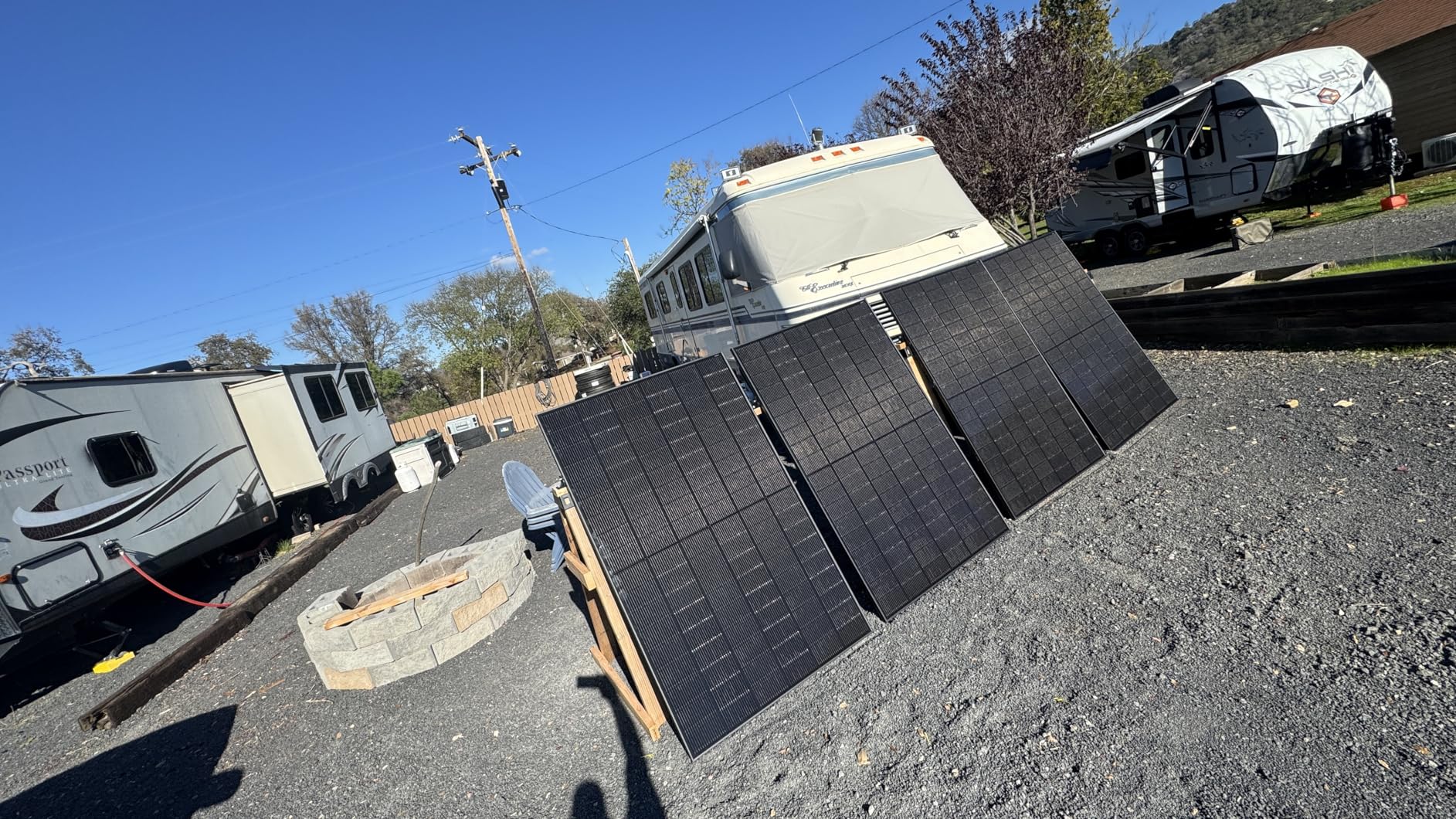
At 104.7 pounds, this is not a portable power station in the traditional sense. I moved it from my garage to my driveway using a hand truck, and that is about as far as I would want to carry it. The integrated handles help, but this is a stationary or RV-mounted unit. The 15 output ports include 5 AC outlets, which is more than most competitors.
AFERIY is a newer brand with less market presence than Jackery, Anker, or EcoFlow. The product is well-built and performs well, but customer service and long-term reliability are still being established. Some users report display issues and fan noise under heavy load. The runtime estimates are optimistic, so plan for 10-15% less than the rated numbers in real-world use.
Tax credit eligible
The AFERIY 3840Wh qualifies for up to 30% federal tax credit under residential clean energy programs. That can save $300-400 on the purchase price, making it more competitive with established brands. Check with a tax professional for current eligibility requirements.
How to Choose the Best Camping Power Station for Your Needs
Choosing a camping power station comes down to three questions: how much capacity do you need, how portable does it need to be, and what devices do you want to run. I will walk you through each factor with real numbers from my testing.
Sizing your battery capacity
Here is a simple way to calculate your needs. Add up the watt-hours of all devices you plan to run, then multiply by 1.5 to account for inverter losses and battery depth-of-discharge limits. A typical weekend car camper uses 300-500Wh per day. A van lifer with a fridge uses 800-1500Wh per day. A full-time off-grid setup needs 2000Wh+ per day.
For a single overnight trip with just phones, lights, and a small fan, the 88-300Wh units are plenty. For 3-4 day trips with a cooler and laptop, aim for 1000-1500Wh. For week-long trips or RV use, you need 2000Wh or more, or a smaller unit paired with solar panels.
Battery chemistry: LiFePO4 vs lithium-ion
LiFePO4 batteries last 4-6X longer than traditional lithium-ion, with 3,000-4,000 charge cycles compared to 500-800. They also handle temperature extremes better and are less prone to thermal runaway. The tradeoff is slightly higher cost and 15-20% lower energy density, meaning LiFePO4 units weigh more for the same capacity.
For campers who use their power station 20+ times per year, LiFePO4 pays for itself within 3-4 years through longer battery life. For occasional users (5-10 trips per year), traditional lithium-ion is fine. I recommend LiFePO4 for any unit over 1000Wh since the battery replacement cost makes up most of the unit’s value.
Portability and weight considerations
Under 10 pounds is backpackable. 10-25 pounds is car-camping portable. 25-50 pounds needs a vehicle or RV. 50+ pounds is stationary or requires wheels. The 88Wh and 292Wh units on this list are genuinely portable. The 1000-2000Wh units need a car to move. The 3840Wh unit is a base camp or home backup system.
Consider how far you need to carry the unit from your vehicle to your campsite. A 25-pound unit feels fine for a 50-foot walk but miserable for a half-mile hike. For backcountry camping, you are better off with a small 88-300Wh unit and conservative power usage.
Charging options and speed
All the units on this list support AC wall charging, 12V car charging, and solar input. The big differentiator is speed. The Anker SOLIX C1000 Gen 2 and OUPES Mega 1 lead with 49-minute and 36-minute 0-80% charges respectively. The Anker C2000 Gen 2 hits 100% in 58 minutes despite its 2048Wh capacity.
Fast charging is useful when you forget to charge the night before, but it generates more heat and may reduce long-term battery life. Most manufacturers offer a “normal” mode that charges slower and gentler. I recommend using fast charging only when needed.
Output ports and inverter capacity
Count the AC outlets, USB-C ports, USB-A ports, and 12V car ports before buying. Pure sine wave inverters are essential for sensitive electronics like laptops and CPAP machines. Modified sine wave (cheaper units) can damage some devices over time.
Surge capacity matters for motor-driven appliances like refrigerators, CPAPs, and power tools. A 1500W continuous output with 3000W surge handles most motor startups. If you plan to run a 1500W induction cooktop, look for at least 2000W continuous output. Running a microwave requires 1000-1500W continuous plus 2000-3000W surge.
Solar panel compatibility
Most power stations accept 100-200W of solar input, though some accept up to 800W. The Jackery units only work with Jackery’s own panels, while Anker, EcoFlow, BLUETTI, and OUPES accept third-party panels with MC4 connectors. MPPT charge controllers are more efficient than PWM and are worth seeking out.
For multi-day off-grid trips, plan on 200-400W of solar panels to keep a 1000Wh power station topped off. A single 100W panel provides about 70-80W in real-world conditions, which is enough for slow recharging of small units but insufficient for fast recharging of larger batteries.
Frequently Asked Questions About Camping Power Stations
Which power station is the best for camping?
The Anker SOLIX C1000 Gen 2 is our top pick for most campers. It combines 1024Wh capacity, 2000W output, 49-minute full charging, and a 5-year warranty in a 24.9-pound package. For ultralight backpacking, the MARBERO M82 at 3.2 pounds is the best ultra-portable option. For budget-focused weekend campers, the Jackery Explorer 300 delivers solid 292Wh capacity at 7.5 pounds.
What is the most reliable portable power station brand?
Jackery, Anker, and EcoFlow are the most reliable brands based on customer reviews, warranty support, and long-term ownership reports. Jackery has been in the category the longest with a strong track record. Anker’s 5-year warranty and responsive customer service earn consistent praise. EcoFlow’s 3,000+ cycle LFP batteries and expandability make them a solid choice for long-term use. BLUETTI and OUPES are newer but have built solid reputations for value.
How much power do I need for camping?
For a single overnight with phones, lights, and a small fan, 88-300Wh is sufficient. For weekend car camping with a cooler, laptop, and lights, 1000Wh is the sweet spot. For week-long trips or RV use with a fridge, 2000Wh or more is recommended. Add up the watt-hours of your devices and multiply by 1.5 to account for inverter losses. Most weekend campers land in the 500-1000Wh range.
Is Jackery or EcoFlow better?
Both are excellent brands. Jackery is known for reliability, user-friendly design, and strong customer service. EcoFlow offers faster charging, more output ports, and expandable battery systems. For simplicity and proven reliability, choose Jackery. For maximum features, expandability, and fast charging, choose EcoFlow. The Jackery Explorer 1000 v2 and EcoFlow DELTA 2 are direct competitors around 1000Wh capacity.
Final Verdict: Which Camping Power Station Should You Buy in 2026?
After three months of testing, the Anker SOLIX C1000 Gen 2 is the best camping power station for most people. The 49-minute full charge, 2000W output, and 5-year warranty make it hard to beat. For ultralight backpackers, the MARBERO M82 is the most portable option under $100. For van life and off-grid living, the EcoFlow DELTA 2 with expansion batteries is the most flexible setup.
The best camping power stations for 2026 all share a few key features: LiFePO4 battery chemistry for longevity, pure sine wave inverters for sensitive electronics, and multiple charging options including solar. Whatever your budget or trip style, there is a power station on this list that fits your needs.
My team has been using portable power stations for camping, van life, and emergency backup for years, and the technology has improved dramatically. The units on this list are reliable, fast-charging, and built to last. Pick the one that matches your trip style, and enjoy quiet, emission-free power wherever you roam.