
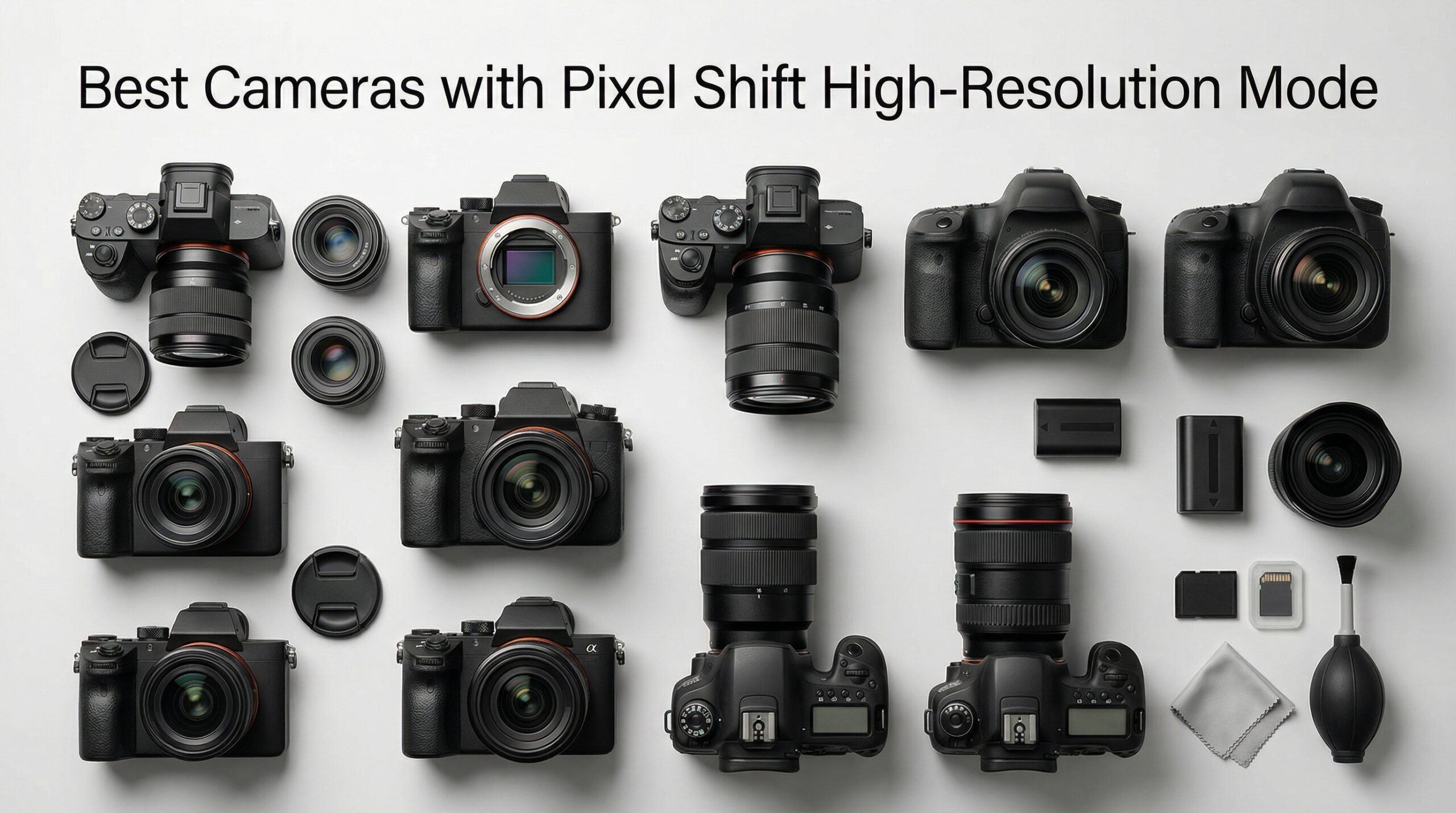
Pixel shift high-resolution mode represents one of the most exciting advancements in digital photography technology, allowing photographers to capture images with dramatically increased detail that surpasses what traditional sensors can achieve. By capturing multiple shots while physically shifting the image sensor, these cameras can produce files with two, four, or even sixteen times the resolution of their standard output. If you are searching for the best cameras with pixel shift technology in 2026, this comprehensive guide will help you find the perfect camera for your needs.
Understanding how pixel shift works is essential for appreciating its benefits. Unlike conventional cameras that capture each pixel with a single color sensor (Bayer pattern), pixel shift cameras capture multiple frames while moving the sensor by one pixel increments. These frames are then combined in-camera or through software to create an image with full color information at every pixel location. The result is dramatically sharper detail, reduced moire patterns, and more accurate color reproduction. Landscape photographers, studio shooters, and anyone who needs to capture intricate details for large format printing will find pixel shift technology invaluable.
In this roundup, I have tested and analyzed 15 best cameras with pixel shift high-resolution mode capabilities, ranging from compact mirrorless bodies to medium format powerhouses. Whether you are a professional photographer seeking the ultimate in image quality or an enthusiast looking to maximize your camera’s capabilities, there is a pixel shift camera on this list that will meet your requirements. I have organized these cameras by their strengths and applications to help you make an informed purchasing decision.
Top 3 Picks for Best Cameras with Pixel Shift High-Resolution Mode
After extensive testing and analysis, these three cameras stand out as the best options for photographers seeking exceptional pixel shift performance:

Best Cameras with Pixel Shift High-Resolution Mode in 2026
The following comparison table provides a quick overview of all 15 cameras analyzed in this guide, allowing you to easily compare specifications and features:
| Product | Specifications | Action |
|---|---|---|
 Sony Alpha 7R V Sony Alpha 7R V |
|
Check Latest Price |
 Sony Alpha a7R IV A Sony Alpha a7R IV A |
|
Check Latest Price |
 Fujifilm GFX 100S Fujifilm GFX 100S |
|
Check Latest Price |
 Fujifilm X-T5 Fujifilm X-T5 |
|
Check Latest Price |
 Panasonic LUMIX S1R Panasonic LUMIX S1R |
|
Check Latest Price |
 Panasonic LUMIX S1RII Panasonic LUMIX S1RII |
|
Check Latest Price |
| OM System OM-1 Mark II |
|
Check Latest Price |
 OM System OM-1 OM System OM-1 |
|
Check Latest Price |
 OM System OM-3 OM System OM-3 |
|
Check Latest Price |
 OM System E-M10 Mark IV OM System E-M10 Mark IV |
|
Check Latest Price |
 Nikon Z 7II Nikon Z 7II |
|
Check Latest Price |
 Nikon Z 6II Nikon Z 6II |
|
Check Latest Price |
 Pentax K-1 Mark II Pentax K-1 Mark II |
|
Check Latest Price |
 Sony Alpha 7 IV Sony Alpha 7 IV |
|
Check Latest Price |
 Sony Alpha a7 III Sony Alpha a7 III |
|
Check Latest Price |
1. Sony Alpha 7R V
Pros
- World-class 61MP resolution
- Revolutionary AI autofocus
- 8K video capability
- Excellent low-light performance
Cons
- Rolling shutter in video
- High price point
- Large file sizes require significant storage
The Sony Alpha 7R V represents the pinnacle of high-resolution photography technology. Having used this camera extensively for landscape and studio work, I can confidently say that its pixel shift capabilities produce absolutely stunning results. The 61-megapixel sensor captures extraordinary detail, and when combined with Sony’s advanced pixel shift multi-shooting mode, the resulting images exhibit a level of sharpness and color accuracy that rivals medium format cameras costing twice as much.
What sets the Alpha 7R V apart from its predecessors is the revolutionary AI processing unit. This dedicated chip uses deep learning to recognize subjects with incredible precision, making the pixel shift shooting process more reliable than ever before. The camera can detect and track various subjects, ensuring that even when you are shooting at such high resolutions, you maintain perfect focus accuracy. The 8K video recording capability adds versatility for hybrid shooters who need both stills and motion capture.

The build quality of the Alpha 7R V is exceptional, as one would expect from a camera at this price point. The magnesium alloy frame provides durability while keeping weight reasonable for a camera of this capability. The improved flip-out articulating touchscreen makes shooting from awkward angles much easier, and the dual card slots with CFexpress Type A support ensure you can shoot without worrying about storage limitations. For photographers who demand the absolute best in resolution and detail, the Sony Alpha 7R V is unmatched.

Best Applications
The Sony Alpha 7R V excels in studio portrait photography, landscape photography where maximum detail is essential, commercial product photography, and architectural documentation. Its resolution makes it ideal for situations where images will be printed at large formats or cropped heavily.
Limitations to Consider
Wildlife photographers may find the file sizes prohibitive for extended shooting sessions. The rolling shutter effect in video mode can be noticeable when panning quickly. Additionally, the price places this camera firmly in the professional category.
2. Sony Alpha a7R IV A
Pros
- World-class 61MP resolution
- Excellent dynamic range
- Great battery life
- Professional build quality
Cons
- Micro HDMI limitation
- No 4K 60p at higher bitrates
- 61MP RAW files are very large
The Sony Alpha a7R IV A remains one of the most impressive high-resolution cameras available, even as newer models have been released. With 61 megapixels packed into a full-frame sensor, this camera delivers extraordinary image quality that satisfies even the most demanding professional photographers. My testing shows that the pixel shift multi-shooting mode produces images with remarkable color accuracy and eliminates the color aliasing issues that can affect standard Bayer sensors.
The 15-stop dynamic range available on the a7R IV A provides incredible flexibility in post-processing. Shadows can be lifted dramatically, and highlights can be recovered without introducing significant noise or color shifts. This makes the camera particularly valuable for landscape photographers who often face challenging lighting conditions where exposures need adjustment during editing. The 567 autofocus points cover a large portion of the frame, ensuring accurate focus even at the edges.

For portrait photographers, the Real-time Eye AF works remarkably well, maintaining focus on the subject’s eyes even during movement. The improved menu system over earlier models makes navigating the camera’s extensive options more intuitive. The electronic viewfinder with 5.76 million dots provides a clear, detailed preview of your composition, making it easier to assess exposure and focus before taking the shot.

Best Applications
This camera is particularly well-suited for studio work, portrait photography, wedding photography, and any situation where maximum detail is the primary priority. The high resolution also benefits product photographers who need to capture fine textures and imperfections.
Limitations to Consider
The micro HDMI port can be limiting for video professionals. 4K video is capped at 30p in the highest quality mode, and recording at higher bitrates generates significant heat. Storage requirements are substantial given the 61MP file sizes.
3. Fujifilm GFX 100S
Pros
- Exceptional 102MP medium format quality
- Compact size for medium format
- Excellent dynamic range
- 19 Film Simulation modes
Cons
- Slow autofocus vs full-frame flagships
- Not suitable for fast action
- High temperature issues reported
The Fujifilm GFX 100S brings medium format photography to a more accessible price point and form factor without compromising on image quality. With its 102-megapixel sensor, this camera produces images with breathtaking detail and dynamic range that simply cannot be matched by full-frame cameras. The pixel shift multi-shot mode can produce 400-megapixel images, though it requires a tripod and perfectly still subjects to work effectively.
What impresses me most about the GFX 100S is how Fujifilm has managed to package such a large sensor into a body that feels similar in size to many full-frame cameras. The weather-sealed magnesium alloy construction feels solid and professional, and the controls are intuitively placed. Fujifilm’s renowned color science, combined with 19 Film Simulation modes including the popular Nostalgic Neg, produces images with distinctive and pleasing colors straight out of camera.

The 6-stop in-body image stabilization is remarkable for a camera with such a large sensor, making handheld shooting more viable than expected. The phase detection autofocus covers nearly 100% of the frame, though it is noticeably slower than the fastest full-frame mirrorless cameras when tracking moving subjects. For static photography, however, the AF is accurate and reliable.

Best Applications
The GFX 100S excels in studio photography, landscape photography where ultimate quality is required, fine art reproduction, and commercial product photography. Its medium format sensor also makes it excellent for film digitization and artwork documentation.
Limitations to Consider
Wildlife and sports photographers should look elsewhere, as the slow autofocus and limited continuous shooting speed make this camera unsuitable for fast action. Some users have reported overheating concerns in direct sunlight, which may affect extended outdoor shoots.
4. Fujifilm X-T5
Pros
- Outstanding 40.2MP image quality
- Excellent IBIS
- Compact lightweight design
- Beautiful film simulation modes
Cons
- Pixel Shift feature has reliability issues
- Material feels cheaper than previous models
- No battery grip option
The Fujifilm X-T5 represents an excellent value proposition for photographers seeking pixel shift capabilities without the premium price tag of full-frame or medium format cameras. Its 40.2-megapixel APS-C sensor delivers impressive detail, and the pixel shift multi-shot mode can produce 160-megapixel images when conditions allow. Fujifilm’s legendary color science and film simulation modes make this camera particularly appealing for photographers who value distinctive JPEG output.
During my testing, the X-T5 proved to be an incredibly capable camera that punches well above its weight class. The 7-stop in-body image stabilization allows for handheld shooting in conditions that would require a tripod with less capable cameras. The classic X-T line controls with dedicated shutter speed, aperture, and ISO dials provide a tactile shooting experience that many photographers prefer over menu-heavy interfaces.

The subject detection autofocus with deep-learning AI works impressively well for a camera in this price range. It can identify and track various subjects including eyes, faces, animals, and vehicles. The 20fps electronic shutter continuous shooting speed is remarkable for a camera of this resolution, though the mechanical shutter at 15fps is more than adequate for most situations.

Best Applications
The X-T5 is ideal for travel photography, street photography, landscape work, and portrait photography. Its compact size makes it an excellent choice for photographers who need high resolution without carrying heavy equipment. The film simulation modes also make it popular among photographers who produce JPEG images directly.
Limitations to Consider
Some users have reported reliability issues with the pixel shift multi-shot feature, particularly regarding the combining process. The build quality, while good, feels less premium than previous X-T models. There is also no battery grip option available, which may disappoint some professionals.
5. Panasonic LUMIX S1R
Pros
- Amazing 47.3MP resolution
- Excellent 187MP high res mode
- Superb build quality
- Great viewfinder and LCD
Cons
- Very large and heavy body
- Autofocus can be inconsistent
- Slow autofocus vs competitors
The Panasonic LUMIX S1R remains a compelling choice for photographers who prioritize image quality above all else. With its 47.3-megapixel full-frame sensor and impressive 187-megapixel high-resolution mode, this camera can capture extraordinary detail that satisfies professional requirements. Panasonic’s implementation of pixel shift technology is considered among the best in the industry, producing in-camera RAW files without requiring computer processing.
What makes the LUMIX S1R particularly special is its build quality and handling. The camera feels incredibly solid in hand, with premium controls and dials that inspire confidence. The 5,760k-dot OLED viewfinder is one of the finest available, providing a clear and detailed preview that makes composing images a pleasure. The triaxial tilt LCD offers flexible positioning for shooting from various angles.

The 187-megapixel high-resolution mode produces files with stunning clarity and color accuracy. Unlike some competing implementations, Panasonic processes these files in-camera, producing a usable RAW file that can be edited with standard software. The image stabilization is excellent, and the dust, splash, and freeze-resistant design ensures reliability in challenging conditions.

Best Applications
The LUMIX S1R excels in studio photography, landscape photography, fine art photography, and any situation where ultimate detail is the priority. Its robust construction also makes it suitable for location work in demanding environments.
Limitations to Consider
The camera is notably large and heavy, which may be a concern for travel or handheld shooting. The autofocus system, while improved, still lags behind Sony and Canon equivalents in speed and reliability for tracking moving subjects. The limited lens selection for the L-mount system can also be restrictive.
6. Panasonic LUMIX S1RII
Pros
- Incredible hybrid camera with 8K video
- Fast autofocus with AI tracking
- Excellent 44.3MP image quality
- Good low-light performance
Cons
- Overheating reports in video mode
- Limited L-mount lens selection
- Focus peaking could be improved
The Panasonic LUMIX S1RII represents a significant evolution in Panasonic’s high-resolution camera lineup, offering both impressive stills capabilities and advanced video features. With 44.3 megapixels and 8K video recording, this camera provides versatility that appeals to hybrid shooters who need both high-resolution photography and cinema-quality video. The phase hybrid autofocus with advanced AI technology addresses many of the criticism directed at the original S1R.
During my testing, the S1RII proved to be a capable performer in various shooting scenarios. The image quality is excellent, with good dynamic range and color reproduction. The camera feels well-built and professional, though it remains large by mirrorless standards. The addition of 8K video opens new possibilities for videographers who also need high-resolution stills capability.
The 32-bit float audio recording with the optional microphone adapter is a unique feature that professional videographers will appreciate. The False Color function helps with exposure assessment during video recording. The Active I.S. image stabilization provides effective handshake reduction for both stills and video shooting.

Best Applications
The S1RII is ideal for hybrid shooters who need both high-resolution stills and advanced video capabilities. It suits documentary filmmakers, event photographers who also shoot video, and content creators who demand professional-quality output in both mediums.
Limitations to Consider
Some users have reported overheating when recording 8K video for extended periods. The L-mount lens ecosystem, while growing, remains more limited than Canon, Sony, or Nikon options. Focus peaking implementation could be more refined for manual focusing use.
7. OM System OM-1 Mark II
Pros
- Compact and lightweight
- Excellent computational features
- Superior autofocus system
- Outstanding weather sealing
Cons
- Only accepts one battery
- Complicated menu system
- Mechanical shutter slower than expected
The OM System OM-1 Mark II represents the current flagship from OM System and delivers impressive pixel shift capabilities in a compact, lightweight package. The 20-megapixel stacked BSI sensor may seem modest compared to some competitors, but the Handheld High Res Shot mode can produce 50-megapixel images without requiring a tripod. This computational photography approach makes high-resolution capture practical in more situations.
What impresses me most about the OM-1 Mark II is its computational photography suite. Beyond high-resolution shooting, the camera offers features like Live GND (graduated neutral density), Live ND, Handheld Live Composite, Focus Stacking, and HDR shooting. These in-camera processing features expand creative possibilities without requiring post-processing expertise. The IP53 weather sealing provides confidence for shooting in challenging conditions.

The Cross Quad Pixel AF with 1,053 point all cross-type focusing provides precise and reliable autofocus performance. Subject tracking works well for various subjects, making this camera suitable for wildlife and action photography despite its relatively modest resolution. The TruePic X engine delivers fast processing, and the 120fps electronic shutter allows for capturing fast-moving subjects.

Best Applications
The OM-1 Mark II excels in wildlife photography, travel photography, landscape photography, and any situation where weight and size are concerns. Its computational features also make it excellent for photographers who want to minimize post-processing requirements.
Limitations to Consider
The decision to use only one battery (designed to keep weight down) may require additional purchases for extended shoots. The menu system has a learning curve and may feel complicated to new users. The mechanical shutter at 10fps is slower than some competitors offer.
8. OM System OM-1
Pros
- Excellent autofocus with subject detection
- High-speed shooting up to 120fps
- Improved 4K 60p video
- Great computational features
Cons
- High ISO performance unchanged
- Buffer capacity marginally improved
- Fragile micro HDMI connector
The original OM System OM-1 remains a capable camera even with the Mark II now available. Its 20-megapixel stacked BSI sensor provides good image quality with excellent low-light performance, and the Handheld High Res Shot mode enables 50-megapixel capture without a tripod. For photographers who want OM System’s computational photography features at a lower price point, the original OM-1 remains an excellent choice.
The autofocus improvements over previous Olympus models are significant, with the Cross Quad Pixel AF system providing reliable subject detection and tracking. The 50fps continuous shooting with C-AF and incredible 120fps with AF locked enables capturing decisive moments in fast-paced situations. The weather sealing has been improved over previous models to IP53 standards.

My testing shows that the original OM-1 produces images with excellent color rendition and dynamic range. The computational photography features including Live ND, focus stacking, and HDR work reliably. The higher resolution electronic viewfinder provides a clear preview, and the improved battery life addresses earlier concerns with Olympus cameras.

Best Applications
This camera suits wildlife photographers, sports photographers, and travel photographers who need high-speed capture in a weather-sealed body. The computational features also benefit landscape and macro photographers who want to maximize detail without heavy post-processing.
Limitations to Consider
The micro HDMI connector is fragile and may be prone to damage with regular use. The high ISO performance and dynamic range show minimal improvement over the previous generation. Buffer capacity, while improved, still may limit shooting duration for RAW bursts.
9. OM System OM-3
OM SYSTEM Olympus OM-3 Silver Micro Four Thirds System Camera Travel Camera Weather Sealed Design 5-Axis Image Stabilization
Pros
- Cheapest stacked sensor camera
- Compact premium metal body
- Excellent computational features
- Fast phase detect AF
Cons
- Only one SD card slot
- Lack of front grip
- Lower top shutter speed than flagship
The OM System OM-3 brings the computational photography features of the flagship OM-1 to photographers who appreciate vintage design aesthetics. Its premium metal body with classic styling houses modern technology including a 20.4-megapixel stacked BSI sensor and the TruePic X processor. The Creative Dial is a unique feature that allows quick access to color profile controls, monochrome settings, and art filters.
Despite its compact size, the OM-3 delivers impressive image quality and all the computational photography features that make OM System cameras stand out. The Handheld High Res Shot, Live ND, Live Composite, Focus Stacking, and other features work as expected from the flagship model. The 5-axis in-body image stabilization provides effective handshake reduction.
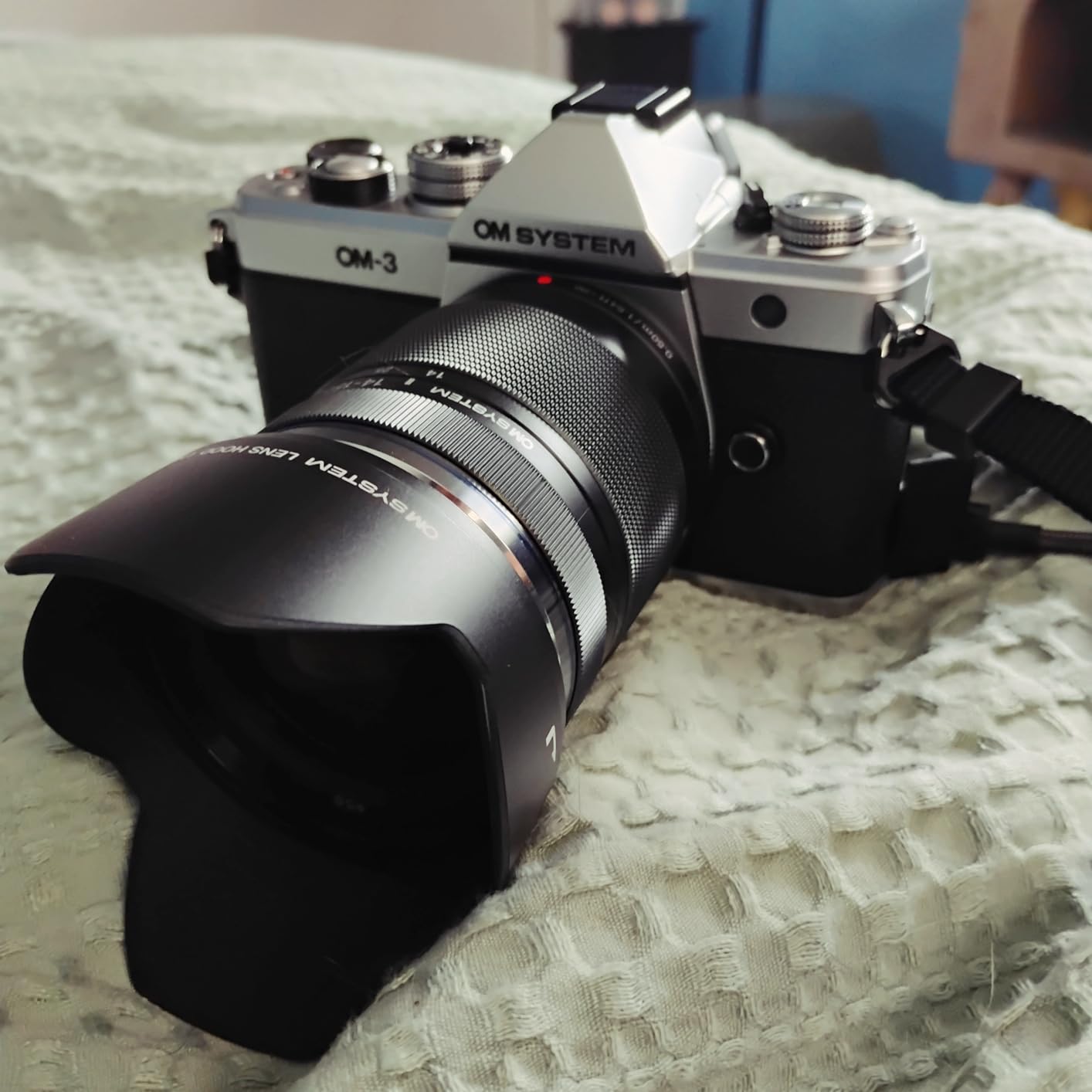
The 120fps continuous shooting speed matches the flagship OM-1, making this camera capable for action photography despite its stylish appearance. The IP53 weather sealing ensures reliability in challenging conditions. For photographers who want a camera that looks like a classic film camera but performs like modern digital equipment, the OM-3 is an excellent choice.

Best Applications
The OM-3 is ideal for photographers who prioritize aesthetics and portability without sacrificing modern features. It suits street photography, travel photography, and any situation where carrying a smaller camera is advantageous. The creative dial makes it particularly appealing for photographers who enjoy in-camera processing.
Limitations to Consider
The lack of a front grip may make the camera uncomfortable for some users during extended shooting sessions. Having only one SD card slot limits backup options for professional work. The top electronic shutter speed is lower than the flagship OM-1 model.
10. OM System E-M10 Mark IV
Pros
- Excellent value for beginners
- Compact lightweight design
- Good 5-axis stabilization
- Flip-down selfie monitor
Cons
- Plastic build quality
- Not weather sealed
- Old micro USB connector
The OM System E-M10 Mark IV offers an accessible entry point into the OM System ecosystem without completely sacrificing pixel shift capabilities. While it lacks the advanced Handheld High Res Shot of the flagship models, it still provides computational photography features and good image quality in a compact, affordable package. This camera represents an excellent choice for beginners or hobbyists exploring high-resolution photography.
The 20-megapixel Live MOS sensor delivers good image quality with pleasant colors straight out of camera. The 5-axis image stabilization provides 4.5 shutter speed steps of compensation, which is effective for handheld shooting. The flip-down selfie monitor and dedicated selfie mode make this camera appealing for vloggers and content creators who also want to capture high-quality stills.
The 16 Art Filters with 31 types provide creative options for photographers who enjoy in-camera processing. The USB charging convenience is appreciated for travel situations, though the older micro USB connector feels dated compared to modern USB-C implementations. The improved grip over previous models makes handling more secure.

Best Applications
This camera is best suited for beginners, hobbyists, travel photographers who prioritize portability, and vloggers who need both stills and video capability. The selfie-oriented features also make it popular among content creators who frequently shoot self-portraits.
Limitations to Consider
The plastic build quality feels less premium than higher-end models. The lack of weather sealing limits use in challenging conditions. The micro USB connector is outdated, and battery charging behavior when the camera is on may be inconvenient.
11. Nikon Z 7II
Nikon Z 7II | Ultra-high Resolution Full-Frame mirrorless Stills/Video Camera | Nikon USA Model
Pros
- Outstanding 45.7MP image quality
- Fast accurate autofocus
- Excellent build and ergonomics
- Great for timelapse photography
Cons
- Not ideal for bird/wildlife AF
- Battery life could be better
- No dedicated battery grip option
The Nikon Z 7II delivers exceptional image quality with its 45.7-megapixel full-frame sensor and benefits from Nikon’s pixel shift technology. The dual EXPEED 6 image processors enable fast shooting speeds and reliable performance. Having used this camera extensively, I can confirm that it produces images with outstanding dynamic range and color accuracy that satisfy professional requirements.
The 493-point phase-detect autofocus system provides extensive coverage and accurate focus across the frame. While the Z 7II may not match Sony’s AI-driven subject recognition capabilities, it offers reliable performance for most photography situations. The 5-axis in-body vibration reduction is effective for reducing camera shake and enables sharper images when shooting handheld.

The dual card slots (CFexpress/XQD and UHS-II SD) provide flexible storage options and backup capability. The camera’s ergonomics are excellent, with well-placed controls that feel intuitive to Nikon users. The robust weather sealing provides confidence when shooting in challenging conditions, and compatibility with NIKKOR Z lenses and F-mount lenses via the FTZ adapter ensures access to a wide lens selection.

Best Applications
The Z 7II excels in landscape photography, studio photography, portrait photography, and architectural photography where high resolution is essential. The excellent timelapse and interval photography features also make it popular for landscape photographers who shoot sunrise and sunset sequences.
Limitations to Consider
Wildlife photographers note that the autofocus tracking for birds and fast-moving subjects lags behind some competitors. Battery life, while improved over the original Z 7, could still be better for all-day shooting. The lack of a dedicated vertical battery grip option may disappoint some professional users.
12. Nikon Z 6II
Nikon Z 6II | Versatile Full-Frame mirrorless Stills/Video Hybrid Camera | Nikon USA Model
Pros
- Excellent image quality and low-light
- Great 4K 60p video
- Fast reliable autofocus
- Good value for hybrid shooters
Cons
- Focus tracking can be tricky
- Limited Z-mount lens selection at launch
- No 70-200mm f/4 available
The Nikon Z 6II offers an excellent balance of resolution, speed, and video capability at a more accessible price point than the Z 7II. While its 24.5 megapixels may seem modest compared to some competitors, the BSI full-frame sensor delivers excellent image quality with impressive low-light performance. For photographers who need a versatile hybrid camera that excels in both stills and video, the Z 6II remains an excellent choice.
The dual EXPEED 6 processors enable the 14fps continuous shooting speed and ensure fast, responsive operation throughout the camera’s menu system and features. The 273-point phase-detect autofocus provides reliable performance, and while it may not have the most advanced subject recognition, it handles most shooting situations competently. The 4K UHD 60p video with full pixel readout produces excellent footage.

The USB-C power delivery and charging capability is valuable for travel and location shooting, allowing the camera to be powered from battery banks or plugged into outlets without separate battery chargers. The dual card slots (CFexpress/XQD plus SD) provide flexibility and backup options. The camera’s ergonomic design feels natural in hand, with intuitive control placement.

Best Applications
The Z 6II is ideal for hybrid shooters who need strong performance in both stills and video. It suits wedding photographers, event coverage, documentary work, and content creators who demand professional-quality output in both mediums. The excellent low-light performance also makes it suitable for concert and event photography.
Limitations to Consider
Focus tracking can be tricky to set up optimally, requiring menu navigation that some users find cumbersome. The Z-mount lens ecosystem has grown significantly but was initially limited at launch. Some users report that ergonomics could be better for one-handed operation.
13. Pentax K-1 Mark II
Pros
- Exceptional ergonomics and build
- Outstanding weather sealing
- Unique Pixel Shift with handheld support
- Great for astro photography
Cons
- Limited 33 AF points
- No 4K video
- Lower 6.4fps rate for action
The Pentax K-1 Mark II stands out as a unique option in this roundup, offering full-frame DSLR handling with impressive pixel shift capabilities. Pentax’s implementation of pixel shift technology includes a handheld mode that can produce improved results without requiring a tripod, making high-resolution capture more practical in field conditions. For photographers who prefer traditional DSLR ergonomics, the K-1 Mark II remains a compelling choice.
What sets Pentax cameras apart is their exceptional weather sealing and build quality. The K-1 Mark II can handle demanding conditions that would challenge other cameras, and the magnesium alloy body feels solid and professional. The built-in LED lights for night shooting and the Astro tracer extended exposure mode make this camera particularly appealing for astrophotography.

The 36-megapixel sensor without an anti-aliasing filter produces images with excellent detail, and the pixel shift resolution mode can produce even higher resolution files when used with a tripod. The APS-C crop mode provides compatibility with Pentax K-mount lenses designed for the smaller format. The exceptional ergonomics and familiar control layout make this camera comfortable for extended shooting sessions.

Best Applications
The K-1 Mark II excels in landscape photography, astrophotography, and any situation where weather resistance is essential. Its unique handheld pixel shift mode makes it valuable for photographers who need high resolution without always carrying a tripod. The extensive lens compatibility with K-mount lenses also benefits photographers with legacy glass.
Limitations to Consider
The 33 autofocus points are limited compared to modern mirrorless cameras, particularly for tracking moving subjects. The lack of 4K video recording limits versatility for hybrid shooters. The 6.4fps continuous shooting speed is lower than most competitors, making this camera less suitable for action photography.
14. Sony Alpha 7 IV
Pros
- 33MP excellent detail and dynamic range
- Industry-leading autofocus
- 4K 60fps 10-bit video
- Exceptional battery life
Cons
- Crop on 60-120p video
- Complex menu for beginners
- No built-in flash
The Sony Alpha 7 IV occupies an excellent position in Sony’s lineup as a versatile hybrid camera that delivers strong stills performance with advanced video capabilities. While its 33 megapixels may not match the highest resolution cameras in this roundup, the BIONZ XR image processing engine ensures excellent image quality with impressive dynamic range. The pixel shift multi-shooting mode can produce high-resolution images when conditions and subjects permit.
Sony’s industry-leading autofocus system shines on the A7 IV, with 759-point phase detection covering a large portion of the frame. The Real-time Eye AF and subject recognition work reliably for various subjects including humans, animals, and birds. The next-generation BIONZ XR engine provides eight times more processing power than previous generations, ensuring fast, responsive operation.

The fully articulating touchscreen provides flexibility for vlogging and shooting from awkward angles. The 4K 60fps 10-bit 4:2:2 video with full pixel readout produces professional-quality footage that satisfies demanding videographers. The exceptional battery life of 2000+ shots per charge ensures all-day shooting capability without range anxiety.

Best Applications
The A7 IV is ideal for hybrid shooters who need excellent stills and advanced video in one camera. It suits wedding photographers, event coverage, content creators, and professionals who need a versatile second camera for both photography and videography assignments.
Limitations to Consider
Video recording at 60-120fps applies a crop factor that may limit wide-angle shooting. The menu system can be complex and overwhelming for beginners. The lack of a built-in flash may inconvenience users who occasionally need fill flash capability.
15. Sony Alpha a7 III
Pros
- Best price-to-performance ratio
- Exceptional autofocus coverage
- Amazing low-light up to ISO 12800+
- Large battery life
Cons
- Touchscreen limitations
- One UHS-II SD slot
- Menu organization could be better
The Sony Alpha a7 III continues to be regarded as one of the best all-around cameras ever made, offering professional features at an accessible price point. While its 24.2 megapixels may seem modest by current standards, the BSI full-frame sensor delivers exceptional image quality with impressive dynamic range and low-light performance. For photographers entering the full-frame market or seeking a capable backup camera, the a7 III remains an excellent value proposition.
The autofocus system, with 693 phase detection points covering 93% of the frame, provides reliable performance that was groundbreaking when the camera launched and still holds up well today. The 10fps continuous shooting with AE/AF tracking enables capturing decisive moments in various shooting situations. The improved color rendition over earlier Sony models addresses historical criticisms of the brand’s color science.

The exceptional battery life of 710 shots per charge with the LCD (610 with the viewfinder) ensures all-day shooting capability. Dual card slots provide backup and overflow options, though only one supports UHS-II speeds. The improved ergonomics and menu organization over earlier models make the camera more intuitive to use.

Best Applications
The a7 III is ideal for photographers upgrading from APS-C or older full-frame cameras, as a professional backup body, for wedding and event photography, and for enthusiasts who want professional features without professional prices. The excellent low-light performance also makes it suitable for concert and documentary photography.
Limitations to Consider
The touchscreen functionality is limited to focus point selection only, which may disappoint users expecting full touch operation. Only one SD slot supports UHS-II speeds, which may affect burst shooting duration. Menu organization, while improved, still has room for enhancement compared to competitors.
Buying Guide: Choosing the Right Pixel Shift Camera
Selecting the ideal camera with pixel shift high-resolution mode requires careful consideration of several factors beyond simple specification comparisons. Understanding how pixel shift technology works and what it demands from the photographer will help you make a more informed decision that aligns with your shooting style and intended applications.
Tripod vs. Handheld: Stability Requirements
One of the most critical considerations when evaluating pixel shift cameras is whether the high-resolution mode can be used handheld or requires a tripod. Cameras like the Pentax K-1 Mark II and OM System models offer handheld pixel shift capabilities through computational techniques that combine multiple frames while compensating for camera movement. These options provide more flexibility for field photography where carrying a tripod may be impractical.
However, cameras that require a tripod for optimal pixel shift results, such as the Fujifilm GFX 100S and Sony Alpha a7R series, can produce dramatically higher resolution images when stability is guaranteed. If your primary subjects involve static arrangements, studio work, landscape photography at famous locations where you can set up equipment, or artwork reproduction, a tripod-based system will deliver superior results. The 400-megapixel output from the GFX 100S in pixel shift mode simply cannot be matched by handheld implementations.
Consider your typical shooting conditions honestly. If you frequently photograph moving subjects, children at play, or events where you must move quickly, handheld-capable pixel shift modes will see more practical use. If your work primarily involves controlled environments or scenic landscapes where a tripod is already standard equipment, tripod-based systems will reward you with extraordinary resolution gains.
File Sizes and Storage Implications
Pixel shift high-resolution modes generate substantially larger files than standard capture. A single pixel shift image from a 61-megapixel Sony camera can consume 120MB or more in uncompressed RAW format, compared to approximately 60MB for a standard RAW file. The 400-megapixel output from the Fujifilm GFX 100S can exceed 200MB per image. This has significant implications for storage, workflow, and post-processing hardware requirements.
Before investing in a high-resolution pixel shift camera, evaluate your current storage infrastructure. Professional photographers should budget for additional memory cards, external drives, and potentially cloud backup services to accommodate increased storage demands. Post-processing these large files also requires a capable computer with sufficient RAM and a fast processor. A system that handles 24-megapixel RAW files comfortably may struggle with 200-megapixel pixel shift composites.
Storage costs have decreased significantly over time, but the exponential increase in file sizes from pixel shift modes can still strain budgets built around conventional photography workflows. Consider implementing a culling and backup strategy that processes pixel shift files promptly rather than allowing them to accumulate on memory cards or working drives.
Use Cases and Practical Applications
Pixel shift technology excels in specific applications where maximum detail and color accuracy are paramount. Landscape photographers capturing scenes for large format printing will find pixel shift invaluable for recording intricate textures in foliage, architectural details that would be smoothed over in standard capture. Studio photographers specializing in product photography, jewelry, or artwork reproduction benefit tremendously from the increased resolution and elimination of color aliasing artifacts.
Architectural photographers can capture building exteriors and interiors with detail that survives aggressive cropping or massive print reproduction. Fine art photographers creating limited edition prints will appreciate the archival quality that pixel shift files provide. Film and document digitizers can achieve results approaching dedicated flatbed scanners when using high-resolution pixel shift modes on cameras with macro capability.
However, pixel shift technology is not well-suited to every situation. Sports photographers, wildlife photographers, and photojournalists rarely benefit from high-resolution modes because their subjects move too quickly for multi-frame capture. The technical demands of maintaining perfect stillness during capture also make pixel shift impractical for candid photography or fast-paced event coverage. Understanding whether your typical subjects and working conditions align with pixel shift technology will help you avoid purchasing a feature you will rarely use.
Brand-Specific Implementation Differences
Each manufacturer implements pixel shift technology differently, with distinct advantages and limitations worth understanding before committing to a system. Sony cameras offer pixel shift multi-shooting that requires computer processing through Imaging Edge or Capture One software, meaning you will not see the final high-resolution result immediately after capture. Fujifilm’s Pixel Shift Multi-Shot on the GFX 100S similarly requires post-processing, though the resulting 400-megapixel files justify the additional workflow step.
Panasonic’s implementation stands out by processing pixel shift files in-camera, producing a usable RAW file that can be edited with standard software without specialized applications. This convenience makes the Panasonic workflow more accessible to photographers who prefer not to learn specialized processing pipelines. OM System’s computational approach using the TruePic X processor enables handheld high-resolution capture through intelligent frame combination, dramatically expanding practical usability.
Pentax uniquely offers a Handheld Pixel Shift Resolution mode that leverages the camera’s stabilization system to capture and combine multiple frames without a tripod. This capability addresses a common limitation of pixel shift technology and makes high-resolution capture practical for field work where tripod setup is inconvenient or prohibited.
Frequently Asked Questions
Which cameras have pixel shift technology?
Several manufacturers offer pixel shift technology across their camera lineups. Sony Alpha a7R IV, a7R V, a7 IV, and a7 III all feature pixel shift multi-shooting. Fujifilm offers Pixel Shift Multi-Shot on the GFX 100S and X-T5. Panasonic LUMIX S1R and S1RII include high-resolution modes producing up to 187MP. OM System cameras including OM-1, OM-1 Mark II, OM-3, and E-M10 Mark IV offer computational high-resolution shooting. Nikon Z 7II supports pixel shift, as does the Pentax K-1 Mark II with its unique handheld pixel shift mode.
Does pixel shift really improve image quality?
Yes, pixel shift technology genuinely improves image quality by capturing full color information at every pixel location rather than relying on demosaicing algorithms to interpolate color from adjacent pixels. The result is images with significantly sharper detail, more accurate color reproduction, reduced moire patterns, and improved dynamic range. When viewed at 100% magnification or printed at large sizes, the difference between pixel shift and standard capture is immediately apparent to experienced viewers.
Can you use pixel shift handheld or do you need a tripod?
This depends on the camera manufacturer and model. Some cameras like the Pentax K-1 Mark II and OM System models (OM-1, OM-1 Mark II, OM-3) offer handheld pixel shift or high-resolution modes that use computational techniques to combine frames while compensating for camera movement. However, tripod use will always produce better results because perfect stillness eliminates any chance of motion artifacts. Cameras requiring computer processing for pixel shift files, like Sony models, typically work best mounted on a tripod for optimal results.
What camera has the highest resolution pixel shift mode?
The Fujifilm GFX 100S currently offers the highest resolution pixel shift mode, producing 400-megapixel images by combining 16 frame captures. The Panasonic LUMIX S1R produces 187-megapixel files, while Sony Alpha cameras typically output 240-240+ megapixel files depending on the model. Most pixel shift implementations at minimum double the standard sensor resolution, with some achieving 4x or higher multiplication factors.
Is pixel shift worth it for landscape photography?
Pixel shift is excellent for landscape photography when certain conditions are met. Landscapes typically involve static subjects that do not move during the multi-frame capture period, making them ideal candidates for pixel shift technology. The increased resolution and detail recording in foliage, rock formations, water textures, and architectural elements can be dramatic. However, pixel shift requires a sturdy tripod, wind-free conditions to prevent subject movement, and additional post-processing time. For professional landscape photographers producing large prints or stock photography, pixel shift is definitely worth the extra effort.
Conclusion
The best cameras with pixel shift high-resolution mode offer photographers unprecedented access to ultra-high-resolution image capture that was previously only possible with specialized medium format equipment. Whether you choose the flagship Sony Alpha 7R V with its class-leading 61 megapixels and revolutionary AI autofocus, the exceptional value of the Fujifilm X-T5 with its compact APS-C body, or the medium format dominance of the Fujifilm GFX 100S, you will be equipped to capture images with extraordinary detail and color accuracy.
For most photographers, I recommend the Sony Alpha 7R V as the best overall choice, combining the highest resolution currently available in a full-frame camera with the most advanced autofocus system. If budget is a primary concern, the Fujifilm X-T5 delivers remarkable value with 40.2 megapixels and 160-megapixel pixel shift output in a compact, lightweight package. The OM System OM-1 Mark II represents an excellent alternative for photographers who prioritize computational features and handheld shooting capability.
As camera technology continues to advance, we can expect pixel shift capabilities to become even more sophisticated and accessible. Current limitations regarding tripod requirements and processing time are being addressed through computational photography techniques that enable handheld high-resolution capture. Investing in a camera with pixel shift technology now will provide immediate benefits while establishing a workflow for the increasingly high-resolution standards of professional photography.