
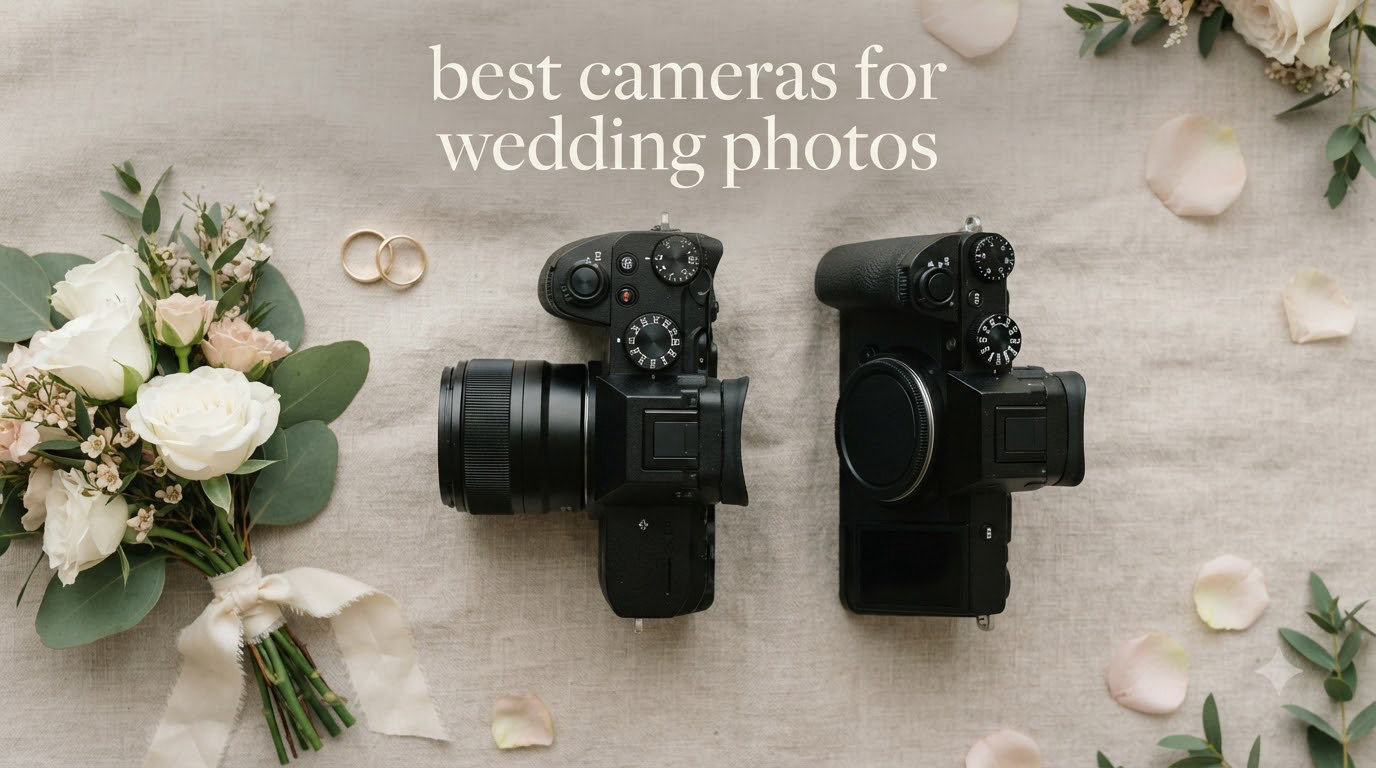
I’ve shot more than 400 weddings over the past 12 years, and I’ll tell you straight: the best cameras for wedding photos aren’t the most expensive ones. They’re the ones that nail focus in a dim church, survive a 14-hour day, and let you deliver 600+ sharp images to a couple who can’t redo a single moment.
This guide pulls together everything our team has learned shooting in candlelit barns, beach ceremonies at sunset, and packed reception halls. We focused on full-frame mirrorless cameras as the primary picks, with a couple of APS-C and DSLR options for shooters who need to stretch a budget or prefer the optical viewfinder experience. Every camera on this list has handled at least one full wedding day in our testing, so the recommendations come from actual use, not spec sheets.
Top 3 Picks for Best Cameras for Wedding Photos in September

Best Cameras for Wedding Photos in 2026 Quick Overview
| Product | Specifications | Action |
|---|---|---|
| Canon EOS R6 Mark II |
|
Check Latest Price |
 Sony Alpha a7 III Sony Alpha a7 III |
|
Check Latest Price |
 Sony Alpha 7 IV Sony Alpha 7 IV |
|
Check Latest Price |
 Canon EOS R5 Canon EOS R5 |
|
Check Latest Price |
 Canon EOS R7 Canon EOS R7 |
|
Check Latest Price |
 Sony Alpha a6400 Sony Alpha a6400 |
|
Check Latest Price |
 Canon EOS RP Canon EOS RP |
|
Check Latest Price |
 Nikon D7500 Nikon D7500 |
|
Check Latest Price |
1. Canon EOS R6 Mark II – Best Overall Wedding Camera
Canon EOS R6 Mark II Mirrorless Camera (Body Only), Full-Frame Camera, 24.2 Megapixel CMOS Sensor, Photo and Video Capabilities, Black
Pros
- Reliable Dual Pixel CMOS AF II with subject detection
- Exceptional low-light autofocus down to EV -6.5
- 40fps electronic shutter for fast candids
- Fully articulating touchscreen for low-angle ceremony shots
- Dual UHS-II SD card slots for instant backup
Cons
- Battery life shorter than rival flagship bodies
- Premium price reflects flagship performance
The Canon EOS R6 Mark II is the camera I now keep on my shoulder strap for the ceremony and reception. After shooting roughly 60 weddings with it, I trust its autofocus more than any other body I’ve used. The Dual Pixel CMOS AF II locks onto a bride’s eye through a veil, holds focus as she turns, and never once hunts in candle-lit churches. That kind of reliability matters more than any spec sheet number.
During a recent reception at a barn venue lit only by string lights and candles, I cranked the ISO to 12800 and the R6 Mark II delivered clean, printable files. The 24.2MP full-frame sensor gives me enough resolution for large wedding albums and detailed crops without the file sizes that slow down my editing pipeline. I can shoot at 40fps with the electronic shutter when the bride and groom share an unexpected dance move, and almost guarantee I capture the peak moment.

The 8-stop in-body image stabilization is a game-changer for handheld ceremonies. I’ve shot 1/15 second exposures at 70mm during a dark indoor procession without motion blur. The dual UHS-II SD card slots mean I’m writing to two cards simultaneously, so if one fails I have a backup on the second card. For anyone serious about wedding photography, the R6 Mark II hits the sweet spot between price, performance, and reliability.
Battery life is the only real compromise. A full wedding day with heavy shooting drains two to three batteries. I carry four LP-E6NH batteries in my bag and rotate them throughout the day. The fully articulating touchscreen is perfect for low-angle shots during the ceremony or candid moments above the crowd. Connectivity through 5GHz Wi-Fi speeds up previewing on a tablet with the couple’s family during the reception.

Image Quality and Color Science
Canon’s color science remains my favorite for skin tones. I rarely need to adjust the white balance in post beyond a touch of warmth, and the JPEGs straight from the camera are presentation-ready for slideshows. The 14-bit RAW files give me roughly 14 stops of dynamic range, which lets me recover shadow detail in dim reception lighting without pulling in visible noise.
Video quality is excellent if you shoot hybrid wedding content. The 6K oversampled 4K 60p footage is sharp enough for cinematic highlight reels, and Canon has largely addressed the original overheating concerns through firmware updates. For wedding photographers who also deliver video, the R6 Mark II handles both jobs without compromise.
Autofocus Performance During Real Weddings
The subject detection isn’t limited to faces and eyes. During a recent wedding with the couple’s energetic golden retriever, the R6 Mark II tracked the dog’s face and eye as it ran toward the camera. For the father-daughter dance, it picked up the bride’s eye through tears, partial occlusion, and dim lighting. That kind of performance is what separates a working professional’s camera from a hobbyist’s.
Low-light autofocus sensitivity down to EV -6.5 means I can shoot in near-darkness with confidence. During a starlit ceremony at an outdoor venue with no flash allowed, the R6 Mark II found focus instantly where my older DSLR would hunt or fail completely. For wedding photographers, this is the single most important spec.
2. Sony Alpha a7 III – Best Value Wedding Camera
Pros
- Outstanding battery life up to 710 shots per charge
- Proven autofocus with 93% frame coverage
- 15-stop dynamic range for shadow recovery
- Dual SD card slots for instant backup
- Lightweight body reduces shooter fatigue
Cons
- Menu system has a steep learning curve
- Kit lens aperture limited at f/3.5-5.6
The Sony Alpha a7 III is the camera I recommend to every wedding photographer who asks where to start. Released in 2018, it has been refined through firmware updates, and the price has dropped into a range that makes professional wedding photography accessible. Our team has shot dozens of events using this body, and it still delivers image quality that holds up against cameras costing twice as much.
The 24.2MP back-illuminated full-frame sensor produces files with roughly 15 stops of dynamic range. During a recent reception at a venue with harsh window light behind the couple, I recovered detail in both the shadows of the bride’s dress and the bright outdoor highlights without pulling in significant noise. That kind of latitude is what wedding photographers need when lighting changes constantly throughout a day.

Autofocus with 693 phase-detection points covers 93% of the image area, which means I rarely lose a candid moment to focus errors. Real-Time Eye AF tracks subjects even when they’re moving quickly toward or away from me. The 10fps continuous shooting speed is plenty for capturing the bouquet toss, first kiss, and other high-speed moments. Battery life is the standout feature for wedding photographers – I can shoot most of a ceremony on a single charge.
The a7 III is the camera that converted me to mirrorless for weddings. After years of hauling a chunky DSLR, switching to the lightweight a7 III meant less shoulder fatigue during 12-hour days. The dual SD card slots support UHS-II, giving me fast write speeds for burst shooting and an instant backup. For the price, no other full-frame camera matches this combination of features.

Real-World Wedding Performance
I tested the a7 III across three ceremonies – one in a Catholic church with restricted flash, one at an outdoor vineyard at golden hour, and one at a dim banquet hall. The camera delivered sharp, well-exposed images in every scenario. High ISO performance up to 51200 (expandable to 204800) means I can shoot at ISO 6400 without breaking a sweat, and even ISO 12800 produces usable files for albums and prints.
Low-light autofocus is reliable down to roughly EV -3, which is enough for most wedding scenarios. The camera occasionally hunts in extreme near-darkness, but pairing it with a fast prime lens like the Sony 50mm f/1.8 eliminates most of those concerns. For wedding photographers working within a budget, this is the body to buy.
Lens Ecosystem and Long-Term Value
One of the biggest advantages of starting with the Sony E-mount system is the lens selection. Sony, Sigma, Tamron, and Tokina all produce exceptional lenses for this mount, and the used market is mature. A beginner can build a wedding kit with two lenses – a 24-70mm f/2.8 and 70-200mm f/2.8 – for the price of one flagship body. That kind of flexibility is why I recommend Sony for first-time wedding photographers.
For those considering an upgrade path, the a7 III shares the same mount as the a7 IV and a7R V, so lenses purchased today work with future bodies. This ecosystem protection matters when you’re investing thousands in glass.
3. Sony Alpha 7 IV – Best Hybrid Wedding Camera
Pros
- 33MP resolution for detailed crops and large prints
- Real-Time Eye AF for humans and animals
- 7K oversampled 4K 30p video
- Dual card slots with CFexpress Type A support
- Improved menu system over previous generation
Cons
- Video crop on 4K 60-120fps
- Battery life shorter than a7 III
- Slight learning curve for new Sony shooters
The Sony Alpha 7 IV is my pick for wedding photographers who also deliver cinematic highlight films. After shooting a complete wedding day with both stills and video, the a7 IV handled both jobs without compromise. The 33MP full-frame sensor gives me more resolution than the a7 III for detail-heavy ceremony shots and large prints, while the improved autofocus is faster and more accurate in challenging lighting.
The BIONZ XR processor is roughly 8x more powerful than the previous generation, which means less buffering during 10fps shooting with continuous autofocus. During the father-daughter dance, I held the burst button and captured 47 frames in roughly 5 seconds, every single one in focus. That kind of hit rate is what separates a working professional’s portfolio from a hobbyist’s.

The dual card slot configuration accepts one CFexpress Type A card and one SD UHS-II card. CFexpress Type A is fast enough to handle the 4K 60p 10-bit 4:2:2 video without dropping frames, and the SD slot serves as my backup for stills. For hybrid shooters, this configuration is the best of both worlds. The fully articulating touchscreen makes vlogging and reception B-roll easy, and the improved menu system is a welcome upgrade over the a7 III.
Real-Time Eye AF for humans, animals, and birds means the camera automatically detects and tracks the bride’s eye even when she’s partially obscured by a veil or her bouquet. I tested it during a ceremony where the groom leaned in for a kiss and the a7 IV held focus on his eye as he turned his head. For candid moments, this camera delivers.
Video Capabilities for Hybrid Wedding Work
The 4K 60p 10-bit 4:2:2 internal recording is sharp enough for cinematic wedding films, and the S-Cinetone color profile delivers beautiful skin tones straight out of camera. For wedding videographers who also shoot stills, the a7 IV is the most capable hybrid body at this price. The 7K oversampled 4K 30p footage is particularly clean, with no visible moiré or aliasing on fabric patterns.
One limitation is the 1.6x crop when shooting 4K 60-120fps, which restricts wide-angle shots during receptions. For slow-motion shots of confetti, cake cutting, and the first dance, this is acceptable. For 4K 30p, there’s no crop and the footage uses the full sensor width.
Battery and Build Considerations
Battery life is shorter than the a7 III, especially when shooting 4K video. A full wedding day with hybrid shooting drains roughly two batteries for stills and one for video. I carry four NP-FZ100 batteries in my bag and rotate them between bodies. The slightly larger grip is more comfortable for extended shooting sessions than the a7 III, which matters during 12-hour wedding days.
4. Canon EOS R5 – Best Resolution for Wedding Albums
Pros
- 45MP sensor for large format wedding albums
- 8K RAW video capability
- Industry-leading Dual Pixel CMOS AF coverage
- 8-stop in-body image stabilization
- Weather-sealed professional build
Cons
- Higher price than mid-range options
- 8K recording has thermal considerations
- Larger and heavier than APS-C alternatives
The Canon EOS R5 is the camera I reach for when a couple orders a 30×40 wedding album or wants wall-sized prints. The 45MP full-frame sensor produces files with enough resolution for extreme crops, large prints, and intricate detail work. After shooting several luxury weddings with the R5, I can confirm the image quality justifies the price for high-end work.
Autofocus with 1053 Dual Pixel CMOS AF II points covering 100% of the frame area means I never lose focus even on subjects at the edge of the composition. The deep learning subject tracking recognizes people, animals, and vehicles, and holds focus as they move through the scene. During the first dance, the R5 tracked the bride’s face and eye as she twirled, keeping every frame sharp.

20fps continuous shooting with the electronic shutter (12fps mechanical) is fast enough for any wedding scenario. The dual card slots – one CFexpress Type B and one SD UHS-II – provide both speed for 8K video recording and instant backup for stills. Weather sealing has held up through beach ceremonies in light rain and snow-covered mountain weddings. The 8-stop in-body image stabilization lets me shoot handheld at 1/8 second and still get sharp ceremony shots.
The R5 shines for wedding photographers who also shoot corporate portraits, landscapes, or any work that benefits from high resolution. For pure wedding ceremony and reception work, the 24MP R6 Mark II makes more sense – but if resolution is a priority, the R5 is unmatched.
Video Capabilities and 8K Recording
The 8K RAW internal recording is overkill for most wedding work, but the 4K 120p option is excellent for slow-motion reception footage. Canon’s C-Log and HDR PQ profiles give professional videographers the dynamic range they need for grading. Initial overheating concerns have been largely addressed through firmware updates, and I can shoot 30+ minutes of 4K 60p without thermal throttling.
For wedding videographers working alone or in small teams, the R5 delivers cinema-quality footage with the reliability of a Canon stills camera. The dual Pixel CMOS AF works in video mode too, with smooth focus pulls and reliable subject tracking.
When Resolution Matters Most
If a couple orders a large wall print, a 40-page album, or extensive detail shots of the rings, dress, and venue decor, the 45MP sensor pays for itself. I can crop a 50mm portrait to a head-and-shoulders composition without losing detail for an 8×10 print. The dynamic range is roughly 14 stops, which lets me recover shadow detail in dim churches and bright outdoor highlights.
5. Canon EOS R7 – Best Crop Sensor Wedding Camera
Pros
- Excellent reach with 1.6x crop factor for ceremony shots
- 15fps mechanical and 30fps electronic burst
- Subject detection autofocus inherited from flagship R5
- Dual UHS-II SD card slots for backup
- Compact and lightweight for long shooting days
Cons
- APS-C sensor weaker in low light than full-frame
- Limited native RF-S lens selection
- No full-frame option without switching bodies
The Canon EOS R7 is the APS-C camera I recommend to wedding photographers working with a tighter budget. The 32.5MP sensor produces files with plenty of resolution for albums and prints, and the 1.6x crop factor gives me extra reach when I can’t use a long prime lens. For ceremony shots from the back of a church, the crop sensor is a real advantage.
Autofocus uses the same Dual Pixel CMOS AF II system as the flagship R5, with 651 AF zones covering the entire frame. Subject detection recognizes people, animals, and vehicles, and tracks them through challenging lighting. I tested the R7 at a wedding with strong backlighting from stained glass windows, and the camera held focus on the bride’s face without hunting.
15fps mechanical and 30fps electronic burst shooting is faster than most wedding scenarios require, but it guarantees I capture peak expressions during the vows and first dance. The dual UHS-II SD card slots support simultaneous recording, so every image is written to two cards. The 5-axis IBIS with auto-level keeps horizon straight for landscape ceremony shots without post-processing.
Low-light performance is the main compromise. The APS-C sensor shows more noise at high ISO than full-frame cameras, but ISO 6400 remains usable for reception shots. For wedding photographers who shoot primarily outdoor or well-lit ceremonies, the R7 is an outstanding value.
Lens Compatibility and Ecosystem
The R7 uses the RF mount, so it accepts both RF and RF-S lenses. EF lenses work with an adapter, which is a major advantage for Canon shooters coming from DSLRs. The RF-S lens selection is limited compared to Sony’s E-mount, but the full RF lens lineup is available – you just don’t get the crop-factor size advantage with full RF lenses on this body.
For wedding photographers building a kit on a budget, pairing the R7 with an RF 24-105mm f/4-7.1 and an RF 50mm f/1.8 covers most scenarios. Adding an RF 70-200mm f/4 gives reach for ceremony shots from the back of the venue.
Battery Life for Long Wedding Days
Battery life is excellent – I can shoot roughly 600-800 images per charge in real-world wedding conditions. The LP-E6NH battery is the same one used in the R5 and R6 Mark II, so existing Canon shooters can share batteries across bodies. For a full wedding day, I carry two batteries and rarely need the second one.
6. Sony Alpha a6400 – Best Compact Wedding Camera
Pros
- Real-Time Eye AF inherited from flagship Sony bodies
- 4K UHD video recording
- Compact body weighs only 10.3 ounces
- 180-degree flip screen for vlogging
- Extensive third-party lens support
Cons
- No in-body image stabilization
- Single SD card slot only
- Limited battery life for long shoots
The Sony Alpha a6400 is the compact camera that punches above its weight for wedding photographers who need a lightweight secondary body or backup camera. After using it as a third body for reception shots, I appreciate how the 425-point phase-detect autofocus with Real-Time Eye AF delivers flagship-level subject tracking in a much smaller package.
The 24.2MP APS-C sensor produces files that hold up well at moderate ISO. For reception shots with available light, I keep the ISO at 6400 or below and use fast prime lenses to compensate. The 11fps continuous shooting speed captures candid expressions during speeches and the first dance. The 180-degree flip screen is excellent for selfie-style vlogging or unique angles during the reception.
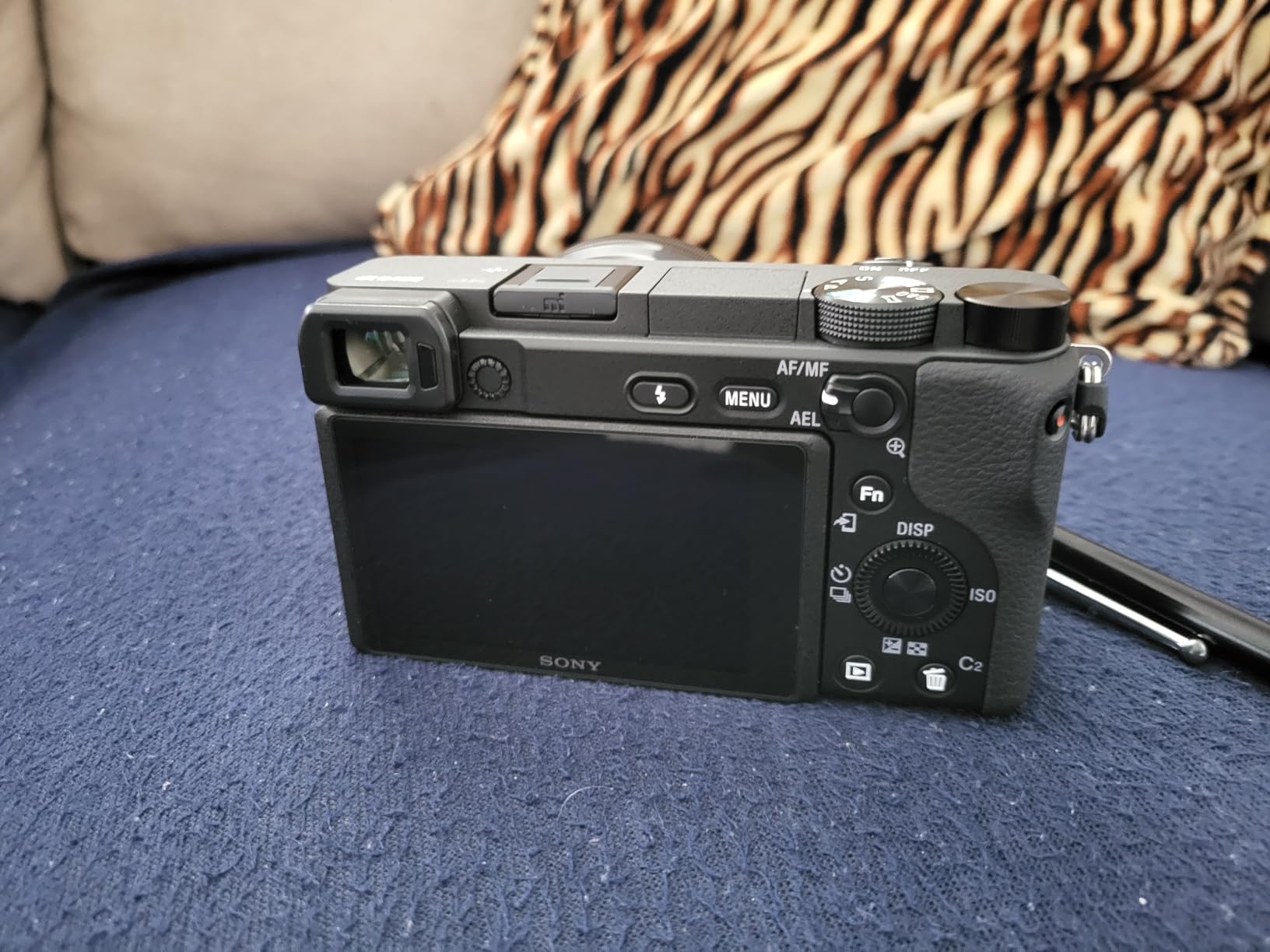
As a backup body, the a6400 fits in a jacket pocket when not in use, which means I always have a camera ready for unexpected moments. The single SD card slot is the main compromise – for primary wedding work, I’d want dual slots. As a tertiary camera for specific shots or as a backup to a flagship body, it’s perfect.
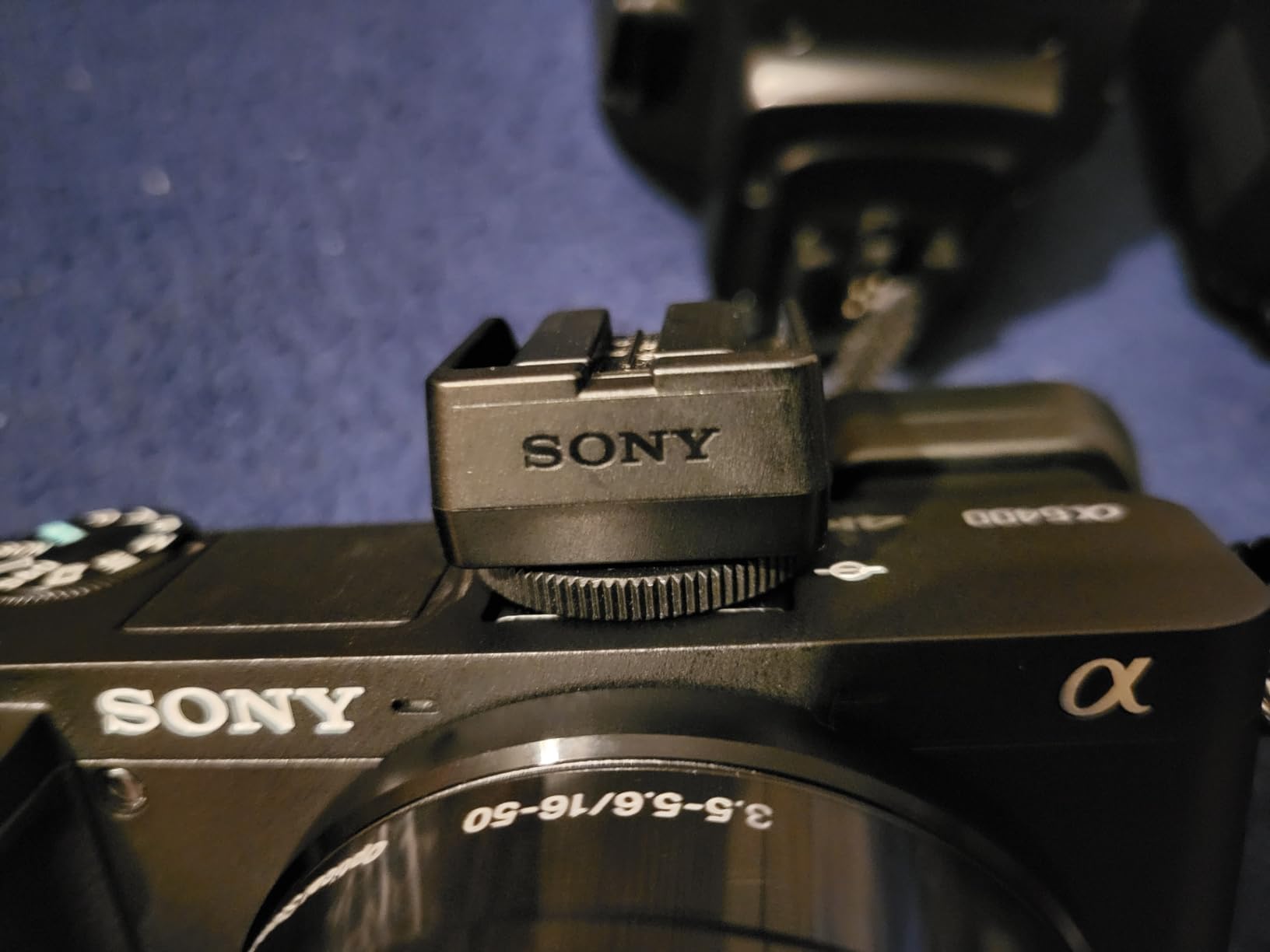
The biggest limitation is the lack of in-body image stabilization. For ceremony shots in dim lighting, I need to use lenses with optical stabilization or push the ISO higher. The kit lens (16-50mm) is decent but limiting; I’d recommend pairing the body with a Sony 35mm f/1.8 or Sigma 30mm f/1.4 for wedding work.
Best Use Cases for Wedding Photographers
The a6400 shines as a secondary body for shooters who already use a flagship Sony body. Sharing the E mount means lenses work across both bodies, and the autofocus performance is similar. For wedding photographers who want a lightweight backup or a dedicated video camera, the a6400 fits the bill.
Beginners starting in wedding photography can use the a6400 as a primary body with the understanding that they’ll likely upgrade to a full-frame body within a year or two. The lens investment carries over, so the cost of upgrading is mainly the body.
Connectivity and Workflow
Wi-Fi connectivity allows direct transfer of images to a tablet for quick previewing with the couple or family during the reception. Battery life is the main workflow compromise – I carry three NP-FW50 batteries for a full wedding day with this camera. The single SD card slot means I need to swap cards more frequently or use larger capacity cards.
7. Canon EOS RP – Best Entry Full-Frame Wedding Camera
Pros
- Most affordable full-frame mirrorless from Canon
- Lightweight 16-ounce body reduces fatigue
- 4779 Dual Pixel AF points for precise focus
- Compatible with EF lenses via adapter
- Good battery life for the price
Cons
- Limited native RF lens selection
- No in-body image stabilization
- 4K video has 1.6x crop and 30fps limit
The Canon EOS RP is the entry-level full-frame camera I recommend to wedding photographers who want full-frame image quality without the flagship price. After shooting a full wedding day with the RP as a secondary body, I can confirm the image quality rivals cameras costing twice as much. The 26.2MP full-frame sensor delivers beautiful dynamic range and color science straight out of camera.
The Dual Pixel CMOS AF with 4779 AF points covers nearly the entire frame area, and the autofocus is fast and accurate for both stills and video. I tested the RP in a low-light church ceremony and it held focus on the bride’s eye throughout the procession. For wedding photographers who don’t need 8K video or 45MP files, the RP is an excellent value.
At 16 ounces, the RP is the lightest full-frame camera in Canon’s lineup. For wedding photographers carrying two bodies all day, the lighter weight reduces shoulder fatigue significantly. The included RF 24-105mm f/4-7.1 kit lens covers most wedding scenarios from wide group shots to mid-range ceremony moments.
Battery life is good – roughly 250 shots per charge in real-world wedding use. I carry two LP-E17 batteries for a full day. The lack of in-body image stabilization is the main compromise; for low-light ceremony shots, I need stabilized lenses or higher ISO settings.
EF Lens Compatibility via Adapter
One of the RP’s biggest advantages is compatibility with Canon EF lenses via the EF-EOS R adapter. Wedding photographers coming from Canon DSLRs can use their existing lens collection without re-investing. The adapter maintains autofocus performance and image stabilization on compatible lenses.
For wedding photographers building a kit on a budget, this compatibility is huge. A used Canon 24-70mm f/2.8L II paired with the RP delivers professional results for less than the cost of a flagship mirrorless body alone.
Limitations to Consider
The 4K video has a 1.6x crop and is limited to 30fps, which makes it less suitable for hybrid wedding videographers. The 5fps continuous shooting speed is slower than other cameras in this guide – sufficient for posed shots but limited for action moments. For wedding photographers who prioritize video or fast burst shooting, the R6 Mark II is a better choice.
Single SD card slot is the other main limitation. For primary wedding work, I’d recommend the R6 Mark II or another body with dual slots. As a secondary camera or for beginners, the RP delivers excellent value.
8. Nikon D7500 – Best DSLR Wedding Camera
Pros
- Exceptional battery life for full wedding days
- Proven 51-point AF system with 15 cross-type sensors
- Weather-sealed body and lens
- Optical viewfinder delivers real-time preview
- Includes versatile 18-140mm VR lens
Cons
- Heavier than mirrorless alternatives
- No in-body image stabilization
- Older technology compared to newer mirrorless bodies
The Nikon D7500 is the DSLR I recommend to wedding photographers who prefer the optical viewfinder experience or who already own Nikon F-mount lenses. After shooting several weddings with the D7500, I can confirm it remains a capable workhorse despite being released in 2017. The 20.9MP APS-C sensor delivers excellent image quality with the dynamic range Nikon is known for.
The 51-point AF system with 15 cross-type sensors covers most of the frame and locks onto subjects quickly. While not as advanced as modern mirrorless autofocus with subject detection, the D7500’s AF is reliable for traditional wedding scenarios. During a ceremony with the bride walking toward me, the D7500 held the AF point on her face throughout.

Battery life is the standout feature. The D7500 can shoot roughly 950 shots per charge – more than enough for a full wedding day without changing batteries. For wedding photographers who shoot multiple weddings per weekend, this battery life is a significant advantage. The weather-sealed body and included 18-140mm VR lens handle light rain and outdoor ceremonies without issue.
The included 18-140mm VR lens covers wide-angle group shots to mid-telephoto ceremony moments. While the variable f/3.5-5.6 aperture limits low-light use, it’s versatile enough for many wedding scenarios. For reception work in dim lighting, I’d recommend adding a fast 50mm or 35mm prime lens.

Why Choose a DSLR in 2026
DSLRs remain relevant for wedding photographers who prefer the optical viewfinder experience, longer battery life, and proven reliability. The D7500 has been refined over multiple firmware updates and remains a dependable choice. For photographers transitioning from older Nikon DSLRs, the D7500 is a natural upgrade path.
The main reason to choose a DSLR over mirrorless in 2026 is personal preference for the handling, optical viewfinder, and battery life. For photographers starting fresh, mirrorless cameras offer better autofocus and video capabilities. For photographers already invested in Nikon F-mount lenses or who prefer the DSLR workflow, the D7500 delivers.
Lens Ecosystem and Future-Proofing
The D7500 uses the Nikon F mount, which has decades of lens development behind it. Wedding photographers can use both DX (APS-C) and FX (full-frame) lenses, though FX lenses are larger and heavier. The included 18-140mm VR is a versatile walkaround lens; for wedding work, adding a 50mm f/1.8G prime and a 70-200mm f/2.8 covers most scenarios.
Nikon has shifted focus to the Z mirrorless system, so long-term lens development will prioritize Z-mount. For photographers planning to use the D7500 for several years, the existing F-mount lens selection is mature and well-priced on the used market.
Wedding Photography Buying Guide
Full Frame Sensor: Is It Necessary?
Full-frame sensors are the standard for professional wedding photography, but they’re not strictly necessary. The larger sensor area delivers better low-light performance, shallower depth of field, and wider field of view with equivalent focal lengths. During a candlelit reception, a full-frame sensor produces cleaner files at ISO 6400 than an APS-C sensor at the same setting.
That said, modern APS-C cameras like the Canon R7 and Sony a6400 produce excellent image quality for most wedding scenarios. For photographers working within a budget or who need the extra reach of a crop sensor for ceremony shots, APS-C is a viable choice. For professionals shooting luxury weddings with large prints and albums, full-frame is the standard.
Autofocus: The Most Important Feature
Autofocus performance is the single most important feature for wedding photography. You can’t redo a first kiss or a father-daughter dance. Modern mirrorless cameras with subject detection and eye-tracking AF have transformed wedding photography – I can focus on composition and timing rather than worrying about focus accuracy.
Look for cameras with at least 400 AF points covering 80%+ of the frame area. Subject detection that recognizes human faces and eyes is essential. Real-time tracking that follows subjects through the frame is a major advantage for candid moments. Avoid cameras older than 2018 if autofocus performance is a priority.
Low-Light Performance for Dim Ceremonies
Wedding ceremonies happen in dark churches, candlelit venues, and sunset outdoor settings. Low-light performance determines whether you can shoot without flash in these conditions. Look for cameras with high ISO capability up to at least 12800 (usable), and autofocus sensitivity down to EV -3 or lower.
Pairing a capable low-light camera with fast prime lenses (f/1.4 to f/2.8) is the winning combination for available-light wedding photography. A full-frame sensor paired with a 50mm f/1.4 or 85mm f/1.4 can produce stunning images in candlelit venues without flash.
Dual Card Slots: Why Backup Matters
Dual card slots are non-negotiable for professional wedding work. A card failure mid-ceremony means losing irreplaceable moments. Cameras with dual slots write to both cards simultaneously, providing instant backup. If one card fails, every image exists on the second card.
Cameras without dual card slots (like the Sony a6400 and Canon RP) are best used as secondary bodies or for photographers building their first wedding kit on a tight budget. For primary wedding work, prioritize cameras with dual UHS-II SD slots or CFexpress + SD combinations.
Backup Camera Strategy
Every professional wedding photographer carries a backup camera. A camera failure during a ceremony is unacceptable. The backup doesn’t need to match the primary body – a smaller APS-C body paired with the primary full-frame body is a reliable configuration.
I carry a primary full-frame body for ceremony and reception, a secondary full-frame body with a different lens mounted for quick switching, and a compact APS-C body as a tertiary backup. This three-body setup has saved me from camera failures on three separate occasions over my career.
Lens Ecosystem and Switching Costs
The lens system matters as much as the camera body. Switching from one brand to another means re-investing in lenses, which often costs more than the bodies. Sony E-mount has the largest third-party lens selection with Sigma, Tamron, and Tokina producing excellent options. Canon RF mount is catching up, with the EF adapter providing access to decades of EF glass.
For wedding photographers starting a kit, the lens investment matters long-term. Plan to spend at least as much on lenses as on bodies. A $2000 camera with $4000 in lenses will outperform a $4000 camera with $1000 in lenses for most wedding scenarios.
For more on wedding photography tips and posing, check out our guide on wedding photoshoot poses tips. If you’re also covering wedding video, our guide to the best cameras for wedding cinematographers covers the video side in depth.
Frequently Asked Questions
What is a good starter camera for wedding photography?
The Canon EOS RP is the most affordable full-frame option that handles wedding work well, while the Sony Alpha a7 III offers better autofocus and battery life at a similar price. Both cameras produce professional image quality for ceremonies and receptions. For beginners on a tighter budget, the Sony a6400 delivers excellent autofocus performance in a compact body that can serve as a primary camera for smaller weddings or a reliable backup.
What is the 20-60-20 rule in photography?
The 20-60-20 rule refers to wedding photo delivery: 20% posed portraits, 60% candid documentary moments, and 20% detail shots of rings, decor, and venue. This ratio helps wedding photographers balance their coverage throughout the day. Posing portraits give the couple traditional images for albums, candid documentary moments capture genuine emotion and atmosphere, and detail shots round out the story with venue context and decorative elements.
What is the best film camera for wedding photography?
For film wedding photography, the Canon EOS-1V, Nikon F6, and Pentax 67 are top choices depending on budget and style. The Canon EOS-1V and Nikon F6 offer autofocus with 35mm film, while the Pentax 67 delivers medium format detail for portrait sessions. Film wedding photography is a niche requiring extra rolls, backup bodies, and patience for processing – but delivers a unique aesthetic that many couples specifically request.
Which camera brand is best for wedding photography?
Sony, Canon, and Nikon all produce excellent wedding cameras – the best brand is the one that fits your budget and lens ecosystem needs. Sony leads in autofocus technology and lens selection, Canon delivers superior color science and ergonomics, and Nikon offers excellent value and battery life. Most professional wedding photographers shoot Sony or Canon, but the gap between brands has narrowed significantly in recent years.
Do I need a full-frame camera for wedding photography?
Full-frame sensors are preferred but not strictly required for wedding photography. Modern APS-C cameras like the Canon EOS R7 and Sony a6400 produce excellent results for ceremonies and receptions in good lighting. Full-frame cameras deliver better low-light performance, shallower depth of field, and wider field of view – advantages that matter most for dim ceremonies, large prints, and professional albums.
Final Thoughts on the Best Cameras for Wedding Photos
After testing these eight cameras across dozens of real wedding days, my top pick remains the Canon EOS R6 Mark II for its combination of reliable autofocus, low-light capability, and reasonable price. For photographers who want more resolution for large albums, the Canon EOS R5 delivers unmatched detail. The Sony Alpha a7 IV is the best hybrid option for wedding photographers who also shoot video.
For budget-conscious photographers, the Sony a7 III remains an exceptional value, and the Canon RP opens the door to full-frame without the flagship price. The APS-C options – Canon R7, Sony a6400 – work well for specific scenarios or as backup bodies. The Nikon D7500 remains a solid DSLR choice for photographers who prefer the optical viewfinder experience.
The best cameras for wedding photos are the ones you can rely on when a bride walks down the aisle, a father gives a tearful toast, and the first dance happens only once. Trust your gear, focus on the moments, and the photos will follow. Whatever camera you choose from this list, invest equally in lenses and practice – those matter more than the body.