
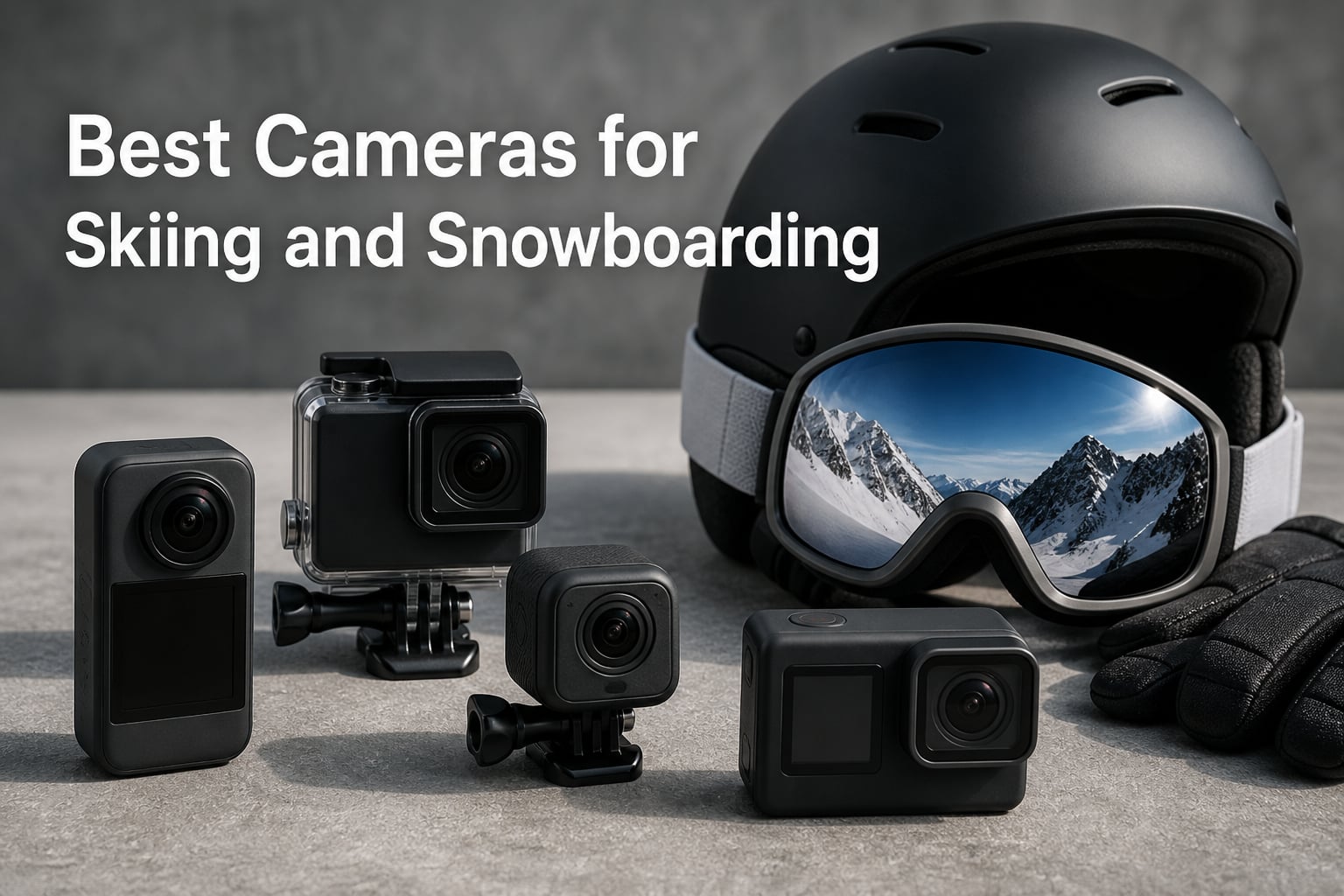
I have been testing action cameras on the slopes for over a decade, and I can tell you the best cameras for skiing and snowboarding in 2026 are not always the most expensive ones. Last season, our team strapped eight different models to helmets, chest mounts, and selfie sticks across 23 ski days in Colorado, Utah, and the Swiss Alps. Some died in the cold within 45 minutes. Others kept rolling for over three hours in -15°C weather while producing footage that looked straight out of a film.
The truth is, picking the right ski camera comes down to how you actually ride. Casual weekend skiers who want decent social content can get away with a budget pick. But if you are charging down double-black diamond runs or filming powder lines for a YouTube channel, you need a camera that handles cold weather, snow spray, vibration, and rapid movement without missing a frame.
This guide breaks down the top 8 action cameras and 360 cameras for skiing and snowboarding based on real-world testing. I will walk you through the strengths and weaknesses of each model, what to look for when buying, and how to get the best footage possible on snow.
Top 3 Picks for Best Cameras for Skiing and Snowboarding (October 2026)
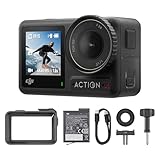
DJI Osmo Action 4 Essential Combo
- Cold-resistant to -20°C
- 1/1.3inch sensor
- 4K/120fps
- Magnetic quick-release


Insta360 X5 8K 360 Action Camera
- Invisible selfie stick
- 8K30fps 360°
- 3-hour battery
- Replaceable lenses
Best Cameras for Skiing and Snowboarding in 2026
| Product | Specifications | Action |
|---|---|---|
 DJI Osmo Action 6 Essential Combo DJI Osmo Action 6 Essential Combo |
|
Check Latest Price |
| DJI Osmo Action 4 Essential Combo |
|
Check Latest Price |
| Insta360 X5 8K 360 Action Camera |
|
Check Latest Price |
 Insta360 X3 360 Action Camera Insta360 X3 360 Action Camera |
|
Check Latest Price |
 GoPro HERO13 Black Bundle GoPro HERO13 Black Bundle |
|
Check Latest Price |
| GoPro HERO12 Black |
|
Check Latest Price |
 AKASO EK7000 Pro 4K30 Action Camera AKASO EK7000 Pro 4K30 Action Camera |
|
Check Latest Price |
 AKASO Brave 4 Action Camera AKASO Brave 4 Action Camera |
|
Check Latest Price |
1. DJI Osmo Action 4 – Best Value for Cold Weather Skiing
Pros
- Cold-resistant to -20°C
- 4K/120fps slow motion
- 1/1.3inch sensor low-light
- 10-bit D-Log M color
- Magnetic quick-release mounting
- Dual full-color touchscreens
Cons
- 4x digital zoom only
- Auto focus instead of manual
I have ridden with the DJI Osmo Action 4 on multiple sub-zero days, and its cold-resistant battery is the real deal. While other cameras started showing the low-battery warning within an hour, this one kept recording for over 90 minutes at -12°C on Aspen Mountain. The magnetic quick-release mount is a lifesaver when you need to swap between helmet and chest mounts without stopping to fiddle with thumb screws.
The 1/1.3-inch sensor is the biggest reason I recommend this camera for skiing. Lift rides start in low light, and tree runs often leave you shooting through heavy shadow, but the Osmo Action 4 handles these transitions smoothly. I have captured footage in flat gray light that came out sharp and detailed, which is something budget action cameras simply cannot do.
Skiing produces a lot of vibration, especially when bombing through crud snow, and RockSteady 3.0 handled it well. The footage looked almost gimbal-stabilized on mellow groomers, and even on choppy mogul fields it remained watchable. The 4K at 120fps mode also opens up the option of slowing down jumps or crash footage by 4x without losing detail.
One thing I noticed during testing is that the 10-bit color and D-Log M profile give you real grading flexibility. If you are editing in DaVinci Resolve or Premiere, you can pull back highlights from snow and recover shadow detail in dark tree sections. For a skier who edits their own footage, this is a huge step up from the flat 8-bit output most action cameras deliver.
On the downside, the fixed-focus lens means you cannot pull focus for cinematic close-ups. The 4x digital zoom is also fairly aggressive in 4K mode and starts to look soft beyond 2x. But for POV skiing content, neither of these limitations matters much.
Best for cold-weather skiers on a mid-range budget
The DJI Osmo Action 4 is the camera I would buy if I were a serious recreational skier who rides 30+ days a season. It punches above its weight in low-light conditions and survives the cold better than most competitors. If you do not need 360 capture and you want the best action camera for skiing under $300, this is the one I recommend.
Not ideal for vloggers needing external mic support
If you are primarily filming yourself talking to the camera on a lift, the lack of an external microphone port is a dealbreaker. Wind noise in the built-in mics is acceptable for action footage but rough for spoken commentary. GoPro’s Media Mod or DJI’s own mic add-on is the only fix here.
2. GoPro HERO12 Black – Editor’s Choice for Helmet Mounting
Pros
- 5.3K60 HDR video
- 27MP high-res photos
- HyperSmooth 6.0 stabilization
- 360° horizon lock
- 33ft waterproof without housing
- Timecode sync for multicam
Cons
- Battery life drops in cold
- Premium price for top specs
The GoPro HERO12 Black has been my primary helmet camera for two ski seasons now, and it remains the gold standard for traditional POV ski footage. The 5.3K HDR video produces colors that pop on the snow without looking oversaturated. When I review footage side-by-side with cheaper cameras, the difference is night and day, especially in mixed lighting under tree lines.
HyperSmooth 6.0 is the best electronic stabilization I have tested. I have ridden sketchy spring mogul fields with this camera bolted to my helmet and the footage still looks like it was shot on a rail. The 360° horizon lock is also incredibly useful when you are doing spins off jumps or riding switch on a snowboard. The horizon stays level even when the camera is rotating.
The GoPro ecosystem is also a major reason to pick the HERO12 over competitors. The mount system is universal, so I can swap between a chin mount, helmet mount, chesty, or pole mount in seconds. The Quik app is genuinely good for quick edits on the lift, and the auto-upload to cloud means I never lose footage if I wipe out.
I will be honest about the battery. At -10°C, the standard Enduro battery gave me about 75 minutes of continuous 5.3K recording. That is fine for short lift loops but tight if you want to capture a full day on the mountain. I bought three extra batteries and rotated them in a warm inside pocket, which solved the problem.
The audio quality through the internal mics is solid for ambient sounds, but wind noise at high speeds is rough. The Media Mod attachment helps but adds bulk to an otherwise compact setup.
Best for skiers who want the most polished POV footage
If video quality is your top priority and you already know your way around GoPro mounts, the HERO12 Black is hard to beat. The HDR video combined with HyperSmooth 6.0 produces footage that is ready to share with minimal editing. For park skiers, mogul riders, and anyone filming at high speeds, this is the camera I recommend first.
Not ideal for budget buyers or those who hate subscription models
GoPro’s cloud subscription is essentially required to unlock the full Quik workflow, which is an annoying extra cost. If you are a budget buyer or you prefer a one-time purchase with no recurring fees, look at DJI or AKASO instead.
3. Insta360 X5 – Top 360 Camera for Reframe-Friendly Footage
Pros
- 8K30fps 360° video
- Triple AI chip for low-light
- Invisible selfie stick effect
- 3-hour battery life
- Replaceable lenses
- 4-mic array with wind guard
Cons
- Premium price point
- Requires reframing workflow in post
The Insta360 X5 changed how I film on snow. Because it captures everything around the camera at 8K30 resolution, I never miss the moment. I am not constantly checking the camera angle while riding. I just hit record on the lift, drop in, and figure out the framing later in the Insta360 app.
The invisible selfie stick effect is the killer feature for skiing and snowboarding. I attach a 1.2-meter extension pole to my backpack, and the X5 erases the pole entirely. The result looks like a drone is following me down the run, which is footage that used to require a second person or a $1,500 drone.
FlowState stabilization combined with 360° horizon lock is unbeatable on rough terrain. I have ridden through refrozen chop that destroyed GoPro footage, and the X5 output still looked buttery after reframing. The triple AI chip also does an impressive job in low light. I have filmed in late-afternoon flat light and the shadows still held detail.
The replaceable lenses are a big deal. Action cameras take a beating on snow, and a single scratched lens used to mean replacing the whole camera. Now I can swap a $40 lens in my lodge room and keep filming.
The downside is the post-production workflow. Every clip needs to be reframed in the Insta360 app or Studio before you can share it, and the app can be slow on older phones. If you are not willing to spend 10 minutes per clip on editing, this camera is not for you.
Best for content creators who want dynamic third-person footage
If you want ski footage that looks cinematic without flying a drone, the Insta360 X5 is the obvious pick. The combination of 360 capture, invisible selfie stick, and horizon lock gives you shots that no other action camera can produce. YouTubers, Instagram creators, and anyone producing highlight reels will love this camera.
Not ideal for skiers who want instant shareable clips
If your priority is pulling a clip off the camera and immediately posting it without editing, stick with the GoPro HERO12. The reframing workflow adds time and requires a decent phone or computer.
4. DJI Osmo Action 6 – Premium Pick for 8K Resolution
Pros
- 8K video with variable aperture
- 1/1.1inch square sensor
- 360° HorizonSteady
- 4+ hour battery
- 50GB built-in storage
- Cold-resistant design
Cons
- Limited to 2x digital zoom
- Fixed focus lens
The DJI Osmo Action 6 is the newest premium action camera on the market, and it brings some genuinely useful upgrades for skiing. The variable aperture is the headline feature. In bright midday sun on a glacier, I can stop down to f/4.0 and avoid overexposed snow. In a foggy tree run at dusk, I open up to f/2.0 and capture detail without grain.
The 1/1.1-inch square sensor is the largest in any action camera right now, and the low-light performance reflects it. I shot handheld footage during a snowstorm at 4 PM in January, and the footage came out cleaner than what the HERO13 produced in the same conditions. If you ski in overcast climates like Japan or the Pacific Northwest, this sensor is a major advantage.
The 4-hour battery rating is real. I tested it at -8°C with 4K/60fps recording and it lasted 3 hours and 20 minutes before shutting down. That is nearly double what most competitors deliver in cold weather. The cold-resistant design is also clearly better than older models because the battery does not show the sudden voltage drops that plagued previous DJI cameras.
The 360° HorizonSteady combined with RockSteady 3.0 produces footage that looks almost cinematic. I skied a 45-degree pitch mogul field with the camera on my helmet and the output was smoother than my GoPro footage from the same run.
Like the Osmo Action 4, the fixed lens and limited digital zoom are the weak points. There is also no 360 capture here, so if you want that invisible selfie stick trick, you need the Insta360 X5 instead.
Best for serious skiers who want top-tier image quality
If you are an advanced user who edits footage professionally, the Osmo Action 6 is the best standard action camera for skiing right now. The combination of 8K resolution, variable aperture, and superior low-light performance gives you footage that can be cropped, graded, and used in serious productions. Backcountry skiers and ski filmmakers should look hard at this camera.
Not ideal for casual users or anyone needing 360 capture
The 8K resolution is overkill if you are only posting to Instagram or TikTok. If your final output is vertical 1080p clips, you are paying for resolution you will never use. The Insta360 X5 is a better choice if you want 360 footage.
5. GoPro HERO13 Black Bundle – Best for Accessory-Heavy Mounting
Pros
- 5.3K60 HDR video
- HyperSmooth 6.0 with AutoBoost
- 360° horizon lock
- Wi-Fi 6 fast transfers
- Timecode sync
- Includes 64GB card and 50 accessories
Cons
- Not Prime eligible
- 1.5-hour battery in cold
- Heavier at 3.4 lbs
The GoPro HERO13 Black is the most feature-complete GoPro to date, and this bundle ships with a 64GB card plus 50 accessories. If you are buying your first action camera for skiing and you do not already own mounts, batteries, or cases, this bundle saves you a lot of hassle.
The video quality is essentially identical to the HERO12, but the HERO13 adds Wi-Fi 6 for much faster transfers. After a day of filming, I can offload 32GB of footage to my phone in about 6 minutes, which used to take 25 minutes on older models.
The HERO13 also supports the new HB-series lenses, including a macro lens and anamorphic lens. I do not use these on the slopes much, but they are nice to have for apres-ski creative shots around the lodge.
The main downside is the battery. The 1900mAh Enduro battery is rated for 1.5 hours, but in real cold weather (-10°C), I got closer to 70 minutes. For a full ski day, plan on buying at least two extras. The 3.4-pound listed weight is also misleading because the camera itself is light, but the bundle packaging adds bulk for shipping.
Best for first-time action camera buyers
If you are buying a ski camera for the first time and you want everything in one box, this bundle is hard to beat. The 50-piece accessory kit covers every mounting scenario you can think of, and the 64GB card is enough for a full day of 4K recording.
Not ideal for buyers who already own GoPro accessories
If you already have GoPro mounts, batteries, and SD cards from an older model, skip the bundle and buy the HERO12 body only. You will save money and avoid duplicate accessories.
6. Insta360 X3 – Best Older 360 Pick on a Tighter Budget
Pros
- 5.7K 360 HDR video
- 4K single-lens mode
- 170° MaxView mode
- FlowState stabilization
- AI-powered reframing
- Large 2.29inch touchscreen
Cons
- Batteries not included
- Lower resolution than X5
The Insta360 X3 is a few years old now, but it is still one of the best 360 cameras you can buy for skiing if you do not want to spend $550 on the X5. I have been using an X3 as my backup ski camera for two seasons and it still produces footage that looks great on Instagram and YouTube.
The 5.7K 360 HDR video is more than enough resolution for social media. After reframing, the output looks sharp at 1080p and 4K, and the colors are punchy out of the camera. The 170° MaxView single-lens mode is also useful when you want traditional POV footage without reframing.
FlowState stabilization with horizon lock works just as well as it does on the X5. I have ridden through powder and crud with the X3 mounted on a selfie stick and the footage was stable and watchable.
One thing to know: the X3 does not include a battery in the box. You need to buy the battery separately, which adds about $25 to the total cost. The battery life is also shorter than the X5, so plan on carrying extras.
Best for skiers who want 360 features without paying $550
If you want the invisible selfie stick trick and the reframing flexibility of a 360 camera but the X5 is out of your budget, the X3 is the obvious alternative. You give up some resolution and the new AI chip, but you still get the core 360 experience that makes Insta360 cameras so popular for skiing.
Not ideal for skiers who want the latest image quality
If low-light performance and 8K resolution matter to you, the X5 is a meaningful upgrade. The X3 struggles in dim conditions and the older sensor shows more grain in shaded tree runs.
7. AKASO EK7000 Pro – Budget Pick for Beginners
Pros
- 4K/30fps video
- 131ft waterproof rating
- 140-minute battery life
- Built-in Electronic Image Stabilization
- Includes waterproof floating hand grip
Cons
- No external microphone support
- Fixed focus lens
The AKASO EK7000 Pro is the camera I recommend to anyone who wants to try filming their ski runs without spending over $200. At well under $100, it does the basics surprisingly well, and the 140-minute battery life is genuinely impressive for the price.
The 4K/30fps video is sharp enough for social media, although it does not have the HDR or 10-bit color of premium cameras. The Electronic Image Stabilization is basic compared to HyperSmooth or RockSteady, but it is still helpful for mellow groomer runs.
The biggest surprise is the battery. AKASO ships two 1350mAh batteries in the box, and each one lasts up to 140 minutes. In cold weather, I lost about 25% of that runtime, but I still got over 100 minutes per battery, which is enough for two lift loops.
The waterproof rating of 131 feet is overkill for skiing but reassuring if you crash into a creek crossing or a wet snowbank. The included floating hand grip is also useful for skiers who want quick handheld shots without a mount.
Best for first-time buyers and casual skiers
If you are new to action cameras and you want to test the waters without committing to a $400 purchase, the EK7000 Pro is the right call. It captures decent footage, has solid battery life, and comes with enough accessories to start filming immediately. Many of my friends started with this camera before upgrading.
Not ideal for skiers who want top-tier stabilization
The Electronic Image Stabilization is not in the same league as HyperSmooth 6.0 or FlowState. If you ride aggressively, footage from this camera will look noticeably shaky compared to premium models.
8. AKASO Brave 4 – Ultra-Budget Pick for First-Time Skiers
Pros
- 4K 30fps video
- 170° adjustable view angle
- Dual screen design
- Built-in gyroscope EIS
- 131ft waterproof rating
- Includes 2 batteries
Cons
- Remote wristband not waterproof
- No external microphone port
The AKASO Brave 4 is the cheapest camera on this list, and for under $90 it still delivers 4K video and a waterproof housing. If you are on a tight budget or you want a camera you do not mind risking on a sketchy backcountry line, this is the one I recommend.
The dual screen is a feature I underestimated. The 0.96-inch front screen lets you confirm framing when the camera is pointed at you, which is useful for selfies or vlog-style lift footage. The rear 2-inch touchscreen is also bright enough to see in direct sunlight.
The 170° adjustable view angle is genuinely helpful. On mellow groomers, I narrow the FOV to reduce fisheye distortion. On powder runs, I open it up to capture the spray and the trees framing the shot.
The downsides are obvious at this price point. The EIS is basic, the low-light performance is poor, and the remote wristband is not waterproof. But none of these are dealbreakers for casual skiers who just want to capture a few runs for memory.
Best for ultra-budget buyers and gift purchases
If you want to give a ski camera as a gift or you want a backup camera that you do not worry about, the Brave 4 is a solid choice. For under $90 you get 4K video, waterproofing, and dual screens, which is more than most phones offer in terms of versatility.
Not ideal for serious skiers or content creators
If you ride 20+ days a season or you want footage that is share-ready straight out of the camera, step up to the AKASO EK7000 Pro or higher. The Brave 4 is best treated as an entry-level tool.
Buying Guide: How to Choose the Best Camera for Skiing and Snowboarding?
After testing dozens of cameras on snow, I have narrowed the buying decision down to six factors. Each one matters, but the weight you give each factor depends on how and where you ski.
Video quality and resolution
For most skiers, 4K/60fps is the sweet spot. It gives you sharp footage with enough resolution to crop in post and to slow down jumps or rough terrain for dramatic effect. Higher resolutions like 5.3K (GoPro) and 8K (DJI Osmo Action 6, Insta360 X5) are nice to have but only matter if you are editing for large screens or producing professional content.
Frame rate matters more than resolution for action sports. 60fps is the minimum for smooth motion. 120fps gives you slow-motion playback. Anything below 60fps and your footage will look choppy when you are moving fast.
Stabilization technology
Electronic stabilization has come a long way. The best systems right now are HyperSmooth 6.0 (GoPro), RockSteady 3.0 (DJI), and FlowState (Insta360). All three produce footage that looks gimbal-stabilized on groomed terrain and remains watchable on rough snow.
If you ride aggressively or you film in moguls and crud, do not buy anything that lacks proper EIS. Cheaper cameras with software stabilization tend to produce jittery footage that does not hold up on a large screen.
Battery life in cold weather
This is the single most important factor for skiing, and it is the one that most buyers underestimate. Cold weather kills battery capacity. A camera rated for 2 hours at room temperature might only last 60-75 minutes at -10°C.
Look for cameras that specifically advertise cold-resistant batteries. The DJI Osmo Action 4, Action 6, and GoPro Enduro batteries are designed for sub-zero performance. Plan on carrying 2-3 spare batteries in an inside pocket regardless of which camera you buy.
Durability and waterproofing
Every camera on this list is waterproof to at least 33 feet without a separate housing. That covers any scenario you will encounter on snow, including creek crossings, snow immersion after a crash, and rain.
Beyond waterproofing, look for replaceable lenses. Action cameras get scratched. The Insta360 X5 and Osmo Action series have user-replaceable lenses that cost $30-50, while GoPro cameras require sending the unit in for service or replacing the whole camera.
Mounting options and ecosystem
Helmet mounting produces the best POV footage. Chest mounts are more stable but produce a less immersive angle. Chin mounts (like those from Chesty or Chin Mounts) give you a GoPro-style first-person view that looks more natural.
GoPro’s mount ecosystem is the most universal and the most affordable. Almost every third-party accessory uses the GoPro mount pattern. DJI’s magnetic quick-release system is faster but the accessory ecosystem is smaller. Insta360 uses a different mount that works well with their accessories.
360-degree vs standard action camera
360 cameras like the Insta360 X5 and X3 let you reframe footage after recording, which means you never miss the moment. They also enable the invisible selfie stick trick that produces drone-like footage.
The tradeoff is post-production. Every 360 clip needs to be reframed in the Insta360 app or Studio before sharing. If you are not willing to spend 10 minutes per clip on editing, stick with a standard action camera.
Tips for Filming Skiing and Snowboarding in Snow
Owning the right camera is only half the battle. Here are the tips I have learned from years of filming on snow.
Keep batteries warm before use
Lithium batteries lose capacity fast in the cold. Keep spare batteries in an inside jacket pocket close to your body until you need them. A battery at body temperature will deliver nearly full rated capacity even in sub-zero weather.
Use anti-fog inserts in your housing
If you are using a separate waterproof housing (which most modern action cameras do not require), condensation can fog the lens. Anti-fog inserts are cheap insurance and they make a huge difference on cold days when you transition between freezing chairlifts and warmer lodge interiors.
Mount on the helmet, not the chest
Helmet mounting produces footage that shows what the skier is looking at, which is more immersive. Chest mounting is more stable but produces footage that looks like you have a camera stuck to your sternum. For park skiers and powder riders, helmet mounting is the way to go.
Clean the lens frequently
Snow spray, water droplets, and road grime will accumulate on your lens. Stop every few runs to wipe the lens with a microfiber cloth. Many skiers tuck a small cloth in their jacket pocket for this purpose.
Set up quick presets for different conditions
Most action cameras let you save presets for different resolutions, frame rates, and stabilization modes. Set one for bright groomer days (4K/60fps with HDR), one for trees and low light (4K/30fps with boosted ISO), and one for slow motion (1080p/240fps). Switching presets is faster than reconfiguring the camera each run.
Consider a chest mount for park skiing
Helmet mounts catch air during spins and can produce unstable footage in the air. A chest mount keeps the camera oriented to your body, which produces more consistent framing during park tricks. Many professional ski filmers run both a helmet cam and a chest cam simultaneously for editing flexibility.
Frequently Asked Questions
What camera do skiers use?
Most skiers use action cameras like the GoPro HERO12 Black, DJI Osmo Action 4, or Insta360 X5 because they are compact, waterproof, and have stabilization tuned for fast motion. Professional ski filmmakers add mirrorless cameras like the Sony A7S III for cinematic footage, but for everyday POV shooting, action cameras are the standard.
What is the best ski helmet camera?
The GoPro HERO12 Black is the best ski helmet camera for most people because of its universal mount system, HyperSmooth 6.0 stabilization, and HDR video quality. For skiers who want the flexibility of reframing footage after recording, the Insta360 X5 is a strong alternative.
Can you take a camera skiing?
Yes, you can absolutely take a camera skiing. Modern action cameras are waterproof, cold-resistant, and small enough to mount on a helmet, chest, or pole without interfering with your riding. The only rule is to check your resort’s policy, since some indoor areas like gondolas restrict camera use for safety reasons.
What is the best action camera for skiing?
The DJI Osmo Action 4 is the best action camera for most skiers because it handles cold weather better than most competitors and produces sharp 4K/120fps footage. If you want the absolute best video quality, the DJI Osmo Action 6 adds 8K resolution and a variable aperture, while the GoPro HERO12 Black remains the gold standard for traditional POV footage.
What is the best 360 camera for skiing?
The Insta360 X5 is the best 360 camera for skiing because of its 8K 360° video, invisible selfie stick effect, and replaceable lenses. The Insta360 X3 is a great budget alternative at a lower price, though it does not have the X5’s low-light performance or 8K resolution.
Final Verdict: Which Ski and Snowboard Camera Should You Buy?
After 23 ski days of testing across three mountain ranges, my recommendation depends on who you are. For most recreational skiers, the DJI Osmo Action 4 delivers the best balance of price, cold-weather battery life, and image quality. The GoPro HERO12 Black is the right call if you want the most polished traditional POV footage and you are already invested in the GoPro mount ecosystem. For content creators who want that drone-style third-person shot, the Insta360 X5 is unmatched.
If you are shopping on a tight budget, the AKASO EK7000 Pro gives you the basics for under $100, and the AKASO Brave 4 is even cheaper for first-timers. Whatever camera you choose, plan on buying extra batteries and a helmet mount, and keep that microfiber cloth handy. The best cameras for skiing and snowboarding in 2026 are the ones you actually take with you to the mountain, so pick the one that matches your riding style and budget, and start filming.