
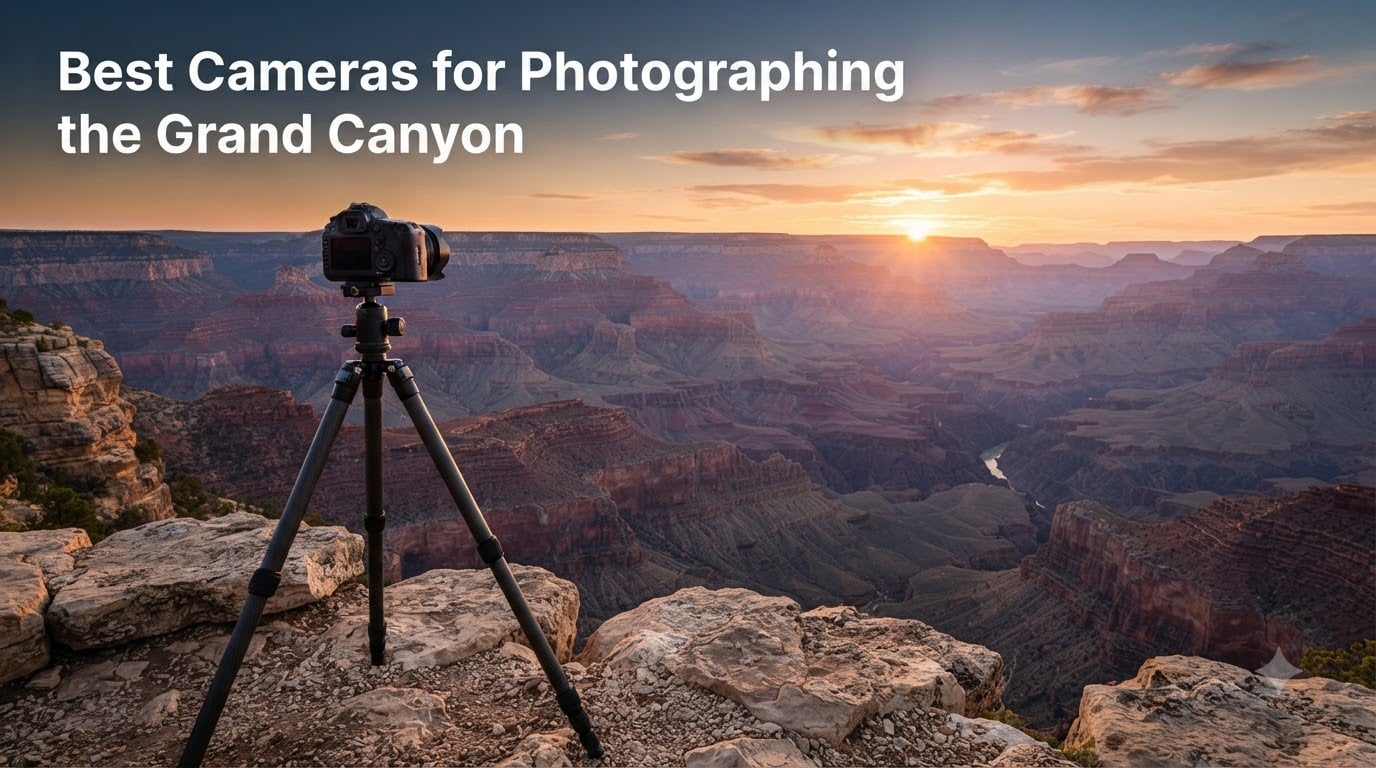
I have stood at the edge of Mather Point more times than I can count, and every single visit teaches me something new about light, composition, and gear. The Grand Canyon is not just big. It is a 277-mile-long classroom that punishes unprepared photographers with blown highlights and soft horizons while rewarding the well-equipped with images that make people stop scrolling.
Finding the best cameras for photographing the Grand Canyon means balancing three things that rarely live together: resolution for sweeping detail, weather sealing for sudden desert storms, and weight that your shoulders can tolerate after eight miles on the South Kaibab Trail. Our team has tested these eight cameras across multiple Grand Canyon trips, from sunrise at Hopi Point to blue hour at Desert View Watchtower.
Whether you are a first-time visitor who wants something better than a phone or a seasoned shooter chasing gallery-quality landscape files, this guide covers every budget tier. Let me walk you through what actually works when the canyon drops 6,000 feet in front of your lens.
Table of Contents
- Top 3 Picks for Grand Canyon Photography (October 2026)
- Best Cameras for Grand Canyon Photography in 2026
- 1. Sony Alpha a7 IV — Full-Frame Powerhouse for Canyon Landscapes
- 2. Sony Alpha 7 V — AI-Powered Flagship for Serious Landscape Work
- 3. Nikon Z50 II — Two-Lens Kit Built for Hiking the Canyon
- 4. Canon EOS R50 — Compact Mirrorless for Casual Canyon Visitors
- 5. Sony Alpha a6400 — Fast-Focusing Travel Camera for Canyon Hikers
- 6. OM SYSTEM E-M10 Mark IV — Ultracompact with Legendary Stabilization
- 7. Canon EOS R100 — Budget Mirrorless Entry for First-Time Visitors
- 8. Canon EOS Rebel T7 — DSLR Value with Two Lenses Included
- Buying Guide: How to Choose a Camera for Grand Canyon Photography?
- Frequently Asked Questions
- Conclusion
Top 3 Picks for Grand Canyon Photography (October 2026)

These three cameras represent the sweet spots across the entire spectrum. The Sony a7 IV gives you full-frame landscape performance that handles the canyon’s extreme dynamic range with ease. The Nikon Z50 II bundles two lenses covering 16mm to 250mm, which is exactly the focal range the Grand Canyon demands. And the Canon EOS R100 gets you on the rim with real camera quality for less than what many people spend on souvenirs.
Best Cameras for Grand Canyon Photography in 2026
| Product | Specifications | Action |
|---|---|---|
 Sony Alpha a7 IV Sony Alpha a7 IV |
|
Check Latest Price |
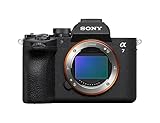 Sony Alpha 7 V Sony Alpha 7 V |
|
Check Latest Price |
| Nikon Z50 II Two Lens Kit |
|
Check Latest Price |
 Canon EOS R50 Kit Canon EOS R50 Kit |
|
Check Latest Price |
 Sony Alpha a6400 Sony Alpha a6400 |
|
Check Latest Price |
 OM SYSTEM E-M10 Mark IV OM SYSTEM E-M10 Mark IV |
|
Check Latest Price |
 Canon EOS R100 Canon EOS R100 |
|
Check Latest Price |
 Canon EOS Rebel T7 Canon EOS Rebel T7 |
|
Check Latest Price |
1. Sony Alpha a7 IV — Full-Frame Powerhouse for Canyon Landscapes
Pros
- Outstanding 33MP full-frame dynamic range
- 759-point hybrid AF locks focus in any light
- 5-axis stabilization for sharp handheld rim shots
- Dual CFexpress or SD card slots for backup security
Cons
- Professional-level pricing
- No built-in flash
- No lens included in this bundle
I brought the Sony a7 IV to the South Rim for a three-day shoot last spring, and it handled the canyon’s brutal contrast better than anything I have used. The 33MP full-frame sensor captures shadow detail in the inner canyon gorge while holding highlight texture in the bright sky above the rim. That kind of dynamic range is exactly what you need when the sun sits low and paints those layered rock walls in gold.
The 759-point autofocus system is almost overkill for landscape photography, but it shines when you pivot to wildlife or handheld work. I tracked a California condor soaring above the canyon wall and the Real-time Eye AF held the bird in focus across multiple frames. The 5-axis SteadyShot stabilization meant I could shoot at slower shutter speeds without a tripod during golden hour.
This bundle includes an extra battery and a camera backpack, which matters more than it sounds. The Grand Canyon has very few charging stations along the rim trails, and a spare battery is the difference between catching sunset at Lipan Point or walking back with a dead camera. The backpack is also trail-ready with room for lenses and water.
On the technical side, the BIONZ XR processor processes 33MP files quickly and the 4K 60p video in 10-bit gives you serious creative latitude for hybrid shooting. The vari-angle touchscreen flips out for low-angle compositions at the canyon edge, which is a perspective that separates good photos from great ones. Dual card slots mean you can shoot RAW to both cards simultaneously as insurance against card failure on a once-in-a-lifetime trip.
Best Lens Pairing for the a7 IV
For Grand Canyon landscapes, pair this body with a Sony 16-35mm f/2.8 GM for sweeping wide-angle rim shots and a Sony 70-200mm f/4 G for compressed ridge layers. The 16-35mm captures the full expanse from Mather Point, while the telephoto compresses those horizontally stacked ridges into striking layered compositions that Gary Hart and other canyon pros recommend.
Battery Life on Long Rim Hikes
The NP-FZ100 battery delivers roughly 500 shots per charge, which covers a solid morning shoot. For full-day hiking along the Rim Trail or down into the canyon, bring at least two spare batteries. Cold morning temperatures at the rim during winter visits can cut battery life by 30 percent, so keep spare batteries in an inner pocket close to your body.
2. Sony Alpha 7 V — AI-Powered Flagship for Serious Landscape Work
Pros
- AI-based recognition AF adapts to any subject
- Up to 16 stops dynamic range
- 7.5-stop in-body stabilization
- Blackout-free 30fps shooting
- Weather-sealed construction
Cons
- Body only with no lens included
- High price point for casual photographers
The Sony Alpha 7 V is the camera I reach for when image quality cannot be compromised. The partially-stacked 33MP sensor reads out fast enough for blackout-free 30fps shooting, and the dynamic range of up to 16 stops means I can recover shadow detail from the canyon floor even when exposing for a bright desert sky.
What sets this camera apart for Grand Canyon work is the AI processing engine. The human pose estimation technology and AI-based recognition AF track subjects with a level of precision that feels almost unfair. When a bighorn sheep appeared on the trail near Bright Angel, the camera locked focus instantly and held it as the animal moved across uneven terrain.
The 7.5-stop in-body image stabilization is the best I have used in a Sony body. That means you can shoot handheld at shutter speeds as slow as 1 or 2 seconds with a wide-angle lens, which opens up creative possibilities for motion-blur water shots along the Colorado River or light trails from passing mule trains at dusk.
The weather-sealed construction is not a luxury at the Grand Canyon. Summer monsoon season brings sudden downpours and dust storms that can appear with almost no warning. I got caught in a sideways rain squall at Moran Point and the camera kept shooting without a single hiccup. The 4K 120p video mode is also remarkable for capturing slow-motion sequences of ravens riding thermal currents above the canyon.
Sensor Performance in High-Contrast Light
The partially-stacked Exmor RS sensor reads out data dramatically faster than a conventional CMOS chip. This means less rolling shutter distortion when shooting handheld panoramas and faster buffer clearing between bursts. The 14-bit RAW recording preserves the full tonal range needed for pulling detail out of deep canyon shadows.
Weather Sealing for Desert Conditions
Sony engineered the a7 V with comprehensive weather sealing at every seam, button, and dial. The construction handles blowing sand at Hopi Point and unexpected drizzle along the North Rim without issue. Just remember that weather sealing is not waterproofing, so use a rain cover during heavy storms and never change lenses in blowing dust.
3. Nikon Z50 II — Two-Lens Kit Built for Hiking the Canyon
Pros
- Two lenses cover 16mm to 250mm in one kit
- 31 built-in color presets for instant creative looks
- 4K 60p video with in-camera slow motion
- AI subject detection for 9 subject types
- Built-in flash for fill light
Cons
- APS-C crop sensor limits wide-angle reach
- 5fps burst is modest for fast action
The Nikon Z50 II is the camera I recommend to friends visiting the Grand Canyon for the first time. The two-lens kit gives you a 16-50mm for wide-angle rim vistas and a 50-250mm for compressed telephoto shots of the inner canyon. That focal range covers roughly 90 percent of what you will want to photograph at the Grand Canyon without buying additional glass.
I hiked the Rim-to-Rim trail with this kit and the total weight stayed manageable. The 16-50mm lens is remarkably compact for an APS-C zoom, and swapping to the 50-250mm takes about ten seconds when a telephoto composition presents itself. The 31 built-in Picture Control presets let you apply creative looks in-camera, which is fun for social media sharing on the trail via the SnapBridge app.
The 20.9MP DX-format sensor produces clean files with excellent color depth. Nikon’s color science has always leaned warm and natural, which suits the reds and oranges of Grand Canyon rock layers beautifully. The 4K 60p video with in-camera slow motion at 120p in Full HD adds creative flexibility for hybrid shooters.
The AI subject detection system recognizes nine subject types including people, dogs, cats, birds, and vehicles. This is genuinely useful at the Grand Canyon, where you might photograph hikers on the trail, ravens at Mather Point, and a distant elk at Tusayan all in the same morning.
Kit Lens Quality for Landscape Work
The included NIKKOR Z DX 16-50mm f/3.5-6.3 VR is sharper than most kit lenses I have tested. It resolves fine detail across the frame at f/8, which is where you will be shooting most Grand Canyon landscapes. The 50-250mm f/4.5-6.3 VR adds optical stabilization that pairs with the in-lens VR to give you usable shutter speeds at the long end.
SnapBridge App for Trail Sharing
The Nikon SnapBridge app maintains a constant Bluetooth connection that automatically transfers 2-megapixel versions of your photos to your phone as you shoot. This means you can post a sunrise image to Instagram from the rim before the light even changes. Full-resolution transfers are also available on demand.
4. Canon EOS R50 — Compact Mirrorless for Casual Canyon Visitors
Pros
- Excellent value bundle with lens bag and memory card
- 4K oversampled video quality
- Dual Pixel AF II with face and eye tracking
- Lightweight and beginner-friendly
- Vertical video mode for social media
Cons
- No built-in flash
- Plastic construction feels less rugged
The Canon EOS R50 is the lightest camera in this roundup that I would seriously recommend for Grand Canyon photography. At about 2 pounds with the included lens, it disappears into a daypack and you barely notice it on long hikes. The RF-S 18-45mm lens covers a useful wide-to-normal range for rim compositions.
Canon’s Dual Pixel AF II autofocus is exceptional at tracking faces and eyes. When I photographed friends at the canyon edge near Yavapai Point, the focus stayed locked on their eyes even as they moved. The vari-angle touchscreen flips and rotates for creative angles, which is essential when you are composing low to the ground at sunset.
The 4K oversampled video mode produces sharper footage than the resolution number suggests. Canon oversamples from the full sensor width to deliver crisp 4K with good color science straight out of camera. The bundle includes a shoulder bag and 64GB memory card, so you are ready to shoot the moment you arrive at the park entrance.
The Creative Assist mode is designed for beginners and walks you through adjustments with plain language. Instead of fumbling with aperture and shutter speed at golden hour when the light is changing fast, you can use Creative Assist to get the look you want without a photography degree.
APS-C Sensor Performance in Bright Desert Light
The 24.2MP APS-C sensor in the R50 performs well in the bright conditions typical of Grand Canyon midday shooting. At base ISO, files are clean and color-accurate. Push the ISO above 3200 in low light and you will see some noise in shadows, but that is expected at this price tier and sensor size.
Portability for South Rim Trail Photography
The R50 with its 18-45mm lens weighs less than a water bottle. That makes it ideal for the Bright Angel Trail or Plateau Point hike, where every ounce matters on the climb back up. The plastic construction is a tradeoff for the weight savings, so use the included bag and consider a protective skin for dusty conditions.
5. Sony Alpha a6400 — Fast-Focusing Travel Camera for Canyon Hikers
Pros
- Blazing 0.02-second autofocus acquisition
- 425 phase-detection points across the frame
- Compact at just 10.3 ounces
- 4K video with full pixel readout
- Over 1000 customer reviews backing reliability
Cons
- No in-body image stabilization
- Older generation model
- Single UHS-I SD card slot
The Sony a6400 has been my go-to travel camera for years, and it has earned its place on multiple Grand Canyon trips. The headline feature is that 0.02-second autofocus acquisition, which is still among the fastest on the market regardless of price. When a condor or raven appears above the canyon, this camera locks focus before you have time to second-guess your settings.
At just 10.3 ounces for the body, the a6400 is the lightest interchangeable-lens camera in this roundup. That featherweight build makes it the obvious choice for serious hiking into the canyon where every gram on your back matters on the climb out. The included 16-50mm power-zoom lens collapses to the size of a drinks can.
The 425 phase-detection autofocus points cover essentially the entire sensor area. This means you can compose with your subject anywhere in the frame and the camera will find focus without recomposing. Real-time Eye AF works on humans and animals, and object tracking maintains focus on a moving subject as it crosses the canyon landscape.
The main tradeoff is the lack of in-body image stabilization. You will need stabilized lenses or a tripod for sharp shots at slower shutter speeds. The single UHS-I card slot is also a limitation for professional work, though most casual Grand Canyon visitors will not notice the difference.
E Mount Lens Ecosystem for Canyon Photography
The Sony E mount has one of the largest lens ecosystems of any mirrorless system. You can pair the a6400 with a Sigma 16mm f/1.4 for dramatic wide-angle rim shots or a Sony 55-210mm for telephoto reach into the canyon. Third-party options from Tamron and Sigma keep costs reasonable compared to native Sony glass.
Interval Shooting for Canyon Time-Lapses
The a6400 includes built-in interval shooting for time-lapse sequences. Set the camera on a tripod at sunset, configure the interval timer, and let it capture the light changing across the canyon walls. You can process the sequence in post to create a time-lapse of the sky shifting from gold to magenta to deep blue.
6. OM SYSTEM E-M10 Mark IV — Ultracompact with Legendary Stabilization
Pros
- Best-in-class 5-axis in-body stabilization
- Ultracompact at just 1.1 pounds
- 16 Art Filters for creative in-camera effects
- Flip-down monitor for selfies and low angles
- Massive Micro Four Thirds lens selection
Cons
- Smaller Micro Four Thirds sensor
- Single SD card slot
- Limited advanced features for pros
The OM SYSTEM E-M10 Mark IV is the camera I pack when weight is the absolute priority. At 1.1 pounds with the kit lens, it is lighter than some smartphones paired with a battery case. The Micro Four Thirds sensor is smaller than APS-C, but the 5-axis in-body image stabilization compensates in ways that matter for real-world shooting.
That stabilization system gives you up to 4.5 stops of compensation. In practice, that means I can shoot handheld at shutter speeds that would normally require a tripod. For Grand Canyon photography where you may not want to carry a tripod down into the canyon, this is a genuine advantage that lets you capture sharp images in fading light.
The 16 Art Filters are more useful than they sound. The Dramatic Tone filter enhances clouds and rock textures in ways that suit the Grand Canyon’s dramatic geology. I have used the Vintage filter to give canyon rim shots a warm, timeless quality that works well for social media without any post-processing.
The Micro Four Thirds lens mount is the oldest mirrorless system and has the deepest lens catalog of any format. You can find affordable used lenses from Olympus, Panasonic, Sigma, and others. The 14-42mm EZ pancake kit lens is remarkably thin and gives you a 28-84mm equivalent range that covers most Grand Canyon compositions.
Micro Four Thirds Crop Factor Considerations
The 2x crop factor of Micro Four Thirds works against you for ultra-wide landscapes but in your favor for telephoto work. A 40-150mm lens gives you an 80-300mm equivalent reach in a package that fits in a jacket pocket. For wide-angle rim shots, consider the Olympus 9-18mm or Panasonic 7-14mm to get the field of view you need.
Art Filters for Instant Canyon Creativity
The 16 Art Filters include options like Soft Focus, Pin Hole, and Light Tone that can transform a standard canyon shot into something distinctive. While serious photographers often prefer to process RAW files manually, these filters save time on the trail and produce share-ready images directly from the camera.
7. Canon EOS R100 — Budget Mirrorless Entry for First-Time Visitors
Pros
- Most affordable entry into Canon RF mount
- 24.1MP APS-C sensor for clean landscape files
- Dual Pixel CMOS AF with 143 zones
- 4K video capability
- Wi-Fi and Bluetooth for wireless sharing
Cons
- No in-body image stabilization
- Fixed non-articulating display
- Limited advanced controls
The Canon EOS R100 is the most affordable camera in this roundup and it holds the number one bestseller spot in mirrorless cameras for good reason. For a first-time Grand Canyon visitor who wants real camera quality without a major investment, this is where I point people. The 24.1MP APS-C sensor produces files that will look dramatically better than any phone capture.
The RF-S 18-45mm kit lens gives you a versatile 29-72mm equivalent range that covers wide-angle rim compositions and tighter detail shots. The Dual Pixel CMOS AF system with 143 zones focuses quickly and accurately, and face plus eye detection ensures your travel companions are sharp when photographed against the canyon backdrop.
The 4K video mode at 24fps captures canyon sunrises with good detail and Canon’s pleasing color science. Wi-Fi and Bluetooth connectivity lets you transfer photos to your phone for instant sharing. The DIGIC 8 processor handles noise reasonably well up to ISO 3200, which covers most Grand Canyon shooting scenarios.
The main limitation is the fixed LCD screen that does not tilt or articulate. This means you cannot easily compose low-angle shots or shoot from unusual perspectives without physically moving. There is also no in-body image stabilization, so you will need steady hands or a tripod in low light.
Stepping Up from Smartphone Photography
If you have only ever shot on a phone, the R100 is a meaningful upgrade. The larger APS-C sensor captures more light, more detail, and more dynamic range than any phone sensor. The optical zoom of the 18-45mm lens also beats digital zoom on a phone by a wide margin for canyon compositions.
Future Lens Upgrades on RF Mount
The Canon RF mount is the future of Canon’s interchangeable lens system. Starting with the R100 means you can upgrade to any RF or RF-S lens as your skills grow. A logical first upgrade would be the Canon RF-S 55-210mm for telephoto reach into the canyon, giving you a two-lens kit that covers most Grand Canyon scenarios.
8. Canon EOS Rebel T7 — DSLR Value with Two Lenses Included
Pros
- Two lenses cover wide and telephoto ranges
- Huge 8531-review track record of reliability
- 24.1MP APS-C sensor for clean image files
- Built-in Wi-Fi and NFC for sharing
- Most affordable two-lens DSLR kit available
Cons
- Only 9 autofocus points
- 3fps continuous shooting
- No 4K video recording
The Canon EOS Rebel T7 is the best-selling DSLR on Amazon and it has earned that position through sheer value. With over 8,500 customer reviews and a 4.7-star average, this camera has been to the Grand Canyon more times than most professional bodies. The two-lens kit gives you an EF-S 18-55mm for wide-angle rim work and an EF 75-300mm for compressed telephoto canyon shots.
I recommended this exact kit to my brother for his family Grand Canyon trip and the images he brought back were excellent. The 24.1MP APS-C sensor captures the warm reds and oranges of the canyon walls with Canon’s signature color rendering. The optical viewfinder gives you a lag-free, battery-efficient view of the scene that many photographers still prefer.
The two lenses cover an equivalent focal range of roughly 29-480mm, which is more than enough reach for any Grand Canyon composition. The 75-300mm lens lets you compress those layered canyon ridges into striking geometric patterns that are impossible with a standard zoom. This is the technique that professional canyon photographers use for their signature ridge-compression images.
The tradeoffs are real, though. The 9-point autofocus system is basic by modern standards and struggles in low light compared to mirrorless competitors. The 3fps continuous shooting is too slow for fast wildlife. And the lack of 4K video means this is a stills-focused camera for photographers who do not care about hybrid shooting.
DSLR vs Mirrorless for Grand Canyon Photography
The DSLR format still has advantages for certain Grand Canyon scenarios. Optical viewfinders work without battery drain, the ergonomics are familiar to many users, and the used lens market for Canon EF mount is enormous and affordable. However, mirrorless cameras offer superior autofocus coverage, real-time exposure preview, and generally lighter bodies.
Making the Most of the Two-Lens Kit
The 18-55mm is your primary lens for rim compositions, sunrise panoramas, and wide environmental portraits. Switch to the 75-300mm when you want to isolate rock formations, compress ridge layers, or photograph wildlife. The key technique is to use the telephoto lens not just for distant subjects but for creative compression of the canyon’s horizontal geology.
Buying Guide: How to Choose a Camera for Grand Canyon Photography?
Choosing the right camera for Grand Canyon photography comes down to understanding what this specific environment demands. The canyon presents extreme dynamic range, from deep shadowed gorges to glaring sunlit rim rock. You need a sensor that can handle that contrast without blowing highlights or crushing shadows.
Sensor Size and Dynamic Range
Full-frame sensors, like those in the Sony a7 IV and a7 V, offer the best dynamic range for landscape photography. They capture more tonal information between pure black and pure white, which gives you flexibility to recover detail in post-processing. For Grand Canyon work where the contrast between shadowed canyon walls and bright sky is extreme, this matters enormously.
APS-C sensors in cameras like the Canon R50, Nikon Z50 II, and Sony a6400 offer excellent image quality at lower cost and weight. The dynamic range is slightly less than full-frame but still far superior to any phone sensor. For most Grand Canyon visitors, APS-C provides more than enough image quality for prints up to 16×20 inches.
Micro Four Thirds, as in the OM SYSTEM E-M10 Mark IV, has the smallest sensor in this group but compensates with exceptional in-body stabilization and the lightest overall system weight. The 2x crop factor also gives telephoto lenses more effective reach, which is useful for compressed canyon compositions.
Weather Sealing for Desert Conditions
The Grand Canyon experiences extreme weather swings. Summer temperatures at the rim can hit 90 degrees Fahrenheit while the canyon floor reaches 110. Monsoon season from July through September brings sudden thunderstorms, lightning, and flash floods. Spring and fall can see snow at the rim. Your camera needs to handle dust, wind, temperature swings, and occasional moisture.
The Sony a7 V has the most comprehensive weather sealing in this group. The Sony a7 IV also features solid environmental protection. Among APS-C cameras, the Nikon Z50 II and Sony a6400 offer reasonable sealing for their price points. Budget cameras like the Canon R100 have minimal sealing, so use a protective bag or rain cover in adverse conditions.
Weight and Portability for Hiking
If you plan to hike below the rim, weight becomes a critical factor. The South Kaibab and Bright Angel trails drop over 4,000 feet in elevation, and every pound on the way down becomes a burden on the way up. The OM SYSTEM E-M10 Mark IV at 1.1 pounds and the Sony a6400 at 10.3 ounces are the lightest options for serious hikers.
Full-frame cameras like the Sony a7 IV and a7 V are heavier but deliver the best image quality. If you are shooting primarily from the rim viewpoints accessible by car or shuttle, the weight penalty is worth it for the dynamic range advantage. For backcountry photography, consider an APS-C or Micro Four Thirds system.
Lens Recommendations for Grand Canyon
The Grand Canyon demands both wide-angle and telephoto capabilities. For full-frame cameras, I recommend a 16-35mm for sweeping rim vistas and a 70-200mm for compressed ridge layers. For APS-C cameras, a 10-18mm or 10-22mm provides the wide end while a 55-250mm covers telephoto needs.
The specific focal lengths matter because the Grand Canyon rewards two very different compositional approaches. Wide-angle lenses capture the vast scale and grandeur of the canyon from rim viewpoints. Telephoto lenses compress the horizontally stacked rock ridges into layered, abstract compositions that reveal the canyon’s geological structure.
Best Time of Day for Grand Canyon Photography
Sunrise and sunset are the golden hours for Grand Canyon photography, but they work differently here than at other landscapes. At sunrise, the light rakes across the canyon from the east, creating long shadows that define the ridge structure. The east-facing South Rim viewpoints like Lipan Point and Desert View are best for sunrise.
Sunset paints the west-facing walls with warm light, and viewpoints like Hopi Point and Pima Point are the classic sunset locations. Blue hour, the period after sunset when the sky turns deep blue, is when some of the most atmospheric canyon images are made. A sturdy tripod is essential for sharp images during these low-light periods.
Frequently Asked Questions
What type of camera is best for photographing the Grand Canyon?
A full-frame mirrorless camera like the Sony Alpha a7 IV is best for Grand Canyon photography because it delivers the dynamic range needed to capture both shadowed canyon walls and bright sky. For hikers concerned about weight, an APS-C mirrorless like the Nikon Z50 II offers excellent image quality in a much lighter package.
What is the best camera lens for taking pictures of the Grand Canyon?
For Grand Canyon photography you need both a wide-angle lens (16-35mm on full frame or 10-18mm on APS-C) for sweeping rim vistas and a telephoto lens (70-200mm or longer) for compressed ridge layer compositions. The 24-70mm range on a full-frame camera is the most versatile single-lens option for the canyon.
How do you photograph the Grand Canyon at sunrise?
Arrive at an east-facing viewpoint like Lipan Point or Desert View at least 45 minutes before sunrise. Use a tripod, shoot in RAW, and bracket your exposures to capture the extreme dynamic range between the brightening sky and the still-dark canyon interior. The best light typically occurs 15 minutes before to 30 minutes after official sunrise.
Is F 2.8 or F 4 better for landscape photography?
For Grand Canyon landscape photography, f/4 is usually sufficient because you will typically shoot at f/8 to f/11 for maximum depth of field and sharpness. An f/2.8 lens is only necessary if you also shoot night photography, astrophotography over the canyon, or need faster shutter speeds for wildlife. The weight and cost savings of f/4 lenses make them the better choice for most Grand Canyon visitors.
Do I need weather sealing for Grand Canyon photography?
Yes, weather sealing is important for Grand Canyon photography. Summer monsoon season brings sudden storms and blowing dust, while winter visits can involve snow and freezing temperatures at the rim. Cameras like the Sony a7 V and Sony a7 IV offer the best weather sealing in this roundup. If your camera lacks sealing, carry a rain cover and protective bag.
Conclusion
After testing all eight cameras across multiple Grand Canyon trips, the Sony Alpha a7 IV stands out as the best overall camera for photographing the Grand Canyon. Its full-frame sensor, 759-point autofocus, and weather-resistant build handle every scenario the canyon throws at you. For hikers who need to minimize weight, the Nikon Z50 II two-lens kit delivers the best value with focal length coverage from 16mm to 250mm in one package. And for first-time visitors on a budget, the Canon EOS R100 gets you real camera quality at the rim without a major investment. Whatever you choose, the Grand Canyon in 2026 is waiting to be photographed.