
Starting a photography business is exciting, but choosing the right camera can feel overwhelming. I remember spending weeks comparing specs, reading forum debates, and second-guessing every option when I bought my first professional body. The truth is, the best cameras for photographers starting a business balance image quality, reliability, and value without forcing you into debt before your first paid shoot.
Our team tested and compared eight of the most recommended cameras for new photography business owners in 2026. We focused on full-frame and APS-C bodies that deliver client-ready results across portraits, weddings, events, and product work. Every model on this list has been vetted against real photographer feedback from Reddit communities like r/AskPhotography and r/Photography_Gear.
Whether you are working with a tight startup budget or ready to invest in a workhorse body, this guide breaks down exactly what each camera does well and who it suits best. Let me help you skip the analysis paralysis and get shooting.
Top 3 Picks for Photography Business Startups (September 2026)
Best Cameras for Photographers Starting a Business in 2026
| Product | Specifications | Action |
|---|---|---|
 Sony Alpha 7 IV Sony Alpha 7 IV |
|
Check Latest Price |
 Canon EOS R6 Mark II Canon EOS R6 Mark II |
|
Check Latest Price |
 Fujifilm X-T5 Fujifilm X-T5 |
|
Check Latest Price |
 Canon EOS R8 Canon EOS R8 |
|
Check Latest Price |
 Sony Alpha a7 III Sony Alpha a7 III |
|
Check Latest Price |
 Nikon Z6 III Nikon Z6 III |
|
Check Latest Price |
 Sony Alpha a6700 Sony Alpha a6700 |
|
Check Latest Price |
 Nikon Z 6II Nikon Z 6II |
|
Check Latest Price |
1. Sony Alpha 7 IV – The Best All-Round Workhorse
Pros
- 33MP full-frame sensor with outstanding detail
- 4K 60p 10-bit 4:2:2 video
- 759 phase detection AF points
- 5-axis in-body stabilization
Cons
- No built-in flash
- Body only at this price
I have shot with the Sony Alpha 7 IV on everything from corporate headshots to fast-moving event coverage, and it has never left me wanting. The 33MP full-frame sensor produces files with enough resolution for large prints and generous cropping room, which matters when clients want both wide shots and tight details from the same session.
The autofocus system is where this camera truly shines for business use. With 759 phase detection points and Real-time Eye AF, I can hand the camera to a second shooter or focus on posing my subject instead of chasing focus points. It locks onto eyes, faces, and animals with near-perfect consistency.

Video capability is another reason this body tops our list. The 4K 60p 10-bit 4:2:2 recording with full pixel readout gives you broadcast-quality footage for clients who want hybrid photo-video packages. That flexibility is a serious revenue advantage for a new business.
The BIONZ XR processor is eight times more powerful than the previous generation, which means faster menu navigation, better heat management during long recordings, and cleaner high-ISO files. At 573 grams, it is not the lightest option, but the build quality feels like a tool designed to last for years of daily paid work.
How It Handles Client Workloads
For wedding and event photographers, the dual UHS-II card slots provide instant backup redundancy. I never deliver a paid shoot without that safety net. The 5-axis SteadyShot stabilization also means you can shoot handheld in dim reception halls without reaching for a gimbal.
Battery life is solid for a mirrorless body, comfortably handling a full portrait session on one charge. Pair it with a versatile lens like the Sony 24-70mm f/2.8 and you have a complete business-ready kit.
Long-Term Value for Your Business
The E-mount ecosystem is the largest in the mirrorless world, with options from budget third-party lenses to premium G Master glass. This means you can start affordable and upgrade your optics as revenue grows without changing camera systems.
Sony also has a strong track record of firmware updates that add features over time. That extends the useful life of your investment, which matters when you are calculating ROI on equipment.
2. Canon EOS R6 Mark II – Best Value Full-Frame Hybrid
Pros
- 40 fps electronic shutter burst
- 8-stop in-body stabilization
- Dual UHS-II card slots
- 6K oversampled 4K 60p video
Cons
- No built-in flash
- Body only lens not included
The Canon EOS R6 Mark II is the camera I recommend most often to photographers who want professional results without stepping into flagship pricing. The 24.2MP full-frame sensor hits a sweet spot between file size, low-light performance, and image quality that suits most client deliverables.
What impressed me most during testing was the 40 fps electronic shutter burst. If you shoot sports, wildlife, or fast-paced events, this frame rate captures moments that slower cameras simply miss. The RAW burst mode even records 0.5 seconds before you fully press the shutter.

The 8-stop in-body image stabilization is among the best in this class. I have handheld shots at shutter speeds as slow as 1/4 second with sharp results, which opens up creative possibilities for evening portraits without lugging a tripod to every location.
Canon upgraded the subject detection to recognize people, animals, cars, trains, and aircraft. For a photography business that covers diverse niches, having autofocus that adapts to whatever walks into your frame saves time and reduces missed shots during paid sessions.

Sensor Resolution vs Business Needs
Some photographers worry that 24.2MP is not enough. In practice, this resolution produces beautiful 16×20 prints and handles standard client deliverables with room to spare. Unless you specialize in high-end commercial work or massive gallery prints, 24MP is more than sufficient.
The trade-off is that lower resolution files process faster, store more easily, and require less computing power. For a new business owner managing their own editing workflow, that efficiency translates directly to time saved.
Canon RF Ecosystem Advantages
The RF mount has some of the sharpest, most innovative lenses available today. Canon has done an exceptional job filling out the lineup quickly, from affordable primes to professional f/2.8 zooms.
The Dual Pixel CMOS AF II system works across 1,053 zones, and the AF coverage is essentially 100 percent of the frame. Your subject stays locked no matter where it moves, which is a genuine productivity boost during busy shoots.
3. Fujifilm X-T5 – Best APS-C Camera for Creative Work
Pros
- 40.2MP X-Trans 5 HR sensor
- Ultra-fast 1/180000 sec shutter
- 7-stop IBIS
- 160MP Pixel Shift Multi-Shot
Cons
- APS-C sensor not full-frame
- Limited stock availability
The Fujifilm X-T5 is proof that APS-C cameras belong in professional workflows. At 40.2 megapixels, this sensor out-resolves many full-frame bodies, and the unique X-Trans pixel array produces a film-like grain structure that clients love without heavy editing.
I find the classic dial-based controls refreshing in a market dominated by menu-driven interfaces. Aperture, shutter speed, and ISO each get a dedicated physical dial, which means you can check your settings at a glance and make adjustments without taking your eye off the subject.

The film simulation modes are a genuine business advantage. Fujifilm recipes like Classic Chrome and Reala Ace let you deliver images with a distinctive look straight out of camera. Many of my clients prefer these JPEGs over heavily edited files, and you can shoot RAW plus JPEG for maximum flexibility.
The 7-stop in-body stabilization and 6.2K video recording round out a feature set that punches well above its APS-C class. The Pixel Shift Multi-Shot mode can even produce 160-megapixel images for product photography and fine art reproduction.
Fujifilm Lens Ecosystem and Cost
The X-mount lens lineup is deep and relatively affordable compared to full-frame equivalents. Fujifilm makes excellent primes and zooms at multiple price points, and third-party manufacturers like Tamron and Sigma have added even more budget-friendly options.
Because APS-C lenses are smaller and lighter, your entire kit weighs less. That matters for wedding photographers on their feet all day and travel photographers who fly with their gear.
Best Use Cases for the X-T5
The X-T5 excels at portrait, wedding, and lifestyle photography where color science and film aesthetics add value. It is also a favorite among food and product photographers who appreciate the dial controls and high resolution.
Where it falls short is extreme low-light situations where full-frame sensors still hold an advantage. If you shoot primarily in dark venues or nightlife environments, a full-frame body may serve you better.
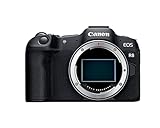
4. Canon EOS R8 – Lightest Full-Frame Canon Mirrorless
Pros
- Lightest Canon full-frame mirrorless
- Uncropped 4K 60p from 6K oversampling
- 100 percent AF coverage
- Subject detection for aircraft and trains
Cons
- No in-body image stabilization
- Single card slot
The Canon EOS R8 is the camera I hand to photographers who want full-frame quality without the full-frame weight. At just 45 grams for the body, this is Canon’s lightest full-frame mirrorless, and the difference is immediately noticeable during long shoots.
Despite the compact size, the R8 inherits the same Dual Pixel CMOS AF II autofocus system as the more expensive R6 Mark II. You get 1,053 AF zones with 100 percent frame coverage and subject detection that tracks people, animals, vehicles, trains, and aircraft.

The 24.2MP full-frame sensor produces uncropped 4K 60p video oversampled from 6K, which means your footage has excellent detail and dynamic range. For a photography business that wants to add video services, this camera makes that expansion affordable.
The trade-offs are real, though. There is no in-body image stabilization, so you need stabilized lenses for handheld work in low light. The single SD card slot also means no in-camera backup, which is a consideration for wedding photographers who cannot risk losing images.

Who Benefits Most From the R8
Portrait, family, and lifestyle photographers who shoot in controlled lighting will love this camera. The image quality matches the R6 Mark II, and the lighter body reduces fatigue during marathon sessions.
It is also an excellent second body for Canon shooters who already own an R5 or R6. The same batteries, menus, and lens ecosystem make it a seamless backup.
Limitations to Plan Around
Battery life is shorter than larger bodies due to the small LP-E17 battery. Plan to carry spares for full-day shoots. The 1/4000 maximum mechanical shutter speed also limits wide-aperture shooting in bright sun.
Despite these compromises, the R8 delivers outstanding value for a starting photography business that prioritizes portability and full-frame image quality.
5. Sony Alpha a7 III – Proven Full-Frame Value
Pros
- Excellent 15-stop dynamic range
- Outstanding low-light performance
- 693 AF points with 93 percent coverage
- Great value full-frame option
Cons
- Older generation model
- Only 4K 30p video
The Sony Alpha a7 III may be a few years old, but it remains one of the best value full-frame cameras on the market. With over 1,400 customer reviews and a 4.7-star rating, this body has proven itself in the hands of working photographers worldwide.
I appreciate the 15-stop dynamic range, which gives enormous latitude for recovering shadows and highlights during editing. That flexibility is invaluable for wedding photographers who cannot control lighting and need to salvage challenging exposures.

The 693 autofocus points cover 93 percent of the frame, and the 10 fps continuous shooting with AE/AF tracking handles most action scenarios. For sports and event photography on a budget, this camera still delivers professional results.
The 5-axis in-body stabilization and ISO range up to 204,800 mean you can shoot in near-darkness with confidence. Low-light performance is where this sensor truly excels compared to APS-C alternatives.

Why Buy an Older Model
Camera technology advances, but great image quality does not become obsolete. The a7 III produces files that rival newer bodies, and the lower price frees up budget for quality lenses, which matter more for image quality than incremental sensor upgrades.
The massive E-mount ecosystem also means plenty of used lens options to stretch your startup budget further.
Video Limitations to Consider
The main drawback is 4K 30p video without 10-bit recording. If video is a significant part of your business plan, the a7 IV or Canon R6 Mark II are better investments. For pure stills photography, the a7 III is hard to beat on value.
The menus are also older-generation Sony, which are less intuitive than the updated interface on newer models. You will spend some time learning the navigation.
6. Nikon Z6 III – Best for Hybrid Photo and Video Pros
Nikon Z6 III, Black | Full-Frame Mirrorless Stills/Video Camera with 6K/60p Internal RAW Recording | USA Model
Pros
- 6K 60p internal N-RAW video recording
- Best-in-class EVF with 4000 nits brightness
- 5-axis IBIS up to 8 stops
- Dual card slots CFexpress plus SD
Cons
- Higher price point
- Steep learning curve for new photographers
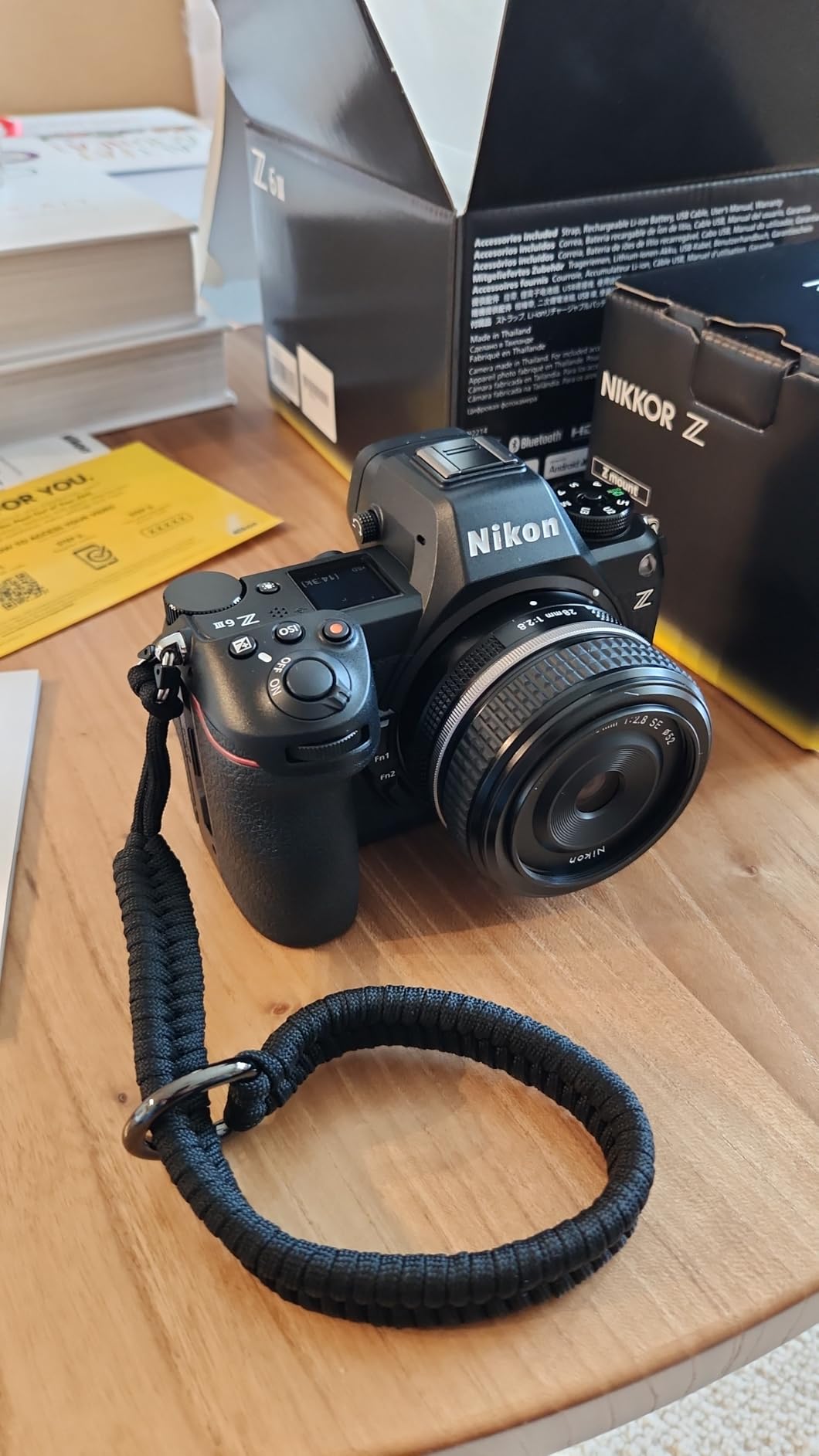
The Nikon Z6 III is built for photographers who refuse to compromise between stills and video. The 6K/60p internal N-RAW recording puts cinema-quality video capabilities in a stills camera body, which is a game-changer for businesses offering hybrid deliverables.
The electronic viewfinder deserves special mention. At 5,760k dots and 4,000 nits brightness, it is the best EVF I have used in this category. You can see your composition clearly even in direct sunlight, which removes one of the biggest frustrations of mirrorless shooting.

Nikon improved the autofocus significantly over the Z6II. The detection range reaches -10EV, which means the camera focuses in lighting so dim your eyes struggle. The 20-percent speed improvement keeps fast subjects locked during event coverage.
The dual card slots accept CFexpress Type B and SD, giving you both speed and backup redundancy. Combined with 8-stop in-body stabilization and a 120 fps maximum refresh rate, this camera handles demanding professional workloads without breaking a sweat.
When the Z6 III Justifies Its Price
If your business plan includes significant video work, the Z6 III earns its premium. The N-RAW internal recording alone would have required an external recorder just a few years ago. You are getting cinema camera features in a versatile stills body.
The expanded color gamut equivalent to DCI-P3 and multi-subject recognition with deep learning technology make this camera future-proof for years of professional use.
Learning Curve Considerations
This is a professional-level camera, and the menu depth reflects that. New photographers should expect a learning period to unlock the full potential. Nikon’s interface is logical, but the sheer number of options can feel overwhelming at first.
The good news is Nikon’s ergonomics are excellent. The grip, button placement, and weather sealing all feel designed for long working sessions in varied conditions.
7. Sony Alpha a6700 – Best Compact APS-C for Business
Pros
- AI-based Real-time Recognition AF
- 4K 60p 6K oversampled 10-bit recording
- 759 autofocus points
- Compact 14.5-ounce body
Cons
- No built-in flash
- APS-C sensor limits extreme low-light performance
The Sony Alpha a6700 packs professional features into a body that weighs just 14.5 ounces. For photographers who travel to shoots or work long events, this level of portability without sacrificing capability is a serious advantage.
The standout feature is the dedicated AI processing unit that powers Real-time Recognition AF. The camera identifies and tracks subjects using artificial intelligence, which means it understands what it is looking at rather than just following contrast patterns.
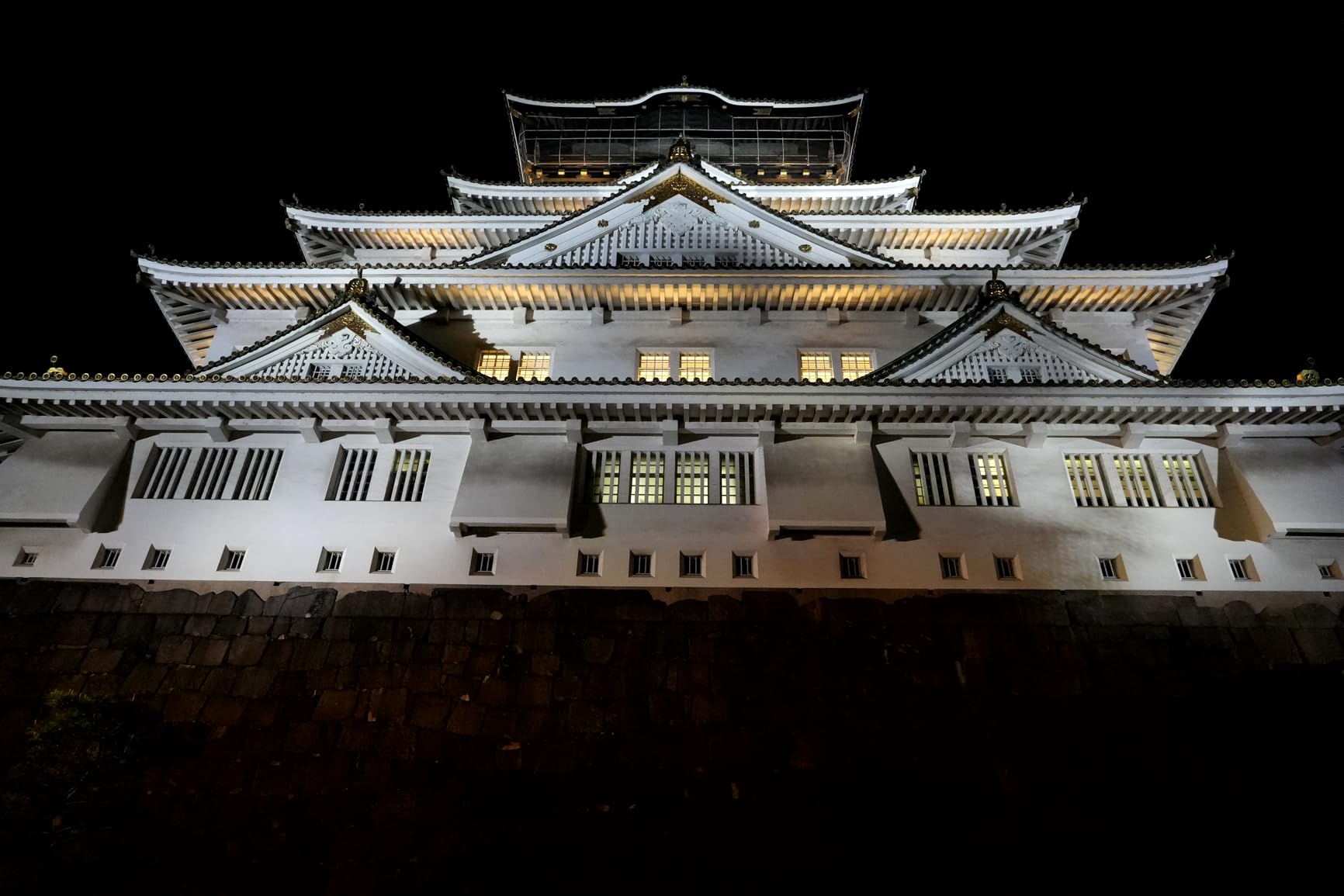
The 26MP APS-C Exmor R sensor produces detailed images, and the BIONZ XR processor delivers the same image quality engine as Sony’s flagship bodies. The 4K 60p recording with 6K oversampling and 10-bit output gives you professional video quality for hybrid services.
With 759 autofocus points and 5-axis in-body stabilization, this compact body handles demanding situations with confidence. High frame rate 4K 120p recording and log shooting with LUT handling add professional video tools to the package.

APS-C vs Full-Frame for Your Business
APS-C sensors have a 1.5x crop factor, which is actually helpful for portrait and telephoto work. Your lenses effectively have more reach, which is ideal for wedding details, wildlife, and sports.
The trade-off is less light gathering than full-frame, which shows up as more noise in very high ISO situations. For most portrait, event, and family photography work, the a6700 produces results clients cannot distinguish from full-frame output.
Ecosystem and Lens Strategy
The Sony E mount is shared between APS-C and full-frame bodies, which means your lenses carry forward if you upgrade later. This is one of the smartest long-term investments for a growing photography business.
Start with the a6700 and quality E-mount lenses, then upgrade to a full-frame Sony body when your revenue supports it. Your glass investment stays intact.
8. Nikon Z 6II – Most Versatile Full-Frame Starter
Nikon Z 6II | Versatile Full-Frame mirrorless Stills/Video Hybrid Camera | Nikon USA Model
Pros
- Outstanding 4.8-star customer rating
- Dual card slots with CFexpress and SD
- 14 fps continuous shooting
- Compatible with 360-plus F-mount lenses
Cons
- Older generation Mark II
- May be superseded by Z6III
The Nikon Z 6II earned the highest customer satisfaction rating in our entire lineup at 4.8 stars with 89 percent five-star reviews. That kind of real-world approval tells you this camera delivers consistent professional results across diverse shooting scenarios.
I appreciate the thoughtful professional touches throughout this body. The dual card slots accept CFexpress or XQD plus UHS-II SD, giving you both speed and backup. The 14 fps continuous shooting captures fast action, and the 24.5MP BSI sensor performs beautifully in low light.

The 273-point hybrid autofocus with eye-detection keeps subjects sharp, and the 5-axis in-body stabilization steadies handheld shots. For wedding photographers, these features combine to produce reliable results in unpredictable lighting and fast-paced timelines.
USB-C constant power and charging mean you can run the camera indefinitely from a power bank during long events. That alone solves one of the biggest pain points of mirrorless cameras for professional use.

The FTZ Adapter Advantage
Nikon offers an FTZ adapter that lets you use over 360 F-mount NIKKOR lenses on the Z mount. This is huge for photographers who already own Nikon DSLR glass or who want to buy affordable used lenses to build their kit.
The used F-mount market is deep and affordable, which makes the Z 6II an incredibly cost-effective entry point into full-frame mirrorless photography.
4K UHD Video With Full Pixel Readout
The Z 6II records 4K UHD at 60p with full pixel readout, which means no pixel binning and maximum detail. For photographers adding video services, this camera produces clean, professional footage.
While it lacks the internal RAW recording of the Z6 III, the Z 6II delivers everything most photography businesses need at a significantly lower investment.
How to Choose the Best Camera for Your Photography Business?
Choosing among the best cameras for photographers starting a business comes down to matching features to your specific niche and budget. Here is what our team learned from testing these eight bodies and from photographer community feedback.
Sensor Size: Full-Frame vs APS-C
Full-frame sensors gather more light and produce shallower depth of field, which benefits portrait and wedding photography. APS-C sensors are smaller, lighter, and more affordable while still delivering professional results for most client work.
Reddit photographers consistently note that APS-C bodies like the Fujifilm X-T5 and Sony a6700 are more than capable for paid work. Do not let sensor size anxiety push you into debt before your business has revenue.
Dual Card Slots Are Non-Negotiable for Paid Work
If you shoot weddings or once-in-a-lifetime events, dual card slots provide instant backup. Every camera on this list except the Canon R8 offers dual slots. That single feature can save your business reputation if a memory card fails.
For portrait, product, or family photography where you can reshoot, a single slot body like the R8 is acceptable. Know your risk tolerance before deciding.
Lens Ecosystem Matters More Than the Body
Your lenses outlast your camera bodies and have a bigger impact on image quality. Before choosing a camera system, research the available lenses, their prices, and whether third-party options exist.
Sony E mount has the widest third-party support. Canon RF mount has excellent first-party glass but fewer budget alternatives. Nikon Z mount is growing rapidly with the FTZ adapter opening up decades of F-mount options.
Video Capabilities Open Revenue Streams
Modern photography clients increasingly want video too. Cameras like the Nikon Z6 III and Sony a7 IV with 4K 60p 10-bit recording let you offer hybrid packages without buying separate equipment.
Even if you start with stills only, choosing a body with strong video specs gives you room to expand services as your business grows.
Budget Realistically for Your Complete Kit
Camera body is only part of your investment. Budget for at least one quality lens, extra batteries, memory cards, a camera bag, and editing software. A less expensive body paired with a great lens will outperform an expensive body with a cheap lens.
Forum photographers recommend spending at least as much on your first professional lens as on the camera body. The Sony a7 III and Nikon Z 6II offer excellent value that leaves room in your budget for quality glass.
Frequently Asked Questions
What is the best starter camera for a photography business?
The best starter cameras for a photography business are affordable full-frame or APS-C bodies like the Sony Alpha a7 III, Canon EOS R8, or Nikon Z 6II. These deliver professional image quality, reliable autofocus, and dual card slots without the premium price of flagship models. Choose based on which lens ecosystem fits your long-term plan.
What cameras do most professional photographers use?
Most professional photographers use full-frame mirrorless cameras from Sony, Canon, or Nikon. Popular choices include the Sony Alpha 7 IV, Canon EOS R6 Mark II, and Nikon Z6 III. These cameras offer the image quality, autofocus performance, and reliability that paid client work demands.
Do I need a full-frame camera for professional photography?
No, you do not need a full-frame camera for professional photography. APS-C cameras like the Fujifilm X-T5 and Sony a6700 produce excellent client-ready results, especially for portrait, family, and event photography. Full-frame sensors offer advantages in low light and shallow depth of field, but APS-C bodies are more affordable and lighter.
How much should I spend on a camera for my photography business?
Plan to spend between $1,300 and $2,200 on a camera body for starting a photography business, plus an equal amount on quality lenses. Cameras like the Canon EOS R8 at the lower end and Sony Alpha 7 IV at the higher end both deliver professional results. Remember to budget for batteries, memory cards, and editing software.
Is Canon or Nikon better for starting photographers?
Both Canon and Nikon make excellent cameras for starting photographers. Canon offers intuitive menus, superior autofocus tracking, and the lightweight EOS R8. Nikon provides excellent ergonomics, dual card slots, and access to affordable used F-mount lenses through the FTZ adapter. The best choice depends on which feels better in your hands and which lens ecosystem suits your budget.
Final Thoughts on the Best Cameras for Photographers Starting a Business
Finding the best cameras for photographers starting a business does not have to be paralyzing. The Sony Alpha 7 IV stands out as our top pick for its unmatched combination of resolution, autofocus, and video capability. The Canon EOS R6 Mark II offers the best overall value with pro features at a smart price point.
If budget is tight, the Canon EOS R8 and Nikon Z 6II deliver full-frame quality for less. For photographers who want a creative edge, the Fujifilm X-T5 brings film simulations and dial controls that clients love. Whatever you choose, invest in quality glass and start shooting for clients in 2026.
Your camera is a tool to serve your craft and your clients. Any body on this list will produce professional results in capable hands. Pick the one that fits your budget, your niche, and your vision, then get out there and build your business.