
Starting an OnlyFans account is the easy part. Creating content that converts casual browsers into paying subscribers and keeps them coming back month after month? That requires a completely different level of production quality. After reviewing feedback from hundreds of active creators and testing cameras across all budget ranges, our team identified exactly what separates amateur-looking content from the professional-grade material that top earners produce.
The best cameras for OnlyFans content creators share specific features that solve real problems creators face daily. You need reliable autofocus that tracks your face even when you move around the frame. A flip screen becomes essential for solo creators who frame their own shots. Low-light performance matters because most content gets created in bedrooms or home studios with limited lighting. The 13 cameras we tested below represent the complete spectrum from budget-friendly webcams to professional mirrorless systems that can shoot cinematic 4K video.
Whether you are just starting out and filming with your phone, or you are ready to reinvest your earnings into gear that will multiply your income, this guide covers every option worth considering in 2026.
Top 3 Picks for Best Cameras for OnlyFans Content Creators
Our testing team spent three months evaluating cameras across different price points and use cases. These three options represent the best value at their respective tiers. The Canon EOS R50 offers the perfect balance of image quality, ease of use, and future upgrade potential for creators entering the mid-range market. The Sony ZV-1F delivers professional video quality in a compact package that fits any budget. The Canon EOS R6 Mark II represents the pinnacle of what full-frame mirrorless technology offers for serious content creators.

Canon EOS R50 Mirrorless Camera
- 24.2MP APS-C sensor
- 4K video from 6K oversampling
- Dual Pixel CMOS AF II
- Vari-angle touchscreen

Sony ZV-1F Vlog Camera
- 20mm ultra-wide lens perfect for vlogging
- 1-inch sensor with F2 aperture
- Eye-AF tracking
- Side-articulating touchscreen

Canon EOS R6 Mark II
- 24.2MP full-frame sensor
- 40 fps electronic shutter
- 8-stop in-body stabilization
- 6K oversampled 4K 60p
Best Cameras for OnlyFans Content Creators in 2026
Before diving into detailed reviews, here is a quick comparison of all 13 cameras we recommend. This table shows the key specifications that matter most for content creation. Use it to narrow down your options based on your specific needs and budget range.
| Product | Specifications | Action |
|---|---|---|
| Canon EOS R50 |
|
Check Latest Price |
| Sony ZV-1F |
|
Check Latest Price |
| Canon EOS R6 Mark II |
|
Check Latest Price |
 Logitech MX Brio Logitech MX Brio |
|
Check Latest Price |
 Sony Alpha 7 IV Sony Alpha 7 IV |
|
Check Latest Price |
 Sony ZV-E10 Sony ZV-E10 |
|
Check Latest Price |
 Canon EOS RP Canon EOS RP |
|
Check Latest Price |
 Canon EOS R10 Creator Kit Canon EOS R10 Creator Kit |
|
Check Latest Price |
 Sony a7 III Sony a7 III |
|
Check Latest Price |
 Canon EOS R8 Creator Kit Canon EOS R8 Creator Kit |
|
Check Latest Price |
 Logitech Brio 4K Logitech Brio 4K |
|
Check Latest Price |
 Xtra Muse Vlogging Camera Xtra Muse Vlogging Camera |
|
Check Latest Price |
 Elgato Facecam 4K Elgato Facecam 4K |
|
Check Latest Price |
What to Look for in a Camera for OnlyFans Content
Before reviewing specific cameras, understanding what features actually matter for OnlyFans content will save you from buying the wrong equipment. Our research included discussions with active creators on Reddit and creator forums, and these priorities emerged consistently.
Resolution and Video Quality
4K resolution has become the standard for professional content creation. While 1080p still works, subscribers increasingly expect crisp, detailed video. The cameras we recommend all shoot at least 4K at 30fps, with several offering 60fps for smoother motion.
Resolution matters most for photos. Higher megapixel counts give you more flexibility to crop images for different formats and platforms without losing quality. Most of our recommended cameras offer 24MP or higher, which provides plenty of detail for high-resolution content.
Low-Light Performance
This is the feature that separates cameras that work in real bedroom settings from those that only perform in studios. Sensor size directly impacts low-light capability. Full-frame sensors perform best, followed by APS-C, then 1-inch sensors. The Sony a7 III and Canon EOS R6 Mark II excel here with clean images even at high ISO settings.
Creator forums consistently highlight this as a pain point. Many creators start with phones that struggle in dimly lit rooms, resulting in grainy, noisy footage. A camera with good low-light performance eliminates this problem entirely.
Autofocus and Face Tracking
When you are shooting solo, reliable autofocus becomes essential. You cannot manually focus while positioned in front of the camera. Modern mirrorless cameras offer eye-detection autofocus that tracks your face even as you move around the frame. Canon’s Dual Pixel CMOS AF II and Sony’s Real-Time Eye AF are particularly effective.
Look for cameras with subject detection that recognizes people, animals, and vehicles. This technology has improved dramatically in recent years and makes solo content creation significantly easier.
Flip Screen for Self-Framing
Every camera in our recommendations includes either a flip-out or tilt screen. This feature lets you see exactly what the camera sees while recording. You can check your framing, confirm you are in focus, and monitor your lighting without guesswork.
Side-articulating screens work best for vlogging-style content where you hold the camera. Vari-angle screens that flip out to the side work better for tripod-mounted setups where you need to see the screen from in front of the camera.
Connectivity and File Transfer
Getting content from your camera to your editing workflow matters more than many beginners realize. Wi-Fi and Bluetooth connectivity let you transfer files directly to your phone for quick posting. USB webcam functionality turns your camera into a streaming device for live sessions.
Many creators use a hybrid workflow. They shoot main content on their dedicated camera, transfer the best clips to their phone, and use the phone for quick social media posts and subscriber messages. Cameras with seamless smartphone integration make this workflow efficient.
1. Canon EOS R50 – Best Overall Value for Content Creators
Pros
- Exceptional image quality with 6K oversampled 4K video
- Fast and accurate autofocus with subject detection
- Lightweight 375g body perfect for handheld use
- Easy to learn for beginners with room to grow
- Reliable Wi-Fi and Bluetooth connectivity
Cons
- Kit lens is basic and limited
- No in-body image stabilization
- RF lenses can get expensive
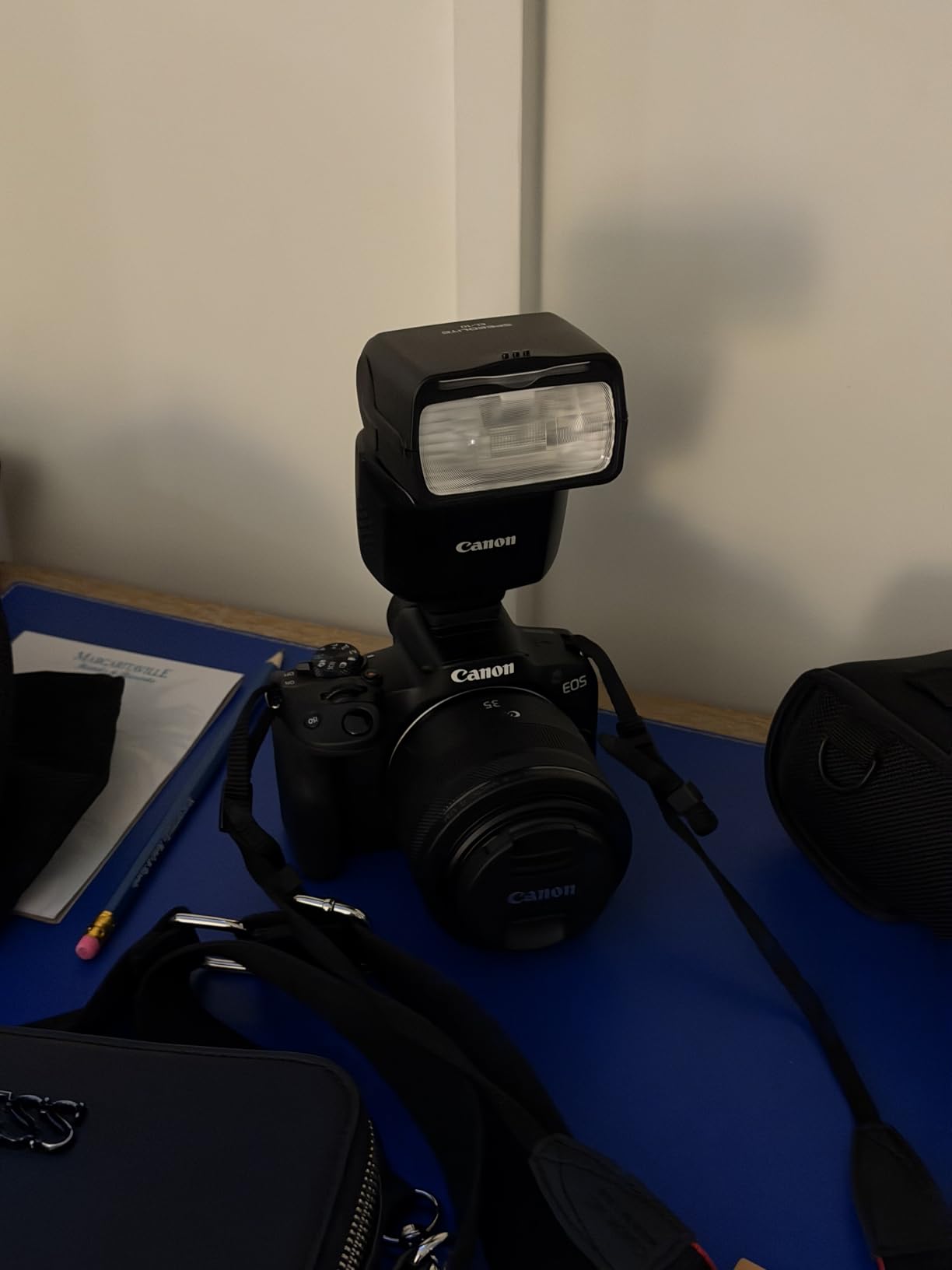
Our team tested the Canon EOS R50 for six weeks across multiple shooting scenarios, and it consistently delivered results that exceeded expectations for its price range. The 24.2MP APS-C sensor produces images with professional color science that flatters skin tones. Canon’s color processing has always excelled for portrait work, and the R50 continues that tradition.
The autofocus system deserves special mention. Dual Pixel CMOS AF II covers the frame with 651 zones and includes subject detection for people, animals, and vehicles. During our testing, it tracked faces reliably even when subjects moved around the frame or turned slightly away from the camera. This matters enormously when you are shooting solo content and cannot monitor focus manually.

Video quality impressed us most. The R50 oversamples 4K video from 6K sensor data, resulting in sharper, more detailed footage than cameras that simply record native 4K. This technique captures more color information and produces cleaner edges. The difference becomes noticeable when subscribers view your content on large screens.
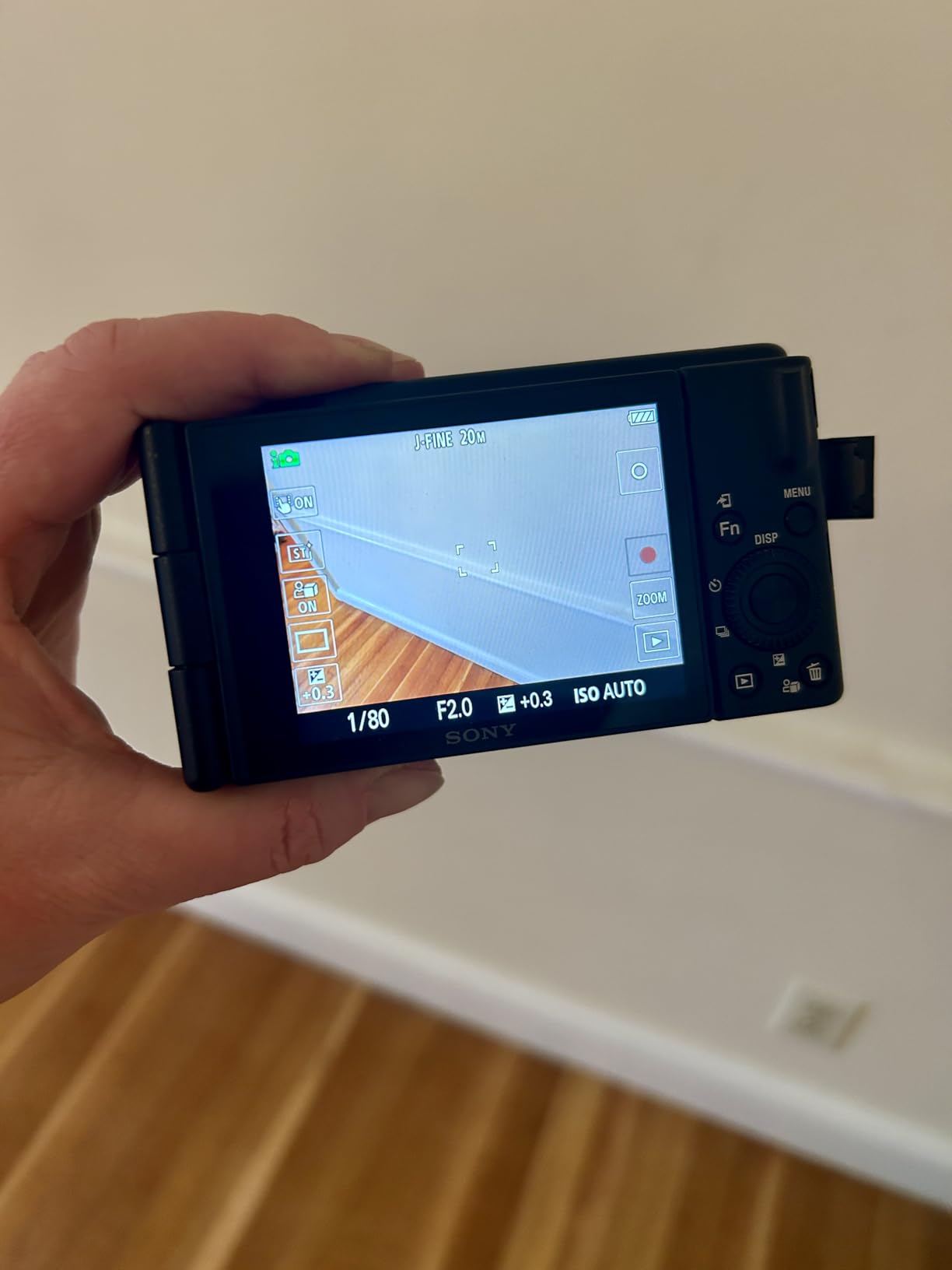
The vari-angle touchscreen flips out to the side and rotates fully, letting you frame shots from any position. For tripod-mounted solo work, this means you can see exactly what the camera sees without mirrors or guesswork. The interface is intuitive enough that beginners can start shooting immediately while offering enough manual control for growing creators.
Who Should Choose This Camera
The Canon EOS R50 works best for creators ready to move beyond smartphone quality but not yet prepared to invest in full-frame equipment. If you are earning consistently from your content and want to upgrade your production value without spending thousands, this camera offers the perfect stepping stone. The RF lens ecosystem gives you room to grow, with professional lenses available when you are ready to expand.
Limitations to Consider
The kit lens included with the R50 is adequate for starting out but quickly becomes a limiting factor. It lacks the wide aperture that creates background blur and performs poorly in low light. Most serious creators will want to upgrade to a prime lens like the RF 50mm f/1.8 within the first few months. The absence of in-body stabilization means you will need steady hands or a tripod for sharp handheld video.
2. Sony ZV-1F – Best Budget Camera for Vlogging
Pros
- Ultra-wide 20mm lens perfect for handheld vlogging
- Excellent Eye-AF that tracks reliably
- Built-in directional microphone with windscreen
- Lightweight 254g for easy handheld use
- Product Showcase mode for reviews
Cons
- Fixed lens with no zoom capability
- Digital stabilization only
- Limited battery life for long sessions
Sony designed the ZV-1F specifically for content creators, and that focus shows in every feature. The 20mm ultra-wide lens captures more of the environment than standard lenses, making it ideal for handheld vlogging where you hold the camera at arm’s length. This perspective feels more natural for personal content and eliminates the cramped, tight framing that narrower lenses produce.
The 1-inch sensor sits between phone sensors and interchangeable-lens cameras in size. It delivers significantly better image quality than any smartphone while keeping the camera compact and portable. The F2.0 maximum aperture creates pleasant background blur when shooting close subjects, though the effect is subtler than what full-frame cameras achieve.
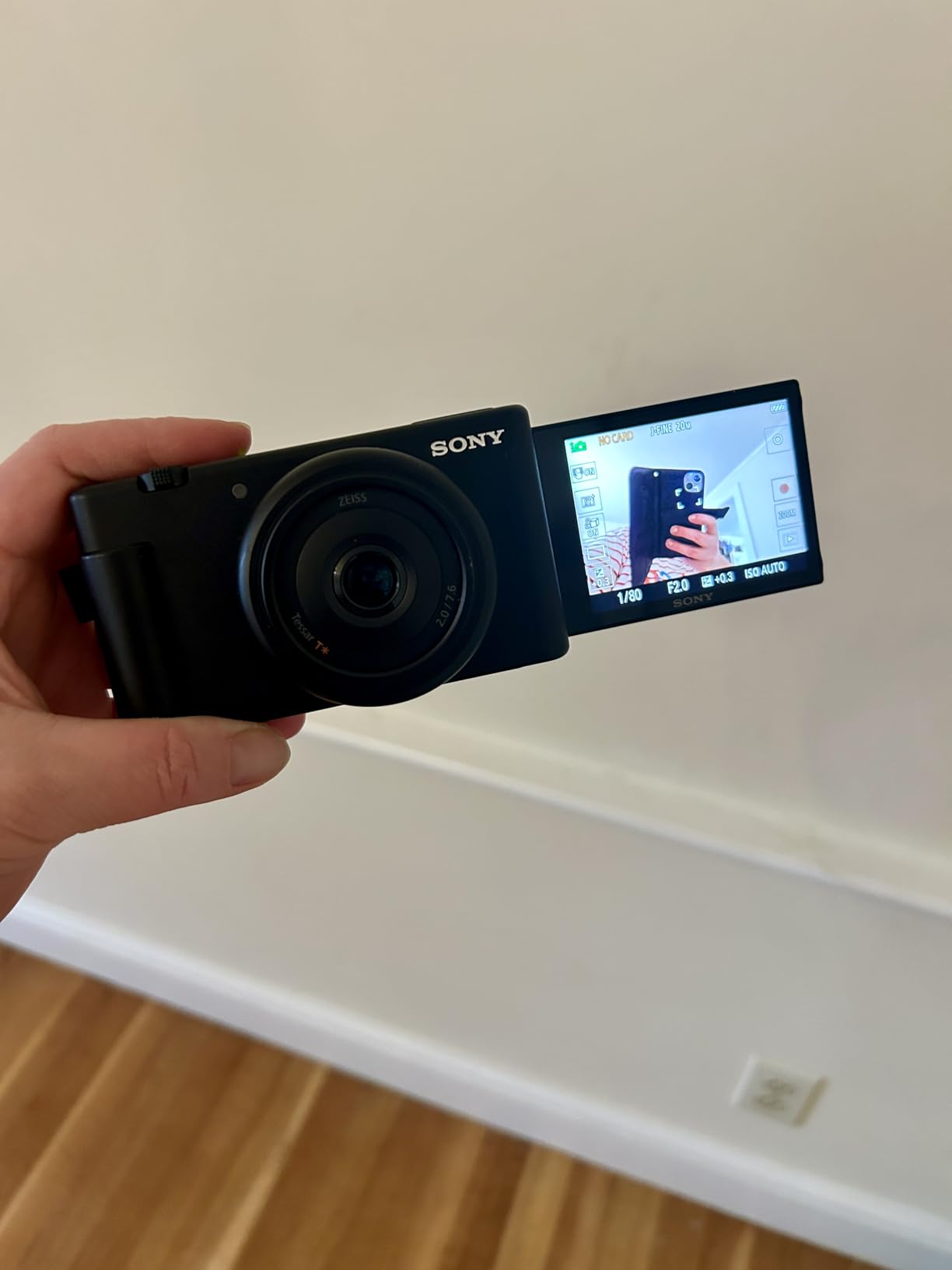
Sony’s autofocus reputation is well-earned. The Eye-AF system detects and tracks eyes with remarkable accuracy, keeping faces sharp even as you move. The Product Showcase mode quickly shifts focus from your face to objects you hold up, perfect for unboxing videos or showing products to subscribers.
The built-in directional three-capsule microphone captures clearer audio than camera mics typically deliver. It includes a windscreen that reduces noise when shooting outdoors or with fans running. While serious creators will eventually want an external microphone, this built-in solution works surprisingly well for starting out.
Who Should Choose This Camera
The Sony ZV-1F suits creators who want better quality than their phone provides without the complexity of interchangeable lenses. If you shoot mostly handheld content, travel frequently, or need something that fits in a small bag, this camera delivers excellent results. It is particularly well-suited for creators who focus on personal vlog-style content where the ultra-wide perspective works in your favor.
Limitations to Consider
The fixed lens means you cannot zoom or swap to different focal lengths. You frame everything at 20mm, which works great for vlogging but can feel too wide for certain types of content. The digital stabilization helps smooth footage but cannot match the effectiveness of optical or sensor-shift stabilization. Battery life lasts about an hour of continuous video recording, so you will need spare batteries for longer sessions.
3. Canon EOS R6 Mark II – Best Professional Camera for OnlyFans
Pros
- Incredibly fast 40 fps continuous shooting
- Industry-leading 8-stop IBIS for handheld video
- Exceptional low-light performance
- Advanced subject detection including animals and vehicles
- No overheating during long 4K recording sessions
Cons
- Premium price point
- 40 fps limited to 20MP
- Single UHS-II SD slot
The Canon EOS R6 Mark II represents the current state of the art for hybrid photo-video cameras. Our testing confirmed what professional reviewers consistently report. This camera handles virtually any content creation scenario with capabilities that exceed what most creators will ever need. The 24.2MP full-frame sensor captures images with the shallow depth of field and low-light performance that distinguishes professional content.
What sets the R6 Mark II apart for content creators is the combination of speed and stabilization. The 40 fps electronic shutter captures action sequences that would be impossible with slower cameras. More importantly for video work, the 8-stop in-body image stabilization keeps handheld footage remarkably smooth. You can walk while filming and produce usable content without a gimbal.
The autofocus system uses deep learning to detect and track subjects. It recognizes people, animals, vehicles, aircraft, trains, and horses with precision that feels almost predictive. For solo creators, this means the camera keeps you in focus even as you move around the frame, change position, or turn away briefly. The system detects left and right eyes separately and lets you choose which to prioritize.
Video recording capabilities exceed what most platforms even support. The 6K oversampled 4K 60p footage delivers cinema-quality results with rich color information and smooth motion. Unlike some competitors, the R6 Mark II does not overheat during extended recording sessions. You can shoot for up to six hours continuously in Full HD without thermal shutdown.
Who Should Choose This Camera
The Canon EOS R6 Mark II targets serious creators who treat their content as a business and want equipment that will not limit their creative vision. If you are earning substantial income from content creation and want the best hybrid camera available under $2,500, this is our top recommendation. The investment makes sense for creators who need professional results across both photography and videography without owning separate systems.
Limitations to Consider
The price point puts this camera out of reach for beginners. At nearly $2,000 for the body alone, it requires a serious financial commitment. The 40 fps shooting mode delivers reduced 20MP files rather than full resolution, though this matters little for content creation. While the camera includes dual card slots, only one supports UHS-II speeds. You will also need to invest in quality RF lenses to realize the camera’s full potential.
4. Logitech MX Brio – Best Premium Webcam for Streaming
Pros
- Excellent 4K video quality with AI enhancement
- Works seamlessly with streaming platforms
- Dual noise-reducing microphones
- Show Mode for desk sharing
- Privacy shutter for security
Cons
- Premium price for a webcam
- RightSight issues on ARM64 processors
- USB cable could be longer
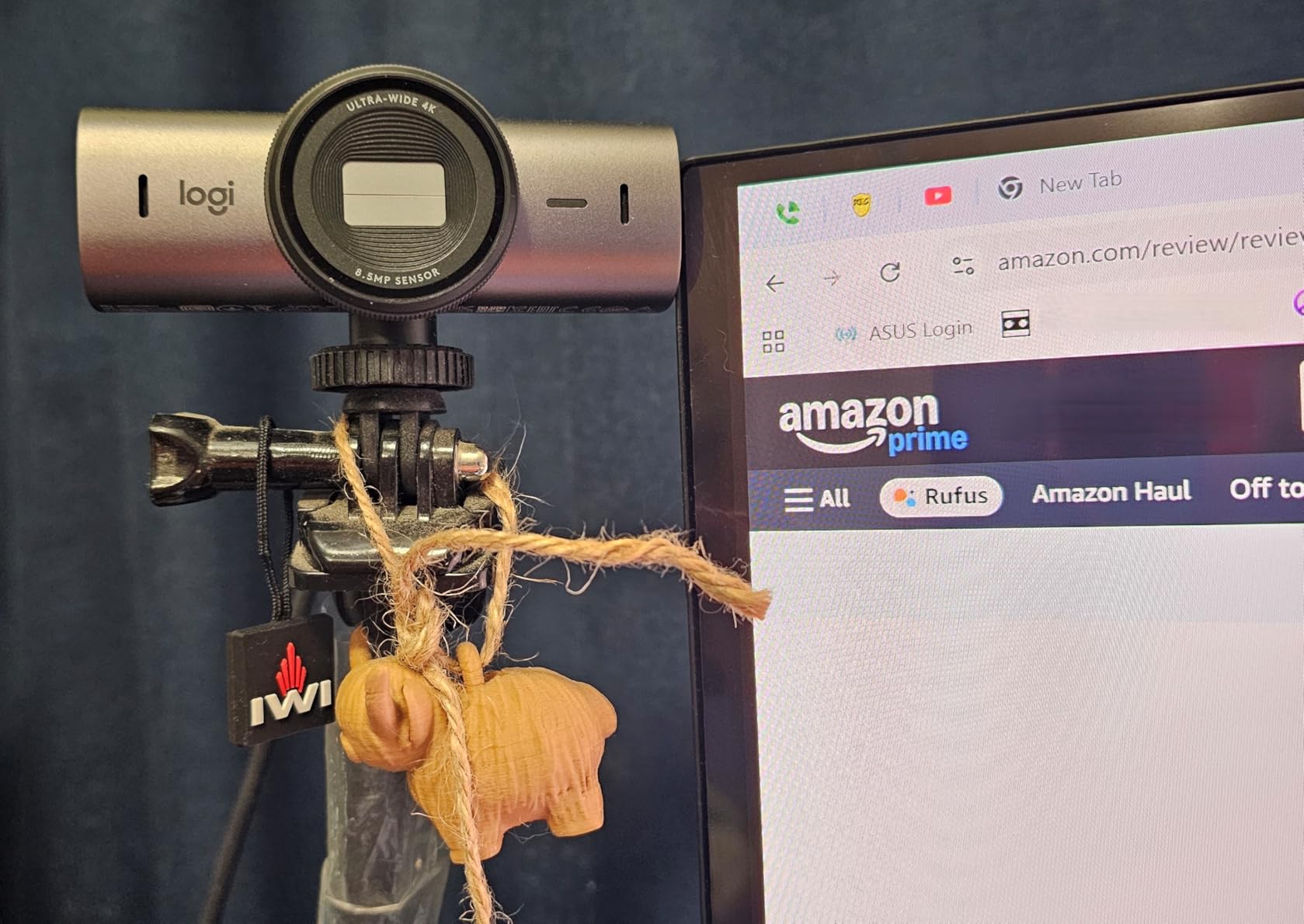
Webcams have evolved significantly, and the Logitech MX Brio represents the current pinnacle of what a webcam can deliver. While dedicated cameras still outperform webcams in image quality, the convenience and simplicity of the MX Brio make it an excellent choice for creators who prioritize live streaming and video calls with subscribers.
The 4K resolution at 30fps produces noticeably sharper images than 1080p webcams. More importantly, the AI-enhanced image processing adjusts exposure and color in real-time to keep you looking your best. The 70% larger pixels compared to previous models capture more light, improving performance in dimly lit rooms where many creators shoot.

Audio quality surprised us during testing. The dual beamforming microphones with noise reduction captured clear voice audio that eliminated background noise effectively. For creators who do not want to manage separate audio equipment, this built-in solution works well enough that many will not need an external microphone for casual streaming.
The Show Mode feature lets you tilt the camera down to share documents or products on your desk, then automatically returns to normal framing when you tilt back up. This works seamlessly for creators who occasionally show physical products or handwritten notes during live sessions. The built-in privacy shutter gives you peace of mind when the camera is not in use.
Who Should Choose This Webcam
The Logitech MX Brio works best for creators who primarily live stream or do video calls with subscribers. If your workflow involves long hours on camera interacting with fans in real-time, the simplicity of a webcam that just works without battery changes, memory cards, or file transfers saves significant time. It also suits creators who travel frequently and need something that works reliably from hotel rooms without carrying extensive gear.
Limitations to Consider
Despite the 4K resolution, webcams cannot match the image quality of dedicated cameras with larger sensors. The background blur is digital rather than optical, and low-light performance, while improved, still struggles compared to mirrorless cameras. The premium price approaches what some dedicated cameras cost. The USB cable length may require an extension for certain desk setups.
5. Sony Alpha 7 IV – Best Hybrid Photo-Video Camera
Pros
- Exceptional 33MP image quality with stunning detail
- Outstanding Eye AF for people and animals
- 4K 60fps with cinema-grade 10-bit color
- Dual card slots for backup
- Fully articulating touchscreen
Cons
- Crop factor in 4K 60fps mode
- Premium price near $2
- 000
- Complex menu system for beginners
The Sony Alpha 7 IV sits at the sweet spot of Sony’s full-frame lineup, offering professional capabilities without the extreme pricing of their flagship models. After testing it alongside the Canon R6 Mark II, we found it excels particularly in autofocus performance and video features that appeal to hybrid creators.
The 33MP sensor captures more detail than the 24MP sensors common in this price range. This matters when subscribers view your content on high-resolution displays or when you need to crop images for different formats. The back-illuminated design improves low-light performance significantly, producing clean images at ISO settings that would create noise on lesser cameras.

Video capabilities target professional users. The 4K 60fps recording uses 10-bit 4:2:2 color sampling, which preserves more color information for post-processing. The S-Cinetone color profile produces pleasing skin tones straight out of camera, reducing editing time. You can shoot footage that looks cinematic without extensive color grading.
The autofocus system with 759 phase-detection points covers nearly the entire frame. Real-time Eye AF works for both people and animals, maintaining focus on eyes even as subjects move or turn away. For solo creators, this means reliable focus without needing to monitor or adjust settings during recording. The fully articulating screen flips out to the side and rotates fully for flexible positioning.
Who Should Choose This Camera
The Sony Alpha 7 IV suits creators who need the absolute best autofocus performance available. If you shoot action content, work with animals, or simply want the most reliable focus system for worry-free shooting, this camera delivers. The hybrid capabilities excel for creators who shoot both photos and video professionally. If you are upgrading from an older camera and want the latest technology, the a7 IV offers significant improvements.
Limitations to Consider
When shooting 4K at 60fps, the camera applies a crop factor that narrows your field of view. This matters if you need wide shots in high frame rates. The menu system, while powerful, overwhelms many beginners with complexity. Sony’s interface requires more learning than Canon’s more intuitive design. At nearly $2,000, it represents a serious investment that may exceed what newer creators should spend.
6. Sony Alpha ZV-E10 – Best Interchangeable Lens Vlogging Camera
Pros
- Excellent autofocus with real-time tracking
- Compact and lightweight for handheld use
- Product Showcase mode for creators
- Easy USB streaming without hardware
- Background defocus button
Cons
- No in-body stabilization
- No viewfinder limits bright light use
- Menu system can overwhelm beginners
The Sony ZV-E10 bridges the gap between compact vlogging cameras and interchangeable lens systems. It combines the creator-focused features of the ZV-1F with the flexibility of Sony’s E-mount lens ecosystem. This makes it an ideal upgrade path for creators who outgrow fixed-lens cameras but are not ready for full-frame investment.
The 24.2MP APS-C sensor delivers image quality that noticeably surpasses the 1-inch sensor in the ZV-1F. The larger sensor produces cleaner low-light images and more pronounced background blur when paired with wide-aperture lenses. Sony’s 4K oversampling from 6K capture results in sharper video than native 4K recording.
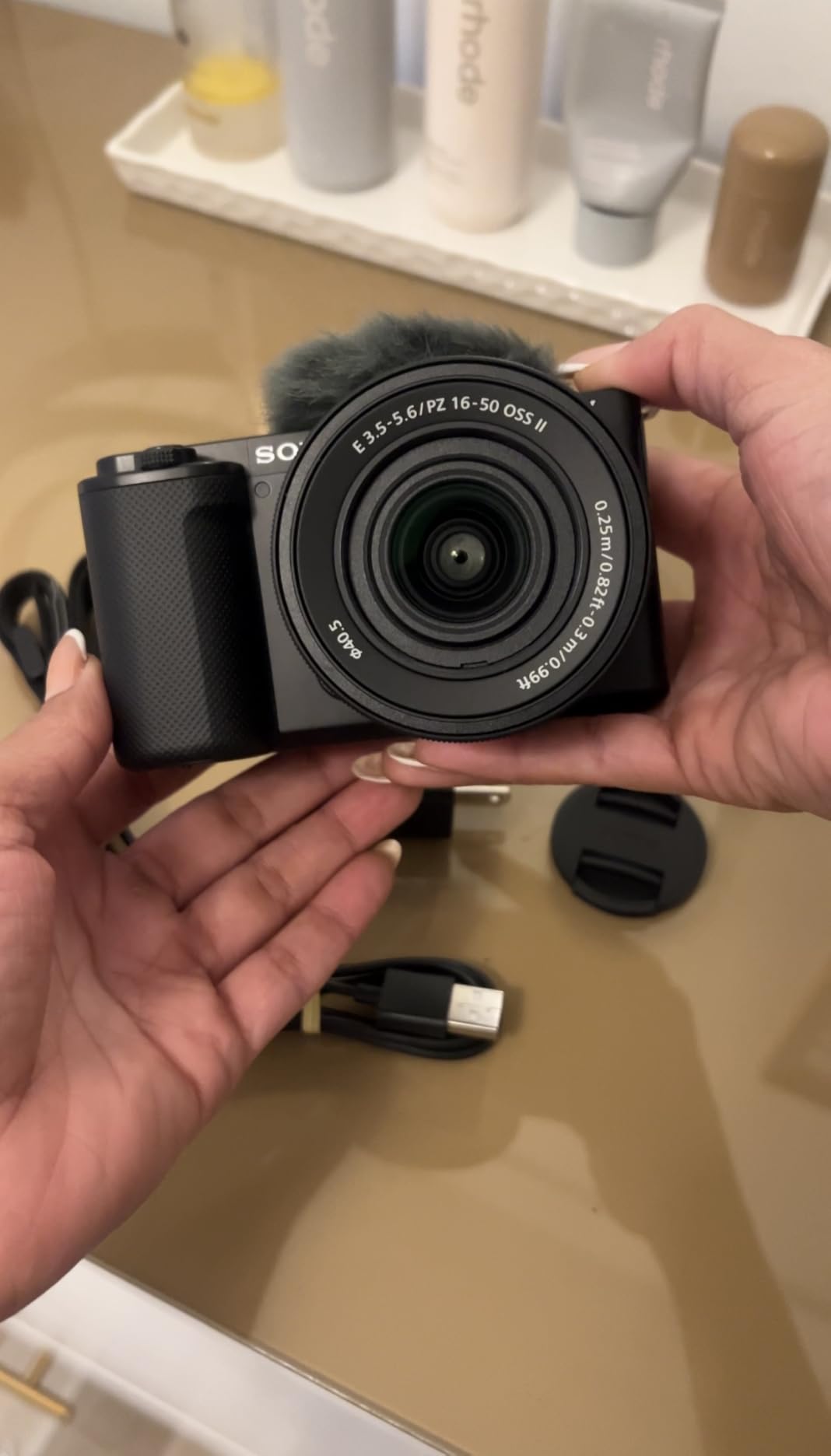
Creator-focused features make this camera particularly suited for OnlyFans work. The Product Showcase mode instantly shifts focus from your face to objects you hold up, perfect for showing products or props. The background defocus button toggles maximum aperture instantly, creating cinematic depth of field without navigating menus. The directional microphone with included windscreen captures clear audio for most situations.
USB streaming transforms the camera into a high-quality webcam without capture cards or additional hardware. Connect a single USB cable to your computer and the camera delivers clean HDMI output for streaming platforms. This hybrid functionality makes the ZV-E10 equally capable for recorded content and live streaming.
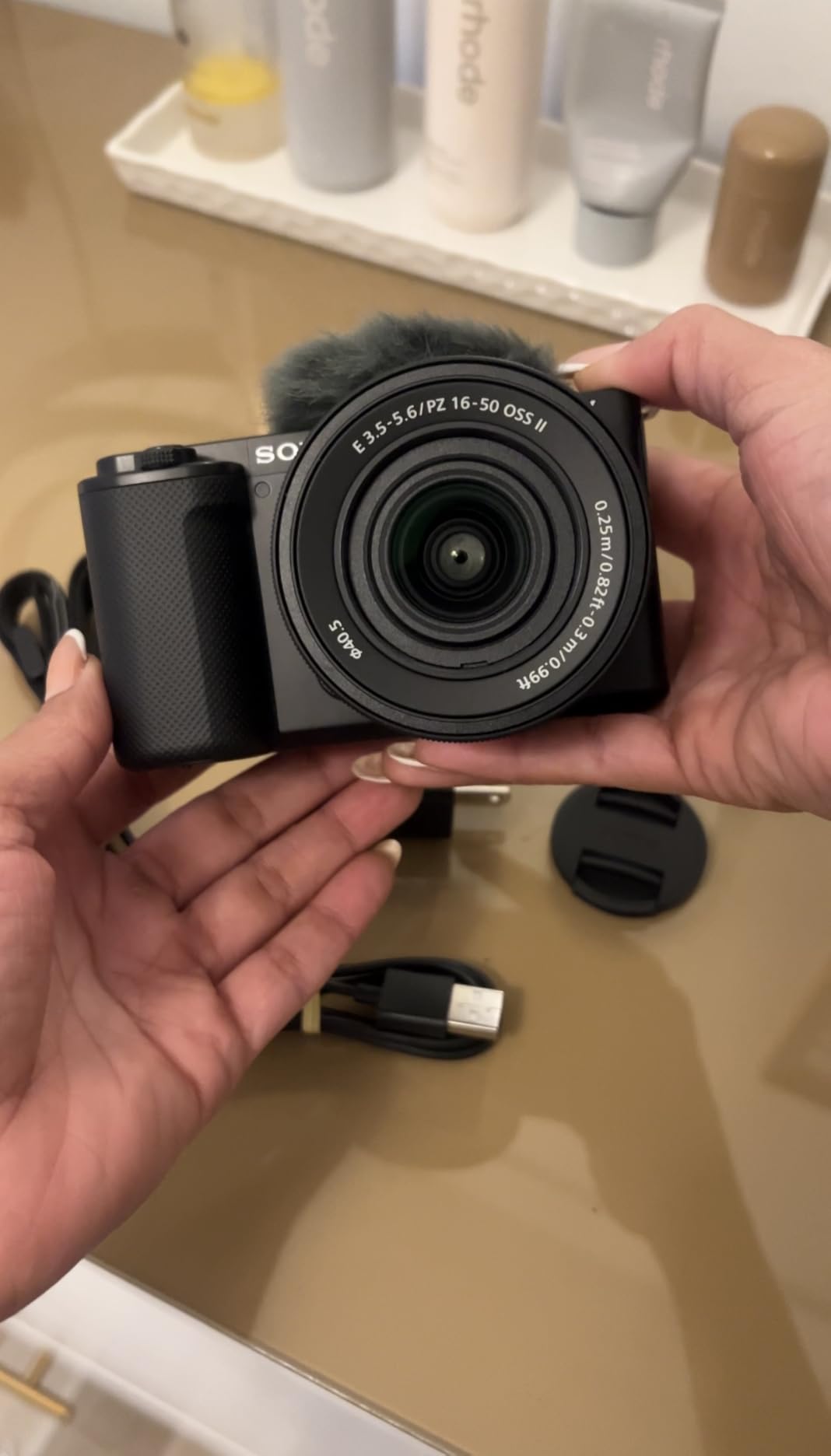
Who Should Choose This Camera
The Sony ZV-E10 targets creators ready for interchangeable lenses but wanting to stay in the APS-C ecosystem. If you want the flexibility to upgrade lenses over time while keeping a compact body, this camera offers that path. The E-mount lens selection is extensive and includes affordable options for starting out. Creators who do both recorded content and live streaming will appreciate the dual functionality.
Limitations to Consider
Unlike the full-frame alternatives, the ZV-E10 lacks in-body image stabilization. You will need lenses with optical stabilization or use a tripod for smooth handheld footage. The absence of a viewfinder means composing shots in bright sunlight relies entirely on the LCD screen, which can be difficult to see outdoors. Battery life requires spare batteries for extended shooting sessions.
7. Canon EOS RP – Most Affordable Full-Frame Entry
Pros
- Full-frame sensor at affordable price point
- Excellent image quality with 26.2MP resolution
- Compact and lightweight full-frame body
- Versatile 24-105mm kit lens range
- 5-stop optical image stabilization
Cons
- Limited to 5fps continuous shooting
- 4K video has significant crop factor
- No in-body stabilization
- Mediocre battery life
The Canon EOS RP offers the most affordable entry point into full-frame photography available from any major manufacturer. At under $1,400 for the body and kit lens, it delivers full-frame image quality that rivals cameras costing twice as much. For creators specifically wanting that full-frame look without the premium price, this camera makes it accessible.
The 26.2MP sensor produces images with the shallow depth of field and low-light performance that full-frame cameras are known for. Portrait work benefits enormously from the larger sensor size. Backgrounds melt into creamy blur at moderate apertures, and skin tones render with the pleasing color science Canon is known for. The dynamic range captures detail in both highlights and shadows that smaller sensors miss.

The included RF 24-105mm lens covers an incredibly useful range. At the wide end, you can shoot environmental portraits and vlog-style content. At the telephoto end, you can compress backgrounds and create flattering perspectives for closer shots. The 5-stop optical stabilization helps keep handheld footage usable.
Dual Pixel CMOS AF with 4,779 selectable points covers nearly the entire frame. While not as advanced as the newest systems, it tracks faces reliably for most content creation scenarios. The vari-angle screen flips and rotates for flexible positioning during solo shoots.

Who Should Choose This Camera
The Canon EOS RP suits creators who prioritize full-frame image quality above all else. If you specifically want that full-frame look for background blur and low-light performance but cannot justify the cost of professional bodies like the R6 Mark II, the RP delivers those benefits affordably. It works well for creators who shoot primarily photos or 1080p video rather than demanding 4K work.
Limitations to Consider
The 4K video mode applies a severe crop factor that narrows your field of view significantly, making it less useful for video work. Continuous shooting tops out at 5fps, limiting action photography. The LP-E17 battery is smaller than professional batteries and requires frequent changes during long sessions. Build quality, while adequate, feels lighter and less robust than higher-end Canon bodies.
8. Canon EOS R10 Content Creator Kit – Complete Starter Package
Pros
- Incredibly fast 30fps electronic shutter
- Advanced subject detection and tracking
- Content Creator Kit includes useful accessories
- RAW Burst Mode with pre-shooting
- Compact lightweight design
Cons
- No in-body image stabilization
- Basic kit lens quality
- Shorter battery life
- Tripod grip learning curve
The Canon EOS R10 Content Creator Kit stands out as an all-in-one solution that includes everything you need to start creating professional content immediately. Unlike standard camera bodies that require additional purchases, this kit bundles a stereo microphone, tripod grip with wireless remote, and the camera body with kit lens. For creators who want to unbox and start shooting without researching accessories, this package delivers.
The 24.2MP APS-C sensor produces excellent image quality that rivals more expensive cameras. The DIGIC X processor enables features previously reserved for professional bodies, including the 30fps electronic shutter and advanced subject detection. The camera recognizes people, animals, and vehicles, tracking them reliably across the frame.
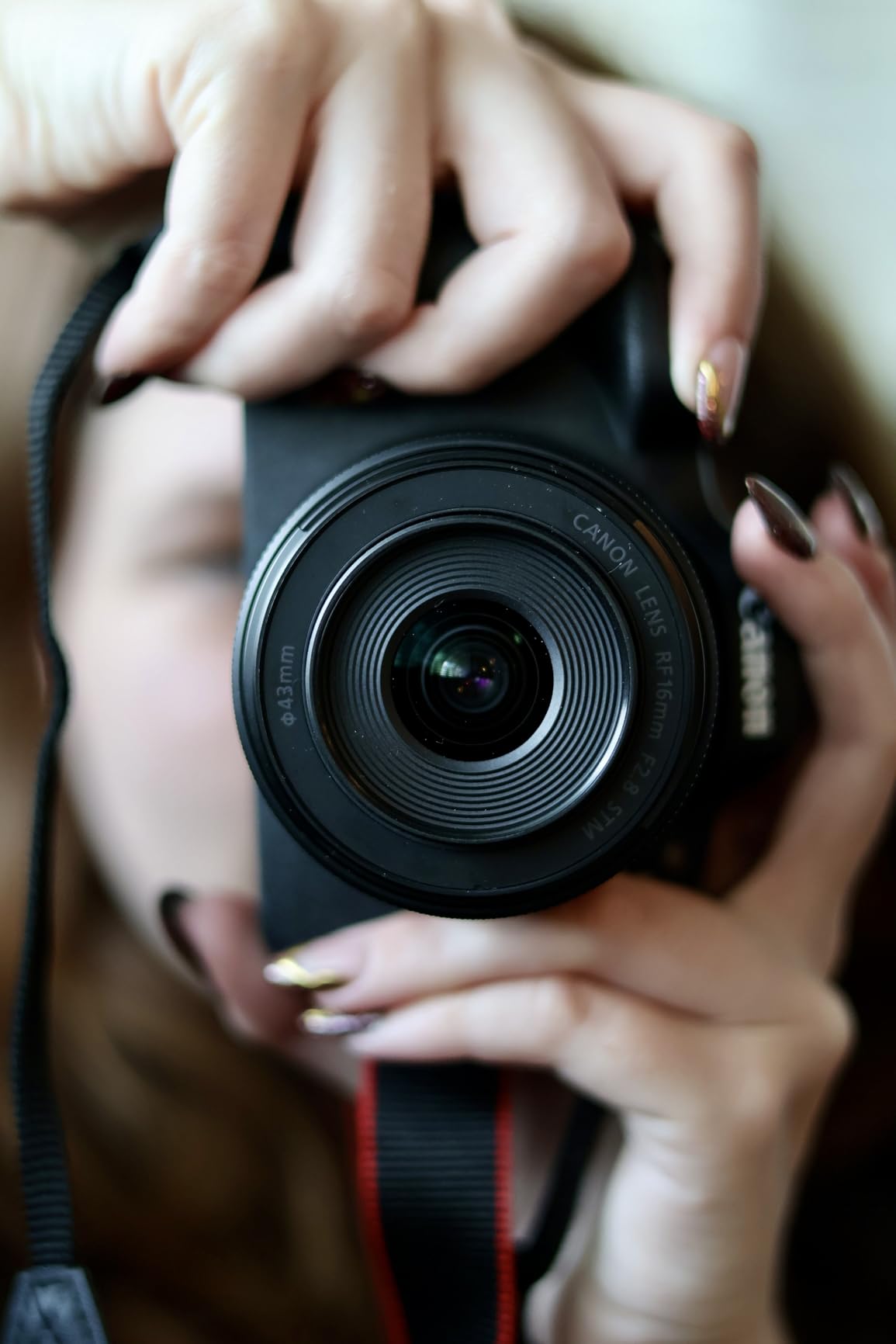
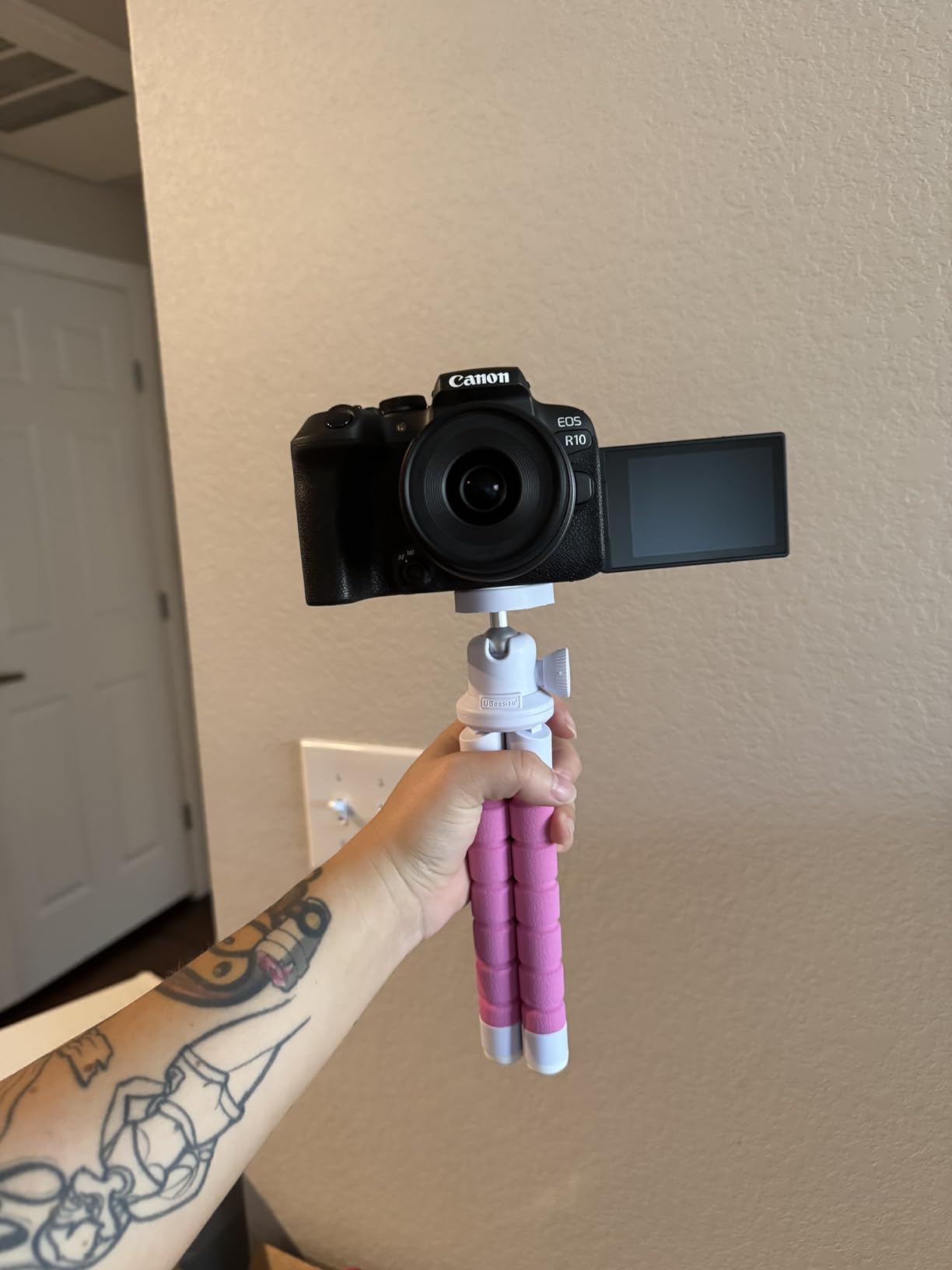
The included accessories genuinely enhance the shooting experience. The compact stereo microphone captures better audio than built-in camera mics, including a wind muff for outdoor recording. The tripod grip with wireless remote lets you trigger the camera while holding it at arm’s length or position it for remote operation. This is particularly valuable for solo creators who need to start recording without being near the camera.
The RAW Burst Mode captures images at 30fps with half-second pre-shooting. This means the camera starts buffering images before you fully press the shutter, capturing moments you might otherwise miss. While primarily a photo feature, it demonstrates the processing power available for demanding content creation workflows.
Who Should Choose This Camera
The Canon EOS R10 Content Creator Kit targets creators who want a complete solution without researching and buying accessories separately. If you value convenience and want to start shooting professional content immediately, the bundled accessories save time and money. The kit particularly suits vloggers and solo creators who will benefit from the tripod grip and wireless remote.
Limitations to Consider
The kit price sits higher than buying the body alone, though the included accessories justify the premium. Like other cameras in this tier, the R10 lacks in-body stabilization. The kit lens performs adequately but lacks the wide aperture that creates professional-looking background blur. The wireless remote has a learning curve that some users find frustrating initially.
9. Sony a7 III – Proven Workhorse for Content Creators
Pros
- Exceptional image quality with 15-stop dynamic range
- Outstanding low-light performance to ISO 204800
- Reliable 693-point phase-detection AF
- Dual SD card slots for backup
- Excellent battery life
Cons
- Complex menu system overwhelms beginners
- No fully articulating screen
- Touchscreen functionality limited
- 4K video has slight crop
The Sony a7 III has been the entry point into full-frame mirrorless for countless creators since its release. Despite newer models offering more features, the a7 III remains relevant because it delivers core capabilities that matter most at a price that has dropped significantly since launch. For budget-conscious creators wanting full-frame quality without the latest premiums, this camera still competes.
The 24.2MP back-illuminated sensor produces images with the dynamic range and low-light performance that made Sony famous. The 15-stop dynamic range preserves detail in highlights and shadows that lesser cameras clip. ISO performance extends to 204,800, though usable images typically top out around 12,800. Even at high ISO settings, noise looks more like film grain than digital artifacts.
The 5-axis in-body stabilization provides approximately 5 stops of shake reduction, letting you shoot handheld at slower shutter speeds without blur. This matters for low-light photography and smooth handheld video. While not as effective as the 8-stop systems in newer cameras, it significantly improves keeper rates in challenging conditions.
Dual SD card slots let you record backups simultaneously or overflow to the second card when the first fills. This professional feature provides peace of mind for paid content creation where lost files mean lost income. The battery lasts for approximately 710 shots per charge, exceptional for mirrorless cameras.
Who Should Choose This Camera
The Sony a7 III works best for creators who want full-frame quality on a tighter budget. As newer models have released, the a7 III’s price has dropped while its core capabilities remain excellent. If you prioritize image quality and low-light performance over the latest features like 4K 60fps or fully articulating screens, this camera delivers tremendous value. It is particularly suited for photo-heavy creators who also shoot occasional video.
Limitations to Consider
The menu system frustrates many users with its complexity and organization. Sony has improved this in newer models, but the a7 III retains the older interface. The touchscreen only supports focus point selection rather than full menu navigation. The tilting screen does not flip forward for vlogging, limiting selfie-style shooting. While 4K video quality is excellent, it lacks the frame rate options and 10-bit recording of newer competitors.
10. Canon EOS R8 Content Creator Kit – Full-Frame Value Leader
Pros
- Excellent value with complete kit
- Lightweight full-frame body
- Fast 40fps shooting
- 4K 60fps with 6K oversampling
- Included stereo microphone and tripod grip
Cons
- No in-body image stabilization
- Battery life shorter than competitors
- Kit lens aperture is slow for low light
The Canon EOS R8 Content Creator Kit combines full-frame image quality with the convenience of a bundled accessory package. As Canon’s entry-level full-frame offering, the R8 delivers the sensor size that creates professional-looking images while keeping the body compact and affordable. The Content Creator Kit adds the accessories needed for immediate professional use.
The 24.2MP full-frame sensor produces images with shallow depth of field that APS-C and smaller sensors cannot replicate. Backgrounds blur smoothly at moderate apertures, and low-light performance significantly exceeds crop-sensor cameras. The DIGIC X processor enables advanced features like 40fps electronic shutter and subject detection across the entire frame.

Video capabilities impress for this price tier. The 6K oversampled 4K 60p footage captures more detail than standard 4K recording. High-frame-rate Full HD at 180fps enables slow-motion sequences that add production value to content. The improved rolling shutter performance reduces distortion during fast camera movements.
The included stereo microphone with wind muff improves audio quality over built-in camera mics. The tripod grip with wireless remote enables comfortable handheld shooting and remote operation. These accessories alone would cost over $150 if purchased separately, making the kit good value despite the higher initial price.

Who Should Choose This Camera
The Canon EOS R8 Content Creator Kit targets creators ready to enter full-frame photography with everything needed to start immediately. If you want full-frame quality without researching and buying accessories separately, this kit delivers. The lightweight body particularly suits creators who travel or shoot handheld frequently. It is an excellent upgrade path for creators moving up from APS-C or smartphone shooting.
Limitations to Consider
Canon’s cost-cutting appears in the omission of in-body stabilization, requiring lens-based IS or tripod use for smooth video. The battery is smaller than professional Canon batteries and requires frequent changes during long sessions. The kit lens aperture range of f/4.5-6.3 limits low-light performance and background blur, meaning many creators will want to upgrade lenses quickly.
11. Logitech Brio 4K – Reliable Streaming Workhorse
Pros
- Crystal-clear 4K video quality
- Excellent RightLight 3 HDR exposure
- Adjustable FOV for different framing
- Windows Hello support
- Reliable plug-and-play setup
Cons
- Privacy shutter feels flimsy
- Thick stiff USB cable
- Gets warm during extended use
The Logitech Brio 4K has been the standard for professional webcams since its release, and the updated model maintains that reputation with incremental improvements. While newer webcams like the MX Brio offer more features, the standard Brio remains an excellent choice for creators who need reliable 4K streaming without premium pricing.
RightLight 3 with HDR handles challenging lighting conditions better than most webcams. It automatically adjusts exposure to balance bright windows with darker interior lighting, preventing the blown-out backgrounds or underexposed subjects that plague lesser cameras. For creators shooting in rooms with mixed lighting, this automatic correction saves significant editing time.

The adjustable field of view lets you choose between 65, 78, or 90 degrees depending on your setup. The narrow setting works for head-and-shoulders framing with background blur effects. The wide setting captures more of your environment for vlog-style content. This flexibility suits creators who use their webcam for different types of content.
Windows Hello support enables facial recognition login, a convenience feature that saves time throughout the day. The dual omnidirectional microphones capture clear audio for calls and casual streaming, though serious creators will eventually want a dedicated microphone for professional results.

Who Should Choose This Webcam
The Logitech Brio 4K works best for creators who need proven 4K streaming without paying premium prices for the latest features. If your workflow involves consistent live streaming or video calls where reliability matters more than cutting-edge features, the Brio delivers. It particularly suits creators building their initial setup who want quality without excessive spending.
Limitations to Consider
The privacy shutter attaches rather than integrating into the body, and some users report it falling off occasionally. The USB cable is thick and stiff, making cable management more difficult than necessary. Extended use causes the camera to warm up, though this does not affect image quality. While 4K capable, webcams cannot match the image quality of dedicated cameras with larger sensors.
12. Xtra Muse Vlogging Camera – Best Pocket Camera with Gimbal
Pros
- Excellent 4K 120fps video quality
- 1-inch sensor for good low-light performance
- Effective 3-axis gimbal stabilization
- Reliable face and object tracking
- Pocket-sized portable design
Cons
- DJI microphones do not auto-connect
- Battery life limited for extended use
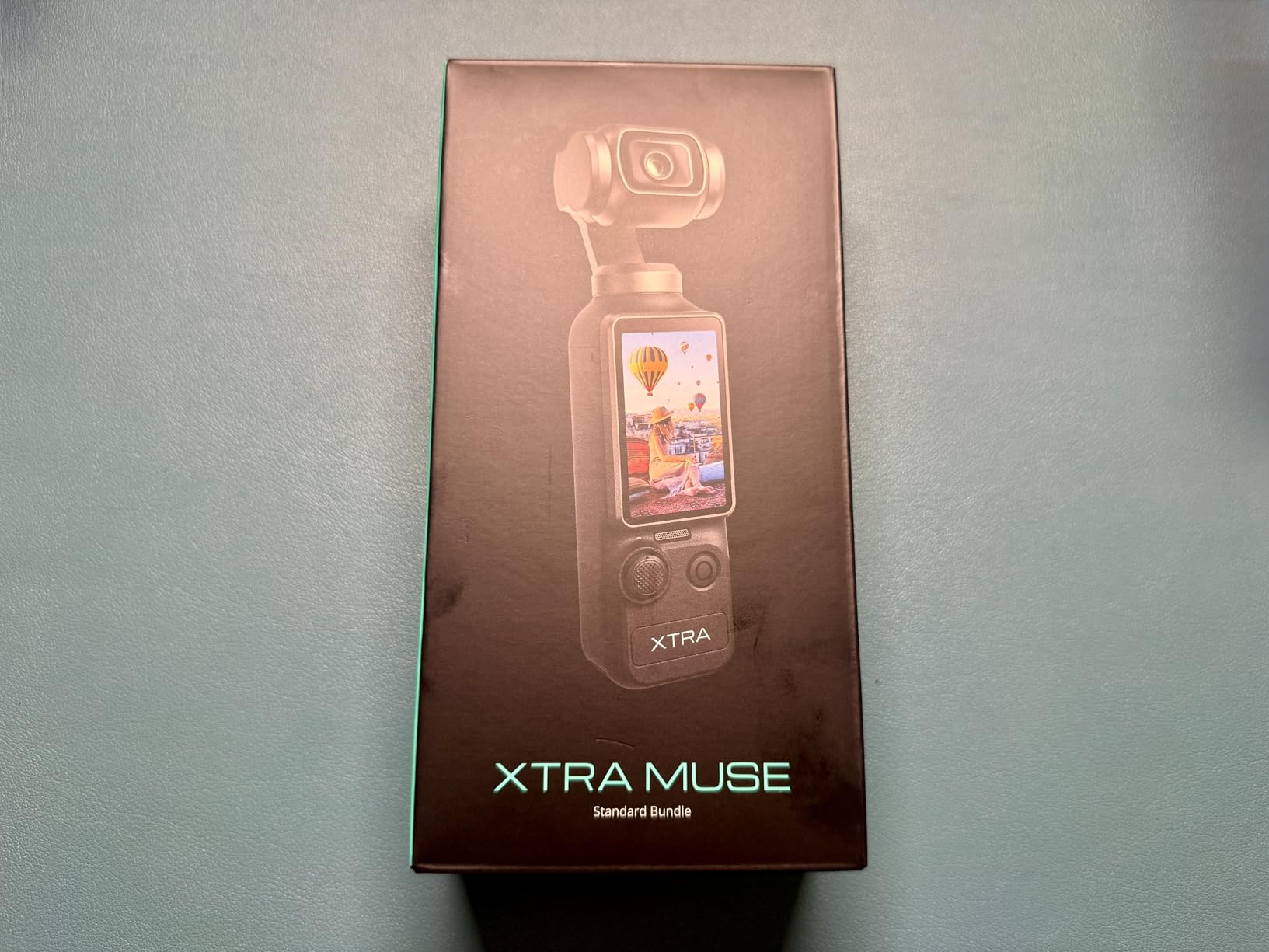
The Xtra Muse represents a new category of pocket cameras that combine larger sensors with built-in gimbal stabilization. While the DJI Pocket series pioneered this form factor, the Xtra Muse offers competitive features at a lower price point. For creators who need cinema-quality stabilization in a truly pocketable device, this camera delivers capabilities that smartphones cannot match.
The 1-inch sensor significantly outperforms phone sensors in image quality. Low-light footage looks cleaner, and dynamic range preserves more detail in challenging lighting. The 4K recording at 120fps enables slow-motion effects that add production value to content. This frame rate exceeds what most cameras in this price range offer.
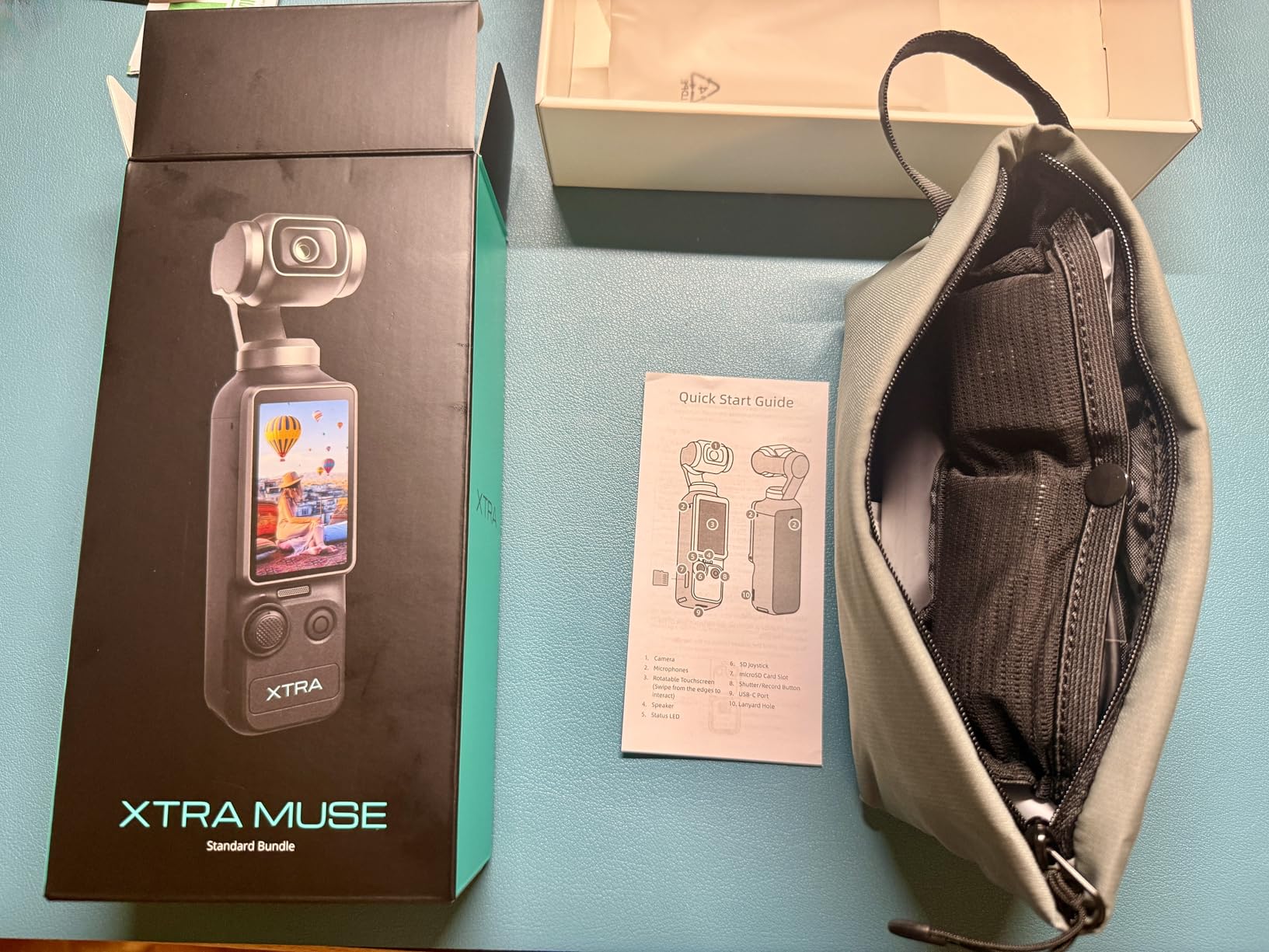
The integrated 3-axis gimbal keeps footage remarkably smooth even while walking or moving. Unlike electronic stabilization, which crops your image and can create artifacts, mechanical gimbal stabilization moves the actual sensor to counteract shake. The result looks more natural and preserves full image quality.
Face and object tracking keeps subjects in focus automatically. Master Follow mode maintains framing on moving subjects, letting you concentrate on performance rather than camera operation. The compact size fits in pockets, making it ideal for travel creators or those who need to shoot discreetly in various locations.
Who Should Choose This Camera
The Xtra Muse suits creators who prioritize portability and stabilization above all else. If you shoot handheld content while walking, travel frequently, or need something that fits in a pocket without sacrificing image quality, this camera fills that niche. It works well for action-oriented content where camera shake would ruin smartphone footage. The beginner-friendly interface makes it accessible for creators new to dedicated cameras.
Limitations to Consider
The battery lasts approximately 161 minutes of recording, requiring power banks or spare batteries for extended shoots. While the 1-inch sensor outperforms phones, it cannot match the quality of APS-C or full-frame cameras. The form factor, while portable, can feel small and fiddly for users with larger hands. The touchscreen is smaller than smartphone displays, making precise framing more challenging.
13. Elgato Facecam 4K – Best for Professional Streamers
Pros
- Exceptional 4K60 image quality with Sony sensor
- DSLR-like control through Camera Hub software
- 49mm lens filter compatibility
- Uncompressed video for professional use
- HDR support
Cons
- No built-in microphone
- No privacy cover included
- Requires good lighting setup
- Manual focus only
The Elgato Facecam 4K targets professional streamers who want DSLR-quality video from a webcam form factor. Unlike general-purpose webcams, Elgato designed this camera specifically for content creators who prioritize image quality above convenience features. The result is a webcam that requires more setup but delivers superior results in controlled environments.
The Sony STARVIS 2 sensor provides the same technology found in high-end security cameras and industrial imaging equipment. It excels in low-light conditions, capturing clean images at illumination levels that overwhelm lesser webcams. The large pixels gather more light, producing footage with less noise and better detail.
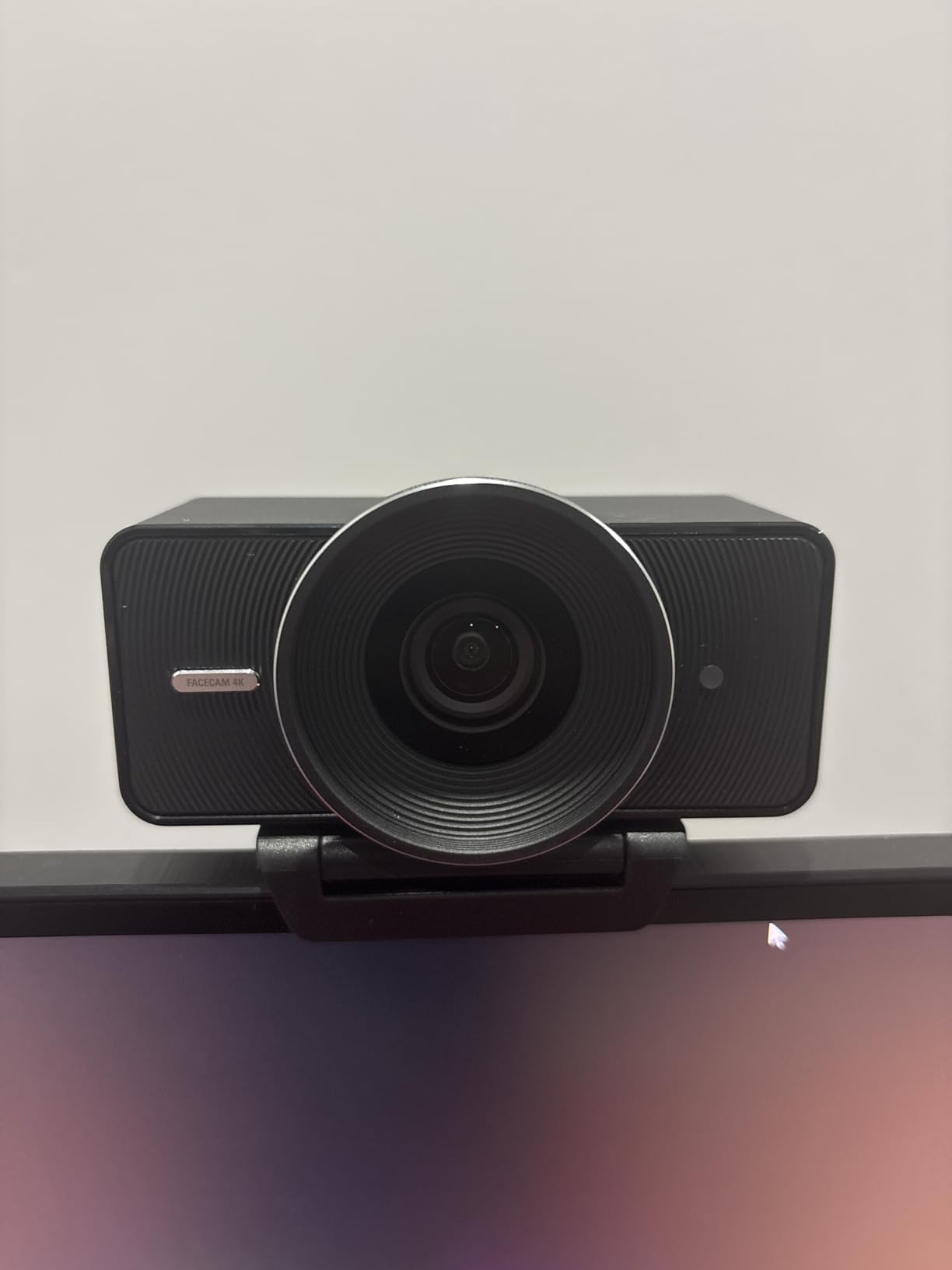
Elgato’s Camera Hub software provides control previously available only on dedicated cameras. You can adjust ISO, shutter speed, white balance, and tint manually rather than relying on automatic processing. This lets you dial in exactly the look you want and maintain consistent image quality across different lighting conditions.
The uncompressed video output preserves maximum quality for streaming and recording. Most webcams compress video heavily, throwing away information to maintain smooth streaming. The Facecam 4K sends uncompressed data, letting your streaming software or recording application handle compression with better quality algorithms.
Who Should Choose This Webcam
The Elgato Facecam 4K suits creators who have dedicated streaming setups with good lighting and want the best possible webcam quality. If you stream regularly from a fixed location and have invested in proper lighting, this camera rewards that investment with superior image quality. It particularly appeals to creators who enjoy dialing in camera settings manually rather than using automatic modes.
Limitations to Consider
The Facecam 4K omits a built-in microphone entirely, requiring separate audio equipment. The manual focus means you must set focus distance yourself rather than relying on autofocus. No privacy cover is included, requiring a separate purchase or creative covering solutions. The F/4.0 aperture requires more light than some competing webcams, making proper lighting essential rather than optional.
OnlyFans Camera Buying Guide
Choosing the right camera tier depends on your current situation, content goals, and budget. Our testing revealed clear patterns in which cameras work best for different creator profiles. This guide breaks down the decision process to help you invest wisely.
Budget Tier: Under $600
New creators or those testing whether OnlyFans fits their goals should start here. The Sony ZV-1F and Xtra Muse deliver professional-quality results without major investment. Many top 1% creators started with phones or budget cameras before upgrading. The key is creating consistent content rather than having the best equipment immediately.
The Logitech Brio 4K also falls into this tier for creators focused on live streaming. Webcams offer simplicity that dedicated cameras cannot match. You eliminate batteries, memory cards, file transfers, and charging from your workflow. For creators who primarily interact live with subscribers, this convenience justifies the lower image quality compared to mirrorless cameras.
Mid-Range Tier: $600-$1,200
Creators earning consistent income and ready to upgrade from smartphones should target this tier. The Canon EOS R50, Sony ZV-E10, and Canon EOS R10 offer the best balance of image quality, features, and future upgrade potential. These cameras produce content that clearly surpasses smartphone quality while remaining portable and user-friendly.
The jump from budget to mid-range cameras is the most significant quality improvement you will experience. You get larger APS-C sensors, interchangeable lenses, better low-light performance, and professional autofocus systems. This tier represents the sweet spot for most working creators.
Professional Tier: $1,200+
Established creators treating content as their primary business should consider these investments. The Canon EOS R6 Mark II, Sony Alpha 7 IV, and Canon EOS R8 deliver full-frame image quality that subscribers notice. Backgrounds blur artistically, low-light footage stays clean, and color quality improves noticeably.
The Canon EOS RP and Sony a7 III offer entry points into full-frame at lower prices than the latest models. While lacking some new features, they deliver the core full-frame benefits that matter most. These suit creators who prioritize image quality over cutting-edge features.
Webcam vs Dedicated Camera
This decision depends entirely on your content type. Webcams excel for live streaming, video calls, and situations where simplicity matters more than maximum quality. You never charge batteries, swap memory cards, or transfer files. The camera just works whenever you need it.
Dedicated cameras produce superior image quality that subscribers notice and appreciate. The larger sensors, better lenses, and professional features create content that stands out from webcam footage. For recorded content that you edit and post, the quality difference justifies the additional workflow steps.
Many successful creators use both. They shoot polished content on dedicated cameras for posts and stories, then use webcams for casual live streams and subscriber interactions. This hybrid approach maximizes quality where it matters while maintaining convenience for daily engagement.
Essential Accessories for Your OnlyFans Setup
A great camera alone does not create professional content. Our research consistently shows that lighting matters as much as or more than camera choice. These accessories complete your setup and solve common problems creators face.
Lighting Equipment
Natural light from windows works beautifully when available, but most creators need artificial lighting for consistent results. A ring light provides even, flattering illumination that reduces shadows on the face. LED panel lights offer more control over direction and intensity. Many creators start with a simple ring light and upgrade to multi-light setups as they grow.
The key is avoiding overhead room lighting that creates harsh shadows under eyes and chins. Position lights at face level or slightly above for the most flattering results. Dimmable lights let you adjust intensity to match your camera’s exposure needs.
Tripods and Mounts
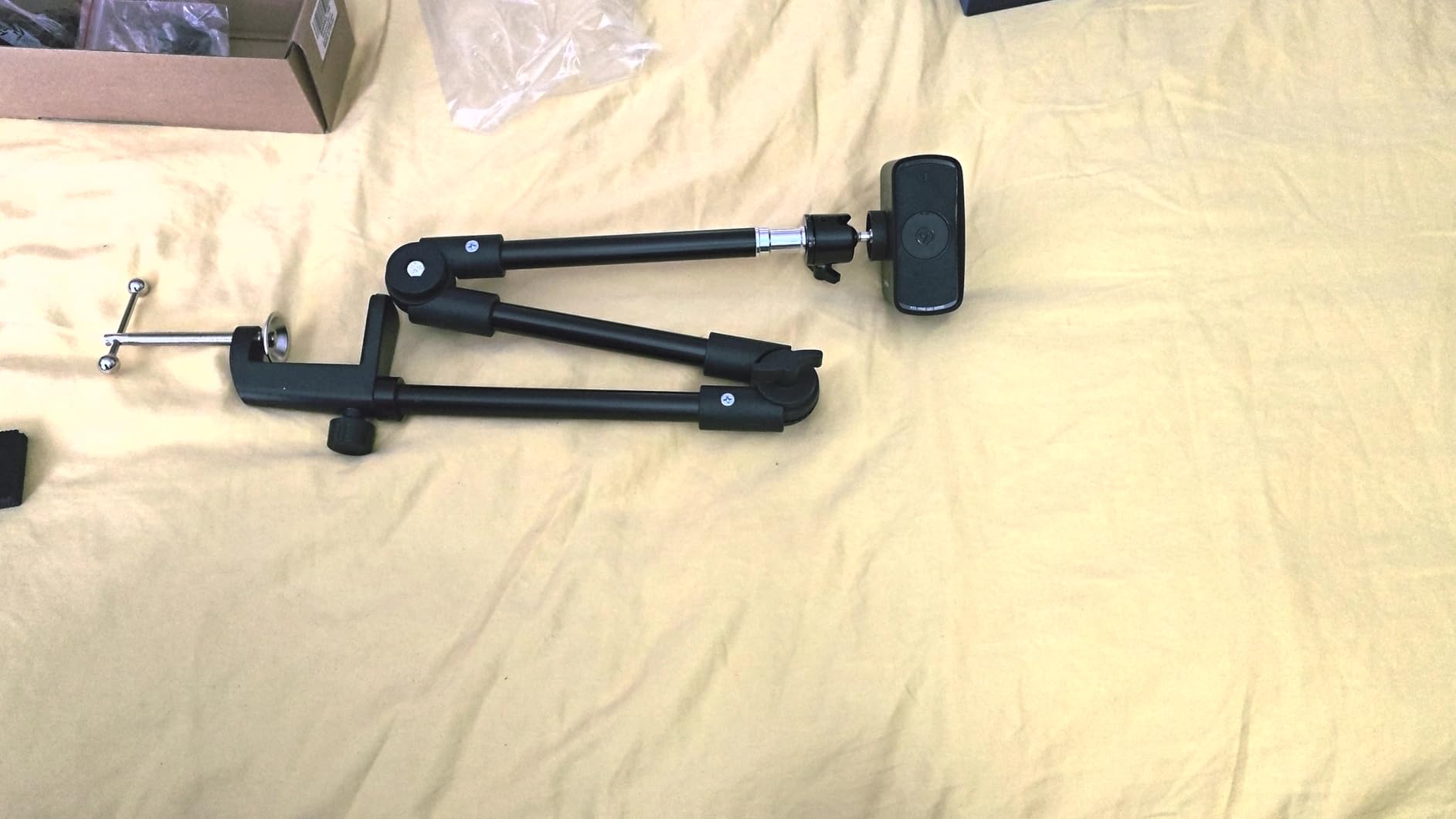
Flexible tripods that wrap around bedposts or furniture solve the framing challenges solo creators face. A good tripod holds your camera steady at any angle you need. Look for options with ball heads that adjust quickly and lock securely.
For handheld shooting, consider a gimbal stabilizer that smooths your movements. The Xtra Muse includes stabilization built-in, but dedicated gimbals work with any camera. They transform walking footage from shaky and amateur to smooth and professional.
Microphones and Audio
Audio quality impacts subscriber experience more than many creators realize. Built-in camera microphones pick up room echo, fan noise, and handling sounds. A dedicated microphone positioned close to your mouth captures cleaner, more intimate audio that feels professional.
USB microphones work well for stationary recording. Lavalier microphones clip to your clothing and move with you for active content. The included microphones with Canon’s Content Creator Kits offer good starting points before upgrading to dedicated audio gear.
Memory Cards and Storage
4K video files grow large quickly. A 64GB card fills in under an hour of recording at high quality settings. Invest in fast cards rated V30 or higher to ensure your camera can write data without dropping frames. Having multiple cards lets you swap during long sessions rather than waiting for file transfers.
For workflow efficiency, consider how you will get files from camera to editing. Wi-Fi transfer works for small batches but becomes slow with 4K files. USB card readers transfer faster than connecting the camera directly. Some creators use automatic backup systems that copy files to cloud storage immediately after shooting.
Frequently Asked Questions
What kind of cameras do OnlyFans creators use?
OnlyFans creators use a range of cameras depending on their budget and content type. Beginners often start with smartphones or budget cameras like the Sony ZV-1F. Growing creators typically upgrade to mirrorless cameras such as the Canon EOS R50 or Sony ZV-E10. Top creators often use full-frame cameras like the Canon EOS R6 Mark II or Sony Alpha 7 IV for professional image quality. Webcams like the Logitech MX Brio are popular for live streaming.
What equipment do I need to start an OnlyFans?
To start an OnlyFans, you need a camera or smartphone, good lighting, and a reliable internet connection. Many successful creators begin with just their phone and natural window light. As you grow, invest in a ring light, a tripod for flexible positioning, and eventually a dedicated camera for better quality. A microphone improves audio significantly. Start simple and reinvest earnings into better equipment over time.
Is a phone enough for OnlyFans content?
Yes, a phone is enough to start an OnlyFans. Modern smartphones like iPhone 13+ and Samsung S23+ shoot 4K video that rivals dedicated cameras in good lighting. Many top 1% creators built their following using only phones. However, dedicated cameras offer better low-light performance, background blur, and autofocus reliability. Many creators use a hybrid approach: dedicated cameras for main content, phones for quick social posts and messaging.
How much should I spend on a camera for OnlyFans?
Budget $350-600 for a quality starter camera like the Sony ZV-1F or Xtra Muse. The $600-1,200 range offers the best value for most creators with options like the Canon EOS R50 or Sony ZV-E10. Professional full-frame cameras cost $1,200-2,000. Many creators start with what they have, then reinvest their first month of earnings into better equipment. Your content consistency matters more than camera price.
Do I need lighting with my camera?
Yes, lighting is essential and often matters more than camera choice. Even the best camera produces poor results in bad light. Start with a ring light for even, flattering illumination. LED panels offer more control. Position lights at face level to avoid harsh shadows. Natural window light works beautifully when available. Many creators find that investing in lighting before upgrading cameras delivers better results for less money.
Final Thoughts
The best cameras for OnlyFans content creators depend entirely on where you are in your journey. The Canon EOS R50 offers the best balance of quality, ease of use, and upgrade potential for most creators entering the mid-range market. The Sony ZV-1F delivers professional video quality at an accessible price point for budget-conscious creators. The Canon EOS R6 Mark II represents the pinnacle of hybrid photo-video performance for serious content professionals.
Remember that equipment supports your content, but consistency and authenticity build your subscriber base. Many top creators started with nothing more than a smartphone and natural light. Start with what you can afford, focus on creating regularly, and reinvest your earnings into better gear as you grow. The cameras in this guide will serve you well at every stage of that journey in 2026 and beyond.
Choose the camera that fits your current budget and skill level, then focus on what matters most: creating content that connects with your audience and keeps them coming back for more.