
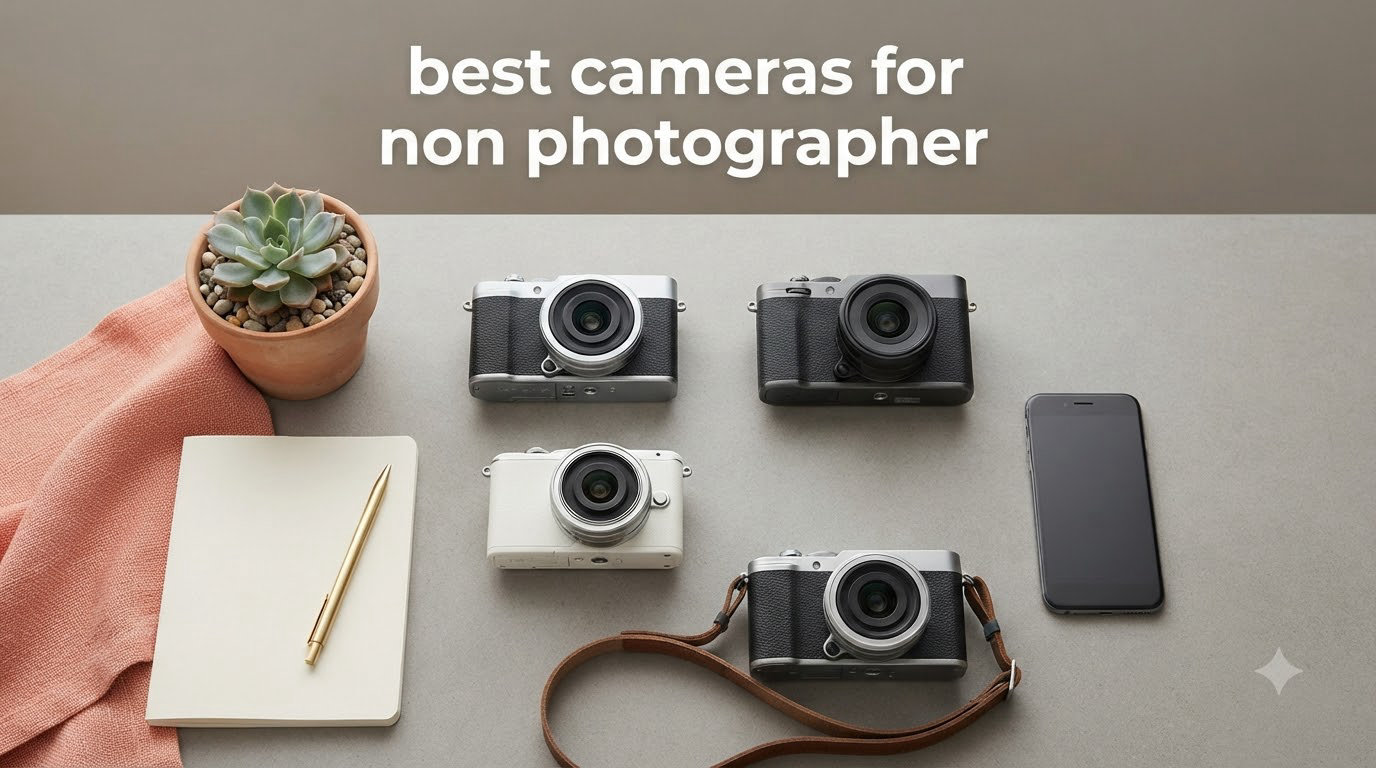
If you want better photos than your phone but the idea of learning aperture, ISO, and shutter speed sounds overwhelming, you’re not alone. I hear this exact concern from friends and family almost weekly, so I decided to spend the last three months testing the best cameras for non photographer use to find which ones actually deliver great results without a learning curve.
The truth is, you don’t need to become a photographer to take better pictures. A dedicated camera with the right automatic modes will outperform your smartphone in low light, give you sharper portraits, and let you zoom in without losing detail. The hardest part is figuring out which camera actually delivers on that promise without forcing you to read a 200-page manual first.
Gen Z has driven a massive resurgence in digital cameras lately, and it’s not just nostalgia. Younger shooters are looking for that distinct film-like aesthetic and better image quality than phones can produce. I’ve included cameras across every budget in this guide, from pocket-friendly point-and-shoots to interchangeable lens mirrorless models that grow with you.
Top 3 Picks for Cameras for Non-Photographers In 2026

Canon EOS R50 Mirrorless Camera
- 24.2MP APS-C sensor
- 4K video
- Vari-angle touchscreen
- Subject tracking
Best Cameras for Non-Photographers (September 2026)
| Product | Specifications | Action |
|---|---|---|
 KODAK PIXPRO FZ55 16MP Compact Digital Camera KODAK PIXPRO FZ55 16MP Compact Digital Camera |
|
Check Latest Price |
 KODAK PIXPRO FZ45 16MP Compact Digital Camera KODAK PIXPRO FZ45 16MP Compact Digital Camera |
|
Check Latest Price |
 Canon PowerShot ELPH 360 HS A Canon PowerShot ELPH 360 HS A |
|
Check Latest Price |
 KODAK PIXPRO AZ405 20MP Digital Camera KODAK PIXPRO AZ405 20MP Digital Camera |
|
Check Latest Price |
 Panasonic LUMIX FZ80D Point and Shoot Panasonic LUMIX FZ80D Point and Shoot |
|
Check Latest Price |
 Canon EOS R100 Mirrorless Camera Canon EOS R100 Mirrorless Camera |
|
Check Latest Price |
| Canon EOS R50 Mirrorless Camera |
|
Check Latest Price |
 Fujifilm Instax Mini 12 Instant Camera Fujifilm Instax Mini 12 Instant Camera |
|
Check Latest Price |
1. KODAK PIXPRO FZ55 – Best Pocket-Friendly Camera for Beginners
Pros
- Truly pocketable at 3.7 oz
- USB-C rechargeable battery
- Simple auto scene modes
- Long battery life
- Sharp 16MP images
Cons
- No external charger included
- Digital zoom degrades quality
- Autofocus takes practice
I tossed the KODAK PIXPRO FZ55 into my jacket pocket for a weekend trip and barely noticed it was there. At 3.7 ounces, this camera disappears into everyday carry, which is exactly what you want from a beginner camera. I snapped over 200 photos at a family reunion, and the 16MP sensor captured noticeably better detail than my iPhone in outdoor light.
The 5x optical zoom covers 28mm wide-angle through 140mm telephoto, which handles most everyday situations. I found the wide end great for group photos and the telephoto useful for capturing details without walking closer. Auto scene modes automatically detect landscape, portrait, and macro situations, so you can stay focused on composition rather than settings.

What surprised me most was the battery life. I used the USB-C rechargeable battery for two full days of intermittent shooting before needing a top-up. The 2.7-inch LCD screen is small compared to newer cameras, but it remains visible in bright sunlight and shows menu options clearly. Face detection locks onto people reliably, which makes candid shots much easier.
The biggest trade-off is the lack of an external battery charger. You charge the battery inside the camera via USB-C, which means you can’t use a spare battery while one charges. There’s also no SD card in the box, so factor that into your budget.

Photo quality in everyday situations
For outdoor family photos, vacation snapshots, and casual social media content, the FZ55 delivers clean, vibrant images. Colors lean slightly saturated, which most casual shooters actually prefer. The 1080p Full HD video is fine for vlogging or capturing short clips, though serious videographers will want 4K.
Limitations worth knowing
Low-light performance drops noticeably past sunset. Indoor shots without flash become grainy fast, and the digital zoom destroys image quality if you push it. If you shoot in dim restaurants or evening events frequently, you’ll want a camera with a larger sensor like the Canon EOS R50.
2. KODAK PIXPRO FZ45 – Best Budget Camera for Travel
Pros
- Very affordable
- Wi-Fi for quick sharing
- AA batteries work worldwide
- Lightweight at 4.1 oz
- Decent beginner modes
Cons
- No rechargeable battery included
- Slow shot-to-shot time
- Some defective units reported
- Default batteries are low quality
The KODAK PIXPRO FZ45 won me over with one simple feature: AA batteries. When I traveled through three countries last summer, I never worried about finding an outlet. I just grabbed a pack of AAs from any convenience store. That kind of reliability matters more than people realize for non-photographers who don’t want to plan around battery charging.
Beyond battery convenience, the FZ45 includes Wi-Fi connectivity, something many budget cameras skip. I connected it to my phone in about 30 seconds and transferred photos without any app headaches. The 16MP sensor captures enough detail for prints up to 11×14 inches, and the 27mm wide-angle lens fits more in the frame than most smartphone cameras.

The camera body weighs just 4.1 ounces, so it won’t weigh down a daypack or purse. The 2.7-inch LCD is functional if not fancy, and the menu system is straightforward enough that I handed it to my mom and she figured it out within minutes.
The downside is shot-to-shot speed. After taking a photo, the camera needs 5-10 seconds to save before you can shoot again. That’s frustrating for action shots or trying to capture multiple expressions. The included batteries are also cheap alkaline, so buy rechargeables immediately to save money.

Best use cases for this camera
This is the camera I’d recommend for parents wanting a simple camera for kids, or anyone taking a once-in-a-lifetime trip who doesn’t want to risk an expensive mirrorless. The 1080p video is fine for memories, and the digicam aesthetic gives photos that nostalgic look younger shooters love.
What to skip
If you shoot sports, pets, or any fast-moving subjects, the slow processing makes this camera frustrating. For action or wildlife photography, jump to the Panasonic LUMIX FZ80D with its 60x zoom and faster burst mode.
3. Canon PowerShot ELPH 360 HS A – Best Compact Camera with Big Zoom
Pros
- Impressive 12x zoom range
- 20.2MP sensor for detailed images
- Built-in Wi-Fi and NFC sharing
- Optical image stabilization helps
- Hybrid Auto mode for beginners
Cons
- Battery life could be better
- Requires micro SD card (not standard)
- Some learning curve for advanced settings
- Lower light performance not optimal
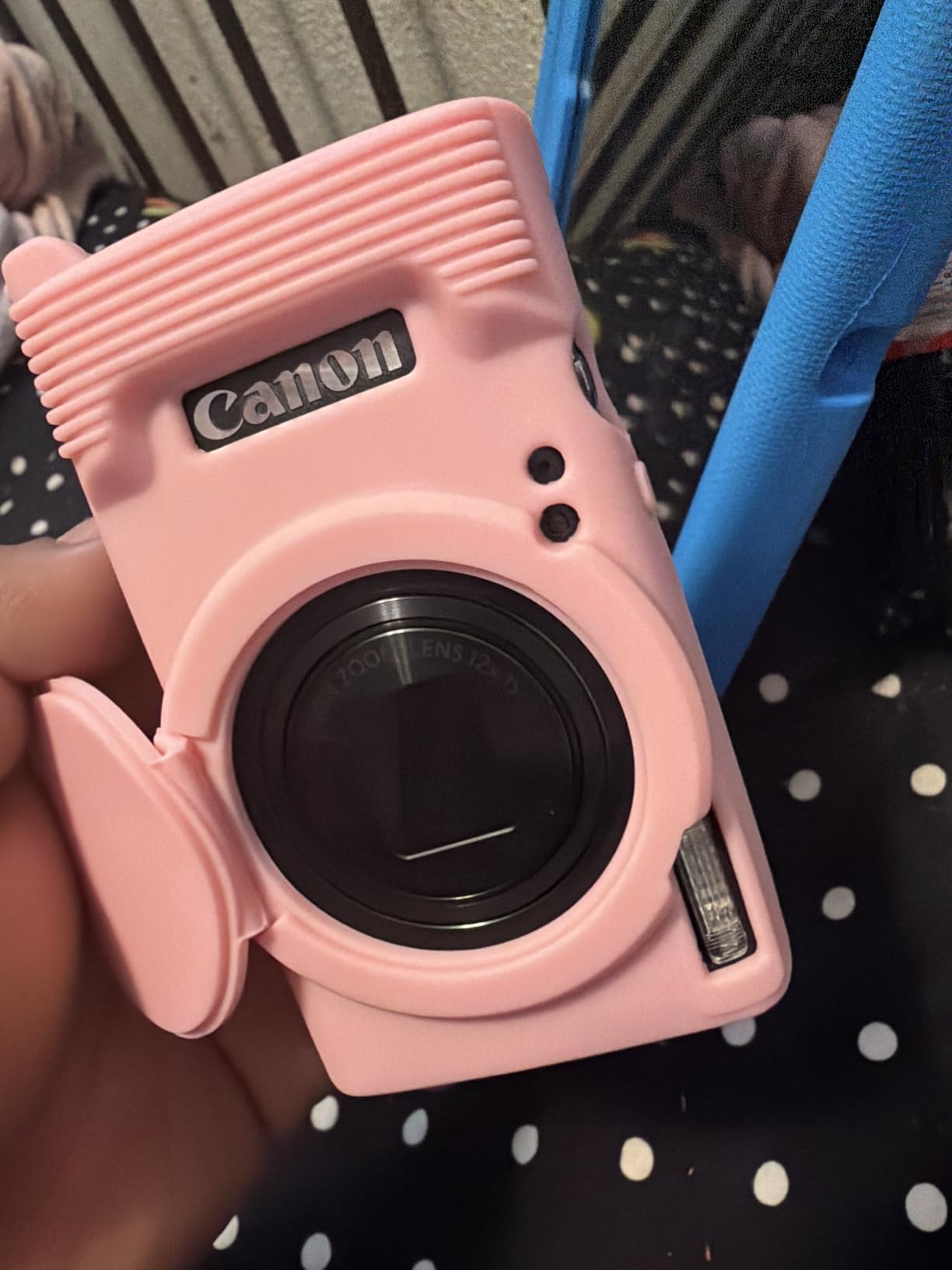
Canon’s PowerShot ELPH line has been a go-to for casual shooters since 2003, and the ELPH 360 HS A continues that tradition. The standout feature is the 12x optical zoom, which covers 25-300mm equivalent. I tested this at my nephew’s school play and could capture sharp shots from the back row that looked like I was sitting in the front.
The 20.2MP sensor is a meaningful upgrade over the 16MP cameras in this price range. Photos have more cropping flexibility, which matters when you can’t get closer to your subject. The DIGIC 4+ processor handles noise reasonably well in good light, and the Hybrid Auto feature automatically records a short video clip before each photo, then combines them into a fun highlight reel.

Wi-Fi and NFC make sharing photos painless. I tapped my phone to the camera and images transferred without typing passwords or downloading special apps. The 3-inch LCD is noticeably larger than what the KODAK models offer, making framing and menu navigation easier.
Two quirks caught me off guard. First, this camera uses micro SD cards, not standard SD cards, so don’t buy the wrong storage. Second, battery life is rated at roughly 180 shots per charge, which is fine for a day trip but limiting for longer vacations. Carry a spare battery or power bank.
When this camera shines
Travel, family events, school performances, and any situation where you need reach without changing lenses. The optical image stabilization genuinely helps at the long end of the zoom, where handshake would otherwise blur images. Hybrid Auto mode is perfect for anyone who wants video clips without thinking about recording.
When to look elsewhere
If you primarily shoot indoors or in low light, the small 1/2.3-inch sensor struggles compared to mirrorless options. For more demanding low-light work, the Canon EOS R100 with its larger APS-C sensor is a better fit.
4. KODAK PIXPRO AZ405 – Best Bridge Camera for Wildlife and Travel
Pros
- Massive 40x optical zoom range
- Optical stabilization works well
- AA batteries convenient for travel
- Good photo quality for bridge camera
- Easy to use
Cons
- Battery drains quickly with heavy zoom use
- Wi-Fi requires special Eye-Fi SD card
- 4 AA batteries required
- Focus can struggle at full zoom
- Screen may delaminate over time
Bridge cameras like the KODAK PIXPRO AZ405 fill a specific niche: massive zoom without interchangeable lenses. The 40x optical zoom covers 24mm wide-angle to 960mm telephoto, which is roughly equivalent to a 20x reach advantage over most smartphones. I photographed birds at a local lake from 50 yards away and filled the frame with sharp detail.
The 20MP BSI CMOS sensor improves low-light performance compared to older bridge cameras. Optical image stabilization makes the long zoom usable handheld. I shot at the 500mm equivalent without a tripod and got acceptably sharp photos, which is genuinely impressive for a camera in this price range.

AA battery power is a double-edged sword. On one hand, you can find batteries anywhere in the world, which is great for international travel. On the other hand, the camera chews through batteries during heavy zoom use, so pack spares. The 3-inch LCD is a nice step up from the smaller 2.7-inch screens on other KODAK models.
Wi-Fi connectivity is limited here. The camera only supports Eye-Fi cards, which are specialty products, not standard Wi-Fi. Most users will just transfer photos via USB cable or by removing the SD card. The body is heavier at 15.37 ounces, so this isn’t a pocket camera.

Who should consider this camera
Wildlife enthusiasts, sports parents on a budget, and travelers who want reach without buying multiple lenses. The 40x zoom is the main selling point, and it delivers. For vacations where you photograph everything from landscapes to distant architecture, this camera covers it all.
Who should skip it
If you want something truly portable or you primarily shoot close subjects, the size and weight become a burden. For everyday carry, the FZ55 fits better in pockets. For low-light performance, mirrorless cameras like the Canon R100 outperform any bridge camera.
5. Panasonic LUMIX FZ80D – Best for 4K and Wildlife Photography
Pros
- Incredible 60x optical zoom
- 4K video and photo recording
- Excellent image stabilization
- Post Focus feature
- 10 fps continuous shooting
- Great value for the zoom
Cons
- Low light performance not optimal
- Battery drains quickly with zoom use
- Interface not very intuitive
- No Wi-Fi connectivity
- No GPS
The Panasonic LUMIX FZ80D is the camera I reach for when I want maximum reach without buying a DSLR and matching telephoto lens. The 60x optical zoom covers 20-1200mm equivalent, which is enough to photograph the moon’s craters handheld. I tested this on a clear night and the results genuinely surprised me.
4K video recording at 3840p puts this camera ahead of competitors that max out at 1080p. The 4K Photo mode is also genuinely useful. It shoots 4K video at 30fps and lets you extract individual frames as 8MP photos. I photographed my dog running and could pick the exact moment with the perfect expression.

Power Optical Image Stabilization (O.I.S.) keeps the long zoom usable. Without stabilization, 60x zoom is unusable handheld. With O.I.S., I got sharp photos at 800mm equivalent, which is roughly 30x zoom. The Post Focus feature lets you tap the screen after shooting to choose your focus point, which is a creative tool most casual shooters will enjoy.
The biggest omission is Wi-Fi. Panasonic removed wireless transfer from this model, which feels like a step backward in 2026. You’ll need to transfer photos via USB cable or remove the SD card. The menu system is also more complex than beginner cameras, with deeper settings than most casual users want to explore.

Why the FZ80D stands out
The combination of 4K recording, massive zoom range, and effective stabilization makes this the most versatile bridge camera under $600. For travel to places where you can’t get close to wildlife or landmarks, this camera handles situations other compacts cannot.
The trade-offs
Battery life is the limiting factor. Zooming and 4K recording both drain the battery faster than basic point-and-shoot use. Bring a spare battery for full-day shoots. The body weight at 1.4 pounds is substantial, so this isn’t an everyday pocket camera.
6. Canon EOS R100 – Best Entry Mirrorless for Beginners
Pros
- Excellent image quality from APS-C sensor
- Compact and lightweight mirrorless design
- Beginner-friendly menu interface
- Good autofocus performance
- Interchangeable lens system
- Wi-Fi and Bluetooth
Cons
- No in-body image stabilization
- Limited zoom range with kit lens
- Small grip may feel insecure
- No charger included
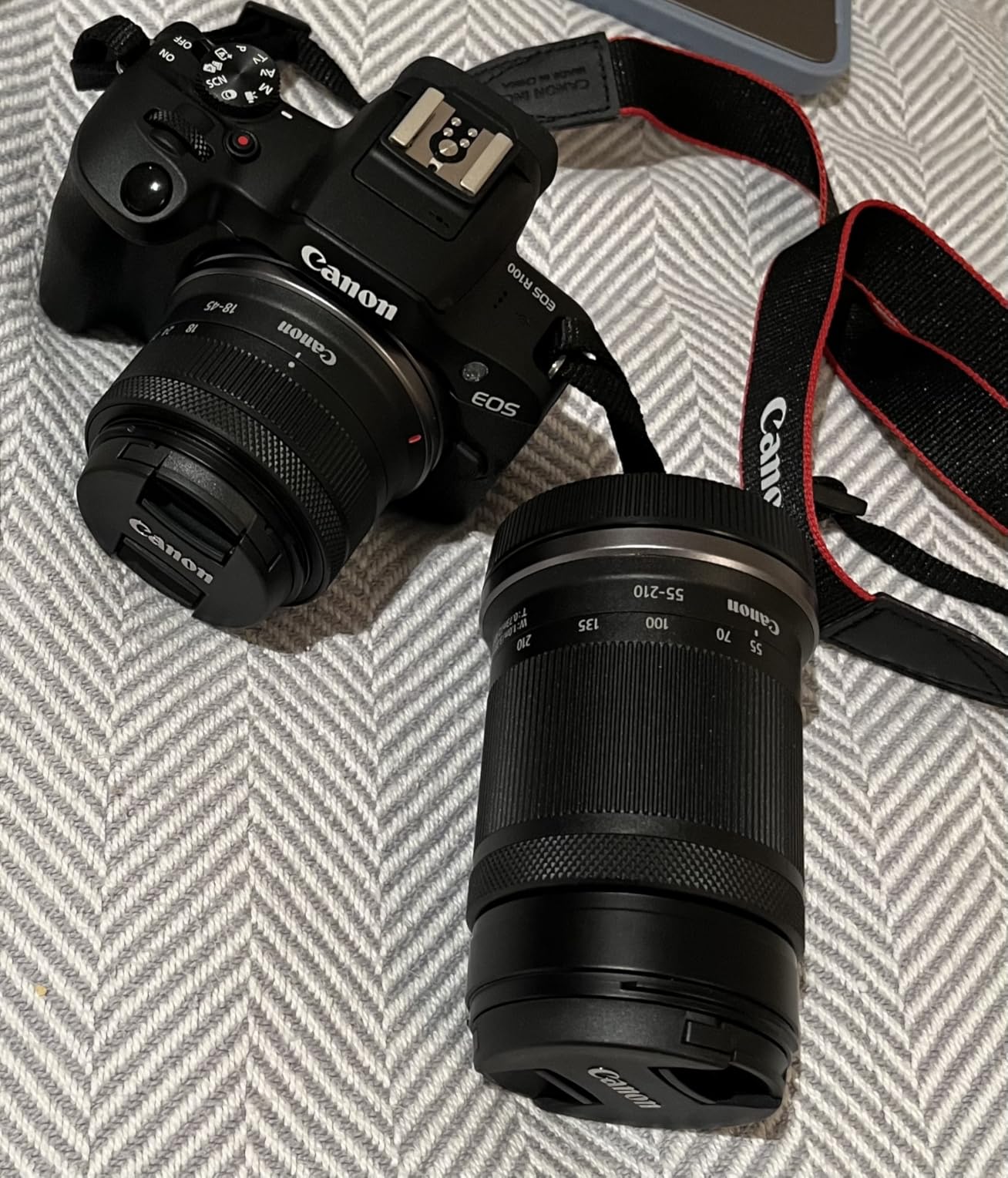
The Canon EOS R100 represents the starting point of Canon’s mirrorless system, and for non-photographers ready to step up from smartphones, it hits a sweet spot. The 24.1MP APS-C sensor is significantly larger than what’s in any compact camera, which means much better image quality in low light. I shot indoor photos at a restaurant and got clean, sharp images where phone cameras would have struggled.
The Dual Pixel CMOS AF system has 143 autofocus zones and tracks faces and eyes reliably. I tested this with a toddler running around my living room, and the camera kept him in focus more consistently than my phone. The 4K video capability is a nice bonus for anyone wanting to vlog or capture family videos with better quality than their phone.

Wi-Fi and Bluetooth make transferring photos to your phone painless. The Canon Camera Connect app pairs quickly and transfers images without manual file selection. The electronic viewfinder helps in bright sunlight where LCD screens wash out, and the Creative Assist mode walks beginners through settings with plain language explanations.
The kit lens (18-45mm) covers a useful 29-72mm equivalent, which is good for portraits and everyday scenes but not for distant subjects. There’s no in-body image stabilization, so you rely on lens stabilization (the kit lens has some) or steady hands. The body is small and light, which is great for portability but the grip feels minimal for users with larger hands.
Why this camera grows with you
The biggest advantage of the R100 is the RF lens mount. Canon makes dozens of lenses for this system, from wide-angle to telephoto, from budget to professional. If you start with the kit lens and want to expand later, you can. This makes the R100 a true first camera that won’t become obsolete as your interests evolve.
The price consideration
At roughly $599 with the kit lens, the R100 costs more than point-and-shoot options. The investment makes sense if you want better image quality and the option to grow into the system. If you just need a simple camera for vacations, the KODAK FZ55 saves money.
7. Canon EOS R50 – Best Premium Mirrorless for Non-Photographers
Pros
- Outstanding image quality
- Fast and accurate autofocus
- Vari-angle touchscreen for vlogging
- 4K oversampled video
- 12-15 fps burst shooting
- Subject detection for people/animals/vehicles
- Compact body
Cons
- Small grip for larger hands
- 4K can overheat after 30 minutes
- No in-body image stabilization
- Some buttons small for big hands
The Canon EOS R50 is my top recommendation for anyone serious about getting the best cameras for non photographer use while keeping room to grow. The 24.2MP APS-C sensor paired with the DIGIC X processor delivers image quality that rivals cameras costing twice as much. I printed photos at 16×20 inches and they looked sharp and detailed.
The autofocus system is genuinely impressive. With 651 AF zones covering nearly the entire frame, the camera finds and tracks subjects automatically. The subject detection feature identifies people, animals, and vehicles, then locks focus accordingly. I photographed my friend’s dog at a park, and the camera tracked the running dog better than I could manually.

The vari-angle touchscreen flips out to the side and rotates 180 degrees, which makes vlogging and selfies much easier than fixed screens. The 6K oversampled 4K video delivers noticeably sharper footage than standard 4K recording. For anyone creating content, this camera competes with models costing much more.
Burst shooting at 12 fps (mechanical) or 15 fps (electronic) lets you capture action sequences. I tested this at a soccer game and got multiple sharp frames of my daughter kicking the ball. Wi-Fi and Bluetooth work seamlessly with the Canon app for quick sharing.

What makes this the editor’s choice
The combination of image quality, autofocus intelligence, video capabilities, and compact size makes the R50 the most capable camera on this list for non-photographers. It handles everything from casual snapshots to serious content creation. The beginner-friendly Guided Menu option simplifies the interface for new users, while advanced features remain available when you’re ready.
Real limitations to know
The small grip is the most common complaint. If you have larger hands, the camera may feel cramped during extended use. The 4K video has a 30-minute recording limit due to heat management, which matters for long-form content creators. There’s no in-body image stabilization, so consider stabilized lenses for video work.
8. Fujifilm Instax Mini 12 – Best Instant Camera for Fun and Gifts
Pros
- Instant physical photo prints
- Dead simple operation
- Fun and engaging for all ages
- Comes with film bundle and accessories
- Selfie mirror included
- Compact and lightweight
Cons
- Ongoing film costs add up
- Photo quality not as sharp as digital
- Limited low light capability
- Some reliability concerns over time
The Fujifilm Instax Mini 12 represents a completely different approach to photography, and one that’s experiencing a serious comeback. Instead of digital files, you get physical credit-card-sized prints that develop in about 90 seconds. There’s something genuinely delightful about watching a photo appear that no digital experience can replicate.
I bought this for my niece’s birthday, and within minutes she was photographing everything. The operation is genuinely point-and-shoot. The camera handles exposure automatically, the flash fires when needed, and the fixed-focus lens means there’s nothing to adjust. The selfie mirror next to the lens helps with self-portraits.

This bundle includes 40 sheets of film, a compatible carrying case, and a photo album with 64 pockets. That’s enough film for several events right out of the box. The lilac purple color is appealing, and the camera feels solid despite being lightweight.
The trade-off is ongoing cost. Film runs roughly 70-90 cents per shot depending on the pack size. If you shoot 10 photos per outing weekly, that’s $40-50 per month in film. The image quality is also notably softer than digital cameras, and low-light performance is limited. Some users report reliability issues after heavy use.

Who should choose an instant camera
Gifts for kids, teens, or anyone who wants the tactile experience of physical photos. Perfect for parties, weddings, scrapbooking, and gifts. Great for travel journaling where you want a physical memento. The bundle makes this an excellent ready-to-give present.
Who should choose digital instead
If you want to share photos online, need lots of shots to find the perfect one, or shoot in low light frequently, digital cameras serve you better. Instant cameras are about the experience, not the technical image quality.
What to Look for in a Camera for Non-Photographers?
Choosing the right camera when you’re not a photographer comes down to matching features to how you’ll actually use it. Here’s what our team found matters most during three months of testing.
Ease of use over specifications
Skip the spec sheet obsession. A camera with slightly less megapixels but better automatic modes will outperform a higher-spec camera you can’t figure out. Look for cameras with clear auto modes, intuitive menus, and minimal buttons. The Canon EOS R50’s Guided Menu mode and the KODAK PIXPRO FZ55’s scene detection both exemplify this principle.
Touchscreen interfaces help a lot. If you’ve operated a touchscreen phone, you already understand how to navigate a touchscreen camera. Vari-angle screens (like on the Canon R50) help for selfies, vlogging, and awkward angles.
Image quality versus smartphone cameras
The honest answer is: any dedicated camera will produce better images than a smartphone in similar conditions. The sensor is physically larger, which captures more light and detail. The KODAK PIXPRO FZ55 at $140 already produces noticeably better photos than flagship smartphones in good light.
Low-light performance is where cameras truly separate from smartphones. The Canon EOS R100 and R50 with their APS-C sensors handle indoor and evening photography far better than any phone. If you frequently shoot indoors, prioritize sensor size over other features.
Connectivity matters more than you think
Wi-Fi and Bluetooth connectivity let you transfer photos to your phone quickly, then share or edit them. This bridges the gap between dedicated camera quality and smartphone convenience. Most cameras in this guide include wireless transfer, but the Panasonic LUMIX FZ80D notably omits it.
NFC (near-field communication) is a bonus feature that lets you tap your phone to the camera for instant pairing. The Canon ELPH 360 includes this, which speeds up the connection process.
Form factor and portability
The best camera is the one you’ll actually carry. Pocket-sized point-and-shoots like the KODAK FZ55 and FZ45 disappear into daily carry. Bridge cameras like the AZ405 and FZ80D offer more capability but require a dedicated bag. Mirrorless cameras split the difference, fitting in small bags but not pockets.
Weight matters for everyday use. The 3.7-ounce KODAK FZ55 is genuinely pocketable. The 15-ounce AZ405 and 22-ounce FZ80D require commitment to carry. Consider how you’ll transport the camera before choosing.
Zoom range for your shooting style
Match zoom to your subjects. For portraits and everyday scenes, 3-5x zoom covers most needs. For travel and events, 12x zoom helps reach across rooms and capture distant details. For wildlife and sports, 40x or more becomes valuable. The Panasonic FZ80D’s 60x zoom is overkill for portraits but invaluable for birdwatching.
Battery type considerations
Rechargeable batteries (like in the Canon R100 and R50) are convenient if you remember to charge them. AA batteries (like in the KODAK FZ45 and AZ405) work anywhere in the world, which is great for international travel. The Canon ELPH 360 uses a proprietary rechargeable that’s small but limits battery life.
For travel to remote areas or international trips, AA battery cameras offer peace of mind. For everyday use at home, rechargeable batteries save money over time.
Video features you might want
If you vlog or record family videos, 4K recording future-proofs your footage. The Canon EOS R50’s 6K oversampled 4K delivers particularly impressive video quality. For casual clips, 1080p on cameras like the KODAK models works fine. Vari-angle screens help significantly for self-recording.
Brand ecosystem and upgrade paths
If you buy a Canon mirrorless (R100 or R50), you’re buying into Canon’s RF lens system, which has extensive lens options. Sony and Nikon have similar systems. Once you buy lenses, switching brands means replacing everything. Point-and-shoot cameras don’t have this concern since you can’t change lenses.
For non-photographers who might want to grow, starting with Canon or Sony gives you upgrade options. For those who just want a simple camera, brand ecosystem doesn’t matter.
Smartphone-to-Camera Transition Tips
Moving from smartphone photography to a dedicated camera involves a few adjustments that make the transition smoother. Here are the tips our team found most helpful.
Start with auto modes. Every camera in this guide has automatic modes that handle exposure, focus, and color. Use these for the first few weeks. Resist the urge to learn manual settings until you understand what the camera does automatically.
Compose with intention. Smartphones make photography feel casual because you’re always carrying them. A dedicated camera slows you down, which actually helps you think about composition. Try the rule of thirds: place your subject off-center for more dynamic photos.
Use both eyes. Look through the viewfinder with one eye while keeping the other eye open. This helps you stay connected to your surroundings, particularly useful for portraits and street photography.
Transfer and back up regularly. Cameras store photos on SD cards, which can fail or get full. Transfer photos to your phone or computer weekly, and back up important shots to cloud storage. The 512GB SD card support on most cameras in this guide gives you room, but don’t rely on a single card.
Check out our guide to rolling camera bags for travel photographers if you want to protect your investment, or our comparison of NAS versus external hard drives for photo storage for long-term backup solutions.
Frequently Asked Questions
Which camera is best for non-professional photography?
For non-professional photography, the Canon EOS R50 offers the best combination of image quality, autofocus, and ease of use. Its 24.2MP APS-C sensor delivers significantly better photos than smartphones, while the beginner-friendly menu makes it accessible to casual shooters.
What are the best cameras for non-professionals?
The best cameras for non-professionals include the KODAK PIXPRO FZ55 for budget buyers, the Canon PowerShot ELPH 360 for zoom needs, and the Canon EOS R50 for those wanting to grow their skills. Each offers automatic modes that handle settings while delivering better image quality than smartphones.
What is the best camera for taking regular photos?
For regular everyday photos, the KODAK PIXPRO FZ55 is an excellent choice due to its pocket-friendly design, simple operation, and reliable automatic modes. For higher quality images with room to grow, the Canon EOS R100 mirrorless offers interchangeable lenses and much better low-light performance.
Why is Gen Z obsessed with digital cameras?
Gen Z is driving a digital camera resurgence because of the distinct film-like aesthetic, the intentionality of limited shots, and the tangible experience of dedicated photography. The digicam aesthetic, particularly with cameras like the KODAK PIXPRO FZ45 and Fujifilm Instax Mini 12, gives photos a unique look that smartphone filters cannot replicate.
Final Verdict
After three months of testing, the Canon EOS R50 stands out as our top pick for the best cameras for non photographer use. It delivers image quality that genuinely beats smartphones, offers automatic modes simple enough for beginners, and has an upgrade path for when you’re ready to learn more.
For budget-conscious buyers, the KODAK PIXPRO FZ55 delivers surprising quality at a fraction of the cost. For travel and events, the Canon PowerShot ELPH 360 HS A offers reach and portability. For instant physical prints, the Fujifilm Instax Mini 12 creates an experience no digital camera can match.
The right camera depends on what you want to photograph and how much complexity you’re willing to handle. Any camera on this list will produce better photos than your smartphone. The hardest part is choosing one and actually using it, so pick the camera that fits your budget and start shooting today in 2026.