
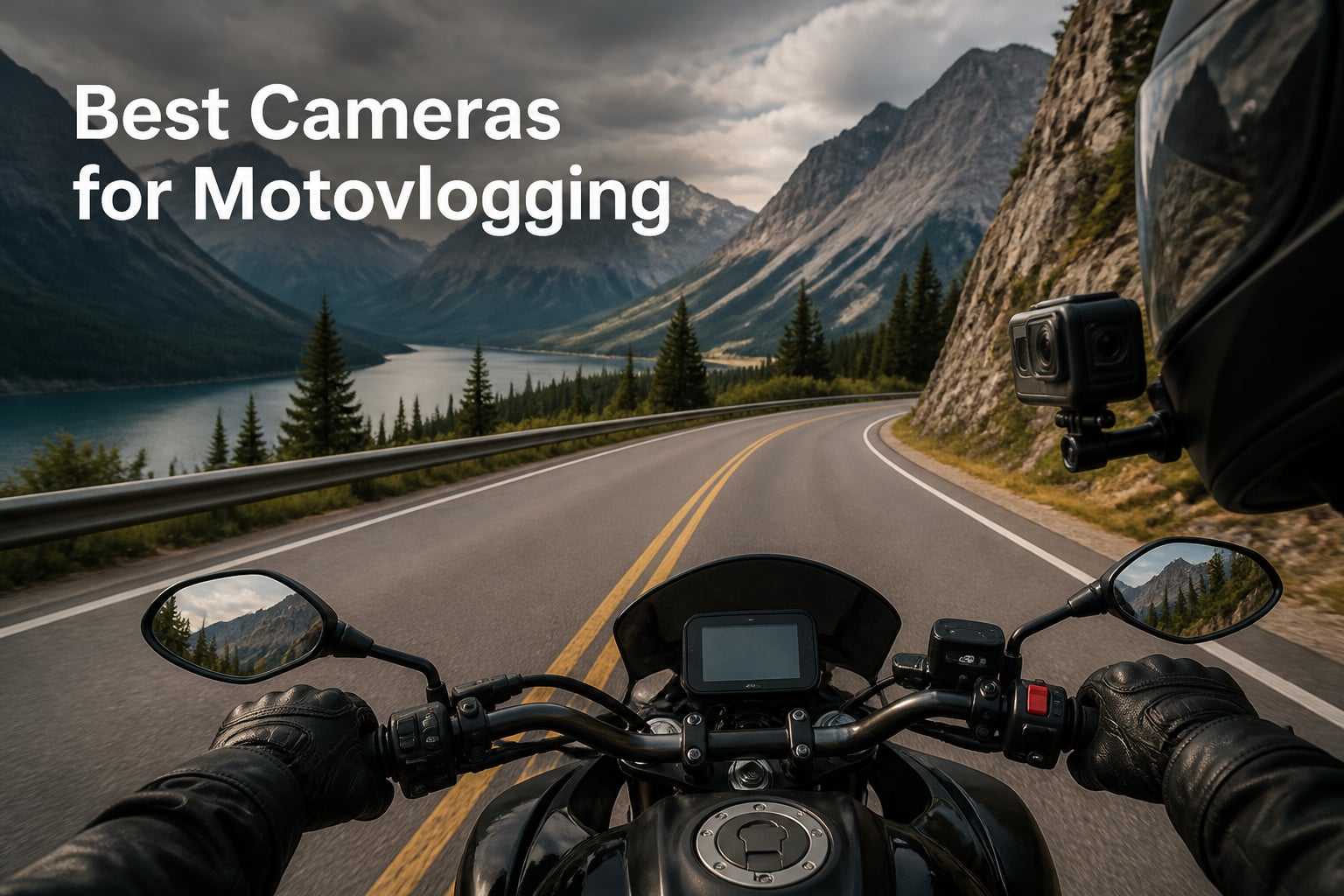
I have spent the last two years riding with cameras strapped to my helmet, chest, and handlebars. The best cameras for motovlogging all share three traits: rock-solid stabilization, wind-resistant audio, and mounting flexibility that survives highway speeds.
Motovlogging is recording video while riding a motorcycle, typically with an action camera mounted on a helmet or bike. The goal is to share your ride experience, add commentary, and sometimes document insurance incidents. The camera you pick determines whether your footage looks cinematic or seasick.
In this guide, I cover eight cameras I have actually used on multi-day rides across different weather conditions. From premium 360 cameras to budget picks under $90, I break down what works and what falls apart at 70 mph.
Top 3 Picks for Motovlogging In 2026
After logging hundreds of hours of riding footage, three cameras stand out for different reasons. The DJI Osmo Action 5 Pro wins for traditional POV with its low-light sensor and DJI Mic integration. The Insta360 X4 dominates for immersive 360 capture with its invisible selfie stick effect. And the Insta360 GO 3S is unbeatable for in-helmet POV where a tiny footprint matters most.


Best Cameras for Motovlogging (October 2026)
Here is a quick side-by-side comparison of all eight cameras I tested. Each one earned its spot for a specific reason, whether that is image quality, battery life, or unbeatable value.
| Product | Specifications | Action |
|---|---|---|
| DJI Osmo Action 5 Pro |
|
Check Latest Price |
| Insta360 X4 |
|
Check Latest Price |
| Insta360 GO 3S Moto Bundle |
|
Check Latest Price |
 GoPro HERO13 Black GoPro HERO13 Black |
|
Check Latest Price |
 DJI Osmo Action 4 DJI Osmo Action 4 |
|
Check Latest Price |
 AKASO Brave 4 AKASO Brave 4 |
|
Check Latest Price |
 AKASO EK7000 Pro AKASO EK7000 Pro |
|
Check Latest Price |
 Sixmou i3 4K Thumb Cam Sixmou i3 4K Thumb Cam |
|
Check Latest Price |
1. DJI Osmo Action 5 Pro – Best Overall for Low-Light and Audio
Pros
- Outstanding low-light performance
- Up to 4 hours battery life
- Direct DJI Mic 2 connection
- Built-in 47GB storage
- Waterproof to 20m
Cons
- Limited to 4K not 8K
- Essential combo has fewer accessories
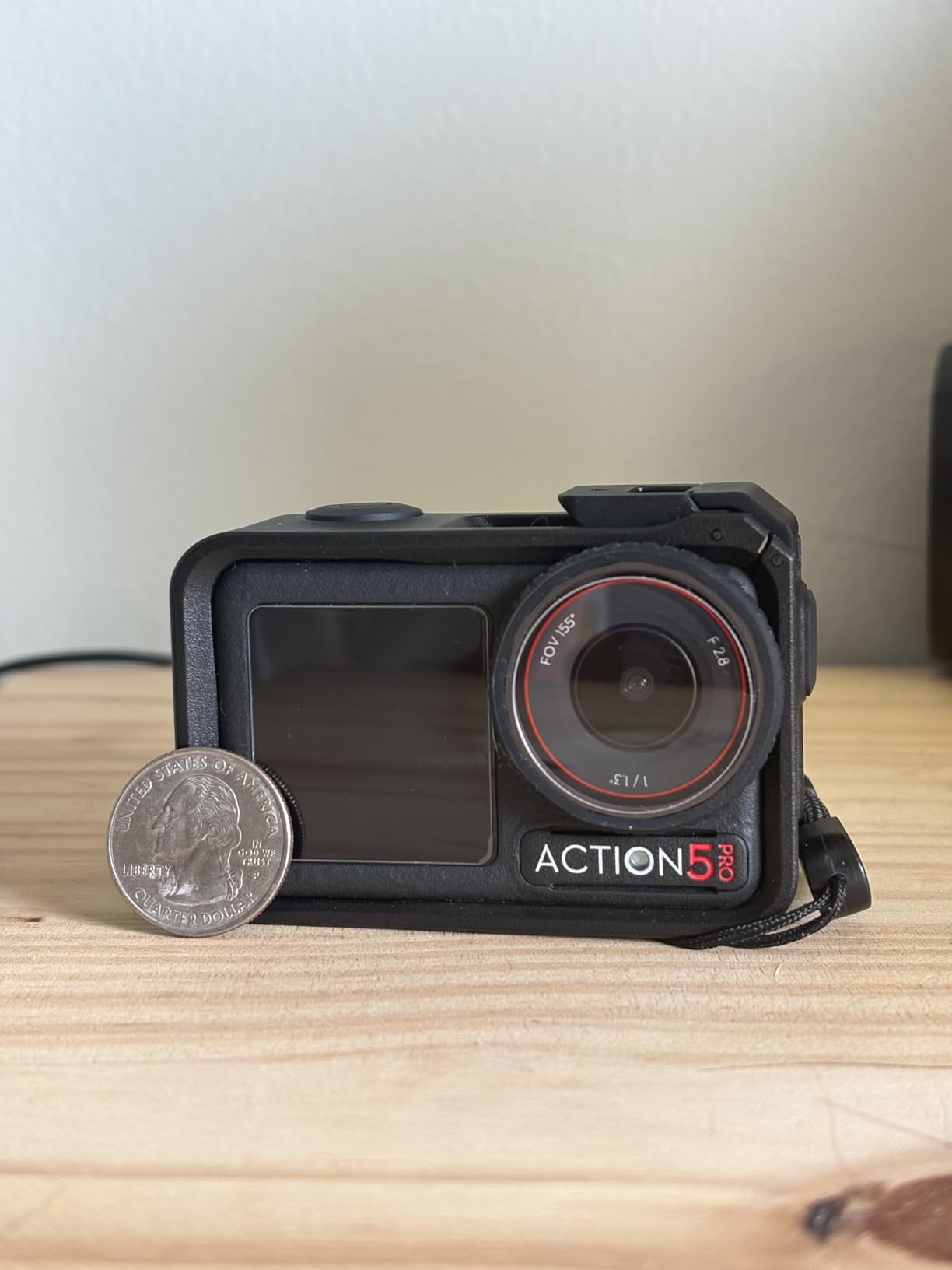
The DJI Osmo Action 5 Pro became my go-to camera on night rides and overcast tours. The 1/1.3-inch sensor with 2.4-micron pixels pulls in light that smaller sensors simply cannot reach. I noticed a clear difference when riding through tree-covered backroads at dusk where my older action cameras produced muddy footage.
Battery life is the standout feature here. DJI claims up to 4 hours of recording, and I consistently got over 3.5 hours in real-world testing at 4K/60fps. That covers an entire day of riding with stops without swapping batteries. The 1950mAh cell is a noticeable step up from competitors that barely last 90 minutes.
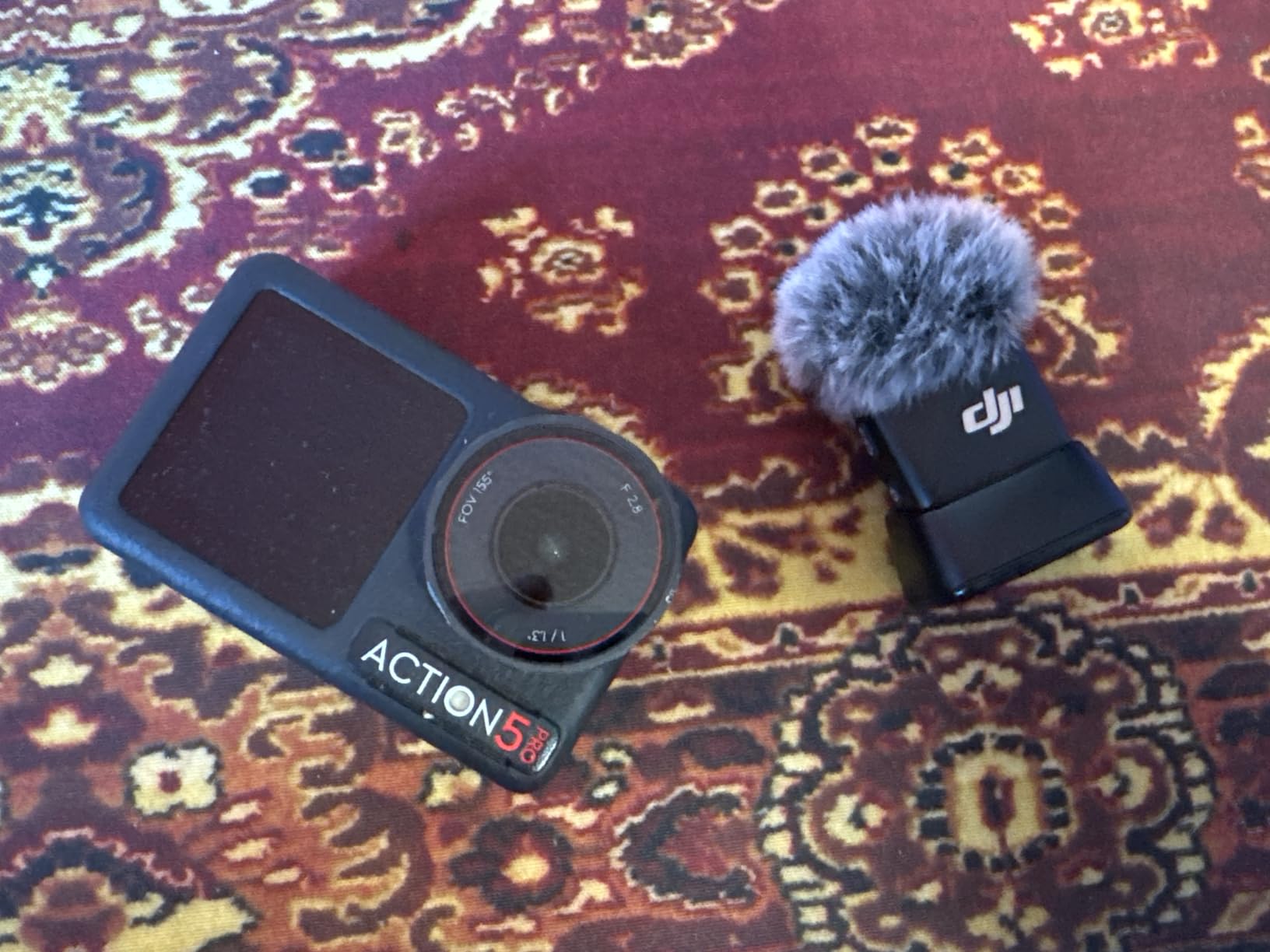
Audio is where the Action 5 Pro pulls ahead for motovlogging specifically. It connects directly to the DJI Mic 2 and Mic Mini without any adapters or dongles. I clipped the wireless mic inside my helmet and got clean commentary audio while the camera captured the road ahead. That wireless audio integration eliminates the cable mess that plagues most motovlogging setups.
The 360-degree HorizonSteady stabilization kept my footage level even on rough gravel sections where the bike was bouncing constantly. The dual OLED touchscreens are bright enough to frame shots in direct sunlight. With 47GB of built-in storage, I started recording immediately without fumbling for an SD card.
Who Should Buy This Camera
This is the camera I recommend to riders who want one device that handles every riding condition. The low-light performance alone justifies the price if you do dawn or dusk rides regularly. The DJI Mic integration makes it the most audio-friendly option on this list for commentary-heavy motovlogs.
It is also the best pick for long-distance touring where you cannot stop to swap batteries every hour. Four hours of recording time means you can capture an entire day ride on a single charge.
Who Should Skip It
If you specifically want 360-degree footage where you can reframe after the ride, look at the Insta360 X4 instead. The Action 5 Pro captures a fixed wide-angle view that you cannot change in post.
Riders on a tight budget may also find the price steep compared to the Action 4, which shares the same sensor size for less money. The extra features are worth it for serious motovloggers but may be overkill for casual riders.
2. Insta360 X4 – Best 360 Camera for Immersive Footage
Pros
- 8K 360 video quality
- AI-powered reframing in app
- Invisible selfie stick effect
- 135 min battery life
- Cold resistant to -20C
Cons
- Requires post-processing for 360 footage
- Larger file sizes from 8K recording
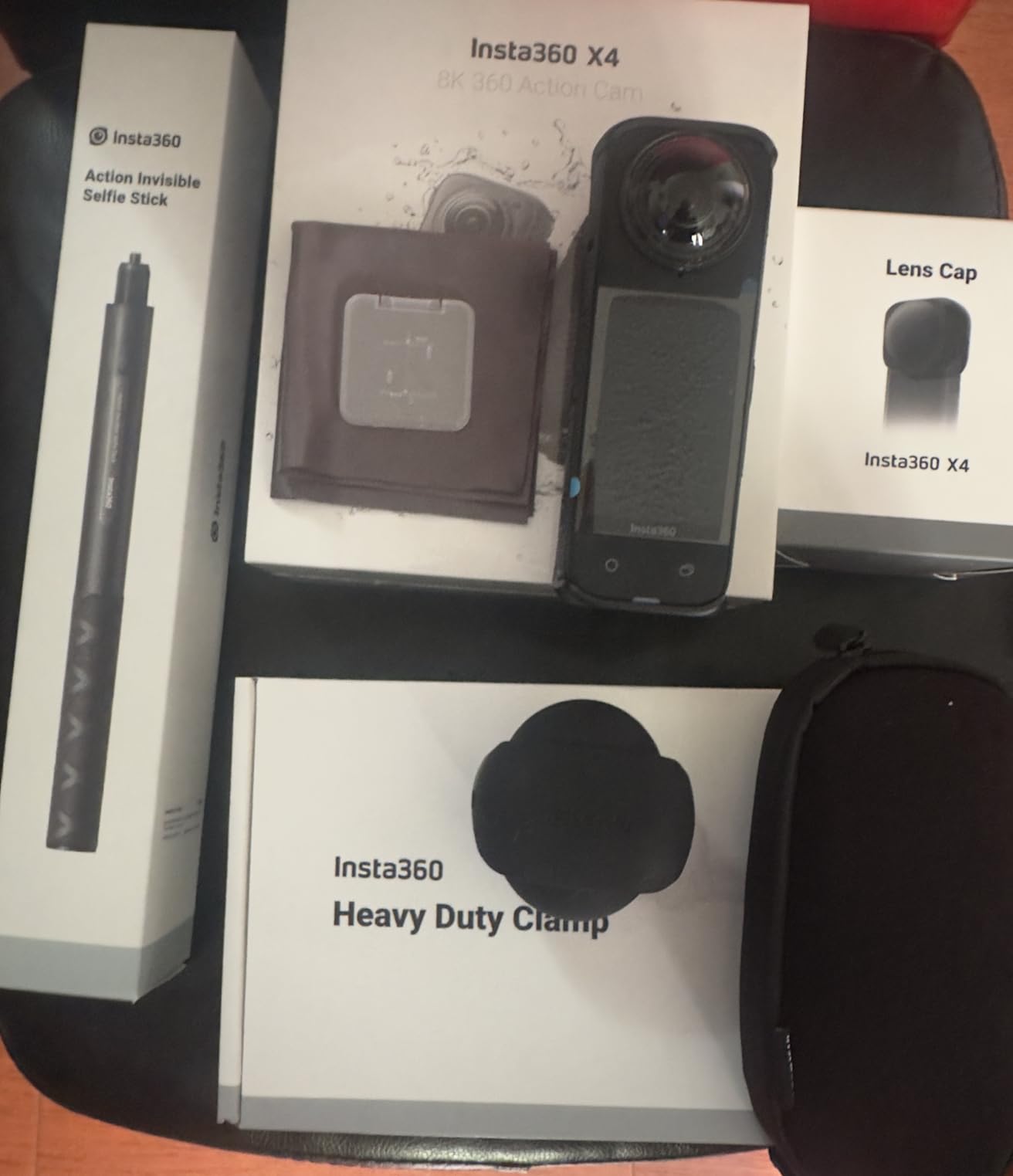
The Insta360 X4 changed how I think about motovlogging angles. With 8K 360-degree capture, I recorded everything around the bike and chose my framing later in the app. This means I never miss a shot because the camera was pointed the wrong direction.
The invisible selfie stick effect is what makes this camera magical for motorcycle content. I mounted the X4 on a selfie stick attached to my tail section, and the footage looks like a drone is following me. No visible mount, no stick in frame, just clean third-person chase footage that would otherwise require a chase vehicle.
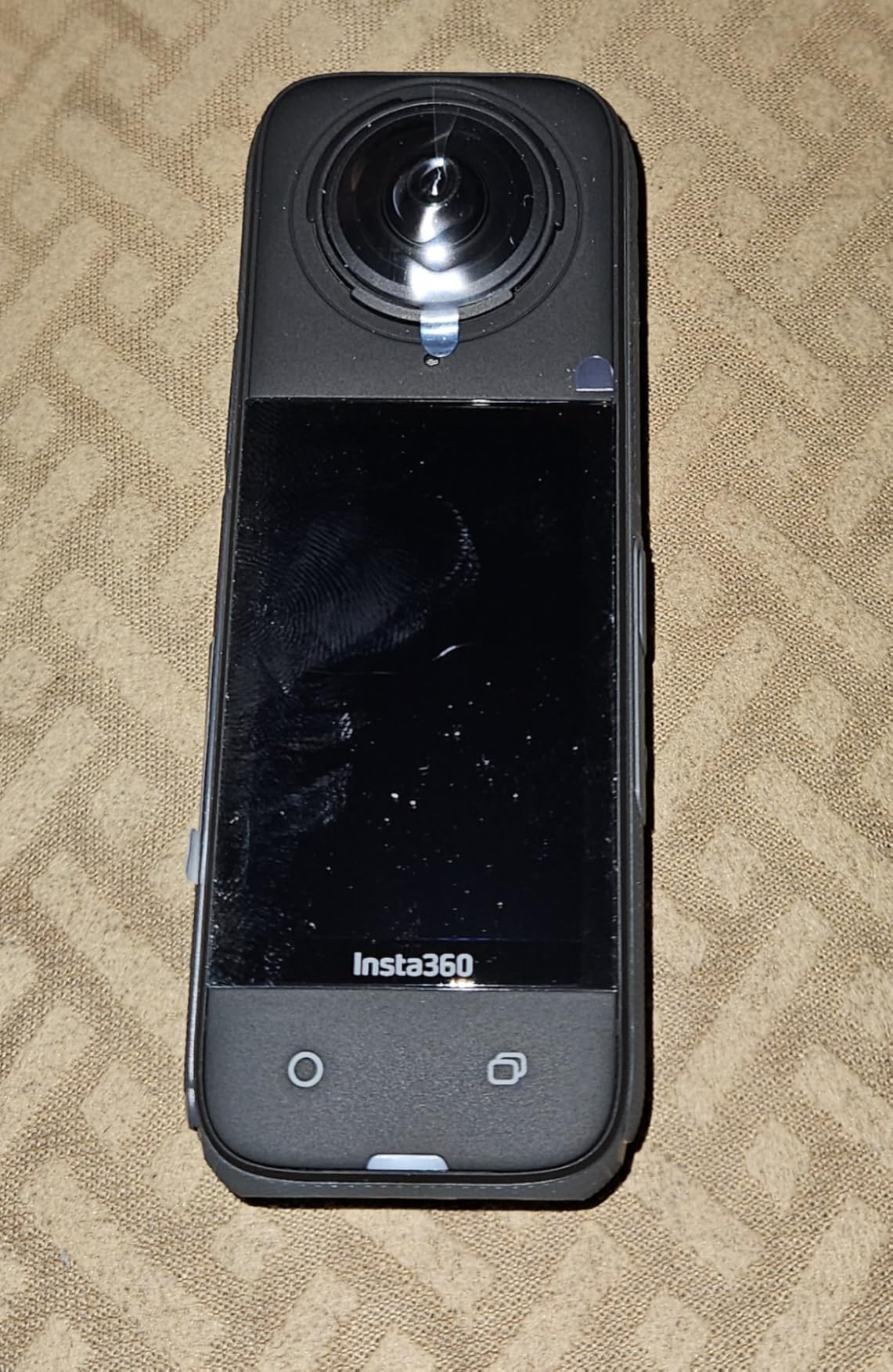
Battery life improved significantly over the previous generation. I got a solid 2 hours of continuous 5.7K60 recording on a single charge, which is 67% longer than the X3 managed. The 2.5-inch Gorilla Glass touchscreen is responsive even with gloved hands.
The AI-powered reframing in the Insta360 app saves hours of editing time. I would select key moments, and the app automatically panned and tracked the best angles. For deep dives and water crossings, the camera is waterproof to 33 feet without any additional housing.
Who Should Buy This Camera
The X4 is perfect for riders who want creative flexibility after the ride. You capture everything in 360 and then decide whether you want POV, third-person, or panoramic shots during editing. This is ideal for motovloggers who produce polished YouTube content.
It is also the best choice if you want that drone-like chase cam effect without actually flying a drone. The invisible selfie stick trick produces footage that genuinely looks professionally shot.
Who Should Skip It
If you want a simple point-and-shoot experience with minimal editing, the 360 workflow adds complexity. You will spend time in the app reframing footage before you can share anything. Riders who prefer to upload raw footage should look at traditional action cameras.
The 8K file sizes are massive. A single ride can generate dozens of gigabytes of data, so you need a fast microSD card and plenty of storage on your computer for editing.
3. Insta360 GO 3S Motorcycle Bundle – Best for In-Helmet POV
Pros
- Tiny size for in-helmet mounting
- 4K hands-free POV recording
- FlowState gimbal-like stabilization
- 140 min battery life
- Includes motorcycle helmet mount accessories
Cons
- Higher price for the bundle
- Action Pod required for full features
The Insta360 GO 3S is the smallest camera I have ever mounted inside a helmet. The camera module weighs almost nothing and sits unobtrusively on the chin bar without blocking my field of view. This is the camera I reach for when I want authentic first-person perspective footage.
This motorcycle-specific bundle includes the mounting accessories you actually need for riding. I attached the magnetic mount to my helmet chin bar and had the camera snapped in place in seconds. The 128GB built-in storage means no fumbling with SD cards before a ride.
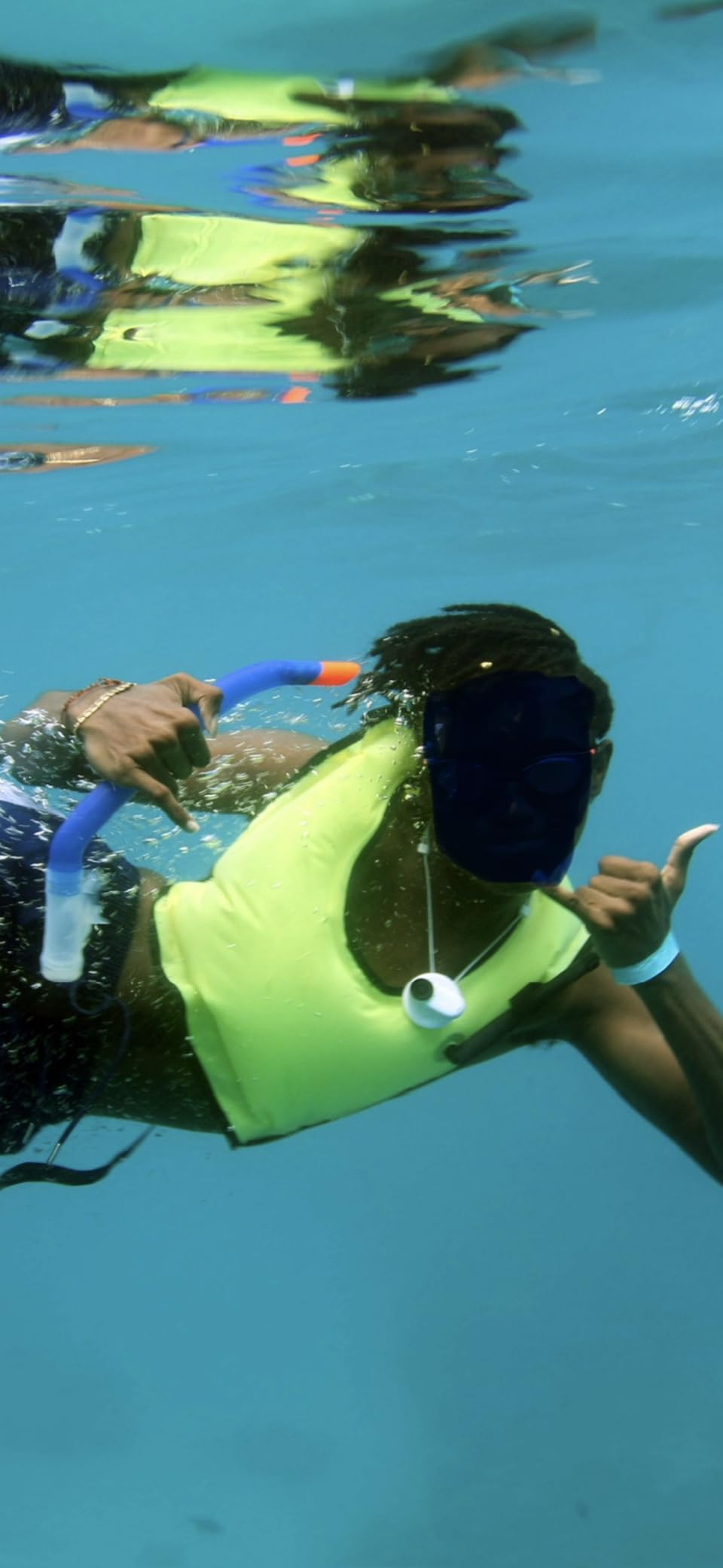
FlowState stabilization on the GO 3S is impressive for such a tiny device. Footage from a helmet mount at highway speeds came out smooth without the nausea-inducing shake that cheap action cameras produce. Horizon Lock keeps the horizon level even when I lean into corners.
The Action Pod extends functionality with a 2.2-inch flip screen and acts as a remote control. I used it to frame my shot before clipping the camera to my helmet, then stored the Pod in my tank bag. Battery life hits 140 minutes with the Action Pod connected.
Who Should Buy This Camera
This is the best motovlogging camera for riders who want true first-person POV without a bulky camera on their helmet. The tiny footprint means it does not catch wind or add noticeable weight. If your content style is commentary-heavy and you want viewers to see what you see, this is the pick.
The included motorcycle accessories make it a complete kit right out of the box. You will not need to buy additional mounts to get started.
Who Should Skip It
The camera alone has limitations without the Action Pod. You lose the preview screen and extended battery when running just the camera module. If you need a camera that works as a standalone device in all situations, a traditional action camera may serve you better.
Riders who need the highest possible resolution for large-format displays will find 4K limiting compared to the 5.3K or 8K options from GoPro and Insta360 X4.
4. GoPro HERO13 Black – The Industry Standard Action Camera
Pros
- 5.3K60 and 4K120 video options
- HyperSmooth 6.0 with AutoBoost
- 360 Horizon Lock for level footage
- Waterproof to 33 feet without housing
- Bluetooth audio and Wi-Fi 6
Cons
- Battery life could be longer
- Higher price point than competitors
The GoPro HERO13 Black is the camera most riders ask me about because GoPro owns the action camera mindshare. The HERO13 earns its reputation with 5.3K HDR video that captures rich color and detail in challenging lighting. I tested it on bright highways and dark forest roads, and the HDR processing handled both without blown highlights.
HyperSmooth 6.0 stabilization with AutoBoost is the best GoPro has produced. On rough pavement where my handlebars vibrated constantly, the footage stayed glassy smooth. The 360 Horizon Lock feature is essential for motovlogging because it keeps the horizon level even when the camera tilts during hard cornering.
The 1900mAh Enduro battery is a real improvement over previous generations. I got about 90 minutes of continuous 5.3K recording in moderate temperatures. In cold weather the Enduro chemistry holds up better than standard batteries, which matters for winter and high-altitude riding.
Bluetooth audio connectivity is a welcome addition for motovloggers. I connected my wireless earbuds and recorded commentary directly to the camera without a separate audio recorder. Wi-Fi 6 makes file transfers to my phone noticeably faster when I want to share clips from the road.
Who Should Buy This Camera
The HERO13 Black is the safest choice for riders who want the most mature accessory ecosystem. Every mount, every case, every third-party accessory is designed with GoPro in mind. If you walk into any moto shop, GoPro mounts are what you will find.
It is also the best pick for riders who want 5.3K resolution with proven stabilization. HyperSmooth is the gold standard that every other manufacturer is measured against, and version 6.0 is the most refined yet.
Who Should Skip It
The battery life lags behind the DJI Osmo Action 5 Pro significantly. If your rides regularly exceed 90 minutes of continuous recording, you will need spare batteries. The price is also higher than competing cameras with similar or better specs.
Riders focused on audio quality for motovlogging should note that GoPro does not have the same seamless wireless mic integration that DJI offers. You will need third-party solutions for clean helmet audio.
5. DJI Osmo Action 4 – Best Value From DJI
Pros
- Excellent low-light with large pixels
- 10-bit D-Log M for color grading
- 4K/120fps with 155 deg FOV
- Long 150 min battery life
- Magnetic quick-release mount
Cons
- Older model vs Action 5 Pro
- Limited to 10MP photos
The DJI Osmo Action 4 shares the same 1/1.3-inch sensor as its newer sibling but costs significantly less. For budget-conscious riders who still want serious low-light performance, this is the sweet spot. My test footage in overcast conditions looked nearly identical to what the Action 5 Pro produced.
The 10-bit D-Log M color profile is a feature I did not expect at this price point. It gives you professional color grading flexibility that flat profiles on cheaper cameras cannot match. When I graded my footage in post, I recovered shadow detail and balanced highlights that would have been clipped on 8-bit footage.
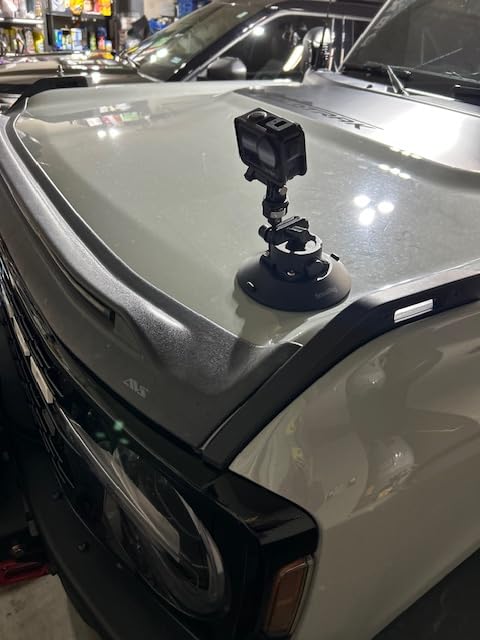
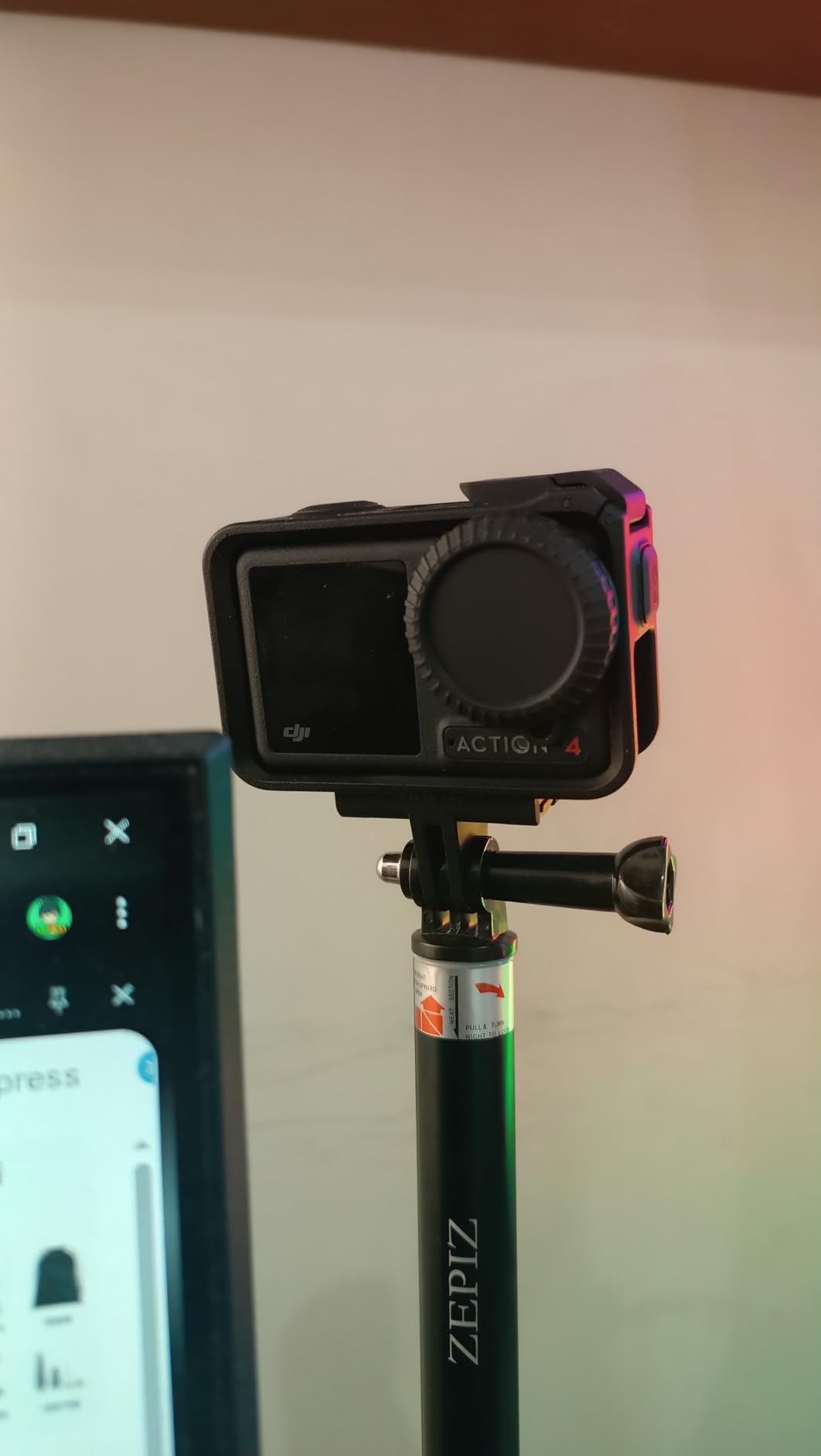
Battery life hits 150 minutes in my testing, which comfortably covers a day ride with breaks. The magnetic quick-release mounting system is brilliant for motovlogging because I could snap the camera between my helmet and handlebar mount in seconds without tools.
Three stabilization modes cover different riding scenarios. RockSteady handles smooth roads, RockSteady+ tackles rough pavement, and HorizonBalancing keeps footage level through corners. The pre-recording feature buffers 5 to 60 seconds of footage before you hit record, so you never miss an unexpected moment on the road.
Who Should Buy This Camera
This is the best value action camera for riders who want DJI quality without paying Action 5 Pro prices. The sensor, stabilization, and color science are nearly identical. You give up some battery life and the newer subject tracking, but you save a meaningful amount of money.
It is ideal for riders who want to color-grade their footage for a professional look. The D-Log M profile gives you the dynamic range headroom that makes motorcycle scenery look cinematic.
Who Should Skip It
If you need the longest possible battery life, the Action 5 Pro’s 4-hour runtime is worth the upgrade. The Action 4’s 150 minutes is solid but not class-leading. Riders who want the latest subject tracking technology should also step up to the newer model.
The 10MP photo resolution is lower than competitors. If you want to capture high-quality still photos during your rides for Instagram or prints, you will be disappointed compared to the 27MP or 40MP options available elsewhere.
6. AKASO Brave 4 – Best Budget Camera for Beginners
Pros
- Excellent value for budget buyers
- 4K video and 20MP at low price
- Waterproof to 131ft with case
- Includes 2 batteries and remote
- Multiple viewing angle options
Cons
- Lower video quality than premium brands
- Battery life could be longer
- Wi-Fi range limited to 10 meters
The AKASO Brave 4 proves that you do not need to spend hundreds to start motovlogging. At under $90, this camera delivers 4K30 footage with electronic image stabilization that handles moderate riding conditions. I recommended this to three beginner riders last year, and all three were satisfied with their first motovlogging setup.
The included accessory kit is where the value really shines. You get two 1050mAh batteries, a waterproof case rated to 131 feet, a wristband remote, and a full set of helmet and bicycle mounts. Buying these accessories separately for a GoPro would cost more than this entire camera package.

The adjustable viewing angles are surprisingly useful. I could switch between 170-degree wide angle for scenic highway shots and 70-degree narrow angle for tighter commentary framing. The built-in EIS reduces the worst of the shake, though it cannot match the optical-level stabilization of premium cameras.
The waterproof case is essential for motorcycle use because the camera body itself is not waterproof. I rode through a rainstorm and the case kept everything dry. The wristband remote let me start and stop recording without taking my hands off the handlebar.

Who Should Buy This Camera
This is the camera I recommend to riders trying motovlogging for the first time. If you are not sure whether you will stick with it, spending under $90 to find out makes sense. The complete accessory kit means you have everything needed to mount and record from day one.
It is also a smart choice for a backup camera in a multi-camera setup. Many experienced motovloggers run an AKASO as a secondary angle while their primary camera captures the main footage.
Who Should Skip It
The 4K30 video quality is noticeably softer than what premium cameras produce. If your goal is professional YouTube content with crisp footage, the Brave 4 will not deliver. Low-light performance is also weak, so dusk and night rides produce grainy footage.
Battery life at 90 minutes per cell means you will be swapping batteries frequently on longer rides. The Wi-Fi range is limited to about 10 meters, which restricts how far you can be from your phone when using the app.
7. AKASO EK7000 Pro – Cheapest 4K Option Available
Pros
- 4K/30fps and 1080P/60fps recording
- 2 inch IPS touch screen
- 131ft waterproof rating
- 2 rechargeable batteries included
- Helmet accessories kit in box
Cons
- Digital stabilization not optical
- Fisheye lens may distort edges
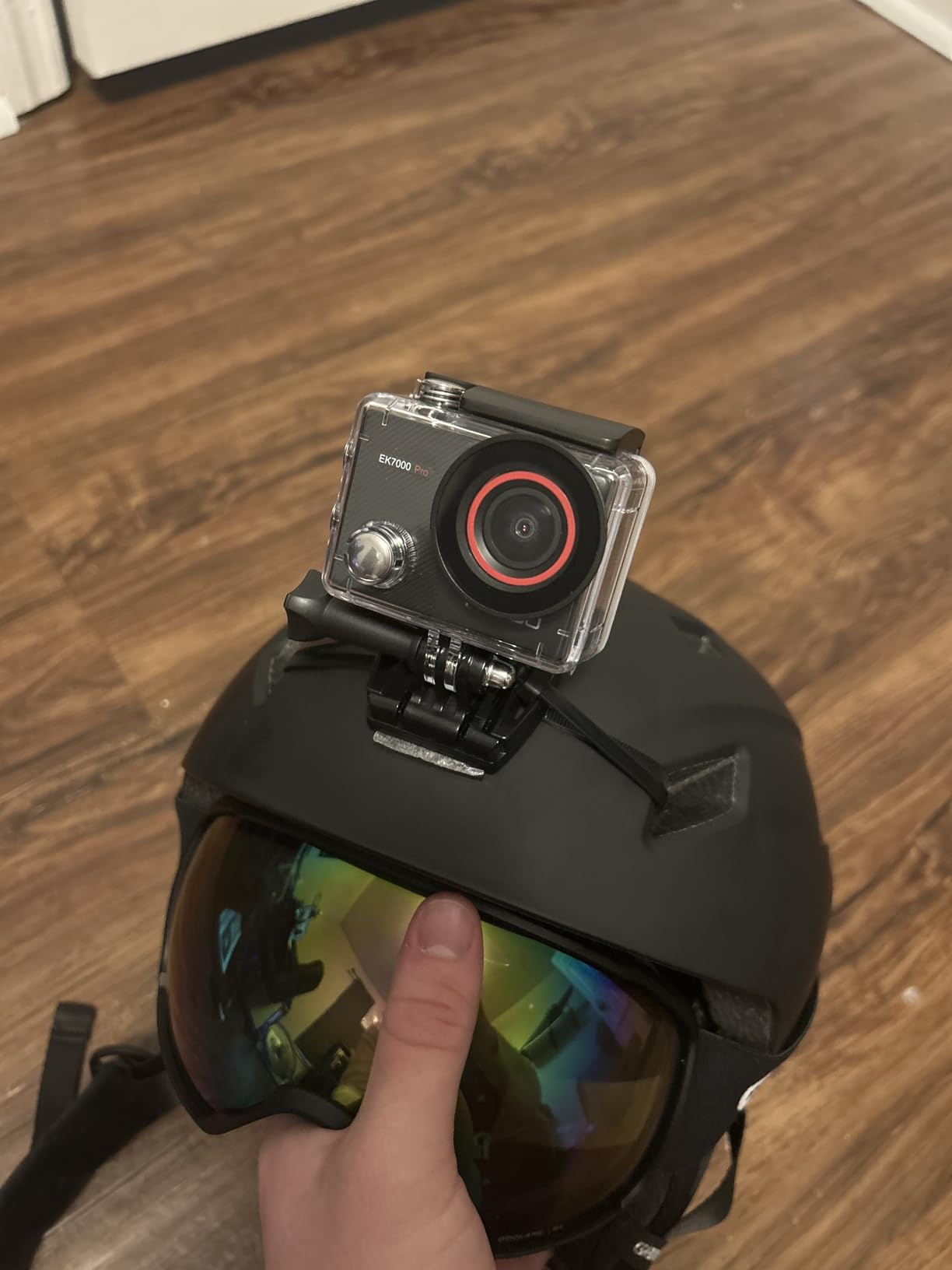
The AKASO EK7000 Pro is the cheapest camera on this list, and I was honestly surprised by how capable it is. For around $70, you get 4K30 video, a touch screen, and a full helmet mounting kit. Over 10,000 reviews with a 4.5-star average tells you this camera satisfies a lot of riders.
The 2-inch IPS touch screen is a feature I did not expect at this price. It made framing shots and changing settings far easier than the button-only controls on similar budget cameras. The touch response is not as smooth as a premium camera, but it works reliably enough for on-bike adjustments.
Two 1350mAh batteries give you roughly 140 minutes of recording per charge. That is respectable battery life that beats some cameras costing three times as much. I carried both batteries on a day ride and never ran out of power.
The electronic image stabilization handles smooth road conditions well. On rough terrain the limitations of digital stabilization become apparent, with some jitter remaining in the footage. The 5X digital zoom is useful for capturing details ahead on the road, though it reduces image quality at maximum zoom.
Who Should Buy This Camera
This is the absolute cheapest way to start motovlogging with 4K footage. If budget is your primary concern and you still want touch screen controls and a complete mounting kit, the EK7000 Pro delivers. The included helmet accessories mean you can start recording on your very first ride.
It is also a popular choice for riders who want a camera purely for insurance documentation. If you just need reliable ride recording without premium features, this covers the basics at a fraction of the cost.
Who Should Skip It
The digital image stabilization cannot match the optical-level performance of FlowState or HyperSmooth. If you ride on rough roads or off-road, your footage will show noticeable shake. The fisheye lens distortion at the edges of the frame may also bother riders who want clean, straight horizons.
Low-light performance is limited by the small 1/3-inch sensor. Night rides and tunnel sections will produce noisy footage that is not suitable for professional content.
8. Sixmou i3 4K Thumb Camera – Lightest Camera You Can Mount
Pros
- Extremely compact thumb-sized design
- Lightweight at only 35.7 grams
- 150 minute battery life
- 64GB card included
- Magnetic mounting system
Cons
- No built-in screen
- Digital stabilization only
- Camera body not waterproof without case
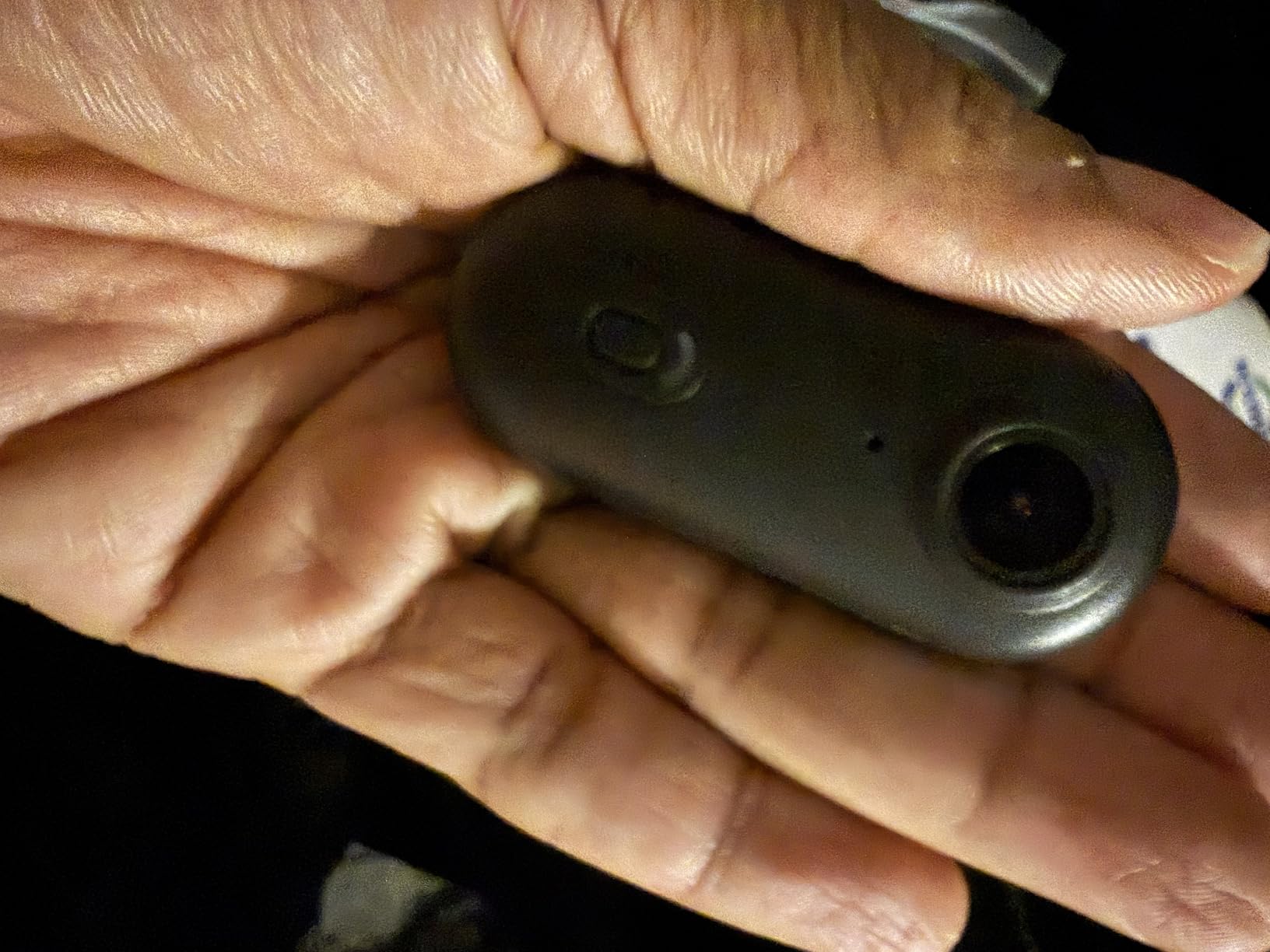
The Sixmou i3 is the lightest camera in this roundup at just 35.7 grams. That is lighter than a golf ball. When mounted on a helmet, you genuinely cannot feel the weight. For riders who are sensitive to any added mass on their head, this solves that problem completely.
The thumb-sized form factor opens mounting possibilities that bulkier cameras cannot match. I clipped it to my jacket collar using the spring clip mount for a unique chest-level POV angle. The magnetic mounting system also let me stick it to metal parts of my bike for creative angle shots.
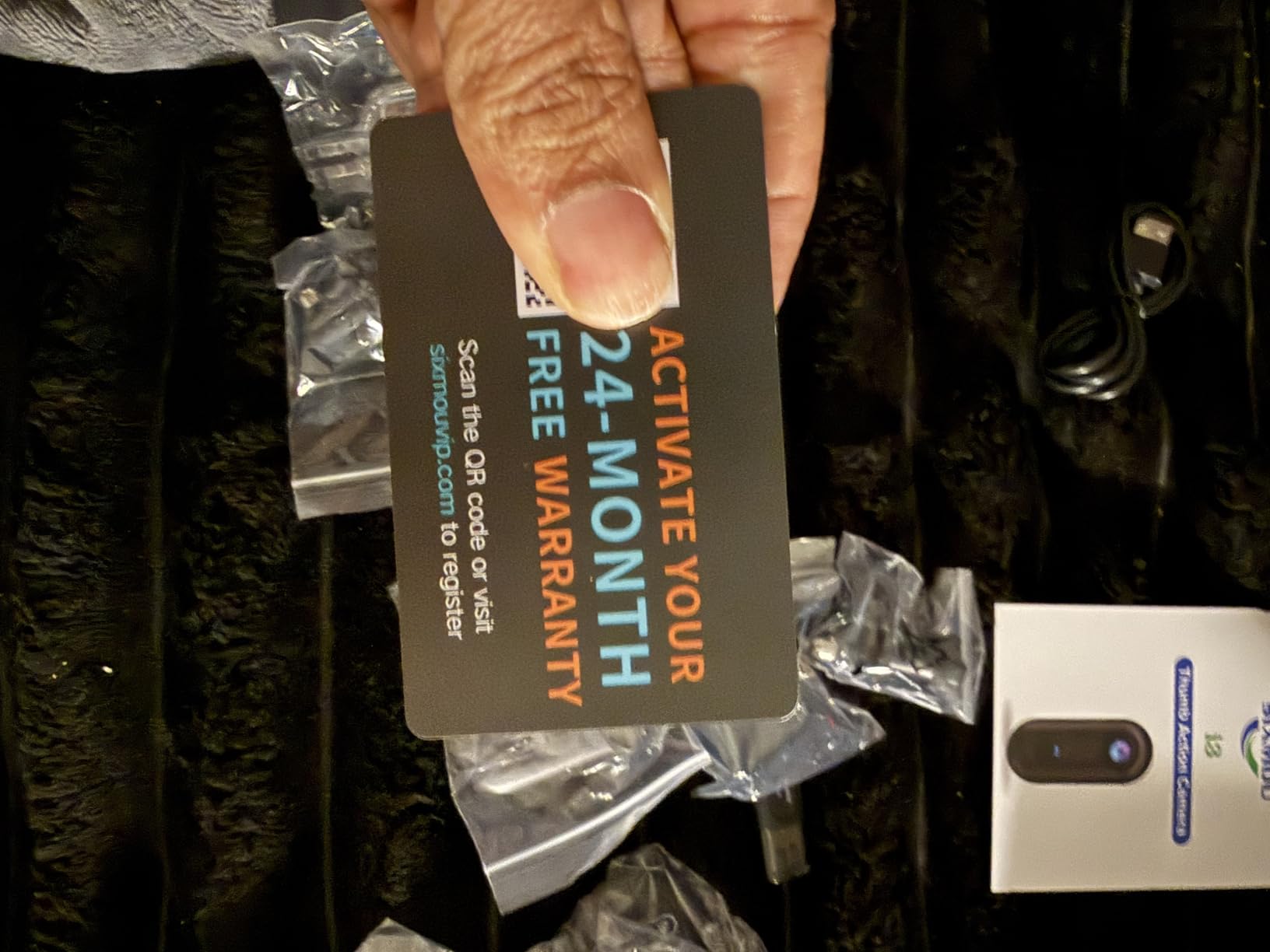
Battery life of 150 minutes is impressive for something this small. The camera runs longer than many full-size action cameras on a single charge. The included 64GB microSD card means you can start recording immediately without any additional purchases.
The trade-off for the tiny size is the lack of a built-in screen. You frame shots using the Wi-Fi app on your phone, which works but adds setup time. The 150-degree wide-angle lens captures a generous field of view that compensates somewhat for the inability to precisely frame shots.
Who Should Buy This Camera
This is the camera for riders who prioritize invisibility and weight above all else. If you want a camera that disappears on your helmet or jacket, the i3 is unmatched. It is also a fun secondary camera for creative angles that a primary camera cannot capture.
At this price point, it competes directly with the AKASO options but offers a fundamentally different experience focused on ultra-compact form factor rather than accessory completeness.
Who Should Skip It
The lack of any screen makes framing and monitoring footage difficult during rides. If you need to check your composition or adjust settings on the fly, you will be frustrated reaching for your phone every time. The digital stabilization is basic and will not smooth out rough road footage.
The camera body requires a waterproof case for wet conditions, which adds bulk and defeats the compact advantage. If you ride in rain regularly, a camera with native waterproofing like the DJI or Insta360 options will serve you better.
What to Look for in a Motovlogging Camera?
Choosing among the best cameras for motovlogging comes down to understanding which features actually matter on a motorcycle. I learned most of this through trial and error over hundreds of ride hours. Here is what actually makes a difference.
Image Stabilization Is Non-Negotiable
A motorcycle generates constant vibration that destroys unstabilized footage. You need either optical stabilization or advanced electronic stabilization like HyperSmooth, FlowState, or RockSteady. Basic EIS on budget cameras helps but will not fully smooth rough road footage. Look for cameras with horizon-leveling features that keep your footage straight through corners.
Wind Noise and Audio Strategy
Wind noise is the number one complaint in motovlogging forums. No action camera has a built-in microphone that can overcome highway wind. The solution is an external microphone, which is why the DJI Osmo Action 5 Pro with its direct DJI Mic 2 connection is so appealing. For other cameras, you will need a wireless mic system or a wired external mic with a wind muff. Budget cameras like the AKASO models have basic wind noise reduction but it cannot replace a dedicated external audio solution.
Mounting Options and Compatibility
Your camera needs to attach securely to your helmet, handlebars, or bike. The three most common motovlogging mount positions are helmet chin bar for POV, chest mount for immersive angle, and handlebar or tail mount for third-person perspective. GoPro has the widest third-party mount ecosystem, followed by DJI. The Insta360 GO 3S motorcycle bundle includes purpose-built helmet mounts that save you from buying accessories separately.
Battery Life for Long Rides
Motovlogging drains batteries faster than normal recording because stabilization and high-resolution modes draw extra power. Anything under 90 minutes per charge means carrying spare batteries for day rides. The DJI Osmo Action 5 Pro leads with up to 4 hours, followed by the Insta360 X4 at 135 minutes and the DJI Osmo Action 4 at 150 minutes. Budget cameras typically manage 90 to 150 minutes per cell.
360 vs Traditional Action Camera
Traditional action cameras capture a fixed wide-angle view that you frame before recording. They are simpler to use and produce footage you can share immediately. 360 cameras like the Insta360 X4 capture everything around you and let you choose angles later in editing. The 360 approach gives you creative flexibility but requires post-production work. For beginners, a traditional action camera is the easier starting point. For content creators who want maximum production value, 360 is worth the extra editing time.
Weather Resistance and Waterproofing
Motorcycle cameras face rain, dust, and temperature swings. Look for native waterproofing so you do not need a bulky housing for wet rides. The DJI cameras are waterproof to 18 to 20 meters without any case. The Insta360 X4 handles cold down to -20 degrees Celsius. Budget cameras typically require a waterproof case, which adds weight and can muffle audio further.
Resolution and Low-Light Performance
Higher resolution gives you cropping flexibility in editing and sharper footage on large displays. But resolution means nothing if the sensor is too small for low-light conditions. A 1/1.3-inch sensor like those in the DJI cameras captures far more light than the 1/3-inch sensors in budget models. If you ride at dawn, dusk, or night, sensor size matters more than megapixel count.
Frequently Asked Questions
What cameras do most vloggers use?
Most motovloggers use action cameras from GoPro, DJI, or Insta360. The GoPro HERO13 Black remains the industry standard for its mature ecosystem. The DJI Osmo Action 5 Pro is gaining popularity for its low-light sensor and wireless mic integration. The Insta360 X4 is the top choice for riders who want 360-degree footage with post-ride reframing flexibility.
What is the best camera for recording on a motorcycle?
The DJI Osmo Action 5 Pro is the best overall camera for motorcycle recording thanks to its 1/1.3-inch sensor, 4-hour battery life, and seamless DJI Mic 2 connectivity for clean commentary audio. For riders who want immersive 360 footage, the Insta360 X4 is the top alternative with its invisible selfie stick effect and AI reframing.
What is the best camera for motorsports?
For motorsports, the best cameras combine high frame rates, rugged stabilization, and weatherproofing. The GoPro HERO13 Black shoots 5.3K60 and 4K120 with HyperSmooth 6.0, making it ideal for fast-paced action. The DJI Osmo Action 5 Pro matches it with 4K120 and adds superior low-light performance for dusk track sessions.
Is GoPro or Insta360 better for motorcycles?
GoPro is better for riders who want a straightforward traditional action camera with the largest accessory ecosystem and proven HyperSmooth stabilization. Insta360 is better for riders who want 360-degree capture, the invisible selfie stick drone effect, and creative reframing after the ride. Many serious motovloggers actually use both, with GoPro for fixed POV and Insta360 for third-person angles.
Final Verdict
After testing all eight cameras across hundreds of miles, the DJI Osmo Action 5 Pro stands out as the best camera for motovlogging in 2026. Its combination of low-light performance, 4-hour battery life, and seamless wireless mic integration solves the three biggest pain points riders face.
For riders who want creative 360 footage, the Insta360 X4 is the clear winner with its invisible selfie stick effect and AI reframing. The Insta360 GO 3S motorcycle bundle is unbeatable for in-helmet POV where size matters. And budget-conscious beginners can start with the AKASO Brave 4 or EK7000 Pro without breaking the bank.
The right camera depends on your riding style, content goals, and budget. Pick the one that matches how you actually ride, and you will be capturing share-worthy footage on your very next trip.