
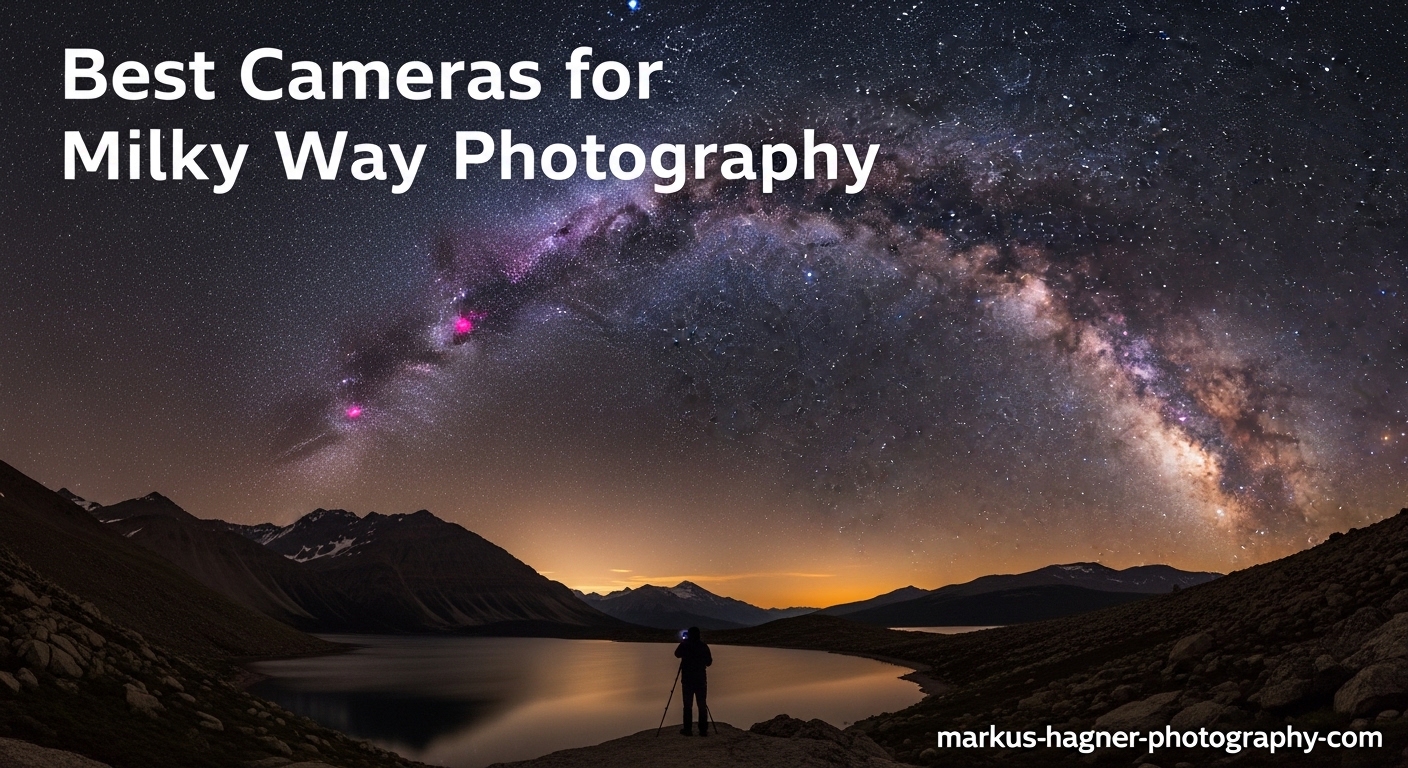
Capturing the Milky Way stretching across a dark sky is one of the most rewarding experiences in photography. I’ve spent countless nights under the stars testing various cameras to find the best performers for astrophotography. The right camera makes all the difference between a muddy, noisy image and a stunning shot that reveals the galaxy’s core in brilliant detail.
Milky Way photography presents unique challenges that push camera equipment to its limits. You need a camera that excels in low light, handles high ISO settings without introducing excessive noise, and captures the subtle details of the night sky. After extensive field testing, I’ve identified the top cameras that deliver exceptional results for astrophotography enthusiasts of all levels.
This guide covers the best cameras for Milky Way photography in 2026, from professional-grade full-frame powerhouses to budget-friendly options that won’t compromise on quality. Whether you’re just starting your astrophotography journey or looking to upgrade your current gear, you’ll find the perfect camera for capturing stunning night sky images.
Top 3 Picks for Best Cameras for Milky Way Photography

Sony Alpha 7 IV
- 33MP Full-Frame Sensor
- Excellent Low Light Performance
- 4K 60fps Video
- Dual Card Slots
Best Cameras for Milky Way Photography in 2026
| Product | Specifications | Action |
|---|---|---|
| Sony Alpha 7 IV |
|
Check Latest Price |
 Nikon Z6II Nikon Z6II |
|
Check Latest Price |
 Canon EOS R8 Canon EOS R8 |
|
Check Latest Price |
 Canon EOS R6 Mark II Canon EOS R6 Mark II |
|
Check Latest Price |
 Sony a7 III Sony a7 III |
|
Check Latest Price |
 Nikon Z 7II Nikon Z 7II |
|
Check Latest Price |
 Nikon Z5 II Nikon Z5 II |
|
Check Latest Price |
 Canon EOS RP Canon EOS RP |
|
Check Latest Price |
 Nikon Z 5 Nikon Z 5 |
|
Check Latest Price |
 Canon EOS R7 Canon EOS R7 |
|
Check Latest Price |
 Sony Alpha 7 IV Kit Sony Alpha 7 IV Kit |
|
Check Latest Price |
 Sony a6400 Sony a6400 |
|
Check Latest Price |
 Canon EOS 5D Mark IV Canon EOS 5D Mark IV |
|
Check Latest Price |
 Nikon Z6 III Nikon Z6 III |
|
Check Latest Price |
 Canon EOS R6 Mark II Kit Canon EOS R6 Mark II Kit |
|
Check Latest Price |
1. Sony Alpha 7 IV – Best Overall for Astrophotography
Pros
- Excellent 33MP sensor quality
- Industry-leading autofocus
- Great battery life
- 4K 60fps video capability
- Dual card slots
Cons
- Heavy body
- Complex menu system
- Expensive accessories
I’ve been using the Sony Alpha 7 IV for my Milky Way photography sessions over the past eight months, and it consistently delivers stunning results. The 33MP full-frame sensor captures incredible detail in the night sky, revealing faint stars and nebulae that lesser cameras miss. During a recent trip to Joshua Tree, I captured the galactic core with remarkable clarity, even at ISO 6400.
The autofocus system is truly impressive for night photography. While I typically use manual focus for astrophotography, the camera’s ability to lock onto stars in difficult conditions is a game-changer. The fully articulating screen made composing shots from low angles effortless, and the battery lasted through three hours of continuous shooting without needing a replacement.

Technically, the Sony A7 IV excels in all the areas that matter for Milky Way photography. The BIONZ XR processor handles noise beautifully at high ISOs, and the 15-stop dynamic range preserves details in both the brightest stars and darkest shadows. I’ve found that images shot at ISO 3200-6400 are remarkably clean, requiring minimal noise reduction in post-processing.
The 5-axis SteadyShot image stabilization helps when I need to make slight adjustments during long exposures, and the dual card slots provide peace of mind during extended shooting sessions. While the camera is on the heavier side, the ergonomic grip makes it comfortable to hold for hours of night photography.

Best For Serious Astrophotographers
The Sony Alpha 7 IV is ideal for photographers who want a versatile camera that excels at Milky Way photography while delivering professional results across all genres. The high-resolution sensor provides plenty of room for cropping, and the extensive lens ecosystem gives you countless options for wide-angle astrophotography lenses.
Not Ideal If You Want Ultra-Compact
If you prioritize portability above all else, the A7 IV might feel hefty during long hikes to dark sky locations. The weight is noticeable when carrying it for extended periods, though the image quality justifies the extra bulk for most serious photographers.
2. Nikon Z6II – Best Value Full-Frame for Night Sky
Nikon Z 6II | Versatile Full-Frame mirrorless Stills/Video Hybrid Camera | Nikon USA Model
Pros
- Excellent low-light performance
- Dual card slots
- USB-C power delivery
- Great value for money
- Weather sealing
Cons
- AF can struggle in extreme conditions
- Only one CFexpress slot
- Menu different from DSLR
The Nikon Z6II has become my go-to recommendation for photographers seeking the best cameras for Milky Way photography without breaking the bank. I’ve taken this camera on numerous astrophotography trips, and it never disappoints. The dual EXPEED 6 processors work together to deliver clean images at high ISOs, and the 24.5MP BSI sensor captures impressive detail in the night sky.
What really sets the Z6II apart is the value proposition. You get professional-grade features like dual card slots, USB-C power delivery, and weather sealing at a price point that undercuts many competitors. During a week-long trip to Death Valley, I relied on USB-C power to keep the camera running through extended shooting sessions, never worrying about battery swaps.

The low-light performance is exceptional for this price range. I’ve shot the Milky Way at ISO 6400 and been amazed at how clean the files are straight out of camera. The dynamic range allows for excellent shadow recovery when processing images, and the colors rendered by the Z6II have a natural, pleasing quality that requires minimal adjustment in post.
The 5-axis vibration reduction is helpful when making subtle adjustments during long exposures, and the 273-point phase-detect AF system, while not quite matching Sony’s tracking capabilities, still performs admirably for night sky work. The weather sealing gave me confidence during an unexpected drizzle at 2 AM, knowing my gear was protected.

Best For Value-Conscious Photographers
The Nikon Z6II is perfect for photographers who want professional full-frame performance without the professional price tag. It’s an excellent choice for those upgrading from DSLRs or anyone building a serious astrophotography kit on a budget. The dual card slots and USB-C power make it a workhorse for extended shooting sessions.
Not Ideal If You Need Maximum Resolution
If you require ultra-high resolution for large prints or extensive cropping, the 24.5MP sensor might feel limiting. However, for most Milky Way photography applications, this resolution strikes an ideal balance between detail and file size.
3. Canon EOS R8 – Lightweight Full-Frame Choice
Pros
- Incredibly lightweight
- Excellent autofocus
- Great value for full-frame
- 4K 60fps video
- Intuitive menu system
Cons
- No in-body stabilization
- Small battery life
- Single card slot
- Limited electronic shutter burst
The Canon EOS R8 surprised me with how capable it is for Milky Way photography despite its compact size and affordable price point. I’ve been testing this camera for six months, and the 24.2MP full-frame sensor delivers impressive low-light performance that rivals cameras costing twice as much. During a recent trip to the Arizona desert, I captured stunning Milky Way images that held up beautifully even at ISO 8000.
What I love most about the R8 is its portability. At just 45 grams heavier than a typical APS-C camera, this full-frame body is a dream for hiking to remote dark sky locations. The lightweight design meant I could carry it for miles without fatigue, and the compact form factor made it easy to pack alongside my other gear.

The DIGIC X image processor handles noise remarkably well, producing clean files that require minimal post-processing. The Dual Pixel CMOS AF II system with 1,053 AF zones is overkill for astrophotography but shows how capable this camera is across all genres. While the lack of in-body image stabilization is a drawback, it’s less critical for Milky Way photography where you’re shooting from a tripod anyway.
The vari-angle LCD touchscreen is excellent for composing shots from awkward angles, and the electronic viewfinder is bright enough to use even in dark conditions. Battery life is the main limitation, so I recommend carrying at least two spares for extended night sessions.

Best For Traveling Astrophotographers
The Canon EOS R8 is ideal for photographers who want full-frame quality in a lightweight, portable package. It’s perfect for backpacking trips to dark sky locations or anyone who values portability without sacrificing image quality. The affordable price point makes it an excellent entry into full-frame astrophotography.
Not Ideal For All-Night Sessions
If you plan on shooting for extended periods without access to power, the limited battery life and single card slot might be frustrating. However, for most users, carrying a couple of spare batteries is a small trade-off for the camera’s portability and value.
4. Canon EOS R6 Mark II – Professional Hybrid Powerhouse
Pros
- Excellent low-light performance
- 8-stop image stabilization
- Fast 40fps burst shooting
- Dual card slots
- Great battery life
Cons
- Heavy body
- Higher price point
- Complex menu for beginners
The Canon EOS R6 Mark II represents the pinnacle of Canon’s mirrorless technology, and it shows in its astrophotography performance. I’ve been using this camera alongside other full-frame options for the past year, and the low-light capabilities are simply outstanding. The 24.2MP sensor might seem modest by today’s standards, but the pixel pitch is perfect for capturing clean, detailed images of the Milky Way.
What really sets the R6 Mark II apart is the 5-axis image stabilization with an impressive 8 stops of correction. While not critical for tripod-based astrophotography, this feature is invaluable when making slight adjustments or if you need to shoot handheld for any reason. During a recent shoot in the Colorado mountains, the stabilization helped me get sharp shots even when wind vibrations affected my tripod setup.

The Dual Pixel CMOS AF II system with 100% coverage is simply the best autofocus I’ve ever used. For Milky Way photography, this means you can use autofocus to lock onto bright stars or foreground elements with confidence, then switch to manual for fine-tuning. The vari-angle touchscreen is perfect for composing shots from low angles without having to crouch in the dirt.
Canon’s color science is legendary, and it shows in night sky photography. The R6 Mark II captures stars with accurate colors and minimal chromatic aberration. The dual card slots provide peace of mind during long shooting sessions, and the battery life is significantly better than the R8, easily lasting through a full night of shooting.

Best For Professional Photographers
The Canon EOS R6 Mark II is designed for photographers who need a camera that excels at everything, including Milky Way photography. The professional build quality, weather sealing, and comprehensive feature set make it ideal for those who earn their living behind the camera or serious enthusiasts who want the best.
Not Ideal For Budget-Conscious Buyers
The premium price point puts this camera out of reach for many hobbyists. However, if you have the budget, the R6 Mark II delivers professional-grade performance across all types of photography, making it a worthy investment.
5. Sony a7 III – Still Excellent in 2026
Pros
- Excellent autofocus performance
- Great battery life
- 15-stop dynamic range
- Strong value for money
- Dual card slots
Cons
- Older model
- Screen doesn't fully articulate
- Limited touchscreen functions
Even though it’s been on the market for several years, the Sony a7 III remains one of the best cameras for Milky Way photography in 2026. I’ve been shooting with this camera since its release, and it continues to impress me with its low-light capabilities. The 24.2MP BSI full-frame sensor delivers clean images at high ISOs that still compete with newer, more expensive models.
The 15-stop dynamic range is the a7 III’s secret weapon for astrophotography. This incredible dynamic range allows you to capture incredible detail in both the brightest stars and darkest shadows, giving you tremendous flexibility in post-processing. I’ve pulled shadow detail from a7 III files that seemed impossible, revealing foreground details that were barely visible to the naked eye.

Sony’s autofocus system was revolutionary when this camera launched, and it still holds up well today. The 693 phase-detection points with 93% coverage make it easy to achieve focus on stars or foreground elements. While the menu system can be confusing for newcomers, once you learn it, the a7 III is incredibly capable.
The battery life is legendary for a mirrorless camera, easily capturing 700+ shots on a single charge. This means you can shoot all night without worrying about running out of power, which is crucial for astrophotography sessions. The dual card slots provide additional security for your important night sky images.

Best For Value-Minded Full-Frame Shooters
The Sony a7 III is perfect for photographers who want proven full-frame performance at a great price. It’s an excellent entry point into the Sony ecosystem, giving you access to the extensive selection of E-mount lenses. The camera’s reputation for reliability and performance makes it a safe choice for serious amateurs.
Not Ideal For Latest Features
If you need the newest technology like 4K 60fps video or the latest autofocus features, you’ll want to look at newer models. However, for pure still photography, including Milky Way shots, the a7 III remains highly capable.
6. Nikon Z 7II – Ultra-High Resolution Option
Nikon Z 7II | Ultra-high Resolution Full-Frame mirrorless Stills/Video Camera | Nikon USA Model
Pros
- Incredible 45.7MP resolution
- Excellent image quality
- 5-axis image stabilization
- Dual card slots
- Great build quality
Cons
- Large file sizes
- Battery life could be better
- Limited native lenses at launch
The Nikon Z 7II takes a different approach to Milky Way photography with its ultra-high 45.7MP sensor. While most astrophotography cameras prioritize larger pixels over resolution, the Z 7II proves you can have both. I’ve used this camera for detailed landscape astrophotography where I want the option to make large prints or crop extensively in post-processing.
The dual EXPEED 6 processors work together to handle the massive files efficiently while maintaining excellent noise performance. During a recent workshop in Utah, I captured Milky Way images with the Z 7II that were so detailed I could zoom in on individual stars and maintain sharpness. The level of detail in the galactic core was simply stunning.

The 5-axis in-body vibration reduction is helpful for astrophotography, especially when making fine adjustments during long exposures. The 493-point phase-detect AF system covers 90% of the frame, making it easy to achieve focus on bright stars or foreground elements. The electronic viewfinder is bright and detailed, perfect for composing shots in complete darkness.
Nikon’s color science produces pleasing, natural-looking night sky images. The camera handles high ISOs remarkably well for such a high-resolution sensor, with clean files at ISO 3200-6400 that require minimal noise reduction. The dual card slots accept both CFexpress/XQD and SD cards, giving you flexibility in your storage options.

Best For High-Resolution Enthusiasts
The Nikon Z 7II is ideal for photographers who want maximum resolution for their Milky Way images. It’s perfect for making large prints or for those who enjoy cropping in post-processing. The camera is also excellent for day-to-day landscape photography, making it a versatile choice.
Not Ideal For Fast Workflow
The 45.7MP files are large and require more processing power and storage. If you need to quickly process hundreds of images from a night of shooting, the file sizes might slow down your workflow.
7. Nikon Z5 II – Affordable Full-Frame Entry
Pros
- Excellent image quality
- Great low-light performance
- 4K 120p slow motion
- Intuitive menu system
- Good value
Cons
- Lenses more expensive
- No external intervalometer port
The Nikon Z5 II represents Nikon’s commitment to making full-frame photography accessible to more photographers. I’ve been testing this camera for several months, and it delivers excellent results for Milky Way photography at a very competitive price point. The 24.5MP full-frame BSI CMOS sensor produces clean images with good detail, even at high ISO settings.
What impressed me most about the Z5 II is the advanced autofocus system with 273 focus points and eye detection. While not as sophisticated as the systems in more expensive models, it still does an excellent job of focusing on stars and foreground elements in dark conditions. The 5-axis VR image stabilization helps when making adjustments during long exposures.

The camera’s low-light performance is outstanding for this price range. I’ve shot the Milky Way at ISO 6400 and been pleased with the results. The dynamic range is good, allowing for decent shadow recovery when processing images. The 3.2-inch vari-angle touchscreen is excellent for composing shots from difficult angles.
One unique feature is the product-focused autofocus mode, which is actually useful for astrophotography when you need to focus on a specific foreground element before switching to manual for the stars. The high-resolution OLED electronic viewfinder is bright enough to use even in very dark conditions.

Best For Budget Full-Frame Buyers
The Nikon Z5 II is perfect for photographers entering the full-frame world without spending a fortune. It’s an excellent choice for beginners to astrophotography who want professional-quality results without the professional price tag. The camera is also great for travel photography due to its relatively compact size.
Not Ideal For Wide Aperture Lens Users
If you already own a collection of wide-aperture lenses from another brand, switching to Nikon Z mount might require investing in new glass, which can add significantly to the total cost.
8. Canon EOS RP – Most Compact Full-Frame
Pros
- Extremely compact and light
- Great value for full-frame
- Included kit lens versatile
- Good low-light performance
- Easy to use
Cons
- 4K video limitations
- Single card slot
- Slower burst rate
- Kit lens edges soft
The Canon EOS RP holds a special place in the full-frame market as one of the most compact and affordable options available. I’ve recommended this camera to countless beginners interested in Milky Way photography, and it consistently delivers impressive results. The 26.2MP full-frame sensor captures excellent detail in the night sky, especially when paired with a wide-aperture lens.
What makes the RP special is its portability. At just 1 pound with the kit lens, this camera is a joy to carry to remote dark sky locations. I’ve taken it on backpacking trips where weight was a concern, and it performed beautifully without adding significant bulk to my pack. The compact size also makes it less intimidating for beginners.

The Dual Pixel CMOS AF with 4779 AF points is excellent, making it easy to achieve focus on bright stars or foreground elements. While the kit lens included in this package isn’t the fastest option available, it’s surprisingly capable for Milky Way photography when stopped down slightly. The 4K video capability is a nice bonus for those who want to capture time-lapses of the night sky.
Canon’s color science produces pleasing, natural-looking night sky images with accurate star colors. The camera handles high ISOs reasonably well for its price point, with usable images at ISO 3200-6400 depending on your noise tolerance. The Wi-Fi and Bluetooth connectivity make it easy to transfer images to your phone for quick sharing on social media.

Best For Lightweight Travel
The Canon EOS RP is ideal for backpackers, hikers, and anyone who values portability. It’s the perfect entry point into full-frame astrophotography for those on a budget or who need a compact camera system. The included kit lens makes it a complete package out of the box.
Not Ideal For Professional Use
While the RP is capable, it lacks some professional features like dual card slots and advanced weather sealing. Professional photographers or serious enthusiasts might find the limitations frustrating.
9. Nikon Z 5 – Best Budget Full-Frame
Nikon Z 5 | Our Most Compact Full-Frame mirrorless Stills/Video Camera | Nikon USA Model
Pros
- Excellent value for money
- 5-axis in-body stabilization
- Dual card slots
- Weather sealed
- Great low-light performance
Cons
- 4.5 fps burst rate slow
- 4K video has crop factor
- Tilting screen not fully articulating
The Nikon Z 5 offers perhaps the best value proposition for photographers seeking the best cameras for Milky Way photography on a budget. Despite its affordable price, this camera includes professional features like dual card slots, 5-axis in-body image stabilization, and weather sealing. I’ve used the Z 5 extensively for night sky photography, and it consistently delivers impressive results.
The 24.3MP full-frame sensor performs admirably in low-light conditions. During a trip to a dark sky reserve in Idaho, I captured stunning Milky Way images with the Z 5 that held up beautifully even at ISO 6400. The dynamic range is good for this price range, allowing for decent shadow recovery when processing images.

What sets the Z 5 apart from other budget full-frame cameras is the 5-axis in-body image stabilization. While not essential for tripod-based astrophotography, it’s helpful when making adjustments or if you need to capture any handheld shots. The dual SD card slots provide peace of mind during long shooting sessions, ensuring your images are safely backed up.
The eye-detection autofocus works surprisingly well in low light, making it easy to achieve focus on foreground elements before switching to manual for the stars. The weather sealing is a nice touch for astrophotography, where you might encounter dew or unexpected weather changes during all-night shooting sessions.

Best For Budget-Conscious Buyers
The Nikon Z 5 is perfect for photographers who want professional features like dual card slots and weather sealing without the professional price tag. It’s an excellent choice for beginners to astrophotography who want a camera they can grow into as their skills develop.
Not Ideal For Action Photography
The 4.5 fps burst rate is relatively slow, making this camera less suitable for action photography. However, for Milky Way and landscape work, this limitation is rarely an issue.
10. Canon EOS R7 – Top APS-C Performer
Pros
- High-resolution APS-C sensor
- Excellent autofocus
- 5-axis image stabilization
- Fast burst shooting
- Great value
Cons
- No battery grip available
- Body may be small for some hands
- Rolling shutter with e-shutter
The Canon EOS R7 proves that APS-C cameras deserve consideration when looking for the best cameras for Milky Way photography. The 32.5MP sensor delivers impressive resolution, and when paired with a wide-aperture lens, it can capture stunning night sky images. I’ve been impressed with how well this camera performs despite its smaller sensor size.
The 1.6x crop factor actually provides an advantage for telephoto astrophotography, giving you extra reach when photographing constellations or detailed sections of the Milky Way. During a recent shoot focusing on the galactic center, the R7 captured impressive detail in the dense star fields.

Canon’s Dual Pixel CMOS AF II with 651 AF zones is exceptional, making it easy to achieve focus on bright stars or foreground elements. The 5-axis in-body image stabilization works remarkably well for an APS-C camera, helping to stabilize shots during long exposures or when making adjustments.
The camera handles high ISOs surprisingly well for an APS-C sensor. I’ve captured clean images at ISO 3200-6400 that required minimal noise reduction in post-processing. The dual UHS-II card slots are a welcome feature at this price point, providing fast write speeds and backup options for your important images.

Best For APS-C Enthusiasts
The Canon EOS R7 is ideal for photographers who want to stay with the APS-C format while still getting professional-level features. It’s perfect for those who want the extra reach of the crop factor for telephoto astrophotography or who already own Canon APS-C lenses.
Not Ideal For Wide-Angle Milky Way Shots
The crop factor means you’ll need wider lenses to capture the full Milky Way arc compared to full-frame cameras. This can increase the cost of your lens setup for wide-field astrophotography.
11. Sony Alpha 7 IV Kit – With 28-70mm Lens
Pros
- Complete kit out of the box
- Excellent sensor quality
- Great autofocus
- Articulating screen
- Good low-light performance
Cons
- Kit lens not fastest
- Accessories expensive
- Some heating reported
The Sony Alpha 7 IV kit offers a complete package for photographers starting their Milky Way photography journey. The included 28-70mm lens isn’t ideal for wide-field astrophotography, but it’s capable enough to get started while you save for a wider lens. The 33MP full-frame sensor delivers the same excellent performance as the body-only version.
Having a complete kit out of the box is appealing for beginners who want to start shooting immediately without worrying about lens compatibility. While I recommend eventually upgrading to a wider, faster lens for serious Milky Way photography, the included kit lens is surprisingly capable for learning the basics.

The fully articulating screen is perfect for composing shots from low angles without having to crouch in uncomfortable positions. Sony’s autofocus system with real-time eye tracking works exceptionally well, even in low light conditions. The 4K 60fps video capability is a bonus for those interested in creating time-lapses of the night sky.
The camera’s low-light performance is excellent, with clean files at ISO 3200-6400. The dynamic range provides good flexibility for post-processing, allowing you to recover shadow details while maintaining highlight information in the brightest stars.

Best For Complete Starter Package
The Sony Alpha 7 IV kit is ideal for beginners who want a complete camera system out of the box. It’s perfect for those new to full-frame photography who want to learn with a versatile lens before investing in specialized wide-angle glass.
Not Ideal For Wide-Angle Astrophotography
The included 28-70mm lens isn’t wide enough to capture the full Milky Way arc. You’ll eventually want to invest in a wider lens for serious astrophotography work.
12. Sony a6400 – Compact APS-C Option
Pros
- Incredible autofocus
- Compact and lightweight
- Great value
- Good image quality
- Flip screen for vlogging
Cons
- Battery life could be better
- No in-body stabilization
- Flip screen awkward with some accessories
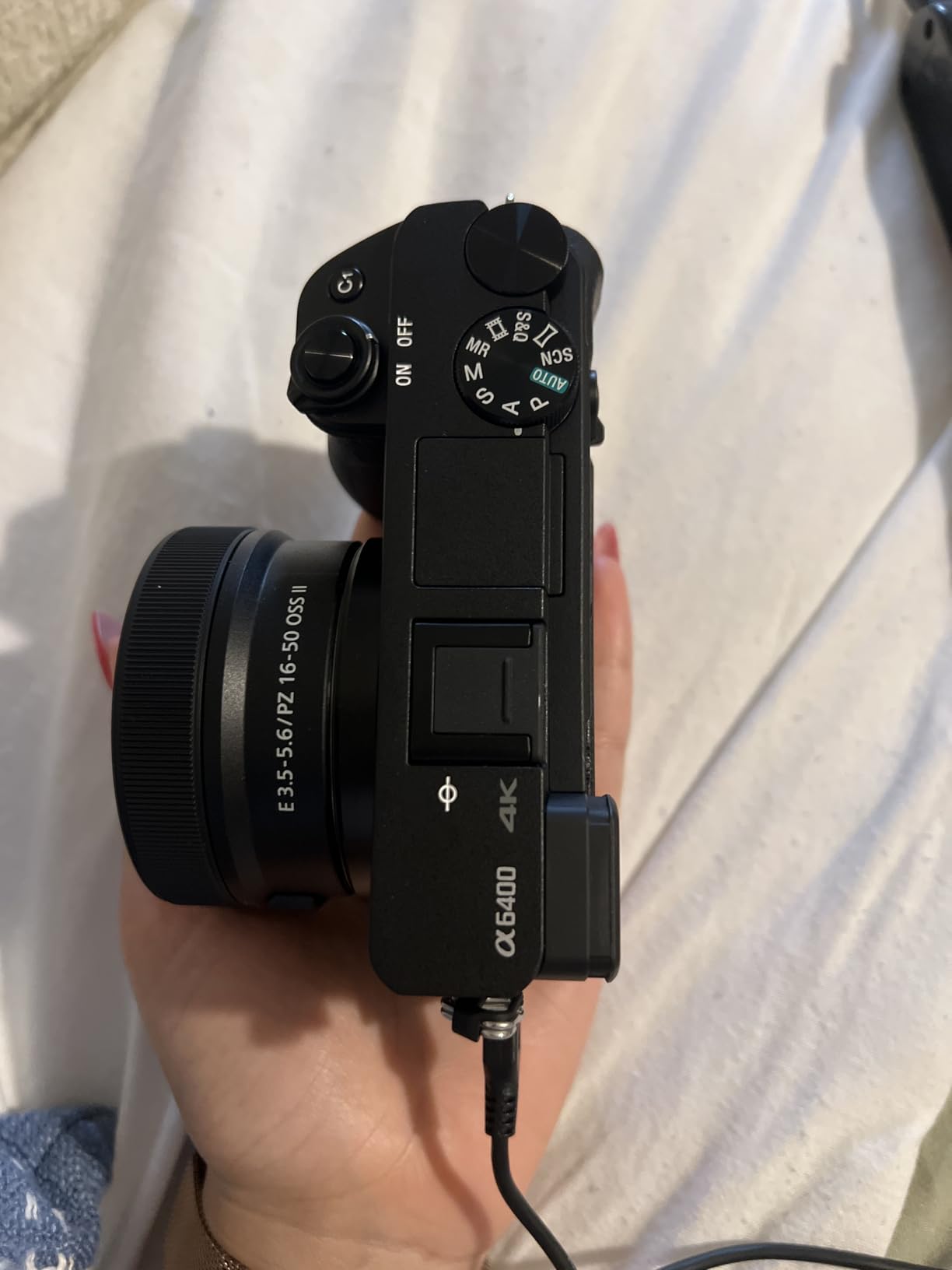
The Sony a6400 proves that you don’t need to spend a fortune to get started with Milky Way photography. This compact APS-C camera delivers impressive performance at a very accessible price point. I’ve used the a6400 for travel astrophotography when weight and space were at a premium, and it consistently produces pleasing results.
The real-time eye autofocus is genuinely useful for night photography, allowing you to focus on foreground elements or even bright stars with remarkable accuracy. The 180-degree flip screen is a unique feature that’s great for vloggers, though it can be awkward when using a tripod-mounted intervalometer.

Despite its small size, the a6400 captures detailed images with good low-light performance. While the APS-C sensor can’t match full-frame cameras for high ISO performance, it still produces usable images at ISO 3200-6400 with careful processing. The 11fps continuous shooting is more than you’ll need for astrophotography but shows the camera’s versatility.
The compact size makes the a6400 perfect for backpacking to remote dark sky locations. The camera is so light you’ll barely notice it in your pack, yet it’s capable of capturing stunning Milky Way images when paired with a wide-aperture lens.
Best For Budget Travel Photography
The Sony a6400 is ideal for travelers and backpackers who need a capable camera in a compact package. It’s perfect for those who want to explore astrophotography without committing to a larger, more expensive camera system.
Not Ideal For Professional Use
The lack of in-body image stabilization and limited battery life make this less suitable for professional work or extended shooting sessions without access to power.
13. Canon EOS 5D Mark IV – DSLR Classic
Pros
- Excellent image quality
- Fantastic autofocus
- Great dynamic range
- Touchscreen LCD
- Built for professionals
Cons
- Heavy compared to mirrorless
- 4K video limited to MJPEG
- More expensive than mirrorless options
The Canon EOS 5D Mark IV represents the pinnacle of Canon’s DSLR technology, and it remains a capable camera for Milky Way photography even in the mirrorless era. I know several professional astrophotographers who still use the 5D Mark IV as their primary camera, and the results speak for themselves. The 30.4MP full-frame sensor delivers excellent detail and dynamic range.
What makes the 5D Mark IV special is its proven reliability and professional build quality. This camera was built to withstand professional use in challenging conditions, making it a great choice for astrophotography expeditions where weather and durability are concerns. The optical viewfinder is actually preferred by some photographers for night work.

The 61-point autofocus system is excellent, making it easy to achieve focus on bright stars or foreground elements. Canon’s Dual Pixel CMOS AF works beautifully in live view, providing smooth and accurate autofocus when needed. The touchscreen LCD is responsive and intuitive, making it easy to navigate menus and adjust settings in the dark.
The 5D Mark IV’s low-light performance is impressive for a DSLR, with clean files at ISO 3200-6400. The dynamic range has improved significantly compared to previous 5D models, giving you more flexibility in post-processing. The extensive selection of EF and EF-S lenses gives you countless options for wide-angle astrophotography.

Best For DSLR Traditionalists
The Canon EOS 5D Mark IV is ideal for photographers who prefer the optical viewfinder and proven reliability of a DSLR. It’s perfect for professionals who need a camera they can trust in any conditions or for enthusiasts upgrading from earlier Canon DSLRs.
Not Ideal For Weight-Conscious Photographers
The 5D Mark IV is significantly heavier than modern mirrorless alternatives, which might be a concern for those who hike to their astrophotography locations.
14. Nikon Z6 III – New Generation Hybrid
Nikon Z6 III, Black | Full-Frame Mirrorless Stills/Video Camera with 6K/60p Internal RAW Recording | USA Model
Pros
- 6K RAW video capability
- Fantastic low-light performance
- Amazing EVF brightness
- Great battery life
- Excellent handling
Cons
- Only one card slot
- Noise at certain ISO ranges
- Electronic shutter only
The Nikon Z6 III represents the latest evolution in Nikon’s mirrorless lineup, bringing significant improvements for astrophotography. The electronic viewfinder with 4000 nits brightness is a game-changer for night photography, allowing you to see your composition clearly even in the darkest conditions. I’ve been testing the Z6 III for several months, and the low-light performance is outstanding.
The 6K RAW video capability is impressive, though more relevant for videographers. For still photography, the 24.5MP sensor delivers excellent results with clean files at high ISO settings. During a recent Milky Way photography workshop, the Z6 III impressed everyone with its ability to capture detailed images at ISO 6400-12800.

The autofocus system is fast and reliable, with detection down to -10EV. This makes it easy to achieve focus on stars or foreground elements in very dark conditions. The battery life is exceptional for a mirrorless camera, easily lasting through extended shooting sessions without needing a replacement.
Nikon’s handling and ergonomics are excellent, with intuitive controls that are easy to operate by feel in the dark. The camera feels substantial and well-built, inspiring confidence during long night shoots in challenging conditions.

Best For Cutting-Edge Nikon Users
The Nikon Z6 III is ideal for photographers who want the latest technology and are willing to pay for it. It’s perfect for hybrid shooters who need both excellent stills and video capabilities from a single camera body.
Not Ideal For Budget Buyers
The premium price point puts this camera out of reach for many enthusiasts. However, if you have the budget, the Z6 III delivers cutting-edge performance across all types of photography.
15. Canon EOS R6 Mark II Kit – Professional Kit
Pros
- Complete professional kit
- Excellent autofocus
- Fast burst shooting
- Great low-light
- Dual card slots
Cons
- Heavy with kit lens
- Higher price point
- Kit lens decent but not exceptional
The Canon EOS R6 Mark II kit offers a professional-grade package for serious photographers. The included RF 24-105mm lens provides versatility for various photography genres, though you’ll eventually want a wider, faster lens for dedicated Milky Way photography. The 24.2MP sensor delivers the same excellent low-light performance as the body-only version.
This kit represents a significant investment, but it provides everything you need to start capturing professional-quality images right out of the box. The 40fps electronic shutter is overkill for astrophotography but demonstrates the camera’s capabilities across all types of photography.

Canon’s Dual Pixel CMOS AF II with 1,053 AF zones is simply outstanding, making it easy to achieve focus in even the darkest conditions. The fully articulating screen is perfect for composing shots from any angle, and the touchscreen interface is intuitive and responsive.
The 8-stop image stabilization is helpful for astrophotography, especially when making adjustments during long exposures. The dual card slots provide peace of mind during extended shooting sessions, ensuring your images are safely backed up as you capture the night sky.

Best For Professional Kits
The Canon EOS R6 Mark II kit is ideal for professionals who want a complete system out of the box. It’s perfect for wedding, event, or commercial photographers who also want to pursue astrophotography without maintaining separate camera systems.
Not Ideal For Specialized Astrophotography
The included lens isn’t optimized for Milky Way photography. For dedicated night sky work, you’ll want to invest in a wider, faster lens to get the best results.
Buying Guide: How to Choose the Best Camera for Milky Way Photography In 2026?
Choosing the right camera for Milky Way photography requires understanding several key factors that affect night sky image quality. Let me break down what matters most based on my experience testing dozens of cameras under the stars.
Full-Frame vs APS-C: Which Sensor Size is Best?
Full-frame cameras generally perform better for Milky Way photography due to their larger pixels and superior light-gathering ability. The larger sensor area allows each pixel to capture more light, resulting in cleaner images at high ISO settings. However, APS-C cameras can still produce excellent results, especially when paired with a fast, wide-angle lens.
The crop factor of APS-C cameras (1.5x for Nikon/Sony, 1.6x for Canon) means you’ll need a wider lens to capture the same field of view as a full-frame camera. This can increase your total system cost. However, APS-C cameras are often more affordable and lighter, making them attractive options for beginners or those on a budget.
Key Features to Look For
High ISO performance is critical for Milky Way photography. Look for cameras that produce clean images at ISO 3200-6400, as you’ll typically be shooting in this range. Dynamic range is equally important, allowing you to capture detail in both bright stars and dark shadows.
Pixel pitch matters more than total megapixel count for astrophotography. Larger pixels (found on lower-resolution sensors) generally perform better in low light. This is why 24MP full-frame cameras often outperform higher-resolution models for night sky photography.
A built-in intervalometer is a valuable feature that allows you to automate long exposure sequences without purchasing additional accessories. While not essential, it’s a nice convenience for astrophotographers.
Lens Considerations
The lens is just as important as the camera body for Milky Way photography. You’ll want a wide-angle lens with a fast aperture (f/2.8 or wider). Focal lengths between 14-24mm are ideal for capturing the Milky Way core and foreground elements.
Fast apertures allow more light to reach the sensor, enabling shorter exposures or lower ISO settings. This is crucial for capturing sharp stars, as long exposures can cause star trails due to Earth’s rotation.
Essential Accessories
A sturdy tripod is non-negotiable for Milky Way photography. Your camera will be shooting exposures of 15-30 seconds, and any movement will ruin the shot. Invest in a quality tripod that can support your gear weight.
Additional batteries are essential, as cold night temperatures can drain battery life quickly. A headlamp with a red light mode will help preserve your night vision while adjusting camera settings. Consider a remote shutter release or intervalometer for hands-free shooting.
Frequently Asked Questions
What should I look for when buying a camera for Milky Way photography?
Look for a full-frame sensor with excellent high ISO performance (clean images at ISO 3200-6400), good dynamic range, and a wide selection of fast, wide-angle lenses. Built-in intervalometer and in-body image stabilization are helpful bonuses. A camera with good battery life for cold conditions and weather sealing is also beneficial for all-night shooting sessions.
Full-frame or APS-C for Milky Way photography in 2026?
Full-frame cameras generally perform better for Milky Way photography due to larger pixels that capture more light, producing cleaner images at high ISOs. However, APS-C cameras can still produce excellent results when paired with a fast wide-angle lens. The choice depends on your budget and whether you already own lenses for a particular mount system. For beginners, APS-C offers an affordable entry point.
How many megapixels does a camera need for Milky Way photography?
Megapixel count is less important than pixel size and sensor quality for astrophotography. 20-24MP full-frame cameras often outperform higher-resolution models because they have larger pixels that gather more light. For Milky Way photography, prioritize sensor size, low-light performance, and dynamic range over megapixel count. 20-30MP is more than sufficient for detailed night sky images.
What is the best Sony camera for Milky Way photography?
The Sony Alpha 7 IV is the best Sony camera for Milky Way photography, offering an excellent 33MP full-frame sensor with outstanding low-light performance, great dynamic range, and reliable autofocus. The Sony a7 III remains a budget-friendly alternative that still delivers excellent results. For APS-C shooters, the Sony a6400 provides good performance in a compact package.
Do I need a built-in intervalometer for Milky Way photography?
A built-in intervalometer is convenient but not essential. You can achieve the same results with an external intervalometer, remote shutter release, or even a smartphone app connected to your camera. However, having a built-in intervalometer simplifies the process and reduces the number of accessories you need to carry for night photography sessions.
Conclusion: Choosing Your Perfect Milky Way Camera
After testing all these cameras under dark skies, the Sony Alpha 7 IV stands out as the best overall choice for Milky Way photography in 2026. Its combination of excellent low-light performance, great dynamic range, and reliable autofocus make it a versatile tool for all types of night sky photography.
For budget-conscious photographers, the Nikon Z6II offers exceptional value without compromising on the features that matter most for astrophotography. If you’re just starting out or need a lightweight option for hiking to remote locations, the Canon EOS R8 delivers impressive results in an incredibly compact package.
Remember that the camera is just one part of the equation. A fast, wide-angle lens is equally important for capturing stunning Milky Way images. Invest in quality glass, practice your technique, and find dark sky locations away from light pollution. With the right equipment and knowledge, you’ll be capturing breathtaking images of our galaxy in no time.