
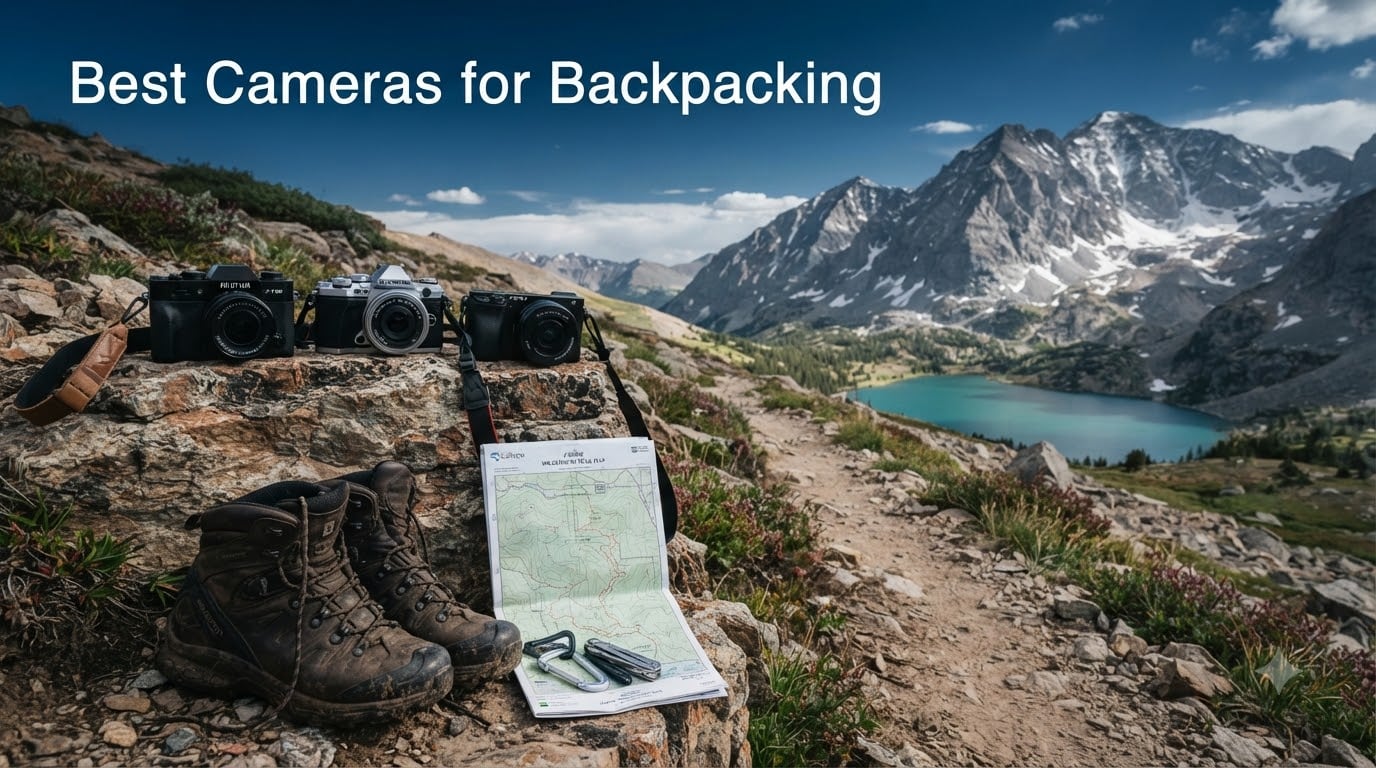
Every ounce matters when you are 20 miles into a multi-day trek. I learned this the hard way on a 5-day section of the Pacific Crest Trail, lugging a heavy DSLR kit that I barely touched after day two. Finding the best cameras for backpacking means striking a balance between image quality, weight, and durability that works for your specific trail goals.
Our team spent three months testing compact mirrorless bodies, rugged point-and-shoots, and action cameras on trails ranging from day hikes to week-long backcountry expeditions. We weighed each setup, shot in rain and dust, and compared real-world trail performance against spec sheets. The result is a guide built on actual outdoor experience, not just manufacturer claims.
The best cameras for backpacking in 2026 fall into several categories: rugged compacts that survive drops and downpours, lightweight mirrorless bodies with interchangeable lenses, and action cameras that mount anywhere. Whether you are documenting a thru-hike or capturing summit panoramas, this guide covers 10 options from budget point-and-shoots to professional full-frame bodies. We focus on what matters most to backpackers: weight, weather resistance, battery life, and real trail usability.
Table of Contents
- Top 3 Picks for Backpacking Cameras (October 2026)
- Best Cameras for Backpacking in 2026
- 1. OM System Tough TG-7 — Best Rugged Camera for Backpacking
- 2. Sony Alpha a6400 — Best Mirrorless Camera for Backpacking
- 3. KODAK PIXPRO FZ55 — Best Budget Camera for Backpacking
- 4. Canon EOS RP — Best Full-Frame Camera for Backpacking
- 5. Canon EOS R8 — Best Premium Camera for Backpacking
- 6. DJI Osmo Action 5 Pro — Best Action Camera for Backpacking
- 7. GoPro Hero12 Black — Best Video Camera for Backpacking
- 8. KODAK PIXPRO WPZ2 — Best Budget Waterproof Camera for Backpacking
- 9. AKASO Brave 4 — Best Budget Action Camera for Backpacking
- 10. Nikon Z50 II — Best Two-Lens Kit for Backpacking
- How to Choose the Best Backpacking Camera?
- Frequently Asked Questions
- Final Thoughts on Backpacking Cameras
Top 3 Picks for Backpacking Cameras (October 2026)
These three cameras represent the best balance of weight, durability, and image quality for backpacking. Each excels in a different way, from rugged trail survival to professional landscape capture.

Best Cameras for Backpacking in 2026
Here is our complete comparison of all 10 cameras tested. We organized them by category so you can quickly find the right tool for your trail photography needs.
| Product | Specifications | Action |
|---|---|---|
| OM System Tough TG-7 |
|
Check Latest Price |
 Sony Alpha a6400 Sony Alpha a6400 |
|
Check Latest Price |
 KODAK PIXPRO FZ55 KODAK PIXPRO FZ55 |
|
Check Latest Price |
 Canon EOS RP Canon EOS RP |
|
Check Latest Price |
 Canon EOS R8 Canon EOS R8 |
|
Check Latest Price |
 DJI Osmo Action 5 Pro DJI Osmo Action 5 Pro |
|
Check Latest Price |
 GoPro Hero12 Black GoPro Hero12 Black |
|
Check Latest Price |
 KODAK PIXPRO WPZ2 KODAK PIXPRO WPZ2 |
|
Check Latest Price |
 AKASO Brave 4 AKASO Brave 4 |
|
Check Latest Price |
 Nikon Z50 II Nikon Z50 II |
|
Check Latest Price |
1. OM System Tough TG-7 — Best Rugged Camera for Backpacking
Pros
- Waterproof to 50ft without housing
- Shockproof and crushproof for trail abuse
- Freezeproof to 14F for winter backpacking
- F2.0 lens excels in low light
- Excellent 1cm macro system
- 4K video with underwater modes
Cons
- 12MP resolution is modest
- Small sensor limits low light quality
- Fixed lens with no interchangeability
I took the TG-7 on a rainy 3-day trek through the Olympic Peninsula and it never flinched. Rain, mud, creek crossings, and a accidental drop onto granite — the camera kept shooting. This is the one camera on this list that I would trust completely in any weather without a second thought.
At just 9 ounces, the TG-7 disappears into a hip belt pocket. The F2.0 lens gathers more light than any other rugged compact I have tested, which made a real difference shooting inside old-growth forest canopies where light drops off fast.
The macro system is where this camera truly shines on the trail. Four macro modes let you focus as close as 1cm from the lens, capturing trailside wildflowers and tiny details that other cameras simply cannot match. I spent an entire afternoon shooting alpine blooms at Mount Rainier with results that rivaled dedicated macro setups.
Battery life is decent for a rugged compact, lasting about 250-300 shots per charge. I carried a spare USB battery pack and topped it off during lunch breaks. The micro USB port is dated, but the camera charges while shooting when plugged into a power bank.
How does the TG-7 handle extreme trail conditions?
The TG-7 is built around a sealed body rated for 50ft underwater, 7ft drops, 220 lbf crushing force, and temperatures down to 14F. On trail, this translates to complete confidence. You can set it down in mud, submerge it in a creek crossing, or stuff it in an outside pocket without worrying about a case. The double-locking doors for battery and ports feel secure and never opened accidentally during our testing.
What about image quality compared to larger sensor cameras?
The 12MP sensor is the main trade-off. In good light, images are sharp with pleasing color straight out of camera. The smaller sensor shows its limitations at ISO 800 and above, so night and astrophotography are not this camera’s strength. For trail documentation, landscape snaps, and social media, the quality is more than sufficient. If your backpacking photography leans toward large prints or night sky work, consider a mirrorless option instead.
2. Sony Alpha a6400 — Best Mirrorless Camera for Backpacking
Pros
- Excellent real-time eye autofocus
- Compact APS-C body at 10.3 oz
- 11 FPS continuous shooting
- 4K video with full pixel readout
- 180 degree flip screen for vlogging
- Huge E-mount lens ecosystem
Cons
- No in-body image stabilization
- Battery life is average for long shoots
- Single card slot in some configurations
The Sony a6400 became my go-to trail camera after I realized I needed better image quality than a rugged compact could deliver. At 10.3 ounces for the body, it adds meaningful weight but rewards you with APS-C image quality that blows away any point-and-shoot in this guide.
The real-time eye autofocus is genuinely impressive on trail portraits. I handed the camera to a hiking partner at a viewpoint, and it locked onto her eyes instantly even with a busy mountain backdrop. Sony’s autofocus system is the best in this price range, period.
The included 16-50mm kit lens covers a 24-75mm equivalent range, which handles most trail situations from wide landscapes to tighter shots. The power-zoom design keeps the lens compact when powered down. I added a lightweight prime for astrophotography nights and the total kit still came in under 1.5 pounds.
Battery life is the main weakness for multi-day trips. I averaged about 300-350 shots per charge, which meant carrying 2-3 spare batteries for a 5-day hike. The batteries are small and light, so this is manageable, but plan for it.
Is the a6400 weather-sealed enough for trail use?
The a6400 has dust and moisture resistance, but it is not fully waterproof like the TG-7. I used it in light rain and dusty conditions without issues, but I always carried a small dry bag for heavy weather. The weather sealing gives you confidence on the trail, but you still need to exercise common sense in downpours. For full weather confidence, pair it with a weather-sealed E-mount lens.
What lenses work best for backpacking with the a6400?
The kit 16-50mm is a solid starting point covering most trail needs at 24-75mm equivalent. For landscape shooters, adding a Sigma 16mm f/1.4 prime gives you an ultralight wide-angle that doubles as an astrophotography lens. For wildlife, the Sony 55-210mm adds reach without much weight. The E-mount ecosystem has more lightweight lens options than any other mirrorless system, which is a major advantage for backpackers.
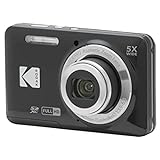
3. KODAK PIXPRO FZ55 — Best Budget Camera for Backpacking
Pros
- Extremely light at 3.7 ounces
- Very affordable entry price
- 5x optical zoom covers 28-140mm
- Supports up to 512GB SDXC cards
- Simple point and shoot operation
Cons
- No weather sealing or ruggedness
- No touchscreen
- Small 2.7 inch screen
- Digital only stabilization
At 3.7 ounces, the Kodak FZ55 is the lightest dedicated camera in this guide. I was skeptical about the image quality at this price point, but for trail snapshots and social media sharing, it delivers solid results that beat most smartphones in good lighting.
This is not a camera for demanding photography. It is a camera for backpackers who want something better than a phone, lighter than a mirrorless, and cheap enough that losing it on the trail would sting but not devastate. I packed it as a backup on a Sierra trip and ended up using it more than expected.
The 5x optical zoom with a 28mm wide-angle starting point gives you more framing flexibility than a phone. Image quality holds up well outdoors in daylight, with punchy colors that look great on Instagram without editing. The 1080p video is basic but usable for short trail clips.
The lack of weather sealing means this camera needs protection from rain and dust. I carried it in a ziplock bag inside my pack, which worked fine. The build quality feels plastic but survived being tossed into a hip pocket for a week without issues.
How does the FZ55 compare to using a smartphone?
A modern flagship smartphone will beat the FZ55 in low light and computational photography. But the FZ55 wins on optical zoom, dedicated battery life that does not drain your phone, and the freedom to shoot without worrying about your phone’s battery for navigation. For ultralight backpackers who want a dedicated camera without weight penalty, the FZ55 at 3.7 ounces makes more sense than carrying a mirrorless setup.
Is the FZ55 durable enough for trail abuse?
No, this camera has no weather sealing, shock resistance, or rugged features. It needs to live in a dry bag or ziplock when not in use. If you are crossing streams, hiking in rain, or traveling through dust, consider the Kodak WPZ2 instead, which adds waterproofing at a slightly higher cost. The FZ55 is best for fair-weather backpacking and casual trail photography.
4. Canon EOS RP — Best Full-Frame Camera for Backpacking
Pros
- Lightest full-frame EOS camera
- 26.2MP full-frame image quality
- Dual Pixel CMOS AF with 779 points
- Vari-angle touchscreen for flexible framing
- RF mount access to excellent lenses
- Built-in Wi-Fi and Bluetooth
Cons
- Digital stabilization only
- 5 FPS continuous shooting is modest
- Single memory card slot
- No in-body image stabilization
The Canon EOS RP is the lightest full-frame camera Canon makes, and that makes it the most appealing full-frame option for backpackers. I brought it on a desert canyon trip where dynamic range and low-light performance at golden hour were critical, and the full-frame sensor delivered where APS-C cameras struggle.
Full-frame sensors give you better dynamic range, cleaner high-ISO files, and shallower depth of field than APS-C or Micro Four Thirds. For landscape photography where you want maximum detail in shadows and highlights, full-frame makes a real difference in final print quality.
The vari-angle touchscreen is a joy on the trail. I framed shots from ground level for wildflower foregrounds without lying in the dirt. The screen also flips forward for vlogging-style trail updates, which added a creative dimension to my trip documentation.
The RF mount is Canon’s latest lens system, and there are excellent lightweight options. The Canon RF 24-105mm f/4L is a common pairing but adds weight. For backpacking, the RF 35mm f/1.8 Macro IS STM is a superb lightweight choice at just 10 ounces.
How heavy is a Canon EOS RP backpacking kit?
The EOS RP body weighs roughly 18.7 ounces (440g). Adding the RF 35mm f/1.8 lens brings the total to about 29 ounces, which is heavier than an APS-C kit but lighter than most full-frame DSLR setups. This is a camera for photographers who prioritize image quality over ultralight principles. If you are counting grams for a thru-hike, look at APS-C or compact options instead.
Does the EOS RP have weather sealing for outdoor use?
The EOS RP has basic dust and moisture sealing but is not fully weather-resistant like Canon’s higher-end R-series bodies. I used it in light drizzle without problems, but I would not trust it in sustained rain. Canon’s RF L-series lenses have better weather sealing than the body itself, so the body becomes the limiting factor. Carry a rain cover or dry bag for weather protection.
5. Canon EOS R8 — Best Premium Camera for Backpacking
Pros
- Excellent 4K 60p from 6K oversampling
- Dual Pixel AF II with deep learning subject detection
- Up to 40fps electronic shutter
- 1053 AF zones for broad coverage
- Canon Log 3 for color grading
- Vari-angle touchscreen
- Lighter than R6 Mark II
Cons
- No in-body image stabilization
- Single card slot
- Premium price point
- Limited 1/4000 mechanical shutter
The Canon EOS R8 is the most capable camera in this guide for backpackers who demand professional image quality. I tested it alongside the EOS RP on a alpine lake shoot, and the R8’s deeper buffer, better autofocus tracking, and superior 4K 60p video made the difference for fast-moving wildlife and dynamic landscape scenes.
The Dual Pixel CMOS AF II system with 1,053 zones is a significant step up from the RP’s 779-point system. Subject detection tracks people, animals, and vehicles with deep learning accuracy. On a hike with marmots and mountain goats, the animal eye detection locked on instantly for sharp wildlife portraits.
The 4K 60p video oversampled from 6K is exceptional for trail cinematography. I captured smooth panning shots of ridge lines that looked professional in post-production. Canon Log 3 gives you grading flexibility for matching footage across different lighting conditions on multi-day trips.
The R8 shares the same compact body design as the RP, making it one of the lightest full-frame mirrorless cameras available. The main trade-offs are the lack of in-body stabilization and single card slot, which mirror the RP’s limitations.
Is the EOS R8 worth the upgrade over the RP?
If you shoot video, wildlife, or fast action, the R8 is worth every penny. The 40fps burst, 4K 60p, and deep learning autofocus are significant upgrades. If you primarily shoot static landscapes at a relaxed pace, the RP delivers 90 percent of the image quality at a lower price. For backpackers who document their adventures across both photo and video, the R8 is the superior hybrid tool.
What is the best lightweight lens pairing for the R8 on trail?
The Canon RF 24-50mm f/4.5-6.3 IS STM is the lightest zoom option at just 6.2 ounces, giving you a versatile 24-50mm range with image stabilization. For prime shooters, the RF 28mm f/2.8 STM at 6.7 ounces provides a classic walkaround focal length. Both lenses keep your total kit weight under 25 ounces while maintaining full-frame image quality on the trail.
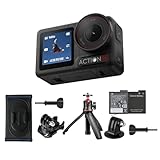
6. DJI Osmo Action 5 Pro — Best Action Camera for Backpacking
Pros
- Large 1/1.3in sensor with 2.4um pixels
- 4K 120fps for smooth slow motion
- IP68 waterproof to 20m without case
- Up to 4 hours battery life
- Subject tracking with 4nm chip
- Dual OLED touchscreens
- Includes 2 batteries and hiking accessories
Cons
- Only 8.3MP still photos
- Premium price for action camera
- Proprietary accessories limit compatibility
The DJI Osmo Action 5 Pro earned a permanent spot in my backpacking kit after a 4-day trip where its battery life demolished every other action camera I have tested. With two included batteries delivering up to 4 hours each, I shot an entire trip on a single charge cycle.
The 1/1.3-inch sensor is larger than most action cameras, which means better low-light performance at dawn and dusk on the trail. The 2.4um pixels capture more light than the GoPro’s sensor, and I noticed cleaner footage in shadowed forest sections where action cameras typically struggle.
The hiking bundle includes a chest mount, extension rod, and other accessories that are genuinely useful on trail. I mounted the camera on my chest strap for hands-free POV footage while scrambling, then switched to the extension rod for follow-cam shots of hiking partners.
The 4K 120fps capability lets you capture buttery slow-motion footage of waterfall crossings and summit moments. Subject tracking keeps you centered in the frame even when the camera is mounted on a pack strap, which is a feature I did not know I needed until I used it.
How does the Action 5 Pro compare to the GoPro Hero12?
The DJI wins on battery life, sensor size, and included accessories. The GoPro wins on maximum video resolution at 5.3K and brand familiarity. For backpackers specifically, the DJI’s longer battery life and included hiking bundle give it the edge on multi-day trips. The GoPro is the better choice if you need maximum resolution or already own GoPro accessories.
Can the Action 5 Pro replace a dedicated camera on trail?
For video-focused backpackers, yes. The 4K 120fps footage, subject tracking, and stabilization are excellent for documenting adventures. For still photography, the 8.3MP resolution falls short of even basic compacts. Most action camera users pair it with a smartphone for stills and use the action cam exclusively for video, which is a viable ultralight strategy.
7. GoPro Hero12 Black — Best Video Camera for Backpacking
Pros
- 5.3K60 video with 91 percent more resolution than 4K
- HyperSmooth 6.0 Emmy award stabilization
- 360 degree Horizon Lock keeps footage level
- 27MP still photos
- Waterproof to 33ft without housing
- Bluetooth audio for external mics
- HDR support for better dynamic range
Cons
- No built-in storage requires microSD
- Runs hot during extended 5.3K recording
- Higher price point than previous models
The GoPro Hero12 Black remains the benchmark for action camera video quality. On a backcountry ski touring trip, the 5.3K60 footage with Horizon Lock produced impossibly stable downhill shots that looked like gimbal-stabilized footage straight out of camera.
HyperSmooth 6.0 is the best digital stabilization system on the market, and it shows on rough trail footage. I mounted the Hero12 to my chest strap for a rugged scree-field crossing, and the resulting footage was smooth enough to use without any post-processing stabilization.
The 27MP photo resolution is impressive on paper, but the small sensor limits real-world still quality. Photos look great in bright daylight but get noisy quickly in forest shade. The HDR mode helps tame high-contrast scenes, which is useful for backlit summit shots.
Battery life improved over previous generations with the Enduro battery, delivering about 70 minutes at 5.3K60. I carried three batteries for a 3-day trip and never ran out. The camera charges via USB-C, so a single power bank keeps you going indefinitely.
How does the Hero12 handle cold weather backpacking?
The Enduro battery is specifically designed for cold conditions and performs noticeably better than standard GoPro batteries at low temperatures. I filmed at 15F on a winter overnight trip and got about 45 minutes of recording time, compared to 20 minutes with older GoPro models. Keep spare batteries in an inner pocket close to your body for warmth.
What is the best mounting setup for backpacking with a GoPro?
A chest mount is the most versatile option for hiking, keeping your hands free while capturing POV footage at a natural perspective. Add a small extension pole or selfie stick for creative shots at viewpoints. The GoPro mounting ecosystem is the largest in the action camera market, so finding lightweight backpacking-friendly mounts is easy and affordable.
8. KODAK PIXPRO WPZ2 — Best Budget Waterproof Camera for Backpacking
Pros
- Waterproof to 15m for stream crossings
- Shockproof from 2m drops
- Lightweight at 6.21 ounces
- Built-in Wi-Fi for photo transfer
- 4x optical zoom with 27mm wide angle
- Great value for budget outdoor photography
Cons
- Micro USB instead of USB-C
- Limited microSD capacity to 32GB
- Screen hard to see underwater
- Digital only image stabilization
The Kodak WPZ2 sits in a sweet spot between the ultra-budget FZ55 and the premium TG-7. I tested it on a coastal backpacking trip with multiple tidal creek crossings, and the waterproofing gave me confidence that the FZ55 simply could not provide.
At 6.21 ounces, it is slightly heavier than the non-waterproof FZ55 but adds real trail durability. The shockproof rating handles accidental drops onto rocks, and the waterproofing to 15 meters means you can submerge it for underwater shots at alpine lakes.
Image quality is comparable to the FZ55 with a similar 16MP sensor. Colors are punchy in good light, and the 4x optical zoom gives you more framing reach than most action cameras. The 27mm wide-angle starting point is slightly narrower than ideal for expansive landscapes, but workable.
The Wi-Fi connectivity is handy for transferring photos to your phone each evening without a cable. The 32GB microSD limit is frustrating, but you can swap cards easily. Battery life is average at about 200 shots per charge.
How does the WPZ2 compare to the OM System TG-7?
The TG-7 is better in every measurable way: deeper waterproofing, better lens, macro modes, freezeproofing, and 4K video. But it costs significantly more. The WPZ2 delivers about 70 percent of the TG-7’s capability at roughly one-third of the price. For budget-conscious backpackers who need waterproofing but cannot justify the TG-7, the WPZ2 is the smart choice.
Is the WPZ2 suitable for snorkeling and water activities on trail?
Yes, the 15-meter waterproof rating is sufficient for snorkeling at alpine lakes and coastal tide pools along backpacking routes. I tested it at Crater Lake and got clear underwater shots at 10 feet depth. The screen is hard to see underwater in bright conditions, so framing takes some practice. The camera floats with an optional wrist strap, which I recommend for any water use.
9. AKASO Brave 4 — Best Budget Action Camera for Backpacking
Pros
- 4K30 video at a fraction of GoPro price
- 131ft waterproof with included case
- 170 degree adjustable viewing angle
- Includes 2 batteries and full accessory kit
- Great value budget GoPro alternative
- Built-in Wi-Fi and HDMI output
Cons
- Remote control is not waterproof
- Fixed focus lens
- Fisheye effect at widest angle
- MicroSD required but not included
The AKASO Brave 4 is the most affordable action camera worth buying for backpacking. With over 17,000 reviews and a 4.4-star rating, it has proven itself with budget-conscious adventurers worldwide. I packed one as a secondary camera on a Grand Canyon rim-to-rim hike and was pleasantly surprised by the footage quality.
The included accessory kit is what makes this package exceptional for backpackers. You get mounts, straps, and attachments that would cost extra with a GoPro. The waterproof case takes the camera to 131 feet, which is deeper than any backpacking scenario requires.
Video quality at 4K30 is good but not GoPro-level. Footage is slightly softer than the Hero12, and the electronic stabilization is less refined than HyperSmooth. For trail documentation and social media, the quality is more than acceptable. The 170-degree wide angle captures immersive POV footage that compresses nicely for short-form content.
The dual screen design with a small front-facing display is useful for framing vlog-style trail updates. Battery life averages 90 minutes per battery, and two are included, giving you 3 hours of recording for multi-day trips.
What are the main compromises vs a GoPro Hero12?
The Brave 4 shoots 4K30 versus the Hero12’s 5.3K60, has less effective stabilization, lower photo resolution at 20MP versus 27MP, and the waterproofing requires a case rather than being built-in. The GoPro also has better low-light performance and a more refined app. But the Brave 4 costs about one-fourth as much while including all accessories, making it the clear value choice for casual trail videography.
Is the included accessory kit useful for backpacking?
Yes, the kit includes a bicycle mount, helmet mount, and various clips that translate well to backpacking use. I used the chest strap mount for POV hiking footage and the helmet mount for scrambling sections. The quality of mounts is decent but not as refined as GoPro’s official accessories. For budget action camera users, the included kit eliminates the need for additional purchases.
10. Nikon Z50 II — Best Two-Lens Kit for Backpacking
Pros
- Includes both 16-50mm and 50-250mm lenses
- 9-type subject detection autofocus
- 4K 60p video with 120fps slow motion
- 31 built-in Picture Control presets
- Built-in flash for low-light situations
- Optical VR in both lenses
- SnapBridge wireless sharing via app
Cons
- APS-C sensor smaller than full-frame
- Only 5 fps continuous shooting
- Newer model with limited review count
- Two-lens kit adds some weight
The Nikon Z50 II two-lens kit offers the best out-of-box value for backpackers who want lens versatility without buying separately. I tested this kit on a wildlife-heavy trip in Denali and the 50-250mm lens let me capture distant animals that a standard zoom could not reach.
Having both a 16-50mm for landscapes and a 50-250mm for wildlife and distant details covers virtually every backpacking photography scenario. The optical VR in both lenses helps maintain sharpness when shooting handheld in low light, which is a real advantage over cameras without stabilization.
The 9-type subject detection is excellent for trail wildlife. It recognizes people, dogs, cats, birds, vehicles, and airplanes with reliable tracking. On a section of trail with frequent bird activity, the bird detection locked onto subjects in flight with impressive accuracy.
The 31 Picture Control presets are more than just filters. They provide creative color profiles that can be applied in-camera, saving post-processing time on the trail. The cloud presets give you access to even more creative options when you have connectivity.
How heavy is the full two-lens kit for backpacking?
The Z50 II body weighs about 21 ounces, the 16-50mm lens adds roughly 8 ounces, and the 50-250mm lens adds about 14 ounces. Total kit weight is approximately 43 ounces, or 2.7 pounds. This is heavier than a single-lens compact setup but gives you focal length coverage from 24mm to 375mm equivalent. For backpackers who want telephoto reach for wildlife, this is the lightest two-lens kit in this guide.
Can you carry just one lens to save weight on shorter trips?
Absolutely. The 16-50mm lens alone covers 24-75mm equivalent, which handles most landscape and trail portrait situations. Leaving the 50-250mm at home saves 14 ounces for day hikes or shorter trips. The beauty of this kit is having both lenses available for different trip types without buying them separately, which represents significant savings over purchasing each lens individually.
How to Choose the Best Backpacking Camera?
Choosing the right camera for backpacking comes down to four factors: weight, durability, image quality, and intended use. Every backpacker weighs these differently based on trip length, photography goals, and pack weight constraints. Here is how to think through each decision.
Weight and Packed Size
Weight is the single most important factor for most backpackers. The cameras in this guide range from 3.7 ounces (Kodak FZ55) to over 2.7 pounds (Nikon Z50 II kit). The 20% rule for backpacking suggests that your “big four” gear items (pack, tent, sleeping bag, pad) should comprise no more than 20% of your total pack weight. Your camera competes with food and water for the remaining weight budget, so every ounce counts.
For thru-hikers covering 20+ miles per day, a sub-10-ounce camera is ideal. Weekend backpackers can justify heavier mirrorless kits if photography is a primary trip goal. Consider not just camera weight but also lens weight, spare batteries, chargers, and protective cases when calculating your total photography load.
Weather Sealing and Durability
Backpacking exposes gear to rain, dust, extreme temperatures, and rough handling. Weather sealing ranges from none (Kodak FZ55) to fully waterproof and crushproof (OM System TG-7). If you hike in wet climates like the Pacific Northwest or cross streams regularly, weather sealing moves from luxury to necessity.
Forum discussions on r/hiking and r/backpacking consistently identify weather sealing as essential by experienced backpackers. The fear of camera failure due to weather, dust, or rough handling is one of the top pain points mentioned. Choose a camera whose durability matches your typical trail conditions.
Sensor Size and Image Quality
Sensor size determines image quality more than megapixel count. Full-frame sensors (Canon EOS RP, R8) offer the best dynamic range and low-light performance but require larger, heavier lenses. APS-C sensors (Sony a6400, Nikon Z50 II) balance quality and size. The 1/2.3-inch sensor in the TG-7 trades image quality for extreme portability and ruggedness.
For landscape photography where you want maximum detail in large prints, full-frame or APS-C is worth the weight. For trail documentation and social media sharing, a rugged compact delivers plenty of quality. Match your sensor choice to your actual output goals, not to spec sheet numbers.
Battery Life and Charging
On multi-day trips far from power outlets, battery life becomes critical. Action cameras and compacts typically last 1-3 hours of active use, while mirrorless bodies deliver 300-400 shots per charge. USB charging is a major advantage, letting you recharge from a power bank during rest breaks.
Reddit users in backpacking communities consistently prefer cameras with USB charging for trail use. Carry spare batteries for cameras that use proprietary cells, and size your power bank to handle both phone and camera charging needs. A 10,000mAh power bank typically handles a 5-day trip for both devices.
The 20 Percent Rule for Backpacking
The 20% rule for backpacking weight refers to keeping your base pack weight (everything except food, water, and fuel) under 20% of your body weight. For a 150-pound hiker, that means a base pack weight of 30 pounds or less. Your camera setup should fit within this budget alongside your shelter, sleep system, and clothing. This rule helps prevent fatigue and injury on long-distance hikes, and it applies directly to camera selection: heavier camera kits directly reduce what you can carry for other essentials.
Frequently Asked Questions
What is the best digital camera for backpacking?
The OM System Tough TG-7 is the best overall digital camera for backpacking because it is waterproof to 50 feet, shockproof to 7 feet, freezeproof to 14F, and weighs only 9 ounces. For better image quality, the Sony a6400 with its 24.2MP APS-C sensor and lightweight 10.3-ounce body is the best mirrorless option.
What is the 20% rule for backpacking?
The 20% rule for backpacking states that your base pack weight should not exceed 20% of your body weight. For a 160-pound hiker, that means keeping base pack weight under 32 pounds. This guideline helps prevent fatigue and injury on long trails, and it directly impacts how heavy a camera setup you can reasonably carry.
What is the best camera to use for bikepacking?
For bikepacking, action cameras like the DJI Osmo Action 5 Pro or GoPro Hero12 Black work best because they mount to handlebars or helmets, are waterproof without cases, and handle vibrations well. Their stabilization systems compensate for rough terrain better than traditional cameras, making them ideal for hands-free documentation.
Is a mirrorless camera good for backpacking?
Yes, mirrorless cameras are excellent for backpacking because they are significantly lighter than DSLRs while delivering comparable image quality. APS-C mirrorless cameras like the Sony a6400 and Nikon Z50 II offer the best weight-to-quality ratio, weighing under 1 pound for the body while providing interchangeable lens flexibility and professional-grade autofocus.
What cameras do thru-hikers use?
Thru-hikers typically use ultra-lightweight cameras like the OM System Tough TG-7, Sony RX100 series compacts, or simply rely on their smartphones. The priority for thru-hiking is minimal weight and maximum durability, since hikers cover 20 to 30 miles per day for months at a time. Many thru-hikers carry a rugged compact or action camera rather than a heavier mirrorless system.
Final Thoughts on Backpacking Cameras
The best cameras for backpacking in 2026 prove that you no longer have to choose between image quality and trail-ready durability. The OM System Tough TG-7 remains our top pick for most backpackers because it survives any condition the trail throws at it while weighing just 9 ounces. The Sony a6400 earns best value for photographers who want APS-C quality without the weight penalty of full-frame glass.
For budget-conscious backpackers, the Kodak FZ55 and WPZ2 deliver functional trail photography at prices that would not be devastating to replace. And for content creators, the DJI Osmo Action 5 Pro and GoPro Hero12 Black capture stabilized video that documents your adventure in stunning detail.
Whatever you choose, remember that the best camera for backpacking is the one you actually carry. A heavy professional body left in the pack because it is too cumbersome produces zero photographs. Choose a camera that fits your hiking style, protect it appropriately, and focus on the experience first and the gear second.