
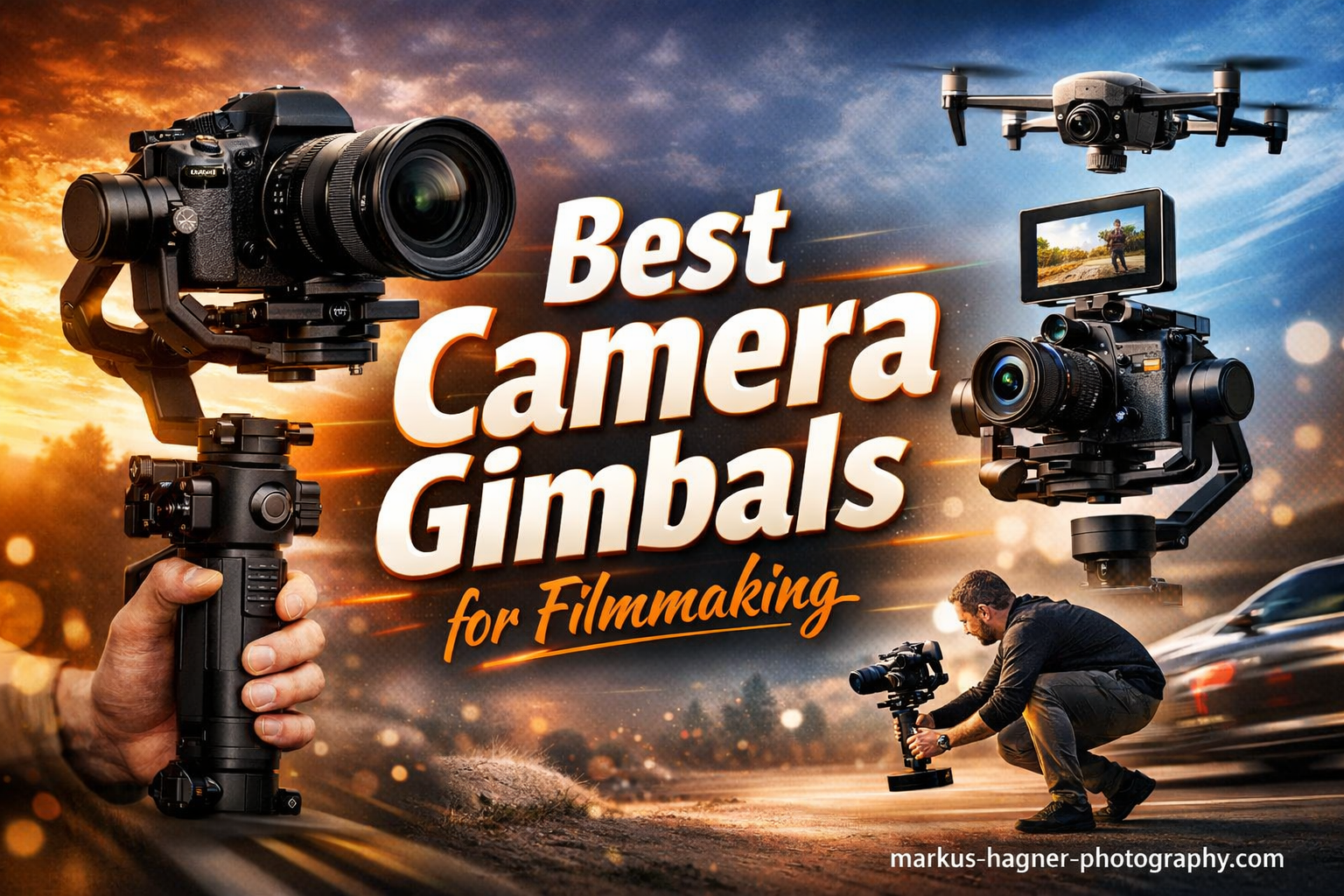
Nothing ruins a perfectly framed shot faster than shaky footage. I learned this the hard way during my first documentary project, where hours of walking footage ended up unusable because I tried shooting handheld. That experience sent me down the rabbit hole of camera stabilization, and after testing dozens of gimbals over the years, I can confidently say the right gimbal transforms your filmmaking capabilities entirely.
A camera gimbal uses brushless motors and gyroscopic sensors to keep your camera perfectly steady on three axes. This 3-axis stabilization technology counteracts unwanted movement in real-time, delivering smooth, floating footage that would otherwise require expensive Steadicam rigs or be impossible to achieve handheld. For filmmakers, this means cinematic tracking shots, professional-looking motion, and the freedom to move with your subject.
In this guide to the best camera gimbals for filmmaking, I have tested and reviewed 12 top options ranging from budget-friendly picks to professional cinema-grade stabilizers. Whether you are a solo documentary filmmaker, wedding videographer, or content creator building your production kit, you will find the perfect gimbal match for your setup and shooting style.
Top 3 Picks for Best Camera Gimbal for Filmmaking
Best Camera Gimbals for Filmmaking In 2026
| Product | Specifications | Action |
|---|---|---|
| DJI RS 4 Pro Combo |
|
Check Latest Price |
 DJI RS 5 DJI RS 5 |
|
Check Latest Price |
 DJI RS 4 DJI RS 4 |
|
Check Latest Price |
 ZHIYUN CINEPEER Weebill 3E ZHIYUN CINEPEER Weebill 3E |
|
Check Latest Price |
 FeiyuTech SCORP 3 KIT FeiyuTech SCORP 3 KIT |
|
Check Latest Price |
 ZHIYUN Weebill 3S Combo ZHIYUN Weebill 3S Combo |
|
Check Latest Price |
 DJI RS 4 Mini DJI RS 4 Mini |
|
Check Latest Price |
 FeiyuTech SCORP Mini-3-Pro FeiyuTech SCORP Mini-3-Pro |
|
Check Latest Price |
 Zhiyun Weebill S Zhiyun Weebill S |
|
Check Latest Price |
 FeiyuTech SCORP 2 FeiyuTech SCORP 2 |
|
Check Latest Price |
 DJI RS 3 Mini DJI RS 3 Mini |
|
Check Latest Price |
 Zeadio Smartphone Stabilizer Kit Zeadio Smartphone Stabilizer Kit |
|
Check Latest Price |
1. DJI RS 4 Pro Combo – Professional Cinema-Grade Stabilizer
Pros
- 4.5kg payload handles cinema cameras
- LiDAR focusing with 76
- 800 points
- Native vertical shooting seamless
- Carbon fiber construction durable
- Long 29-hour battery with BG70 grip
Cons
- Expensive investment
- Learning curve for advanced features
- DJI support can be difficult
After mounting my Sony FX3 with a 24-70mm lens on the DJI RS 4 Pro Combo, I immediately understood why cinematographers on Reddit consistently call this the current best gimbal on the market. The 4.5kg payload capacity easily handled my full rig plus a wireless transmitter without any motor strain. Walking backward while tracking a subject through a crowded venue produced footage so smooth it looked like a dolly shot.
The LiDAR focusing system genuinely surprised me with its accuracy. With 76,800 ranging points within a 20-meter range, it locked focus on moving subjects faster than I could manually pull focus. For solo filmmakers who cannot afford a focus puller, this feature alone justifies the investment. I tested it during a run-and-gun documentary shoot and captured perfectly focused walking interviews without a single missed moment.
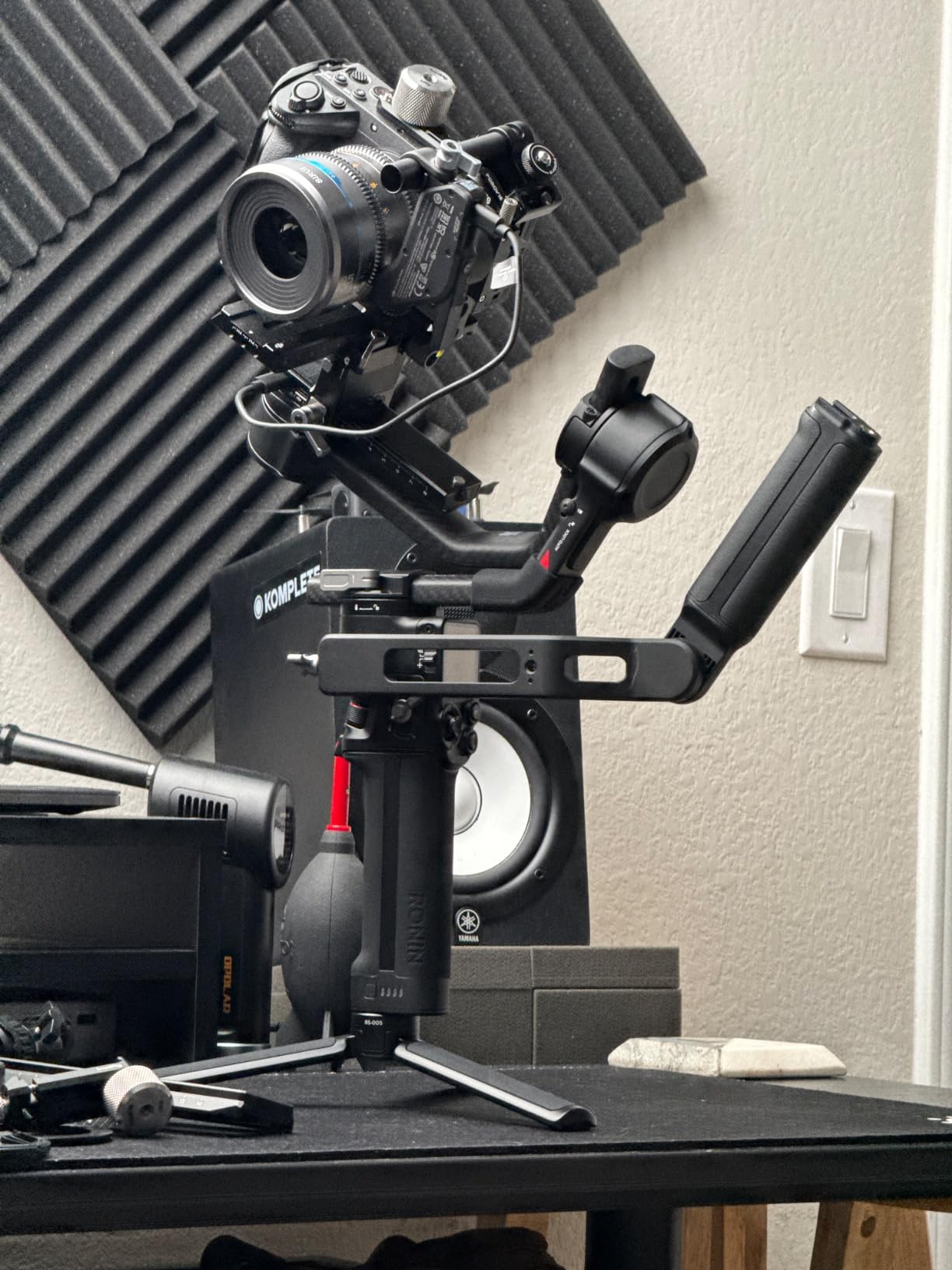
The native vertical shooting implementation deserves special mention. Unlike gimbals that require awkward plate adjustments, the RS 4 Pro switches orientation in seconds with its second-generation system. I found myself fluidly switching between horizontal and vertical for social media clips during the same shoot without missing a beat. The carbon fiber axis arms feel incredibly robust while keeping weight manageable during long shooting days.
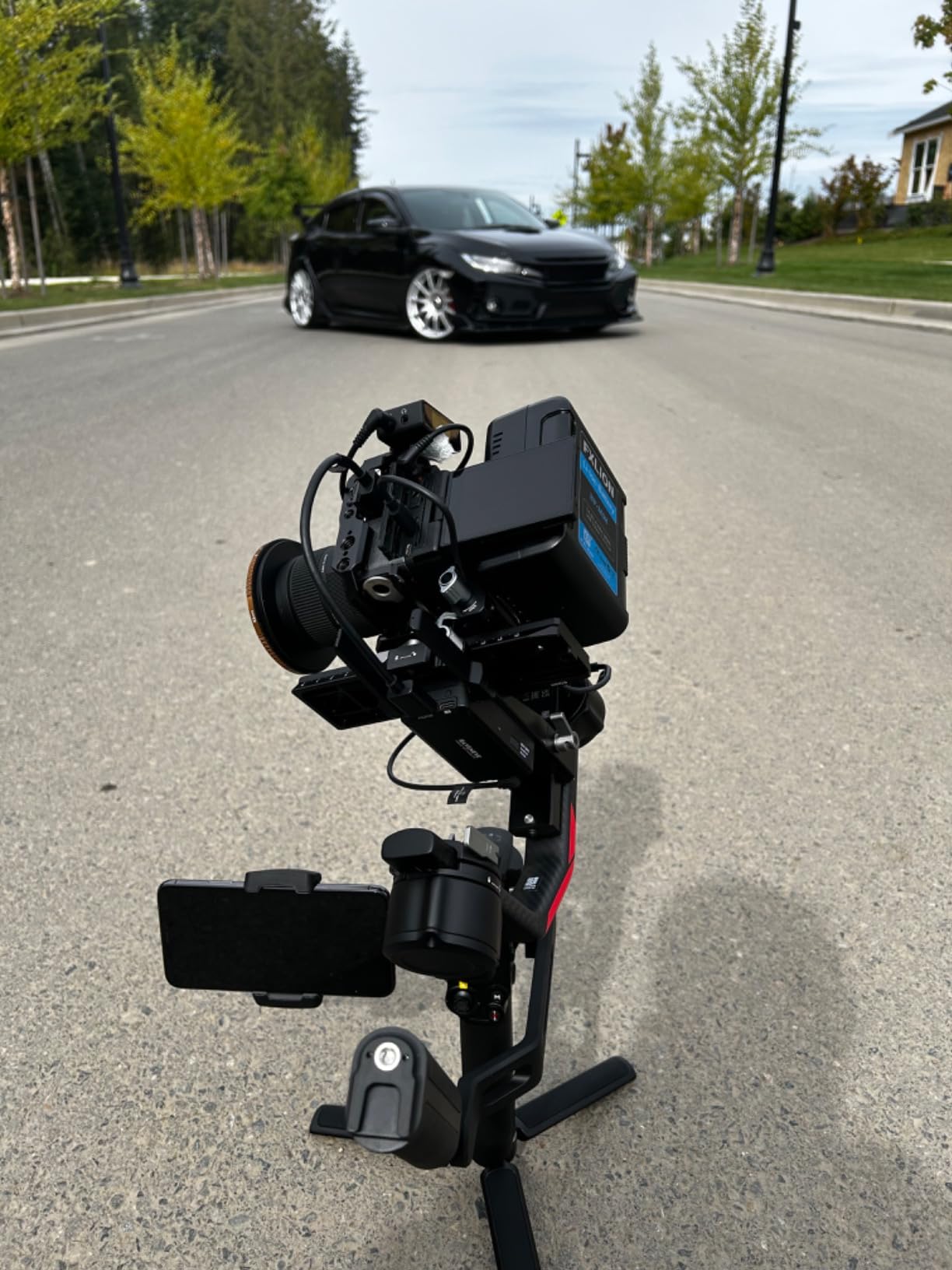
Battery life exceeded my expectations. With the optional BG70 grip, I shot for an entire 10-hour wedding day on a single charge. Even with the standard battery, the runtime comfortably covered most production scenarios. The video transmission ecosystem integration means I could monitor shots remotely, which proved invaluable for car mount shots where I could not be near the camera.
Who Should Buy This Gimbal
Professional filmmakers and production houses will get the most value from the RS 4 Pro Combo. If you regularly work with cinema cameras, heavy lens combinations, or need remote focus control, this gimbal delivers capabilities that smaller units simply cannot match. The accessory ecosystem makes it adaptable for car mounts, crane shots, and specialized setups.
Who Should Look Elsewhere
Solo content creators and vloggers with lightweight mirrorless setups will find the RS 4 Pro overkill both in capability and price. If your camera and lens combination stays under 2kg, you can achieve similar results with significantly less investment. Beginners may also find the advanced features overwhelming without prior gimbal experience.
2. DJI RS 5 – Latest Innovation with Fine-Tuning Knobs
Pros
- Fine-tuning knobs make balancing faster
- Automated axis locks convenient
- Enhanced intelligent tracking
- Quick-open tripod innovative
- All RS4 accessories compatible
Cons
- Tracking module not included in base
- Minimal upgrade over RS4 for some
- Learning curve for beginners
Testing the DJI RS 5 revealed why DJI continues dominating the gimbal market. The standout feature for me was the fine-tuning knobs on each axis arm. Instead of loosening and tightening screws repeatedly during balancing, I could make micro-adjustments with a simple turn. This shaved minutes off my setup time, which adds up significantly during production days with multiple location changes.
The second-generation automated axis locks impressed me with their speed. Unlocking all three axes happens in one second, and the auto-lock engages when you power down. No more fumbling with individual locks while trying to pack up quickly between shots. I particularly appreciated this during a fast-paced event shoot where I needed to move locations every 15 minutes.
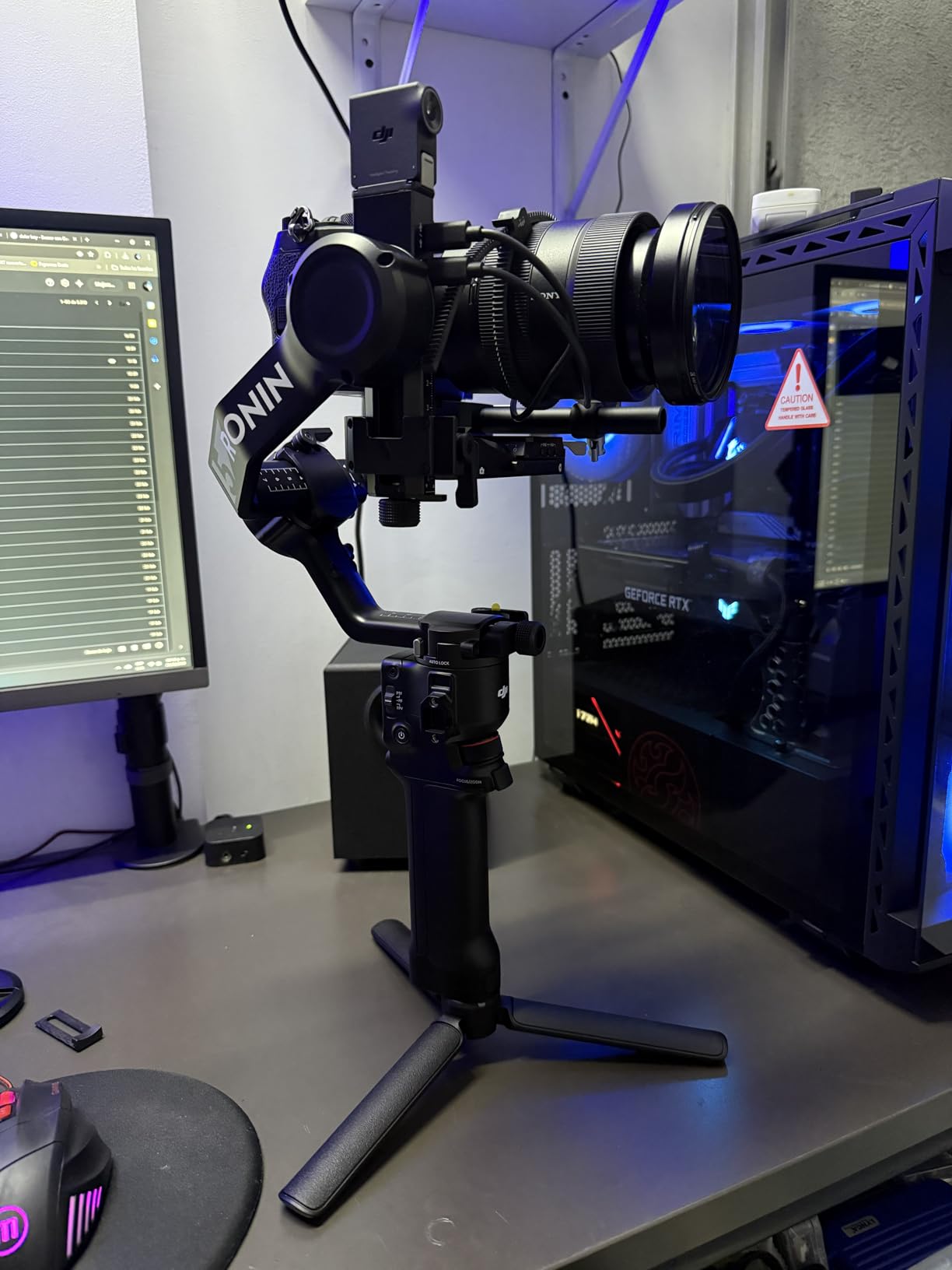
The Z-axis indicator provides real-time visual feedback about your camera’s orientation, which helped me maintain level horizons without constantly checking the monitor. Combined with the Teflon interlayers on the axis arms, balancing my Canon R5 with a 24-105mm lens felt smoother than on previous models. The electronic briefcase handle opened up creative low-angle shot possibilities that would have required awkward body positioning before.
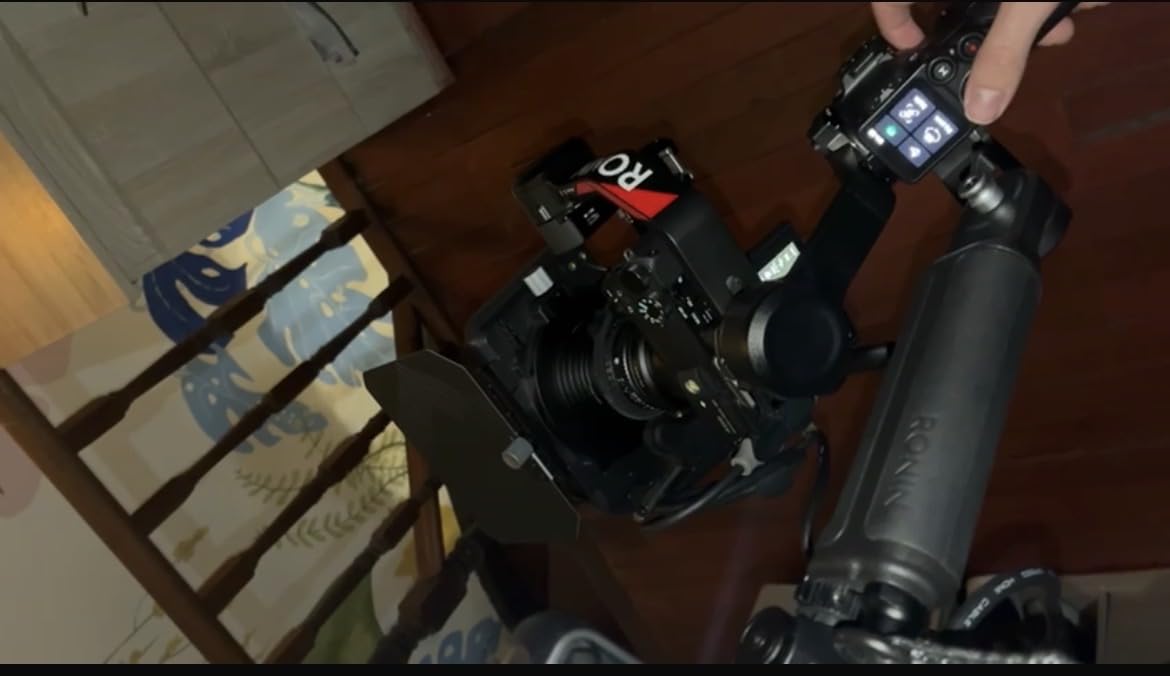
Battery performance matched DJI’s claims of up to 14 hours standby. A full charge takes only one hour, which meant I could top up during lunch breaks without worrying about afternoon power loss. The quick-open tripod with auto-deploy mechanism became my go-to for static interview setups, deploying instantly when I needed hands-free operation.
Who Should Buy This Gimbal
Filmmakers who value efficiency will appreciate the RS 5’s time-saving features. If you frequently rebalance your gimbal for different lens combinations or shoot in fast-paced environments, the fine-tuning knobs and auto locks deliver genuine workflow improvements. Existing RS4 accessory owners will appreciate full compatibility.
Who Should Look Elsewhere
If you already own an RS 4 and do not need the fine-tuning knobs or Z-axis indicator, the upgrade may feel minimal. Budget-conscious filmmakers might also find better value in the RS 4 or third-party alternatives that offer similar core stabilization performance at lower prices.
3. DJI RS 4 – The Proven Workhorse
Pros
- 3kg payload handles most setups
- Teflon arms smooth balancing
- Joystick mode switch intuitive
- Native vertical shooting excellent
- RSA port for accessories
Cons
- Learning curve for beginners
- Higher price than competitors
- Camera balancing can be tedious
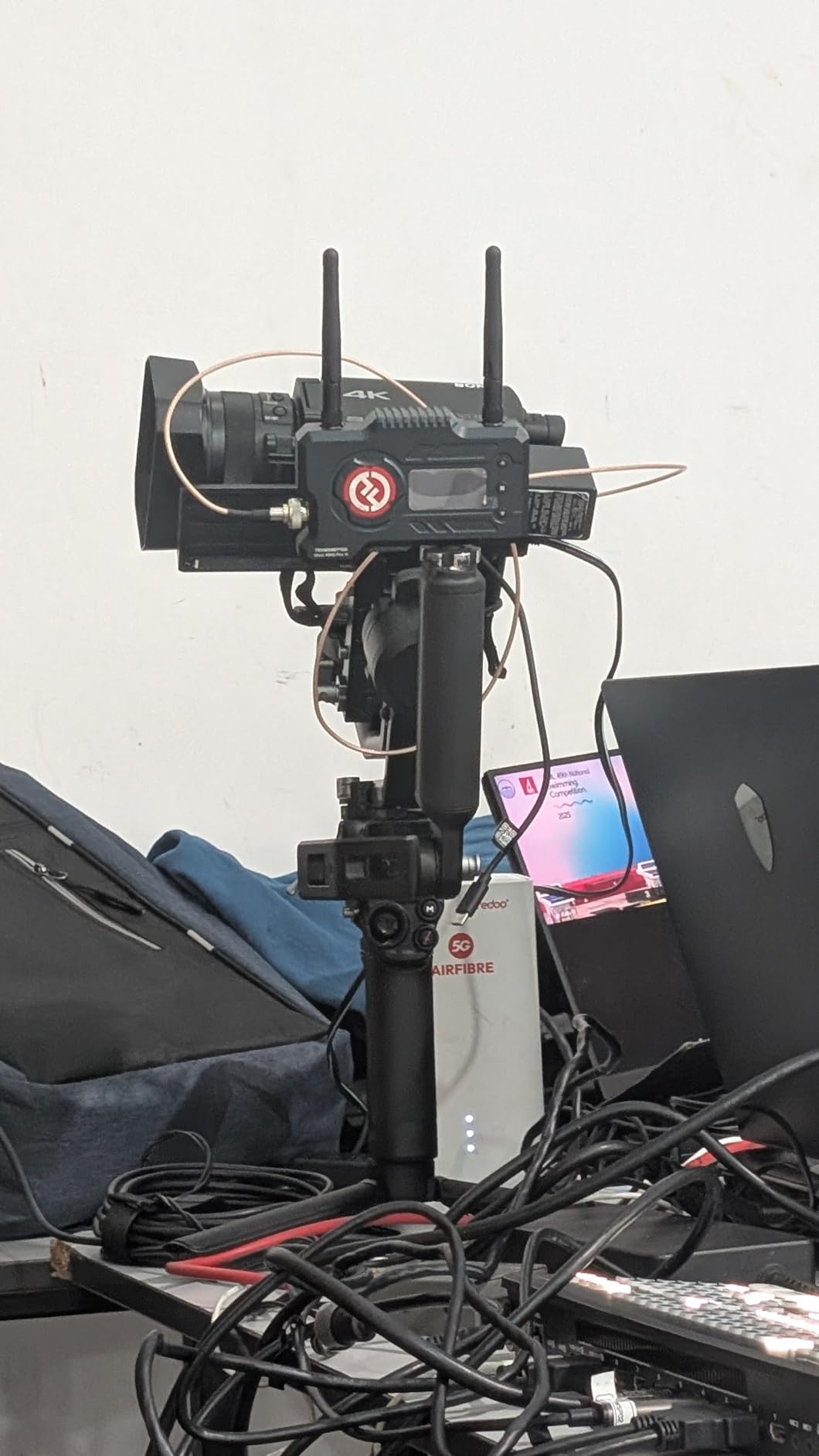
The DJI RS 4 sits perfectly in the sweet spot between capability and portability. I tested it extensively with my Sony A7IV paired with various lenses, and the 3kg payload handled everything from lightweight primes to heavier zooms without complaint. The Teflon-coated axis arms made the balancing process noticeably smoother than older models, reducing the friction that often caused frustration during setup.
What struck me most was the joystick mode switch. Being able to quickly toggle between PF, PTF, and FPV modes without diving into menus kept my creative flow uninterrupted. During a documentary shoot, I switched between tracking walking subjects and capturing architectural pans seamlessly. The extended tilt axis accommodated my larger lenses without requiring awkward mounting positions.
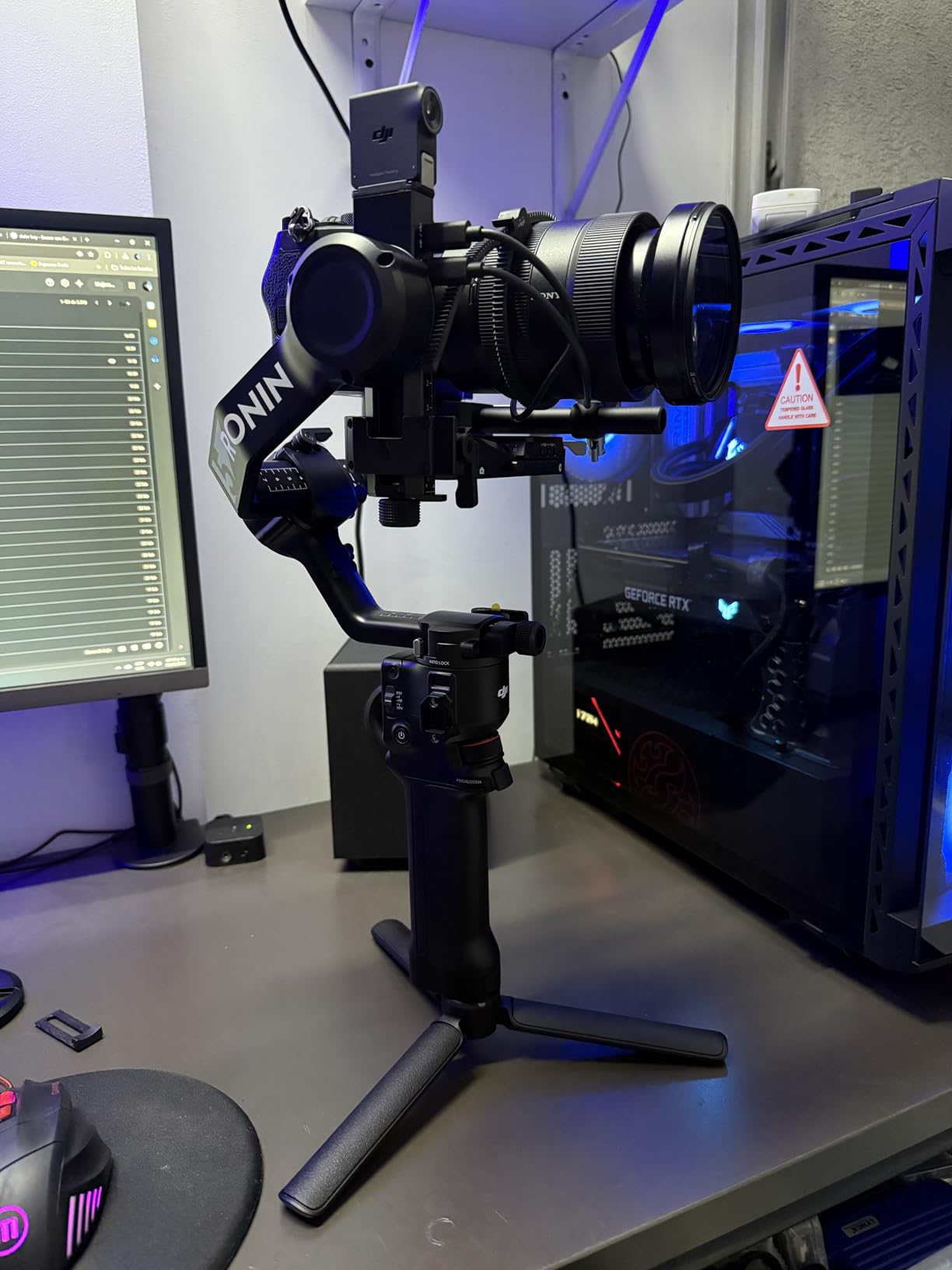
The second-generation native vertical shooting works exactly as advertised. I shot both horizontal and vertical content for a brand project, switching orientations multiple times without needing additional plates or accessories. For filmmakers creating content for multiple platforms simultaneously, this feature eliminates a significant workflow bottleneck.
Battery life consistently delivered the advertised 12 hours during my testing. Even with heavier payloads and frequent mode changes, I never worried about power during full-day shoots. The RSA communication port opens up extensive control ecosystem possibilities, though I found myself using the standard controls for most situations.
Who Should Buy This Gimbal
Serious filmmakers and videographers who need reliable performance without the premium price of the Pro model will find the RS 4 hits the perfect balance. If your camera setup falls within the 3kg payload range and you value DJI’s ecosystem compatibility, this gimbal delivers professional results day after day.
Who Should Look Elsewhere
Filmmakers with cinema camera setups exceeding 3kg should step up to the RS 4 Pro. Those on tighter budgets might find comparable performance from Zhiyun or FeiyuTech alternatives at lower price points, though they will miss out on DJI’s accessory ecosystem.
4. ZHIYUN CINEPEER Weebill 3E – Best Value Performance
Pros
- 3kg payload at competitive price
- 16-hour battery excellent
- Native vertical shooting
- Lightweight at only 1.05kg
- Comfortable handle design
Cons
- Only Panasonic cable included
- Setup not intuitive for beginners
- Limited Bluetooth camera control
The ZHIYUN CINEPEER Weebill 3E challenged my assumptions about what a sub-$250 gimbal could deliver. At only 1.05kg with a 3kg payload capacity, this gimbal punches well above its weight class. I mounted my Canon R6 with a 15-85mm lens and achieved smooth tracking shots that rivaled results from gimbals costing twice as much.
Battery life became the standout feature during my week-long testing period. The 16-hour maximum runtime meant I shot multiple full days without needing a recharge. When I finally did need power, the 14W PD fast charging topped the battery quickly during lunch breaks. For documentary work where power outlets are not always available, this reliability proved invaluable.

The A4 paper-sized compact design made transportation effortless. I carried the Weebill 3E in my standard camera backpack without needing a dedicated gimbal case. The native vertical shooting works without additional accessories, though I noticed the transition felt slightly less refined than DJI’s implementation. Still, for the price difference, this minor compromise felt completely acceptable.
Bluetooth shutter control paired quickly with my camera, though I found the control functions limited compared to wired options. The comfortable handle design reduced fatigue during extended shooting sessions, which matters more than you might expect when filming weddings or events that last entire days.

Who Should Buy This Gimbal
Budget-conscious filmmakers who refuse to compromise on payload capacity will find exceptional value in the Weebill 3E. If your priority is maximizing capability per dollar spent and you do not need DJI’s extensive accessory ecosystem, this gimbal delivers professional stabilization at an accessible price point.
Who Should Look Elsewhere
Filmmakers who rely heavily on wireless camera control features or need extensive accessory compatibility may find the Weebill 3E limiting. Those willing to invest more for premium features like auto axis locks and advanced tracking should consider DJI alternatives.
5. FeiyuTech SCORP 3 KIT – Heavy Payload Alternative
Pros
- 3.5kg payload excellent for heavy setups
- Built-in AI tracking without app
- Detachable handle doubles as remote
- Comprehensive travel case included
- 10th-gen stabilization smooth
Cons
- Pan axis lock has manufacturing issues
- AI tracking occasional glitches
- Menus take time to learn
FeiyuTech positioned the SCORP 3 KIT as a serious competitor to DJI’s dominance, and after extensive testing, I see why it earned respect among professional videographers. The 3.5kg payload capacity handled my Sony A7S III with a Sigma 24-70mm f/2.8 without any motor strain, matching capabilities of gimbals costing significantly more.
The built-in AI tracking module became my favorite feature. Unlike systems requiring smartphone apps or external accessories, the SCORP 3 tracks subjects directly through its onboard sensor. I tested the 59-foot tracking range during an outdoor sports shoot and maintained consistent subject lock even at distance. The gesture control for starting and stopping tracking worked reliably once I learned the specific movements.
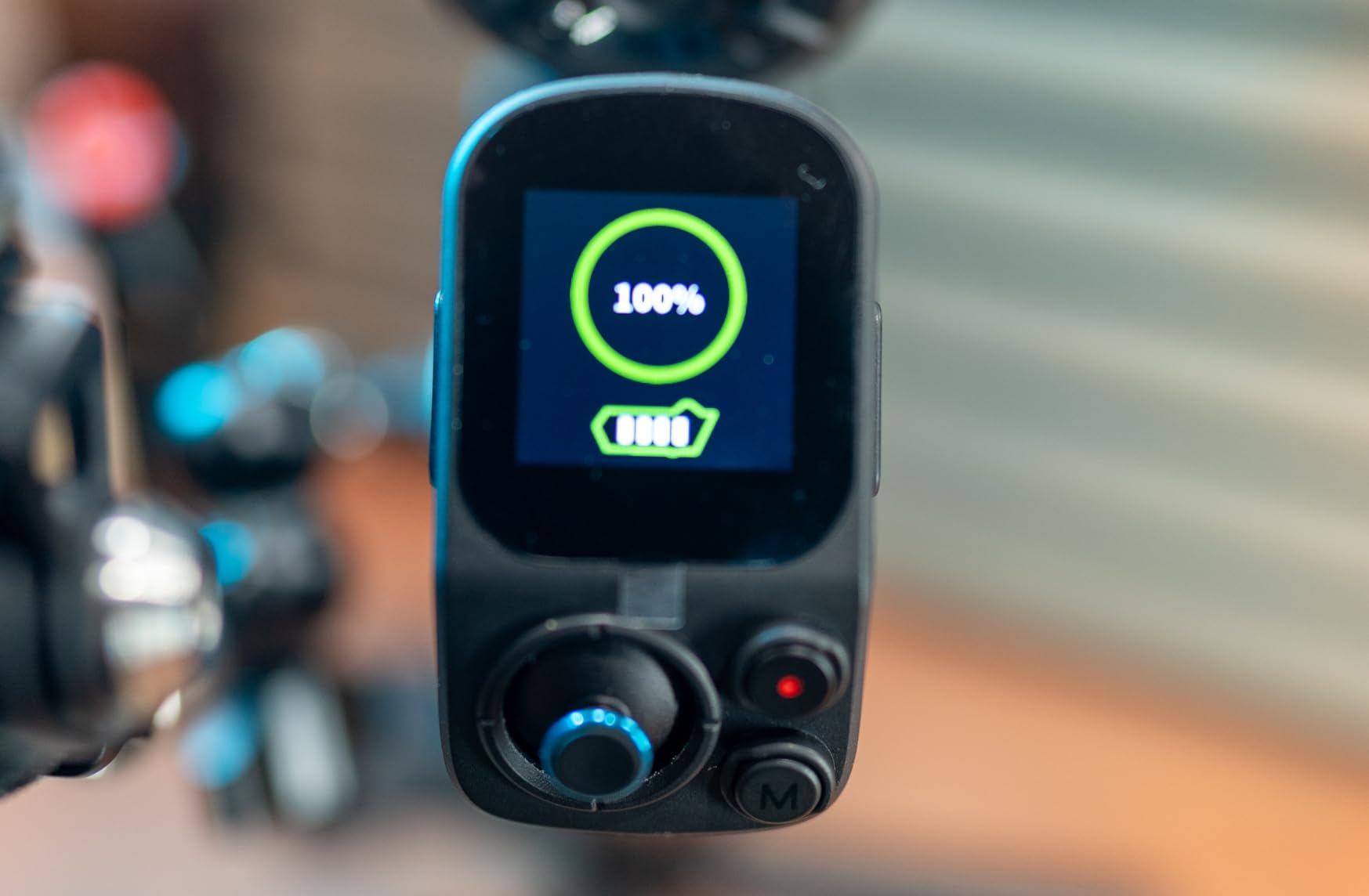
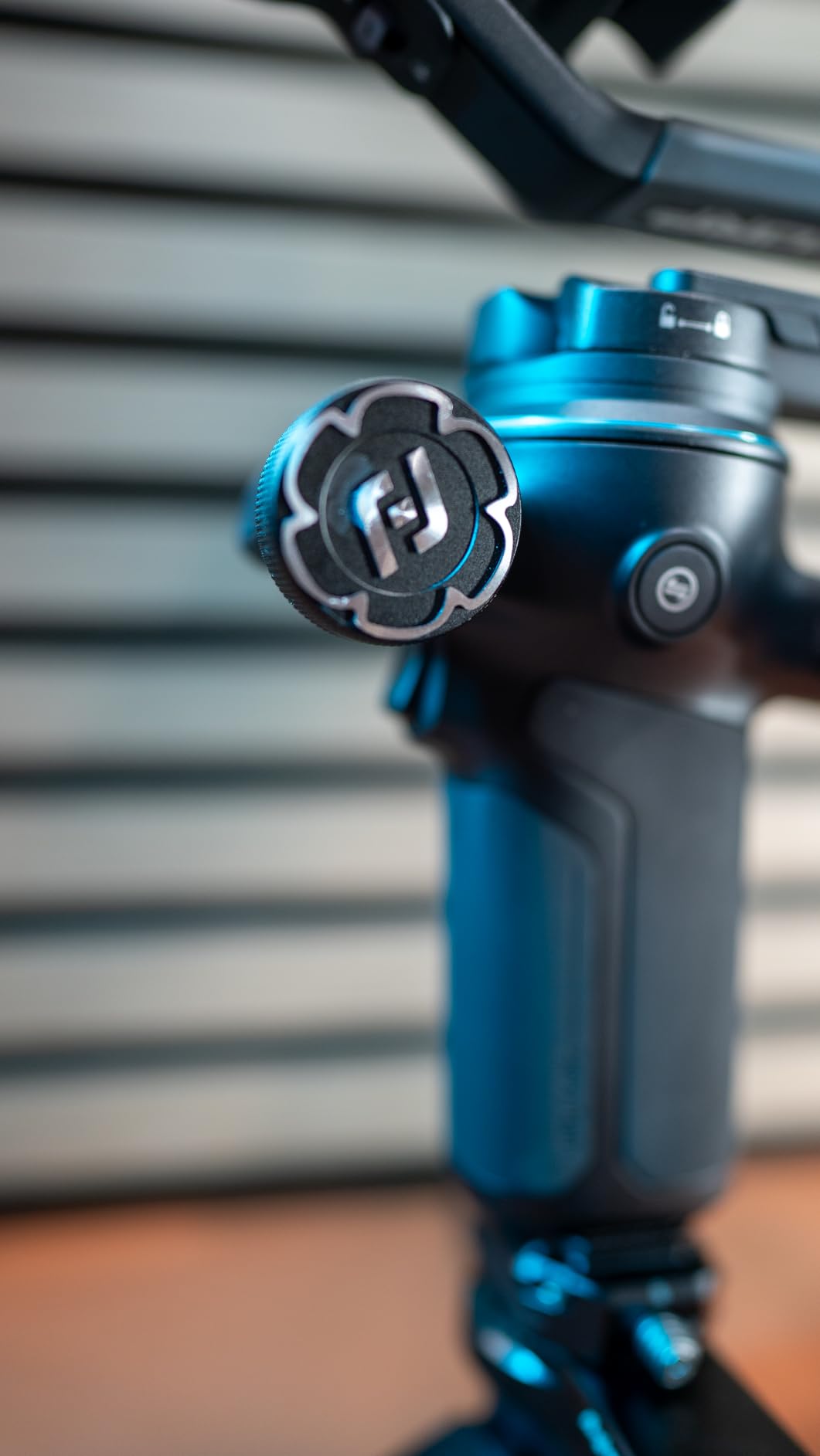
The detachable handle transforms into a wireless remote control with a 39-foot range. This opened up creative possibilities for solo filmmakers who want to be in the frame while controlling camera movement. I set up static interview shots and controlled subtle movements remotely without needing a second operator.
The included comprehensive travel case deserves mention. Unlike gimbals that come in basic boxes, the SCORP 3 KIT arrives with organized storage for the gimbal, handle, cables, and accessories. For traveling filmmakers, this attention to practical storage needs shows FeiyuTech understands real production workflows.
Who Should Buy This Gimbal
Filmmakers with heavier camera setups who want DJI-alternative performance will find the SCORP 3 KIT compelling. If you value built-in AI tracking without subscription apps or extra accessories, this gimbal delivers features that competitors charge additional money to unlock.
Who Should Look Elsewhere
Those needing absolutely flawless reliability for critical paid work may want to wait for FeiyuTech to address reported pan axis lock manufacturing issues. Filmmakers invested in DJI’s accessory ecosystem will find limited cross-compatibility with existing gear.
6. ZHIYUN Weebill 3S Combo – Built-in Fill Light
Pros
- Built-in fill light surprisingly useful
- Excellent stabilization performance
- Native vertical shooting quick
- Extendable sling grip reduces fatigue
- Great value vs DJI alternatives
Cons
- Difficult balancing light lenses vertically
- Baseplate lock issues reported
- Not ideal for very heavy setups
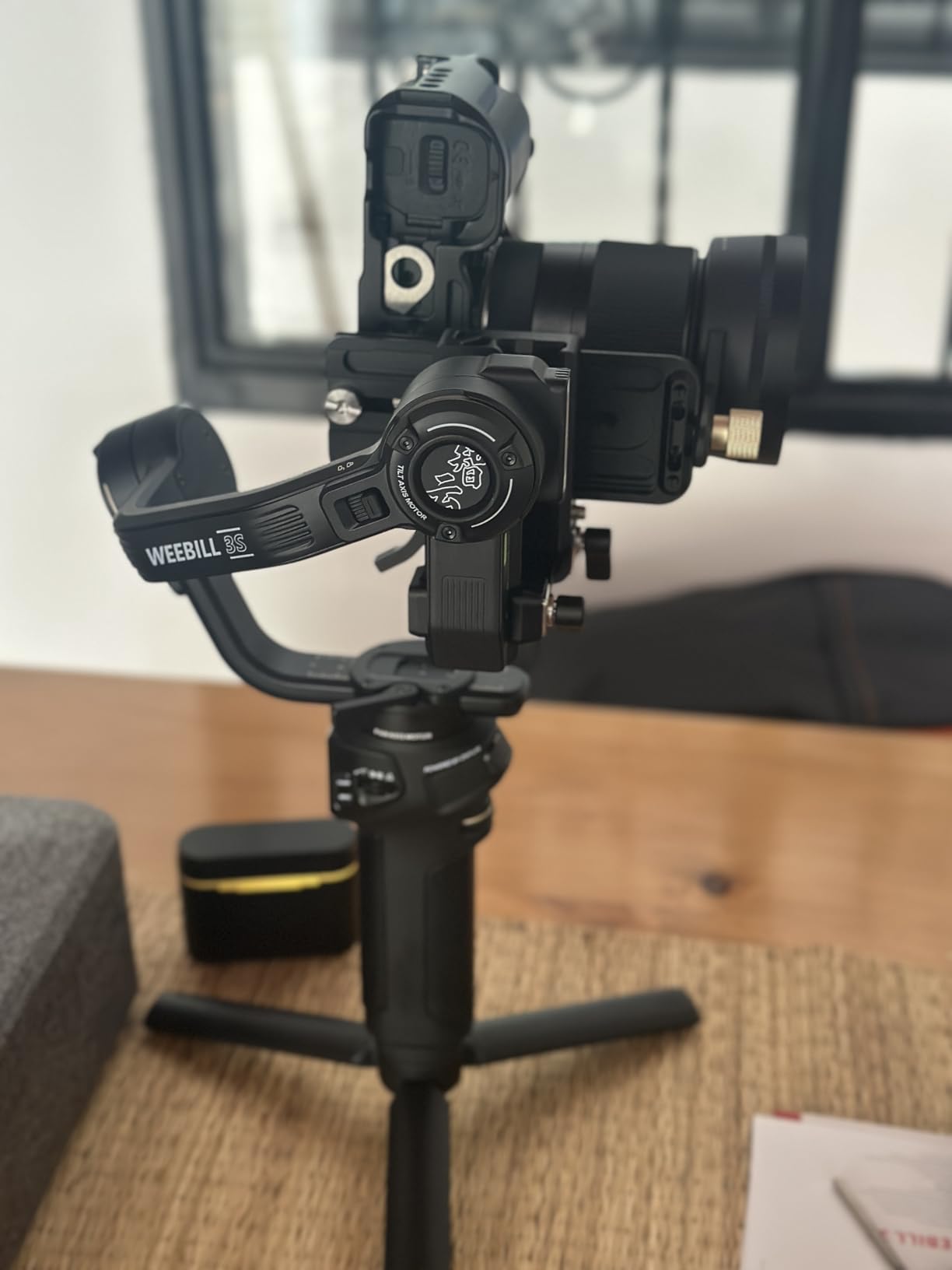
The ZHIYUN Weebill 3S Combo caught my attention with its built-in 1000lux fill light, a feature I initially dismissed as gimmicky but grew to appreciate during actual production work. The adjustable color temperature range from 2600K to 5500K meant I could add subtle fill light to interviews without packing additional lighting gear. For run-and-gun documentary work, this integrated solution saved setup time and bag space.
Stabilization performance matched my expectations from Zhiyun’s reputation. The 10th generation honeycomb algorithm delivered smooth footage even during challenging tracking shots. I tested fast walking sequences and achieved results comparable to my DJI units. The 3kg payload accommodated my standard mirrorless setup without issues.
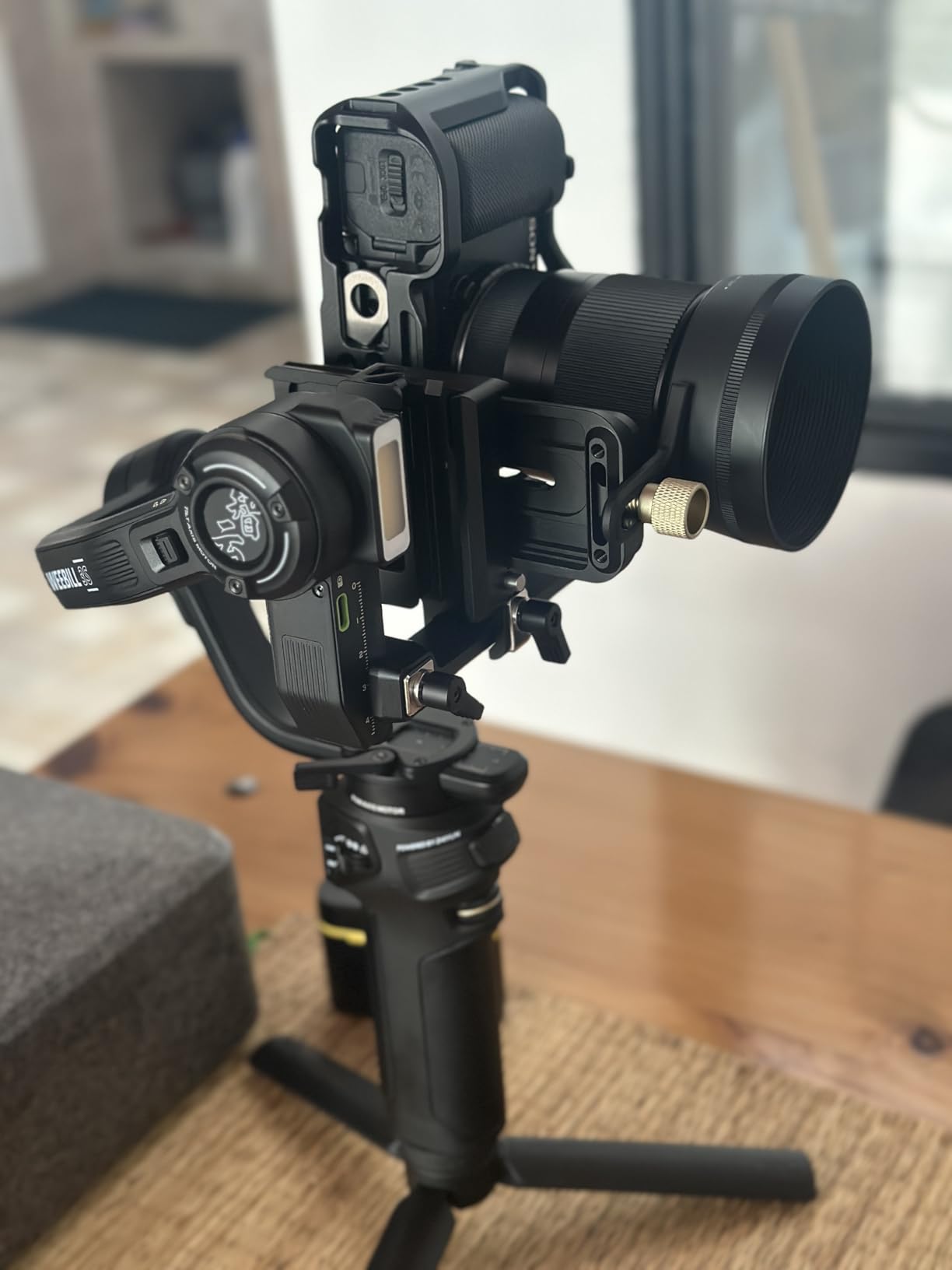
The extendable sling grip genuinely reduced arm fatigue during long shooting days. Traditional gimbal designs strain wrists over time, but the sling mode distributed weight more naturally. I shot a six-hour event without the shoulder fatigue I typically experience with other gimbals. The 11.5-hour battery life easily covered full production days with power to spare.
Native horizontal and vertical shooting switches in approximately three seconds, which kept pace with my content creation workflow. The PD fast charging reached full capacity in two hours, making overnight charging practical. Bluetooth shutter control connected reliably to my cameras throughout testing.
Who Should Buy This Gimbal
Content creators and documentary filmmakers who appreciate all-in-one solutions will love the Weebill 3S Combo. If you frequently shoot in varying light conditions and want integrated fill light without carrying extra equipment, this gimbal offers genuine workflow advantages over competitors.
Who Should Look Elsewhere
Filmmakers with very heavy lens combinations should verify their setup balances properly before committing. Those needing the absolute highest payload capacity or DJI ecosystem integration should explore alternatives with higher weight ratings.
7. DJI RS 4 Mini – Compact Convenience
Pros
- Auto axis locks for quick setup
- Lightweight and easy to use
- Great battery life
- Intelligent tracking works well
- Fast vertical shooting switch
- Excellent value
Cons
- Non-detachable battery limiting
- Plastic build feels less premium
- Proprietary quick-release plate
- Not for cages or heavy lenses
The DJI RS 4 Mini surprised me with how much capability DJI packed into a compact, budget-friendly package. The auto axis locks became my favorite feature, unlocking in one second and engaging automatically when powered down. For travel filmmakers and content creators who value speed, this convenience feature genuinely improves daily workflow.
At 2.27 pounds, the RS 4 Mini feels substantial yet manageable during extended shooting sessions. The 2kg payload handled my Sony A6600 with various lenses comfortably. I appreciated how the intelligent tracking module locked onto subjects without requiring the DJI app, making it genuinely plug-and-play for quick shoots.

The Teflon-enhanced balancing system worked smoothly during my setup process. Camera adjustments that frustrated me on older budget gimbals felt intuitive here. The fast vertical switch completed in approximately 10 seconds, which kept pace with my social media content creation needs.
Battery life delivered consistent performance throughout my testing. The non-detachable battery design means you cannot swap batteries mid-shoot, but runtime proved sufficient for typical production days. For longer shoots, I simply planned charging breaks. The responsive follow mode tracked my movements accurately during walking sequences.

Who Should Buy This Gimbal
Beginners and intermediate filmmakers who want DJI quality without premium pricing will find the RS 4 Mini ideal. If your camera setup stays under 2kg and you value convenience features like auto axis locks, this gimbal delivers excellent performance at an accessible entry point to the DJI ecosystem.
Who Should Look Elsewhere
Professionals needing removable batteries for extended shoots should consider the full-size RS 4. Filmmakers with heavy camera cages or long telephoto lenses will exceed the 2kg payload limitation and should look at higher-capacity options.
8. FeiyuTech SCORP Mini-3-Pro – Versatile Multi-Device
Pros
- Four-in-one design supports multiple devices
- AI Tracking 4.0 with 18m range
- Detachable handle flexible
- Quick horizontal-vertical switch
- Stabilization 10.0 smooth
Cons
- Motor struggles with heavy combinations
- Startup directions incomplete
- Some quality control reports
- Balancing tedious like any gimbal
The FeiyuTech SCORP Mini-3-Pro stands out with its four-in-one design that supports mirrorless cameras, compact cameras, smartphones, and action cameras. For filmmakers who shoot across multiple platforms, this versatility means one gimbal handles nearly every shooting scenario. I tested it with my Sony ZV-E10, iPhone, and GoPro, achieving smooth stabilization on each.
The AI Tracking 4.0 impressed me with its 18-meter tracking distance and 0.003-second response time. During an outdoor event shoot, the gimbal maintained subject lock even as I moved through crowds. The 360-degree infinite tracking follow kept pace with fast-moving subjects without losing them. Gesture controls for starting and stopping tracking worked reliably once I practiced the specific movements.

The detachable remote handle provided flexibility I did not know I needed. I mounted the gimbal on a car rig and controlled movements remotely from inside the vehicle. The Stabilization 10.0 algorithm with quaternion stabilization delivered footage smooth enough for professional applications. Quick switching between horizontal and vertical shooting kept my multi-platform content workflow efficient.
Battery life supported extended shooting sessions comfortably. The modular design meant I could adapt the gimbal configuration to each specific shoot rather than compromising with a one-size-fits-all approach. For solo filmmakers who produce content across multiple formats, this adaptability proved genuinely valuable.

Who Should Buy This Gimbal
Multi-platform content creators who shoot across cameras, phones, and action cameras will maximize the SCORP Mini-3-Pro’s versatility. If you want AI tracking capabilities without subscribing to additional apps or services, the built-in module delivers excellent performance out of the box.
Who Should Look Elsewhere
Filmmakers with consistently heavy camera setups should verify their gear stays within the 2kg limit with headroom. Those preferring more comprehensive startup documentation and tutorials may find FeiyuTech’s support materials less thorough than DJI’s offerings.
9. Zhiyun Weebill S – Proven Reliability
Pros
- Compact and lightweight design
- 14-hour battery life reliable
- Smooth stabilization performance
- Sling mode comfortable
- Great value for price
- Wide camera compatibility
Cons
- Non-intuitive setup process
- Small LCD screen
- Mobile app inconsistent
- No carrying case included
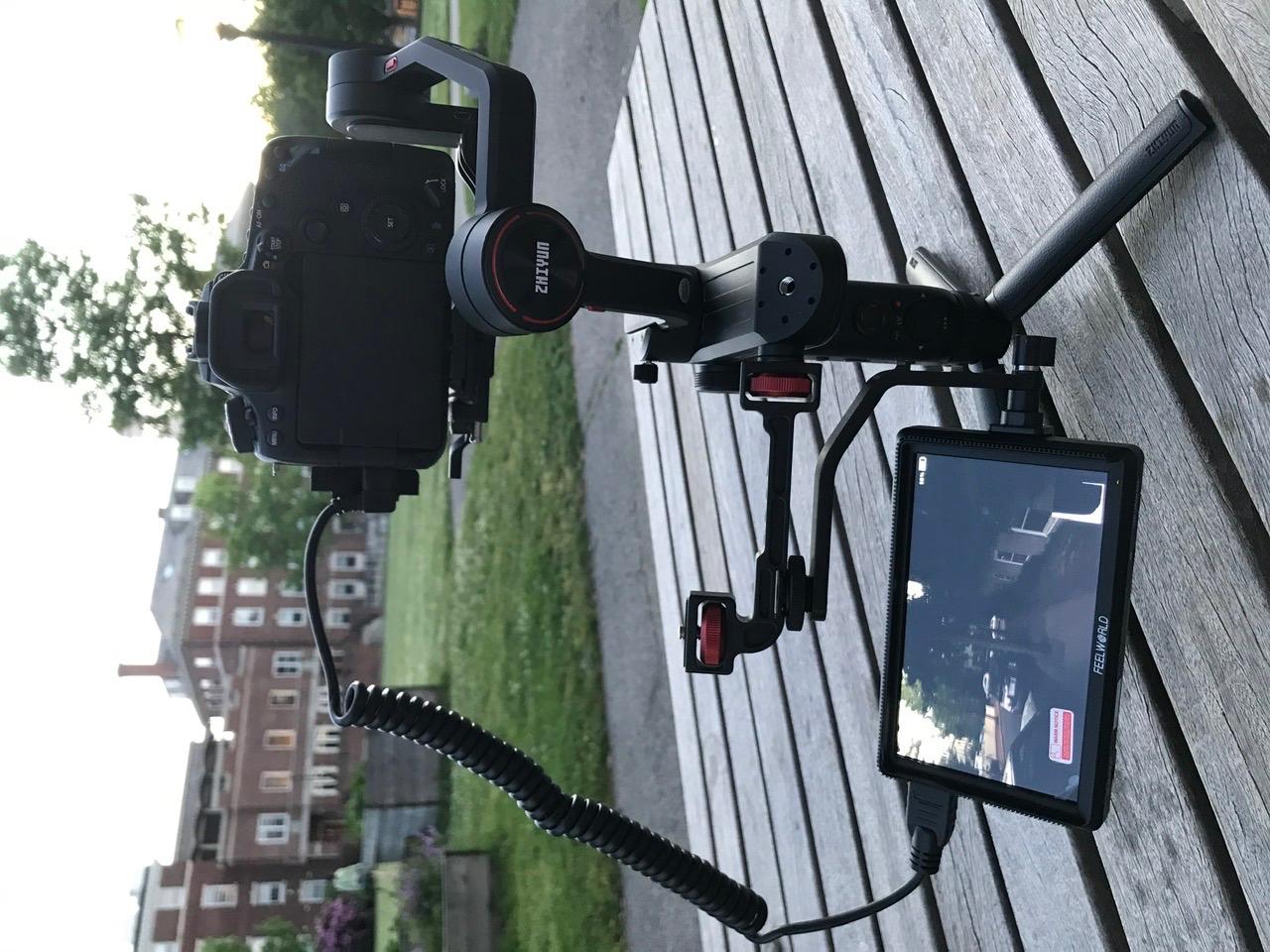
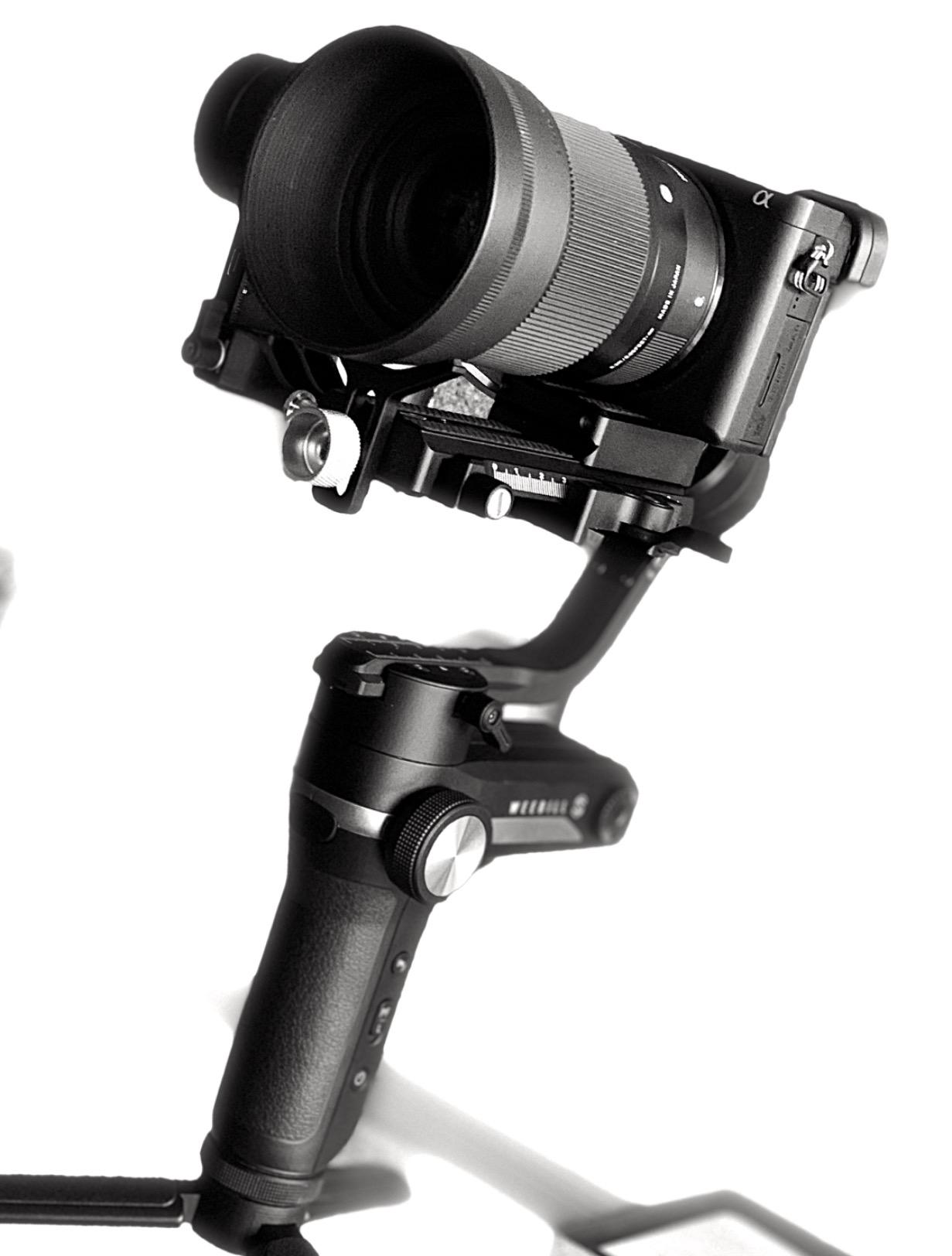
The Zhiyun Weebill S has earned its reputation as a reliable workhorse through years of proven performance. Despite being an older model, the 8th Instune algorithm still delivers smooth stabilization that holds up against newer competitors. I tested it with my Nikon Z6 II and achieved tracking shots smooth enough for professional video production.
The compact A4 paper-sized design made the Weebill S my go-to travel gimbal. At 926 grams, it added minimal weight to my kit while still providing the stabilization I needed. The ergonomically designed sling mode distributed weight naturally, reducing fatigue during extended shooting sessions that would have been uncomfortable with traditional designs.
Battery life consistently delivered the advertised 14 hours during my testing. For documentary work spanning multiple days without reliable charging access, this reliability mattered more than premium features. The dual focus control system allowed precise manual focus adjustments, which I preferred over autofocus for narrative filmmaking.
The quick release system sped up camera mounting and dismounting significantly. While the small LCD screen required some squinting, it displayed essential information clearly once I learned the menu navigation. The OLED display remained readable even in bright outdoor conditions where larger screens sometimes washed out.
Who Should Buy This Gimbal
Filmmakers seeking proven reliability at a reasonable price will find the Weebill S delivers consistent performance. If you value battery life and compact portability over the latest features, this established model continues to serve production needs effectively.
Who Should Look Elsewhere
Those wanting native vertical shooting without accessories should consider newer models with built-in orientation switching. Filmmakers who rely heavily on smartphone app control may find Zhiyun’s app less polished than DJI’s ecosystem.
10. FeiyuTech SCORP 2 – Built-in AI Tracking Sensor
Pros
- Built-in AI tracking with gesture control
- Instant vertical filming setup
- Dual-handle design stable
- Built-in scorpion legs stand
- 1.3 inch touchscreen clear
Cons
- Buggy with heavier cameras
- Calibration process finicky
- Battery less than advertised 13H
- Non-removable handle
The FeiyuTech SCORP 2 differentiates itself with a built-in AI tracking sensor that eliminates the need for smartphone apps or external accessories. During my testing, gesture control for starting and stopping tracking worked reliably at moderate distances. For solo filmmakers who need to be in front of the camera, this self-contained tracking solution simplified productions significantly.
The instant vertical filming setup using L-shaped mounting plates impressed me with its simplicity. Unlike systems requiring plate removal and repositioning, the SCORP 2 switched orientations quickly for social media content creation. The 1.3-inch touchscreen provided clear status information and intuitive parameter adjustments without diving into complex menu systems.

The dual-handle design improved stability during handheld shooting. Weight distribution felt more balanced than single-handle alternatives, especially during extended takes. The built-in scorpion legs allowed setting the gimbal down without immediately reaching for a tripod, which proved useful during interview setups where I needed both hands free momentarily.
The multifunctional control knob handled axis rotation and zoom adjustments smoothly. Bluetooth and cable control options provided flexibility depending on camera compatibility. App connectivity unlocked somatosensory remote control features, though I found myself using the direct controls more frequently during actual production work.

Who Should Buy This Gimbal
Solo content creators who need built-in tracking without app dependencies will appreciate the SCORP 2’s self-contained approach. If you frequently switch between horizontal and vertical content creation, the instant orientation switching saves meaningful production time.
Who Should Look Elsewhere
Filmmakers with heavier camera setups should verify their gear stays comfortably within the 2.5kg payload limit. Those needing removable handles for specialized mounting configurations should explore alternatives with modular designs.
11. DJI RS 3 Mini – Entry-Level Quality
Pros
- Ultra-compact at only 795g
- 2kg payload strong for weight
- Bluetooth shutter control reliable
- 3rd-gen RS stabilization excellent
- Native vertical shooting
- Wide camera compatibility
Cons
- Motor issues reported after months
- Balancing challenging for beginners
- Battery insufficient for very long sessions
- Struggles near max payload
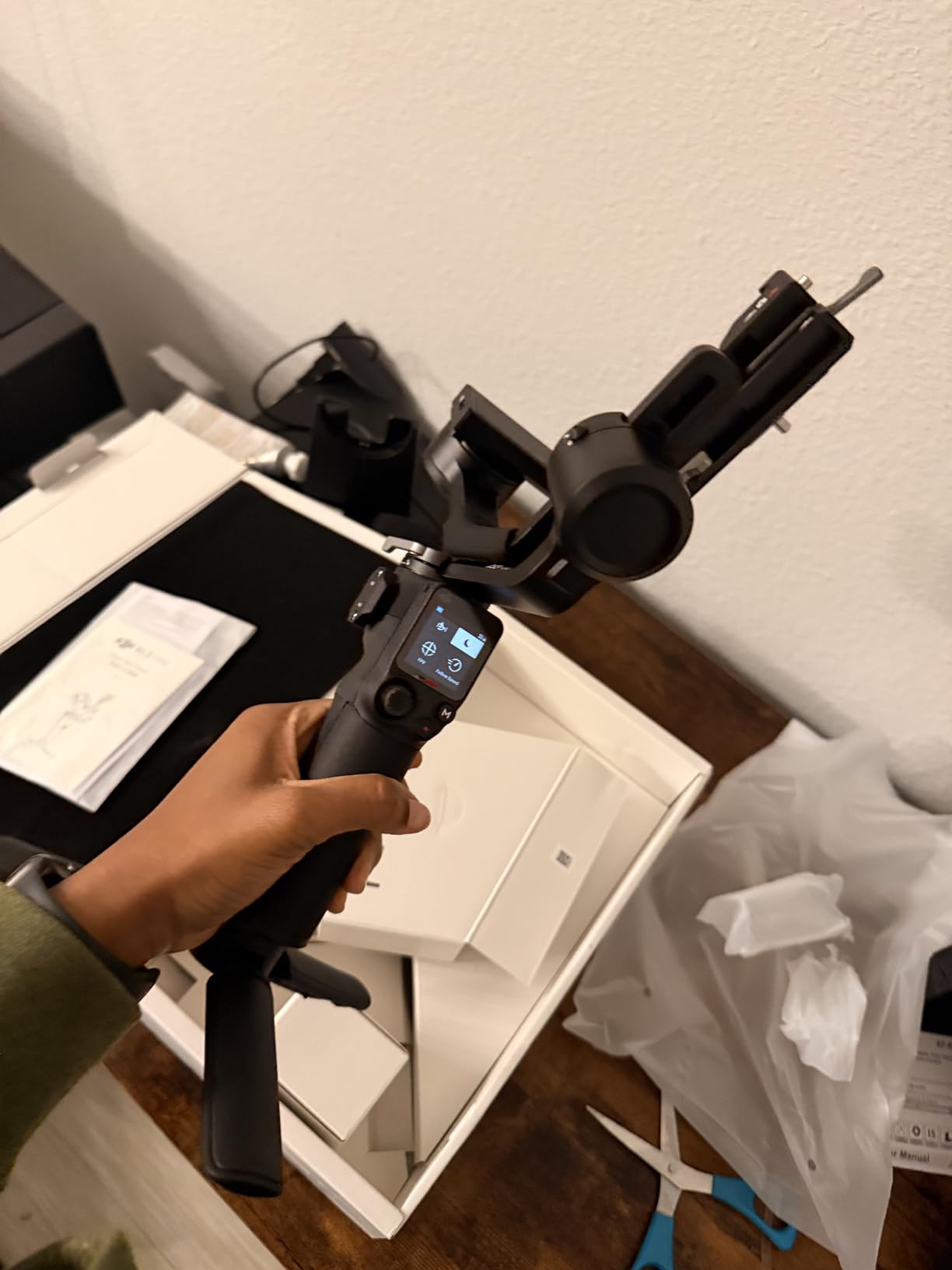
The DJI RS 3 Mini represents the most accessible entry point into DJI’s professional gimbal ecosystem. At only 795 grams, this ultra-lightweight unit delivered impressive performance relative to its size. I tested it with my Fujifilm X-T5 and achieved stabilization quality that rivaled larger, more expensive units.
The 2kg payload capacity handled typical mirrorless camera and lens combinations without strain. Strong high-torque motors maintained smooth movement even when approaching maximum weight limits. The third-generation RS stabilization algorithm produced footage smooth enough for professional applications, making this budget-friendly option genuinely viable for paid work.
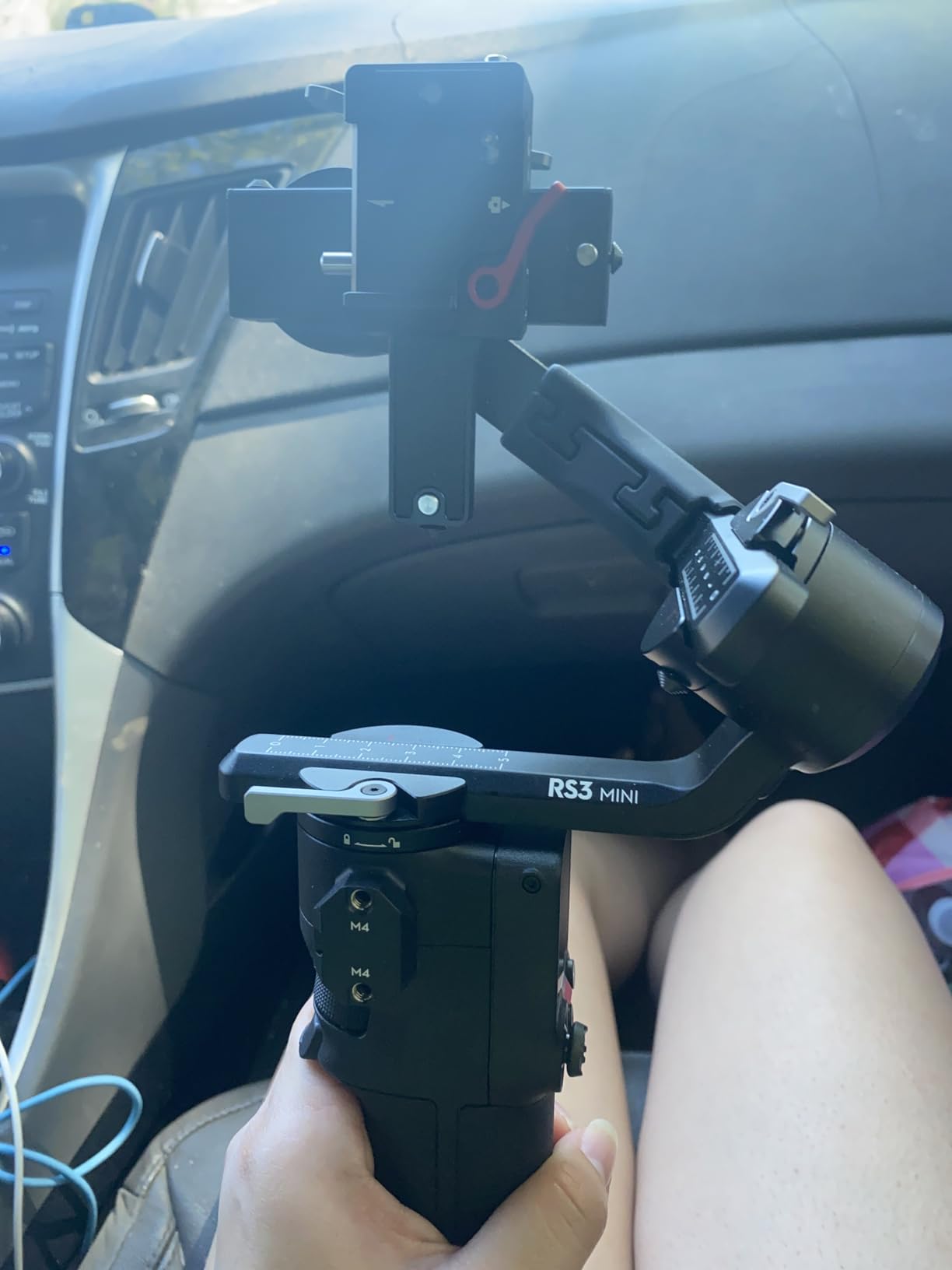
Native vertical shooting without additional accessories simplified my social media content workflow. The 1.4-inch full-color touchscreen provided an intuitive interface for adjusting settings without extensive menu navigation. Bluetooth shutter control with auto-reconnect paired reliably with my cameras throughout testing sessions.
The 12-hour battery life covered most production days comfortably. For extended shoots, I planned charging breaks, which felt like a reasonable compromise given the compact size and lower price point. Wide compatibility with camera and lens combinations meant I could use various setups without compatibility concerns.
Who Should Buy This Gimbal
Beginning filmmakers and content creators who want DJI quality at the most accessible price point will find the RS 3 Mini delivers excellent value. If your camera setup stays under 2kg and you prioritize portability, this lightweight gimbal fits the bill perfectly.
Who Should Look Elsewhere
Filmmakers planning intensive daily use should consider models with more robust motor systems. Those needing to mount heavier lens combinations or cinema cameras should step up to higher-capacity options that provide more payload headroom.
12. Zeadio All-in-One Smartphone Stabilizer Kit – Budget Smartphone Rig
Pros
- Complete kit with light and mic
- Multiple mounting options
- RGB light offers studio quality
- Wide compatibility for phones and cameras
- Detachable handle versatile
Cons
- Microphone quality issues reported
- Quality control inconsistencies
- Limited assembly instructions
- Battery life questionable
The Zeadio All-in-One Smartphone Camera Stabilizer Kit takes a different approach than motorized gimbals, offering a manual stabilization rig with integrated accessories. For smartphone filmmakers on the tightest budgets, this complete kit provides RGB video light, external microphone, and phone rig cage in one package. I tested it primarily with my iPhone for social media content creation.
The triple cold shoe mounts and multiple 1/4-inch threaded holes provided extensive expansion options. I attached additional accessories like portable lights and monitors without running out of mounting points. The RGB video light with 102 LEDs delivered 800 lumens at 120 degrees with CRI95+ sunlight accuracy, which genuinely improved my indoor interview lighting.
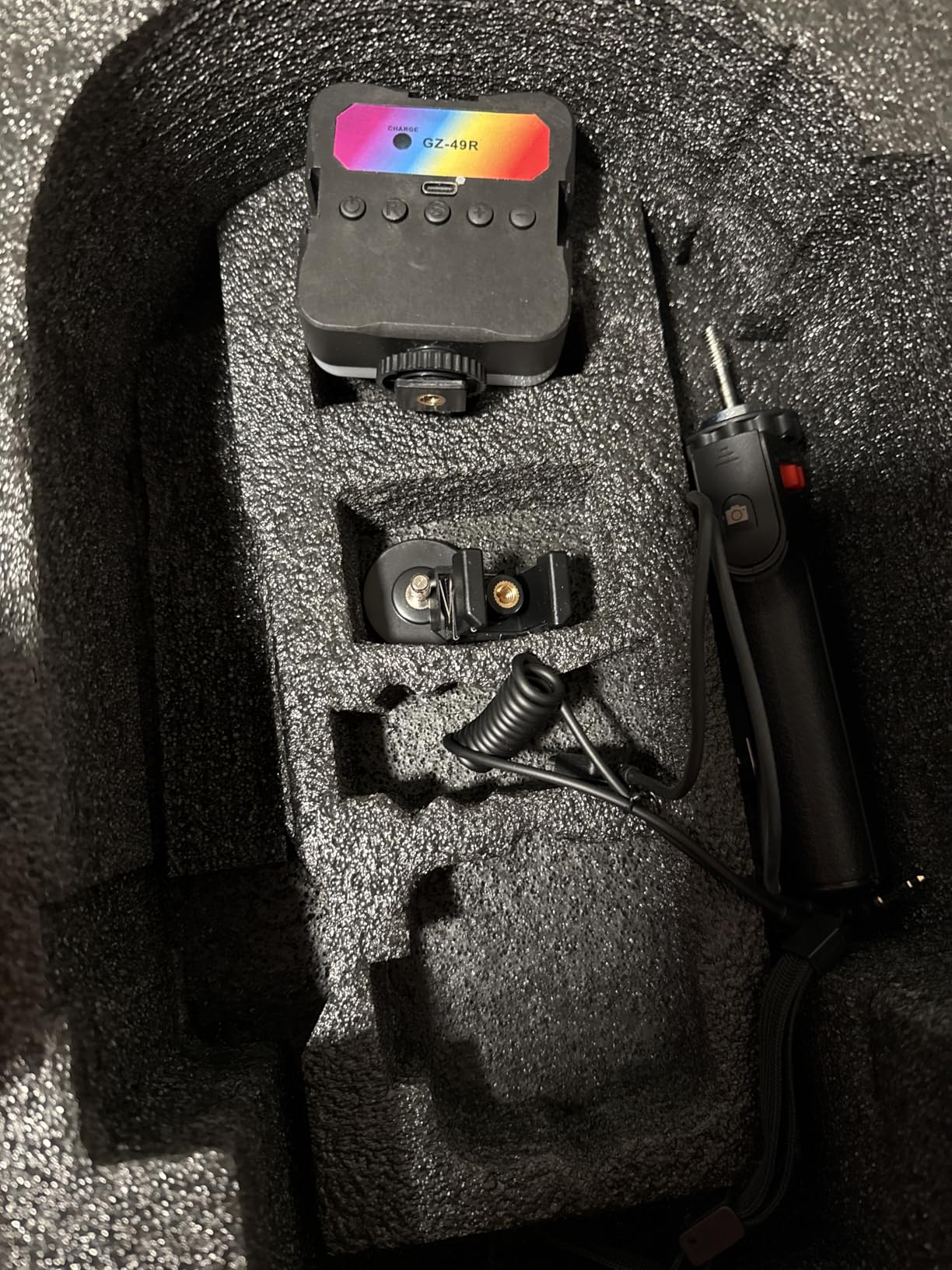
The detachable handle grip allowed various recording angles that would be difficult with fixed-handle designs. For smartphone content creators who need more than basic handheld shooting, this flexibility opened creative possibilities. The universal compatibility meant I could also mount small cameras and camcorders when needed.
However, this is not a motorized gimbal and will not provide the same stabilization level as the electronic options in this guide. The included external microphone had cable compatibility issues with my phone, requiring an adapter. Assembly instructions proved minimal, requiring some trial and error to configure the rig properly.
Who Should Buy This Rig
Smartphone filmmakers who need an all-in-one kit with lighting and audio accessories will find value in the Zeadio package. If your budget cannot accommodate motorized gimbals and you prioritize having multiple tools in one purchase, this kit covers essential needs.
Who Should Look Elsewhere
Filmmakers needing smooth, motorized stabilization should invest in the other options on this list. Those wanting reliable audio quality should budget for a separate, higher-quality microphone rather than relying on the included unit.
How to Choose the Best Camera Gimbal for Filmmaking In 2026?
Selecting the right gimbal for your filmmaking needs requires understanding several key factors that directly impact your shooting experience. I have broken down the essential considerations based on my testing experience and real-world production requirements.
Payload Capacity: The Most Critical Factor
Payload capacity determines which camera and lens combinations your gimbal can handle. Always add 20-30% safety margin to your total rig weight when selecting a gimbal. My Sony A7IV with a 24-70mm f/2.8 weighs approximately 1.6kg, so I choose gimbals with at least 2.5kg payload to maintain motor headroom. Heavier cinema cameras require professional-grade gimbals like the DJI RS 4 Pro with its 4.5kg capacity.
Remember that accessories add weight quickly. Wireless video transmitters, external monitors, and follow focus units can push your rig close to or beyond stated limits. Running motors near maximum capacity causes strain, reduced battery life, and potential stabilization issues during dynamic movements.
3-Axis Stabilization Explained
Three-axis gimbals stabilize on pan, tilt, and roll axes simultaneously. Brushless motors detect unwanted movement and counteract it in real-time, keeping your camera level regardless of operator motion. This technology creates the smooth, floating footage characteristic of professional video production.
The quality of stabilization algorithms varies between brands. DJI’s third-generation RS algorithm consistently delivered the smoothest results in my testing, while Zhiyun’s 10th-generation honeycomb algorithm performed nearly as well. FeiyuTech’s quaternion stabilization improved significantly with their 10th-generation updates, closing the gap with competitors.
Battery Life for Production Work
Battery life matters more than specifications suggest for real production work. Wedding videographers, documentary filmmakers, and event shooters cannot afford mid-shoot power loss. I prioritize gimbals offering at least 12 hours runtime, which covers most full-day productions with safety margin.
Consider charging options and battery swapability. Gimbals with removable batteries allow instant power changes during long shoots. The DJI RS 4 Pro’s optional BG70 grip extends runtime to 29 hours, which eliminated battery anxiety entirely during my testing. Fast charging support means shorter breaks between shooting sessions.
Balancing and Setup Considerations
Every gimbal requires balancing your camera before use. This process involves adjusting the camera position so it stays level without motor assistance. Poor balancing strains motors and degrades stabilization performance. Models with fine-tuning knobs like the DJI RS 5 significantly speed up this process compared to traditional screw adjustments.
Auto axis locks on newer models like the RS 4 Mini unlock instantly at power-on and engage at power-off. This convenience feature saves meaningful time during production days with frequent setup and breakdown cycles. First-time gimbal users should expect a learning curve regardless of model, but practice reduces balancing time dramatically.
Filmmaking-Specific Features to Consider
Native vertical shooting has become essential for content creators producing social media content alongside traditional video. The best implementations like DJI’s second-generation system switch orientations in seconds without additional plates or accessories. If your work spans multiple platforms, prioritize gimbals with seamless orientation switching.
Subject tracking capabilities vary significantly between brands. Built-in AI tracking sensors like those on FeiyuTech’s SCORP series eliminate app dependencies for solo filmmakers. DJI’s intelligent tracking module requires separate purchase on some models but delivers excellent subject lock performance. Consider whether you need tracking for your shooting style.
The accessory ecosystem matters for professional work. DJI’s extensive ecosystem includes car mounts, focus motors, video transmitters, and specialized rigs. Third-party brands offer fewer specialized accessories but often at lower price points. If you anticipate expanding your production capabilities, ecosystem compatibility influences long-term value.
Frequently Asked Questions
What is the best gimbal for professional filmmaking?
The DJI RS 4 Pro Combo stands out as the best gimbal for professional filmmaking with its 4.5kg payload capacity, LiDAR focusing system, and carbon fiber construction. It handles cinema cameras and heavy lens combinations while delivering 29-hour battery runtime with the optional BG70 grip. Professional cinematographers consistently recommend it as the current market leader.
Do filmmakers use gimbals?
Yes, filmmakers regularly use gimbals for dynamic camera movement that would otherwise require expensive Steadicam rigs or be impossible handheld. Gimbals enable tracking shots, walking sequences, and smooth motion footage essential for documentary, wedding videography, and commercial production. Many productions combine gimbal work with traditional tripod and handheld techniques for varied visual styles.
Are gimbals still worth it?
Gimbals remain worth the investment for filmmakers who need smooth camera movement. While in-body image stabilization has improved, it cannot match a gimbal’s ability to stabilize entire camera movements during walking or tracking shots. For professional video production, documentary work, and content creation requiring dynamic footage, gimbals provide capabilities no other tool replicates.
What is the best gimbal for content creation?
The DJI RS 4 Mini and FeiyuTech SCORP Mini-3-Pro excel for content creation with their compact size, intelligent tracking, and native vertical shooting. Both handle mirrorless cameras and smartphones, making them versatile for creators producing content across multiple platforms. The built-in tracking features simplify solo shooting significantly.
What’s the difference between a gimbal and a stabilizer?
A gimbal uses motorized 3-axis stabilization with brushless motors actively counteracting camera movement in real-time. A stabilizer typically refers to passive mechanical systems like Steadicams that use counterweights and physics to reduce shake. Motorized gimbals are smaller, faster to set up, and more accessible, while professional Steadicams offer superior isolation for very heavy cinema camera rigs.
Conclusion
Finding the best camera gimbals for filmmaking comes down to matching your specific needs with the right combination of payload capacity, features, and budget. The DJI RS 4 Pro Combo leads for professional work with its 4.5kg payload and advanced features, while the ZHIYUN CINEPEER Weebill 3E delivers exceptional value with 3kg capacity at an accessible price. For beginners and travel filmmakers, the DJI RS 3 Mini offers quality stabilization in the most portable package.
Consider your total camera rig weight, shooting style, and production requirements when making your selection. The right gimbal transforms your filmmaking capabilities, enabling smooth cinematic footage that elevates your video production quality immediately.