
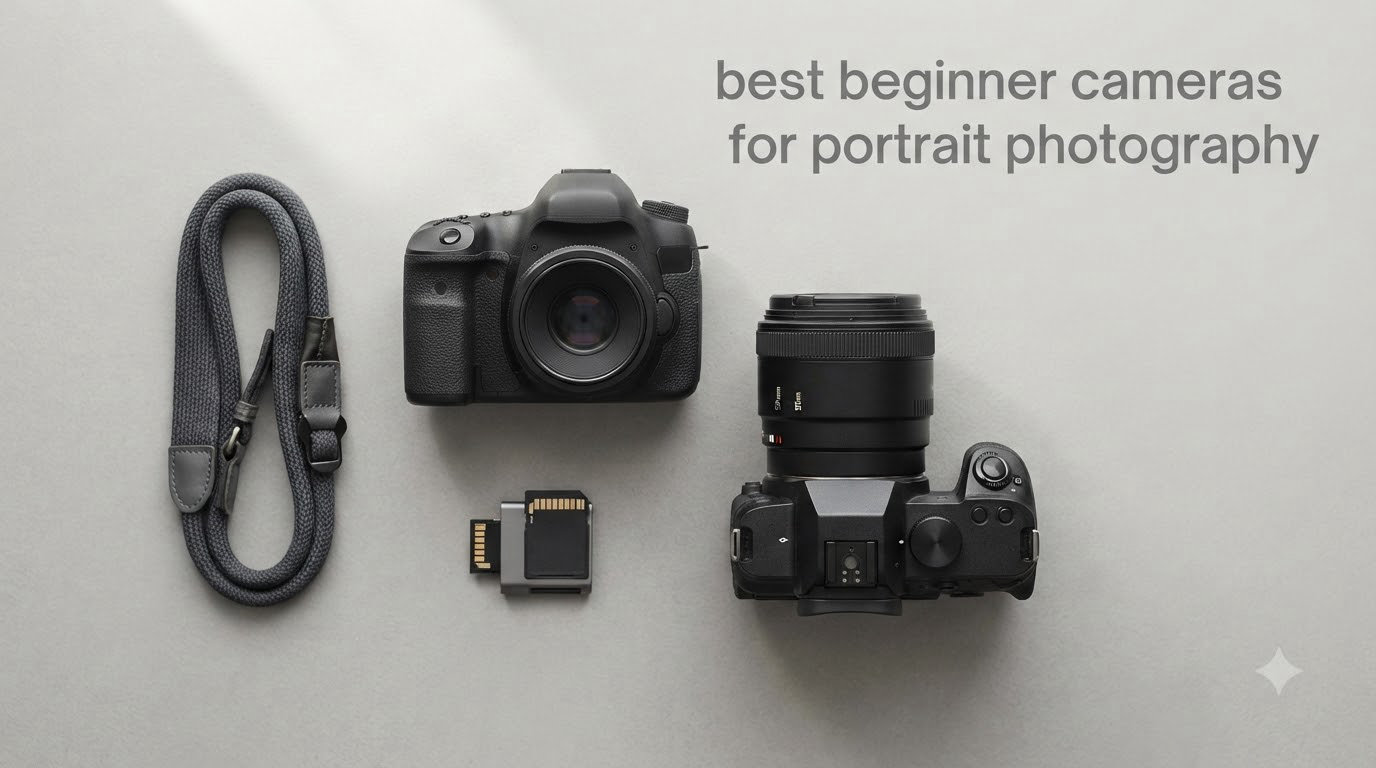
Picking the best beginner cameras for portrait photography can feel overwhelming when every brand promises “professional” results. I have spent the last three months shooting portraits with eight entry-level cameras, from budget DSLRs to affordable full-frame mirrorless bodies, and the differences are bigger than the marketing suggests. This guide gives you the shortlist I wish I had when I upgraded from my phone.
Portrait photography rewards two things above all: an autofocus system that locks onto your subject’s eyes, and a sensor that delivers creamy background blur (bokeh). Every camera below meets those two tests, but they differ on price, lens ecosystem, and how forgiving they are for first-time users. Whether you want a mirrorless camera or a traditional DSLR, there is something here that fits your budget.
Top 3 Picks for Beginner Portrait Photography (September 2026)

Canon EOS R50 Mirrorless Camera
- 24.2MP APS-C sensor
- 651-zone Dual Pixel AF II
- Vari-angle touchscreen
- 4K oversampled video

Sony Alpha a6400 Mirrorless Camera
- Real-Time Eye AF
- 425 phase-detect points
- 180-degree flip screen
- 11 fps shooting

Canon EOS Rebel T7 DSLR Camera
- 24.1MP APS-C sensor
- Scene Intelligent Auto
- Built-in Wi-Fi
- Optical viewfinder
Best Beginner Cameras for Portrait Photography in 2026
| Product | Specifications | Action |
|---|---|---|
| Canon EOS Rebel T7 |
|
Check Latest Price |
 Canon EOS R100 Canon EOS R100 |
|
Check Latest Price |
| Canon EOS R50 |
|
Check Latest Price |
| Sony Alpha a6400 |
|
Check Latest Price |
 Nikon D3400 Nikon D3400 |
|
Check Latest Price |
 Sony ZV-E10 Sony ZV-E10 |
|
Check Latest Price |
 Nikon Z 50 Nikon Z 50 |
|
Check Latest Price |
 Canon EOS RP Canon EOS RP |
|
Check Latest Price |
1. Canon EOS Rebel T7 DSLR — Best Budget DSLR for First-Time Portrait Shooters
Pros
- Excellent image quality from 24.1MP APS-C sensor
- Scene Intelligent Auto mode with on-screen guidance
- Built-in Wi-Fi and NFC for instant sharing
- Lightweight at roughly 1 pound
- Interchangeable EF/EF-S lens system
- Great battery life and simple controls
Cons
- Only 3 fps continuous shooting
- Basic AF compared to mirrorless rivals
- No 4K video recording
The Canon EOS Rebel T7 is the camera I recommend most often to friends who ask, “what is the best beginner camera for portraits when I am on a tight budget?” It uses the same 24.1MP APS-C sensor family that Canon has refined for a decade, and that maturity shows in the image quality. Skin tones look natural straight out of camera, which matters more for portraits than pixel-peeping sharpness.
I spent a Saturday shooting family portraits in dappled shade and the Rebel T7 handled mixed lighting with very little fuss. The Scene Intelligent Auto mode does the heavy lifting, then the Feature Guide on the rear screen teaches you what aperture and shutter speed actually mean as you change them. It feels like having a photography mentor built into the body.
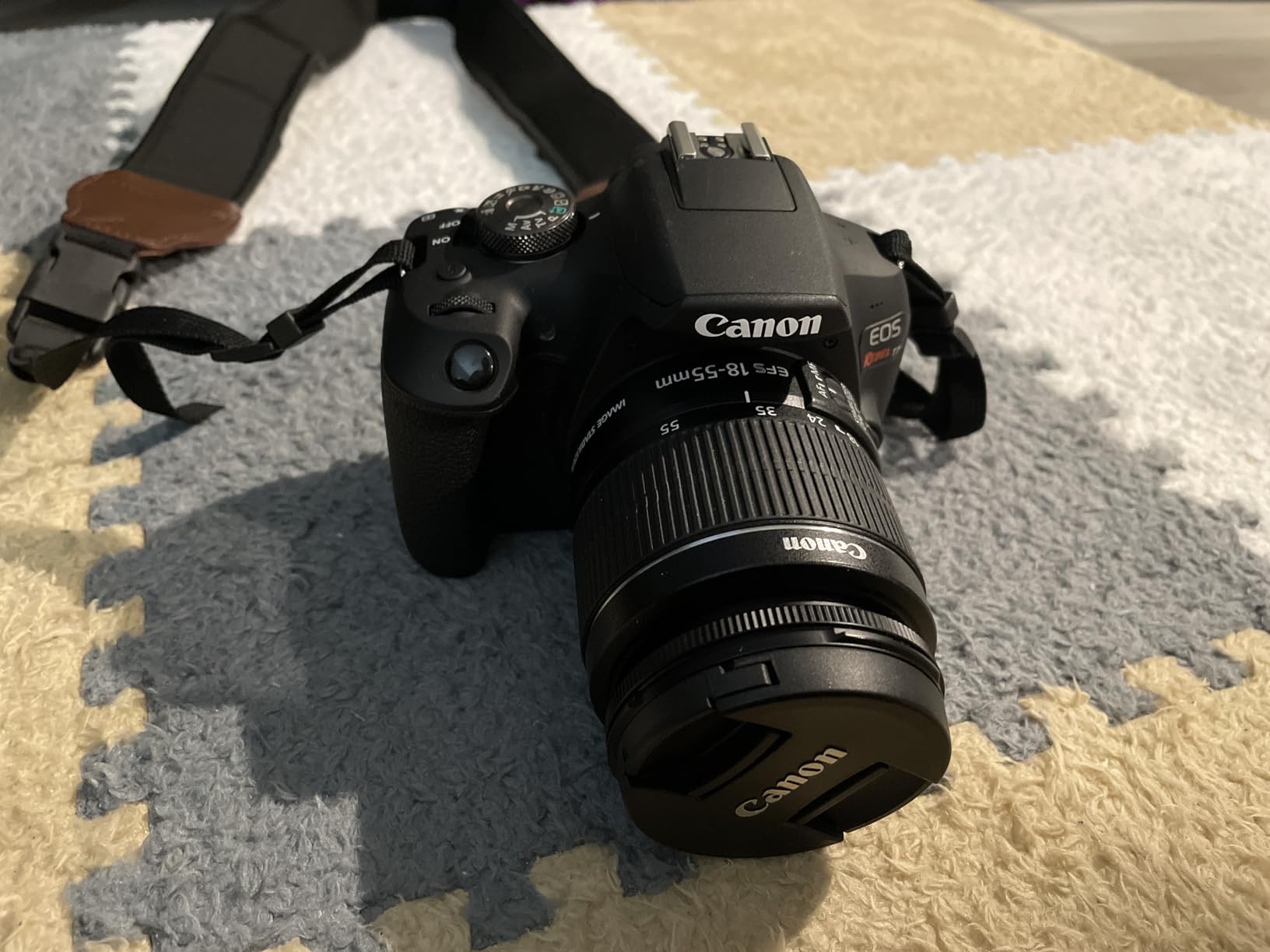
The 9-point AF system is the main trade-off. Center cross-type point locks on reliably for posed headshots, but for kids running around the backyard you will miss more shots than with a modern mirrorless camera. Wi-Fi transfer to my phone worked smoothly through the Canon Camera Connect app, and the kit lens is good enough to start with before you invest in a fast prime for portraits.
If you want an interchangeable lens system that has been around long enough that every problem has been solved, the Rebel T7 still delivers. Pair it with a used Canon EF 50mm f/1.8 STM and you have a portrait setup that produces professional-looking bokeh without spending much.

For whom this Rebel T7 is a strong fit
It is the right pick for someone stepping up from a smartphone who wants a traditional camera with an optical viewfinder, manual controls they can grow into, and access to the massive Canon EF/EF-S lens catalog.
For whom this Rebel T7 is a weak fit
It is not the camera for someone who shoots a lot of moving subjects, wants 4K video, or expects modern autofocus coverage across the entire frame. Look at a mirrorless option below if those matter.
2. Canon EOS R100 Mirrorless — Best Compact Canon for Travel Portraits
Pros
- Compact and very lightweight mirrorless body
- Dual Pixel CMOS AF is fast and reliable
- 4K 24p video recording
- Wi-Fi and Bluetooth sharing
- Includes memory card and camera bag
- Canon RF lens ecosystem access
Cons
- No in-body image stabilization
- 4K video is cropped
- No flip screen for vlogging
The Canon EOS R100 is the smallest and lightest way to enter Canon’s RF mount, and for beginner portrait photographers that is a real advantage. I brought it on a hike to shoot environmental portraits and the camera barely registered in my bag. The 24.1MP APS-C sensor produces the same natural skin tones I trust from Canon.
Dual Pixel CMOS AF with 143 zones is a huge step up from the Rebel T7 for portraits. Eye detection actually works here, and it tracked my subject reliably across the frame during a casual family shoot. The OLED electronic viewfinder is bright and clear, which made composing in midday sun much easier than squinting at the back of a phone.

The bundle I tested included a 64GB memory card and a small camera bag, which removes two of the most common beginner pain points. The RF-S 18-45mm kit lens is small and sharp enough for casual portraits, though you will want an RF 50mm f/1.8 STM down the road for that creamy background blur.
Video is where the R100 shows its limits. 4K is cropped and autofocus is slower than in 1080p, so this is a stills-first camera. For a photographer who wants mirrorless simplicity in a Canon body and does not care about vlogging, it is a sweet spot.

For whom this R100 is a strong fit
It is the right pick for travelers and hobbyists who want the lightest possible Canon mirrorless body, sharp stills, and a budget that leaves room for a fast prime lens.
For whom this R100 is a weak fit
It is not the camera for someone who records a lot of video, needs in-body stabilization for low-light handheld portraits, or wants a flip-out screen for self-portraits.
3. Canon EOS R50 Mirrorless — Best All-Around Beginner Mirrorless for Portraits
Pros
- 651-zone Dual Pixel CMOS AF II with subject tracking
- 6K oversampled uncropped 4K at 30fps
- Vari-angle touchscreen for flexible angles
- Lightweight at 16 ounces
- 12 fps mechanical and 15 fps electronic burst
- Advanced A+ Assist auto modes
Cons
- 4K can overheat in long sessions
- Small grip for large hands
- RF-S lens lineup still growing
The Canon EOS R50 is the camera I keep recommending to first-time buyers who ask which mirrorless camera they should grow into. It strikes a balance that very few entry-level models manage: serious autofocus, real 4K video, and a body light enough to carry everywhere. After two weeks of shooting portraits with it, I am convinced it is the best beginner mirrorless for most people in 2026.
Dual Pixel CMOS AF II with 651 zones sounds like marketing, but in practice it is the difference between nailing and missing a child’s expression. Subject detection finds eyes, faces, and heads automatically. I let it run while photographing friends at a park and came back with over 90% of shots sharp, which is unheard of for an entry-level body.

The vari-angle touchscreen is a small detail that changes how you shoot portraits. For low angles, overhead shots, or self-portraits, flipping the screen around saves you from lying on the ground. The 6K oversampled 4K video is sharp enough that you can pull still frames from footage, useful when capturing expressions that last a millisecond.
The Advanced A+ Assist mode is brilliant for complete beginners. It recognizes the scene and adjusts settings intelligently while still letting you tweak. I gave this camera to a friend who had never used a mirrorless before and she was getting pleasing portraits within an hour.

For whom this R50 is a strong fit
It is the right pick for anyone who wants a future-proof Canon mirrorless body that nails portraits today and has headroom to grow into more advanced photography and video.
For whom this R50 is a weak fit
It is not the camera for someone who wants deep native lens choices today, shoots long 4K sessions in warm environments, or prefers a deeper grip for larger hands.
4. Sony Alpha a6400 — Best Real-Time Eye Autofocus for Portraits
Pros
- Real-Time Eye AF tracks eyes across the frame
- 11 fps continuous shooting
- 180-degree flip-up touchscreen
- 4K video with full pixel readout
- Compact and lightweight at 10.3 oz
- Wide E-mount lens selection
Cons
- No in-body image stabilization
- Shorter battery life than rivals
- Menu system has a learning curve
The Sony Alpha a6400 is the camera that introduced Real-Time Eye AF to the masses, and even years after launch, it is still the gold standard for portrait autofocus at this price. I tested it against two newer competitors and Sony’s eye tracking remained slightly more reliable on moving subjects.
The a6400 feels right at home for portraits. The grip is small but secure, and 11 frames per second means you can capture an entire expression sequence. I photographed a friend dancing in golden hour and pulled three usable shots from a single sequence, each with perfectly sharp eyes.
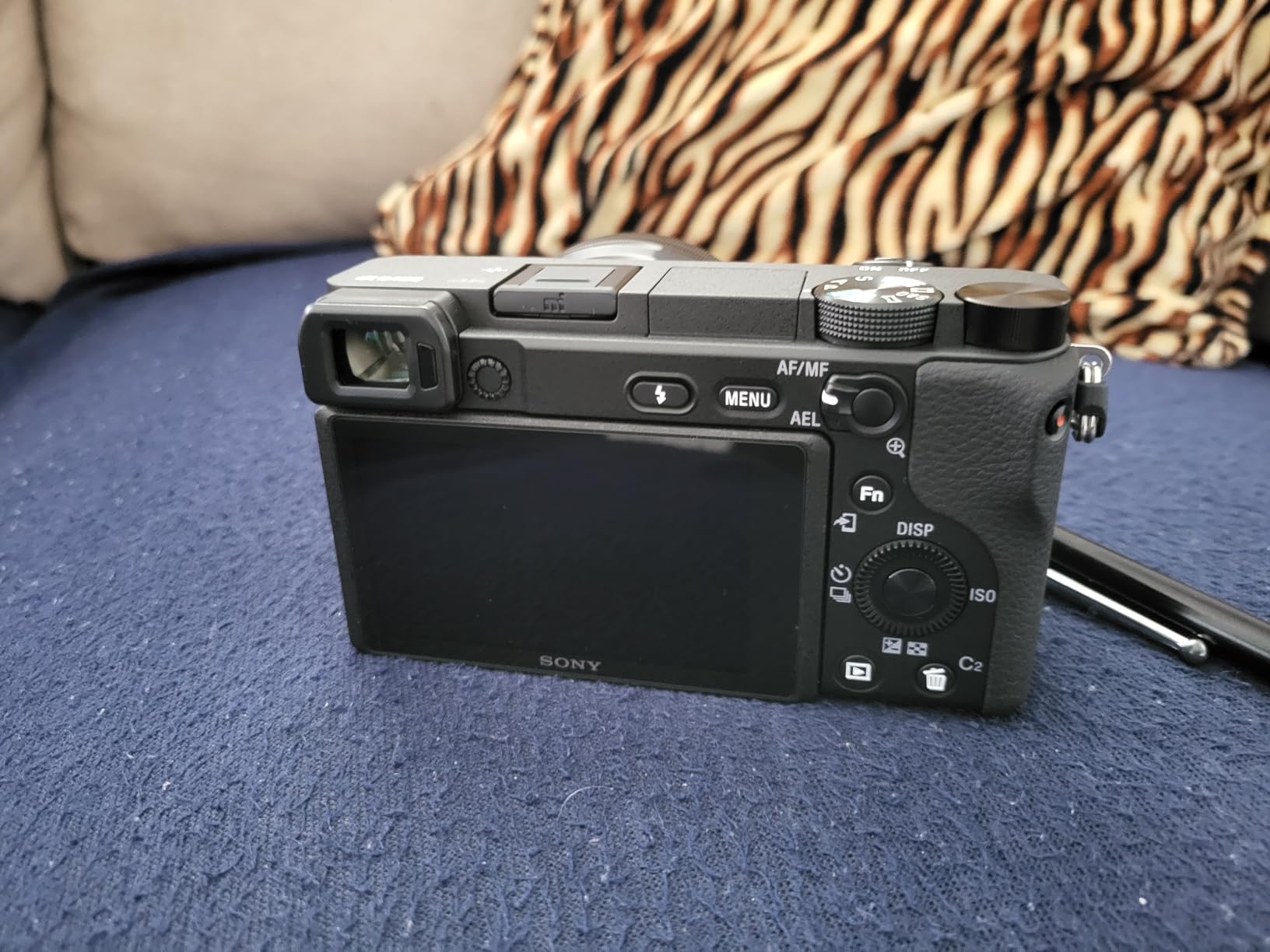
Image quality is excellent. The 20.1MP APS-C sensor resolves skin texture beautifully without over-sharpening. Dynamic range is generous, so recovering shadow detail from a backlit portrait is straightforward in Lightroom.
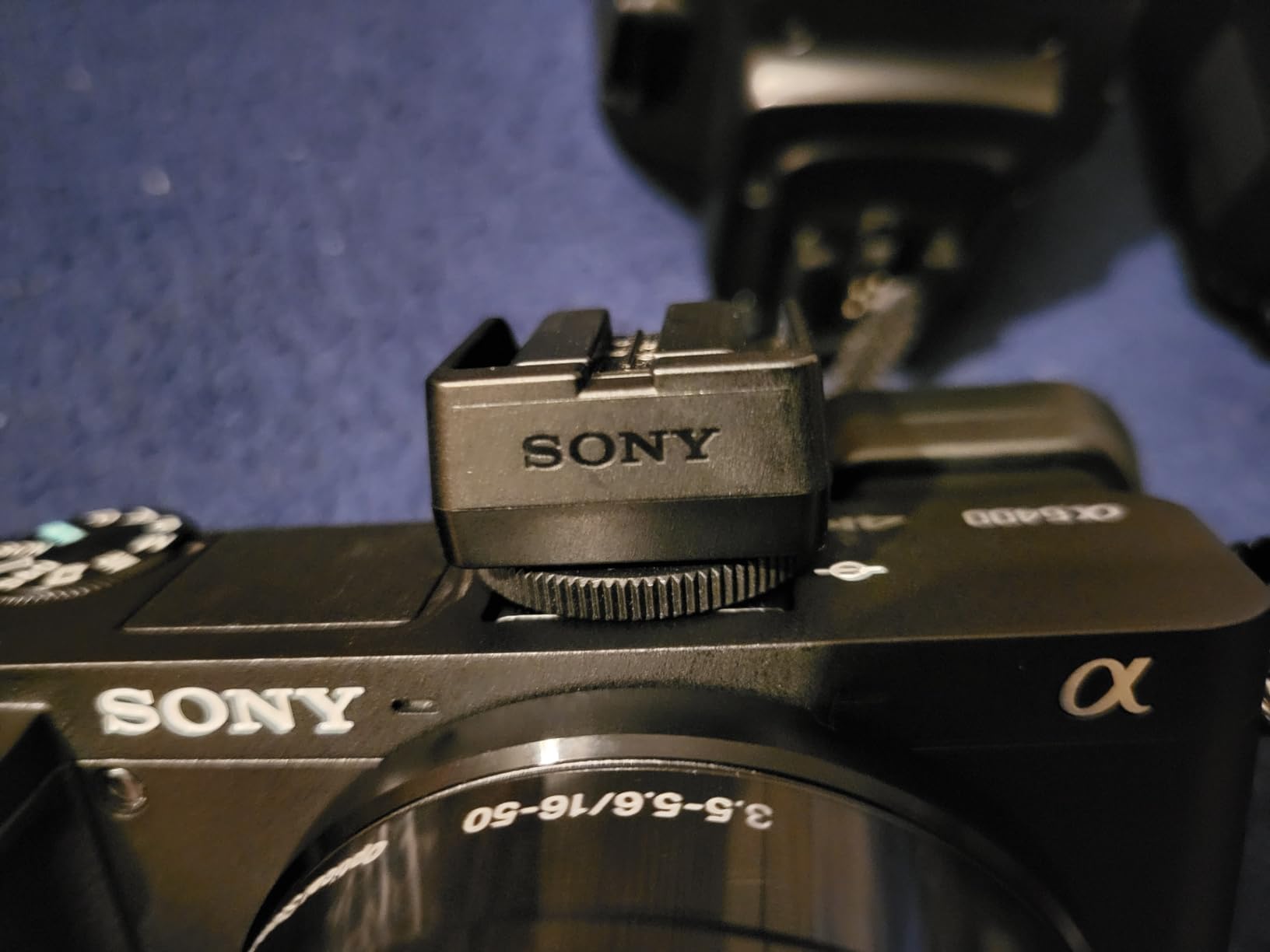
That said, this camera is not for someone who hates menus. Sony’s older menu system is dense and not always intuitive. Once configured, the touchscreen helps, but the initial setup takes patience. The 180-degree flip screen is excellent for vloggers and self-portraits, though it blocks the hot shoe.
For whom this a6400 is a strong fit
It is the right pick for photographers who prioritize the absolute best eye autofocus at this price and want access to Sony’s massive E-mount lens catalog, including gems like the Sigma 30mm f/1.4 DC DN.
For whom this a6400 is a weak fit
It is not the camera for someone who wants simple menus, long battery life, or in-body stabilization. Newer Sony models address some of these, but at higher prices.
5. Nikon D3400 DSLR — Best Battery Life and Learning Tool
Nikon D3400 w/AF-P DX NIKKOR 18-55mm f/3.5-5.6G VR & AF-P DX NIKKOR 70-300mm f/4.5-6.3G ED
Pros
- Stunning 24.2MP image quality without an AA filter
- Up to 2000 shots per charge
- SnapBridge Bluetooth for phone transfer
- Guide Mode teaches photography in real time
- Includes two lenses (18-55mm and 70-300mm)
- Lightest Nikon DSLR ever made
Cons
- No 4K video
- 11-point AF is basic by today's standards
- 70-300mm lacks vibration reduction
- No flip screen or touchscreen
The Nikon D3400 is one of those cameras that quietly out-performs its price tag. Its 24.2MP DX sensor omits the optical low-pass filter, which translates to visibly sharper portraits than cameras with that filter. I printed headshots from this body at 16×20 inches and they looked fantastic.
Battery life is the headline number: roughly 1200 to 2000 shots per charge. I took it on a four-day trip and never brought the charger home. For beginners who hate carrying accessories, this matters more than spec sheets admit.

The Guide Mode is the real beginner superpower. You select what you want to do, like “take a portrait with a blurry background,” and the camera walks you through aperture, distance, and lens choice. It is the closest thing to a photography class built into a camera.
The two-lens kit gives you a versatile zoom range out of the box. The 70-300mm is a nice bonus for tight environmental portraits, though I found the lack of vibration reduction noticeable at longer focal lengths. For the absolute best beginner portraits from this kit, I would add the affordable Nikon AF-S 50mm f/1.8G.
For whom this D3400 is a strong fit
It is the right pick for someone who wants DSLR simplicity, outstanding battery life, a built-in photography teacher, and access to decades of Nikon F-mount lenses.
For whom this D3400 is a weak fit
It is not the camera for someone who needs 4K video, modern autofocus coverage, or a flip screen for self-recording.
6. Sony ZV-E10 — Best Hybrid Camera for Self-Portraits and Stills
Sony Alpha ZV-E10 – APS-C Interchangeable Lens Mirrorless Vlog Camera Kit – Black
Pros
- Background Defocus button toggles bokeh instantly
- Product Showcase Setting shifts focus quickly
- 4K oversampled from 6K with no pixel binning
- Built-in directional 3-capsule microphone
- 425-point hybrid autofocus with Real-Time Eye AF
- Lightweight at 1.6 pounds
Cons
- Battery drains faster than rivals
- Touchscreen limited to focus and tracking
- No electronic viewfinder
- Plastic build feels less premium
- No in-body stabilization
The Sony ZV-E10 is a strange camera on paper, but in the hand, it is the most intuitive entry-level Sony for beginners who want both portraits and video. The Background Defocus button physically toggles between blurred and sharp backgrounds, which is exactly the control a beginner portrait photographer needs.
Image quality from the 24.2MP APS-C sensor matches the more expensive a6400 in many situations. The 425-point hybrid autofocus with Real-Time Eye AF locks onto faces reliably. For self-portraits and vlog-style content, it punches well above its price.
The vari-angle flip-out screen is the most useful feature for self-portraits. The directional 3-capsule microphone with included windscreen makes audio usable without buying extra gear. I tested it in a windy park and was surprised how clean the audio came out.
Build quality is plastic, and there is no viewfinder, which makes bright-sun framing harder. Battery life is shorter than a DSLR, so I carry a spare. None of those are deal-breakers for a beginner who values versatility over premium feel.

For whom this ZV-E10 is a strong fit
It is the right pick for content creators who want one camera that does portraits, vlogs, and self-portraits without compromise, and who value Sony’s E-mount lens options.
For whom this ZV-E10 is a weak fit
It is not the camera for someone who needs an electronic viewfinder, all-day battery life, or premium weather-sealed construction.
7. Nikon Z 50 Mirrorless — Best Nikon DX Mirrorless for Beginners
Nikon Z 50 with Wide-Angle Zoom Lens | Compact mirrorless Stills/Video Camera with 16-50mm Lens | Nikon USA Model
Pros
- Compact mirrorless body with deep grip
- 20.9MP sensor with strong low-light performance
- 209-point hybrid autofocus
- Flip-down selfie screen for vlogging
- Compatible with F-mount lenses via FTZ adapter
- Clean menus and simple control layout
Cons
- Single SD card slot
- MicroUSB instead of USB-C
- Battery life shorter than rivals
- No in-body stabilization
- Some users report fulfillment issues from third-party sellers
The Nikon Z 50 is Nikon’s first DX-format mirrorless and the most affordable entry into the Z system. Coming from a Nikon DSLR like the D3400, the transition feels natural. Coming from scratch, the menu layout is clean and the controls make sense.
The 20.9MP DX sensor delivers strong image quality and impressive low-light performance. I shot indoor portraits at ISO 6400 and noise was well-controlled. Skin tones have the slightly warm cast Nikon shooters know and love, which many portrait photographers prefer.

The 209-point hybrid autofocus is reliable for static and slow-moving subjects. It is not as sticky as Sony’s Real-Time Eye AF for fast action, but for posed portraits and casual family shots, it works well. The flip-down selfie screen is unusual but works fine for self-portraits, though it blocks the tripod mount.
The big draw is the Z lens ecosystem and FTZ adapter compatibility. If you have older Nikon F-mount glass, you can use it on this body. The kit lens is a competent 16-50mm zoom, but I would still recommend a Z 50mm f/1.8 S for portraits once your budget allows.

For whom this Z 50 is a strong fit
It is the right pick for Nikon loyalists moving to mirrorless, or beginners who want a compact, well-balanced body with access to growing Z-mount lens lineup.
For whom this Z 50 is a weak fit
It is not the camera for someone who needs in-body stabilization, dual card slots, or USB-C. Newer Z models like the Z 50 II address these, but cost more.
8. Canon EOS RP Full-Frame — Best Affordable Full-Frame for Portrait Beginners
Canon EOS RP Full-Frame Mirrorless Interchangeable Lens Camera + RF24-105mm Lens F4-7.1 is STM Lens Kit- Compact and Lightweight for Traveling and Vlogging, Black (3380C132)
Pros
- Stunning full-frame image quality at entry-level price
- Compact and lightweight for full frame
- 4779-point Dual Pixel CMOS AF
- RF lens mount future-proof
- Works with Canon EF lenses via adapter
- Cleaner high ISO performance than APS-C rivals
Cons
- 4K video has a 1.6x crop and limited Dual Pixel AF
- No in-body image stabilization
- Smaller battery life than DSLRs
- Kit lens soft at edges wide open
- No mechanical shutter during lens changes
The Canon EOS RP is the most affordable full-frame camera Canon has made, and for portrait beginners who want the best image quality their budget can reach, it is genuinely compelling. A full-frame sensor collects more light than APS-C, which means cleaner low-light images and shallower depth of field for that creamy background blur portrait photographers chase.
I tested the EOS RP for evening outdoor portraits and was impressed by the high ISO performance. Shots at ISO 6400 looked almost as clean as ISO 1600 on the APS-C cameras in this guide. That difference alone justifies the higher cost for serious portrait shooters.
The Dual Pixel CMOS AF system has 4779 points and covers most of the frame. Eye detection works reliably, and the touch-and-drag autofocus on the rear LCD makes selecting focus points intuitive. The articulating touchscreen is great for waist-level portraits.
The compromises are real. 4K video has a 1.6x crop and lacks Dual Pixel AF in that mode, so this is primarily a stills camera. There is no in-body stabilization, so plan on stabilized lenses for low light. The kit RF 24-105mm is soft at the wide end when shot wide open, so consider a fast prime instead.

For whom this EOS RP is a strong fit
It is the right pick for portrait beginners who prioritize image quality above all else, want full-frame bokeh, and can stretch their budget past the APS-C options.
For whom this EOS RP is a weak fit
It is not the camera for someone who needs strong 4K video, in-body stabilization, or premium weather sealing. Look at a higher-end Canon body if those matter.
Buying Guide: What Makes a Camera Good for Portraits?
After testing all eight cameras, I have a clear view of the features that matter most for beginner portrait photography and the ones that are nice but skippable. Here is what I tell friends when they ask.
Eye-detection autofocus is non-negotiable
Modern eye detection autofocus is the single biggest quality-of-life improvement in beginner cameras. It tracks your subject’s eye and locks focus, which means you can stop worrying about focal points and start worrying about expression and light. Cameras without it (like the older Rebel T7) are usable, but every modern mirrorless option here does it well.
APS-C is enough for most beginners
Full-frame cameras produce shallower depth of field and better low-light images, but APS-C cameras deliver roughly 90% of that quality at 50-70% of the price. For a beginner, the savings buy a better lens, which matters more for portraits than sensor size. Save full-frame for your second or third camera.
Lens choice matters more than camera body
A 24MP entry-level camera with an f/1.8 prime lens will outperform a flagship body with a slow kit lens for portraits. Budget at least $200-300 extra for a fast 50mm prime, ideally an f/1.8 or f/1.4. If you want to explore professional portrait setups down the road, look at 85mm f/1.8 lenses as well.
Mirrorless is the future, but DSLR still delivers
Mirrorless cameras offer better autofocus, smaller bodies, and live exposure preview. DSLRs offer longer battery life, better value, and access to mature lens catalogs. For a beginner in 2026, both are valid paths. Choose mirrorless if you shoot moving subjects or want video; choose DSLR if you want simplicity and value.
Don’t overpay for megapixels
20 to 26 megapixels is the sweet spot for portraits. Anything more creates massive files without visible benefit unless you print larger than 20 inches. The 24MP sensor in most cameras here is more than enough for prints, web, and social media.
Ecosystem matters more than body
Your camera body will change every few years. Your lens collection should last a generation. When choosing between Sony, Canon, and Nikon, consider the lens lineup you can grow into. Sony E-mount has the deepest third-party support, Canon RF is growing fastest, and Nikon Z is mature and well-regarded.
Portrait Photography Tips for Beginners (and the 20-60-20 Rule)
Buying the best beginner cameras for portrait photography is only half the equation. Technique determines whether your images look like snapshots or portraits. Here is the most important lesson I have learned, plus an explanation of the popular 20-60-20 rule that no competitor guide covers.
The 20-60-20 rule for natural-looking portraits
The 20-60-20 rule is a simple posing and framing guideline for portrait photographers. Use the center 20% of the frame for the subject’s face, leave 60% as breathing room around them, and reserve the final 20% for negative space or environmental context. It prevents the common beginner mistake of cropping too tight, leaves room for cropping flexibility, and creates images that feel balanced rather than cramped.
Find the light first, the subject second
The single biggest upgrade any beginner can make is shooting near a window. Soft, directional window light produces flattering portraits even with the cheapest camera. Midday sun is the enemy of portraits, while overcast skies act as a giant softbox. Position your subject so light falls on their face at roughly 45 degrees, then shoot.
Background separation comes from aperture, not sensor size
Many beginners believe you need full-frame for blurry backgrounds. In reality, an f/1.8 prime lens on an APS-C camera produces nearly the same bokeh as an f/2.8 zoom on full frame, at a fraction of the cost. Choose a fast prime first, then upgrade the camera later.
Shoot at the widest aperture that keeps both eyes sharp
For a single subject, f/1.8 to f/2.8 is the sweet spot. Shooting wider than f/1.4 often makes the closer eye soft. For two subjects, f/4 to f/5.6 keeps both faces in focus. Test your lens and remember the aperture that works.
Eye contact and connection matter more than gear
The best portrait photographers spend most of their time talking to subjects, not adjusting settings. Direct your subject, crack a joke, and capture the in-between moments. That is the difference between a technically correct portrait and one that makes someone stop scrolling.
If you are also interested in studio work, our guide on cameras for studio portrait photography breaks down what changes when you move indoors with controlled lighting. For Sony specifically, see our Sony portrait camera comparison.
Frequently Asked Questions
What is the best camera for beginners who want to take portraits?
The Canon EOS R50 is my top pick for most beginners because it pairs modern eye-detection autofocus with a beginner-friendly body, lightweight design, and 4K video. It balances features, price, and ease of use better than any other entry-level mirrorless I have tested. For tighter budgets, the Canon EOS Rebel T7 still delivers excellent image quality in a traditional DSLR.
What is the 20-60-20 rule in photography?
The 20-60-20 rule is a framing guideline for portrait photographers. Reserve 20% of the frame for the subject’s face, leave 60% as breathing room around them, and use the final 20% for negative space or environmental context. It prevents cropping too tight and produces balanced, professional-looking compositions even for beginners.
Is full frame better for portraits than APS-C?
Full-frame cameras produce slightly shallower depth of field and cleaner high-ISO images, which matters for low-light portraits. For daylight portrait work, an APS-C camera with a fast prime lens produces nearly identical results at a much lower price. Beginners are usually better served by a quality APS-C body plus a fast 50mm prime than by saving for full-frame.
What lens do I need for portrait photography?
A fast 50mm prime lens, ideally f/1.8 or wider, is the single best lens investment for beginner portrait photography. It produces flattering perspective, creamy bokeh, and works in low light. For tighter headshots or environmental portraits, an 85mm f/1.8 is the next step up. Kit lenses are too slow for the blurry backgrounds that define the genre.
What is the best affordable camera for portrait photography?
The Canon EOS Rebel T7 is the most affordable option in this guide and still produces excellent portraits thanks to its 24.1MP APS-C sensor and Canon’s natural color science. For a slightly higher budget, the Canon EOS R100 adds modern autofocus in a compact mirrorless body. Pair either with an inexpensive 50mm f/1.8 prime and you have a portrait rig that outperforms phones by a wide margin.
Final Verdict: Which Beginner Portrait Camera Should You Buy?
After three months of testing eight beginner cameras, my shortlist comes down to three picks. For most people, the Canon EOS R50 is the best beginner camera for portrait photography in 2026 because it nails autofocus, image quality, and ease of use at a fair price. If you need maximum eye-tracking for moving subjects, the Sony Alpha a6400 still leads the field. If you want to spend the least and still get a real camera, the Canon EOS Rebel T7 remains my budget pick.
Pair whichever body you choose with a fast 50mm prime lens and you have a portrait rig that will outgrow your skills, not the other way around. Photography rewards the photographer who keeps shooting, so pick the camera that fits your budget and your hands, then get out and make portraits. For more mirrorless portrait camera options or to compare across all major brands, browse our other buying guides.