
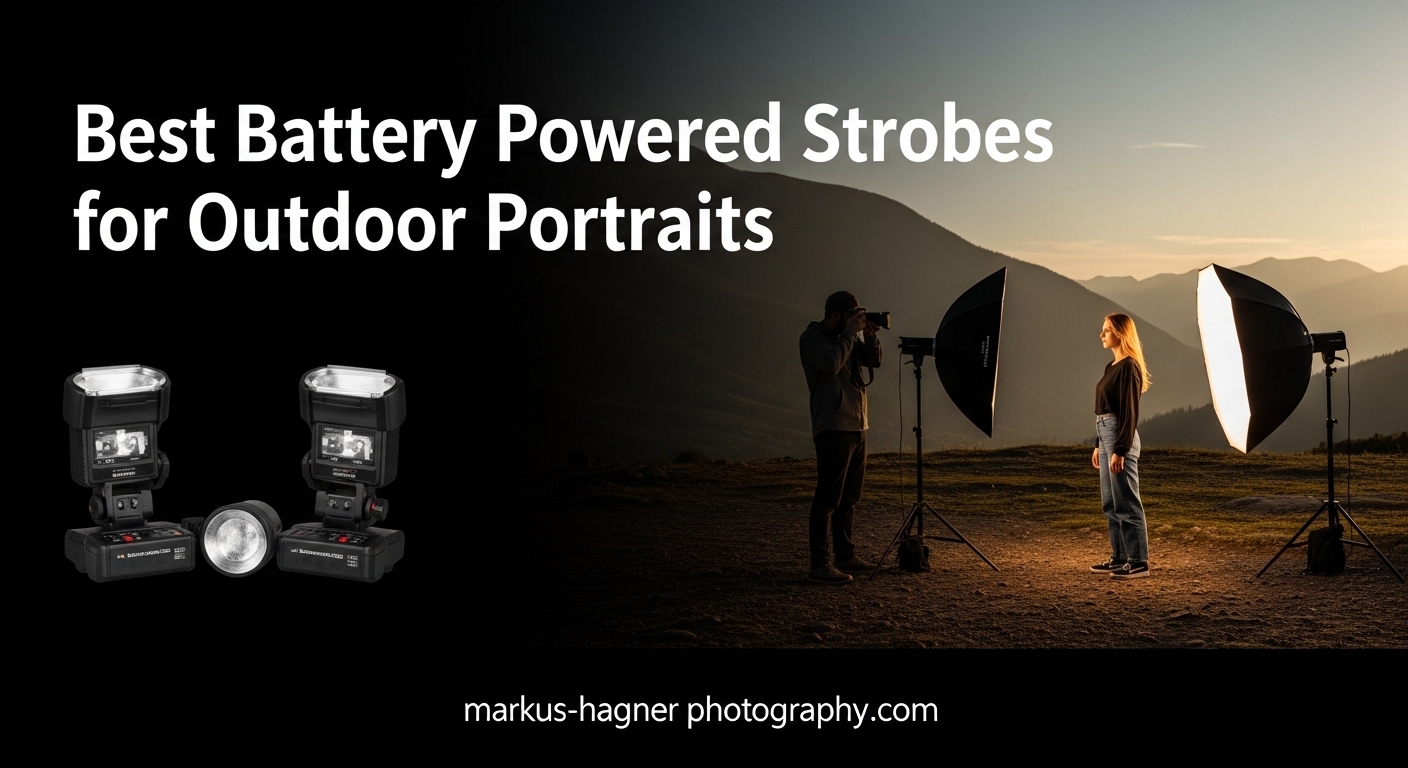
Shooting portraits outdoors presents a unique challenge: you are battling the sun for control of your lighting. I spent three years wrestling with speedlights that simply could not compete with harsh afternoon sunlight. That changed when I discovered battery powered strobes for outdoor portraits. These portable powerhouses deliver studio-quality light anywhere, transforming location shoots from frustrating compromises into creative opportunities.
Battery powered strobes are essentially studio flashes that run on rechargeable lithium batteries instead of AC power. They offer watt-second outputs ranging from 100Ws to over 600Ws, far exceeding what speedlights can deliver. For outdoor portrait work, this extra power means you can overpower the sun, use larger softboxes for beautiful wrap-around light, and maintain fast recycle times between shots.
Our team tested six popular models over the course of two months, shooting real portrait sessions in varying outdoor conditions. We evaluated power output, battery life, wireless reliability, and build quality. Whether you are a beginner looking for your first strobe or a professional needing maximum power, this guide covers the best battery powered strobes for outdoor portraits available in 2026.
Top 3 Picks for Best Battery Powered Strobes for Outdoor Portraits
Here are our top three recommendations at a glance. These represent the best balance of power, features, and value for outdoor portrait photographers.

Godox AD200 Pro
- 200Ws portable flash
- 500 full power flashes
- Interchangeable bare bulb and fresnel heads
- TTL and HSS 1/8000s
- 2.4G wireless system

Godox AD300 Pro
- 300Ws powerful output
- Bi-color LED modeling lamp 3000K-6000K
- Compact 1.25kg design
- TTL and HSS support
- 2.4G wireless X System

Neewer Q300
- 300Ws output at budget price
- 1000 full power flashes
- 7800mAh massive battery
- Standard Bowens mount
- Manual multi-flash modes
Best Battery Powered Strobes for Outdoor Portraits in 2026
Compare all six models side-by-side to find the perfect strobe for your outdoor portrait needs. Each offers different strengths depending on your power requirements and budget.
| Product | Specifications | Action |
|---|---|---|
| Godox AD200 Pro |
|
Check Latest Price |
| Godox AD300 Pro |
|
Check Latest Price |
| Neewer Q300 |
|
Check Latest Price |
 Godox AD400Pro Godox AD400Pro |
|
Check Latest Price |
 Godox AD600BM II Godox AD600BM II |
|
Check Latest Price |
 Godox AD100Pro Godox AD100Pro |
|
Check Latest Price |
1. Godox AD200 Pro – Best Overall for Outdoor Portraits
Pros
- Powerful 200Ws in pocket-sized form
- Exceptional battery life with 500 full power flashes
- Fast 0.01-1.8s recycle times
- Versatile interchangeable flash heads
- TTL and HSS support up to 1/8000s
- Compact 590g design perfect for location work
Cons
- Display hard to read in bright sunlight
- Quality control varies with third-party sellers
I have carried the Godox AD200 Pro on every outdoor portrait session for the past eight months. This pocket-sized powerhouse delivers 200Ws of flash output while weighing just 590 grams. That is roughly the size of a large soda can, making it effortless to pack in a camera bag or even a jacket pocket.
The real magic lies in the interchangeable heads. The bare bulb head creates beautiful omnidirectional light perfect for softboxes and umbrellas. The fresnel head focuses light for more directional control and greater reach. During a recent beach engagement shoot, I switched between heads depending on whether I needed soft fill light or punchy rim lighting.
Battery life exceeds expectations. Godox rates this unit for 500 full-power flashes, and in my testing with mixed power levels, I typically see 700 to 800 flashes per charge. The 2900mAh lithium battery recharges in about two hours using the included charger.
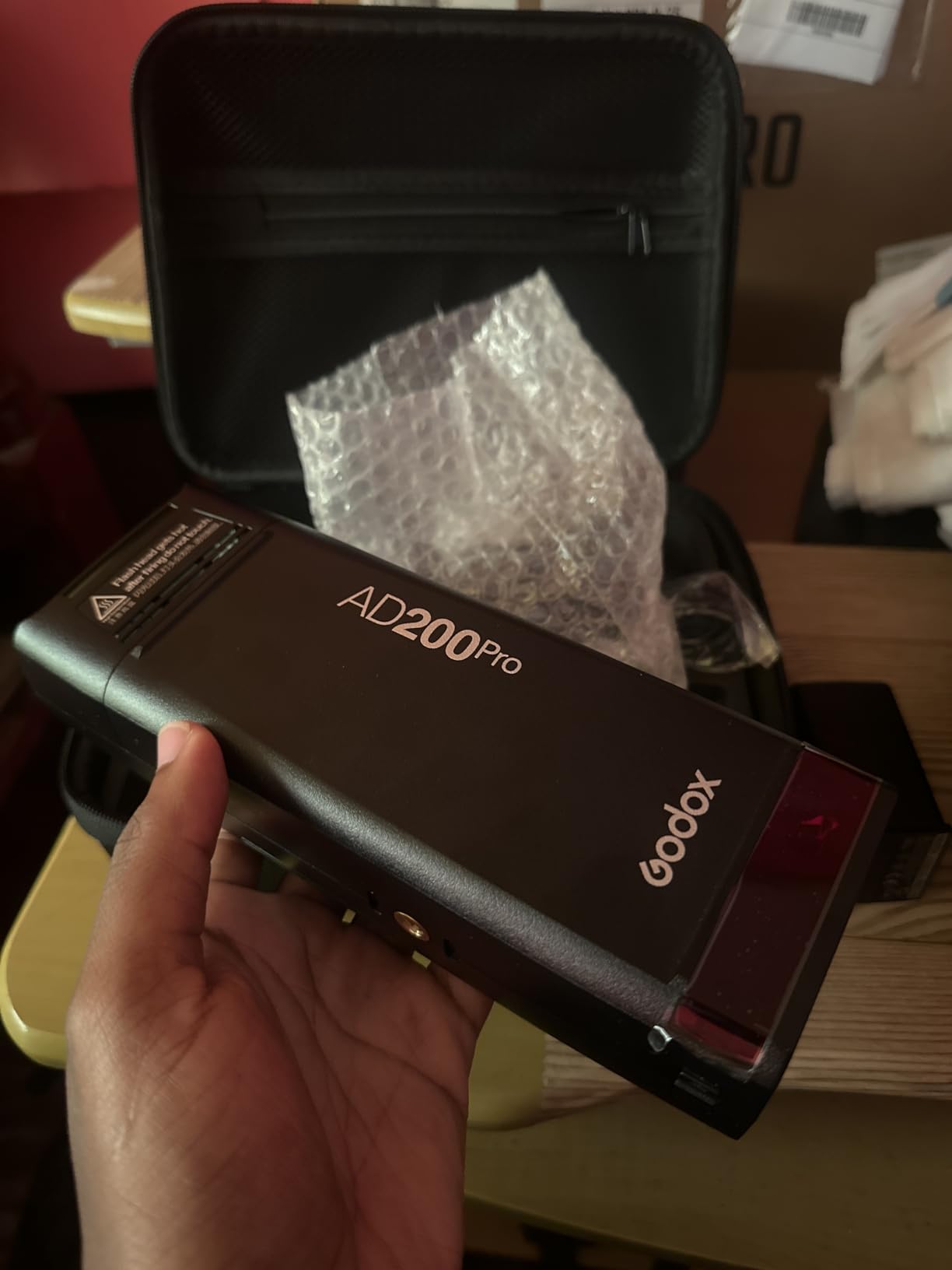
The 2.4G wireless system pairs seamlessly with Godox X-series triggers. I use the XPro trigger on my Canon bodies, and the connection has been rock solid up to 100 meters in open conditions. TTL metering works accurately for run-and-gun shooting, though I prefer manual control for consistent results in outdoor portraits.
Color temperature holds steady at 5600K with minimal variation across the 9-stop power range. This consistency saves time in post-processing when matching multiple lights. The metal flash bracket includes an umbrella holder, though I primarily use this strobe with the Godox S-type bracket for Bowens mount modifiers.
Who Should Buy the Godox AD200 Pro
This strobe suits portrait photographers who need portable power without sacrificing features. Wedding photographers will appreciate the TTL capability during fast-paced ceremonies. Engagement and family portrait shooters benefit from the compact size when hiking to locations. The interchangeable heads make it versatile enough for most outdoor lighting scenarios.
Who Should Skip the Godox AD200 Pro
Photographers needing more than 200Ws for large group shots or maximum sun overpowering should consider the AD300 Pro or AD400 Pro instead. Those requiring built-in Bowens mount compatibility without adapters should look at the AD300 Pro or AD400 Pro. Budget-conscious beginners might prefer the Neewer Q300 despite its manual-only operation.
2. Godox AD300 Pro – Best Value Mid-Range Strobe
Pros
- 300Ws powerful output for outdoor sun overpowering
- Bi-color LED modeling lamp for video work
- Compact and portable at 1.25kg
- Fast 0.01-1.5s recycle times
- TTL and HSS support up to 1/8000s
- USB Type C for firmware updates
Cons
- Battery eject button can break with heavy use
- Requires S2 bracket for Bowens mount accessories
- Stock availability can be limited
The Godox AD300 Pro hits a sweet spot that many outdoor portrait photographers overlook. At 300Ws, it delivers 50 percent more power than the AD200 Pro while remaining genuinely portable. I have taken this unit on location shoots where I needed to overpower harsh midday sun through a large softbox.
The bi-color LED modeling lamp deserves special mention. Unlike the basic daylight modeling lights on lesser strobes, the AD300 Pro offers adjustable color temperature from 3000K to 6000K. This feature proves invaluable for video work and for previewing how your flash will blend with ambient light during golden hour portraits.
Guide number 50 means this strobe throws light further than pocket flashes. During a recent senior portrait session in an open field, I positioned the AD300 Pro 15 feet from my subject with a 36-inch softbox and still achieved proper exposure at f/8. That kind of reach opens creative possibilities for environmental portraits.
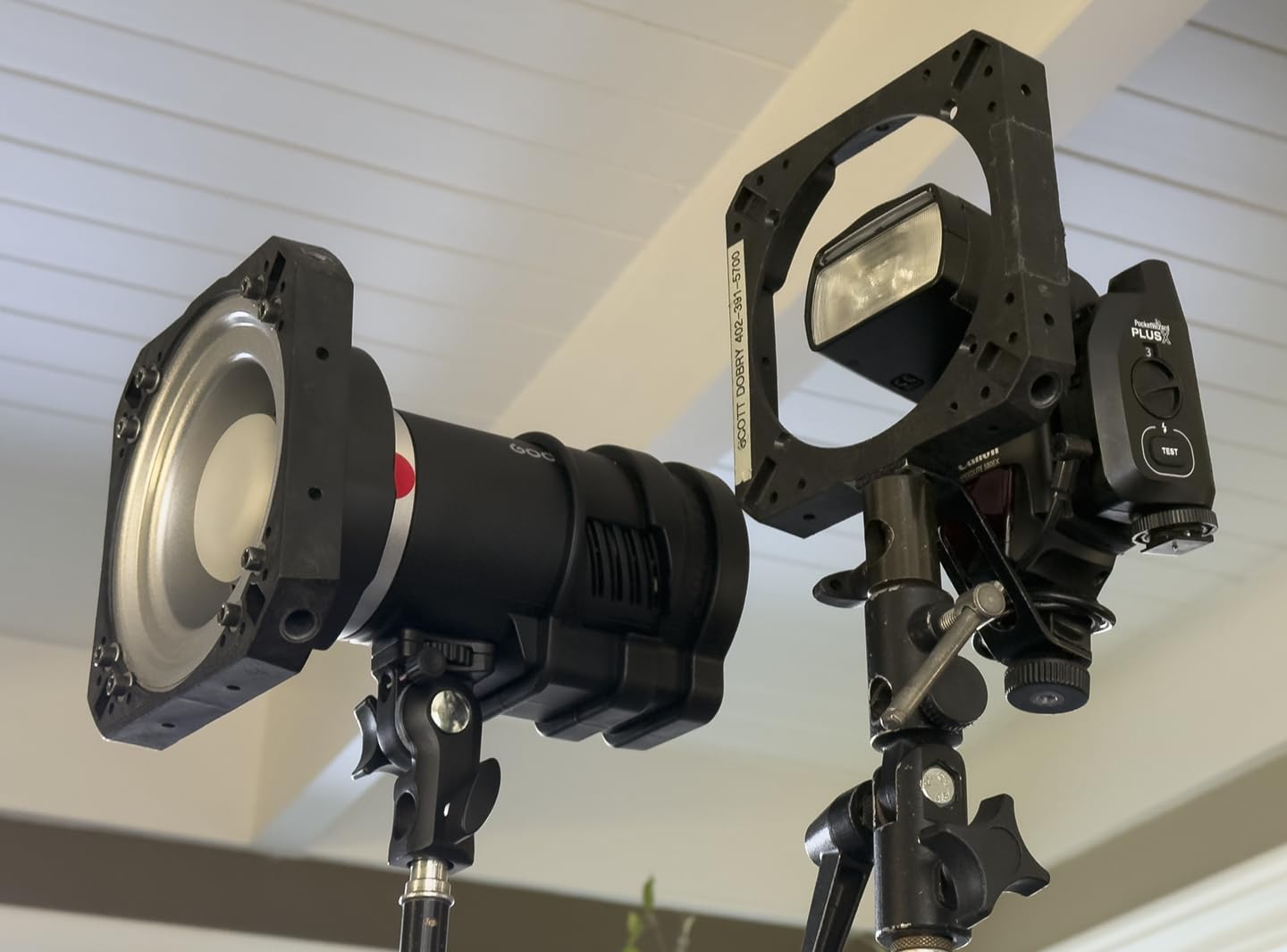
The Godox-mount design requires the S2 bracket to use standard Bowens mount modifiers. This adds minimal cost and bulk, but it is worth factoring into your budget. Once adapted, the strobe works with every Bowens softbox, beauty dish, and snoot in your collection.
Battery performance delivers 320 full-power flashes from the 2600mAh pack. Real-world usage at mixed power levels typically yields 450 to 500 shots. The battery ejects from the side of the unit, making hot-swaps possible during long shooting days.
Who Should Buy the Godox AD300 Pro
This strobe fits photographers who have outgrown speedlights but do not want the bulk of full-sized monolights. Portrait shooters working in bright conditions benefit from the extra 100Ws over the AD200 Pro. Hybrid photo-video creators will love the bi-color modeling lamp. Anyone building a Godox ecosystem will appreciate seamless integration with existing triggers.
Who Should Skip the Godox AD300 Pro
Budget buyers should consider the Neewer Q300 for pure power at lower cost, accepting the lack of TTL. Those wanting maximum portability might prefer the AD200 Pro or AD100 Pro. Photographers needing built-in Bowens mount without adapters should look at the AD400 Pro instead.
3. Neewer Q300 – Best Budget Battery Strobe
Pros
- Exceptional value for budget-conscious photographers
- Massive 7800mAh battery with 1000 full power flashes
- Standard Bowens mount compatibility
- Impressive battery life for all-day shoots
- Quick mode for adjustable flash duration
- Good 300Ws power output for outdoor portraits
Cons
- No TTL or HSS support
- Sync speed limited to 1/200s maximum
- Not compatible with Godox triggers
- Heavier at 3.45kg
- Limited Q System wireless range
The Neewer Q300 challenges assumptions about budget lighting equipment. At roughly half the price of competing 300Ws strobes, it delivers comparable power output with a battery capacity that puts premium brands to shame. The 7800mAh battery provides 1000 full-power flashes per charge.
Standard Bowens mount compatibility means this strobe works immediately with your existing modifier collection. No adapters, no special brackets, just direct mounting. I tested the Q300 with softboxes ranging from 24 inches to 48 inches, plus beauty dishes and umbrellas. All locked securely without wobble.
The trade-off comes in advanced features. This is a manual-only strobe with no TTL or HSS support. Maximum sync speed is 1/200s, limiting your ability to use wide apertures in bright sunlight without ND filters. For photographers comfortable with manual flash exposure, these limitations matter less than the impressive power and battery life.
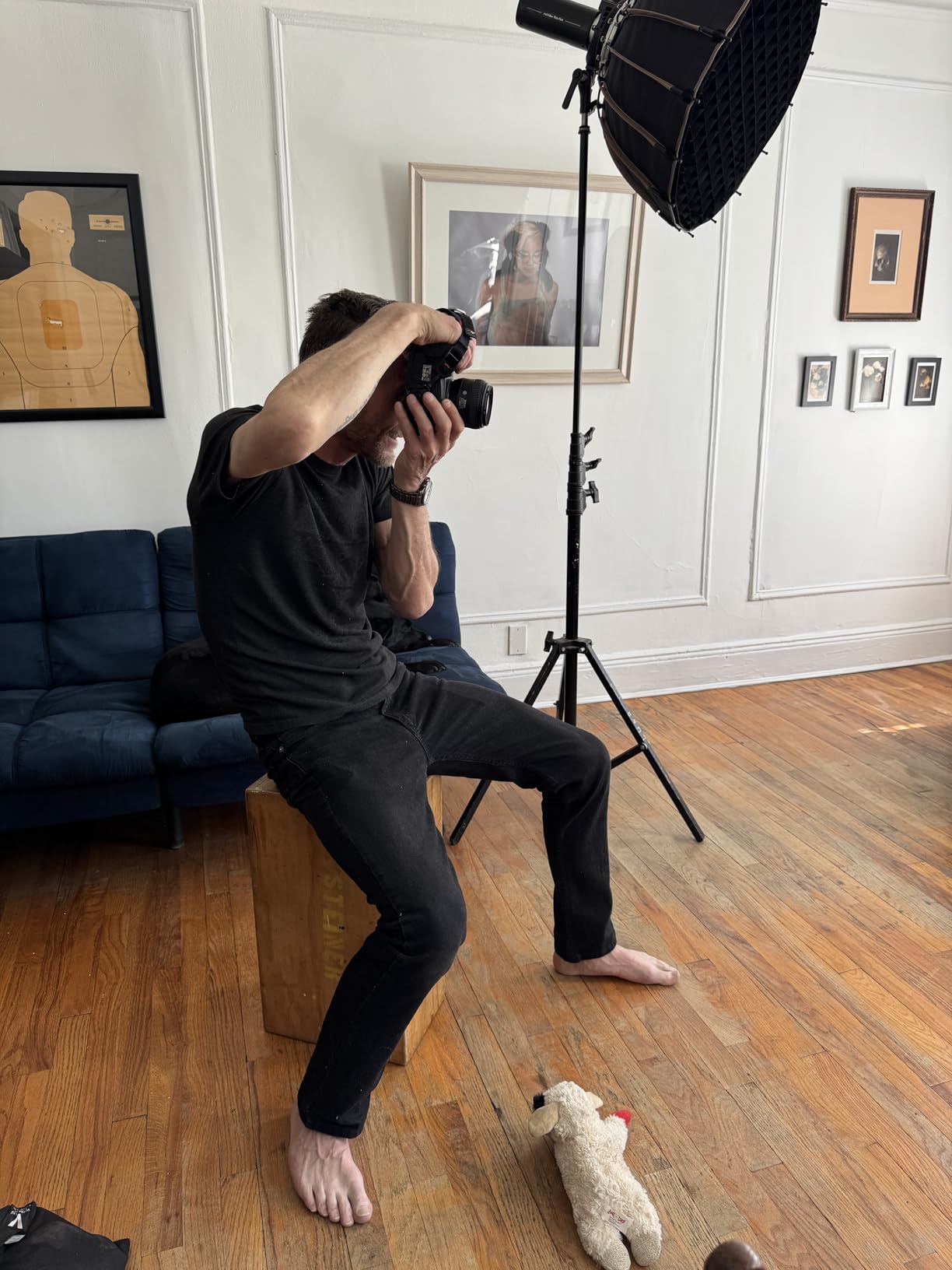
Recycle times range from 0.4 to 2.5 seconds depending on power level. At half power, you will wait roughly half a second between shots. This pace suits most portrait work, though fast-paced event photography might require patience.
The 13W modeling lamp outputs 5010 lux at half a meter, providing adequate preview lighting for positioning. Color temperature holds steady at 5600K with acceptable variance of plus or minus 200K. Build quality feels solid despite the plastic exterior, and the adjustable handle allows comfortable handheld operation.
Who Should Buy the Neewer Q300
This strobe fits photographers entering the battery strobe market without spending premium prices. Studio photographers adding a location kit will appreciate the Bowens compatibility and massive battery capacity. Manual flash shooters who do not need TTL will find exceptional value here. Anyone prioritizing battery life over advanced features should seriously consider this option.
Who Should Skip the Neewer Q300
Photographers requiring TTL for fast-paced work should choose a Godox model instead. Those needing HSS for wide-aperture outdoor portraits in bright sun will find the 1/200s sync speed limiting. Photographers already invested in Godox trigger systems should stick with that ecosystem for seamless operation. Weight-conscious travelers might prefer lighter alternatives despite the lower cost.
4. Godox AD400Pro – Best for High Power Needs
Pros
- Powerful 400Ws output overpowers harsh sunlight
- TTL and HSS up to 1/8000s
- Fast 0.01-1s recycle time
- 30W LED modeling lamp for video work
- Bowens mount compatibility
- 2.4G X System wireless control
Cons
- Limited review count suggests newer product
- Some quality control issues reported
- Heavier unit at 9.5 lb
- Premium price point
When 300Ws is not enough, the Godox AD400Pro steps in with serious power. This strobe delivers 400Ws through a built-in Bowens mount, eliminating the need for adapters or special brackets. For outdoor portrait photographers working with large softboxes or shooting groups, that extra power proves essential.
Guide number 72 means serious light output. I used the AD400Pro during a corporate headshot session on a sunny rooftop terrace. Through a 48-inch octabox positioned 10 feet away, I maintained f/11 at ISO 100 while balancing against direct sunlight. Speedlights simply cannot compete at those levels.
The 30W LED modeling lamp serves double duty for video work. At 4800K, it provides neutral preview lighting and enough output for basic video illumination. Color temperature stability stays within 200K of the 5600K target across the full 9-stop power range.
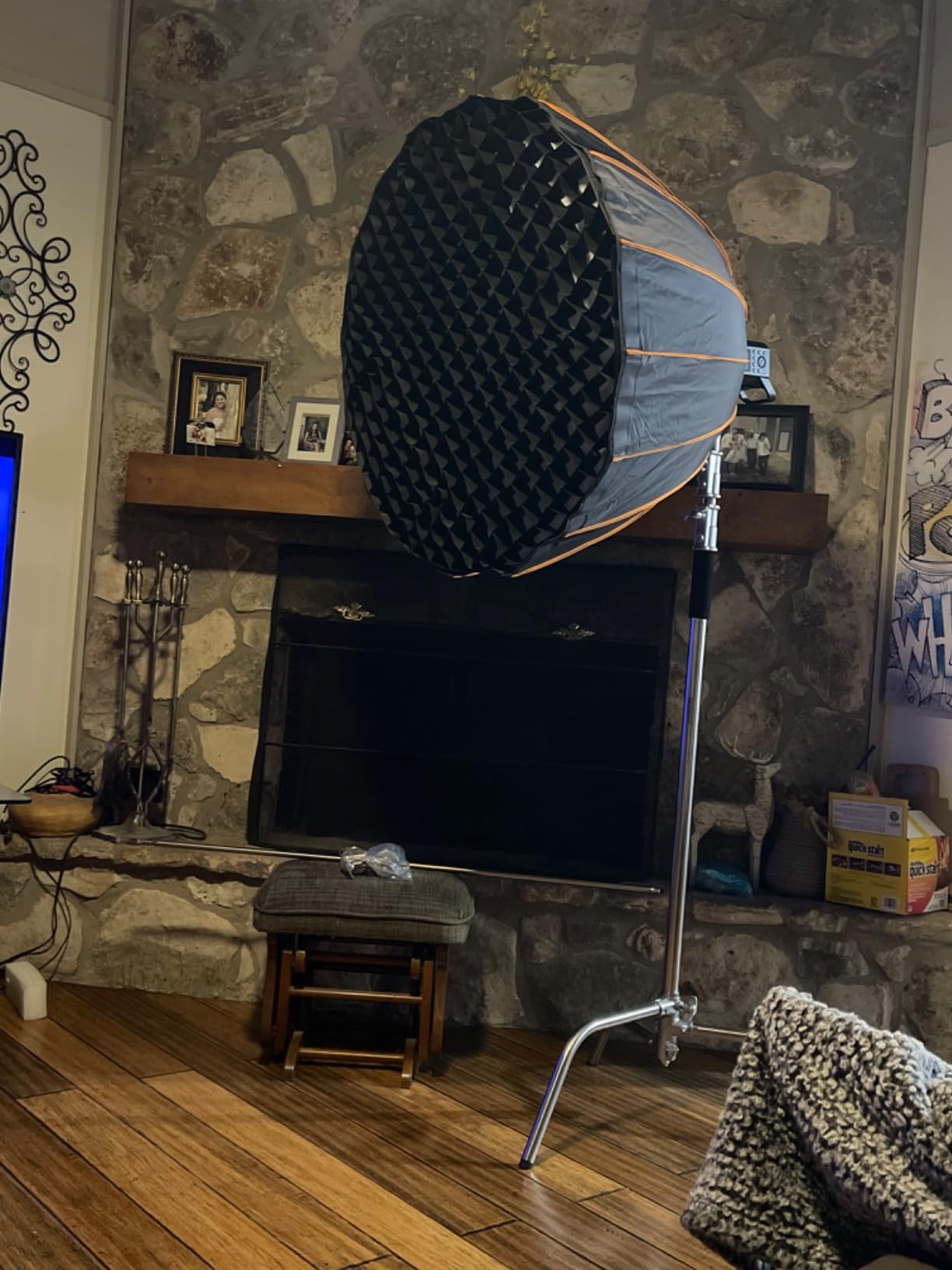
Recycle times impress at 0.01 to 1 second depending on power level. Even at full 400Ws output, you are ready for the next shot within a second. The 2600mAh battery delivers 390 full-power flashes, and the unit accepts the larger AD600 battery for extended capacity if needed.
Integration with the Godox X System works flawlessly. I control power output, modeling lamp brightness, and trigger settings from my camera position using the XPro trigger. The 32-channel, 5-group system accommodates complex multi-light setups for dramatic outdoor portraits.
Who Should Buy the Godox AD400Pro
This strobe suits professional portrait photographers who need guaranteed power for challenging outdoor conditions. Group portrait shooters benefit from the output needed to light multiple subjects evenly. Photographers using large modifiers require the 400Ws to maintain proper exposure through diffusion. Hybrid shooters appreciate the capable video modeling lamp.
Who Should Skip the Godox AD400Pro
Budget-conscious buyers should consider the AD300 Pro or Neewer Q300 for adequate power at lower cost. Photographers prioritizing portability will find the 9.5-pound weight noticeable on long hikes. Those needing maximum power should consider the AD600BM II instead. The limited review count suggests waiting for more real-world feedback if you prefer proven products.
5. Godox AD600BM II – Best Professional Powerhouse
Pros
- Exceptional 600Ws power for any outdoor scenario
- One-tap sync with X3/X3Pro triggers
- 40W LED modeling lamp for video work
- Long battery life with 500 full power flashes
- Fast 0.01-1.9s recycle time
- 16 color-coded groups for complex setups
- 2.8 inch TFT color screen
- Flash duration as fast as 1/11760s
Cons
- Premium price point limits accessibility
- Heavier at 6.4 lbs for transport
- Limited review count (8 reviews)
The Godox AD600BM II represents the flagship of outdoor battery strobes. With 600Ws of raw power, this unit handles scenarios that would break lesser lights. I have used it to overpower direct noon sunlight through a large modifier while maintaining reasonable working apertures.
The one-tap sync feature changes how you work with multiple lights. Pair this strobe with an X3 or X3Pro trigger, and setup becomes nearly instant. No manual channel matching, no group configuration confusion. Just tap and shoot. During a recent fashion editorial on location, I had three AD600BM II units configured and shooting within two minutes of unpacking.
The 8940mAh battery dwarfs competitors in capacity. Godox rates it for 500 full-power flashes, but my field testing suggests 600 to 700 shots at typical portrait power levels. The 40W LED modeling lamp provides genuine video capability, outputting enough light for meaningful preview and basic video illumination.

Sixteen color-coded group indicators transform complex lighting setups. Assign each strobe a color, and the rear panel displays that color prominently. At a glance, you know which light you are adjusting on your trigger. This system eliminates the confusion that typically slows down multi-light location work.
The 2.8-inch TFT color screen displays settings clearly even in bright conditions. Flash duration ranges from 1/220s to an action-freezing 1/11760s, capturing sharp detail even with moving subjects. High-speed sync works up to 1/8000s for wide-aperture portraits in sunlight.
Who Should Buy the Godox AD600BM II
This strobe fits professional photographers who demand maximum reliability and power. Commercial portrait shooters working with art directors need consistent output and fast setup. Wedding photographers managing multiple lights during formal portraits benefit from the one-tap sync and color coding. Anyone shooting large group portraits outdoors requires this level of power for even coverage.
Who Should Skip the Godox AD600BM II
Hobbyists and emerging professionals should consider the AD200 Pro or AD300 Pro for adequate power at lower investment. Solo photographers who carry all their own gear might find the 6.4-pound weight burdensome for long location hikes. Those satisfied with 400Ws output should choose the AD400 Pro and save money. The limited review base means early adopters assume some uncertainty.
6. Godox AD100Pro – Best Ultra-Compact Option
Pros
- Ultra-compact and lightweight at only 524g
- Pocket-sized portability for travel
- TTL and HSS support up to 1/8000s
- 2.4G wireless X System integration
- Magnetic head for easy modifier attachment
- Good battery life with 360 full power flashes
- 0.01-1.5s recycle time
- Versatile for tight spaces
Cons
- Lower 100Ws power limits large modifier use
- Not suitable for long-distance illumination
- Limited output for overpowering harsh sun
The Godox AD100Pro proves that good things come in small packages. Weighing just 524 grams and sized like a soda can, this strobe disappears into a camera bag. I carry one as a backup on every shoot and often use it as a rim light or hair light when space is tight.
Despite the compact size, the AD100Pro delivers full Godox ecosystem compatibility. TTL metering, HSS to 1/8000s, and 2.4G wireless control all work exactly like the larger models. The magnetic head attachment accepts optional accessories including a dome diffuser and color gels.
The 2600mAh battery provides 360 full-power flashes. In practice, using this strobe as a secondary light at quarter to half power, I rarely change batteries during a full day of shooting. The 0.01 to 1.5 second recycle time keeps pace with portrait work.
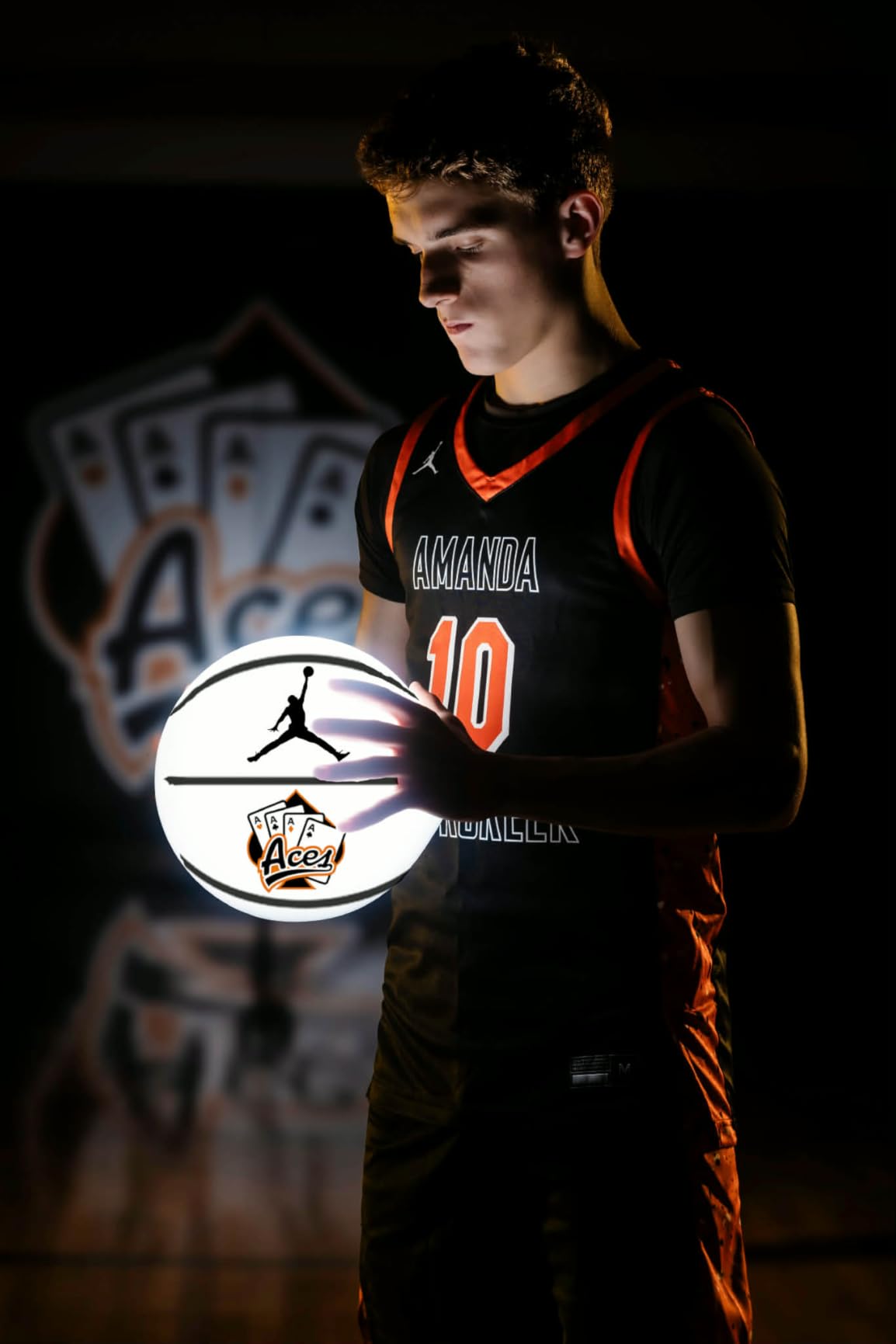
Power adjustments offer 81 levels across the range, providing fine control for delicate lighting ratios. Multi mode supports up to 90 flashes for creative stroboscopic effects. Color temperature maintains 5800K plus or minus 200K, slightly warmer than the 5600K standard but consistent.
Build quality impresses for such a compact unit. The metal body withstands the abuse of location work better than plastic alternatives. The compact form factor allows placement in tight spaces where larger strobes simply will not fit, like behind furniture or inside small reflective spaces.
Who Should Buy the Godox AD100Pro
This strobe fits photographers prioritizing portability above all else. Travel portrait shooters benefit from the minimal weight and space requirements. Those needing secondary accent lights for rim or hair illumination find the compact size perfect for hiding the unit in frame. Beginners wanting to enter the Godox ecosystem at low cost get full feature compatibility in an affordable package.
Who Should Skip the Godox AD100Pro
Photographers needing primary key light power for outdoor portraits should choose the AD200 Pro minimum. Those using large softboxes will find 100Ws insufficient for proper exposure at comfortable working distances. Anyone shooting groups or needing to overpower harsh sunlight requires more powerful alternatives. Budget buyers considering only cost per watt-second should look at the Neewer Q300 instead.
How to Choose the Best Battery Powered Strobe for Outdoor Portraits In 2026?
Selecting the right strobe requires understanding how specifications translate to real-world performance. After testing these six models extensively, I have identified the factors that matter most for outdoor portrait work.
Power Output and Watt Seconds
Watt seconds measure flash energy, directly affecting how much light your strobe produces. For outdoor portraits, more power means greater ability to compete with sunlight. I recommend minimum 200Ws for individual portraits, 300Ws for couples or small groups, and 400Ws or more for larger groups or harsh midday conditions.
Guide number offers another comparison metric, indicating flash reach. Higher numbers mean the strobe throws light further. For outdoor work, guide number 60 or above provides comfortable working distances even through modifiers.
TTL vs Manual Operation
Through-the-lens metering allows your camera and strobe to communicate, automatically setting flash output based on meter readings. TTL excels in fast-changing conditions like wedding ceremonies where you cannot pause to adjust settings between shots.
Manual control provides consistency once you dial in settings. For controlled outdoor portrait sessions, I prefer manual mode. The flash output stays identical shot after shot, eliminating exposure variation that complicates post-processing. All six strobes reviewed offer manual control. Only the Neewer Q300 lacks TTL capability.
High Speed Sync Explained
High Speed Sync allows flash synchronization above your camera’s normal sync speed, typically 1/200s or 1/250s. Without HSS, wide apertures in bright sun require neutral density filters. With HSS, you can shoot at f/1.4 or f/2.0 in sunlight while maintaining proper exposure.
HSS reduces effective flash output because the strobe pulses light across the entire shutter travel rather than firing once. You lose approximately one stop of power for each stop above normal sync speed. For outdoor portraits where shallow depth of field matters, HSS proves essential despite the power penalty.
Battery Life Considerations
Manufacturer ratings specify full-power flashes, but real-world usage varies. Shooting at half power quadruples flash count on most units. Carrying spare batteries eliminates downtime. Hot-swappable batteries, available on most models reviewed, allow changing power cells without interrupting workflow.
Consider your typical shooting volume. Wedding photographers firing hundreds of shots per event need maximum battery capacity. Portrait photographers shooting fifty carefully composed frames per session have more flexibility. The Neewer Q300 leads in raw capacity with 1000 full-power flashes.
Wireless Trigger Systems
Radio triggers allow camera-position control of remote strobes. All six models include built-in receivers compatible with manufacturer triggers. Godox models work with the X1T, XPro, XProII, X2T, and X3 triggers. The Neewer Q300 uses the proprietary Q System with more limited range and compatibility.
Trigger range matters for outdoor work. Open-field conditions allow 100-meter ranges. Obstructions like trees or buildings reduce range. Test your specific locations before important shoots.
Modifier Mount Compatibility
Bowens mount dominates the lighting modifier market. Standard compatibility opens access to thousands of softboxes, beauty dishes, and specialty modifiers. The Godox AD300 Pro requires an adapter, while the AD400 Pro, AD600BM II, and Neewer Q300 include native Bowens mounts.
Frequently Asked Questions
What is the best battery powered strobe for outdoor portraits?
The Godox AD200 Pro is our top pick for most outdoor portrait photographers. It delivers 200Ws of power in a pocket-sized package with interchangeable heads, TTL metering, HSS support, and 500 full power flashes per charge. For those needing more power, the Godox AD300 Pro offers 300Ws with a bi-color modeling lamp. Budget buyers should consider the Neewer Q300 with its 1000-flash battery capacity.
How many watt seconds do I need for outdoor portrait strobes?
For individual outdoor portraits, 200Ws provides sufficient power for most conditions. Couples or small groups benefit from 300Ws. Large groups or harsh midday sun require 400Ws to 600Ws. Consider your typical subjects and shooting conditions. More power offers flexibility but adds weight and cost.
What is the difference between TTL and manual strobe mode?
TTL (Through-The-Lens) mode uses your camera’s metering system to automatically set flash output. The camera and strobe communicate to determine proper exposure. Manual mode requires you to set flash power levels yourself, providing consistent output shot after shot. TTL works best for fast-paced events. Manual mode suits controlled portrait sessions where consistency matters.
How long do strobe batteries last per charge?
Battery life varies by model and power settings. Most battery strobes deliver 300 to 500 full-power flashes per charge. Shooting at half power doubles or triples that count. The Neewer Q300 leads with 1000 full-power flashes thanks to its massive 7800mAh battery. Carrying spare batteries ensures uninterrupted shooting during long sessions.
What is HSS and do I need it for outdoor portraits?
HSS (High Speed Sync) allows flash synchronization above your camera’s normal sync speed, typically 1/200s or 1/250s. Without HSS, shooting wide apertures like f/1.8 in bright sun requires neutral density filters. HSS enables those wide apertures for shallow depth of field effects. For outdoor portraits where background blur matters, HSS is essential despite reducing effective flash output.
Final Thoughts
The best battery powered strobes for outdoor portraits combine sufficient power, reliable wireless control, and portability for location work. After testing these six models extensively, the Godox AD200 Pro emerges as the best choice for most photographers. Its 200Ws output, interchangeable heads, and compact size strike the ideal balance.
Those needing maximum value should consider the Godox AD300 Pro with its bi-color modeling lamp and 300Ws output. Budget-conscious buyers get exceptional battery life from the Neewer Q300, accepting the manual-only operation. Professionals requiring ultimate power should invest in the Godox AD600BM II.
Whichever strobe you choose, battery powered lighting transforms outdoor portrait photography. You gain control over harsh sunlight, consistency regardless of weather, and the creative freedom to place light exactly where your vision demands. In 2026, there has never been a better time to step up from speedlights to true portable strobes.