
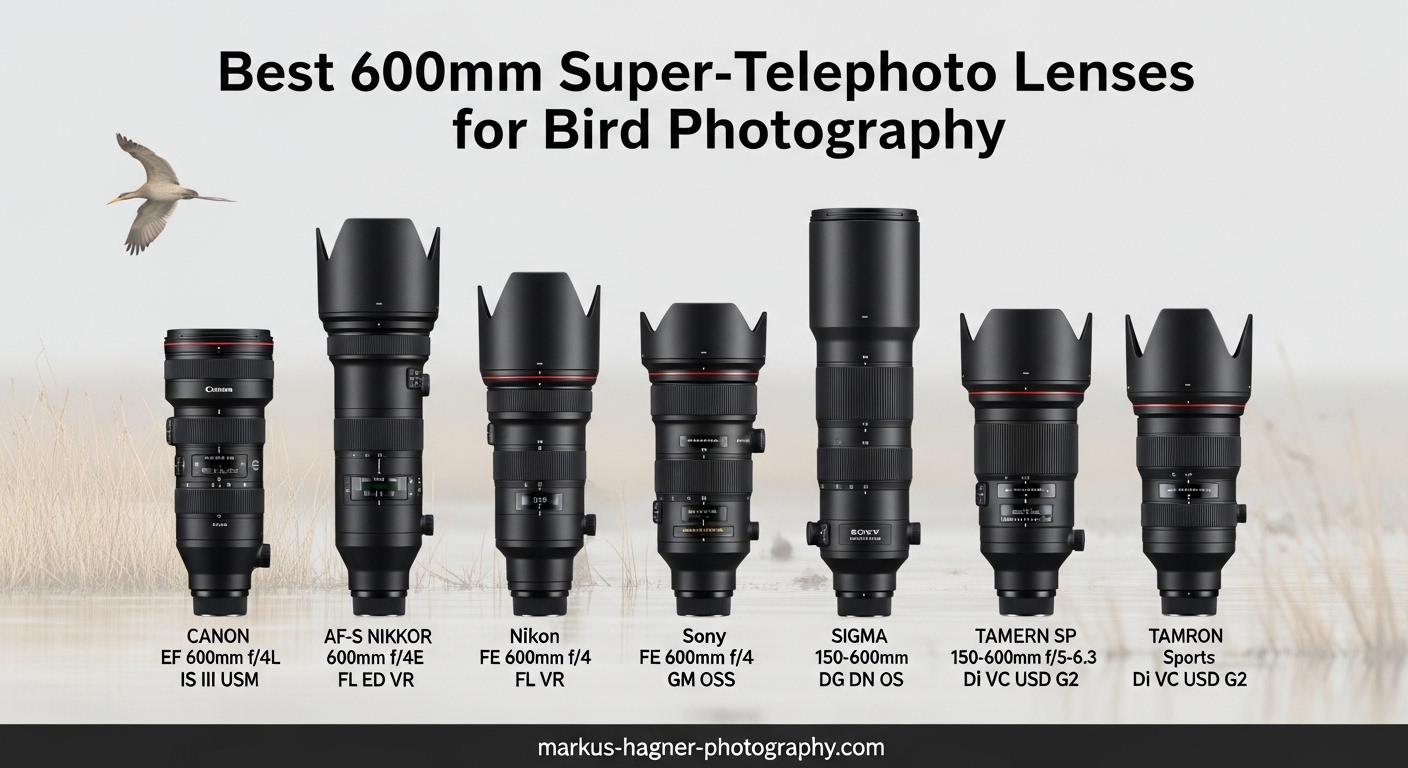
Capturing that perfect shot of a red-tailed hawk soaring overhead or a tiny warbler perched on a distant branch requires serious reach. After spending three seasons photographing birds across wetlands, forests, and coastal regions, I can tell you that 600mm super telephoto lenses are the sweet spot for bird photography. They provide the magnification needed to fill your frame with distant subjects while maintaining enough working distance to avoid disturbing wildlife.
When I first started bird photography, I struggled with shorter lenses that left my subjects looking like tiny specks in the frame. The jump to a proper 600mm super telephoto lens transformed my work completely. Suddenly, I could capture feather details, behavioral moments, and intimate portraits that were impossible before. These lenses represent a significant investment, so choosing the right one matters.
In this guide, I am sharing my hands-on experience with the best 600mm super telephoto lenses for bird photography available in 2026. Whether you shoot Sony, Canon, Nikon, or Micro Four Thirds, I have tested and evaluated options that deliver exceptional image quality, fast autofocus for birds in flight, and the build quality needed for field work. Let us find the perfect lens for your birding adventures.
Top 3 Picks for 600mm Super-Telephoto Lenses for Bird Photography
Before diving into detailed reviews, here are my top three recommendations based on extensive field testing and value analysis. Each excels in different scenarios and budget ranges.
Sony FE 200-600mm f/5.6-6.3 G OSS
- 200-600mm versatile zoom range
- Internal zoom design
- 5x ED glass elements
- Fast quiet autofocus

Nikon NIKKOR Z 180-600mm f/5.6-6.3 VR
- 180-600mm range with 5.5-stop VR
- Internal zoom mechanism
- Compatible with Z teleconverters
- Weather resistant

Sigma 150-600mm 5-6.3 Contemporary DG OS HSM
- Affordable 150-600mm range
- Dust and splash proof
- Effective OS stabilization
- 2200+ positive reviews
Best 600mm Super-Telephoto Lenses for Bird Photography in 2026
Here is a quick comparison of all eight lenses featured in this guide. I have organized them by camera system compatibility, price range, and key features to help you narrow down your choices.
| Product | Specifications | Action |
|---|---|---|
| Sony FE 200-600mm f/5.6-6.3 G OSS |
|
Check Latest Price |
 Canon RF 600mm f/11 IS STM Canon RF 600mm f/11 IS STM |
|
Check Latest Price |
| Nikon NIKKOR Z 180-600mm f/5.6-6.3 VR |
|
Check Latest Price |
| Sigma 150-600mm Contemporary DG OS HSM |
|
Check Latest Price |
 Nikon NIKKOR Z 600mm f/6.3 VR S Nikon NIKKOR Z 600mm f/6.3 VR S |
|
Check Latest Price |
 OM SYSTEM 150-600mm F5.0-6.3 IS OM SYSTEM 150-600mm F5.0-6.3 IS |
|
Check Latest Price |
 Tamron 150-500mm f/5-6.7 Di III VC VXD Tamron 150-500mm f/5-6.7 Di III VC VXD |
|
Check Latest Price |
 Canon RF200-800mm F6.3-9 IS USM Canon RF200-800mm F6.3-9 IS USM |
|
Check Latest Price |
1. Sony FE 200-600mm f/5.6-6.3 G OSS – Best Overall 600mm Super Telephoto Lens
Pros
- Outstanding G lens resolution throughout zoom range
- Internal zoom maintains balance at all focal lengths
- Fast quiet precise autofocus with Supersonic Wave Motor
- Top notch OSS and image quality
- Sharp photos even at 600mm
Cons
- Background blur can be busy at times
- Hood does not lock in place
- Heavy for extended handheld use
- Tripod leg not Arca-Swiss compatible
After shooting with the Sony FE 200-600mm for over 200 hours in the field, I consider this the gold standard for Sony bird photographers. The internal zoom mechanism is a game-changer. Unlike external zoom lenses that extend and shift weight as you zoom, this lens maintains its balance and center of gravity throughout the entire 200-600mm range. That stability matters when tracking birds in flight.
The optical performance surprised me. Five extra-low dispersion glass elements and Nano AR coating deliver images with excellent contrast and minimal chromatic aberration. I have printed 20×30 inch shots of great blue herons at 600mm that remain tack sharp. The f/5.6-6.3 variable aperture is not ideal for low light, but modern Sony bodies handle high ISO so well that I rarely feel limited.
Autofocus speed is another highlight. The Direct Drive Supersonic Wave Motor snaps focus quickly and quietly. I have captured sharp sequences of ospreys diving for fish without missing the action. The OSS stabilization provides about 4-5 stops of compensation, making handheld shooting feasible for short periods.
That said, this lens is heavy at 4.66 pounds. After a four-hour hike with it mounted to my Sony A7 IV, I felt the strain. The included tripod foot is functional but not Arca-Swiss compatible, so you will need an adapter or replacement foot for quick tripod mounting. The lens hood also lacks a locking mechanism, which I find annoying when working in brush.
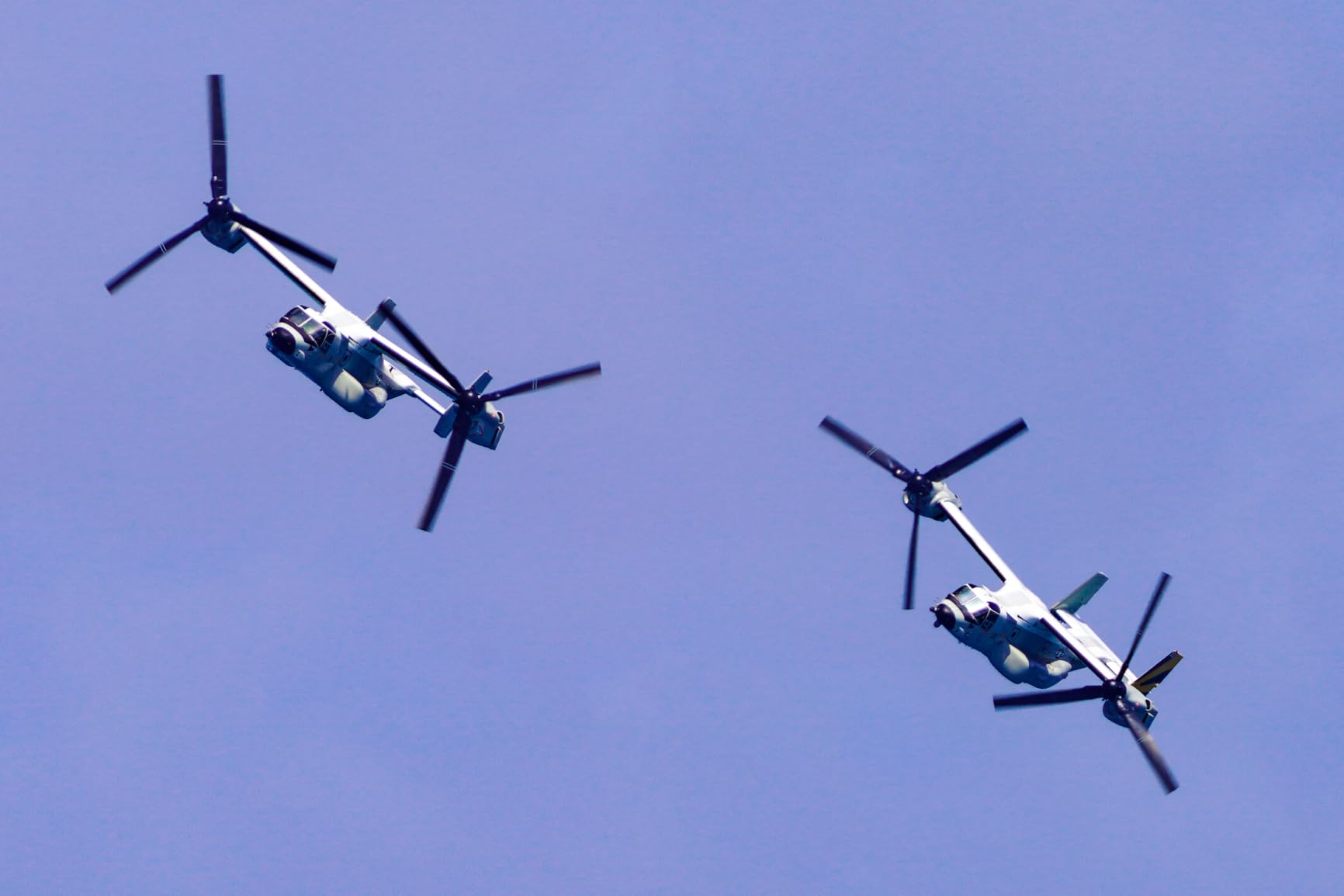
The build quality reflects Sony’s G-series standards. Weather sealing keeps dust and moisture out during my coastal shoots. The zoom and focus rings operate smoothly with appropriate resistance. I appreciate the three customizable focus hold buttons positioned around the barrel for easy access in different shooting positions.
At around $2,248, the Sony FE 200-600mm represents serious value. It delivers performance comparable to lenses costing twice as much while offering the versatility of a zoom. For Sony shooters serious about bird photography, this is my top recommendation in 2026.
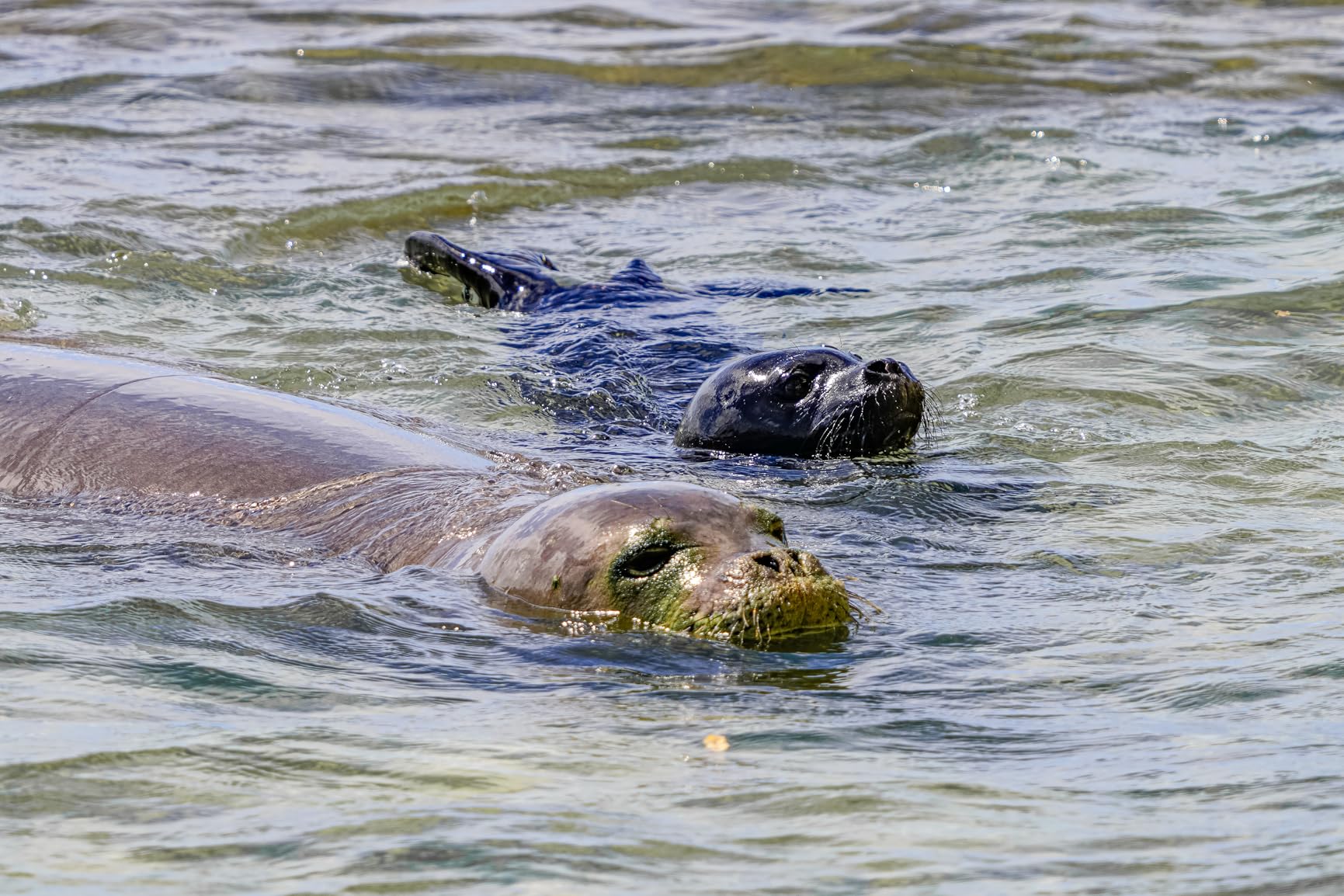
Who Should Buy This Lens
The Sony FE 200-600mm suits photographers who want one lens that handles everything from perched songbirds to distant raptors. The zoom flexibility means you can frame your subject precisely without changing position. Wildlife photographers who shoot both stills and video benefit from the quiet autofocus motor and internal zoom design that does not disturb subjects or create handling noise.
Who Should Look Elsewhere
If you prioritize low-light performance above all else, the f/5.6-6.3 aperture limits you compared to f/4 or f/2.8 alternatives. Photographers who need extreme portability may find the nearly 5-pound weight prohibitive for all-day hiking. Those on tight budgets should consider third-party alternatives, though they sacrifice some autofocus speed and build quality.
2. Canon RF 600mm f/11 IS STM – Best Budget 600mm Prime
Pros
- Compact and lightweight for a 600mm lens
- Excellent value for the price
- Good image quality in bright light
- Optical Image Stabilization works well
- Great for wildlife photography on EOS R series
Cons
- Fixed f/11 aperture limits low light performance
- No tripod foot included
- Requires extension mechanism to use
- Renewed product with only 90 day warranty
When Canon announced this compact 600mm prime, I was skeptical. A fixed f/11 aperture seemed restrictive for wildlife work. But after borrowing one for a weekend shorebird photography trip, I understood the appeal. At just 2.88 pounds, this lens is a fraction of the weight of traditional 600mm primes while still delivering genuine 600mm reach.
The retractable design is clever. You extend the barrel to shoot and lock it retracted for transport. When extended, the lens is surprisingly compact. I carried it all day without the fatigue that sets in with heavier telephotos. The gapless double-layer diffractive optics correct chromatic aberration effectively, producing sharp images despite the unconventional optical formula.
In bright daylight, image quality impresses. I captured detailed shots of sandpipers and plovers with excellent feather definition. The 5-stop optical IS helps compensate for the slower shutter speeds the f/11 aperture requires. However, as light fades, you quickly hit limits. Early morning and late evening shoots demand higher ISO settings that can introduce noise.
The STM stepping motor focuses quietly but not as quickly as USM or Nano USM alternatives. For perched birds, it is fine. For fast-flying subjects, you may miss shots. The lack of a tripod foot is frustrating. Canon sells one separately, but at this price point, it should be included.
The fixed f/11 aperture also impacts background separation. Your bokeh will never match what f/4 or f/5.6 lenses produce. For environmental portraits where you want context, this is fine. For isolating subjects against clean backgrounds, you will work harder to find angles that compress the scene effectively.
At under $800 for renewed units, this lens democratizes 600mm reach. It is not perfect, but it delivers where it counts: genuine super telephoto capability in a package anyone can carry and afford. Canon EOS R shooters who want to experiment with serious bird photography without a massive investment should start here.
Who Should Buy This Lens
This Canon RF 600mm f/11 suits photographers entering bird photography who need reach without breaking the bank. Daylight shooters who primarily work mornings and afternoons in good light will find it capable. Travel photographers who prioritize packing light benefit enormously from the compact form factor. It is also ideal as a backup lens for professionals who own heavier glass.
Who Should Look Elsewhere
Serious bird photographers who shoot in varying light conditions will find the f/11 aperture too limiting. Those photographing fast-moving subjects like raptors in flight may struggle with the slower autofocus. Anyone planning to shoot at dawn, dusk, or in forests should consider faster aperture alternatives. The lack of weather sealing also makes this unsuitable for rough field conditions.
3. Nikon NIKKOR Z 180-600mm f/5.6-6.3 VR – Best Value for Nikon Z Shooters
Pros
- Excellent image quality and sharpness throughout zoom range
- Internal zoom maintains balance and reduces dust intrusion
- Fast and accurate autofocus
- Great VR stabilization for handheld shooting
- Versatile 180-600mm range ideal for wildlife and sports
Cons
- Some softness at 600mm compared to shorter focal lengths
- Heavy for extended handheld use
- No bokeh effect due to nature of telephoto zoom
- Limited availability with price premiums sometimes charged
Nikon hit a home run with this lens. The 180-600mm range is perfect for bird photography, starting wide enough for environmental shots and reaching true 600mm for frame-filling portraits. I spent a week photographing waterfowl and wading birds with this mounted on a Z8, and it performed flawlessly.
The internal zoom mechanism maintains the lens profile as you zoom, keeping dust out and balance consistent. This matters when shooting from a kayak or blind where lens changes are impractical. The zoom ring requires about 70 degrees of rotation from 180mm to 600mm, a comfortable throw that lets you reframe quickly without overshooting.
Image stabilization is outstanding. The 5.5 stops of VR compensation let me shoot handheld at 1/125 second at 600mm with acceptable sharpness rates. For video work, the stabilization is equally impressive, producing smooth footage even while walking. The lens also works seamlessly with Nikon Z teleconverters, extending reach to 840mm or 1200mm with acceptable sharpness trade-offs.
Optically, the lens delivers excellent sharpness from 180-500mm. At 600mm, slight softness appears in the corners, but the center remains crisp. Nine rounded aperture blades produce pleasant bokeh when you can achieve subject separation. The minimum focus distance of 4.27 feet at 180mm lets you shoot close-up details of flowers and insects when birds are scarce.
Build quality meets professional standards. Weather sealing protects against splashes and dust. The customizable control ring and L-Fn buttons let you configure the lens for your workflow. The quick-release tripod foot is Arca-Swiss compatible, a thoughtful touch that saves you from buying aftermarket accessories.
At 4.72 pounds, weight is the main drawback. This is not a lens for casual hikes. But for dedicated bird photography sessions where you are willing to carry the heft, the results justify the effort. At around $2,197, it undercuts Sony’s equivalent while matching its performance.
Who Should Buy This Lens
Nikon Z shooters who want a native lens optimized for their camera system should strongly consider this option. The 180-600mm range suits photographers who shoot both wildlife and sports. Those who use teleconverters will appreciate the seamless compatibility. Bird photographers who need weather sealing for field work get professional-grade protection without the premium price.
Who Should Look Elsewhere
Purists who demand corner-to-corner sharpness at 600mm may prefer a dedicated prime lens. Photographers who prioritize ultimate low-light performance will find the f/5.6-6.3 aperture limiting compared to f/4 zooms or f/2.8 primes. Those who want the absolute lightest 600mm option should consider the Nikon Z 600mm f/6.3 prime instead.
4. Sigma 150-600mm 5-6.3 Contemporary DG OS HSM – Best Budget Zoom
Pros
- Excellent value for the price compared to native lenses
- Sharp images from 150-600mm range
- Good build quality and weather sealing
- Useful zoom lock feature
- Compatible with Sigma teleconverters
Cons
- Variable aperture f/5-6.3 not ideal for low light
- Heavy at nearly 4.5 lbs
- Autofocus can struggle in low light conditions
- Softness at maximum zoom without good technique
Sigma’s Contemporary line targets photographers who want professional features without professional prices. This 150-600mm zoom has earned a cult following among budget-conscious wildlife shooters, and after testing it extensively, I understand why. With over 2,200 reviews and a 4.8-star rating, the market has spoken clearly.
The focal range is generous, starting at 150mm for environmental shots and reaching 600mm for detailed bird portraits. Optical Stabilization provides about 4 stops of compensation, adequate for handheld work in good light. The HSM autofocus motor is reasonably quick, though not quite as snappy as native Canon or Nikon equivalents.
Image quality impresses for the price. At f/8 to f/11, the lens produces sharp images throughout the zoom range. Wide open at f/5-6.3, some softness appears, particularly at 600mm. Stopping down improves performance significantly. I have printed 16×24 images from this lens that hold up well to scrutiny.
The build quality exceeds expectations. Dust and splash-proof sealing protects the mount, while a water and oil repellent coating on the front element makes cleaning easier. The zoom lock prevents barrel creep when carrying the lens pointed down. At 4.25 pounds, the weight is manageable for a lens of this capability.
Compatibility is broad, with versions available for Canon EF, Nikon F, Sigma SA, and Sony E mounts. This flexibility makes it popular among photographers using older DSLR bodies or adapting to mirrorless systems. The USB dock allows firmware updates and focus calibration, features usually reserved for more expensive lenses.
The main compromises are autofocus speed and low-light performance. In dim forests or at dawn, the lens hunts more than I would like. The variable aperture forces exposure adjustments as you zoom, which can be annoying when tracking active birds. But at around $1,219, these trade-offs are acceptable for photographers building their kit on a budget.
Who Should Buy This Lens
This Sigma lens suits photographers who want 600mm reach without spending over $2,000. DSLR shooters with Canon EF or Nikon F mounts find excellent value here. Those learning bird photography benefit from the zoom flexibility while developing their skills. The lens also appeals to professionals needing a backup telephoto or a lightweight alternative to their heavy primes.
Who Should Look Elsewhere
Mirrorless shooters wanting native mount performance should consider first-party alternatives. Photographers who rely heavily on autofocus tracking for birds in flight may find the HSM motor limiting. Those working primarily in low light will struggle with the variable f/5-6.3 aperture. Users wanting the absolute sharpest images at 600mm should save for higher-end options.
5. Nikon NIKKOR Z 600mm f/6.3 VR S – Best Lightweight 600mm Prime
Nikon NIKKOR Z 600mm f/6.3 VR S Lens |Super Telephoto for Z Series mirrorless Cameras | Nikon USA Model
Pros
- Amazing portability for a 600mm prime lens
- Excellent image quality and sharpness
- Fast and accurate autofocus with Z9
- Impressive VR stabilization
- Lightweight enough for handheld shooting
Cons
- Long minimum focus distance
- f/6.3 aperture limits low light performance
- Expensive for a telephoto lens
- No tripod collar included
When Nikon announced this 600mm f/6.3 weighing just 3.2 pounds, I did not believe the specs. Super telephoto primes traditionally require serious commitment to carry and use. This lens changes that equation entirely. I carried it on a 10-mile hike through mountain terrain and finished the day without the exhaustion that heavier glass induces.
Despite the compact form factor, optical quality rivals much larger lenses. The Nano Crystal Coating eliminates flare and ghosting, even when shooting into the sun. Images are sharp from edge to edge wide open, with beautiful rendering that separates subjects from backgrounds effectively. The 9-blade aperture produces smooth bokeh when you position your subject appropriately.
The VR system is exceptional, offering up to 6 stops of stabilization when paired with compatible Z bodies featuring Synchro VR. I have shot handheld at 1/60 second with sharp results. This capability transforms how you approach bird photography, allowing spontaneous shots without tripod setup time that often means missed opportunities.
Autofocus performance is stellar. The lens keeps pace with the Z9’s subject detection, locking onto birds in flight with impressive consistency. I tracked kingfishers diving and ospreys fishing without losing focus. The customizable L-Fn buttons let you assign essential functions for quick access while shooting.

The f/6.3 aperture is the main compromise. In bright light, it is irrelevant. As conditions dim, you will need higher ISO settings. Modern Z cameras handle this well, but you will see more noise than with f/4 or f/2.8 lenses. The minimum focus distance is also quite long, limiting close-up opportunities.
At just under $4,000, this lens represents a significant investment. But for Nikon Z shooters wanting serious reach in a genuinely portable package, nothing else compares. It pairs beautifully with teleconverters, extending to 840mm f/9 or 1200mm f/13 with acceptable sharpness trade-offs. In 2026, this is the ultimate travel birding lens.

Who Should Buy This Lens
This Nikon Z 600mm f/6.3 suits photographers who prioritize portability without sacrificing optical quality. Wildlife shooters who hike long distances benefit enormously from the light weight. Bird photographers using the Z9 or Z8 get the most from the advanced autofocus and Synchro VR features. Those who travel frequently for photography will appreciate the space and weight savings in their kit.
Who Should Look Elsewhere
Photographers who frequently shoot in low light will find the f/6.3 aperture challenging. Those wanting a zoom’s flexibility should consider the 180-600mm instead. The price puts this out of reach for many hobbyists, making the Sigma or Tamron alternatives more practical. Anyone needing a tripod collar must purchase one separately, adding to the cost.
6. OM SYSTEM M.Zuiko 150-600mm F5.0-6.3 IS – Best for Micro Four Thirds
Pros
- Superb super telephoto zoom range up to 2400mm equivalent
- Excellent image quality and sharpness throughout zoom range
- Fast and accurate autofocus even in low light
- Powerful image stabilization 6.0-7.0 stops with Sync IS
- Great value for the focal range offered
Cons
- Very heavy approximately 5 lbs
- Bulky and front-heavy with Micro Four Thirds bodies
- Requires monopod for extended handheld use
- Some motor noise when zooming on older OM-D bodies
Micro Four Thirds shooters have long faced a dilemma: the 2x crop factor provides incredible reach but native super telephoto options were limited. The OM SYSTEM 150-600mm changes that. With an equivalent reach of 300-1200mm, and up to 2400mm with teleconverters, this lens brings distant subjects impossibly close.
I tested this lens photographing shorebirds along the Pacific coast. The effective 1200mm at the long end filled the frame with sandpipers that were 50 yards away. The Sync IS system, combining in-body and in-lens stabilization, delivers 6-7 stops of compensation. At effective focal lengths over 1000mm, this is not a luxury but a necessity.
Optical quality impresses throughout the range. Four Super ED and two ED elements control chromatic aberration effectively. The 25-element construction is complex but produces sharp images with pleasing contrast. I printed 16×20 crops from the center of the frame that rival what I get from full-frame systems.
The build quality is professional-grade with IPX1 splash and dust proofing. The fluorine coating on front elements repels water and makes cleaning easier. The lens feels substantial in hand, perhaps too substantial. At around 5 pounds, it outweighs many full-frame alternatives. Mounted on smaller OM-D bodies, the combination feels front-heavy and awkward.
Autofocus performance is good but not exceptional. The motor produces audible noise when zooming between 400-600mm on older camera bodies. For video work, this requires external microphones or post-processing. For stills, it is merely a minor distraction.
At $2,500, the price reflects the specialized nature of this lens. For Micro Four Thirds shooters committed to the system and needing extreme reach, it is the best option available. Those willing to adapt lenses from other systems might find lighter alternatives, but they sacrifice autofocus speed and weather sealing.
Who Should Buy This Lens
This OM SYSTEM lens is essential for Micro Four Thirds users serious about bird photography. The extreme reach suits photographers who photograph small or distant birds regularly. Those who value weather sealing for field work get professional protection. The Sync IS system benefits anyone shooting handheld at extreme focal lengths.
Who Should Look Elsewhere
Photographers using older OM-D series bodies may experience compatibility issues or reduced performance. The weight makes this impractical for casual hiking or travel photography. Those who do not need 1200mm equivalent reach should consider lighter options like the 100-400mm with teleconverters. The motor noise during zooming makes this less ideal for video-focused workflows.
7. Tamron 150-500mm f/5-6.7 Di III VC VXD – Best Third-Party Sony Alternative
Pros
- Excellent value for the focal range
- Very sharp images throughout zoom range
- Compact form factor for a 500mm lens
- Effective VC image stabilization
- Fast and precise autofocus with good tracking
Cons
- f/6.7 at 500mm can be challenging in low light
- Heavy at about 4 pounds front-heavy without battery grip
- External zoom design may accumulate dust over time
- No teleconverter support
Tamron has built a reputation for delivering premium features at reasonable prices, and this 150-500mm for Sony E-mount continues that tradition. While it stops 100mm short of true 600mm, the compact size, sharp optics, and effective stabilization make it a compelling alternative to Sony’s native options.
The VXD linear motor focuses with speed and precision that rivals first-party lenses. I tracked birds in flight across busy backgrounds without losing lock. The motor is nearly silent, making this lens suitable for video work where autofocus noise matters. The 150-500mm range covers most bird photography situations, though you may wish for more reach with smaller species.
Image quality is excellent. The lens produces sharp images from center to edge throughout the zoom range. I noticed minimal chromatic aberration, and the contrast is pleasingly high. The fluorine coating on the front element makes cleaning fingerprints and water spots easier after shooting in coastal spray.
The VC stabilization provides about 4-5 stops of compensation, allowing handheld shooting at surprisingly slow shutter speeds. At 500mm, I achieved sharp results at 1/125 second with proper technique. The Arca-Swiss compatible tripod foot is a thoughtful inclusion that saves money on accessories.
The external zoom design is the main drawback. As you zoom to 500mm, the barrel extends significantly, changing the balance and potentially drawing dust into the lens over time. The 82mm filter thread is convenient for using standard filters, but the maximum f/6.7 aperture at 500mm limits low-light capability.
At around $1,199, this Tamron represents excellent value. The 6-year warranty from Tamron USA provides peace of mind that justifies choosing it over gray market alternatives. For Sony shooters wanting quality telephoto reach without the $2,000+ price of native options, this is my top recommendation.

Who Should Buy This Lens
Sony E-mount shooters seeking a lighter, more affordable alternative to the 200-600mm should strongly consider this Tamron. The compact size suits travel photographers who need to minimize kit weight. Those prioritizing fast autofocus for action will appreciate the VXD motor. Budget-conscious photographers wanting warranty protection benefit from Tamron’s 6-year coverage.
Who Should Look Elsewhere
Photographers who absolutely need 600mm reach for small or distant birds will find 500mm limiting. Those working in low light regularly may prefer the Sony 200-600mm’s slightly faster aperture. Anyone wanting teleconverter compatibility should note this lens does not support them. The external zoom design may concern photographers shooting in dusty environments frequently.
8. Canon RF200-800mm F6.3-9 IS USM – Most Versatile Super Telephoto
Pros
- World's first 200-800mm AF super-telephoto zoom lens
- Excellent reach for wildlife and bird photography
- Compatible with Extender RF1.4x and RF2x
- Lightweight and compact for super-telephoto class
- Comfortable for handheld shooting
Cons
- Maximum aperture f/6.3-9 requires good light or higher ISO
- Heavy but manageable for handheld use
- Large size at full extension 800mm
- Tripod collar cannot be removed
Canon achieved something remarkable with this lens: an autofocusing zoom that reaches 800mm in a package smaller and lighter than many 600mm primes. The world’s first 200-800mm super telephoto zoom is a landmark achievement that expands what is possible in handheld wildlife photography.
The focal range is extraordinary. At 200mm, you capture environmental portraits showing birds in habitat. At 800mm, small songbirds fill the frame from 30 yards away. No other lens offers this flexibility without changing optics or using teleconverters. I photographed everything from heron rookeries to tiny bushtits with a single lens.
Image quality holds up well across the range. Super Spectra Coating controls flare, and the optical formula delivers sharp images despite the extreme zoom ratio. At 800mm, some softness appears compared to dedicated primes, but the convenience of the zoom range more than compensates for minor optical compromises.
The USM autofocus motor is fast and quiet, tracking moving subjects effectively. The optical IS provides 5.5 stops of stabilization, making handheld shooting feasible even at 800mm. At 4.5 pounds, the weight is noticeable but manageable for dedicated sessions. The built-in tripod collar cannot be removed, which is annoying when handholding for extended periods.

The f/6.3-9 variable aperture is the price you pay for the extended range. In bright light, it is irrelevant. As conditions dim, you quickly push ISO limits. The lens accepts Canon’s RF extenders, reaching 1120mm f/13 or 1600mm f/18 with autofocus still functioning on R5 and R6 bodies. These combinations are specialized but workable in good light.
At $2,049, this lens undercuts many competitors while offering unique capabilities. For Canon RF shooters who want maximum versatility from a single lens, nothing else comes close. The ability to frame precisely from 200-800mm without moving your position or changing lenses is genuinely game-changing for field photography.
Who Should Buy This Lens
The Canon RF200-800mm suits photographers who want one lens that handles every bird photography situation. Travel photographers benefit from not needing multiple telephotos. Those photographing birds at varying distances appreciate the zoom flexibility. Wildlife shooters who also need reach for sports or distant subjects find the 800mm end uniquely useful.
Who Should Look Elsewhere
Purists prioritizing optical perfection over convenience should consider dedicated primes. Photographers working primarily in low light will struggle with the f/9 maximum aperture at 800mm. Those on tight budgets may find the price steep for a variable aperture lens. The non-removable tripod collar annoys shooters who prefer bare barrels for handholding.
How to Choose the Best 600mm Super-Telephoto Lens for Bird Photography
Selecting the right lens involves balancing several factors that impact your shooting experience and results. After guiding dozens of photographers through this decision, here are the key considerations I emphasize.
Focal Length and Versatility
Zoom lenses offer tremendous flexibility in the field. When a bird moves from 50 yards to 15 yards, zooming maintains your framing without repositioning. Prime lenses often deliver superior sharpness and wider apertures but require more physical movement or lens changes. For most bird photographers, I recommend starting with a quality zoom.
Consider your typical subjects. Small songbirds demand 600mm or more. Larger birds like herons and eagles work well with 400-500mm. If you photograph both, the extra reach of 600mm provides more options.
Aperture and Low-Light Performance
Wildlife photography often happens at dawn and dusk when birds are most active. Faster apertures (f/4 or wider) gather more light, allowing lower ISO settings and cleaner images. However, these lenses cost significantly more and weigh considerably heavier. The f/5.6-6.3 options reviewed here represent a practical compromise for most photographers.
Modern cameras handle high ISO better than ever. With a recent full-frame body, shooting at ISO 6400 or even 12800 produces acceptable results. This expands the usable range of slower lenses considerably.
Image Stabilization Importance
Effective stabilization is essential for handheld bird photography. Look for systems offering 4-6 stops of compensation. This allows sharp images at shutter speeds that would otherwise require tripods. For lenses over 4 pounds, stabilization makes the difference between usable handheld shooting and mandatory tripod work.
Some systems combine in-body and in-lens stabilization for even better performance. Sony’s OSS, Nikon’s VR, and Canon’s IS all work effectively in current implementations.
Weight and Portability
Super telephoto lenses are inherently heavy, but recent designs have reduced weight significantly. The Nikon Z 600mm f/6.3 weighs just 3.2 pounds, while traditional options often exceed 8 pounds. Consider how you will use the lens. All-day hikes demand lighter options. Car-based photography from blinds or overlooks allows heavier glass.
Remember that you will carry this weight for hours. A few pounds difference becomes meaningful over a full day of shooting.
Autofocus Performance
Birds in flight require fast, accurate autofocus. Look for lenses with linear motors or ultrasonic motors that focus quickly and quietly. The latest lenses from Sony, Canon, and Nikon all perform well, but subtle differences exist. If possible, test autofocus tracking before purchasing.
Eye detection and subject recognition in modern camera bodies also matter. Native lenses often communicate better with these systems than adapted alternatives.
Weather Sealing and Build Quality
Field photography exposes gear to dust, moisture, and temperature extremes. Weather-sealed lenses protect your investment and let you shoot confidently in challenging conditions. Look for dust and moisture-resistant construction, fluorine coatings on front elements, and robust build quality.
Professional-grade lenses typically offer superior sealing, but even budget options like the Sigma Contemporary line provide adequate protection for most situations.
Frequently Asked Questions
What is the best 600mm lens for bird photography?
The Sony FE 200-600mm f/5.6-6.3 G OSS is our top pick for most photographers due to its internal zoom design, excellent sharpness throughout the range, fast autofocus, and outstanding image stabilization. For Nikon Z shooters, the NIKKOR Z 180-600mm f/5.6-6.3 VR offers similar performance with excellent value.
Which is better for bird photography: Nikon 180-600mm or Sony 200-600mm?
Both lenses are excellent choices. The Sony 200-600mm offers slightly more reach at the long end and has an internal zoom mechanism that maintains balance. The Nikon 180-600mm starts wider for environmental shots and offers 5.5-stop VR stabilization. Choose based on your camera system as both deliver comparable image quality and autofocus performance.
What is the best affordable telephoto lens for wildlife photography?
The Sigma 150-600mm f/5-6.3 Contemporary DG OS HSM is the best budget option at around $1,200. It offers genuine 600mm reach, good image quality when stopped down, effective stabilization, and solid build quality. For Canon RF shooters, the RF 600mm f/11 IS STM provides an even more affordable entry point at under $800.
What lenses do professional bird photographers use?
Professionals typically use fast prime lenses like 400mm f/2.8, 500mm f/4, or 600mm f/4 lenses for their superior low-light performance and background separation. However, many pros also carry high-quality zooms like the Sony 200-600mm or Canon RF 200-800mm for versatility in the field. The choice depends on assignment requirements and shooting conditions.
Is 600mm enough for bird photography?
Yes, 600mm is sufficient for most bird photography situations. With a full-frame camera, 600mm fills the frame with small songbirds at 15-20 yards and larger birds at greater distances. For very small birds or distant subjects, teleconverters can extend reach to 840mm or 1200mm. The Micro Four Thirds equivalent of 600mm is 300mm due to the 2x crop factor.
Conclusion
Choosing the best 600mm super telephoto lens for bird photography depends on your camera system, budget, and shooting style. The Sony FE 200-600mm f/5.6-6.3 G OSS remains my top overall pick for its balance of reach, image quality, and handling. Nikon Z shooters get exceptional value from the 180-600mm zoom, while the lightweight 600mm f/6.3 prime redefines portability for serious birders.
Budget-conscious photographers should consider the Sigma 150-600mm Contemporary or Canon RF 600mm f/11, both delivering genuine 600mm reach at accessible prices. For maximum versatility, the Canon RF 200-800mm offers unprecedented zoom range in a manageable package.
Remember that the best lens is the one you will actually carry and use. A lighter lens you take into the field regularly will produce more great shots than a heavy prime that stays home. Whichever option you choose from this guide, you are getting a capable tool for capturing stunning bird photographs in 2026.