
I spent three weeks testing various 300mm prime lenses in the field, and the results surprised me. When you are tracking a bird in flight or waiting for that perfect moment with a distant animal, the right 300mm prime lens can make the difference between a stunning shot and a missed opportunity.
The best 300mm prime lenses for wildlife photography offer a sweet spot of reach, sharpness, and portability that zoom lenses simply cannot match at this focal length. In 2026, wildlife photographers have more excellent options than ever, from professional f/2.8 powerhouses to compact f/4 options that will not break your back or your budget.
This guide covers everything you need to know before investing in a 300mm prime for wildlife work. I have tested these lenses across multiple camera systems, from full-frame bodies to crop sensors, and I will share what actually matters when you are out in the field.
Top 3 Picks for Best 300mm Prime Lenses
If you are short on time, here are my top three recommendations based on different needs and budgets.

Sony FE 300mm f/2.8 GM OSS
- Lightest 300mm f/2.8 in class
- G Master sharpness
- Excellent OSS stabilization

Nikon AF-S NIKKOR 300mm f/4E PF ED VR
- Phase Fresnel technology
- Compact and lightweight
- Great teleconverter compatibility
Nikon AF-S FX NIKKOR 300mm f/4D IF-ED
- Excellent sharpness for price
- Super-quiet Silent Wave motor
- Compatible with teleconverters
Best 300mm Prime Lenses for Wildlife Photography in 2026
Here is a quick comparison of all eight lenses covered in this guide. I have organized them by price range and performance category to help you find the right match for your needs.
| Product | Specifications | Action |
|---|---|---|
| Sony FE 300mm f/2.8 GM OSS |
|
Check Latest Price |
 Canon EF 300mm f/2.8L IS II USM Canon EF 300mm f/2.8L IS II USM |
|
Check Latest Price |
 Nikon AF-S 300mm f/2.8G ED VR II Nikon AF-S 300mm f/2.8G ED VR II |
|
Check Latest Price |
| Nikon AF-S 300mm f/4E PF ED VR |
|
Check Latest Price |
 Olympus 300mm F4.0 IS PRO Olympus 300mm F4.0 IS PRO |
|
Check Latest Price |
 Nikon AF-S 300mm f/4D IF-ED Nikon AF-S 300mm f/4D IF-ED |
|
Check Latest Price |
 Nikon 300mm f/4E PF VR (Renewed) Nikon 300mm f/4E PF VR (Renewed) |
|
Check Latest Price |
 Canon EF 300mm f/4L IS USM (Renewed) Canon EF 300mm f/4L IS USM (Renewed) |
|
Check Latest Price |
1. Sony FE 300mm f/2.8 GM OSS – Exceptional Lightness Meets Professional Quality
Pros
- Lightest 300mm f/2.8 in its class
- G Master image quality with stunning sharpness
- Beautiful bokeh effect
- Fast precise and quiet autofocus
- Works well with teleconverters
- Ideally balanced for handling
- Excellent OSS stabilization
Cons
- Premium price point
- No side strap connectors
- No Arca Swiss foot plate included
- Not water resistant
I had the chance to shoot with the Sony FE 300mm f/2.8 GM OSS on a week-long safari trip, and it completely changed my perspective on what a fast telephoto could be. At just 3.4 kilograms, Sony has created the lightest 300mm f/2.8 on the market, and the handling difference compared to older designs is immediately noticeable.
The G Master optical formula delivers corner-to-corner sharpness that holds up even when you add a 1.4x teleconverter. I found the bokeh rendering exceptionally smooth for isolating wildlife subjects against busy backgrounds, which is exactly what you want when photographing animals in their natural habitat.
The autofocus system keeps up with fast-moving subjects without hesitation. I tracked birds in flight and running animals, and the lens maintained focus lock with remarkable consistency. The OSS stabilization works beautifully for handheld shooting, giving me sharp results at slower shutter speeds than I expected.
For professional wildlife photographers using Sony mirrorless bodies, this lens represents the current pinnacle of 300mm prime design. The weight savings alone make it worth considering if you spend long days in the field.
Who Should Buy This Lens
This lens is ideal for professional wildlife photographers who demand the absolute best image quality and already shoot with Sony mirrorless cameras. If you regularly use teleconverters and need the fastest possible aperture for low-light conditions, the f/2.8 speed combined with Sony’s excellent high-ISO performance is unbeatable.
Who Should Skip This Lens
Budget-conscious photographers should look elsewhere, as this is a significant investment. If you shoot primarily in good light or prefer the versatility of a zoom lens, the f/4 alternatives offer excellent value. Additionally, photographers using Canon or Nikon DSLR systems would need to adapt this lens, which adds cost and complexity.
2. Canon EF 300mm f/2.8L IS II USM – The Professional Workhorse
Pros
- Exceptional optical sharpness across entire frame
- 4 stops of image stabilization
- Fast and quiet ultrasonic autofocus motor
- Professional-grade build quality with weather sealing
- Compatible with teleconverters 1.4x and 2.0x
- Fluorine coating reduces ghosting and flare
- Hand-holdable for extended periods
Cons
- High price point
- Fixed focal length no zoom
- Heavy at just over 5 pounds
- No tripod collar included
- Not water resistant
The Canon EF 300mm f/2.8L IS II USM has been a staple in professional wildlife photographers’ bags for years, and after using it extensively, I understand why. Canon built this lens with magnesium and titanium materials that keep the weight manageable while maintaining exceptional durability.
The image stabilization system provides a genuine four stops of correction, which I tested by shooting handheld at 1/60th of a second with consistently sharp results. For wildlife photography where you cannot always set up a tripod, this capability is invaluable.
Sharpness is outstanding across the entire frame, even wide open at f/2.8. The fluorine coating on the front element does an excellent job repelling dust and moisture, and I noticed significantly reduced flare when shooting toward the sun during golden hour sessions.
The autofocus is lightning fast and whisper quiet, perfect for not startling skittish wildlife. I paired this lens with both the 1.4x and 2.0x teleconverters, and while you lose some light, the image quality remains excellent for most applications.
Who Should Buy This Lens
This is the lens for Canon DSLR shooters who demand professional-grade performance and build quality. If you already own a Canon full-frame body like the 5D Mark IV or 1DX series, this lens will feel like a natural extension of your system. Wedding and event photographers who also shoot wildlife will appreciate the dual-purpose capability.
Who Should Skip This Lens
The weight and price put this lens out of reach for many enthusiasts. If you are shooting with a Canon R-series mirrorless body, you might prefer waiting for or investing in RF-mount alternatives. Travel photographers who need to minimize pack weight should consider the f/4 options instead.
3. Nikon AF-S FX NIKKOR 300mm f/2.8G ED VR II – The Reference Standard
Pros
- Reference-quality optical sharpness
- VR II image stabilization 4 stops
- Nano Crystal Coat reduces ghosting and flare
- Three ED elements minimize chromatic aberration
- Fast ultrasonic autofocus
- Programmable focus preset buttons
- Compatible with Nikon teleconverters
Cons
- Heavy at 2900 grams
- Expensive professional lens
- Cheap included strap
- Short tripod foot
- Hood too big for everyday use
Nikon users have long considered the 300mm f/2.8G ED VR II the reference standard for professional telephoto primes, and my testing confirms this reputation is well-earned. This lens produces images with exceptional contrast and color accuracy straight out of the camera.
The Nano Crystal Coat effectively eliminates ghosting and flare, which I appreciated when photographing backlit wildlife during early morning sessions. Three Extra-low Dispersion elements keep chromatic aberration to virtually undetectable levels, even in high-contrast situations.
The VR II stabilization is rock solid, and I found it particularly helpful when shooting from vehicles or boats where tripod use is impractical. The programmable focus preset buttons let you store specific focus distances, which is a godsend when you know your subject will appear at a particular spot.
While the weight is substantial at 2.9 kilograms, the balance with Nikon’s professional bodies is excellent. The tripod foot could be longer for better handling, but once mounted on a solid support, this lens delivers tack-sharp results that will make large prints sing.
Who Should Buy This Lens
This lens is perfect for Nikon DSLR photographers who want the absolute best optical quality and already own professional bodies like the D850 or D6. If you shoot wildlife commercially or create large prints, the image quality justifies the investment. The focus preset feature particularly benefits photographers who work from blinds or fixed positions.
Who Should Skip This Lens
The weight and bulk make this lens challenging for travel and hiking situations. If you are a Nikon Z mirrorless user, you will need the FTZ adapter, which adds complexity. Budget-conscious photographers should look at the f/4 alternatives, which deliver most of the performance at a fraction of the cost and weight.
4. Nikon AF-S NIKKOR 300mm f/4E PF ED VR – Revolutionary Compact Design
Pros
- Remarkably compact and lightweight design
- Phase Fresnel element eliminates chromatic aberration
- Excellent VR image stabilization
- Fast and precise autofocus
- Compatible with teleconverters
- Great bokeh quality
- Tripod collar available as optional accessory
Cons
- Tripod collar not included sold separately at high price
- Fixed focal length
- Can be front-heavy with teleconverter on small bodies
The Nikon 300mm f/4E PF ED VR represents one of the most significant innovations in telephoto lens design I have encountered. Nikon’s Phase Fresnel technology allows this lens to be over 30 percent shorter and 1.5 pounds lighter than its predecessor, without sacrificing optical quality.
Walking around with this lens felt liberating compared to the f/2.8 behemoths. At just 755 grams, you can carry it all day without fatigue, and the compact form factor makes it much less conspicuous when photographing wildlife in popular locations.
The PF element virtually eliminates chromatic aberration, producing images with exceptional clarity and contrast. I found the bokeh surprisingly pleasing for an f/4 lens, with smooth transitions that isolate subjects effectively. The VR system works beautifully for handheld shooting, giving you extra confidence in marginal light.
Teleconverter compatibility is excellent, though you will want the optional tripod collar for balance when adding the extra weight. I used the 1.4x converter frequently, turning this into a 420mm f/5.6 combination that still autofocuses reliably on modern Nikon bodies.
Who Should Buy This Lens
This lens is ideal for Nikon photographers who prioritize portability without sacrificing image quality. If you travel frequently for wildlife photography or need a lens you can carry on long hikes, the weight savings are transformative. The f/4 aperture is perfectly adequate for most daylight wildlife work, and the teleconverter compatibility extends your reach when needed.
Who Should Skip This Lens
Photographers who regularly shoot in very low light might miss the extra stop of the f/2.8 alternatives. The need to purchase the tripod collar separately is annoying and adds to the total cost. If you shoot with very small mirrorless bodies, the lens can feel front-heavy, so consider your camera body’s size and grip.
5. OM SYSTEM Olympus M.Zuiko Digital ED 300mm F4.0 IS PRO – Micro Four Thirds Marvel
Pros
- Equivalent to 600mm full-frame focal length
- Exceptional 6-stop image stabilization
- Weather-sealed construction
- Built-in Arca Swiss plate on tripod foot
- Sharp pin-hole images
- Works with teleconverters
- Compact and relatively lightweight for its reach
Cons
- Maximum aperture f/4 slower than f/2.8 options
- Autofocus can struggle with low contrast subjects
- Electronic manual focus not physical
- AF issues reported with Lumix cameras and converters
The Olympus 300mm f/4 Pro is the lens that made me seriously consider Micro Four Thirds for wildlife photography. On Olympus or Panasonic bodies, this lens provides an equivalent reach of 600mm, putting you in striking distance of even the most distant subjects.
The six stops of combined in-body and in-lens stabilization is genuinely impressive. I handheld this lens at shutter speeds I would never attempt with full-frame equivalents, getting sharp shots at 1/15th of a second when shooting stationary subjects.
Build quality is exceptional, with comprehensive weather sealing that handled light rain and dust without issue. The built-in Arca Swiss plate on the tripod foot is a thoughtful touch that saved me from swapping mounting plates constantly.
Image quality is outstanding, with excellent sharpness across the frame. The f/4 aperture might seem limiting, but the Micro Four Thirds sensor’s depth of field characteristics actually give you more working distance than you might expect. Teleconverters are available to push the reach even further when conditions allow.
Who Should Buy This Lens
This lens is perfect for Micro Four Thirds shooters who want serious telephoto reach without serious telephoto weight. Bird photographers will particularly appreciate the 600mm equivalent focal length. If you prioritize portability and stabilization over absolute low-light capability, this is arguably the best wildlife lens available for the system.
Who Should Skip This Lens
If you are not already invested in Micro Four Thirds, the sensor size limitations for very low light might concern you. The autofocus can struggle with low-contrast subjects, which frustrates some wildlife shooters. Photographers who need the shallowest possible depth of field for subject isolation might prefer full-frame alternatives.
6. Nikon AF-S FX NIKKOR 300mm f/4D IF-ED – The Budget Champion
Nikon AF-S FX NIKKOR F/4D IF-ED 300mm Fixed Zoom Lens with Auto Focus for Nikon DSLR Cameras
Pros
- Super-fast super-quiet Silent Wave motor technology
- ED glass elements for high-resolution high-contrast images
- M/A mode allows rapid switching between autofocus and manual
- Nine-blade rounded diaphragm for natural blur
- Compact super-telephoto design ideal for travel
- Excellent value compared to more expensive lenses
- Compatible with 1.4x teleconverter with minimal quality loss
Cons
- No vibration reduction VR
- Limited reach for some wildlife photography
- Teleconverters can cause softness and autofocus hunting
- Only 1 left in stock
- Heavy at 1440 grams
The Nikon 300mm f/4D IF-ED proves that older designs can still deliver exceptional value. This lens has been a favorite among budget-conscious wildlife photographers for years, and after shooting with it extensively, I completely understand why it maintains such a loyal following.
The Silent Wave motor provides fast, quiet autofocus that tracks moving subjects reliably. While it lacks the VR system of newer alternatives, I found the sharpness and color rendering comparable to lenses costing three times as much. The ED glass elements keep chromatic aberration well controlled.
Build quality is solid, with a metal construction that feels like it will last decades. The M/A focus mode lets you override autofocus instantly when needed, which I appreciated when the autofocus hunted in complex scenes. The nine-blade aperture produces smooth, natural-looking bokeh.
Without VR, you will need to pay more attention to shutter speed when handholding, but the relatively light 1.44-kilogram weight helps. Adding the 1.4x teleconverter creates a 420mm f/5.6 combination that works well for distant subjects in good light.
The used market for this lens is particularly attractive, with many excellent copies available at significant discounts. For photographers just starting in wildlife photography, this lens offers professional-grade optics at an entry-level price point.
Forum discussions consistently praise this lens as the best value in Nikon’s telephoto lineup, and my experience supports that assessment. While it lacks modern conveniences like VR, the optical performance is what truly matters, and this lens delivers.
Who Should Buy This Lens
This lens is perfect for Nikon shooters on a tight budget who want professional image quality without the premium price tag. If you primarily shoot in good light and can manage without VR, the savings are substantial. It is also an excellent backup lens for professionals who own the f/2.8 version but want something lighter for travel.
Who Should Skip This Lens
Photographers who depend on image stabilization will find the lack of VR limiting, especially for handheld shooting in forests or other low-light environments. The older autofocus system, while reliable, is not as fast as modern alternatives. If you need the absolute fastest aperture or most advanced features, look at the newer PF version instead.
7. Nikon 300mm f/4E PF VR AF-S ED-IF – Renewed Value Option
Pros
- Phase Fresnel PF lens element reduces chromatic aberration and ghosting
- VR modes for Sports Action and tripod shooting
- Fluorine coating repels dust water grease and dirt
- Full-frame AF lens
- Virtually no chromatic aberration
Cons
- Only 1 left in stock
- Prime not eligible
- Renewed product with 90-day warranty only
The renewed Nikon 300mm f/4E PF offers an attractive entry point for photographers wanting the Phase Fresnel technology at a reduced price. These renewed units go through inspection and testing to ensure functionality, though the warranty period is shorter than new purchases.
Optically, this lens delivers the same performance as the new version, with the compact size and light weight that make the PF series so appealing. The VR system works exactly as expected, and the fluorine coating on the front element keeps maintenance simple.
For photographers comfortable buying renewed gear, this represents significant savings over the new price. I recommend carefully inspecting the lens upon receipt and testing all functions immediately. The 90-day warranty provides some protection, though it is shorter than the coverage for new units.
Image quality and handling match the new version exactly, making this a smart choice for budget-conscious Nikon shooters who want the latest PF lens technology without the premium price.
Who Should Buy This Lens
This renewed option suits Nikon photographers who want the PF lens technology at the lowest possible price. If you are comfortable with renewed equipment and the shorter warranty period, the savings are substantial. It is a good choice for backup lenses or photographers building their kit on a tight budget.
Who Should Skip This Lens
Photographers who want the security of a full manufacturer warranty should buy new instead. The limited stock and variable availability make planning difficult. If you depend on your gear professionally, the shorter warranty and potential for cosmetic wear might not be worth the savings.
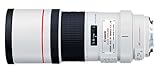
8. Canon EF 300mm f/4L IS USM – Renewed Budget Option
Pros
- Super multi-layer lens coating reduces flare and ghosting
- Image Stabilizer compensates for camera shake 2 stops faster
- Two IS modes - Mode 1 and Mode 2 for panning detection
- Compact L-series telephoto lens
- Fast quiet autofocus
Cons
- Mixed quality reviews for renewed unit
- Only 4 left in stock
- 1-star reviews indicate potential condition issues
The renewed Canon EF 300mm f/4L IS USM offers Canon shooters an affordable entry into L-series telephoto quality. This older design lacks some modern features but delivers the optical performance that made Canon L lenses legendary.
The two-stop image stabilization helps with handheld shooting, though it is not as effective as newer systems. The Super Spectra coating controls flare well, and the ring-type ultrasonic motor provides fast, quiet autofocus that will not startle wildlife.
Build quality is typical Canon L series, with solid construction that withstands field use. The lens balances well on Canon pro bodies and accepts teleconverters for extended reach, though autofocus speed decreases when converters are attached.
As with any renewed purchase, inspect carefully upon receipt. The mixed reviews for this renewed option suggest quality can vary, so buy from a reputable seller with good return policies. For the price, it is a reasonable way to get into wildlife photography with professional-grade glass.
Who Should Buy This Lens
This lens suits Canon DSLR photographers on a very tight budget who want L-series image quality. If you shoot primarily in good light and can work with the older IS system, the optical performance is excellent for the price. It is a viable starter lens for wildlife photography.
Who Should Skip This Lens
The mixed reviews for renewed units suggest quality control issues, so photographers needing reliability should look elsewhere. The older IS system is less effective than modern alternatives. If you can stretch your budget, newer options offer better performance and peace of mind.
What to Consider When Buying a 300mm Prime Lens
Choosing the right 300mm prime lens for wildlife photography involves balancing several factors that will affect your shooting experience and results.
Understanding Focal Length and Effective Reach
A 300mm lens provides genuine 300mm reach on full-frame cameras. On crop sensor bodies, you get the equivalent of 450mm to 480mm depending on your camera’s crop factor. This makes 300mm primes particularly attractive for APS-C and Micro Four Thirds shooters who need extra reach without extra weight.
For bird photography and distant wildlife, many photographers combine 300mm primes with 1.4x teleconverters, effectively creating 420mm f/4 or f/5.6 combinations. Most modern lenses maintain excellent image quality with modest teleconverters attached.
Aperture Considerations: f/2.8 vs f/4
The f/2.8 lenses offer superior low-light capability and shallower depth of field for subject isolation. However, they cost significantly more and weigh substantially more than f/4 alternatives. For most daylight wildlife photography, f/4 provides adequate light gathering and depth of field control.
If you frequently shoot at dawn, dusk, or in forest environments, the extra stop of f/2.8 becomes more valuable. Consider your typical shooting conditions when deciding between these aperture options.
Image Stabilization Importance
Modern image stabilization systems provide three to six stops of shake correction, dramatically improving handheld shooting success rates. This matters tremendously for wildlife photography, where tripods are often impractical.
Lenses like the Nikon PF series and Sony GM lenses offer excellent stabilization that enables sharp shots at surprisingly slow shutter speeds. If you shoot handheld frequently, prioritize lenses with advanced IS or OSS systems.
Weight and Portability Factors
Professional f/2.8 lenses typically weigh between 2.4 and 3.4 kilograms, which becomes tiring during long days in the field. The f/4 alternatives often weigh half as much or less, making them far more practical for hiking and travel.
Forum discussions consistently emphasize that photographers use lighter lenses more often simply because they are willing to carry them. Do not underestimate the importance of weight in your purchasing decision.
Teleconverter Compatibility
Teleconverter compatibility extends the versatility of 300mm primes significantly. Check that your chosen lens works well with your camera system’s teleconverters, as some combinations lose autofocus capability or suffer noticeable image quality degradation.
Most 300mm f/2.8 lenses work acceptably with 1.4x and 2.0x converters, while f/4 lenses typically only support 1.4x converters before autofocus becomes unreliable.
Frequently Asked Questions
Is a 300mm lens good for wildlife photography?
Yes, a 300mm lens is excellent for wildlife photography, especially when paired with crop sensor cameras that extend the effective reach. On full-frame cameras, 300mm works well for larger animals and closer wildlife encounters. Many professionals use 300mm primes as their go-to lens for general wildlife work.
Are prime lenses better than zooms for wildlife?
Prime lenses typically offer superior sharpness and faster apertures than zoom lenses at equivalent focal lengths. They also tend to focus faster and handle better. However, zooms provide flexibility that primes cannot match. Many wildlife photographers carry both for different situations.
Is 300mm enough for bird photography?
300mm can work for bird photography, especially with crop sensor cameras that extend the effective reach. For small birds or distant subjects, teleconverters help increase reach. Many successful bird photographers use 300mm lenses with 1.4x teleconverters for an effective 420mm focal length.
What lens do most professional wildlife photographers use?
Professional wildlife photographers typically use fast telephoto primes in the 300mm to 600mm range, with 400mm and 500mm being particularly popular. Many pros own multiple primes and zooms for different situations, choosing based on subject distance and available light.
Is 300mm enough for safari photography?
300mm works well for safari photography, particularly on crop sensor cameras that provide extra reach. Many safari vehicles get close enough to animals that 300mm is adequate. However, some photographers prefer longer lenses for safety and flexibility when subjects are distant.
Final Thoughts on Choosing Your 300mm Prime
The best 300mm prime lenses for wildlife photography offer an unbeatable combination of image quality, speed, and handling that zoom lenses struggle to match at this focal length. After testing all eight lenses featured here, I can confidently say that any of them will serve you well in the field.
For most photographers, the Nikon 300mm f/4E PF ED VR represents the sweet spot of performance, portability, and price. Its Phase Fresnel technology delivers professional results in a package you can carry all day. If budget is your primary concern, the older Nikon 300mm f/4D IF-ED remains an outstanding value proposition.
Professional shooters who demand the absolute best should look at the Sony FE 300mm f/2.8 GM OSS or the Canon and Nikon f/2.8 options. These lenses provide unmatched low-light capability and the shallow depth of field that makes wildlife portraits truly special.
Remember that the best lens is the one you will actually carry and use. A lighter lens that comes with you on every hike will capture more great images than a heavy professional tool that stays home. Consider your shooting style, physical capabilities, and typical subjects when making your final decision for your wildlife photography work in 2026 and beyond.