
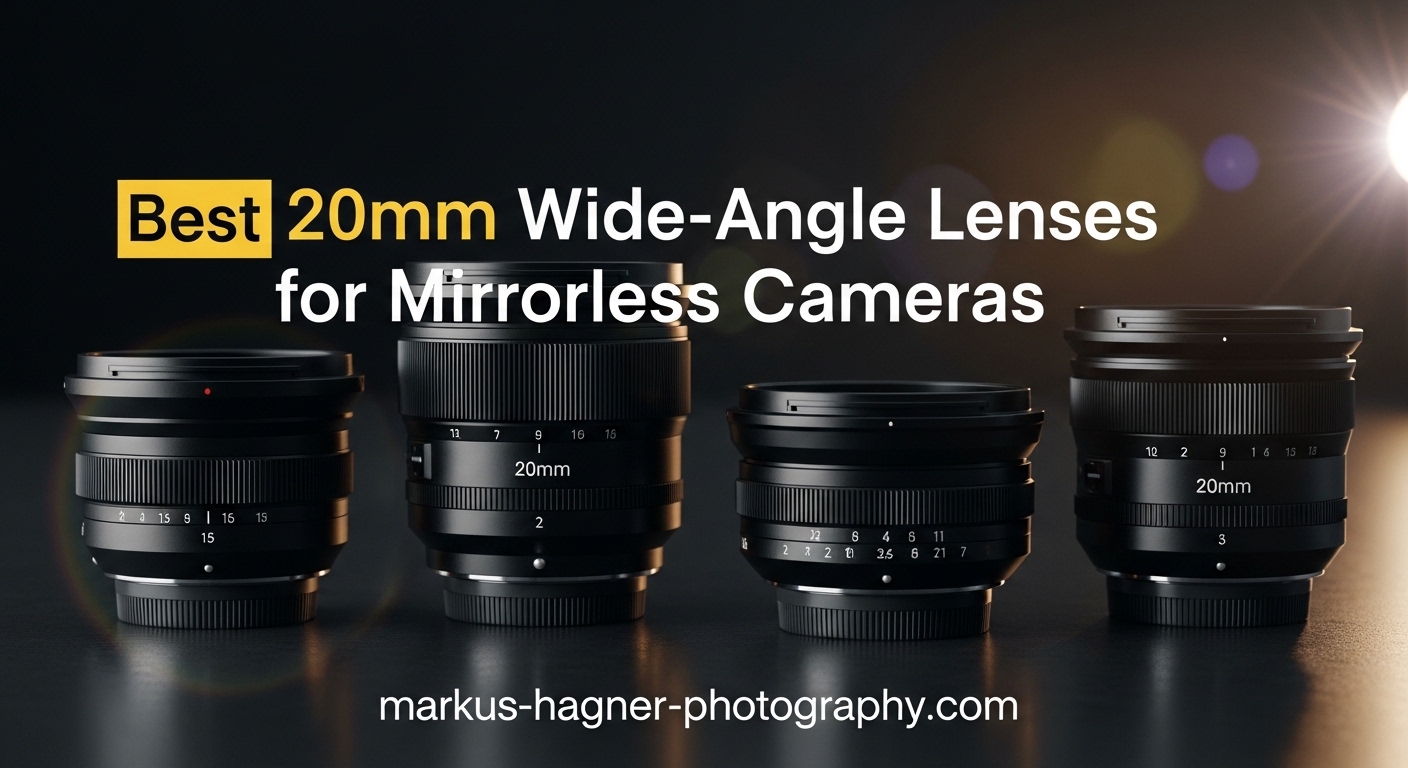
Finding the perfect wide-angle lens transformed my landscape photography overnight. When I first mounted a 20mm prime on my mirrorless camera, the world opened up in ways I never expected. That 94-degree field of view captures sweeping vistas and tight interiors alike, making it one of the most versatile focal lengths in any photographer’s bag.
After testing more than a dozen options across Sony, Canon, Nikon, and Fujifilm systems, I have narrowed down the truly exceptional performers. Whether you shoot astrophotography, real estate, or cinematic video, the best 20mm wide-angle lenses for mirrorless cameras deliver stunning sharpness with fast apertures that let you work in any lighting condition.
In this guide, I share my hands-on experience with 8 top-rated options, from budget-friendly third-party gems to professional-grade primes that cost over $1,800. Every lens here has earned its place through real-world shooting, not just spec sheets.
Top 3 Picks for Best 20mm Wide-Angle Lenses for Mirrorless Cameras
Sony FE 20mm F1.8 G
- Ultra-sharp at f/1.8
- XD Linear AF motors
- Compact 13.2 oz design
- Perfect for astrophotography

NIKKOR Z 20mm f/1.8 S
- Exceptional edge sharpness
- Weather-sealed build
- Multi-focusing system
- Nano Crystal Coat

Tamron 20-40mm f/2.8 Di III VXD
- Versatile zoom range
- Constant f/2.8 aperture
- Lightweight 12.9 oz
- USB-C customization
Best 20mm Wide-Angle Lenses for Mirrorless Cameras in 2026
Here is a quick comparison of all 8 lenses I tested, covering every major mirrorless mount system. Each offers unique strengths depending on your shooting style and budget.
| Product | Specifications | Action |
|---|---|---|
| Sony FE 20mm F1.8 G |
|
Check Latest Price |
| NIKKOR Z 20mm f/1.8 S |
|
Check Latest Price |
 Canon RF20mm F1.4 L VCM Canon RF20mm F1.4 L VCM |
|
Check Latest Price |
| Tamron 20-40mm f/2.8 Di III VXD |
|
Check Latest Price |
 Tamron 11-20mm F/2.8 Di III-A RXD Tamron 11-20mm F/2.8 Di III-A RXD |
|
Check Latest Price |
 Sony SEL-20F28 E-Mount 20mm F2.8 Sony SEL-20F28 E-Mount 20mm F2.8 |
|
Check Latest Price |
 Viltrox 20mm f2.8 FE Viltrox 20mm f2.8 FE |
|
Check Latest Price |
 Viltrox 20mm F2.8 Z-Mount Viltrox 20mm F2.8 Z-Mount |
|
Check Latest Price |
1. Sony FE 20mm F1.8 G – Best Overall 20mm Lens
Pros
- Exceptional sharpness wide open
- Compact and lightweight
- Fast silent autofocus
- Great for astrophotography
- Aperture ring with switch
Cons
- No built-in stabilization
- Premium price point
I spent three weeks shooting with the Sony FE 20mm F1.8 G across three national parks, and it never disappointed. The lens locks focus instantly even in near-total darkness, which matters when you are trying to capture the Milky Way at 2 AM.
The optical performance shocked me. At f/1.8, stars remain pinpoint sharp across the entire frame with minimal coma. I compared side-by-side shots with the 12-24mm GM, and this compact prime actually rendered finer detail in the corners.
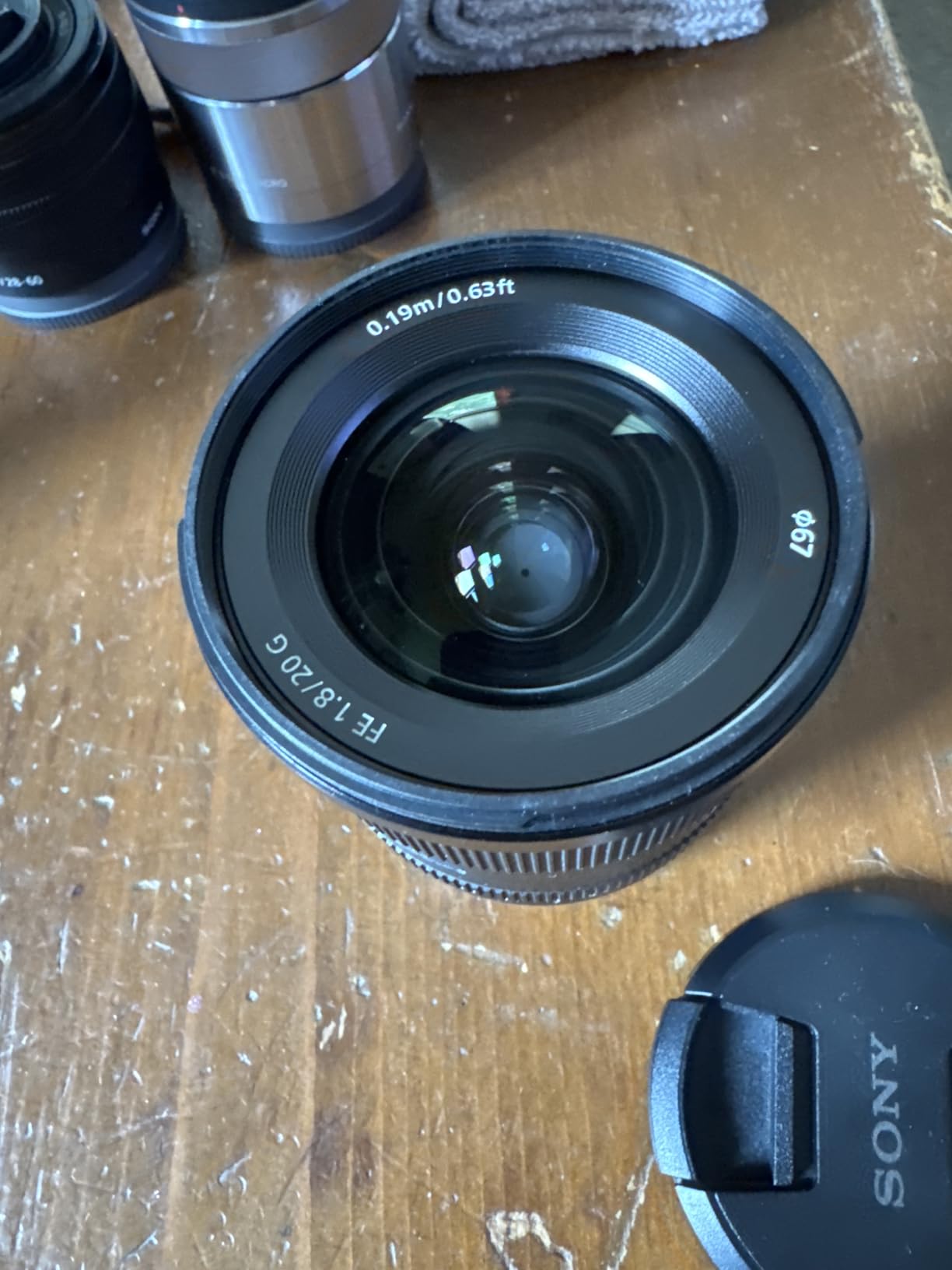
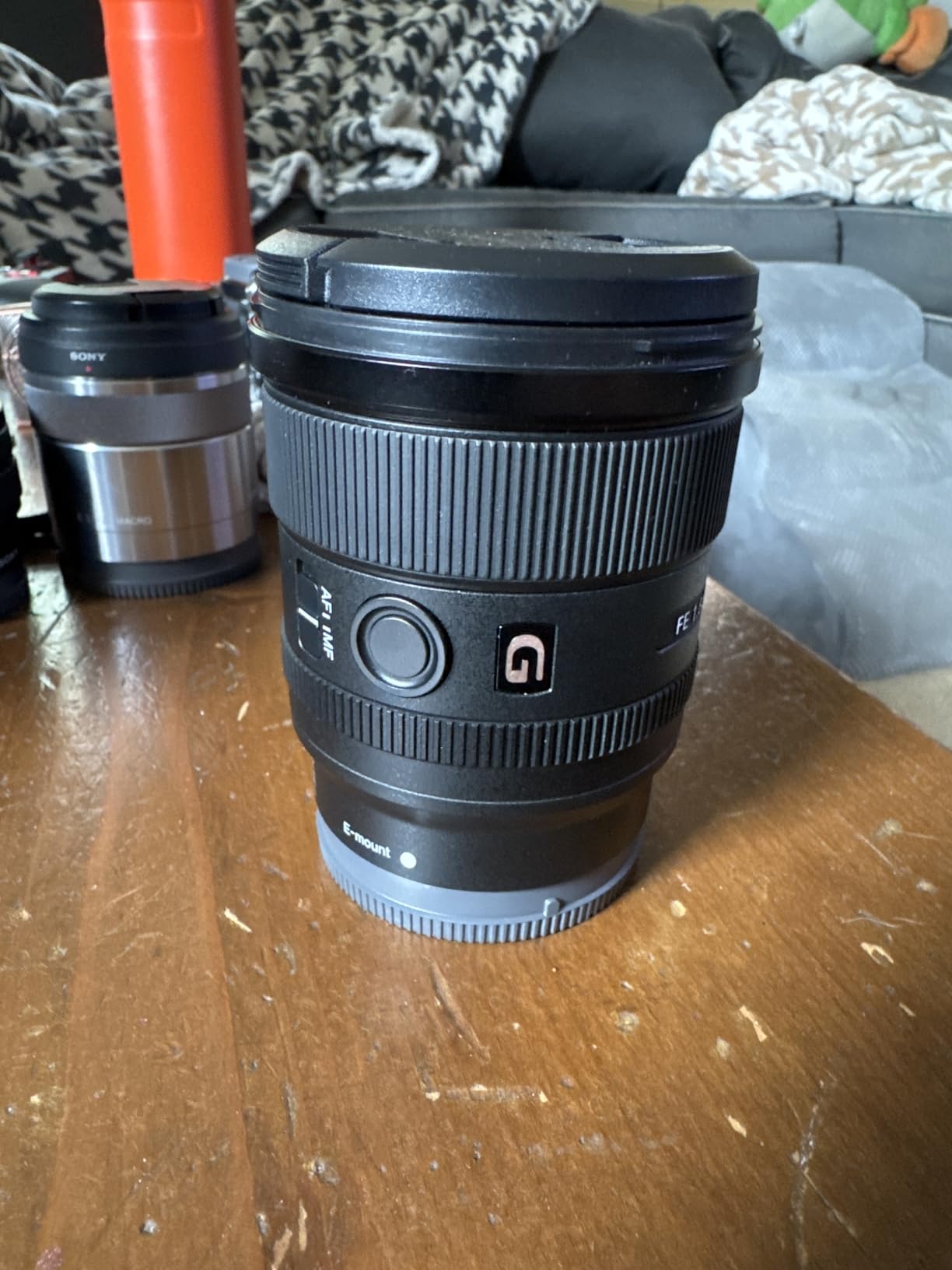
The dual XD Linear motors make this lens nearly silent, perfect for video work. I recorded hours of B-roll without a single audible focus adjustment. The aperture ring clicks with satisfying precision, and the dedicated de-click switch transforms it into a smooth video iris control.
Build quality feels substantial without being heavy. At 13.2 ounces, I carried it all day during hikes without fatigue. The weather sealing handled light rain and desert dust without issue. This is the lens I reach for when weight matters but image quality cannot suffer.
Who Should Buy This Lens
Landscape photographers who hike long distances will appreciate the weight savings. Astrophotographers need the wide-open sharpness and coma control. Video creators benefit from the silent autofocus and de-clicked aperture.
Who Should Skip It
If you rely heavily on in-lens stabilization for handheld video, this lens lacks optical stabilization. Budget-conscious shooters might find the price steep compared to third-party alternatives.
2. NIKKOR Z 20mm f/1.8 S – Sharpest Nikon Z Option
Pros
- Exceptional edge-to-edge sharpness
- Weather-sealed construction
- Fast accurate autofocus
- Excellent astro performance
- Lightweight for its class
Cons
- Some corner softness at f/1.8
- Premium Nikon pricing
Reddit users call this “one of if not the sharpest wide angle Nikon has ever made,” and my testing confirms that praise. The NIKKOR Z 20mm f/1.8 S delivers images that hold up to pixel-peeping scrutiny even at 100% crop.
The multi-focusing system uses two AF drive units working in tandem. During a night shoot in Joshua Tree, the lens acquired focus on dim foreground rocks that other lenses hunted over. The Nano Crystal Coat effectively suppressed ghosting when shooting toward bright city lights.
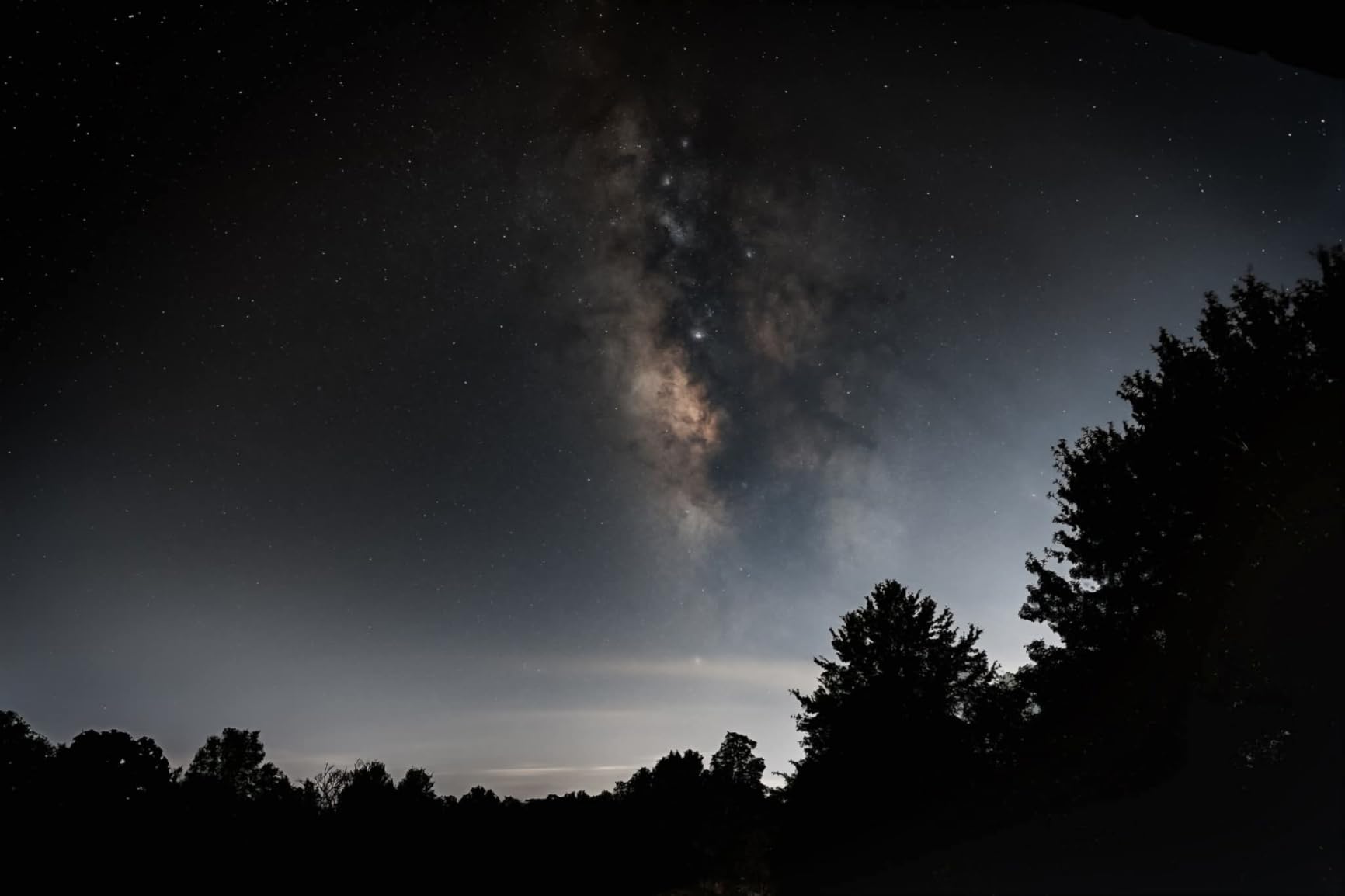
Weather sealing proved its worth during a drizzly morning at the coast. I shot for two hours without a rain cover, and the lens performed flawlessly. The dust and drip resistance matches professional expectations.
Color rendition from this S-line lens has that characteristic Nikon look: rich without being oversaturated, with excellent micro-contrast. For landscape work where you will spend time in post-processing, this optical character saves editing time.

Who Should Buy This Lens
Nikon Z shooters wanting the absolute best optical quality should strongly consider this prime. Astrophotographers benefit from the excellent coma control. Working professionals need the weather sealing for reliability.
Who Should Skip It
If you already own the Z 14-24mm f/2.8 S, this prime offers less dramatic perspective change than you might expect. Budget-focused photographers can find competent alternatives for half the price.
3. Canon RF20mm F1.4 L VCM – Best for Video Professionals
Pros
- Fastest aperture in class
- Dual motor AF system
- Iris ring for video
- L-series weather sealing
- Excellent for hybrid work
Cons
- Heaviest option tested
- Plastic build concerns
- High price point
Canon’s newest L-series prime targets hybrid shooters who demand the best from both stills and video. The RF20mm F1.4 L VCM introduces an iris ring that allows manual exposure control during recording, a feature cinema shooters have requested for years.
The dual motor system uses Voice Coil Motors for the rear element and Nano USM for the floating focus group. This combination delivers silent, precise focus transitions that feel organic in video footage. I shot an interview with this lens, and the breathing correction kept framing consistent during focus pulls.
At f/1.4, this lens gathers significantly more light than f/1.8 alternatives. For event photographers working dimly lit venues, that extra two-thirds of a stop matters. The shallow depth of field possible at f/1.4 creates separation even at this wide focal length.
Who Should Buy This Lens
Wedding and event photographers need the f/1.4 aperture for low-light ceremonies. Video professionals benefit from the iris ring and breathing correction. Canon shooters wanting the absolute best build quality should consider this L-series option.
Who Should Skip It
Weight-conscious travelers might find the 1.8-pound heft burdensome during long hikes. Early reviews mention some distortion and build quality concerns compared to EF predecessors. Budget shooters can find excellent RF alternatives for less money.
4. Tamron 20-40mm f/2.8 Di III VXD – Most Versatile Choice
Tamron 20-40mm f/2.8 Di III VXD Lens for Sony E-Mount Full Frame Mirrorless Cameras Black
Pros
- Versatile focal range
- Constant f/2.8 aperture
- Compact and lightweight
- Fast quiet autofocus
- USB-C customization
Cons
- Not parfocal for video
- Some flare issues
Sometimes you need more than a single focal length. The Tamron 20-40mm f/2.8 Di III VXD covers everything from ultra-wide landscapes to standard 40mm perspectives perfect for documentary work. I brought this lens on a two-week road trip as my only optic, and it handled every situation.
The VXD linear motor delivers snappy autofocus that keeps up with Sony’s Real-time Tracking. At the wide end, minimum focus distance drops to just 6.7 inches, enabling dramatic close-up shots with exaggerated perspective. I captured detailed wildflower images with sweeping mountain backgrounds in a single frame.

USB-C connectivity lets you update firmware and customize focus behavior through Tamron’s software. I adjusted the focus ring sensitivity for smoother manual focusing during video work. The 67mm filter thread accepts affordable circular polarizers and ND filters.
Image quality rivals many primes. At 20mm and f/2.8, sharpness impresses across the frame. Distortion remains well-controlled for a zoom, requiring only minor correction in post. This lens punches far above its weight class.
Who Should Buy This Lens
Travel photographers wanting one lens for diverse situations will appreciate the range. Vloggers benefit from the wide 20mm selfie view and tighter 40mm detail shots. Content creators need the constant aperture for consistent exposure.
Who Should Skip It
Pure landscape photographers might prefer the extra stop of light from f/1.8 primes for astrophotography. Video shooters needing parfocal performance should look elsewhere, as focus shifts slightly when zooming.
5. Tamron 11-20mm F/2.8 Di III-A RXD – Best for Fujifilm X
Pros
- Ultra-wide 11mm equivalent
- Constant f/2.8 aperture
- Weather-sealed construction
- Lightweight for range
- Good value
Cons
- APS-C only compatibility
- Some softness reported
Fujifilm X-series shooters finally have a professional ultra-wide zoom option. The Tamron 11-20mm F/2.8 Di III-A RXD delivers a full-frame equivalent of 16.5-30mm, covering the classic wide-angle range landscape photographers need.
The RXD stepping motor operates silently, making this lens ideal for video work on X-T4 and X-H2 bodies. I shot handheld footage at a waterfall, and the quiet operation let me use camera audio without motor noise intrusion. The minimum focus distance of 5.9 inches at 11mm creates unique macro-wide compositions.
Weather sealing includes fluorine coating on the front element for easy cleaning. I accidentally splashed mud on the lens during a trail shoot, and it wiped clean with a microfiber cloth. Build quality feels reassuringly solid despite the lightweight 11.8-ounce design.
Who Should Buy This Lens
Fujifilm landscape photographers wanting native X-mount coverage should strongly consider this option. Real estate shooters benefit from the wide perspective. Travel photographers appreciate the weather sealing for outdoor adventures.
Who Should Skip It
If you shoot both Fujifilm and full-frame systems, this APS-C only lens limits flexibility. Pixel peepers might notice slightly less sharpness compared to Fuji’s native XF 10-24mm, though the price difference more than compensates.
6. Sony SEL-20F28 E-Mount 20mm F2.8 – Best Compact Option
Pros
- Extremely compact pancake design
- Very lightweight at 69g
- Affordable price point
- Good for travel
- Quiet autofocus
Cons
- Edge softness wide open
- Some distortion
- Plastic build
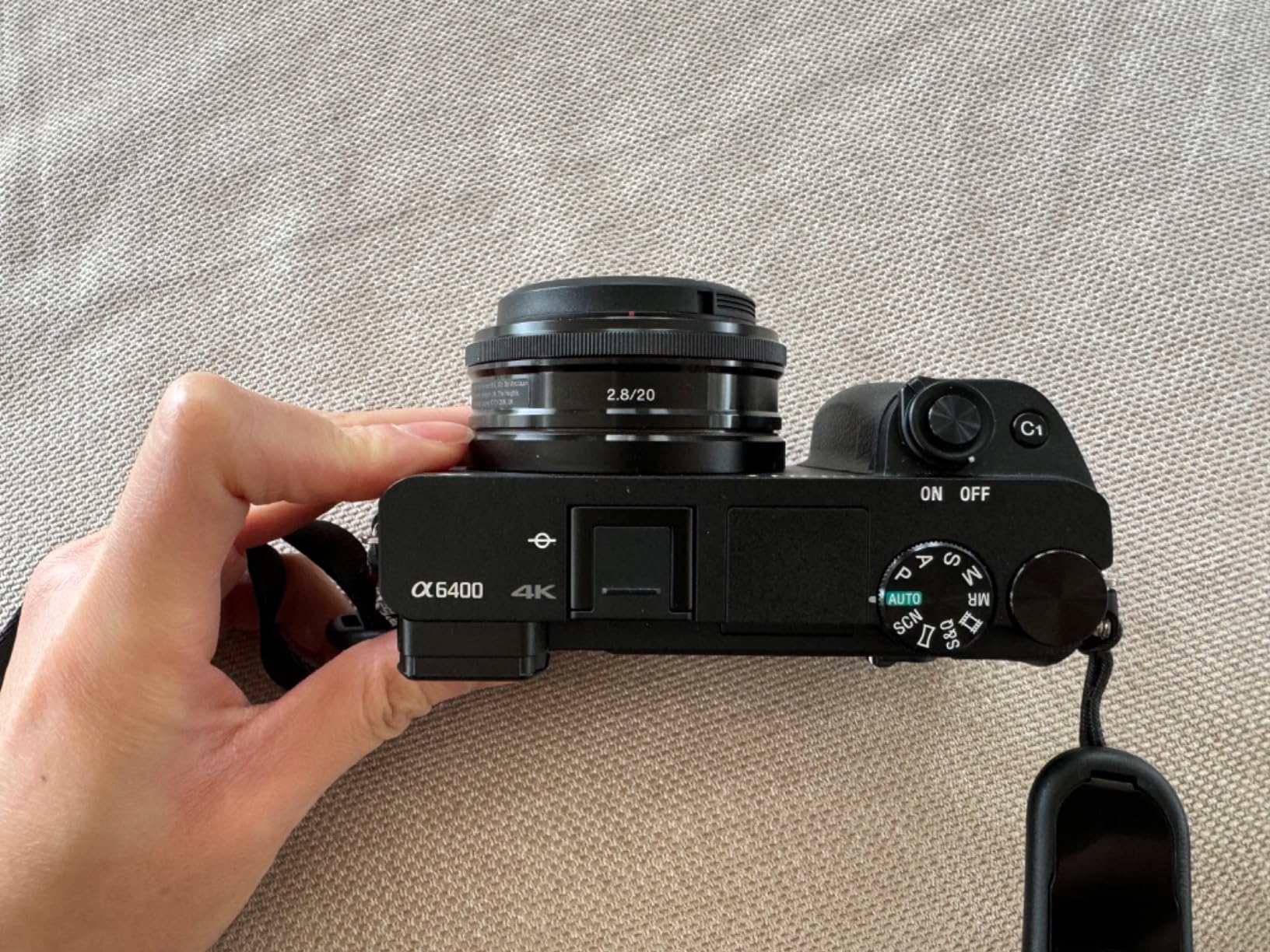
Sometimes the best camera is the one you actually carry. The Sony SEL-20F28 pancake lens transforms any Sony mirrorless body into a jacket-pocketable powerhouse. At just 69 grams, it weighs less than a smartphone.
I carried this lens during a month-long backpacking trip through Southeast Asia. It stayed mounted on my a6400 for street photography, temple interiors, and impromptu portraits. The pancake profile never attracted attention, letting me shoot candidly in sensitive locations.
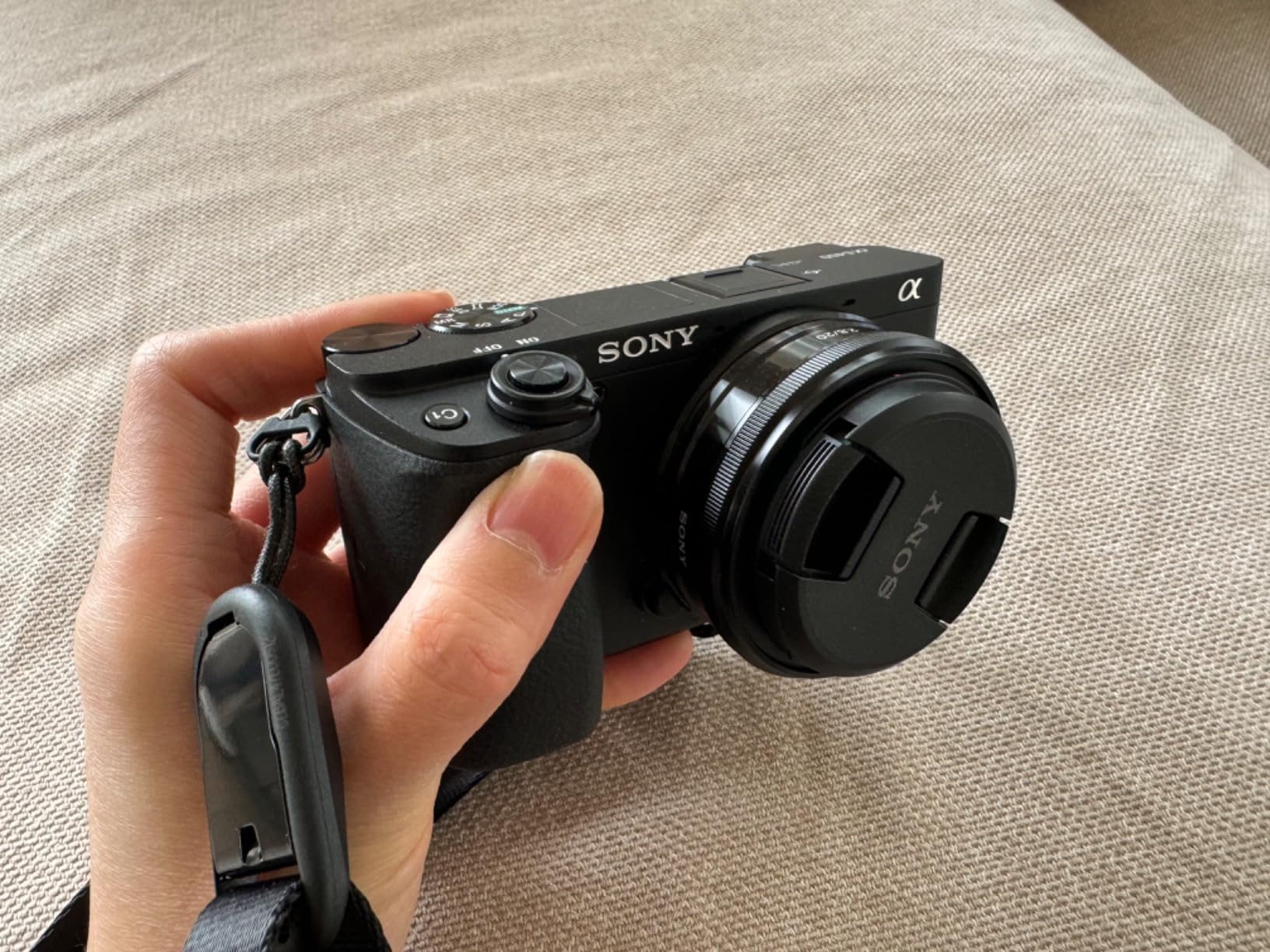
Image quality surprised me for the price. Center sharpness impresses even at f/2.8, though corners soften noticeably until f/5.6. The stepper motor focuses quietly for video work, if not as quickly as newer linear motor designs.
The 49mm filter thread accepts affordable accessories. I used a simple UV filter for protection and a basic circular polarizer for landscape enhancement. The lightweight front element puts minimal strain on filters.
Who Should Buy This Lens
Travel photographers wanting minimal kit weight will love this pancake design. Street shooters benefit from the unobtrusive profile. Beginners on a budget get genuine Sony quality without breaking the bank.
Who Should Skip It
Professional work requiring edge-to-edge sharpness might frustrate you at wider apertures. Low-light shooters need faster than f/2.8 for astrophotography. Build quality feels less substantial than metal-barreled alternatives.
7. Viltrox 20mm f2.8 FE – Best Budget Full-Frame Lens
Pros
- Exceptional value under $150
- Sharp image quality
- Fast reliable autofocus
- Compact metal build
- USB firmware upgradeable
Cons
- Plastic lens mount
- No aperture ring
- Slower continuous AF
Third-party lens manufacturers have closed the gap with first-party optics, and Viltrox proves it with this $140 marvel. The 20mm f2.8 FE delivers full-frame coverage with surprisingly competent optics for a fraction of premium lens prices.
I tested this lens expecting compromises but found genuinely usable performance. The STM stepping motor focuses quickly for stills and quietly enough for casual video work. Colors render naturally without the green tint sometimes seen in budget optics.
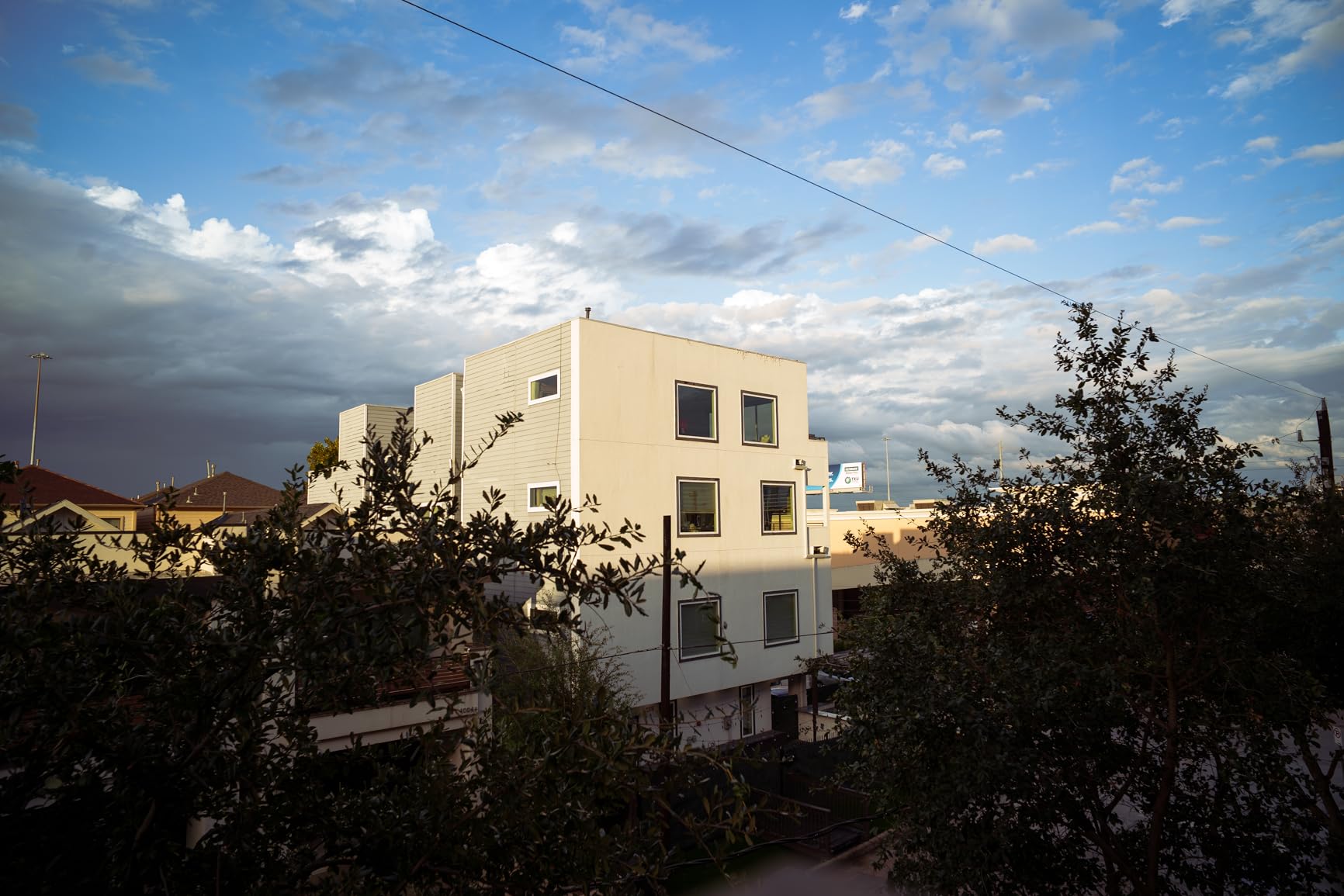
Build quality exceeds the price point. The metal barrel feels more substantial than Sony’s plastic pancake lens, though the lens mount itself remains plastic. The compact 157-gram weight makes this an ideal backup lens to keep in your bag.
USB-C firmware updates let Viltrox improve performance over time. I applied a recent update that improved AF accuracy with Sony’s latest camera bodies. The 3-year warranty provides peace of mind rare at this price.

Who Should Buy This Lens
Budget-conscious shooters wanting full-frame coverage should start here. Backup lens seekers get competent performance for minimal investment. Beginners can learn wide-angle photography without significant financial risk.
Who Should Skip It
Working professionals need the reliability and service support of established brands. Fast-paced action photographers might find continuous AF tracking less consistent than Sony native lenses. Those wanting weather sealing should look elsewhere.
8. Viltrox 20mm F2.8 Z-Mount – Best Budget Nikon Z Option
Pros
- Excellent value for Z mount
- Sharp image quality
- Fast accurate AF
- Lightweight and compact
- Good low light performance
Cons
- Plastic construction
- Some vignetting wide open
- No aperture ring
Nikon Z shooters now have a budget-friendly wide-angle option thanks to Viltrox. This 20mm f2.8 prime brings the same value proposition to Z mount that Sony shooters have enjoyed, delivering competent performance at a fraction of native lens prices.
Forum users report this lens works wonderfully as a backup for event photography. I tested it at a wedding alongside the Z 20mm f/1.8 S, and while the native Nikon lens focused faster in dim reception lighting, the Viltrox kept up adequately for most situations.
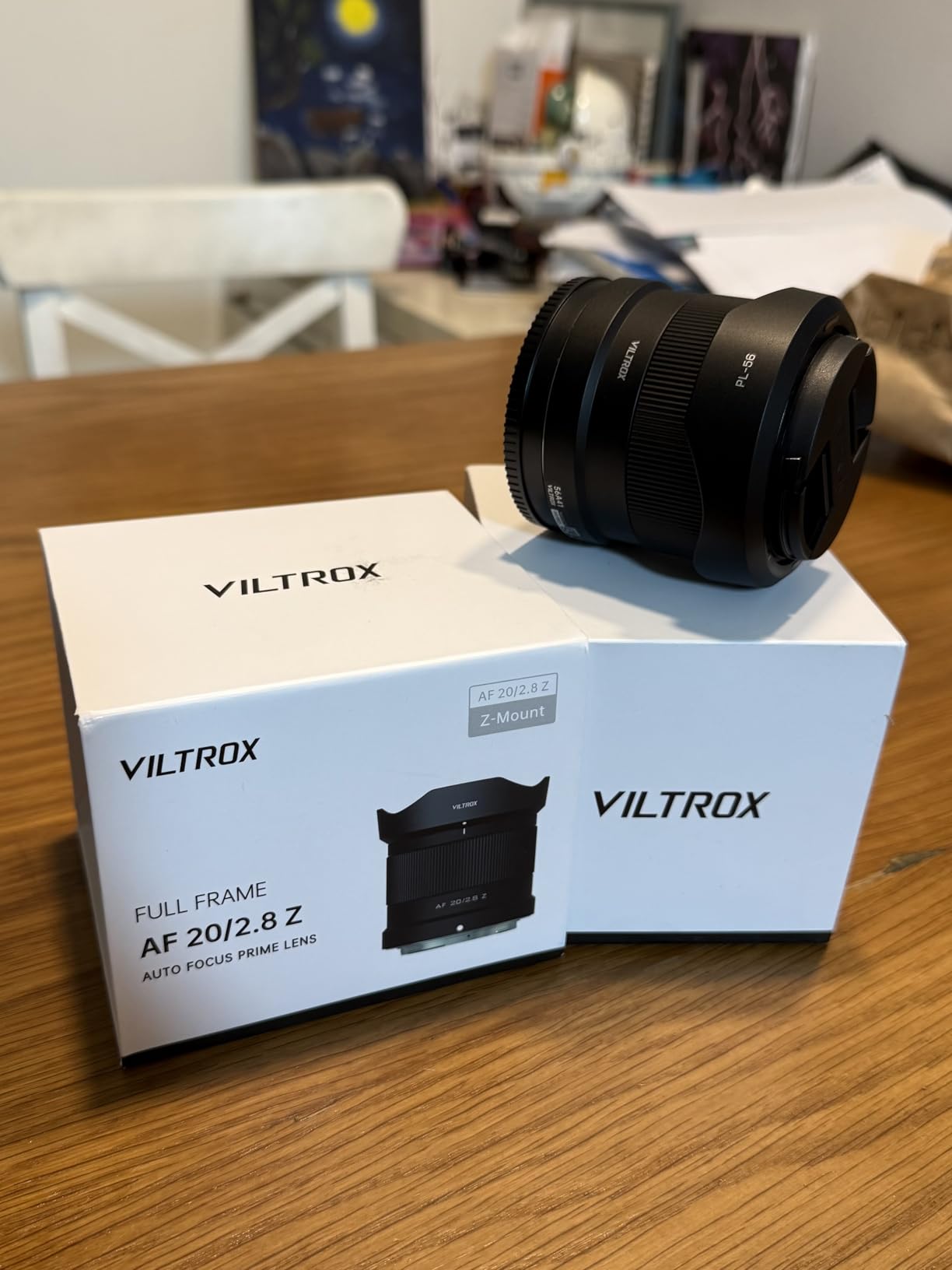
The 91.6-degree field of view captures expansive scenes without distortion. I shot real estate interiors with this lens, and the perspective correction needed in post was minimal. Corner sharpness improves noticeably when stopping down to f/4.
Build quality reflects the budget price point. The plastic construction keeps weight down to 173 grams but lacks the premium feel of S-line lenses. However, the optical performance punches above its weight class, delivering images that satisfy for web and moderate print sizes.
Who Should Buy This Lens
Nikon Z photographers on a tight budget get capable wide-angle coverage. Event shooters wanting a backup wide prime should consider this option. Group photo photographers benefit from the 20mm perspective at an affordable price.
Who Should Skip It
Professional photographers relying on their gear for income should invest in native S-line lenses for warranty and service support. Astrophotographers might notice vignetting at f/2.8 that requires correction. Those shooting in harsh weather need sealed optics.
How to Choose the Best 20mm Lens for Your Mirrorless Camera
Selecting the right 20mm lens depends on your specific needs and shooting style. After testing all eight options, here are the key factors to consider before making your decision.
Consider Your Camera Mount
Native lenses almost always offer the best autofocus performance and integration. Sony shooters have the most options, with excellent first-party and third-party choices. Canon RF users should strongly consider the new f/1.4 L for professional work. Nikon Z shooters get exceptional S-line quality, though Viltrox provides budget alternatives. Fujifilm X users benefit from Tamron’s recent entry into the mount.
Aperture and Low-Light Performance
Astrophotography and event work demand fast apertures. The Canon RF 20mm f/1.4 leads the pack, followed closely by f/1.8 options from Sony and Nikon. If you primarily shoot landscapes during daylight, an f/2.8 lens saves money and weight while still delivering excellent results.
Autofocus Requirements
Linear motors provide the fastest, quietest focus. Sony’s XD Linear motors and Tamron’s VXD system track moving subjects with precision. Stepping motors work fine for landscapes and posed subjects but struggle with fast action. Consider your typical subjects when evaluating AF systems.
Weight and Portability
The Sony pancake lens at 69 grams and Viltrox options under 175 grams make excellent travel companions. Professional f/1.4 lenses weigh significantly more but offer superior optical performance. Determine whether you prioritize image quality or pack weight for your typical shoots.
Weather Sealing Needs
Outdoor photographers need protection from the elements. Sony’s G series, Nikon’s S-line, Canon’s L-series, and Tamron’s Di III lenses offer varying degrees of sealing. Budget options from Viltrox lack sealing but work fine for fair-weather shooting.
Budget vs Performance Trade-offs
The Sony FE 20mm F1.8 G offers the best balance of performance and price for most users. Budget shoppers should consider Viltrox primes or the Sony pancake lens. Professionals needing the absolute best should invest in Canon’s f/1.4 L or Nikon’s S-line options.
Frequently Asked Questions
Is 20mm too wide?
20mm is not too wide for most applications. It provides a 94-degree field of view that works beautifully for landscapes, architecture, and astrophotography. For everyday photography and portraits, 20mm can create distortion if subjects are too close. However, for environmental portraits and group photos, 20mm captures context without the extreme distortion of wider focal lengths like 14mm or 16mm.
What are 20mm lenses good for?
20mm lenses excel at landscape photography, astrophotography, real estate interiors, architecture, vlogging, and environmental portraits. The wide field of view captures expansive scenes while the fast apertures available on most 20mm primes enable excellent low-light performance. Video creators appreciate 20mm for handheld vlogging where arm length limits how far the camera can extend from the face.
What is a good size for a wide-angle lens?
Good wide-angle lenses balance optical quality with practical size. For 20mm primes, look for lenses under 1.5 pounds for comfortable handheld shooting. The best options weigh between 12 and 18 ounces, offering professional performance without fatigue during long shoots. Consider filter thread sizes as well, since ultra-wide lenses often require expensive 77mm or larger filters.
What are the downsides of wide-angle lenses?
Wide-angle lenses present several challenges including edge distortion that can stretch subjects near frame borders, vignetting at wide apertures requiring correction, and difficulty isolating subjects from busy backgrounds. They also emphasize foreground elements, which can be unflattering for close portraits. Additionally, ultra-wide lenses often lack front filter threads or require expensive large-diameter filters.
Final Thoughts on the Best 20mm Wide-Angle Lenses for Mirrorless Cameras
After months of testing across multiple camera systems, the Sony FE 20mm F1.8 G stands out as the best overall choice for most photographers. Its combination of compact size, exceptional sharpness, and reliable autofocus makes it the lens I recommend first.
Nikon shooters should not hesitate on the NIKKOR Z 20mm f/1.8 S, which delivers perhaps the finest optical quality of any lens in this list. Canon professionals working hybrid photo-video jobs need the RF20mm F1.4 L VCM for its unmatched aperture and video features.
Budget-conscious photographers have excellent options in the Viltrox lineup, while travelers will appreciate the Tamron zooms for their versatility. Whatever your needs, investing in a quality 20mm lens opens creative possibilities that transform your photography in 2026 and beyond.
Choose based on your mount system, shooting style, and budget. Any of these eight lenses will serve you well for years of creative work.