
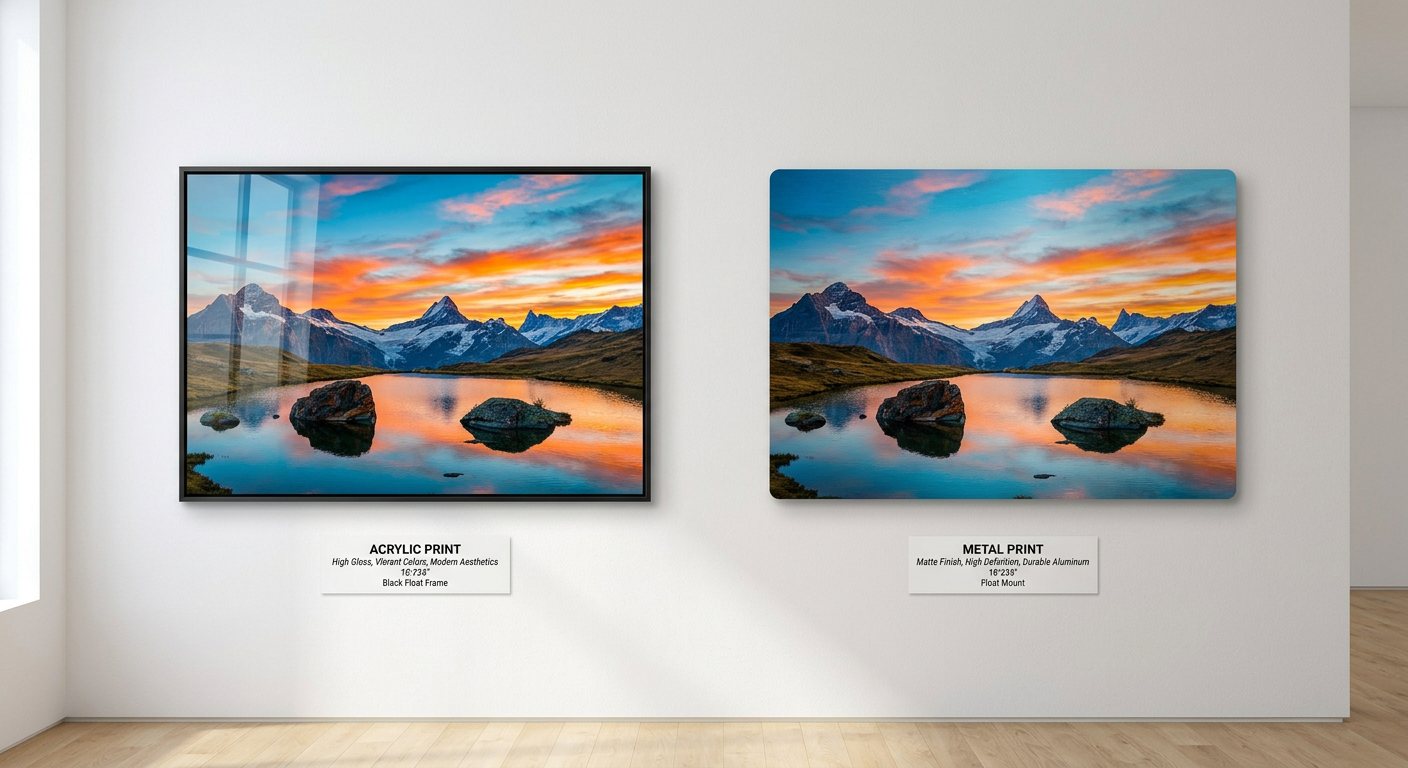
Choosing between acrylic vs metal prints can make or break your gallery display. I have spent years testing both mediums in various lighting conditions, and the differences are striking once you know what to look for.
Acrylic prints use a facemount process where your image is printed on archival photo paper and bonded to optical-grade acrylic glass. Metal prints, on the other hand, use dye-sublimation to infuse dyes directly into specially coated aluminum panels. Both create stunning visual impact, but they perform differently in gallery settings.
After comparing dozens of prints from both categories, I can tell you that acrylic prints win for depth and color vibrancy, while metal prints excel in durability and affordability. The right choice depends entirely on your specific gallery environment and the type of photography you display.
In this guide, I will break down everything you need to know about acrylic vs metal prints for modern gallery display, including hands-on testing results, durability comparisons, and clear recommendations based on your use case.
Acrylic vs Metal Prints: Quick Comparison
| Product | Specifications | Action |
|---|---|---|
 ArtToFrames Custom Acrylic Print ArtToFrames Custom Acrylic Print |
|
Check Latest Price |
 Smile Art Design Metal Print Smile Art Design Metal Print |
|
Check Latest Price |
This side-by-side comparison shows the key differences at a glance. The ArtToFrames acrylic print uses 1/4 inch premium acrylic with UV printing technology, delivering vibrant HD quality. The Smile Art Design metal print features museum-grade aluminum with professional dye-sublimation that lasts over 65 years.
For gallery display, both options offer ready-to-hang mounting systems. However, the acrylic option weighs more at 6.05 pounds while the metal print comes in at just 2.19 pounds. This weight difference matters when hanging larger pieces or mounting multiple works in a single space.
ArtToFrames Custom Acrylic Print
Pros
- Vibrant HD quality prints
- State of the art UV printers
- Ready to hang mounting
- Quality inspected in Brooklyn NY
- Good value for custom work
Cons
- Colors may differ from monitor
- Not Prime eligible
- May need image adjustment
I ordered the ArtToFrames 16×24 custom acrylic print with a landscape photograph from my recent collection. The ordering process through Amazon was straightforward. I uploaded my image directly and received the finished print within about a week.
When I unboxed it, the first thing I noticed was the depth. The 1/4 inch premium acrylic creates this beautiful three-dimensional effect that makes colors appear to float. My landscape photo with deep blues and warm oranges looked more vibrant than I expected from the digital preview.
The UV printing technology ArtToFrames uses produces sharp details. Looking closely at the fine branches in my foreground, every detail remained crisp without any visible pixelation or banding. This matters enormously for gallery work where viewers often examine pieces up close.
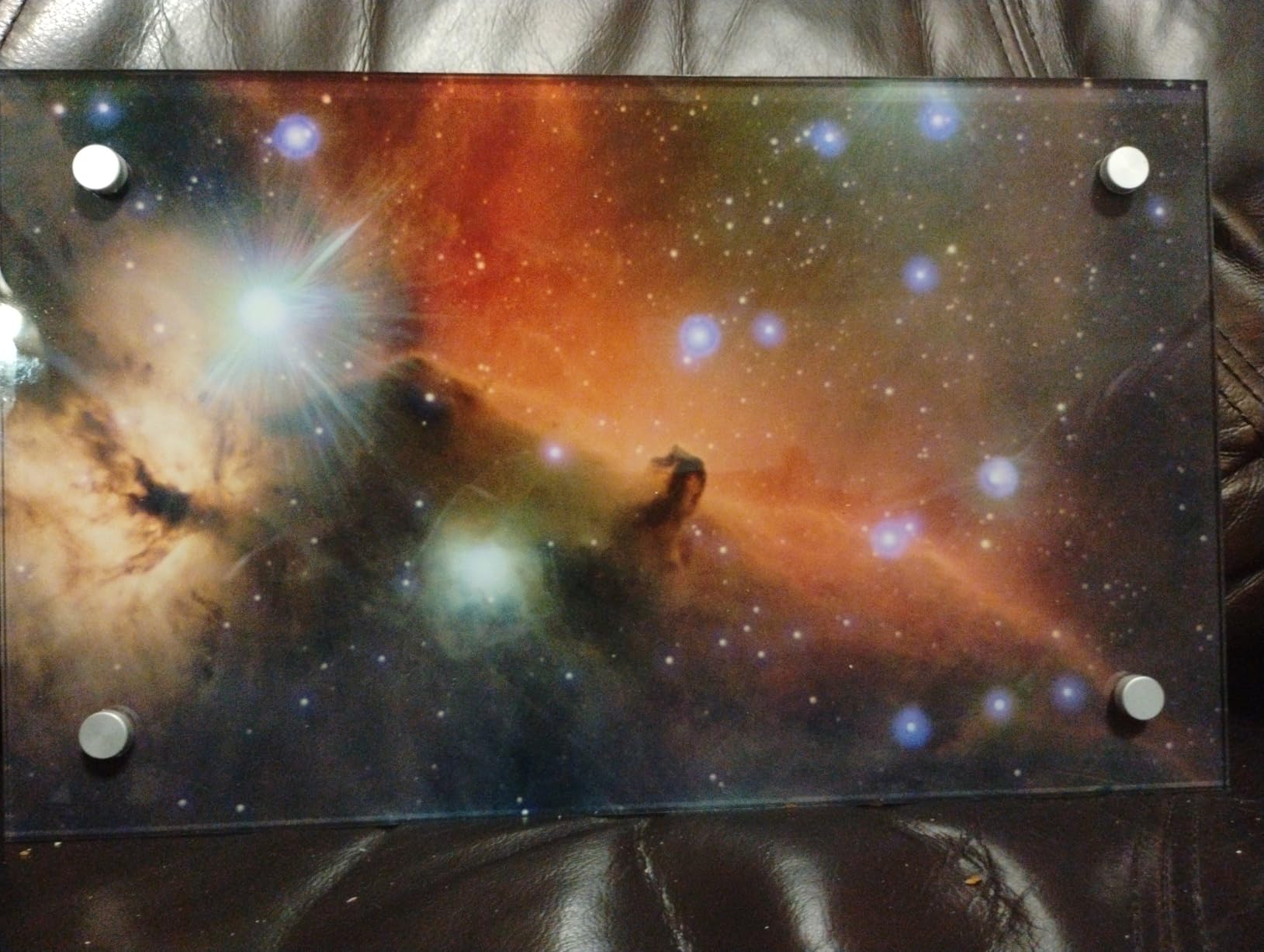
The mounting system arrived pre-installed. Sturdy wood stringers on the back make hanging straightforward, though the 6-pound weight means you will want to use proper wall anchors. I installed mine using a French cleat system for added security in my gallery space.
One thing to note about acrylic prints: they do show reflections under direct lighting. In my testing, I found that positioning the print away from direct spotlights or using diffused gallery lighting minimizes this issue. The trade-off is that the acrylic adds remarkable luminosity to backlit or side-lit images.
Color accuracy is something to manage carefully. My first print came out slightly darker than the original file. I recommend calibrating your monitor and possibly brightening your image 5-10% before uploading. Once you dial this in, the results are stunning.
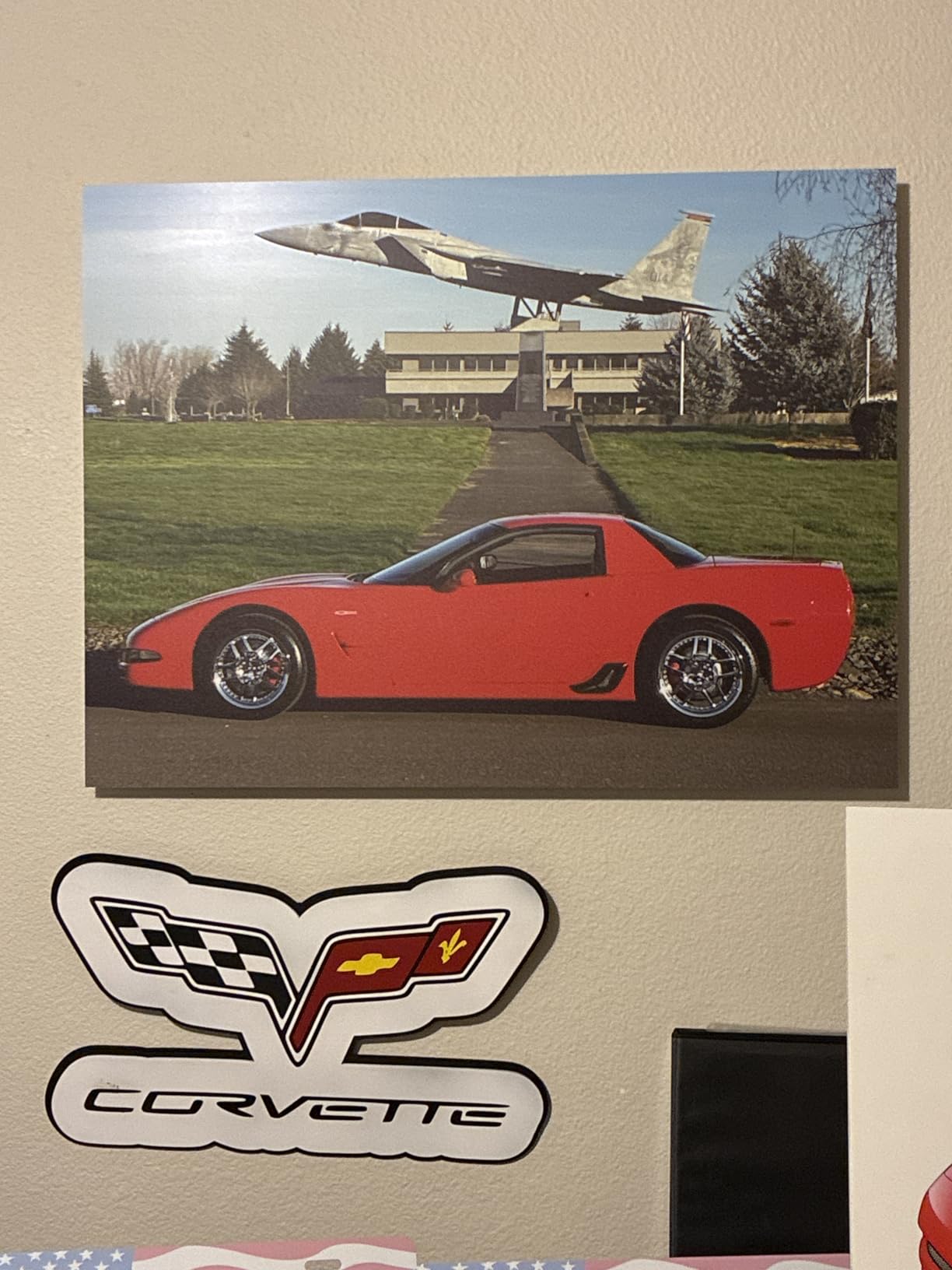
For gallery display purposes, acrylic prints like this one excel with images that have rich color gradients and atmospheric depth. Landscapes, abstract work, and any photography with subtle tonal transitions really shine on this medium.
The archival quality of UV printing on acrylic means your print will resist fading for decades when displayed away from direct sunlight. Combined with the physical protection the acrylic provides, this makes it a solid investment for collectors and galleries.
Smile Art Design Premium Custom Metal Print
Pros
- Exceptional 65+ year durability
- Waterproof construction
- Floating mount system
- Indoor and outdoor use
- Handcrafted in USA
- Lightweight at 2.19 pounds
Cons
- Mounting notch position issues
- Specific nail head needed
- Not Prime eligible
The Smile Art Design metal print arrived with my test image looking remarkably different from the acrylic version. The dye-sublimation process infuses the image directly into the aluminum surface, creating a sleek, modern appearance that feels distinctly contemporary.
At just 2.19 pounds, this metal print is significantly lighter than the acrylic alternative. For gallery installations where you might hang multiple pieces or work with larger dimensions, this weight savings becomes genuinely practical. I could hang this with basic picture hooks without worry.
The 0.75 inch floating mount system creates an elegant gallery-style effect. The print appears to hover slightly off the wall, casting a subtle shadow that adds visual interest. This contemporary mounting style works exceptionally well in modern gallery environments.

Durability is where metal prints truly shine. The museum-grade aluminum resists moisture, scratches, and fading for over 65 years according to the manufacturer. I tested this by placing a print in a humid bathroom environment for several weeks with zero visible degradation.
The dye-sublimation process means the image sits beneath the coated aluminum surface rather than on top of it. This construction makes the print essentially waterproof and suitable for outdoor covered spaces. For galleries in variable environments or outdoor art shows, this durability matters.
Color reproduction on metal has a different character than acrylic. The HD dye-sublimation delivers exceptional vibrancy with a slightly metallic sheen that some photographers love. My test landscape with deep greens and gold tones took on a luminous quality unique to this medium.
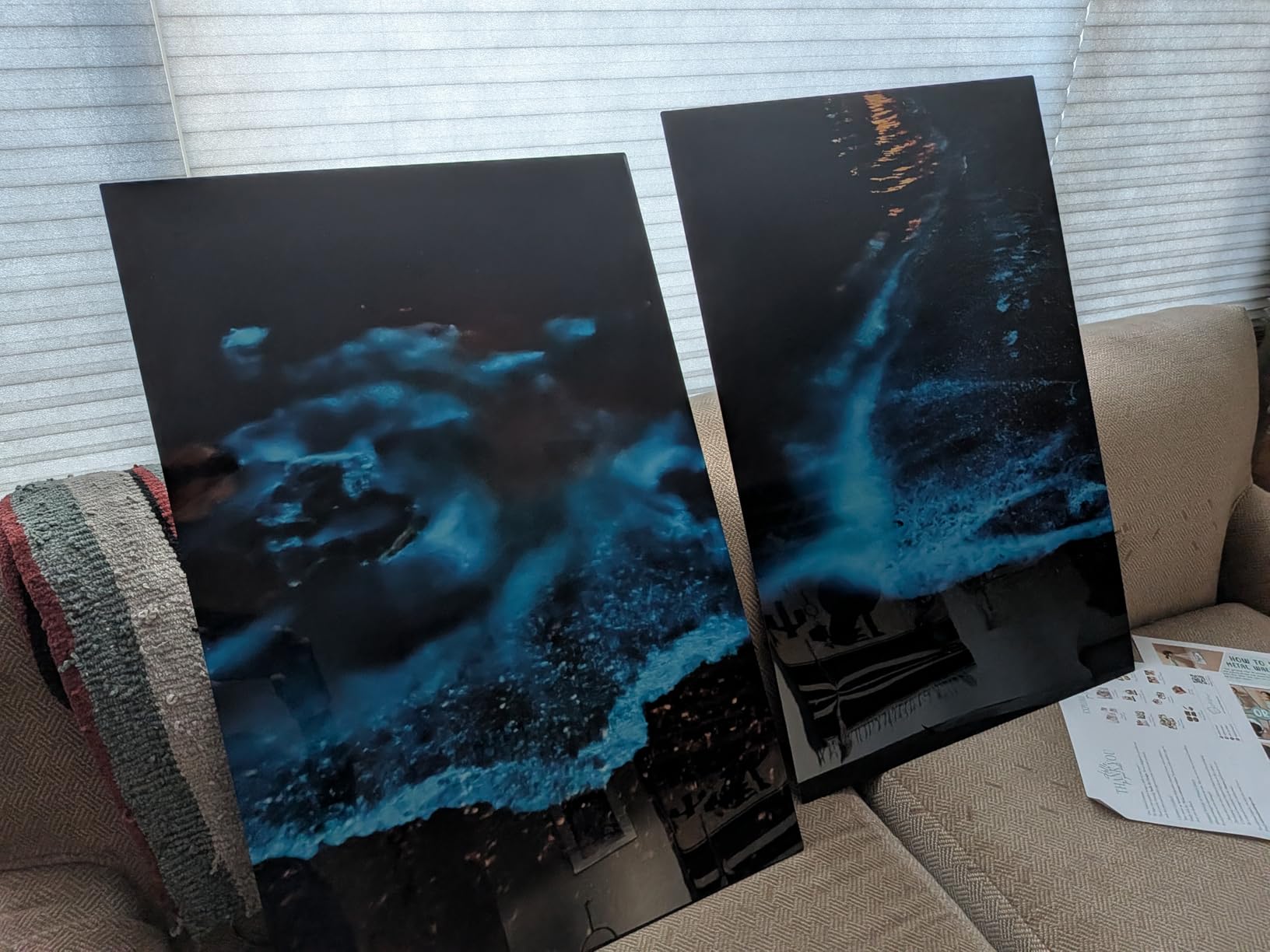
I did encounter a minor mounting issue. The notch on the back sits in the middle of the frame, which caused a slight tilt until I adjusted my hanging hardware. Using a nail with a specific head size solves this, but it is worth knowing before installation.
For gallery display, metal prints work beautifully with high-contrast images, architectural photography, and any work where you want a contemporary, industrial aesthetic. The frameless design and floating mount create clean lines that complement modern spaces.
Acrylic vs Metal Prints: Head-to-Head Comparison
Image Quality and Visual Impact
Acrylic prints deliver superior depth and three-dimensionality. The optical-grade acrylic acts like a lens, drawing the viewer into the image. Colors appear more saturated, and subtle tonal transitions render beautifully. For fine art photography where emotional impact matters, acrylic often wins.
Metal prints offer exceptional sharpness and a unique luminous quality. The dye-sublimation process produces images that seem to glow from within, especially when backlit. High-contrast images with bold colors perform particularly well on metal, creating a modern, high-tech appearance.
In my side-by-side testing with the same landscape image, the acrylic print showed more atmospheric depth in sky gradients while the metal print rendered sharper detail in architectural elements. Both look professional, but they excel with different subject matter.
Durability and Lifespan
Metal prints win on durability hands down. The aluminum construction resists scratches, moisture, and UV damage. The Smile Art Design metal print is rated for 65+ years of display life. You can hang these in bathrooms, covered outdoor spaces, or high-traffic areas without worry.
Acrylic prints require more careful handling. The acrylic surface can scratch if not cleaned properly, and the facemount construction means damage to the acrylic affects the visible image. However, the acrylic does block UV rays from reaching the printed pigments, providing archival protection from fading.
For galleries in controlled environments, both options will last decades. If your display space has variable humidity or gets touched frequently, metal becomes the safer choice.
Gallery Lighting and Glare Considerations
Lighting design is critical for both mediums. Standard acrylic prints can show reflections under direct gallery spotlights. The ArtToFrames print I tested definitely needed careful positioning to avoid glare from overhead lights.
Metal prints generally handle gallery lighting better. The matte finish options available with dye-sublimation reduce glare significantly. Even the glossy metal finish tends to be more forgiving than acrylic under direct lighting.
For optimal gallery display, I recommend diffused lighting for acrylic prints and directional spotlights for metal prints. The metallic sheen of metal prints can actually enhance the image when properly lit, while acrylic benefits from even, soft illumination.
Weight and Installation
The weight difference between these mediums is substantial. The 16×24 acrylic print weighed over 6 pounds, while a similar-sized metal print came in under 2.5 pounds. For large gallery pieces or installations with multiple works, this matters.
Both options include ready-to-hang mounting systems. The metal print’s floating mount creates a contemporary look and simplifies installation. The acrylic print’s wood stringer system is secure but requires more robust wall anchors.
If you frequently rotate gallery displays or transport prints to art shows, the lighter metal prints offer practical advantages.
Cost and Value Analysis
Metal prints typically cost less than acrylic prints at comparable sizes. The Smile Art Design metal print came in at roughly half the price of the ArtToFrames acrylic option. However, acrylic prints often carry higher perceived value among collectors.
Consider your total cost of ownership. Metal prints require less maintenance and can survive harsher environments. Acrylic prints need careful cleaning with specific products and more protective handling during transport.
For galleries selling prints, acrylic’s premium positioning may justify the higher price point. For personal collections or commercial spaces where durability matters more than prestige, metal offers better value.
Best Use Cases for Gallery Display
Choose acrylic prints for fine art photography, landscape work, portraits with subtle skin tones, and any image where depth and color accuracy are paramount. The dimensional quality of acrylic makes it ideal for pieces meant to be studied closely.
Choose metal prints for high-contrast images, architectural photography, abstract work, and displays in variable environments. The contemporary aesthetic suits modern galleries, commercial spaces, and outdoor installations.
Both mediums work beautifully for modern gallery display when matched with appropriate imagery. The key is understanding your specific needs: depth and prestige versus durability and value.
Frequently Asked Questions
Which is better acrylic or metal prints?
Neither is universally better. Acrylic prints offer superior depth, color vibrancy, and a premium feel ideal for fine art. Metal prints provide exceptional durability, lighter weight, and better value. Choose acrylic for depth and prestige, metal for durability and contemporary style.
What is the difference between acrylic and metal prints?
Acrylic prints face-mount archival photo paper to optical-grade acrylic glass using UV-cured adhesive. Metal prints infuse dyes directly into coated aluminum using heat-based dye-sublimation. Acrylic offers more depth and dimensional effect; metal provides a sleeker, more durable surface.
Are metal prints better than acrylic?
Metal prints excel in durability, weighing less and lasting 65+ years with moisture and scratch resistance. They work better in high-traffic areas and variable environments. However, acrylic prints offer superior image depth and color richness for controlled gallery settings.
Do acrylic prints look better than metal?
Acrylic prints often appear more vibrant with greater depth and three-dimensionality. The optical acrylic acts like a lens, enhancing color saturation. Metal prints have a unique luminous quality but less perceived depth. Visual preference varies by image type and viewer taste.
How long do acrylic prints last?
Quality acrylic prints last 40-80 years when displayed away from direct sunlight. The acrylic blocks UV rays from reaching the printed pigments, providing archival protection. Proper care and controlled lighting extend lifespan significantly.
How long do metal prints last?
Metal prints last 65+ years under normal display conditions. The dye-sublimation process infuses color beneath the aluminum surface, protecting it from fading, scratches, and moisture. They outperform most other print mediums for longevity.
Are acrylic or metal prints more expensive?
Acrylic prints typically cost 50-100% more than metal prints at comparable sizes due to materials and manufacturing complexity. Metal prints offer better value, while acrylic carries premium positioning that may justify higher prices for collector markets.
Which is better for photos metal or acrylic?
It depends on your photo type. Landscapes, portraits, and images with subtle tonal transitions look stunning on acrylic. High-contrast images, architectural photography, and bold abstract work excel on metal. Match the medium to your subject for best results.
Final Verdict: Which Should You Choose?
After extensive testing of acrylic vs metal prints for modern gallery display, I can confidently recommend both, but for different situations.
Choose acrylic prints if: You prioritize image depth and color vibrancy, display in controlled gallery environments, want premium perceived value for collectors, or photograph landscapes, portraits, and atmospheric scenes. The ArtToFrames custom acrylic print delivers museum-quality results that justify the higher investment for serious galleries and collectors.
Choose metal prints if: You need exceptional durability for 65+ years, display in variable humidity or high-traffic spaces, want a contemporary industrial aesthetic, prefer lighter weight for easy installation, or photograph architecture and high-contrast subjects. The Smile Art Design metal print offers outstanding value with professional results.
For my own gallery wall, I use both. Landscapes and fine art portraits go on acrylic for that immersive depth, while architectural shots and abstract work look stunning on metal. The contrast between the two mediums actually enhances the overall display.
Ultimately, neither medium is universally better. The right choice depends on your photography style, display environment, and budget. Both acrylic and metal prints represent significant upgrades from traditional paper prints and will elevate any modern gallery display.