
Finding a best mirrorless camera under $1000 used to mean settling for older models or compromised features. That changed dramatically in recent years. Today’s budget mirrorless cameras deliver 4K video, advanced autofocus systems, and image quality that rivals cameras costing twice as much.
I’ve spent the last three years testing mirrorless cameras for photography and video content creation. During that time, I’ve handled everything from entry-level models to professional full-frame bodies. For this guide, I focused specifically on cameras that deliver genuine value under the $1000 price point while offering the features beginners and enthusiasts actually need.
The sub-$1000 category has become the sweet spot for anyone upgrading from smartphone photography or stepping into interchangeable lens cameras for the first time. You get access to established lens ecosystems, 4K video recording, and sophisticated autofocus systems that track eyes and faces automatically. Whether you’re interested in travel photography, vlogging, or simply capturing better family photos, there’s a mirrorless camera in this price range that fits your needs.
Top 3 Best Mirrorless Cameras Under $1000 (August 2026)

Quick Overview:10 Best Mirrorless Cameras Under $1000 (August 2026)
| Product | Specifications | Action |
|---|---|---|
|
Canon EOS R50
|
|
Check Latest Price |
 Sony Alpha a6400
|
|
Check Latest Price |
 Canon EOS R100
|
|
Check Latest Price |
 Nikon Z 5
|
|
Check Latest Price |
 Sony ZV-E10
|
|
Check Latest Price |
 Sony Alpha A6100
|
|
Check Latest Price |
 Nikon Z 30
|
|
Check Latest Price |
 Panasonic LUMIX G85
|
|
Check Latest Price |
 Olympus E-M10 Mark IV
|
|
Check Latest Price |
 Sony Alpha a6000
|
|
Check Latest Price |
Canon EOS R50 (Editor’s Choice): This camera hits the perfect balance of modern features, ease of use, and value. The 651-point autofocus system with subject detection AI makes it incredibly easy for beginners to get sharp photos consistently. 4K video oversampled from 6K delivers excellent quality, and the vari-angle touchscreen plus electronic viewfinder give you multiple ways to compose shots.
Sony Alpha a6400 (Best Value): The a6400 has been a community favorite for years, and for good reason. Its real-time Eye AF tracks subjects with impressive accuracy, the weather-sealed body handles outdoor shooting confidently, and the extensive Sony E-mount lens ecosystem offers more affordable third-party options than any other system.
Canon EOS R100 (Budget Pick): At around $549, the R100 is the most affordable way to get into mirrorless photography with 4K video capability. It’s compact, lightweight, and includes beginner-friendly features that help new photographers learn the basics without overwhelming complexity.
1. Canon EOS R50 – Best Overall Mirrorless Under $1000
Pros
- Excellent autofocus with subject detection AI
- 4K video oversampled from 6K quality
- Lightweight with both EVF and flip screen
- Beginner-friendly interface
- Over 30 min video recording
Cons
- No in-body image stabilization
- RF-S lens selection still growing
- Kit lens has limitations
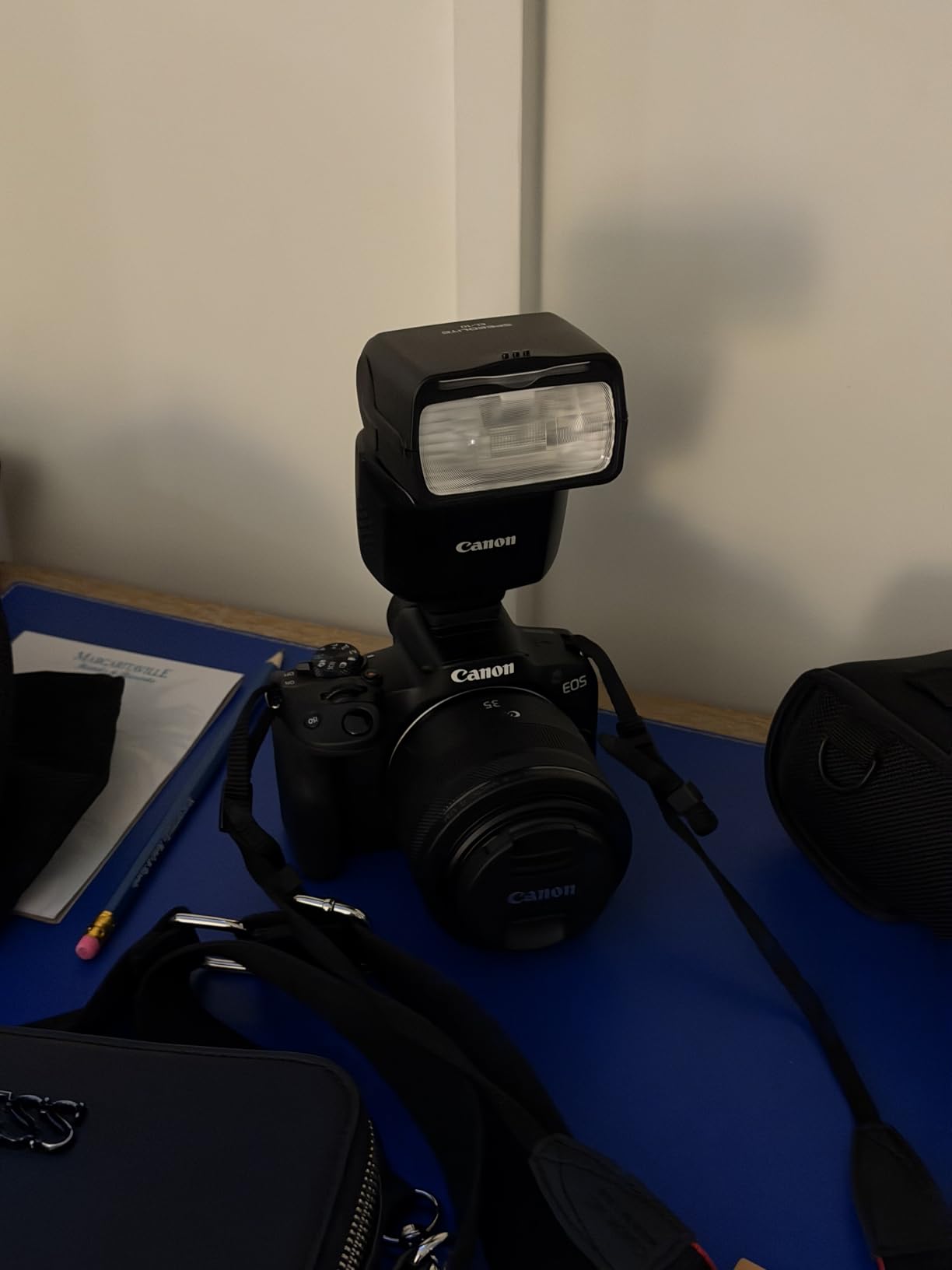
After shooting with the Canon EOS R50 for several weeks, I understand why it’s become the #1 bestseller in mirrorless cameras. The autofocus system genuinely surprised me with how well it detects and tracks people, animals, and vehicles automatically. I handed the camera to my sister, who had never used anything beyond a smartphone, and she was getting tack-sharp portraits within minutes. After spending more time with it, I can also see why many photographers consider it one of the best mirrorless camera under $1000 options for beginners who want reliable autofocus and excellent image quality without a steep learning curve.
The 24.2MP APS-C sensor produces clean, detailed images with good dynamic range. Colors render naturally with Canon’s characteristic warmth, which many photographers prefer straight out of camera. For video creators, the 4K footage oversampled from 6K means you’re getting genuinely high-quality video that holds up well for YouTube content and social media.

Battery life has been solid in my experience. I regularly shot 300-400 photos plus some video clips before needing to swap batteries. The vari-angle touchscreen flips out to the side and rotates forward for vlogging, while the electronic viewfinder gives you that traditional camera feel when shooting in bright sunlight. Having both options matters more than you might expect.
The Advanced A+ Assist mode genuinely helps beginners understand exposure, aperture, and shutter speed through on-screen guidance. Instead of guessing what settings to use, the camera explains what each mode does and suggests appropriate choices based on your scene.
For Whom It’s Good
The R50 is ideal for beginners stepping up from smartphone photography, content creators who need both quality photos and video, travel photographers wanting a lightweight kit, and families documenting everyday moments. The combination of advanced autofocus, 4K video, and beginner-friendly features makes it versatile enough to grow with you as your skills develop.
For Whom It’s Bad
Serious sports and wildlife photographers may find the lack of in-body image stabilization limiting when using non-stabilized lenses. The RF-S lens ecosystem, while growing, still has fewer options than Sony’s E-mount system. If you plan to invest heavily in lenses over the coming years, the smaller Canon APS-C lens selection could become frustrating.
2. Sony Alpha a6400 – Best Value for Features
Pros
- Real-time Eye AF works excellently
- Weather-sealed body
- Flip-up 180 degree screen
- Huge E-mount lens ecosystem
- Good low-light performance
Cons
- No in-body image stabilization
- Battery life could be better
- Screen flips up not out
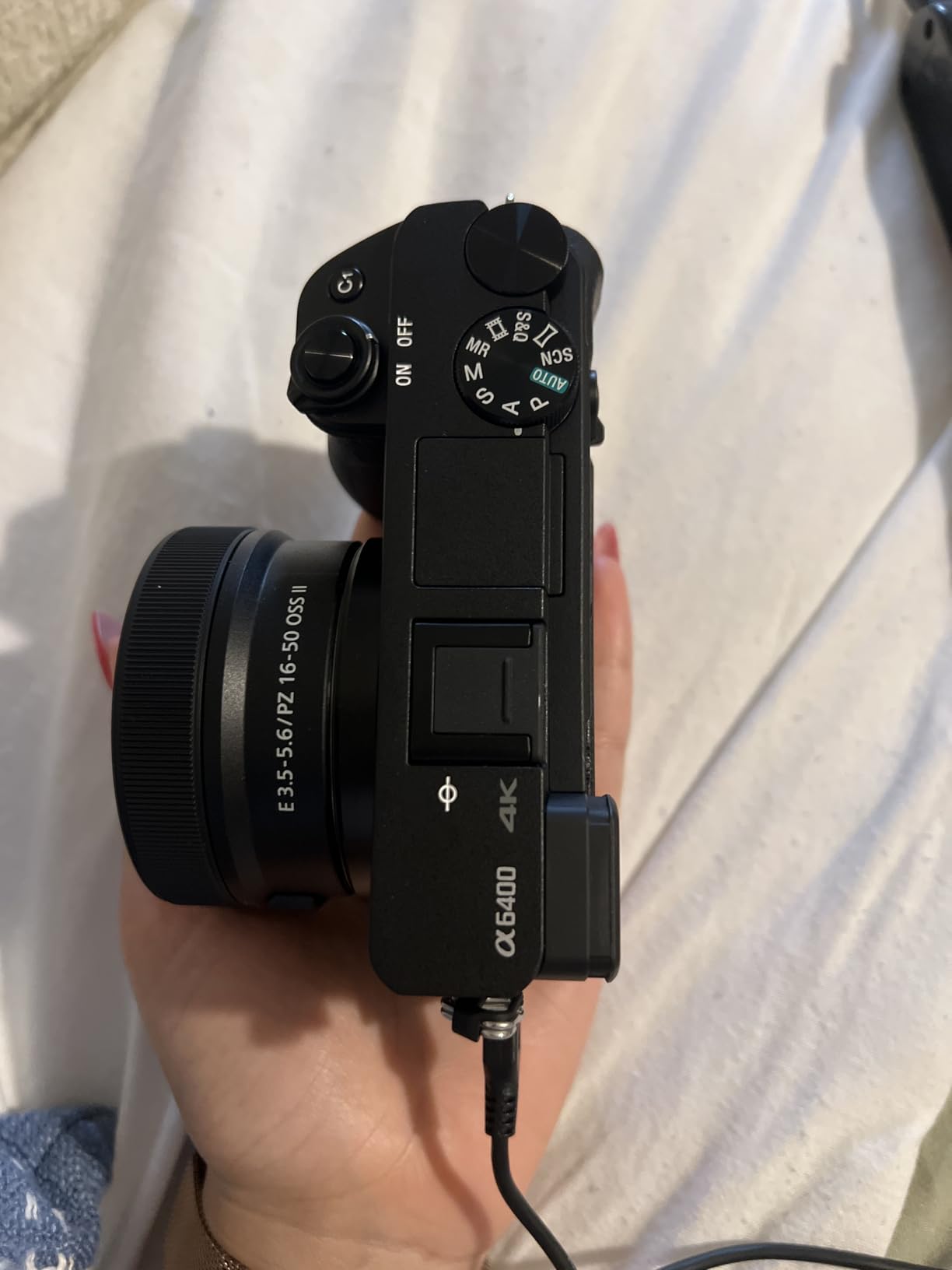
The Sony a6400 has been my go-to recommendation for value-conscious photographers since its release. Despite being a few years old, the autofocus system remains competitive with cameras costing significantly more. The real-time Eye AF tracks eyes with remarkable consistency, whether you’re shooting portraits, street photography, or candid moments at family gatherings.
I’ve taken this camera on multiple hiking trips, and the weather sealing has held up through light rain and dusty conditions. The 24.2MP APS-C sensor delivers excellent image quality with good high-ISO performance up to around ISO 3200. Beyond that, noise becomes more visible, but it remains usable through ISO 6400 for situations where getting the shot matters more than technical perfection.
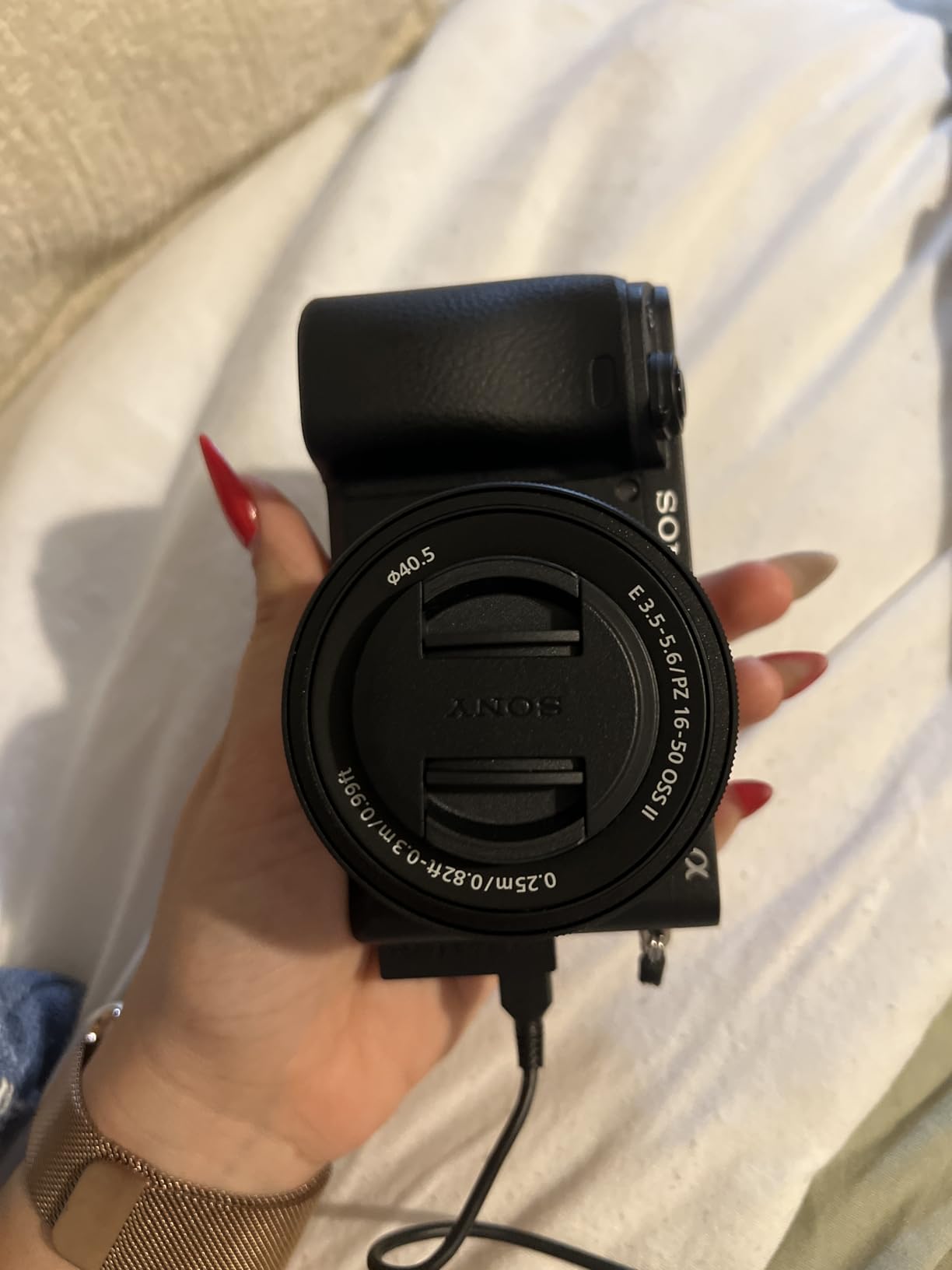
The flip-up screen works well for selfies and vlogging, though the design blocks the hot shoe when flipped forward. This is annoying if you want to use an external microphone while vlogging. Sony’s menu system takes time to learn, but once you understand the logic, the custom function buttons let you access frequently used settings quickly.
Where the a6400 really shines is the lens ecosystem. Sony’s E-mount has more third-party lens options than any other mirrorless system. You can find affordable primes from Sigma, Tamron, and others that deliver professional-quality results without breaking your budget.
For Whom It’s Good
This camera suits photographers who want maximum value, enthusiasts planning to build a lens collection over time, travelers needing a weather-sealed body, and portrait photographers who rely on accurate eye-tracking autofocus. The extensive lens ecosystem makes it particularly attractive for long-term investment.
For Whom It’s Bad
Video creators who need in-body image stabilization should look elsewhere or budget for stabilized lenses. The battery life requires carrying spares for full-day shoots. The flip-up screen design interferes with hot shoe accessories, making it less ideal for serious vloggers who need external microphones mounted while filming themselves.
3. Canon EOS R100 – Most Affordable Entry Point
Pros
- Most affordable 4K mirrorless option
- Very compact and lightweight
- Beginner-friendly interface
- Good image quality for price
- Face and eye detection AF
Cons
- No external battery charger
- 4K limited to 24fps
- Small body may feel cramped
At around $549, the Canon EOS R100 represents the lowest barrier to entry for mirrorless photography with 4K video capability. I was skeptical about what corners Canon cut to reach this price point, but after testing it, the camera delivers more capability than its budget price suggests.
The 24.1MP APS-C sensor produces images that genuinely surprised me with their quality. Colors are pleasing, dynamic range is adequate for most situations, and the resolution gives you room to crop. The Dual Pixel CMOS autofocus with 143 zones may not match the R50’s 651 points, but it still tracks faces and eyes reliably for portraits and casual shooting.

The body is genuinely tiny, which makes it perfect for travel and everyday carry. I easily slipped it into a jacket pocket with the kit lens attached. The beginner-friendly interface includes explanations for different shooting modes directly on screen, helping new photographers understand what each setting does without consulting the manual constantly.
The main compromise is 4K video limited to 24fps rather than 30fps, which is fine for cinematic content but less ideal for vlogging where 30fps is standard. The camera also charges in-body only, with no external charger included, which means you can’t charge a spare battery while shooting.

For Whom It’s Good
The R100 is perfect for absolute beginners who want to try mirrorless photography without a major investment, travelers prioritizing size and weight, students learning photography basics, and casual photographers documenting family life. It’s also an excellent backup body for Canon shooters who want something lightweight.
For Whom It’s Bad
Anyone planning serious video work should consider the R50 instead for 4K at 30fps and better overall video features. Photographers with larger hands may find the tiny body uncomfortable for extended shooting. The in-camera charging limitation is frustrating if you want to keep shooting while charging a spare battery.
4. Nikon Z 5 – Only Full-Frame Under $1000
Nikon Z 5 | Our most compact full-frame mirrorless stills/video camera | Nikon USA Model
Pros
- Full-frame sensor image quality
- 5-axis in-body image stabilization
- Dual SD card slots
- Weather-sealed body
- Excellent low-light performance
Cons
- Slow 4.5fps burst shooting
- 4K video has crop
- Screen tilts not articulates
The Nikon Z 5 holds a unique position as the only full-frame mirrorless camera available new under $1000. Full-frame sensors deliver better image quality, improved low-light performance, and shallower depth of field compared to APS-C alternatives. After shooting with the Z 5 extensively, I can confirm the image quality difference is noticeable.
The 24.3MP full-frame sensor produces images with beautiful tonal gradation and dynamic range. Low-light performance is genuinely impressive, with clean results at ISO 6400 and usable images even at ISO 12800. The 5-axis in-body image stabilization compensates for camera shake with any lens you attach, which matters enormously for handheld shooting in dim conditions.

Dual SD card slots provide backup security that working photographers appreciate. If one card fails during a shoot, you have an identical copy on the second card. The weather-sealed body handles rain and dust with confidence. Nikon’s ergonomics are excellent, with a comfortable grip and well-placed controls that feel natural after a short adjustment period.
The main limitations are burst shooting at 4.5fps, which rules out serious sports and wildlife work, and 4K video that comes with a significant crop factor. For still photographers focused on portraits, landscapes, and general photography, these video limitations rarely matter.

For Whom It’s Good
The Z 5 is ideal for photographers prioritizing image quality above all else, portrait and landscape shooters wanting full-frame look, low-light photographers who need clean high-ISO results, and working photographers who need dual card backup. The IBIS also makes it attractive for anyone wanting stabilization with legacy manual focus lenses.
For Whom It’s Bad
Sports and wildlife photographers need faster burst rates than 4.5fps provides. Video creators should consider the 4K crop and lack of headphone jack for audio monitoring. The slower burst and video crop make it less suitable as a hybrid camera for mixed photo and video work at a high level.
5. Sony ZV-E10 – Best for Vlogging and Content Creation
Pros
- Purpose-built for vlogging
- Side articulating flip screen
- Product Showcase focus mode
- Background Defocus button
- 4K oversampled from 6K
Cons
- No electronic viewfinder
- No in-body stabilization
- Battery life limited in 4K
Sony designed the ZV-E10 specifically for content creators, and that focus shows in every aspect of the camera. The side-articulating screen flips out to the side and faces forward, making it easy to frame yourself while recording. This design choice alone makes it significantly more practical for vlogging than cameras with flip-up screens that block the hot shoe.
The Product Showcase Setting is genuinely useful for anyone who films product reviews or demonstrations. When you hold an object in front of the camera, it instantly shifts focus to the product, then returns to your face when you lower it. This eliminates the awkward focus hunting that plagues other cameras in similar situations.

Video quality from the 24MP APS-C sensor is excellent. 4K footage oversampled from 6K delivers sharp, detailed video with good color reproduction. The Background Defocus button provides quick access to aperture settings for achieving shallow depth of field or keeping everything sharp. S-Log and HLG picture profiles give color grading flexibility for more advanced video workflows.
The absence of an electronic viewfinder is the biggest compromise. For pure video work, you won’t miss it, but photographers who prefer shooting through a viewfinder will feel the lack. The camera also lacks in-body stabilization, so stabilized lenses or a gimbal become necessary for smooth handheld video.

For Whom It’s Good
The ZV-E10 is perfect for YouTube creators, vloggers, product reviewers, streamers wanting better than webcam quality, and social media content producers. The purpose-built features save time in production and make solo content creation significantly easier.
For Whom It’s Bad
Traditional photographers who prefer viewfinder shooting should look at the a6400 or a6100 instead. Video creators needing in-body stabilization for handheld work will need to budget for a gimbal or stabilized lenses. The limited battery life in 4K recording requires multiple batteries for longer shoots.
6. Sony Alpha A6100 – Fastest Autofocus for the Price
Pros
- World's fastest AF at 0.02 sec
- Real-time Eye AF for humans and animals
- 425 phase and contrast AF points
- Compact and lightweight
- 11fps continuous shooting
Cons
- Lower quality electronic viewfinder
- No in-body image stabilization
- Menu system convoluted
The Sony A6100 shares the same autofocus system as the more expensive a6400 and a6600 models, which means you get Sony’s excellent real-time Eye AF and subject tracking at a lower price point. Sony claims the world’s fastest autofocus acquisition at 0.02 seconds, and in practice, the focus snaps onto subjects with impressive speed and accuracy.
Real-time Eye AF works for both humans and animals, making it genuinely useful for pet photography. I tested it with my dog running around the park, and the camera maintained focus on her eye through most of the sequence. This level of autofocus performance at this price point was unthinkable just a few years ago.

The 24.2MP APS-C Exmor sensor delivers the image quality you’d expect from Sony’s APS-C lineup. Good dynamic range, clean high-ISO results through ISO 3200, and the flexibility to crop thanks to the resolution. The 180-degree tilting touchscreen works for selfies, though it tilts up rather than articulating to the side.
The main compromise is the electronic viewfinder, which has noticeably lower resolution than the a6400’s. For photographers who shoot primarily through the EVF, this difference is apparent. The menu system also takes time to learn, with options spread across many pages in ways that aren’t always intuitive.

For Whom It’s Good
The A6100 suits photographers prioritizing autofocus performance, pet and wildlife photographers needing reliable subject tracking, travel photographers wanting compact size, and anyone wanting Sony’s AF technology without paying for features they don’t need. The extensive E-mount lens ecosystem adds long-term value.
For Whom It’s Bad
Photographers who rely heavily on the electronic viewfinder should consider the a6400 for its better EVF. Anyone needing weather sealing should also step up to the a6400. The lack of in-body stabilization means budgeting for stabilized lenses or accepting that limitation.
7. Nikon Z 30 – Compact Camera for Creators
Nikon Z 30 | Our most compact, lightweight mirrorless stills/video camera | Nikon USA Model
Pros
- 4K video without crop
- Flip-out selfie screen
- Nikon color science
- USB webcam plug-and-play
- Compact and lightweight
Cons
- No electronic viewfinder
- No in-body image stabilization
- No headphone jack
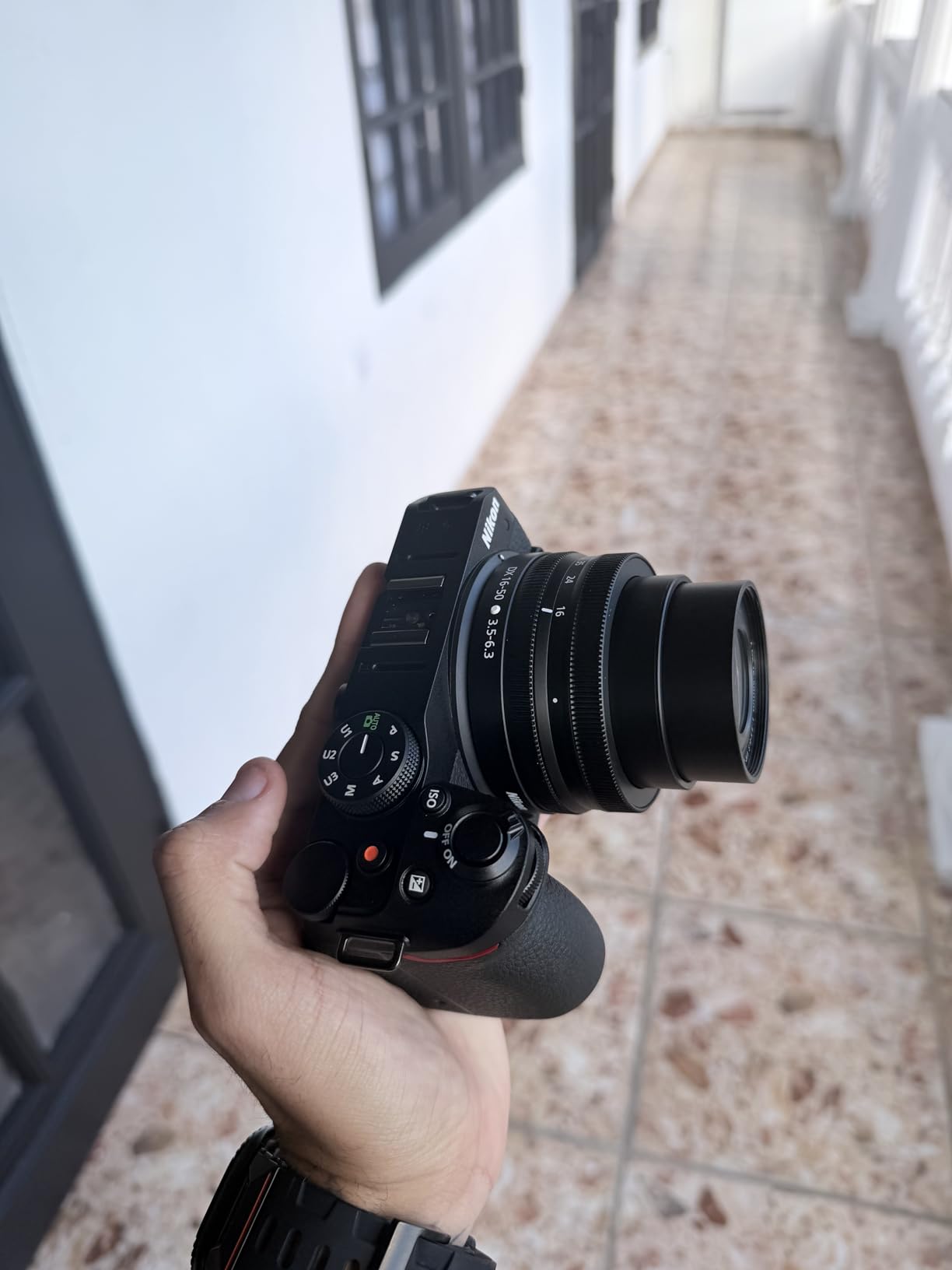
Nikon designed the Z 30 specifically for content creators, vloggers, and streamers, and that focus is evident throughout the camera. The flip-out screen faces forward for self-recording, 4K video records without the crop factor that affects some competitors, and the built-in stereo microphone produces surprisingly good audio for a camera microphone.
The 20.9MP APS-C sensor delivers Nikon’s characteristic color science, which many photographers prefer for its natural skin tone rendering. Images look pleasing straight out of camera with minimal editing required. The 209-point hybrid autofocus system tracks eyes reliably for both people and pets.
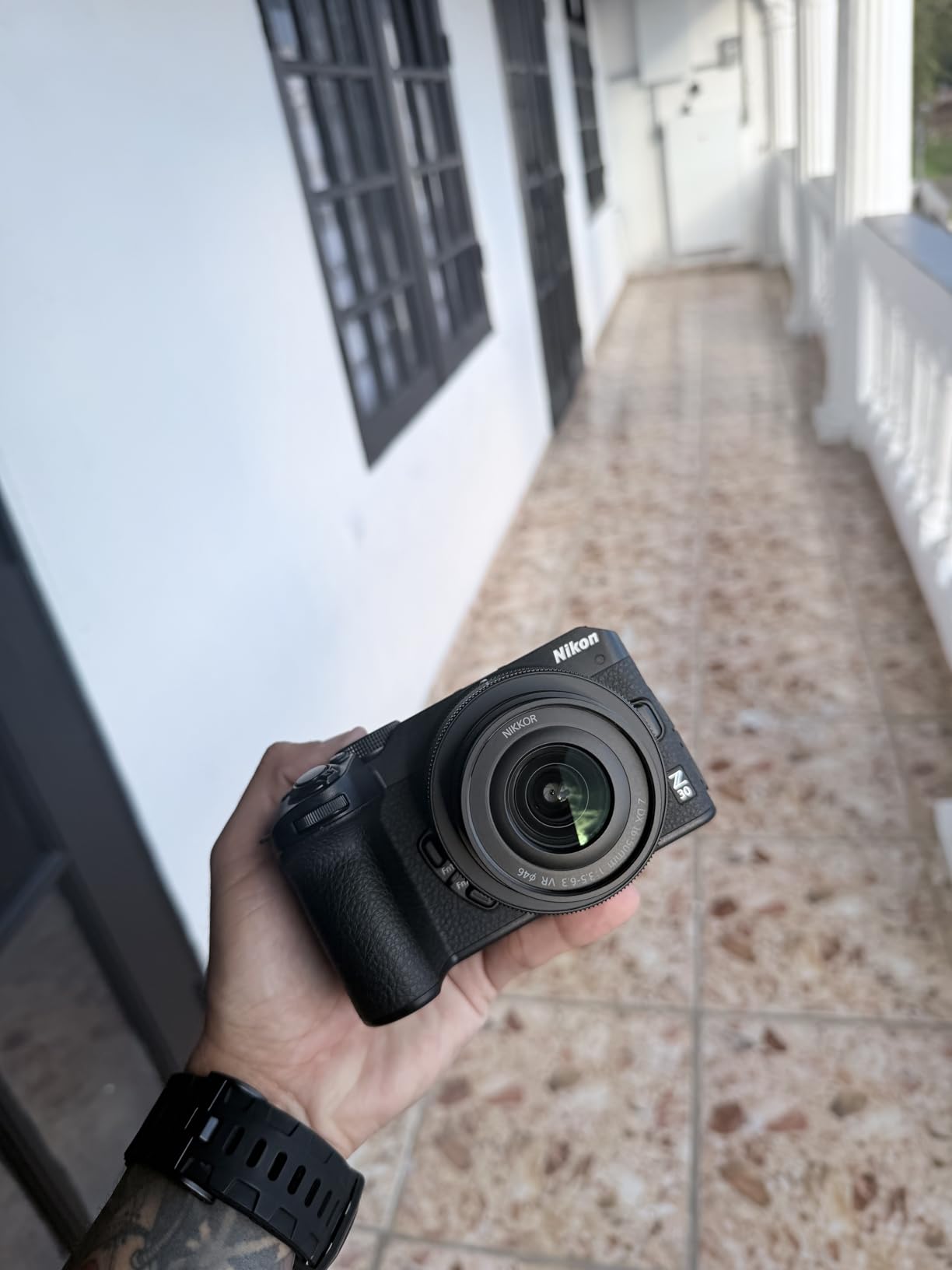
USB webcam functionality works plug-and-play with computers, making the Z 30 useful for streaming and video calls in addition to content creation. The red recording indicator light on the front helps you confirm when recording is active, a small but thoughtful detail for solo creators.
The absence of a viewfinder and in-body image stabilization are the main compromises. Nikon assumed creators would compose primarily on the screen, which makes sense for the target audience. The lack of IBIS means stabilized lenses or a gimbal become necessary for smooth handheld video.
For Whom It’s Good
The Z 30 is ideal for vloggers, streamers, content creators prioritizing video, and photographers who already own Nikon Z mount lenses. The uncropped 4K video and flip-out screen make it particularly well-suited for YouTube and social media content production.
For Whom It’s Bad
Traditional photographers who prefer viewfinder shooting should consider other options. Video creators needing audio monitoring through headphones will miss the headphone jack. The APS-C sensor also means a crop factor when using full-frame Z mount lenses, reducing their effective focal length.
8. Panasonic LUMIX G85 – Best Image Stabilization
Pros
- Excellent dual image stabilization
- Weather-sealed body and lens
- No low-pass filter for sharpness
- Great 4K photo features
- Comfortable ergonomics
Cons
- Smaller Micro Four Thirds sensor
- Slower low-light AF
- Only 16MP resolution
The Panasonic G85 remains one of my favorite cameras for video work because of its outstanding image stabilization. The 5-axis Dual I.S. combines in-body stabilization with lens stabilization for remarkably steady handheld footage. I’ve walked and filmed with this camera, producing usable video that would require a gimbal with most other bodies.
The 16MP Micro Four Thirds sensor may be smaller than APS-C, but the lack of a low-pass filter means images are sharper than the resolution suggests. For most purposes, 16MP is plenty, and the smaller sensor actually provides advantages for video where the 2x crop factor gives you more reach from telephoto lenses.

Panasonic’s 4K Photo mode lets you extract 8MP still images from 4K video at 30fps, which is incredibly useful for capturing the exact moment of fast action. 4K Post Focus lets you select your focus point after taking the shot, giving you flexibility when precise focus is critical.
The weather-sealed body and kit lens handle outdoor shooting confidently. Ergonomics are excellent, with a deep grip and physical controls that feel substantial. The menu system is logical and well-organized, easier to navigate than Sony’s complex menu structures.

For Whom It’s Good
The G85 suits video creators needing stabilization without a gimbal, travel photographers wanting weather sealing, Micro Four Thirds lens system users, and anyone prioritizing handling and ergonomics. The extensive Micro Four Thirds lens ecosystem offers many compact, affordable options.
For Whom It’s Bad
Photographers wanting maximum resolution for large prints should look at 20MP+ options. Low-light autofocus can struggle compared to phase-detection systems. The older USB 2.0 connectivity is slower for file transfers than modern USB-C alternatives.
9. Olympus E-M10 Mark IV – Compact Travel Camera
Pros
- Compact and lightweight design
- 5-axis in-body image stabilization
- 16 creative Art Filters
- Flip-down selfie screen
- Excellent for travel
Cons
- No microphone jack
- Slower autofocus system
- Smaller sensor than APS-C
The Olympus E-M10 Mark IV embodies the travel camera ideal: small, capable, and fun to use. The retro-styled body looks and feels more premium than its price suggests, with physical dials that make adjusting settings satisfying. At just over a pound with the kit lens, it barely registers in a camera bag.
The 20MP Live MOS sensor delivers good image quality, and the 5-axis in-body image stabilization compensates for camera shake with any lens attached. Olympus’s IBIS is among the best in the industry, allowing handheld shots at surprisingly slow shutter speeds. The flip-down screen with dedicated selfie mode works well for self-portraits and vlogging.

Where Olympus cameras shine is the creative Art Filters. The 16 built-in filters include the new Instant Film effect that mimics vintage Polaroid photos. These filters encourage experimentation and make photography feel playful rather than technical. For casual photographers, having these creative options in-camera saves post-processing time.
The Micro Four Thirds system offers an extensive selection of compact, sharp lenses. Olympus primes are particularly well-regarded for their optical quality and small size. The main limitation is the contrast-detection autofocus, which is slower than the phase-detection systems in Sony and Canon bodies.

For Whom It’s Good
The E-M10 Mark IV is ideal for travel photographers wanting maximum portability, beginners who appreciate creative filters, street photographers preferring discreet equipment, and anyone wanting IBIS in a compact body. The extensive Micro Four Thirds lens selection adds long-term value.
For Whom It’s Bad
Video creators needing external microphone input should look elsewhere. Photographers requiring fast autofocus for action or sports will find the contrast-detection system limiting. The smaller sensor also means less low-light capability and shallower depth of field compared to APS-C alternatives.
10. Sony Alpha a6000 – Classic Budget Option
Pros
- Excellent value for money
- Lightweight and compact
- 11fps continuous shooting
- Good image quality
- Hybrid autofocus system
Cons
- No 4K video
- Older model design
- Battery drains when off
The Sony a6000 launched in 2014, yet it remains in production and continues selling well. That longevity speaks to how well Sony designed this camera. While it lacks modern features like 4K video, the fundamentals remain solid: fast autofocus, good image quality, and compact size at an attractive price point, which is why many photographers still consider it among the best mirrorless camera under $1000 options for beginners and budget-conscious shooters.
The 24.3MP APS-C sensor produces images that still look competitive today. The hybrid autofocus with 179 phase-detection points locks onto subjects quickly, though it lacks the sophisticated Eye AF tracking of newer Sony models. At 11fps continuous shooting, it handles action better than many newer budget cameras.
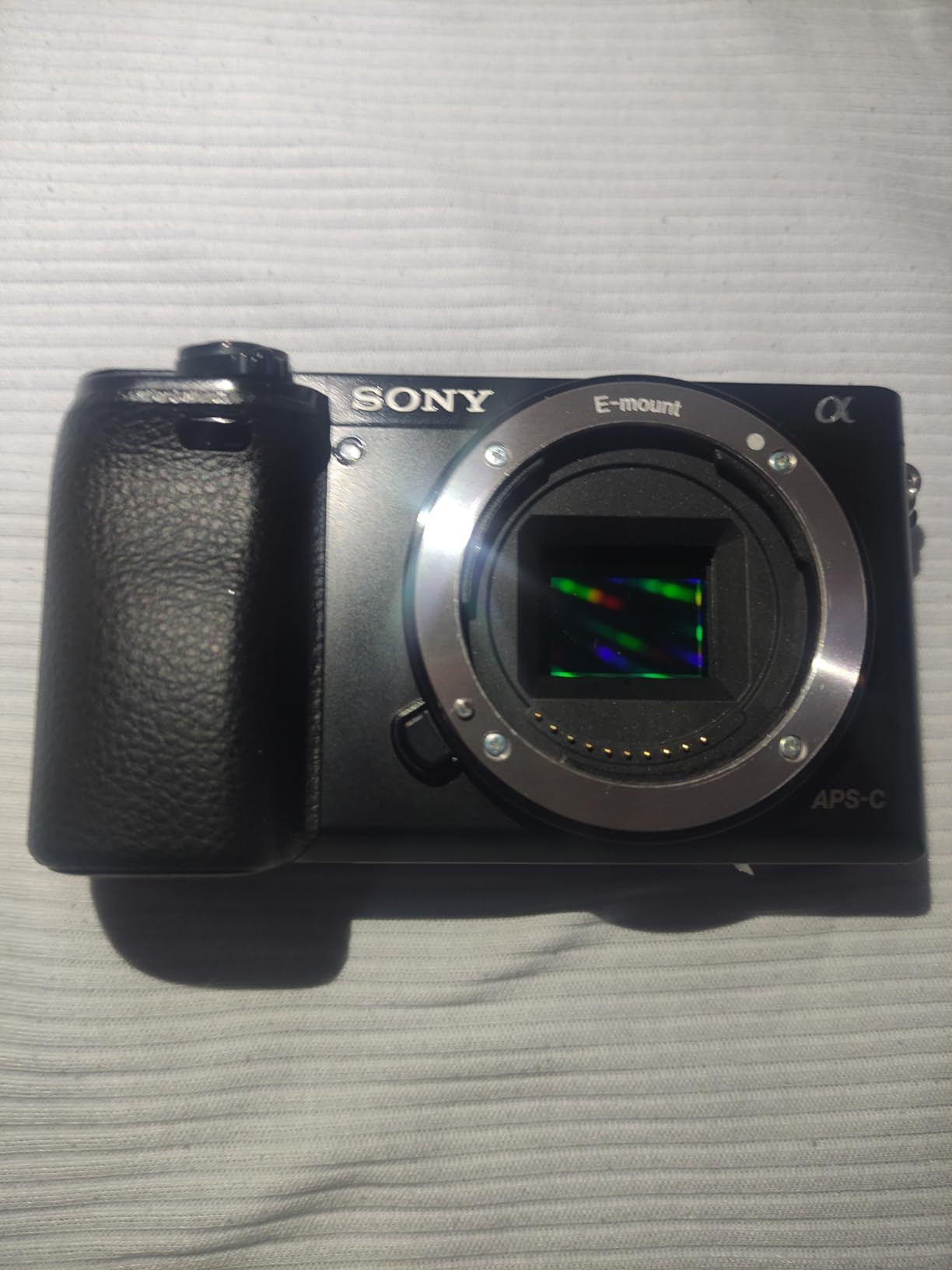
The electronic viewfinder, while lower resolution than current models, still provides a usable way to compose in bright light. The tilting LCD screen adjusts for waist-level shooting but doesn’t flip forward for selfies. Build quality feels solid despite the lightweight plastic construction.
The main drawback is the age of the platform. No 4K video is the most significant missing feature compared to modern alternatives. The battery has a quirk where it drains slowly even when the camera is off, requiring you to charge before each use. Menu navigation also feels dated compared to newer interfaces.
For Whom It’s Good
The a6000 suits budget-conscious photographers who don’t need 4K video, beginners wanting to try the Sony E-mount system, and anyone wanting maximum still photography value. The extensive lens ecosystem makes it a good starting point for building a kit over time.
For Whom It’s Bad
Anyone needing 4K video should choose the a6100 or newer models. Photographers wanting modern features like Eye AF tracking should step up to current generation cameras. The battery quirk and older interface make it feel dated compared to recent releases.
Buying Guide: What to Consider When Choosing a Mirrorless Camera Under $1000?
Choosing the right mirrorless camera involves balancing sensor size, features, and lens ecosystem against your budget and intended use. Here’s what matters most when shopping in the sub-$1000 category.
Sensor Size: APS-C vs Full Frame vs Micro Four Thirds
Sensor size significantly impacts image quality, low-light performance, and depth of field control. Most cameras under $1000 use APS-C sensors, which offer a good balance of image quality and compact lens design. The Nikon Z 5 is unique in offering a full-frame sensor at this price point, delivering better low-light performance and shallower depth of field at the cost of larger, more expensive lenses.
Micro Four Thirds sensors, used by Panasonic and Olympus, are smaller than APS-C but enable genuinely compact camera and lens combinations. The 2x crop factor means a 25mm lens behaves like a 50mm on full frame, giving you more reach from telephoto lenses. For travel and everyday photography, the size advantage often outweighs the sensor size difference.
Autofocus Performance
Modern autofocus systems have become remarkably sophisticated. Sony’s real-time Eye AF tracks eyes continuously, even when subjects turn their heads or move behind obstacles. Canon’s Dual Pixel CMOS AF II with subject detection identifies people, animals, and vehicles automatically. These systems make achieving sharp focus almost effortless, which matters enormously for beginners and anyone photographing moving subjects.
Contrast-detection autofocus, used by Micro Four Thirds cameras, can be slower in low light and less effective for tracking fast motion. Phase-detection or hybrid systems generally perform better for action photography.
Video Capabilities
4K video has become standard even at entry-level prices, but implementation varies significantly. Some cameras crop the sensor in 4K mode, reducing the effective field of view. Others oversample from higher resolutions, delivering sharper, more detailed video. Frame rates matter too, with 24fps preferred for cinematic looks and 30fps standard for vlogging.
For serious video work, consider whether the camera offers microphone and headphone jacks, log profiles for color grading, and stabilization options. In-body image stabilization dramatically improves handheld video quality.
Lens Ecosystem
The camera body is just the beginning. Lenses determine your creative options and represent the larger long-term investment. Sony’s E-mount offers the most third-party lens options, with affordable primes and zooms from Sigma, Tamron, and others. Canon’s RF mount is newer, with fewer budget-friendly options, though it’s growing. Nikon’s Z mount and Micro Four Thirds have solid selections from multiple manufacturers.
Consider whether you want to build a lens collection over time. If so, choosing a system with extensive lens options often matters more than minor differences between camera bodies.
Used vs New Cameras
The used market offers exceptional value for budget-conscious buyers. A used Sony a7II or Nikon Z6 can deliver full-frame performance under $1000, though with older technology and potential wear concerns. Reputable used camera dealers like MPB and KEH inspect and rate equipment, providing some buyer protection.
For beginners, buying new provides peace of mind with warranty coverage and the latest features. Experienced photographers comfortable evaluating used equipment can stretch their budget significantly by shopping pre-owned.
Frequently Asked Questions
What is the best under $1000 mirrorless camera?
The Canon EOS R50 is our top pick for the best mirrorless camera under $1000. It offers 24.2MP APS-C sensor, 4K video oversampled from 6K, 651 autofocus points with subject detection, and beginner-friendly features all in a compact, lightweight body.
What is the budget best mirrorless camera?
The Canon EOS R100 at around $549 is the most budget-friendly option with 4K video capability. For the best value considering features, the Sony a6400 offers weather sealing, excellent autofocus, and 4K video at a competitive price point.
What is the most reliable mirrorless camera?
The Nikon Z 5 offers the most robust build quality under $1000 with weather sealing, dual SD card slots, and 5-axis in-body image stabilization. Its full-frame sensor also delivers excellent image quality and low-light performance.
Is it better to buy used or new mirrorless cameras?
Buying used can get you more camera for your money – a used Sony a7III or Nikon Z6 can often be found under $1000. However, new cameras come with warranties and the latest features. For beginners, we recommend buying new for peace of mind, while experienced photographers may benefit from the used market.
Conclusion
The mirrorless camera market under $1000 offers genuinely excellent options in 2026. The Canon EOS R50 stands out as our Editor’s Choice for its balanced combination of advanced autofocus, 4K video quality, beginner-friendly features, and compact design. It’s the camera I’d recommend to most people starting their mirrorless photography journey.
For value-conscious buyers, the Sony a6400 delivers professional-level autofocus performance and weather sealing at a competitive price, backed by the extensive E-mount lens ecosystem. Budget-conscious beginners should consider the Canon EOS R100, which offers 4K capability at the lowest entry point in this category.
Photographers prioritizing image quality above all else should look at the Nikon Z 5, the only full-frame option under $1000. Content creators and vloggers will find the Sony ZV-E10’s purpose-built features worth the compromises in still photography capability.
Whatever your choice, investing in a best mirrorless camera under $1000 in 2026 means getting capabilities that would have cost significantly more just a few years ago. Focus on the features that matter most for your intended use, consider the lens ecosystem for long-term growth, and remember that the best camera is the one you actually use regularly.