
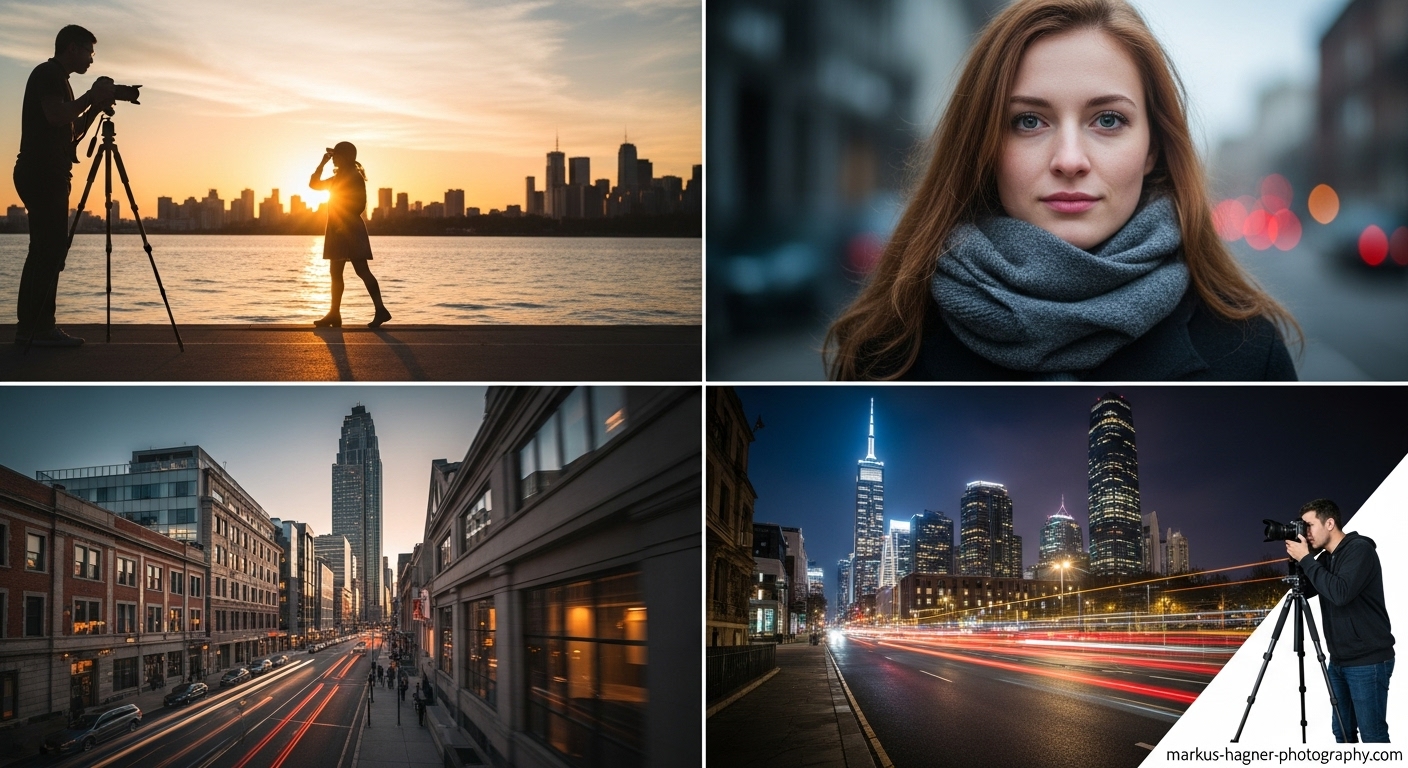
Have you ever returned from an amazing trip, scrolled through hundreds of photos, and felt disappointed that none of them truly captured the magic you experienced? I’ve been there too. When I first started traveling with my camera, I was frustrated by images that looked like everyone else’s vacation snapshots—technically okay but lacking that special something that makes travel photography truly compelling.
After years of shooting in over 40 countries and making every mistake in the book, I’ve discovered that the difference between beginner and intermediate travel photography isn’t just about better gear or technical skills—it’s about seeing the world through a photographer’s eyes and knowing how to translate that vision into stunning images.
These 15 intermediate tips will take your travel photography beyond the basics and help you create images that tell stories, evoke emotions, and stand out in a sea of ordinary travel photos. Whether you’re shooting landscapes, portraits, or street scenes, these techniques will elevate your work from good to unforgettable.
What Makes Travel Photography “Intermediate”?
Before we dive into the tips, let me clarify what I mean by “intermediate” travel photography. You’ve probably already mastered the basics—you understand exposure triangle, composition rules like the rule of thirds, and you’re comfortable shooting in manual or semi-automatic modes. But now you want to create images that have more impact, more personality, and more professional polish.
Intermediate travel photography is about:
- Intentional composition beyond basic rules
- Mastering light in challenging situations
- Telling stories through your images
- Developing a unique style that sets your work apart
- Technical mastery of advanced camera features
I discovered that making the leap from beginner to intermediate wasn’t about learning more techniques—it was about learning to see differently and make more deliberate creative choices. Let’s explore how you can do the same.
Tip #1: Master the Art of Layered Composition
When I first started shooting travel photos, I focused on getting one clear subject in my frame. But I discovered that the most compelling travel images often have multiple layers that create depth and tell a more complete story.
Layered composition means including foreground, middle ground, and background elements that work together to create a sense of depth and place. Here’s how I approach it:
Foreground elements: These can be anything from flowers and rocks to architectural details or people. I look for elements that add interest without distracting from the main subject.
Middle ground: This is usually your main subject—the reason you’re taking the photo in the first place.
Background: This provides context and atmosphere. I pay special attention to backgrounds that complement rather than compete with my subject.
I learned this technique while shooting in Venice. Instead of just photographing the beautiful canals, I started including gondolas in the foreground, colorful buildings in the middle ground, and the distant skyline as background. Suddenly, my photos went from simple postcard shots to rich, layered scenes that told the full story of Venice.
Pro tip: Use a wide-angle lens (16-35mm) to emphasize layers and create a sense of depth. Apertures around f/8-f/11 will keep everything sharp from front to back.
Tip #2: Harness the Power of Directional Light
Most beginners know to shoot during golden hour, but intermediate photographers understand how to use directional light to create mood and dimension in their images. I discovered this game-changer while shooting in Morocco, where the harsh midday sun could either ruin my photos or create incredible drama depending on how I used it.
Backlighting: Position your subject between you and the sun. This creates beautiful rim lighting and silhouettes. I love using this technique for portraits and architectural details.
Side lighting: This creates shadows that reveal texture and form. It’s perfect for landscapes, portraits, and street photography. I found that side lighting during golden hour can make even ordinary scenes look extraordinary.
Front lighting: While often considered flat, front lighting can be beautiful for vibrant colors and minimizing shadows. I use it when I want bright, cheerful images of markets or festivals.
Advanced technique: Look for “light tunnels” where light streams through narrow openings like alleyways or between buildings. These create dramatic spotlights on your subjects and add instant atmosphere to your images.
Tip #3: Master Advanced Focusing Techniques
Beyond basic autofocus, intermediate travel photographers need to master advanced focusing techniques to handle challenging situations. I learned these the hard way after missing countless shots in tricky lighting or with moving subjects.
Back-button focus: This separates focusing from shutter release, giving you more control. I set this up on all my cameras and found it revolutionized my action and portrait photography.
Focus stacking: For landscapes where you want everything sharp, take multiple photos at different focus points and combine them in post-processing. This technique saved my shots in the Swiss Alps when I couldn’t get everything in focus with one shot.
Manual focus for creativity: Sometimes autofocus gets in the way of creative vision. I often switch to manual focus for intentional blur effects or when shooting through elements like fences or windows.
Zone focusing: For street photography, pre-set your focus distance and aperture to capture sharp images without focusing each time. This technique made my street photography in Paris much more natural and spontaneous.
Tip #4: Create Dynamic Images with Motion
Intermediate travel photography isn’t just about freezing motion—it’s about using motion creatively to add energy and interest to your images. I discovered this while shooting festivals in India, where static photos couldn’t capture the incredible energy of the celebrations.
Panning: Follow a moving subject with your camera to create a sharp subject against a blurred background. I practiced this for weeks before getting consistent results, but now it’s one of my favorite techniques for markets and street scenes.
Long exposure: Use slow shutter speeds (1/15s or slower) to create motion blur in water, clouds, or crowds. A tripod is essential, but the results can be magical. I created some of my favorite waterfall and coastal shots using this technique.
Zoom blur: During exposure, zoom your lens to create a burst effect. This works great for cityscapes and abstract images. I experimented with this in Tokyo and created some unique shots of neon-lit streets.
Intentional camera movement: Move your camera during exposure for artistic blur effects. This takes practice but can create beautiful impressionistic images of landscapes and city scenes.
Tip #5: Master Color Theory for Mood
Beyond basic composition, understanding color theory can transform your travel photography from good to gallery-worthy. I spent months studying color theory and practicing how to apply it in the field, and it completely changed how I see and capture scenes.
Complementary colors: Colors opposite on the color wheel (like blue and orange) create vibrant, eye-catching images. I look for these combinations constantly, especially during golden hour when warm light contrasts with cool shadows.
Analogous colors: Colors next to each other on the color wheel create harmonious, peaceful images. I use this for landscapes and serene scenes where I want a calming effect.
Color psychology: Different colors evoke different emotions. I use warm colors (reds, oranges) for energy and passion, cool colors (blues, greens) for calm and tranquility.
Advanced technique: Look for color blocking in scenes—areas of solid, contrasting colors that create graphic compositions. I found this particularly effective in urban environments and modern architecture.
Tip #6: Develop Your Unique Visual Style
One thing that separates intermediate photographers from beginners is having a recognizable style. I spent years shooting before realizing I was just copying what I saw online. Developing my own style was the breakthrough that made my work stand out.
Consistent editing: Develop a preset or editing style that’s uniquely yours. I spent months perfecting my Lightroom presets until my images had a consistent look whether I was shooting in Patagonia or Prague.
Subject preferences: Focus on subjects that genuinely interest you. I discovered I’m drawn to cultural traditions and local life, which became the foundation of my travel photography style.
Signature techniques: Develop go-to techniques that become part of your style. For me, it’s shooting through elements (doorways, windows) to frame subjects and add depth.
Study masters but don’t copy: Analyze work by photographers you admire, but use it as inspiration rather than imitation. I learned this lesson after realizing my early work looked too much to other photographers’ styles.
Tip #7: Master Environmental Portraiture
Travel photography isn’t just about landscapes and architecture—it’s about people. Intermediate photographers know how to capture compelling environmental portraits that tell stories about people and their lives.
Context is key: Include elements of the subject’s environment to tell their story. I learned this while photographing artisans in Morocco—showing their tools and workspace made the portraits much more powerful.
Natural light mastery: Use available light creatively for portraits. I discovered that window light, open shade, and even harsh midday sun can create beautiful portrait lighting when used intentionally.
Cultural sensitivity: Always ask permission and be respectful of local customs. I’ve found that learning a few phrases in the local language and showing genuine interest in people makes portrait photography much more rewarding.
Advanced technique: Use a shallow depth of field (f/1.4-f/2.8) to separate your subject from their environment while still including enough context to tell the story. This technique helped me create some of my favorite portraits from my travels in Southeast Asia.
Tip #8: Optimize Your Gear for Travel
Intermediate photographers understand that gear optimization is more important than having the latest equipment. I’ve traveled with everything from heavy pro kits to minimal mirrorless setups, and I’ve learned how to optimize whatever gear I have.
Lens selection strategy: Choose lenses that cover your needs without redundancy. For most travel, I bring a wide-angle zoom (16-35mm), a standard zoom (24-70mm), and a telephoto (70-200mm). This covers 95% of situations without excessive weight.
Backup systems: Never travel without backing up your photos. I use a combination of external hard drives and cloud storage to ensure I never lose images. I learned this the hard way after losing a day’s worth of shots in Patagonia.
Minimalist accessories: Bring only accessories that serve multiple purposes. My travel kit includes a versatile tripod that doubles as a monopod, a multi-tool, and a reflector that can also serve as a diffuser.
Advanced technique: Use prime lenses for creativity and low-light performance. While zooms are convenient, primes often have better image quality and wider apertures. I discovered that shooting with primes forced me to be more intentional about my compositions.
Tip #9: Master Advanced Composition Rules
Beyond the rule of thirds, intermediate photographers use advanced composition techniques to create more sophisticated images. I spent months studying and practicing these techniques, and they transformed my photography.
Golden ratio and Fibonacci spiral: These more complex composition guides often create more natural, pleasing images than the rule of thirds. I use these particularly for landscapes and portraits.
Negative space: Use empty areas intentionally to create impact and draw attention to your subject. I discovered this technique while shooting in Iceland’s vast landscapes, where the emptiness became as important as the subjects.
Visual balance: Create balance through color, shape, and visual weight rather than just symmetrical placement. I learned to see scenes in terms of visual balance while shooting in Japanese gardens.
Advanced technique: Break the rules intentionally. Once you understand composition rules, knowing when to break them creates more interesting images. I started breaking rules deliberately after realizing my most creative shots often came from ignoring conventional wisdom.
Tip #10: Shoot for the Story
Intermediate travel photographers think in terms of stories rather than individual images. I discovered this approach while working on a long-term project about traditional crafts, and it completely changed how I approach travel photography.
Establishing shots: Start with wide shots that set the scene and provide context. I always begin a new location by capturing the big picture before moving to details.
Detail shots: Capture close-ups that reveal texture, color, and character. These images often have more emotional impact than wide shots. I learned to look for details while shooting in markets, where the small elements told the bigger story.
Sequencing: Think about how images will work together as a series. I plan sequences that take viewers on a journey through a place or experience.
Advanced technique: Create visual narratives that have a beginning, middle, and end. This approach helped me create more compelling photo essays from my travels, particularly when documenting festivals or cultural events.
Tip #11: Master Challenging Lighting Situations
Beginners avoid difficult lighting, but intermediate photographers embrace it as a creative opportunity. I’ve learned to love challenging lighting situations because they often produce the most unique and dramatic images.
High contrast scenes: Use exposure bracketing and HDR techniques to preserve details in both highlights and shadows. I discovered this while shooting in the American Southwest, where the contrast between bright skies and deep canyons was extreme.
Low light mastery: Learn to shoot effectively in dim conditions without flash. I practiced this extensively while photographing night markets and indoor ceremonies, developing techniques for steady handheld shots at slow shutter speeds.
Backlighting control: Use exposure compensation and fill flash to balance backlighting situations. I learned this while shooting portraits against bright backgrounds in Santorini, where I wanted to keep both the subject and background properly exposed.
Advanced technique: Use challenging light creatively. Harsh midday sun can create dramatic shadows and graphic compositions, while flat light can be perfect for vibrant colors and minimal distractions. I started seeing difficult light as an opportunity rather than an obstacle.
Tip #12: Develop Post-Processing Mastery
Intermediate photography doesn’t end when you press the shutter—it continues in post-processing. I spent years developing my editing skills, and they’re just as important as my field techniques.
Non-destructive workflow: Use adjustment layers and smart objects to preserve original image quality. I learned this after making irreversible edits to some of my favorite early travel photos.
Color grading: Develop a consistent approach to color that enhances your images without looking unnatural. I spent months perfecting my color grading techniques until my images had a cohesive look across different locations and lighting conditions.
Selective adjustments: Use masks and brushes to apply adjustments only to specific areas of your images. This technique helped me save countless shots where only parts of the image needed adjustment.
Advanced technique: Create complex composites when needed. While I believe in getting it right in camera, sometimes combining multiple exposures or elements creates the image I envisioned. I use this sparingly but effectively for challenging situations.
Also Read : Nikon Z6 II vs Sony A7 IV
Tip #13: Master Travel-Specific Challenges
Travel photography comes with unique challenges that go beyond general photography skills. Intermediate photographers learn to handle these challenges systematically.
Crowd management: Deal with tourist crowds through timing, perspective, and post-processing. I discovered that shooting early in the morning, using unique angles, and later removing people in post-processing could transform crowded locations into serene scenes.
Weather adaptation: Use weather conditions creatively rather than fighting them. I learned to love fog, rain, and storms after discovering how they could add atmosphere to my images.
Cultural navigation: Understand and respect local customs while getting the shots you want. I’ve found that learning basic phrases, showing respect, and building relationships often leads to more authentic and intimate photographs.
Advanced technique: Plan shoots around local events and conditions. Research festivals, markets, and seasonal events to capture unique cultural moments. This approach has led me to some of my most memorable travel images.
Tip #14: Create a Pre-Shot Checklist
Intermediate photographers are systematic and intentional. I developed a pre-shot checklist that ensures I don’t miss important elements in the excitement of the moment.
Technical check: Exposure settings, focus mode, white balance, and file format. I run through this quickly before every important shot to avoid technical mistakes.
Composition check: Framing, background, foreground elements, and distracting elements. I learned to scan the entire frame before pressing the shutter after countless shots with ruined by overlooked distractions.
Creative check: What story am I telling? What mood am I creating? How does this fit with my overall vision? These questions help me shoot more intentionally.
Advanced technique: Visualize the final image before shooting. I spend time imagining how I want the final image to look, including post-processing considerations, before I even raise the camera to my eye.
Tip #15: Build a Sustainable Travel Photography Practice
Intermediate photography is about long-term growth rather than short-term results. I’ve learned to build sustainable practices that keep me improving trip after trip.
Project-based approach: Work on specific projects rather than just shooting randomly. I’ve found that having a clear project focus leads to more cohesive and meaningful bodies of work.
Regular review and analysis: Critically review your work after each trip to identify strengths and weaknesses. I maintain a detailed journal of what worked and what didn’t, which has accelerated my improvement.
Continuous learning: Stay curious and keep learning new techniques. I dedicate time each month to learning new skills, whether through workshops, online courses, or experimenting with new approaches.
Advanced technique: Develop a personal photography philosophy. Understanding why you photograph and what you want to express through your images gives purpose and direction to your work. This clarity has been the most important factor in my development as a travel photographer.
Essential Gear for Intermediate Travel Photography
While gear isn’t everything, having the right equipment makes implementing these intermediate techniques much easier. Here’s what I recommend for photographers looking to elevate their travel photography:
Camera Body:
- Mirrorless or DSLR with full manual controls
- Good low-light performance (ISO 3200+ usable)
- Dual card slots for backup
- Weather sealing for challenging conditions
Lens Kit:
- Wide-angle zoom (16-35mm equivalent) for landscapes and architecture
- Standard zoom (24-70mm equivalent) for general purpose shooting
- Telephoto zoom (70-200mm equivalent) for portraits and distant subjects
- Fast prime (35mm or 50mm f/1.8 or faster) for low light and creative effects
Accessories:
- Travel tripod that’s sturdy but lightweight
- External flash for fill light and creative effects
- Polarizing filter for enhancing skies and reducing reflections
- Neutral density filters for long exposures in bright light
- Backup drives and/or cloud storage solution
Common Intermediate Travel Photography Mistakes to Avoid
Even as you advance, it’s easy to fall into certain traps. Here are mistakes I’ve made (and seen others make) and how to avoid them:
1. Over-reliance on Post-Processing
Don’t think you can “fix it later.” Get it right in camera whenever possible. Post-processing should enhance, not rescue, your images.
2. Shooting Too Fast
Slow down and be more deliberate. I’ve found that taking fewer, more thoughtful images often leads to better results than machine-gunning scenes.
3. Ignoring Local Context
Don’t just shoot what looks pretty—understand what you’re photographing. Research local culture, history, and customs to create more meaningful images.
4. Copying Others Too Much
It’s fine to be inspired, but develop your own vision. I spent too much early on trying to replicate shots I’d seen online instead of finding my own perspective.
5. Neglecting the Basics
As you learn advanced techniques, don’t forget fundamentals like exposure, focus, and composition. These are the foundation everything else builds on.
Also Read : Sigma 14-24mm F/2.8 vs Sony 12-24
Advanced Travel Photography Projects to Try
Ready to put these intermediate techniques into practice? Here are some project ideas that will challenge and develop your skills:
1. Cultural Documentation Project
Choose an aspect of local culture (crafts, food, traditions) and create a comprehensive photo essay. This will develop your storytelling and sequencing skills.
2. “A Day in the Life” Series
Document a full day in a location, from dawn to night. This challenges you to handle diverse lighting conditions and create a cohesive narrative.
3. Environmental Portrait Series
Focus on creating compelling portraits of local people in their environments. This develops your people skills and environmental storytelling.
4. Abstract Travel Photography
Look for patterns, textures, and abstract compositions in your travels. This project trains you to see differently and find unique perspectives.
5. Night and Low-Light Travel Photography
Challenge yourself to shoot effectively after dark. This will dramatically improve your technical skills and creative vision.
FAQ: Intermediate Travel Photography
What’s the difference between beginner and intermediate travel photography?
Beginner travel photography focuses on technical basics and simple composition. Intermediate photography emphasizes creative vision, advanced techniques, storytelling, and developing a unique style.
Do I need expensive gear for intermediate travel photography?
Not necessarily. While good gear helps, intermediate photography is more about skill and vision than equipment. Many professionals create stunning work with modest gear by mastering techniques and developing their eye.
How long does it take to reach an intermediate level in travel photography?
It varies, but most photographers reach an intermediate level after 1-2 years of consistent practice and study. The key is deliberate practice—focusing on specific skills rather than just taking lots of photos.
What’s the most important intermediate skill to learn?
I’d say it’s learning to see light creatively. Understanding how different types of light affect your subjects and scenes will transform your photography more than any other single skill.
How do I develop my own photography style?
Style develops naturally over time as you shoot what genuinely interests you and process images in a way that reflects your vision. Study other photographers but don’t copy them, and be patient—style can’t be rushed.
Conclusion
Intermediate travel photography is where the real magic happens. It’s the stage where technical skill meets creative vision, and your images begin to truly reflect your unique perspective on the world. The journey from beginner to intermediate isn’t always easy—I’ve faced plenty of frustration and self-doubt along the way—but it’s incredibly rewarding.
These 15 tips are the foundation of what I’ve learned through years of travel photography. They’re not quick fixes or secret techniques—they’re ways of thinking and seeing that will transform your approach to travel photography. Master them, and you’ll create images that not only document your travels but express your unique vision of the world.
Remember, photography is a lifelong journey of learning and growth. Even as I write this, I’m discovering new techniques and refining my approach. The most important thing is to stay curious, keep practicing, and never stop exploring—both the world and your own creative vision.
I’d love to hear about your intermediate travel photography journey! Share your experiences, challenges, and breakthroughs in the comments below. And don’t forget to bookmark this page for reference as you continue developing your skills. Happy travels and happy shooting!