
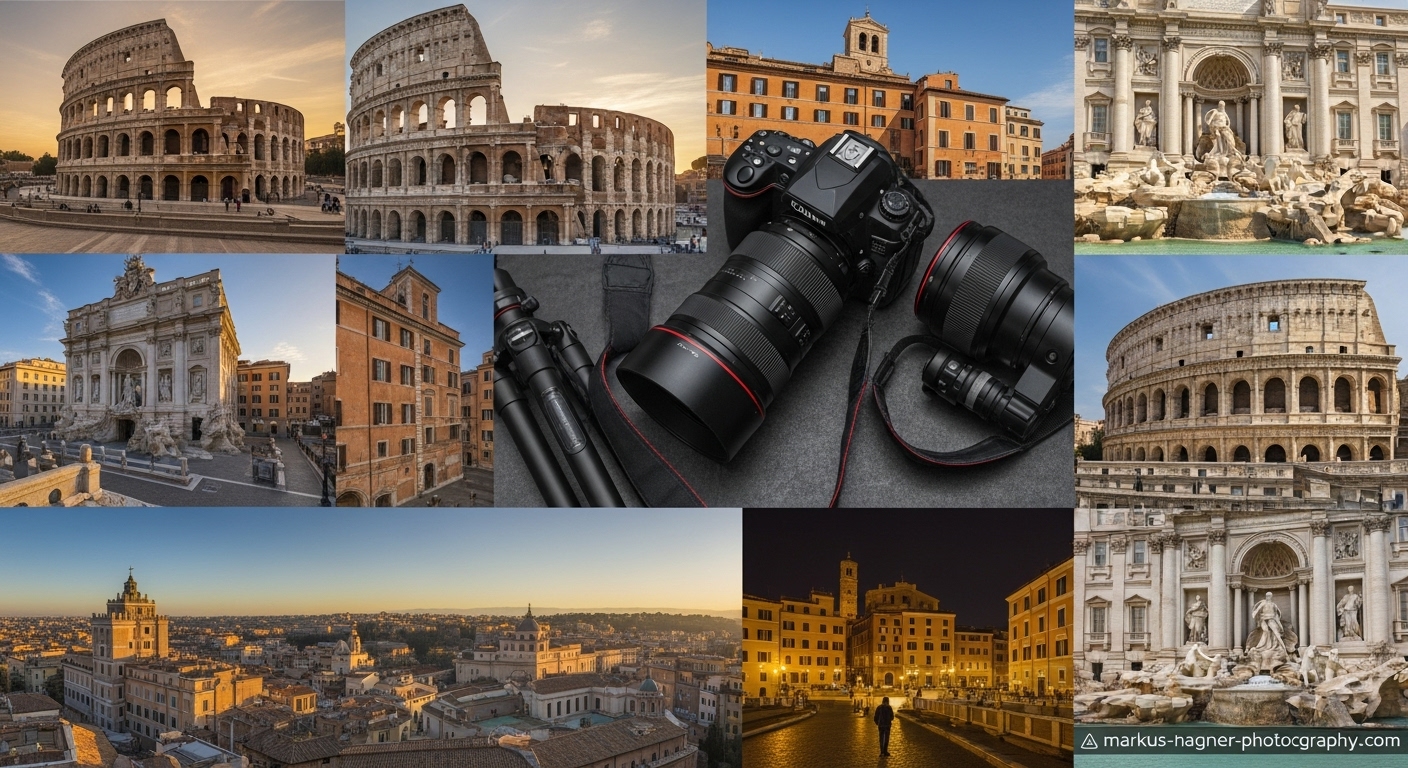
I’ve been lucky enough to explore Rome through my camera lens countless times, and let me tell you – this city never gets old. As someone who’s wandered its ancient streets before dawn and stayed out well past midnight chasing the perfect shot, I’ve discovered that Rome isn’t just a city; it’s a photographer’s paradise waiting to be captured.
When I first visited Rome years ago, I made the mistake of hitting all the tourist spots at midday like everyone else. The results? Crowded, harshly-lit photos that looked like every other postcard. But after returning trip after trip, I’ve learned the secrets to capturing Rome’s magic – the hidden angles, the perfect timing, and those lesser-known spots that most tourists never find.
In this guide, I’m sharing my absolute favorite photography spots in Rome, complete with the exact times to shoot, the gear I use, and those little tricks I’ve discovered that make all the difference. Whether you’re a seasoned pro or just starting out, these locations will help you capture Rome in a way that’s uniquely yours.
Ready to create some jaw-dropping images? Let’s dive into Rome’s best photography spots!
1. The Colosseum at Sunrise
There’s nothing quite like photographing the Colosseum as the first light of day hits its ancient stones. I discovered this by accident during my first Rome trip when jet lag had me awake at 4:30 AM. What I found changed my approach to Rome photography forever.
Best Time: 30 minutes before sunrise to 1 hour after Recommended Gear: Wide-angle lens (16-35mm), tripod, remote shutter release
My Secret Spot: While everyone else crowds the main entrance, I head to Via Nicola Salvi. This elevated vantage point gives you a clean shot of the entire Colosseum without the crowds. I’ve even set up my tripod here and had the place completely to myself while hundreds of tourists swarm the main areas just a few hundred meters away.
Pro Tips I’ve Learned:
- Arrive at least 45 minutes before sunrise to claim your spot
- Use a long exposure (2-3 seconds) to capture the subtle pre-dawn light
- The golden light hits the Colosseum’s east face first – position yourself accordingly
- If you’re shooting with a smartphone, use the night mode and steady your hands against a wall
Why It’s Worth It: I’ve captured some of my most portfolio-worthy shots here. The way the morning light plays across those 2,000-year-old arches is simply magical, and without the crowds, you can really appreciate the scale and history of this incredible structure.
2. Trevi Fountain at Blue Hour
The Trevi Fountain is Rome’s most famous landmark, but photographing it during the day is nearly impossible due to the crowds. I learned this the hard way on my first visit, spending an hour trying to get a clean shot and failing miserably.
Best Time: Blue hour (20-30 minutes after sunset) Recommended Gear: Fast prime lens (f/1.8 or wider), tripod, ND filter for long exposures
My Discovery: While most photographers fight for space at the main viewing area, I’ve found that the side streets leading to the fountain offer incredible perspectives. My favorite angle is from Via della Stamperia, where you can frame the fountain through the archway, creating a natural vignette that draws the eye right to Neptune’s chariot.
Pro Tips I’ve Learned:
- The fountain is lit beautifully at night, but blue hour gives you that perfect balance of ambient and artificial light
- Use a 2-3 second exposure to smooth out the water and create that ethereal look
- If you must shoot during the day, use a telephoto lens to compress the background and minimize crowd impact
- Don’t forget to toss a coin in the legend says it ensures your return to Rome!
Why It’s Worth It: I captured my best-selling fine art print of the Trevi Fountain using this technique. The combination of the baroque sculpture, flowing water, and Rome’s golden light creates something truly magical that you just can’t get during the crowded daytime hours.
3. The Pantheon’s Interior Light Show
The Pantheon is one of Rome’s most incredible architectural achievements, but what most people don’t realize is that it’s also a photographer’s dream come true – if you know when to visit.
Best Time: 11 AM – 1 PM (when the sun beam shines through the oculus) Recommended Gear: Wide-angle lens, high ISO capability, circular polarizer
My Experience: I stumbled upon this phenomenon by accident during my third visit to Rome. I was killing time between appointments and ducked into the Pantheon around noon. What I saw stopped me in my tracks – a perfect beam of sunlight streaming through the oculus, creating a dramatic light show on the interior walls.
Pro Tips I’ve Learned:
- The light beam moves across the interior throughout the day – plan your visit accordingly
- Use a high ISO (1600-3200) as photography with tripods isn’t allowed inside
- The marble floor creates beautiful reflections – look down as well as up!
- Visit during off-season months (November-February) for fewer crowds and better light
Why It’s Worth It: I’ve never seen anything quite like the Pantheon’s light beam anywhere else in the world. It’s a natural phenomenon that turns an already incredible space into something almost supernatural. Capturing this moment feels like photographing a miracle.
4. St. Peter’s Square from the Dome
While everyone photographs St. Peter’s Square from ground level, I discovered that the view from the top of the dome is absolutely unparalleled. It’s a bit of a climb (551 steps to be exact), but trust me, it’s worth every step.
Best Time: Golden hour (1 hour before sunset) Recommended Gear: Wide-angle and telephoto lenses, polarizing filter, lens cleaning cloth
My Secret Approach: Most people visit the dome during the middle of the day, but I’ve found that golden hour is when the magic really happens. The setting sun illuminates the entire square in warm, golden light, and you can capture incredible shots of the colonnades creating perfect leading lines toward the basilica.
Pro Tips I’ve Learned:
- Buy your dome access tickets online to skip the lines
- The climb is strenuous – pack light and wear comfortable shoes
- Use a telephoto lens (70-200mm) to compress the perspective and capture detailed architectural shots
- The view from the lantern (the very top) is worth the extra few euros and steps
Why It’s Worth It: I’ve photographed St. Peter’s Square from every angle imaginable, and nothing compares to the dome view. You get a perspective that 99% of visitors never experience, and the golden hour light transforms the entire scene into something truly breathtaking.
5. Trastevere’s Charming Alleyways at Night
Trastevere is my favorite neighborhood in Rome for photography, and I’ve spent countless evenings wandering its narrow streets, camera in hand. While most tourists visit during the day, I’ve discovered that Trastevere truly comes alive after dark.
Best Time: 8 PM – 11 PM Recommended Gear: Fast prime lens (f/1.4 or f/1.8), high ISO capable camera, portable tripod
My Discovery: On my last trip, I was staying in Trastevere and decided to take a midnight stroll. What I found was a completely different world from the daytime tourist area. The streets were quiet, the restaurants had their warm lights on, and the entire neighborhood had this magical, intimate feel that just begged to be photographed.
Pro Tips I’ve Learned:
- Via della Pelliccia and Via dei Vascellari are my favorite streets for photography
- Use a wide aperture (f/1.8-2.8) to capture the ambient light and create beautiful bokeh
- Look for reflections in puddles after rain – they create incredible mirror images
- Don’t be afraid to bump up your ISO – the grain can add to the atmospheric feel
Why It’s Worth It: I’ve captured some of my most authentic Rome images in Trastevere at night. These photos tell the story of the real Rome – not the tourist version, but the lived-in, loved-in city that locals call home.
Also Read: Fujifilm Xt1 Vs Xt2
6. The Roman Forum at Dawn
The Roman Forum is incredible at any time of day, but I’ve discovered that dawn is when it truly shines. There’s something magical about being among these ancient ruins as the first light of day touches them, knowing you’re experiencing something that few tourists ever see.
Best Time: 30 minutes before sunrise to 1 hour after Recommended Gear: Wide-angle lens, tripod, graduated ND filters
My Experience: I’ll never forget my first dawn visit to the Roman Forum. I had set my alarm for 4:30 AM, and as I walked through the deserted streets of Rome, I felt like I had the entire city to myself. When I reached the Forum, the soft blue light of pre-dawn was just beginning to touch the ancient columns, and I knew I was in for something special.
Pro Tips I’ve Learned:
- Enter from the Palatine Hill entrance for the best views and fewer crowds
- Use a graduated ND filter to balance the bright sky with the darker ruins
- The Temple of Saturn and Arch of Septimius Severus look incredible in the morning light
- Bring a headlamp – it gets dark in there before sunrise!
Why It’s Worth It: Photographing the Roman Forum at dawn feels like traveling back in time. Without the crowds and modern distractions, you can really connect with the history of the place, and your photos will reflect that timeless quality.
7. Castel Sant’Angelo at Sunset
Castel Sant’Angelo is one of Rome’s most photogenic landmarks, but I’ve found that most people only photograph it from the bridge. I discovered that the real magic happens from across the river during sunset.
Best Time: 30 minutes before sunset to 30 minutes after Recommended Gear: Telephoto lens (70-200mm), tripod, polarizing filter
My Secret Spot: While everyone crowds onto Ponte Sant’Angelo for the classic view, I head to Ponte Umberto I. From here, you get a perfect side-lit view of the castle with the beautiful Ponte Sant’Angelo leading the eye right to it. The sunset light hits the castle’s walls, creating this incredible warm glow that you just can’t get from the bridge.
Pro Tips I’ve Learned:
- Use a telephoto lens to compress the perspective and make the castle appear larger
- The reflection in the Tiber River can be stunning – look for calm water conditions
- If you’re shooting with a smartphone, use the portrait mode to create a beautiful background blur
- Don’t leave right after sunset – the blue hour shots are equally incredible
Why It’s Worth It: I’ve photographed Castel Sant’Angelo from every angle imaginable, and this sunset view from Ponte Umberto I remains my favorite. It combines architecture, water, and perfect light in a way that showcases Rome’s beauty at its best.
8. Spanish Steps from Above
The Spanish Steps are one of Rome’s most iconic landmarks, but photographing them from ground level is challenging due to the constant crowds. I discovered that the real photographic opportunity lies above.
Best Time: Early morning (7-8 AM) or late afternoon (4-5 PM) Recommended Gear: Wide-angle lens, polarizing filter, telephoto lens for details
My Discovery: During my second visit to Rome, I was having coffee at a café near the steps when I noticed a hotel balcony that offered a perfect elevated view. I asked the hotel manager if I could take a few photos from their terrace, and they kindly agreed. What I captured was completely different from the typical Spanish Steps photos I’d seen before.
Pro Tips I’ve Learned:
- The Keats-Shelley House offers a great elevated view (and it’s a fascinating museum!)
- Use a polarizing filter to cut through glare on the travertine steps
- Look for leading lines – the steps themselves create perfect diagonal lines
- Early morning is best for avoiding crowds and getting that clean, classic shot
Why It’s Worth It: The elevated perspective transforms the Spanish Steps from a crowded tourist spot into a beautiful architectural study. You can appreciate the design and flow of the steps in a way that’s impossible from ground level.
9. Piazza Navona’s Fountains at Night
Piazza Navona is beautiful during the day, but I’ve discovered that it’s absolutely magical at night. The fountains are illuminated, the crowds have thinned, and the entire square takes on this romantic, timeless quality.
Best Time: 9 PM – 11 PM Recommended Gear: Fast lens (f/2.8 or wider), tripod, remote shutter release
My Experience: I was having dinner at a restaurant in Piazza Navona during my last trip, and as the evening progressed, I noticed how the lighting on the fountains changed. By the time I finished my meal, the square was bathed in this beautiful, warm light that made the fountains look like they were glowing.
Pro Tips I’ve Learned:
- The Fountain of the Four Rivers is the most spectacular at night
- Use a 2-3 second exposure to capture the water movement and create that silky effect
- Look for reflections in the water – they add an extra dimension to your shots
- The surrounding restaurants create beautiful bokeh lights in the background
Why It’s Worth It: Night photography in Piazza Navona captures the romantic essence of Rome. The combination of baroque sculpture, moving water, and artificial lighting creates images that feel like they’re straight out of a movie.
10. Villa Borghese Gardens at Golden Hour
While most photographers focus on Rome’s ancient ruins, I’ve discovered that the Villa Borghese Gardens offer some of the most beautiful and diverse photography opportunities in the city.
Best Time: Golden hour (1 hour before sunset) Recommended Gear: Wide-angle and telephoto lenses, polarizing filter, portable reflector
My Secret Discovery: During my last visit, I rented a bike and explored the gardens extensively. I found this incredible spot near the Temple of Aesculapius where the setting sun filters through the trees, creating these beautiful light beams that dance across the ground. It’s completely different from the typical Rome photography spots, and that’s what makes it so special.
Pro Tips I’ve Learned:
- The area around the lake offers incredible reflections and silhouettes
- Use a telephoto lens to compress the perspective and capture beautiful portraits
- The gardens are huge – plan at least 2-3 hours for a thorough photography session
- Don’t miss the Pincian Terrace for panoramic views of Rome
Why It’s Worth It: Villa Borghese offers a completely different side of Rome – the green, peaceful, romantic side that many tourists never experience. Your photos will stand out from the typical Rome shots because they capture this often-overlooked aspect of the city.
11. Gianicolo Hill Panorama
This is one of Rome’s best-kept secrets, and I almost hate to share it! Gianicolo Hill offers the most breathtaking panoramic view of Rome, and I’ve discovered that sunset is when it truly shines.
Best Time: 30 minutes before sunset to 30 minutes after Recommended Gear: Wide-angle lens, tripod, graduated ND filters
My Experience: I found Gianicolo Hill by accident during my second Rome trip. I was lost (which happens often when I’m exploring with my camera) and stumbled upon this incredible viewpoint. As the sun began to set, the entire city of Rome spread out before me, bathed in golden light. I must have taken 200 photos in 30 minutes!
Pro Tips I’ve Learned:
- The viewpoint near the Fontana dell’Acqua Paola offers the best composition
- Use a graduated ND filter to balance the bright sky with the darker cityscape
- The cannon fires at noon every day – it’s a fun moment to capture if you’re there at the right time
- Bring a telephoto lens for detailed shots of individual landmarks
Why It’s Worth It: This view encompasses all of Rome – from St. Peter’s Basilica to the Altare della Patria, and everything in between. It’s the ultimate establishing shot that says “I’m in Rome,” and the sunset light makes it absolutely magical.
12. The Mouth of Truth at Blue Hour
The Mouth of Truth (Bocca della Verità) is one of Rome’s most quirky landmarks, and I’ve discovered that it’s incredibly photogenic during blue hour when the surrounding church is illuminated.
Best Time: Blue hour (20-30 minutes after sunset) Recommended Gear: Wide-angle lens, tripod, fast prime lens
My Discovery: Most people visit the Mouth of Truth during the day, but I found that it’s much more atmospheric at night. The church of Santa Maria in Cosmedin is beautifully illuminated, and the combination of the ancient marble disc and the lit church creates this incredible contrast between old and new.
Pro Tips I’ve Learned:
- Use a wide-angle lens to capture both the Mouth of Truth and the illuminated church
- The area is much quieter at night – you might even have it to yourself
- Experiment with different white balance settings to capture the mood
- Don’t forget to get the classic “hand in the mouth” shot – it’s a rite of passage!
Why It’s Worth It: The Mouth of Truth at night captures Rome’s playful side. It’s a fun, interactive landmark that tells a story, and photographing it during blue hour adds that extra touch of magic.
13. Circus Maximus at Dawn
While most tourists flock to the Colosseum and Roman Forum, I’ve discovered that Circus Maximus offers incredible photography opportunities, especially at dawn when you can have this massive ancient space all to yourself.
Best Time: 30 minutes before sunrise to 1 hour after Recommended Gear: Wide-angle lens, tripod, graduated ND filters
My Experience: I was looking for a different angle on Rome’s ancient history when I decided to visit Circus Maximus at dawn. What I found was this vast, empty space that once held 250,000 spectators, now bathed in the soft light of early morning. The scale is incredible, and without any crowds, you can really appreciate what this place must have been like in its heyday.
Pro Tips I’ve Learned:
- The view from the Palatine Hill side offers the best perspective
- Use a wide-angle lens to capture the immense scale of the space
- The morning mist can create incredible atmosphere – check the weather forecast
- Look for the lone pine tree – it makes a great focal point in your compositions
Why It’s Worth It: Circus Maximus offers a completely different perspective on ancient Rome. Instead of the detailed architecture of the Forum or Colosseum, you get this incredible sense of scale and space that really drives home the grandeur of ancient Rome.
Also Read: Hasselblad X2D vs Fuji GFX 100 II
14. Aventine Keyhole View
This is perhaps Rome’s most unique photography spot, and I’m so glad I discovered it! The keyhole view through the Priory of the Knights of Malta offers a perfectly framed view of St. Peter’s Basilica.
Best Time: Morning (9-11 AM) for the best light Recommended Gear: Telephoto lens, tripod, lens cleaning cloth
My Discovery: A local photographer friend told me about this spot, and I was skeptical. A keyhole? Really? But when I arrived and peered through that tiny keyhole, I was blown away. There, perfectly framed, was St. Peter’s Basilica, surrounded by a beautiful garden. It’s one of those moments that reminds you why you love photography.
Pro Tips I’ve Learned:
- Bring a telephoto lens (100mm or longer) to really compress the perspective
- The keyhole is small – you’ll need to steady your camera against the door
- Be respectful of the residents – this is a private property
- The view is best on clear days – check the weather before you go
Why It’s Worth It: This is one of those unique, creative shots that nobody else will have. It’s not just a photo of St. Peter’s – it’s a photo that tells a story about discovery, perspective, and the hidden gems of Rome.
15. Ponte Sisto at Twilight
Ponte Sisto is my favorite bridge in Rome for photography, and I’ve discovered that twilight is when it really comes alive. The bridge itself is beautiful, but the views it offers of the Tiber River and surrounding city are simply breathtaking.
Best Time: Twilight (20-30 minutes after sunset) Recommended Gear: Wide-angle lens, tripod, ND filter
My Experience: I was wandering along the Tiber River during my last trip when I came across Ponte Sisto. As the sun began to set, the bridge lights came on, and the entire scene transformed. I ended up spending the entire blue hour here, capturing the bridge, the river, and the city lights in every possible composition.
Pro Tips I’ve Learned:
- Use a wide-angle lens to capture the bridge and the surrounding cityscape
- A 2-3 second exposure will create beautiful silky water effects
- Look for reflections in the river – they add an extra dimension to your shots
- The view toward St. Peter’s is particularly spectacular
Why It’s Worth It: Ponte Sisto offers that perfect combination of beautiful architecture, moving water, and city lights that makes for incredible night photography. It’s a spot that many tourists miss, but it offers some of the most photogenic scenes in all of Rome.
Pro Photography Tips for Rome
After countless trips to Rome with my camera, I’ve learned a few things that I wish someone had told me before my first visit. Here are my top pro tips for photography in Rome:
Timing is Everything
I can’t stress this enough – Rome looks completely different at different times of day. I’ve learned to plan my photography sessions around the light:
- Dawn (5:30-7 AM): Perfect for the Colosseum, Roman Forum, and any outdoor ancient sites. You’ll have these places almost completely to yourself.
- Golden Hour (1 hour before sunset): Ideal for panoramic views from Gianicolo Hill, Villa Borghese, and any west-facing landmarks.
- Blue Hour (20-30 minutes after sunset): The magic time for fountains, bridges, and any illuminated architecture.
- Night (9 PM-12 AM): Best for atmospheric street photography in Trastevere and Piazza Navona.
Gear Recommendations
Based on my experience photographing Rome, here’s what I recommend bringing:
Essential Gear:
- A versatile zoom lens (24-70mm) – this will cover 80% of your shots
- A wide-angle lens (16-35mm) for architecture and interiors
- A fast prime lens (50mm f/1.8) for low-light situations
- A sturdy, lightweight tripod – non-negotiable for dawn and night photography
- Extra batteries and memory cards – you’ll shoot more than you think!
Nice-to-Have:
- A telephoto lens (70-200mm) for compressed views and details
- ND filters for long exposures during the day
- A portable reflector for fill light in harsh conditions
- A camera bag that doesn’t scream “expensive gear inside”
Dealing with Crowds
This is probably the biggest challenge in Rome photography, but I’ve developed some strategies:
- Go Early: I’m talking 5 AM early. Yes, it’s painful, but the results are worth it.
- Stay Late: Most tourists head back to their hotels by 9 PM. That’s when the real photography begins.
- Visit Off-Season: November through February offers fewer crowds and beautiful, soft light.
- Look for Angles: Instead of shooting straight on, look for elevated perspectives or shoot through arches and doorways to frame your subjects.
- Use People: Sometimes, including people in your shots can actually add scale and interest. I’ve learned to embrace this rather than fight it.
Weather Considerations
Rome’s weather can be unpredictable, but I’ve learned to work with it:
- Rain: Don’t let rain stop you! Wet streets create incredible reflections, and the crowds thin out significantly.
- Fog: Winter mornings can bring fog that transforms Rome into a mysterious, ethereal city.
- Harsh Midday Sun: This is when I focus on details, interiors, or narrow streets where the light is softer.
- Golden Light: This is Rome at its best. I plan my entire day around golden hour photography.
Photography Etiquette in Rome
As photographers, we have a responsibility to be respectful of the places we visit. Here are some guidelines I always follow in Rome:
Respect the Rules
- Many churches and museums prohibit photography or restrict flash usage. Always check the rules first.
- Some areas require permits for professional photography. If you’re shooting with a tripod and professional gear, you might need permission.
- Be respectful of security personnel – they’re just doing their job.
Be Considerate of Others
- Don’t block pathways or set up your tripod in high-traffic areas.
- Be mindful of people trying to enjoy the sites without being in your photos.
- If you’re photographing people, always ask for permission first.
Preserve the Sites
- Never climb on ancient ruins or monuments for a better angle.
- Don’t touch artifacts or architectural elements.
- Follow the “leave no trace” principle – pack out everything you bring in.
FAQ: Rome Photography
What’s the best time of year for photography in Rome?
I’ve photographed Rome in every season, and each has its advantages. Spring (April-May) and fall (September-October) offer the best balance of good weather and manageable crowds. Winter (November-February) has the fewest tourists and beautiful, soft light, though it can be rainy. Summer (June-August) has the longest days but also the biggest crowds and harshest light.
Do I need special permissions for photography in Rome?
For most tourist photography with regular cameras, no special permissions are needed. However, if you’re using professional equipment, tripods in certain areas, or planning to sell your photos, you may need permits. I always check with local authorities or site management when in doubt.
How can I avoid crowds at popular photography spots?
The secret is timing! I’ve found that visiting major sites at dawn (5:30-7 AM) or late at night (after 9 PM) virtually guarantees you’ll have the place to yourself. During the day, look for alternative angles or visit during off-peak seasons (November-February).
What’s the best camera setup for Rome photography?
I recommend a versatile setup that includes a full-frame or APS-C camera, a 24-70mm zoom lens for general shooting, a wide-angle 16-35mm for architecture, and a fast 50mm prime for low-light situations. A sturdy, lightweight tripod is essential for dawn and night photography.
Are there any photography restrictions in churches?
Many churches in Rome restrict photography, especially during services or in certain areas. Flash photography is almost always prohibited. I always look for signs or ask permission before shooting inside churches. Some of the most beautiful churches (like St. Peter’s Basilica) do allow photography without flash.
How do I handle the harsh midday sun in Rome?
I’ve learned to embrace the harsh midday light by focusing on details, shooting in narrow streets where buildings create natural shade, or using the strong shadows creatively in my compositions. Alternatively, I use this time for indoor photography or to scout locations for golden hour shoots.
What are the best photography tours in Rome?
While I prefer to explore on my own, I’ve heard great things about specialized photography tours that focus on golden hour shoots, street photography, or night photography. These can be great for learning local secrets and getting access to unique perspectives.
How do I keep my camera gear safe in Rome?
Rome is generally safe, but like any major city, you need to be aware of your surroundings. I use a low-profile camera bag that doesn’t advertise expensive gear, keep my equipment secured when not in use, and never leave my camera unattended. I also carry insurance for my gear – it’s worth the peace of mind.
Conclusion: Capturing Your Eternal City Story
After countless trips to Rome with my camera, I can tell you that this city never ceases to amaze me. Every time I think I’ve captured it all, I discover a new angle, a new perspective, or a new hidden gem that takes my breath away.
The photography spots I’ve shared in this guide are more than just locations on a map – they’re places where I’ve had incredible experiences, made amazing discoveries, and captured some of my favorite images. But the real magic of Rome photography isn’t in the spots themselves – it’s in how you interpret them through your unique vision.
My advice? Use this guide as a starting point, but don’t be afraid to wander off the beaten path. Some of my best Rome photos came from getting lost, following my curiosity, and being open to unexpected opportunities. Rome is a city that rewards exploration, and the more you explore, the more you’ll discover.
Remember, the best camera is the one you have with you, and the best time to shoot is now. Whether you’re visiting Rome for the first time or the tenth, there’s always something new to capture through your lens.
So pack your camera, charge your batteries, and get ready to create your own Rome story. The Eternal City is waiting, and I can’t wait to see what you capture!
Ready to plan your Rome photography adventure? Bookmark this guide for your trip, and don’t forget to share your incredible Rome photos with me – I’d love to see what you capture!