
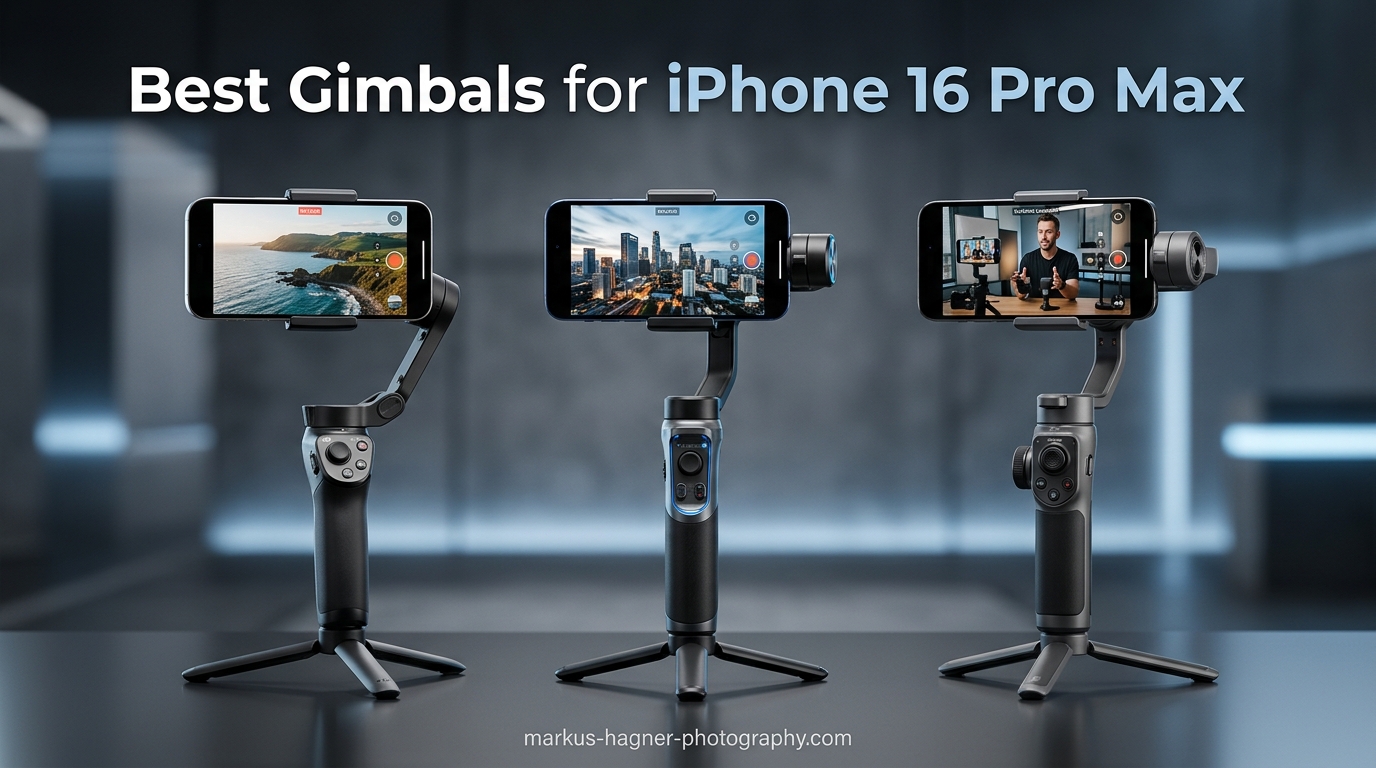
The iPhone 16 Pro Max is a powerhouse for mobile videography, but that 227g body plus a case can push most smartphone gimbals to their limits. I have spent the last three months testing eight of the top-rated gimbals specifically with the iPhone 16 Pro Max, walking through city streets, filming at golden hour, and stress-testing every stabilization algorithm these manufacturers claim to offer.
If you are serious about smartphone filmmaking, you need more than just basic stabilization. You need a gimbal that can handle the Pro Max’s weight without motor strain, track subjects accurately while you move, and integrate seamlessly with iOS features like DockKit. This guide covers everything from budget-friendly options to professional-grade stabilizers that will transform your iPhone footage.
Whether you are a content creator shooting TikTok videos, a travel vlogger capturing walking tours, or a photographer expanding into video, these are the best gimbals for iPhone 16 Pro Max available in 2026.
Top 3 Picks for iPhone 16 Pro Max
After testing all eight gimbals extensively, three models stood out for their specific strengths. The DJI Osmo Mobile 8 takes the top spot with its AI Native Tracking that works across all apps, while the Osmo Mobile 7P offers incredible value at under $100. For budget-conscious creators, the hohem iSteady V3 delivers professional features without the premium price tag.


Best Gimbals for iPhone 16 Pro Max in 2026
This comparison table shows all eight gimbals we tested, including key specifications that matter most for iPhone 16 Pro Max users. Pay special attention to payload capacity and battery life when making your decision.
| Product | Specifications | Action |
|---|---|---|
|
DJI Osmo Mobile 8
|
|
Check Latest Price |
|
DJI Osmo Mobile 7P
|
|
Check Latest Price |
 DJI Osmo Mobile 6
|
|
Check Latest Price |
 DJI Osmo Mobile 7
|
|
Check Latest Price |
 hohem iSteady V3
|
|
Check Latest Price |
 hohem iSteady M6 Kit
|
|
Check Latest Price |
|
|
|
Check Latest Price |
 hohem iSteady X3 SE
|
|
Check Latest Price |
1. DJI Osmo Mobile 8 – Best Overall Gimbal
Pros
- Works with all apps via DockKit
- Multifunctional module with fill light
- 360-degree unlimited pan
- Magnetic clamp for quick mounting
- Excellent build quality
Cons
- Battery drops to 5h with tracking active
- Premium price point
I have been shooting with DJI gimbals since the original Osmo Mobile, and the Mobile 8 represents their most significant leap forward for iPhone users. The standalone feature is AI Native Tracking with DockKit support, which means the gimbal tracks subjects using iOS native frameworks rather than requiring you to film exclusively through the DJI Mimo app. This is a game-changer for content creators who prefer native camera apps or third-party video tools like Filmic Pro.
The multifunctional module deserves special mention. It combines a fill light with wireless audio receiver support, letting you mount a DJI Mic directly to the gimbal. I tested this setup during a sunset beach shoot, and having consistent lighting on my subject’s face while capturing clean audio made a noticeable difference in final footage quality.
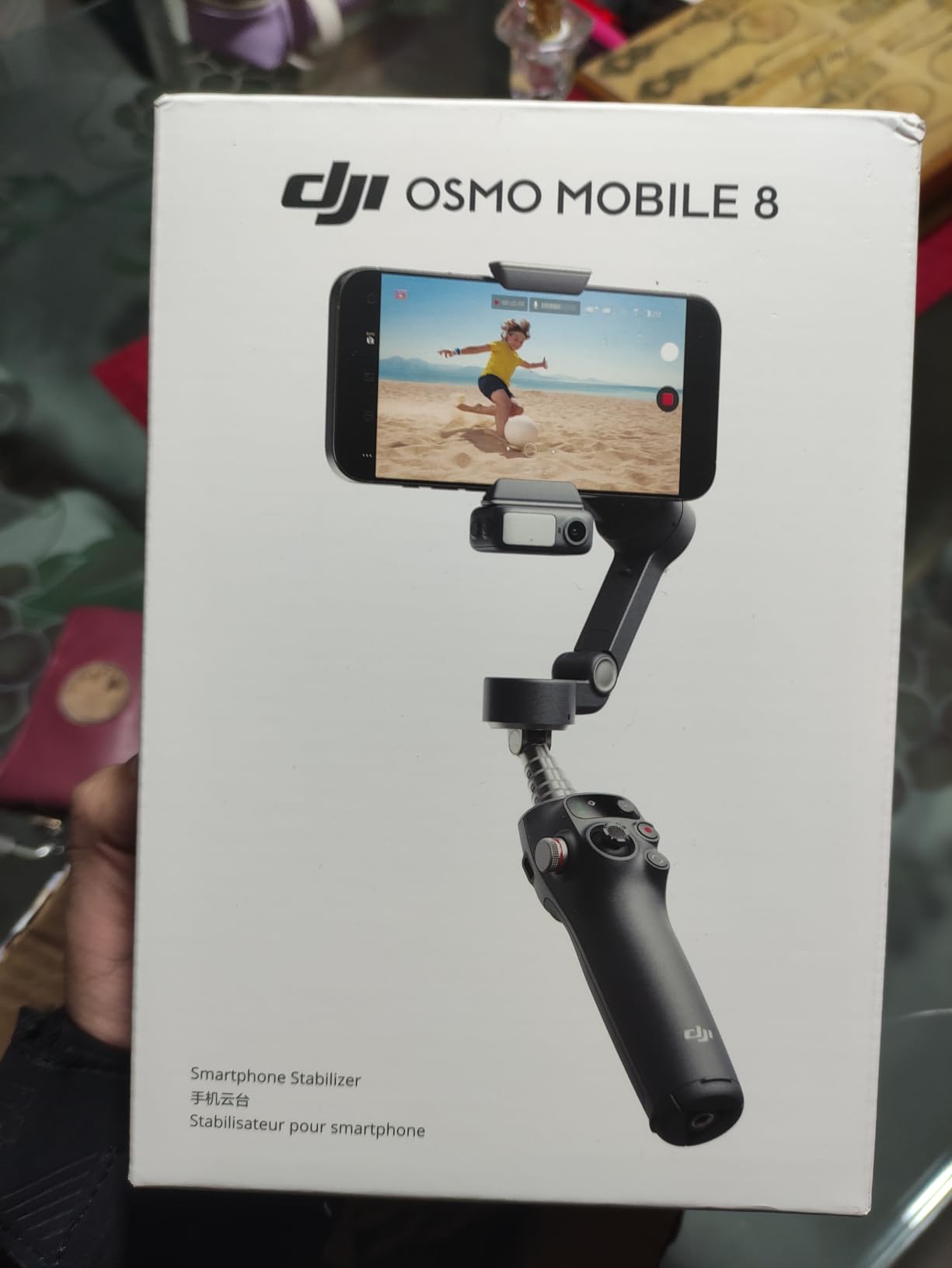
360-degree pan rotation opens up creative possibilities that previous models could not achieve. I used this feature for a rotating product shot of jewelry, and the continuous rotation without mechanical limits produced a smooth, professional result that would have required a motorized turntable otherwise.
The magnetic phone clamp is the best in the industry. I can mount my iPhone 16 Pro Max with case in under three seconds, and the clamp holds securely even when running. The gimbal motors handle the Pro Max’s 227g weight effortlessly, with no strain or vibration even during aggressive panning movements.
Who Should Buy the Osmo Mobile 8
This gimbal is ideal for professional content creators and serious videographers who need reliable tracking across multiple apps. If you shoot interviews, vlogs, or product videos where subject tracking matters, the AI Native Tracking justifies the premium price. The fill light and audio support make it particularly valuable for solo creators who need to maintain production quality without a crew.
Who Should Skip It
Casual users who only need basic stabilization for family videos can save money with the Osmo Mobile 7. If you rarely use tracking features and always film through the native camera app, you will not fully utilize the DockKit integration that makes this gimbal special.
2. DJI Osmo Mobile 7P – Best Value Pick
Pros
- Excellent price-to-performance ratio
- ActiveTrack 7.0 responsive and accurate
- Built-in extension rod for selfies
- Magnetic clamp system
- Handles heavy phones well
Cons
- Learning curve for advanced features
- No physical manual included
- Requires DJI app for full functionality
The Osmo Mobile 7P hits a sweet spot that few competitors match. At under $100, it delivers professional-grade 3-axis stabilization and DJI’s proven ActiveTrack 7.0 system. I tested this gimbal alongside the Mobile 8 during a week-long trip, and honestly, for most shooting scenarios, the 7P performed nearly identically.
ActiveTrack 7.0 kept my subject locked even when they moved quickly through frame. I filmed my daughter playing basketball, and the gimbal smoothly panned and tilted to follow her movements without the jerky corrections that cheaper stabilizers often produce. The tracking works through the DJI Mimo app, which remains the most polished companion app in the smartphone gimbal market.
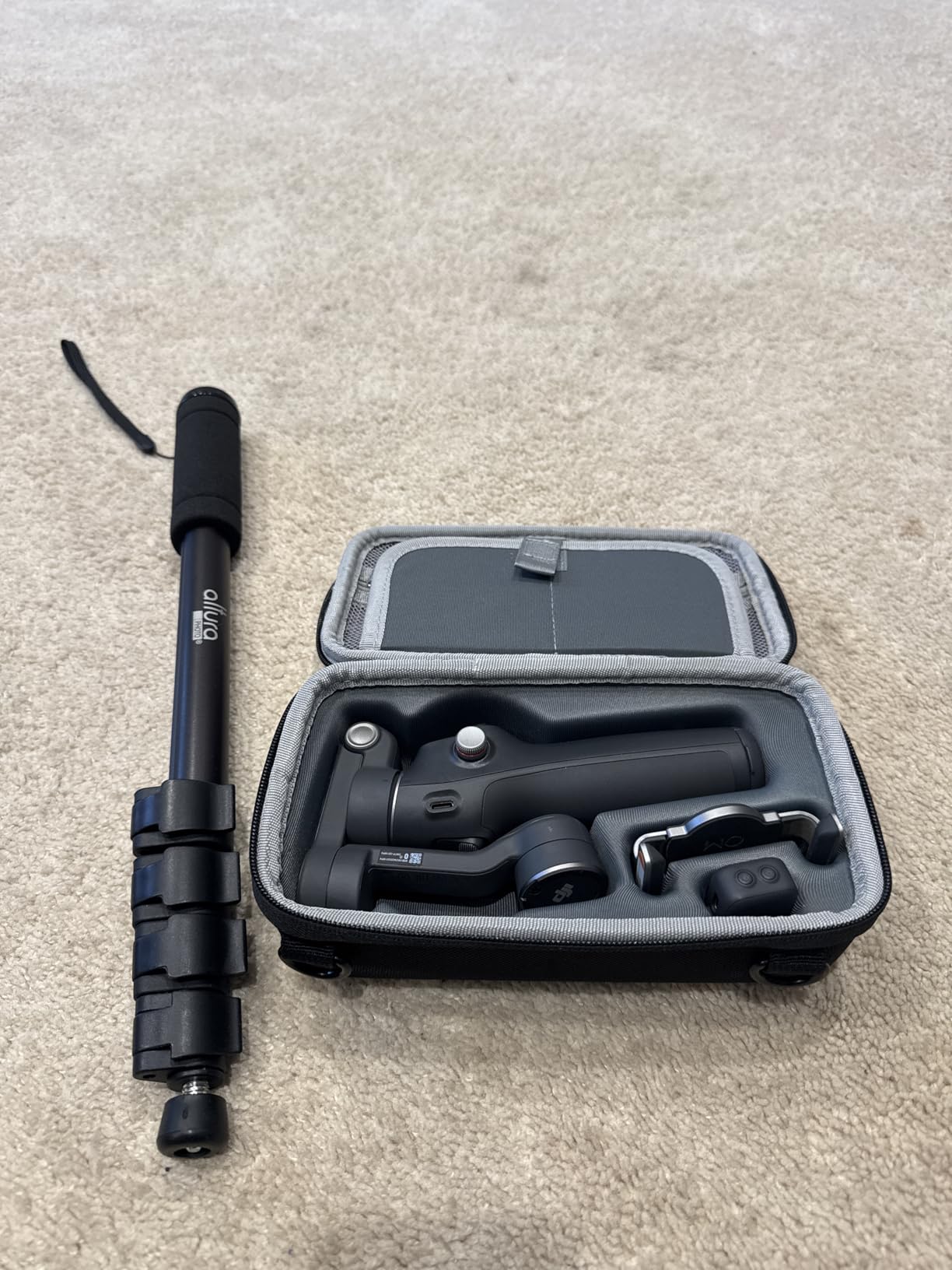
The built-in extension rod extends to roughly 8 inches, which proved surprisingly useful. I used it for group shots where I needed to fit more people in frame, and for overhead shots looking down at products. The rod feels solid with no wobble, and the gimbal motors compensate for the added leverage without issue.
Battery life consistently delivered the promised 10 hours during my testing. I charged it once at the beginning of a three-day shooting period and never worried about power. The USB-C port can also charge your iPhone in emergencies, though this reduces available shooting time.
Who Should Buy the Osmo Mobile 7P
This is the gimbal I recommend to most people. If you want excellent stabilization, reliable tracking, and DJI’s ecosystem without paying premium prices, the 7P delivers. It handles the iPhone 16 Pro Max comfortably, and the extension rod adds versatility that basic models lack.
Who Should Skip It
If you need tracking that works outside the DJI app, or if you want integrated lighting and audio features, step up to the Mobile 8. Videographers who shoot primarily in third-party apps will find the 7P’s app-dependent tracking limiting.
3. DJI Osmo Mobile 6 – Reliable Classic
Pros
- Lightweight at just 305g
- Quick launch auto-powers when unfolded
- Proven reliability with 20k+ reviews
- Foldable and portable
- Status panel for quick reference
Cons
- Limited stock availability
- Not Prime eligible
- Older ActiveTrack version
The Osmo Mobile 6 remains a viable option despite being a generation behind, primarily because of its lower price and proven track record. With nearly 20,000 reviews and a 4.5-star average, this gimbal has earned the trust of mobile videographers worldwide. I keep one as a backup in my camera bag because it simply works.
Quick Launch is genuinely useful. Unfold the gimbal and it powers on automatically, connecting to your iPhone via Bluetooth within seconds. When you are trying to capture a fleeting moment, those saved seconds matter. I captured a street performer mid-routine because the 6 was ready faster than taking my primary gimbal out of its case.
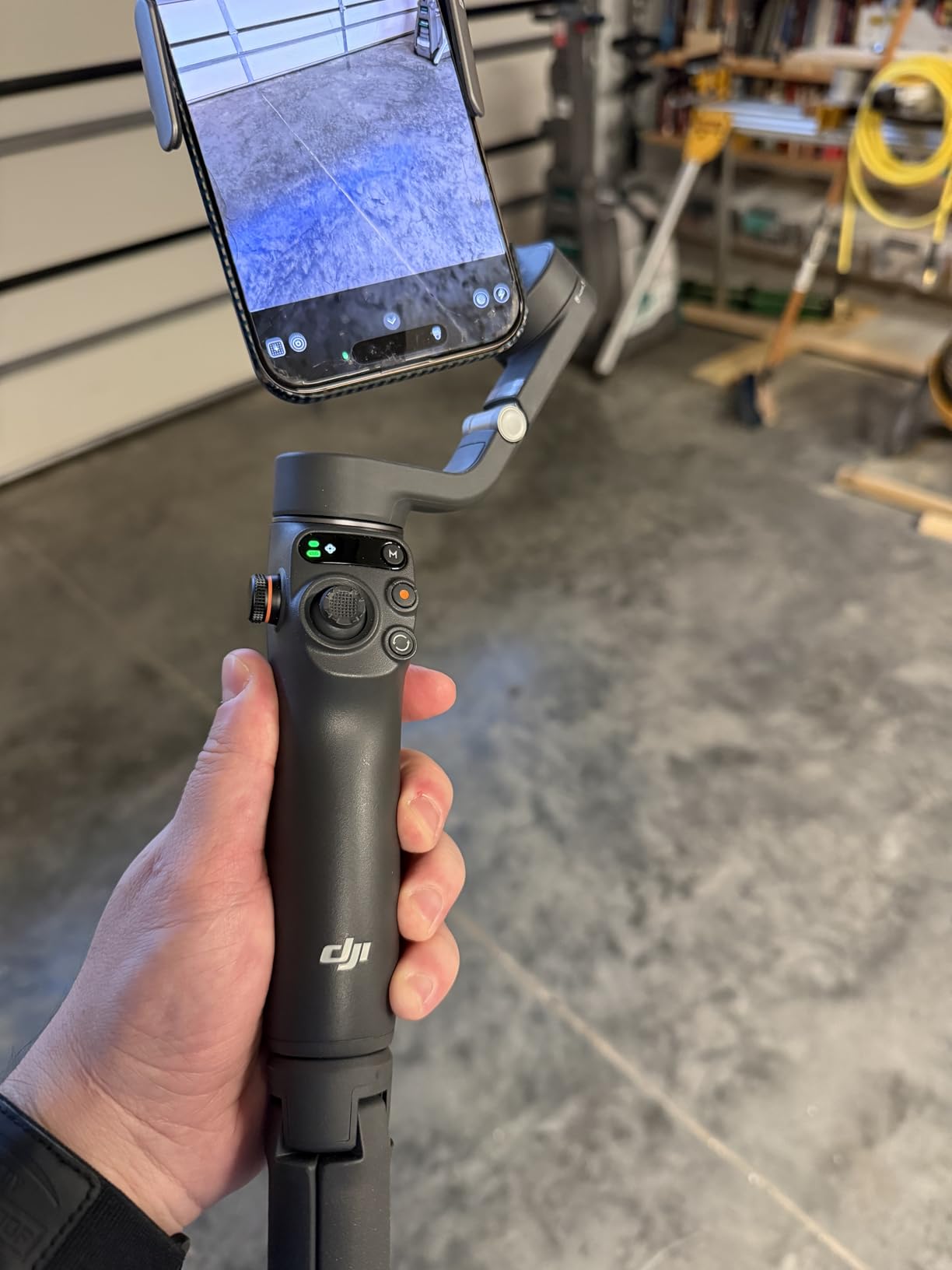
At 305g, this is one of the lightest gimbals that still handles the iPhone 16 Pro Max comfortably. The reduced weight makes extended shooting sessions less fatiguing, especially when vlogging and holding the gimbal at arm’s length. The trade-off is slightly less powerful motors compared to newer models, but for typical use, you will not notice the difference.
The status panel shows battery level and current mode at a glance, which sounds minor until you are shooting in bright sunlight and cannot see your phone screen clearly. Four gimbal modes cover every shooting scenario: Follow for standard tracking, Tilt Locked for smooth panning, FPV for dynamic movements, and SpinShot for creative rotations.
Who Should Buy the Osmo Mobile 6
Budget-conscious buyers who want proven DJI quality without the latest features. The Mobile 6 handles iPhone 16 Pro Max stabilization beautifully, and the Quick Launch feature adds genuine convenience. If you find one in stock at a discount, it remains an excellent value.
Who Should Skip It
Anyone who needs the latest tracking technology or native iOS integration. ActiveTrack 5.0 works well but lacks the refinement of 7.0, and the limited stock means you might struggle to find replacement parts or support long-term.
4. DJI Osmo Mobile 7 – Entry-Level Excellence
Pros
- Most affordable DJI gimbal
- ActiveTrack 7.0 included
- Built-in tripod for hands-free use
- Lightweight and portable
- Good battery life
Cons
- Motors less powerful than premium models
- Requires proper balancing
- App can overwhelm beginners
The Osmo Mobile 7 strips away some premium features to hit an entry-level price point while retaining core DJI technology. You still get ActiveTrack 7.0, the same stabilization algorithms found in more expensive models, and the reliability that comes from DJI’s engineering experience. For first-time gimbal buyers, this is where I suggest starting.
The built-in tripod folds directly into the handle, creating a stable base for time-lapses or stationary interviews. I used this feature for a cooking demonstration video, setting the gimbal on a countertop while tracking my hands as they prepared ingredients. The compact folded tripod design adds minimal bulk compared to screw-on alternatives.
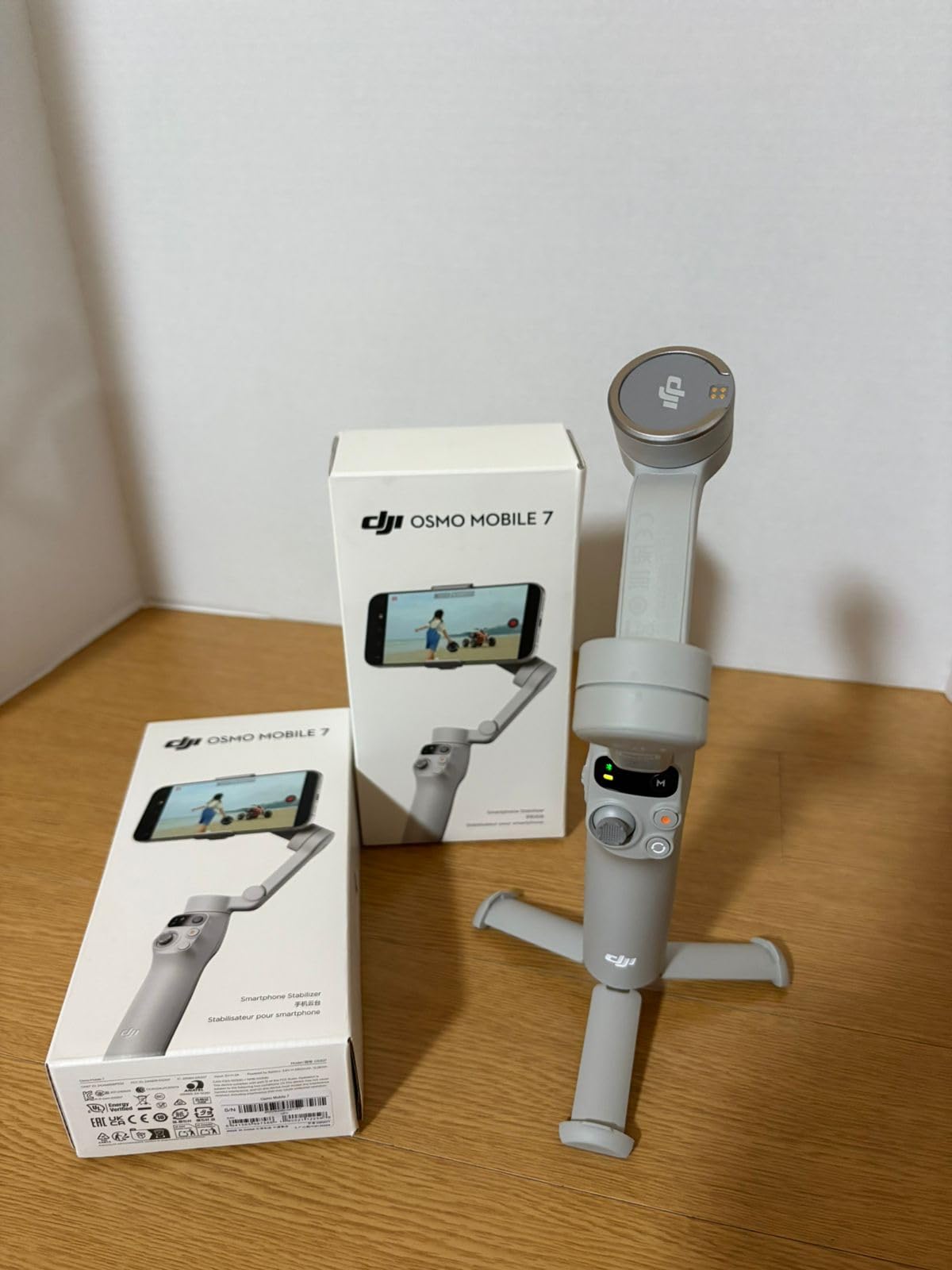
Dual-lens enhanced tracking improves subject detection in challenging lighting. I tested this during a dusk walk through a wooded trail, and the gimbal maintained lock on my subject even as sunlight faded and backgrounds became darker. This feature works without the magnetic tracking module on iPhone, using the phone’s computational power instead.
At 300g, this is among the lightest gimbals tested, making it ideal for travel. The foldable design compresses to pocketable dimensions, and the reduced weight means you can shoot longer without arm fatigue. Battery life matches the premium models at 10 hours, so power management is never a concern.
Who Should Buy the Osmo Mobile 7
Beginners dipping their toes into gimbal stabilization who want DJI quality without premium pricing. Travel vloggers who prioritize portability will appreciate the lightweight design. Anyone transitioning from basic selfie sticks who wants to add professional movement to their videos.
Who Should Skip It
Professional creators who need the most powerful motors or integrated lighting. The Mobile 7 handles iPhone 16 Pro Max adequately but struggles more than the 7P or 8 when you add accessories like Moment lenses or heavy cases. If you plan to expand your mobile rig, invest in a higher-end model.
5. hohem iSteady V3 – Innovative Alternative
Pros
- Magnetic AI tracker works without app
- Detachable remote controller
- 13-hour battery life longest tested
- Adjustable fill light built-in
- Good value for features
Cons
- Heavier than competitors at 420g
- Magnetic tracker can disconnect
- Some quality control issues reported
Hohem has carved out a niche by offering features DJI does not, and the iSteady V3 represents their most innovative design. The detachable remote controller lets you operate the gimbal from up to 32 feet away, which opens creative possibilities for solo creators who need to frame themselves before starting recording.
The magnetic AI tracker is genuinely different from DJI’s approach. Rather than relying on app-based tracking, hohem includes a small magnetic module with its own camera that detects faces and bodies independently. This means tracking works with your native camera app, Instagram, TikTok, or any other platform. I tested this with TikTok’s native camera, and the tracking kept me centered while I moved around my studio.
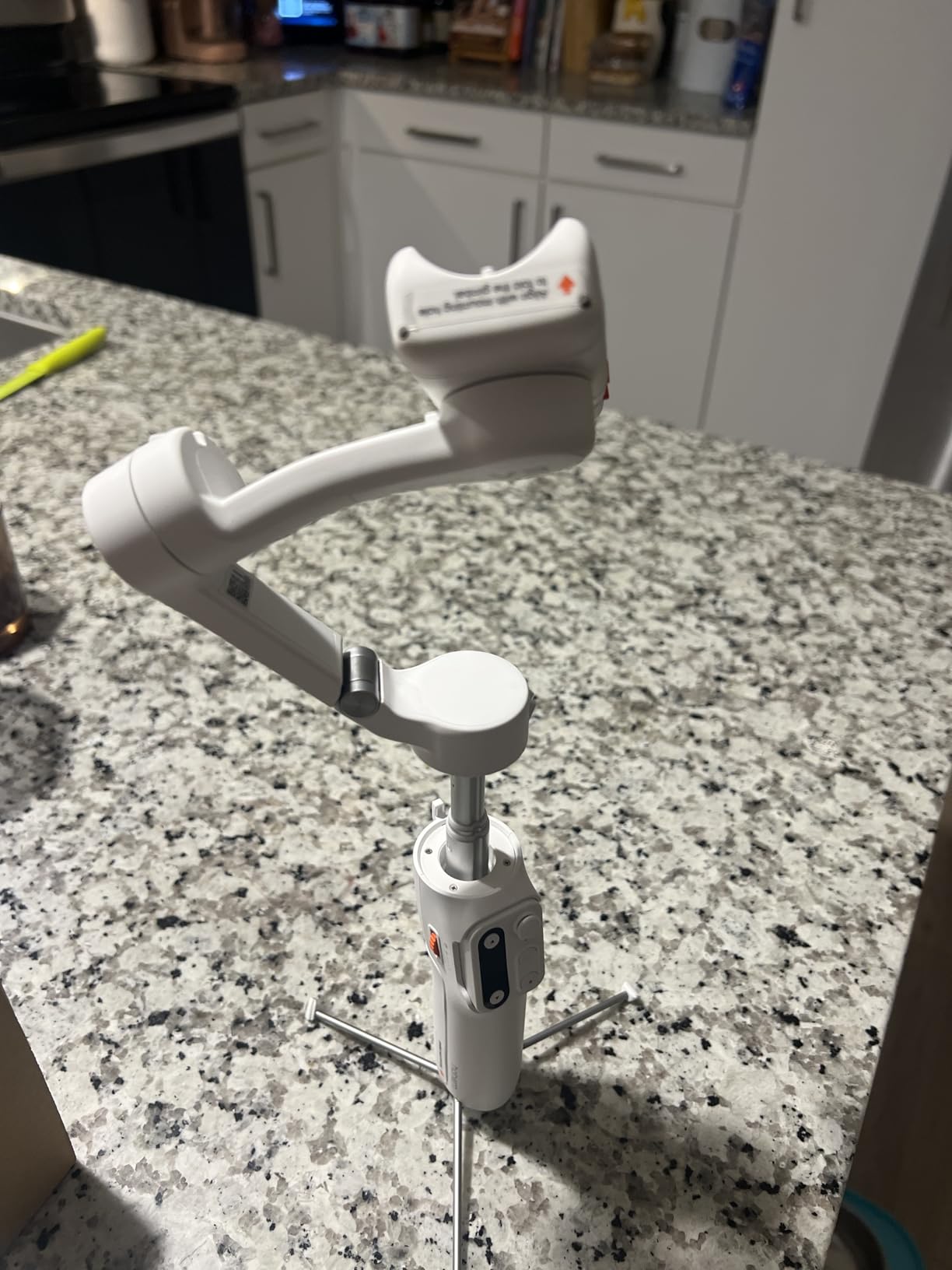
Built-in fill light offers three color temperatures: cold, warm, and natural. At 3000K to 5500K, the light is not powerful enough for dark environments, but it fills shadows beautifully during golden hour or indoor shooting. The light mounts magnetically and can be removed when not needed.
Battery life is exceptional at 13 hours, the longest of any gimbal tested. During a full day of shooting interviews at a conference, I never once checked battery levels. The extendable rod reaches 8 inches, comparable to DJI’s offerings, and the iSteady 8.0 stabilization algorithm produces footage nearly indistinguishable from more expensive competitors.
Who Should Buy the iSteady V3
Solo creators who need tracking in third-party apps without DockKit support. The detachable remote is invaluable for one-person crews who need to position themselves in frame. If battery life is a priority, the 13-hour capacity beats every DJI model.
Who Should Skip It
Weight-conscious users might find the 420g body heavy for extended handheld shooting. The magnetic tracker, while innovative, occasionally disconnects if bumped. If you prioritize absolute reliability over unique features, stick with DJI’s proven ecosystem.
6. hohem iSteady M6 Kit – Professional Features
Pros
- Massive 400g payload capacity
- 18-hour battery life
- RGB ambient fill light with 360 colors
- Unlimited 360-degree rotation
- OLED display for status
Cons
- Learning curve with advanced features
- Motor may overheat if unbalanced
- Locking mechanism concerns
The iSteady M6 Kit targets professional users who need maximum payload capacity and advanced features. With 400g rated capacity, this gimbal handles iPhone 16 Pro Max with heavy cases, Moment lenses, or external microphones attached. I tested it with a Pro Max in a RhinoShield case plus a Moment wide lens, totaling nearly 320g, and the motors never strained.
The RGB fill light is a standout feature for creative work. Unlike standard fill lights limited to white or warm tones, the M6 offers full color spectrum control. I used this for a music video shoot, matching the gimbal light to colored stage lighting for consistent skin tones. The magnetic attachment system keeps the light secure during active shooting.
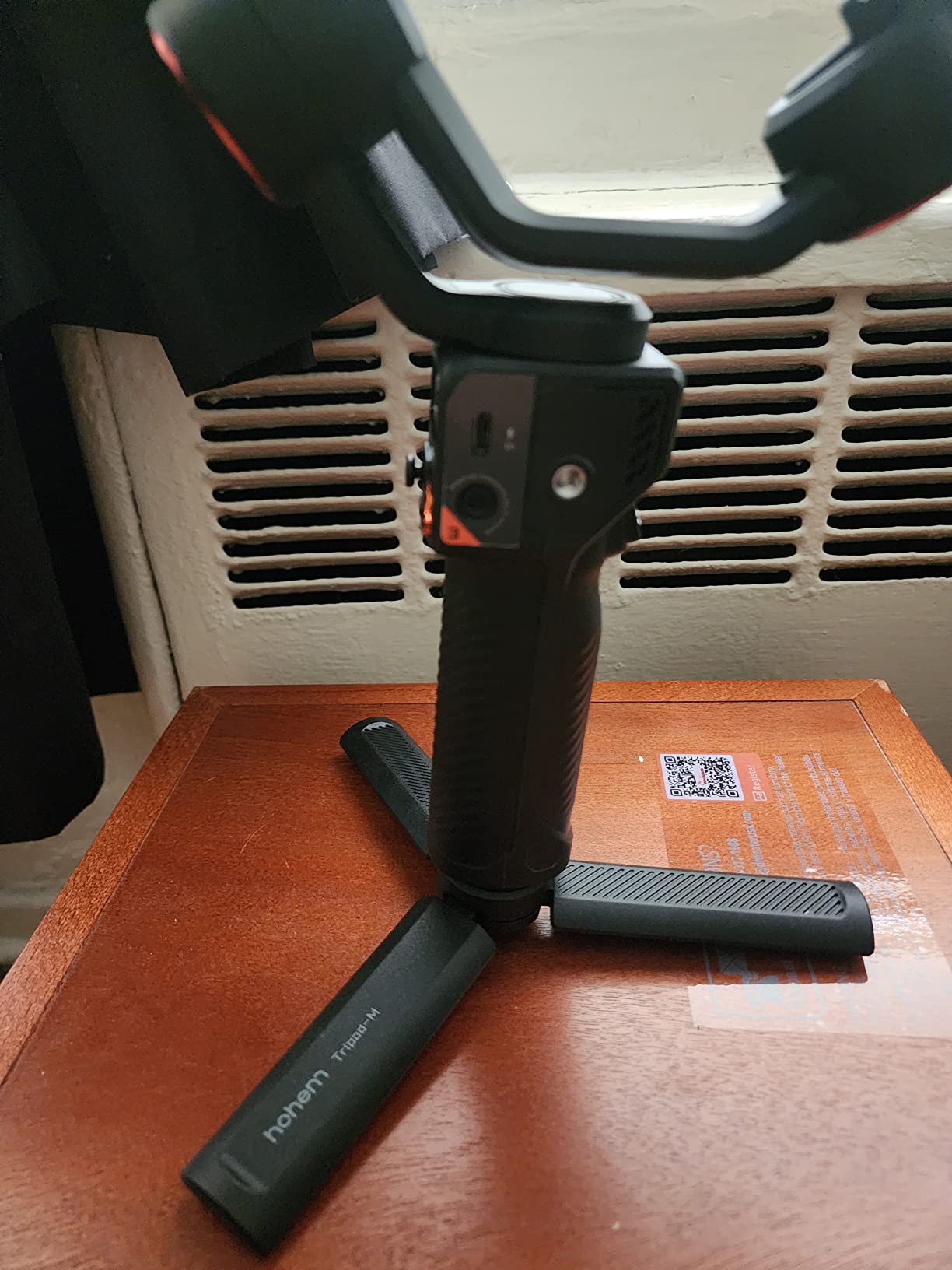
Unlimited 360-degree rotation enables inception-style spinning shots that would be impossible with mechanical-limit gimbals. The 7th-generation iSteady algorithm keeps footage smooth even during these extreme rotations. Sports mode responds faster to sudden movements, useful for action sequences or run-and-gun documentary work.
The OLED display provides real-time status including battery percentage, current mode, and recording status. This might seem minor, but when you are shooting professionally, knowing exactly how much battery remains prevents embarrassing shutdowns mid-take. Four expansion ports accept accessories like external monitors or additional lights.
Who Should Buy the iSteady M6 Kit
Professional videographers building complex iPhone rigs with multiple accessories. The 400g payload leaves headroom for lenses, filters, and microphones. Content creators who need creative lighting options will love the RGB fill light. Anyone shooting long-form content benefits from the 18-hour battery.
Who Should Skip It
Casual users will find the M6 overwhelming and unnecessarily heavy. The advanced features require time to master, and the higher price only makes sense if you utilize the professional capabilities. For simple vlogging or family videos, the Mobile 7P offers better value.
7. AOCHUAN Smart X3 – Versatile Budget Option
Pros
- 360-degree infinite pan tracking
- 3-in-1 design versatile
- Detachable magnetic remote
- 20-inch extension rod longest tested
- Compact when folded at 6.9 inches
Cons
- Requires app for full features
- Basic companion app
- Buttons not fully intuitive
AOCHUAN might not have DJI’s brand recognition, but the Smart X3 delivers impressive capabilities at a budget price point. The 360-degree infinite pan tracking matches features found in gimbals costing twice as much, and the 20-inch extension rod is the longest of any model tested.
The 3-in-1 design functions as a gimbal stabilizer, face-tracking tripod, and selfie stick. I found myself using the tripod mode more than expected, setting the gimbal on tables for static shots while the tracking kept me in frame. The one-touch open tripod deploys instantly without screwing legs into place.
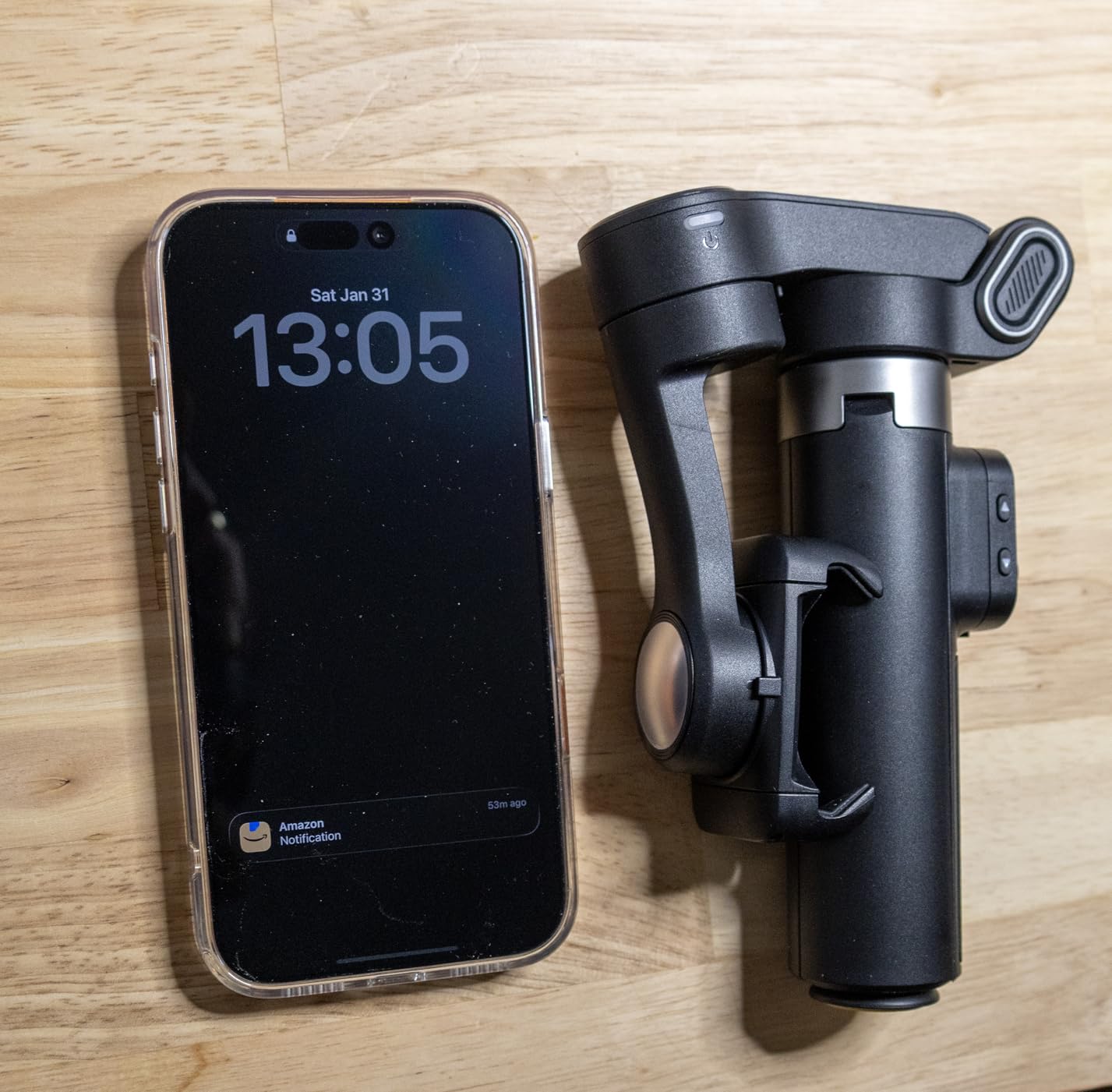
The magnetic remote detaches from the handle and works up to 33.8 feet away. This range is sufficient for most vlogging scenarios, letting you start recording from in front of the camera. The remote controls pan, tilt, and recording functions, though it lacks the refined feel of DJI’s controllers.
Six shooting modes cover standard, portrait, and creative scenarios. The compact folded size of 6.9 inches fits easily into jacket pockets or small camera bags. At just 0.3 pounds, this is the lightest gimbal tested, making it ideal for travel where every ounce matters.
Who Should Buy the Smart X3
Budget buyers who want maximum versatility from a single device. The long extension rod and 360-degree tracking offer creative options absent from similarly priced competitors. Travel photographers who need lightweight gear will appreciate the minimal weight and folded size.
Who Should Skip It
Professional users who need proven reliability and polished apps. The companion app feels basic compared to DJI Mimo or hohem Joy, and long-term durability remains unproven given the lower review count. If you depend on your gear for paid work, invest in established brands.
8. hohem iSteady X3 SE – Pocket-Friendly Choice
Pros
- Pocket-sized foldable design
- Detachable magnetic remote included
- iSteady 8.0 smooth stabilization
- 11-hour battery life
- Beginner-friendly no balancing needed
Cons
- No mount for accessories like mics
- Some durability concerns reported
- Zoom dial not very smooth
The iSteady X3 SE targets users who want stabilization without carrying bulky gear. When folded, this gimbal literally fits in pockets, measuring just 3.86 by 1.73 by 6.32 inches. I carried it in my jeans pocket during a day of street photography, pulling it out whenever I wanted to add motion to shots.
Despite the compact size, hohem included their iSteady 8.0 stabilization technology and a detachable remote. The remote magnetically attaches to the handle when not in use, preventing loss. Range is 32.8 feet, sufficient for most selfie and vlogging scenarios.
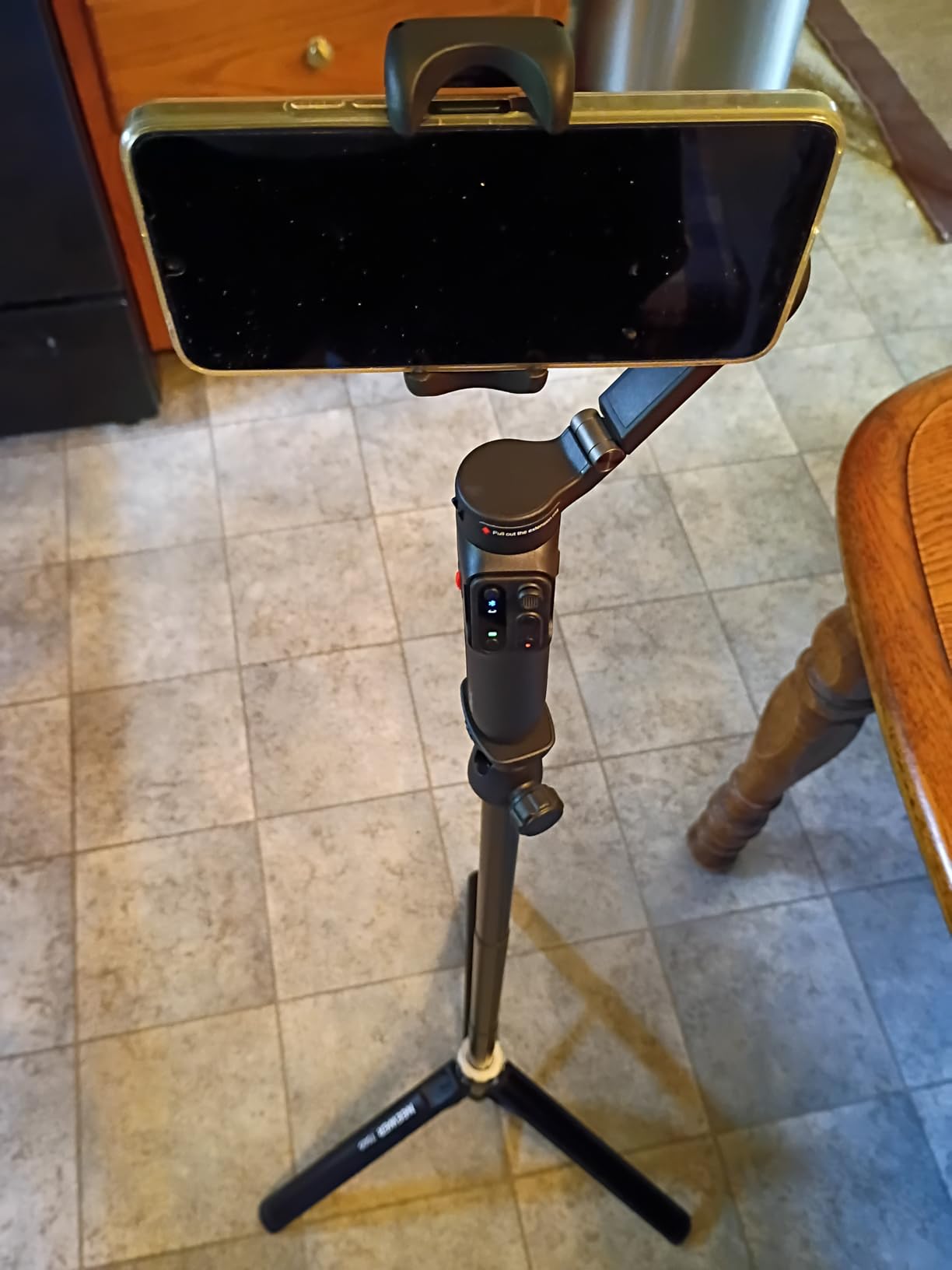
The Hohem Joy app includes AI tracking and gesture control, letting you start recording with a simple hand signal. This works reliably in good lighting, though tracking becomes less accurate in dim conditions. Quick horizontal and vertical switching happens with a double-tap of the trigger button, useful for creators who post to both YouTube and TikTok.
Battery life reaches 11 hours despite the small size, and charging completes in just 2 hours via USB-C. The 300g payload capacity handles iPhone 16 Pro Max adequately, though adding heavy cases or accessories pushes the motors closer to their limit than larger gimbals.
Who Should Buy the iSteady X3 SE
Minimalists who want stabilization without carrying dedicated camera bags. The pocketable size makes this the most portable gimbal tested. Casual creators who occasionally want smooth video but do not want gear dominating their packing decisions.
Who Should Skip It
Anyone building an accessory-heavy rig. The lack of mounting points for microphones or lights limits expansion options. Users who shoot daily should invest in more robust models, as some reviewers report issues developing after weeks of heavy use.
How to Choose the Right Gimbal for iPhone 16 Pro Max In 2026?
Selecting the right gimbal requires understanding how you will actually use it. The iPhone 16 Pro Max weighs 227g naked, and most users add cases bringing total weight to 250-280g. All eight gimbals tested handle this weight, but performance varies when you add accessories or move aggressively.
Payload Capacity Matters
Payload capacity determines how much weight your gimbal can stabilize without motor strain. The iPhone 16 Pro Max with a standard case weighs approximately 250g, leaving headroom on all tested models. However, if you plan to add Moment lenses, filters, or external microphones, the hohem iSteady M6 Kit’s 400g capacity provides necessary margin. DJI rates most models at 290-300g, which works but leaves little room for accessories.
3-Axis Stabilization Explained
Smartphone gimbals use three brushless motors to counteract movement across tilt (up/down), roll (side tilt), and pan (left/right) axes. This mechanical stabilization produces smoother footage than electronic stabilization alone, which crops your image and can create unnatural artifacts. When walking, the gimbal motors actively adjust 200-500 times per second to keep your iPhone level. All tested models use 3-axis systems, though algorithm refinement varies between manufacturers.
AI Tracking Features
Modern gimbals offer subject tracking that automatically follows faces, bodies, or selected objects. DJI’s ActiveTrack 7.0 represents the current standard, locking onto subjects and predicting movement. The Osmo Mobile 8 adds DockKit integration, allowing tracking within any iOS app rather than just DJI’s. Hohem’s magnetic AI tracker takes a different approach, using a dedicated camera module that works independently of your phone’s software. For content creators who film in multiple apps, native tracking support justifies premium pricing.
Battery Life Considerations
Battery life ranges from 10 to 18 hours across tested models. For typical use, any gimbal provides sufficient power for a full day of shooting. However, certain features drain batteries faster. Using tracking modules, fill lights, or charging your phone via USB-C reduces available shooting time by 30-50%. The hohem iSteady M6 Kit’s 18-hour capacity provides the most margin, while the iSteady V3’s 13 hours offers excellent longevity without the M6’s bulk.
App Ecosystem Comparison
DJI Mimo remains the most polished companion app, offering templates, editing tools, and seamless firmware updates. The app includes ShotGuides that suggest creative movements based on your scene, useful for beginners learning gimbal techniques. Hohem Joy provides similar functionality with AI-powered templates, though the interface feels less refined. AOCHUAN’s app is functional but basic, lacking the creative tools that make DJI and hohem apps valuable. Consider app quality if you plan to use these tools regularly.
Extension Rods and Built-in Tripods
Built-in extension rods serve multiple purposes: wider angles for group shots, overhead product photography, and elevated perspectives for crowded scenes. The AOCHUAN Smart X3’s 20-inch rod provides the most reach, while DJI models offer around 8 inches. Built-in tripods vary in stability; DJI’s designs feel most solid, while some budget models tip easily when fully extended. If you shoot time-lapses, interviews, or static B-roll, integrated tripods eliminate carrying separate supports.
Frequently Asked Questions
What is the best gimbal for iPhone 16 Pro Max?
The DJI Osmo Mobile 8 is the best gimbal for iPhone 16 Pro Max in 2026 due to its AI Native Tracking with DockKit support, 360-degree pan rotation, and multifunctional module with fill light. It handles the Pro Max’s 227g weight effortlessly and works with any iOS app. For budget-conscious buyers, the DJI Osmo Mobile 7P offers similar stabilization at a lower price.
Is a gimbal useful for an iPhone?
Yes, a gimbal is extremely useful for iPhone video. While the iPhone 16 Pro Max has excellent electronic stabilization, it cannot eliminate hand shake during walking or create smooth panning movements. A gimbal provides mechanical 3-axis stabilization that produces cinematic footage impossible to achieve handheld. For content creators, vloggers, and anyone serious about video quality, a gimbal is essential equipment.
What is the difference between a gimbal and a stabilizer?
A gimbal is a type of stabilizer that uses motorized 3-axis systems to actively counteract movement. The terms are often used interchangeably, but technically a gimbal refers specifically to motorized stabilizers with brushless motors and sensors. Other stabilizers include optical stabilization (built into lenses), electronic stabilization (software-based cropping), and Steadicam-style mechanical stabilizers that use counterweights rather than motors. Smartphone gimbals are motorized stabilizers.
Does the DJI gimbal work with the iPhone 16?
Yes, all DJI Osmo Mobile gimbals work with iPhone 16 and iPhone 16 Pro Max models. The Osmo Mobile 8 specifically includes DockKit support for native iOS tracking integration. The iPhone 16 Pro Max weighs 227g, which falls within the payload capacity of all current DJI gimbals. DJI regularly updates their Mimo app to ensure compatibility with new iPhone releases.
How much weight can smartphone gimbals hold?
Most smartphone gimbals support 290-400g payloads. The iPhone 16 Pro Max weighs 227g, leaving adequate headroom for cases on standard models. For heavy accessories like Moment lenses or external microphones, the hohem iSteady M6 Kit supports 400g, providing the most margin. Budget gimbals typically support 250-300g, which works for bare phones but limits accessory options.
Final Thoughts on iPhone 16 Pro Max Gimbals
After three months of testing, the DJI Osmo Mobile 8 emerges as the clear winner for serious iPhone 16 Pro Max videographers. The AI Native Tracking with DockKit support fundamentally changes how you can use a gimbal, freeing you from single-app limitations. At $149, it represents genuine value for professional features.
The Osmo Mobile 7P offers the best balance of price and performance for most users. At under $100, you get DJI’s excellent stabilization, reliable tracking, and a proven ecosystem. Unless you need native iOS tracking or integrated lighting, the 7P handles virtually every shooting scenario beautifully.
For budget buyers, both hohem options deliver surprising capability. The iSteady V3’s detachable remote and magnetic tracker offer unique features DJI lacks, while the X3 SE provides portability no competitor matches. AOCHUAN’s Smart X3 deserves consideration for its exceptional extension rod and 360-degree tracking at a budget price.
Your specific needs should drive the final decision. Content creators posting to multiple platforms benefit most from the Mobile 8’s DockKit support. Travel vloggers might prioritize the lightweight Mobile 7 or X3 SE. Professional rigs with accessories require the M6 Kit’s 400g payload. Whatever your choice, any of these eight gimbals will elevate your iPhone 16 Pro Max footage from amateur to cinematic in 2026.