
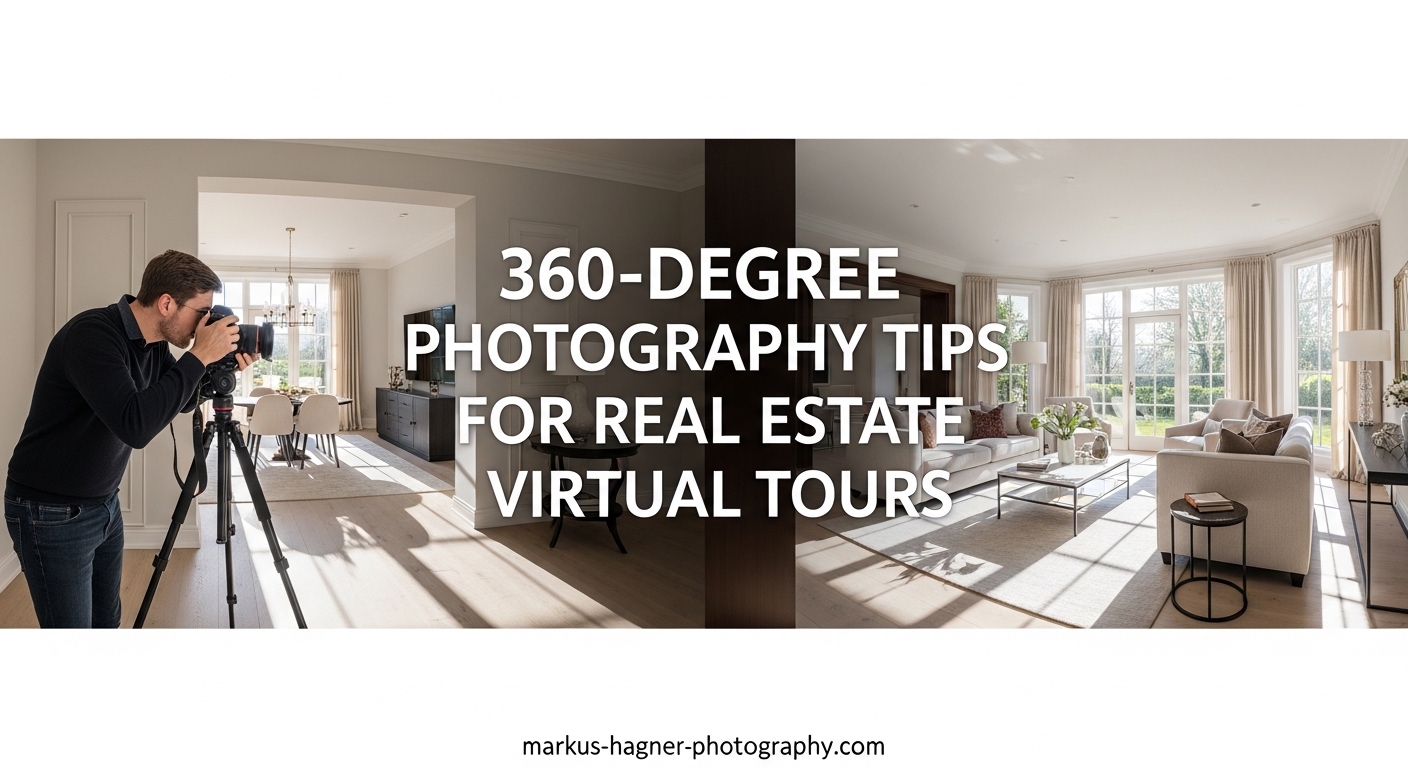
Creating compelling virtual tours has become essential for anyone marketing properties in 2026. I’ve spent years shooting real estate, and the shift toward 360-degree photography tips for real estate virtual tours reflects a fundamental change in how buyers shop. With 97% of homebuyers starting their search online, properties with virtual tours receive 403% more inquiries than those without. This guide covers everything you need to know to capture professional 360 images that sell properties remotely.
Whether you’re a real estate agent wanting to add virtual tours to your listings or a photographer expanding into this growing niche, I’ll walk you through the complete workflow. You’ll learn equipment recommendations, shooting techniques for each room type, post-processing tips, and the common mistakes that can ruin an otherwise great tour. By the end, you’ll have the knowledge to create immersive virtual experiences that help buyers feel confident about properties they haven’t visited in person.
What is 360-Degree Photography for Real Estate?
360-degree photography captures a complete spherical view of a property in a single image. Unlike standard photos that show one angle, 360 images let viewers rotate, zoom, and explore every direction as if standing in that exact spot. The result is an immersive experience that standard photography simply cannot match.
The technical process involves using specialized cameras with multiple lenses pointing in different directions. These lenses capture overlapping images simultaneously, which software then stitches together into an equirectangular format. When displayed on virtual tour platforms, this flat image transforms into an interactive spherical view that responds to mouse movements or mobile device tilting.
360 Tours vs. 3D Tours: What’s the Difference?
Many people use these terms interchangeably, but they describe different technologies. 360 tours consist of panoramic photographs connected by navigation points called hotspots. You move from one static position to another, looking around from each vantage point. Think of it as standing in different spots in a room and turning in circles.
3D tours, like those created with Matterport scanners, generate actual three-dimensional models of spaces. You can walk through continuously rather than jumping between fixed positions. The trade-off is cost and complexity. 3D scanning equipment costs significantly more, and processing takes longer. For most real estate applications, high-quality 360 photography delivers excellent results at a fraction of the investment.
Who needs 360-degree photography skills? Real estate agents looking to modernize their listings, property photographers expanding their services, vacation rental owners showcasing properties, and anyone marketing to remote or international buyers. If you’re in real estate marketing, this capability has moved from luxury to necessity.
Essential Equipment for 360 Real Estate Photography
Your equipment choices directly impact the quality of your virtual tours. I’ve tested various setups, and the good news is that professional results are achievable without breaking the bank. Here’s what you actually need versus what’s nice to have.
360 Camera Options
Dedicated 360 cameras offer the best balance of quality and convenience for real estate work. The Ricoh Theta Z1 remains a popular choice among professionals for its excellent image quality and reliable stitching. Its dual 1-inch sensors capture more detail than smaller sensors, which matters when buyers zoom in to examine finishes and fixtures.
The Insta360 X3 and X4 provide another solid option with higher resolution and more features. I appreciate their HDR capabilities and the ability to shoot in challenging lighting conditions. The larger sensors handle dynamic range better than budget alternatives, reducing the blown-out windows that plague cheaper cameras.
For those starting on a budget, smartphone-based 360 photography has become surprisingly capable. Apps like DMD Panorama can create acceptable results using your phone’s camera. The quality won’t match dedicated hardware, but it lets you learn the fundamentals before investing. This approach works well for agents who only occasionally need virtual tours.
Professional studios often invest in the Insta360 Pro series or Kandao Obsidian for maximum image quality. These cameras cost thousands but produce images suitable for luxury listings and commercial properties. For most residential work, the mid-range options deliver perfectly acceptable results.
Essential Accessories
A sturdy monopod or tripod is non-negotiable for professional results. The camera must remain perfectly still during capture, and consistent height across shots creates a cohesive tour experience. I recommend a monopod for most indoor work because it’s faster to reposition between rooms and easier to hide in the final image.
Look for a monopod with a small footprint at the base. The less floor area it occupies, the easier your nadir patching work becomes later. Some photographers use special low-profile tripods designed specifically for 360 work, which minimize what needs to be removed in post-processing.
A remote trigger or smartphone app control lets you step completely out of the shot before the camera fires. Most 360 cameras include wireless control through their companion apps. This feature is essential because you cannot hide behind the camera in 360 photography like you can with traditional shooting.
Consider a bubble level attachment for your monopod. Level horizons are critical in 360 images because tilted floors immediately look unprofessional. Many cameras include built-in level indicators, but a physical level provides visual confirmation during setup.
Software for Stitching and Tour Creation
Your camera likely includes basic stitching software, but dedicated applications offer more control. Insta360 Studio handles Insta360 camera files well, while Ricoh provides Theta Stitcher for their cameras. These free options work fine for most real estate applications.
For more demanding projects, software like Mistika VR, PTGui, or Autopano Video Pro provides advanced stitching controls. These applications let you manually adjust stitch lines and correct parallax errors in tight spaces. The learning curve is steeper, but the results justify the investment for professional work.
Virtual tour platforms host your finished images and create the interactive experience. Panoee, Kuula, and CloudPano are popular options that integrate easily with real estate listings. Many offer free tiers for basic use, with paid plans unlocking features like custom branding and analytics.
360-Degree Photography Tips for Real Estate Virtual Tours: The Complete Shooting Workflow
The difference between amateur and professional virtual tours often comes down to process. Following a consistent workflow ensures quality results every time. Here’s my step-by-step approach refined through hundreds of property shoots.
Step 1: Prepare the Property
Property preparation makes or breaks virtual tours. Walk through the entire space before setting up your camera. Turn on every light in the property, including lamps, overhead fixtures, and under-cabinet lighting. This technique fills shadows and creates a welcoming atmosphere throughout the tour.
Remove all personal items, clutter, and anything that might distract viewers. Close toilet lids, hide toothbrushes, and remove magnets from refrigerators. These small details stand out in 360 images because viewers examine every corner of the room. What works fine in real life looks messy in a virtual tour.
Open all interior doors to their full extent. Partially open doors look awkward in 360 images and can block sightlines. For exterior doors, decide whether to shoot with them open or closed based on the view they reveal. A beautiful garden visible through an open door adds value, but a cluttered garage is better hidden.
Check every mirror and reflective surface. You’ll need to plan your shooting position to avoid capturing yourself or your equipment in reflections. Note which rooms have challenging mirrors so you can prepare your hiding strategy before shooting each space.
Step 2: Master Camera Placement
Camera height significantly impacts how spaces feel in virtual tours. I recommend shooting at approximately 5 feet (1.5 meters) from the floor. This height approximates average eye level and creates a natural perspective for most viewers. Shooting too low makes ceilings appear higher but distorts furniture proportions. Too high makes rooms feel cramped.
Position your camera in the center of rooms when possible. Central placement captures the full space evenly and reduces distortion at edges. For larger rooms, you may need multiple shooting positions to ensure viewers can examine all areas clearly. Plan your shooting positions to create logical navigation paths between spots.
Maintain consistent distances from walls. Placing the camera too close to any surface creates excessive distortion and makes stitching more difficult. Leave at least 3-4 feet of clearance from walls, furniture, and other obstacles. In tight spaces like bathrooms, this rule requires compromise, but do your best.
Think about sightlines between rooms. When viewers navigate from one position to another, the transition should feel natural. Position your camera so the hotspot to the next room appears where someone would naturally walk, not in a corner or behind furniture.
Step 3: Nail Your Lighting and Exposure
Lighting presents the biggest technical challenge in 360 real estate photography. Interior shots often include bright windows and dark corners in the same frame. Your camera must handle extreme dynamic range to capture both adequately.
HDR bracketing solves most lighting challenges. This technique captures multiple exposures of the same scene and combines them during post-processing. Most 360 cameras offer HDR modes that automate this process. Enable HDR for any shot that includes windows or significant light variation.
For manual control, shoot at your lowest native ISO to minimize noise. Base your exposure on the brightest elements you want to preserve detail in, typically window views. Let shadows fall where they may, knowing you can lift them in post-processing if needed. Blown highlights cannot be recovered, but shadow detail is more flexible.
White balance consistency matters across your entire tour. Set a custom white balance using a gray card, or shoot in RAW format and adjust during processing. Mixed lighting, where windows provide daylight and interior fixtures add warm tones, requires compromise. I typically balance for the interior lighting since that’s what buyers will see when they visit.
Time your exterior shots carefully. Overcast days actually work better than bright sun for exterior 360 images because clouds soften harsh shadows. If shooting in direct sun, wait for times when the sun isn’t directly visible in the frame, as lens flares can ruin 360 images.
Step 4: Handle Mirrors and Reflections
Mirrors are the nemesis of 360 photographers. Unlike traditional photography where you simply shoot from behind the camera, 360 capture records everything in all directions. You cannot hide anywhere in the room.
The most effective technique involves timing. Set up your shot, trigger the camera remotely, and duck behind a piece of furniture or around a corner. This works well for small mirrors but becomes problematic when large mirrors dominate a space.
For bathroom shots with large mirrors, shoot from outside the room if possible. Position your camera in the doorway, which keeps you hidden in the hallway during capture. The resulting image still shows the bathroom from a reasonable angle without revealing the photographer.
Some photographers use a “hide and shoot” technique where they trigger the camera, quickly move behind it during exposure, and rely on nadir patching to remove themselves from the floor area. This approach requires fast movement and only works with cameras that have brief exposure times.
In extreme cases, consider shooting multiple exposures and using Photoshop to remove yourself from reflections during compositing. This adds significant post-processing time but produces clean results for problematic spaces.
Step 5: Capture and Review
Always review each shot immediately after capture. Check your camera’s LCD or connected smartphone for stitching errors, exposure problems, and unwanted elements. Finding issues while still on location lets you reshoot quickly rather than discovering problems during post-processing.
Verify your horizons are level in every shot. Tilted floors immediately signal amateur work and can cause motion sickness when viewers navigate the tour. Most cameras include level indicators, but double-checking saves reshoot trips.
Confirm you captured all necessary positions for complete room coverage. Large spaces need multiple shooting locations to let viewers examine all areas clearly. A living room might require positions near the entrance, by the fireplace, and at the window to create a complete virtual experience.
Shoot extra positions in areas buyers care about most. Kitchens, master bedrooms, and main living spaces deserve thorough coverage. Storage areas and utility spaces need only basic coverage since buyers spend less time examining these zones.
Room-by-Room Shooting Strategy (2026)
Each room type presents unique challenges and opportunities. Here’s how I approach the major spaces you’ll encounter in residential properties.
Living Rooms and Main Areas
Living rooms typically require two to three shooting positions to capture all angles effectively. Place your first position near the main entrance, giving viewers the experience of walking into the space. Additional positions should highlight key features like fireplaces, built-in shelving, or architectural details.
Watch for televisions in these spaces. Turn off screens before shooting, as active displays create distracting light sources and can show reflections of you or your equipment. If the TV serves as a design element, consider whether it should remain on or display a neutral screen.
Kitchens
Kitchens deserve special attention because buyers scrutinize them carefully. Clear all countertops of small appliances and clutter before shooting. A single position near the entrance often captures the entire space, but larger kitchens may need additional angles to show all cabinetry and appliances.
Pay attention to under-cabinet lighting and pendant lights. These fixtures add warmth and dimension when turned on. Check refrigerator fronts for magnets and papers, removing anything that clutters the visual appearance.
Bedrooms
Master bedrooms typically need two positions: one near the door and another highlighting windows or key features. Make beds with hospital corners and smooth all linens. The bedding appearance significantly impacts how buyers perceive the room’s quality.
Remove personal items from nightstands and dressers. Family photos, charging cables, and personal care items should be completely hidden. Walk-in closets deserve their own shooting position if they’re substantial enough to be a selling feature.
Bathrooms
Bathrooms present the most technical challenges due to their size and abundance of reflective surfaces. Close shower curtains or keep them fully open based on which looks better. Open partially looks messy and draws attention to whatever you’re hiding.
Position your camera carefully to avoid mirror reflections. The doorway technique often works best here, shooting from the hall rather than standing in the small space. Remove all toiletries, close toilet lids, and ensure towels are neatly arranged.
Exterior and Entry Points
Exterior shots create the first impression for most virtual tours. Position your camera to show the property’s best angle while maintaining context. Include some landscaping but avoid shooting directly into the sun.
Front door entries benefit from an interior shot positioned to show the entryway experience. This transitional space sets expectations for the rest of the tour. Consider whether shooting with the front door open or closed creates a better welcoming experience.
Post-Processing and Creating Your Virtual Tour
Capturing great images is only half the work. Post-processing transforms raw captures into polished virtual tour content.
Stitching Your 360 Images
Stitching combines the multiple images from your camera’s lenses into a single equirectangular panorama. Most cameras handle this automatically, but reviewing the results for errors matters. Look for misaligned edges near the horizontal plane and visible seams where images meet.
Parallax errors occur when objects at different distances don’t align properly during stitching. These errors appear most often near the camera position and in tight spaces. Quality stitching software lets you manually adjust stitch lines to minimize these issues.
Color correction should happen after stitching is complete. Match exposure and white balance across all images in your tour so viewers experience consistent lighting as they navigate. Dramatic shifts in color temperature between rooms feel jarring and unprofessional.
Nadir Patching: Cleaning Up the Floor
The nadir is the point directly beneath your camera where your tripod or monopod appears in the 360 image. Removing this equipment creates a cleaner, more professional result. This process, called nadir patching, involves replacing the tripod area with floor texture.
Several approaches work for nadir patching. The simplest involves taking an additional shot with the camera removed, capturing just the floor. You then composite this floor image over the tripod area in Photoshop. Some photographers shoot with a mirror beneath the camera to capture floor detail in the original image.
Dedicated nadir patching tools in virtual tour software can automate this process for simple situations. For best results, manual patching in image editing software provides the most control and natural appearance.
Publishing and Integration
Upload your processed images to your chosen virtual tour platform. Most platforms accept standard equirectangular image formats. Configure navigation hotspots between positions, creating logical paths through the property.
Add room labels and informational hotspots where appropriate. Labels help viewers understand what they’re looking at, while info hotspots can highlight features like appliance upgrades or recent renovations.
Generate embed codes or links to share your tour on MLS listings, real estate websites, and social media. Most platforms provide multiple sharing options optimized for different use cases.
Common Mistakes to Avoid
Learning from others’ errors accelerates your progress. Here are the most frequent mistakes I see in 360 real estate photography and how to prevent them.
Inconsistent camera heights create jarring transitions between rooms. Viewers feel like they’re shrinking and growing as they navigate. Set your monopod height once and maintain it throughout the shoot.
Skipping property preparation ruins otherwise technical competent tours. Viewers notice clutter, personal items, and messy surfaces in 360 images because they examine everything. Take time to stage properly before shooting.
Ignoring mirrors and reflections is the most common beginner error. You’ll see photographers hiding awkwardly in bathroom mirrors throughout amateur virtual tours. Plan your approach for reflective surfaces before setting up.
Underexposing for windows creates dark, cave-like interiors. While protecting window detail matters, severely underexposed interiors look uninviting. HDR techniques solve this problem effectively.
Rushing without reviewing leads to costly reshoot trips. Always check your images on location. Finding stitching errors or exposure problems after leaving the property wastes time and frustrates clients.
Frequently Asked Questions
How do you take 360 degree photos for real estate?
Take 360 photos by positioning a dedicated 360 camera at approximately 5 feet height in the center of each room. Prepare the property by turning on all lights and removing clutter. Use HDR mode for challenging lighting, trigger the camera remotely to stay out of the shot, and review each image immediately for errors before moving to the next position.
What camera is best for real estate virtual tours?
The Ricoh Theta Z1 and Insta360 X3 or X4 are excellent choices for real estate virtual tours. These cameras offer good image quality, reliable automatic stitching, and HDR capabilities for handling mixed lighting. Professionals may prefer the Ricoh for its larger sensors, while the Insta360 offers more features at a lower price point.
How much does a 360 virtual tour cost?
Professional 360 virtual tour services typically charge $150 to $1,000+ depending on property size and complexity. DIY costs include camera investment ($300 to $1,000) plus software subscriptions ($10 to $50 monthly). Most residential properties fall in the $200 to $400 range for professional tours.
What is the difference between 3D and 360 tours?
360 tours use panoramic photographs connected by navigation hotspots, letting viewers look around from fixed positions. 3D tours create actual three-dimensional models allowing continuous movement through spaces. 3D tours cost more to produce but offer smoother navigation. For most residential real estate, high-quality 360 tours provide excellent results at lower cost.
Is real estate photography hard?
Real estate photography requires learning specific techniques but is accessible with practice. The main challenges include handling mixed lighting, maintaining consistent camera positioning, and managing reflective surfaces. Most photographers become competent within a few months of regular practice. The equipment is straightforward, and results improve quickly with experience.
How to make a virtual tour with Insta360?
To create a virtual tour with Insta360, shoot in 360 mode using HDR for challenging lighting. Transfer images to your computer and process them through Insta360 Studio for stitching. Export the equirectangular images, then upload to a virtual tour platform like Kuula or CloudPano. Add navigation hotspots between positions and room labels before sharing the finished tour.
Conclusion
Mastering 360-degree photography tips for real estate virtual tours opens significant opportunities in 2026 and beyond. The combination of proper equipment, consistent shooting technique, and attention to detail during property preparation creates virtual experiences that help properties sell themselves. Start with the fundamentals covered here, practice regularly, and your virtual tours will quickly distinguish your listings from competitors still relying on static photography alone.