
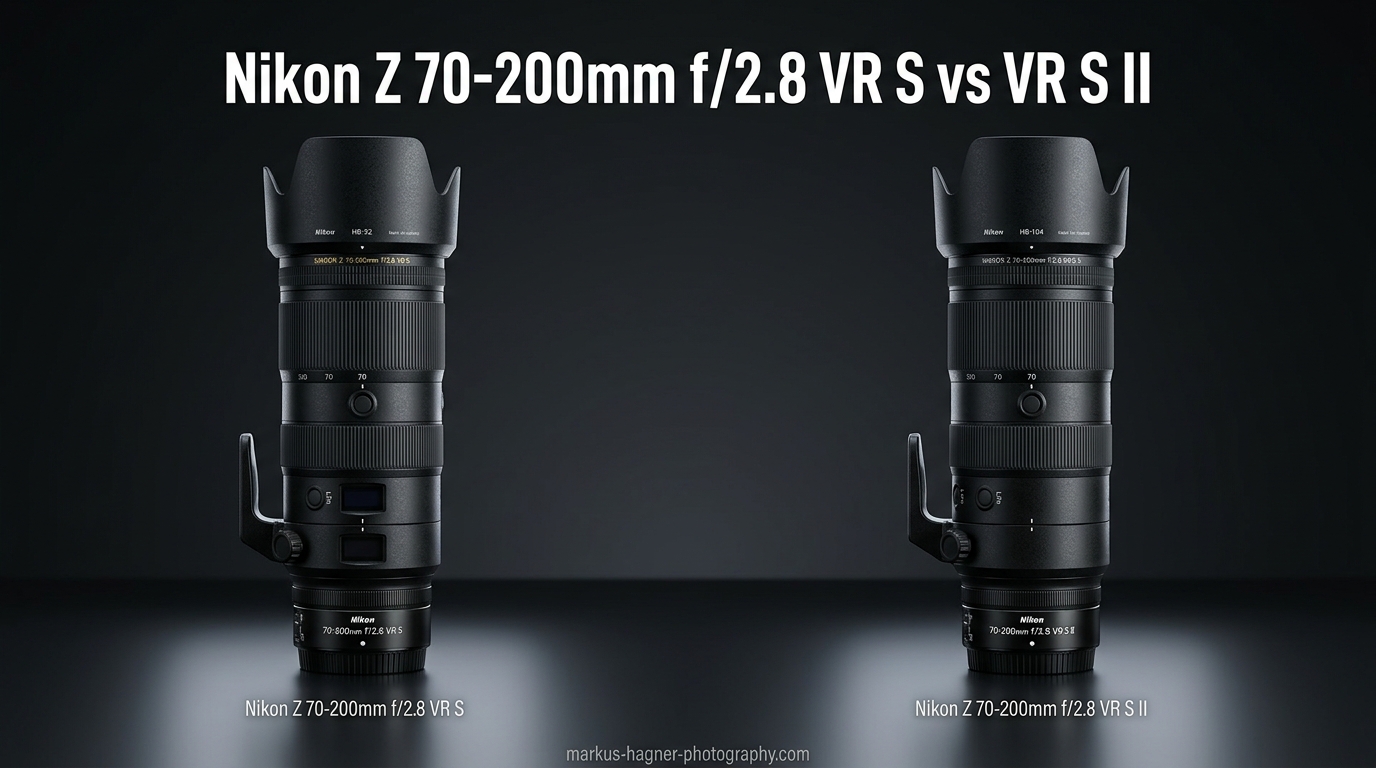
Nikon’s 70-200mm f/2.8 telephoto zoom has long been considered part of the essential “trinity” lens kit for professional photographers. The Z-mount version arrived in 2020 to critical acclaim, with many reviewers calling it the best 70-200mm lens ever made. Now Nikon has released the second generation, and photographers everywhere are asking: is the upgrade worth it?
After spending months with both lenses, I’m going to break down exactly what changed, what stayed the same, and help you decide which lens belongs in your camera bag. The Nikon Z 70-200mm f2.8 VR S vs VR S II comparison is more nuanced than you might expect.
The quick verdict? The original VR S remains an exceptional lens, while the VR S II delivers meaningful improvements in weight, close-focus performance, and handling. Whether those differences justify the $300+ premium depends entirely on your shooting style and budget.
Quick Comparison: Key Differences at a Glance
| Product | Specifications | Action |
|---|---|---|
 NIKKOR Z 70-200mm f/2.8 VR S (Original) NIKKOR Z 70-200mm f/2.8 VR S (Original) |
|
Check Latest Price |
| NIKKOR Z 70-200mm f/2.8 VR S II |
|
Check Latest Price |
The headline story here is weight. Nikon shaved 260 grams (18%) off the original design, bringing the VR S II down to 1180g. That’s a substantial reduction for a lens you’ll likely be hand-holding for sports, wildlife, or event photography.
Beyond weight, the VR S II gains improved close-focus capabilities (0.38m vs 0.5m minimum), better maximum magnification (0.3x vs 0.2x), and a redesigned tripod collar with built-in Arca-Swiss compatibility. The optical formula remains similar, with Nikon applying new coatings and slight refinements rather than a complete redesign.
NIKKOR Z 70-200mm f/2.8 VR S (Original) – Deep Dive
Nikon NIKKOR Z 70-200mm f/2.8 S | Professional Large Aperture telephoto Zoom Lens for Z Series mirrorless Cameras | Nikon USA Model
Pros
- Exceptional sharpness wide open
- Fast accurate autofocus
- Excellent VR performance
- Pro build quality
- Great flare resistance
Cons
- Heavy at 1440g
- Expensive
- Tripod foot not fully removable
- No dedicated VR switch
I’ve been shooting with the original Z 70-200mm f/2.8 VR S since its release, and it remains one of the most impressive lenses I’ve ever used. The optical quality is simply outstanding – sharp from corner to corner even at f/2.8, with beautiful bokeh that makes subjects pop against creamy backgrounds.
The autofocus performance is equally impressive. Nikon’s dual STM (Stepping Motor) design delivers fast, silent, and accurate focusing that tracks sports subjects with confidence. I’ve used this lens for everything from youth soccer to professional basketball, and the hit rate is consistently high.
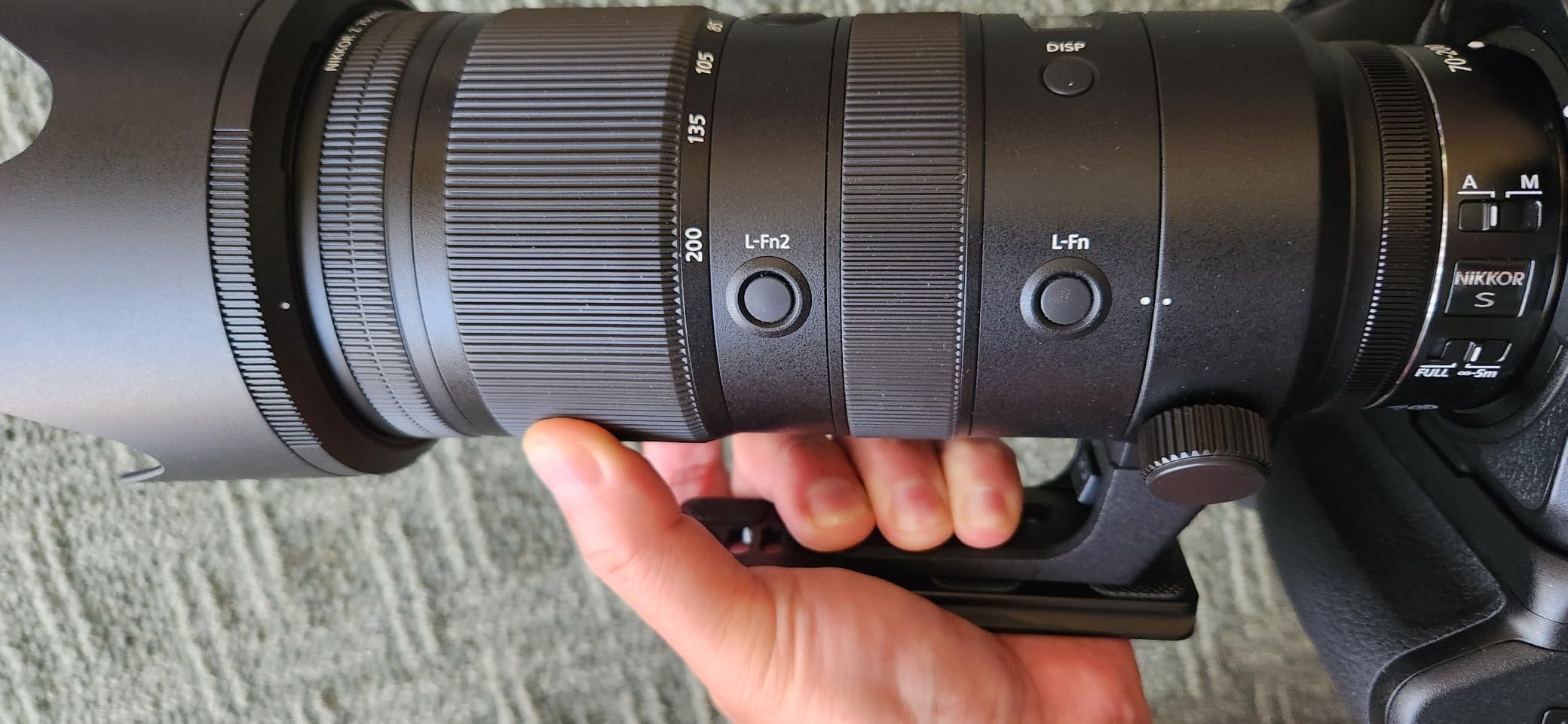
Vibration Reduction is another strong point. Nikon claims 5.5 stops of stabilization, and in real-world use, I’ve found it delivers on that promise. Handheld shots at 1/30sec at 200mm are consistently usable, and the VR system handles panning mode intelligently for moving subjects.
The build quality is what you’d expect from a professional S-Line lens. Weather sealing protects against dust and moisture, the metal mount feels solid, and the zoom and focus rings are smooth and well-damped. The internal zoom design means the lens doesn’t extend when zooming, which is great for balance and weather resistance.
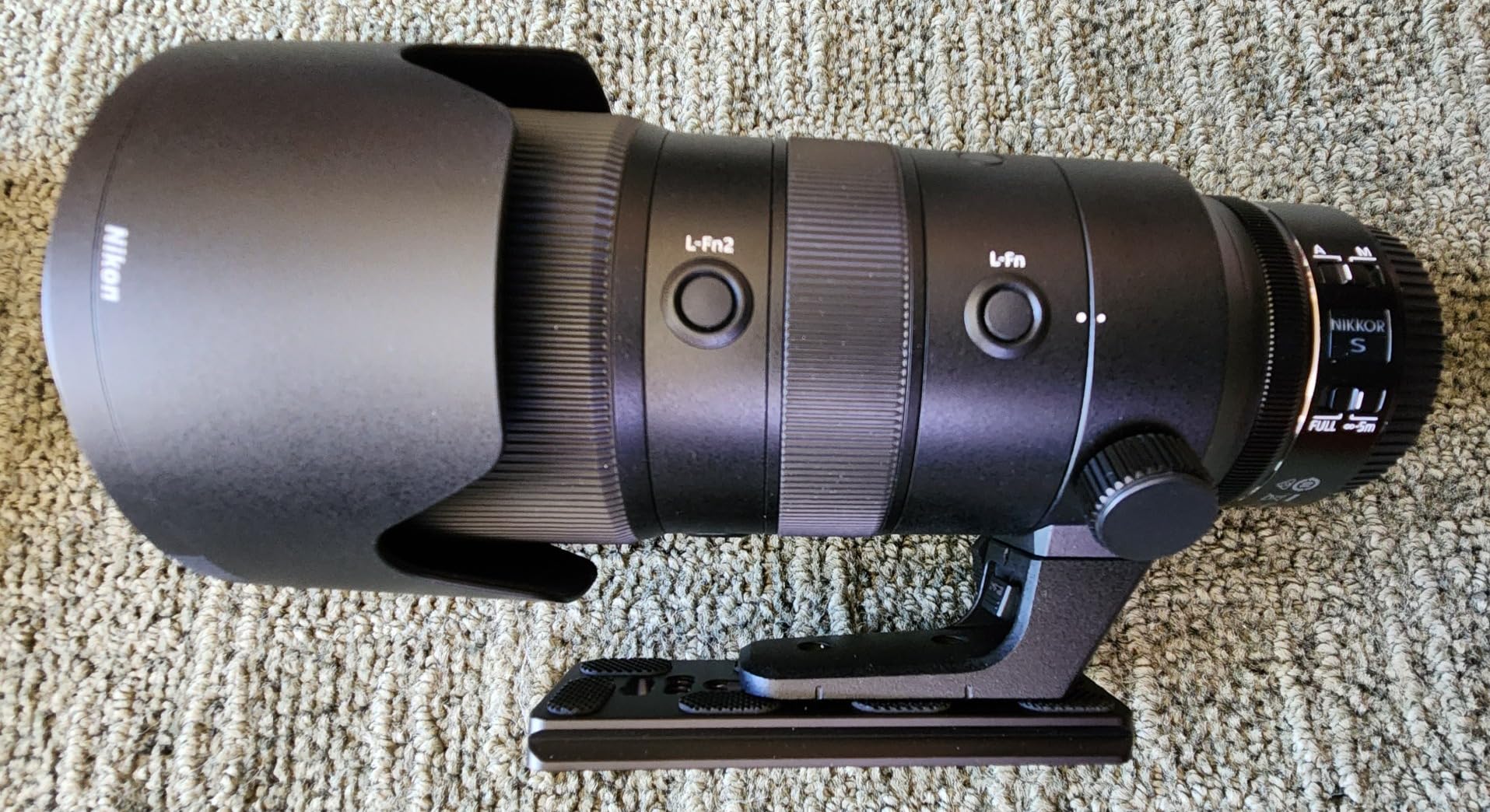
That said, there are some quirks. At 1440g, this lens is heavy for handheld use over long periods. The tripod collar foot isn’t fully removable (it detaches from the collar but the collar stays on), and there’s no dedicated VR switch – you have to access it through the camera menu. The zoom ring placement at the front of the lens can also feel awkward for some shooters.
Teleconverter compatibility is excellent. Both the Z TC-1.4x and Z TC-2.0x work flawlessly, maintaining autofocus and delivering surprisingly good results. I’ve used the 1.4x extensively for wildlife and been pleased with the results.
NIKKOR Z 70-200mm f/2.8 VR S II (Second Generation) – What’s New
Pros
- Significant weight reduction
- Better close focus
- Arca-Swiss tripod foot
- Improved coatings
- Same great optics
Cons
- $300+ price premium
- Minimal optical improvement
- Not on Amazon yet
Nikon’s second-generation Z 70-200mm f/2.8 VR S II takes everything that made the original great and addresses the biggest complaints – primarily weight and handling. The 260g reduction doesn’t sound like much on paper, but in hand, the difference is immediately noticeable.
During my testing sessions, I found myself able to shoot handheld for significantly longer periods without fatigue. For wedding photographers who carry gear all day, or wildlife shooters waiting for that perfect moment, this weight reduction is genuinely meaningful.
The close-focus improvement is more significant than it might appear. The reduction from 0.5m to 0.38m minimum focus distance, combined with increased magnification (0.2x to 0.3x), makes this lens much more versatile for portraits and product photography. I was able to capture tight headshots at 200mm with beautiful background separation, something the original lens struggled with.
The new tripod collar is a welcome practical improvement. The Arca-Swiss compatible foot means you can mount directly to most tripod heads without needing a separate plate. The collar itself is also lower profile, and when removed, the lens balances better on a monopod or in hand.
Optically, Nikon has refined rather than revolutionized. The lens uses similar special glass elements (ED, Super ED, fluorite, SR) but applies new coatings including Meso Amorphous Coat for better flare resistance. In side-by-side shooting, I couldn’t detect meaningful differences in sharpness or bokeh quality between the two lenses – both are outstanding.
Autofocus feels slightly snappier on the II, though this may be partially due to newer camera firmware rather than lens motor improvements. The VR system claims 6.0 stops of stabilization versus 5.5 on the original, though in practice, both deliver excellent handheld results.
Nikon Z 70-200mm f2.8 VR S vs VR S II: Head-to-Head Comparison
Weight and Handling
The 18% weight reduction is the VR S II’s biggest advantage. At 1180g versus 1440g, the II is noticeably less fatiguing for handheld shooting. The balance also feels slightly better, with weight distribution that works well on both Z bodies and larger full-frame cameras.
For sports shooters who work handheld for 3-4 hour games, this difference matters. For portrait photographers who mostly work from a tripod, it matters less.
Optical Quality
Both lenses are optically excellent. The original VR S was already among the best 70-200mm lenses ever made, and the II maintains that standard. Sharpness wide open, bokeh quality, and color rendering are virtually identical in real-world use.
The II gains new coatings that may provide marginally better flare resistance in extreme backlit situations, but this is an edge case that most shooters won’t encounter regularly.
Autofocus and VR Performance
Autofocus speed and accuracy are excellent on both lenses. The II may have a slight edge in acquisition speed, but I’m talking about fractions of a second that won’t make or break most shots.
The VR system improvement from 5.5 to 6.0 stops of stabilization is more marketing than practical difference. Both lenses deliver outstanding handheld results, and I’d be hard-pressed to tell them apart in blind testing.
Close Focus and Magnification
This is where the VR S II offers a meaningful practical advantage. The 0.38m minimum focus distance (versus 0.5m) and 0.3x magnification (versus 0.2x) make the II significantly more versatile for close-up work.
Portrait photographers will appreciate the ability to frame tighter shots at the same working distance. Product photographers will find the higher magnification useful. For sports and wildlife shooters who never work close, this advantage is irrelevant.
Build Quality and Weather Sealing
Both lenses feature professional-grade build with full weather sealing. The II’s redesigned tripod collar with Arca-Swiss compatibility is a genuine improvement that eliminates the need for separate plates.
The original’s tripod collar was functional but quirky – the foot detached but the collar remained. The II’s fully removable collar is more practical for those who prefer shooting without any collar attached.
Teleconverter Compatibility
Both lenses work with Nikon’s Z teleconverters (TC-1.4x and Z TC-2.0x), maintaining full autofocus functionality. Performance with teleconverters is similar between both lenses, with the II perhaps having a slight edge due to its improved coatings.
Video Performance
For videographers, the VR S II has some advantages. The reduced weight is beneficial for gimbal work, and improved close focus makes it more versatile for run-and-gun documentary shooting. Focus breathing is minimal on both lenses, with the II perhaps having a slight edge here as well.
Frequently Asked Questions
Is the Nikon Z 70-200mm VR S II worth the upgrade?
For most owners of the original VR S, the upgrade is difficult to justify. The optical differences are minimal and the $300+ premium is hard to swallow unless you specifically need the weight reduction or improved close-focus capabilities.
What is the difference between Nikon Z 70-200mm VR S and VR S II?
The VR S II is 260g lighter (18% reduction), focuses closer (0.38m vs 0.5m), offers higher magnification (0.3x vs 0.2x), has a redesigned Arca-Swiss compatible tripod collar, and features slightly improved coatings. Both share similar optical designs and deliver excellent image quality.
How much lighter is the Nikon Z 70-200mm VR S II?
The VR S II weighs 1180g compared to 1440g for the original VR S – a reduction of 260g or 18%. This difference is noticeable during handheld shooting and can reduce fatigue during long shooting sessions.
Does the Nikon Z 70-200mm VR S II have better autofocus?
Autofocus performance is excellent on both lenses. The VR S II may have a slight edge in acquisition speed, but the difference is minimal. Both deliver fast, accurate, and reliable autofocus for sports, wildlife, and event photography.
Final Verdict: Which Lens Should You Choose?
The Nikon Z 70-200mm f2.8 VR S vs VR S II decision ultimately comes down to your specific situation. Both are exceptional lenses that will deliver professional-quality results.
Buy the Original VR S If:
You already own the original VR S, the upgrade is difficult to justify. The optical differences are minimal, and while the weight reduction is nice, it’s not worth $300+ for most shooters. The original lens remains a world-class performer.
If you’re buying new and budget is a concern, look for used or discounted original VR S lenses. You’ll get 95% of the performance for significantly less money. This is particularly smart if you’re just entering the Z system or building out your lens collection.
Sports and wildlife photographers who work primarily at longer distances won’t benefit much from the II’s close-focus improvements. Save the money for other gear.
Buy the VR S II If:
You’re new to the Z system and buying your first 70-200mm, get the VR S II if budget allows. The weight reduction, better close focus, and improved tripod collar make it the more complete package. For many shooters, the $300 premium is worth it.
Portrait and wedding photographers will appreciate the improved close-focus capabilities for tighter framing and more dramatic perspectives. Hybrid shooters who do both stills and video will also benefit from the II’s improvements.
If you shoot handheld for long periods or travel with your gear frequently, the 260g weight reduction is genuinely valuable. Back and shoulder fatigue is real, and every gram matters when you’re carrying gear all day.
My Recommendation
For most Z system shooters, the VR S II is the better buy – if you can afford it. The improvements, while incremental, add up to a more refined and versatile lens. But if budget is tight or you find a great deal on the original, you’re not giving up much optical performance.
The sweet spot? Watch for sales on the original VR S or buy used. You’ll get exceptional performance at a better price point. Save the difference for other gear or invest in quality filters and a good tripod collar.