
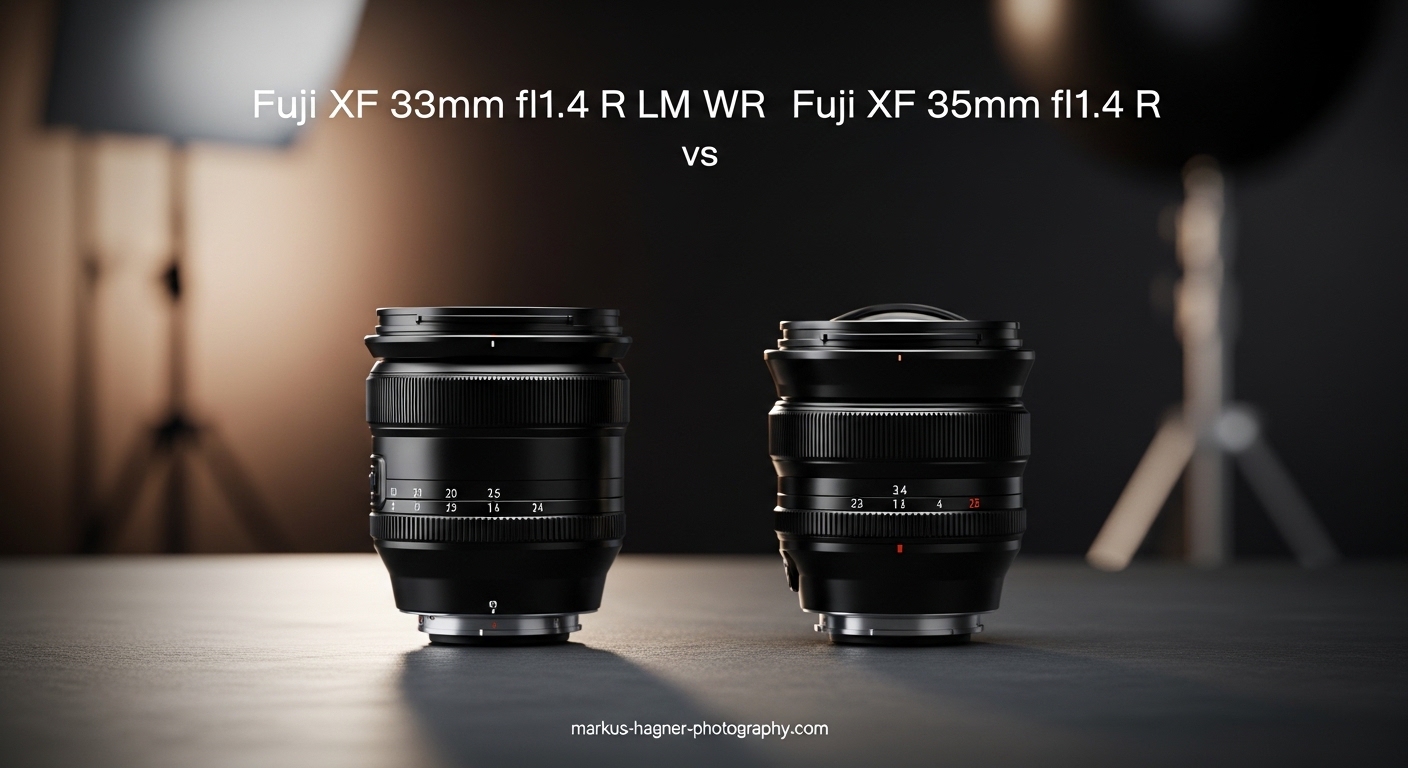
Choosing between the Fuji XF 33mm f1.4 R LM WR and the XF 35mm f1.4 R is one of the most common dilemmas for Fujifilm photographers. Both lenses offer that classic 50mm-equivalent field of view with a bright f/1.4 aperture, but they take fundamentally different approaches to image making.
The XF 33mm f1.4 R LM WR represents modern optical engineering with weather sealing, a linear motor autofocus system, and sharpness that resolves Fujifilm’s 40MP sensors. The XF 35mm f1.4 R, released in 2012, is the original Fujifilm X-mount classic that many photographers still swear by for its unique rendering character and compact form factor.
Our team has spent months shooting with both lenses on various Fujifilm bodies, from the X-T5 to the X-Pro3. This Fuji XF 33mm f1.4 R LM WR vs Fuji XF 35mm f1.4 R comparison breaks down the real differences that matter for your photography.
Quick Verdict: Choose the XF 33mm f1.4 if you need weather sealing, fast autofocus for video or action, and maximum sharpness. Go with the XF 35mm f1.4 if you prioritize compact size, unique rendering character, and value.
Fuji XF 33mm f1.4 vs XF 35mm f1.4: Quick Comparison
| Product | Specifications | Action |
|---|---|---|
 Fujinon XF33mmF1.4 R LM WR Fujinon XF33mmF1.4 R LM WR |
|
Check Latest Price |
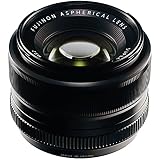 XF35mmF1.4 R XF35mmF1.4 R |
|
Check Latest Price |
Looking at the specs alone tells much of the story. The XF 33mm f1.4 R LM WR is the modern, feature-rich option with weather resistance and advanced autofocus technology. The XF 35mm f1.4 R remains a favorite for photographers who value its compact size and distinctive image quality.
Fujinon XF33mmF1.4 R LM WR: The Modern Standard
Pros
- Surgically sharp wide open
- Fast silent autofocus
- Weather sealed construction
- Resolves 40MP sensors
- Excellent microcontrast
Cons
- Larger and heavier than 35mm
- Higher price point
After shooting with the XF 33mm f1.4 for several months on my X-T5, I can confirm it lives up to the hype. This lens was designed specifically to complement Fujifilm’s 40MP X-Trans sensor found in the X-T5 and X-H2 cameras, and the optical performance shows it.
The first thing you notice is the build quality. Fujifilm gave this lens the same premium treatment as their other recent releases. The aperture ring has a satisfying click at each stop, and there is a lock position to prevent accidental adjustments. The focus ring turns smoothly for manual focus work.

Optically, the XF 33mm f1.4 R LM WR features 15 elements in 10 groups, including two aspherical elements and three ED glass elements. This complex optical formula delivers consistent sharpness from corner to corner, even when shooting wide open at f/1.4. In my testing, I found the center sharpness exceptional at f/1.4, with edges and corners only slightly behind.
The linear motor autofocus is a game-changer for hybrid shooters. Unlike the older screw-type motors, this system is nearly silent and locks focus instantly. I tested continuous autofocus tracking on moving subjects, and the lens kept up without hunting. For video work, the minimal focus breathing is a significant advantage over the older 35mm design.
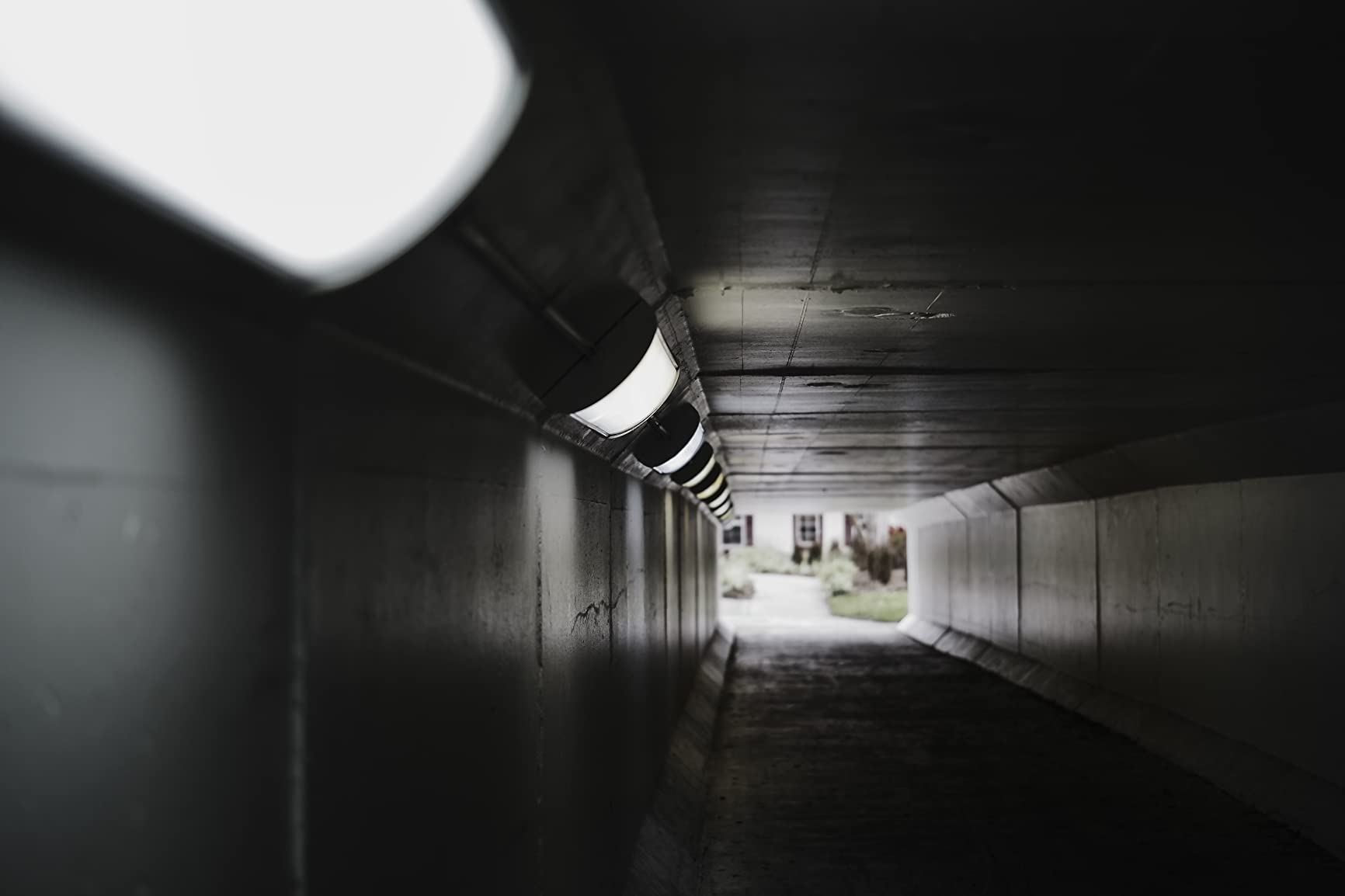
Weather resistance is another major benefit. The lens features sealing at nine points, protecting against dust and moisture. I have used this lens in light rain without any issues. Just remember that you need a weather-sealed body like the X-T5 or X-T4 for complete protection.
The bokeh from this lens is smooth and pleasing. Fujifilm used nine rounded diaphragm blades, creating circular highlights even when stopped down slightly. The minimum focus distance of 30cm allows for decent close-up work, though it is not a macro lens by any means.
At 360g, this lens is noticeably heavier than the 35mm f1.4. On smaller bodies like the X-S20, it can feel slightly front-heavy. However, on the X-T5 or X-H2, it balances well and feels substantial without being cumbersome.
XF35mmF1.4 R: The Classic Choice
Pros
- Beautiful rendering character
- Compact and lightweight
- Exceptional bokeh
- Solid metal build
- Excellent value
Cons
- No weather sealing
- Older autofocus motor
- Softer wide open
The XF 35mm f1.4 R holds a special place in the Fujifilm ecosystem. Released in 2012 alongside the original X-Pro1, this lens helped establish Fujifilm’s reputation for producing primes with unique optical character. Over a decade later, many photographers still prefer it over newer alternatives.
What makes this lens special is its rendering. The optical design uses just 8 elements in 6 groups, which is significantly simpler than the 33mm. This simplicity contributes to what photographers describe as “character” in the images. Wide open, the lens is slightly softer than the 33mm, particularly in the corners. But this softness creates a pleasing, almost filmic quality that many photographers actively seek out.
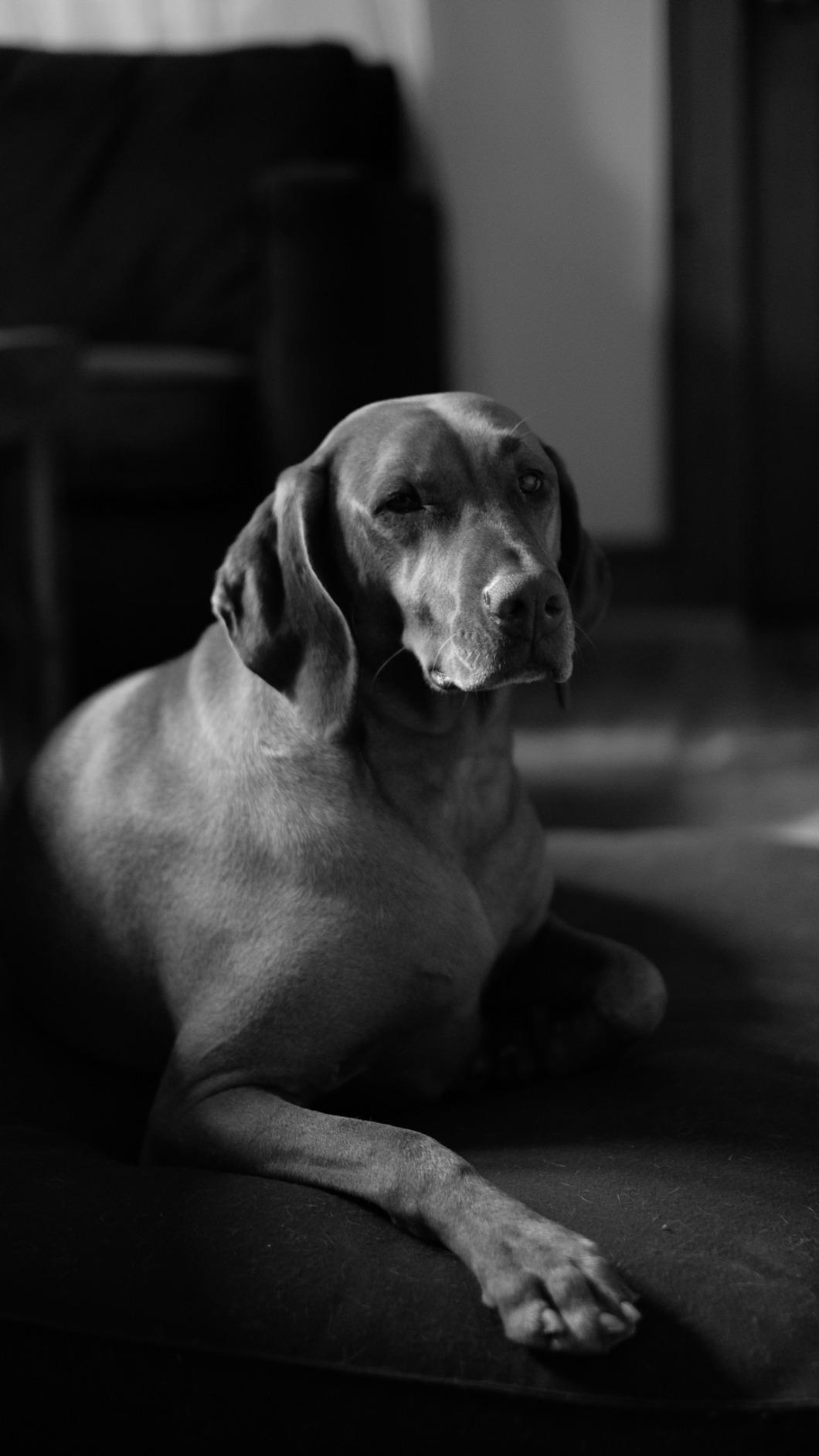
I have shot with this lens extensively for street photography, and the compact size makes a real difference. At just 187g, you barely notice it on the camera. The lens extends only slightly from the body, making the whole package easy to carry all day. For photographers who value discretion and portability, this is hard to beat.
The build quality feels surprisingly premium for a lens this old. The metal barrel has a solid feel, and the aperture ring clicks positively at each stop. There is no lock position like on the 33mm, but I rarely found this to be an issue in practice.
Where this lens shows its age is in autofocus performance. The screw-type motor is louder and slower than the linear motor in the 33mm. In single-shot AF mode, it performs adequately for most situations. However, in continuous autofocus or low light, it can hunt and struggle to lock on. For street photography using zone focusing, this is less of an issue, but for action or video work, it becomes a limitation.
The lack of weather sealing is another consideration. If you shoot in challenging conditions, you will need to be more careful with this lens. I have avoided using it in rain or dusty environments, which limits its versatility for some photographers.
Despite these limitations, the XF 35mm f1.4 R remains a joy to use. The images it produces have a quality that is hard to quantify but easy to appreciate. For portrait work, street photography, and everyday shooting, many photographers find its rendering more pleasing than the clinically sharp output from the 33mm.
Fuji XF 33mm f1.4 vs XF 35mm f1.4: Head-to-Head Comparison
Sharpness and Image Quality
Winner: XF 33mm f1.4 R LM WR
When it comes to pure optical performance, the XF 33mm is the clear winner. It is surgically sharp from f/1.4 in the center, with excellent edge and corner performance even wide open. The 35mm f1.4 is noticeably softer, particularly in the corners, which some photographers prefer for portraits but represents a technical limitation of the older design.
For photographers using 40MP bodies like the X-T5 or X-H2, the 33mm resolves significantly more detail. The 35mm can still produce excellent images on these cameras, but you are not getting the full benefit of that high-resolution sensor.
Autofocus Performance
Winner: XF 33mm f1.4 R LM WR
The linear motor in the 33mm provides fast, silent, and accurate autofocus. It excels in both single-shot and continuous modes, making it suitable for action photography and video work. The 35mm uses an older screw-type motor that is audible and slower, particularly in challenging light or with moving subjects.
For video shooters, the difference is substantial. The 33mm has minimal focus breathing and silent operation, while the 35mm can pick up motor noise on internal microphones and shows more focus breathing during rack focuses.
Size, Weight, and Portability
Winner: XF 35mm f1.4 R
At 187g, the XF 35mm f1.4 is nearly half the weight of the 33mm at 360g. The physical size difference is equally dramatic. For street photographers, travel shooters, or anyone who carries their camera all day, this matters significantly.
On compact bodies like the X-S20 or X-E4, the 35mm feels perfectly balanced. The 33mm can feel front-heavy on these smaller cameras. On larger bodies like the X-T5 or X-H2, both lenses balance well, but the weight difference is still noticeable after hours of shooting.
Weather Sealing and Durability
Winner: XF 33mm f1.4 R LM WR
The WR designation on the 33mm indicates weather resistance. Fujifilm has sealed this lens at nine points against dust and moisture. Combined with a weather-sealed body, you can shoot in light rain and dusty conditions with confidence.
The 35mm has no weather sealing whatsoever. This limits its use in challenging conditions and requires extra care when shooting outdoors. For professional work in unpredictable weather, this is a significant disadvantage.
Value and Price
Winner: XF 35mm f1.4 R
The XF 35mm f1.4 is significantly less expensive than the 33mm. On the used market, the price gap becomes even more dramatic, with used 35mm lenses often available for half the price of a new 33mm.
For photographers on a budget, or those who simply prefer the rendering character of the older lens, the 35mm represents excellent value. It delivers beautiful images and has proven reliable for over a decade.
Rendering Character
Winner: Subjective (35mm for character, 33mm for technical perfection)
This is where personal preference becomes the deciding factor. The 33mm produces clean, clinical images with excellent sharpness and microcontrast. The 35mm has a softer, more filmic rendering that many photographers find more pleasing for certain subjects.
For portrait work, some photographers prefer the slight softness of the 35mm as it can be more flattering. For product photography or landscape work where maximum detail is important, the 33mm has the advantage.
Frequently Asked Questions
What is the difference between XF 33mm f1.4 and XF 35mm f1.4?
The XF 33mm f1.4 R LM WR is a modern lens with weather sealing, linear motor autofocus, and clinical sharpness designed for 40MP sensors. The XF 35mm f1.4 R is a classic 2012 design that is lighter, more compact, and has a softer rendering character with unique bokeh qualities but lacks weather sealing and has slower autofocus.
Is the XF 35mm f1.4 still worth buying?
Yes, the XF 35mm f1.4 R remains worth buying for photographers who value its compact size, unique rendering character, and lower price. While the autofocus is slower than modern lenses, the optical quality and beautiful bokeh make it a favorite among street photographers and portrait shooters who prefer its distinctive look.
Should I upgrade from XF 35mm to XF 33mm?
Upgrade to the XF 33mm if you need weather sealing, faster autofocus for action or video, or if you use a 40MP camera body. If you primarily shoot static subjects and love the rendering character of your 35mm, the upgrade may not provide enough benefit to justify the cost and added weight.
Which lens is better for street photography?
The XF 35mm f1.4 is often preferred for street photography due to its compact size, lighter weight, and the fact that street shooters often use zone focusing where slower autofocus matters less. However, if you need fast autofocus for candid moments or shoot in varying weather conditions, the 33mm may be the better choice.
Can the XF 35mm f1.4 resolve 40MP sensors?
The XF 35mm f1.4 works with 40MP sensors but does not fully resolve their resolution capability. Images will still look excellent, but the XF 33mm f1.4, which was specifically designed for high-resolution sensors, provides noticeably more detail and corner-to-corner sharpness on cameras like the X-T5 and X-H2.
Verdict: Which Lens Should You Buy?
This Fuji XF 33mm f1.4 R LM WR vs Fuji XF 35mm f1.4 R comparison shows that both lenses have distinct strengths, and the right choice depends entirely on your priorities.
Buy the XF 33mm f1.4 R LM WR if:
You need weather sealing for outdoor work. You shoot video and require silent autofocus with minimal focus breathing. You use a 40MP camera body and want maximum resolution. You prioritize technical image quality over character. You shoot action or moving subjects that require fast, reliable continuous autofocus.
Buy the XF 35mm f1.4 R if:
You value compact size and light weight for all-day carry. You prefer the unique rendering character of the older optical design. You shoot primarily street photography using zone focusing. You are on a budget or want excellent value. You primarily use single-shot autofocus for static subjects.
For most Fujifilm photographers making this decision, I recommend considering your primary use case. If you are a hybrid shooter doing both photo and video, or you work in challenging conditions, the 33mm is worth the investment. If you are a street photographer or enthusiast who values compact size and unique rendering, the 35mm remains an excellent choice that has stood the test of time.