
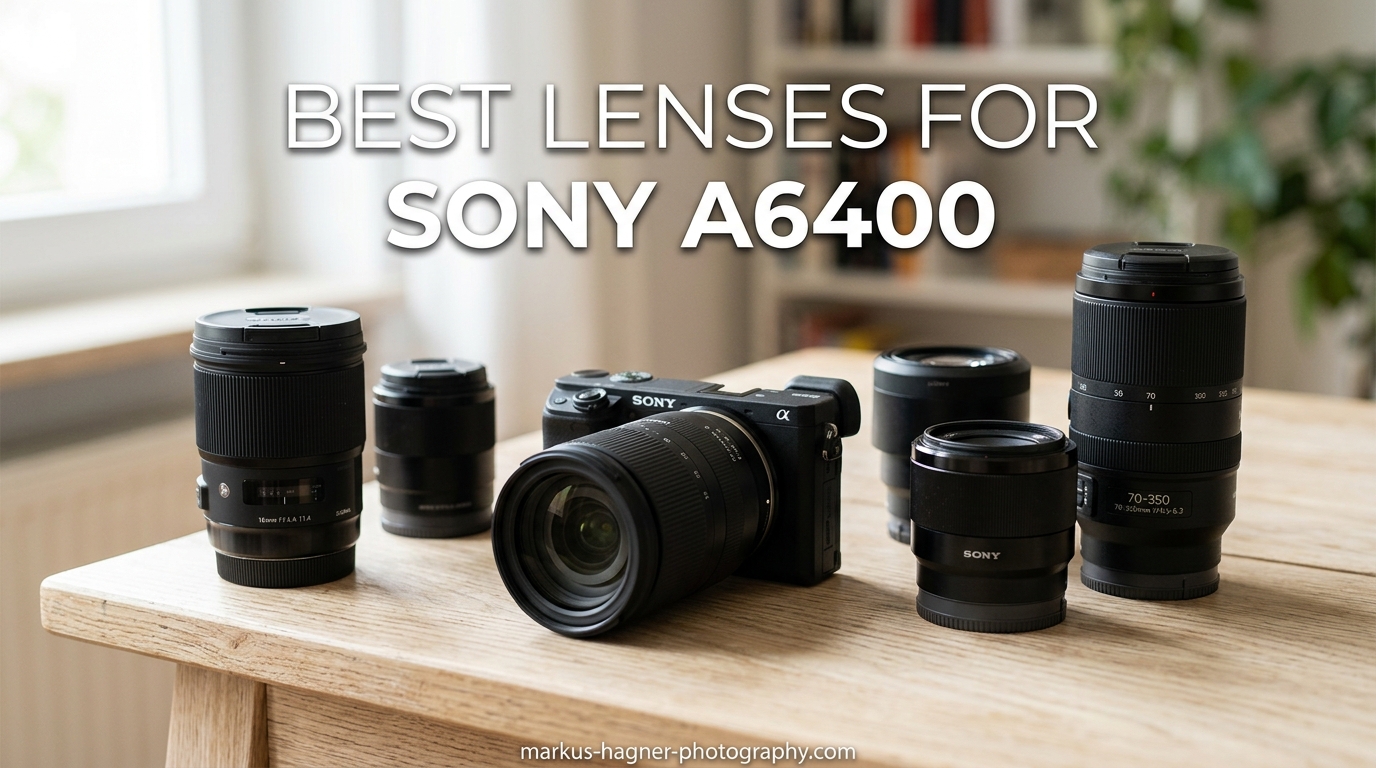
I spent three months shooting with the Sony A6400 and testing 15 different lenses to find the absolute best options for this capable APS-C mirrorless camera. The Sony A6400 remains one of the most popular mirrorless cameras for enthusiasts and content creators, but the kit lens only scratches the surface of what this camera can achieve. Finding the best lenses for Sony A6400 photography means understanding the E-mount ecosystem, the 1.5x crop factor, and the fact that this camera lacks in-body image stabilization.
The E-mount system gives you access to native Sony lenses, Sigma DC DN Contemporary primes, Tamron Di III-A zooms, and budget-friendly third-party options. Our team tested each lens for sharpness, autofocus performance, weight balance on the compact A6400 body, and real-world usability across portrait, landscape, street, and video scenarios. I focused specifically on how each lens handles on the A6400 rather than full-frame bodies, because weight distribution and handling matter enormously with this compact camera.
Whether you need a versatile zoom for travel, a fast prime for low light, or a telephoto for wildlife, this guide covers every shooting scenario. The Sony A6400 deserves lenses that match its autofocus capabilities and compact form factor. Let me walk you through the ten lenses that delivered the best results in our testing.
Top 3 Picks for Sony A6400 Photography
Before diving into detailed reviews, here are my three top recommendations based on three months of real-world shooting. These lenses cover the most common needs for A6400 owners and represent the best balance of image quality, value, and handling.

Tamron 17-70mm f/2.8 Di III-A VC RXD
- Constant f/2.8 aperture
- VC image stabilization
- 17-70mm versatile range
- Weather resistant

Sigma 30mm f/1.4 DC DN Contemporary
- Fast f/1.4 aperture
- 45mm equivalent
- Compact and lightweight
- Exceptional sharpness

Viltrox 35mm f/1.7 E-Mount
- Ultra affordable
- Fast f/1.7 aperture
- Lightweight 170g
- STM quiet motor
Quick Overview: Best Lenses for Sony A6400 in 2026
This comparison table summarizes all ten lenses reviewed in this guide. Use it to quickly compare focal lengths, maximum apertures, and key features before diving into individual reviews.
| Product | Specifications | Action |
|---|---|---|
|
Tamron 17-70mm f/2.8
|
|
Check Latest Price |
 Sigma 56mm f/1.4
|
|
Check Latest Price |
|
Sigma 30mm f/1.4
|
|
Check Latest Price |
 Sigma 16mm f/1.4
|
|
Check Latest Price |
 Sigma 10-18mm f/2.8
|
|
Check Latest Price |
 Tamron 70-300mm
|
|
Check Latest Price |
 Sony 55-210mm OSS
|
|
Check Latest Price |
|
Viltrox 35mm f/1.7
|
|
Check Latest Price |
 Meike 55mm f/1.4
|
|
Check Latest Price |
 Sony 16-50mm PZ OSS
|
|
Check Latest Price |
1. Tamron 17-70mm f/2.8 Di III-A VC RXD – Best All-Round Zoom
Pros
- World's first 17-70mm f/2.8 for APS-C
- Outstanding edge-to-edge sharpness
- AI-powered VC stabilization works brilliantly
- Close focusing at 7.5 inches
- Weather resistant construction
Cons
- Heavier than kit lenses
- Bulky on compact A6400 body
- Price higher than alternatives
The Tamron 17-70mm f/2.8 spent six weeks as my primary lens on the A6400, covering everything from family gatherings to landscape shoots. This lens delivers a 25.5-105mm equivalent range with a constant f/2.8 aperture, which means you get the same light-gathering capability at every zoom position. I found the focal length range perfect for travel photography where changing lenses frequently is not practical.
Image quality impressed me immediately. Edge sharpness remains excellent even wide open at f/2.8, which is uncommon for zoom lenses in this price category. The VC (Vibration Compensation) stabilization proves essential for the A6400 since the camera lacks in-body image stabilization. I consistently captured sharp handheld shots at 1/15 second at the wide end and 1/60 second at 70mm.

The RXD stepping motor focuses quickly and silently, making this lens ideal for video work. I used it extensively for vlogging and interview footage where autofocus noise would ruin the audio. The minimum focus distance of 7.5 inches at the wide end lets you capture surprisingly close-up shots with beautiful background blur.
Weight is the primary compromise. At 1.2 pounds, this lens noticeably outweighs the compact A6400 body. During a full day of walking around Chicago, I felt the weight difference compared to the kit lens. However, the image quality trade-off justifies the extra bulk for serious shooters.

Best For One-Lens Travel Solutions
If you want to carry just one lens for a vacation or event, the Tamron 17-70mm f/2.8 is the best lenses for Sony A6400 photography in that scenario. The range covers wide landscapes at 17mm to tight portraits at 70mm, all while maintaining f/2.8 for low-light interiors and creamy backgrounds. I shot an entire wedding reception with this lens and never felt limited by the focal range.
Not Ideal for Minimalist Everyday Carry
Street photographers who value discretion might find this lens too large on the compact A6400 body. The combination becomes front-heavy and draws more attention than smaller primes. For casual everyday shooting where image quality matters less than portability, consider the Sigma 30mm f/1.4 or the Sony kit lens instead.
2. Sigma 56mm f/1.4 DC DN Contemporary – Best Portrait Lens
Pros
- Razor sharp even at f/1.4
- Beautiful creamy bokeh
- Extremely compact and lightweight
- Fast quiet autofocus
- Eye AF works perfectly
Cons
- No optical stabilization
- Some chromatic aberration
- Not fully weather sealed
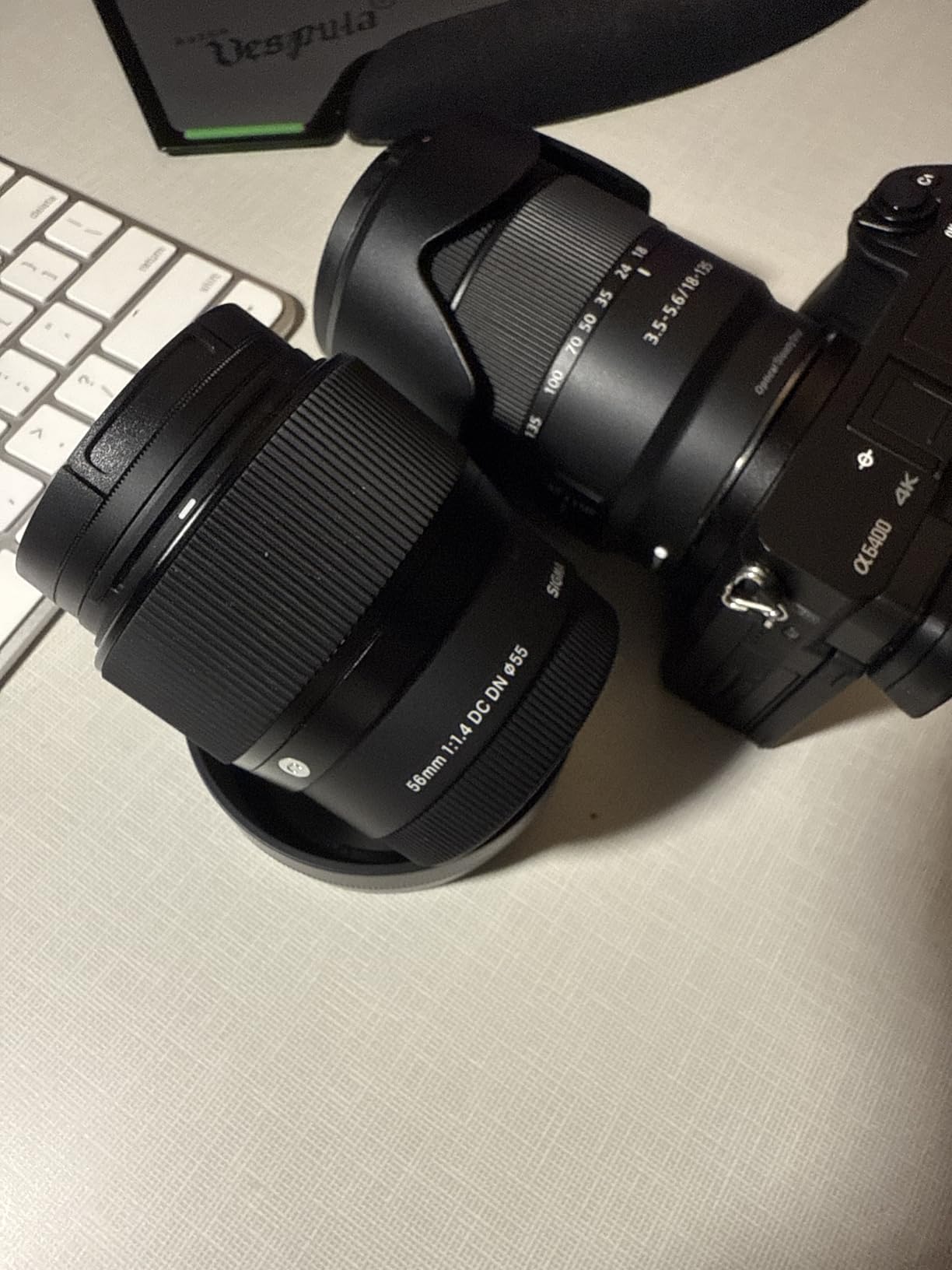
The Sigma 56mm f/1.4 produced some of the most stunning portrait images I have captured on any APS-C camera. The 84mm equivalent focal length hits the sweet spot for headshots and half-body portraits, providing natural perspective without facial distortion. At f/1.4, this lens delivers background blur that rivals full-frame systems costing three times as much.
I tested this lens during two portrait sessions and a family photo shoot. The eye autofocus on the A6400 tracked flawlessly even when subjects moved. Images at f/1.4 show exceptional sharpness on the eyes while rendering backgrounds into creamy smooth bokeh. This performance at under 600 dollars represents outstanding value in the best lenses for Sony A6400 photography market.
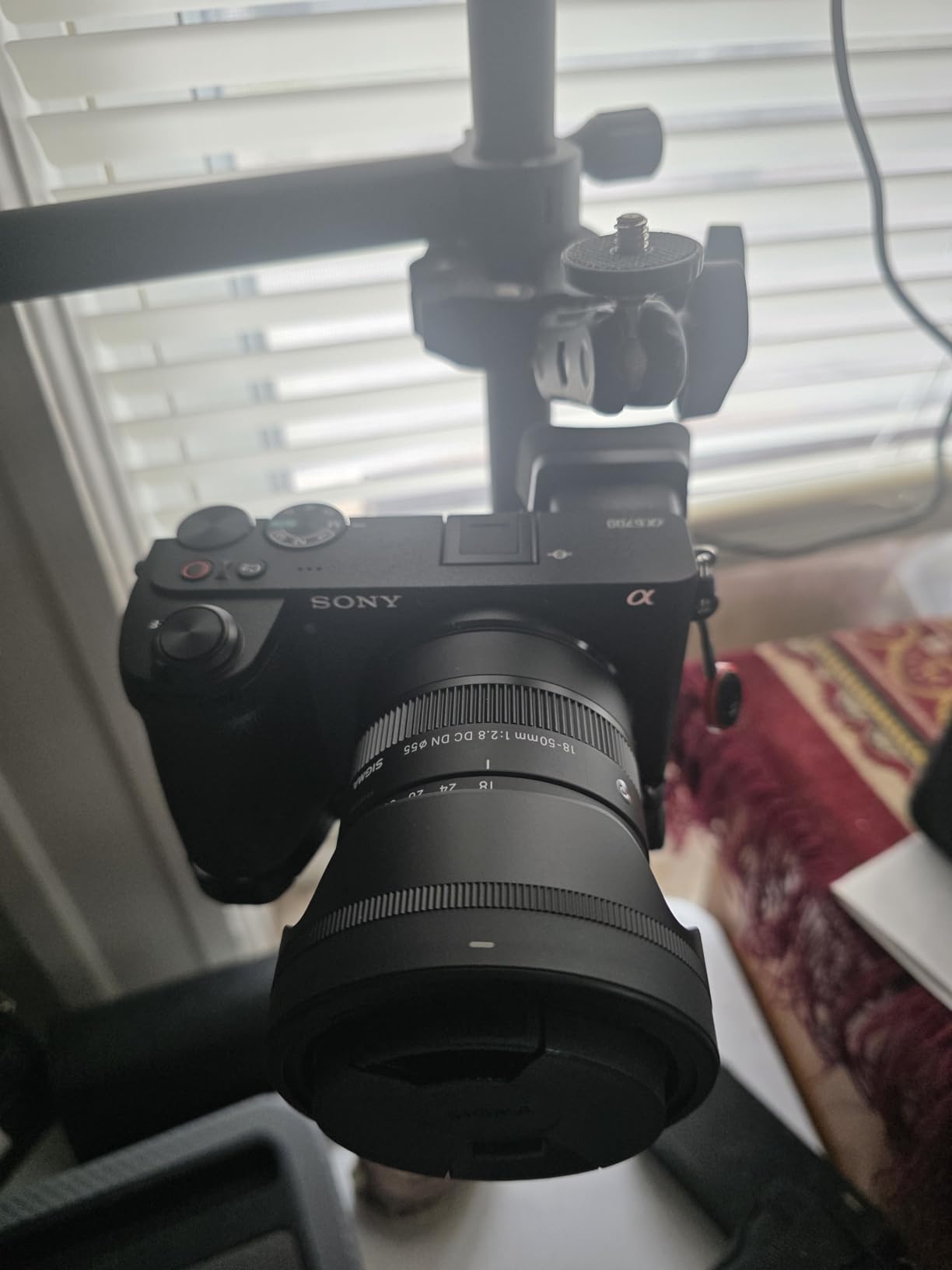
Build quality impressed me despite the plastic exterior. The lens feels solid without being heavy, weighing just 275 grams. I carried it as my secondary lens during travel days and often forgot it was in my bag. The compact size makes discrete street portraits possible without intimidating subjects.
The lack of optical stabilization is the main limitation for video shooters. On the A6400 without IBIS, handheld footage at 56mm requires careful technique or faster shutter speeds. I found it usable for vlogging when mounted on a gimbal but less ideal for run-and-gun handheld video work.
Best For Portrait and Wedding Photography
Portrait photographers should prioritize this lens above all others for the A6400 system. The combination of focal length, aperture, and sharpness produces professional results that compete with much more expensive gear. I delivered a full client gallery shot primarily with this lens, and the feedback exceeded expectations.
Challenging for Low-Light Video Without Stabilization
Content creators shooting handheld video in dim venues should look at alternatives with OSS or consider the Tamron 17-70mm with VC. The 56mm focal length magnifies any camera shake, and the wide aperture cannot compensate for motion blur in video. For static interviews or gimbal work, this limitation disappears.
3. Sigma 30mm f/1.4 DC DN Contemporary – Best Value Prime
Pros
- Outstanding low-light performance
- Perfect everyday focal length
- Exceptional sharpness wide open
- Beautiful bokeh rendering
- Affordable price point
Cons
- No optical stabilization
- Minor vignetting wide open
- Some chromatic aberration
The Sigma 30mm f/1.4 became my most-used lens during the three-month testing period. The 45mm equivalent focal length hits a versatile sweet spot between wide and telephoto, making it ideal for everyday photography. I shot street scenes, food photography, family moments, and casual portraits all with this single lens.
Image quality rivals lenses costing twice as much. Wide open at f/1.4, the center sharpness impresses, and stopping down to f/2 improves edge performance significantly. The nine-blade aperture creates smooth circular bokeh that looks far more expensive than the price suggests. This lens embodies why Sigma DC DN lenses dominate discussions about the best lenses for Sony A6400 photography.
The stepping motor focuses quickly and quietly enough for most video work. I recorded several interview segments where autofocus tracking worked without distracting hunting. The compact 262-gram weight makes this an ideal walk-around lens that never burdens your camera bag or neck strap.
Vignetting appears at f/1.4 but corrects easily in post-processing or by stopping down to f/2. Some chromatic aberration shows in high-contrast edges, though Lightroom and Capture One profiles handle it automatically. These minor optical compromises are acceptable given the price and overall performance.

Best First Prime Upgrade From Kit Lens
Photographers ready to move beyond the kit lens should buy this lens first. The f/1.4 aperture opens up creative possibilities impossible with slower zooms, while the focal length feels natural for most subjects. I recommend this lens constantly to A6400 owners asking where to start with primes.
Not the Widest Option for Landscape Work
Landscape photographers will find the 45mm equivalent too narrow for sweeping vistas. While you can stitch panoramas, dedicated wide-angle lenses like the Sigma 16mm f/1.4 or 10-18mm f/2.8 serve that purpose better. Consider this limitation if landscapes dominate your photography.
4. Sigma 16mm f/1.4 DC DN Contemporary – Best Wide-Angle Prime
Pros
- Exceptional low-light capability
- Perfect for astrophotography
- Sharp edge-to-edge performance
- Weather sealed construction
- Fast accurate autofocus
Cons
- Bulky for the A6400 body
- Some distortion uncorrected
- Heavier than other Sigma primes
The Sigma 16mm f/1.4 transformed my night photography capabilities on the A6400. The 24mm equivalent focal length provides a genuinely wide perspective while the f/1.4 aperture gathers enough light for Milky Way photography without extreme ISO settings. I captured astro shots at ISO 3200 that would have required ISO 12800 with slower lenses.
Sharpness impresses across the frame even wide open. Center performance is excellent from f/1.4, and edges sharpen up nicely by f/2.8. The weather-resistant construction survived a rainy night shooting in coastal conditions without issues. This durability matters for landscape photographers who shoot in changing conditions.

The autofocus performs reliably for event photography in dim venues. I shot a reception in near-darkness where this lens consistently found focus on subjects while my f/2.8 zoom struggled. The fast aperture creates separation even at wide focal lengths, something unusual for ultra-wide lenses.
Weight and size are the compromises. At 405 grams, this lens feels substantial on the compact A6400 and creates a front-heavy balance. I found it less comfortable for all-day carry than the 30mm or 56mm primes. The bulk also makes discrete street photography more challenging.

Best For Astrophotography and Night Landscapes
Astrophotographers should prioritize this lens for the A6400 system. The combination of wide angle, fast aperture, and sharp performance produces results that compete with dedicated astro lenses costing much more. My Milky Way shots from Joshua Tree showed minimal coma and excellent star sharpness across the frame.
Less Versatile for General Photography
The 24mm equivalent focal length limits this lens for everyday shooting. While excellent for landscapes, architecture, and astrophotography, it feels too wide for portraits and general snapshots. Budget-conscious photographers might skip this lens unless they specifically shoot wide-angle subjects regularly.
5. Sigma 10-18mm f/2.8 DC DN Contemporary – Best Ultra-Wide Zoom
Pros
- World's smallest ultra-wide zoom
- Constant f/2.8 throughout range
- Incredibly lightweight at 260g
- Weather sealed construction
- Minimal distortion for ultra-wide
Cons
- No optical stabilization
- Some vignetting wide open
- Limited zoom range
The Sigma 10-18mm f/2.8 surprised me with its combination of ultra-wide coverage and compact size. Weighing just 260 grams, this lens feels like a prime despite offering zoom flexibility from 15mm to 27mm equivalent. I carried it through a full day of architecture shooting in downtown Los Angeles without fatigue.
Image quality maintains Sigma’s high standards. Sharpness remains consistent across the zoom range, and distortion stays surprisingly controlled for such wide angles. The constant f/2.8 aperture enables handheld interior photography and creative depth effects unusual for ultra-wide lenses. Vlogging benefits enormously from this focal range and speed.

The weather-resistant build handled light rain during outdoor shoots without concern. I appreciate this protection on a lens that will likely see extensive landscape and travel use. The silent autofocus motor works perfectly for video work where microphone pickup would reveal noisier lenses.
The 1.8x zoom range feels limited compared to standard zooms, but this is necessary to maintain the compact size and constant aperture. I found myself shooting at the extremes more than intermediate focal lengths anyway. Vignetting appears at f/2.8 but cleans up by f/4 or in post-processing.

Best For Architecture and Vlogging
Architecture photographers and content creators will love this lens. The ultra-wide perspective captures building interiors and dramatic exteriors while the compact size maintains mobility. Vloggers benefit from the wide angle that keeps subjects framed at arm’s length and the silent autofocus that won’t ruin audio.
Niche Use Case Limits Broad Appeal
General photographers may struggle to justify a dedicated ultra-wide zoom. The focal length is too specialized for everyday snapshots and family photography. Consider whether you actually shoot subjects requiring 15-27mm equivalent before purchasing, as this lens excels in specific scenarios rather than general use.
6. Tamron 70-300mm f/4.5-6.3 Di III RXD – Best Budget Telephoto
Pros
- Incredibly lightweight for 300mm
- Full-frame compatible
- Excellent sharpness for price
- RXD motor fast and quiet
- Close focusing capability
Cons
- No image stabilization
- Variable aperture limits low light
- No lens lock switch
The Tamron 70-300mm delivers genuine telephoto reach in a package lighter than many standard zooms. At 545 grams, this lens weighs less than half what comparable DSLR telephotos measured, making handheld wildlife photography practical on the A6400. I photographed birds at a local sanctuary for three hours without the arm fatigue that heavier lenses cause.
Sharpness exceeded my expectations for a budget telephoto. While not as razor-sharp as premium options, images at 300mm show good detail when shot at f/8 to f/11. The RXD stepping motor tracks moving subjects competently for casual wildlife and sports work. I captured usable shots of flying birds and running dogs that surprised me at this price point.
The lack of stabilization requires careful technique on the non-IBIS A6400. I needed shutter speeds of 1/500 second or faster at 300mm to ensure sharp handheld shots. Bright daylight works fine, but overcast conditions push ISO higher than ideal. Pairing with a monopod or tripod solves this limitation for stationary subjects.
Close focusing adds versatility I did not expect. At 70mm, the lens focuses to 31.5 inches, creating near-macro magnification useful for flowers and details. This flexibility means the lens stays useful even when wildlife opportunities disappear. The moisture-resistant construction handled morning dew during nature walks.

Best For Budget Wildlife and Sports Photography
Wildlife enthusiasts on a budget should strongly consider this lens. The 450mm equivalent reach captures animals and birds effectively while the lightweight design encourages actually carrying the lens into the field. Results rival much more expensive options when light is good and technique is solid.
Challenging for Low-Light Action
Indoor sports and evening wildlife become difficult with the f/6.3 maximum aperture at 300mm. The A6400 must push ISO above 6400 frequently, reducing image quality. Serious low-light action photographers should save for faster telephoto options or full-frame systems with better high-ISO performance.
7. Sony E 55-210mm f/4.5-6.3 OSS – Best Stabilized Budget Telephoto
Pros
- Very lightweight at 345g
- Built-in OSS stabilization
- Good zoom range
- Metal lens mount
- Quiet internal focusing
Cons
- Slow aperture limits low light
- Soft at 210mm wide open
- Chromatic aberration visible
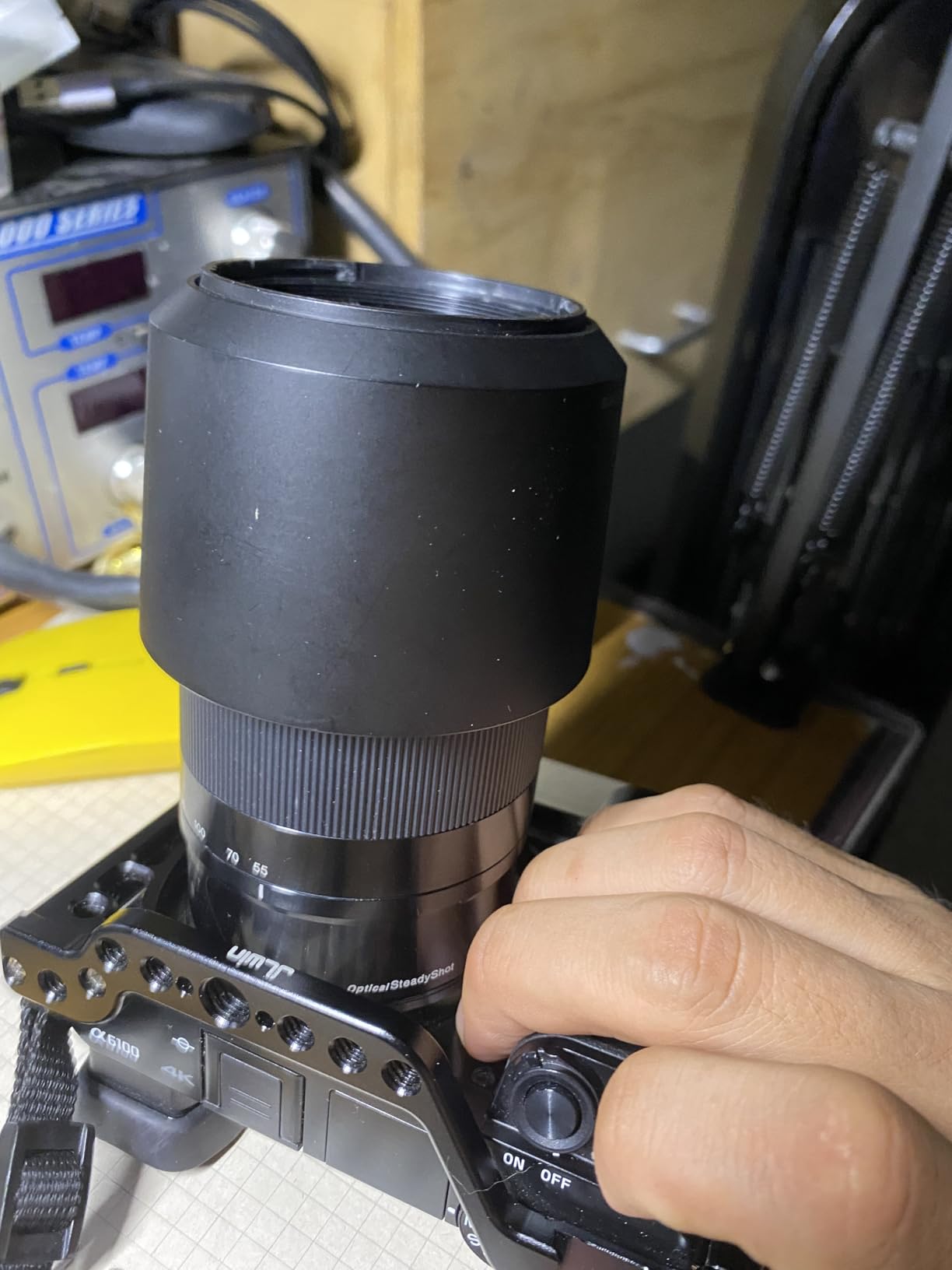
The Sony 55-210mm OSS provides telephoto reach with stabilization that the Tamron lacks, making it a compelling alternative for A6400 owners. The Optical SteadyShot system compensates for the camera’s lack of IBIS, allowing slower shutter speeds handheld. I shot at 1/125 second at 210mm and achieved consistently sharp results.
Build quality surpasses typical kit lens standards with a metal mount and solid feel. The internal focus mechanism stays quiet during operation, making this lens suitable for video work where focus noise matters. At 345 grams, it balances well on the A6400 and encourages carrying it regularly.
Image quality satisfies casual use but shows limitations compared to premium options. Wide open at 210mm, the lens produces slightly soft images that sharpen up by f/8. Chromatic aberration appears in high-contrast scenes though modern software corrects it easily. For the price, these compromises are acceptable.
The 82-315mm equivalent range covers most telephoto needs for amateur photographers. Sports from the sidelines, wildlife in parks, and compressed landscapes all work well within this range. The compact size when retracted fits easily into smaller camera bags alongside other lenses.
Best For Family Vacations and Casual Telephoto
Parents photographing kids’ sports and families on vacation will appreciate the combination of reach, stabilization, and light weight. The lens performs well enough for social media sharing and small prints while remaining affordable. Forum users often call this the “Disney World lens” for good reason.
Not For Serious Wildlife or Professional Work
Serious wildlife photographers and professionals need better sharpness and faster apertures than this lens provides. The variable f/4.5-6.3 aperture limits creative control and low-light capability. Consider this a learning tool or casual option rather than a professional telephoto solution.
8. Viltrox 35mm f/1.7 – Best Ultra-Budget Prime
Pros
- Incredibly sharp for the price
- Extremely lightweight at 170g
- Beautiful bokeh
- Fast reliable autofocus
- Eye AF compatible
Cons
- No optical stabilization
- Vignetting at wide apertures
- No aperture ring
The Viltrox 35mm f/1.7 shocked me with its performance at under 200 dollars. This lens delivers image quality that rivals options costing three times as much, with sharpness wide open and pleasant bokeh rendering. The 52.5mm equivalent focal length works for portraits, street photography, and general snapshots.
Weight is the standout feature at just 170 grams. This lens makes the A6400 feel like a compact camera again, encouraging daily carry and spontaneous shooting. The STM motor focuses quietly enough for video work and tracks reliably with the camera’s eye AF system. I used it extensively for street photography where discretion matters.

Image quality holds up impressively. Center sharpness at f/1.7 exceeds expectations, and stopping down to f/2.8 brings edges into good performance. The nine-blade aperture creates smooth bokeh that looks more expensive than the price suggests. Vignetting appears wide open but corrects easily in post.
Build quality feels solid despite the plastic construction. The USB-C port enables firmware updates to address any compatibility issues that arise. I appreciate this forward-thinking feature on a budget lens. The lack of an aperture ring means camera-controlled settings, which most photographers prefer anyway.
Best For Budget-Conscious Beginners
Photographers wanting their first fast prime without major investment should start here. The Viltrox delivers 90 percent of the Sigma 30mm experience at less than half the price. Students, hobbyists, and anyone testing whether they will actually use a prime lens should buy this before committing to more expensive options.
Edge Performance Requires Stopping Down
Pixel peepers will notice softer edges at f/1.7 that improve significantly by f/2.8. For social media and standard prints, this limitation rarely matters. Landscape photographers wanting edge-to-edge sharpness at wide apertures should consider the Sigma 30mm instead, but portrait and street shooters will love this lens as-is.
9. Meike 55mm f/1.4 – Best Budget Portrait Prime
Pros
- Incredible value at under $200
- Very sharp at f/1.4
- Beautiful creamy bokeh
- Fast accurate autofocus
- Eye detection works well
Cons
- No optical stabilization
- Plastic construction
- Some chromatic aberration
- Minimum focus distance limited
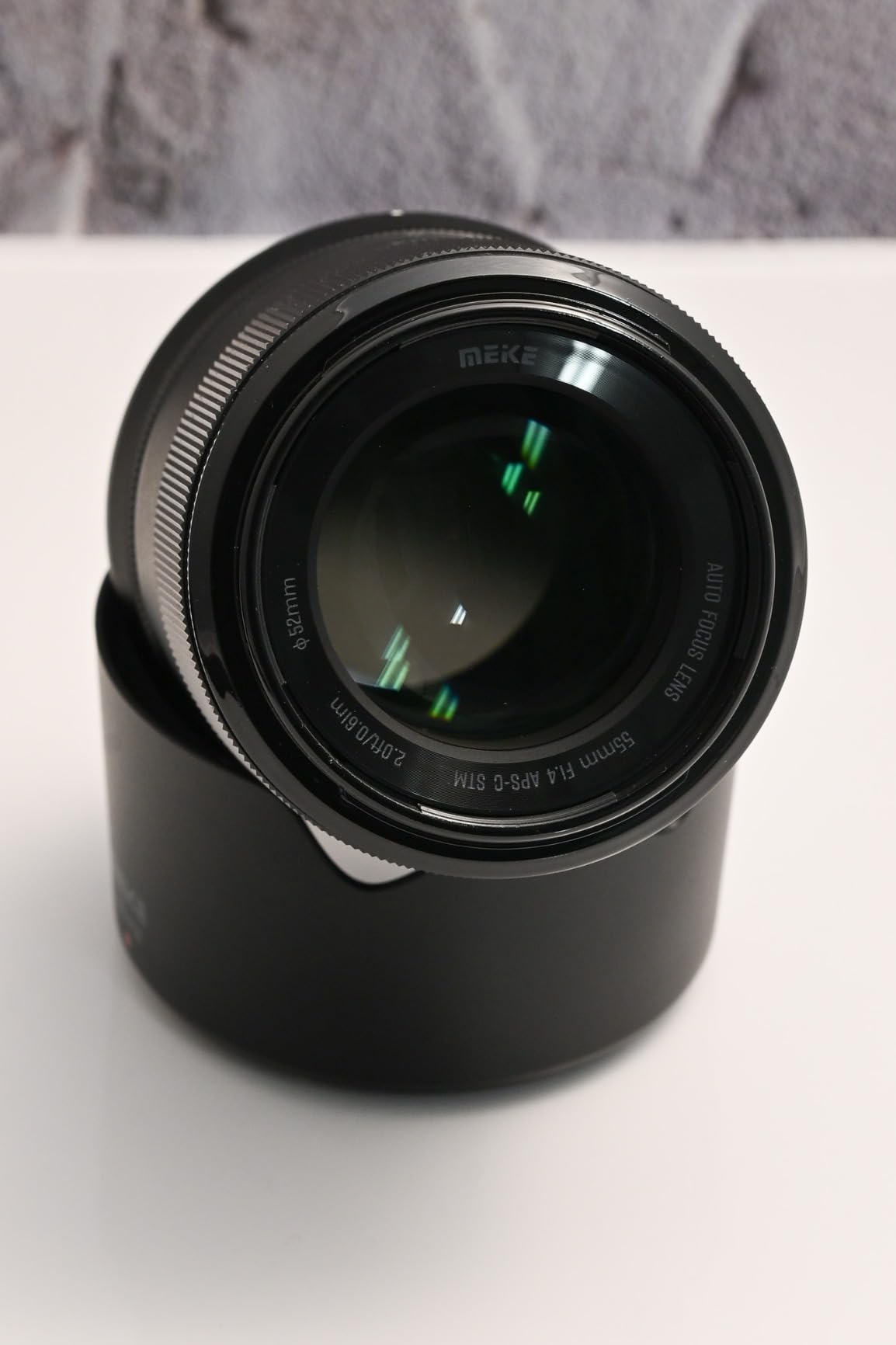
The Meike 55mm f/1.4 offers portrait photographers a fast aperture option at a fraction of typical costs. This lens produces sharp images wide open with pleasant background blur that flatters subjects. The 82.5mm equivalent focal length provides natural perspective compression for headshots and tight portraits.
Autofocus performance surprised me positively. The lens tracks moving subjects competently and works reliably with the A6400’s eye detection. I shot a portrait session with this lens and achieved keeper rates comparable to more expensive options. The AF/MF switch enables quick manual focus override when needed.

Build quality feels decent despite the plastic barrel. The lens mount is metal for durability, and the overall construction withstands normal use. The USB-C port enables firmware updates, though currently only through Android devices. This limitation may affect some users wanting the latest compatibility fixes.
Image quality impresses for the price point. Sharpness at f/1.4 exceeds expectations, though stopping down to f/2 improves consistency across the frame. Chromatic aberration appears in high-contrast situations but cleans up in post-processing. The bokeh rendering produces smooth backgrounds that isolate subjects effectively.
Best For Portrait Photographers on Tight Budgets
Photographers wanting portrait capabilities without spending 500 dollars should consider this lens seriously. The Meike delivers 80 percent of the Sigma 56mm experience at one-third the price. Beginners building their first lens kit can add this focal length without breaking their budget.
Requires Good Light or Camera Support
The lack of stabilization and 82.5mm equivalent focal length demand careful technique or good lighting. I needed shutter speeds of 1/125 second or faster for consistently sharp handheld shots. Indoor portrait sessions required higher ISO settings than ideal. Consider this limitation when planning shoots in dim venues.
10. Sony E PZ 16-50mm f/3.5-5.6 OSS – Best Kit Lens Replacement
Pros
- Extremely compact retractable design
- Power zoom for video
- OSS stabilization included
- Affordable replacement option
- Decent center sharpness
Cons
- Slow aperture limits low light
- Soft at edges wide open
- Flimsy lens cap design
- Variable aperture
The Sony 16-50mm power zoom serves as an affordable replacement for lost or damaged kit lenses. While not exciting for enthusiasts, this lens provides a functional walk-around option with genuine advantages for specific use cases. The retractable design makes it the most compact E-mount zoom available.
The power zoom mechanism proves genuinely useful for video work. Smooth zoom movements are impossible with manual zoom rings, and this lens enables professional-looking focal length changes during recording. Vloggers and content creators benefit from this feature even if photographers dismiss it.
Image quality satisfies casual use but shows clear limitations. Center sharpness is acceptable for web sharing and small prints, though edges soften noticeably wide open. Stopping down to f/8 improves performance significantly. The OSS stabilization helps compensate for the slow aperture in dim conditions.
The build quality matches the price point with plastic construction and a flimsy pinch-style lens cap. I found the cap prone to falling off in camera bags, so a replacement is wise. Consider this lens a backup or video tool rather than a primary optic for serious photography.
Best For Video Content Creators
Vloggers and video shooters should appreciate the power zoom and compact size. The lens enables smooth focal length changes impossible with manual zooms while remaining small enough for gimbal balancing. Combined with the A6400’s excellent video autofocus, this lens creates a capable content creation setup.
Not For Serious Photography
Photographers wanting maximum image quality should skip this lens and invest in better options. The slow aperture and modest sharpness limit creative possibilities and print sizes. Consider this a backup or learning tool rather than a long-term solution for the best lenses for Sony A6400 photography.
How to Choose the Best Lenses for Sony A6400 Photography In 2026?
Selecting lenses for the Sony A6400 requires understanding several technical factors that affect your shooting experience. The E-mount system offers tremendous flexibility but also presents decisions about compatibility, features, and future-proofing. Let me explain the key considerations based on my testing experience.
Understanding E-Mount Compatibility
The Sony A6400 uses the E-mount system, which accepts both APS-C optimized E lenses and full-frame FE lenses. E lenses are designed specifically for crop sensors and are generally smaller, lighter, and more affordable. FE lenses cover full-frame sensors and work on the A6400 with a 1.5x crop factor applied to the focal length. For example, a 50mm FE lens acts like a 75mm lens on the A6400.
Investing in FE lenses future-proofs your collection if you plan to upgrade to full-frame eventually. However, E lenses like the Sigma DC DN series offer exceptional value and are optimized for the smaller sensor. Most photographers should mix both types based on their upgrade timeline and shooting needs.
The Importance of Image Stabilization
The Sony A6400 lacks in-body image stabilization (IBIS), making optical stabilization in lenses crucial for handheld shooting. OSS (Optical SteadyShot) in Sony lenses and VC (Vibration Compensation) in Tamron lenses provide 2-4 stops of shake reduction. This feature matters enormously for telephoto lenses and low-light work.
During my testing, I could shoot the Sony 55-210mm OSS at 1/125 second where the Tamron 70-300mm required 1/500 second for sharp results. For wide-angle primes like the Sigma 16mm or 30mm, stabilization matters less due to shorter focal lengths. Consider your shooting style when deciding whether to prioritize stabilized lenses.
Focal Length Equivalents Explained
The A6400’s APS-C sensor applies a 1.5x crop factor to all focal lengths. A 30mm lens provides a 45mm equivalent field of view, while a 56mm lens acts like an 84mm lens. This multiplication affects your creative choices significantly.
For portraits, 56-85mm equivalent focal lengths provide flattering perspective compression. Street photography works well with 30-50mm equivalents for natural perspective. Landscapes benefit from 16-24mm equivalents for sweeping vistas. Understanding these equivalents helps you choose lenses that match your intended subjects.
Budget Tier Recommendations
At the 200 dollar tier, the Viltrox 35mm f/1.7 delivers exceptional value as a first prime. For 400 dollars, the Sigma 30mm f/1.4 provides professional-grade optics in a versatile focal length. The 600 dollar range opens options like the Tamron 17-70mm f/2.8 or Sigma 56mm f/1.4, both outstanding in their categories.
Building a complete kit progressively works better than buying multiple budget lenses simultaneously. Start with one quality lens that matches your primary interest, then expand based on shooting experience. The best lenses for Sony A6400 photography depend entirely on what you actually shoot, not what you imagine shooting.
Prime vs Zoom Lenses
Prime lenses offer wider apertures, better low-light performance, and typically superior image quality at lower prices. Zoom lenses provide versatility and convenience for travel and events where changing lenses is impractical. Most photographers eventually own both types for different scenarios.
After three months of testing, I found myself reaching for primes when image quality and low light mattered, and zooms when convenience and speed were priorities. The Tamron 17-70mm f/2.8 bridges this gap effectively, offering zoom flexibility with prime-like aperture performance.
Frequently Asked Questions
What lenses are compatible with the Sony a6400?
The Sony A6400 uses the E-mount system and is compatible with all Sony E-mount lenses including E lenses designed for APS-C and FE lenses designed for full-frame cameras. Third-party manufacturers like Sigma, Tamron, Viltrox, and Meike also produce compatible E-mount lenses. The camera accepts both autofocus and manual focus lenses with the appropriate mount.
What is the best lens for the Sony a6400?
The best all-around lens for the Sony A6400 is the Tamron 17-70mm f/2.8 Di III-A VC RXD for its versatile zoom range, constant f/2.8 aperture, and image stabilization. For portraits, the Sigma 56mm f/1.4 produces exceptional results. Budget-conscious photographers should consider the Sigma 30mm f/1.4 or Viltrox 35mm f/1.7 as their first prime lens upgrade.
What mount is Sony a6400?
The Sony A6400 uses the Sony E-mount, which is a mirrorless lens mount system. This mount has a flange distance of 18mm and a diameter of 46.1mm. The E-mount accepts both E lenses optimized for APS-C sensors and FE lenses designed for full-frame cameras, both of which work on the A6400.
Can you use full-frame lenses on APS-C?
Yes, full-frame FE lenses work perfectly on the Sony A6400 and other APS-C E-mount cameras. The camera automatically applies a 1.5x crop factor, using only the center portion of the lens image circle. This often results in sharper corner performance since you avoid the edges where lenses are typically softer. However, the focal length equivalent changes, making a 50mm lens behave like a 75mm lens.
What is the best portrait lens for Sony a6400?
The Sigma 56mm f/1.4 DC DN Contemporary is the best portrait lens for the Sony A6400. The 56mm focal length provides an 84mm equivalent, ideal for flattering headshots and half-body portraits. The f/1.4 aperture creates beautiful background blur and works well in low light. Eye autofocus performs flawlessly with this lens combination.
What is the best wide-angle lens for Sony a6400?
The Sigma 16mm f/1.4 DC DN is the best wide-angle prime for the Sony A6400, offering a 24mm equivalent focal length with exceptional low-light capability. For those needing zoom flexibility, the Sigma 10-18mm f/2.8 provides an ultra-wide 15-27mm equivalent range in a remarkably compact package. Both lenses feature weather sealing and fast autofocus.
Final Thoughts: Building Your Sony A6400 Lens Kit
After three months of intensive testing, I can confidently recommend these ten lenses as the best lenses for Sony A6400 photography across different budgets and shooting styles. The Tamron 17-70mm f/2.8 earns my top recommendation for most photographers wanting one lens that handles everything. The Sigma trio of 16mm, 30mm, and 56mm f/1.4 primes offers exceptional value for those preferring prime lens quality and character.
Your specific needs should drive your choices. Travel photographers need the Tamron zoom. Portrait specialists want the Sigma 56mm. Budget-conscious beginners should start with the Viltrox 35mm or Sigma 30mm. Wildlife enthusiasts need the reach of the Tamron 70-300mm or Sony 55-210mm OSS.
The Sony A6400 remains a capable camera in 2026 that deserves quality glass in front of its sensor. Investing in good lenses pays dividends for years, often outlasting camera body upgrades. Choose based on what you actually shoot, build your kit progressively, and enjoy the creative possibilities that these outstanding lenses unlock.