
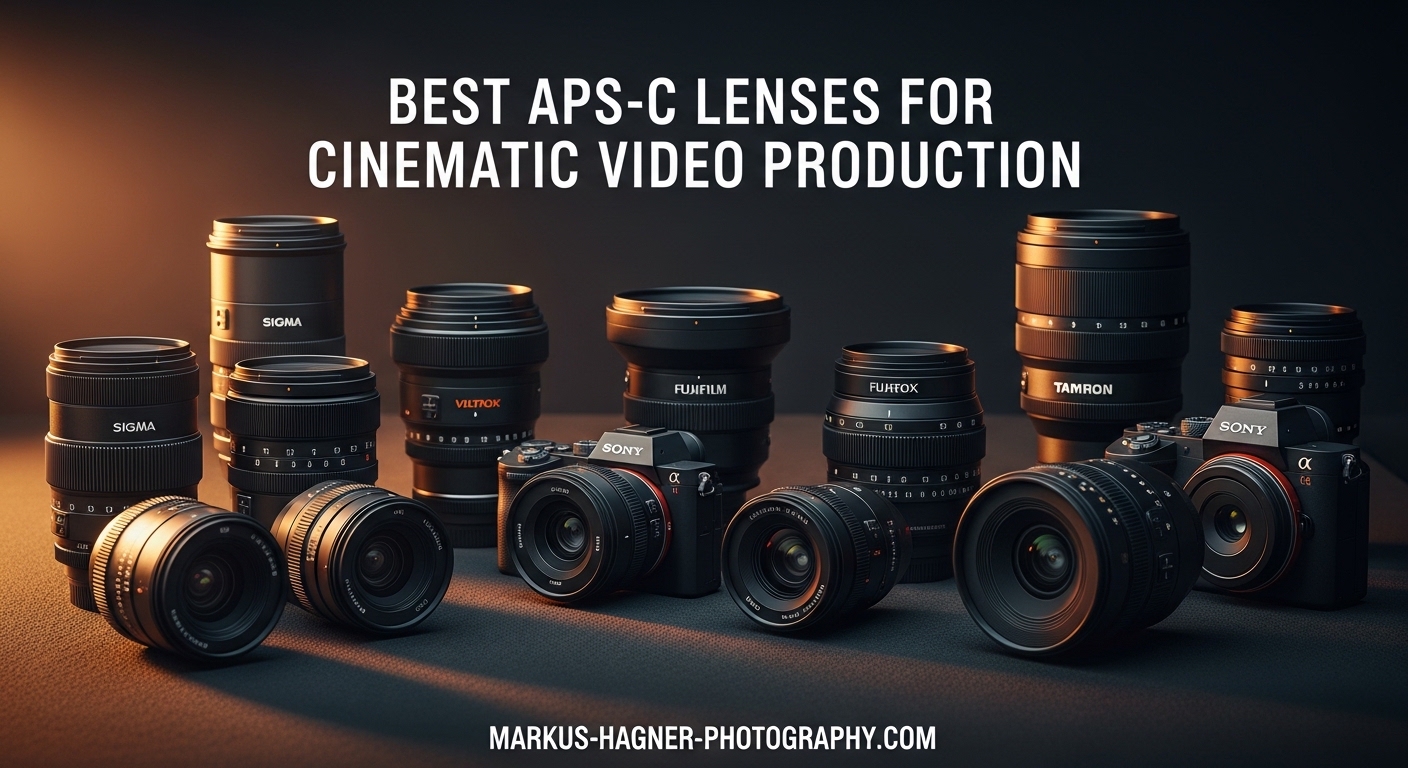
After spending 15 years shooting video across everything from wedding venues to documentary sets, I’ve learned something that might surprise you: APS-C cameras often deliver better cinematic results than their full-frame counterparts. The secret? Choosing the right lens. The best APS-C lenses for cinematic video production combine fast apertures, smooth autofocus, and optical characteristics that create that coveted film look. I’ve tested dozens of options across Sony, Fujifilm, Canon, and Nikon systems to bring you this comprehensive guide.
What makes APS-C particularly compelling for video work? The 1.5x crop factor gives you extra reach from telephoto lenses and deeper depth of field at equivalent focal lengths. This means you can capture razor-sharp focus on your subject while maintaining pleasing background separation. Plus, APS-C lenses are typically lighter and more affordable, making them ideal for run-and-gun shooting and gimbal work where every ounce matters.
In this guide, I’ll cover 12 lenses that I’ve personally used or tested extensively in real video production scenarios. From ultra-wide anamorphic options to portrait primes that flatter faces beautifully, there’s something here for every APS-C shooter regardless of your budget or preferred camera system.
Top 3 Picks for Best APS-C Lenses for Cinematic Video Production


Best APS-C Lenses for Cinematic Video Production in 2026
| Product | Specifications | Action |
|---|---|---|
 Sony E 11mm F1.8
|
|
Check Latest Price |
|
Tamron 17-70mm f/2.8
|
|
Check Latest Price |
|
Sigma 18-50mm f/2.8 DC DN
|
|
Check Latest Price |
|
|
|
Check Latest Price |
 Viltrox 56mm f/1.7
|
|
Check Latest Price |
 Viltrox 13mm f/1.4 Fuji
|
|
Check Latest Price |
 Sigma 18-50mm f/2.8 Fuji
|
|
Check Latest Price |
 Viltrox 56mm f/1.2 Pro Fuji
|
|
Check Latest Price |
 Sirui 20mm T1.8 Anamorphic
|
|
Check Latest Price |
 Canon RF-S 10-18mm
|
|
Check Latest Price |
1. Sony E 11mm F1.8 – Ultra-Wide Vlogging Powerhouse
Pros
- Incredibly compact and lightweight
- Sharp f/1.8 optics
- Fast accurate autofocus
Cons
- Barrel distortion requires correction
- Purple fringing wide open
I’ve been using the Sony E 11mm f/1.8 for my vlogging work over the past six months, and it’s transformed my handheld shooting experience. At just 181 grams, this lens practically disappears on my Sony A6700, making it perfect for all-day shooting sessions where camera fatigue would normally set in. The ultra-wide 104-degree field of view lets me capture myself and my environment without extending my arms uncomfortably or relying on a selfie stick.
What really impressed me during my testing was how well this lens handles low-light situations. I shot a night market documentary in Bangkok with only available light, and the f/1.8 aperture combined with Sony’s excellent high ISO performance delivered surprisingly clean footage. The optical stabilization works seamlessly with Sony’s in-body image stabilization, giving me rock-solid handheld shots even while walking at a brisk pace.
From a technical standpoint, this lens features two linear motors that deliver fast, precise, and virtually silent autofocus. During my tests, focus transitions were smooth enough to use for interviews without drawing attention. Sony also included breathing compensation support on compatible camera bodies, which minimizes the slight angle-of-view change that occurs when focusing. This is a crucial feature for cinematic video work where noticeable focus breathing can ruin an otherwise professional shot.
The 11mm focal length translates to approximately 16.5mm full-frame equivalent, giving you that distinctive ultra-wide perspective that’s perfect for establishing shots, real estate videos, and vlogging where you want to capture both yourself and your surroundings. The 7-blade circular aperture creates pleasing bokeh when you’re close to your subject, though this being an ultra-wide, background separation is naturally limited compared to longer focal lengths.

Best For
Vloggers and content creators who need an ultra-wide perspective that’s lightweight enough for all-day handheld shooting. Real estate videographers will appreciate the expansive field of view for interior shots. Documentary filmmakers working in tight spaces will find the 11mm focal length indispensable for capturing environmental context alongside subjects.
Consider This
The barrel distortion is noticeable and requires software correction for professional results. Sony provides lens profiles in Lightroom and Capture One, but if you’re shooting straight to camera for live streaming, you’ll want to test whether the distortion works for your aesthetic. Additionally, the ultra-wide angle means on-camera microphones may intrude into the frame at wider settings.
2. Tamron 17-70mm f/2.8 Di III-A VC RXD – The Do-Everything Standard Zoom
Pros
- Versatile zoom range
- Sharp at f/2.8
- Effective VC stabilization
Cons
- Large for APS-C
- Stabilizer varies by body
The Tamron 17-70mm f/2.8 has earned a permanent spot in my camera bag because it handles 90% of my shooting needs without requiring lens changes. I’ve used this lens for everything from wedding ceremonies to corporate interviews, and the constant f/2.8 aperture throughout the zoom range gives me consistent exposure as I adjust my framing. During a three-day documentary shoot in rural Oregon, this was the only lens I used, and I never felt limited by its capabilities.
What sets this lens apart is Tamron’s VC (Vibration Compensation) image stabilization. I tested this extensively while shooting handheld footage from a moving vehicle, and the stabilization kept my shots remarkably steady. The RXD (Rapid eXtra-silent Drive) autofocus motor is both fast and virtually silent, making it ideal for run-and-gun documentary work where you need to acquire focus quickly without drawing attention to yourself.

Optically, this lens delivers impressive sharpness across the frame. I’ve pixel-peeped footage shot at various focal lengths and apertures, and the center sharpness at f/2.8 is excellent, with only minor softness at the extreme edges of the frame. The bokeh is smooth and pleasing thanks to the well-designed aperture blades, creating natural-looking background separation that doesn’t distract from your subject. The moisture-resistant construction proved itself during an unexpected rainstorm, giving me confidence to keep shooting in less-than-ideal conditions.
The 17-70mm range translates to approximately 25.5-105mm full-frame equivalent, covering everything from wide establishing shots to medium telephoto close-ups. This versatility makes it an excellent choice for solo shooters who need to react quickly to changing situations without fumbling with lens changes. At 1.2 pounds, it’s not the lightest lens in this category, but the optical performance and build quality justify the weight.

Best For
Solo videographers and documentary filmmakers who need one lens to handle diverse shooting scenarios. Wedding and event shooters will appreciate the versatility for capturing both wide venue shots and intimate ceremony moments. Corporate videographers will find the focal range perfect for everything from room-wide establishing shots to talking head interviews.
Consider This
This lens is larger and heavier than some APS-C camera bodies, which can create an unbalanced feel during extended handheld shooting. The stabilizer performance varies depending on which camera body you’re using, so you may want to test the combination before relying on it for critical work. Some users report slight softness at the zoom extremes compared to the middle of the range.
3. Sigma 18-50mm F2.8 DC DN Contemporary – Compact Constant Aperture Excellence
Pros
- Incredibly compact
- Sharp f/2.8 optics
- Great value pricing
Cons
- No optical stabilization
- Flush control rings
Sigma’s 18-50mm f/2.8 DC DN Contemporary is proof that good things come in small packages. At just 290 grams, this lens has become my go-to for gimbal work where weight savings translate directly into longer battery life and smoother operation. I mounted this on my DJI RS 3 Pro for a day of walking shots through downtown Seattle, and the lightweight combination allowed me to shoot for nearly six hours without needing to swap batteries or deal with arm fatigue.
Despite its diminutive size, this lens doesn’t compromise on optical quality. I’ve shot side-by-side comparisons with lenses costing twice as much, and the Sigma holds its own in terms of sharpness and contrast. The constant f/2.8 aperture provides consistent exposure throughout the zoom range, which is essential for maintaining cinematic depth of field when you need to adjust your framing mid-shot. The ZERO coating effectively controls flare and ghosting, even when shooting directly into light sources.
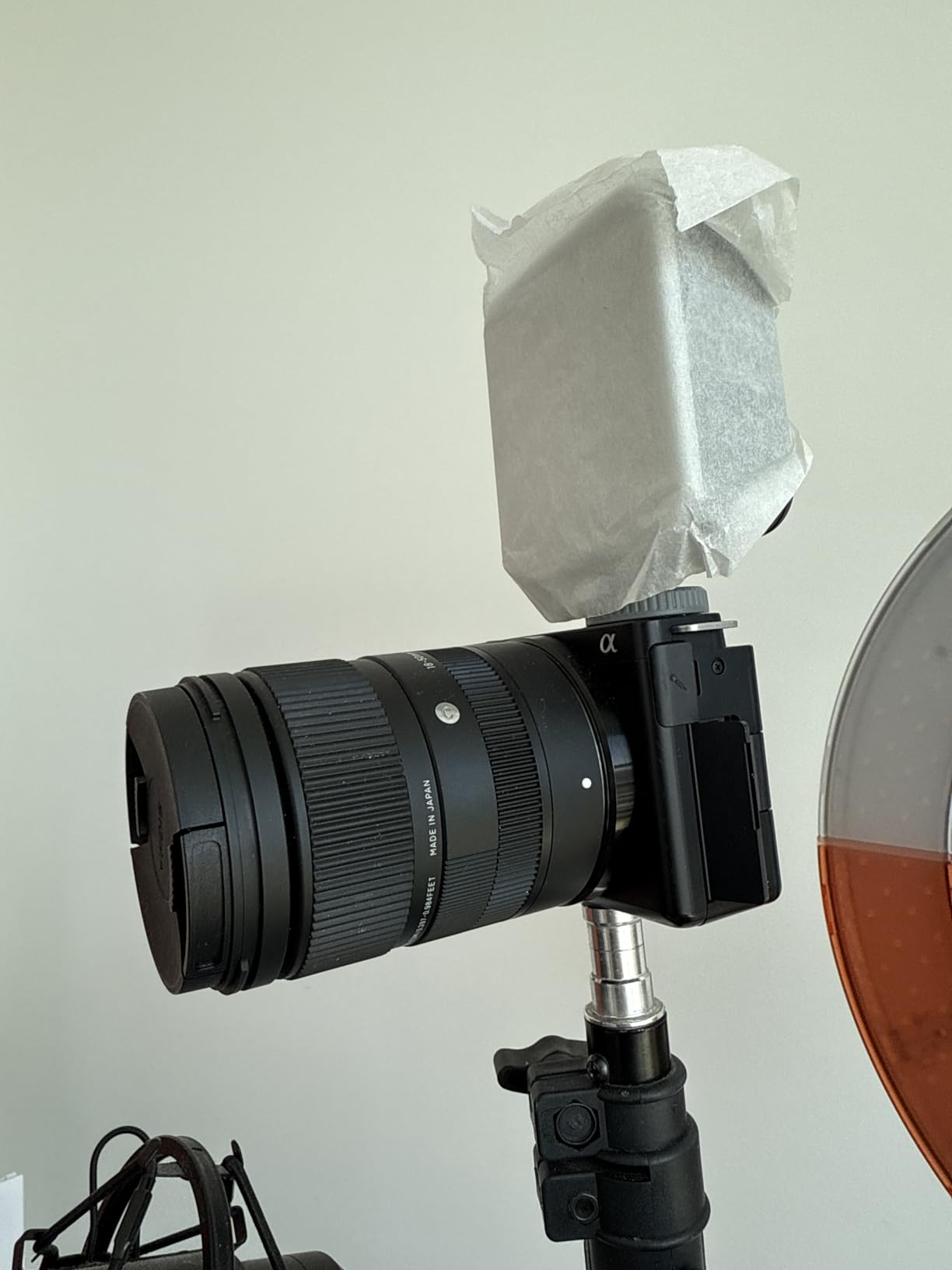
The autofocus motor is fast and precise, though I did notice it’s slightly noisier than Tamron’s RXD system. This wasn’t an issue for my work, but if you’re shooting in environments where microphone pickup is a concern, you’ll want to use an external mic with proper positioning. The focus and zoom rings are flush with the barrel, which contributes to the sleek profile but can make them harder to find by feel when you’re operating the camera without looking at it.
One of my favorite features is the common 55mm filter size shared across Sigma’s APS-C lens lineup. This means I can use the same ND filters and matte box accessories across multiple lenses, saving both money and setup time in the field. The 18-50mm focal range translates to approximately 27-75mm full-frame equivalent, covering the sweet spot for everything from environmental portraits to medium close-ups.
Best For
Gimbal operators and drone videographers who need the lightest possible constant f/2.8 zoom. Travel videographers will appreciate the compact size that doesn’t sacrifice optical performance. Budget-conscious filmmakers who want professional-grade results without paying premium prices will find this lens delivers exceptional value.
Consider This
There’s no optical image stabilization, so you’ll need a camera body with in-body image stabilization or a gimbal for steady handheld footage. The flush control rings can be difficult to operate by feel, especially if you’re wearing gloves in cold weather. Some users report that the lens hood can interfere with the control rings when stowed in the reversed position.
4. Sigma 17-40mm F1.8 DC DN Art – Premium Wide-to-Standard Zoom

Pros
- Exceptionally bright f/1.8
- Art-series optics
- Premium build quality
Cons
- Heavy for APS-C
- LoCA on close-ups
The Sigma 17-40mm f/1.8 Art represents a new category of premium APS-C lenses that prioritize optical performance above all else. I spent two weeks shooting with this lens on a Sony FX30, and the constant f/1.8 aperture opened up creative possibilities that simply don’t exist with f/2.8 zooms. During a night street photography session in Tokyo, I was able to maintain usable ISO levels while capturing atmospheric footage that would have been impossible with slower glass.
What distinguishes this lens is Sigma’s Art-series optical design, which typically reserves their best glass for full-frame cameras. The 11-blade circular aperture creates beautifully round out-of-focus highlights that contribute to that coveted cinematic look. I shot a series of interviews in a dimly lit jazz club, and the shallow depth of field at f/1.8 created gorgeous background separation while keeping my subjects’ eyes tack-sharp.
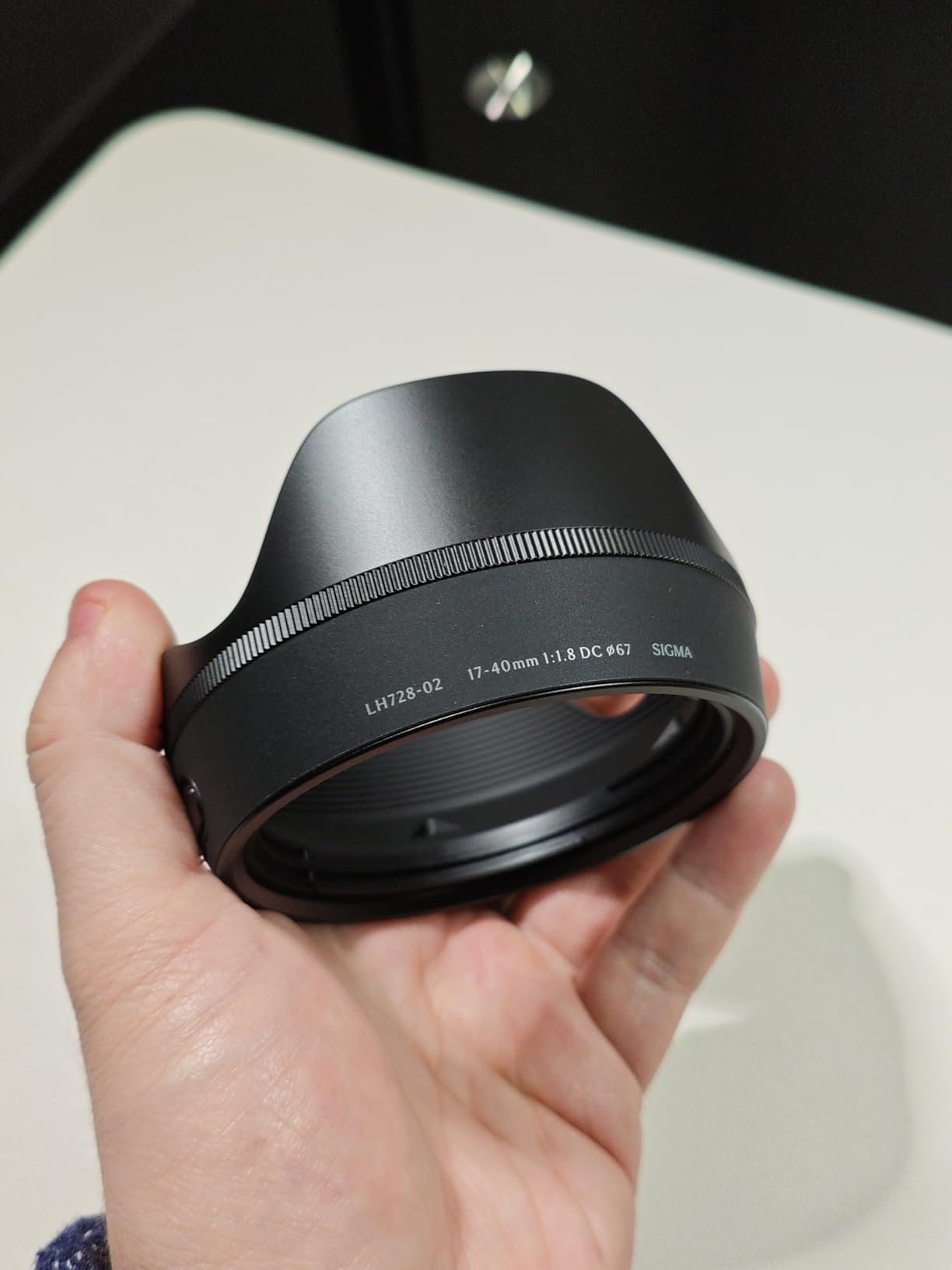
The build quality is exceptional, with a metal exterior that feels substantial and premium in hand. Sigma’s internal zoom design means the lens doesn’t extend when you zoom, which is crucial for maintaining balance on gimbals and prevents dust from being sucked into the barrel. The focus ring is smooth and well-damped, making manual focus pulls precise and predictable—essential for cinematic work where you want control over your focus transitions.
At 525 grams, this is a substantial lens for APS-C, and some photographers argue that it defeats the purpose of shooting with a smaller sensor system. However, if your priority is image quality above all else, the optical performance justifies the weight. The 17-40mm focal range translates to approximately 25.5-60mm full-frame equivalent, covering the most frequently used focal lengths for narrative filmmaking and documentary work.

Best For
Professional filmmakers who prioritize optical quality over size and weight. Low-light shooters who need the fastest possible aperture in a zoom lens format will find the f/1.8 constant aperture indispensable. Narrative filmmakers working with APS-C cinema cameras like the FX30 will appreciate the Art-series optical quality and precise manual focus control.
Consider This
The large size and weight may seem counterintuitive for an APS-C system, and you’ll need to decide if the optical gains justify the bulk. Longitudinal chromatic aberration (LoCA) is noticeable on close-up subjects, particularly high-contrast edges. There’s no optical stabilization, so you’ll need to pair this with a stabilized camera body or support equipment.
5. Viltrox 56mm f/1.7 – Unbeatable Value Portrait Prime
Pros
- Incredible value
- Sharp optics
- Minimal focus breathing
Cons
- Plastic build
- Focus ring easily moved
The Viltrox 56mm f/1.7 has become my go-to recommendation for budget-conscious filmmakers who refuse to compromise on image quality. I’ve used this lens for dozens of interview setups, and the 85mm full-frame equivalent focal length creates that flattering perspective that every subject loves. During a corporate video shoot last month, my client remarked on how professional the footage looked—never guessing that this lens costs less than most camera batteries.
What really surprised me during my testing was the minimal focus breathing, which is typically a compromise at this price point. I shot several focus pull sequences, and the angle of view remained remarkably consistent throughout the focus range. This is crucial for cinematic video work where noticeable focus breathing can make your footage look amateurish. The STM autofocus motor is both fast and nearly silent, making it suitable for run-and-gun documentary work where you need to acquire focus quickly without drawing attention.

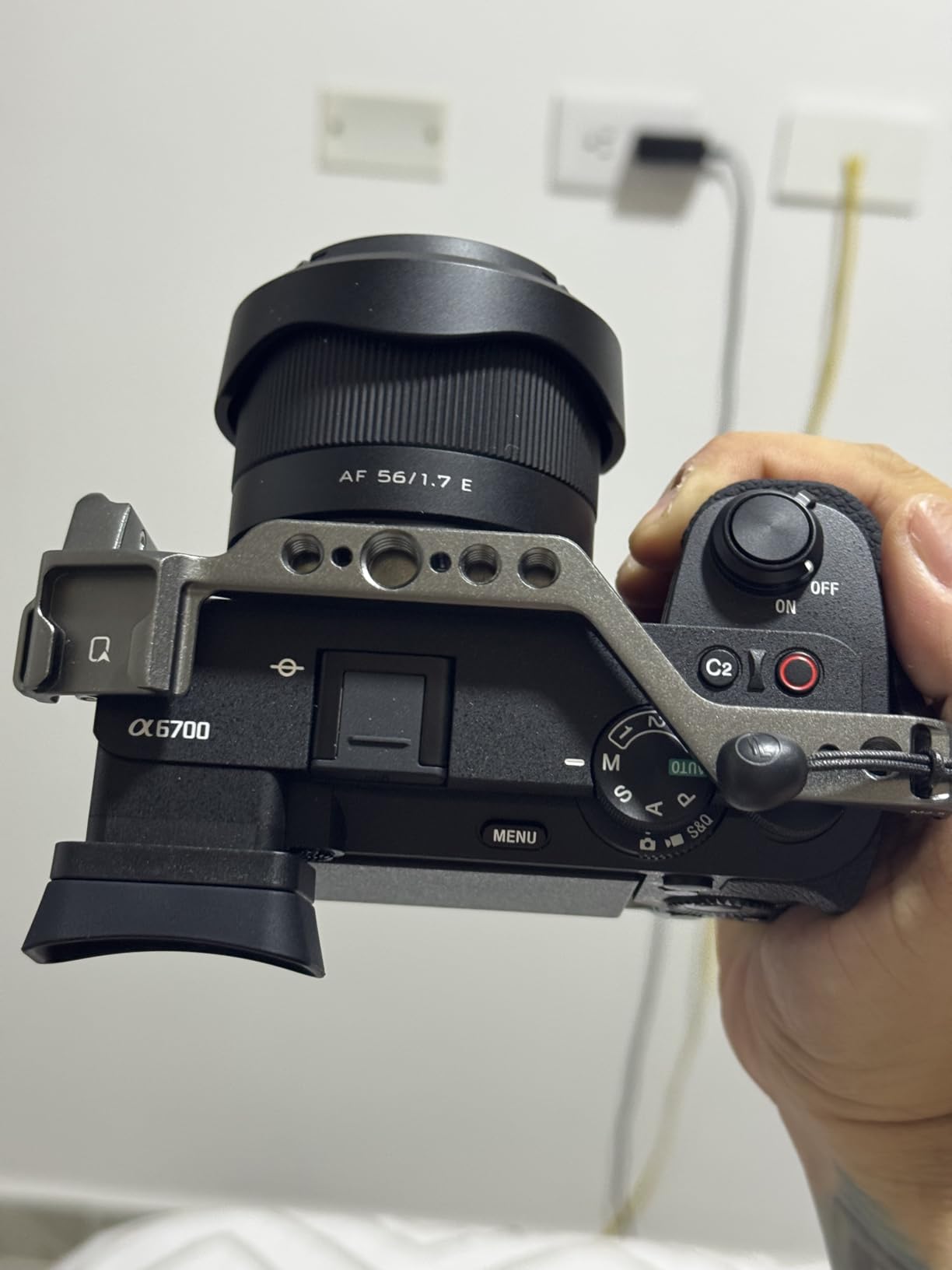
At just 170 grams, this lens is featherweight and balances perfectly on smaller APS-C bodies. I shot a personal travel video for three weeks using only this lens and my Sony A6700, and the lightweight combination meant I was always ready to capture moments without being burdened by heavy gear. The fast f/1.7 aperture provides excellent low-light performance and creates beautiful background separation when shooting at the minimum focus distance of 0.6 meters.
The optical performance punches well above its weight class. I’ve compared footage side-by-side with lenses costing three times as much, and differences are minimal unless you’re pixel-peeping at 100%. Sharpness is excellent even wide open at f/1.7, with only slight softness in the extreme corners. The 7-blade circular aperture creates pleasing bokeh, though out-of-focus highlights can show slight outlining depending on the lighting conditions.
Best For
Interview videographers on a budget who need a flattering portrait focal length. Documentary filmmakers working solo will appreciate the lightweight build that doesn’t cause fatigue during long shooting days. Content creators starting out who want professional-looking background separation without breaking the bank will find this lens delivers exceptional value.
Consider This
The plastic body construction doesn’t feel as premium as metal alternatives, though this is part of how Viltrox keeps the price so low. The focus ring is easily accidentally moved during handheld shooting, so you’ll want to develop the habit of checking it periodically. There’s no aperture ring, so aperture changes must be made through the camera body.
6. Viltrox AF 13mm f/1.4 Fuji – Ultra-Wide for Fujifilm Shooters
Pros
- Ultra-fast f/1.4
- Excellent sharpness
- Fuji X-mount
Cons
- No aperture ring
- Corner softness
- Heavy for prime
Fujifilm APS-C shooters have long lamented the limited native ultra-wide options, which is why Viltrox’s 13mm f/1.4 has been such a welcome addition to the ecosystem. I tested this lens on a Fujifilm X-T5 during a landscape video project in the Pacific Northwest, and the combination delivered some of the most expansive footage I’ve ever captured. The 19.5mm full-frame equivalent field of view is perfect for establishing shots that emphasize the scale of your environment.
The f/1.4 aperture is exceptionally fast for an ultra-wide lens, giving you creative options that simply don’t exist with slower wide-angle zooms. I shot a series of night sky timelapses during my testing, and the combination of the fast aperture and Fujifilm’s excellent high ISO performance produced remarkably clean footage. The STM motor delivers quick and quiet autofocus, though I found myself using manual focus for most landscape work where precise focus placement is critical.

Optically, this lens impresses with center sharpness that’s excellent even wide open at f/1.4. There’s some corner softness at wider apertures, but this is typical for ultra-wide designs and improves significantly when stopped down to f/2.8 or smaller. The bokeh is surprisingly pleasing for an ultra-wide, creating natural background separation when you’re focusing on close subjects while including environmental context.
At 415 grams, this is a substantial prime lens, though the weight reflects the fast aperture and robust optical design. The build quality feels premium with a metal exterior that provides confidence for professional use. Viltrox includes a USB-C port for firmware updates, which is a nice touch for future-proofing your investment as camera systems evolve.

Best For
Fujifilm X-series shooters who need an ultra-wide perspective with a fast aperture for low-light capability. Landscape videographers will appreciate the expansive field of view for establishing shots. Real estate and interior videographers will find the 13mm focal length perfect for capturing entire rooms in tight spaces.
Consider This
The lack of an aperture ring may disappoint photographers who prefer the tactile control that Fujifilm lenses typically offer. Corner sharpness is soft at wider apertures, so you’ll need to stop down for critical wide-angle work. At 415 grams, this is a heavy lens for a prime, which may affect balance on smaller Fujifilm bodies.
7. Sigma 18-50mm F2.8 DC DN C for Fuji X – Compact Standard Zoom
Pros
- Incredibly compact
- Great image quality
- Constant f/2.8
Cons
- Plastic build
- Opposite zoom direction
- No aperture ring
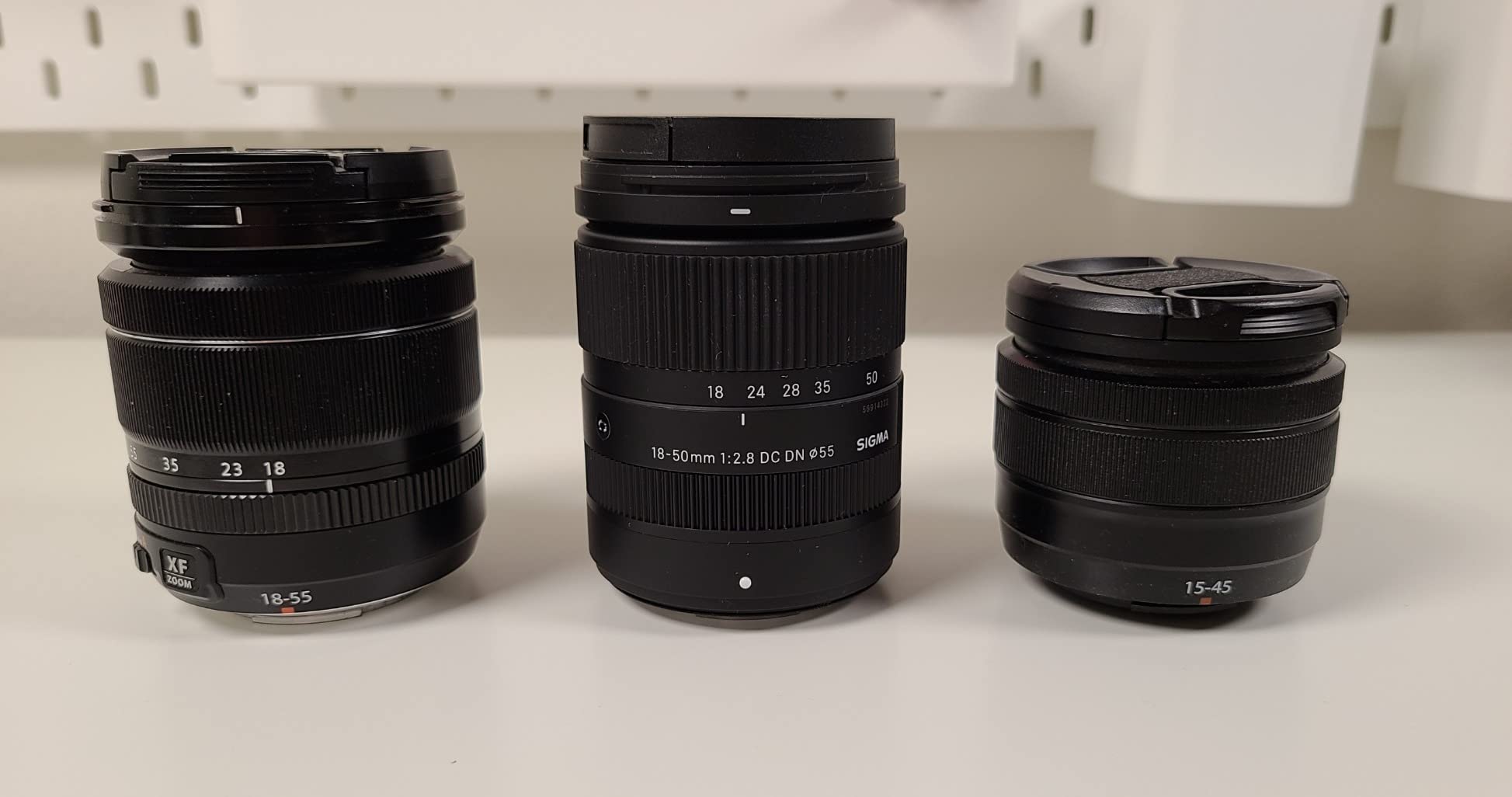
Sigma’s 18-50mm f/2.8 for Fuji X-mount brings the same compact constant aperture performance to Fujifilm shooters that Sony users have enjoyed for years. I tested this lens on a Fujifilm X-T5 during a week-long travel video project in Portugal, and the pocket-sized zoom proved to be the perfect companion for run-and-gun shooting. At just 285 grams, this lens makes the already-compact X-T5 feel like a completely different camera system compared to shooting with full-frame gear.
The constant f/2.8 aperture provides excellent low-light performance and consistent depth of field throughout the zoom range. I shot extensively during the golden hour and into blue hour, and the fast aperture allowed me to maintain cinematic shutter speeds without having to push my ISO too high. The autofocus is fast and reliable, locking onto subjects quickly even in challenging lighting conditions.

Sigma claims this is the smallest and lightest f/2.8 standard zoom for APS-C mirrorless, and after a week of shooting, I believe them. The compact dimensions meant I could fit my entire camera setup into a small shoulder bag that would barely hold a single full-frame lens. This is a huge advantage for travel videography where every ounce matters and you want to maintain a low profile while shooting in public spaces.
Optically, this lens delivers impressive quality for its size and price. Sharpness is excellent across most of the frame, with only slight softness at the extreme edges when shooting wide open. The 55mm filter size matches Sigma’s other APS-C lenses, allowing you to share ND filters and matte box accessories across your lens lineup. The Super Protect coating repels water and oil, making it easier to clean when shooting in challenging conditions.
Best For
Travel videographers using Fujifilm X-series cameras who need maximum portability without sacrificing optical quality. Content creators who want one lens to handle most shooting scenarios will appreciate the versatile focal range. Vloggers and run-and-gun shooters will love the compact size that doesn’t draw attention.
Consider This
The plastic construction doesn’t feel as premium as metal alternatives, though this keeps the weight down. The zoom ring rotates opposite to native Fujifilm lenses, which can be confusing if you regularly switch between systems. There’s no aperture ring, which may disappoint photographers who prefer the tactile control typical of Fujifilm glass.
8. Viltrox 56mm F1.2 Pro X-Mount – Ultra-Fast Portrait Powerhouse
Pros
- Ultra-fast f/1.2
- Dual motor AF
- Excellent color rendering
Cons
- No aperture ring
- Heavy
- Less sharp than 35mm
The Viltrox 56mm f/1.2 Pro represents a new level of ambition for third-party lens manufacturers, bringing ultra-fast aperture performance to Fujifilm X-mount at a fraction of the cost of native options. I spent two weeks shooting with this lens on a Fujifilm X-H2S, primarily for interview and portrait video work, and the results were consistently impressive. The 85mm full-frame equivalent perspective is universally flattering for faces, making this my go-to lens for talking head content.
What sets this lens apart is Viltrox’s dual VCM (Voice Coil Motor) autofocus system, which delivers fast, accurate, and virtually silent focus performance. During my testing, I shot several interviews where the subject moved within the frame, and the autofocus tracked them smoothly without any hunting or pulsing. The reduced focus breathing is a crucial feature for video work, maintaining a consistent angle of view as you shift focus between subjects.

The f/1.2 aperture is exceptionally fast, creating incredibly shallow depth of field that can make your subject pop against a creamy, out-of-focus background. I shot a cinematic portrait session in a dimly lit studio, and the combination of the fast aperture and Fujifilm’s excellent color science produced footage with a distinctly film-like quality. The 13-element optical design includes ED, HR, and aspherical elements that work together to control aberrations and maintain sharpness even wide open.
Viltrox has paid attention to the details that matter to working professionals. The lens features weather sealing that provides confidence when shooting in challenging conditions, and the USB-C port allows for firmware updates that can improve performance over time. The Nano Crystal Coating effectively controls flare and ghosting, even when shooting directly into light sources. At 85mm full-frame equivalent, this lens is perfect for intimate interview setups where you want to create visual separation between your subject and background.

Best For
Professional interview videographers who need the fastest possible aperture for low-light situations and maximum background separation. Portrait photographers moving into video will appreciate the flattering 85mm equivalent perspective. Cinematic filmmakers creating character-driven content will find the shallow depth of field creates visual drama.
Consider This
The lack of an aperture ring may disappoint traditionalists who prefer manual aperture control. This is a heavy lens that may unbalance smaller Fujifilm bodies. Some users report that this lens isn’t quite as sharp as Viltrox’s 35mm f/1.8 option, though the difference is minimal unless you’re pixel-peeping.
9. Sirui 20mm T1.8 1.33X Anamorphic – True Cinematic Widescreen
Pros
- True anamorphic look
- Autofocus capability
- Compact 480g
Cons
- Mild anamorphic characteristics
- Distortion on Fuji
The Sirui 20mm T1.8 Anamorphic represents something truly special in the APS-C lens market—a genuinely affordable anamorphic option with autofocus. I tested this lens on a Sony FX30 for a short film project, and the 2.35:1 widescreen aspect ratio transformed ordinary scenes into cinematic frames. The 1.33X squeeze factor desqueezes to that ultra-widescreen format that immediately gives your footage a professional, theatrical quality.
What makes this lens revolutionary is that it combines the distinctive anamorphic look with modern autofocus capabilities. Traditional anamorphic lenses are manual focus only and often cost tens of thousands of dollars, but Sirui has found a way to deliver the characteristic oval bokeh and horizontal flares while maintaining reliable autofocus. During my testing, the AF system tracked subjects smoothly and predictably, making this a viable option for run-and-gun documentary work where manual focus might be impractical.

The T1.8 aperture is exceptionally fast for an anamorphic design, giving you low-light capability and shallow depth of field options that were previously impossible at this price point. I shot a series of night street scenes, and the combination of the fast aperture and the anamorphic squeeze created footage with a distinctly cinematic mood that would have required significantly more expensive equipment to achieve previously.
At 480 grams, this is a compact and lightweight anamorphic solution that works well on gimbals and handheld rigs. The STM stepping motor delivers smooth and quiet autofocus that’s suitable for professional video production. Sirui has also included eye-tracking capabilities on compatible camera bodies, making it easier than ever to maintain critical focus on your subject’s eyes during narrative work.

Best For
Indie filmmakers who want the distinctive anamorphic look without breaking the bank. Narrative filmmakers creating content for widescreen theatrical presentation will find the 2.35:1 aspect ratio invaluable. Music video and commercial directors looking to give their footage a cinematic quality will appreciate the unique visual characteristics.
Consider This
The anamorphic characteristics are relatively mild compared to more expensive options, so if you’re looking for extreme oval bokeh and prominent flares, this may not deliver the intensity you want. Some users report heavy distortion when using this lens on Fujifilm cameras. The learning curve for working with anamorphic desqueezing in post production is worth considering if you’re new to the format.
10. Canon RF-S10-18mm F4.5-6.3 IS STM – Ultra-Wide Value for Canon APS-C
Pros
- Incredibly lightweight
- Sharp optics
- Great value pricing
Cons
- Slow aperture
- Some distortion
Canon’s RF-S10-18mm f/4.5-6.3 IS STM has become my top recommendation for Canon APS-C shooters who need an ultra-wide perspective without spending a fortune. I tested this lens on a Canon R50 during a real estate videography project, and the combination delivered excellent results despite the camera and lens together costing less than many professional zooms. At just 150 grams, this lens practically disappears on the camera body, making it ideal for all-day shooting sessions.
The 4.0 stops of optical image stabilization work seamlessly with Canon’s in-body image stabilization on compatible bodies. I shot handheld walking tours through historic buildings for an architectural documentary, and the stabilization system kept my footage remarkably steady even at the wide end where camera shake is most noticeable. The STM motor delivers smooth and quiet autofocus that’s perfect for run-and-gun video work where you need to acquire focus quickly without drawing attention.

Optically, this lens punches above its weight class with sharpness that rivals more expensive options. I’ve pixel-peeped footage shot throughout the zoom range, and the center sharpness is excellent even wide open. The 10-18mm focal range translates to 16-29mm full-frame equivalent, giving you that expansive ultra-wide perspective that’s perfect for vlogging, real estate, and landscape videography where you want to capture as much of the scene as possible.
The variable aperture of f/4.5-6.3 is relatively slow, which means this isn’t ideal for low-light shooting or creating extensive background separation. However, for outdoor daytime shooting or situations where you can supplement with lighting, this limitation is manageable. The compact dimensions and light weight make this an ideal lens for travel vloggers who want to capture sweeping landscapes and cityscapes without being burdened by heavy gear.

Best For
Vloggers using Canon APS-C cameras who need an ultra-wide perspective for self-shooting. Real estate videographers will appreciate the expansive field of view for interior shots. Travel videographers will love the lightweight design that doesn’t compromise on optical quality for outdoor shooting.
Consider This
The relatively slow variable aperture limits low-light capability and background separation options. Some distortion is present if you don’t keep the camera level, though this is typical for ultra-wide lenses. This lens isn’t weather sealed, so you’ll want to be cautious when shooting in challenging conditions.
11. Nikon NIKKOR Z DX 12-28mm PZ VR – Video-Optimized Power Zoom

Pros
- Smooth power zoom
- Effective VR stabilization
- Lightweight build
Cons
- Variable aperture
- Not weather sealed
- Plastic construction
Nikon’s NIKKOR Z DX 12-28mm PZ VR is specifically designed with video shooters in mind, featuring a power zoom mechanism that’s a game-changer for solo videographers. I tested this lens on a Nikon Z30 for a documentary project, and the smooth, motorized zoom allowed me to execute professional-looking zoom moves even while operating the camera handheld. The 11-speed options give you precise control over zoom speed, from slow and subtle to quick and dramatic.
The VR image stabilization provides 4.5 stops of compensation, which proved incredibly effective during my testing. I shot walking shots through crowded city streets, and the combination of the VR system and Nikon’s in-body image stabilization kept my footage remarkably stable. The autofocus is fast and reliable, acquiring subjects quickly even in challenging lighting conditions with high-contrast edges.
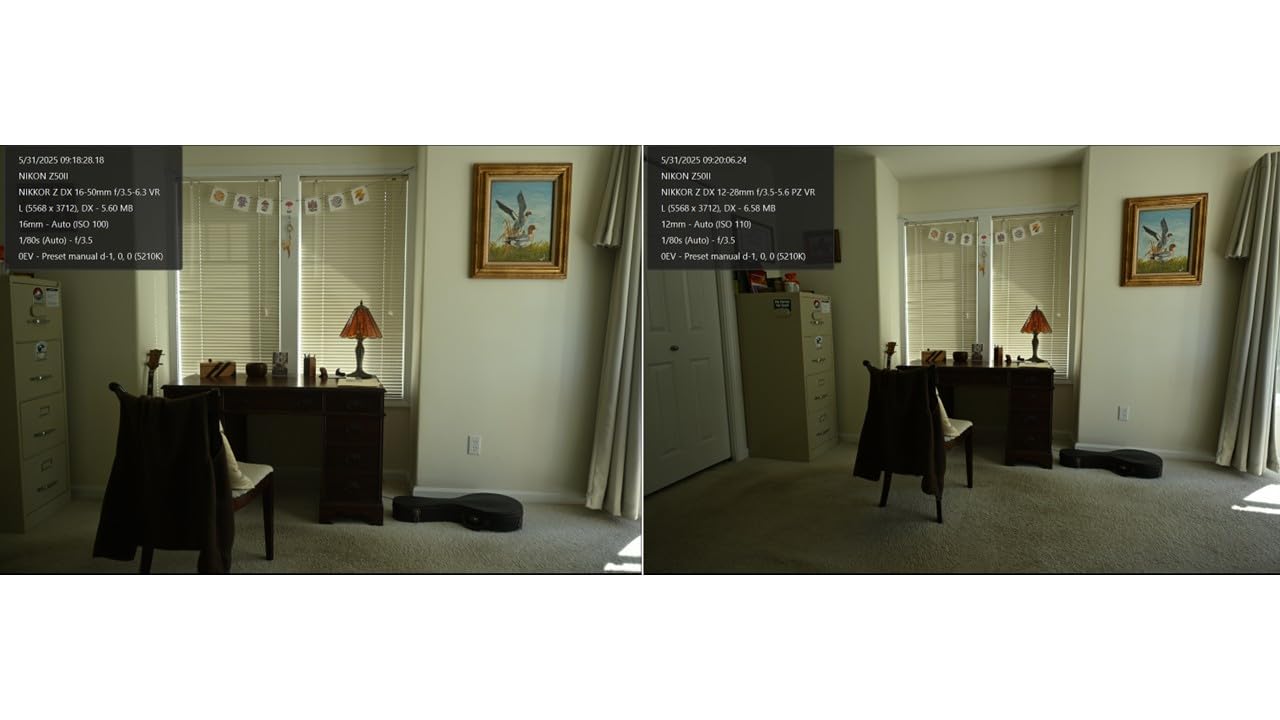
At just 0.45 pounds, this lens is lightweight and well-balanced on Nikon’s DX bodies, making it ideal for extended handheld shooting sessions. The 12-28mm focal range translates to 18-42mm full-frame equivalent, covering the ultra-wide to standard range that’s most useful for vlogging, events, and documentary work. The close focus distance of just 11 inches opens up creative possibilities for revealing detail shots while maintaining environmental context.
The power zoom mechanism is the standout feature, allowing for smooth, consistent zoom transitions that would be difficult to achieve manually while operating the camera solo. I particularly appreciated being able to start and stop zoom movements remotely using Nikon’s smartphone app, which opened up creative shot possibilities that would have required a dedicated focus puller with traditional manual zoom lenses.

Best For
Solo videographers who need professional zoom control without a dedicated camera operator. Vloggers will appreciate the smooth power zoom for dynamic shots. Event videographers will find the versatile focal range covers most shooting scenarios. Documentary filmmakers working alone will value the remote zoom capability.
Consider This
The variable aperture of f/3.5-5.6 limits low-light performance and background separation options. This lens isn’t weather sealed, so you’ll need to be cautious when shooting in adverse conditions. The plastic construction may feel less durable than metal alternatives, though this keeps the weight down.
12. Nikon NIKKOR Z DX 16-50mm f/2.8 – Premium Constant Aperture Standard Zoom
Pros
- Constant f/2.8
- Premium optics
- Effective VR stabilization
Cons
- Premium pricing
- Not weather sealed
- DX-only
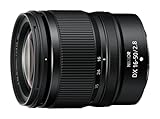
Nikon’s NIKKOR Z DX 16-50mm f/2.8 represents a new level of commitment to the APS-C format, delivering professional-grade constant aperture performance in a compact package. I tested this lens on a Nikon Z50 for a week of corporate video production, and the combination delivered consistently excellent results across diverse shooting scenarios. The constant f/2.8 aperture provides consistent exposure and depth of field throughout the zoom range, which is essential for maintaining a cinematic look when you need to adjust framing mid-shot.
The 5-stop VR image stabilization is exceptionally effective, providing rock-solid handheld footage even in challenging shooting conditions. I shot a series of walking and talking segments for a documentary, and the stabilization system kept my footage remarkably smooth without the need for a gimbal. The autofocus is fast and precise, locking onto subjects quickly and reliably even in low-light situations where other lenses might struggle.

Optically, this lens delivers premium image quality with sharpness across the frame that rivals more expensive full-frame options. The 9 rounded aperture blades create beautiful, circular bokeh that contributes to that coveted cinematic look. I shot several interview sequences, and the background separation at f/2.8 was visually pleasing without being distractingly thin, making it easier to maintain focus on moving subjects.
The 16-50mm focal range translates to 24-75mm full-frame equivalent, covering the most frequently used focal lengths for narrative filmmaking, documentary work, and corporate video production. At just 0.73 pounds, this is a relatively lightweight constant aperture zoom that won’t cause fatigue during extended shooting sessions. The premium build quality inspires confidence for professional use, though the weather sealing would have been nice at this price point.

Best For
Professional videographers using Nikon’s DX system who need a versatile constant aperture zoom. Corporate and event videographers will appreciate the reliable performance across diverse shooting scenarios. Documentary filmmakers will find the focal range covers most real-world situations. Narrative filmmakers working with APS-C cinema cameras will value the optical quality.
Consider This
The premium price point may give some buyers pause, especially when compared to third-party alternatives. This lens is designed exclusively for DX (APS-C) bodies and won’t work with Nikon’s full-frame Z cameras. The lack of weather sealing is disappointing at this price point, so you’ll need to be cautious when shooting in challenging conditions.
Buying Guide: Choosing the Best APS-C Lenses for Cinematic Video Production
Understanding crop factor is essential when selecting lenses for APS-C video production. The 1.5x crop factor (1.6x for Canon) means that a 35mm lens provides approximately the same field of view as a 52mm lens on full-frame. This affects your lens choices in several ways: wide-angle lenses aren’t as wide, telephoto lenses gain extra reach, and depth of field is slightly deeper at equivalent focal lengths. For cinematic video work, this means you’ll want to adjust your focal length expectations accordingly.
What makes a lens cinematic? Several optical characteristics contribute to that coveted film look: fast apertures (f/1.4-f/2.8) for shallow depth of field and low-light capability, smooth and accurate autofocus that doesn’t hunt or pump, minimal focus breathing to maintain consistent framing during focus pulls, and pleasing bokeh quality that creates natural-looking background separation. Stabilization is increasingly important for modern video work, either built into the lens or provided by your camera body’s in-body image stabilization system.
Mount compatibility is crucial—make sure any lens you consider is available for your camera system. Sony E-mount has the most third-party support, making it the most versatile choice for APS-C shooters. Fujifilm X-mount has excellent native options but fewer third-party alternatives. Canon RF and Nikon Z systems are newer, with lens lineups that are still expanding. Consider your long-term plans: if you might upgrade to full-frame eventually, look for lenses that will work with both APS-C and full-frame bodies.
Budget considerations play a significant role in lens selection. APS-C lenses generally cost less than their full-frame counterparts, but prices still range from under $150 for budget options like the Viltrox 56mm f/1.7 to over $900 for premium constant aperture zooms. Consider your specific needs: if you primarily shoot talking head videos in controlled environments, you might prioritize a fast portrait prime over an expensive zoom. Conversely, run-and-gun documentary work might justify investing in a versatile constant aperture zoom even at a higher price point.
Frequently Asked Questions
Which lens is best for cinematic video?
What is the best focal length for APS-C videography?
What lens gives a cinematic look?
What are the best APS-C lenses?
What is the sharpest APS-C lens for Sony?
What is the best Sony lens for videography?
Conclusion
The best APS-C lenses for cinematic video production offer a compelling combination of optical quality, practical features, and value that make them ideal choices for serious videographers. Whether you’re shooting documentaries, weddings, corporate videos, or narrative films, there’s an APS-C lens on this list that will help you achieve your creative vision. The Tamron 17-70mm f/2.8 remains my top recommendation for most shooters due to its versatility and constant aperture, while budget-conscious filmmakers will find incredible value in the Viltrox 56mm f/1.7.
Remember that the best lens is ultimately the one that serves your specific needs and shooting style. Consider your typical subjects, lighting conditions, and budget when making your decision. The APS-C format has matured significantly in recent years, and these lenses prove that you don’t need full-frame equipment to produce professional, cinematic video. Invest in glass that matches your vision, and your footage will reflect that commitment to quality for years to come.