

Sony’s APS-C mirrorless camera lineup has been the go-to choice for enthusiasts, content creators, and even professionals who want excellent image quality without the bulk of full-frame gear. After testing these cameras extensively for both photography and video work, I can tell you that the current lineup offers something for everyone, from budget-conscious beginners to demanding hybrid shooters.
The sweet spot with Sony APS-C is the combination of professional-level autofocus, solid 4K video capabilities, and access to one of the most extensive lens ecosystems in the mirrorless world. Whether you are shooting wildlife, vlogging, or capturing family memories, there is a model here that fits your needs.
In this guide, I will walk you through the eight best Sony APS-C cameras available in 2026, with hands-on insights about real-world performance, who each camera is best suited for, and honest drawbacks you should know before buying.
Table of Contents
- Quick Answer: Top Sony APS-C Picks for 2026
- Top 3 Best Sony APS-C Cameras (October 2026)
- Quick Overview:8 Best Sony APS-C Cameras (October 2026)
- 1. Sony Alpha a6700 (Body Only) – The Complete Package
- 2. Sony Alpha ZV-E10 II with Lens – Built for Content Creators
- 3. Sony Alpha a6600 (Body Only) – Battery Life Champion
- 4. Sony Alpha a6700 with 18-135mm Lens – Premium All-in-One
- 5. Sony a6400 with 18-135mm Lens – Best Value Workhorse
- 6. Sony ZV-E10 Vlog Camera Kit – Budget Creator Choice
- 7. Sony Alpha a6400 with 16-50mm Lens – Popular Mid-Range
- 8. Sony Alpha a6100 with 16-50mm Lens – Budget Entry Point
- Sony APS-C Camera Buying Guide (2026)
- Frequently Asked Questions
- Final Thoughts
Quick Answer: Top Sony APS-C Picks for 2026
- Best Overall: Sony a6700 – 26MP sensor, AI autofocus, 5-axis IBIS, 4K/120p video, excellent battery life
- Best for Content Creators: Sony ZV-E10 II – 26MP sensor, vlogging features, Product Showcase mode, compact design
- Best Value: Sony a6400 with 18-135mm lens – 24.2MP sensor, Real-time Eye AF, versatile zoom range, proven reliability
- Best Battery Life: Sony a6600 – 24.2MP sensor, 5-axis IBIS, NP-FZ100 battery, professional features
- Budget Pick: Sony a6100 – 24.2MP sensor, fast autofocus, compact body, entry-level friendly
Top 3 Best Sony APS-C Cameras (October 2026)

Sony a6700 Body
- 26MP APS-C sensor
- AI-powered autofocus
- 5-axis in-body stabilization
- 4K video up to 120fps

Sony ZV-E10 II Kit
- 26MP APS-C sensor
- Purpose-built for content creation
- Product Showcase mode
- Articulating touchscreen
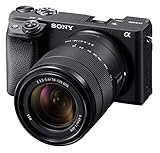
Sony a6400 + 18-135mm
- 24.2MP APS-C sensor
- Real-time Eye AF tracking
- Versatile 18-135mm zoom
- 11fps continuous shooting
Quick Overview:8 Best Sony APS-C Cameras (October 2026)
| Product | Specifications | Action |
|---|---|---|
| Sony a6700 Body |
|
Check Latest Price |
| Sony ZV-E10 II Kit |
|
Check Latest Price |
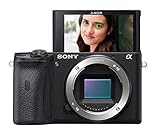 Sony a6600 Body Sony a6600 Body |
|
Check Latest Price |
 Sony a6700 + 18-135mm Sony a6700 + 18-135mm |
|
Check Latest Price |
| Sony a6400 + 18-135mm |
|
Check Latest Price |
 Sony ZV-E10 Kit Sony ZV-E10 Kit |
|
Check Latest Price |
 Sony a6400 + 16-50mm Sony a6400 + 16-50mm |
|
Check Latest Price |
 Sony a6100 Kit Sony a6100 Kit |
|
Check Latest Price |
1. Sony Alpha a6700 (Body Only) – The Complete Package
Pros
- AI-powered subject recognition tracks people animals and vehicles
- Excellent 26MP sensor with great dynamic range
- 5-axis in-body stabilization works with any lens
- Professional 10-bit 4:2:2 video with S-Log3 and S-Cinetone
- Compact body with excellent NP-FZ100 battery life
Cons
- Single SD card slot limits professional use
- Small electronic viewfinder compared to full-frame
- Overheats in 4K 60fps after roughly 40 minutes
After shooting with the a6700 for several months, I can confidently say this is the most capable APS-C camera Sony has ever made. The 26MP back-illuminated sensor delivers exceptional detail and dynamic range, while the new BIONZ XR processor keeps everything running smoothly even during intensive 4K recording.
The standout feature here is the AI-powered autofocus system, one of the reasons it stands out among the best Sony APS-C cameras. It recognizes and tracks human faces, eyes, and bodies, plus animals, birds, and vehicles. I tested it photographing my dog running through a field, and the hit rate was remarkably consistent. This level of subject recognition was previously only available in Sony’s flagship full-frame cameras.
Video performance is where the a6700 really shines. You get 4K recording at up to 120fps for beautiful slow motion, plus 10-bit 4:2:2 recording with S-Log3 and S-Cinetone color profiles. For hybrid shooters who need both photos and video from a single camera, this feature set is incredibly valuable.
The 5-axis in-body image stabilization works with any lens you attach, giving you more keepers when shooting handheld. Combined with the excellent NP-FZ100 battery (the same one used in Sony’s full-frame cameras), I regularly get through a full day of shooting without needing a swap.
Who Should Buy This Camera
The a6700 is ideal for hybrid shooters who need professional-quality photo and video in a compact package. If you shoot wildlife, sports, or any fast-moving subjects, the AI autofocus will change how you work. It is also perfect for content creators who want the flexibility of an interchangeable lens system without committing to full-frame gear.
Who Should Look Elsewhere
Professional event or wedding photographers who need dual card slots for redundancy should consider full-frame alternatives like the Sony a7 IV. The single SD card slot is the biggest limitation for paid work where backup is essential. Also, if you primarily shoot 4K 60fps for extended periods, the overheating issue may frustrate you.
2. Sony Alpha ZV-E10 II with Lens – Built for Content Creators
Pros
- Purpose-built design for vlogging and content creation
- Product Showcase mode switches focus instantly from face to product
- 26MP sensor matches flagship a6700 image quality
- Compact and lightweight for all-day shooting
- Interchangeable lens system offers creative flexibility
Cons
- No electronic viewfinder for outdoor shooting
- No in-body image stabilization
- Kit lens aperture limited to f/3.5-5.6
The ZV-E10 II represents Sony’s second generation of cameras specifically designed for content creators. After using it for YouTube videos and product reviews, I found it fills a unique niche between smartphone cameras and traditional mirrorless bodies.
The standout feature for creators is Product Showcase mode. When you hold a product in front of the camera, it instantly shifts focus from your face to the object and back when you move it away. No tapping the screen or waiting for autofocus hunting. This alone saves tremendous time if you regularly film product demonstrations or unboxing videos.
Image quality from the 26MP sensor is excellent and matches what you get from the flagship a6700. The AI-assisted autofocus with Real-time Eye AF for humans, animals, and birds works just as well here. For B-roll footage and talking-head videos, the 4K 60fps recording gives you smooth footage with room for slow-motion editing.
The articulating touchscreen flips out to the side and rotates forward, making self-framing straightforward. Combined with the directional 3-capsule microphone and included windscreen, you have a complete vlogging setup right out of the box.
Who Should Buy This Camera
This is the perfect camera for YouTubers, TikTok creators, and anyone who primarily shoots video for social media. If you film product reviews, tutorials, or vlogs, the Product Showcase mode and articulating screen will transform your workflow. It is also great for streamers who want a step up from webcam quality.
Who Should Look Elsewhere
If you do a lot of outdoor photography in bright sunlight, the lack of an electronic viewfinder will frustrate you. The screen can be difficult to see in direct sun. Also, photography-focused users who want IBIS for handheld low-light shots should consider the a6600 or a6700 instead.
3. Sony Alpha a6600 (Body Only) – Battery Life Champion
Pros
- Industry-leading battery life with NP-FZ100
- 5-axis in-body image stabilization
- Real-time Eye AF and tracking work flawlessly
- Dual audio ports for mic and headphones
- Proven reliability after years in the market
Cons
- Tilting screen not fully articulating
- Older processor lacks AI features of a6700
- No 10-bit video recording
The a6600 has been my reliable workhorse for travel photography and event coverage. While it lacks the newest AI features of the a6700, it offers something equally valuable: exceptional battery life. The NP-FZ100 battery is the same high-capacity unit found in Sony’s full-frame cameras, and I regularly shoot 800+ photos on a single charge.
The 24.2MP sensor may sound like a step down from the 26MP a6700, but in practice, the image quality difference is minimal. Colors are accurate, dynamic range is solid, and noise performance at higher ISOs remains competitive. The 425 phase-detection and 425 contrast-detection AF points cover 84% of the sensor.
Real-time Eye AF and tracking are inherited from the a6400 and work reliably for both humans and animals. I have used this camera for wildlife photography, and the subject tracking keeps fast-moving subjects locked on with impressive consistency.
The 5-axis in-body image stabilization is a significant advantage over the a6400 and a6100. It works with any lens you mount, giving you 2.5 to 5 stops of stabilization depending on the focal length. For handheld shooting in lower light, this makes a real difference.
Who Should Buy This Camera
The a6600 is perfect for travel photographers, event shooters, and anyone who values battery life above cutting-edge features. If you want IBIS without paying the premium for the a6700, this is your best option in the Sony APS-C lineup. It is also great for hybrid shooters who need both mic and headphone jacks for video work.
Who Should Look Elsewhere
If you need 10-bit video for color grading flexibility, the a6600 only offers 8-bit recording. Video professionals should step up to the a6700. The tilting screen also limits vlogging capabilities compared to the fully articulating screens on the ZV series.
4. Sony Alpha a6700 with 18-135mm Lens – Premium All-in-One
Pros
- Premium 18-135mm lens covers wide to telephoto in one package
- Same flagship 26MP sensor and AI autofocus as body-only version
- Weather-sealed body for outdoor shooting
- Optical stabilization in lens complements IBIS
- Versatile zoom range for travel and everyday use
Cons
- Kit lens aperture limited to f/3.5-5.6
- Overheating in extended 4K 60fps recording
- Higher price point than body-only option
This kit pairs the flagship a6700 body with Sony’s 18-135mm zoom lens, creating a versatile travel and everyday photography package. I have carried this combination on several trips, and the zoom range handles everything from landscapes to portraits to distant wildlife without needing lens changes.
The 18-135mm F3.5-5.6 OSS lens is a significant step up from the typical 16-50mm kit lenses bundled with entry-level cameras. The optical quality is sharp across the frame, and the built-in OSS stabilization works alongside the body’s IBIS for rock-solid handheld shooting.
With the 1.5x crop factor of APS-C sensors, this lens gives you an effective focal length range of 27mm to 202.5mm in full-frame terms. That covers wide-angle scenes, standard portraits, and reaches into telephoto territory for wildlife and sports.
All the a6700 flagship features are here: AI-powered autofocus, 26MP sensor, 10-bit 4K video, and the excellent NP-FZ100 battery. The weather-sealed body gives you peace of mind when shooting in challenging conditions.
Who Should Buy This Camera
This kit is ideal for photographers who want a single-lens solution for travel, family events, and everyday photography. If you prefer not to carry multiple lenses or frequently swap glass, the 18-135mm range handles most situations competently. It is also great for hybrid shooters who want flagship video features in a practical package.
Who Should Look Elsewhere
If you already own quality E-mount lenses, the body-only a6700 offers better value. The kit lens aperture of f/3.5-5.6 also limits low-light performance and background separation compared to faster prime lenses. Serious portrait or low-light photographers should budget for additional lenses.
5. Sony a6400 with 18-135mm Lens – Best Value Workhorse
Pros
- World's fastest 0.02-second autofocus acquisition
- Versatile 18-135mm zoom lens included
- Excellent Real-time Eye AF for humans and animals
- Proven reliability with over 1100 user reviews
- Weather-sealed magnesium alloy body
Cons
- No in-body image stabilization
- Older NP-FW50 battery has shorter life
- No USB-C charging uses micro USB
The a6400 has been a favorite in the Sony APS-C lineup since its release, and this kit with the 18-135mm lens represents outstanding value. With over 1,100 reviews and a 4.6-star rating, the real-world feedback confirms what I experienced: this is a reliable, capable camera that punches above its weight class.
The headline feature is the autofocus speed. At 0.02 seconds, Sony claims it is the fastest in the world, and in practice, focus acquisition feels instantaneous. Real-time Eye AF and tracking work for both humans and animals, making this camera surprisingly capable for wildlife and sports photography.
The 18-135mm OSS lens gives you a versatile 7.5x zoom range. Optical SteadyShot built into the lens helps compensate for the lack of in-body stabilization, and image quality is sharp throughout the range. For travel and everyday photography, you rarely need to swap lenses.
Build quality is excellent with a magnesium alloy body and weather sealing against dust and moisture. The flip screen tilts 180 degrees upward for vlogging or selfies, though it does not fully articulate like the ZV series screens.
Who Should Buy This Camera
The a6400 kit is perfect for photographers who want proven performance without paying for the latest flagship features. If you shoot portraits, travel, or general photography and do not need IBIS or 10-bit video, this offers the best value in the Sony APS-C lineup. It is also great for beginners who want room to grow into manual controls.
Who Should Look Elsewhere
Video-focused users should note that the a6400 lacks IBIS, making handheld video shakier. The older NP-FW50 battery also requires carrying spares for extended shoots. If you need in-body stabilization or better battery life, consider the a6600 or a6700 instead.
6. Sony ZV-E10 Vlog Camera Kit – Budget Creator Choice
Pros
- Excellent 4K video quality oversampled from 6K
- Product Showcase mode perfect for review videos
- Articulating screen ideal for self-recording
- USB live streaming with single cable
- Interchangeable lens system for creative flexibility
Cons
- No electronic viewfinder
- Battery drains quickly needs spare batteries
- No in-body image stabilization
The original ZV-E10 remains popular with content creators who want excellent video quality on a budget. After testing it alongside the ZV-E10 II, I found the first-generation model still holds up well for most vlogging and content creation needs.
Video quality is the standout strength. The 24.2MP sensor reads out all pixels for 4K recording, meaning no pixel binning and excellent detail. Colors are accurate straight from camera, and the oversampled footage looks professional even before editing.
Product Showcase mode works exactly as advertised. Hold up a product, and the camera instantly shifts focus from your face to the object. This feature alone makes the ZV-E10 invaluable for product reviewers, unboxing channels, and tutorial creators.
The included directional 3-capsule microphone with windscreen captures clear audio without requiring an external mic. For vloggers who want to travel light, this built-in solution is genuinely useful.
Who Should Buy This Camera
The ZV-E10 is ideal for content creators on a budget who prioritize video quality over still photography features. If you film YouTube videos, product reviews, or social media content, this camera delivers professional results at an accessible price point. It is also great for streamers who want to upgrade from webcams.
Who Should Look Elsewhere
Photography-focused users should consider the a6400 or a6100 instead, as those cameras include electronic viewfinders for outdoor shooting. The lack of IBIS also means you will need stabilized lenses or a gimbal for smooth handheld video. If you need longer battery life, budget for extra NP-FW50 batteries.
7. Sony Alpha a6400 with 16-50mm Lens – Popular Mid-Range
Pros
- Compact and lightweight at just 10.3 ounces
- Includes electronic viewfinder rare at this size
- Excellent Real-time Eye AF performance
- Weather-sealed magnesium alloy body
- 180-degree flip screen for vlogging
Cons
- No in-body image stabilization
- Battery life requires carrying spares
- Kit lens aperture limited to f/3.5-5.6
This configuration of the a6400 pairs the popular body with the compact 16-50mm power zoom lens, creating one of the smallest mirrorless camera kits available. I have carried this combination in a jacket pocket, something impossible with larger APS-C or full-frame setups.
Despite the compact size, you get the same 24.2MP sensor and excellent autofocus system as the larger a6400 configurations. Real-time Eye AF tracks subjects reliably, and the 11fps burst rate handles action photography competently.
The electronic viewfinder is a key advantage over the ZV-E10 series. In bright sunlight, composing through the EVF is much easier than trying to see the LCD screen. This makes the a6400 more versatile for outdoor photography.
The 16-50mm lens is compact and includes power zoom, which is convenient for video. However, image quality is not as sharp as the 18-135mm alternative, and the aperture range limits low-light performance.
Who Should Buy This Camera
This kit is perfect for photographers who prioritize portability above all else. If you want a capable APS-C camera that fits in a small bag or even a large pocket, this is the most compact option in the Sony lineup. It is also great for street photography and travel where weight matters.
Who Should Look Elsewhere
If you plan to shoot video handheld, the lack of IBIS will result in shaky footage without a gimbal. The kit lens is also the weakest link optically, so photographers seeking maximum image quality should consider the 18-135mm version or budget for lens upgrades.
8. Sony Alpha a6100 with 16-50mm Lens – Budget Entry Point
Pros
- World's fastest 0.02-second autofocus at entry-level price
- Real-time Eye AF for humans and animals included
- Both EVF and tilting touchscreen at this price point
- Compact and lightweight body
- Excellent value for stepping up from smartphone
Cons
- Electronic viewfinder quality is basic
- No in-body image stabilization
- Kit lens feels fragile and has limited aperture
The a6100 is Sony’s entry-level APS-C camera, but do not let that fool you. The autofocus system matches the a6400 with the same 0.02-second acquisition speed and Real-time Eye AF for both humans and animals. For beginners stepping up from smartphone photography, this camera offers professional-level autofocus at an accessible price.
The 24.2MP sensor delivers image quality that rivals cameras costing significantly more. Colors are pleasing, dynamic range is solid, and resolution is sufficient for large prints or heavy cropping.
Having both an electronic viewfinder and a tilting touchscreen is unusual at this price point. While the EVF quality is basic compared to higher-end models, it is still extremely useful for outdoor shooting where LCD screens become difficult to see—one of the reasons this model is often mentioned among the best Sony APS-C cameras for beginners and budget-conscious photographers.
The 11fps burst rate with continuous autofocus is impressive for an entry-level camera. This makes the a6100 surprisingly capable for sports, wildlife, and other action photography.
Who Should Buy This Camera
The a6100 is perfect for beginners and budget-conscious photographers who want to step up from smartphone photography without breaking the bank. If you want professional-level autofocus and excellent image quality at the lowest possible entry point to the Sony ecosystem, this is your camera.
Who Should Look Elsewhere
The electronic viewfinder quality is the main compromise here. If you frequently compose through the viewfinder, the resolution and refresh rate will feel limiting compared to the a6400 or a6600. The kit lens is also basic, so budget-conscious buyers should consider allocating funds for a lens upgrade.
Sony APS-C Camera Buying Guide (2026)
APS-C vs Full-Frame: Which Should You Choose?
This is the most common question I hear from camera buyers. Sony APS-C sensors measure approximately 23.5 x 15.6mm, while full-frame sensors are roughly 36 x 24mm. The smaller APS-C sensor creates a 1.5x crop factor, meaning a 50mm lens behaves like a 75mm lens in full-frame terms.
For wildlife and sports photographers, this crop factor is an advantage. A 200mm telephoto lens effectively becomes a 300mm lens, giving you extra reach without buying longer glass. APS-C bodies and lenses are also smaller, lighter, and less expensive than their full-frame equivalents.
Full-frame cameras excel in low light and offer shallower depth of field for portraits. If you frequently shoot indoors, at night, or want maximum background blur, full-frame may be worth the extra cost and weight.
Key Features to Consider
In-Body Image Stabilization (IBIS): Only the a6600 and a6700 offer 5-axis IBIS. This stabilizes any lens you mount, giving you sharper handheld shots and smoother video. If you shoot video or handheld in low light, prioritize these models.
Battery Type: The a6600 and a6700 use the NP-FZ100 battery with roughly double the capacity of the NP-FW50 used in other models. For long shooting days, the larger battery makes a significant difference.
Video Features: The a6700 offers 10-bit 4:2:2 recording with Log profiles for maximum color grading flexibility. Other models offer 8-bit recording. If you color grade extensively or need maximum video quality, the a6700 is worth the premium.
Autofocus: All current Sony APS-C cameras offer Real-time Eye AF, but only the a6700 and ZV-E10 II have AI-powered subject recognition. For tracking birds, vehicles, and other challenging subjects, the AI system is noticeably better.
Best Camera by Use Case
Wildlife and Sports: Sony a6700 or a6600. The IBIS helps with longer lenses, and the autofocus systems track fast-moving subjects reliably.
Vlogging and YouTube: Sony ZV-E10 II or ZV-E10. Purpose-built features like Product Showcase mode and articulating screens make content creation straightforward.
Travel Photography: Sony a6700 with 18-135mm lens or a6400 kit. Versatile zoom ranges and compact bodies are ideal for traveling light.
Portrait Photography: Sony a6700 or a6600. IBIS helps with prime lenses, and the higher resolution sensors deliver excellent detail.
Beginners on a Budget: Sony a6100. Professional-level autofocus at an entry-level price gives you room to grow.
Lens Recommendations
The kit lenses bundled with these cameras are convenient but optically limited. Here are the lenses I recommend upgrading to based on common shooting styles:
Standard Zoom Upgrade: Sigma 18-50mm F2.8 DC DN offers a constant f/2.8 aperture in a compact package. It is sharper than kit lenses and performs better in low light.
Portrait Prime: Sony 35mm F1.8 OSS or Sigma 56mm F1.4 DC DN. Both offer excellent sharpness and background separation for portraits.
Telephoto for Wildlife: Sony 70-350mm F4.5-6.3 G OSS gives you effective 525mm reach with the crop factor. It is the best telephoto option for Sony APS-C.
Frequently Asked Questions
What is the best Sony APS-C camera for 2026?
The Sony a6700 is the best overall Sony APS-C camera in 2026. It combines a 26MP sensor, AI-powered autofocus, 5-axis in-body stabilization, and professional 10-bit 4K video recording. For content creators, the ZV-E10 II offers similar image quality in a vlogging-focused design. Budget-conscious buyers should consider the a6400 or a6100 for excellent value.
Is an APS-C camera worth it?
Yes, APS-C cameras offer excellent value for most photographers. You get professional image quality in smaller, lighter bodies at lower prices than full-frame. The 1.5x crop factor gives you extra reach for wildlife and sports photography. APS-C is ideal for travel, wildlife, and enthusiasts who want quality without the bulk and cost of full-frame gear.
Which Sony APS-C camera is best for video?
The Sony a6700 is best for video with 4K recording up to 120fps, 10-bit 4:2:2 color, and S-Log3/S-Cinetone profiles for professional color grading. For vloggers and content creators, the ZV-E10 II offers excellent 4K/60p video with creator-focused features like Product Showcase mode. Both cameras feature AI-assisted autofocus that tracks subjects reliably during video recording.
What is the crop factor for Sony APS-C cameras?
Sony APS-C cameras have a 1.5x crop factor. This means a 50mm lens behaves like a 75mm lens would on a full-frame camera. For wildlife and sports photographers, this crop factor effectively increases telephoto reach. A 200mm lens becomes equivalent to 300mm, and a 70-350mm zoom reaches an effective 525mm at the long end.
Can I use full-frame lenses on Sony APS-C cameras?
Yes, you can use Sony FE full-frame lenses on APS-C E-mount cameras without any adapter. The cameras automatically switch to APS-C mode or you can shoot with the full image circle for different framing options. Using full-frame lenses on APS-C bodies is common practice and works excellently, though you are not using the entire image circle the lens was designed to cover.
Final Thoughts
Sony’s APS-C camera lineup offers excellent options for photographers and videographers at every level. The a6700 stands out as the most complete package with AI autofocus, IBIS, and professional video features. Content creators should strongly consider the ZV-E10 II for its purpose-built vlogging features, while budget-conscious buyers get tremendous value from the a6400 or a6100.
When choosing your camera, consider what matters most for your shooting style. If you need IBIS and battery life, the a6600 or a6700 are worth the investment. If video is your primary focus, the ZV series delivers features that make content creation significantly easier. And if you are just starting out, the a6100 gives you professional autofocus at an entry-level price.
Whichever Sony APS-C camera you choose, you are getting access to one of the best lens ecosystems in mirrorless photography, which is one of the reasons many photographers consider them among the best Sony APS-C cameras available today. Start with the kit that fits your budget, then invest in quality lenses as your skills grow.