
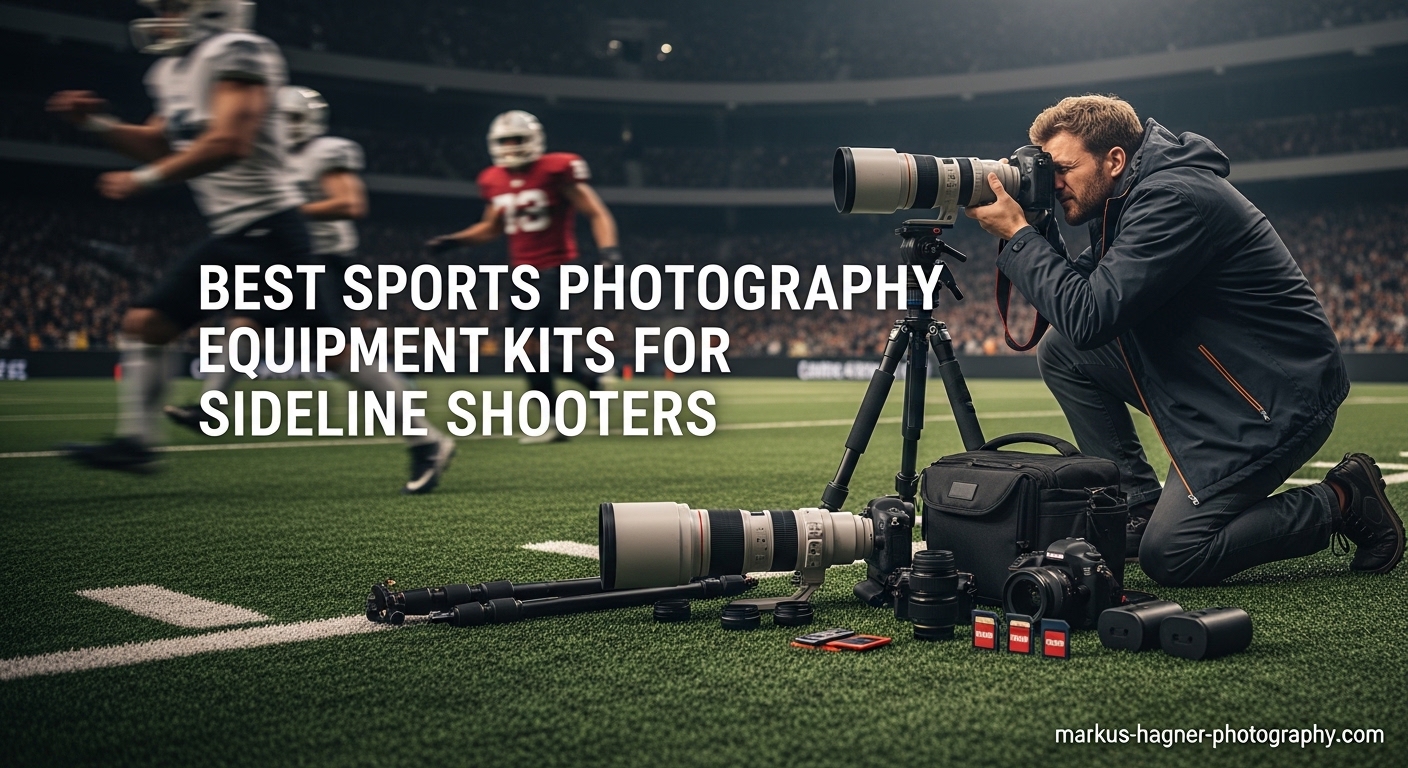
Capturing the perfect moment on the sidelines takes more than just good timing. You need the right sports photography equipment kits to freeze that game-winning touchdown, the buzzer-beating shot, or the penalty kick that decides the championship. After shooting everything from youth soccer to college football for the past decade, I have learned that having the proper gear can make or break your sideline experience.
Sports photography presents unique challenges that other genres simply do not have. You are dealing with fast-moving subjects, unpredictable lighting conditions (especially in indoor gymnasiums), and you are often working from fixed positions along the sidelines. The right combination of camera body, telephoto lens, support equipment, and accessories helps you overcome these challenges consistently.
This guide covers the best sports photography equipment kits for sideline shooters in 2026. Whether you are just starting out shooting your kid’s basketball games or you are looking to upgrade your professional setup for covering collegiate athletics, I will walk you through everything you need to build a complete kit that matches your shooting style and budget.
Top 3 Picks for Sideline Sports Photography

Best Sports Photography Equipment Kits in 2026
| Product | Specifications | Action |
|---|---|---|
 Canon RF70-200mm F2.8 L IS USM Canon RF70-200mm F2.8 L IS USM |
|
Check Latest Price |
| Canon EF 70-200mm f/2.8L IS III USM |
|
Check Latest Price |
 Canon EOS R6 Mark II Canon EOS R6 Mark II |
|
Check Latest Price |
 Canon RF100-400mm F5.6-8 IS USM Canon RF100-400mm F5.6-8 IS USM |
|
Check Latest Price |
 SanDisk 256GB Extreme PRO SDXC SanDisk 256GB Extreme PRO SDXC |
|
Check Latest Price |
 K&F CONCEPT 90 Camera Tripod K&F CONCEPT 90 Camera Tripod |
|
Check Latest Price |
 K&F CONCEPT Camera Backpack K&F CONCEPT Camera Backpack |
|
Check Latest Price |
 SanDisk 128GB Extreme PRO UHS-II SanDisk 128GB Extreme PRO UHS-II |
|
Check Latest Price |
1. Canon RF70-200mm F2.8 L IS USM Lens – Professional Mirrorless Telephoto
Pros
- Compact design vs DSLR version
- Exceptional image sharpness
- Silent autofocus
- Weather sealed
Cons
- Expensive investment
- Requires RF mount camera
When Canon announced the RF version of their legendary 70-200mm, I was skeptical about how much they could improve. After using this lens for an entire football season, I am convinced it is the best sports photography lens Canon has ever made. The compact design is not just marketing fluff, it actually makes a difference when you are shooting from the sidelines for three hours straight.
The Dual Nano USM autofocus system is virtually instantaneous. I have captured razor-sharp images of running backs breaking through the line and soccer players in mid-strike, even in challenging lighting conditions. The 5-stop image stabilization means you can get away with slightly slower shutter speeds when the action moves away from you, giving you more flexibility in your exposure settings.
What really sets this lens apart for sports photography is the minimum focusing distance of just 2.3 feet. This might seem like a minor spec, but when you are shooting from the sidelines and players come right to the edge of the field, you can actually get usable shots instead of having to back up constantly. The constant f/2.8 aperture throughout the zoom range gives you consistent exposure and beautiful background separation at any focal length.
The build quality matches the professional L-series reputation. I have used this lens in rain, snow, and freezing temperatures without any issues. The weather sealing is robust, and the white finish does help reflect heat when shooting outdoor sports in direct sunlight. At 2.64 pounds, it is significantly lighter than its EF counterpart, which makes a real difference during long games or when you are carrying multiple bodies.
Best For
Professional sports photographers and serious enthusiasts shooting with Canon’s mirrorless system. If you are covering football, soccer, or outdoor track and field where you need the versatility of a zoom but cannot compromise on image quality or autofocus speed, this lens is worth every penny. It is especially valuable for handheld shooting where the lighter weight and improved stabilization make a noticeable difference over the course of a full game.
Considerations
The RF mount requirement means you need a compatible Canon mirrorless camera body. If you are still shooting DSLR, you would need to factor in the cost of upgrading your entire system. Additionally, this lens represents a significant investment that might not make sense for casual photographers or those just starting out in sports photography.
2. Canon EF 70-200mm f/2.8L IS III USM Lens – Pro DSLR Workhorse
Canon EF 70-200mm f/2.8L IS III USM Telephoto Lens for Canon Digital SLR Cameras, White – 3044C002
Pros
- Constant f/2.8 aperture
- Excellent build quality
- Superb optics
- Great flare resistance
Cons
- Heavier than RF version
- 3.5-stop IS not as strong as newer lenses
The EF 70-200mm f/2.8L IS III USM is the lens that defined sports photography for a generation. I have owned multiple versions of this lens over the years, and the III version represents the refinement of an already excellent design. When I am shooting DSLR for sports, this is still the lens I reach for first. The optical quality is outstanding, with the lens delivering sharp images wide open at f/2.8 across the entire zoom range.
Canon’s Air Sphere Coating (ASC) makes a real difference when you are shooting into stadium lights or dealing with backlighting from sunset games. I have captured clean images with minimal flare that would have been unusable with older lens designs. The constant f/2.8 aperture gives you the flexibility to shoot in challenging lighting conditions while maintaining a fast enough shutter speed to freeze action.
The 3.5-stop image stabilization might seem modest compared to newer lenses, but it is still highly effective for sports photography. I have used this lens handheld at shutter speeds as low as 1/250th of a second and still captured sharp images of football players and sprinters. The Ring USM autofocus motor is fast and reliable, though not quite as snappy as the newer Nano USM designs found on RF lenses.
At 3.2 pounds, this lens has some heft to it. However, that weight comes with excellent build quality and weather sealing. I have used this lens in rainstorms during football games and snowy conditions for winter sports without any issues. The lens feels solid and professional in hand, with smooth zoom and focus rings that make manual adjustments easy when needed.
Best For
Sports photographers who are still invested in Canon’s DSLR system or those looking for professional-grade optics at a lower price point than the RF version. This lens is an excellent choice for high school sports coverage, wedding photography, and portrait work where the 70-200mm range is ideal. It is also a great option for photographers who want to maintain compatibility with their existing EF mount gear while still getting top-tier optical performance.
Considerations
The weight and size of this lens can be fatiguing during long shooting sessions. If you are shooting handheld for multiple games in a day, you will feel it. Additionally, the EF mount is essentially a legacy system at this point, so you should consider whether you want to invest in DSLR technology or make the transition to mirrorless before purchasing this lens.
3. Canon EOS R6 Mark II Mirrorless Camera – Professional Action Camera
Pros
- Incredible 40 fps burst speed
- Outstanding low-light performance
- 8-stop IBIS
- Excellent AF tracking
Cons
- Battery life could be better
- Expensive for beginners
The Canon EOS R6 Mark II has transformed how I shoot sports photography. When I upgraded from the original R6, the difference in burst shooting capability was immediately apparent. The 40 frames per second electronic shutter means I never miss a moment, whether I am photographing a pitcher’s release, a basketball player’s jump shot, or a soccer player kicking the ball. I have captured entire sequences of action that would have been impossible with slower cameras.
The Dual Pixel CMOS AF II system with subject detection is a game-changer for sports photography. The camera locks onto athletes’ eyes, faces, or even helmets and vehicles with remarkable tenacity. I have photographed football games where the camera tracked players through crowds of other athletes, never losing focus even when they were briefly obscured. This gives me confidence that my shots will be sharp, allowing me to focus on composition and timing rather than worrying about focus.
Low-light performance is exceptional. I have shot indoor basketball games at ISO 6400 and 12800 with noise levels that are easily manageable in post-processing. The 8-stop in-body image stabilization means that even when I am using lenses without optical stabilization, I can get sharp shots at slower shutter speeds. This is particularly valuable for indoor sports where lighting is often challenging.
The 24.2-megapixel full-frame sensor strikes an ideal balance for sports photography. It provides enough resolution for cropping flexibility while keeping file sizes manageable and maintaining excellent high-ISO performance. The vari-angle touchscreen LCD is invaluable for shooting from odd angles, and the electronic viewfinder provides a bright, clear view even in bright outdoor conditions.
Best For
Serious sports photographers who need the ultimate combination of speed and image quality. This camera is ideal for covering indoor sports like basketball and volleyball where lighting is challenging and autofocus tracking is critical. It is also perfect for outdoor sports where the fast burst rate ensures you capture the peak moment of action. Professional sports photographers and advanced enthusiasts will appreciate the reliability and performance in demanding conditions.
Considerations
The R6 Mark II represents a significant investment, especially when you factor in the cost of RF mount lenses. Battery life, while improved over the original R6, can still be a challenge for all-day shooting events, so you will want to have spare batteries on hand. Additionally, the learning curve for taking full advantage of the advanced autofocus system can be steep for photographers coming from simpler cameras.
4. Canon RF100-400mm F5.6-8 IS USM – Budget Telephoto Zoom
Canon RF100-400mm F5.6-8 is USM Telephoto Lens, Black, Compatible with EOS R Series Mirrorless Cameras
Pros
- Affordable price point
- Lightweight and compact
- Excellent image stabilization
- Good reach
Cons
- Variable aperture limits low light
- Slower than f/2.8 lenses
- Not weather sealed
Not everyone needs or can afford a professional f/2.8 telephoto lens. The Canon RF100-400mm F5.6-8 IS USM fills an important gap in the RF lineup as an affordable telephoto option for photographers on a budget. I have used this lens for youth soccer and Little League baseball, and it delivers impressive results considering its price point. At just 1.8 pounds, it is incredibly lightweight, making it perfect for all-day shooting sessions.
The 5.5-stop image stabilization is surprisingly effective. I have shot handheld at 400mm with shutter speeds around 1/250th and still captured sharp images. When paired with an IBIS-equipped camera like the R6 or R5, you get up to 6 stops of stabilization, which gives you remarkable flexibility in your exposure settings. This makes the lens much more versatile than its variable aperture might suggest.
The Nano USM autofocus system is fast and quiet. While it may not be quite as snappy as the more expensive L-series lenses, it is more than adequate for most sports photography applications. I have tracked runners, cyclists, and even birds in flight with this lens, and the autofocus keeps up well as long as you are not shooting in extremely low light conditions where the slower aperture becomes limiting.
The 100-400mm focal range is ideal for many sports. You get the versatility to shoot everything from relatively close sideline action to players on the opposite side of the field. The lens also performs surprisingly well for wildlife and nature photography, making it a versatile option for photographers who want a single telephoto lens for multiple genres.
Best For
Beginner sports photographers and those on a budget who need telephoto reach without breaking the bank. This lens is perfect for youth sports, high school games, and outdoor activities where lighting is generally adequate. It is also an excellent choice for travel photographers who want a lightweight telephoto option that does not take up much space in their bag.
Considerations
The variable aperture and relatively slow maximum aperture limit this lens’s usefulness in challenging lighting conditions. Indoor sports and night games will be difficult with this lens, requiring higher ISO settings that may compromise image quality. Additionally, the lack of weather sealing means you need to be cautious when shooting in rain or dusty conditions.
5. SanDisk 256GB Extreme PRO SDXC UHS-I Memory Card – High Capacity Storage
Pros
- Fast read/write speeds
- Large capacity
- Excellent reliability
- Durable construction
Cons
- Not UHS-II
- Price fluctuates
Modern sports cameras can fill memory cards quickly, especially when shooting RAW at 40 fps. The SanDisk 256GB Extreme PRO SDXC has been my go-to card for sports photography because it balances capacity, speed, and reliability. With write speeds up to 140MB/s, this card can keep up with the fastest burst rates without buffering issues. I have shot entire football games in RAW+JPEG mode without ever having to change cards.
The 200MB/s read speed is a game-changer for workflow. After a long day of shooting, I can offload a full 256GB card in under 20 minutes, which means less time waiting for file transfers and more time editing. This is especially valuable when you are covering tournaments or events where you need to turn around images quickly for publication or social media.
SanDisk’s durability claims are not marketing hype. I have had cards survive being dropped, going through the wash, and enduring extreme temperatures on the sidelines. The temperature, water, and X-ray proof construction gives me confidence that my images are safe regardless of the conditions I am shooting in. This reliability is crucial when you are capturing one-of-a-kind moments that cannot be recreated.
The U3 V30 ratings mean this card is fully capable of handling 4K video as well as high-speed still photography. If you are shooting video along with stills at sporting events, this card has you covered. The 256GB capacity provides ample space for thousands of RAW images or hours of 4K footage, making it a versatile option for hybrid shooters.
Best For
Sports photographers who shoot in RAW format or capture both stills and video. This card is ideal for all-day events where you do not want to worry about running out of storage or changing cards mid-game. It is also perfect for photographers who need fast offload speeds to meet tight deadlines for delivering images.
Considerations
This is a UHS-I card, not UHS-II, so it will not provide the maximum possible speeds in cameras that support the newer standard. However, for most sports photography applications, the UHS-I speeds are more than adequate. The only real consideration is the price, which can fluctuate significantly, so it is worth shopping around for the best deal.
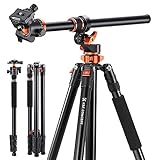
6. K&F CONCEPT 90\” Camera Tripod – Versatile Support System
Pros
- Impressive 90\
Cons
- Plastic parts on leg locks
- Not weather sealed
While most sports photography is done handheld, there are times when a support system is invaluable. The K&F CONCEPT 90\” tripod offers a unique combination of height, versatility, and portability that makes it useful for sideline photographers. The 90-inch maximum height is exceptional, allowing you to shoot over crowds or get elevated angles that most tripods simply cannot achieve.
What makes this tripod particularly useful for sports photography is the detachable monopod. When the action gets too fast for a tripod, you can quickly convert one leg into a monopod for more mobility. This versatility means you are effectively getting two support systems in one package. The 10KG load capacity easily supports professional camera bodies with telephoto lenses, giving you stable support even with heavy gear.
The metal ball head provides smooth pan and tilt movements, which is essential for tracking moving subjects. I have used this tripod for panning shots of cyclists and runners, and the movement is fluid enough to keep subjects in frame while maintaining sharp results. The 4-section aluminum legs with flip locks are quick to set up and adjust, which is crucial when you need to reposition quickly during a game.
When folded down, this tripod is compact enough to fit in most camera bags or attach to the outside of a backpack. At 4.5 pounds, it is light enough to carry all day without being burdensome. This portability makes it a practical option for sports photographers who need support but do not want to be weighed down by heavy equipment.
Best For
Sports photographers who need versatile support for different shooting scenarios. This tripod is ideal for photographing from elevated positions, shooting stable video along with stills, or situations where you might need both tripod and monopod functionality in the same event. It is also great for photographers who cover sports in venues where shooting platforms are limited.
Considerations
The leg lock mechanisms use some plastic parts that may not be as durable as all-metal alternatives over the long term. Additionally, this tripod is not weather sealed, so you need to be cautious about using it in rain or dusty conditions without additional protection. For professional daily use, you might want to consider a more heavy-duty option.
7. K&F CONCEPT Lightweight Camera Backpack – Gear Transport Solution
Pros
- Lightweight design
- Good protection
- Includes rain cover
- Affordable price
Cons
- Limited capacity for large lenses
- Not suitable for full professional kits
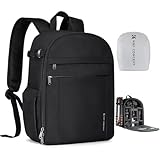
Getting your gear to and from the field is part of the sports photography equation that often gets overlooked. The K&F CONCEPT Lightweight Camera Backpack has been my go-to bag for lighter sports photography setups because it balances protection, portability, and price. At just under 2 pounds, the bag itself does not add significant weight to your load, which matters when you are carrying equipment all day.
The 15-liter capacity with six compartments provides organized storage for a mirrorless or DSLR body, a couple of lenses, and essential accessories. I have fit a Canon R6 with the RF70-200mm attached, plus a wide-angle prime lens, batteries, and memory cards in this bag with room to spare. The adjustable dividers let you customize the interior to match your specific gear configuration.
The included rain cover is a thoughtful addition that I have appreciated on more than one occasion. When sudden weather changes hit during outdoor sports events, being able to quickly deploy the rain cover gives me peace of mind that my gear stays protected. The 600D polyester construction with padded interior provides good protection against bumps and jostling during transport.
This backpack includes a laptop compartment that fits up to 14-inch devices, which is perfect for photographers who need to edit on location or back up images during breaks in the action. The tripod strap allows you to attach a small tripod or monopod to the outside of the bag, freeing up interior space for camera gear. The shoulder straps are adjustable and reasonably comfortable for the bag’s size.
Best For
Sports photographers who travel light or need a compact bag for specific events. This backpack is ideal for enthusiasts and semi-pro photographers who do not need to carry multiple camera bodies and large lenses. It is also perfect as a second bag for specialized shoots where you only need a subset of your full kit.
Considerations
The 15-liter capacity is limited for full professional sports photography kits. If you need to carry multiple bodies, large telephoto lenses, and extensive accessories, you will need a larger bag. Additionally, this bag is not designed to carry large tripods or monopods internally, so you will need to attach them externally or transport them separately.
8. SanDisk 128GB Extreme PRO UHS-II Memory Card – Professional Storage
Pros
- UHS-II for maximum speed
- Excellent reliability
- High V60 video rating
- Transfer up to 280MB/s
Cons
- Lower capacity than 256GB version
- Higher cost per GB
When speed is the priority, the SanDisk 128GB Extreme PRO UHS-II delivers. With read speeds up to 280MB/s and write speeds of 100MB/s, this card is designed for professional workflows where every second counts. I have used these cards in cameras that support UHS-II, and the difference in buffer clearing time is noticeable compared to UHS-I cards.
The V60 video speed class rating means this card is specifically designed for high-bitrate video recording. If you are shooting 4K or even 6K video along with stills at sporting events, this card provides the sustained write speeds needed to avoid dropped frames. The 128GB capacity provides ample space for hours of 4K footage or thousands of high-resolution still images.
SanDisk’s durability features are comprehensive on this card. It is drop-proof, magnetic-proof, temperature-proof, waterproof, and X-ray-proof, making it one of the most durable cards on the market. This durability is essential for sports photographers who work in challenging conditions and cannot afford to have their storage fail in the middle of an important event.
The lifetime limited warranty provides additional peace of mind. While I have never had a SanDisk Extreme PRO card fail on me, knowing that there is warranty backing gives me confidence to rely on these cards for critical shoots. The card is also compatible with a wide range of devices, from professional cameras to laptops and card readers.
Best For
Professional sports photographers who need maximum speed and reliability. This card is ideal for photographers shooting with high-end cameras that support UHS-II, as well as those who capture both stills and high-resolution video. It is particularly valuable for deadline-driven photography where fast offload speeds are essential.
Considerations
The 128GB capacity may be limiting for all-day events where you are shooting RAW+JPEG or high-bitrate video. You may need to carry multiple cards, which adds complexity to your workflow. Additionally, this card commands a premium price, so you are paying for the UHS-II speed advantage that not all cameras can utilize.
Sports Photography Equipment Buying Guide
Camera Body Selection
The camera body is the foundation of any sports photography equipment kit. When choosing a camera for sports, burst rate should be your top priority. You want at least 10 frames per second in continuous shooting mode, with professional cameras offering 20-40 fps for capturing split-second action. The Canon EOS R6 Mark II sets the standard with 40 fps electronic shutter, ensuring you never miss the decisive moment.
Autofocus performance is equally critical. Look for cameras with sophisticated subject tracking that can lock onto athletes and maintain focus as they move toward or away from you. Advanced systems like Canon’s Dual Pixel CMOS AF II with eye and face detection make a significant difference in your keeper rate, especially in chaotic sports situations with multiple athletes.
High ISO performance matters for indoor sports and night games. Full-frame sensors generally outperform crop sensors in low light, with the R6 Mark II delivering clean images up to ISO 102400. Dual card slots provide valuable backup insurance for important shoots, and in-body image stabilization helps when shooting in challenging lighting conditions.
Lens Selection for Different Sports
The 70-200mm f/2.8 is the undisputed workhorse lens for sports photography. Its versatile focal range covers everything from relatively close sideline action to players across the field or court. The constant f/2.8 aperture provides the light-gathering ability needed for indoor sports and creates beautiful background separation that makes your subjects pop.
For field sports like football and soccer, you may want additional reach. Lenses in the 100-400mm or 400mm+ range give you the ability to photograph action on the far side of the field. Budget-conscious photographers can start with the Canon RF100-400mm F5.6-8, while professionals often pair a 70-200mm with a 400mm prime for maximum versatility.
Indoor sports like basketball and volleyball demand fast apertures. An f/2.8 lens is ideal for gymnasium lighting, allowing you to maintain fast shutter speeds while keeping ISO at manageable levels. Some photographers prefer prime lenses in the 85mm or 135mm focal length for indoor sports, trading versatility for maximum light-gathering ability.
Support Equipment
Monopods are the most common support system for sports photographers because they provide stability while allowing mobility. A good monopod lets you support heavy telephoto lenses for hours without fatigue, while still being able to quickly pan and tilt to follow the action. The K&F CONCEPT 90\” tripod converts to a monopod, giving you the best of both worlds in a single package.
For sports where you are shooting from a fixed position, such as baseball from behind home plate or tennis from a corner, a tripod can provide rock-solid support. Look for tripods with sufficient height capacity to shoot over obstacles and smooth pan-and-tilt heads for tracking moving subjects.
Essential Accessories
Memory cards are critical for sports photography because you need fast write speeds to keep up with burst shooting and sufficient capacity to shoot RAW format all day. The SanDisk Extreme PRO line offers both UHS-I and UHS-II options depending on your camera’s capabilities and your budget. Always carry spare cards, and consider having a dedicated card for video if you shoot hybrid content.
Extra batteries are non-negotiable for all-day events. Modern mirrorless cameras are more power-efficient than earlier generations, but you should still have at least two, preferably three batteries for a full day of shooting. Battery grips can extend shooting time and improve ergonomics when shooting in portrait orientation.
Protective gear becomes essential when shooting outdoor sports in challenging weather. Rain covers for both your camera and lenses, along with a weather-resistant backpack like the K&F CONCEPT Lightweight Camera Backpack, ensure your equipment stays safe regardless of conditions. A good cleaning kit is also valuable for keeping your gear in top condition when shooting in dusty or muddy environments.
Frequently Asked Questions
What equipment do sports photographers need?
Sports photographers need a camera with fast burst rate (10+ fps), a telephoto zoom lens (70-200mm f/2.8 is ideal), fast memory cards, extra batteries, and support equipment like a monopod. For indoor sports, a full-frame camera with excellent high ISO performance is essential.
What camera brand do most sports photographers use?
Canon, Nikon, and Sony are all widely used by professional sports photographers. Canon has traditionally dominated sports photography, but Sony’s mirrorless systems have gained significant market share in recent years. The best brand is the one you are invested in, as all three offer excellent options for sports.
Is f4 or f2.8 better for sports photography?
f/2.8 is better for sports photography because it lets in twice as much light as f/4, which is critical for indoor sports and night games. The wider aperture also provides better background separation and subject isolation. However, f/4 lenses are lighter and less expensive, making them viable for outdoor daytime sports.
What is the best camera for a beginner sports photographer?
For beginners, a used Canon 7D Mark II or Nikon D500 with a 70-200mm f/2.8 lens provides excellent performance at a reasonable price. Mirrorless options like the Canon EOS R10 or Sony a6700 also offer great autofocus and burst rates for starting out in sports photography.
Do I need a monopod for sports photography?
While not strictly necessary, a monopod is highly recommended for sports photography, especially when using telephoto lenses over 200mm. A monopod reduces fatigue during long shooting sessions and provides stability for sharper images. It also allows you to pan smoothly while following the action.
Final Recommendations
Building the best sports photography equipment kit for sidelines shooters depends on your specific needs, budget, and the types of sports you photograph. For professional sideline shooters covering football, soccer, and outdoor athletics, the Canon RF70-200mm F2.8 L IS USM paired with the EOS R6 Mark II represents the current state of the art for mirrorless systems.
If you are working with a tighter budget or just getting started, the Canon RF100-400mm F5.6-8 IS USM provides excellent telephoto reach at a fraction of the cost. Pair it with fast memory cards like the SanDisk Extreme PRO series, and you will have a capable setup for youth sports and amateur athletics.
Remember that the best sports photography equipment kits are the ones that match your shooting style and the specific demands of the sports you cover. Invest in the best lenses you can afford, as they will outlast camera bodies and make the biggest difference in your image quality. With the right combination of camera, lens, support, and accessories, you will be ready to capture those unforgettable moments from the sidelines.