
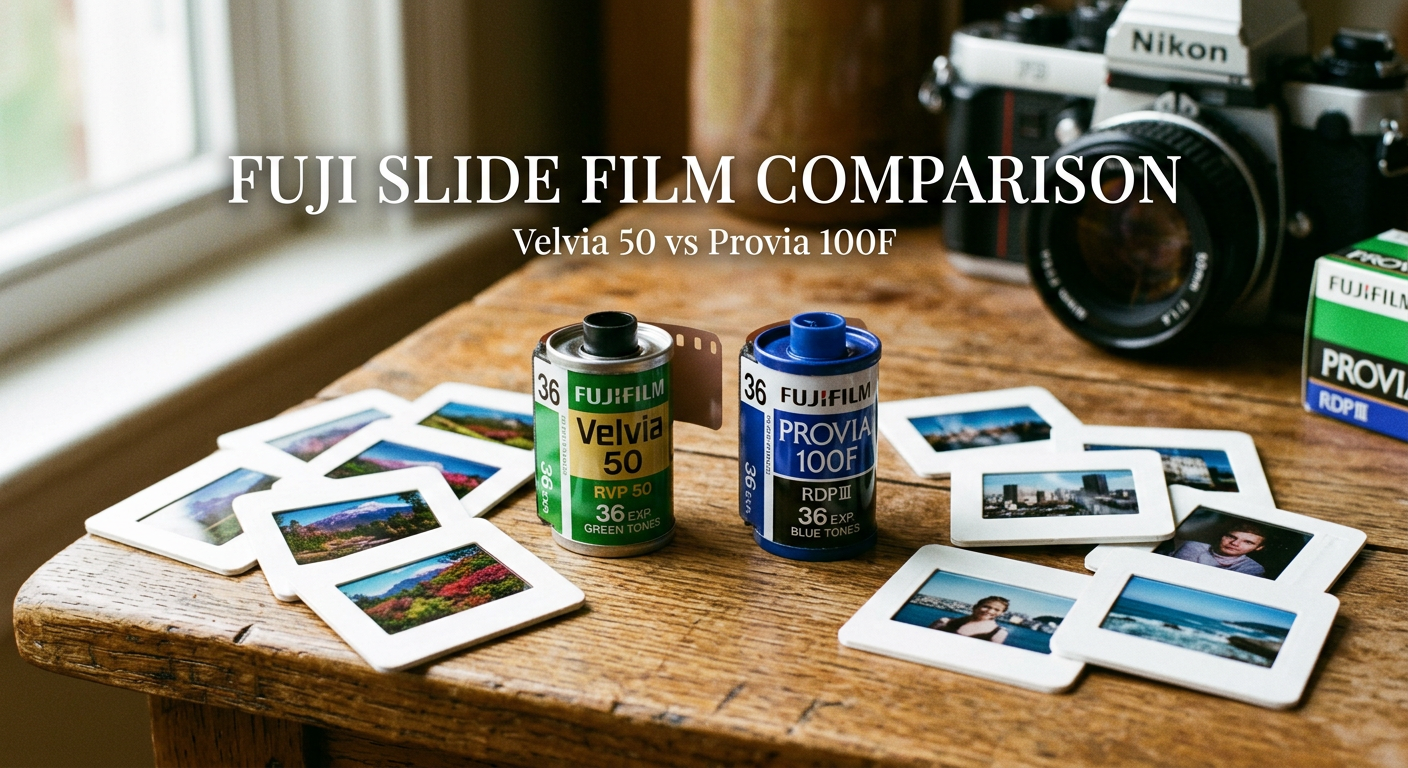
If you shoot film photography, you have likely faced the classic dilemma: Fuji Velvia 50 vs Fuji Provia 100F. Both are legendary Fujifilm slide films, but they produce radically different results. I have shot both extensively over the years, and the choice between them can make or break your final images.
Velvia 50 delivers ultra-saturated, punchy colors that make landscapes look almost magical. Provia 100F offers neutral, color-accurate rendering that captures scenes as your eyes actually see them. Understanding when to use each film will transform your photography and save you from costly mistakes.
In this comprehensive comparison, I will break down everything you need to know about these two professional transparency films. From color characteristics and exposure latitude to reciprocity failure and format availability, we will cover it all. By the end, you will know exactly which film belongs in your camera for your next shoot.
Fuji Velvia 50 vs Fuji Provia 100F: Quick Comparison
| Product | Specifications | Action |
|---|---|---|
 Fujichrome Velvia 50 (35mm) Fujichrome Velvia 50 (35mm) |
|
Check Latest Price |
 Fujichrome Provia 100F (35mm) Fujichrome Provia 100F (35mm) |
|
Check Latest Price |
The table above shows the core differences at a glance. Velvia 50 is your go-to for dramatic, vivid landscapes where color punch matters most. Provia 100F serves as the versatile workhorse that handles any subject with natural color fidelity.
Fujichrome Velvia 50: The Landscape Legend
FUJIFILM Reverse Film Fujichrome Velvia 50 135 Film, 36 Sheets/1pc, 135 VELVIA50 NP 36EX 1
Pros
- Exceptional color saturation and vibrancy
- Superb contrast for landscapes
- Natural color reproduction in certain conditions
- Excellent for warm colors and golden hour
Cons
- Very expensive and limited availability
- Magenta cast in certain lighting
- Not suitable for portraits
- Poor reciprocity characteristics for long exposures
When I first loaded Velvia 50 into my medium format camera, I was chasing that classic National Geographic look. This film has been the secret weapon of landscape photographers for decades, and one frame on a light table shows exactly why. The colors do not just appear saturated; they seem to glow from within.
Velvia 50 renders greens with an almost emerald quality. Blues in the sky take on a depth that digital capture struggles to match. Warm tones at golden hour become positively luminous. I have shot countless sunset scenes where the final transparency looked more vibrant than what I witnessed in person.
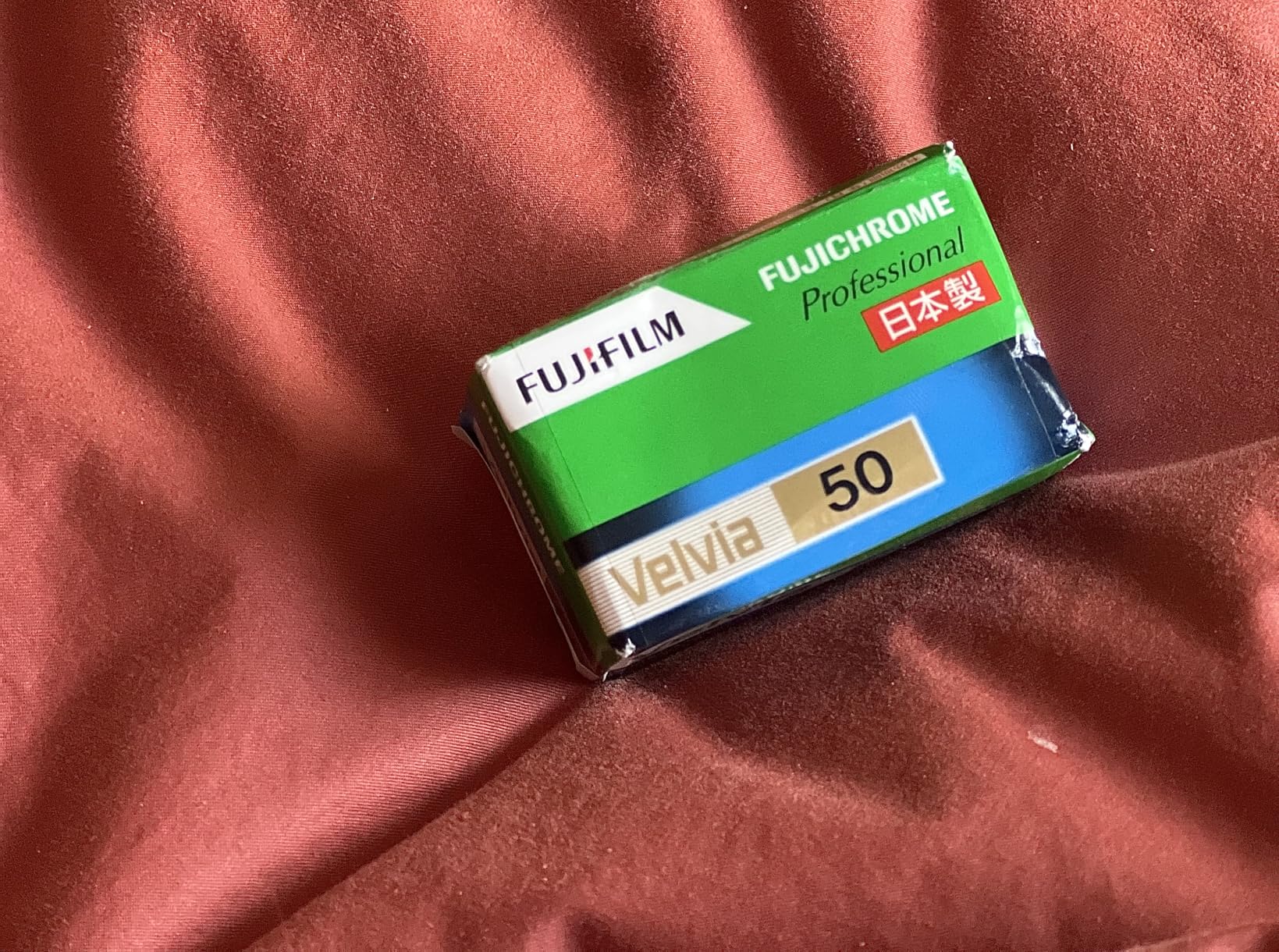
The technical characteristics explain this behavior. At ISO 50, Velvia 50 uses extremely fine grain emulsion technology. Fujifilm designed this film specifically for maximum color saturation and contrast. The result is punchy, dramatic images that work beautifully for nature photography, autumn foliage, and any scene where you want colors to pop.
However, Velvia 50 comes with significant caveats. The film exhibits a pronounced magenta cast in certain lighting conditions, particularly in open shade. I have learned to anticipate this behavior and sometimes embrace it as part of the Velvia aesthetic. Other times, it ruins otherwise perfect shots.
Exposure latitude is extremely narrow. Slide film in general demands precise metering, but Velvia 50 punishes mistakes ruthlessly. Half a stop of overexposure blows highlights irrecoverably. Underexposure muddies shadows. I always bracket my exposures when shooting Velvia, especially in challenging light.
The reciprocity failure characteristics present another challenge for long exposures. Once exposures exceed a few seconds, color shifts and additional compensation become necessary. For night photography or waterfall shots requiring long shutter speeds, Velvia 50 fights against you rather than with you.
Availability has become a serious concern. Velvia 50 remains in production, but stock shortages happen frequently. When you find it, buy several rolls. The price per roll has climbed significantly, making each frame feel precious and increasing the pressure to nail every shot.
Fujichrome Provia 100F: The Versatile Professional
Pros
- Natural color balance with accurate rendering
- Excellent for portraits and landscapes
- Versatile across all subject matter
- Better reciprocity characteristics
- Can be pushed 1-2 stops
Cons
- Expensive and becoming harder to find
- Requires precise exposure
- May appear too neutral for vibrant tastes
- Often on backorder
Provia 100F represents the professional standard for color-accurate slide photography. When I need to capture exactly what I see without dramatic interpretation, this is the film I reach for. The neutral rendering makes it suitable for subjects that would look artificial on Velvia.
The color palette skews slightly cool rather than warm. Blues appear clean and natural. Greens render faithfully without the emerald shift of Velvia. Skin tones, while still challenging on any slide film, come out far more realistic. I have successfully used Provia 100F for environmental portraits where Velvia would have made subjects look sunburned.

At ISO 100, Provia 100F offers one stop more speed than Velvia 50. This seemingly small difference translates to real practical benefits. You can shoot handheld in lower light. You can use faster shutter speeds to freeze motion. The flexibility matters when conditions are not ideal.
The reciprocity characteristics far exceed Velvia 50. Long exposures maintain color accuracy much longer before shifts occur. Waterfall photographers and night shooters will find Provia 100F far more cooperative. I have made 30-second exposures that retained excellent color neutrality.
Push processing works remarkably well with Provia 100F. Rating it at ISO 200 or even ISO 400 produces usable results with only moderate contrast increase. This flexibility has saved my shoot more than once when light faded faster than expected. Velvia 50 does not offer this safety net.
The community consensus holds Provia 100F as the more versatile option. It works for landscapes, portraits, street photography, product photography, and architectural work. While it may not deliver the dramatic punch of Velvia, it produces consistently excellent results across any subject matter.
Like Velvia, Provia 100F faces availability challenges. Stock comes and goes, and prices have increased substantially from a few years ago. The film is not discontinued, but finding it sometimes requires patience and multiple vendor checks.
Fuji Velvia 50 vs Fuji Provia 100F: Head-to-Head Comparison
Color Saturation: Velvia 50 Wins
For pure color intensity, Velvia 50 delivers results that Provia 100F cannot match. The saturated emulsion design creates colors that seem to glow. If your goal is maximum visual impact, Velvia wins this category decisively.
Color Accuracy: Provia 100F Wins
Provia 100F captures colors as they actually appear. The neutral rendering makes it ideal for documentary work, product photography, and any situation where faithful color reproduction matters. Velvia 50 intentionally exaggerates colors, which works against accuracy.
Dynamic Range and Exposure Latitude: Provia 100F Wins
Both films demand precise exposure, but Provia 100F tolerates small mistakes better. The slightly wider exposure latitude gives you more margin for error. With Velvia 50, any exposure miss becomes immediately visible on the light table.
Reciprocity Characteristics: Provia 100F Wins
Long exposures reveal significant differences between these films. Provia 100F maintains color accuracy for much longer exposure times before reciprocity failure kicks in. For waterfall photography, night scenes, or any situation requiring shutter speeds measured in seconds, Provia performs far better.
Format Availability: Tie
Both films are available in 35mm, 120 medium format, and 4×5 sheet film sizes. However, availability fluctuates for all formats. Large format photographers report that Velvia 50 sheet film has become particularly difficult to source. Check current stock before planning shoots around either film.
Push Processing Flexibility: Provia 100F Wins
Provia 100F can be pushed one or two stops with acceptable results. This gives you an emergency speed boost when light conditions change unexpectedly. Velvia 50 does not push well and should be shot at its rated ISO 50 speed.
Portraits and People: Provia 100F Wins
Skin tones on Velvia 50 look unnatural and oversaturated. Subjects appear sunburned or flushed even when they are not. Provia 100F renders skin tones more faithfully, though neither film matches negative film for portrait work.
Landscapes and Nature: Velvia 50 Wins (with caveats)
For dramatic landscape photography, Velvia 50 produces images that stop viewers in their tracks. The saturated colors and deep contrast create a distinctive look that has defined nature photography for decades. Just be aware of the magenta cast in certain lighting conditions.
Price and Value: Provia 100F Wins
Provia 100F typically costs slightly less than Velvia 50. Given its greater versatility and flexibility, it offers better value for photographers who shoot varied subjects. Velvia 50 justifies its premium only when you specifically need its unique saturated look.
Frequently Asked Questions
What is Velvia film good for?
Velvia 50 excels at landscape and nature photography where vivid, saturated colors create maximum visual impact. It produces dramatic results for autumn foliage, golden hour scenes, and any subject where you want colors to appear more intense than reality. Professional photographers have used Velvia for decades to create the distinctive look seen in National Geographic and nature publications.
Is Fujifilm discontinuing Velvia?
Fujifilm has not officially discontinued Velvia 50, though availability fluctuates frequently. The film remains in production but faces periodic stock shortages. Photographers report finding it difficult to source at times, particularly in large format sheet film sizes. It is wise to stock up when you find Velvia 50 available.
Has Provia been discontinued?
Provia 100F is still in production and has not been discontinued. However, like Velvia, it experiences availability issues with stock coming and going at major retailers. The film remains Fujifilm’s professional standard for color-accurate slide photography and continues to be manufactured in 35mm, 120, and sheet film formats.
Does Fuji still make Provia films?
Yes, Fujifilm continues to manufacture Provia 100F as of 2026. It remains their primary professional slide film for photographers seeking neutral, color-accurate results. While other Provia variants have been discontinued over the years, Provia 100F (RDP III) remains in active production.
How much dynamic range should I aim for with Provia 100F and Velvia 50?
Both films have limited dynamic range compared to negative films or digital capture. Expect approximately 5-6 stops of usable dynamic range with each. Velvia 50 demands even tighter exposure control due to its high contrast. Meter carefully for mid-tones and protect highlights, as overexposure cannot be recovered on slide film.
Verdict: Which Film Should You Choose?
The Fuji Velvia 50 vs Fuji Provia 100F decision ultimately depends on your photographic goals and shooting style.
Choose Velvia 50 if:
You primarily shoot landscapes, nature, or autumn foliage where maximum color impact matters. You want that classic National Geographic aesthetic with glowing, saturated colors. You work primarily in golden hour or warm lighting conditions. You are willing to deal with precise exposure requirements and limited reciprocity performance.
Choose Provia 100F if:
You need versatility across multiple subject types. Color accuracy matters more than dramatic saturation. You shoot long exposures, waterfalls, or night scenes. You want the flexibility to push process when light conditions change. You occasionally photograph people and want more natural skin tones.
Many experienced film photographers keep both in their bags. I use Velvia 50 for dedicated landscape shoots where I am chasing maximum drama. Provia 100F serves as my everyday slide film for general photography, travel, and situations where I need reliable, accurate results.
Both films represent the pinnacle of Fujifilm slide film technology. Neither will disappoint when used appropriately. The key is matching the film characteristics to your subject and creative vision.