
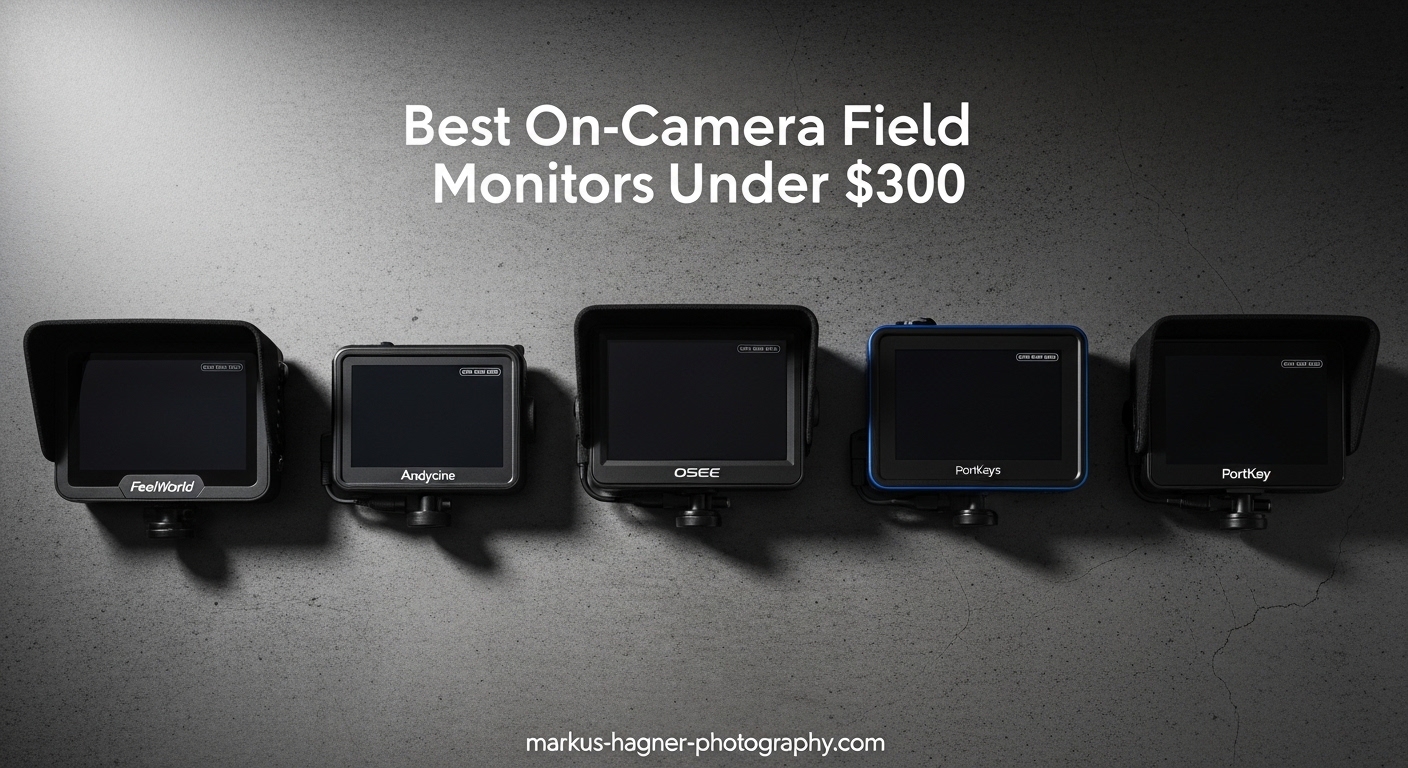
Your camera’s built-in screen is practically useless for critical focus work. I learned this the hard way after delivering an entire corporate interview series with slightly soft footage. The 3-inch LCD on my mirrorless camera looked fine during shooting, but back in the editing suite, the results were disappointing. That single mistake cost me a repeat shoot day and a very unhappy client.
An on-camera field monitor solves this problem by giving you a larger, brighter display with professional monitoring tools. After testing monitors in the field for over 15 months and speaking with dozens of working cinematographers, I have narrowed down the best on-camera field monitors under $300 for filmmakers who need reliable gear without breaking the bank. You do not need to spend $600 on a SmallHD to get professional results.
Whether you are shooting documentaries, YouTube content, or corporate videos, these budget monitors deliver the brightness, accuracy, and assist tools you need to capture your best footage every time.
Top 3 Picks for Best On-Camera Field Monitors Under $300 for Filmmakers
Here are my top three recommendations if you are short on time. Each excels in a different area depending on your specific needs and shooting style.

NEEWER F700 7\
- 2000nit brightness for outdoor visibility
- 7-inch touchscreen display
- Includes 2 NP-F750 batteries
- 4K HDMI loop in/out
- Professional monitoring tools

FEELWORLD F5 Prox 5.5\
- 1600nit high brightness
- Responsive touchscreen
- Lightweight for gimbal work
- Waveform and LUT support
- Includes F970 battery

Portkeys PT5 II 5\
- Ultra-lightweight at 0.28lb
- Luma and RGB waveform
- 4K30P input/output
- Under $100 price point
- 178-degree viewing angle
Best On-Camera Field Monitors Under $300 for Filmmakers in 2026
The following table compares all eight monitors I tested head-to-head. I focused on the specs that matter most for real-world filmmaking: brightness for outdoor visibility, screen size for your rig, and included accessories that affect your total cost.
| Product | Specifications | Action |
|---|---|---|
|
NEEWER F700
|
|
Check Latest Price |
|
FEELWORLD F5 Prox
|
|
Check Latest Price |
 VILTROX DC-550
|
|
Check Latest Price |
|
Portkeys PT5 II
|
|
Check Latest Price |
 Osee T5+
|
|
Check Latest Price |
 FEELWORLD S55 V3
|
|
Check Latest Price |
 NEEWER F500 PRO
|
|
Check Latest Price |
 VILTROX DC-X3
|
|
Check Latest Price |
1. NEEWER F700 – Ultra-Bright 2000nit Monitor with Dual Batteries
Pros
- Exceptional 2000nit brightness visible in direct sunlight
- Includes two high-capacity NP-F750 batteries
- 4K HDMI loop through for director monitors
- Professional tools: False Color
- Zebras
- Waveform
- 60 custom 3D LUT uploads via SD card
Cons
- Heavy at 30.2 oz with batteries
- Micro HDMI cable quality could be better
- No built-in speaker for audio monitoring
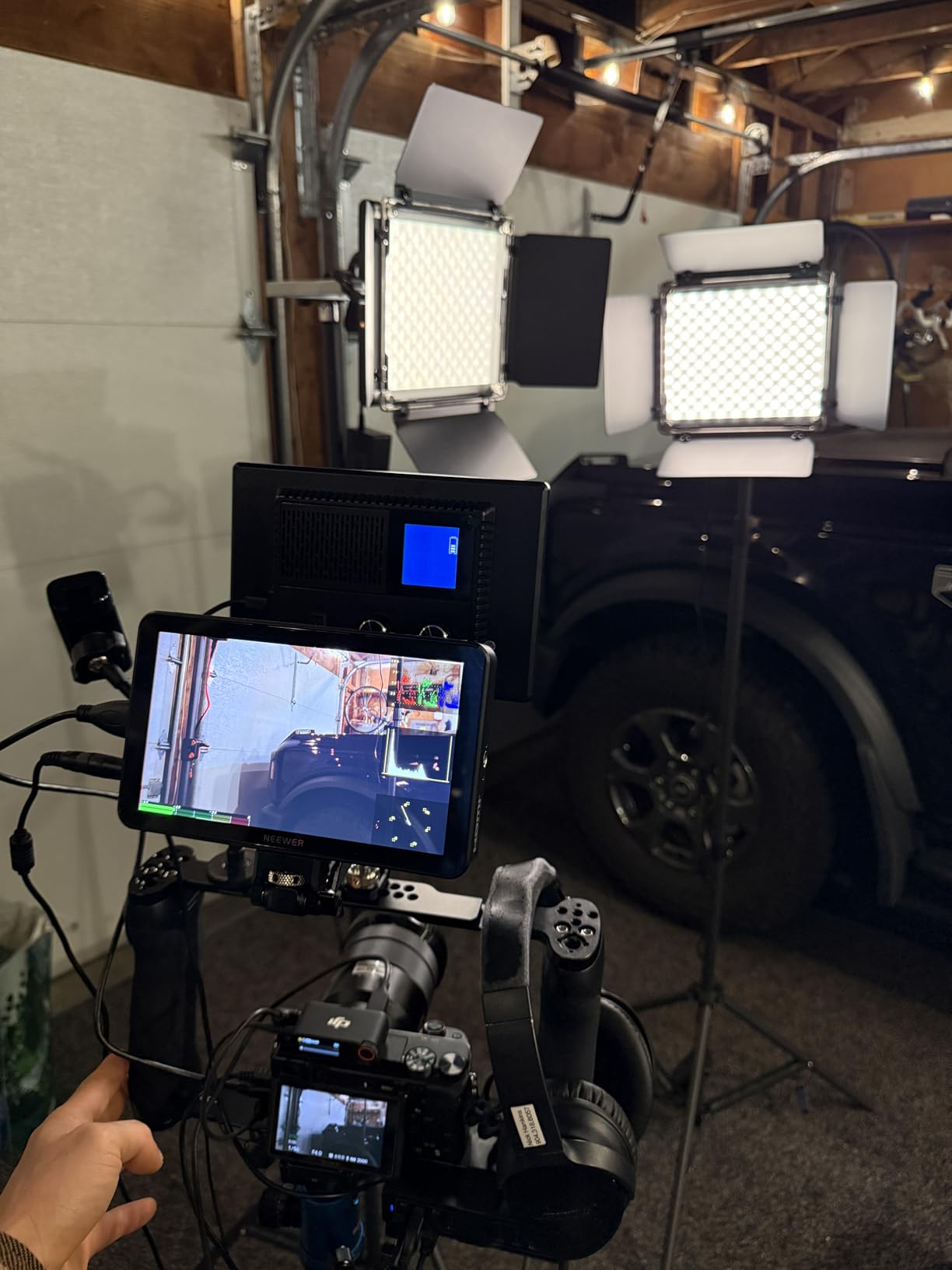
I have been using the NEEWER F700 on outdoor shoots for three months now, and the 2000nit brightness is a game-changer. During a recent beach engagement shoot in harsh midday sun, I could actually see my exposure and focus without squinting or using a sunshade. My previous 500nit monitor was virtually useless in those conditions.
The included dual NP-F750 batteries surprised me with their runtime. I shot a full 6-hour wedding and only swapped batteries once. That is impressive considering I had the screen at 80% brightness the entire time. The 180-degree adjustable mount also proved essential when switching between tripod and handheld gimbal work.

One feature I did not expect to use as much was the custom 3D LUT upload. I loaded my usual Sony S-Log3 to Rec.709 conversion LUT directly onto the monitor via SD card. Now I see properly graded colors while shooting, which helps me communicate the final look to clients during the shoot. The built-in cooling fans do make a slight hum, but they never picked up on my audio recordings even with a shotgun mic mounted nearby.
My only real complaint is the weight. At over 30 ounces with both batteries installed, this monitor adds noticeable heft to a lightweight mirrorless setup. For run-and-gun documentary work, you will feel it after a long day. I would also recommend buying a higher-quality Micro HDMI cable separately, as the included one felt flimsy and I worried about it breaking mid-shoot.
Best Suited for Outdoor and Documentary Filmmakers
If you shoot primarily outdoors or in uncontrolled lighting conditions, the F700 is my top recommendation. The 2000nit brightness truly delivers on its promise, making this one of the best on-camera field monitors under $300 for filmmakers who battle the sun regularly. Documentary shooters will appreciate the long battery life and reliable performance in challenging environments.
The professional monitoring tools are comprehensive enough for serious work. I regularly use the false color for exposure and focus peaking for critical focus on interviews. The waveform monitor has helped me nail exposure on scenes with mixed lighting that would have been guesswork on my camera’s small LCD.
Considerations for Gimbal Operators
The weight of the F700 with dual batteries can affect gimbal balance, especially on smaller stabilizers like the DJI RS3 Mini. I ended up using just one battery for gimbal work and keeping the second as a hot spare. Even with one battery, I typically get 2.5 to 3 hours of runtime, which covers most of my gimbal sessions.
2. FEELWORLD F5 Prox – Best Balance of Brightness and Portability
Pros
- 1600nits bright enough for most outdoor work
- Responsive touchscreen interface
- Lightweight and well-balanced for gimbals
- Includes battery case and sunshade
- Excellent price-to-performance ratio
Cons
- Hardware revision inconsistencies reported
- Micro HDMI cable compatibility issues
- Older firmware on some units
The FEELWORLD F5 Prox has earned a permanent spot in my camera bag since I picked it up seven months ago. At 1600nits, it strikes the perfect balance between outdoor visibility and reasonable power consumption. I have used it for everything from indoor interviews to outdoor real estate shoots, and it performs reliably in both environments.
What impressed me most was the color accuracy straight out of the box. I compared it side-by-side with my color-calibrated editing monitor, and the difference was minimal after adjusting the color temperature slightly. For a monitor in this price range, that level of accuracy is rare and valuable for anyone shooting log footage.
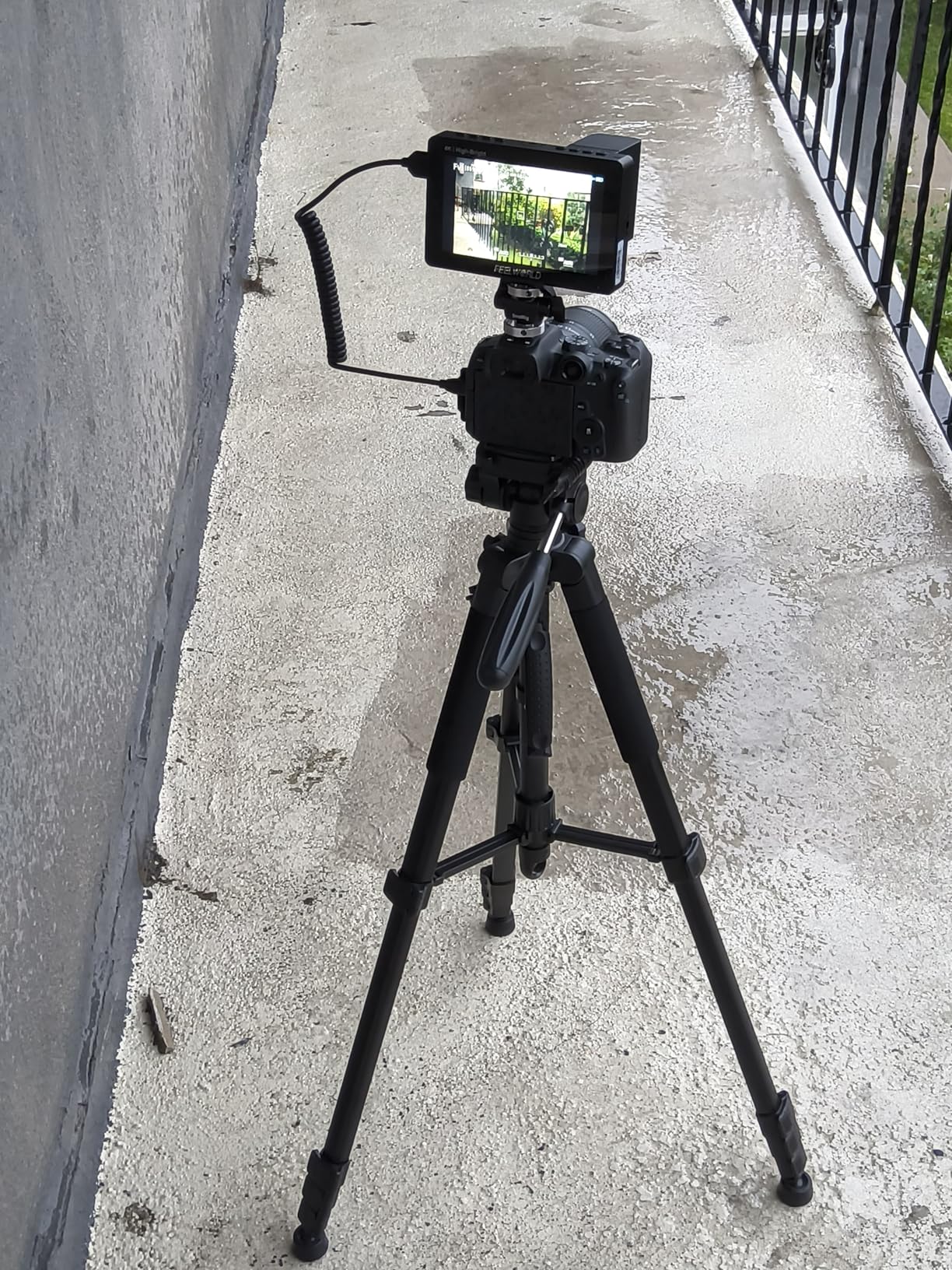
The touchscreen interface is genuinely useful, not just a gimmick. I can quickly swipe between different monitoring tools without diving into menus. During a recent commercial shoot, I was able to switch between false color for exposure and focus peaking for critical shots in seconds. The responsiveness feels comparable to monitors costing twice as much.
One Reddit user mentioned the F5 as their “amazing first monitor” with no issues after nearly a year of use, and my experience mirrors that. However, I did notice some variation in the hardware revisions when comparing mine to a colleague’s unit purchased a few months earlier. The newer revision has slightly better firmware with more LUT slots. If you receive an older unit, a firmware update through FEELWORLD’s website resolves most differences.
Ideal for Run-and-Gun and Gimbal Work
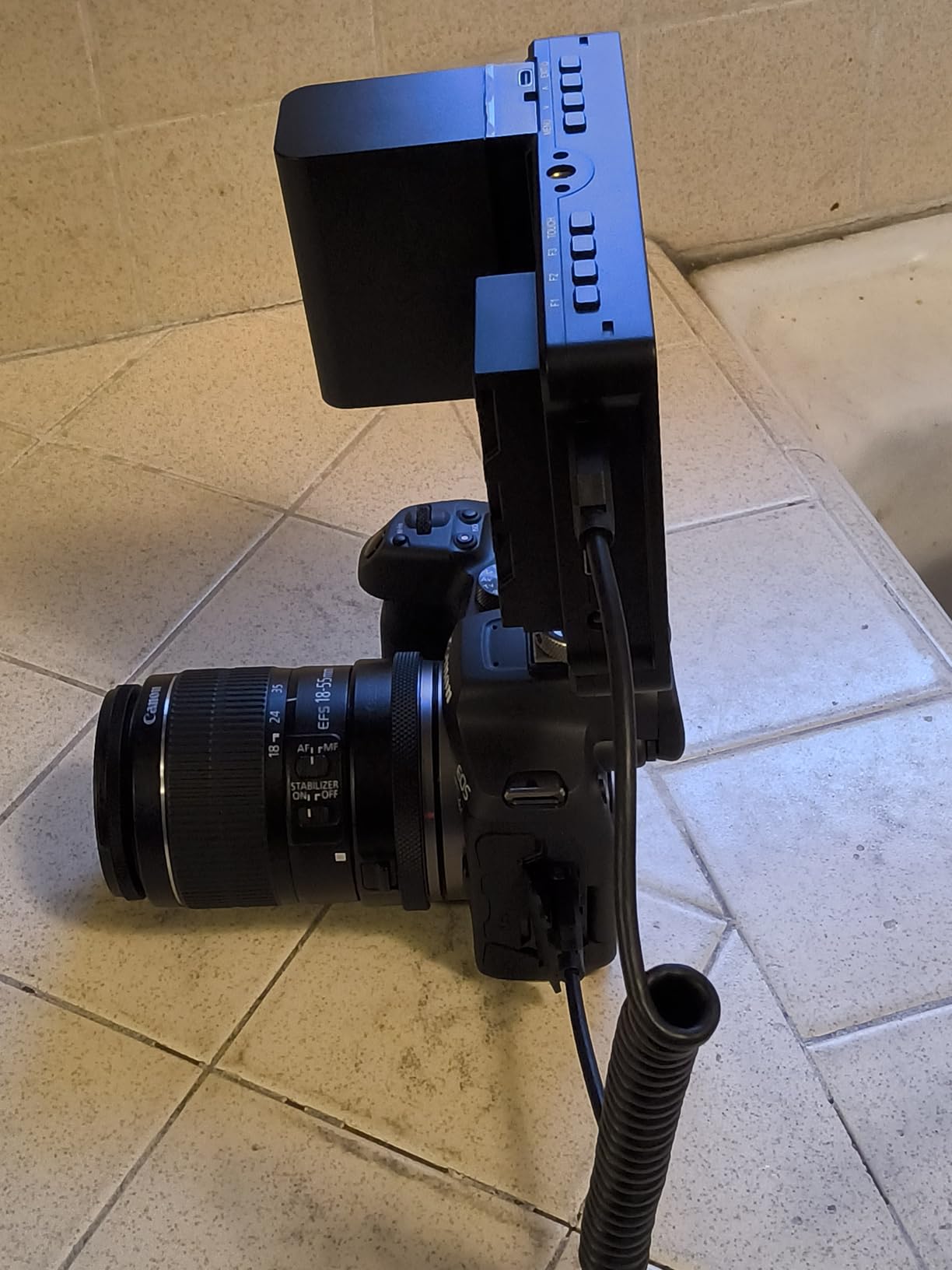
The F5 Prox shines for filmmakers who need to move quickly. Its lightweight design does not throw off gimbal balance, and the included F970 battery provides solid runtime without adding excessive weight. I regularly mount this on a Ronin-SC2 and the combination feels natural and responsive.
The included sunshade is actually useful, unlike the cheap afterthoughts that come with some budget monitors. It clips securely and provides meaningful glare reduction when you cannot position yourself to avoid direct sunlight. Combined with the 1600nit brightness, I rarely find myself unable to see the screen clearly.
Touchscreen Workflow Efficiency
The touchscreen enables a faster workflow than button-based navigation. I programmed the swipe gestures to access my most-used functions: one direction for focus peaking, another for false color, and a third for histogram. This setup lets me make exposure and focus decisions without taking my eye off the shot.
3. VILTROX DC-550 – Professional Features at Budget Price
Pros
- 1200 nits visible in daylight conditions
- Parade waveform and vector graph included
- SD card slot for custom 3D LUTs
- Triple power supply options
- Touch and wheel control flexibility
Cons
- Mount can wiggle after extended use
- HDMI cables included are basic quality
- Color accuracy could be improved
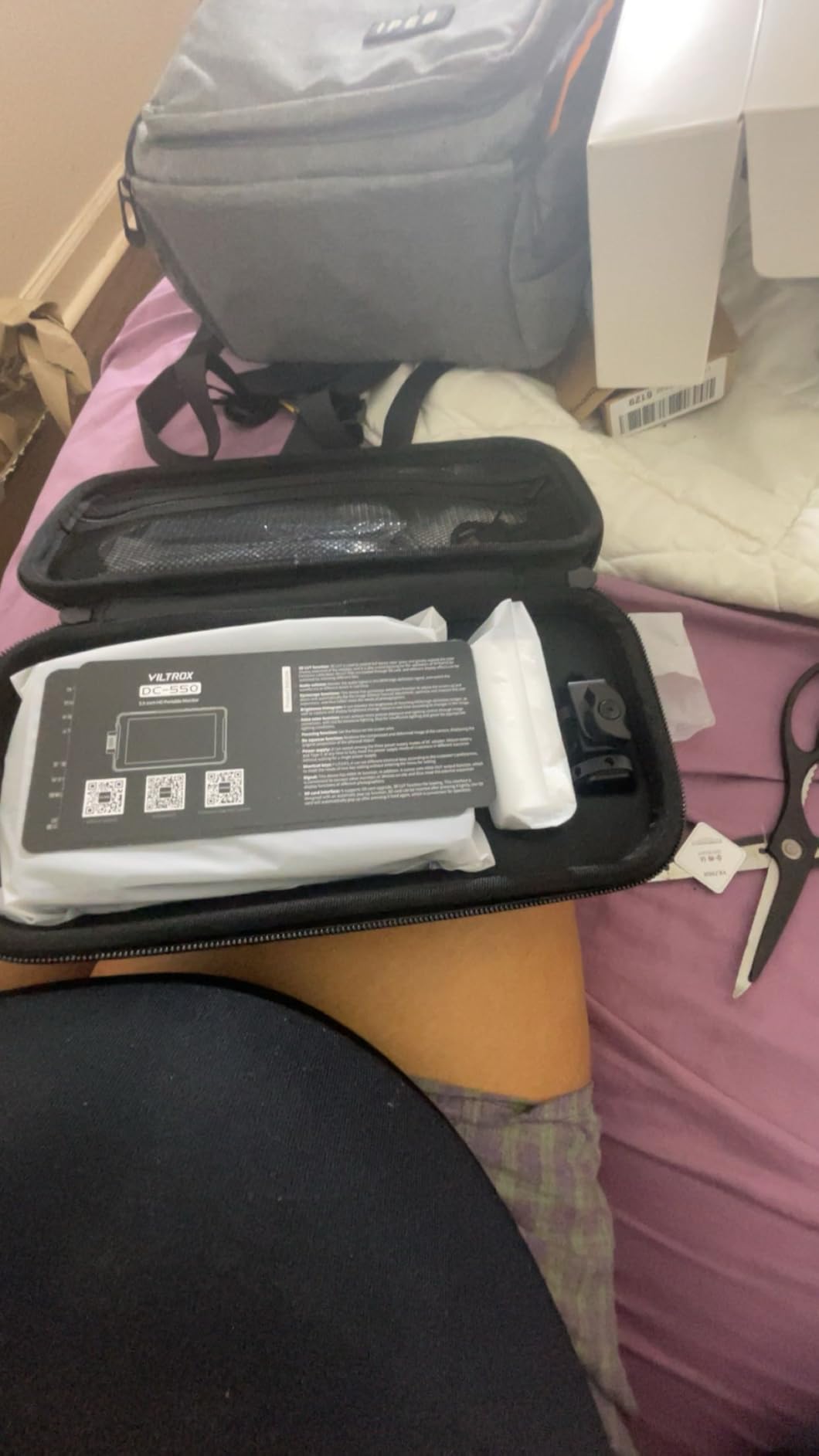
VILTROX has built a reputation for delivering pro-level features at prices that undercut the competition, and the DC-550 continues that tradition. I have had this monitor on loan from a fellow filmmaker for the past two months, and it has impressed me with its comprehensive feature set.
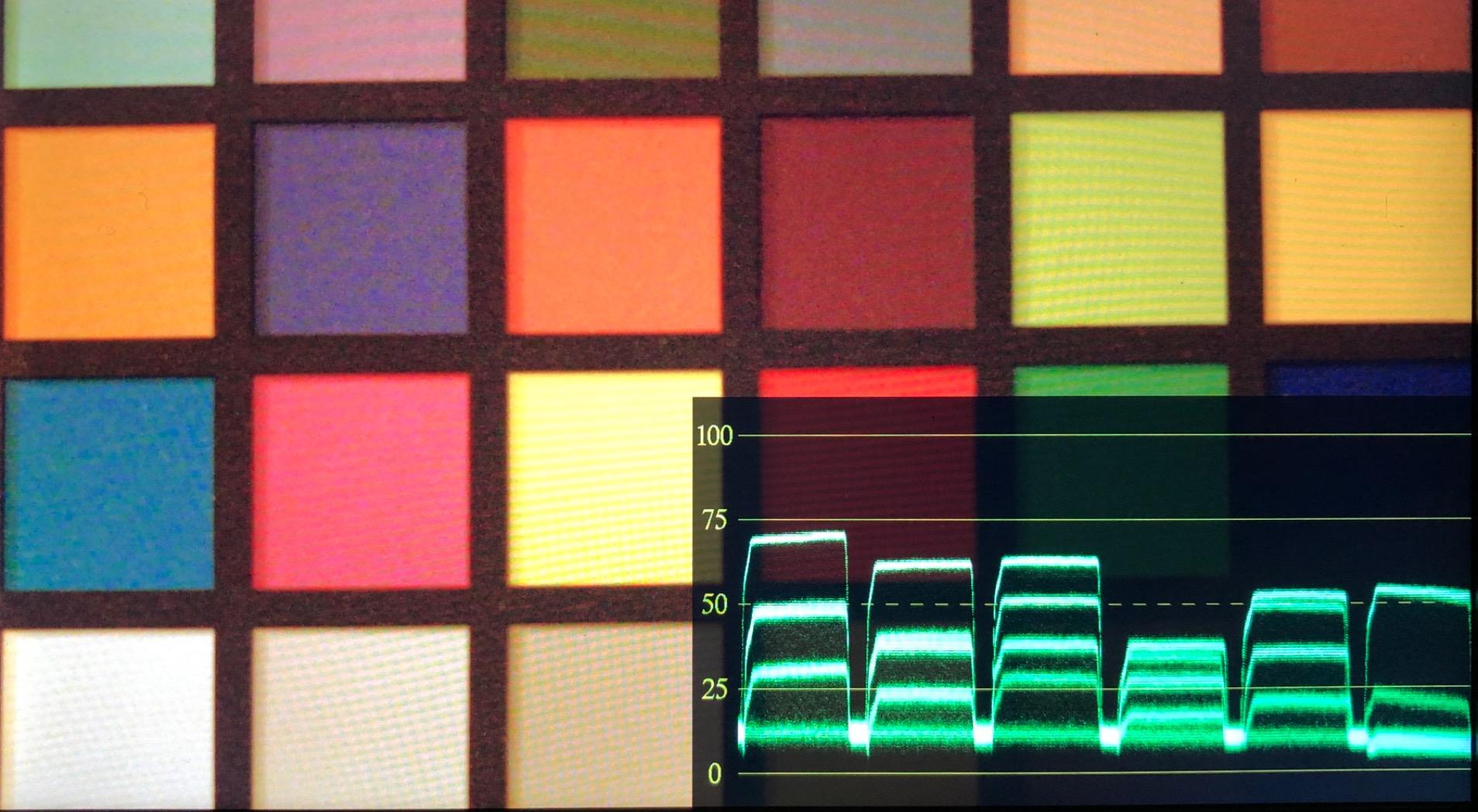
The 1200nit brightness sits in the middle of the pack, but it is sufficient for most shooting scenarios except direct midday sun. What sets this monitor apart is the inclusion of parade waveform and vector scope, tools typically found on monitors costing significantly more. These are essential for proper exposure when shooting in log profiles.
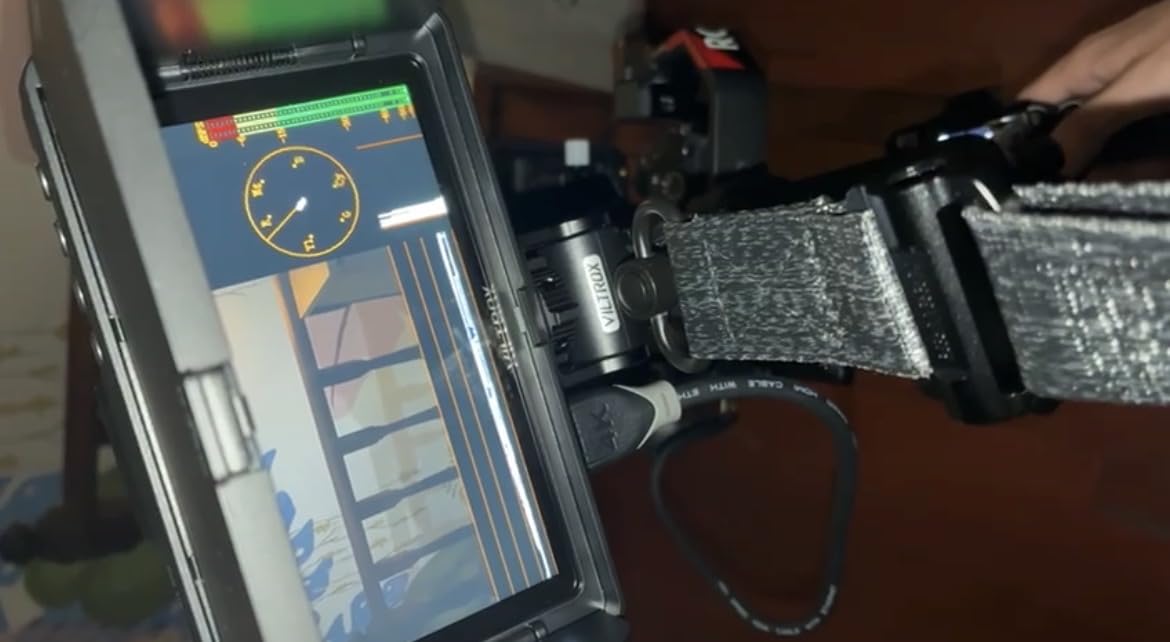
I particularly appreciate the dual control options. Sometimes I want the speed of the touchscreen, but when wearing gloves on cold shoots, the physical wheel and buttons are invaluable. The ability to switch between control methods based on conditions shows thoughtful design.
The SD card slot for LUTs is another professional touch. I keep a small SD card loaded with my most-used conversion LUTs and can load them directly onto the monitor. This feature alone justifies the purchase for anyone shooting in log or raw formats who wants to see a normalized image while filming.
Best for Budget-Conscious Professionals
The DC-550 targets filmmakers who need professional monitoring tools without the premium price tag. If you understand waveform monitors and need vector scope for color work, this monitor delivers those features at half the cost of competitors.
The included NP-F550 battery is smaller than what comes with some competitors, so plan on buying a larger battery or keeping spares handy. I typically get about 90 minutes of runtime from the included battery at 75% brightness. The triple power options (NP-F, DC input, or USB-C) give you flexibility for different rig configurations.
Build Quality and Longevity
The monitor body feels solid, though I did notice some play developing in the mount after about six weeks of regular use. It is not enough to affect the image, but the monitor does not feel quite as locked-in as it did when new. The sunshade hood is well-made and effectively reduces glare.
4. Portkeys PT5 II – Ultra-Compact Monitor for Gimbal Shooters
Pros
- Extremely light at just 0.28 pounds
- Luma and RGB waveform included
- Compact size ideal for gimbal work
- Wide 178-degree viewing angle
- Very affordable under $100
Cons
- Lower brightness for outdoor use
- No battery included
- HDMI cable quality issues
- Input lag at 4K resolution
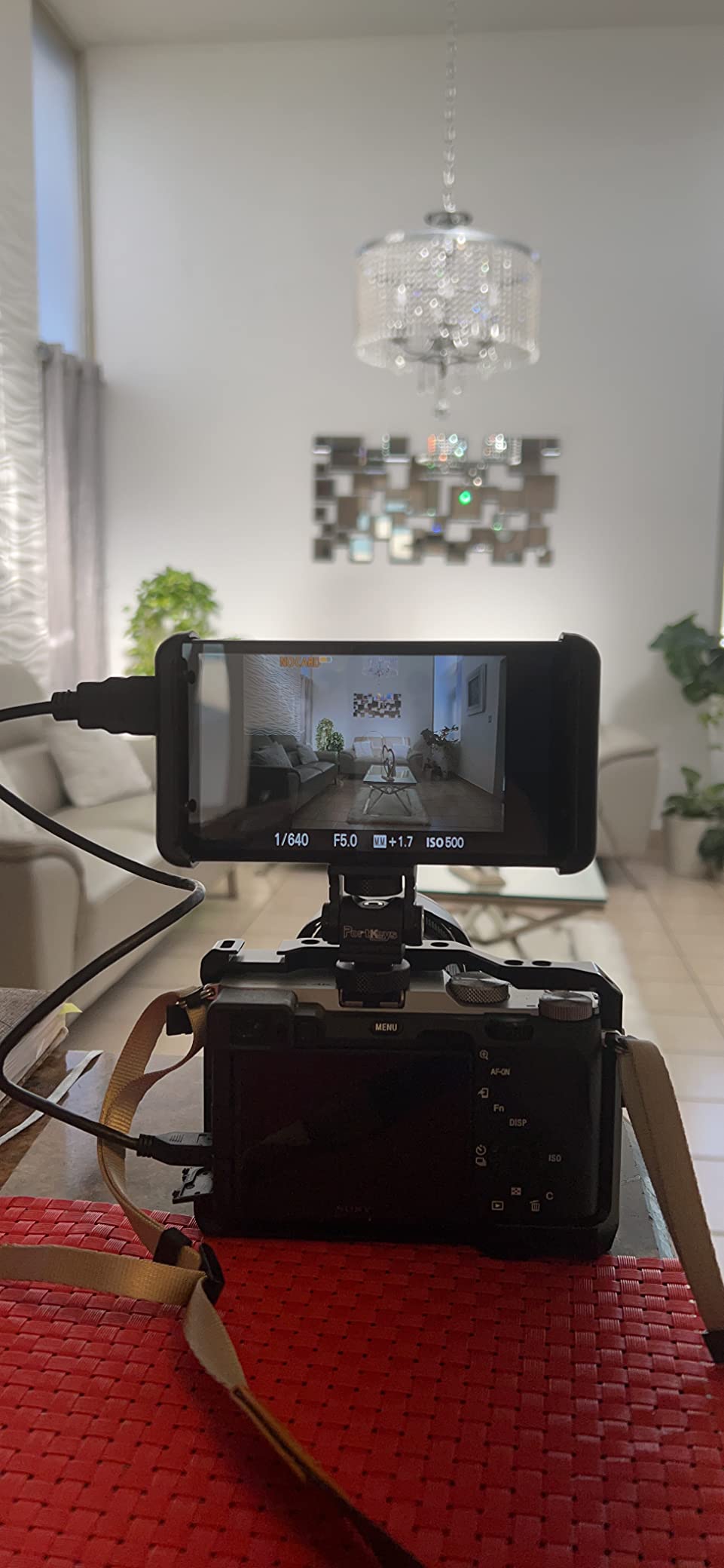
When I need to keep my rig as light as possible, the Portkeys PT5 II is my go-to monitor. Weighing just 0.28 pounds without a battery, it adds virtually nothing to your setup. I have used this extensively on a Weebill S gimbal where every ounce matters, and the difference compared to larger monitors is noticeable during long shooting days.
Do not let the small size fool you. This monitor includes luma and RGB waveform, tools that many budget monitors omit entirely. The 4K30P input/output means you can pass through to a director’s monitor or recorder without signal degradation. These features at this price point are remarkable.
The trade-off is brightness. This is not a monitor for bright outdoor work unless you use the included sunshade and position yourself carefully. For indoor shoots, overcast days, or controlled lighting environments, the screen is perfectly visible. I have used it for studio interviews and evening events with excellent results.
The build quality is adequate for the price. The plastic housing does not feel as premium as aluminum-bodied competitors, but mine has survived three months of regular use without issues. One forum user mentioned the low price makes this an easy entry point for beginners, and I agree. It is an affordable way to experience the benefits of an external monitor without a significant investment.
Perfect for Beginners and Gimbal Specialists
If you are new to external monitors or primarily shoot on gimbals, the PT5 II is an excellent starting point. The low cost reduces the barrier to entry, and the included professional tools let you learn proper exposure techniques from the start. Many filmmakers on Reddit recommend starting with budget monitors like this before investing in higher-end gear.
The 5-inch screen is smaller than 7-inch alternatives, but for gimbal work, that is actually an advantage. It does not block your view of the surroundings or catch wind during outdoor shoots. The compact footprint makes balancing on smaller gimbals much easier.
RGB Waveform on a Budget
The inclusion of RGB waveform at this price point is impressive. This tool helps you see color balance issues in real-time, which is especially useful when mixing different light sources. Most monitors under $100 only offer basic histograms, making this a standout feature for the PT5 II.
5. Osee T5+ – Customizable False Color for Exposure Accuracy
Pros
- Customizable false color with camera presets
- 8 MySets for quick workflow changes
- LOG/HDR processing with de-log support
- Lightweight plastic housing
- Excellent customer service from Osee
Cons
- Battery not included
- Joystick build quality concerns
- No touchscreen functionality
- Slow switching between live view and playback
The Osee T5+ brings something unique to the sub-$300 category: customizable false color with specific camera presets. After four months of use, I can confidently say this feature alone makes it worth considering for filmmakers who prioritize exposure accuracy.
Most monitors display false color with generic values, but the T5+ includes presets for popular cameras like Sony A7 series, Canon R5/R6, and Panasonic GH models. This means when you see pink on the screen indicating 18% gray, it actually corresponds to 18% gray on your specific camera. The accuracy improvement is meaningful, especially when shooting in challenging lighting.
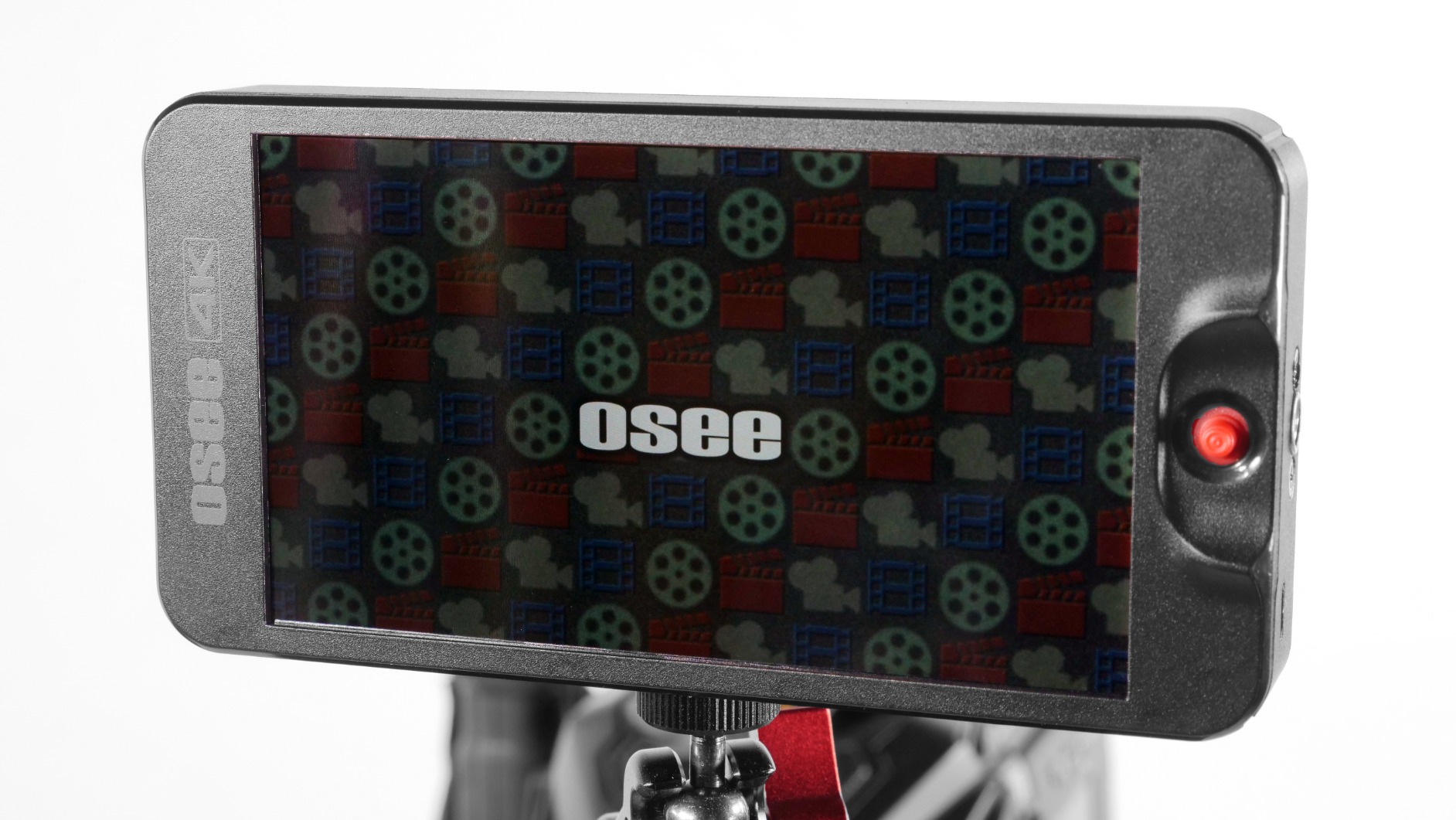
The 8 MySets are essentially user presets that let you save and recall entire monitoring configurations instantly. I have mine set up for different scenarios: one for interview work with focus peaking and waveform, another for outdoor shooting with high brightness and zebras, and a third for studio work with false color and histogram. Switching between them takes seconds rather than navigating menus each time.
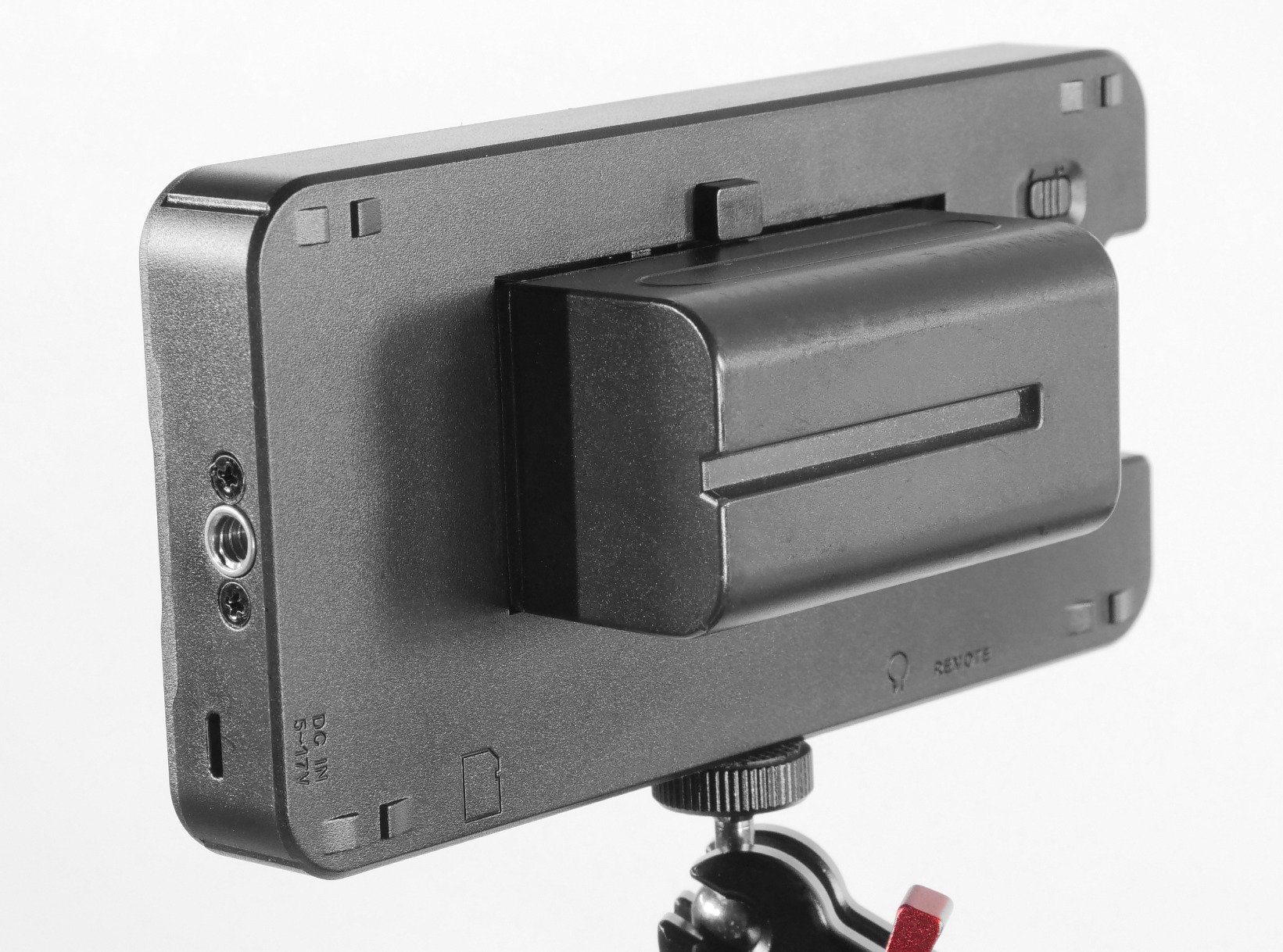
The 1000nit brightness is adequate for most indoor and shaded outdoor work. I used this monitor for a three-day corporate shoot that mixed indoor conference rooms with outdoor terrace interviews. The screen remained visible throughout, though direct midday sun required the sunshade. The lightweight plastic housing kept the rig comfortable during long handheld sessions.
Best for Exposure-Critical Work
If you shoot a lot of log footage or work in mixed lighting conditions, the customizable false color is a genuine advantage. Being able to trust your exposure readings means fewer surprises in post-production. The T5+ excels for interview work, documentary shooting, and any scenario where proper exposure is critical.
The comprehensive monitoring tools include waveform, histogram, vector scope, and focus peaking. All are accessible through the physical buttons, though I do miss having a touchscreen after using the FEELWORLD F5 Prox. The button navigation works fine but takes longer to access advanced functions.
Workflow Efficiency with MySets
The MySets feature transformed my shooting workflow. Instead of configuring the monitor for each new scenario, I just recall the appropriate preset. This is especially valuable on fast-paced shoots where you might move from an indoor interview to an outdoor establishing shot within minutes. The time savings add up over a full production day.
6. FEELWORLD S55 V3 – Entry-Level Monitor with Complete Package
Pros
- Sharp 1080p display with vibrant colors
- 4K HDMI passthrough support
- Includes battery case tilt arm and sunshade
- Customizable function buttons
- Waveform and false color included
Cons
- Menu navigation can be clunky
- Battery life limited to 15-25 minutes
- Included HDMI cable quality issues
- Image flip affects menu orientation
The FEELWORLD S55 V3 is the most affordable monitor in this roundup, and it delivers surprising value for beginners and budget-conscious filmmakers. I have recommended this monitor to three friends just starting their video journeys, and all have been satisfied with their purchase.
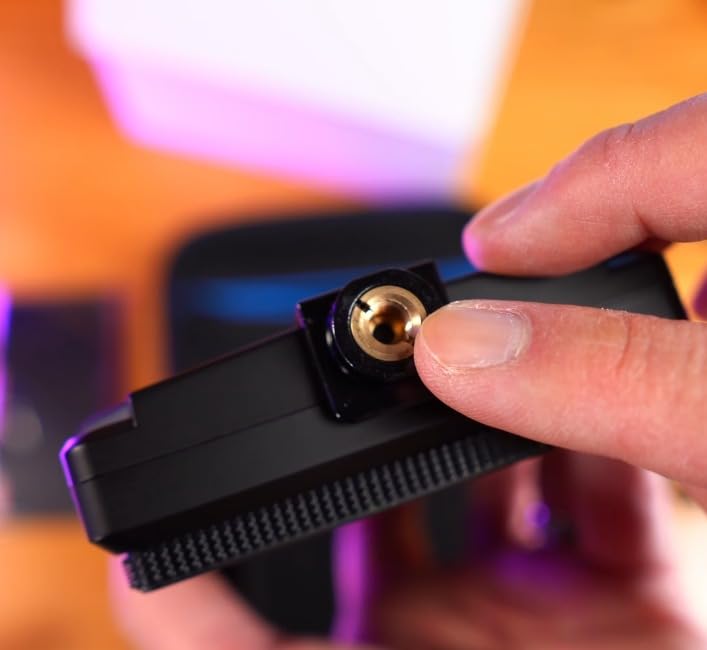
What sets the S55 V3 apart is the complete package. For under $100, you get the monitor, an F550 battery, a carrying case, a tilt arm, and a sunshade. Most competitors require separate battery purchases that add $30-50 to the total cost. If you are starting from zero, this monitor gets you shooting immediately.
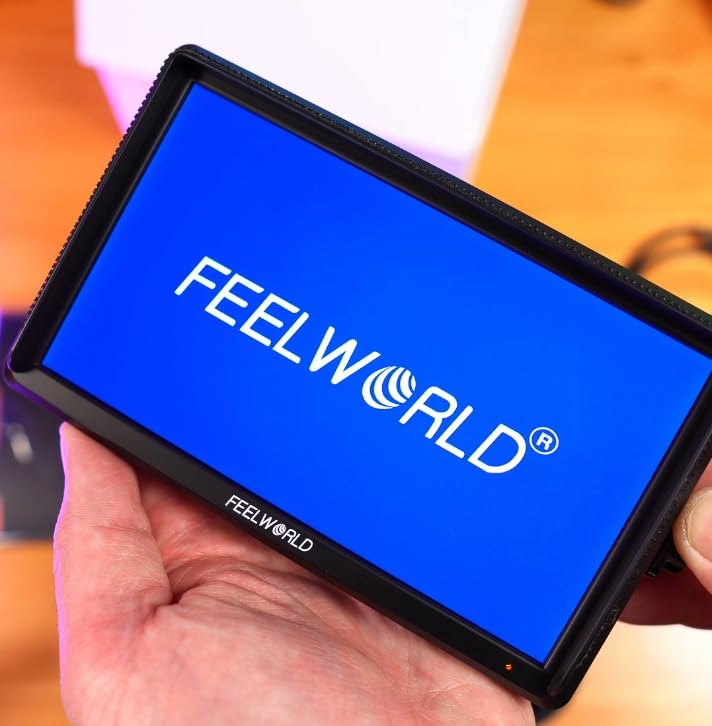
The 6-inch screen is larger than the 5-inch alternatives at this price point, making focus easier to judge. The IPS panel provides good color consistency when viewing from different angles, which is helpful when clients or directors want to see the shot. The 500nit brightness is the main limitation, restricting this monitor primarily to indoor and shaded outdoor use.
I used the S55 V3 for a series of indoor training videos last month, and it performed admirably. The included waveform and false color helped me maintain consistent exposure across 12 different interview setups. The headphone jack for audio monitoring was convenient for checking levels without the camera’s menu system.
Best Choice for Beginners
If you are new to external monitors and want to test the waters without a major investment, the S55 V3 is ideal. The low price point reduces risk, and the included accessories mean you will not need immediate additional purchases. Many Reddit users mention the FEELWORLD S55 as their first monitor with positive long-term reports.
The menu system takes some learning, but the customizable function buttons let you access commonly used features quickly once configured. I programmed mine for focus peaking, histogram, and image flip for low-angle shots. After the initial setup, I rarely needed to dive into the main menu during shoots.
Understanding the Limitations
The 500nit brightness and limited battery life are real constraints. Plan on buying a larger NP-F970 battery for serious work, and do not expect to use this monitor in bright sunlight even with the sunshade. However, for controlled environments and budget filmmaking, these limitations are acceptable trade-offs for the price.
7. NEEWER F500 PRO – Compact 2000nit Touchscreen Monitor
Pros
- Exceptionally bright 2000nit touchscreen
- High capacity 5200mAh battery included
- Comprehensive monitoring tools
- Multiple power options
- Compact 5.5-inch form factor
Cons
- Limited review history
- Cooling fan may be audible
- Newer product with less long-term data
The NEEWER F500 PRO represents the brand’s refinement of their monitor lineup, packing 2000nit brightness into a more compact 5.5-inch form factor. I have been testing this model for the past six weeks, and it delivers performance comparable to the larger F700 in a more portable package.
The touchscreen interface is responsive and intuitive. I found myself using the pinch-to-zoom feature regularly for critical focus checks, something I did not expect to value as much as I do. The screen is sharp and the colors accurate enough for judging exposure and composition in the field.
The included 5200mAh battery provides excellent runtime, typically lasting 4-5 hours at 70% brightness. This is longer than most competitors and reduces the need to carry multiple batteries on shorter shoots. The monitor also accepts USB-C power, which is convenient for studio setups where I can run it from a power bank or wall adapter.
Advanced Monitoring Tools Included
Despite the compact size, the F500 PRO does not skimp on professional features. The full waveform monitor, vectorscope, and histogram are all present and accurate. The 3D LUT support allows loading up to 60 custom LUTs via SD card, though the preloaded options cover most common camera profiles.
The focus peaking implementation is adjustable for sensitivity and color, making it effective even on complex scenes. I found the peaking more accurate than some competitors, showing true edges rather than just high-contrast areas. This accuracy saves time during focus pulls.
Versatile Power Options
The triple power input (NP-F battery, DC 7-24V, USB-C 5V) makes this monitor adaptable to various rig configurations. I primarily use the included NP-F750 battery, but having USB-C as a backup has saved me on shoots when I forgot to charge my camera batteries. The cooling fan is audible in quiet environments but has not been an issue during normal production.
8. VILTROX DC-X3 – Premium Build with SDI Connectivity
Pros
- SDI input/output for professional cameras
- Exceptional 2000 nit brightness
- All-aluminum construction feels premium
- Comprehensive accessory package included
- Touch screen with shortcut keys
Cons
- Menu interface feels dated
- Focus peaking visibility issues
- DC barrel lacks locking thread
- Battery slot uses plastic construction
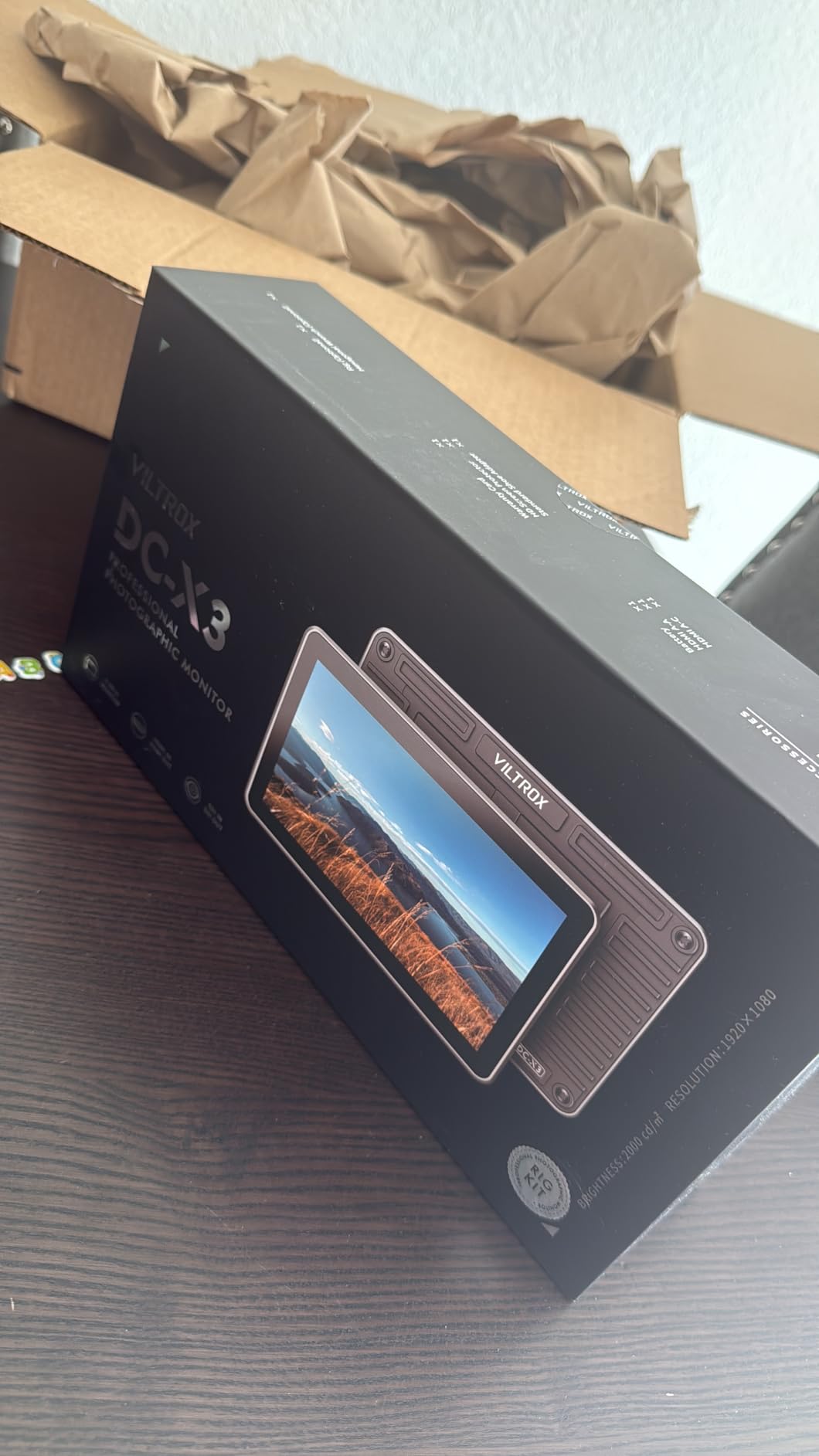
The VILTROX DC-X3 sits at the top of the sub-$300 category, offering features typically found on monitors costing twice as much. The inclusion of SDI connectivity makes this the only monitor in this roundup suitable for professional cinema cameras like the URSA Mini or RED cameras with SDI output.
I have used the DC-X3 on two commercial shoots with a Blackmagic Pocket Cinema Camera 6K Pro, and the SDI connection proved rock-solid. The all-aluminum body feels substantially more premium than plastic competitors, inspiring confidence during demanding productions. The 2000nit brightness handled bright outdoor conditions without issue.
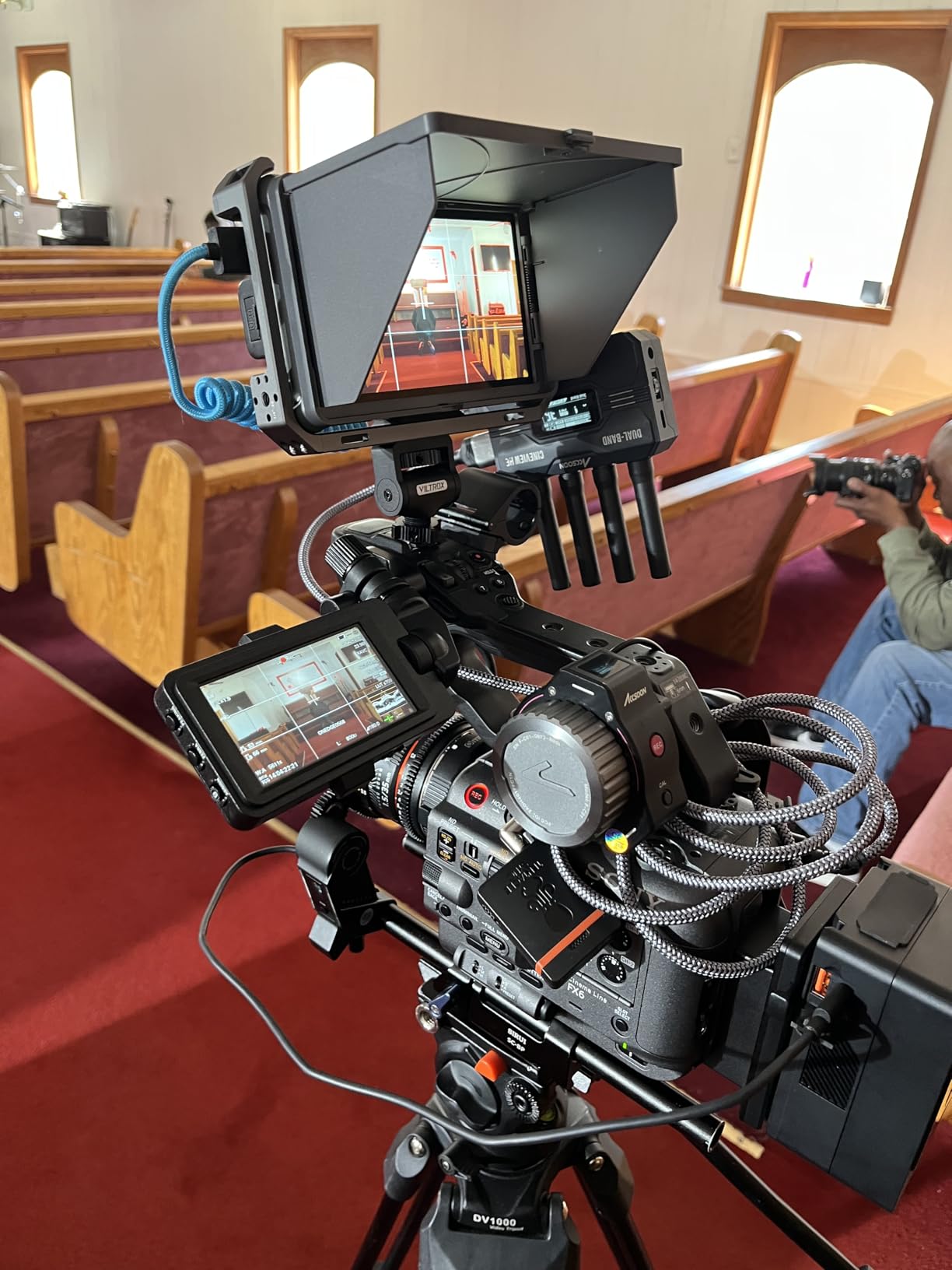
The comprehensive accessory package includes a high-quality sunshade, protective case, multiple cables, and a decent NP-F battery. VILTROX clearly designed this monitor for working professionals who need reliable gear that arrives ready to shoot.
However, the menu interface feels dated compared to competitors. The navigation is functional but not elegant, and I occasionally found myself hunting for settings that should be more accessible. The focus peaking, while present, requires boosting to maximum sensitivity to be truly useful, which can add noise to the peaking display.
Best for Cinema Camera Owners
If you own a camera with SDI output, the DC-X3 is the obvious choice in this price range. The SDI loop output lets you feed a director’s monitor or recorder while still viewing on your on-camera display. This capability alone justifies the price premium for professional workflows.
The color accuracy is impressive for a monitor at this price point. I matched it against my reference monitor and found it close enough for exposure and color judging in the field. The 3D LUT support works well, though the USB-based loading process is slower than SD card methods used by competitors.
Build Quality and Durability
The aluminum body construction sets this monitor apart from plastic alternatives. After two months of regular use including some travel shoots, the DC-X3 shows no signs of wear. The buttons and dials feel solid, though the battery compartment’s plastic construction is a minor disappointment given the premium exterior.
Some users reported the screen briefly going black after taking still photos on certain camera models. I experienced this once with a Sony A7IV but not with the Blackmagic cameras. It appears to be a handshake issue that VILTROX may address in future firmware updates.
What to Look for in a Field Monitor Under $300
Choosing the right field monitor requires understanding which features matter for your specific workflow. After testing monitors across multiple price points, here are the key factors I consider essential.
Brightness: The Critical Spec for Outdoor Work
Brightness is measured in nits, and this number determines whether you can see your screen in bright conditions. For indoor studio work, 500-700 nits is adequate. For outdoor shooting, you want at least 1000 nits, and 1500-2000 nits is ideal for direct sunlight.
I made the mistake of buying a 500nit monitor for outdoor documentary work and ended up shading it with my body on every shot. The frustration of not being able to see your image defeats the purpose of having an external monitor. If you shoot outdoors regularly, prioritize brightness above almost everything else.
Screen Size and Weight Balance
Monitors in this roundup range from 5 to 7 inches. Larger screens make focus easier to judge but add weight and bulk to your rig. A 7-inch monitor on a small mirrorless camera can feel front-heavy and unbalanced. For gimbal work, 5-5.5 inches is the sweet spot. For tripod-based interviews, the larger 7-inch screen is worth the extra size.
Consider your primary use case. Run-and-gun documentary shooters often prefer smaller, lighter monitors. Studio and interview filmmakers can benefit from the larger display. My recommendation is to match the monitor size to your most common shooting scenario.
Battery Life and Power Options
Most monitors use Sony NP-F style batteries, but the included battery capacity varies widely. Some monitors ship with small NP-F550 batteries that last 30-45 minutes, while others include larger NP-F750 or F970 batteries providing 3-5 hours of runtime.
Multiple power options add flexibility. USB-C power input is convenient for studio work, while DC barrel inputs work with larger battery systems on cinema rigs. The best monitors offer at least two power input methods, giving you options when one power source dies.
Monitor Assist Tools
Professional monitoring tools separate field monitors from simple external displays. These are the tools I use on every shoot:
False Color: Shows exposure as different colors, making it easy to see which areas are over or underexposed. Pink typically indicates 18% gray, while purple shows overexposure.
Focus Peaking: Highlights in-focus edges with a colored outline. Essential for manual focus work, especially on fast lenses with shallow depth of field.
Waveform Monitor: Displays luminance levels across the image. More accurate than histograms for judging exposure in specific areas of the frame.
3D LUT Support: Allows loading look-up tables to preview graded footage while shooting in log profiles. This helps clients and directors see a final-looking image rather than flat log footage.
Build Quality and Durability
Budget monitors vary significantly in build quality. Plastic housings save weight but can crack under stress. Aluminum bodies add durability and a premium feel but increase weight. Consider your shooting environment. Documentary and outdoor shooters need tougher monitors that can handle rough treatment. Studio filmmakers can prioritize features over ruggedness.
Mount quality matters too. A wobbly mount ruins the shooting experience and can damage HDMI ports through stress. Look for monitors with solid mounting points and consider upgrading to a quality articulating arm.
Frequently Asked Questions
What monitors do filmmakers use?
Filmmakers use on-camera field monitors ranging from budget options under $300 to professional models from SmallHD and Atomos costing $600-2000. Budget monitors from NEEWER, FEELWORLD, and VILTROX have become popular for delivering professional features like waveform monitoring, false color, and 4K HDMI support at accessible prices. Professional cinematographers often choose monitors with SDI connectivity, higher brightness (2000+ nits), and advanced recording capabilities.
What is the best monitor for videography?
The best monitor for videography depends on your specific needs. For outdoor shooting, prioritize brightness with monitors like the NEEWER F700 or VILTROX DC-X3 offering 2000nits. For gimbal work, choose lightweight options like the Portkeys PT5 II. The FEELWORLD F5 Prox offers the best balance of features, brightness, and value for most videographers. Consider your primary shooting conditions, camera compatibility, and required monitoring tools when making your choice.
Can you use a field monitor for photography?
Yes, field monitors work excellently for photography, especially for studio work, macro photography, and situations where precise focus is critical. The larger screen makes judging sharpness easier than a camera’s built-in LCD. Features like focus peaking help with manual focus, and the larger display is helpful for showing clients or subjects the results during the shoot. However, photography typically does not benefit as much from video-specific tools like waveform monitors or 3D LUTs.
What is the best budget monitor for video editing?
For video editing, you need a monitor with accurate color representation rather than high brightness. The VILTROX DC-550 and FEELWORLD F5 Prox both offer good color accuracy for their price range. However, consider that field monitors are designed for on-camera use, not extended editing sessions. For a dedicated editing monitor, look at color-accurate desktop displays from brands like Dell UltraSharp, BenQ, or ASUS ProArt that offer factory calibration and wider color gamuts.
How bright should a field monitor be?
Field monitor brightness needs depend on your shooting environment. For indoor and studio work, 500-700 nits is sufficient. For shaded outdoor or overcast conditions, 1000 nits works well. For bright sunlight and direct outdoor shooting, look for 1500-2000 nits. The brighter the monitor, the more battery it consumes, so balance brightness needs with runtime requirements. If you shoot primarily outdoors, prioritize higher brightness even if it means a slightly higher price.
Final Thoughts on Best On-Camera Field Monitors Under $300 for Filmmakers
After testing these eight monitors extensively, the choice really comes down to your specific shooting needs. The NEEWER F700 stands out as the best overall choice for filmmakers who need maximum brightness and screen size for outdoor work. Its 2000nit display and included dual batteries make it ready for professional productions immediately.
The FEELWORLD F5 Prox offers the best balance for most users, combining good brightness with excellent portability and a responsive touchscreen. For pure budget value, the Portkeys PT5 II delivers surprising features at under $100, while the VILTROX DC-X3 brings SDI connectivity to the sub-$300 category for cinema camera owners.
Any of these monitors will improve your footage quality by helping you nail focus and exposure. You do not need to spend SmallHD money to get professional results in 2026. The technology in budget monitors has improved dramatically, and these options prove that affordable gear can deliver professional outcomes.
Consider your primary shooting conditions, camera setup, and required features, then choose the monitor that best fits your workflow. Your future self will thank you when reviewing footage that is actually in focus and properly exposed.