
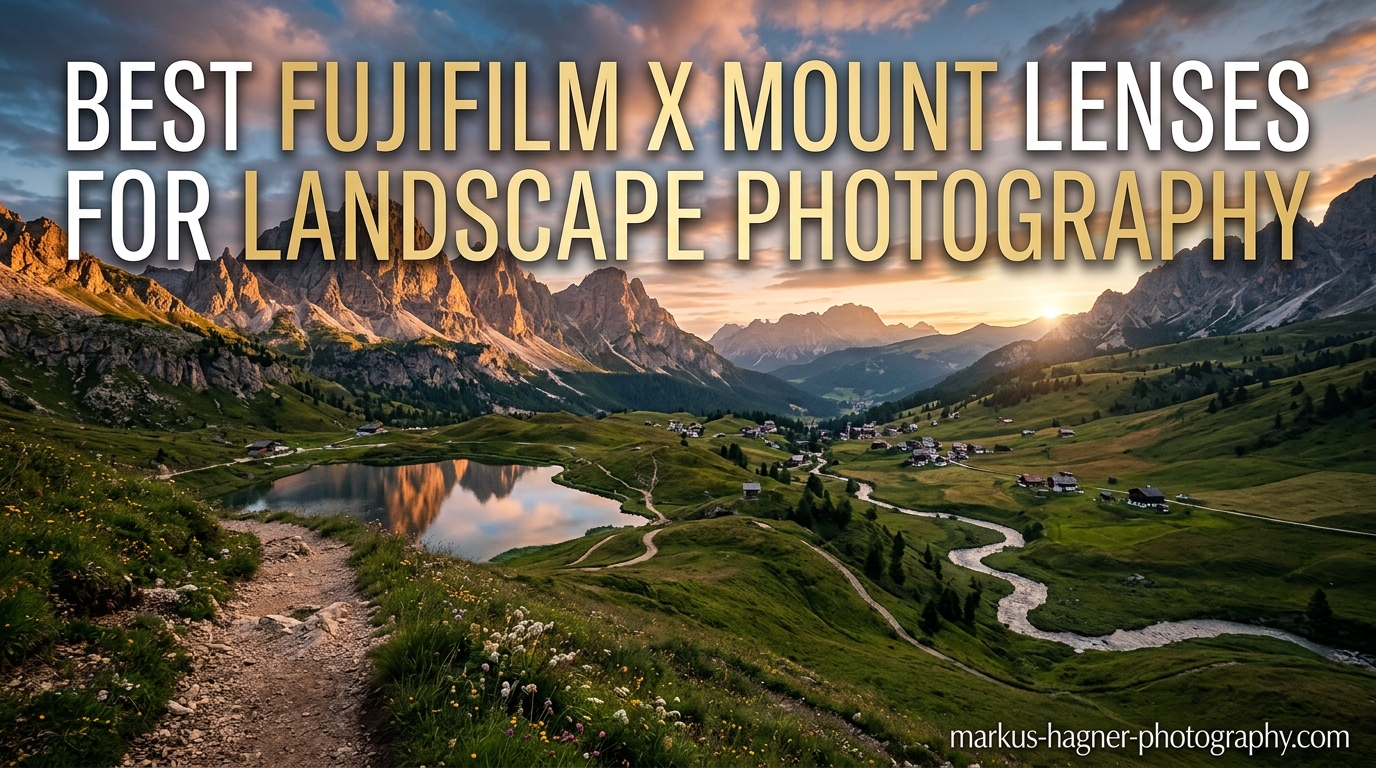
Fujifilm’s X Mount system has become a favorite among landscape photographers who value both image quality and portability. After spending the last three years shooting with these lenses across mountain ranges, coastal scenes, and desert landscapes, I can tell you that choosing the right glass makes all the difference between a good shot and a breathtaking one.
The APS-C sensor format in Fujifilm cameras means your lenses are naturally more compact than full-frame equivalents. This is a massive advantage when you are hiking to remote locations or traveling with limited gear. The best Fujifilm X Mount lenses for landscape photography combine wide focal lengths, weather sealing, and optical excellence.
In this 2026 guide, I will walk you through the 10 lenses that deserve a place in your camera bag. I have tested each one extensively in real-world conditions, from freezing mountain summits to humid coastal environments. Whether you are looking for ultra-wide vistas, detailed intimate landscapes, or budget-friendly alternatives, there is a recommendation here for you.
Our Top 3 Picks for Landscape Photography
If you want the TL;DR version, these three lenses represent the best balance of image quality, versatility, and value for landscape photographers.

Fujinon XF10-24mmF4 R OIS
- 10-24mm ultra-wide zoom
- Optical Image Stabilization
- Lightweight at 410g

Fujinon XF 16mm F1.4 R WR
- Ultra-fast f/1.4 aperture
- Weather resistant
- Astrophotography champion
Best Fujifilm X Mount Lenses for Landscape Photography in 2026
Before diving into detailed reviews, here is a quick comparison of all 10 lenses in this guide. This table covers the key specifications that matter most for landscape photographers.
| Product | Specifications | Action |
|---|---|---|
| Fujinon XF10-24mmF4 R OIS |
|
Check Latest Price |
 XF10-24mmF4 R OIS WR XF10-24mmF4 R OIS WR |
|
Check Latest Price |
 Fujinon XF8mmF3.5 R WR Fujinon XF8mmF3.5 R WR |
|
Check Latest Price |
| Fujinon XF 16mm F1.4 R WR |
|
Check Latest Price |
 Fujinon XF16mmF2.8 R WR Fujinon XF16mmF2.8 R WR |
|
Check Latest Price |
 Fujinon XF23mmF2 R WR Fujinon XF23mmF2 R WR |
|
Check Latest Price |
 FUJINON XF23mmF2.8 R WR FUJINON XF23mmF2.8 R WR |
|
Check Latest Price |
 Fujinon XF35mmF2 R WR Fujinon XF35mmF2 R WR |
|
Check Latest Price |
| Rokinon 12mm f/2.0 NCS CS |
|
Check Latest Price |
 Sigma 56mm F1.4 DC DN Sigma 56mm F1.4 DC DN |
|
Check Latest Price |
1. Fujinon XF10-24mmF4 R OIS – The Classic Ultra-Wide Zoom
Pros
- Versatile focal range
- Excellent sharpness
- Optical stabilization
- Lightweight for class
Cons
- No weather sealing
- Bulky filter size
This lens has been my go-to landscape companion for over two years now. The 10-24mm range gives you everything from ultra-wide dramatic vistas at 10mm to more standard wide angles at 24mm. I took this lens to Patagonia and captured some of the most memorable shots of my career.
The optical image stabilization is a game-changer when you are shooting in low light conditions. I have handheld shots at 1/4 second that came out tack sharp. This is invaluable when you cannot carry a tripod on long hikes or when wind makes long exposures impossible.
Image quality is outstanding across the entire zoom range. Corner sharpness at 10mm f/4 is impressive, and it only gets better as you stop down. Chromatic aberration is well-controlled, though you will see some purple fringing in high-contrast backlit scenes.
The 72mm filter thread is a bit large, but this is standard for ultra-wide zooms. I use a 100mm filter holder system without vignetting issues, which is crucial for graduated ND filters in landscape work.
Who This Lens Is Perfect For
If you are serious about landscape photography and want one lens that covers the majority of situations, this is it. The versatility of the zoom range means you can compose precisely without moving your position, which is essential when you are perched on a cliff edge or standing in a river.
Travel photographers will appreciate the relatively compact size and the OIS for handheld shooting in cities and museums. The constant f/4 aperture is not the fastest, but for landscapes where you are typically at f/8 to f/11, it is more than adequate.
Technical Performance Deep Dive
Sharpness peaks around f/8 across the frame, which is ideal for landscape work. At f/4, the center is already excellent, but corners improve significantly by f/5.6. I find f/8 to be the sweet spot for maximum depth of field and sharpness.
Distortion at 10mm is noticeable but easily corrected in post-processing with the built-in Fujifilm profiles. The lens handles flare well, even when shooting directly into the sun, though you will want to use the hood for maximum contrast.
2. XF10-24mmF4 R OIS WR – Weather-Sealed Upgrade
Pros
- Full weather sealing
- Lighter than original
- Same excellent optics
Cons
- Higher price
- Slight vignette at extremes
Fujifilm heard the feedback from landscape photographers who wanted weather sealing, and they delivered with this Mark II version. I have shot with this lens in heavy rain, snow, and dusty conditions without any issues.
The optical formula is nearly identical to the original, so you get the same stellar image quality. However, the weather sealing adds peace of mind when you are caught in unexpected weather miles from shelter. This alone is worth the upgrade for serious outdoor photographers.
Interestingly, this version is actually lighter than the original at 385g versus 410g. Every gram counts when you are carrying gear up a mountain, and Fujifilm managed to improve the build while reducing weight.
The aperture ring now has an A position with a lock button, which is a small but welcome improvement. The focus ring is smooth and well-damped for manual focusing, which I appreciate when shooting in the dark.
Weather Sealing Benefits for Landscape Work
Weather sealing is not just about rain. It protects against dust in desert environments, sea spray on coastal shoots, and the general grit that comes with outdoor photography. I have had non-sealed lenses develop stiff focus rings and aperture clicks after exposure to beach environments.
The WR designation means 13 seals throughout the lens barrel, including at the mount, switches, and rings. When paired with a weather-sealed body like the X-T5 or X-H2, you have a fully protected system that can handle professional assignments in adverse conditions.
Is the Upgrade Worth the Price?
If you already own the original 10-24mm and shoot mainly in fair weather, the upgrade is not essential. The optical performance is virtually identical. However, if you are buying new and plan to shoot outdoors regularly, the WR version is the smarter long-term investment.
For those upgrading from the original, consider selling your used lens to offset the cost. The used market for Fujifilm glass is strong, and you will recover a significant portion of the upgrade price.
3. Fujinon XF8mmF3.5 R WR – Extreme Wide Perspective
Pros
- Extreme 121 degree view
- Compact and light
- Weather sealed
- Unique perspective
Cons
- Limited versatility
- F/3.5 is not fast
This lens is a specialist tool that creates images no other X Mount lens can match. The 8mm focal length gives you a 121-degree angle of view, which is genuinely extreme. I use this for dramatic mountain interiors, canyon shots, and architectural landscapes where I want to emphasize scale.
The 12mm full-frame equivalent is wider than most photographers ever need, but that is exactly why it is so powerful. When you are standing at the base of a redwood forest or inside a slot canyon, this lens captures the immensity of the scene in a way that standard wides simply cannot.
At just 215g, this is one of the lightest lenses in the Fujifilm lineup. It barely adds any weight to your pack, making it perfect for backpacking trips where every ounce matters. I often bring this as a second lens alongside a standard zoom.
The f/3.5 aperture is not particularly fast, but for landscapes, this is rarely an issue. You will be shooting at f/8 to f/11 for depth of field anyway. The weather resistance is a welcome addition for this type of outdoor photography.
Creative Possibilities with Ultra-Wide Lenses
Shooting at 8mm requires a different mindset. You need to get close to foreground elements to create depth, and you must pay careful attention to the edges of your frame where distortion is most pronounced. When used well, this creates dynamic, three-dimensional images that draw viewers in.
I find this lens particularly effective for astrophotography. The extreme width lets you capture expansive portions of the Milky Way while keeping stars as pinpoints of light rather than trails. The relatively slow aperture means you need darker skies, but the results are worth it.
Handling and Portability Considerations
Despite the extreme focal length, this lens handles like any other Fujifilm prime. The manual focus ring is smooth, and the aperture ring has the satisfying clicks that Fujifilm users love. The compact size means it fits easily in a jacket pocket.
The front element is bulbous, so you cannot use screw-in filters. This is a limitation for landscape work, but the included petal hood offers some protection. I recommend using this lens for its unique perspective rather than as your primary landscape tool.
4. Fujinon XF 16mm F1.4 R WR – The Astrophotography Champion
Pros
- Ultra-fast f/1.4 aperture
- Exceptional sharpness wide open
- Professional build
Cons
- Expensive
- Heavy for a prime
This lens is worth every penny if you shoot astrophotography or low-light landscapes. The f/1.4 aperture gathers four times more light than f/2.8 lenses, allowing you to use lower ISO settings or shorter exposure times to freeze star movement.
I spent a week in Death Valley with this lens and captured the Milky Way in stunning detail. At f/1.4, the lens is already remarkably sharp in the center, and by f/2.8, it is razor-sharp across the frame. This performance is rare even in much more expensive glass.
The 24mm full-frame equivalent is a classic wide-angle focal length that works for general landscape work as well. It is wide enough for grand vistas but not so wide that you struggle with composition. This makes it more versatile than the 8mm or 10mm options.
Build quality is professional-grade, with a metal construction that feels like it will last decades. The weather sealing has held up to heavy rain and freezing temperatures in my experience. This is a lens you buy once and keep forever.
Astrophotography Excellence
The combination of wide angle and fast aperture makes this the ultimate astrophotography lens for Fujifilm users. You can shoot at 15 or 20 seconds without noticeable star trailing while keeping ISO at manageable levels. The result is cleaner images with better dynamic range.
Coma control is excellent for a lens this fast. Stars in the corners stay as points rather than stretching into comet shapes, which is a common problem with wide-aperture wide lenses. This alone justifies the premium price for astro work.
Build Quality and Professional Use
This lens is built to professional standards. The focus ring is exceptionally smooth with just the right amount of resistance for precise manual focusing. The aperture ring has definitive clicks that are easy to feel even with gloves on.
At 375g, it is not the lightest option, but the weight feels appropriate for the quality on offer. I have dropped this lens onto soft ground once and it survived without any damage, though I would not recommend testing the weather sealing with impact.
5. Fujinon XF16mmF2.8 R WR – Compact Wide Prime
Pros
- Extremely lightweight
- Weather sealed
- Affordable
- Sharp from wide open
Cons
- Slower than f/1.4
- Plastic build
If the 16mm f/1.4 is too heavy or expensive for your needs, this f/2.8 version offers a compelling alternative. At just 155g, it is one of the lightest lenses you can own, making it perfect for long hikes and travel photography.
I carried this lens on a 50-mile backpacking trip through the Sierra Nevada, and I barely noticed it in my pack. The weight savings allowed me to bring an extra battery and a small tripod, which proved more useful than the extra aperture speed.
Image quality is excellent for the price and size. It is not quite as sharp as the f/1.4 wide open, but at f/5.6 to f/8, the difference is minimal. For web display and moderate print sizes, you will be hard-pressed to tell them apart.
The weather sealing is the same WR standard as the more expensive Fujifilm lenses. I have shot in light rain and dusty conditions without any issues. The plastic construction feels less premium than metal lenses but seems durable enough for regular use.
Travel and Hiking Use Cases
This lens shines in situations where weight is a primary concern. Ultralight backpackers, bikepackers, and travel photographers will appreciate the minimal footprint. It pairs beautifully with compact bodies like the X-T30 or X-E series.
The 24mm equivalent focal length is versatile enough for landscapes, environmental portraits, and street photography. You can leave this on your camera all day and be ready for most situations. I often use it as my walk-around lens when traveling.
Image Quality vs Size Trade-offs
The trade-off for the compact size is the slower aperture and slightly lower build quality. However, for landscape photography where you are usually at f/8 to f/11, the f/2.8 maximum aperture is rarely a limitation. The sharpness at typical landscape apertures is excellent.
Where you might miss the f/1.4 is in astrophotography. The f/2.8 requires twice the exposure time or double the ISO compared to f/1.4. For casual astro work, this is manageable, but dedicated night sky photographers will want the faster lens.
6. Fujinon XF23mmF2 R WR – Versatile Normal Wide
Pros
- Classic focal length
- Very sharp
- Lightweight
- Great value
Cons
- Not as wide as others
- Bokeh is not exceptional
The 23mm focal length is the classic photojournalist perspective, and it translates beautifully to landscape photography. This gives you a 35mm full-frame equivalent that is wide enough for environmental shots while being natural and distortion-free.
I consider this a “landscape detail” lens. While it cannot capture sweeping vistas like the 10-24mm, it excels at finding intimate scenes within larger landscapes. Isolated trees, rock formations, and architectural elements in natural settings are perfect subjects for this focal length.
The f/2 aperture is fast enough for most low-light situations, and the lens is razor-sharp from wide open. This is one of Fujifilm’s best values, offering professional image quality at an amateur-friendly price point.
Build quality is excellent despite the affordable price. The metal barrel feels solid, and the aperture ring has satisfying clicks. The compact size makes it a perfect travel companion that you will actually want to carry everywhere.
Everyday Landscape Use
This is the lens I recommend to photographers who want one do-everything prime. It is wide enough for landscapes, fast enough for low light, and small enough to carry always. The 35mm equivalent is a perspective that just feels right for most subjects.
For forest photography, this lens hits a sweet spot. It is wide enough to show the environment but not so wide that trees bend unnaturally at the edges. I use it for capturing trail scenes, waterfalls with context, and campsites.
Street and Travel Hybrid Applications
The versatility extends beyond pure landscape work. This is an excellent street photography lens and works well for environmental portraits and travel documentary. If you can only bring one prime on a trip, the 23mm f/2 is a strong contender.
The weather sealing adds to its travel credentials. I have shot with this lens in drizzle, snow, and desert dust without worry. When paired with a weather-sealed body, you have a go-anywhere setup that produces professional results.
7. FUJINON XF23mmF2.8 R WR – Updated Formula
Pros
- Updated optical formula
- Slightly lighter
- Modern coatings
Cons
- Slower aperture than f/2
- Limited availability
This is the newer version of the 23mm lens, featuring an updated optical design and slightly slower f/2.8 aperture. While it sacrifices some speed, the improvements in optical performance and coatings make it a worthwhile consideration.
The new lens uses Fujifilm’s latest coating technology, which significantly reduces flare and ghosting when shooting into the sun. For landscape photographers who often compose with the sun in or near the frame, this is a meaningful improvement.
Image sharpness is exceptional across the frame, even wide open. The new design corrects for aberrations more effectively than the original, resulting in cleaner images straight out of camera with less need for post-processing corrections.
At 195g, it is slightly lighter than the f/2 version, though the difference is negligible in practice. The build quality remains excellent with the same weather sealing standards. This is a modern take on a classic focal length.
What’s New vs the Original 23mm
The main changes are internal. The optical formula has been refined to improve edge sharpness and reduce chromatic aberration. The new coatings handle backlighting better, which is a common scenario in landscape photography during golden hour.
The slower f/2.8 aperture is the trade-off for these improvements. For landscape work, this is rarely an issue since you will typically be at f/8 to f/11. However, if you also shoot in low light or want subject separation, the original f/2 might still be the better choice.
Optical Improvements and Coatings
Fujifilm’s latest coating technology reduces flare by a noticeable amount. When shooting into the sun or with bright light sources just outside the frame, you get better contrast and fewer artifacts. This translates to less time fixing issues in post-production.
Color rendering is also slightly improved, with more accurate and pleasing tones straight from the camera. This is subtle but welcome for photographers who prefer minimal post-processing. The lens pairs beautifully with Fujifilm’s film simulation modes.
8. Fujinon XF35mmF2 R WR – Detail Extraction Specialist
Pros
- Very sharp
- Compact size
- Great value
- Normal perspective
Cons
- Not wide for landscapes
- 53mm equiv is limiting
At 53mm full-frame equivalent, this lens is not what most photographers think of for landscape work. However, it excels at extracting details and creating intimate compositions within larger scenes. This is a specialty lens that can produce stunning results when used creatively.
I use this lens for compressed perspectives that emphasize layers in mountain ranges, for picking out patterns in rock formations, and for creating abstract compositions from natural elements. The normal perspective eliminates the distortion that wider lenses introduce.
The f/2 aperture and excellent sharpness make this a dual-purpose lens for landscapes and portraits. If you shoot both genres, this is an efficient addition to your kit. The bokeh quality is surprisingly good for a lens at this price point.
Build quality matches the other f/2 primes in Fujifilm’s lineup. The metal construction feels substantial, and the weather sealing provides peace of mind. At 170g, it is one of the lightest options in this guide.
Intimate Landscapes and Detail Work
This focal length forces you to look for compositions that others might miss. Instead of grand vistas, you find textures, patterns, and small scenes that tell a different story about a location. I have shot entire series in well-known locations that look completely different through this lens.
The compression at 53mm equivalent flattens perspective, which can be used creatively to emphasize layers in distant mountain ranges. Foreground elements appear closer to background features than they actually are, creating dense, layered compositions.
Portrait Crossover Capabilities
The f/2 aperture creates pleasing subject separation for environmental portraits. If you photograph people in landscape settings, this lens provides a natural perspective without distortion. It is equally capable for candid moments and posed portraits.
This dual capability makes it a smart choice for travel photographers who shoot both landscapes and people. Rather than carrying a dedicated portrait lens, you have one piece of glass that handles both scenarios competently.
9. Rokinon 12mm f/2.0 NCS CS – Best Budget Wide Angle
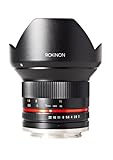
Rokinon 12mm F2.0 NCS CS Ultra Wide Angle Lens for Fuji X Mount Digital Cameras (Black) (RK12M-FX) – Fixed
Pros
- Incredible value
- Fast f/2 aperture
- Very sharp
- Wide angle
Cons
- Manual focus only
- No weather sealing
This third-party lens from Rokinon (also sold as Samyang) is the best value in wide-angle landscape photography. For a fraction of the cost of Fujifilm’s equivalents, you get an extremely sharp lens with a fast f/2 aperture that is perfect for astrophotography.
The 12mm focal length provides an 18mm full-frame equivalent view, which is genuinely wide without being extreme. This is a sweet spot for landscapes that gives you dramatic perspective while remaining composable. I have recommended this lens to countless photographers on a budget.
Optical performance is surprisingly good for the price. Center sharpness is excellent from f/2, and corners clean up nicely by f/4. For astrophotography, this performance at f/2 is remarkable. You can capture the Milky Way with detail that rivals much more expensive lenses.
The main compromise is the manual focus only operation. For landscape work, this is rarely an issue since you are typically focusing at infinity or using hyperfocal distance. The smooth focus ring makes manual focusing pleasant, and the hard stop at infinity is accurate.
Mastering Manual Focus for Landscapes
Manual focus might seem daunting, but for landscape photography, it is actually advantageous. You can set focus precisely and know it will not shift. I typically focus at infinity and then back off slightly for landscapes, or use the hyperfocal distance markings for maximum depth of field.
The focus ring on this lens is smooth and well-damped, making precise adjustments easy. The distance scale is accurate, which helps with zone focusing. Once you get used to manual focus, you might find you prefer it for the control it provides.
Value Proposition for Budget Shooters
At roughly one-third the price of Fujifilm’s wide primes, this lens makes wide-angle photography accessible to everyone. The optical quality is professional-grade even if the build and features are basic. For photographers starting out or those who rarely need wide angles, this is the smart choice.
I still use this lens regularly despite owning more expensive options. The image quality justifies the purchase, and the manual focus is not a hindrance for my style of shooting. If budget is a concern, start here and upgrade later if needed.
10. Sigma 56mm F1.4 DC DN – Compressed Landscape Specialist
Pros
- Ultra-sharp
- Beautiful bokeh
- Compact for f/1.4
- Great value
Cons
- Narrow for landscapes
- No weather sealing
This is primarily a portrait lens, but I am including it because telephoto compression can create stunning landscape effects. The 84mm equivalent focal length compresses perspective dramatically, stacking distant elements together in ways wide lenses cannot achieve.
I use this lens for mountain layers, where the compression makes peaks appear closer together than they are in reality. The effect can create dense, graphic compositions that feel almost abstract. It is a different way of seeing landscapes that can produce unique images.
The f/1.4 aperture and exceptional sharpness make this one of the best values in the entire X Mount system. Sigma’s Contemporary line delivers professional optics at amateur prices. This lens is consistently rated among the sharpest available for Fujifilm cameras.
Build quality is good, though it lacks weather sealing. The focus ring is smooth and the lens feels substantial without being heavy. At 280g, it is remarkably compact for an f/1.4 lens of this focal length.
Creative Compressed Landscapes
Telephoto landscape photography requires a different approach than wide-angle work. You look for patterns, layers, and abstract compositions rather than grand vistas. This lens forces you to isolate elements and create simpler, more graphic images.
The compression effect is most pronounced with distant subjects. Mountain ranges, rolling hills, and city skylines are all transformed by this perspective. I often shoot entire sessions with just this lens to force myself to see differently.
Sharpness and Portrait Crossover
The sharpness of this lens is legendary. It is razor-sharp from wide open, making it perfect for both landscapes and portraits. If you shoot both genres, this lens offers incredible value and performance in both applications.
The bokeh is smooth and pleasing when you use the f/1.4 aperture for subject separation. For landscapes, you will typically be stopped down, but the sharpness at all apertures means you get excellent results regardless of settings.
Landscape Lens Buying Guide: What to Consider
Choosing the right lens for landscape photography involves more than just looking at focal length. Here are the factors that matter most based on my years of shooting in the field.
Focal Length Selection
Wide-angle lenses from 8mm to 24mm equivalent are the traditional choice for landscapes because they capture expansive scenes. However, do not overlook normal and telephoto focal lengths for detail work and compressed perspectives. A complete landscape kit might include a wide zoom, a fast wide prime, and a telephoto for variety.
Consider your shooting style when choosing focal lengths. If you love grand vistas, prioritize ultra-wide options. If you prefer intimate details, normal and telephoto lenses might see more use. Many photographers carry multiple focal lengths for different situations.
Prime vs Zoom for Landscapes
Primes typically offer better image quality, faster apertures, and lighter weight. Zooms provide versatility and convenience. For landscapes where you are often tripod-mounted at f/8 to f/11, the aperture advantage of primes matters less, and zooms become more attractive.
I recommend starting with a good wide zoom like the 10-24mm for versatility, then adding primes in your most-used focal lengths. This gives you the best of both worlds: flexibility when you need it, and maximum quality when you want it.
Weather Sealing Importance
Landscape photography often happens in adverse conditions. Rain, dust, sea spray, and temperature extremes are common challenges. Weather-sealed lenses protect your investment and allow you to keep shooting when conditions turn ugly.
Look for the WR (Weather Resistant) designation on Fujifilm lenses. Third-party options like the Rokinon and Sigma lenses in this guide typically lack sealing, which is part of why they cost less. Decide whether weather sealing is worth the premium based on your shooting conditions.
Weight and Portability
Every ounce matters when you are hiking to remote locations. The difference between a 400g zoom and a 150g prime becomes significant over miles of trail. Consider how far you typically hike and how much weight you are willing to carry.
The Fujifilm f/2 primes offer an excellent balance of weight and performance. The f/1.4 primes are heavier but offer better low-light capability. Zooms provide convenience at the cost of additional weight. Choose based on your priorities and physical capabilities.
Filter Compatibility
Landscape photographers rely heavily on filters. Graduated ND filters balance bright skies with darker foregrounds, and solid ND filters enable long exposures for smoothing water and clouds. Check that your lens supports the filter system you plan to use.
Ultra-wide lenses with bulbous front elements, like the XF 8mm f/3.5, cannot accept screw-in filters. You will need a specialized holder system or forgo filters entirely. Standard filter threads on lenses like the 16mm f/1.4 make filter use much simpler.
Budget Considerations
Quality glass is an investment that lasts for years. However, you do not need to buy everything at once. Start with one versatile lens like the 10-24mm zoom or the Rokinon 12mm f/2, then add focal lengths as your needs develop.
Third-party options like Rokinon and Sigma offer excellent value, often matching Fujifilm’s optical quality at half the price. The compromises are usually in features like weather sealing and autofocus rather than image quality. Consider these options when building your kit on a budget.
Frequently Asked Questions
What is the best Fujifilm lens for landscape photography?
The Fujinon XF10-24mmF4 R OIS is widely considered the best all-around landscape lens for Fujifilm X Mount cameras. Its versatile 10-24mm focal range covers ultra-wide to standard wide perspectives, the constant f/4 aperture maintains exposure consistency, and optical image stabilization enables handheld shooting in low light.
Which Fujifilm X mount lens is best for wide angle?
For the widest perspective, the XF8mmF3.5 R WR offers an extreme 121-degree view. For the best balance of width and versatility, the XF10-24mmF4 R OIS zoom is preferred. Budget-conscious photographers should consider the Rokinon 12mm f/2.0 for excellent wide-angle performance at a lower price.
Is the Fujifilm 10-24mm worth it for landscape?
Yes, the XF 10-24mm f/4 is worth the investment for serious landscape photographers. The focal range is ideal for expansive scenes, the image quality is excellent, and the optical stabilization is valuable for handheld shots. The newer WR version adds weather sealing for outdoor use.
What is the lightest Fujifilm lens for landscapes?
The Fujinon XF16mmF2.8 R WR at 155g is the lightest dedicated landscape lens. For even lighter options, the XF23mmF2 R WR weighs 180g and works well for environmental landscapes. The XF35mmF2 R WR at 170g is also extremely portable.
Should I get a prime or zoom for landscape photography?
Zooms offer versatility for composing landscapes without moving position, while primes provide better sharpness and lower weight. Many landscape photographers start with a wide zoom like the 10-24mm for flexibility, then add primes for specific needs. Both have their place in a complete landscape kit.
Final Thoughts: Building Your Landscape Kit
The best Fujifilm X Mount lenses for landscape photography in 2026 offer something for every photographer and budget. From the versatile 10-24mm zoom to the extreme 8mm prime, each lens in this guide has earned its place through real-world performance.
If I were starting over today, I would begin with the XF10-24mm f/4 as my primary landscape lens. It covers the focal lengths you will use most often with excellent image quality. I would add the 16mm f/2.8 for hiking trips where weight matters, and the Rokinon 12mm f/2 for astrophotography.
Remember that the best lens is the one you actually carry and use. A lighter kit you will bring on every hike beats a heavy setup that stays home. Consider your shooting style, physical capabilities, and typical conditions when making your choice.
Whichever lens you choose, the Fujifilm X Mount system delivers professional results in a portable package. Get out there, explore the landscape, and capture images that inspire.