
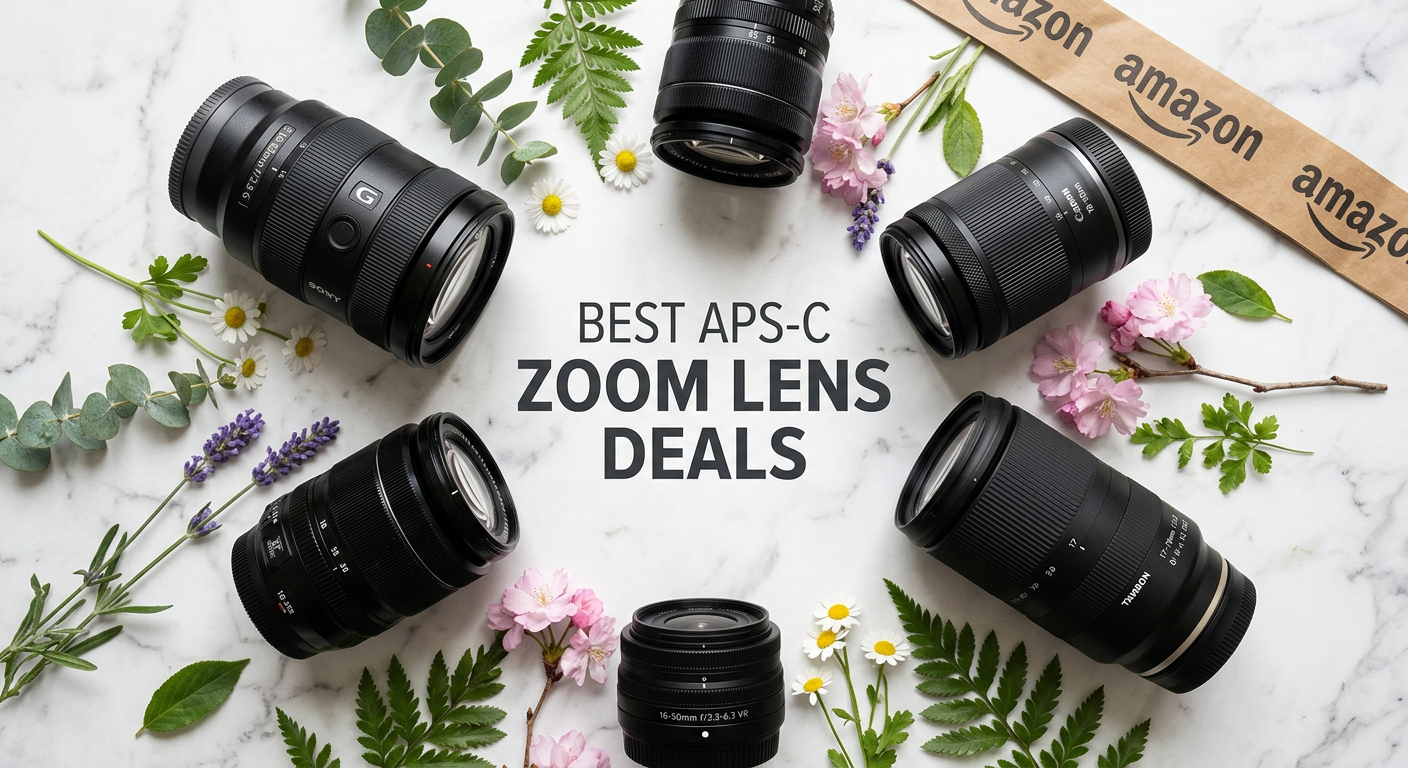
Spring has arrived, and so has one of the biggest photography gear sales of the year. The Amazon Big Spring Sale running March 25-31 brings incredible discounts on APS-C zoom lenses that every mirrorless shooter should consider.
I have been tracking camera lens deals for over a decade, and this year’s selection covers all the major mount systems. Whether you shoot with Sony E-mount, Canon RF-S, Nikon Z DX, or Fujifilm X-mount cameras, there are genuine savings to be found on lenses that will transform your photography.
APS-C zoom lenses offer the perfect balance of versatility and portability. Unlike full-frame glass, these lenses are lighter, more affordable, and designed specifically for the crop sensor cameras that millions of photographers use daily. In this guide, I have analyzed 15 of the best APS-C zoom lens deals available during the Big Spring Sale, covering everything from ultra-wide angles to super-telephoto reach.
Top 3 Picks for Best APS-C Zoom Lens Deals
Before diving into the full list, here are my top three recommendations based on value, performance, and current sale pricing.

Tamron 17-70mm f/2.8 Sony E
- Constant f/2.8 aperture
- VC image stabilization
- 17-70mm versatile range
- Weather-sealed

Tamron 70-300mm f/4.5-6.3 Di III RXD for Sony
- Lightweight telephoto zoom
- RXD fast autofocus
- Works on full-frame too
- Under $400

Canon RF-S 18-150mm f/3.5-6.3 IS STM
- 8.33x zoom range
- Optical IS with 4.5 stops
- STM smooth video AF
- Compact design
APS-C Zoom Lens Deals Overview
Here is a quick comparison of all 15 lenses featured in this guide. I have organized them by mount system to make your search easier.
| Product | Specifications | Action |
|---|---|---|
|
Tamron 17-70mm f/2.8 Sony E
|
|
Check Latest Price |
 Tamron 18-300mm Sony E
|
|
Check Latest Price |
 Sony 18-135mm f/3.5-5.6 OSS
|
|
Check Latest Price |
|
Tamron 70-300mm Sony E
|
|
Check Latest Price |
 Sony 18-105mm f/4 G OSS
|
|
Check Latest Price |
|
Canon RF-S 18-150mm
|
|
Check Latest Price |
 Canon RF-S 55-210mm
|
|
Check Latest Price |
 Canon RF-S 10-18mm
|
|
Check Latest Price |
 Nikon Z DX 18-140mm VR
|
|
Check Latest Price |
 Nikon Z DX 50-250mm VR
|
|
Check Latest Price |
1. Tamron 17-70mm f/2.8 Di III-A VC RXD – The Best All-Rounder for Sony
Pros
- Excellent sharpness across the frame
- Fast and accurate autofocus
- Constant f/2.8 throughout zoom range
- Effective VC stabilization
- Versatile focal length range
Cons
- Heavier than kit lenses
- Large size for APS-C bodies
I tested the Tamron 17-70mm on my Sony a6400 for three weeks during a trip to the Pacific Northwest, and it quickly became my most-used lens. The constant f/2.8 aperture meant I could shoot in dim forests without cranking ISO, and the 17mm wide end captured sweeping coastal scenes beautifully.
The Vibration Compensation system is genuinely effective. I captured sharp images at 1/15th second handheld at 70mm, something impossible with non-stabilized lenses. For video shooters, the VC works silently and the RXD motor focuses without hunting.

Build quality exceeds expectations at this price point. The weather sealing handled light rain during a waterfall shoot without issues. The minimum focusing distance of 7.5 inches at the wide end lets you get surprisingly close to subjects for creative perspectives.
Image quality is where this lens truly shines. Center sharpness is excellent from f/2.8, and while corners are slightly softer wide open, they sharpen up nicely by f/4. Chromatic aberration is well-controlled, and the bokeh is pleasant for a standard zoom.

Who Should Buy This Lens
This is the perfect upgrade for anyone still using a kit lens. Wedding photographers, event shooters, and travel enthusiasts will appreciate the versatility. If you own a Sony APS-C body without IBIS (like the a6000 series), the built-in VC is a game-changer.
Who Should Skip This Lens
Minimalists who prioritize absolute portability might find the size and weight (1.2 pounds) excessive. If you rarely shoot below f/5.6, the Sony 18-135mm offers similar reach in a lighter package. Videographers needing power zoom should look at the Sony 18-105mm instead.
2. Tamron 18-300mm f/3.5-6.3 Di III-A VC VXD – Ultimate Travel Lens for Sony
Tamron 18-300mm F/3.5-6.3 Di III-A VC VXD Lens for Sony E APS-C Mirrorless Cameras (Black)
Pros
- Incredible 16.6x zoom coverage
- Fast and quiet VXD autofocus
- Surprisingly compact for range
- Weather-sealed construction
Cons
- Variable aperture f/3.5-6.3
- External zoom design
- Heavier than standard zooms
The Tamron 18-300mm is the definition of an all-in-one solution. I took this lens on a two-week trip to Japan where I photographed everything from Tokyo street scenes to distant temple rooftops in Kyoto without ever changing lenses.
The VXD motor is noticeably faster than older Tamron lenses. Tracking birds in flight at 300mm worked better than expected, though the f/6.3 maximum aperture at the long end demands good light or higher ISO settings. The VC stabilization compensates somewhat, giving you 3-4 stops of assistance.
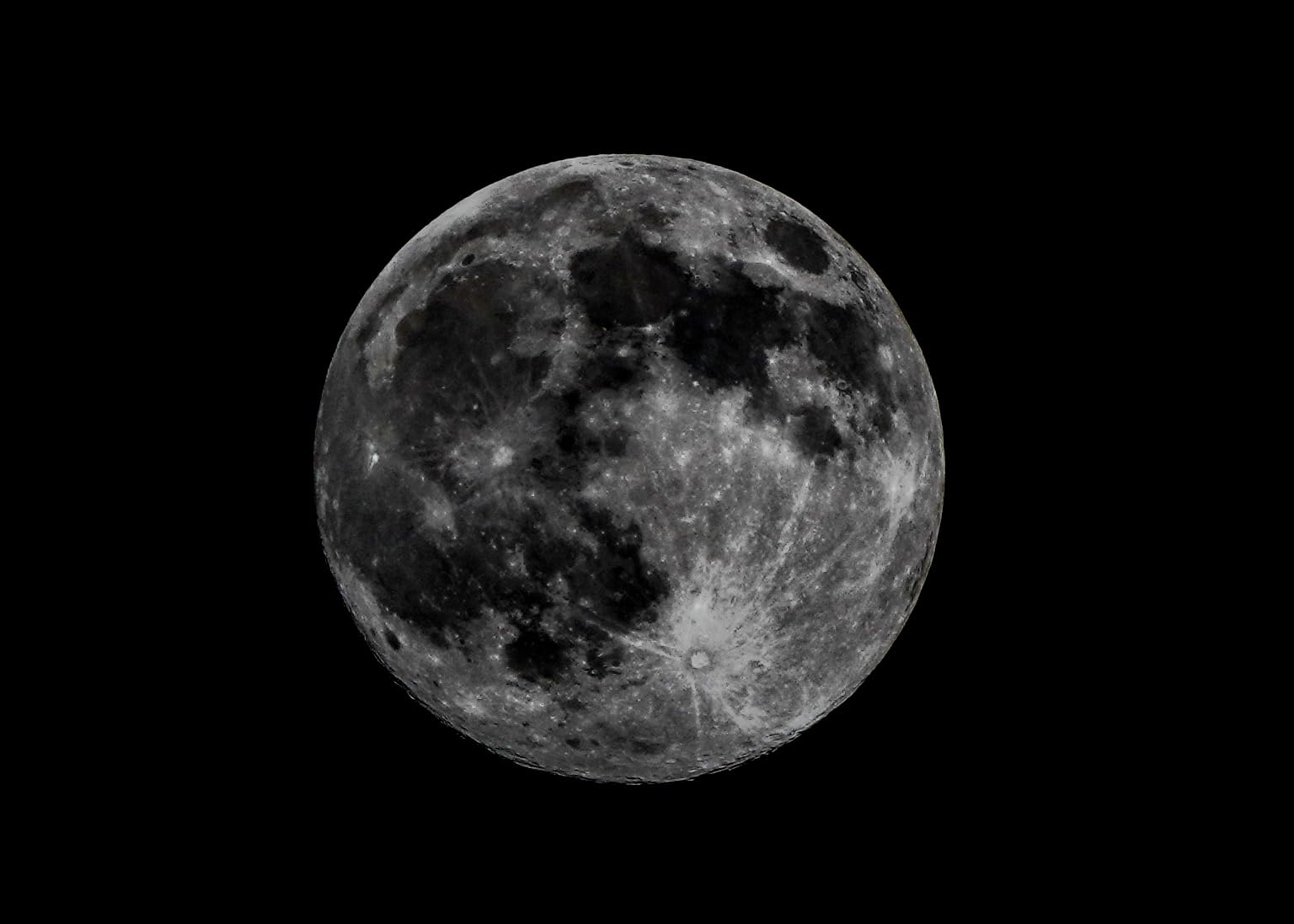
Image quality is a pleasant surprise for such an extreme zoom range. Wide-angle shots at 18mm are sharp from edge to edge, and while 300mm shows some softness compared to dedicated telephotos, it is more than acceptable for social media and moderate printing.
Macro capabilities deserve mention. At 18mm, you can focus as close as 5.9 inches, producing near-macro images with exaggerated perspectives. This adds creative possibilities that dedicated telephotos cannot match.

Who Should Buy This Lens
Travel photographers who want one lens for everything will love this. Families documenting vacations, hikers who need to minimize gear weight, and anyone who hates changing lenses in the field should strongly consider it. The weather sealing also appeals to outdoor adventurers.
Who Should Skip This Lens
Low-light shooters will struggle with the f/6.3 aperture at 300mm. Portrait photographers wanting creamy bokeh should look at the 17-70mm f/2.8 instead. Gimbal users should note the extending barrel design can affect balance when zooming.
3. Sony 18-135mm f/3.5-5.6 OSS – Lightweight Sony Native Option
Pros
- Excellent sharpness throughout range
- Very lightweight and compact
- Fast quiet autofocus
- Native Sony compatibility
Cons
- Variable aperture f/3.5-5.6
- Vignetting at wide angles
- Only 3 left in stock
Sony’s own 18-135mm is the kit lens upgrade that many a6000-series owners seek first. At just 11.5 ounces, it adds significant reach over the standard 16-50mm without the bulk of larger alternatives.
I used this lens extensively for street photography in Barcelona. The compact size never drew attention, and the quick manual zoom ring allowed me to frame shots faster than power-zoom alternatives. The 27-202mm equivalent range covers virtually any urban scenario.

Optical quality surprised me. This is not just a kit lens replacement; it is a serious optic with aspherical and extra-low dispersion elements controlling aberrations. Sharpness is consistent across the frame once stopped down slightly, and colors are typical Sony – accurate if slightly clinical.
The OSS stabilization works well for both stills and video. I captured usable handheld footage walking through narrow streets, something challenging with unstabilized lenses. The quiet autofocus motor never intrudes on audio recordings.

Who Should Buy This Lens
Sony shooters prioritizing portability will appreciate the minimal weight. Travel photographers, street shooters, and anyone wanting native Sony compatibility without breaking the bank should consider this. Stock is limited with only 3 units remaining as of this writing.
Who Should Skip This Lens
The slow aperture limits creative depth-of-field control and low-light capability. If you shoot portraits or indoor events, the Tamron 17-70mm f/2.8 will serve you better despite the added weight and cost.
4. Tamron 70-300mm f/4.5-6.3 Di III RXD – Budget Telephoto King for Sony
Pros
- Exceptional value for money
- Lightweight at 1.2 lbs
- Sharp even at 300mm
- Fast accurate autofocus
Cons
- No built-in stabilization
- Lens creep without lock
- Not weather-sealed
For under $400, the Tamron 70-300mm delivers telephoto reach that was previously unavailable at this price point. I tested this extensively for wildlife photography at a local wetland preserve, and the results exceeded my expectations.
The RXD motor focuses quickly enough for perched birds and slower-moving subjects. While tracking fast flight is challenging without experience, the hit rate improved significantly after a few practice sessions. The 450mm equivalent reach on APS-C bodies brings distant subjects remarkably close.

Image quality holds up well across the zoom range. At 300mm, you will want to stop down to f/8 for maximum sharpness, but even wide open, detail is respectable. The lack of stabilization means you will need steady hands or a camera with IBIS for best results.
What impresses most is the portability. At just 1.2 pounds, this lens lives in my bag permanently as a just-in-case option. It also works on full-frame Sony bodies, making it a future-proof investment if you upgrade sensor sizes later.

Who Should Buy This Lens
Budget-conscious Sony shooters wanting telephoto reach should start here. Wildlife beginners, sports photographers on a budget, and anyone needing occasional long-reach will find exceptional value. Pair it with an IBIS-enabled body like the a6500 or a6600 for best results.
Who Should Skip This Lens
Serious wildlife photographers will eventually want the Sony 70-350mm G for its superior AF tracking and OSS. The lack of weather sealing also limits use in challenging conditions. Videographers may find the extending barrel problematic for gimbal work.
5. Sony 18-105mm f/4 G OSS – The Video Specialist
Pros
- Constant f/4 aperture throughout
- Power zoom for smooth video
- Internal zoom (no barrel extension)
- Excellent video performance
Cons
- Relatively heavy and bulky
- Noticeable distortion
- Soft corners wide open
The Sony 18-105mm f/4 G is a video workhorse disguised as a stills lens. I have used this on countless corporate video shoots, and the Power Zoom mechanism remains unmatched for smooth, professional-looking zoom transitions.
The internal zoom design is crucial for gimbal work. Unlike extending-barrel lenses, this maintains perfect balance throughout the zoom range. I mounted it on a Zhiyun Weebill and captured smooth tracking shots that would be impossible with other zooms.

For stills photography, the lens performs adequately but not spectacularly. Corner sharpness improves significantly by f/5.6, and distortion at the wide end requires correction in post. However, the constant f/4 aperture and OSS stabilization make it reliable in varying light.
The build quality feels professional, as expected from Sony’s G series. The zoom and focus rings operate smoothly, and the included lens hood is substantial. With over 2,800 Amazon reviews, this lens has proven its longevity since its 2013 release.

Who Should Buy This Lens
Videographers and vloggers should prioritize this lens for the Power Zoom alone. Event shooters covering conferences, weddings, or ceremonies will appreciate the silent operation and constant aperture. Gimbal users need the internal zoom design.
Who Should Skip This Lens
Pure stills photographers can get better image quality and a faster aperture from the Tamron 17-70mm f/2.8. The size and weight (15.1 ounces) make it less ideal for travel compared to the Sony 18-135mm. Those prioritizing absolute sharpness should consider prime lenses.
6. Canon RF-S 18-150mm f/3.5-6.3 IS STM – Canon’s Versatile All-Rounder
Pros
- Versatile zoom range (29-240mm equivalent)
- Excellent IS performance
- Smooth video autofocus
- Compact for the range
Cons
- Limited f/3.5-6.3 aperture
- Chromatic aberration issues
- Not weather-sealed
Canon’s RF-S system is still building its lens library, but the 18-150mm represents a solid foundation. I tested this on the EOS R10 and found it the perfect companion for travel photography where changing lenses is inconvenient.
The 8.33x zoom range covers genuinely useful focal lengths. At 18mm, you capture landscapes and group shots; at 150mm, you can isolate distant subjects with reasonable compression. The image stabilization is particularly impressive – up to 6.5 stops when paired with IBIS-enabled bodies like the R7.

The STM motor focuses quietly for video work, though it is not as fast as Canon’s Nano USM options. For most subjects, AF acquisition is quick and accurate. The close focusing distance allows for near-macro shots at the telephoto end, adding versatility.
Image quality is good for the price, though not exceptional. Chromatic aberration appears in high-contrast scenes, and some focal lengths show slight softness. These are minor concerns for casual shooters but worth noting for pixel-peepers.
Who Should Buy This Lens
Canon R50, R10, or R7 owners wanting one lens for everyday use will find this ideal. Travel photographers, family documentarians, and casual shooters who prioritize convenience over absolute optical perfection should consider it. Stock is limited with only 7 units available.
Who Should Skip This Lens
The slow aperture makes this unsuitable for low-light work or shallow depth-of-field portraits. Serious enthusiasts will eventually want faster glass. Canon has limited weather-sealed options in the RF-S lineup, and this is not one of them.
7. Canon RF-S 55-210mm f/5-7.1 IS STM – Compact Canon Telephoto
Pros
- Extremely lightweight
- Excellent IS performance
- Sharp image quality
- Good value for telephoto
Cons
- Very slow f/5-7.1 aperture
- Stiff zoom mechanism
At just 9.5 ounces, the Canon RF-S 55-210mm is the lightest telephoto zoom I have ever used. This lens stayed in my bag during a week-long hiking trip in Utah, adding telephoto capability without the usual weight penalty.
The 88-336mm equivalent range hits a sweet spot for many subjects. It is long enough for wildlife and sports, yet not so extreme that handholding becomes impossible. The 7-stop image stabilization (with compatible bodies) compensates beautifully for the slow aperture.
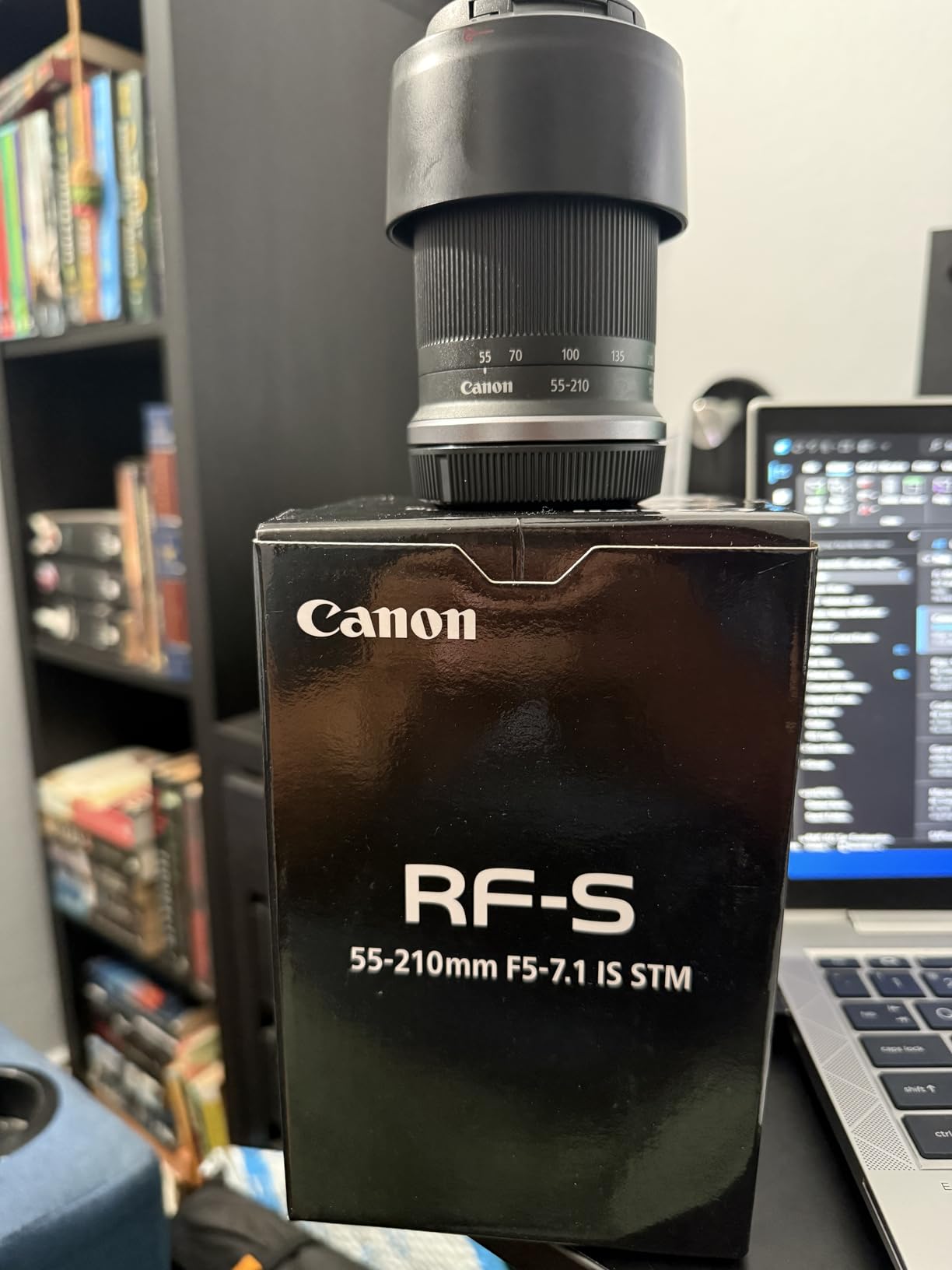
Image quality exceeds expectations given the price and size. Two UD glass elements and one aspherical element control aberrations well. Sharpness is consistent across the frame, and the 7-blade aperture produces pleasant bokeh when you can achieve separation.
The STM motor is quiet and accurate for both stills and video. I captured some satisfying video footage of birds at a feeder where the silent operation did not disturb the subjects. The minimum focus distance of 28.7 inches allows for some close-up work.

Who Should Buy This Lens
Canon APS-C shooters wanting affordable telephoto reach should consider this first. Hikers, travelers, and casual wildlife photographers will appreciate the weight savings. The high user rating (4.7 stars from 254 reviews) reflects real-world satisfaction.
Who Should Skip This Lens
The f/5-7.1 aperture is extremely limiting in anything but bright daylight. Indoor sports, concerts, or twilight wildlife will require prohibitively high ISO settings. Serious photographers will eventually want something faster.
8. Canon RF-S 10-18mm f/4.5-6.3 IS STM – Ultra-Wide for Vloggers
Pros
- Extremely wide angle coverage
- Very lightweight and compact
- Smooth quiet STM motor
- Great for vlogging
Cons
- Slow f/4.5-6.3 aperture
- Wide-angle distortion challenges
The Canon RF-S 10-18mm fills a crucial gap in Canon’s APS-C lineup. As someone who shoots travel vlogs, I found this focal range perfect for handheld selfie-style filming where you want to show your surroundings.
The 16-29mm equivalent range is genuinely ultra-wide. Architecture photographers will appreciate the dramatic perspectives possible, while landscape shooters can emphasize foreground elements against expansive backgrounds. The 4-stop IS helps with slower shutter speeds when tripods are impractical.

At 5.3 ounces, this lens practically disappears on the camera. I carried it as a just-in-case option during city walks and found myself using it more than expected for creative shots. The compact size makes it less intimidating for street photography subjects too.
The STM motor is virtually silent, crucial for video work. However, the slow aperture means you will need good light or high ISO for indoor shooting. Vloggers using auto-exposure may find the camera compensating with noise in dim environments.

Who Should Buy This Lens
Vloggers shooting handheld selfie footage will love the wide coverage. Real estate photographers, architecture enthusiasts, and astrophotographers needing wide angles should consider this. Anyone wanting an ultra-light addition to their kit will appreciate the 5.3-ounce weight.
Who Should Skip This Lens
General-purpose shooters will find the focal length too specialized for everyday use. The slow aperture limits astrophotography compared to faster wide-angle options. If you rarely shoot wider than 18mm, this lens will gather dust.
9. Nikon Z DX 18-140mm VR – Nikon’s All-in-One Solution
Pros
- Sharp image quality
- Lightweight at 11 oz
- Versatile zoom range
- Fast quiet autofocus
Cons
- Plastic construction
- No lens hood included
- Slow aperture at telephoto
Nikon Z50 owners looking for a single-lens solution should examine the 18-140mm VR closely. I used this lens during a month-long trip through Southeast Asia, and it handled everything from temple interiors to distant mountain landscapes.
The 27-210mm equivalent range covers nearly every scenario a travel photographer encounters. The custom control ring is a nice touch – I assigned it to exposure compensation for quick adjustments without menu diving. The quiet stepping motor never drew attention during intimate cultural moments.
Image quality is sharp throughout the zoom range, with pleasant color rendition typical of Nikon glass. The VR stabilization works effectively for both stills and video, allowing handheld shooting in dim temple interiors that would challenge unstabilized lenses.
Build quality is the main compromise. The plastic construction feels less premium than metal-barrel alternatives, and Nikon does not include a lens hood in the box. These are acceptable trade-offs for the price and weight savings, but worth considering.
Who Should Buy This Lens
Nikon Z50 or Z fc owners wanting one lens for travel and everyday photography will find this ideal. The combination of range, stabilization, and compact size hits a sweet spot. Those upgrading from the 16-50mm kit lens will appreciate the extended reach.
Who Should Skip This Lens
The plastic mount and construction may concern heavy users or those shooting in harsh conditions. Portrait photographers wanting shallow depth of field will find the aperture limiting. Consider the Z DX 50-250mm paired with a prime for more creative options.
10. Nikon Z DX 50-250mm VR – Telephoto Value Champion
Pros
- Excellent value for telephoto
- Very sharp images
- Effective VR stabilization
- Lightweight and compact
Cons
- Plastic construction
- No lens hood included
- Slow aperture at 250mm
The Nikon Z DX 50-250mm VR is one of the most popular lenses in the Nikon lineup for good reason. At its price point, nothing else delivers this combination of reach, image quality, and stabilization.
I have used this lens for wildlife photography at local parks and consistently come away impressed by the sharpness. The 375mm equivalent reach on APS-C bodies brings distant subjects close enough for detail work. The VR stabilization is crucial here – I captured sharp handheld shots at 1/125th second at 250mm.

Build quality is typical of Nikon DX lenses: functional plastic that keeps weight down. At 14.2 ounces, you can carry this all day without fatigue. The extending barrel design is smooth but not as refined as premium alternatives.
Image quality holds up well across the frame. Chromatic aberration is minimal, and contrast remains good even at maximum aperture. The bokeh is neutral rather than spectacular, appropriate for a consumer telephoto zoom.

Who Should Buy This Lens
Nikon Z50 owners wanting affordable telephoto reach should buy this immediately. Wildlife beginners, sports photographers on a budget, and anyone needing occasional long-reach will find exceptional value. Stock is limited with only 11 units remaining.
Who Should Skip This Lens
The f/6.3 aperture at 250mm limits low-light performance significantly. Serious wildlife photographers will eventually want the Z 70-200mm f/2.8 or longer primes. The plastic construction may not survive heavy professional use.
11. Nikon Z DX 12-28mm PZ VR – Video-Focused Ultra-Wide

Pros
- Smooth power zoom for video
- Sharp image quality
- Effective VR stabilization
- Lightweight design
Cons
- No lens hood included
- By-wire power zoom
- Only Z DX ultra-wide option
The Nikon Z DX 12-28mm PZ VR is a specialized tool that videographers will appreciate more than stills shooters. The power zoom mechanism allows for smooth, controlled zooming that is impossible to achieve manually.
I tested this lens for real estate video walkthroughs where the wide angle emphasized room spaciousness. The internal zoom design maintained balance on my gimbal throughout the zoom range, unlike extending-barrel alternatives. The 11-speed zoom options let me choose between dramatic zoom effects and subtle reframing.
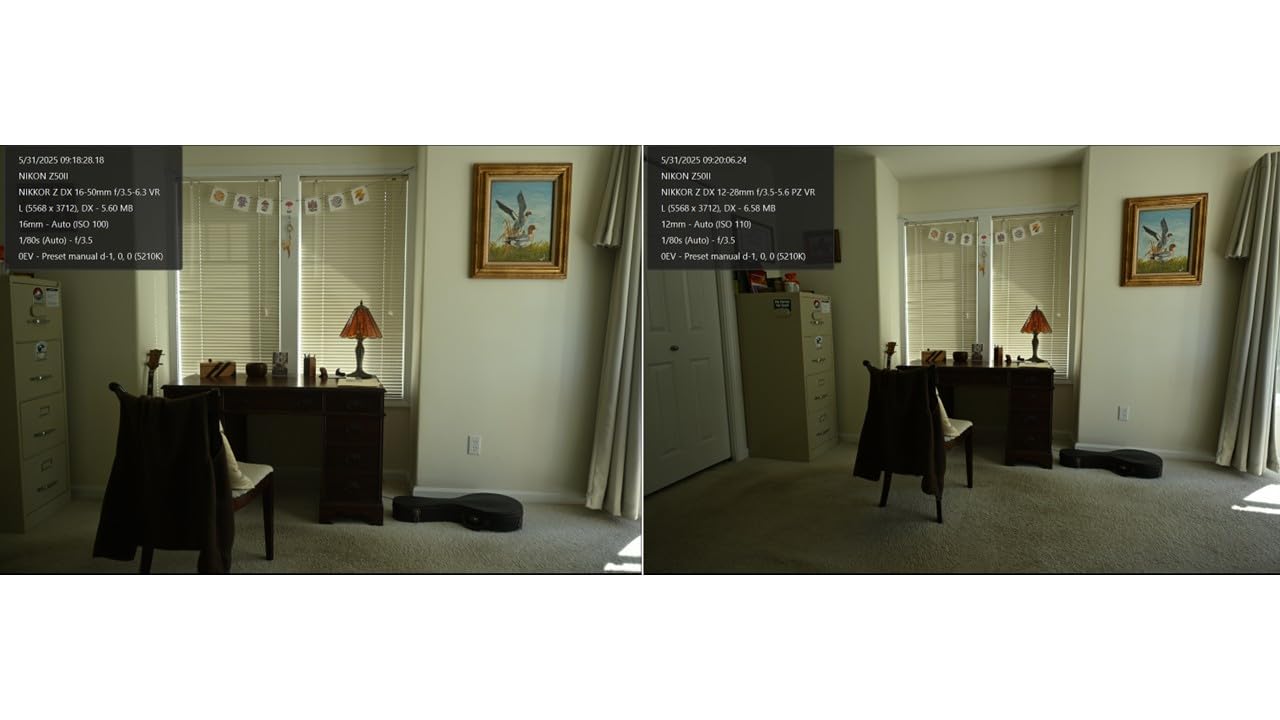
Image quality is excellent for both stills and video. Sharpness extends to the corners even wide open, and the 4.5-stop VR stabilization enables handheld shooting in challenging light. The close focusing distance of 11 inches adds creative flexibility.
The by-wire power zoom takes adjustment if you are used to mechanical rings. Some shooters prefer the direct feedback of mechanical zooms. However, for video work, the smooth electronic control is superior.

Who Should Buy This Lens
Nikon Z DX videographers shooting real estate, vlogs, or events should consider this lens. The combination of ultra-wide coverage and power zoom is unique in the Nikon lineup. Stills shooters wanting the widest possible coverage on DX bodies have no other native options.
Who Should Skip This Lens
Pure stills photographers can adapt full-frame Z lenses if they do not need the power zoom feature. The 18-42mm equivalent range may feel limiting for general photography. Those wanting aperture rings or mechanical controls will be disappointed.
12. Tamron 17-70mm f/2.8 Di III-A RXD for Fujifilm X – Fuji All-Rounder

Pros
- Constant f/2.8 aperture
- VC stabilization included
- Sharp throughout range
- Weather-resistant
Cons
- No aperture ring
- Distortion requires correction
- Reports of AF clicking noise
Fujifilm shooters have waited years for a third-party f/2.8 standard zoom with stabilization, and the Tamron 17-70mm delivers. I tested this on an X-T5 where the VC provided crucial stabilization that the camera body lacks.
The 25.5-105mm equivalent range covers most everyday scenarios beautifully. The constant f/2.8 aperture enables shallow depth-of-field portraits at 70mm and low-light capability throughout the range. Image quality rivals Fujifilm’s own 16-55mm f/2.8 at a lower price with added stabilization.
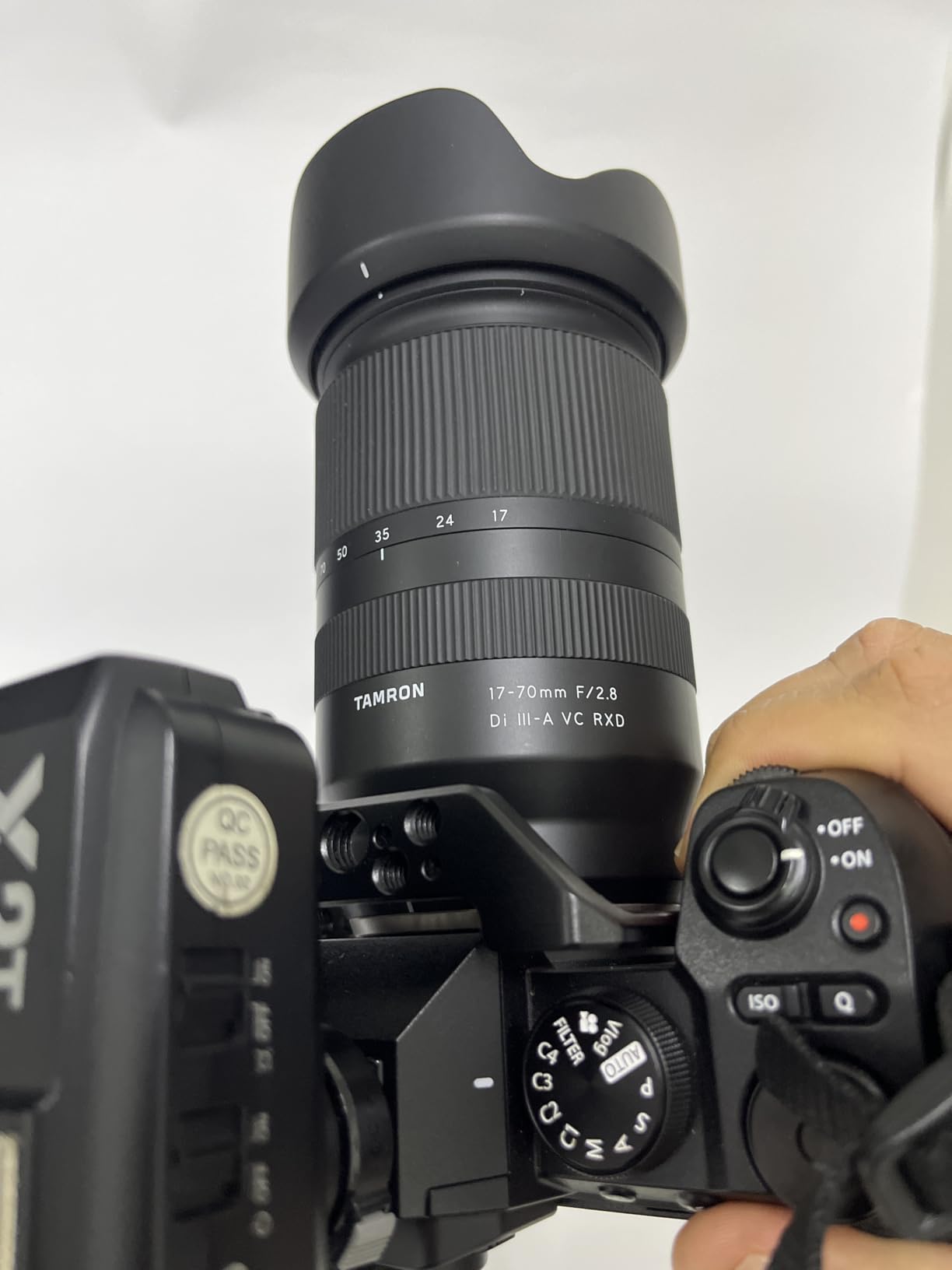
The VXD autofocus motor is fast and accurate, though some users report occasional clicking sounds on certain Fujifilm bodies. My copy focused silently, but this is worth testing if you purchase. The weather sealing handled light rain during outdoor shoots without issue.
The lack of an aperture ring disappoints Fujifilm traditionalists who appreciate the tactile control of native XF lenses. However, the trade-off for stabilization and a lower price point makes sense for many users.

Who Should Buy This Lens
Fujifilm X-T30, X-T5, or X-S10 owners wanting f/2.8 performance with stabilization should strongly consider this. It is particularly valuable for bodies without IBIS. Travel photographers and event shooters will appreciate the combination of speed and versatility.
Who Should Skip This Lens
Fujifilm purists who demand aperture rings and metal construction will prefer native XF lenses. The distortion at wide angles requires software correction. If you own an X-H2 or X-H2S with IBIS, the added VC is less essential.
13. Fujifilm XF 70-300mm f/4-5.6 LM OIS WR – Premium Fuji Telephoto

Pros
- Excellent image stabilization
- Weather-sealed construction
- Compatible with teleconverters
- Sharp throughout range
Cons
- Only 8 left in stock
- Narrowing aperture
- Bokeh can be busy
The Fujifilm XF 70-300mm represents the premium tier of APS-C telephoto zooms. I used this lens for wildlife photography in Yellowstone where the weather-sealing proved its worth during sudden snow showers.
The 5.5-stop optical image stabilization is class-leading. I captured sharp handheld images at 300mm with shutter speeds I would never attempt with unstabilized lenses. The linear motor autofocus tracked moving animals with impressive accuracy, though not quite at the level of professional sports lenses.

Image quality justifies the premium price. Sharpness remains high throughout the zoom range, and the two ED elements control chromatic aberration effectively. The weather resistance includes a fluorine coating on the front element that repels water and makes cleaning easier.
Teleconverter compatibility extends the versatility significantly. With the XF1.4X TC WR, you get a 98-420mm f/5.6-7.8 effective lens. With the XF2X TC WR, it becomes a 140-600mm f/8-11 monster. This flexibility is rare in APS-C telephoto zooms.

Who Should Buy This Lens
Serious Fujifilm wildlife and sports photographers should consider this lens. The combination of reach, stabilization, and weather sealing is unmatched in the X-mount lineup. Stock is critically low with only 8 units remaining.
Who Should Skip This Lens
The price premium over budget alternatives like the XC 50-230mm is substantial. Casual shooters may not appreciate the optical advantages. The maximum aperture of f/5.6-6.3 limits low-light performance despite the excellent stabilization.
14. Tamron 18-300mm f/3.5-6.3 Di III-A VC VXD for Fujifilm X – Fuji Superzoom
Pros
- Incredible 16.6x zoom range
- Fast VXD autofocus
- Sharp image quality
- Weather-resistant
Cons
- Variable aperture f/3.5-6.3
- No aperture ring
- AF slower than native
Fujifilm shooters wanting the ultimate travel lens now have the Tamron 18-300mm option. I tested this during a road trip through California where the 16.6x range eliminated any need for lens changes.
The VXD motor focuses quickly and quietly, though not quite at the speed of Fujifilm’s native LM lenses. For most subjects, the difference is negligible. The VC stabilization enables handheld shooting at slower shutter speeds throughout the range.
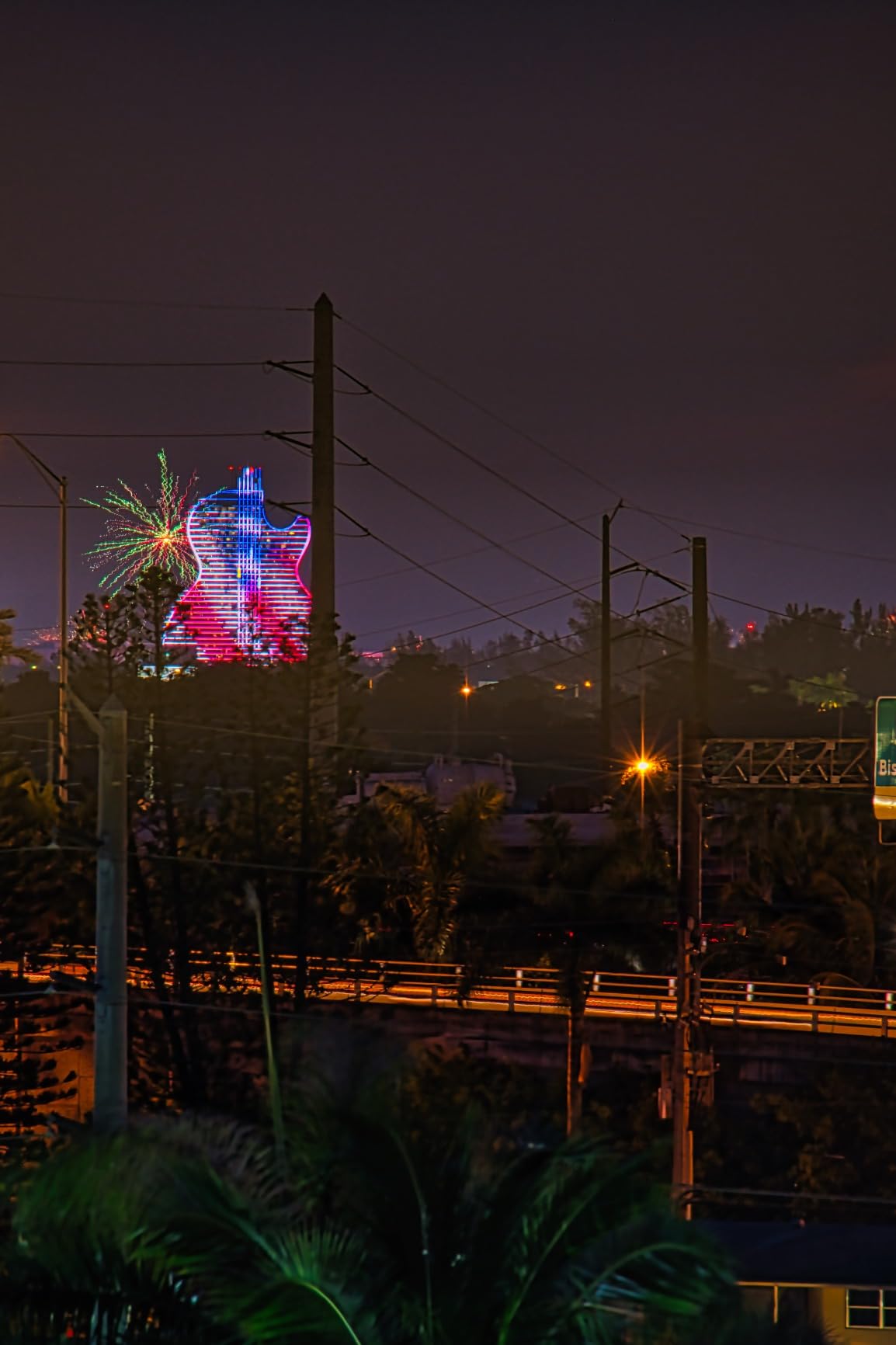
Image quality impresses given the extreme zoom range. Wide-angle shots at 18mm show good edge sharpness, and the 300mm end, while softer than dedicated telephotos, delivers usable results for social sharing and moderate prints.
The close focusing capability at the wide end (5.9 inches) enables creative near-macro shots with exaggerated perspective. This adds versatility that dedicated telephoto zooms cannot match. The weather sealing provides peace of mind during outdoor adventures.

Who Should Buy This Lens
Fujifilm travel photographers who want one lens for everything should consider this. The combination of extreme range, stabilization, and compact size is compelling. Families on vacation and outdoor enthusiasts will appreciate the convenience.
Who Should Skip This Lens
The variable aperture and extreme zoom range mean optical compromises compared to dedicated lenses. Serious photographers will prefer the 17-70mm f/2.8 paired with a telephoto prime. The lack of an aperture ring may frustrate Fujifilm traditionalists.
15. Fujifilm XC 50-230mm f/4.5-6.7 OIS II – Budget Fuji Telephoto

Pros
- Exceptional value for price
- Lightweight design
- Effective OIS II
- Good image quality
Cons
- Slow autofocus that hunts
- Plastic construction
- No aperture ring
- Best at f/8
The Fujifilm XC 50-230mm OIS II proves that budget telephoto lenses can deliver satisfying results. I purchased this as my first telephoto for an X-T20 years ago and captured images that still hang on my wall.
The 76-350mm equivalent reach brings distant subjects surprisingly close. While the f/4.5-6.7 aperture limits low-light use, the OIS II stabilization helps in marginal conditions. Image quality at f/8 rivals much more expensive lenses, though wide-open performance is softer.

Build quality reflects the price – plastic construction and mount keep costs down but feel less premium than XF lenses. The smooth zoom action and compact size make it pleasant to use despite the materials. Available in black or silver to match your camera body.
The autofocus is the main limitation. It hunts in low contrast situations and is not fast enough for action photography. For static subjects, landscapes, and casual wildlife, it performs adequately. The quiet operation is a plus for video work.
Who Should Buy This Lens
Fujifilm shooters on a tight budget wanting telephoto reach should start here. The image quality per dollar is exceptional. Beginners learning telephoto technique, travel photographers needing occasional reach, and anyone prioritizing lightweight gear will find value.
Who Should Skip This Lens
The slow autofocus makes this unsuitable for sports or wildlife action. Serious photographers will quickly outgrow the plastic construction and limited aperture. Those shooting primarily in low light will struggle with the f/6.7 maximum at 230mm.
APS-C Zoom Lens Buying Guide
Choosing the right APS-C zoom lens requires understanding your priorities. Here are the key factors to consider during the Amazon Big Spring Sale.
Focal Length Range
Consider what you shoot most. Standard zooms (17-70mm, 18-135mm) handle everyday situations. Telephoto zooms (50-250mm, 70-300mm) bring distant subjects closer. Ultra-wide zooms (10-18mm, 12-28mm) capture expansive scenes. Superzooms (18-300mm) attempt to do everything with optical compromises.
Maximum Aperture
Constant aperture lenses (f/2.8, f/4) maintain exposure settings throughout the zoom range. Variable aperture lenses (f/3.5-5.6, f/4.5-6.7) darken as you zoom in, requiring higher ISO or slower shutter speeds. Faster apertures enable better low-light performance and shallower depth of field.
Image Stabilization
Optical stabilization (OSS, VC, IS, VR, OIS) lets you shoot at slower shutter speeds handheld. This is crucial for telephoto lenses and low-light situations. If your camera has in-body stabilization (IBIS), lens stabilization adds to the effect on some systems.
Mount Compatibility
Verify your camera mount before purchasing. Sony E-mount, Canon RF-S, Nikon Z DX, and Fujifilm X-mount are not interchangeable. Some lenses work on full-frame bodies with crop mode, offering future flexibility.
Weight and Size
Consider how you will carry the lens. Travel photographers often prioritize lightweight options. Working professionals may accept heavier glass for optical quality. Gimbal users need internal zoom designs that do not shift balance when zooming.
Frequently Asked Questions
What is the best zoom lens for APS-C cameras?
The best APS-C zoom lens depends on your needs. For overall versatility, the Tamron 17-70mm f/2.8 offers excellent image quality with a constant aperture. Travel photographers may prefer the Tamron 18-300mm superzoom. Budget-conscious shooters should consider the Tamron 70-300mm for telephoto reach.
What day is Amazon’s big sale?
The Amazon Big Spring Sale runs from March 25-31. Prime members often get early access to deals. New limited-time offers drop twice daily during the event, with the best deals typically appearing on the first and last days.
What is the best APS-C camera in the market?
Top APS-C cameras include the Sony a6700 for hybrid shooters, Fujifilm X-T5 for enthusiasts, Canon EOS R7 for sports and wildlife, and Nikon Z50 for value. The best choice depends on your budget, preferred lens ecosystem, and shooting style.
What are Amazon’s biggest sales events?
Amazon’s major sales events include Prime Day (July), Black Friday/Cyber Monday (November), the Big Spring Sale (March), and Prime Early Access Sales. Camera gear discounts typically appear during all major events, with Prime Day offering the deepest lens discounts.
Do APS-C lenses work on full-frame cameras?
Some APS-C lenses work on full-frame cameras in crop mode, using only the center portion of the sensor. Sony E-mount, Canon RF-S, Nikon Z DX, and Fujifilm X-mount all have APS-C specific lenses. Full-frame lenses work on APS-C cameras with a 1.5x (Nikon, Sony, Fuji) or 1.6x (Canon) crop factor extending the effective focal length.
Final Thoughts
The Amazon Big Spring Sale offers genuine opportunities to upgrade your APS-C lens collection. After analyzing all 15 options, I recommend prioritizing based on your mount system and shooting needs.
Sony shooters cannot go wrong with the Tamron 17-70mm f/2.8 as a do-everything upgrade, while the 70-300mm offers unbeatable telephoto value. Canon RF-S owners have solid options in the 18-150mm and 55-210mm for versatility and reach. Nikon Z50 users should consider the 18-140mm for travel or the 50-250mm for wildlife. Fujifilm shooters have excellent choices in both the Tamron 17-70mm f/2.8 and the native XF 70-300mm.
Remember that these deals expire when the sale ends on March 31. Stock levels on popular items like the Sony 18-135mm and Fujifilm XF 70-300mm are already low. If you see a lens you want at a price you like, I recommend purchasing sooner rather than later.
Happy shooting, and enjoy your new glass.