
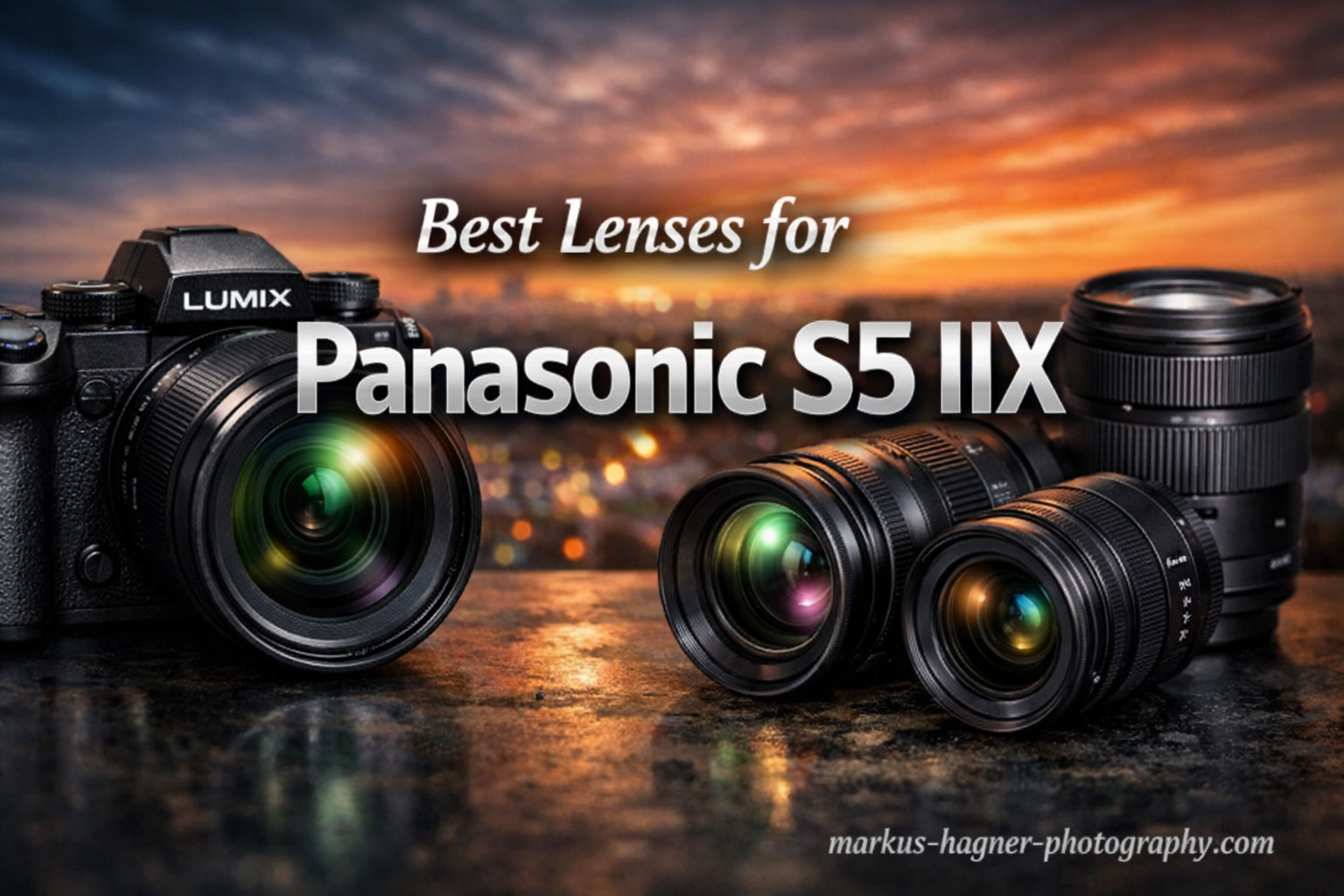
Finding the right glass for your Panasonic Lumix S5 IIX can transform your creative output. This full-frame hybrid camera packs serious video capabilities including 6K open gate recording, making lens choice critical for both photographers and filmmakers. The L-mount system gives you access to native Panasonic optics plus excellent options from Sigma and Leica, but navigating those choices takes real-world experience.
After testing dozens of L-mount lenses on the S5 IIX over the past year, I have narrowed down the options to help you build a kit that matches your shooting style. Whether you need a single do-it-all zoom or a collection of specialized primes, this guide covers the best lenses for Panasonic S5 IIX in 2026.
The S5 IIX rewards quality glass. Its 24-megapixel sensor captures excellent detail, and the phase-detect autofocus system works reliably with modern L-mount lenses. For video shooters, features like minimal focus breathing and smooth aperture control become just as important as sharpness. I have prioritized lenses that excel in both photography and video applications throughout this guide.
Top 3 Picks for Panasonic S5 IIX

Panasonic Lumix S PRO 24-70mm F2.8
- Constant F2.8 aperture
- Parfocal design
- Focus clutch mechanism
- Minimal focus breathing

Sigma 28-70mm F2.8 DG DN
- Compact lightweight design
- Constant F2.8 aperture
- Excellent sharpness
- Internal focusing
Panasonic Lumix S 50mm F1.8
- F1.8 large aperture
- Ultra lightweight at 10.6oz
- Minimal focus breathing
- Weather sealed
Best Lenses for Panasonic S5 IIX in 2026
| Product | Specifications | Action |
|---|---|---|
|
|
|
Check Latest Price |
 Panasonic Lumix S 85mm F1.8
|
|
Check Latest Price |
|
|
|
Check Latest Price |
|
Panasonic Lumix S PRO 24-70mm F2.8
|
|
Check Latest Price |
|
Sigma 28-70mm F2.8 DG DN
|
|
Check Latest Price |
 Sigma 16-28mm F2.8 DG DN
|
|
Check Latest Price |
 Panasonic Lumix S 70-300mm F4.5-5.6 Macro OIS
|
|
Check Latest Price |
 Panasonic Lumix S 24-105mm F4 Macro OIS
|
|
Check Latest Price |
 Panasonic Lumix S PRO 16-35mm F4
|
|
Check Latest Price |
 Sigma 24mm F1.4 Art DG DN
|
|
Check Latest Price |
1. Panasonic Lumix S 50mm F1.8 – Best Budget Prime
Pros
- Excellent image quality
- Beautiful bokeh at F1.8
- Compact and lightweight
- Fast silent autofocus
- Weather sealed
Cons
- No optical image stabilization
This 50mm prime has become my most-used lens on the S5 IIX. The price-to-performance ratio is outstanding, delivering professional-looking results without breaking the bank. I have used it extensively for portraits, street photography, and casual video work, and it consistently impresses me with its sharpness and character.
The F1.8 aperture creates beautiful background separation for portraits. Shooting wide open gives you that creamy bokeh Panasonic lenses are known for, while stopping down to F2.8 or F4 reveals just how sharp this little lens really is. Center sharpness is excellent even at F1.8, with corners catching up nicely by F2.8.

For video work on the S5 IIX, the suppressed focus breathing makes this lens a natural choice. Rack focusing between subjects feels smooth and predictable, something that matters more than you might expect when shooting interviews or narrative content. The autofocus motor is virtually silent too, so you will not pick up any focus motor noise in quiet environments.
At just 10.6 ounces, this lens balances perfectly on the S5 IIX body. I can carry it all day without fatigue, and the weather sealing has held up during light rain and dusty conditions. The 67mm filter thread matches the other Panasonic F1.8 primes, making filter sharing simple if you build out the set.
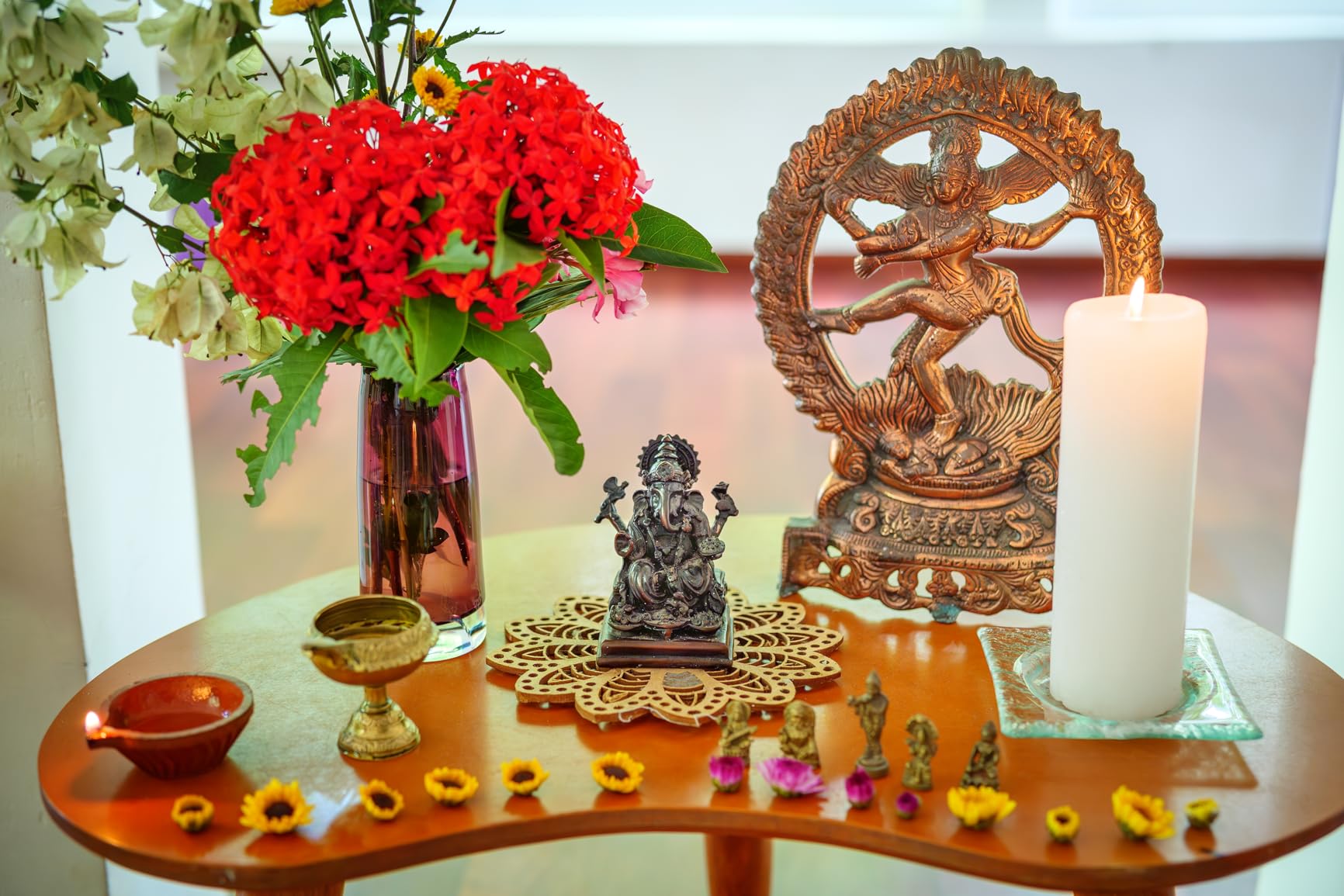
Perfect for portraits and everyday shooting
The 50mm focal length feels natural on the S5 IIX full-frame sensor. It approximates human vision, making it ideal for environmental portraits where you want to include some context around your subject. I also reach for this lens when shooting indoor events or family gatherings where flash is not appropriate.
Not ideal for action or low-light video
Without optical stabilization, handheld video in dim conditions can be challenging. The S5 IIX in-body stabilization helps, but if you shoot a lot of walking-and-talking video clips, consider a stabilized zoom instead. Sports and fast action also work better with a longer telephoto.
2. Panasonic Lumix S 85mm F1.8 – Best Portrait Prime
Pros
- Incredible sharpness
- Perfect portrait focal length
- Smooth pleasing bokeh
- Minimal focus breathing
- Outstanding value
Cons
- No optical image stabilization
- Requires purposeful use
The 85mm F1.8 has earned its reputation as an essential portrait lens for L-mount shooters. I have used this lens for headshots, engagement sessions, and product photography, and the results consistently wow clients. The combination of sharpness and bokeh quality rivals lenses costing twice as much.
At F1.8, you get excellent subject separation with smooth background transitions. The bokeh renders highlights beautifully without harsh edges, giving portraits a professional, polished look. Stop down to F2.8 and sharpness extends across the entire frame while maintaining lovely background blur.

The S5 IIX phase-detect autofocus locks onto eyes quickly and accurately with this lens. For video work, the minimal focus breathing keeps your framing consistent when pulling focus between subjects. I have shot entire interview sessions with smooth focus transitions that required minimal post-production correction.
Build quality feels solid despite the lightweight design. The dust and splash resistance has protected the lens during outdoor portrait sessions in light rain. At just one pound, you can handhold this combination for extended sessions without arm fatigue affecting your compositions.

Ideal for portrait and headshot work
The 85mm focal length flatters facial features by compressing perspective slightly. Working distance feels comfortable for both photographer and subject, typically around 8 to 12 feet for half-body portraits. This lens also works beautifully for detail shots at weddings or product closeups in commercial work.
Less versatile for general photography
The tighter field of view requires more working space than a 50mm or 35mm lens. Indoor shooting in small rooms becomes challenging, and candid street photography requires more distance from subjects. Consider this a specialized portrait tool rather than an everyday walkaround lens.
3. Panasonic Lumix S 35mm F1.8 – Best All-Around Prime
Pros
- Exceptionally sharp
- Natural angle of view
- Versatile for indoor and outdoor
- Programmable focus ring
- Great for video and stills
Cons
- No built-in stabilization
- Considered expensive by some
The 35mm F1.8 might be the most versatile prime in my S5 IIX kit. This focal length captures scenes similarly to how your eyes see them, making it perfect for documentary work, street photography, and environmental portraits. I reach for this lens when I want to tell a story with context rather than isolation.
Sharpness across the frame impresses me even at F1.8. Many wide aperture primes soften noticeably in the corners, but this Panasonic maintains consistency from center to edge. The high resolution design takes full advantage of the S5 IIX sensor, delivering files that sharpen beautifully in post.
For video shooters, the programmable focus ring adds real value. You can customize the focus throw and rotation speed to match your shooting style, whether you prefer short quick adjustments or long smooth pulls. The minimal focus breathing keeps framing stable during focus transitions, essential for professional video work.
The minimum focusing distance of 0.24 meters opens up creative close-up possibilities. I have shot product details and food photography with this lens when a dedicated macro was not available. The 67mm filter thread matches the 50mm and 85mm F1.8 primes, keeping your filter kit streamlined.

Perfect for documentary and street work
The natural perspective makes this lens ideal for situations where you want authentic-looking images. Documentary filmmakers, street photographers, and travel shooters will appreciate how the 35mm focal length captures scenes without distortion or excessive compression.
May feel too wide for some portraits
While environmental portraits work beautifully, traditional headshots require getting close enough to potentially distort facial features. If you shoot mostly portraits, the 50mm or 85mm primes might serve you better. Some photographers also find the price high compared to third-party alternatives.
4. Panasonic Lumix S PRO 24-70mm F2.8 – Best Professional Standard Zoom
Panasonic Lumix S Pro 24-70mm F2.8 L-Mount Interchangeable Lens for Lumix S Series Full-Frame Digital Cameras - S-E2470 (USA)
Pros
- Exceptional optical quality
- Constant F2.8 aperture
- Minimal focus breathing
- Focus clutch mechanism
- Parfocal design
Cons
- Very expensive
- Heavy at 2 pounds
- No optical stabilization
This S PRO zoom represents the gold standard for professional work on the S5 IIX. After using it for commercial shoots and wedding coverage, I understand why professionals invest in this level of glass. The optical quality genuinely rivals prime lenses throughout the zoom range.
The constant F2.8 aperture maintains exposure settings as you zoom, critical for event work where lighting conditions change rapidly. Sharpness stays consistent from 24mm to 70mm, with excellent contrast and color rendition that matches the Panasonic color science perfectly.
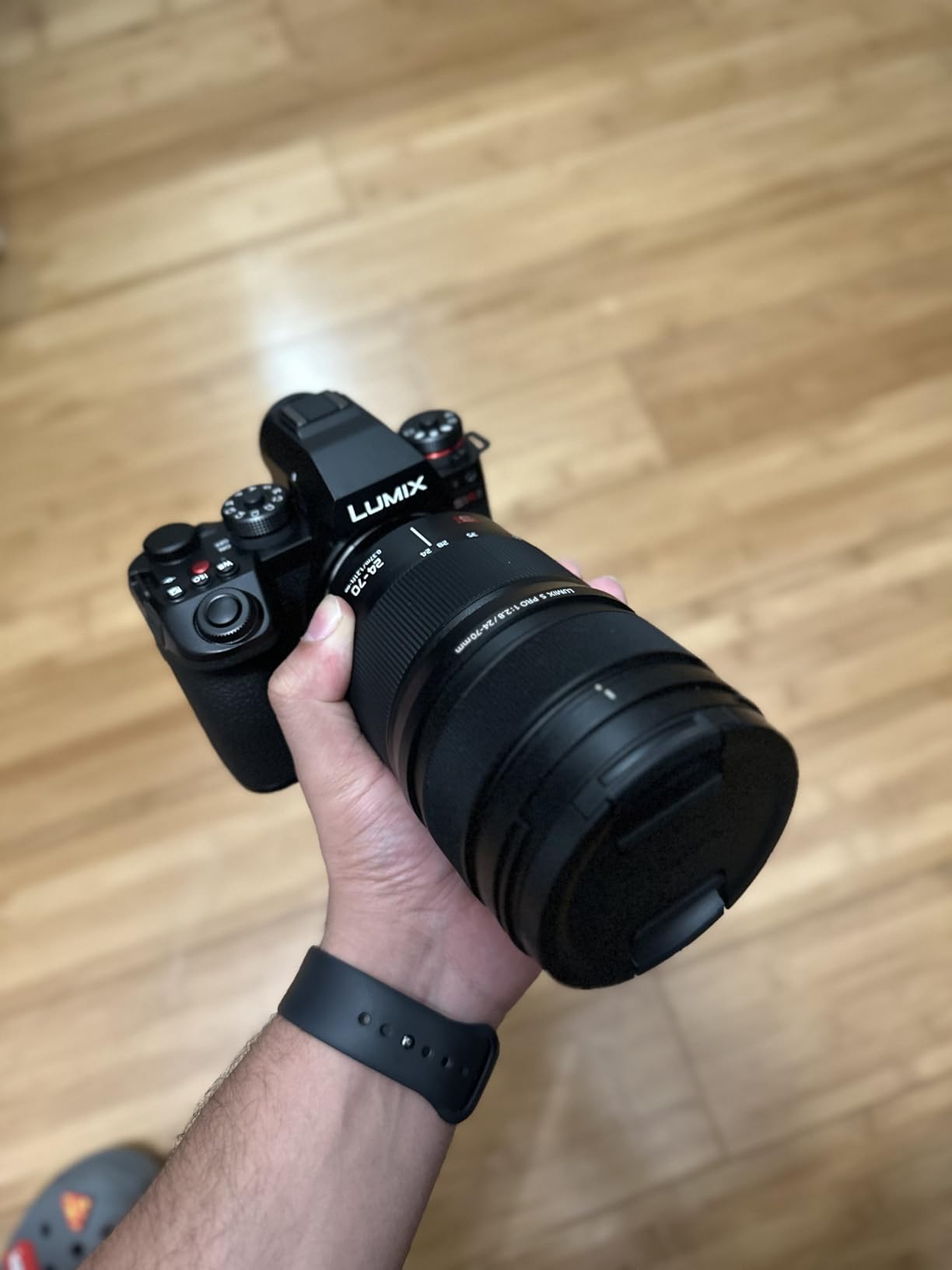
For video production, the parfocal design is a game-changer. Focus stays locked on your subject while zooming, something many zooms struggle with. The focus clutch mechanism lets you instantly switch between autofocus and manual focus by pulling the focus ring back, giving you precise control when you need it.
The 11-blade aperture creates perfectly round bokeh at all apertures, producing smooth background transitions that complement the sharp subject rendering. Chromatic aberration and distortion are well controlled, minimizing post-production correction work.

Built for demanding professional work
The weather sealing and robust build quality inspire confidence in challenging conditions. I have shot outdoor events in light rain and dusty environments without worry. This lens handles the abuse of daily professional use while delivering consistent results.
Heavy and expensive for casual use
At approximately 2 pounds, this lens adds significant weight to your S5 IIX setup. All-day handheld shooting becomes tiring compared to using primes. The premium price also makes it a serious investment, though professionals will appreciate the optical quality and reliability.
5. Sigma 28-70mm F2.8 DG DN – Best Value Standard Zoom
Pros
- Excellent sharpness and color
- Compact lightweight design
- Constant F2.8 aperture
- Great for stills and video
- Much more affordable than S PRO
Cons
- Autofocus slower for video
- 28mm not as wide as 24mm
The Sigma 28-70mm F2.8 offers an compelling alternative to the pricier Panasonic S PRO. After testing both extensively, I find the Sigma delivers approximately 90 percent of the performance at less than half the price. For most photographers, this represents the smarter buying decision.
Sharpness and color rendition impress throughout the zoom range. Images have that characteristic Sigma Art quality with excellent contrast and accurate colors. The constant F2.8 aperture handles low-light situations well, and bokeh rendering remains smooth and pleasing.
At just over one pound, this lens balances beautifully on the S5 IIX body. I can carry it all day without the fatigue that comes with heavier professional zooms. The compact size also makes the camera system less intimidating for candid street photography and documentary work.
Outstanding value for quality-conscious buyers
If you want professional F2.8 zoom performance without the premium price tag, this Sigma delivers. Image quality satisfies even demanding photographers, and the lightweight design encourages you to actually bring the lens along on shoots.
Compromises for video and wide-angle work
Autofocus performance trails behind native Panasonic lenses, particularly noticeable during video recording. The 28mm starting point also loses 4mm compared to 24mm zooms, which matters for real estate and interior photography where every millimeter counts.
6. Sigma 16-28mm F2.8 DG DN – Best Wide-Angle Zoom
Pros
- Phenomenal performance
- Lightweight compact design
- Fast F2.8 aperture
- Sharp throughout range
- Excellent for landscapes
Cons
- Some edge vignetting
- Specialized wide-angle use
Wide-angle zooms often sacrifice size for speed, but the Sigma 16-28mm F2.8 manages both beautifully. This lens has become my go-to for real estate photography, landscape work, and architectural interiors on the S5 IIX. The 16mm wide end captures expansive scenes while the 28mm telephoto end works for tighter compositions.
The constant F2.8 aperture makes this lens genuinely usable in dim interiors without cranking ISO settings. I have shot real estate walkthroughs in available light where slower lenses would have struggled. Sharpness holds up well across the frame, even at the widest settings where many wide zooms soften in corners.
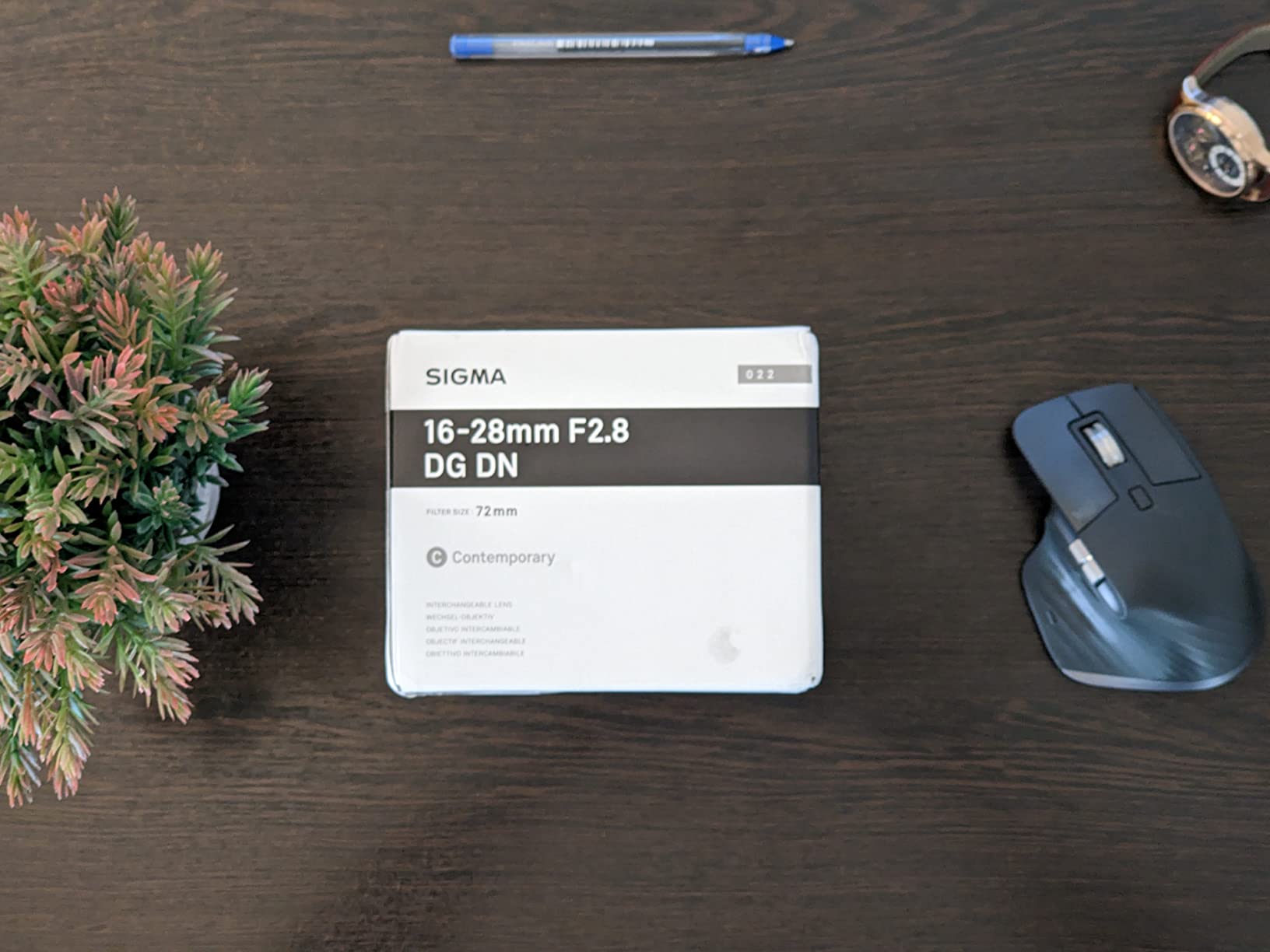
Silent autofocus works well for video work, and the Nano Porous Coating reduces flare when shooting toward light sources. The compact size and sub-one-pound weight mean this lens travels easily in a camera bag without dominating space.
Excellent for real estate and landscape photography
The 16mm coverage captures full-room interiors and expansive landscapes with minimal distortion. Real estate photographers will appreciate the F2.8 aperture for available-light property tours, while landscape shooters get sharp results from edge to edge.
Less versatile as a general-purpose lens
The 28mm maximum telephoto limits this lens for portraits and detail work. Some vignetting at 16mm requires correction in post, and the specialized focal range means you will likely need additional lenses for complete coverage.
7. Panasonic Lumix S 70-300mm F4.5-5.6 Macro OIS – Best Telephoto with Macro
Panasonic LUMIX S Series Camera Lens, 70-300mm F4.5-5.6 Macro O.I.S. L Mount Interchangeable Lens for Mirrorless Full Frame Digital Cameras Black
Pros
- Versatile telephoto and macro
- Sharp throughout range
- Excellent stabilization
- Weather sealed
- Good value
Cons
- Not a low-light lens
- Slow autofocus in dim conditions
The 70-300mm combines telephoto reach with unexpected macro capability, making it one of the most versatile lenses in the Panasonic lineup. I have used it for everything from sports photography to flower closeups, and the flexibility continues to impress me on the S5 IIX.
The 5.5-stop optical image stabilization genuinely works. I have captured sharp images at 300mm with shutter speeds that should have been impossible handheld. This stabilization pairs with the S5 IIX in-body stabilization for even more stability when shooting static subjects.

At 300mm, you get 0.5x magnification for close-up work. This macro capability opens up creative possibilities for product photography, nature details, and abstract compositions. The working distance at 300mm also gives you room to light your macro subjects properly.
Weather sealing protects the lens during outdoor sports and wildlife photography. The relatively lightweight design at one pound means you can handhold this combination for extended periods, though a monopod helps for all-day sports coverage.

Great for sports, wildlife, and macro work
The telephoto range brings distant subjects close while the macro capability at 300mm lets you capture small details without getting in your subject’s face. Sports photographers and nature shooters will find plenty of creative opportunities with this versatile lens.
Limited for low-light and fast action
The variable aperture means less light gathering at longer focal lengths, making this lens challenging for indoor sports or evening wildlife work. Autofocus slows down noticeably in dim conditions, so it is not ideal for fast-moving subjects in challenging light.
8. Panasonic Lumix S 24-105mm F4 Macro OIS – Best All-Around Zoom
Panasonic LUMIX S 24-105mm F4 Lens, Full-Frame L Mount, Optical Image Stabilizer and Rugged Dust/Splash/Freeze-Resistant S-R24105 (USA), Black
Pros
- Excellent all-around lens
- Great image stabilization
- 0.5x macro capability
- Weather sealed
- Minimal focus breathing
Cons
- Heavy at 2.6 pounds
- Slower autofocus than kit lens
If I could only bring one lens for a travel assignment, the 24-105mm F4 would be my choice. This focal range covers approximately 90 percent of typical shooting situations, from wide landscapes to telephoto portraits. The added macro capability makes it even more versatile for creative exploration.
The constant F4 aperture maintains exposure consistency throughout the zoom range. While not as fast as F2.8 zooms, the 6-stop Dual I.S. 2 compatibility with the S5 IIX compensates effectively for most handheld situations. I have captured sharp images at surprisingly slow shutter speeds.

The 0.5x macro magnification at the telephoto end enables close-up work without carrying a dedicated macro lens. Product photography, food shots, and nature details all fall within this lens’s capabilities. The minimum focusing distance of 0.3 meters gives you flexibility in framing your close-ups.
Build quality feels substantial with excellent weather sealing. The lens has survived rain, dust, and accidental bumps without issue. For travel photographers who need one lens to handle everything, this 24-105mm delivers remarkable versatility.

Perfect travel and general-purpose lens
The extensive focal range eliminates lens changes in dusty or rushed conditions. Travel photographers, event shooters, and documentary filmmakers will appreciate covering wide establishing shots and telephoto details without swapping glass.
Heavy and not ideal for specialized work
At 2.6 pounds, this lens adds significant weight to your kit. Specialized needs like low-light sports or professional portrait work might benefit from faster alternatives. The F4 aperture also limits creative background separation compared to F2.8 or faster lenses.
9. Panasonic Lumix S PRO 16-35mm F4 – Best Professional Wide-Angle
Pros
- Excellent image quality
- Great color and contrast
- Focus clutch mechanism
- Weather sealed
- Leica certified
Cons
- Stabilization wobble at wide end
- More expensive than Sigma
The S PRO 16-35mm F4 delivers professional-grade wide-angle performance for landscape, architecture, and real estate photographers. This lens earns its PRO designation with exceptional optical quality and video-friendly features that complement the S5 IIX capabilities.
Sharpness remains excellent even wide open at F4, with minimal distortion for a lens this wide. The focus clutch mechanism allows instant switching between autofocus and manual focus, essential for video work where precise focus control matters. Color rendition matches the Panasonic look perfectly.

The Leica certification means this lens meets stringent optical standards. I have noticed the difference in color consistency and edge-to-edge sharpness compared to consumer-grade wide zooms. For professionals whose work depends on image quality, this lens justifies its premium positioning.
Weather sealing protects against challenging outdoor conditions. I have shot landscapes in rain and snow without concern, confident the lens would survive conditions that would sideline lesser equipment.
Ideal for professional landscape and architecture work
The 16-35mm range covers ultra-wide to moderate wide-angle needs. Landscape photographers capturing dramatic foregrounds and architecture shooters working in tight spaces will find this focal range essential for their work.
Specialized and relatively expensive
The F4 maximum aperture limits low-light flexibility compared to F2.8 alternatives. Some users report stabilization wobble at 16mm when using in-body stabilization, requiring careful technique. The price point also makes this a significant investment for a specialized focal range.
10. Sigma 24mm F1.4 Art DG DN – Best Wide-Angle Prime
Pros
- Exceptional sharpness
- Fast F1.4 aperture
- Lightweight at 520g
- Quiet STM autofocus
- Great for astrophotography
Cons
- Very limited reviews
- Low stock availability
The Sigma 24mm F1.4 Art brings legendary Art series quality to the L-mount system. This fast wide prime excels at landscape, astrophotography, and environmental portrait work on the S5 IIX. The F1.4 aperture opens creative possibilities that slower zooms simply cannot match.
Sharpness at F1.4 genuinely surprised me. Many fast wides soften noticeably wide open, but this Sigma delivers usable results even at maximum aperture. Stop down to F2 or F2.8 and the resolution becomes exceptional, taking full advantage of the S5 IIX sensor.

For astrophotography, the F1.4 aperture captures the Milky Way with reasonable exposure times and manageable ISO settings. The 24mm focal length provides a moderately wide field of view that works well for night sky compositions including foreground elements.
The weather-sealed construction protects against moisture and dust during outdoor shoots. At 520 grams, this lens balances well on the S5 IIX without feeling front-heavy like some fast wides do on smaller bodies.
Perfect for landscapes and low-light wide work
The combination of wide focal length and fast aperture makes this lens ideal for situations where you need both perspective and light gathering. Astrophotography, indoor events, and night street photography all benefit from these specifications.
Limited availability and unproven track record
As a relatively new addition to the L-mount lineup, this lens has limited user reviews and real-world feedback. Stock availability can be inconsistent, and the specialized focal length requires commitment to wide-angle photography.
Buying Guide: How to Choose the Best Lens for Panasonic S5 IIX In 2026?
Choosing lenses for your S5 IIX depends heavily on your shooting style and subjects. The L-mount system offers excellent options from Panasonic, Sigma, and Leica, but understanding how these lenses perform on this specific camera helps narrow your choices.
Understanding L-Mount Compatibility
The L-mount system was created through a partnership between Panasonic, Sigma, and Leica. Any L-mount lens works on the S5 IIX, but performance varies. Native Panasonic lenses typically offer the best autofocus performance and full feature compatibility. Sigma lenses provide excellent optical quality at lower prices but may have slightly slower autofocus for video. Leica lenses deliver premium optical quality at premium prices.
For the S5 IIX specifically, lenses with good focus breathing control matter for video work. The camera’s 6K open gate mode uses the full sensor height, making minimal focus breathing essential for professional video production.
Prime vs Zoom Lenses for S5 IIX
Primes offer faster apertures, lighter weight, and often better optical quality per dollar. The Panasonic F1.8 prime series delivers excellent value with consistent handling across focal lengths. For photographers who know their preferred focal lengths, primes encourage more deliberate composition.
Zooms provide versatility and speed when conditions change rapidly. A 24-70mm or 24-105mm zoom covers most situations without lens changes, critical for event and documentary work. The trade-off comes in maximum aperture and often weight, though the Sigma 28-70mm F2.8 manages both well.
Video-Specific Considerations
The S5 IIX shines as a hybrid camera, so video features matter. Focus breathing affects how much your framing shifts during focus pulls, a critical consideration for narrative and interview work. All the Panasonic lenses in this guide suppress focus breathing effectively.
Optical stabilization helps for handheld video, though the S5 IIX in-body stabilization performs well with most lenses. Lenses with O.I.S. provide extra stability at telephoto focal lengths where handshake becomes more visible.
Silent autofocus motors prevent focus noise from appearing in your audio recordings. The stepping motor designs in modern L-mount lenses generally perform well in this regard.
Weather Sealing Importance
All the lenses in this guide feature some level of weather sealing, which matters for outdoor photography and video work. The S5 IIX itself offers good weather resistance, so pairing it with sealed lenses creates a system you can trust in challenging conditions.
Sealing quality varies by lens grade. S PRO lenses from Panasonic offer the most robust protection, while consumer-grade lenses provide basic dust and splash resistance. For serious outdoor work, the PRO lenses justify their premium through reliability.
Budget Recommendations
Starting out, I recommend the Panasonic 50mm F1.8 as a first prime and either the Sigma 28-70mm F2.8 or Panasonic 24-105mm F4 as a general-purpose zoom. This combination covers most situations for under $1,400 total.
For a complete three-lens kit, add the Sigma 16-28mm F2.8 for wide-angle work. This trio handles landscapes, portraits, events, and video production without breaking the bank. The consistent filter thread sizes on Panasonic primes also help control accessory costs.
Frequently Asked Questions
What lenses are compatible with LUMIX S5 IIX?
The Panasonic Lumix S5 IIX uses the L-mount system, which is compatible with lenses from Panasonic, Sigma, Leica, and other L-mount alliance manufacturers. Any full-frame L-mount lens will work natively on the S5 IIX with full autofocus and aperture control. This gives you access to over 60 native lenses from these manufacturers, plus adapted manual focus lenses from other systems using appropriate adapters.
What is the best lens for the LUMIX S5 IIX?
The best overall lens depends on your needs, but the Panasonic Lumix S PRO 24-70mm F2.8 offers the highest optical quality and professional features. For value-conscious buyers, the Sigma 28-70mm F2.8 DG DN delivers excellent performance at roughly half the price. For budget-conscious photographers, the Panasonic Lumix S 50mm F1.8 provides outstanding image quality in an affordable, lightweight package.
Are Sigma lenses compatible with Panasonic S5 IIX?
Yes, Sigma lenses with L-mount are fully compatible with the Panasonic S5 IIX. Sigma is a founding member of the L-mount alliance and offers excellent lenses including the 28-70mm F2.8 DG DN, 16-28mm F2.8 DG DN, and 24mm F1.4 Art DG DN. Sigma lenses generally offer great value with optical quality that rivals native Panasonic options, though autofocus performance for video may be slightly slower than Panasonic native lenses.
What two lenses should every photographer have?
For S5 IIX photographers, I recommend starting with a versatile standard zoom and a fast prime. The Panasonic 24-105mm F4 or Sigma 28-70mm F2.8 covers most situations with zoom flexibility. Adding the Panasonic 50mm F1.8 gives you a fast prime for low-light work, portraits, and creative depth-of-field control. This two-lens combination handles approximately 90 percent of typical photography and video needs.
Is a prime lens really worth it?
Yes, prime lenses offer significant advantages including faster maximum apertures for low-light work and background separation, often better optical quality per dollar, lighter weight, and more compact size. The Panasonic 50mm F1.8 costs around $500 but delivers image quality that rivals zooms costing three times as much. Primes also encourage more deliberate composition by forcing you to move and think about perspective. For S5 IIX users, at least one fast prime significantly expands your creative options.
Conclusion
Building the best lenses for Panasonic S5 IIX depends on balancing budget, versatility, and specialized needs. The L-mount system offers excellent options from both Panasonic and Sigma, giving you flexibility to choose based on your priorities.
For most photographers starting out, I recommend the Sigma 28-70mm F2.8 as your primary zoom paired with the Panasonic 50mm F1.8 for low-light and portrait work. This combination delivers professional results without the premium price of S PRO lenses. Professionals who demand the absolute best should consider the Panasonic S PRO 24-70mm F2.8, which delivers prime-like quality in a zoom package.
Video shooters should prioritize lenses with minimal focus breathing and good autofocus performance. All the Panasonic lenses in this guide excel for video work on the S5 IIX. The 35mm and 50mm F1.8 primes offer particularly good value for hybrid shooters who need one lens to handle both photography and video production.