
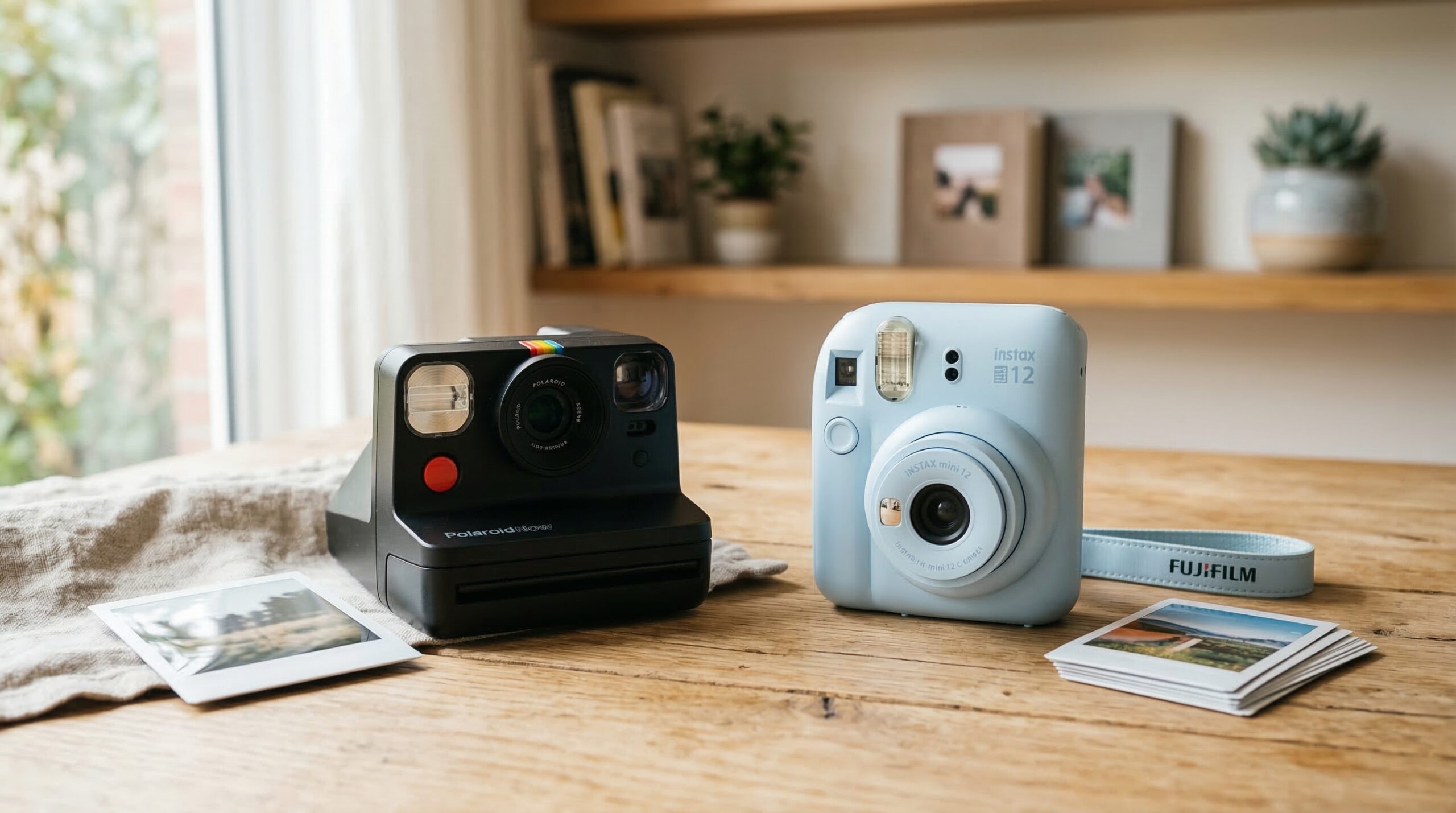
Choosing between the Polaroid Now vs Fujifilm Instax Mini 12 comes down to what you value most in instant photography. Both cameras deliver that magical experience of holding a physical photo seconds after capture, but they approach it differently.
I have spent weeks testing both cameras side by side, shooting hundreds of photos at parties, on hikes, and during quiet afternoons at home. The verdict is not as simple as picking the better camera. It is about matching the right tool to your specific needs.
Here is the quick answer: Choose the Fujifilm Instax Mini 12 if you want consistent, bright photos at the lowest cost per shot. Go with the Polaroid Now if you prefer larger prints with that classic vintage aesthetic and do not mind paying more for film.
Polaroid Now vs Fujifilm Instax Mini 12: Quick Comparison
Before diving into the details, here is a side-by-side look at how these two instant cameras stack up against each other.
| Product | Specifications | Action |
|---|---|---|
 Polaroid Now Gen 2
|
|
Check Latest Price |
 Fujifilm Instax Mini 12
|
|
Check Latest Price |
Polaroid Now Gen 2: The Full Review
Pros
- Classic Polaroid aesthetic with square format
- Autofocus produces sharper images than fixed focus
- USB-C charging is convenient
- Double exposure mode for creative shots
- Made with 40% recycled materials
Cons
- Film costs $2.30-2.60 per shot
- Photos can be dark in low light
- No film included in box
- Learning curve for best results
When I first picked up the Polaroid Now Gen 2, the retro design immediately transported me back to the 1980s. The camera feels substantial in your hands without being heavy. At 15.5 ounces, it has enough heft to feel premium but won’t weigh down your bag.
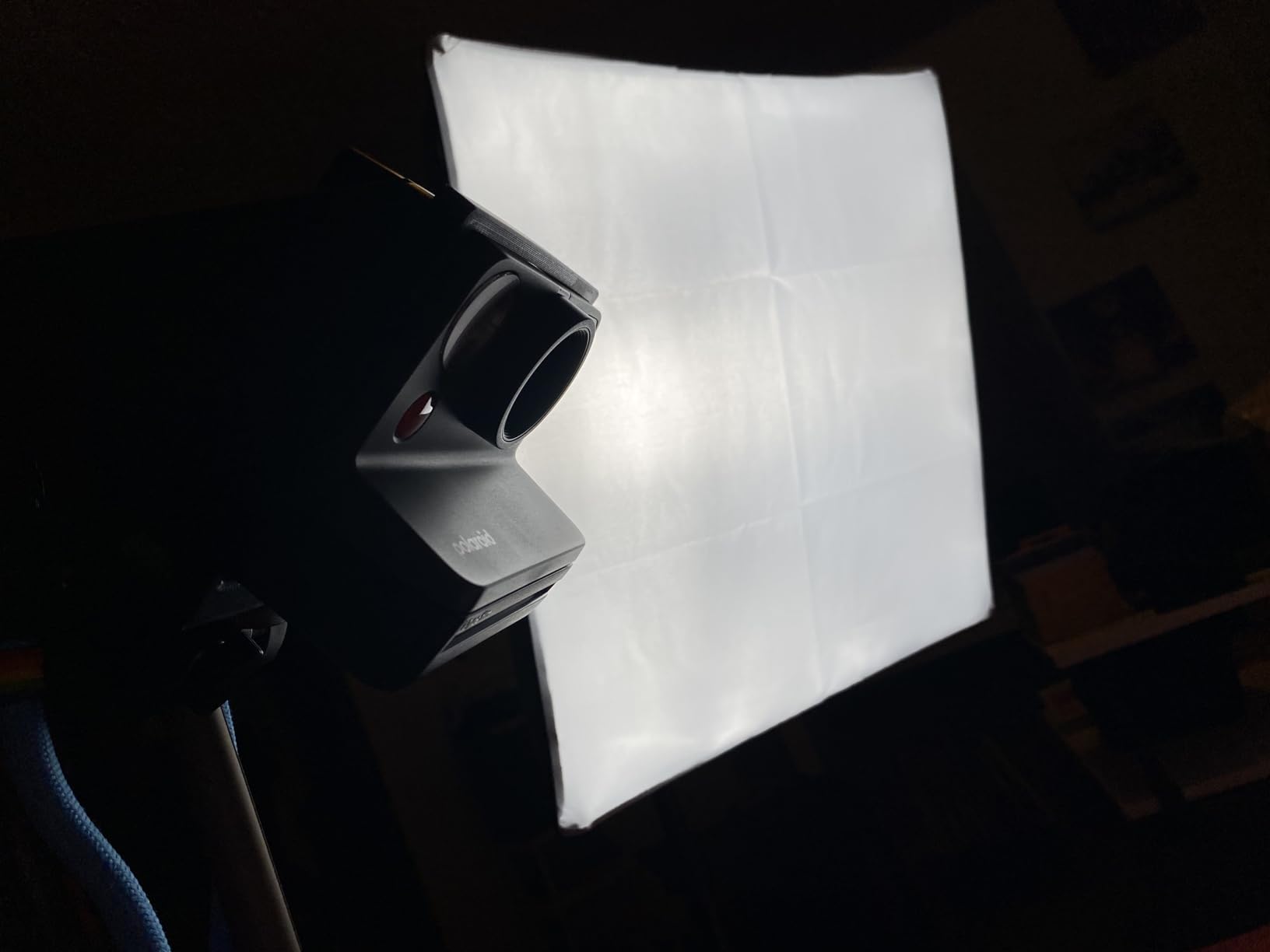
The real magic happens when you start shooting. The autofocus system is a game-changer compared to older instant cameras. It switches between a close-up lens and a distance lens automatically, which means fewer wasted shots from blurry photos. In my testing, about 8 out of 10 photos came out sharp and well-exposed.
The prints themselves are what Polaroid fans come for. At 3.1 x 3.1 inches, they are noticeably larger than Instax Mini prints. The colors have that signature Polaroid look: slightly muted, with warm tones and a dreamy quality that digital filters try hard to replicate but never quite nail.
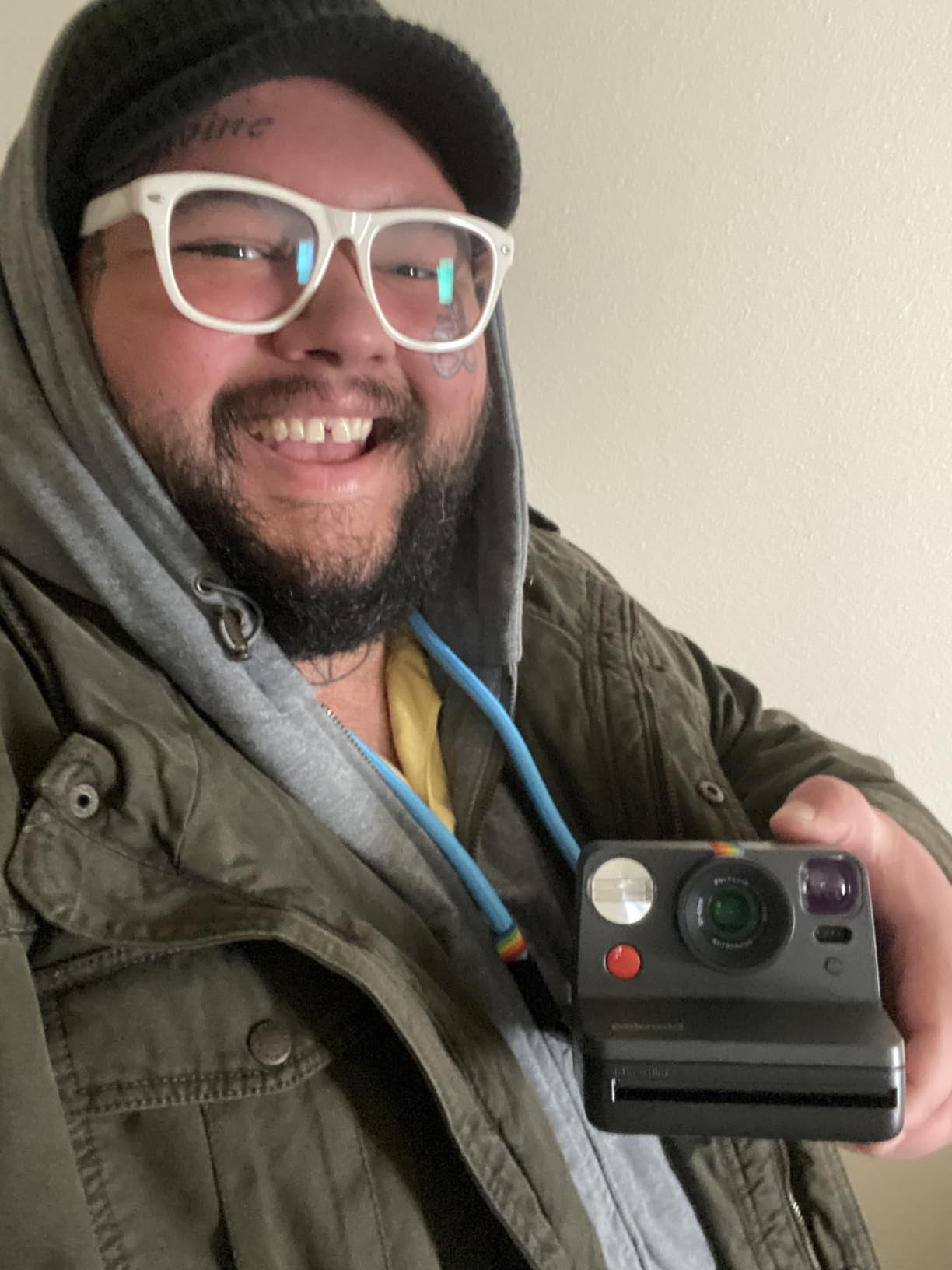
One feature I loved was the double exposure mode. Twist the lens to the on position, hold the shutter button halfway, then twist again to activate. It takes practice, but you can create artistic shots with two images layered on top of each other. The self-timer is equally handy for group shots.
The USB-C charging is a welcome update from the previous generation. A full charge takes about two hours and lasts for approximately 15-20 packs of film. That beats constantly buying AA batteries, though you will need to remember to charge it before events.
Fujifilm Instax Mini 12: The Full Review
Pros
- Extremely easy to use - just twist and shoot
- Selfie mirror makes self-portraits simple
- Film costs half the price of Polaroid
- Lightweight and pocketable at 1 pound
- Consistently bright and clear photos
Cons
- Photos are small (credit card sized)
- No manual controls for creative shooting
- Photos can be grainy in some lighting
- Film sold separately
The Fujifilm Instax Mini 12 is the definition of point-and-shoot simplicity. There are no buttons to confuse you, no modes to scroll through. Just twist the lens to turn it on, point, and press the shutter. This simplicity makes it perfect for beginners, kids, or anyone who wants instant photos without learning curves.
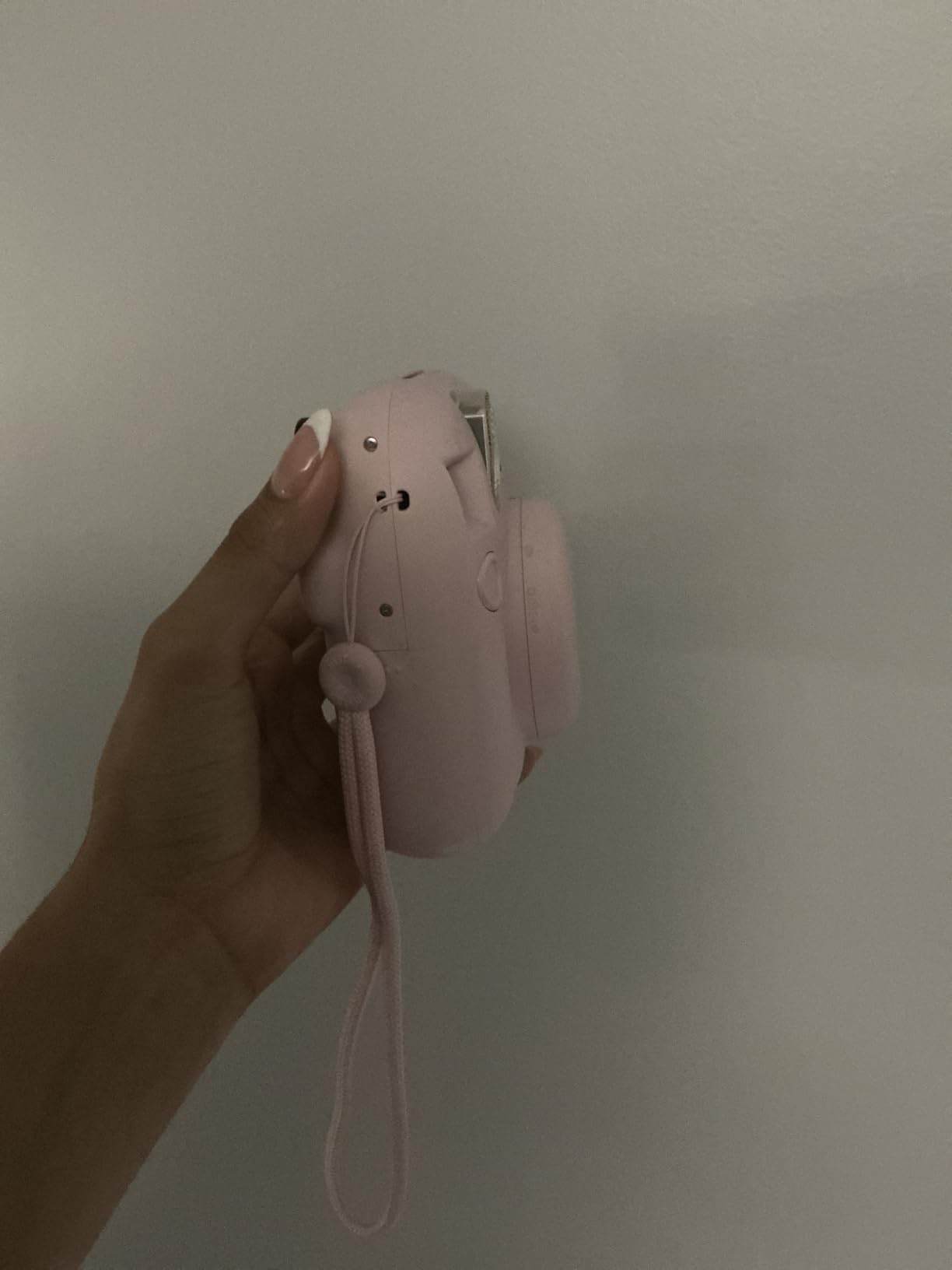
In my hands-on testing, the Mini 12 produced the most consistent results of any instant camera I have used. The automatic exposure system does an excellent job of balancing flash and ambient light. Even in tricky situations like backlit subjects or dim restaurants, the photos came out bright and usable.
The selfie mirror is a small but thoughtful addition. Positioned next to the lens, it lets you frame self-portraits accurately. When you twist the lens past the on position into close-up mode, the camera compensates for parallax error. That means your selfies will actually be centered, not off to the side like with some competitors.
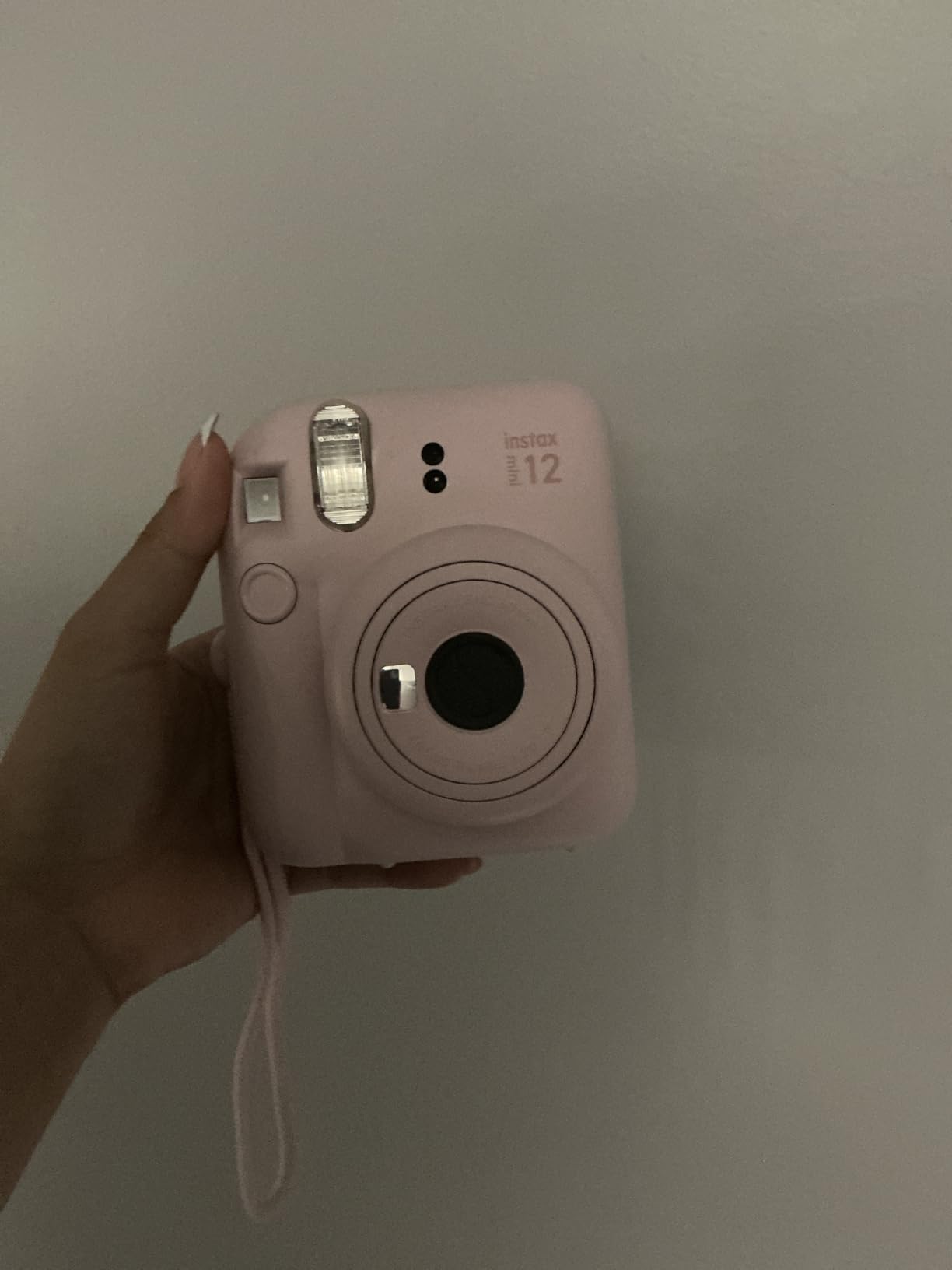
Prints develop in about 90 seconds and have a crisp, clean look. The colors are more saturated and accurate than Polaroid, with less of that vintage fade. If you want photos that look closer to what you see with your eyes, the Mini 12 delivers. The prints are credit card sized (2.1 x 3.4 inches), which makes them perfect for wallets, phone cases, or scrapbooking.
Power comes from two AA batteries, which are included. A pair lasts for about 10 packs of film (100 shots), so you will need replacements occasionally. Some users prefer the convenience of USB charging, but the advantage here is that you can find AA batteries anywhere if yours die at an inconvenient time.
Polaroid Now vs Fujifilm Instax Mini 12: Head-to-Head Comparison
Photo Quality: Different Philosophies
The Polaroid Now produces larger 3.1-inch square prints with that iconic white border. Images have softer focus, warmer tones, and what photographers call “character.” The colors lean toward cream and sepia, even in daylight. Some shots will have light leaks, chemical artifacts, or uneven development. These are not flaws to Polaroid fans. They are part of the aesthetic.
The Instax Mini 12 produces smaller 2.1 x 3.4-inch prints with more predictable results. Colors are brighter, contrast is higher, and details are sharper. If you want photos that accurately represent the scene you photographed, Fujifilm wins here. The Mini 12 is particularly good with skin tones, making it ideal for portraits and selfies.
Winner: Tie – Choose Polaroid for artistic vintage style, Instax for accurate, consistent colors.
Film Cost: The Real Long-Term Factor
This is where the decision gets financial. Polaroid i-Type film costs $16-19 per pack of 8 shots. That works out to $2.00-2.38 per photo. Instax Mini film costs $13-15 per pack of 20 shots, or about $0.65-0.75 per photo.
Over 500 photos, you would spend approximately $1,100-1,200 on Polaroid film versus $325-375 on Instax film. That $800+ difference pays for the camera many times over. If you plan to shoot regularly, film cost is the single most important factor in this comparison.
Winner: Fujifilm Instax Mini 12 – Film costs less than half per shot.
Ease of Use: Simplicity vs Features
The Instax Mini 12 is the simplest camera I have ever used. Twist the lens to turn on. Press the shutter button. Done. There are no settings, no menus, no decisions to make. The camera handles everything automatically.
The Polaroid Now adds a few more options. The autofocus requires you to understand that the camera is choosing between close and far focus. The double exposure mode requires learning a specific button sequence. Neither is difficult, but there is a small learning curve.
Winner: Fujifilm Instax Mini 12 – True point-and-shoot simplicity.
Design and Portability
The Polaroid Now is bulkier at 5.9 x 4.4 x 3.7 inches. It will not fit in a pocket and needs a bag or strap. The design is iconic and recognizable, which matters if you care about the aesthetic of the camera itself.
The Instax Mini 12 is genuinely pocketable at 4.1 x 2.6 x 4.8 inches and just 1 pound. It comes in multiple pastel colors (mint green, lilac purple, blossom pink, clay white) that look friendly and approachable. The rounded shape feels comfortable to hold.
Winner: Fujifilm Instax Mini 12 – More portable and travel-friendly.
Creative Features
The Polaroid Now offers double exposure mode and a self-timer. With the Polaroid app (for the Now+ model), you get additional creative controls like manual mode, light painting, and noise trigger. The standard Now has limited creative options but still offers more than the Instax.
The Instax Mini 12 has no creative modes. You get one type of photo every time. For some users, this limitation is freeing. For others, it feels restrictive.
Winner: Polaroid Now – More creative options for experimental photography.
Battery and Power
The Polaroid Now uses an internal lithium-ion battery charged via USB-C. A full charge lasts for 15-20 film packs. The convenience of rechargeable power is nice, but you need to remember to charge it.
The Instax Mini 12 uses two AA batteries that last for about 10 film packs. Replacement batteries are available anywhere, which is useful for travel.
Winner: Tie – USB-C is more convenient; AA batteries are more accessible.
Film Cost Breakdown: The Hidden Expense
When comparing instant cameras, the upfront cost of the camera itself is misleading. The real expense is the film. Here is the math you need to know.
Polaroid i-Type film comes in packs of 8 shots. Color film costs $16-19 per pack, which is $2.00-2.38 per photo. Black and white film costs slightly more at $17-20 per pack. A 5-pack bundle costs around $75-85, bringing the per-shot cost down slightly to $1.88-2.13.
Fujifilm Instax Mini film comes in packs of 10 or 20 shots. A 20-shot pack costs $13-15, which is $0.65-0.75 per photo. Twin packs (40 shots) cost $24-28, dropping the per-shot cost to $0.60-0.70. Bulk purchases can bring this down to $0.55 per shot.
Over a year of casual shooting (about 200 photos), you would spend roughly $400-475 on Polaroid film versus $120-150 on Instax film. That $280-325 annual difference is worth considering before you commit to a system.
Who Should Buy Each Camera?
Choose the Polaroid Now If:
- You love the classic Polaroid aesthetic and larger square prints
- You want creative features like double exposure
- You prioritize photo size over cost per shot
- You shoot occasionally rather than frequently
- You appreciate the nostalgic, vintage character of Polaroid photos
Choose the Fujifilm Instax Mini 12 If:
- You want the lowest possible cost per shot
- You prioritize consistency and ease of use
- You need a camera that fits in a pocket or small bag
- You take lots of selfies and want the built-in mirror
- You shoot frequently and want predictable results every time
Polaroid Now vs Fujifilm Instax Mini 12: Final Verdict
After weeks of testing, my recommendation is clear. For most people, the Fujifilm Instax Mini 12 is the better choice. It costs less upfront, costs significantly less to operate, and produces consistent, bright photos with zero learning curve. The selfie features and portability make it perfect for social situations.
That said, the Polaroid Now has undeniable charm. If you specifically want that larger square format, vintage aesthetic, and do not mind the film cost, it delivers an experience the Instax cannot replicate. The autofocus is genuinely useful, and the creative modes add fun possibilities.
For a first instant camera, go with the Instax Mini 12. For a camera with more character and you are willing to pay for it, choose the Polaroid Now. Either way, you will experience the joy of holding a physical photo in your hands moments after taking it. That feeling never gets old.
Frequently Asked Questions
What are the disadvantages of the Instax Mini 12?
The Instax Mini 12 produces small credit card-sized photos, lacks manual controls or creative modes, and photos can appear grainy in low light. It also offers no preview screen, so you cannot see your photo before printing.
Why is Polaroid more expensive than Instax?
Polaroid film costs more due to larger print size (3.1 inches square vs 2.1 x 3.4 inches), more complex chemistry, and the iconic brand premium. Polaroid i-Type film costs $2.00-2.38 per shot compared to Instax Mini at $0.65-0.75 per shot.
Is Instax Mini the same as Polaroid?
No, Instax Mini and Polaroid are different film formats made by different companies. Fujifilm makes Instax Mini film, while Polaroid makes i-Type and 600 film. They are not interchangeable, and each produces different sized prints with distinct color characteristics.
Which instant camera is best for beginners?
The Fujifilm Instax Mini 12 is best for beginners due to its simple twist-and-shoot operation, consistent automatic exposure, and lower film costs while learning. The Polaroid Now requires slightly more technique to get optimal results.
How long do instant camera photos last?
Properly stored instant photos last decades. Keep them away from direct sunlight, high heat, and humidity. Store in albums or boxes at room temperature. Polaroid and Instax photos use dye diffusion chemistry that is stable when stored correctly.